Learning goals
We are learning to…
- show an understanding of relationship between the form, message, and purpose of a text, audience and the creator
- identify text patterns and explain how they help readers, listeners, and viewers understand the meaning
- make simple inferences to understand simple texts
- identify strategies that have helped us understand different texts
Success criteria
I am able to…
- explore illustrations from the texts Sweetest Kulu and What’s my Superpower? and think about the way the illustrations support the story and help us understand each part of the story
- identify the ways that the illustrators created each illustration to help us understand the stories
- make simple inferences about what each story is about
- reflect on the strategies that helped me understand each set of illustrations
Let’s get started!
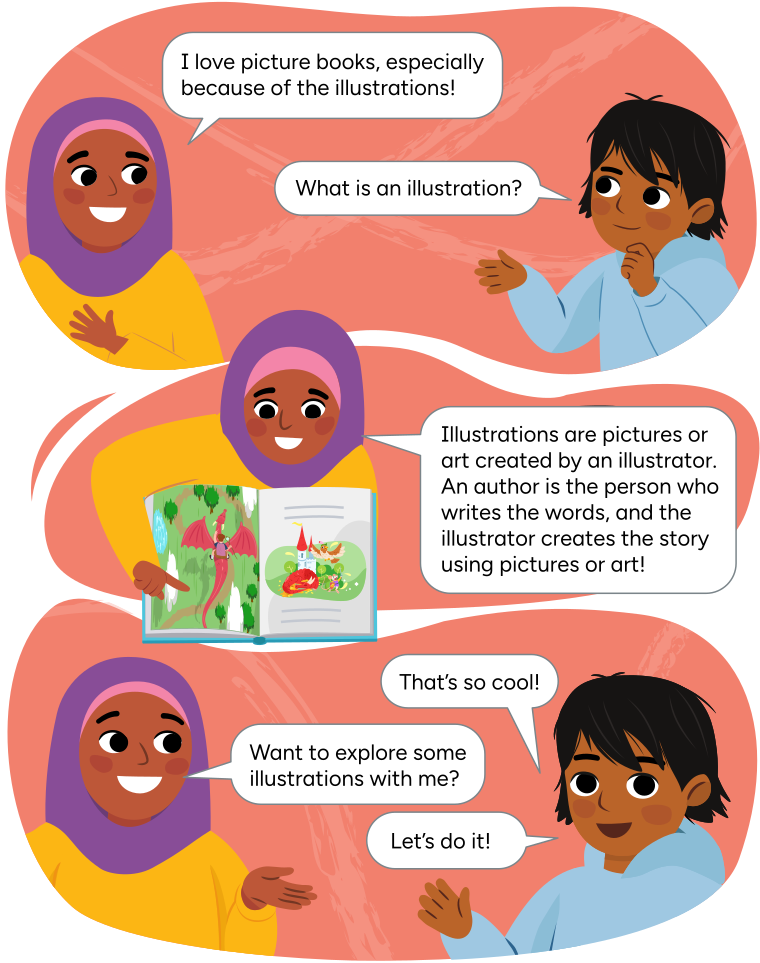
Long Description: Esma and Antonio have a conversation about illustrations.
Esma: I love picture books, especially because of the illustrations!
Antonio: What is an illustration?
Esma: Illustrations are pictures or art created by an illustrator. An author is the person who writes the words, and the illustrator creates the story using pictures or art!
Antonio: That's so cool!
Esma: Want to explore some illustrations with me?
Antonio: Let's do it!

Try It
Try it!
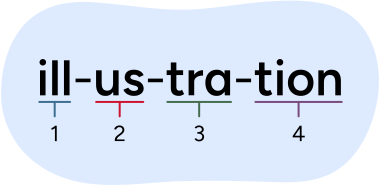
How many syllables or parts can you count in the word illustration?
Listen to this audio clip called Illustration to learn more about the syllables in this word.
Hint: You can try clapping or tapping along to the audio.
Illustration
Press Reveal to check your answer.
The word illustration has four syllables or parts!
Illustrators
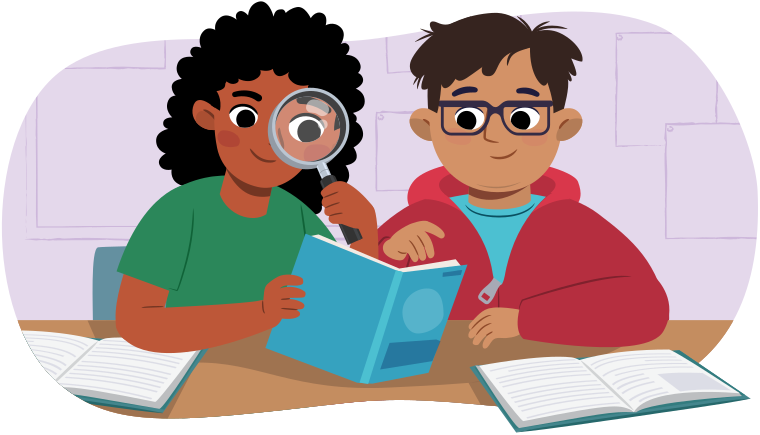
When we read stories with illustrations, we can use the clues in the pictures or art to help us understand the story. We will explore pages from two different stories and think about how the illustrations help us understand different parts of the story.
Before we begin exploring illustrations, let’s learn more about the choices illustrators make to create artwork for a story.
Illustrators’ choices
Illustrators are artists who may use different colours to share things like:
- the time of day
- the mood and feelings of the characters
- the weather

Student Tips
Student tips
When artists discuss colours, they use words like warm and cool colours.
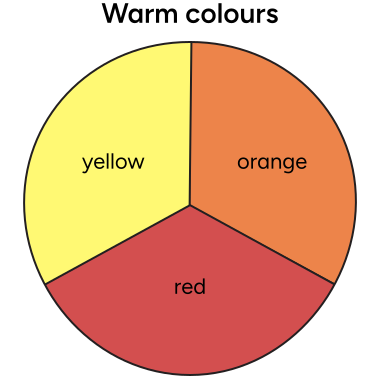
What are warm colours?
Warm colours include red, orange, and yellow. These colours might remind people of sunshine, fires, and heat.
Warm colours are also used by some artists when they feel happy, angry, or excited.
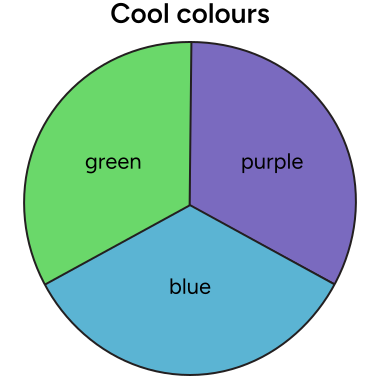
What are cool colours?
Cool colours include blue, green, and purple. These colours might remind people of cool, cold places like the winter or cold water.
Cool colours are also used by artists when they feel peaceful, calm, or sad.
We can also pay attention to the expressions of the characters in the story. This may give us clues on how they are feeling in different parts of the story.
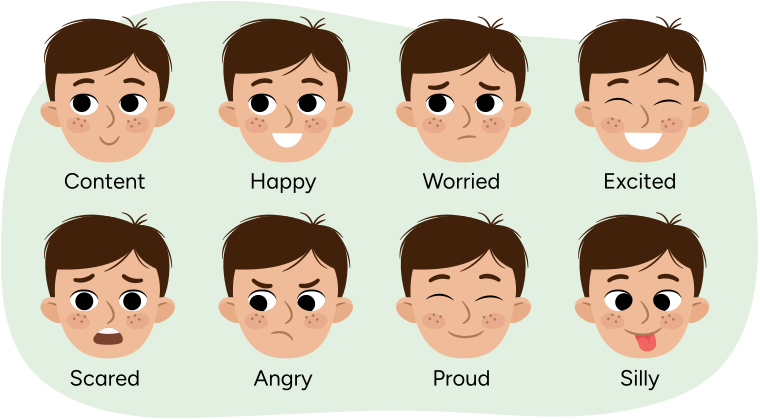
Facial expressions that represent different emotions. The emotions shown are content, happy, worried, excited, scared, angry, proud, and silly.
Now that you’ve learned more about the choices illustrators make to create artwork for a story, let’s explore two stories.
Sweetest Kulu
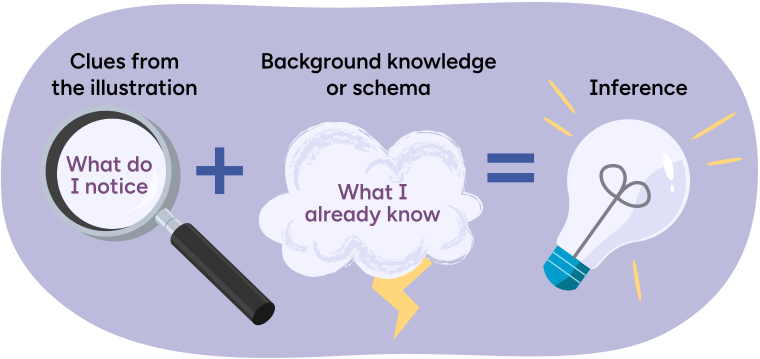
Illustration of two elements for making inferences from an illustration. The first element, represented by a magnifying glass with the text “What do I notice,” symbolizes the clues from the illustration. The second element, depicted as a cloud with the text “What I already know,” represents the background knowledge or schema.
Let’s explore the cover illustration of Sweetest Kulu.
What kind of clues can you find in the cover illustration?
When we notice specific clues and use what we know to make a guess about what is happening, this is called an inference.
When we make a guess or inference, we always want to share our reason. We can do this by using the word “because” and sharing examples.
Make your inference or guess about what the story is about and share with a partner, if possible. Are your guesses similar or different?
You can share your inference or guess about the story using the following sentence.
I think this story is about (Blank) because (Blank).
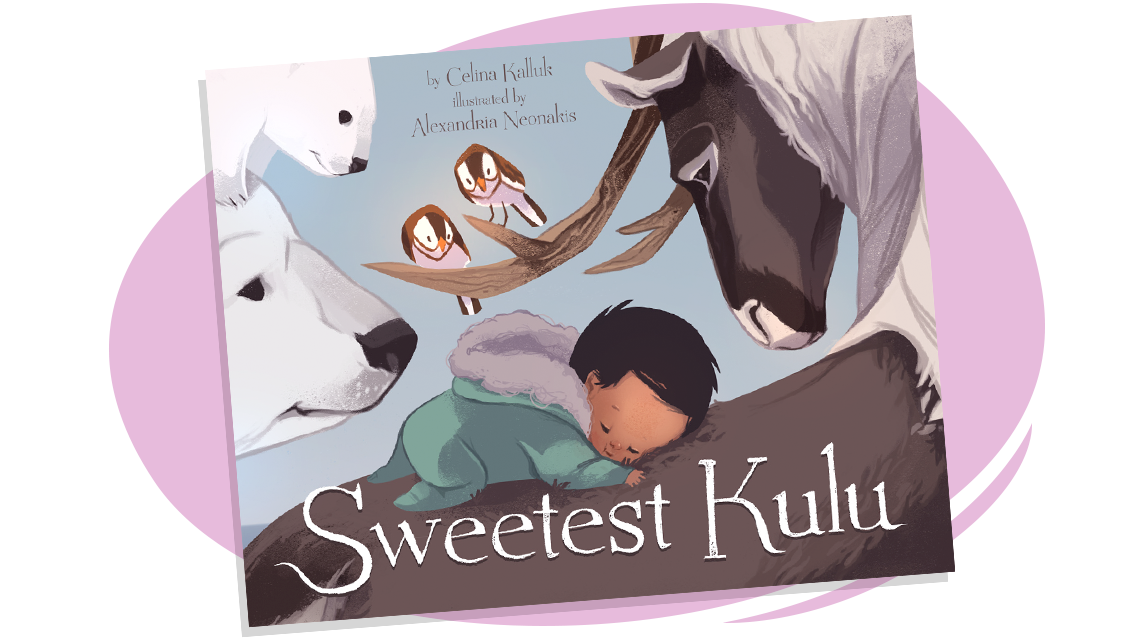
You might have noticed that there are two names on the cover. This is of the author and illustrator.
About the author
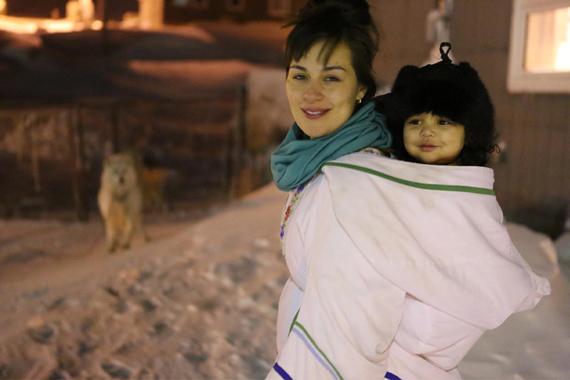
Sweetest Kulu was written by an Inuk author named Celina Kalluk. She was born and raised in Resolute Bay, Nunavut. Celina is also a visual artist and a famous throat singer.
About the illustrator
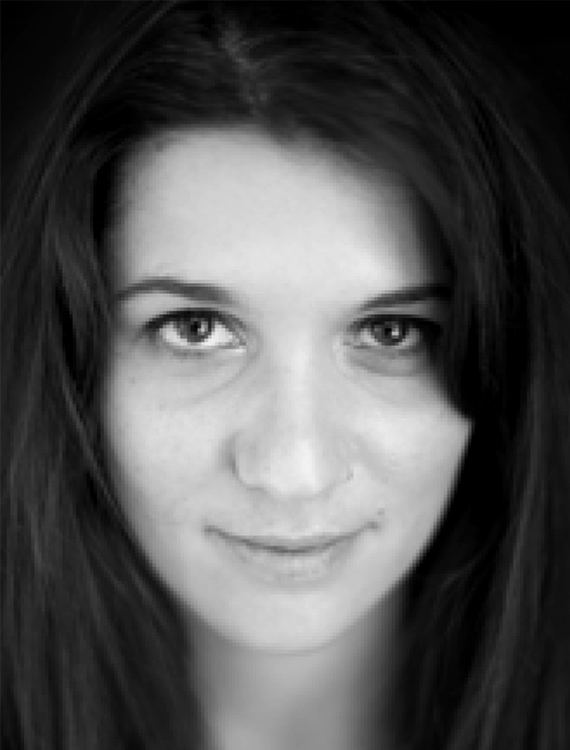
Sweetest Kulu was illustrated by Alexandria Neonakis. Alexandria Neonakis is a Canadian artist from Nova Scotia. She now lives in Los Angeles, California, USA. One of the forms of art that she creates is illustrations for children’s books like Sweetest Kulu.
Let’s read a short summary of the story before exploring the illustrations.
A summary tells the most important parts of a text. We can read and write summaries about fiction (example: stories based on our imagination and experiences) and non-fiction (example: articles and information based on facts).
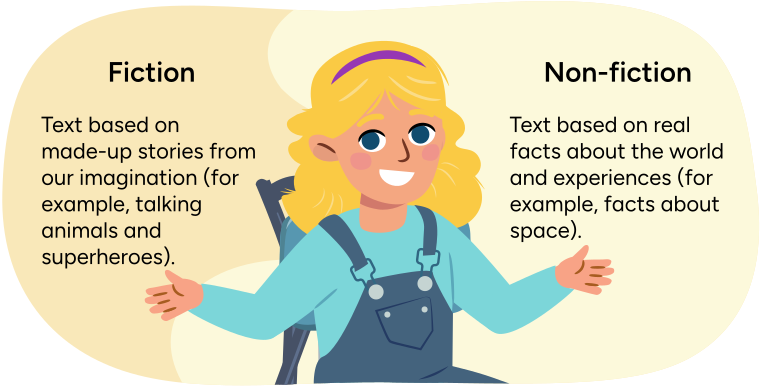
Illustration of the description of fiction and non-fiction texts. Fiction, text based on made-up stories from our imagination (for example, talking animals and superheroes). Non-fiction, text based on real facts about the world and experiences (for example, facts about space).
Sweetest Kulu is a bedtime poem about all the gifts the animals of the Arctic bring a newborn baby. Snow bunting, caribou, muskox, polar bear, and Arctic hare are just a few of the Arctic animals that come to visit Kulu!
Note: Kulu is an Inuktitut word that shows love. It is used for babies and young children.
Sweetest Kulu Summary
Now that you know more about the Sweetest Kulu story, let’s explore some illustrations! Try to answer the questions after each illustration.
Check out the first illustration.
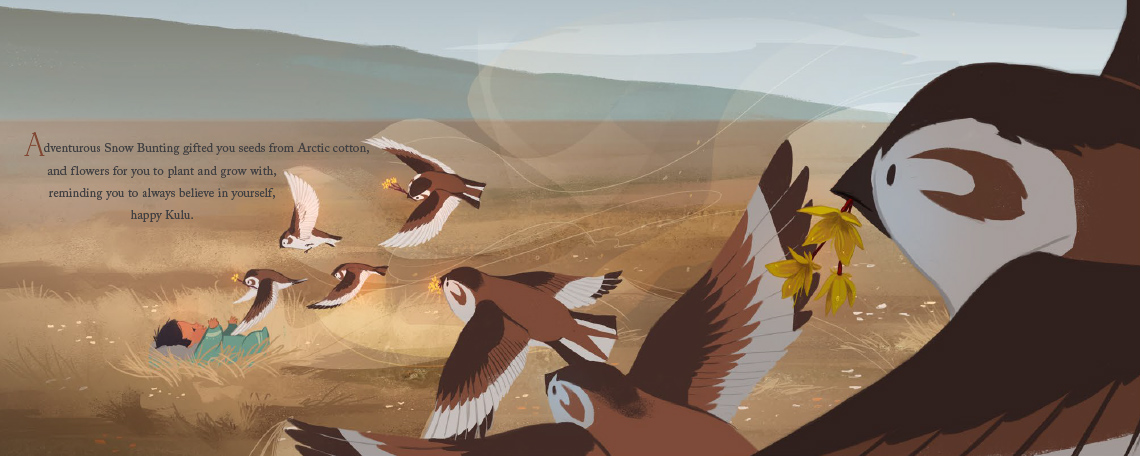
What is Kulu doing in the illustration?
Press Reveal to check your answer.
Kulu is lying down in a field.
Who does Kulu meet at this part of the story?
Press Reveal to check your answer.
I notice seven birds flying to meet Kulu. They are bringing Kulu flowers.
What kind of colours do you notice?
Press Reveal to check your answer.
I notice warm colours like yellow in the picture. It makes me feel it’s daytime.
Check out another illustration and try to answer the following questions.
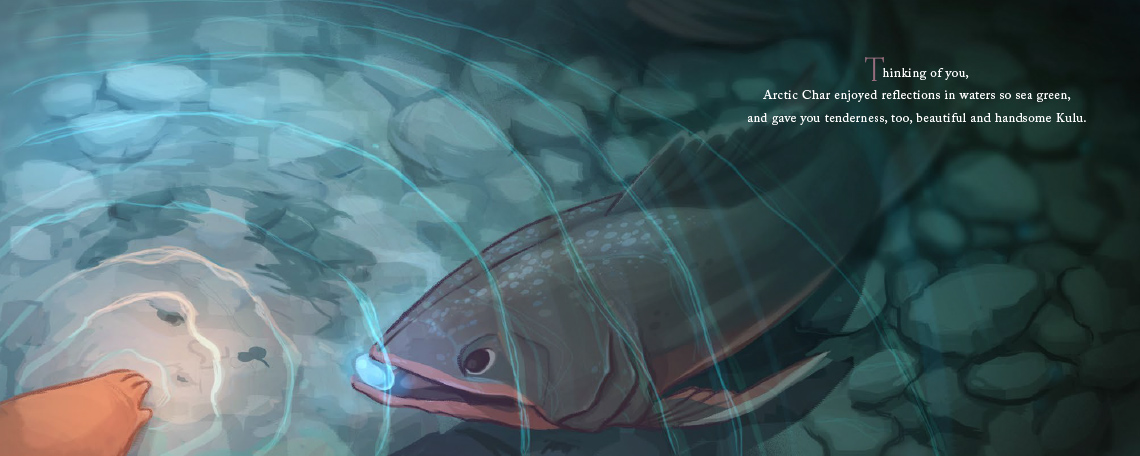
What is Kulu doing in the illustration?
Press Reveal to check your answer.
Kulu is putting a hand in the water.
Who does Kulu meet at this part of the story?
Press Reveal to check your answer.
Kulu is meeting a fish at this part of the story. The fish is under water.
What kind of colours do you notice?
Press Reveal to check your answer.
I notice cool colours like blue in this illustration. It makes me feel like it might be cold.
Let’s explore one more illustration and try to answer the following questions.
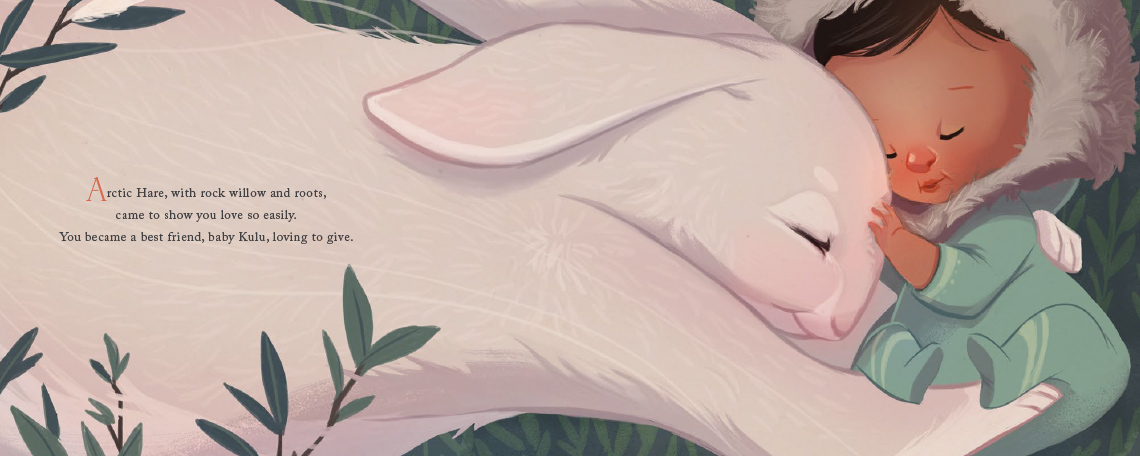
What is Kulu doing in the illustration?
Press Reveal to check your answer.
Kulu is hugging a hare.
How do you think Kulu is feeling? How do you know?
Press Reveal to check your answer.
I think Kulu feels calm because their eyes are closed and they look peaceful.
Our next story is called What’s my Superpower?
What’s my Superpower?
Illustration of two elements for making inferences from an illustration. The first element, represented by a magnifying glass with the text “What do I notice,” symbolizes the clues from the illustration. The second element, depicted as a cloud with the text “What I already know,” represents the background knowledge or schema.
Let’s explore the cover illustration of What’s my Superpower?
What kind of clues can you find in the cover illustration?
Make your inference or guess about what the story is about and share with a partner, if possible. Are your guesses similar or different?
You can share your inference or guess about the story using the following sentence.
I think this story is about (Blank) because (Blank).
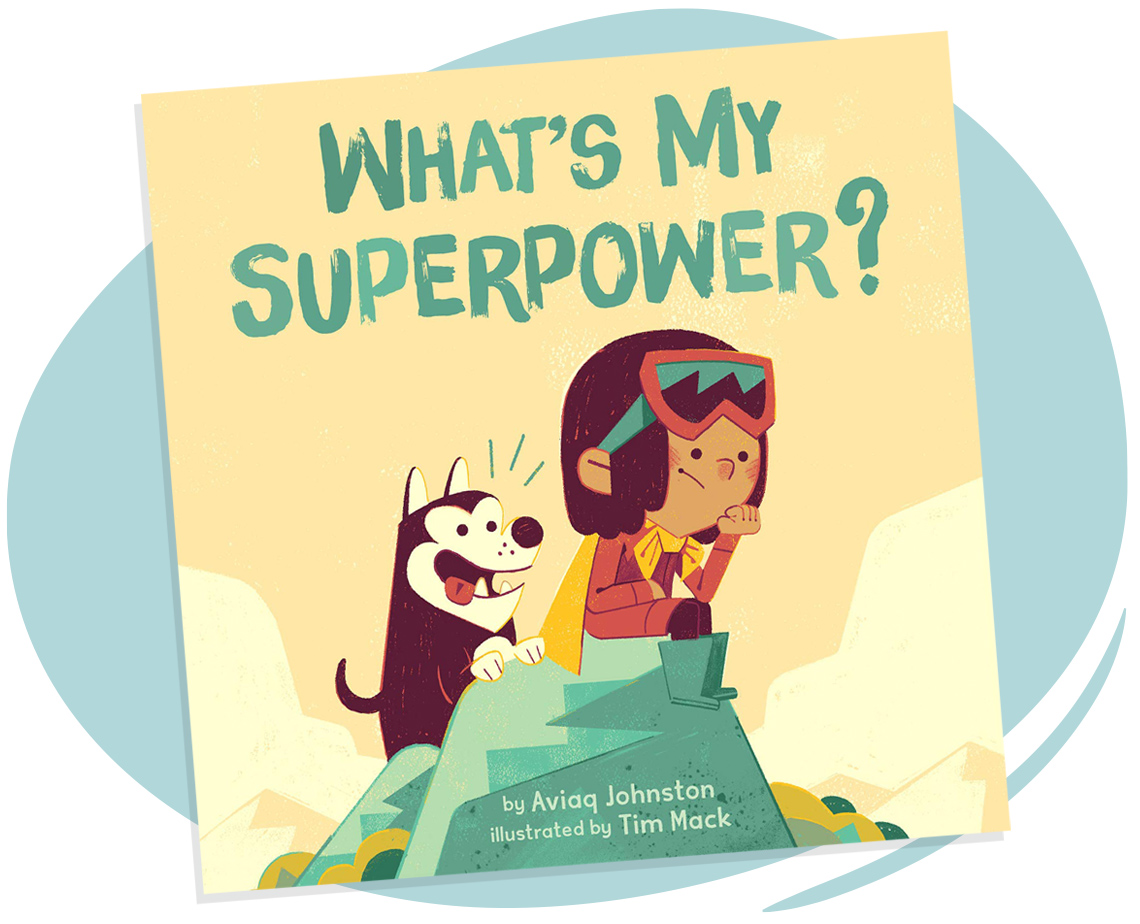
You might have noticed that there are two names on the cover. This is of the author and illustrator.
About the author
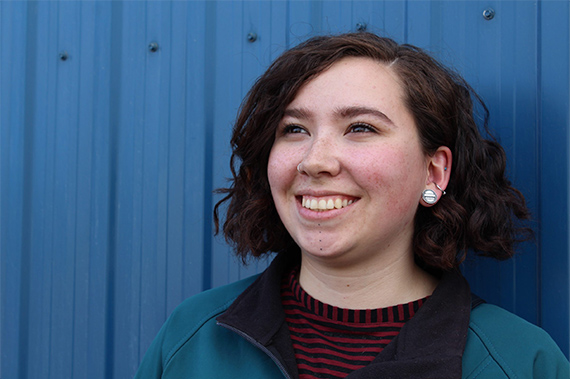
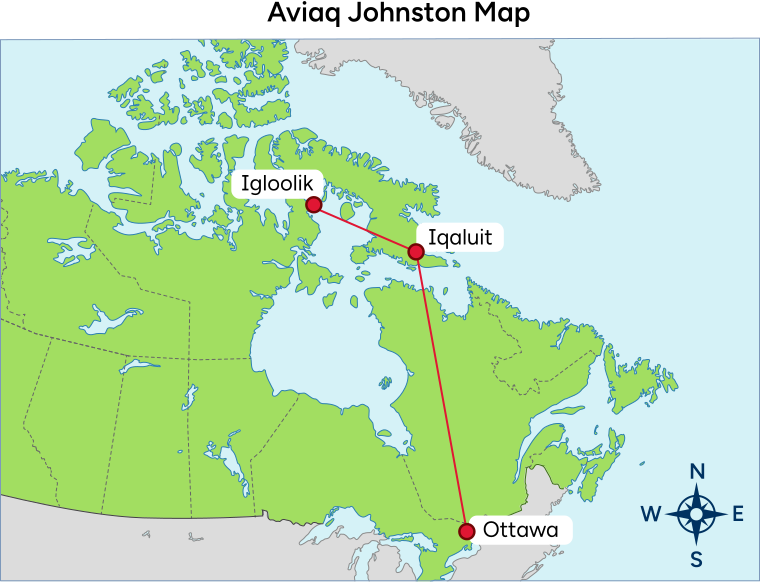
What’s My Superpower? was written by Aviaq Johnston. Aviaq Johnston is an Inuk author from Igloolik, Nunavut. She loves reading, writing, and studying. Aviaq won two awards for a short story she wrote called, “Tarnikuluk” in 2014. She enjoys traveling and spends her time living between Iqaluit and Ottawa.
About the illustrator

What’s My Superpower? was illustrated by Tim Mack. Tim Mack is an illustrator from Vancouver, British Columbia. He has illustrated several books including What’s My Superpower? He enjoys drawing and using colours and shapes in his artwork.
Let’s read a short summary of the story before exploring the illustrations.
Nalvana feels like all her friends have some type of superpower. Her friends can fly on the swings, swim like fish, and build amazing sculptures. She is proud of her friends, but she then wonders if she has a superpower of her own. At the end, Nalvana’s mom helps show her that she is unique and special, and has her very own superpower, too!
Sweetest Kulu Summary
Now that you know more about the What’s my Superpower? story, let’s explore some illustrations! Try to answer the questions after each illustration.
Check out the first illustration.
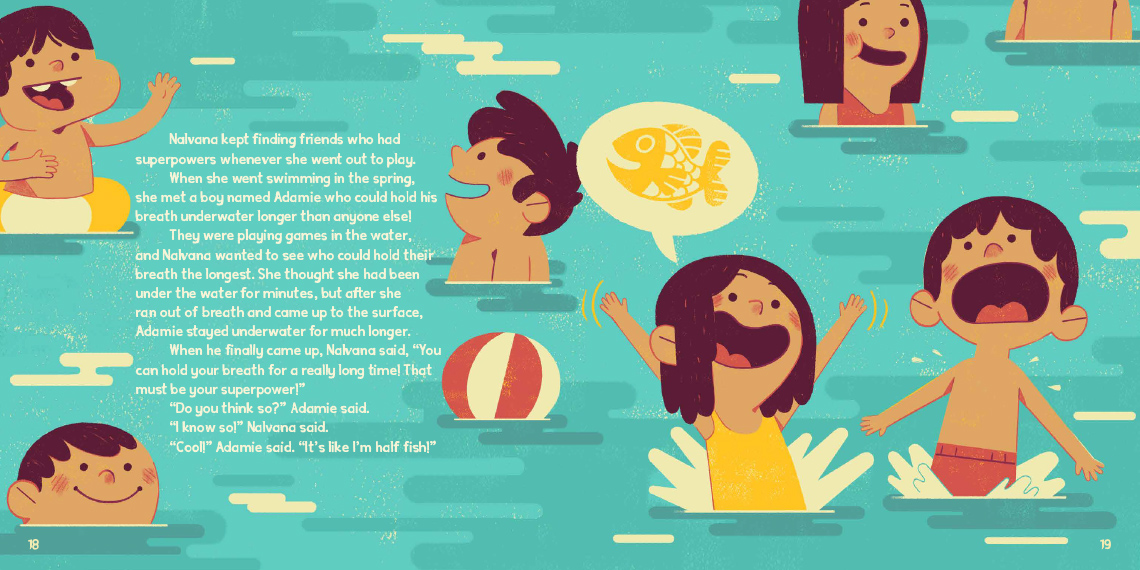
What is Nalvana doing in the illustration?
Press Reveal to check your answer.
Nalvana is waving her arms in the swimming pool. It looks like she is talking about fish.
Who does Nalvana meet at this part of the story?
Press Reveal to check your answer.
I think Nalvana is with one of her friends.
How do you think Nalvana is feeling? How do you know?
Press Reveal to check your answer.
I think Nalvana might be happy or excited, because she is waving her arms and has a big smile on her face.
Check out another illustration and try to answer the following questions.
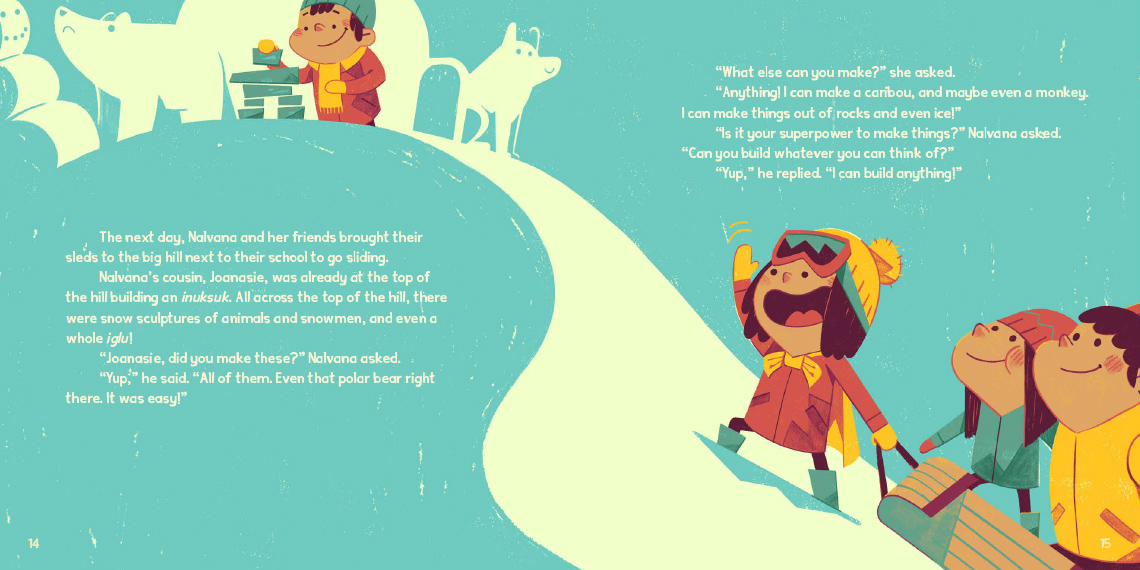
What is Nalvana doing in the illustration?
Press Reveal to check your answer.
Nalvana is waving at someone at the top of a hill.
Who does Nalvana meet at this part of the story?
Press Reveal to check your answer.
I think Nalvana is meeting another friend. They are building an inukshuk.
How do you think Nalvana is feeling? How do you know?
Press Reveal to check your answer.
I think Nalvana is excited because she has a big smile on her face and is waving.
Explore the illustration and try to answer the following questions.
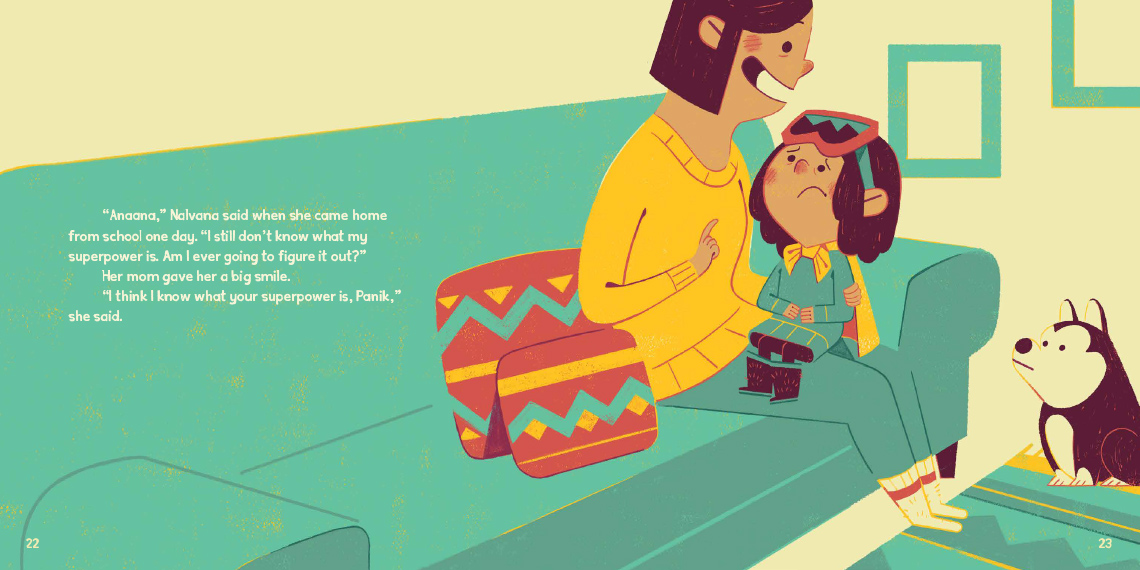
What is Nalvana doing in the illustration?
Press Reveal to check your answer.
Nalvana is sitting on her mother’s lap.
Who does Nalvana meet at this part of the story?
Press Reveal to check your answer.
Nalvana is with her mother.
How do you think Nalvana is feeling? How do you know?
Press Reveal to check your answer.
I think Nalvana is feeling sad, because her mouth is turned down and she has her hands on her lap.
Let’s explore one more illustration and try to answer the following questions.
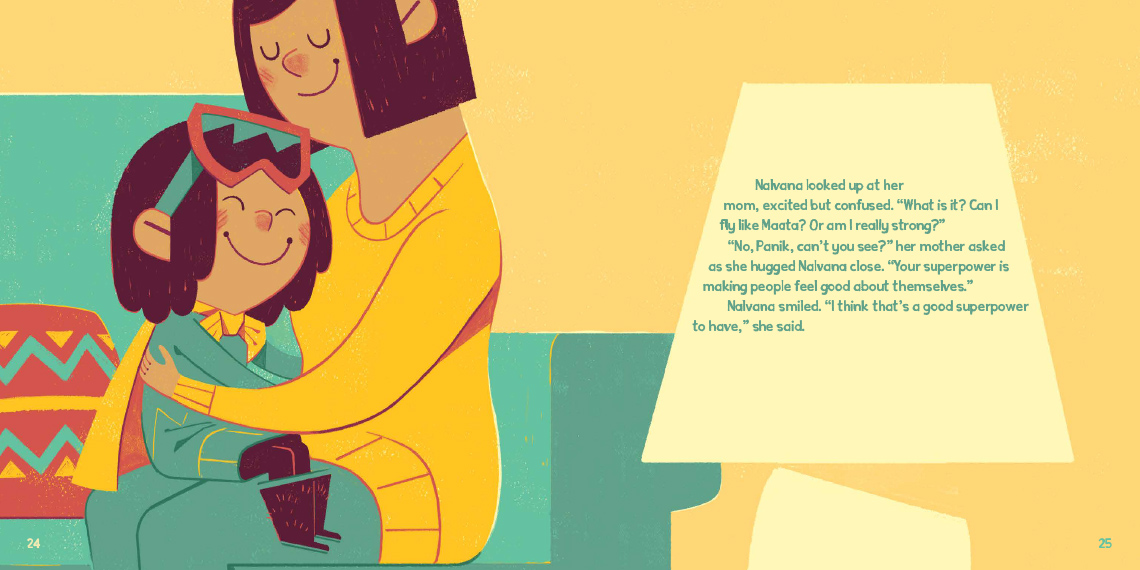
What is Nalvana doing in the illustration?
Press Reveal to check your answer.
Nalvana is hugging her mother.
Who does Nalvana meet at this part of the story?
Press Reveal to check your answer.
Nalvana is with her mother.
How do you think Nalvana is feeling? How do you know?
Press Reveal to check your answer.
I think Nalvana is feeling happy and calm. She is smiling and her eyes are closed.
Word work
For each term, select the corresponding definition.
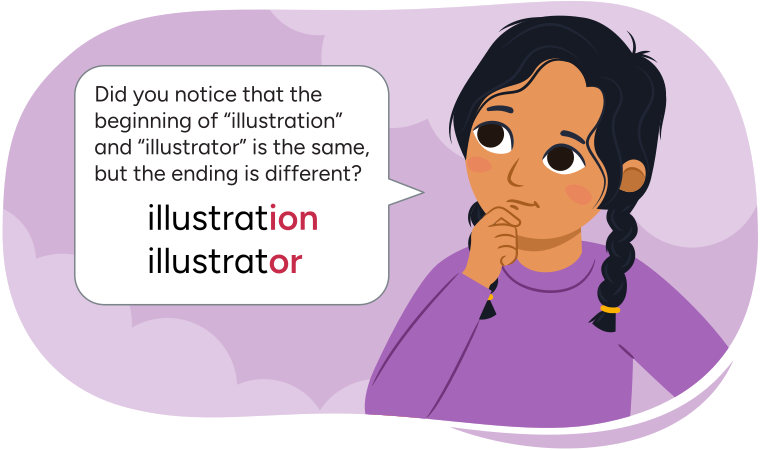
Learner saying: Did you notice that the beginning of ‘illustration’ and ‘illustrator’ is the same, but the ending is different?
In the word illustration, the final letters (ion) are in red.
In the word illustrator, the final letters (or) are in red.
Printing practice
Check out the following video to warm up your hands for printing!
Let’s practice printing out a few words.
Use your notebook or a method of your choice to practice printing each word.
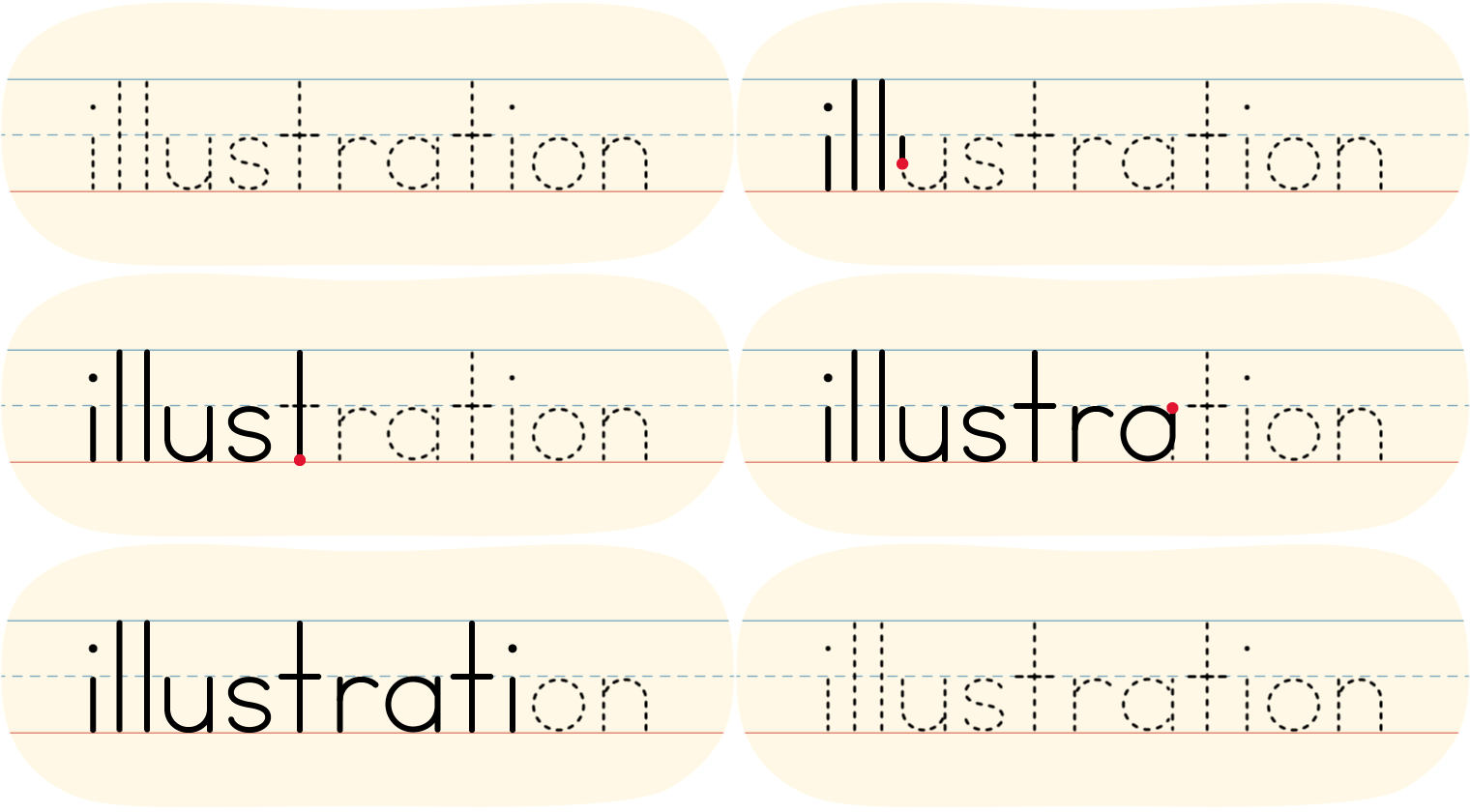
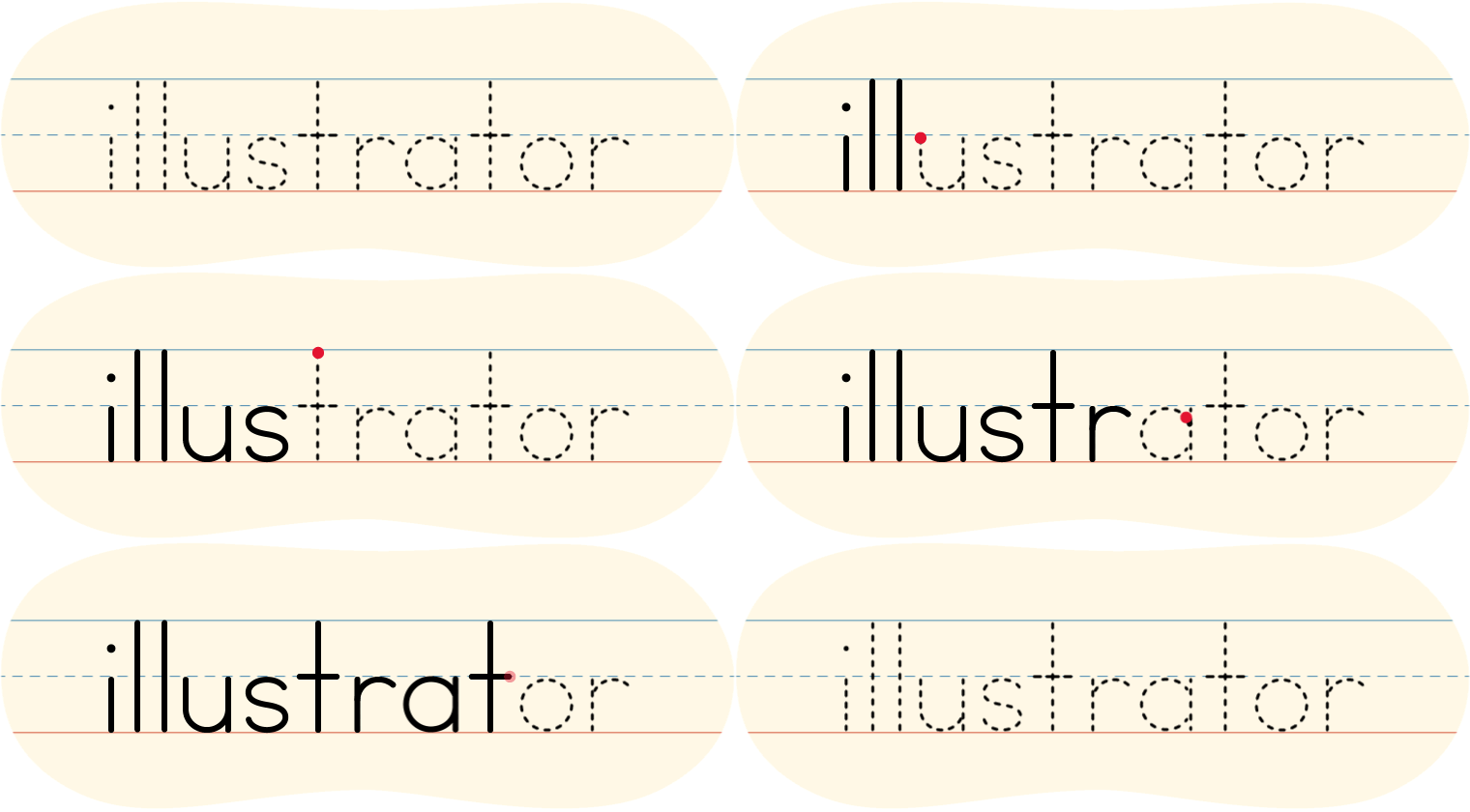
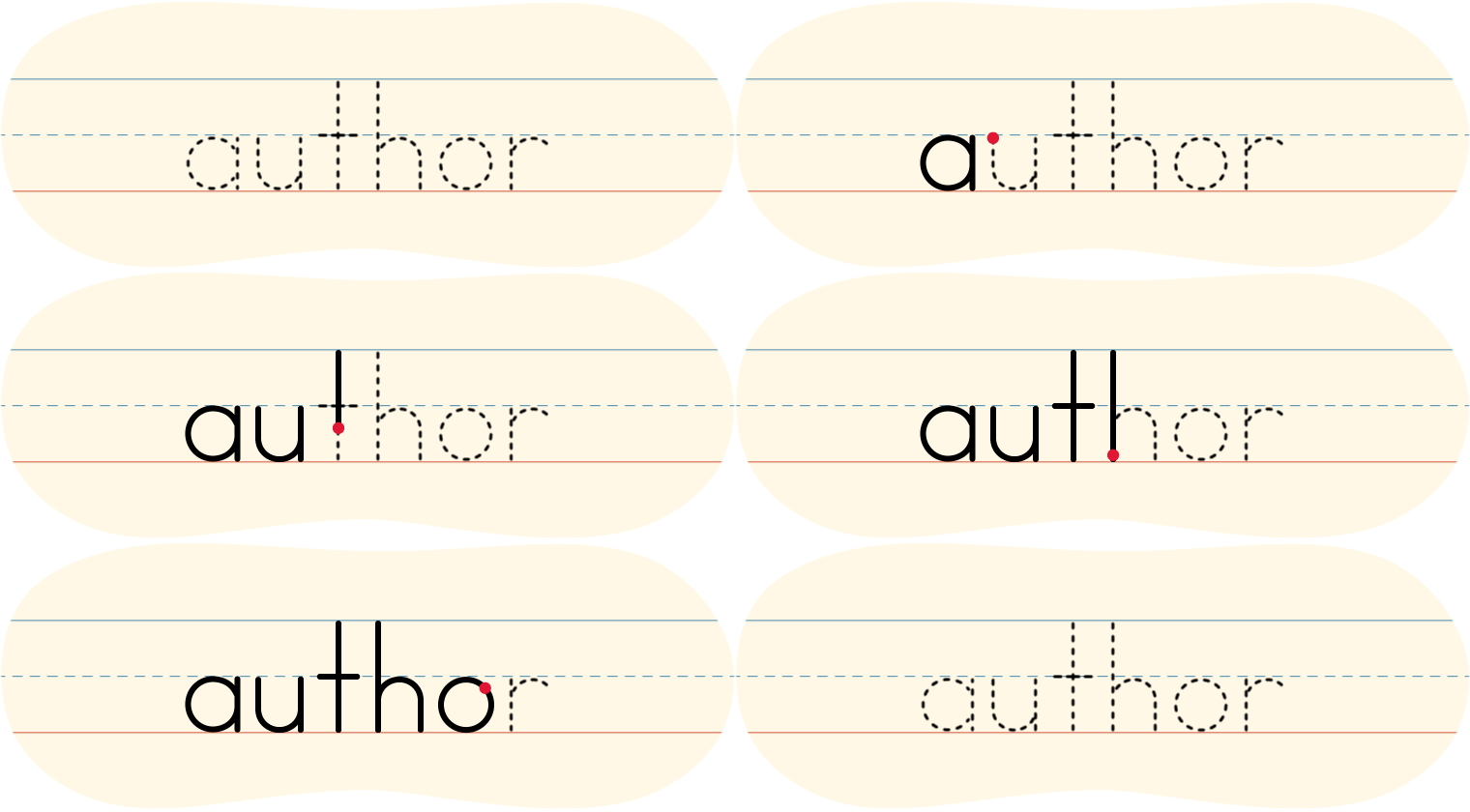
What kind of letter do all three words start with?
Press Reveal to find out!
All three words start with small letters.
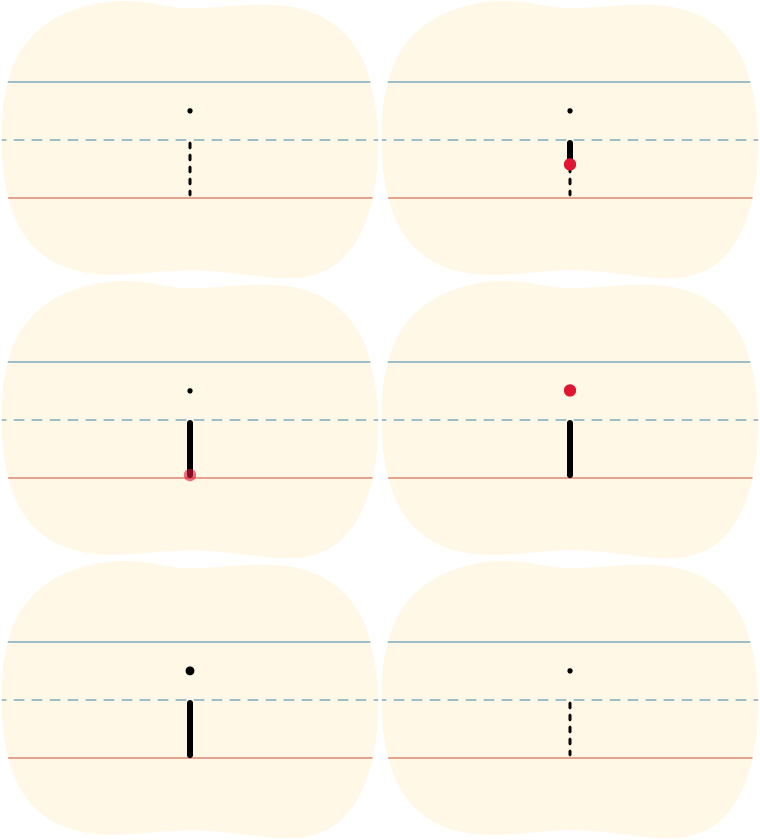
The words "illustration" and "illustrator" begin with small letter "i".
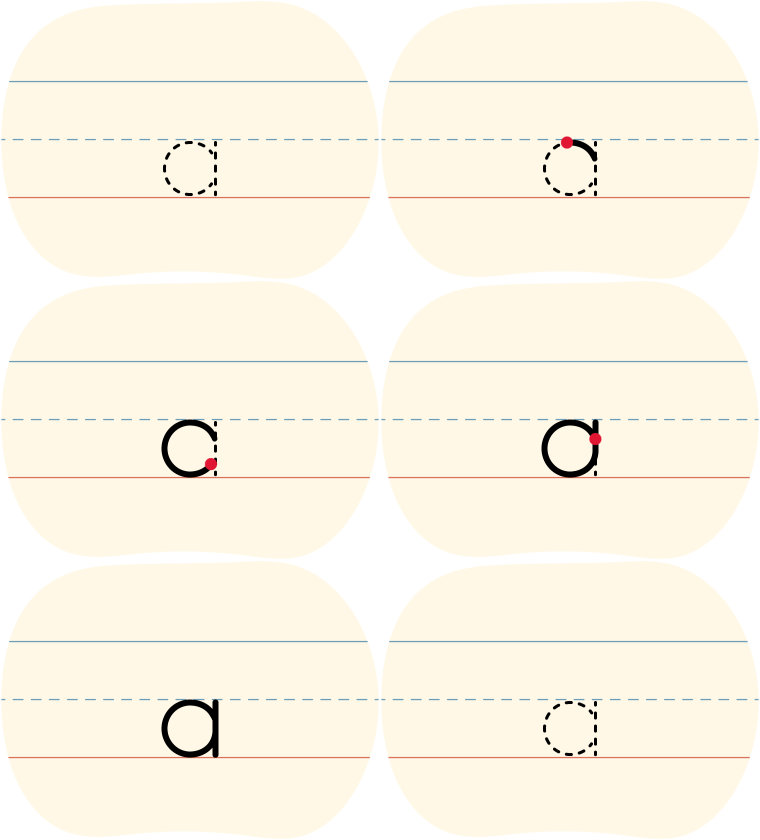
The word "author" begins with small letter "a".
Let’s reflect


Pause and Reflect
Pause and reflect
Reflect on the following questions and record your thoughts using a method of your choice.
- What is the role of an illustrator?
- How can illustrations help us understand parts of a story?
- Why do you think it is important for authors and illustrators to communicate about the types of illustrations used?
- Does exploring the illustrations in a picture book help you understand the story better?
Let’s review
Let’s review what we learned. Select the correct answer, then press Check Answer to see how you did.
Reflection
How do you feel about what you have learned in this activity? Which of the next four sentences best matches how you are feeling about your learning? Press the button that is beside this sentence.
I feel...
Now, record your ideas about your feelings using a voice recorder, speech-to-text, or writing tool.