Learning goals
We are learning to…
- use digital and media tools to use the design process to develop creative solutions to real-world problems
- identify specific ideas in texts and make self-to-text, text-to-text, and self-to-world connections
- share our thoughts and feelings about ideas in texts about differences, sense of belonging, and removing barriers
Success criteria
I am able to…
- explore different types of playgrounds around the world
- learn about all the things to consider when designing a playground including theme, materials, equipment, safety, and making space available
- brainstorm and design my own playground using what I have learned, my own ideas, and digital tools
Playgrounds around the world
Let’s explore the following carousel with images of a few playgrounds from around the world!
What do you notice? What do you wonder?
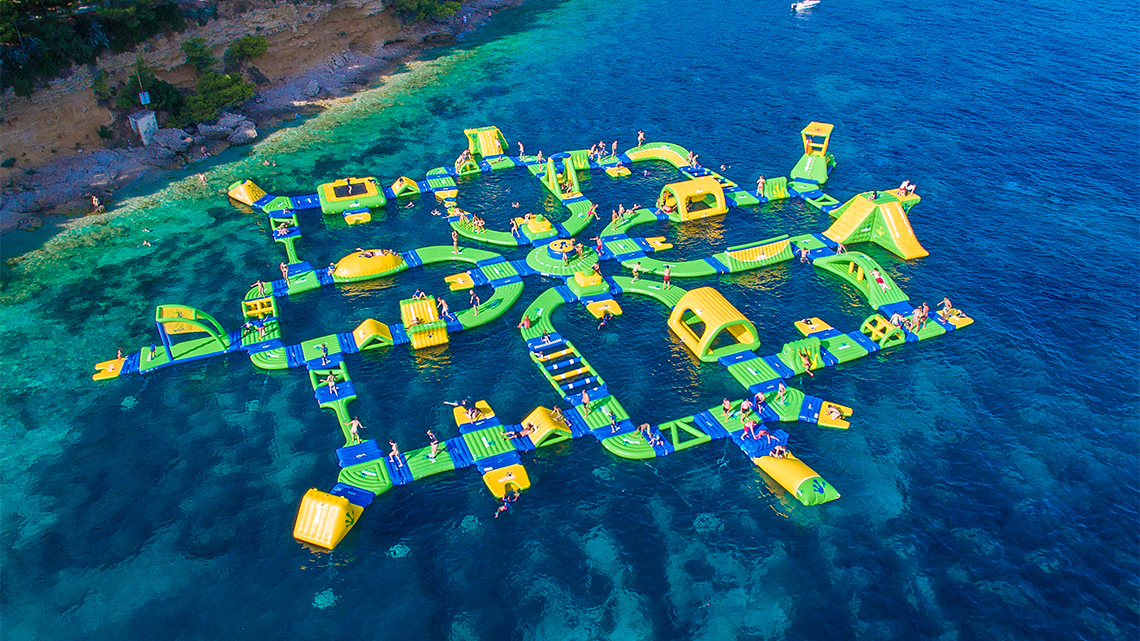
A water playground in Croatia.
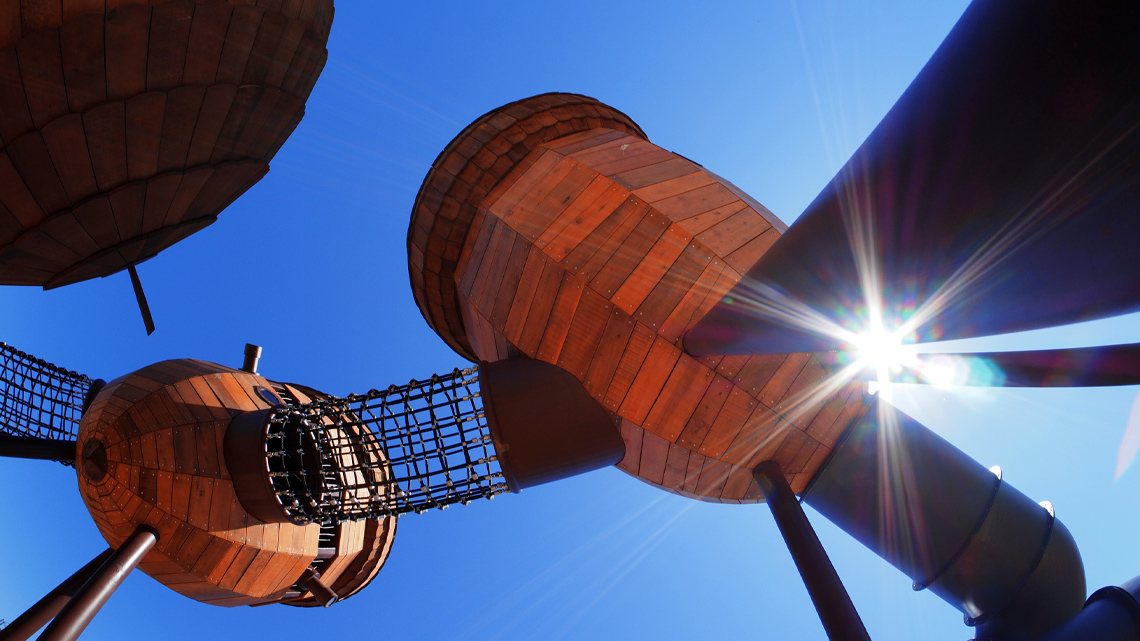
A playground inspired by acorns in Australia.
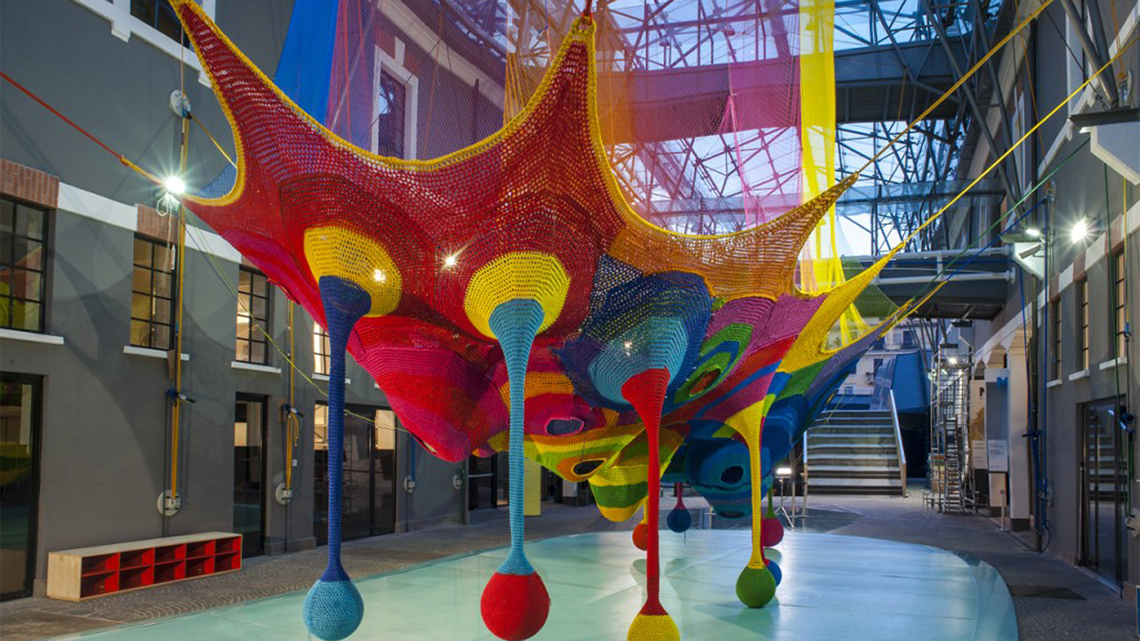
A knit playground in Japan. Children can jump, roll, and crawl in this net!
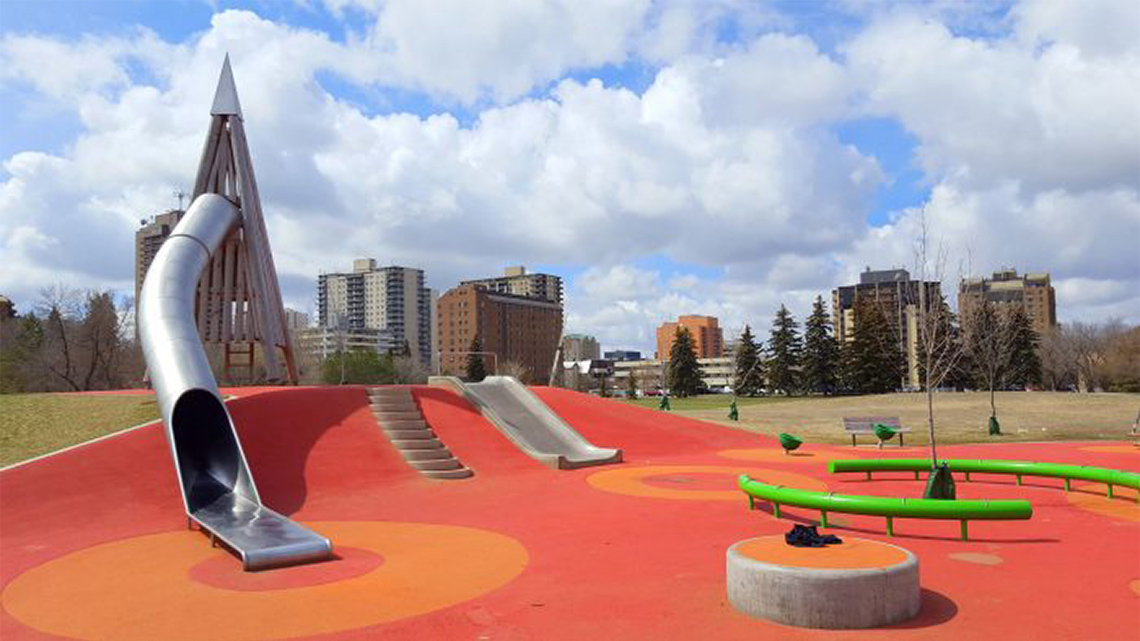
A playground is built into a hill with slides, stairs, and balance beams in Saskatchewan, Canada.
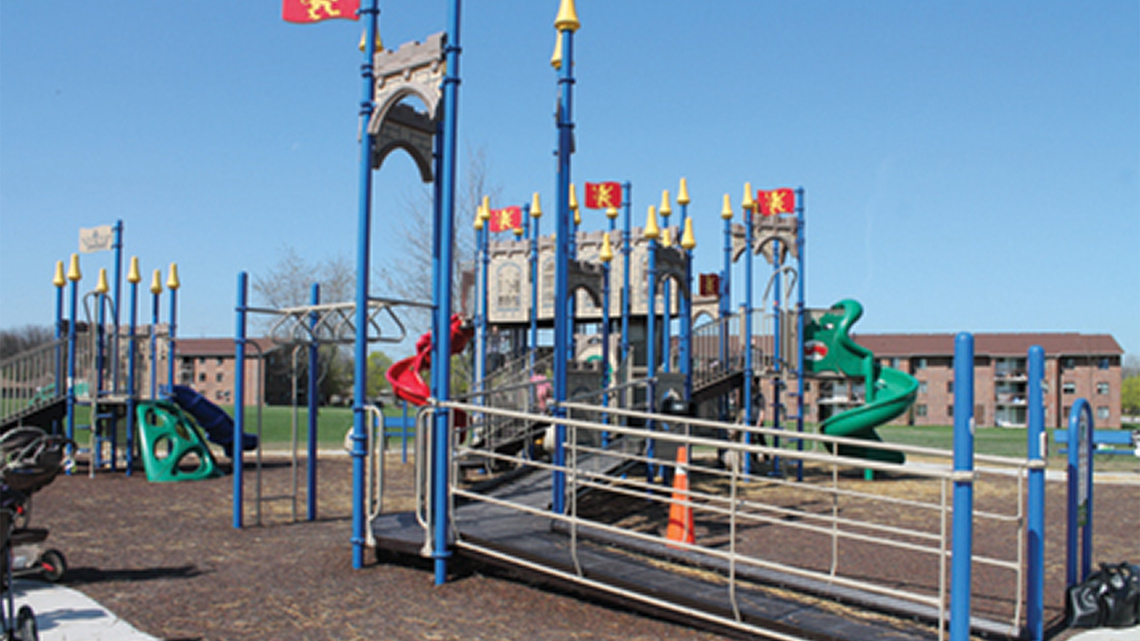
An accessible playground in Windsor, Ontario.
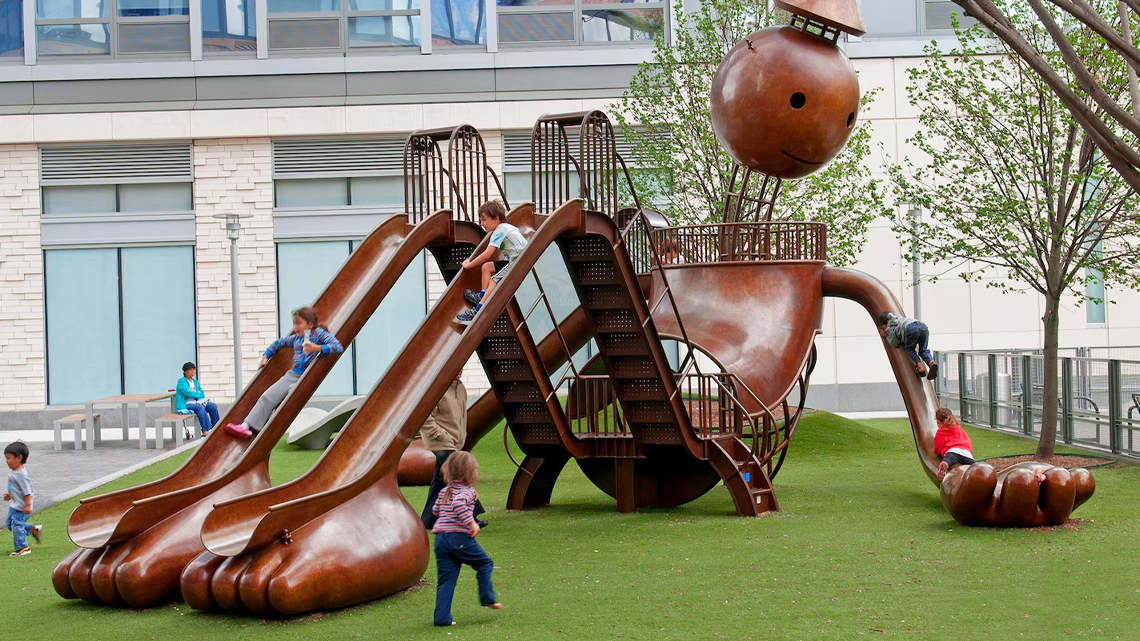
Explore the city like a giant. Playground in New York city.

Brainstorm
Brainstorm
Think about the following questions and record your answers in your notebook.
- What makes a playground fun?
- What makes a playground safe?
- What makes a playground open and available to everyone?
Playground design considerations
An artist who designs buildings, schools, homes, and playgrounds is called an architect.
Before a playground gets built, the architect designs their playground.
Press the following tabs to explore questions to consider when designing a playground.
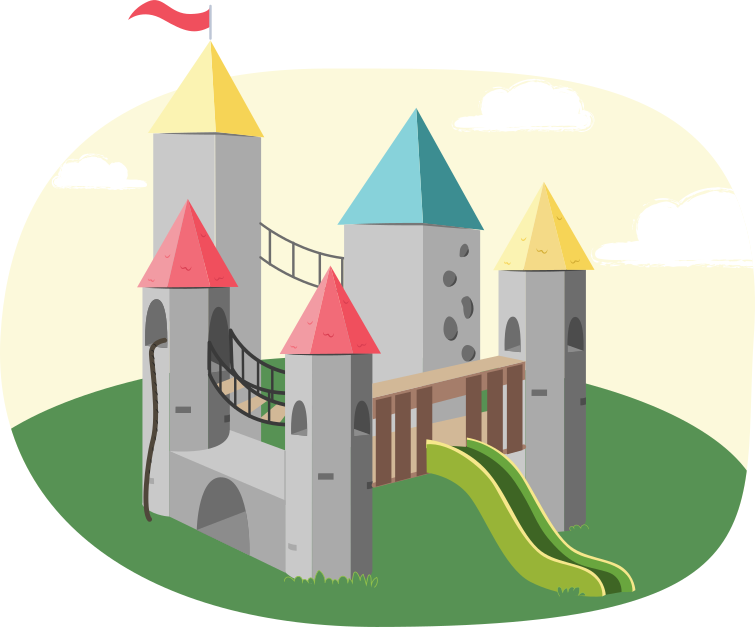
Will the playground have a theme?
The following are some examples:
- a castle theme (including, a stable, a tower, and others)
- a space theme (including, rocket ships, stars, and others)
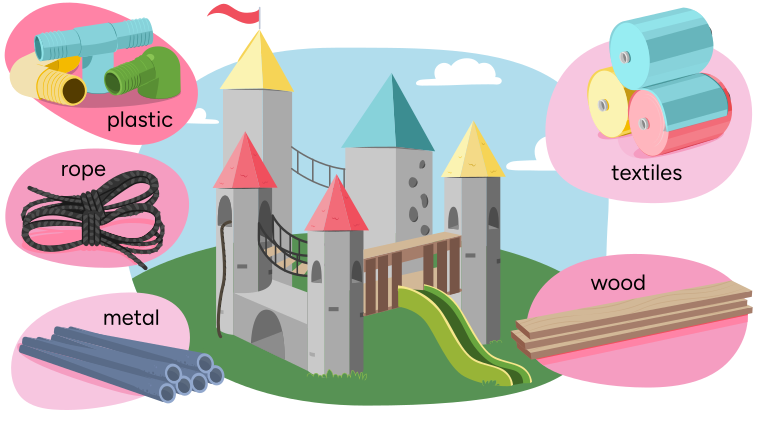
What kind of materials will the playground have?
Are these materials strong enough to last in different types of weather?
There are many different types of materials that can be used to build a playground. It is important that materials last a long time and do not break easily.
For safety, materials should be smooth instead of sharp or pointy.
Examples of materials: wood, plastic, rope, metal, and so on.
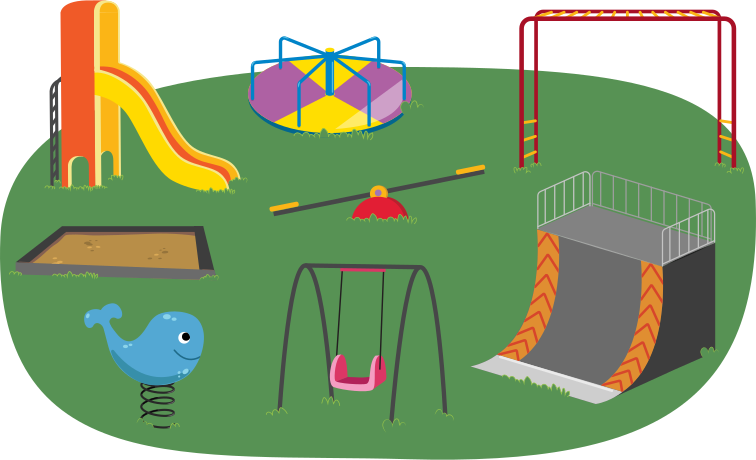
What type of equipment will the playground have?
Different types of equipment help people do different things in the playground.
Playgrounds might have:
- slides
- ramps
- sandboxes
- teeter totters
- swings
- jungle gyms
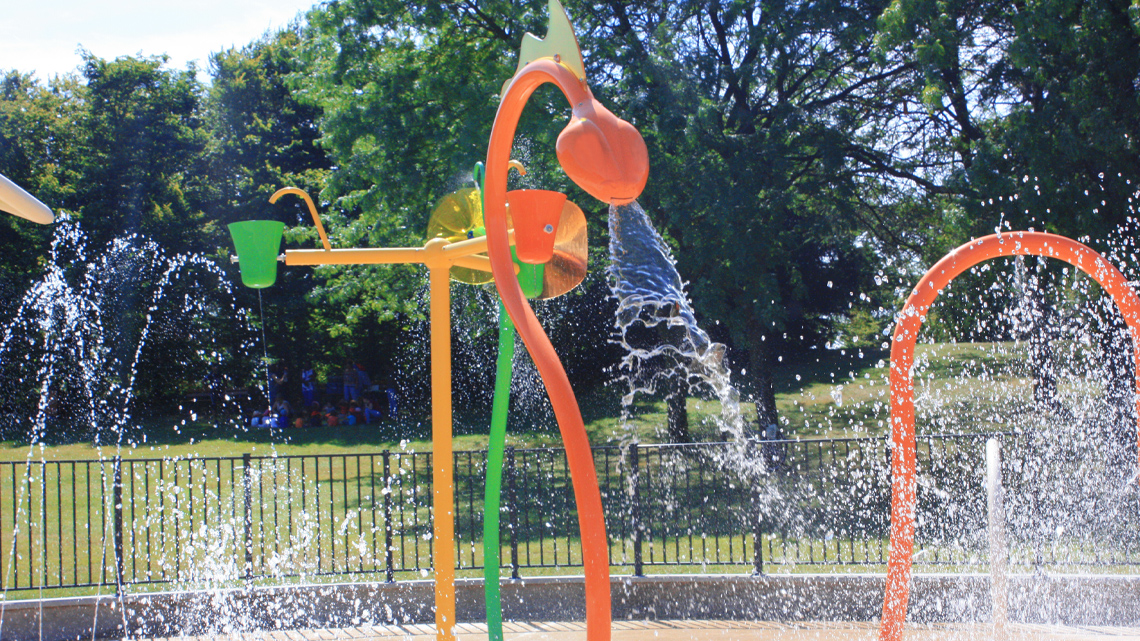
Would the playground have special equipment?
For example, some playgrounds have splash pads or water play equipment.
Safety and accessibility are important. This means that everyone can use the playground to play in a safe and fun way!
Think about the following questions:
- Are the materials smooth?
- Is the ground flat and smooth on the pathways?
- Is the ground around the playground soft?
- Can all children play? Is there a pathway so that everyone can get where they need?
- Are there different ways to get up on a structure (ramps, stairs, slopes)?
- Are there shady areas where people can sit?
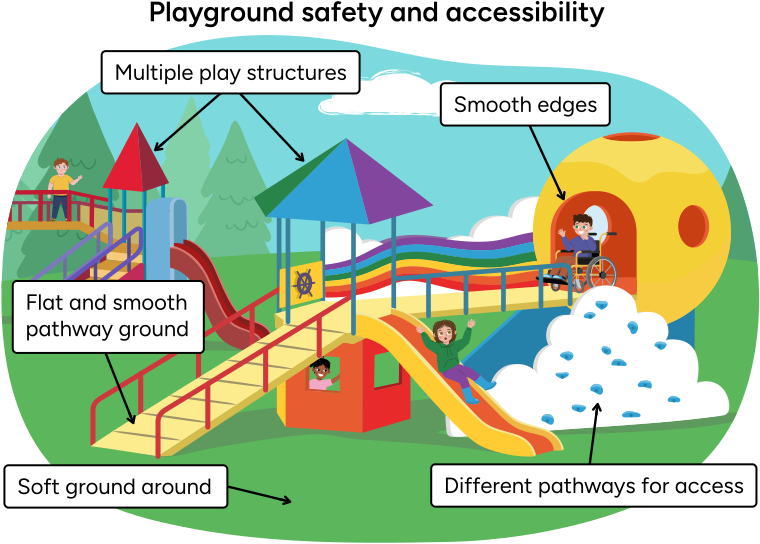
Illustration of safety and accessibility features in the playground.
The playground shows features: smooth edges, different pathways for access, soft ground around, flat and smooth pathway ground, and multiple play structures.
Planning your playground
If you were to create a picture of your playground, what might it look like?
Complete the following steps to design your playground.
Step 1
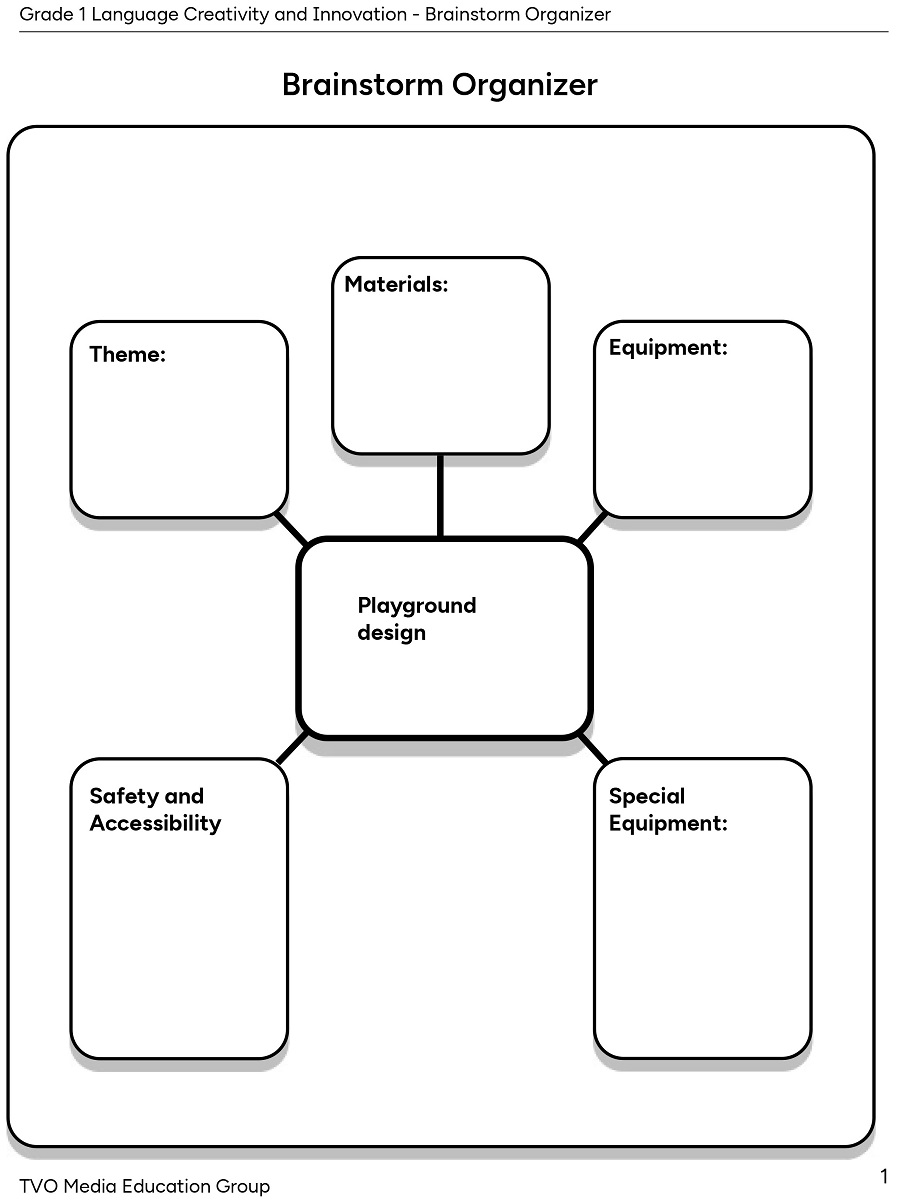
Brainstorm what kind of playground you would like to create. Add pictures and words to the following brainstorming organizer or record your ideas using another method of your choice.
Complete the Brainstorm Organizer in your notebook or using the following fillable and printable document. If you would like, you can use speech-to-text or audio recording tools to record your thoughts.
Step 2
Try using the following grid map with items you could use to plan out what your playground would look like. Think about the questions that an architect needs to consider before they begin designing. Choose five to ten items that you want to include. Press on your chosen icon, then press on your chosen map section to place your icon.
As you plan your playground, think about the following question.

Pause and Reflect
Pause and reflect
Why is it important that a playground be open and available to all children?
Share your thoughts with a partner, if possible.
More than one
As you know, a noun is any person, place, or thing. We can make a noun plural (more than one) by adding an "s" or "es" to the end of the word.
Check out the following examples:
My playground will have one bench.
My playground will have many benches.
or
My playground will have one swing.
My playground will have many swings.
Let’s practice! For each noun, select "s" or "es" from the drop-down menu to make it plural. Press Check Answer to see how you did.
Putting it all together
Next step of your playground design is to draw a picture of your playground and create your description.
Use your brainstorm organizer or recorded notes from the Action section to help you.
Think about:
- theme
- materials
- equipment
- special equipment
- safety and accessibility
Examine the following playground design example.
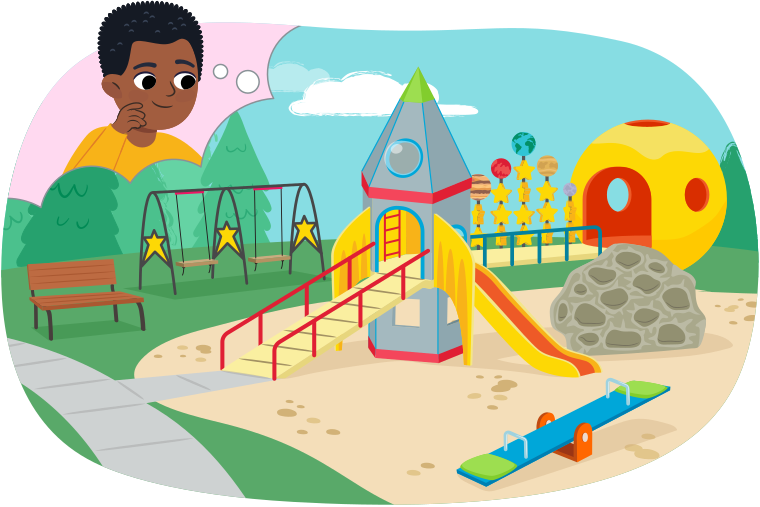
Illustration of a learner imagining a space-themed playground. The playground has planets and stars in different parts. There is a plastic climber, a plastic spaceship slide, wood swings, bridges, a seesaw, grass and sand areas for the ground, a walkway, and a wooden bench. The playground elements showcase safety and accessibility elements.
Theme: My playground has a space theme. There are pictures of planets and stars on different parts of my playground.
Materials used: The materials I used were plastic for the climber (to be smooth and safe), wood for the swing set, walkways, and benches. I used sand and grass for the ground.
Equipment: My playground includes a climber, slides, bridges, a teeter totter, swings, grass area, sand area, and a walkway.
Special equipment: My playground will have a spaceship slide.
Safety and availability: I wanted to add these items for people of all ages to play. I wanted to make sure it was safe for people in wheelchairs too. There are swings for everyone. I wanted a grassy area for people to play in nature. I wanted wooden benches and sand so that I could use materials found in nature.
Listen to Playground Design Example to explore an audio clip of the sample design.
Playground Design Example
Plural noun review
Select true or false, then press Check Answer to see how you did.
Reflection
How do you feel about what you have learned in this activity? Which of the next four sentences best matches how you are feeling about your learning? Press the button that is beside this sentence.

I feel...
Now, record your ideas about your feelings using a voice recorder, speech-to-text, or writing tool.