Learning goals
We are learning to…
- show an understanding of relationship between the form, message, and purpose of a text, audience, and the creator
- identify strategies that have helped us understand different texts
- brainstorm and develop ideas about various topics using simple strategies and using resources, our own learning, and our own experiences
- create specific types of texts using different tools and strategies
- make simple edits to draft texts and create a final version
Success criteria
I am able to…
- explore concrete poems by Bob Raczka and answer questions about the form and message of each poem
- identify strategies that helped me understand concrete poems, such as rereading and visualizing
- brainstorm and develop ideas for my own concrete poem
- create my own draft of a concrete poem
- make simple edits to my concrete poem and create my final version
Hopscotch
Explore the following video. How would you describe what the person is doing in the video?
Next, explore the following poem Hopscotch by Bob Raczka.
What do you notice about the way the poem is presented?
How does the shape of the poem help us predict or guess what the poem is about?
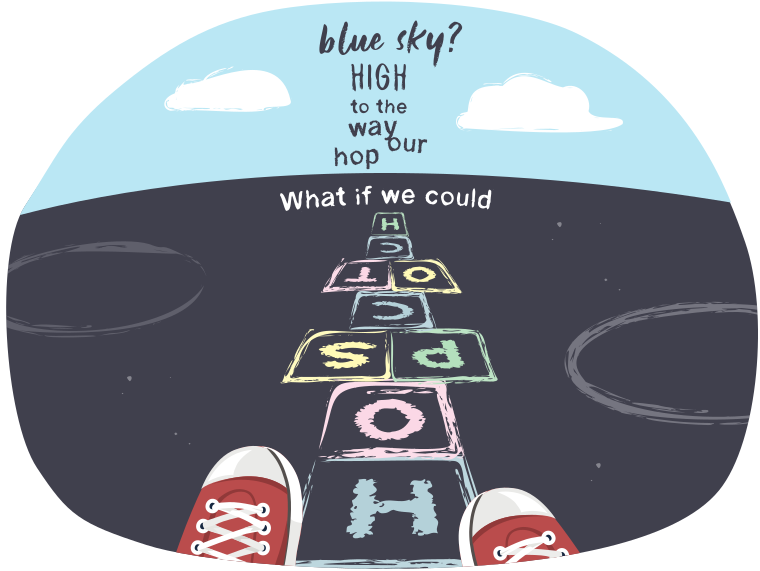
A hopscotch game is drawn in chalk on the pavement. Red sneakers are positioned at the beginning of the hopscotch pattern, suggesting that the person wearing them is about to start playing. Above the horizon, the sky is blue.
The poem called "Hopscotch" appears on this drawing. The text is as follows: "What if we could hop our way to the high blue sky?" However, this poem is written from down to up. The letters of the title "Hopscotch" appear in the hopscotch pattern on the pavement. The words "What if we could" appear on the pavement, right above the hopscotch pattern. The words "hop our" appear right above this line, on a background of blue sky. The remaining words and phrases - "way to the high blue sky?" - continue to climb higher and higher into the blue sky.
Hopscotch by Bob Raczka
How did you feel when exploring the poem?
Concrete poems
Bob Raczka studied art in college and worked in advertising for 30 years. A few years ago, Bob realized that he really liked poetry and started writing his own! He loves to play with words and get creative.

“If I could share just one message with today's kids, it would be this: Make stuff!
Draw imaginary creatures. Build forts. Write comic books. Make up games. Invent a new baseball pitch. Design your own Halloween costume. Try your own recipe.
Dare to be creative.”
– Bob Raczka
You may have noticed that the Minds On poem was created to look like a hopscotch. The poem is an example of a concrete poem.
Concrete poems are also called “shape” poems. The words in a concrete poem create a picture. This is one way that poets can use their creativity with words to share a feeling with the reader.
Hopscotch
Let’s take another look at the poem Hopscotch.
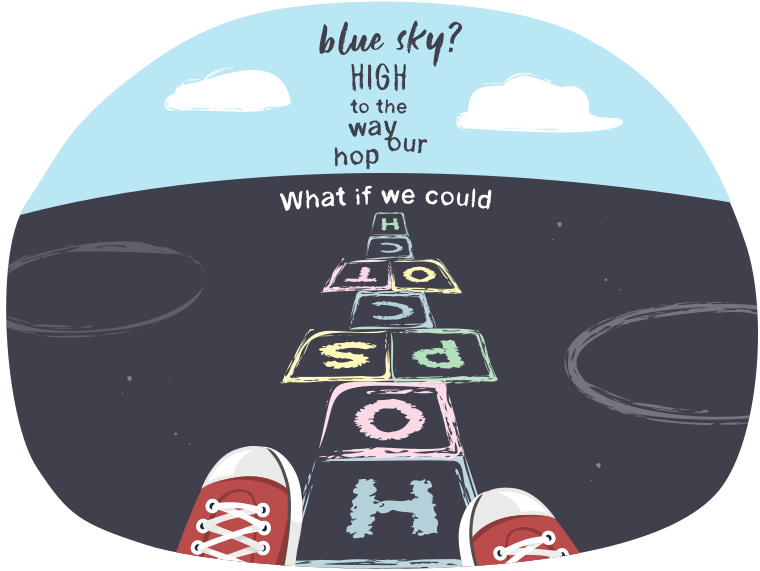
A hopscotch pattern drawn on pavement, with a blue sky in the background. Two sneakers are just visible at the start of the hopscotch pattern.
The letters of the title "Hopscotch" appear in the hopscotch squares on the pavement. The text of the poem itself -- "What if we could hop our way to the high blue sky?" - is written from down to up, with groups of words climbing higher and higher into the blue sky.
Hopscotch by Bob Raczka
The shape of the poem helps us picture ourselves hopping along a hopscotch path.
The poem also helps us use our imagination, asking what it would feel like if we could hop all the way up to the blue sky.
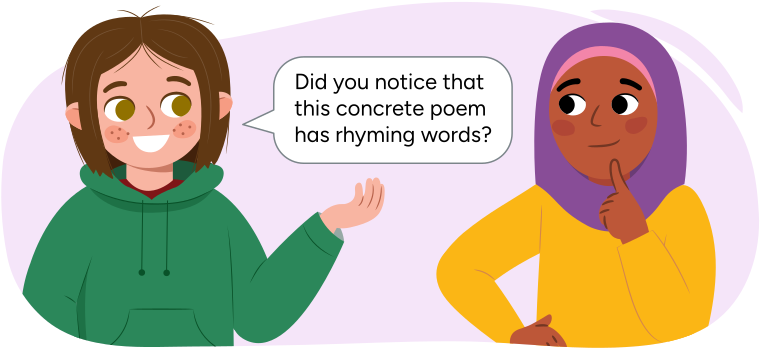
What if we could hop our way to the high blue sky?
High and sky both end in the long “i” sound!
Does the poem feel different when it is not shaped as a picture?
Press Reveal for a possible answer.
I understand the meaning of the poem better when it is a concrete poem with pictures. It helps me imagine hopscotch.
Balloon
Let’s explore another poem by Bob Raczka called Balloon. This poem is written in the shape of a balloon.
How does the shape of the poem help us predict or guess what the poem is about?
Press Reveal for a possible answer.
The poem is written in the shape of a balloon. This makes me think that the poem is about someone having a balloon.
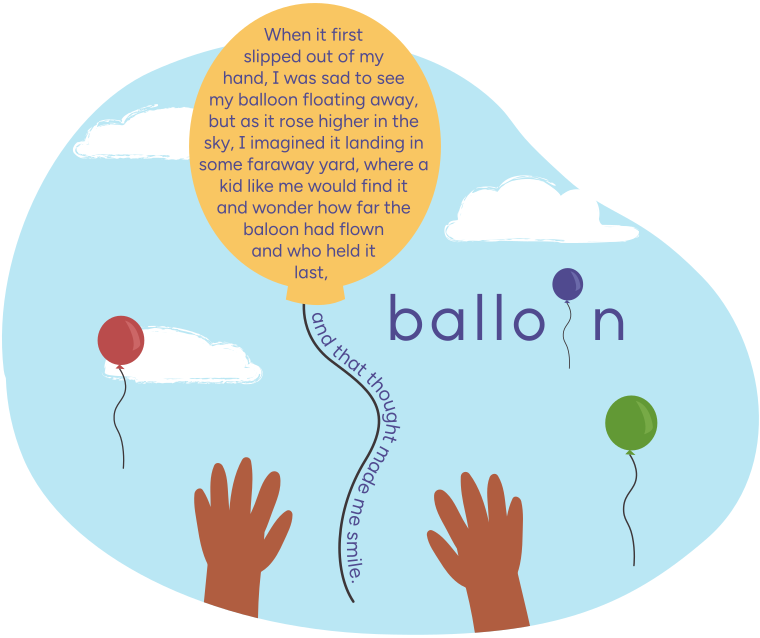
Two hands are reaching up to a balloon that is escaping into the sky. There is text inside the balloon that is the same shape as the oval balloon. The end of the final sentence is written along the balloon's string.
Balloon
When
It first slipped out
Of my hand, I was sad
To see my balloon floating
Away, but as it rose higher
In the sky, I imagined it landing
in some faraway yard,
where a kid like me would
find it and wonder how
far the balloon had
flown and who
held it
last
and that thought made me smile.
Balloon by Bob Raczka
After listening to the poem, describe what it is about to a partner, if possible.
How did you feel when reading and/or listening to the poem?
What is something that makes you smile?
Record your ideas using a method of your choice.
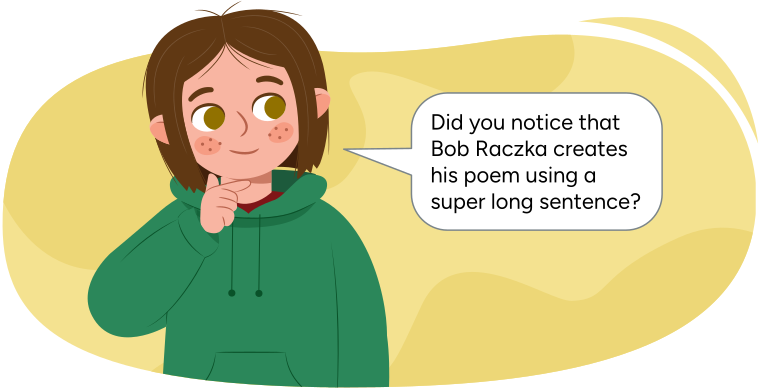
Bob Raczka also uses connecting words to join different sentences. These connecting words are called conjunctions. In his poems, he uses a type of conjunctions called coordinating conjunctions to put different sentences together.
Connecting words or coordinating conjunctions are:
- and
- but
- for
- or
- yet
- so

Try It
Try it!
Can you find the coordinating conjunctions in the poem Balloon by Bob Raczka?
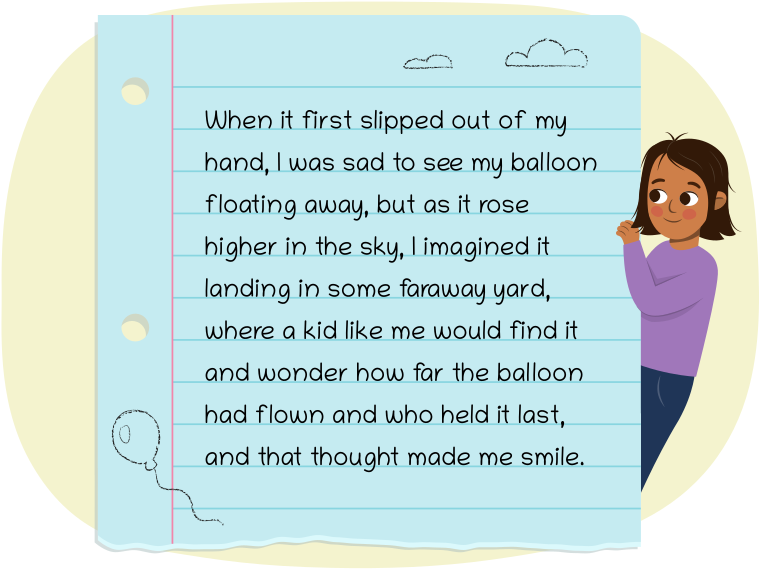
Text of the poem "Balloon," written as a traditional paragraph on lined paper: "When it first slipped out of my hand, I was sad to see my balloon floating away, but as it rose higher in the sky, I imagined it landing in some far away yard, where a kid like me would find it and wonder how far the balloon had flown and who held it last, and that thought made me smile."
Press Reveal to see the coordinating conjunctions in the poem.
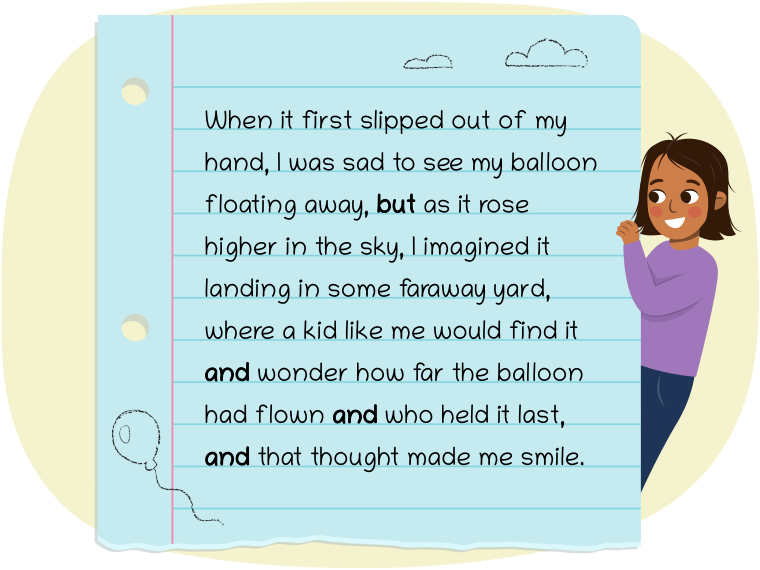
Three words (but, and, and) are bolded in the following text: "When it first slipped out of my hand, I was sad to see my balloon floating away, but as it rose higher in the sky, I imagined it landing in some far away yard, where a kid like me would find it and wonder how far the balloon had flown and who held it last, and that thought made me smile."
Let’s brainstorm
Brainstorm ideas for your own concrete poem.
Some ideas of what to write about are:
- your favourite animal
- your favourite type of food or snack
- your favourite activity
- your favourite toy or game
Complete the fillable and printable Concrete Poem: Mind Map in your notebook or using the following document. If you would like, you can use speech-to-text or audio recording tools to record your thoughts.
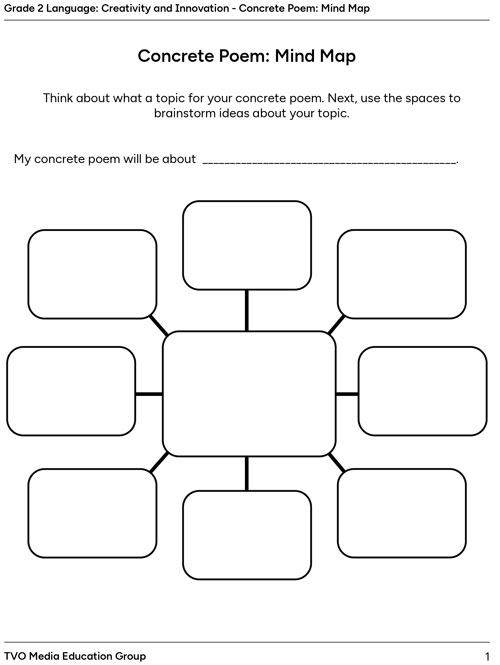
Press the Concrete Poem: Mind Map button to access the Concrete Poem: Mind Map.
Activity(Opens in a new tab)When you are done, share your brainstorm organizer with a partner. What did they choose to write about?
Putting it all together
It’s time to create our own concrete poem!
Step 1: Prewriting
Review your graphic organizer and start thinking about simple sentences you can use for your own poem!
Step 2: Drafting
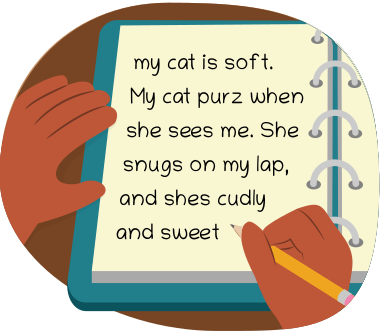
Create simple sentences to share your idea. You can use any types of sentences you would like to include. Your poem could include different kinds of sentences (for example, declarative, interrogative, exclamatory).
Optional: You can include rhyming words and as many adjectives or describing words as you like!
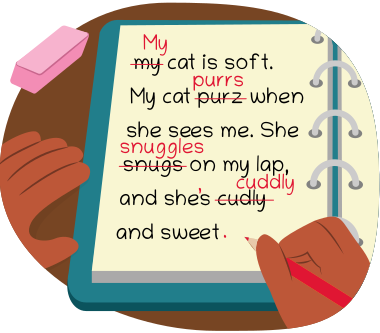
Step 3: Revise your poem
- make sure each new sentence starts with a capital letter
- use capital letters when using proper nouns
- make sure to use a period, question mark or exclamation mark depending on the sentence you create
- check your spelling using a dictionary
- read your poem out loud to make sure it makes sense

Student Tips
Use a dictionary
For those really tricky words, you may want to try using a dictionary or an online dictionary. Examine the following chart for quick dictionary skill tips!
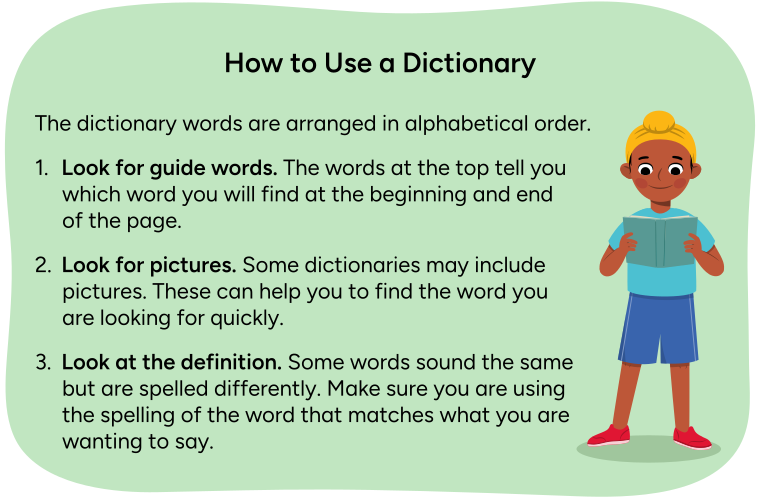
How to use a dictionary or an online dictionary
The dictionary words are arranged in alphabetical order.
- Look for Guide Words. The words at the top tell you which word you will find at the beginning and end of the page.
- Look for pictures. Some dictionaries may include pictures. These can help you to find the word you are looking for quickly.
- Look at the definition. Some words sound the same but are spelled differently. Make sure you are using the spelling of the word that matches what you are wanting to say.
Once you have revised your poem, you may draw a simple outline of your poem shape. Then write your poem using a notebook or a method of your choice. If you’re using paper, draw with a pencil not a pen.
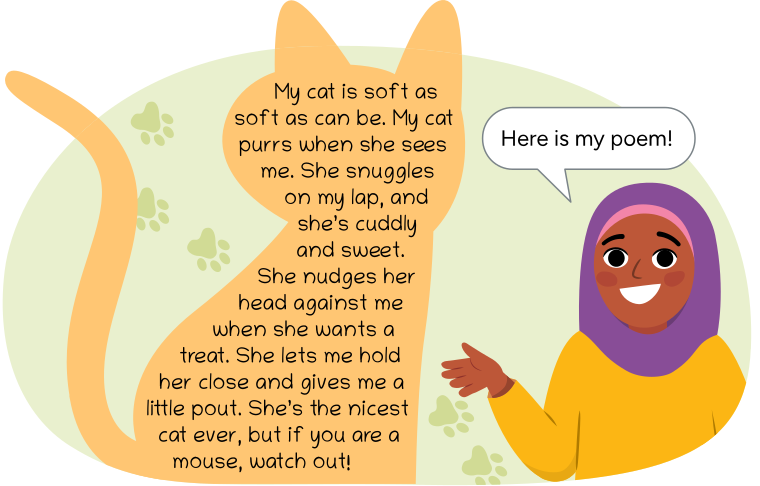
Student Esma saying, "Here is my poem." She gestures towards the following poem, written in the shape of a cat: "My cat is soft as soft as can be. My cat purrs when she sees me. She snuggles on my lap, and she's cuddly and sweet. She nudges her head against me when she wants a treat. She lets me hold her close and gives me a little pout. She's the nicest cat ever, but if you are a mouse, watch out!"
Esma’s Concrete Poem
Step 4: Publishing
If possible, share your concrete poem with a partner.
Conjunction review
For each sentence, select the missing words from the drop-down menu. Press Check Answer to see how you did.
Reflection
How do you feel about what you have learned in this activity? Which of the next four sentences best matches how you are feeling about your learning? Press the button that is beside this sentence.

I feel...
Now, record your ideas about your feelings using a voice recorder, speech-to-text, or writing tool.