Learning goals
We are learning to…
- apply knowledge and skills from different subjects to design a graphic text
- describe how images and graphics are used in texts
- generate and develop creative ideas for designing a future city
- produce graphic texts with appropriate text features
Success criteria
I am able to…
- describe my observations and inferences about images
- apply my knowledge about communities and their features when planning a graphic text
- brainstorm and plan elements of a future city
- produce a graphic text with appropriate text features such as a title, labels, images and symbols

Notice and wonder
Check out the following images of futuristic cities and buildings. What do you notice? What do you wonder?
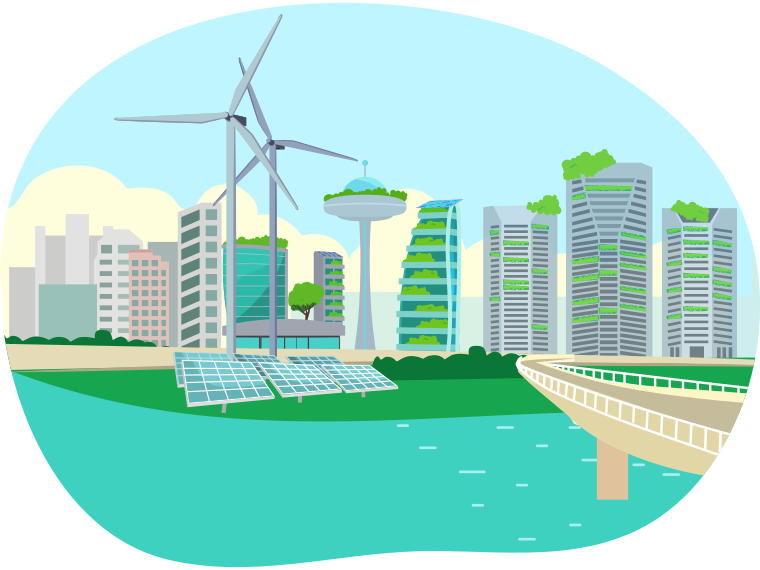
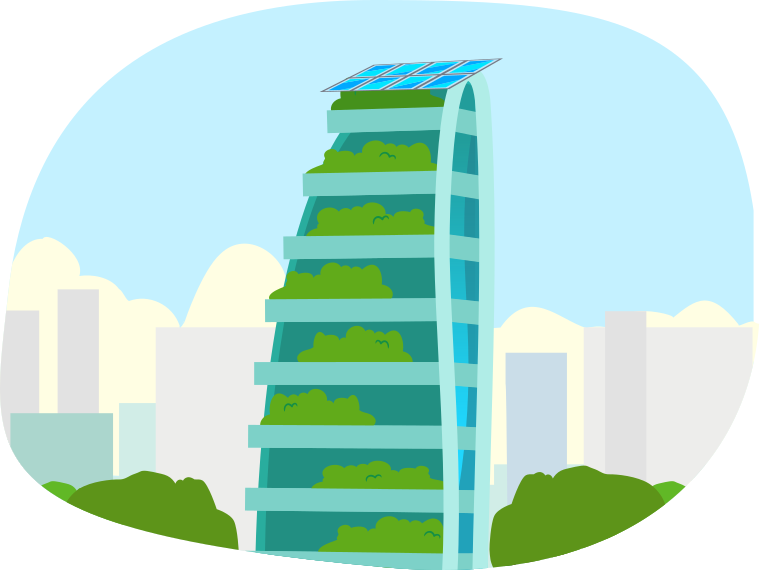

Student Success
Think
After looking at the images, record your answers to the following questions in a notebook or a method of your choice and discuss them with a learning partner if possible.
- What do you notice about these images?
- Do you think they are from the past, present, or future? What are your clues?
- What features are similar among the cities? What are the differences?
- What natural features can you identify in the images?
Press Definition to learn more.
Natural features are parts of the Earth that are not made by people such as:
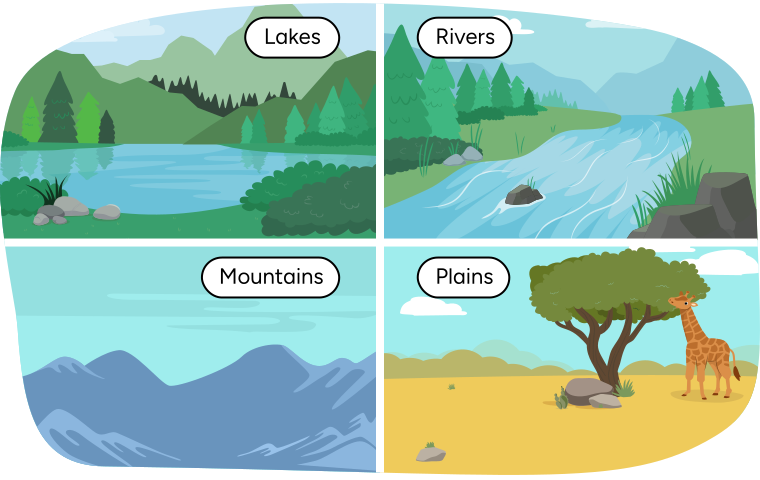
A labeled image split into four showing natural features of the Earth:
- A lake surrounded by forest is labeled ‘Lakes.’
- A flowing river surrounded by tree is labeled ‘Rivers.’
- A landscape with many large mountains is labeled ‘Mountains.’
- A flat landscape with a singular tree is labeled ‘Plains.’
- lakes
- rivers
- mountains
- plains
Choose one image. What would you like to know about this place? What questions would you ask someone who lived there?
In this learning activity, you will learn how sustainable and futuristic cities are being planned. You will also brainstorm ideas for your own city of the future!

Exploring real-life futuristic designs
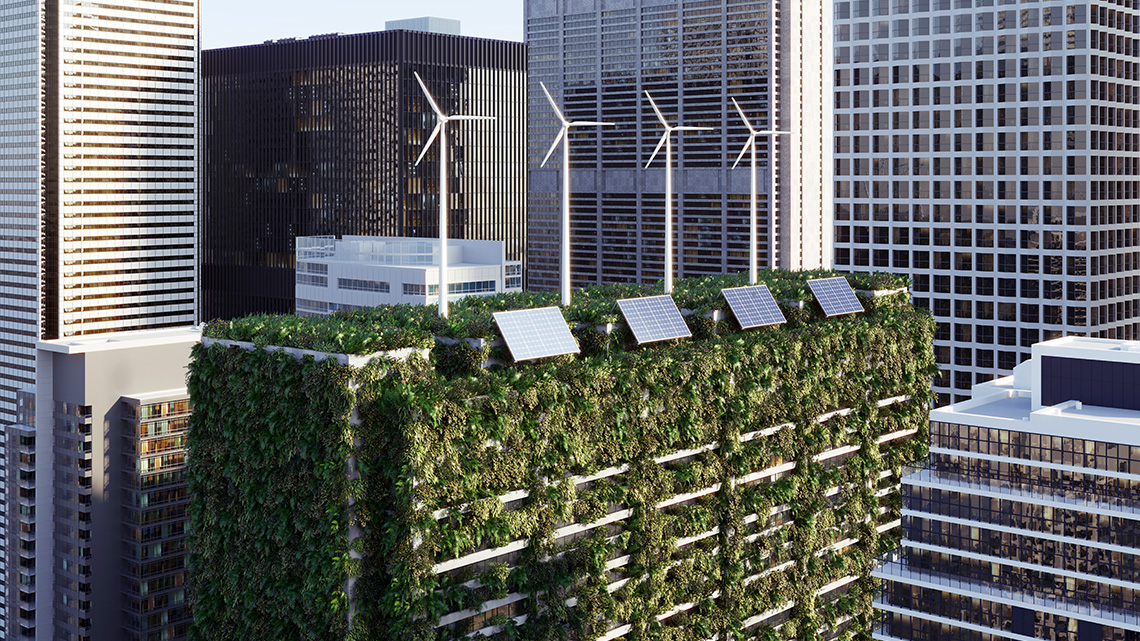

Today’s vocabulary
Before viewing
Have you ever seen a skyscraper or a sideways skyscraper?
In the following video, we are going to travel to China to see an amazing example of a futuristic building.
Press Definition to learn more.
Futuristic is something that looks like it could be from the future.

Student Tips
Listening strategies
When reading, listening, or viewing new information it is important to have a purpose in mind. While you’re watching the following video, your purpose is to learn facts and information.
Think about the following questions:
- What is the structure called?
- Where is it located?
- How many buildings will it have?
- What special features will this structure have?
Check out the following video entitled Sideways Skyscraper to learn more.
Post-viewing
This amazing skyscraper shows us a glimpse into what future cities might look like. Let’s review facts and information from this video. If you are unsure about any of the answers, view the video again.
Select the correct answer, then press Check Answer to see how you did.
Select the correct answer, then press Check Answer to see how you did.
Select the correct answer, then press Check Answer to see how you did.
Select the correct answer, then press Check Answer to see how you did.

Compound words!
What do you notice about these words?
- skyline
- skyscraper
- skybridge
Press Show Answer to learn more.
They all start with the word sky and they are all compound words.
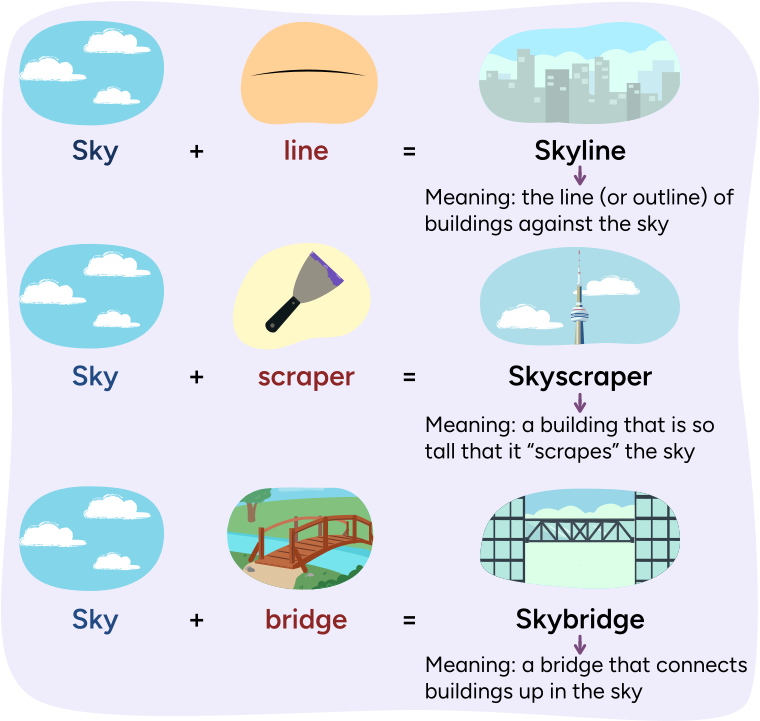
- Sky + line = Skyline. Meaning: the line or outline of buildings against the sky.
- Sky + scraper = Skyscraper. Meaning: a building that is so tall that it “scrapes” the sky.
- Sky + bridge = Skybridge. Meaning: a bridge that connects buildings up to the sky.
Press Example to learn more.
Here are more compound word examples:
- homework (home + work) = work you do at home
- treefort (tree + fort) = a fort in a tree
- tablecloth (table + cloth) = a cloth that goes on a table
Can you think of any other compound words?

Student Wellness
Take a break!
Building green
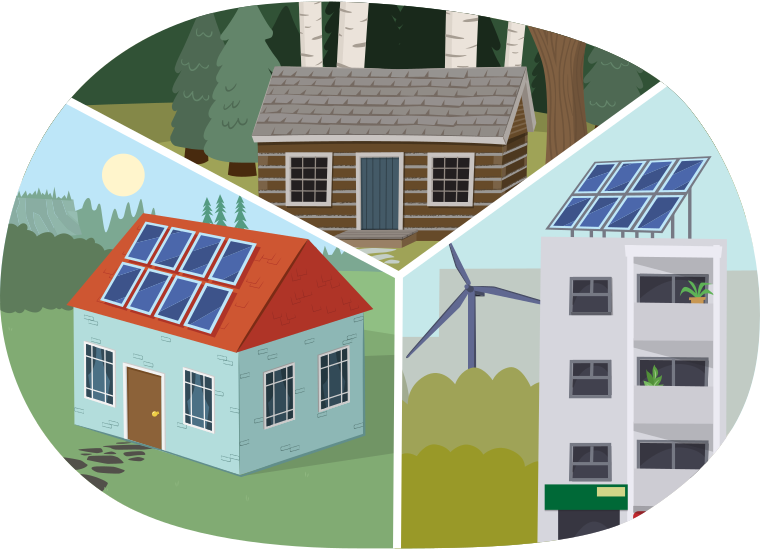
It is important that cities now and in the future are sustainable.
Press Definition to learn more.
Sustainable means using Earth’s resources in a way that does not harm the Earth.
Press the following tabs to learn more about sustainable practices.
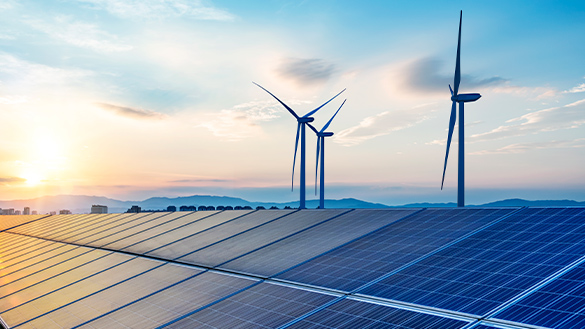
Cities can use the power of nature to create energy. Buildings can have solar panels, or wind turbines to create electricity in a way that does not pollute the air.
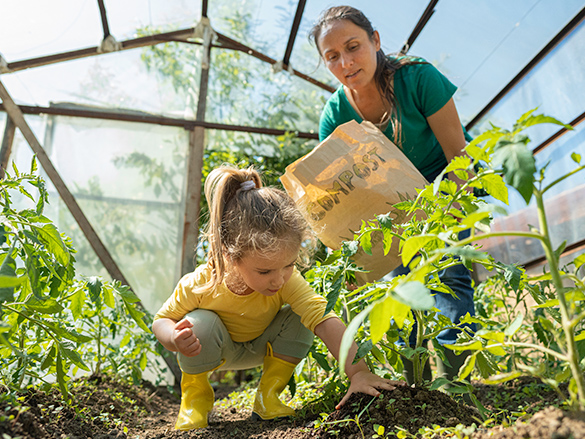
Cities can practice sustainability by managing waste in many ways such as:
- recycling
- upcycling
- composting
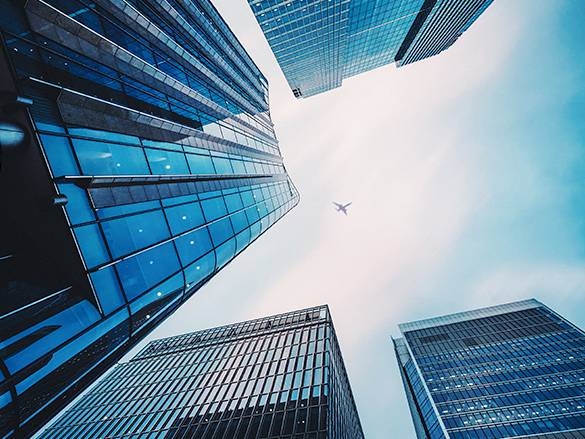
Making buildings taller instead of wider means using less land for buildings. Homes, shops, and even farms could be built on different levels!
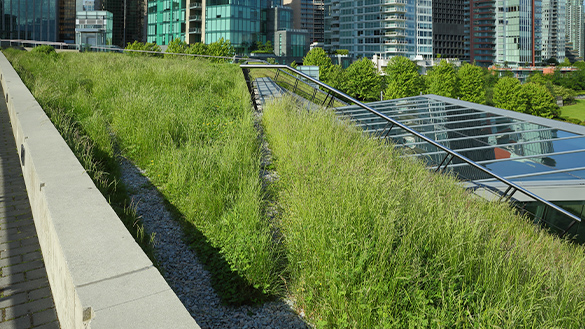
Greenspace is land that is covered by plant life. Even in cities, nature is important. This can be rooftop gardens or parks, vertical farms built into buildings, or parks with water recycling systems.
Your future city
Student Success
Think
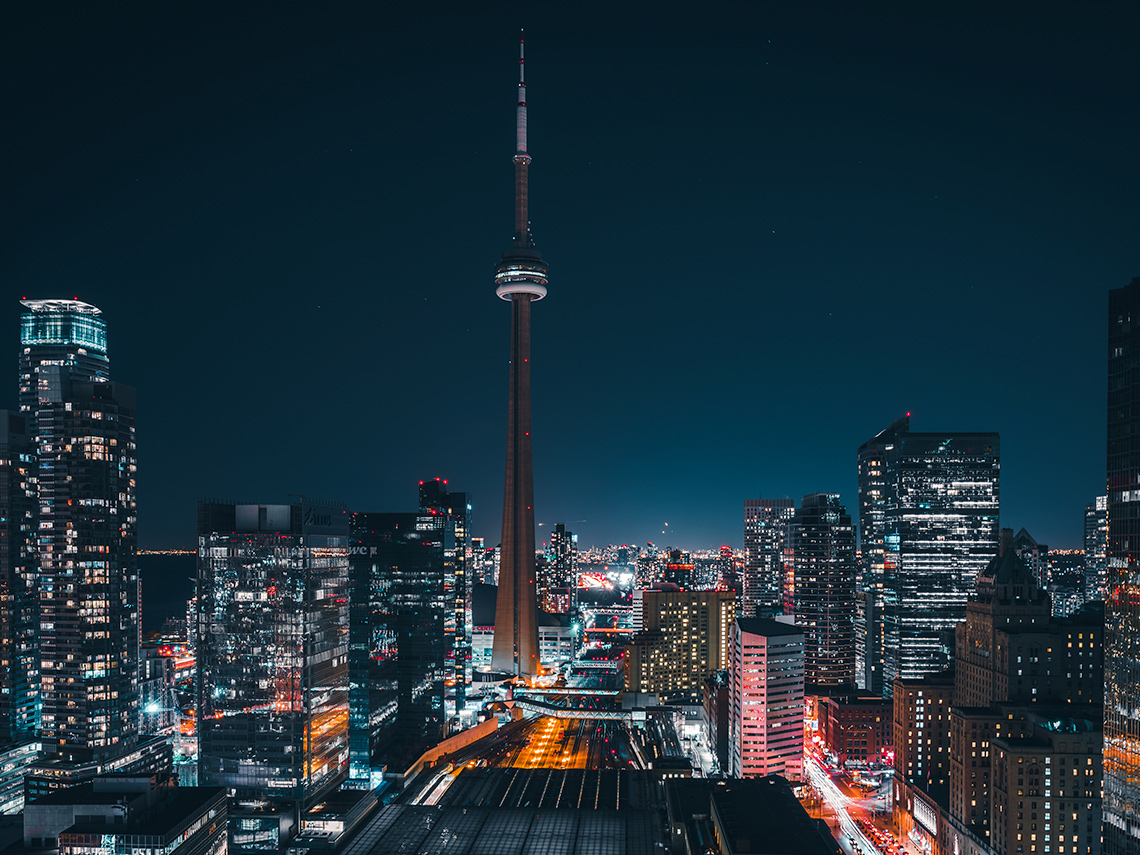
If you could create a city in the future, what would you include?
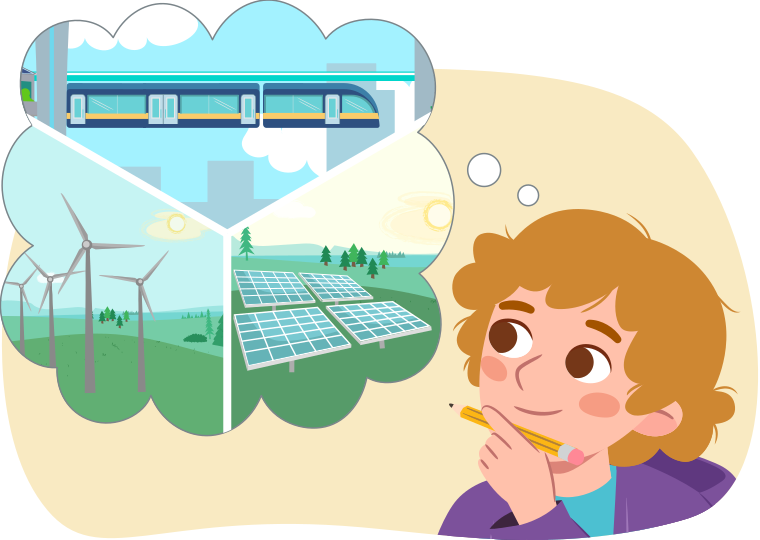
- What would houses and transportation look like? What kinds of special technology will they have in the future?
- What would parks look like in your city? Where would people play and gather?
- How would your city be sustainable?
What is a graphic text?
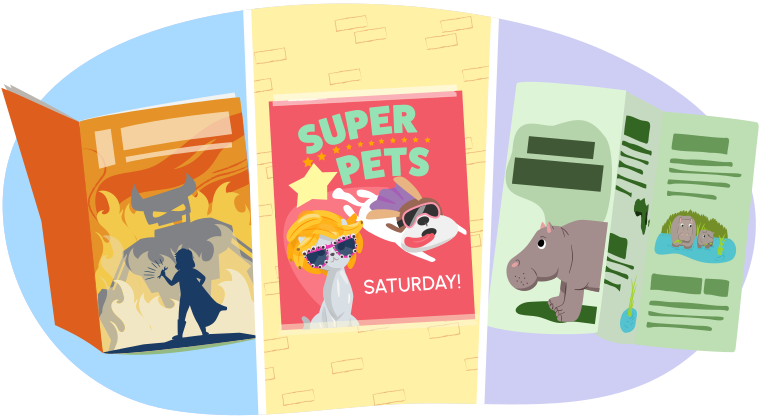
After brainstorming your city’s features, you will use your amazing ideas to create a graphic text. Graphic texts are texts that communicate ideas with a combination of words, pictures, colours, or charts.
Examples of graphic texts include:
- signs
- brochures
- storyboards
- comic strips
Check out the following video, where teacher Arianna talks about different types of graphic texts and their features.

Pause and Reflect
Pause and reflect
What graphic texts have you seen in school or in the community?
Elements of graphic texts
What features do you notice in the following graphic text about a future city?
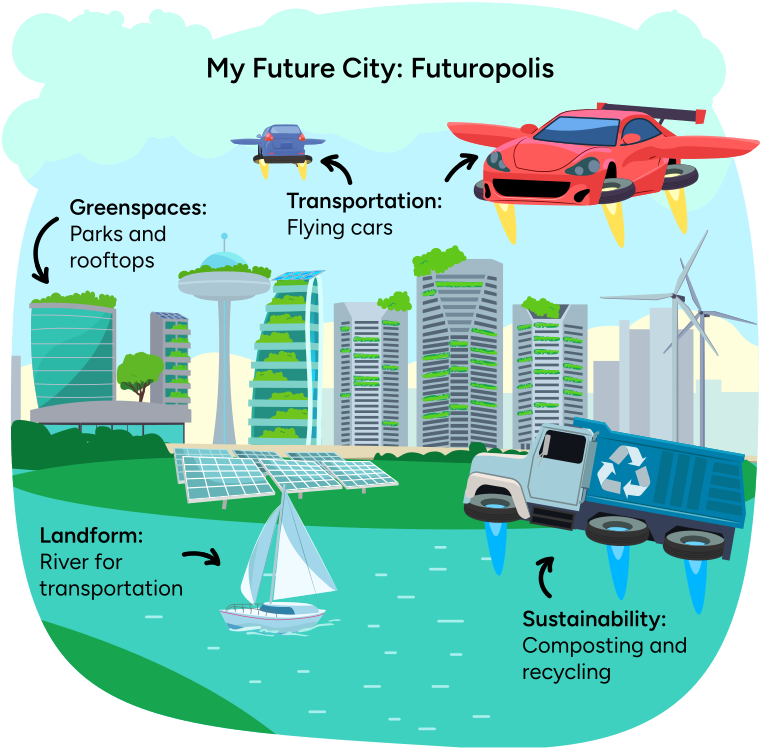
A labeled graphic titled 'My Future City: Futuropolis.' It shows a futuristic city landscape by the water. The labels are:
- 'Greenspaces: Parks and rooftops' points to tall buildings with greenspaces and plants on multiple floors
- 'Transportation: Flying cars' points to flying cars
- 'Landform: River for transportation' points to a sailboard on a river
- 'Sustainability: Composting and recycling' points to a flying recycling truck

Brainstorm
Brainstorm
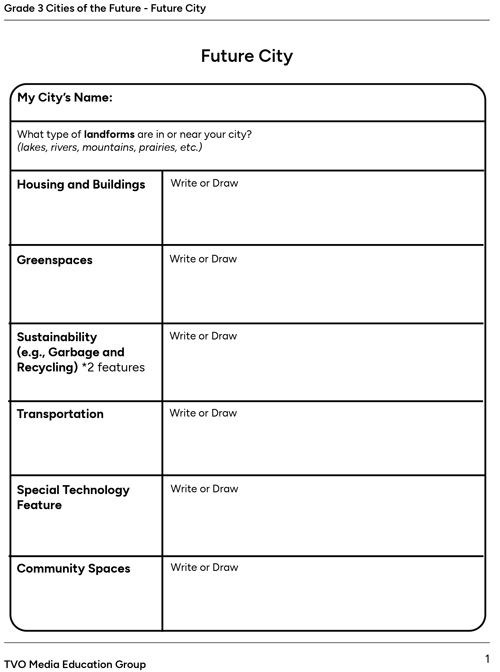
Complete the fillable and printable Future City document in your notebook or using the following document. If you would like, you can use speech-to-text or audio recording tools to record your thoughts.
Creating a graphic text for your sustainable future city
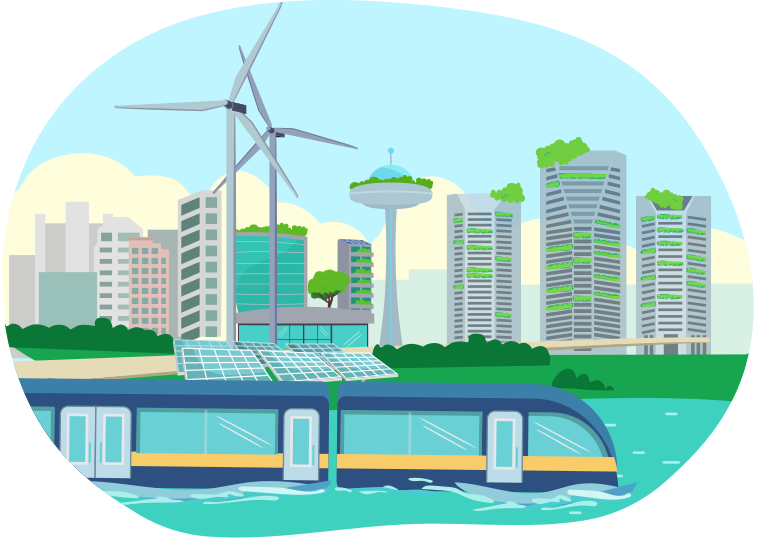
You will be creating your futuristic and sustainable graphic text.
Use the following checklist to plan your graphic text.
Graphic Text Checklist
When you are done creating your graphic text, be sure to go over your graphic text to check for spelling or grammar errors.
Student Success
Think
Think about which features (e.g., text, images, labels, etc.) are the most effective at explaining the different parts of your future city.
How might you improve your plan or your graphic text?
Record your answer in a method of your choice.
Reflection
How do you feel about what you have learned in this activity? Press the button next to the sentence that matches how you feel.

I feel...
Now, record your ideas about your feelings using a voice recorder, speech-to-text, or writing tool.