Learning goals
We are learning to…
- understand and analyze words and puns
- read aloud with appropriate fluency, pacing, and expression
- apply punctuation rules to written dialogue
Success criteria
I am able to…
- identify and explain the meaning of a pun
- use punctuation to guide my expression when reading aloud
- write and punctuate simple lines of dialogue
Puns

Pause and Reflect
Pause and reflect
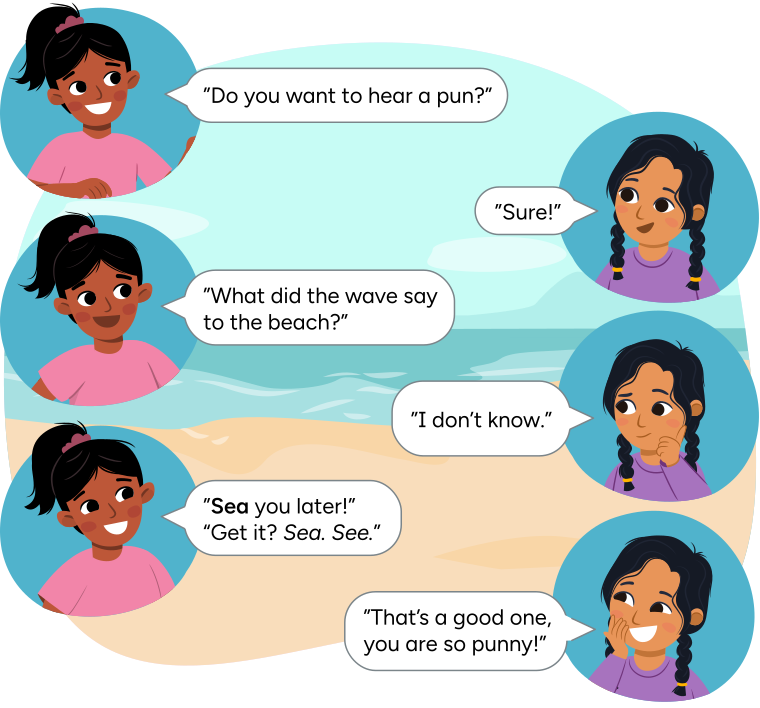
What do you notice about the punctuation in this conversation?
Press Show Answer to learn more.
- There are quotation marks (“ ”) around everything that someone says.
- There are question marks (?) after questions.
- There are periods (.) after sentences.
- There are commas that connect parts of the sentence.
Why did Sora say they were so punny?
Press Show Answer to learn more.
- Mehar made a joke about the sea saying, “see you later.” This type of joke is called a pun.
- Sora made a joke combining the words funny and punny.
In this learning activity, you will learn more about how to create your own puns and how to use punctuation in dialogue.
What are puns?
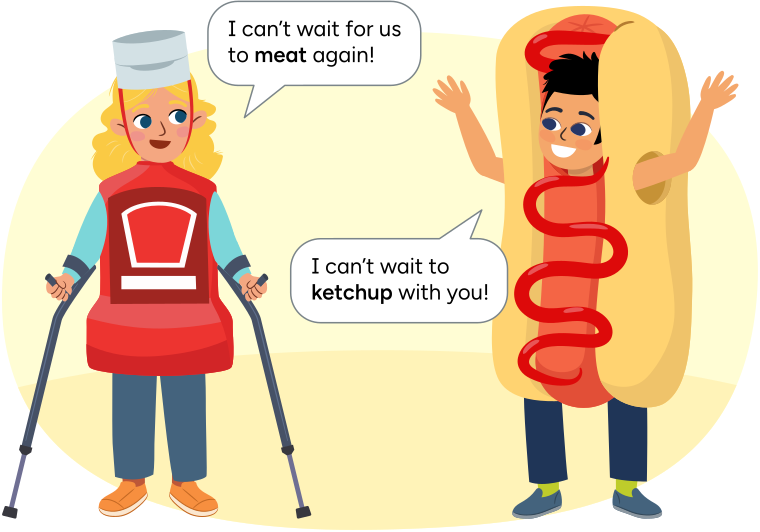
Danielle is wearing a ketchup bottle costume. She says: ‘I can’t wait for us to meat again!
Tyler is wearing a hotdog costume. He says: ‘I can’t wait to ketchup with you!’
In the Minds On section, you were introduced to the word puns.
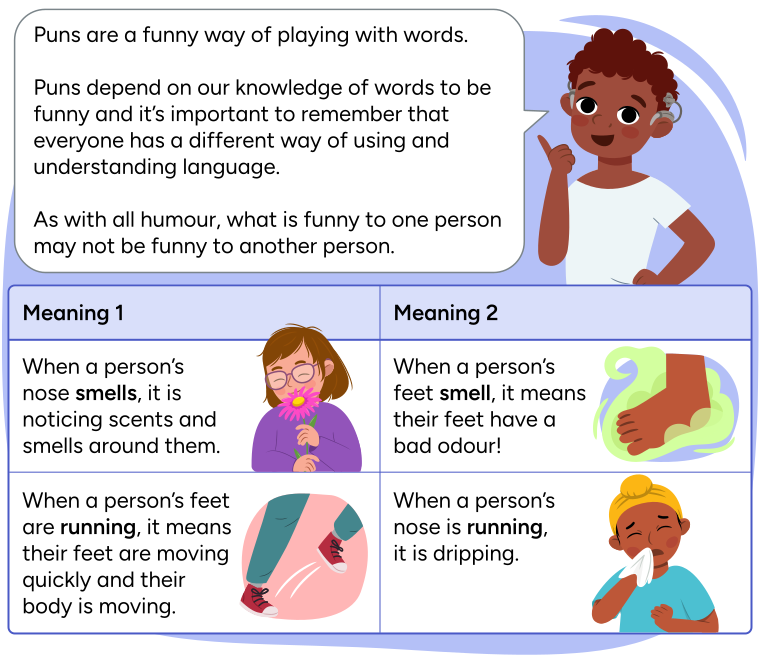
Marcel is behind an infographic. He says: 'Puns are a funny way of playing with words. Puns depend on our knowledge of words to be funny and it's important to remember that everyone has a different way of using and understanding language. As with all humour, what is funny to one person may not be funny to another person.'
The infographic explains two meanings for the words 'smells' and 'running.':
'Smells' meaning 1: When a person's nose smells, it is noticing scents and smells around them. 'Smells' meaning 2: When a person's feel smell, it means their feet have a bad odour!
'Running' meaning 1: When a person's feet are running, it means their feet are moving quickly and their body is moving. 'Running' meaning 2: When a person's nose is running, it is dripping.

Did You Know?
Did you know?
Homonyms are words that sound the same but have different meanings. Puns can be made by using homonyms such as homophones and homographs.
There are two types of homonyms:
Homophones are words that sound alike but are spelled differently and have different meanings.
Press Example to access an example of homophones.
Example of homophones ate and eight.
“I ate pizza for dinner.”
“I am eight years old.”
Homographs are words that sound alike but are spelled the same and have different meanings.
Press Example to access an example of homographs.
Example of homographs: letter.
“K is my favourite letter in the alphabet.”
“I received a letter in the mail from my grandmother.”
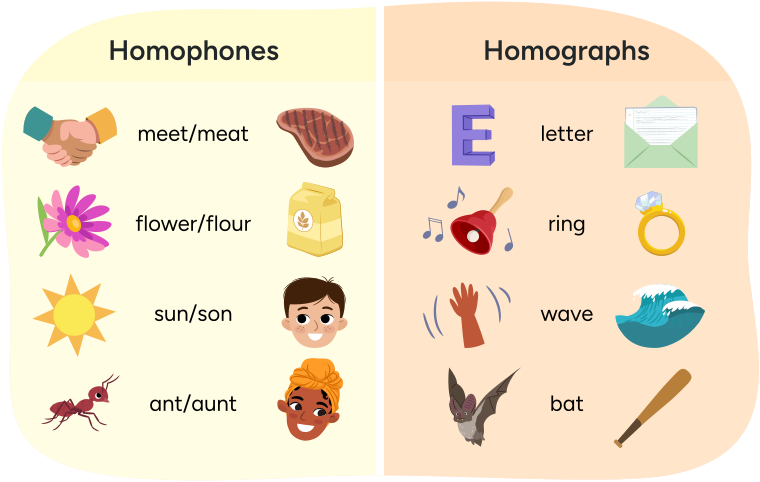
Homophones:
m e e t, meet/ m e a t, meat
f l o w e r, flower/ f l o u r, flour
s u n, sun/ s o n, son
a u n t, aunt/ a n t, ant
Homographs:
letter (e.g., a letter of the alphabet or a letter you would mail)
ring (e.g., a ringing sound or a ring you would wear on a finger)
wave (e.g., waving hello or a wave in the sea)
bat (e.g., a nocturnal flying animal or a baseball bat)
More punny jokes!
Check out the following jokes! Notice how the puns are created by using words with different meanings.
Learning check
Select the correct answer, then press the Check Answer button to see how you did.
Pause and Reflect
Pause and reflect
What make puns funny?
Press Show Answer to learn more.
Puns are funny because they have words with double meanings. These words are spelled the same and sound the same but mean different things when used in different contexts.
Context helps you understand a word or a sentence because you understand the situation it’s describing.
Parts of speech

Nouns and verbs!
The meaning of words can change depending on how they are used. This might also change their part of speech.
For example, a word can be a noun in one sentence and a verb in another!
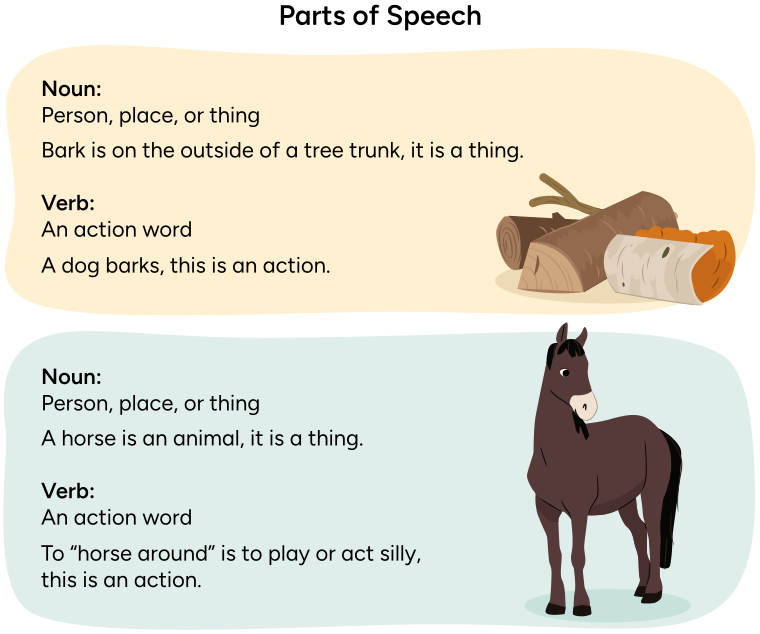
A diagram titled 'Parts of Speech.' It shows how the words 'bark' and 'horse' can be used as nouns and verbs.
The section on 'bark' reads:
Noun: Person, place, or thing
Bark is on the outside of a tree trunk, it is a thing.
Verb: An action word. A dog barks, this is an action.
The section on 'horse' reads:
Noun: Person, place, or thing
A horse is an animal, it is a thing.
Verb: An action word
To "horse around" is to play or act silly, this is an action.
What is a dialogue?
A dialogue is a conversation between two or more people.
Press the Examples to learn more.
Examples of dialogues could be:
- phone call
- conversations
Check out the following dialogue between Sora and Mehar. This is an example of a conversation.
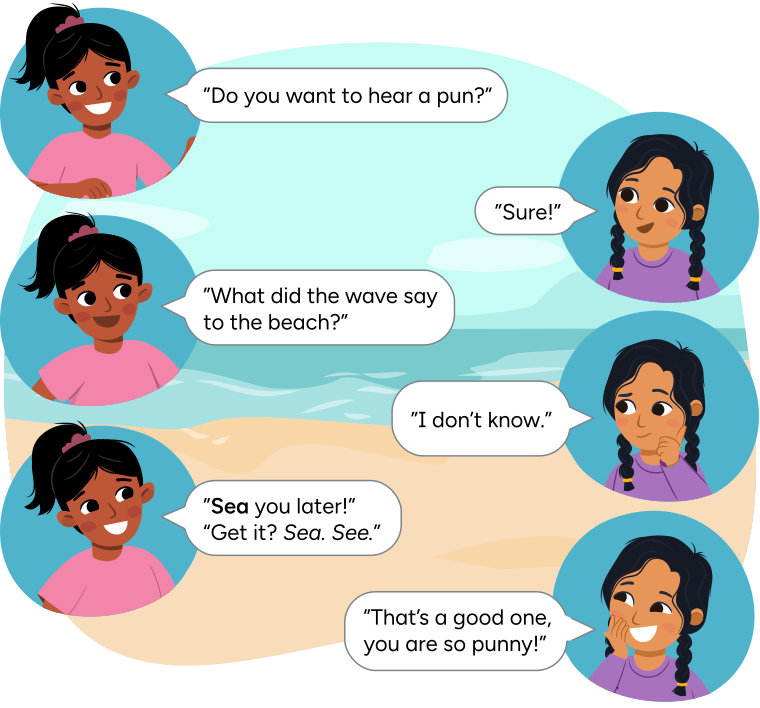
Mehar and learner Sora are talking at a beach.
Mehar asks: 'Do you want to hear a pun?'
Sora says: 'Sure!'
Mehar asks: 'What did the wave say to the beach?'
Sora says: 'I don't know.'
Mehar says: 'Sea you later! Get it? Sea. See.'
Sora says: 'That's a good one, you are so punny!'
Can you find the clue that shows this is a dialogue?
Press Show Answer to learn more.
This is a dialogue because there are quotation marks (“ ”) that show everything Sora and Mehar are saying to each other.
Did You Know?
Quotation marks (“ ”)
Did you know conversations use punctuation, intonation, and quotation marks? Quotation marks identify dialogues. In the conversation with Sora and Mehar, quotation marks help us understand who is speaking. Sometimes we call this direct speech because it is made up of the words that are taken directly from what was said.
Did you know: Quotation marks.
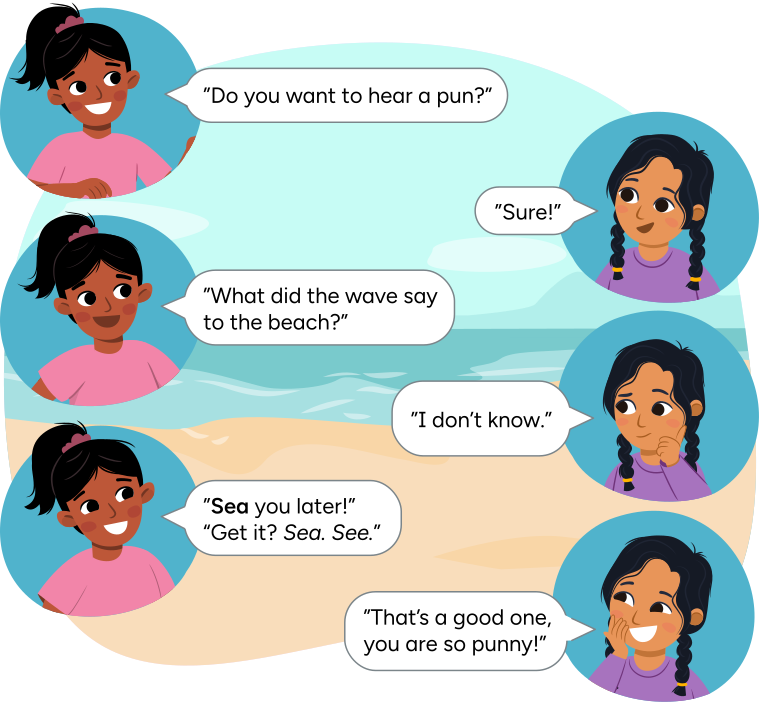
Mehar and learner Sora are talking at a beach.
Mehar asks: 'Do you want to hear a pun?'
Sora says: 'Sure!'
Mehar asks: 'What did the wave say to the beach?'
Sora says: 'I don't know.'
Mehar says: 'Sea you later! Get it? Sea. See.'
Sora says: 'That's a good one, you are so punny!'
Check out the following video of Teacher Charmain reviewing the rules of using quotation marks.
Punctuation
Punctuation is important to reading. It helps us:
- understand what we are reading
- read more fluently
- use the correct expression and intonation
Types of sentences and intonation
There are different types of sentences.
Press the following tabs to learn more about different types of sentences.
- asks something
- sentences end with a question mark (?)
- reader's voice goes up and pauses
- Example: Do you want to hear a pun?
- tells about something
- sentences end with a period (.)
- reader's voice stays at a normal tone and pauses
- Example: This is a pun.
- show strong feelings
- sentences end with an exclamation mark (!)
- reader's voice shows excitement by speaking loudly and in a higher pitch
- Example: See you later!
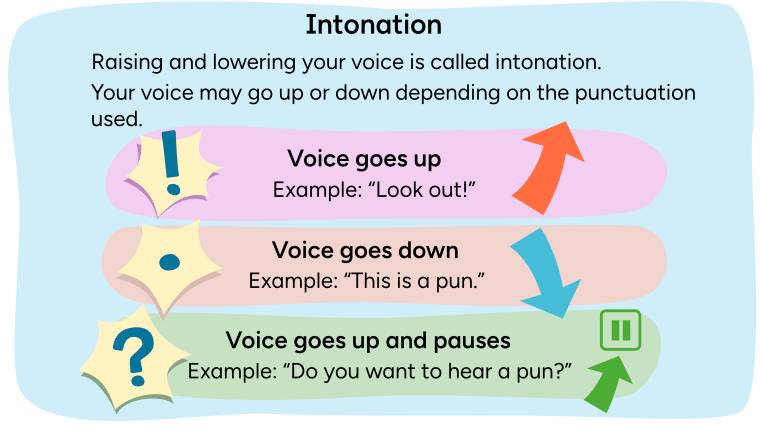
A diagram titled 'Intonation.' It says: 'Raising and lowering your voice is called intonation. Your voice may go up or down depending on the punctuation used.' It lists three ways with examples of how a voice may change due to intonation: 1. There is an image of an exclamation mark and an arrow pointing upwards with the text 'Voice goes up. Example: "See you later!"' 2. There is an image of a period and an arrow pointing downwards with the text 'Voice goes down. Example: "This is a pun."' 3. There is an image of a question mark and an arrow pointing upwards beside a pause symbol with the text 'Voice goes up and pauses. Example: "Do you want to hear a pun?''
Listen to how the intonation changes depending on if the sentence is interrogative, declarative, or exclamatory.
Intonation
Quotation marks review
Dialogues must have quotation marks at the beginning and end of what a person says.
For example:
“My name is Sora.”
Each line of dialogue from a different person begins on a new line.
For example:
“What did the wave say to the beach?” asked Mehar.
Sora replied, “I don’t know.”
The very first word inside the quotation marks must start with an upper-case letter.
For example:
Mehar smiled at Sora and said, “Do you want to hear a pun?”
The speech tag explains who is speaking.
For example:
Sora replied, “I don’t know.”
“What did the wave say to the beach?” asked Mehar.
The speech tag ends with a period if it’s at the end of a sentence.
It ends with a comma if it’s before the quotation marks.
For example:
“What did the wave say to the beach?” asked Mehar.
Sora replied, “I don’t know.”
The punctuation at the end of what is spoken must be inside the last quotation mark.
For example:
“What did the wave say to the beach?” asked Mehar.
Sora replied, “I don’t know.”
Sorting dialogues
Place the cards into categories that best match. Use the arrow buttons to navigate between cards.

Student Wellness
Take a break!
Commas, speech tags, and quotation marks in dialogues
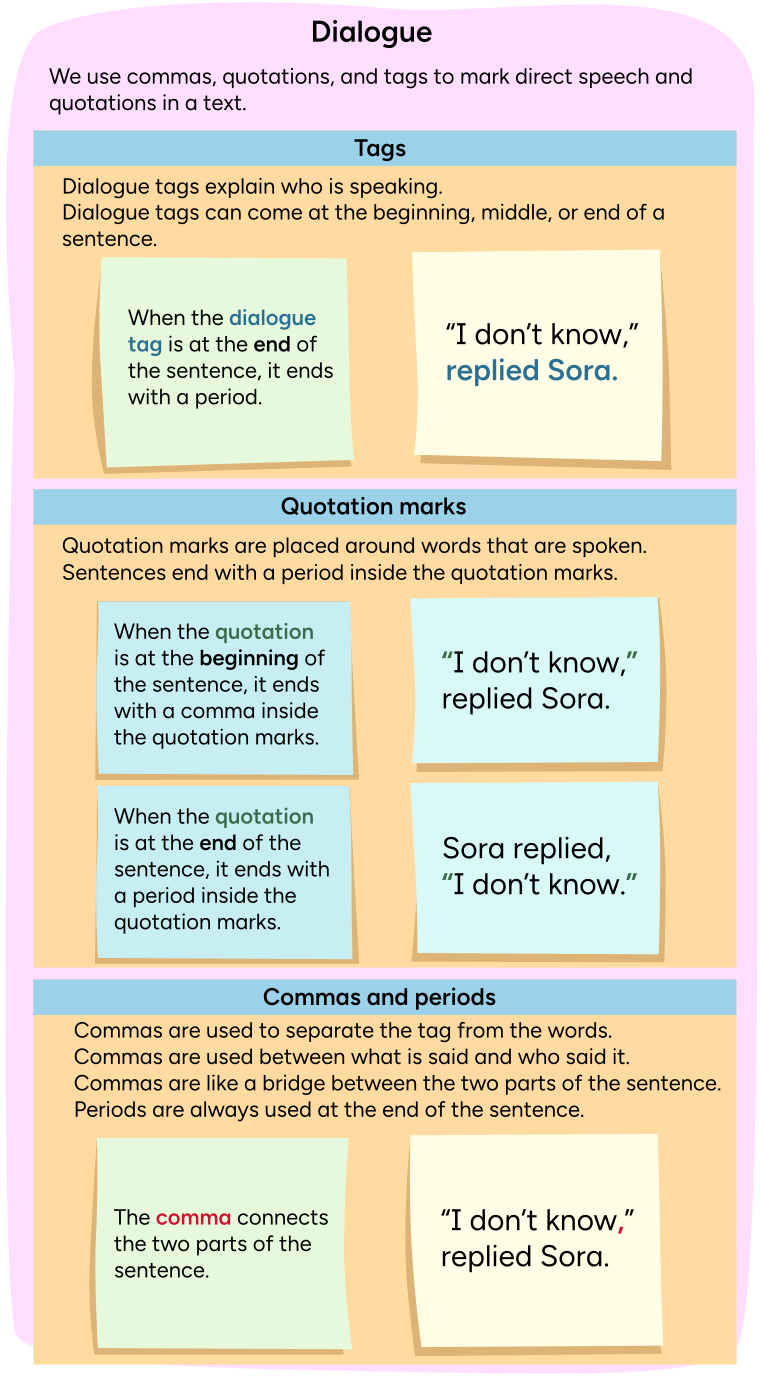
An infographic titled 'Dialogue' with the text 'We use commas, quotations, and tags to mark direct speech and quotations in a text.' The diagram is split into three sections titled 'Tags,' 'Quotation marks,' and 'Commas and periods.'
Tags: Dialogue tags explain who is speaking. Dialogue tags can come at the beginning, middle, or end of a sentence. When the dialogue tag is at the end of the sentence, it ends with a period. For example: "I don't know," replied Sora.
Quotation marks: Quotation marks are placed around words that are spoken. Sentences end with a period inside the quotation marks.
When the quotation is at the beginning of the sentences, it ends with a comma inside the quotation marks. For example: 'I don't know," replied Sora.
When the quotation is at the end of the sentence, it ends with a period inside the quotation marks. For example: Sora replied, "I don't know."
Commas and periods: Commas are used to separate the tag from the words. Commas are used between what is said and who said it. Commas are like a bridge between two parts of the same sentence. Periods are always used at the end of a sentence. The comma connects the two parts of the sentence. For example: "I don't know." Replied Sora.
Learning check
Put the following sentences in the correct order. Pay special attention to where the quotation marks, commas, and other punctuation marks go!
Press Show Answer to learn more.
“I’m tired,” said mom.
The following cards contain items that fit together in a specific order (sequence). Put the items in each answer box in the correct order.
Press Show Answer to learn more.
“I have a soccer game tonight,” Marcel said.
The following cards contain items that fit together in a specific order (sequence). Put the items in each answer box in the correct order.
Let’s write a dialogue!
It’s your turn to write a conversation between two people. Examine the image below. What do you think Tiara and Oliver are talking about at the Science Fair?
Dialogue Checklist
Your dialogue should be at least 6 lines long, but it can be longer if you’d like!
When you’re done:
- Review how you’ve used quotation marks and dialogue tags to make sure they’re correct.
- Check your work for any spelling or grammar mistakes.
- Read your dialogue aloud to make sure the pun sounds funny.
- Share it with a learning partner or a trusted adult, if possible.
Feel free to begin your dialogue in any way you’d like. If you're looking for an idea to get started, press Getting Started for some suggestions.
You could choose to use one of the following sentences to get started or use your own ideas!
- “Hi, Oliver,” said Tiara. “Tell me about your science experiment!”
- “Hi Tiara!” called Oliver. “Do you want to hear a pun about flowers?”
- “Oliver, your science experiment reminds me of a pun about bees,” laughed Tiara.
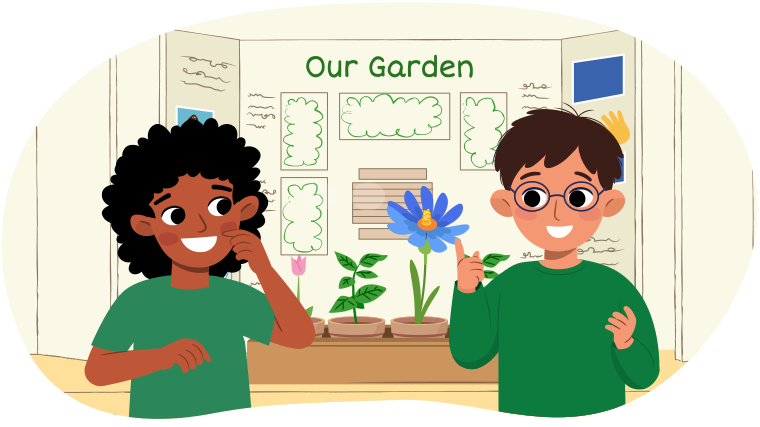
Oliver and Tiara are smiling in front of a poster board of a science experiment titled 'Our Garden.' The poster board has writing, images of butterflies, bees, flowers, and handprints. There is a planter box behind the learners filled with plants and flowers.
Press Student Tips to learn more.
Puns usually start with questions like:
“What do you call...”
“Why did the...”
For example:
Question: “What do you call a bear with no teeth?”
Answer: “A gummy bear.”
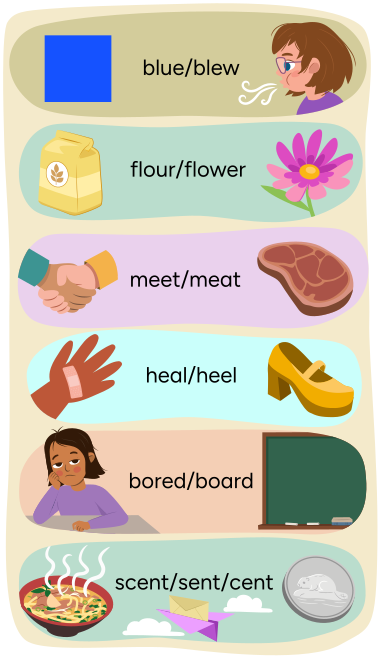
Here is a list of sample words that you could use to create your pun, but feel free to think of new ones!
Use the following checklist to guide your writing.
Creating a dialogue checklist
Pause and Reflect
Pause and reflect
- What is the easiest part about dialogues and quotation marks?
- Is there anything about dialogues and quotation marks that you find challenging? What would be helpful for you to review?
- Do you like making puns? Why or why not?
Record your reflections in a journal of your choice.
Reflection
How do you feel about what you have learned in this activity? Which of the next four sentences best matches how you are feeling about your learning? Press the button that is beside this sentence.

I feel...
Now, record your ideas about your feelings using a voice recorder, speech-to-text, or writing tool.
Discover MoreOnce you’re happy with your dialogue, you could choose to present it with a learning partner, if possible. Or you could record yourself on a recording device of your choice, using different voices for each person in your dialogue.