Learning goals
We are learning to…
- identify the purpose of different texts
- form predictions about texts
- explore texts by diverse authors
- choose appropriate resources to conduct research
- use effective skills to listen for information
Success criteria
I am able to…
- distinguish between texts that inform and texts that entertain
- make predictions and confirm their accuracy
- identify and analyze cultural aspects of texts including the perspective of Indigenous creators
- create a plan for a podcast with a specific topic and purpose
- identify safe and reliable sources of information
Predictions about podcasts
Have you listened to a podcast before?
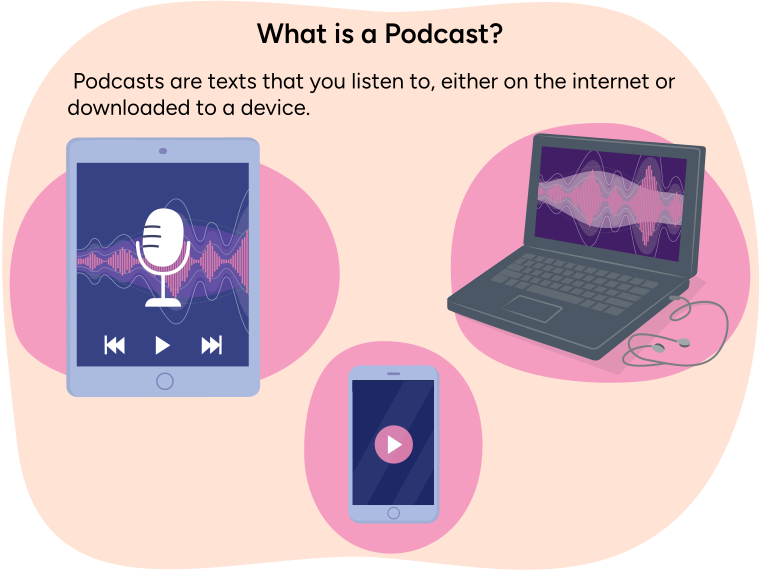
An infographic titled 'What is a Podcast?' The text reads: 'Podcasts are texts that you listen to, either on the internet or downloaded to a device.' There are images of a tablet, laptop, and phone that all show audio being played.

Did You Know?
Did you know?
Making predictions helps us develop critical thinking and problem-solving skills that support our learning.
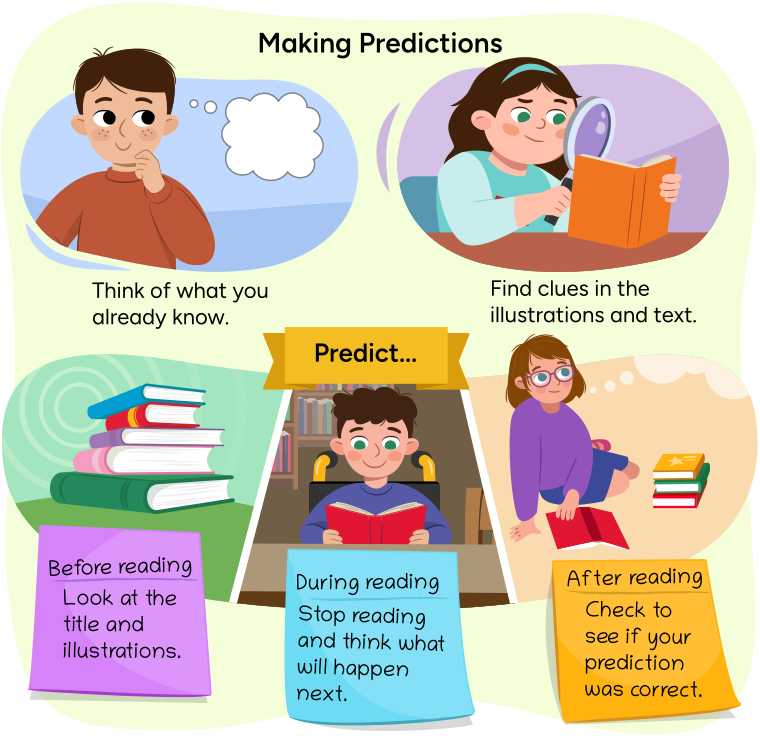
Making Predictions:
Think of what you already know. Find clues in the illustrations and text.
Predict…
Before reading: Look at the title and illustrations.
During reading: Stop reading and think what will happen next.
After reading: Check to see if your prediction was correct.
Exploring podcasts
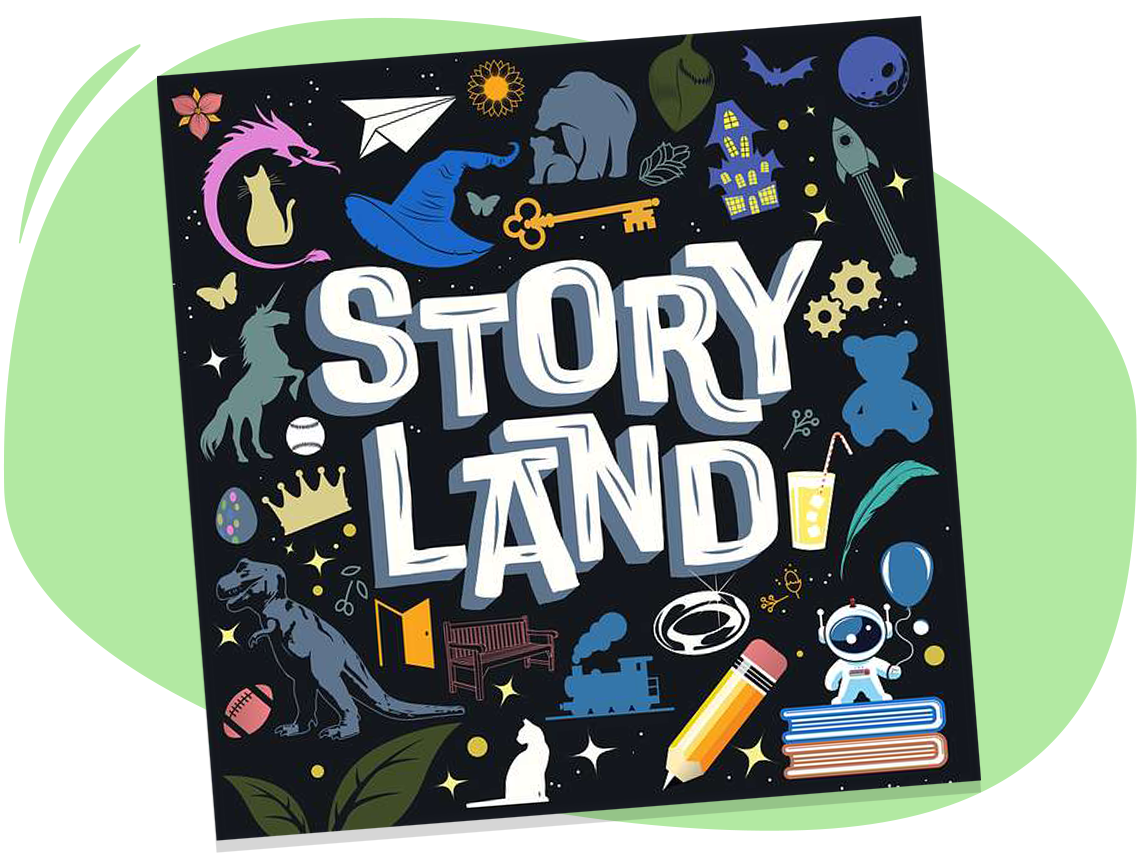
Examine the following examples of cover art for different podcasts.
What can you predict about each podcast from looking at its cover art?
- What do you think each show is about?
- Do you think it contains real information (nonfiction) or made-up stories (fiction)?
- What clues do you use to make your predictions?
Record your predictions in a journal of your choice or share them with a learning partner, if possible. We will return to these predictions later in the learning activity.
Teacher Chiara says: 'In this learning activity you will explore podcasts with different topics, purposes, and perspectives. You will consider the features of podcasts and have the opportunity to begin planning a podcast of your own!'
Elements of a podcast
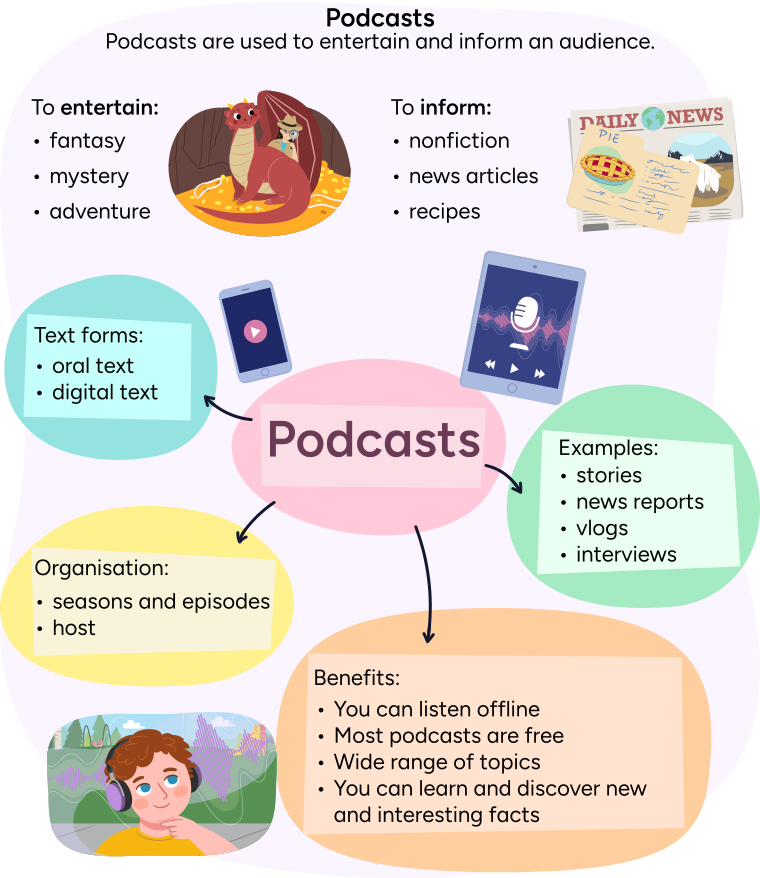
An infographic titled 'Podcasts' explains that podcasts are used to entertain and inform an audience. There are sections describing the purpose, text forms, organization, examples, and benefits of podcasts.
The purpose of podcasts can be to entertain (e.g. fantasy, mystery, and adventure) or to inform (e.g. nonfiction, news articles, and recipes).
Text forms include oral text and digital text. Organization includes seasons and episodes, as well as hosts.
Examples of podcasts include stories, news reports, vlogs, and interviews.
Benefits are that you can listen offline, most podcasts are free, wide range of topics, and you can learn and discover new and interesting facts.

Pause and Reflect
Pause and reflect
Some people like to listen to podcasts while traveling, or when doing chores around the house. When would you like to listen to a podcast?
Press Student Tip to learn more.
Remember to practice online safety if you are interested in listening to a podcast. Always be sure to ask a parent or trusted adult for permission, just as you do for movies, videos, books, and exploring the internet.
Listening to podcasts
In the Minds On section, you examined the cover art of podcasts and formed predictions about whether each was fiction or nonfiction.
Like other text forms such as books or videos, podcasts can:
- contain real or imaginative content
- be about many different topics
- have different purposes, such as to entertain or to inform

Investigate
Investigate
Think back to the predictions you made. Let’s confirm some of your predictions.
Review the following questions:
- Did you predict that this podcast was fiction, or nonfiction?
- What is the subject area?
- What is its purpose?
Explore the following audio clip entitled The Candy Tree: Part 1 to learn more about podcasts.
The Candy Tree: Part 1
Let’s review
Is this podcast fiction or nonfiction?
Press Show Answer to learn more.
This podcast is fiction.
What is the subject area of this podcast?
Press Show Answer to learn more.
The subject area of this podcast is fictional stories. This episode is about a candy tree.
What is the purpose of this podcast?
Press Show Answer to learn more.
The purpose of this podcast is to entertain.
Explore the following audio clip entitled Emma’s Ultimate Guide to National Parks: Wapusk to learn more about podcasts.
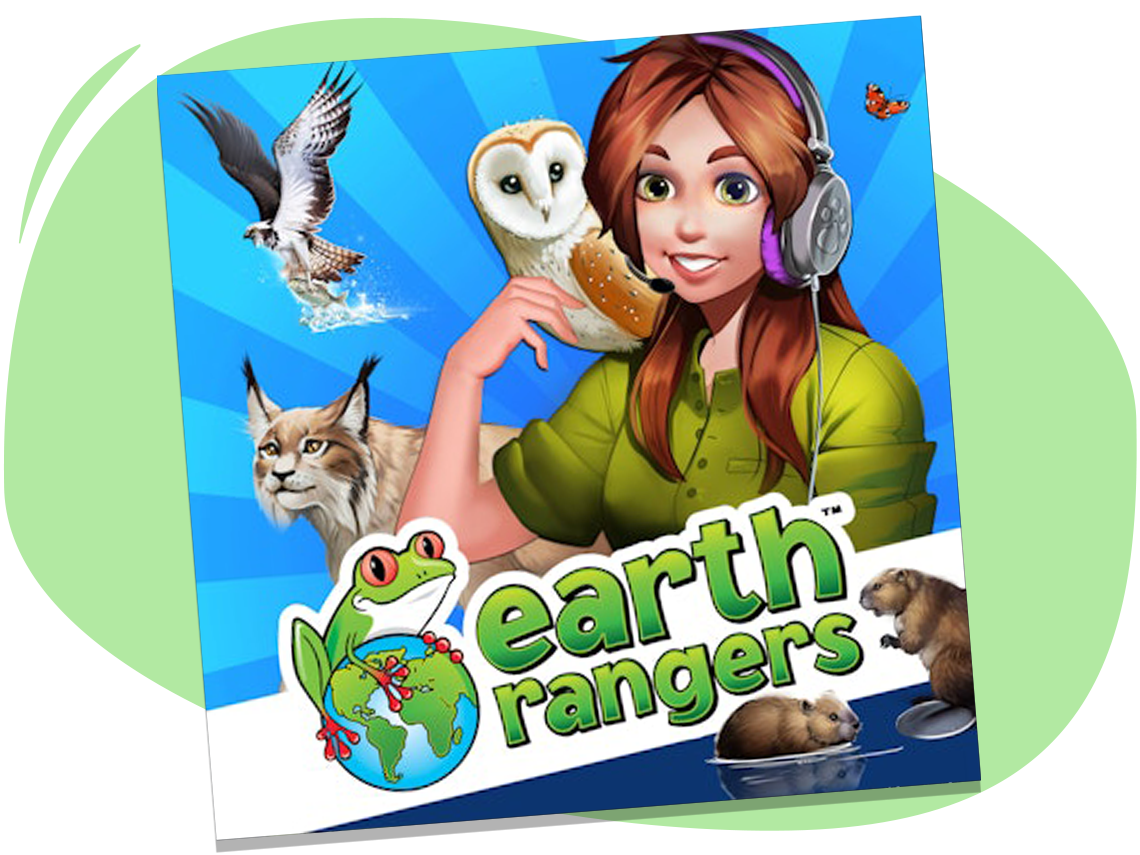
Earth Rangers Podcast
Let’s review
Is this podcast fiction or nonfiction?
Press Show Answer to learn more.
This podcast is nonfiction.
What is the subject area of this podcast?
Press Show Answer to learn more.
The subject area of this podcast is science. It talks about the environment. This episode is about Wapusk National Park.
What is the purpose of this podcast?
Press Show Answer to learn more.
The purpose of this podcast is to inform.
How accurate were your predictions?
Which of these podcasts would you be most interested in listening to? Why?
Record your reason in a method of your choice.

Student Wellness
Take a break!
Podcasts & perspectives
Neebin says:
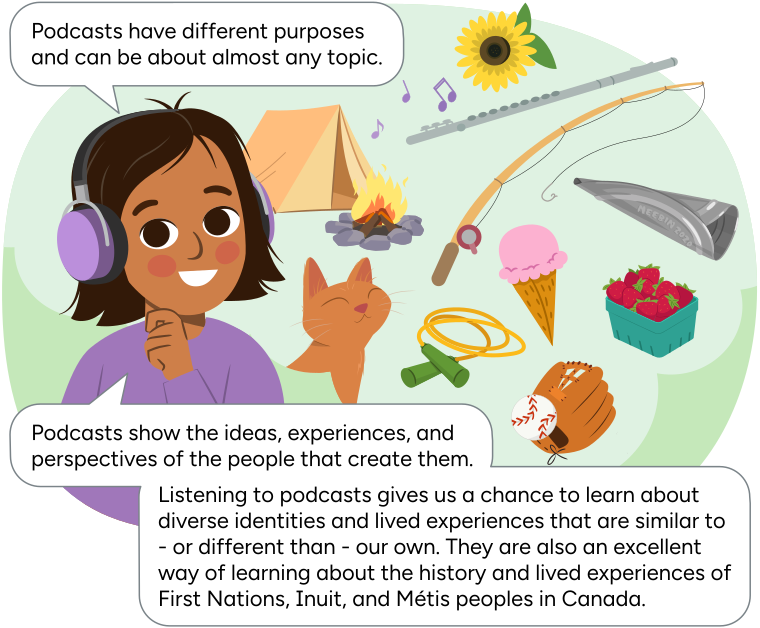
'Podcasts have different purposes and can be about almost any topic.
Podcasts show the ideas, experiences, and perspectives of the people that create them.
Listening to podcasts gives us a chance to learn about diverse identities and lived experiences that are similar to - or different than - our own. They are also an excellent way of learning about the history and lived experiences of First Nations, Inuit, and Métis peoples in Canada.'
Podcasts and Perspectives
Listening activity 1
Let’s listen to the following podcast excerpt from Warrior Kids by Dr. Pam Palmater. She is a Mi’kmaw professor, lawyer, and member of Ugpigan'jig (Eel River Bar First Nation) in the province now known as New Brunswick. Notice what parts of her identity and lived experiences Dr. Palmater hopes to share in her podcast series.
Listening Activity 1
During listening strategies
You can always pause or replay parts of a podcast if you didn’t understand something or want to hear it again to confirm your understanding.
Check out the following audio clip entitled Welcome to Warrior Kids Podcast to learn more about podcasts.
Welcome to Warrior Kids Podcast
Welcome to Warrior Kids Podcast
After listening
Let’s review some of the knowledge that Dr. Palmater shared with us in this podcast episode.
What does the word Indigenous mean?
Press Show Answer to learn more.
Indigenous is a word used around the world that refers to people who are the original inhabitants of a region.
In Canada, Indigenous can be used to refer to the First Nations, Inuit, and Métis Peoples who lived on these lands long before settlers arrived.
What is Indigenous?
What do Kwe, Tansi, and shé:kon mean?
Press Show Answer to learn more.
They mean hello in Mi’kmaq, Cree, and Mohawk languages.
Pause and Reflect
Pause and reflect
Why do you think First Nations, Métis, and Inuit individuals are using podcasts as a way to share their perspectives and educate Canadians about their histories as well as the present and future of their communities?
How might podcasts help First Nations, Métis, and Inuit individuals share their perspectives or raise awareness in a different way than a website or article in a newspaper?
Record your answers to these questions in a journal of your choice or discuss them with a learning partner if possible.
Creating a podcast!
After listening to these podcasts, you might have an idea of a podcast you would like to create.
Creating a podcast can let your unique ideas, identity, and life experiences shine through!

Student Success
Think
Imagine that you could record your own podcast about anything important or interesting to you. What might it be about?
Think about the following questions:
- What topics interest you the most?
- Would it be fiction or nonfiction?
- What questions do you have about the world around you?
- What experiences, traditions, or memories could you tell a story about?
Brainstorming
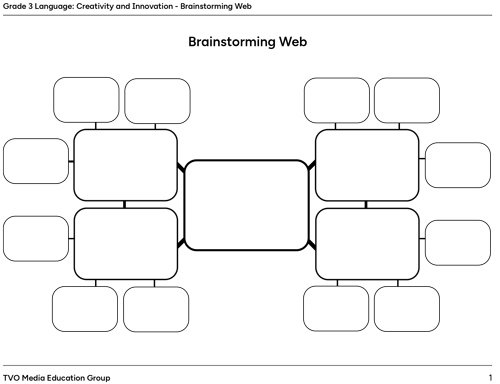
Brainstorm some possible topics for a podcast and complete the fillable and printable Brainstorming Web in your notebook or using the following document. If you would like, you can use speech-to-text or audio recording tools to record your thoughts.
Researching safely and preparing content
Sometimes, planning and drafting a text will require research. Research is the process of learning new facts and information. The places you gather those facts and information from are called sources.
What sources could you use to gather information for your podcast?
- your own experiences
- other people’s experiences
- books
- songs
- podcasts
- websites
The information you share must be accurate. It is also important to conduct your research safely, especially when using the internet.
When doing research on the internet, it is important to stay safe and stay focused. You can use the acronym TRUST to help guide you as you do your research.
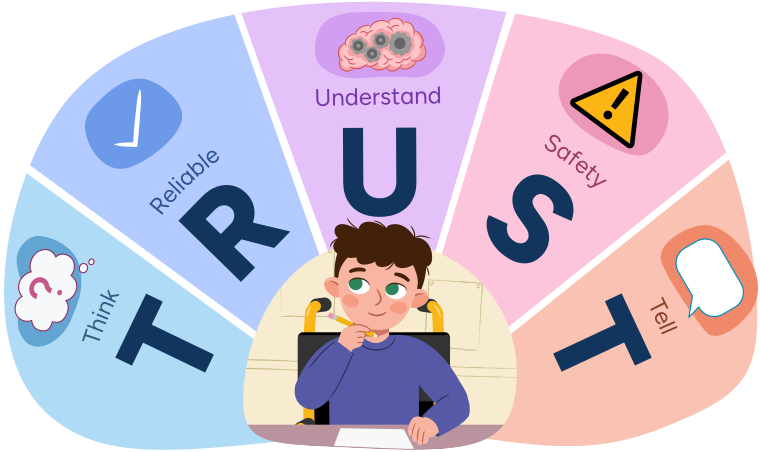
Press the following tabs to learn more about TRUST.
Think about your topic and make questions to get better research results.
For example, if you are working on the topic of recycling, you might start with a general question and make it more specific before beginning your research.
- General question: Why is recycling good for the environment?
- Specific question: How does recycling help protect marine wildlife?
It is important to use reliable (trusted) sources so that you can have up-to-date information about your topic.
Can you read all the words on the site?
It’s important to stay safe while you are using the internet for research. If a website asks you for any personal information, this might include asking for:
- your full name
- phone number
If there is anything specific that makes you feel uncomfortable or worried while you are doing your research:
- pause and take a break
- speak to a trusted adult
Learning check
Think about what you have learned about podcasts in this lesson. What are some of the features or benefits of podcasts?
Press Show Answer to learn more.
Podcasts:
- are texts you listen to
- do not have images or videos
- are organized in episodes
- can be fiction or nonfiction
- can be about almost any topic

Vocabulary review
Let’s review some of the vocabulary used in this lesson.
For each term, select the corresponding definition.
Putting it all together
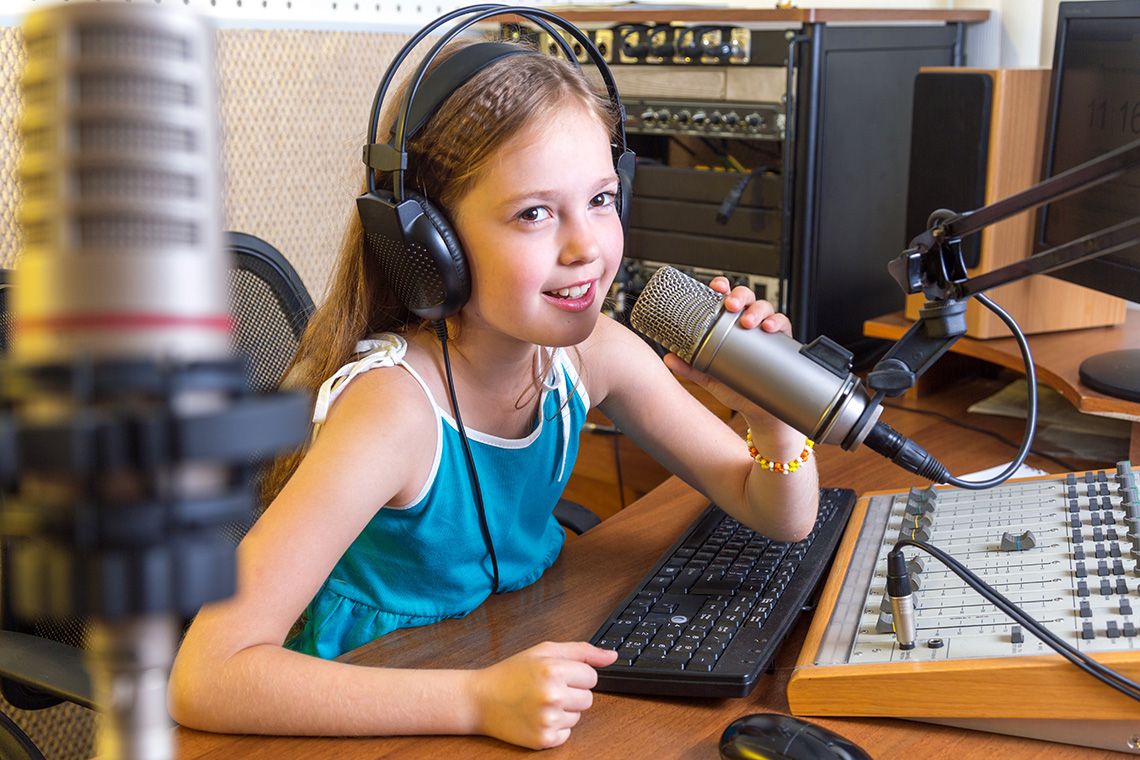
In this learning activity, you explored a variety of podcasts with different topics, purposes, and perspectives. You brainstormed possible topics for a podcast of your own and reviewed the importance of using safe and trustworthy sources when researching.
To consolidate your learning, you will take one of the podcast ideas you brainstormed in the action phase and begin some of the planning and research steps required to turn your ideas into a podcast.

Student Tips
Student tips
There are five steps to create a podcast:
- Choose a purpose for your podcast (e.g., to inform or to entertain).
- Pick a topic and research it by using at least three sources.
- Plan your podcast.
- Record your podcast.
- Edit your podcast.
Use the following checklist to plan your podcast.
You may choose to record your podcast and edit your podcast later, with the guidance of your teacher or a trusted adult.
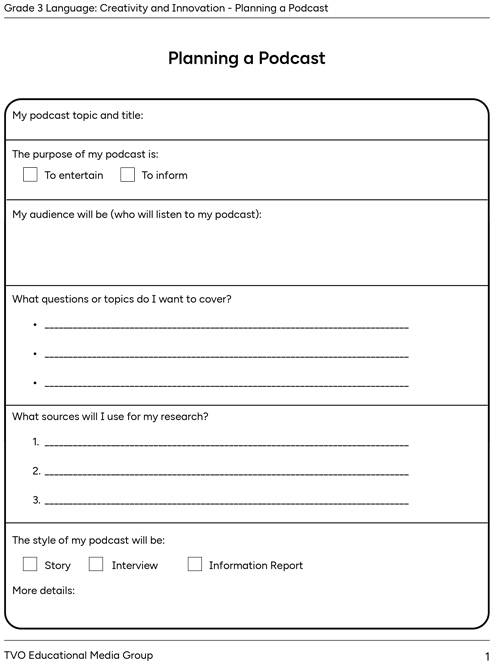
Complete the fillable and printable Podcast Planner in your notebook or using the following document. If you would like, you can use speech-to-text or audio recording tools to record your thoughts.
Student Success
Think
Take a moment to think about your learning. Reflect on the podcast plan you have created and consider the following questions.
Record your responses in a journal of your choice or discuss with a learning partner if possible.
- What do you like best about your plan?
- What is one thing you would like to change or add?
- If you were going to invite a guest on your podcast, who would it be?
- Who will be the audience for your podcast?
- Why is the podcast style you chose a good choice for your topic?
Reflection
How do you feel about what you have learned in this activity? Which of the next four sentences best matches how you are feeling about your learning? Press the button that is beside this sentence.

I feel...
Now, record your ideas about your feelings using a voice recorder, speech-to-text, or writing tool.