Learning goals
We are learning to…
- identify the differences between inventions and innovations
- gather and organize information using a KWHLAQ chart
- identify and use interrogative and imperative verbs in sentences
- critically think about what makes an invention and who is an inventor
- brainstorm, plan, design, draft and publish an invention which solves a problem
Success criteria
I am able to…
- identify the differences between inventions and innovations
- gather and organize information using a KWHLAQ chart
- identify and use interrogative and imperative verbs in sentences
- critically think about what makes an invention and who is an inventor
- brainstorm, plan, design, draft and publish an invention which solves a problem

Notice and wonder
Explore the following images. What is something you notice and what is something you wonder about the images?



Student Success
Think
You might have noticed that these are both images of telephones. Think about the following questions:
- What might some differences be?
- What might some similarities be?
- How has technology changed?
Explain your thinking and record your response in a method of your choice.
The very first telephone is called an invention. An invention is the creation of something completely new that did not exist before. When the telephone was invented, people were able to communicate over long distances using their voices for the very first time.
Many improvements were made to the telephone which changed them into cell phones and then Smartphones. When improvements and significant changes are made to an invention, this is called an innovation.
Let’s explore
For each innovation, select the corresponding invention.

Pause and Reflect
Pause and reflect
Are there any other innovations that you can think of that are found in your everyday life? Do these innovations make your life easier? Explain your thinking and record your response in a method of your choice.

Researching inventions
In this learning activity, we are going to learn how to conduct research. The focus of your research will be inventions that have solved problems and made life easier for society.
Using a KWHLAQ chart
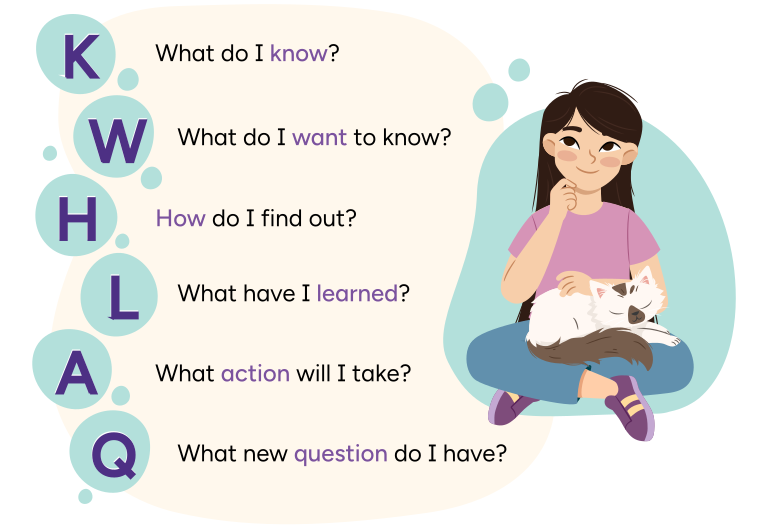
A KWHLAQ Chart, which stands for: Know, want, how, learned, action, question.
Know: What do I want to know?
Want: What do I want to know?
How: How do I find out?
Learned: What have I learned?
Action: What action will I take?
Question: What new question do I have?
A KWHLAQ chart is a helpful tool to organize what we learn about a topic. Each letter stands for a step that you can take to learn and organize new information. First let’s focus on the first three steps: KWH
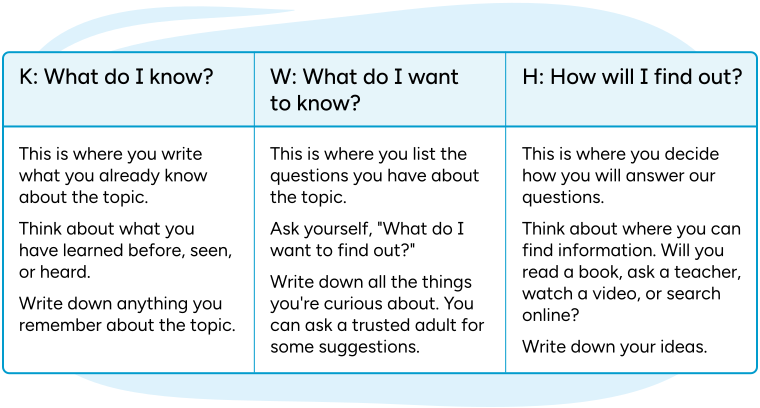
KWH: Know, want, how
K: What do I know?
This is where you write what you already know about the topic. Think about what you have learned before, seen, or heard.
W: What do I want to know?
This is where you list the questions you have about the topic. Ask yourself, "What do I want to find out?" Write down all the things you're curious about. You can ask a trusted adult for some suggestions.
H: How will I find out?
This is where you decide how you will answer your questions. Think about where you can find information. Will you read a book, ask a teacher, watch a video, or search online? Write down all your ideas.

Student Tips
Finding information (sources)
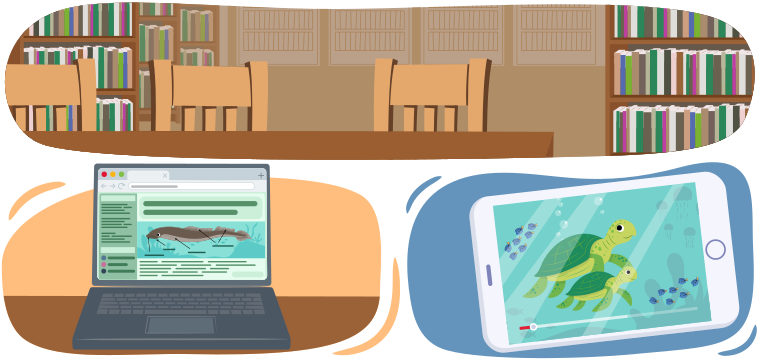
When conducting research, you might have different sources of information such as websites, libraries or videos.
The following questions can be used to guide your plan. Check with a trusted adult before using any sources of information listed below.
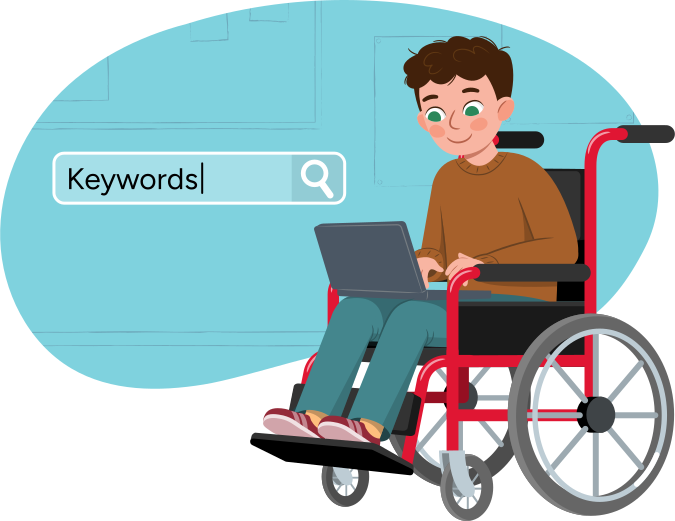
- What web sites will you use?
- What online search databases are available in your school/school board library?
- Will you use your public library search engine?
- Will you interview an expert? An expert could be someone who has reliable knowledge on a specific subject like a teacher or a family member.
- Will you check magazines, news broadcasts or podcasts?
Press Student Tip to learn more.
You can include this plan in the “How Will I Find Out” column of your KWHLAQ chart.
In this activity, you will be collecting your information from the article provided in this activity. At other times when you conduct your research you might have different sources of information. In those cases, it’s helpful to make a plan for how you’re going to find information.
Exploring Indigenous inventions
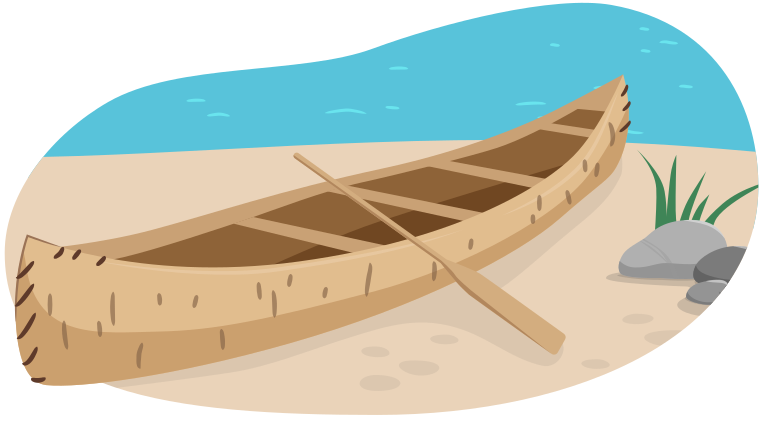
You are going to explore “Inventing the Canoe: A First Nations Invention,” which describes the invention of the birch bark canoe.
Before reading
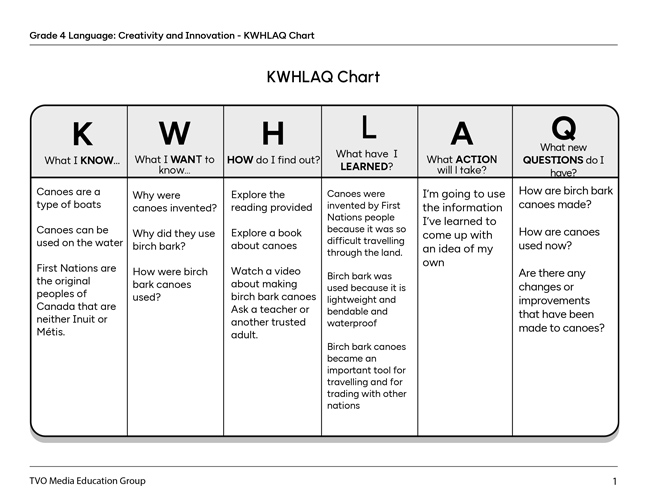
Complete the first three columns in the fillable and printable KWHLAQ Chart in your notebook or using the following document. If you would like, you can use speech-to-text or audio recording tools to record your thoughts.
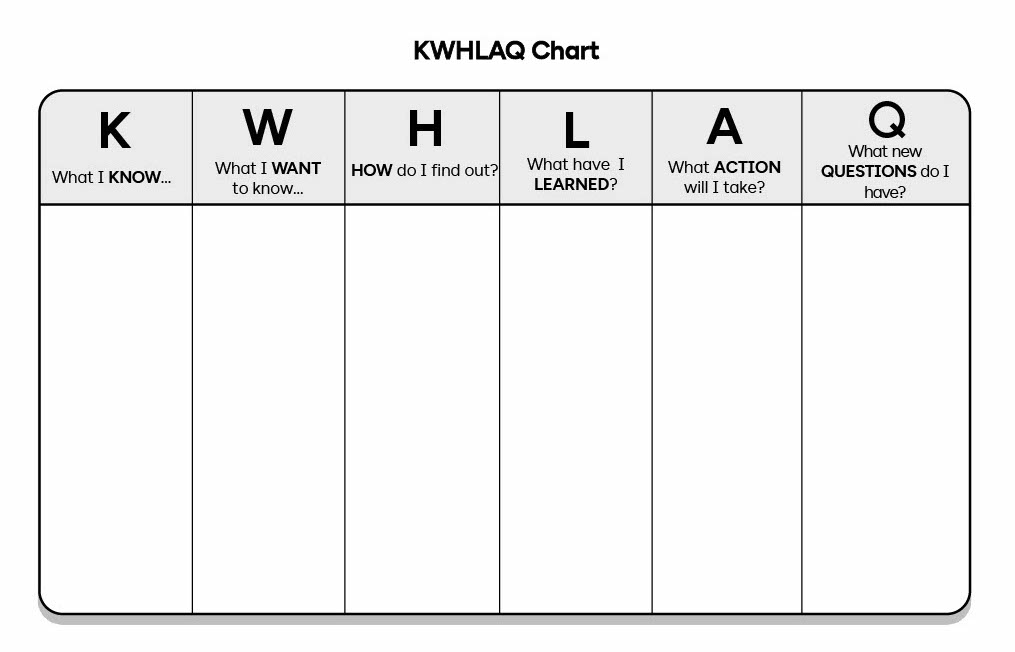
Press Possible Answers to learn more.
| K- What I know… | W- What I want to know… | H- How will I find out? |
|---|---|---|
|
|
|
Press the Activity button to access a printable copy of the answers.

Think marks!
As you get into the reading, you can pause in places that you think might be important and use “think marks.” Think marks are a strategy that you can use to remind you to revisit that section later.
Think Marks
You can use the suggested Think Marks in the chart below or come up with your own!
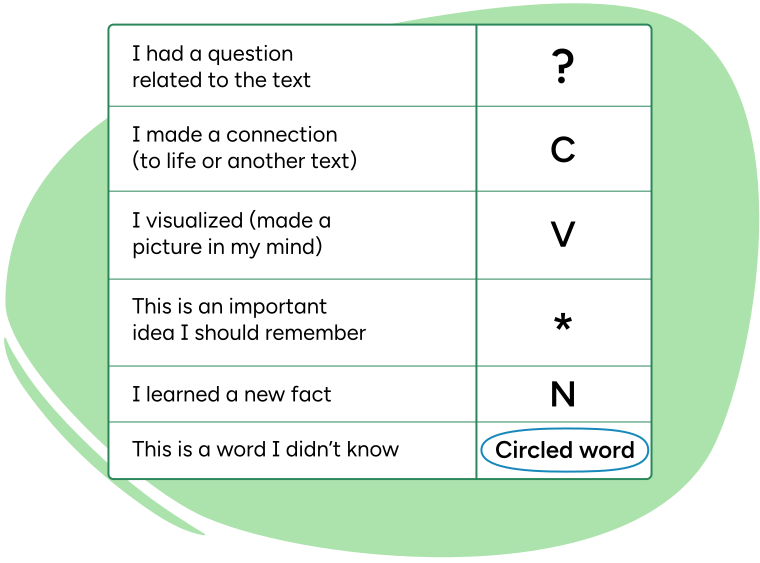
A chart of think marks, which are letters and symbols being used to represent an idea by the reader.
The question mark '?' means, 'I had a question related to the text.'
The capital 'C' means, 'I made a connection, (to life or another text.)'
The capital 'V' means, 'I visualized (made a picture in my mind.)'
The asterisk '*' means, 'This is an important idea I should remember.'
The capital 'N' means, I learned a new fact.'
A circle around a word or phrase means, 'This is a word I didn't know.'
How to use a dictionary
As you explore new information, you might come across words that you do not know. When this happens, ask a trusted adult about using a dictionary.
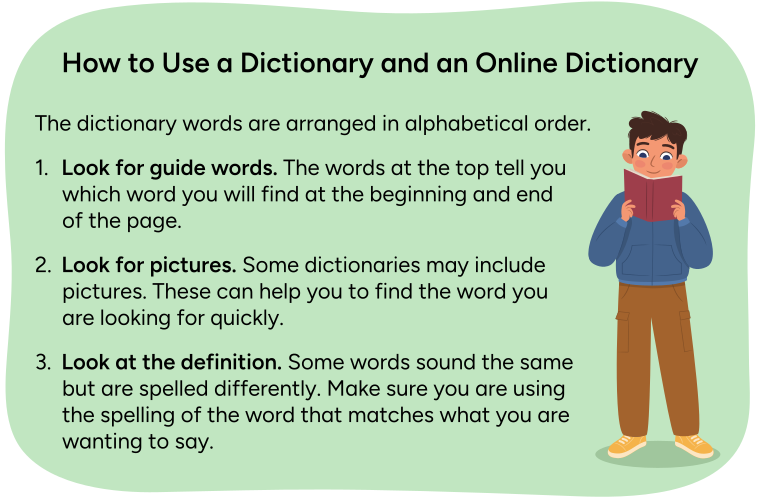
How to use a dictionary.
The dictionary words are arranged in alphabetical order.
- Look for Guide Words. The words at the top tell you which word you will find at the beginning and end of the page.
- Look for the pictures. Some dictionaries may include pictures. These can help you find the word you are looking for quickly.
- Look at the definition. Some words sound the same but are spelled differently. Make sure you are using the spelling of the word that matches what you are wanting to say.

Inventing the Canoe: A First Nations Invention
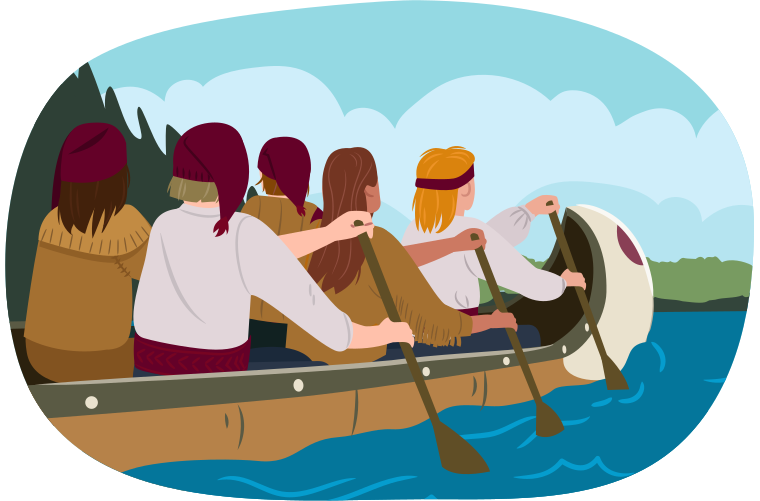
Access the following Inventing the Canoe: A First Nations Invention Reading to complete the activity.
|
Throughout history, people have made tools and technologies to help them survive. For as long as can be remembered, Indigenous Peoples paid close attention to their natural environment and have adapted their lifestyles and their needs based on their observations. One challenge First Nations communities faced was traveling on land filled with thick forests. Walking through these forests was difficult and took a long time. To solve this problem, First Nations people invented the birch bark canoe. First Nations communities noticed that traveling by lakes and rivers was faster and more efficient than walking. Birch bark was perfect for making canoes because it is waterproof, bendable, and lightweight. Using natural materials, First Nations people created the birch bark canoe. This allowed them to travel by water to hunt and trade between Nations. |
Press the Activity button to download a copy of this text.
Inventing the Canoe: A First Nations Invention
Revisiting KWHLAQ
Next, we are going to fill out the last three columns of the KWHLAQ chart.
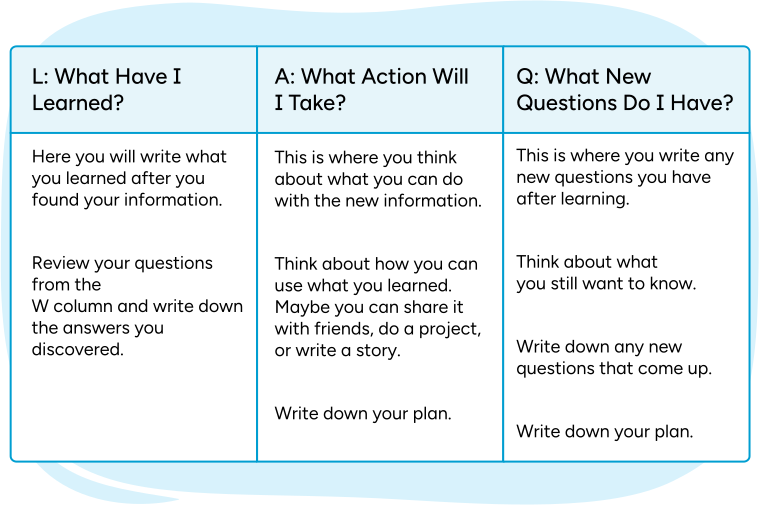
L, A, Q: Learned, Action, Question.
L- What Have I Learned?
Here you will write what you learned after you found your information.Review your questions from the W column and write down the answers you discovered.
A - What Action Will I Take?
This is where you think about what you can do with the new information.
Think about how you can use what you learned. Maybe you can share it with friends, do a project, or write a story.
Write down your plan.
Q- What New Questions Do I Have?
This is where you write any new questions you have after learning.
Think about what you still want to know.
Write down any new questions that come up.
Press Possible Answers to learn more.
Let’s build our skills!
Interrogative and imperative verbs
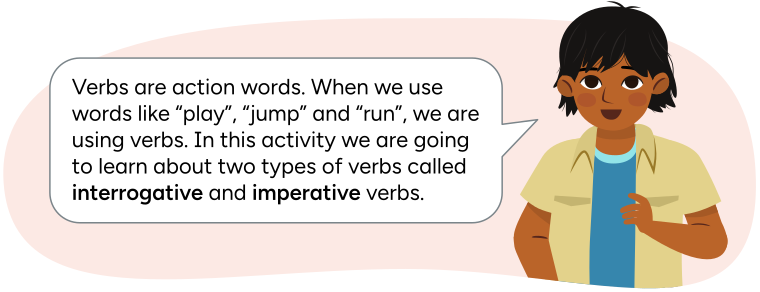
Antonio with speech bubble saying, 'Verbs are action words. When we use words like "play", "jump" and "run", we are using verbs. In this activity we are going to learn about two types of verbs called interrogative and imperative verbs.'
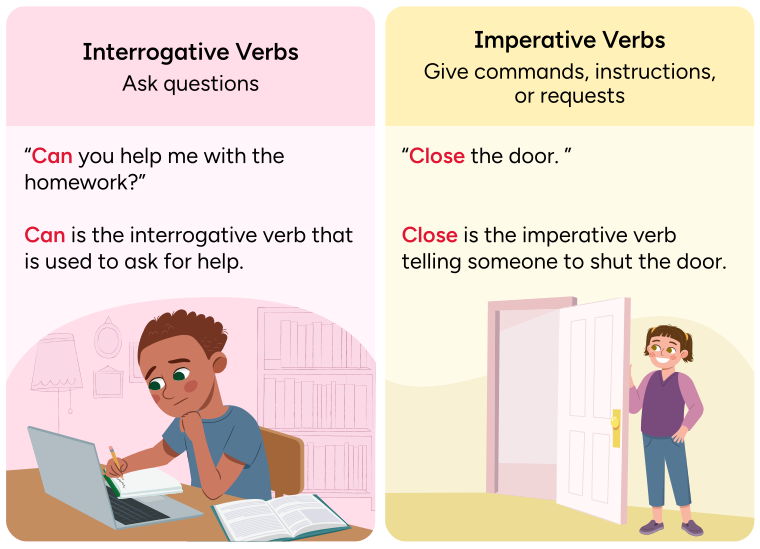
A two-column chart comparing interrogative verbs and imperative verbs.
Interrogative Verbs: Asks questions.
"Can you help me with the homework?"
Can is the interrogative verb that is used to ask for help.
Imperative Verbs: Give commands, instructions, or requests.
"Close the door."
Close is the imperative verb telling someone to shut the door.
Press Examples to learn more.
Explore the following examples of interrogative verbs in bold
- Can you pass the butter?
- Did you eat lunch?
- Where are you going?
Explore the following examples of imperative verbs in bold.
- Please listen carefully.
- Close the door.
- Write your name on the paper, please.
Let’s practice
Place the cards into categories that best match. Use the arrow buttons to navigate between cards.

Student Wellness
Take a break!

Time for a body break! If possible, stretch your body and move around your space.
Inventors
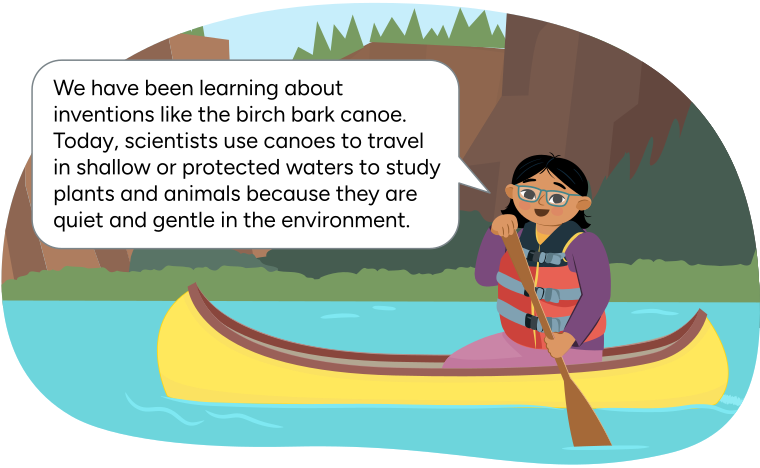
Avery paddles a canoe on the lake and says, "We have been learning about inventions like the birch bark canoe. Today, scientists use canoes to travel in shallow or protected waters to study plants and animals because they are quiet and gentle in the environment."
Many First Nations communities are now working together with Western scientists to protect natural environments. For many years, Indigenous ways of knowing were not treated as fairly or equally as Western ideas. Today, Western scientists are more open to learning from and working with Indigenous scientists, Knowledge Keepers, and community members. This helps build better relationships and a better future for the environment.
It is important for us to learn about and celebrate knowledge, contributions, and perspectives from all different groups of people. Different cultures have unique ways of solving problems. When we bring these ideas together, we can find better solutions to problems. Inventions are solutions and inventors solve problems.
Black Canadian inventors
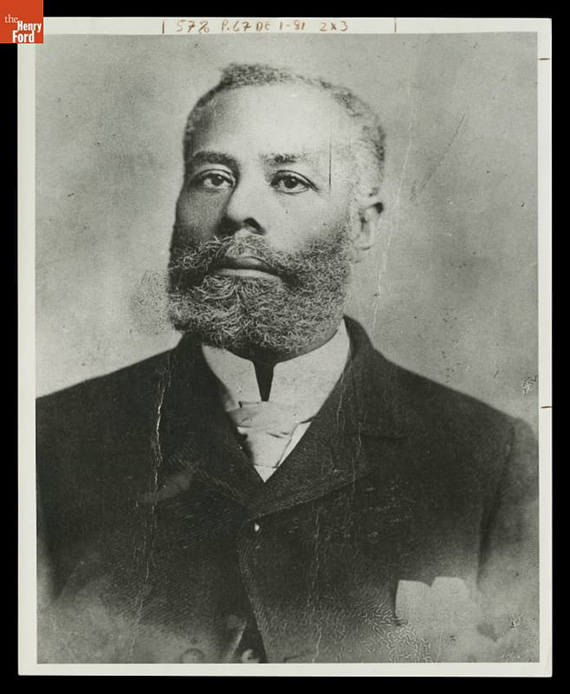

Did You Know?
Elijah McCoy
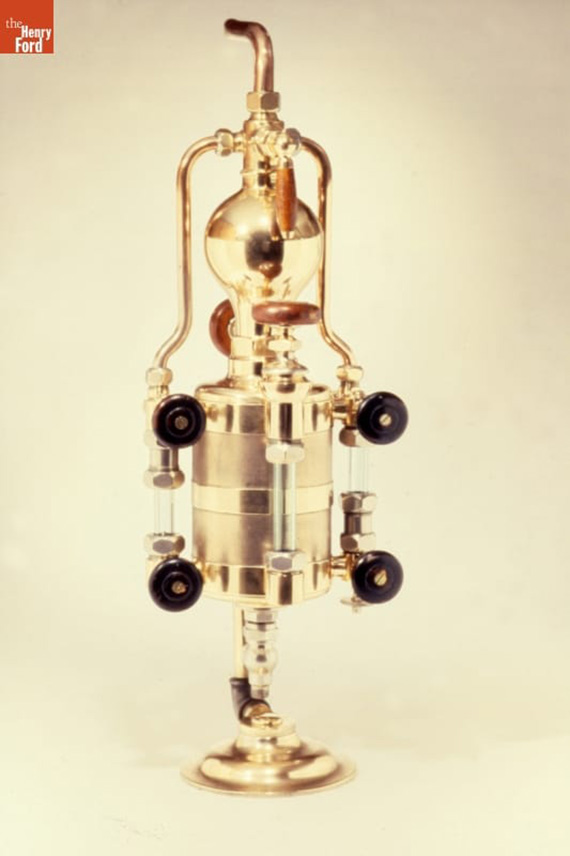
Elijah McCoy invented a special tool called an "oil-drip cup." This tool helped put the right amount of oil into an engine. On July 23, 1872, McCoy got his first patent for the oil-drip cup. He called it an "Improvement for Lubricators in Steam Engines." This invention became very popular with railroads because it allowed trains to run smoothly without stopping.
In the following video you are going to learn about Elijah McCoy, a Black Canadian mechanical engineer and inventor who created many important inventions that have changed and influenced the transportation industry. As you enjoy the video, think about some inventions that are important in your life.
Check out the following video entitled Inventions Day to learn more about Elijah McCoy.
Learning check
Select the correct answer, then press Check Answer to see how you did.
Select the correct answer, then press Check Answer to see how you did.
Select the correct answer, then press Check Answer to see how you did.
Select the correct answer, then press Check Answer to see how you did.
What is a question you might still have for Jahtayah about Elijah McCoy’s inventions?
Designing an invention or innovation
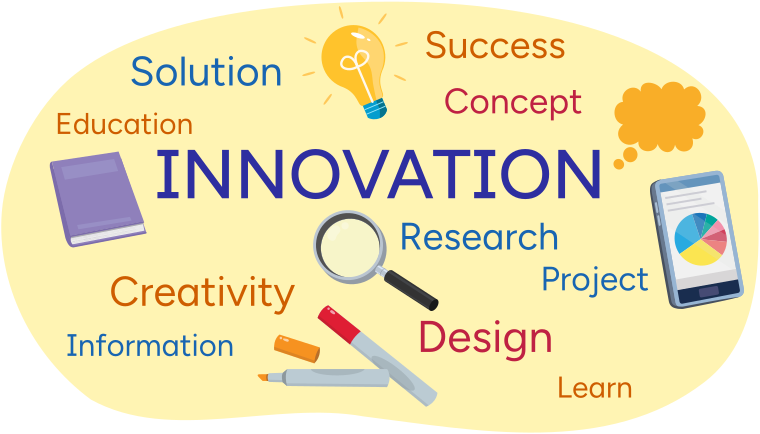
An invention is a new way to solve a problem, and an innovation can make something better. Are you ready to become an inventor or innovator?
In this part of the activity, you are going to design your own invention or innovation.
Press the following tabs to find out more.
Think about a problem you want to solve. It can be something in your daily life, at school, or in our community.
Brainstorm some ideas for how to solve them. Sometimes the best inventions come from wild ideas! Record the ideas that come to mind, no matter how silly they seem.
For some inspiration, check out the following video of some ideas of kids who came up with their own inventions.
Choose the idea you think will work best. Which idea do you think will solve the problem the most effectively?
Organize your ideas for your invention or innovation. Think about the following questions:
- What is the name of your invention/innovation?
- What problem does your invention solve?
- What supplies will you need?
- How does your invention work?
Complete the fillable and printable My Invention/Innovation Planner in your notebook or using the following document. If you would like, you can use speech-to-text or audio recording tools to record your thoughts.
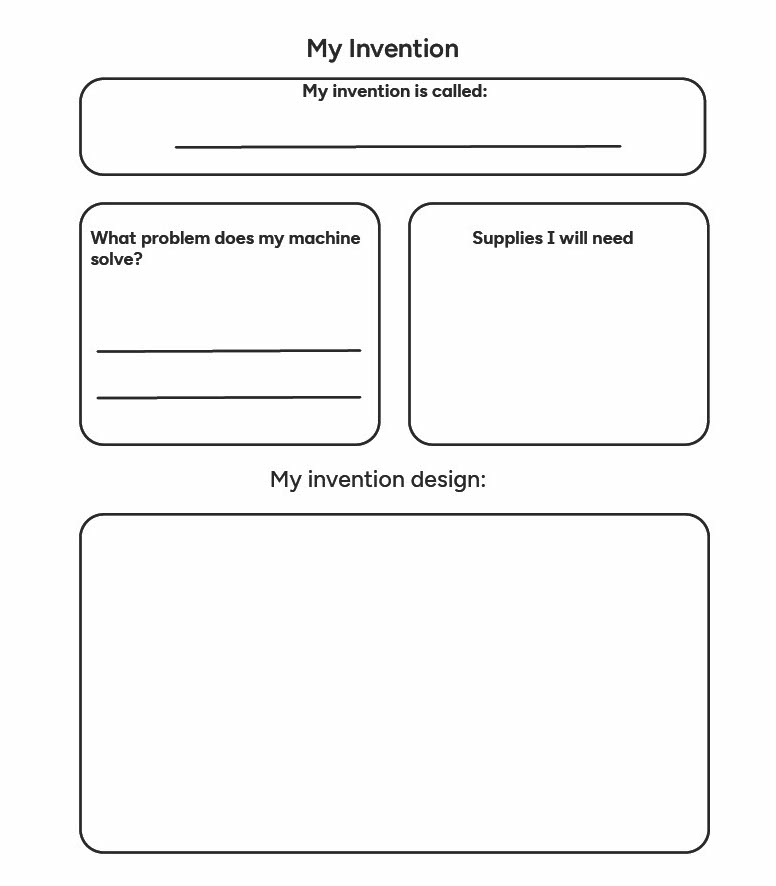
Press the Activity button to access the My Invention/Innovation Planner.
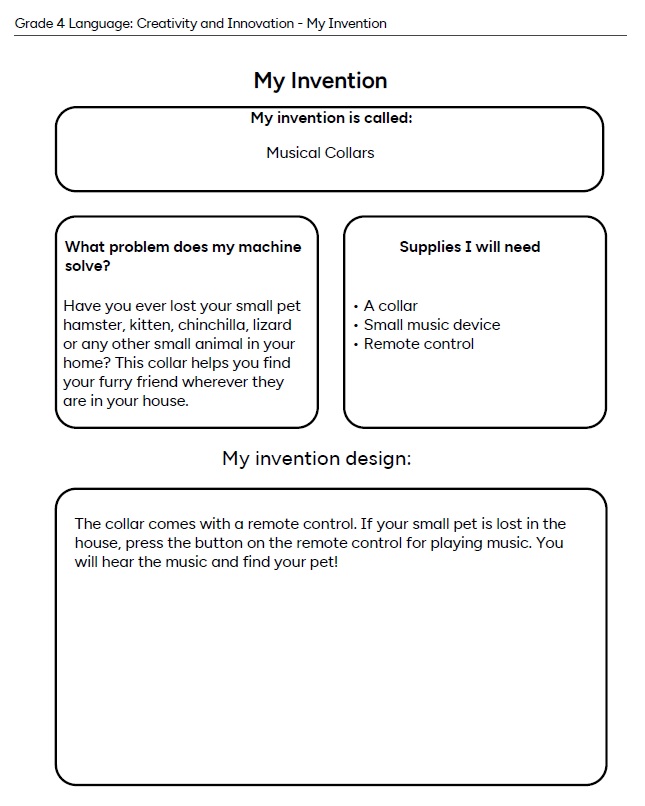
Activity(Opens in a new tab)Press Sample Answer to learn more.

Publishing
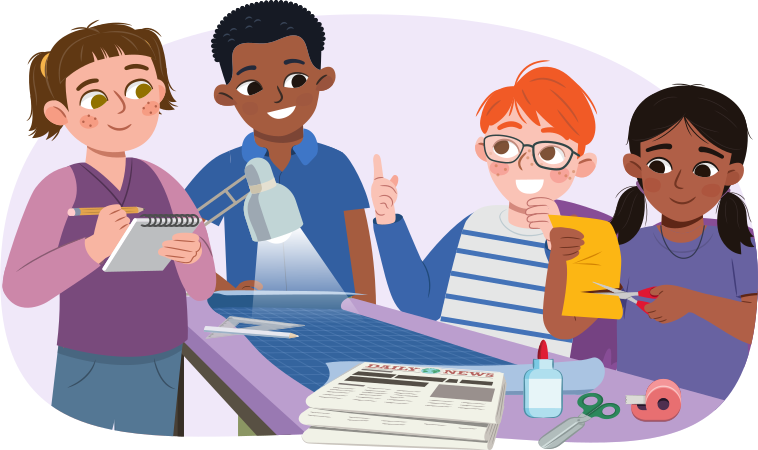
Create your final draft of your invention. You can use digital tools (approved by an adult), or your notebook or another method of your choice.
Use the following checklist to keep you on track.
My invention/innovation checklist
Now you can share your invention or innovation with others!
Pause and Reflect
Pause and reflect
- Did you come across any challenges while designing your invention? How did you overcome these challenges?
- Is there anything you would change about your invention? Explain your thinking.
- How did your research help you in designing your invention?
Record your responses in a method of your choice.
Reflection
As you read through these descriptions, which sentence best describes how you are feeling about your understanding of this learning activity? Press the button that is beside this sentence.

I feel...
Now, record your ideas using a voice recorder, speech-to-text, or writing tool.