Learning goals
We are learning …
- To identify characteristics of tall tales
- To identify and use figurative language such as similes and hyperbole.
- To identify the purpose of tall tales
- To brainstorm, plan, draft and edit a character profile for a tall tale character
Success criteria
I am able to…
- To identify characteristics of tall tales
- To identify and use literary devices such as hyperbole and simile.
- To identify the purpose of tall tales
- To brainstorm, plan, draft and edit a character profile for a tall tale character

Visualizing
Examine the following speech bubble. What do you imagine as you read and/or listen to the text?
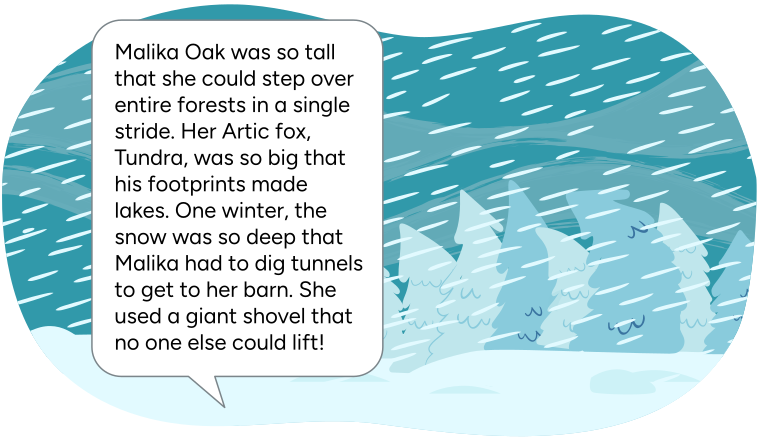
A speech bubble on top of a snowstorm in a forest. The speech bubble says, 'Malika Oak was so tall that she could step over entire forests in a single stride. Her Arctic fox, Tundra, was so big that his footprints made lakes. One winter, the snow was so deep that Malika had to dig tunnels to get to her barn. She used a giant shovel that no one else could lift.
Speech Bubble with Text

Connections
Visualizing
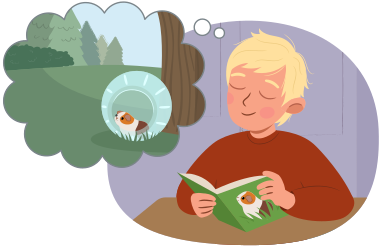
Close your eyes and imagine the scene you just read. Think of Malika’s giant size, Tundra’s enormous footprints, and the deep snow with tunnels.
Draw what you have imagined in your notebook or share what you imagine in an audio clip.
What season do you think it is from the description above?
Press Show Answer to learn more.
The season is winter.
Can you infer, or guess, the setting (place) of the description above?
Press Show Answer to learn more.
The setting is on a farm. The clue was the word “barn.”
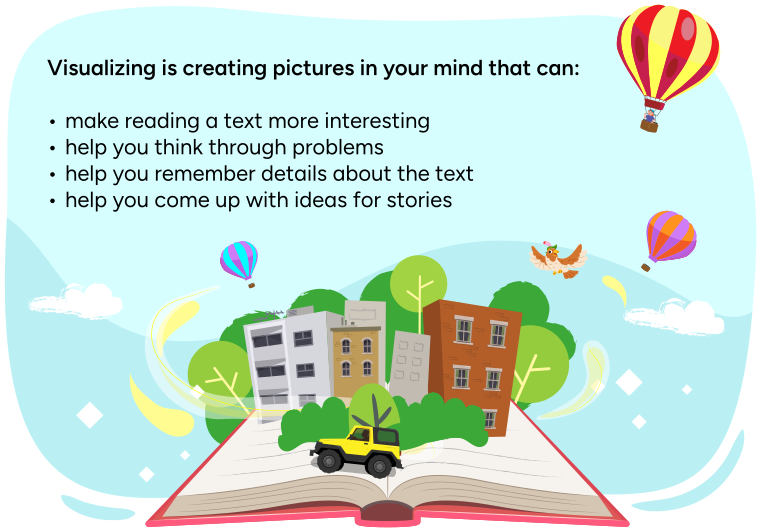
Visualizing is creating pictures in your mind: making reading a text more interesting; helps you think through problems; helps you remember details about the text; helps you come up with ideas for stories.

Exaggerating
Have you ever heard a story about someone who could do things that seem totally impossible, like chopping down an entire forest in one swing or riding a tornado like it’s a horse? Those kinds of stories are called tall tales!
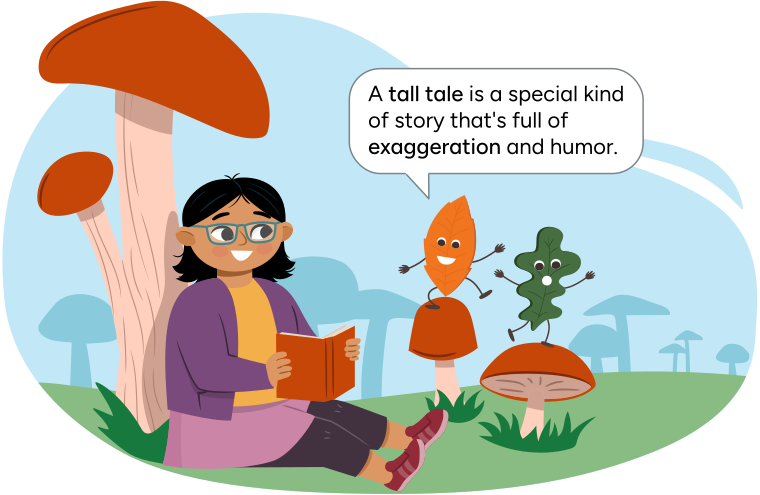
Avery is reading a book in an imaginative forest made out of giant mushrooms as big as trees. Two cartoon leaves are dancing on top of two mushrooms. One leaf says, 'A tall tale is a special kind of story that's full of exaggeration and humor.'
Check out the following video to learn more about the word “exaggeration” and how it is used in tall tales.
Learning check
Select the correct answer, then press Check Answer to see how you did.
Select the correct answer, then press Check Answer to see how you did.
How does poppy exaggerate her story about seeing a sea creature?
Press Possible Answer to learn more.
She adds more and more details about its size and the way it looks that seem unbelievable.
Tall tales
Stories can come in all different forms and when they are make-believe, they can also be called tales. A tale can be about something magical, exaggerated, or maybe it teaches a lesson.

Brainstorm
Brainstorm
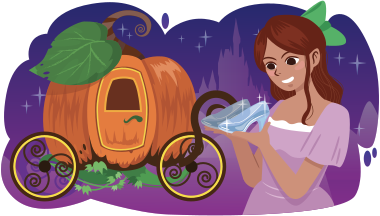
Can you think of any tales that you might already know? Maybe a fairy tale or a folk tale?
In today’s activity we are going to explore a special type of tale called a tall tale. A tall tale is a story that can be about real people, but it is exaggerated so much to the point that it’s unbelievable. It can sometimes have a lesson but not always.
Tall tale elements
We are going to explore some elements of a tall tale that makes it different from other types of tales.
Press the following tabs to learn more about tall tale elements.
The key element of a tall tale is exaggeration. Not just any kind of exaggeration, but extreme exaggeration. This means that what happens in the story is supposed to be unbelievable. Extreme exaggeration is also called hyperbole.
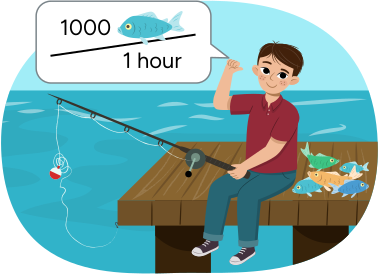
The main character usually has extraordinary abilities or goes on an adventure that would be impossible.
For example, a story about a child who went fishing and caught one thousand fish in one hour.
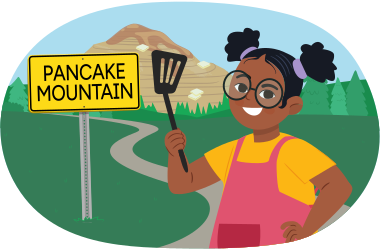
The silly situations and the way characters are bigger and stronger often make the stories funny. These exaggerated actions can make people laugh about the humorous tale.
For example, in one story, a character might fight with a tornado or make pancakes the size of a mountain.

Did You Know?
Author feature: Zora Neale Hurston
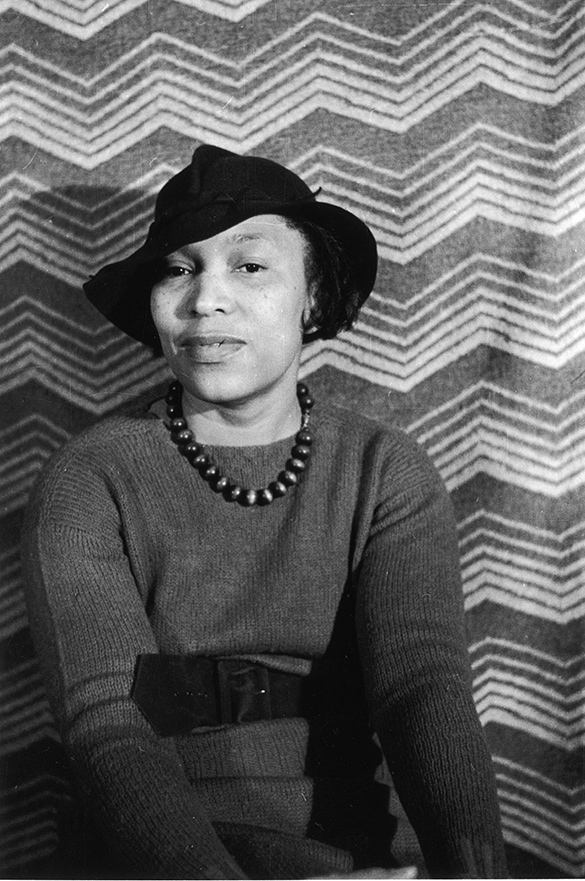
Zora Neale Hurston was a world-famous writer and anthropologist. She wrote books, short stories, and plays about African American life in the Southern United states. She also studied Black folklore. Many writers were inspired by her, and she is remembered as one of the most important female writers of the 20th century. She spent her life studying and promoting Black culture and used her research within her writing. She is also well known for her work during the Harlem Renaissance (a movement in Harlem, New York, focused on celebrating Black culture).
Press Definition to learn more.
Anthropologist: Someone who studies human beings and their cultures, from prehistoric times to today.
Let’s explore
Check out the following video where Xavier, Yadina, and Brad travel back in time to meet the world-famous writer, Zora Neale, when she was a child.
As Zora listens to people telling tall tales on the porch of a store, think about the different reasons why people might share these types of stories.
Learning check
Select the correct answer, then press Check Answer to see how you did.
Listen as Zora shares her own tall tale with her new friends.
Select the correct answer, then press Check Answer to see how you did.
Why do you think people might tell tall tales?
Press Possible Answer to learn more.
Sometimes it's to make us laugh, sometimes to teach us a lesson, and sometimes just to entertain us with incredible adventures.
Figurative language
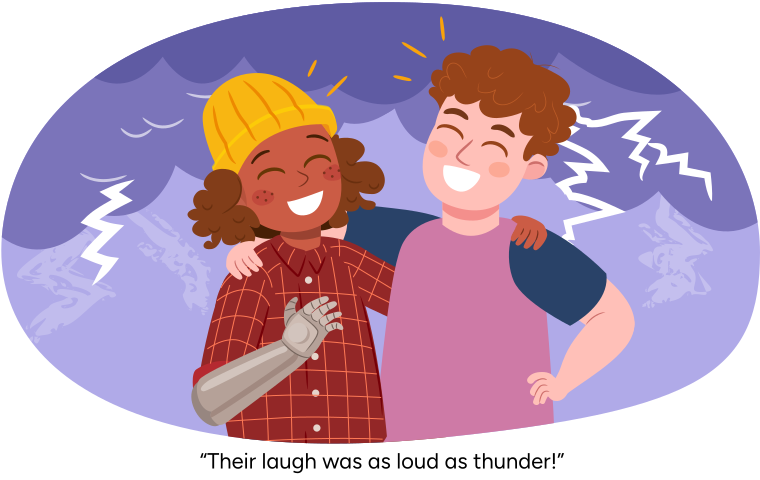
We have been learning about how tall tales are all about creating stories using exaggeration and some humor. Another way to make our tales more interesting and fun is to use figurative language. Figurative language is when we use phrases and words that do not always mean exactly what it says.
The types of figurative language that is often used in tall tales are similes and hyperboles.
In tall tales, hyperbole is important because these stories are all about making things extraordinary and unbelievable. A simile in a tall tale is used to make the story sound bigger and funnier. All tall tales are full of exaggeration, so when you compare things using "like" or "as," you can make the characters and events seem even more amazing.
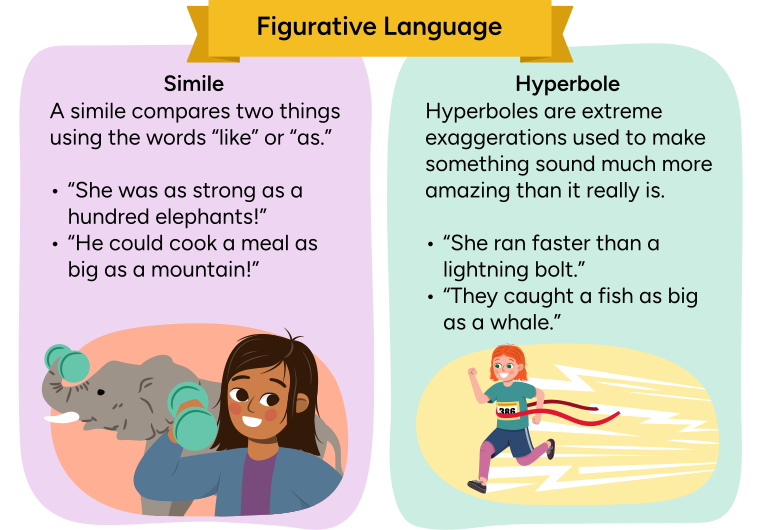
Figurative Language
There are two kinds of figurative languages defined along with examples: similes and hyperbole.
Simile
A simile compares two things using the words 'like' or 'as.'
'She was as strong as a hundred elephants!'
'He could cook a meal as big as a mountain!'
Hyperbole
Hyperboles are extreme exaggerations used to make something sound much more amazing than it really is.
'She ran faster than a lightning bolt.'
'They caught a fish as big as a whale.'
Check out the following video to learn more about how to use similes.
Let’s practice
Place the cards into categories that best match. Use the arrow buttons to navigate between cards.
Press Student Tip to learn more.
Tip: Similes use the words “like” or “as”
Let’s build our skills!

Adverbs!
Adverbs describe verbs (actions). They tell us how something is done. Tall tales use adverbs to make things sound more extreme.
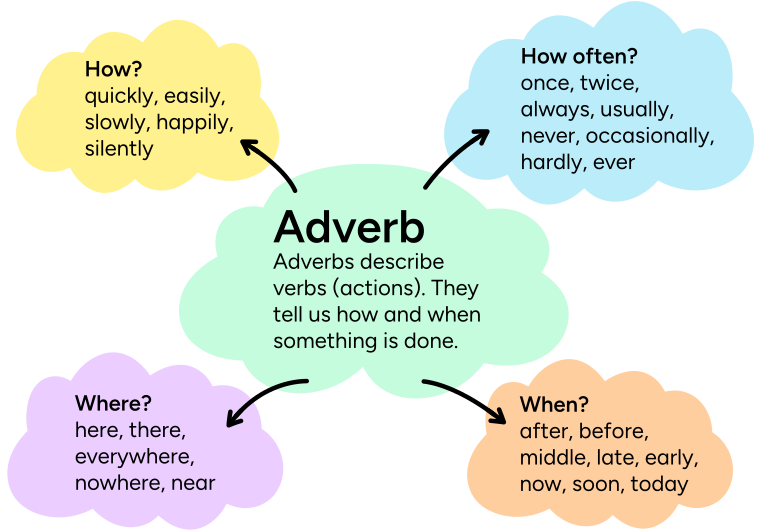
A brainstorming diagram about adverbs and their four categories: how, how often, when, and where. Each category has example adverbs.
Adverb: Adverbs describe verbs (actions). They tell us how and when something is done.
How? Quickly, easily, slowly, happily, silently.
How often? Once, twice, always, usually, never, occasionally, hardly ever.
When? After, before, middle, late, early, now, soon, today.
Where? Here, there, everywhere, nowhere, near.
Check out the following video to review what adverbs are and how to use them.
Press Example to access more information about how adverbs are used in tall tales.
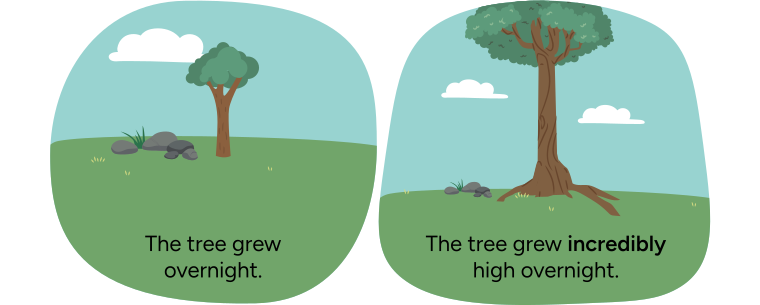
“The tree grew overnight”
In a tall tale, you might say,
“The tree grew incredibly high overnight.”
The adverb “incredibly” describes how the action (grew) was done.
More examples of adverbs are:
- quickly
- bravely
- loudly
- powerfully
Let’s practice
For each sentence, select the missing adverb from the drop-down menu. Press Check Answer to see how you did.
Tall tale characters: Paul Bunyan
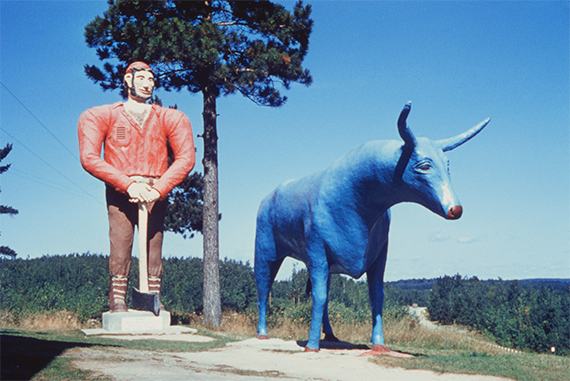
Many years ago in North American lumber camps, loggers made up funny, exaggerated stories about a giant lumberjack named Paul Bunyan. As a child, Paul Bunyan was so hungry he ate fifty eggs and ten containers of potatoes every day. He was super strong and didn't mind giant mosquitoes or months of rain. These tall tales said Paul Bunyan created the Great Lakes with his huge footprints so that his companion, a blue ox named Babe, would have a place to drink water.

Student Wellness
Take a break!
Elements of tall tale characters
Press the following tabs to learn more about elements of tall tale characters.
Characters in tall tales can do things that are much bigger or more impressive than real life.
For example, the tall tale character Paul Bunyan was so large he made the Great lakes with his footprints.
Tall tale characters often have bold and unique personalities. They might be very brave, very clever, or very kind.
For example, the character Paul Bunyan was super strong and didn’t mind giant mosquitos or months of rain.
These characters might have unusual features.
For example, Paul Bunyan’ character had a companion who was a blue ox named Babe. Babe was also larger than life.
Creating your own tall tale character
Next, you are going to create a description of your own tall tale character!
Brainstorm
Brainstorm
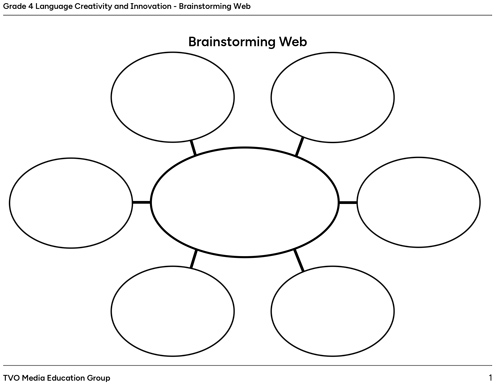
What are some ideas, words, images that come up when you think of your character?
Complete the fillable and printable Brainstorming Web in your notebook or using the following document. If you would like, you can use speech-to-text or audio recording tools to record your thoughts.

Planning and drafting
Think about the following while you plan your description of your character.
Figurative language like similes and hyperboles would be helpful for describing your character in an interesting and fun way. Use at least one type of figurative language in your description.
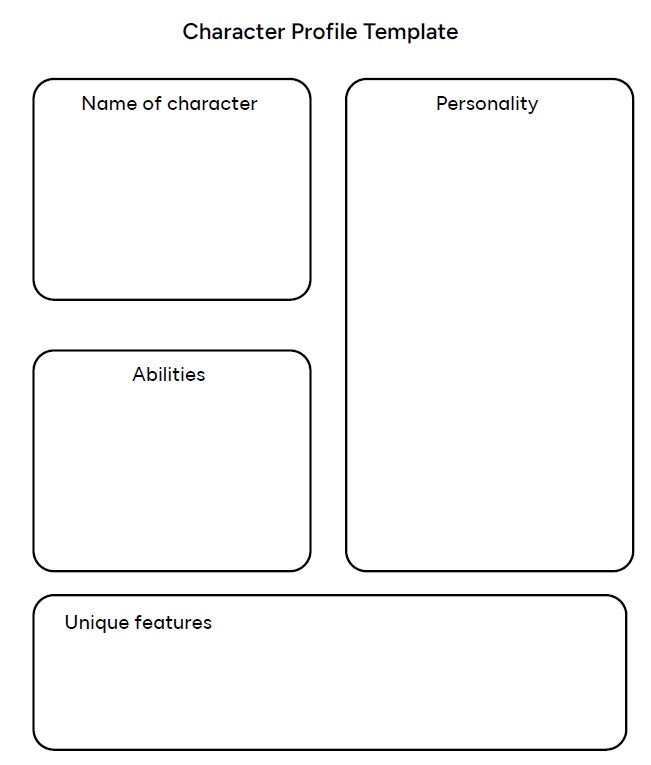
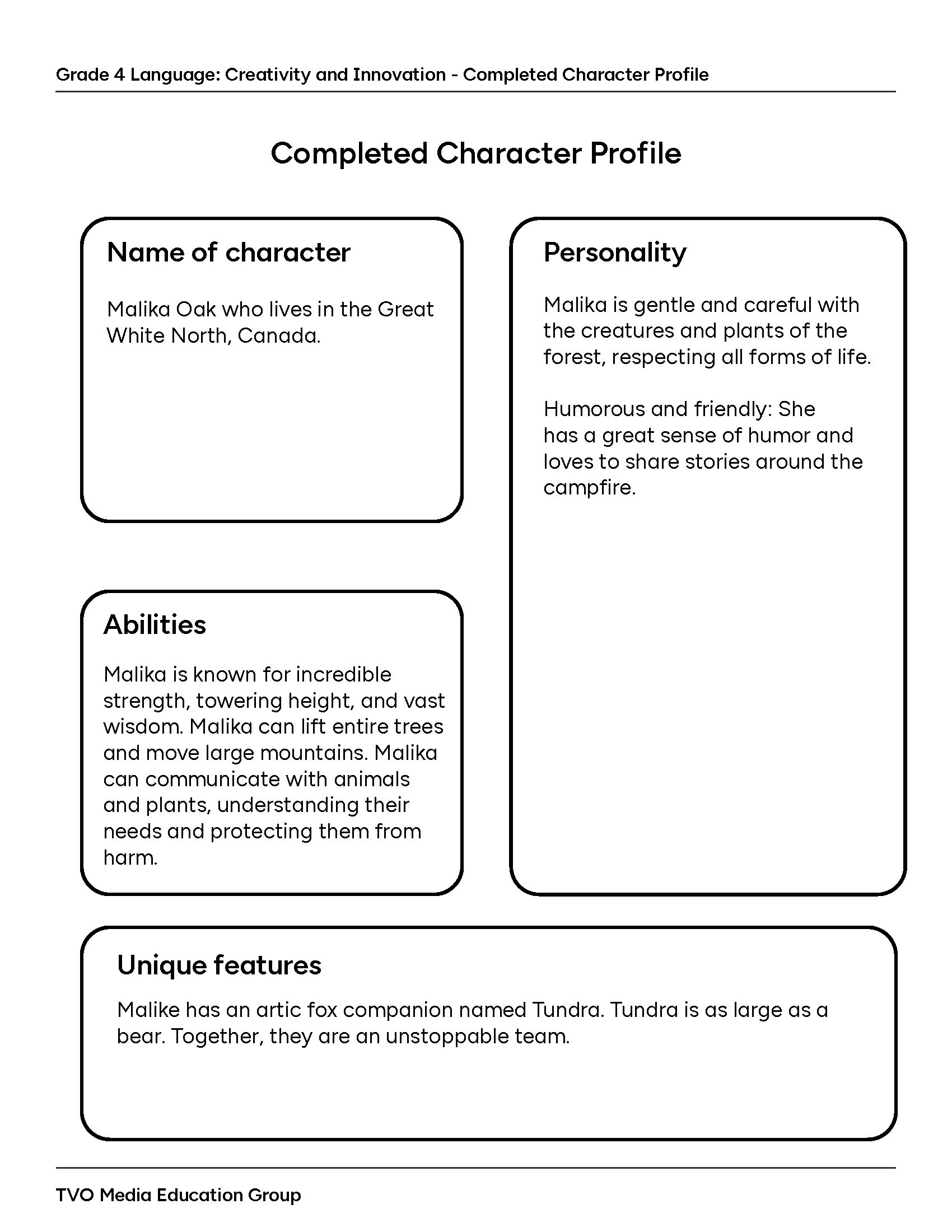
Complete the fillable and printable Character Profile in your notebook or using the following document. If you would like, you can use speech-to-text or audio recording tools to record your thoughts.
Press Example to learn more.

Adjectives!
While creating your character, adjectives (describing words) will also be helpful.
Check out the following video to review what an adjective is.
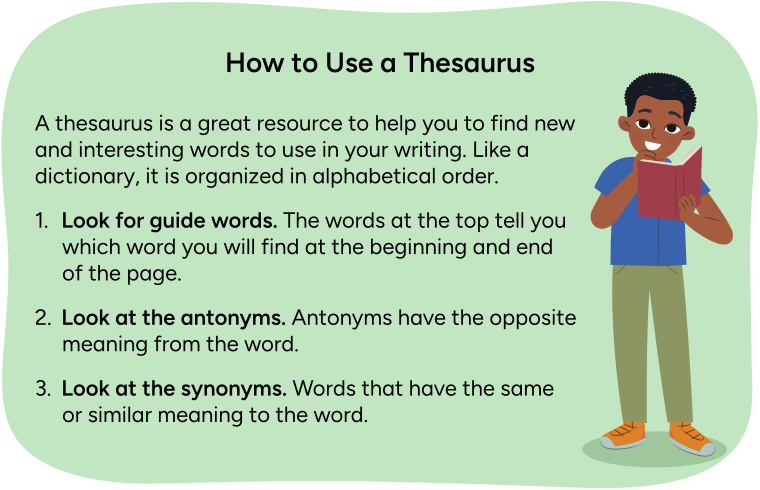
If you find that you are struggling to find just the right descriptive word, consider using a thesaurus to help you!
How to use a thesaurus
A thesaurus is a great resource to help you to find new and interesting words to use in your writing. Like a dictionary, it is organized in alphabetical order.
Look for:
Guide words: You will find the guide words at the top of the page. The guide words tell you the first and last words on each page.
Antonyms: Antonyms have the opposite meaning from the word.
Synonym: Words that have the same or similar meaning to the word.
Cursive practice
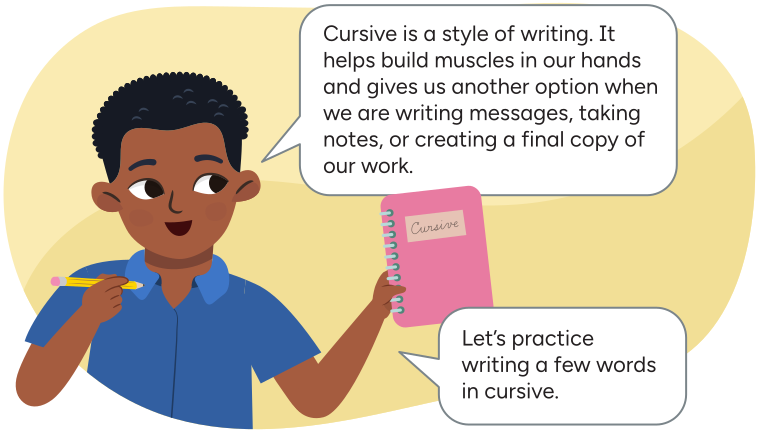
Arthur says, 'Cursive is a style of writing. It helps build muscles in our hands and gives us another option when we are writing messages, taking notes, or creating a final copy of our work.
Let's practice writing a few words in cursive.'
| Tall | Wise |
| Humerous | Strong |
Tips for cursive letters

- When we write in lowercase, we always begin at the bottom.
- When we write in uppercase we can start from the top or the bottom.
- Try to keep the pencil on the page until you are done the word.
- Create a finger space before you continue to the next word.
- Try to press gently as you write so that your hand can move easily across the page.
- Take your time to make sure that you are writing clearly and evenly.

Editing

Now that you have a draft of your tall tale character profile, it’s time to review your work and see if there are any changes that you might like to make.
Use the following checklist to support your learning and understanding.
Success criteria checklist
Now it’s time to create the final copy of your tall tale character profile! Write your description using a method of your choice (approved by a trusted adult) and consider including an image to illustrate the exaggerated features of your character.

Pause and Reflect
Pause and Reflect
- How did you decide on your character’s exaggerated abilities?
- How do you think figurative language might be helpful in writing a tall tale?
Reflection
As you read through these descriptions, which sentence best describes how you are feeling about your understanding of this learning activity? Press the button that is beside this sentence.

I feel...
Now, record your ideas using a voice recorder, speech-to-text, or writing tool.