Learning goals
We are learning to…
- identify the elements of a game including objective, rules, components, and gameplay
- demonstrate an understanding of the three types of games: cooperative, strategy and educational
- understand how imagery can be used to create excitement in a game
- develop ideas, plan, draft and present a design for a game
- identify and use imperative verbs and imperative sentences
Success criteria
I am able to…
- identify the different elements of a game
- share my learning of three types of games: strategy, cooperative and educational
- use imagery and imperative sentences in designing a game
- design a game, identifying the purpose and audience and using game elements

Student Success
Games
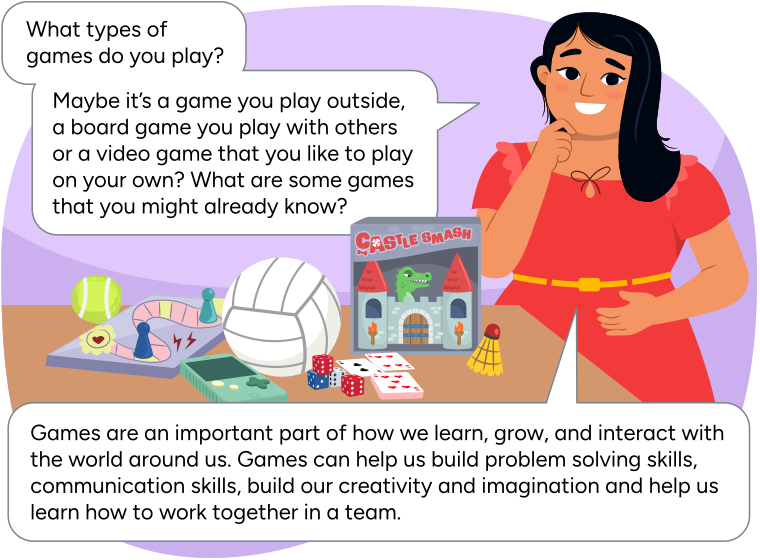
Teacher Chiara is in front of a table of games and sports equipment. She asks, "What types of games do you play? Maybe it's a game you play outside, a board game you play with others or a video game that you like to play on your own? What are some games that you might already know?"Games are an important part of how we learn, grow, and interact with the world around us. Games can help us build problem solving skills, communication skills, build our creativity and imagination and help us learn how to work together in a team."
Types of games
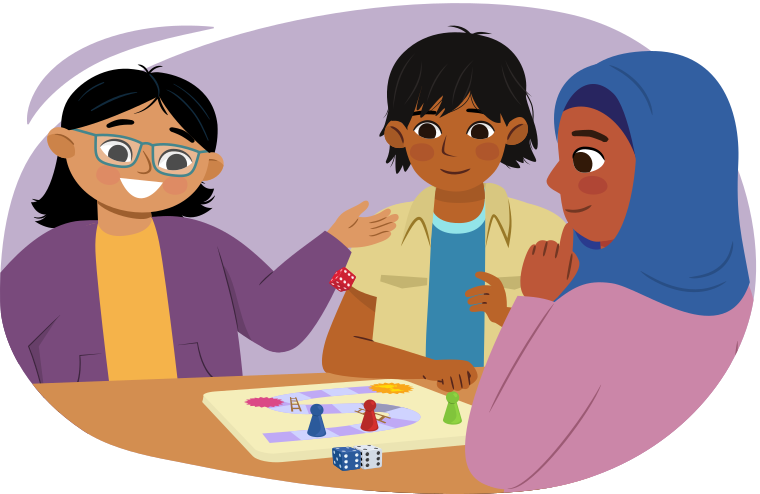
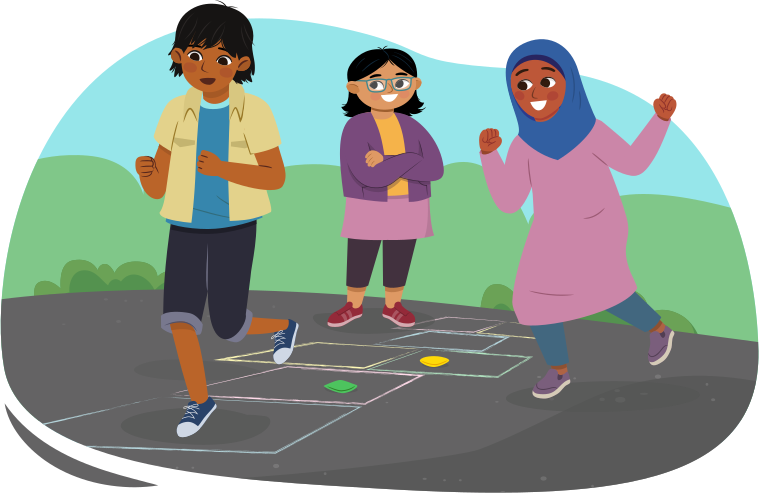
Explore the following images of different games being played.

Vocabulary
Explore the following flashcards to consider some of the skills that are helpful in game design.

Brainstorm
Brainstorm
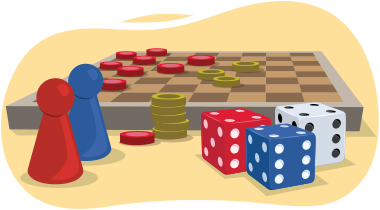
What are some of your favourite games to play? Why?
Record your thinking in a method of your choice.

Elements of a game
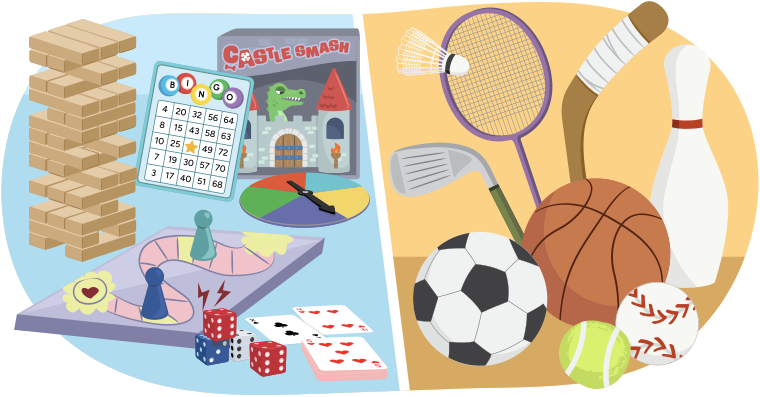
Games come in many different forms such as board games or outdoor games. All games need to have specific elements.
Press the following tabs to learn more about elements of games.
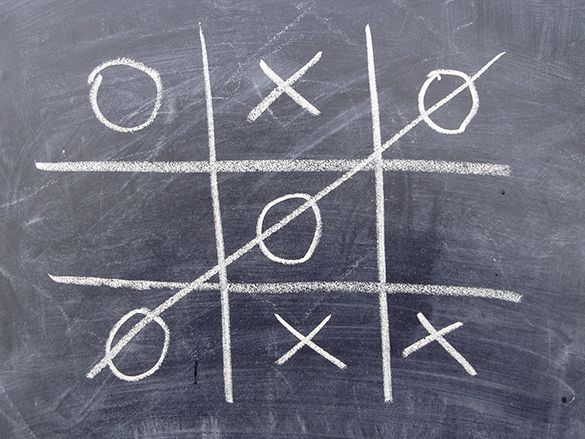
The main goal or purpose of the game is the objective. It gives players a clear direction in the game and lets them know how they can win.
For example, in the game of Tic-Tac-Toe, the objective is to be the first to get three of your marks (X or O) in a row, column, or diagonal.
Rules are the guidelines that tell players what they can and cannot do during the game. Rules make the game fair and fun to play.
For example, in the game of chess, each type of game piece moves in a specific way (e.g., rooks move horizontally or vertically, bishops move diagonally).
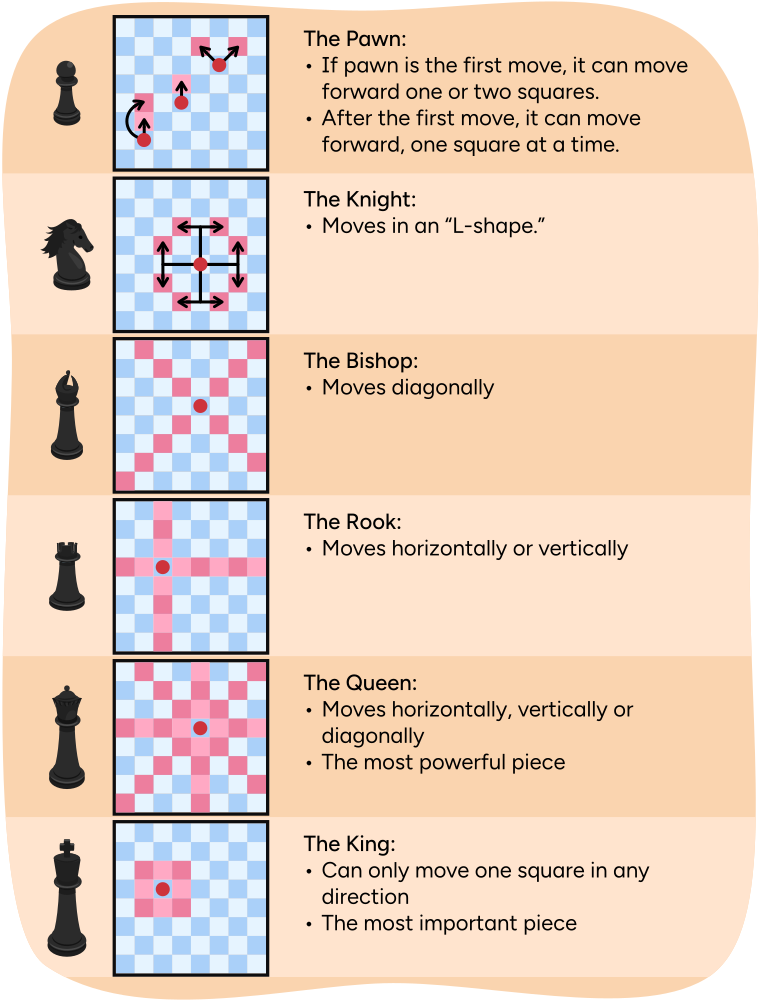
Rules of Chess: How the pieces move
Chess has 6 game pieces: pawns, knights, bishops, rooks, a queen, and a king. For each game piece, there is an outline of what the piece usually looks like, a chessboard showing how that piece can move, and the rules of each piece.
The Pawn:
If pawn is the first move, it can move forward one or two squares.
After the first move, it can move forward, one square at a time.
The Knight:
Moves in an "L-shape."
The Bishop:
Moves diagonally
The Rook:
Moves horizontally or vertically
The Queen:
Moves horizontally, vertically or diagonally
The most powerful piece
The King:
Can only move one square in any direction
The most important piece.
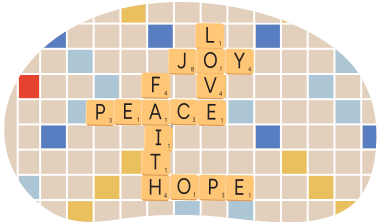
Gameplay refers to playing the game, including the actions players take, how they interact with the game components, and how they interact with each other.
For example, in the game of scrabble, the gameplay involves making words on the board using letter tiles and scoring points based on the words that each player makes.
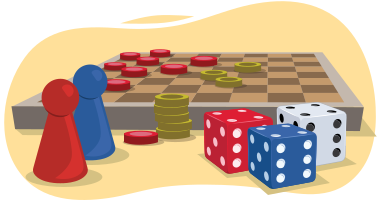
Components are the physical items that make up the game, such as the board, cards, tokens, dice, and player pieces.
For example, in the game of snakes and ladders, the components include a game board with a grid, player tokens, and some dice.
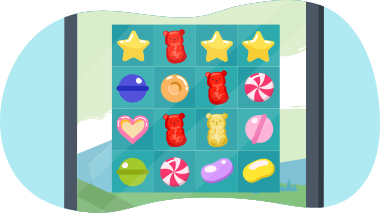
Games often have a story or a theme that gives the game context (or backstory). The storyline helps players enjoy the game by allowing them to connect with the game elements on a deeper level.
Diversity in games
In the following videos, you will meet Emily and Cameron who share some of their favourite games with you.
Emily is 9 years old and lives in Findlay Creek, Ontario. She is a Ghanian Canadian and is excited to share her favourite game called Oware, a board game from Ghana.
Learning check
Select the correct answer, then press Check Answer to see how you did.
Traditional games
Cameron is 10 years old and is Mohawk from the Six Nations of the Grand River, Ontario. In the winter, his family builds a special snow track in the backyard to play a traditional game called Snow Snake.
Check out the following video to learn more.
Learning check
Select the correct answer, then press Check Answer to see how you did.

Student Wellness
Take a break!
Different types of games
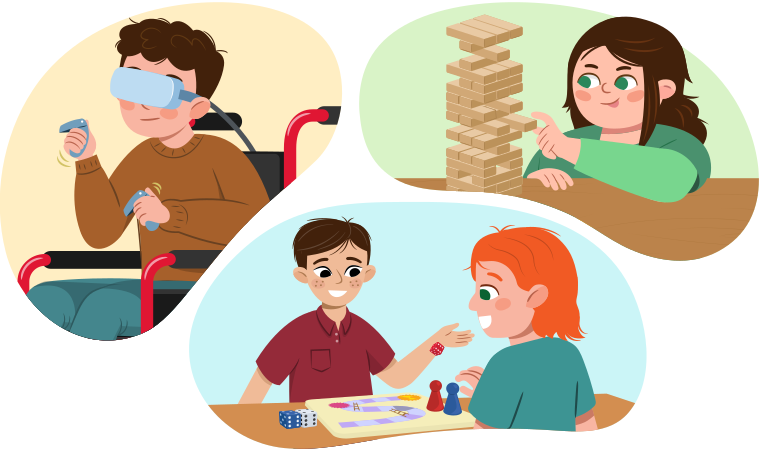
Press the following tabs to learn more about different types of games.
Strategy games are games that use decision-making skills, planning, and thinking ahead. Players must analyze the situation and decide the best move to make next.
Check out an example of a strategy game in this next video where you meet Lars, a 10 year old who lives in Halifax, Nova Scotia. Lars shares his favourite board game, Tsoro Yematutu, a traditional game played in Zimbabwe.
Educational games are designed to teach players specific skills, knowledge, or concepts. These games make learning fun by combining education with gameplay.
Check out an example of an educational game in this next video where you meet Asma who plays Worda Rama!
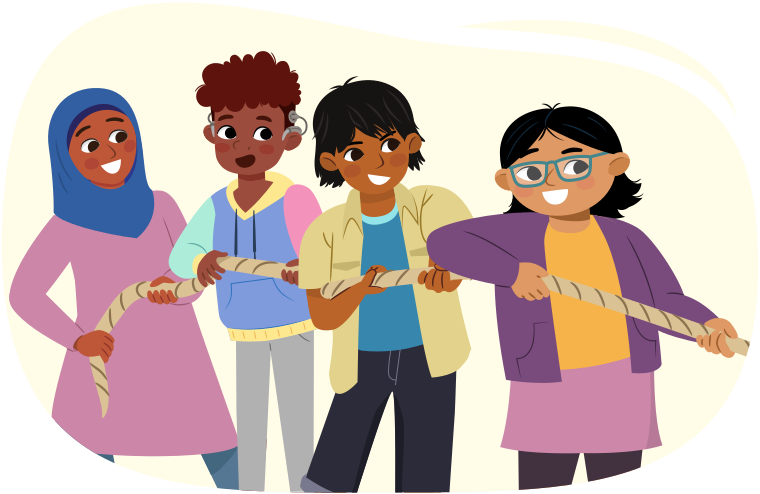
Cooperative games are games where players work together to reach a common goal. Instead of competing against each other, players collaborate, share, and strategize as a team. The focus is on working together to be successful.
Scavenger hunts can be played cooperatively when players work as a team to collect items from a list.
Explore the following video of how to play scavenger hunt in a cooperative way!
Video games can be educational, cooperative, or strategy games.
Did you know that kids can create their own video games? Next, you will meet Marcus, a 9-year-old child who lives in Greely, Ontario. Marcus loves creating video games and gets his inspiration for his games from his Caribbean culture.
What do you think is the objective of Marcus’s Apple Game?
Press Show Answer to learn more.
To catch the greatest number of apples falling from a tree.
Which aspects of Marcus’s Caribbean culture inspired his video games?
Press Show Answer to learn more.
The practice of head carrying ingredients from his parents' countries such as plantains, pineapples, and mangoes.
Design your own game
In this next part of the learning activity, you are going to be designing your own game!
Brainstorm
Brainstorm
Brainstorm and choose what type of game you want to create:
- strategy
- educational
- cooperative
Think of a theme for your game. Will it be an adventure in a forest, out in space, or about your favorite cartoon characters?
Press Extension to learn more.
If you can design a video game using coding, ask a trusted adult and go for it!
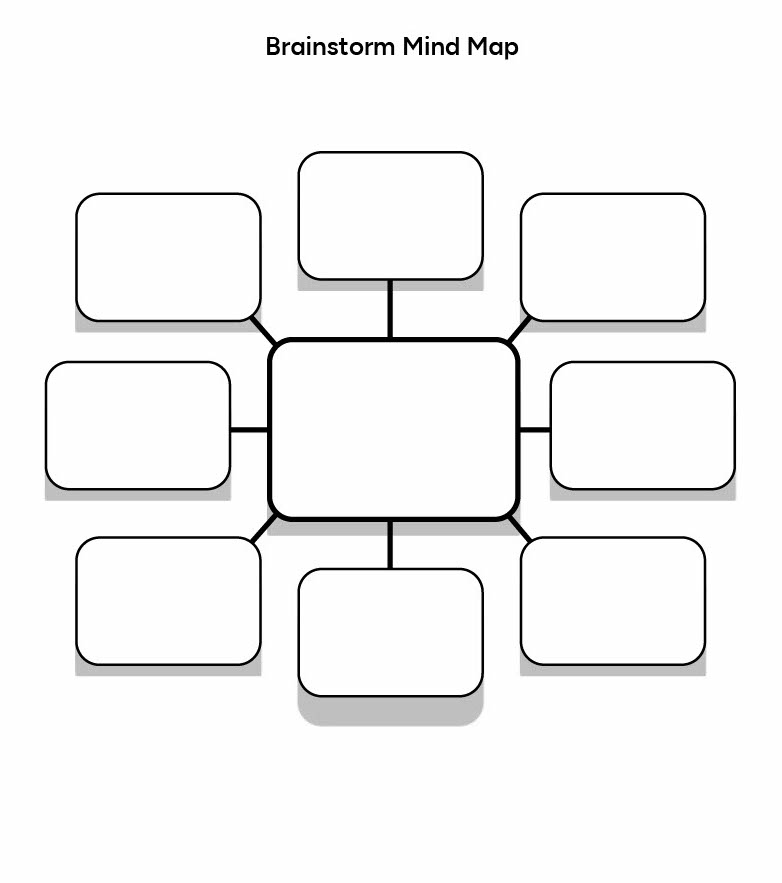
Complete the fillable and printable Brainstorm Mind Map in your notebook or using the following document. If you would like, you can use speech-to-text or audio recording tools to record your thoughts.
Planning
Use the following checklist to help plan your game.
Game Plan

Student Tips
Imagery
Imagery is when you use describing words and language to create pictures in the player's mind.
It can connect with the five senses: sight, sound, touch, taste, and smell. Imagery can make a game’s theme or story more vivid and exciting.
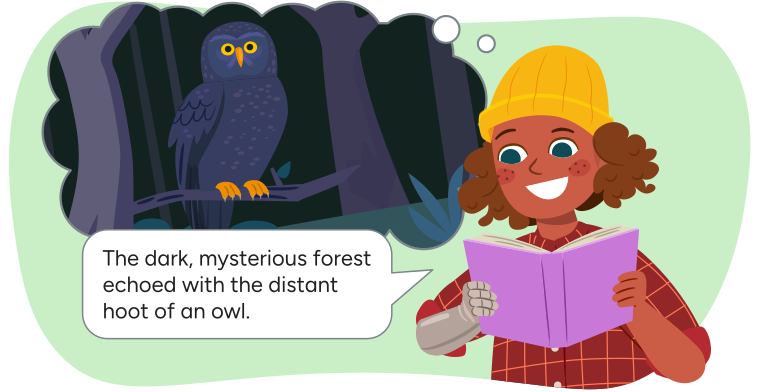
Using imagery in game design
Think about the setting or theme of your game. How can you use descriptive language to make it more engaging?
Press Example to learn more.
If your game is set in a magical forest, you might describe the shimmering trees, the rustling leaves, and the sparkling streams to bring the game to life.
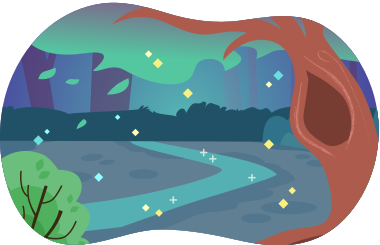
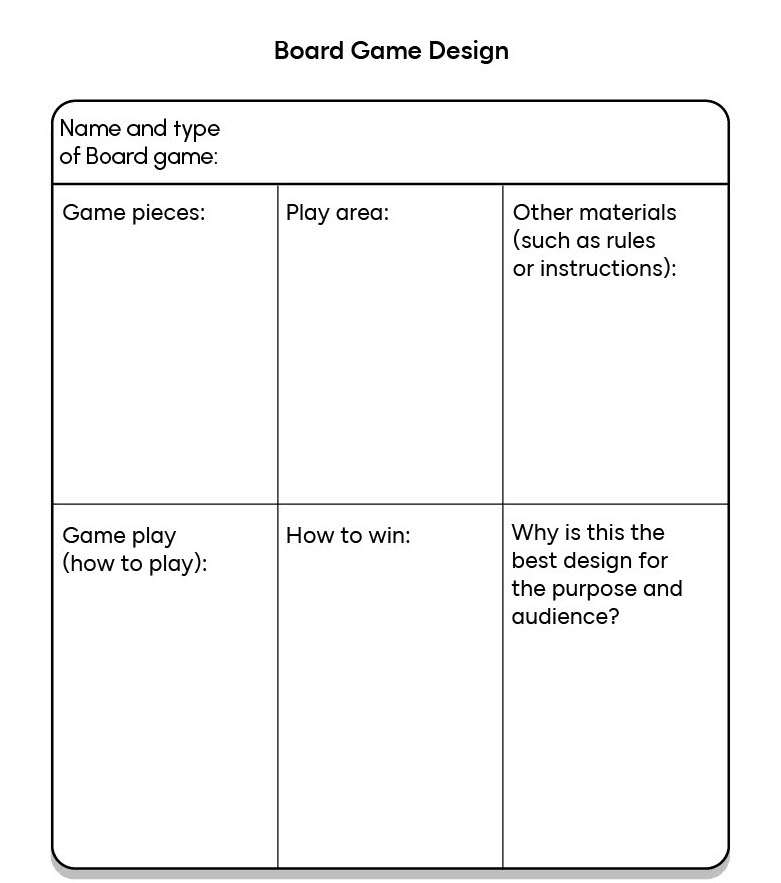
As you design your board game, think about the imagery you would like to use.
Complete the fillable and printable Board Game Design Planner in your notebook or using the following document. If you would like, you can use speech-to-text or audio recording tools to record your thoughts.
Press Student Tip to learn more.
Check out the following video for an example board game and how it was designed.

Instructions and imperative verbs
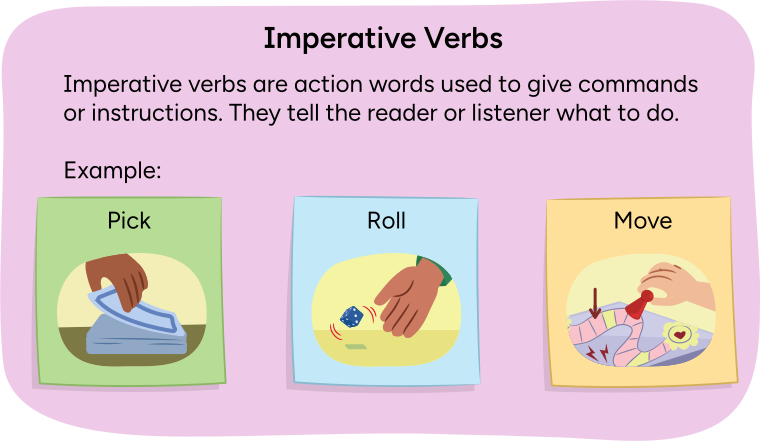
Imperative Verbs
Imperative verbs are action words used to give commands or instructions. They tell the reader or listener what to do.
Examples: "Pick," "Roll," "Move"
Imperative verbs are often the first word in game instructions. An imperative sentence is a type of sentence that gives an instruction. It often begins with an imperative verb and clearly tells someone what to do.
Press Example to learn more.
- "Pick up the card."
- "Roll the dice."
- "Move your piece forward three spaces."
Let’s practice
For each sentence, select the missing imperative verb from the drop-down menu. Press Check Answer to see how you did.
Spelling resources
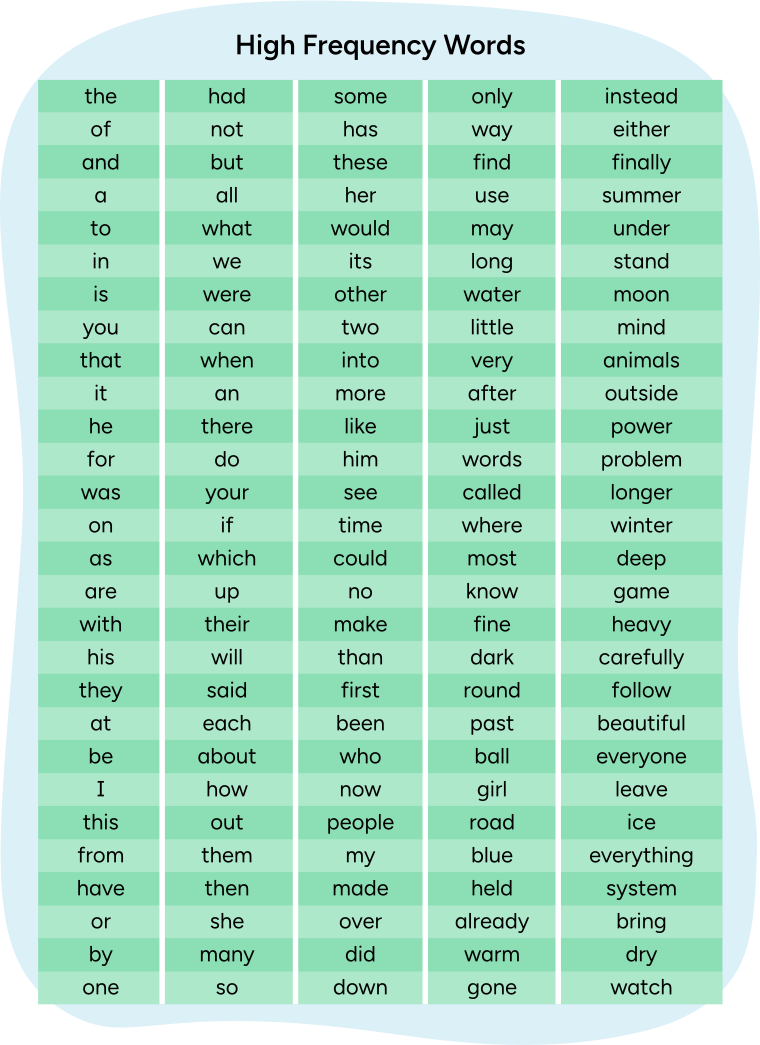
A list of high frequency words.
the, of, and, a, to, in, is, you, that, it, he, for, was, on, as, are, with, his, they, at, be, I, this, from, have, or, by, one, had, not, but, all, what, we, were, can, when, an, there, do, your, if, which, up, their, will, said, each, about, how, out, them, then, she, many, so, some, has, these, her, would, its, other, two, into, more, like, him, see, time, could, no, make, than, first, been, who, now, people, my, made, over, did, down, only, way, find, use, may, long, water, little,very, after, just, words, called, where, most, know, fine, dark, round, past, ball, girl, road, blue, held, already, warm, gone, instead, either, finally, summer, under, stand, moon, mind, animals, outside, power, problem, longer, winter, deep, game, heavy, carefully, follow, beautiful, everyone, leave, ice, everything, system, bring, dry, and watch
As you design your game, it’s important to check your work for grammar and spelling. Once you’ve written your list of instructions, use a spelling resource near you to check your spelling. A spelling resource you might choose to use is:
- word wall
- online dictionary
- personal dictionary
- picture dictionary
- high frequency word list
Punctuation, verb tenses, and spelling
Part of the writing process includes checking for proper spelling, punctuation, and grammar. The following examples will help you review some spelling and grammar issues you need to look for. Then go through your storyboard and edit it. This will help you make sure your message is clear!
Press the following tabs to access examples of proper spelling, punctuation, and grammar.
Periods, question marks, and exclamation points are different forms of punctuation.
Check out the following video to learn more about punctuation.
Quotation marks are used in writing to show when someone is speaking. Quotation marks let you know exactly what the speaker’s words are.
Example: “Did you hear that new joke that Tyler has been telling everyone?” I asked. “Not yet,” Susie replied. “Is it funny?”
An apostrophe is used to replace letters that you have left out of a word. Apostrophes work with contractions.
Check out the following video to learn more about contractions.
Commas can be used in different ways.
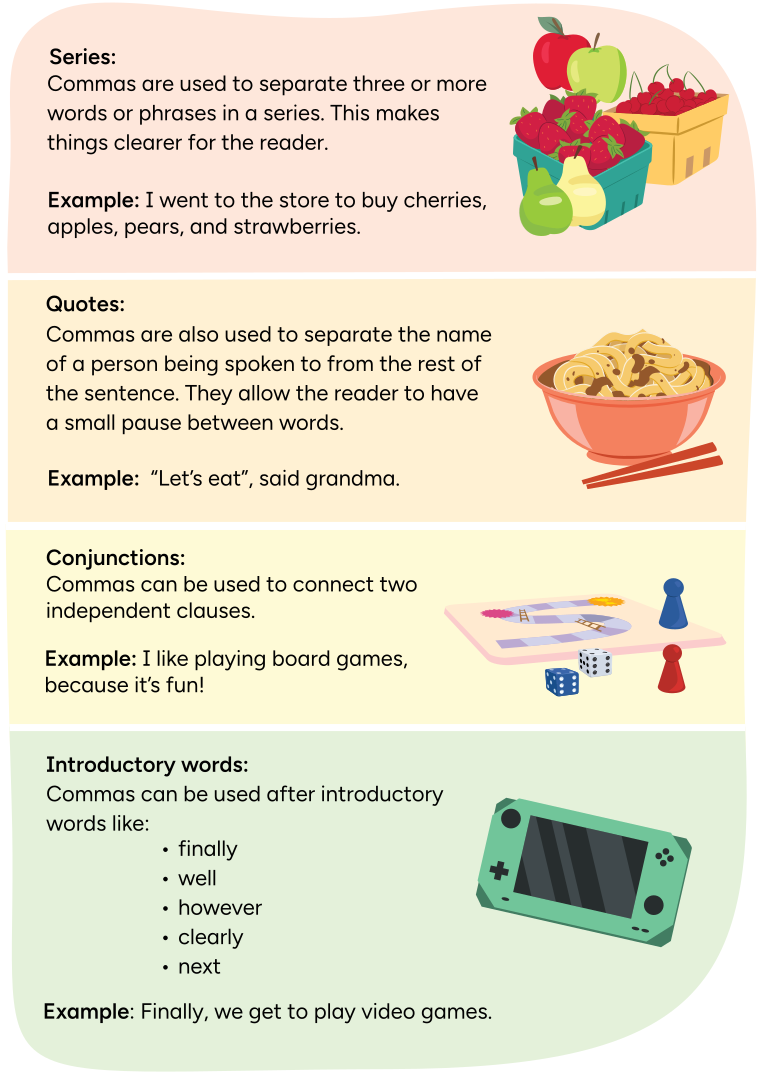
Series:
Commas are used to separate three or more words or phrases in a series. This makes things clearer for the reader.
Example: I went to the store to buy cherries, apples, pears, and strawberries.
Quotes:
Commas are also used to separate the name of a person being spoken to from the rest of the sentence. They allow the reader to have a small pause between words.
Example: "Let's eat", said grandma.
Conjunctions:
Commas can be used to connect two independent clauses.
Example: I like playing board games, because it's fun!
Introductory words:
Commas can be used after introductory words like:
Finally
Well
However
Clearly
Next
Example: Finally, we get to play video games.
Check out the following video to learn more about verb tenses.
Presenting your game design
The final part of this activity is sharing the final draft of your game design.
You can present your game design using digital tools (approved by a trusted adult) or any other method of your choice. If possible, share your game design with a peer or trusted adult.

Pause and Reflect
Pause and reflect
- How did you come up with the idea for your game?
- What was the most fun part of designing your game and what was the most challenging?
Reflection
As you read through these descriptions, which sentence best describes how you are feeling about your understanding of this learning activity? Press the button that is beside this sentence.

I feel...
Now, record your ideas using a voice recorder, speech-to-text, or writing tool.