Learning goals
We are learning…
- To demonstrate an understanding of role models and identify characteristics associated with them
- To use reading comprehension strategies such as activating prior knowledge, previewing vocabulary and sequencing a timeline of events
- To identify the purpose and structure of an interview
- To plan an interview, including an introduction, question and answers and a concluding statement
- To identify and use interrogative verbs
Success criteria
I am able…
- To share my learning of what is a role model
- To identify characteristics that make a positive role model
- To use reading comprehension strategies when exploring short texts
- To organize and plan an interview, identifying the purpose and including interview characteristics
- To identify and use interrogative verbs
Visualization
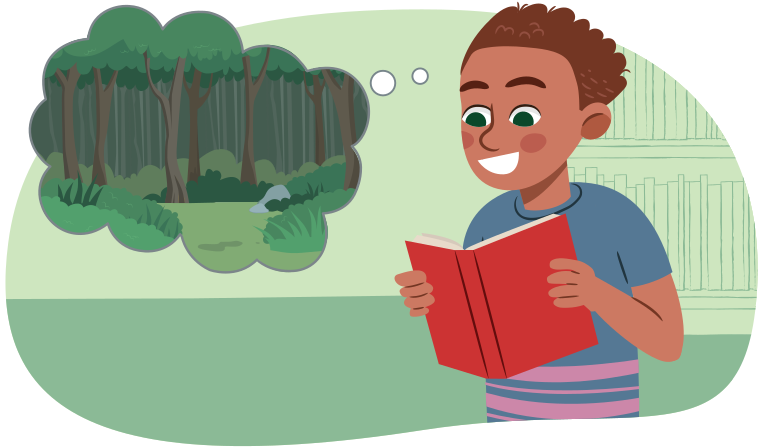
Visualizing is when we create pictures in our mind. When we visualize, this helps us understand and remember the details of what we are learning.

Try It
Try it
Let’s try some visualization! Think about something that you might be good at. Maybe it’s art, music, or riding a bike.
Now close your eyes and imagine you are being given an award for your talents. While you are up on stage, who do you think would have helped to inspire you and encourage you with your talents?
Is there someone you look up to, like an athlete, celebrity, family or community member, or maybe a friend of yours?
Role models
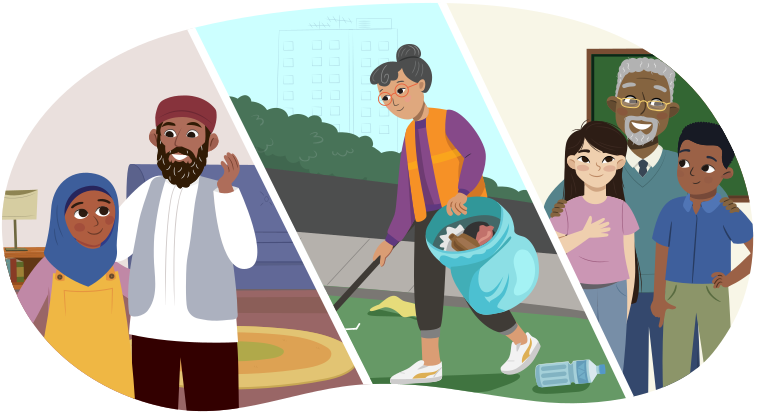
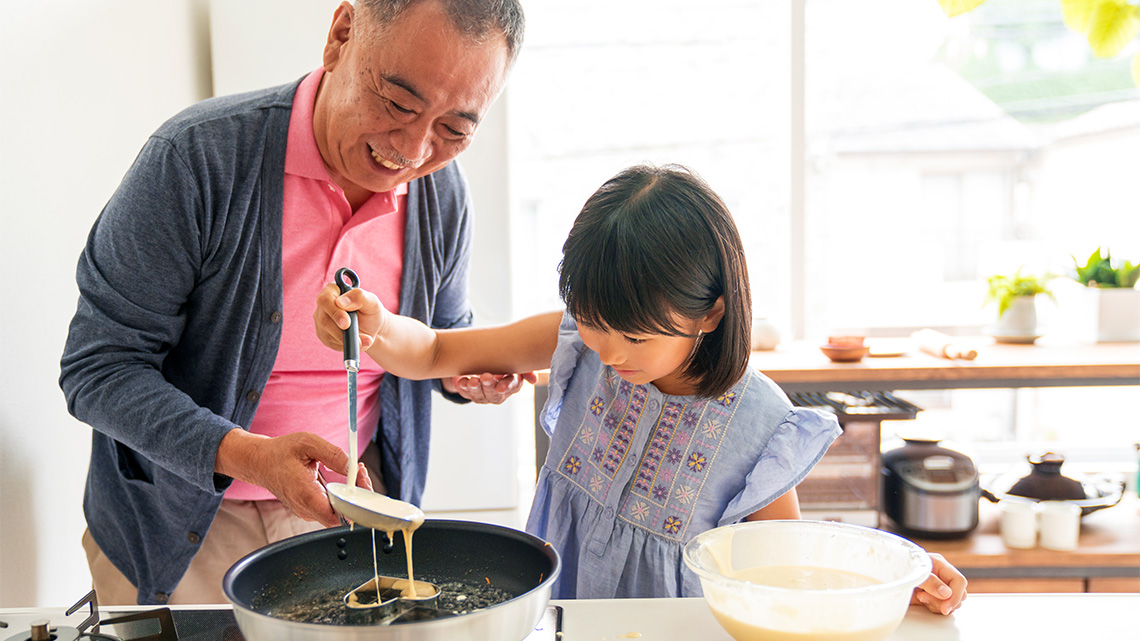
In this learning activity, you will be learning about role models. A role model is someone we look up to and admire. They are people who show us how to learn and grow, how to act, and sometimes even how to achieve our goals.
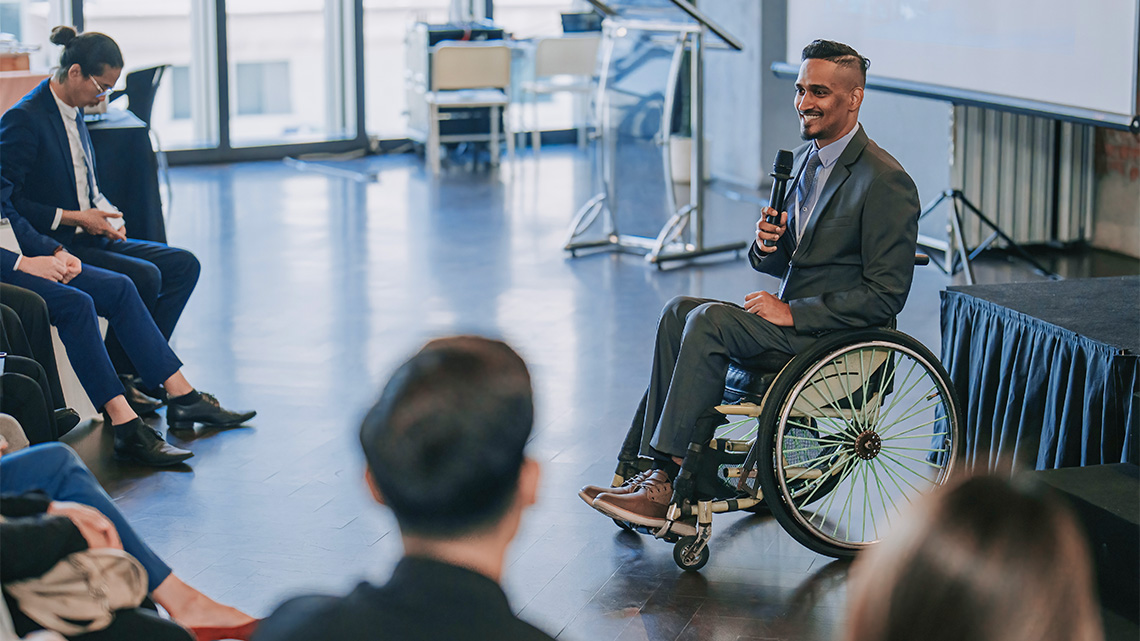
Role models can be anyone, such as your family members, friends, teachers, or even famous people. They inspire us with their actions and qualities.
Explore the carousel of images of examples of possible role models. Think about what might make them role models.



Student Success
Think
Can you think of someone from your community who inspires you to build your talents, face challenges or gives you the confidence to have big dreams?
Record your thoughts in a method of your choice.
Characteristics of role models
In this learning activity we will be exploring examples of role models and the characteristics that make someone a role model.
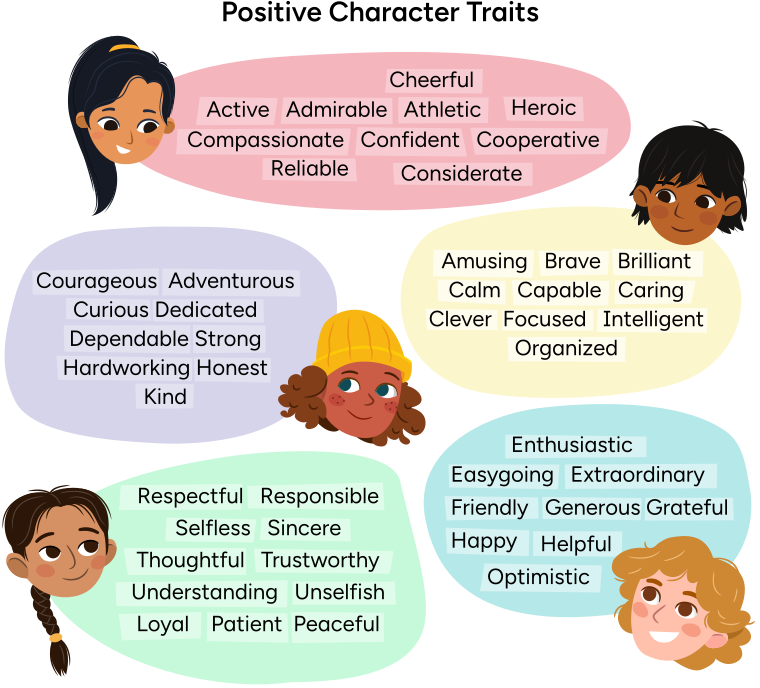
Positive character traits.
5 learners with a list of their positive character traits.
Sora: cheerful, active, admirable, athletic, heroic, compassionate, confident, cooperative, reliable, considerate.
Gabby: courageous, adventurous, curious, dedicated, dependable, strong, hardworking, honest, kind.
Antonio: amusing, brave, calm, capable, caring, clever, focused, intelligent, organized.
Remy: respectful, responsible, selfless, sincere, thoughtful, trustworthy, understanding, unselfish, loyal, patient, peaceful.
Ryan: enthusiastic, easygoing, extraordinary, friendly, generous, grateful, happy, helpful, optimistic.
Press Definition to learn more.
Characteristics are the special qualities that describe a person. They are the things that make someone who they are, such as being kind, brave, hardworking, or honest.
Student Success
Think
Examine the definition of a role model below by Dr. James Makokis, who is from Saddle Lake Cree Nation, Alberta and a spokesperson for the National Aboriginal Role Models program.
Think about the words used in the definition that help describe a role model.
“Role models are authentic individuals who are true to their identities. They give others the courage to push beyond their own potential, opening the door to new possibilities.”
Source:
Role Models. AFN Its Our Time Toolkit. (n.d.). https://education.afn.ca/afntoolkit/web-modules/plain-talk-13-first-nations-role-models-and-scholarships/role-models/
Press Role Model Characteristics to learn more.
Role model characteristics:
- authentic
- true
- courageous
Exploring reading strategies
As we explore, we will focus on practicing different reading comprehension strategies to understand the text. Look for tips and strategies to apply as you read, watch, or listen to each section.
Activating prior knowledge
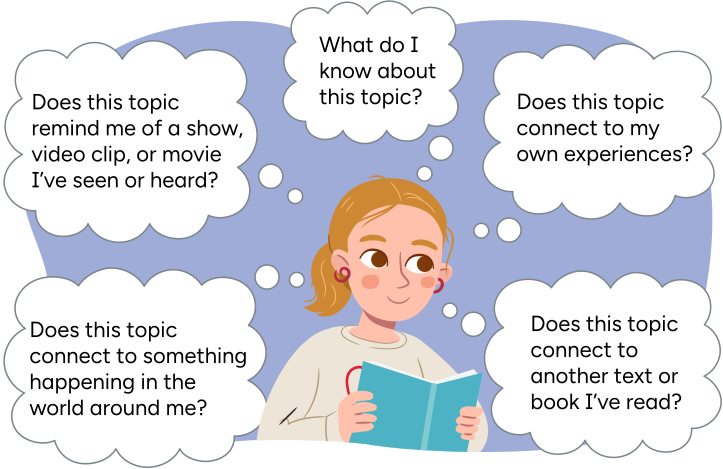
Activating prior knowledge
What connections can I make to this topic?
What do I want to learn about this topic?
Have I read about this topic before?
How does this topic relate to me and my experiences?
Have I seen or heard of this topic in the news?
In your notebook or using another method of your choice, answer the following questions.
- What do you already know about role models?
- What do you think might be some characteristics of a role model?
Previewing texts
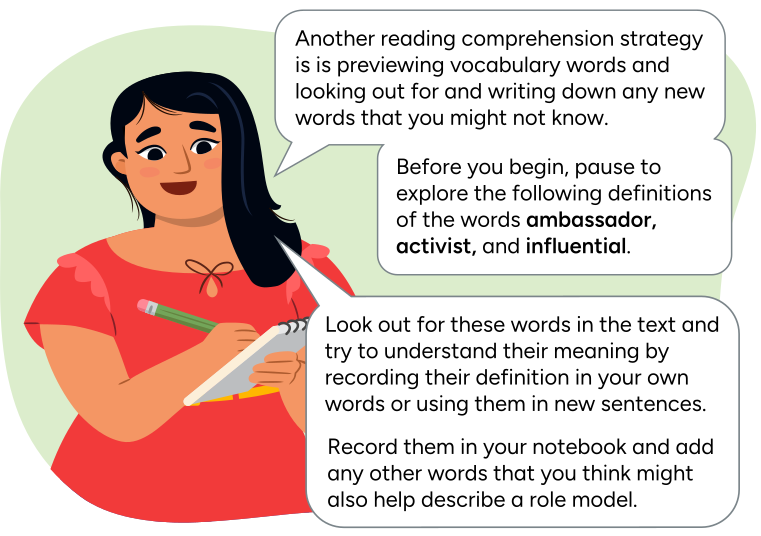
Teacher Chiara shares a reading comprehension strategy:
'Another reading comprehension strategy is previewing vocabulary words and looking out for and writing down any new words that you might not know.
Before you begin, pause to explore the following definitions of the word's ambassador, activist and influential.
Look out for these words in the text and try to understand their meaning by recording their definition in your own words or using them in new sentences.
Record them in your notebook and add any other words that you think might also help describe a role model.'

Today’s vocabulary
Waneek Horn-Miller

Did You Know?
Did you know?
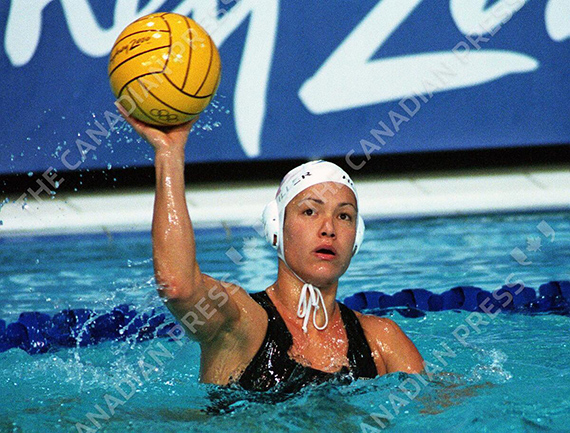
Waneek Horn-Miller is a Mohawk athlete and activist from the Kahnawake Mohawk Territory near Montreal, Quebec. As a hardworking political science student at Carleton University and a dedicated water polo player, she was named Female Athlete of the Year from 1994 to 1997. Waneek then won a gold medal at the 1999 Pan American Games with the women’s national water polo team. Being a strong leader, she became the co-captain of Canada’s first Olympic women’s water polo team, in 2000. In 2015, she was named one of the country’s most influential women in sports.
Waneek is also a passionate activist for Indigenous rights, a mentor, and an inspirational role model. Waneek now works with the Assembly of First Nations as the IndigenACTION Ambassador. She is helping to create a National Indigenous Sport, Fitness, and Wellness Strategy. She encourages and supports Indigenous youth to continue their education by balancing school with sports.
Did you know: Waneek Horn-Miller
Asking questions
Illustration of Teacher Chiara speaking, shown with a text bubble:
'It's important to ask questions before, during, and after reading. We ask clarifying questions when we want to learn more or need more information about a topic. We ask questions to further our understanding.
The article about Waneek Horn Miller describes some of her characteristics. What words did you notice that show Waneek's characteristics as a role model?'
Press Possible Answers to learn more.
- hardworking
- passionate
- dedicated
- strong leader
- influential
- activist
- ambassador
- supportive
- encouraging
What makes a role model?
In the following video clip, we are going to meet Kyra, who is a 9-year-old girl from Saint Hubert, Quebec. Kyra is a young entrepreneur. An entrepreneur is someone who starts or builds a business. Listen as Kyra describes her future goals for her business selling hair products for girls just like her.
Role models can encourage us to believe in our dreams. In this video clip, Kyra gets an inspiring message from a role model who is an entrepreneur just like her. Why do you think this might be inspiring for Kyra?

Pause and Reflect
Pause and reflect
Reflect on the following questions:
- How does Vicki Jospeh encourage and support Kyra?
- How do you think Kyra might also be a role model for her younger sister Kali?
- How do you feel when someone encourages you?
- Why do you think role models are important?
Record your thinking in a method of your choice.

Student Wellness
Take a break!
Take a break before moving onto the next part of the activity.
Interviewing role models
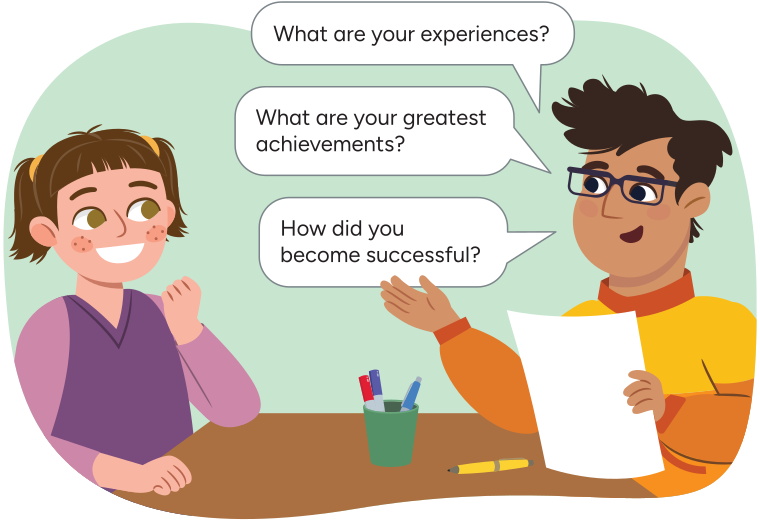
An interview helps you learn more about someone by asking them questions. Interviews can also give you advice and tips that help you understand what it takes to reach your own goals.
Sometimes, you might also find out that role models were once just like you and overcame different challenges. This can help inspire you to meet your goals make new goals, and become a role model yourself!
In the following video you will meet Tai, who interviews Kevin, a football player from the Toronto Argonauts. Think about the questions that Tai uses to learn more about being a football player in a national team.
Student Success
Think
What do you notice about how the interview is organized? Record your ideas using a method of your choice.
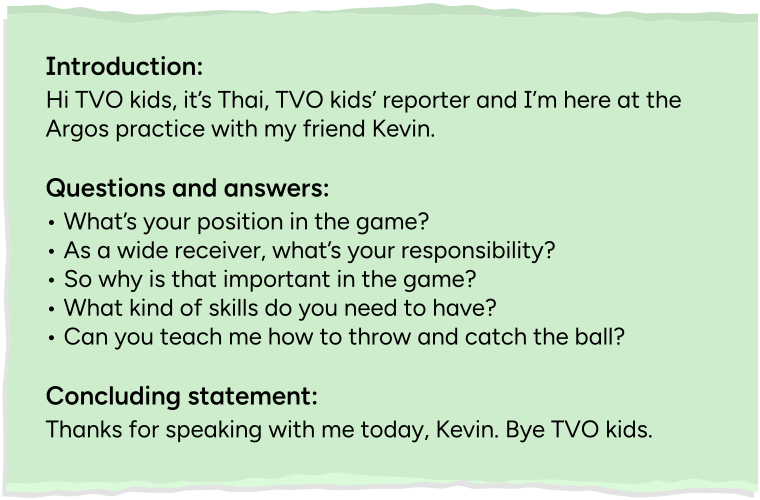
Check out the parts of an interview:
Introduction:
Hi TVO kids, it's Thai, TVO kids' reporter and I'm here at the Argos practice with my friend Kevin.
Questions and answers:
What's your position in the game
As a wide receiver, what's your responsibility?
So why is that important in the game?
What kind of skills do you need to have?
Can you teach me how to throw and catch the ball?
Concluding statement:
Thanks for speaking with me today, Kevin, Bye TVO kids.
Let’s build our skills!

Interrogative adjectives!
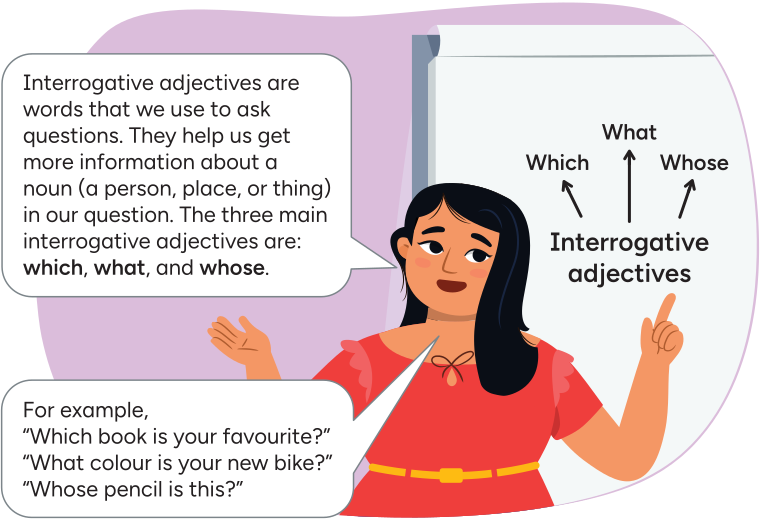
Teacher Chiara is pointing to the phrase 'Interrogative Adjectives.' There are three arrows starting at 'Interrogative Adjectives' and pointing to 3 words: 'which', 'what', and 'whose.'
Teacher Chiara says, 'Interrogative adjectives are words that we use to ask questions. They help us get more information about a noun (a person, place, or thing) in our question. The three main interrogative adjectives are: which, what and whose.
For example,
"Which book is your favorite?"
"What color is your new bike?"
"Whose pencil is this?"
Let’s practice
For each sentence, select the missing interrogative adjectives from the drop-down menu. Press Check Answer to see how you did.
Plan your own interview!
In this next part of the activity, you will be planning an interview of your own. The person you will be interviewing is any role model of your choice.
Organizing an interview
- introduction
- questions and answers
- concluding statement
Complete the fillable and printable Interview Organizer in your notebook or using the following document. If you would like, you can use speech-to-text or audio recording tools to record your thoughts.
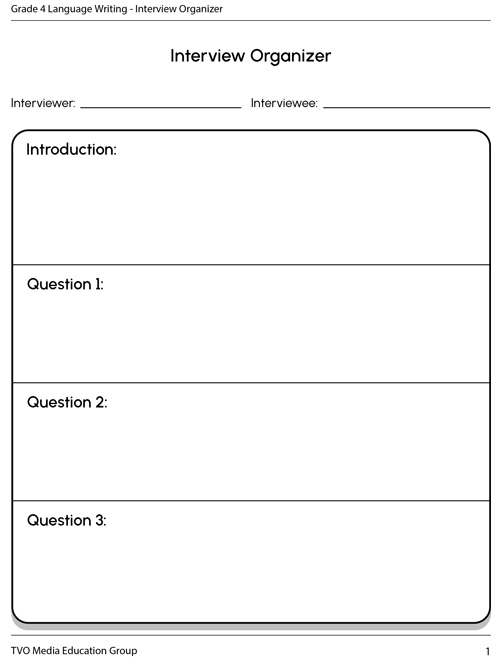
Press Sample Answer to access a completed interview organizer to help you get started and guide you!
| Purpose of the interview: | To learn more about a role model of my choice and how they became successful. |
|---|---|
| Introduction: | Hello, my name is (Blank)(Blank)(Blank) and today I will be interviewing (Blank)(Blank)(Blank) . |
| Question 1: | What inspired you to become a (Blank)(Blank)(Blank)? |
| Question 2: | Who was your role model when you were my age? |
| Question 3: | How did you get started in your career? |
| Question 4: | What advice do you have for becoming successful and achieving your goals? |
| Concluding statement | Thank you for speaking with me today! See you next time! |
Complete in your notebook or using the following fillable and printable document.
Press the Activity button to access the Interview Organizer Sample.
Practicing your interviewing skills
Before you interview someone, it’s important to practise your questions out loud with appropriate expression and speed. When you feel ready, try recording yourself and then listen for ways to improve. You could also read your questions out loud to a peer or a trusted adult and ask for their feedback.
Things to watch for:
- Are you reading the words correctly?
- Are you reading at a good pace? (not too fast and not too slow)
- Are you reading your questions with expression and feeling?
- Are you emphasizing the important words?
- Are you following all of the punctuation marks? For example, are you pausing at the commas and raising your voice at the question marks?
You should be comfortable enough with your questions that if the person you are interviewing asks for more information, you can easily restate or paraphrase what you are asking.
Did You Know?
Did you know?
Restating and paraphrasing
What would you do if the person you were interviewing didn’t understand your question?
Two strategies to help you communicate clearly are restating and paraphrasing.
Restating
Restating means repeating the original idea in exactly the same way or with small changes.
Press the Example button to learn more.
For example, examine the question below. Restating means repeating the question in the same way.
| Original | Restating |
|---|---|
| Who was your role model when you were my age? Why? | Who was your role model when you were my age? Why? |
Paraphrasing
Paraphrasing also means repeating the original idea but in your own words and with more details or changes. The idea of paraphrasing is to say something in a different way so the listener will understand.
Press the Example button to learn more.
For example:
| Original | Paraphrasing |
|---|---|
| Who was your role model when you were my age? Why? | Who did you look up to when you were younger? Why did you admire them? |
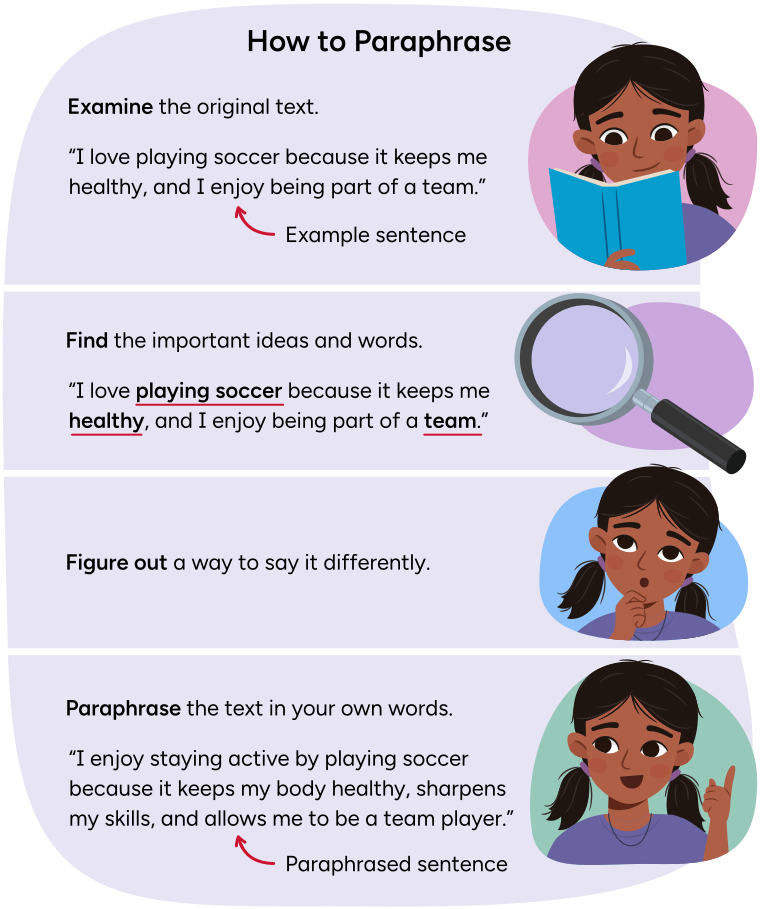
Title: How to Paraphrase
Read: Read the text
Stop: Highlight key words
Think: How can I say it differently?
Tell: Rewrite sentence in your own words
Example Sentence:
"I love playing soccer because it keeps me healthy, and I enjoy being part of a team"
Paraphrased Sentence:
"I enjoy staying active by playing soccer because it keeps my body healthy, sharpens my skills, and allows me to be team player"

Try It
Try it!
How could you paraphrase your interview questions?
Press the Example to learn more.
For example:
Original question: How did you become successful?
Paraphrased question: Can you share the steps that helped you become so successful?
Read two of your questions aloud and then try paraphrasing them. Are you able to explain what you mean in a different way?
Self-evaluation
You’ve done a great job preparing your interview questions! You’ve practiced reading them fluently and you’ve learned how to paraphrase them. How do you think you’ve done? How could you improve your skills?
Complete the fillable and printable Reading Fluency Self-Evaluation in your notebook or using the following document. If you would like, you can use speech-to-text or audio recording tools to record your thoughts.
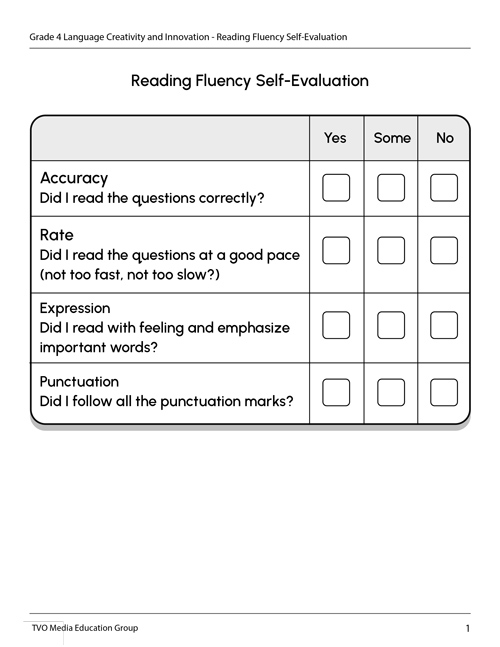
Press the Activity button to access the Reading Fluency Self-Evaluation.
Activity(Opens in a new tab)Sharing your interview questions
Now you’re ready to share your interview questions!
If possible, take turns reading your original and paraphrased questions out loud with a peer, trusted adult, or record yourself on a device of your choice.
Pause and Reflect
Pause and reflect
In this activity, you explored the following reading comprehension strategies:
- activating prior knowledge
- reviewing vocabulary
- highlighting unknown words to find their meaning
- sequencing
Think about the following questions:
- Which of these strategies did you find most helpful?
- What do you think might be an important skill to have when you are interviewing someone?
Record your thoughts in any method of your choice.
Reflection
As you read through these descriptions, which sentence best describes how you are feeling about your understanding of this learning activity? Press the button that is beside this sentence.

I feel...
Now, record your ideas using a voice recorder, speech-to-text, or writing tool.