Learning goals
We are learning to…
- identify opportunities for innovation and design connected to real-world problems
- identify themes of equity, inclusion and activism in texts
- write reflection journals on themes and topics related to our lived experiences
Success criteria
I am able to…
- identify a relevant real-world problem and generate a potential solution to address it
- explain how the actions of individuals reflect values such as equity, sustainability and activism
- write a journal entry that explores personal connections to a theme and expresses my voice as a writer
Inventions and innovators
Examine the following images. What are they? What do you think they all have in common?




Would you be surprised to know that each of the items shown were invented by kids? Not only that, but each of the items was invented to solve a problem.

Brainstorm
Brainstorm
In a notebook, or using another method of your choice, brainstorm what problem each of the items was invented to solve.
Want to check if you were right?
Explore the following flashcards to learn more about the kids that invented each item and the problem they were hoping to solve.
Source:
Conradt, S. (2024, March 21). 11 amazing things invented by kids. Mental Floss. https://www.mentalfloss.com/article/93162/11-inventions-made-kids
Milbrand, L. (2023, January 20). The 14 coolest things invented by kids. Reader’s Digest. https://www.rd.com/list/things-kids-invented/
People of all ages can be innovators and inventors.
Anyone who spots a problem can identify and invent a solution. If you invented something, what would it be? What problem would it solve?
In this learning activity you will explore the profiles of kids and teenagers who used innovation and creativity to solve problems. You will also have the opportunity to identify problems and brainstorm possible solutions for them by putting your critical thinking and problem-solving skills to the test!
Innovating for social justice

Innovation begins when a person identifies a problem and uses creativity to imagine possible solutions. Sometimes the innovative solutions can improve the lives of others by helping to create a more just and inclusive society.

Let’s read!
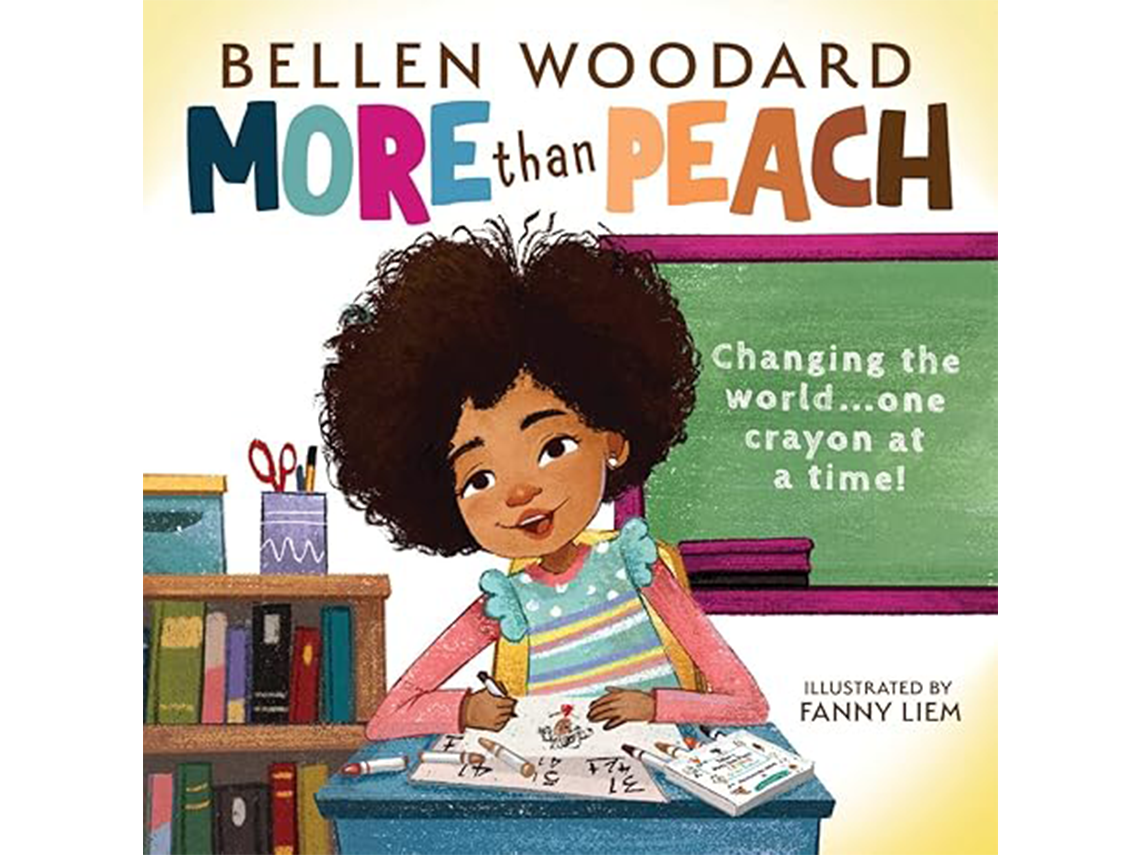
Read the following excerpt from the book More Than Peach by Bellen Woodard.
More Than Peach by Bellen Woodard.More than Peach by Bellen Woodard.
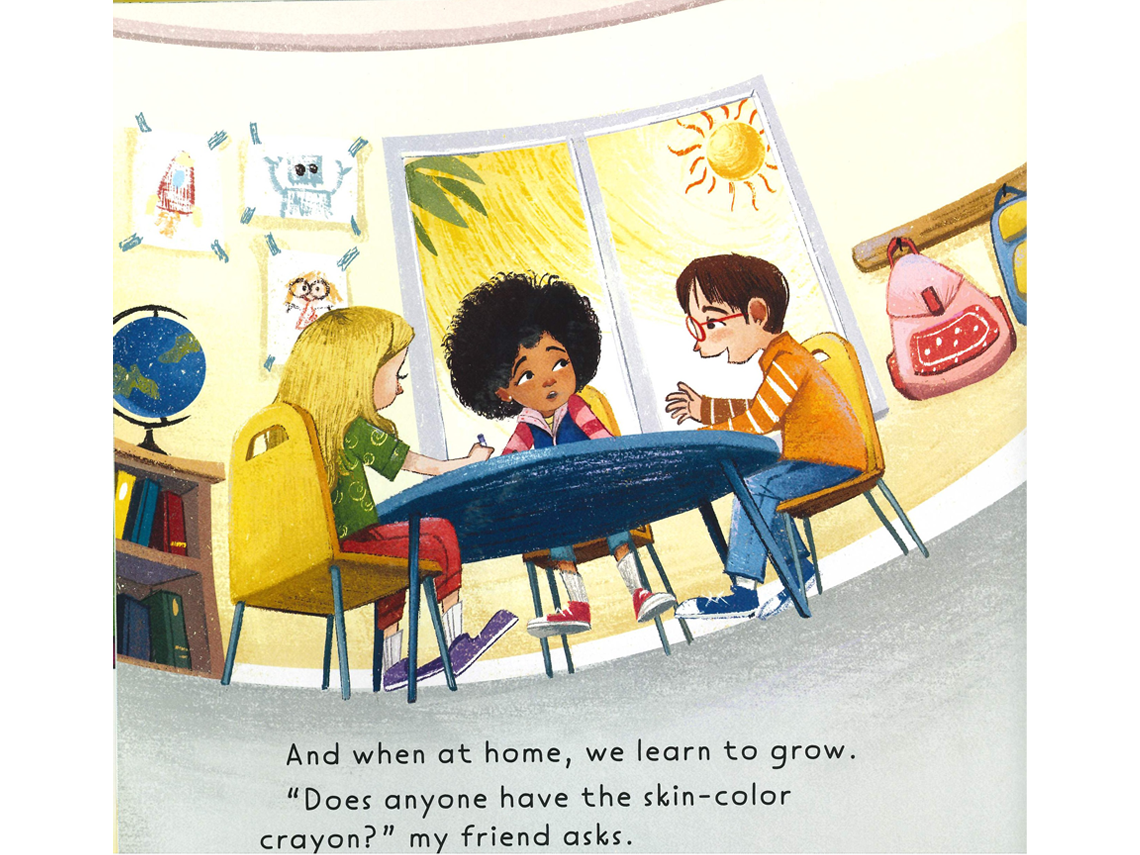
And when at home, we learn to grow.
“Does anyone have the skin-color crayon?” my friend asks.
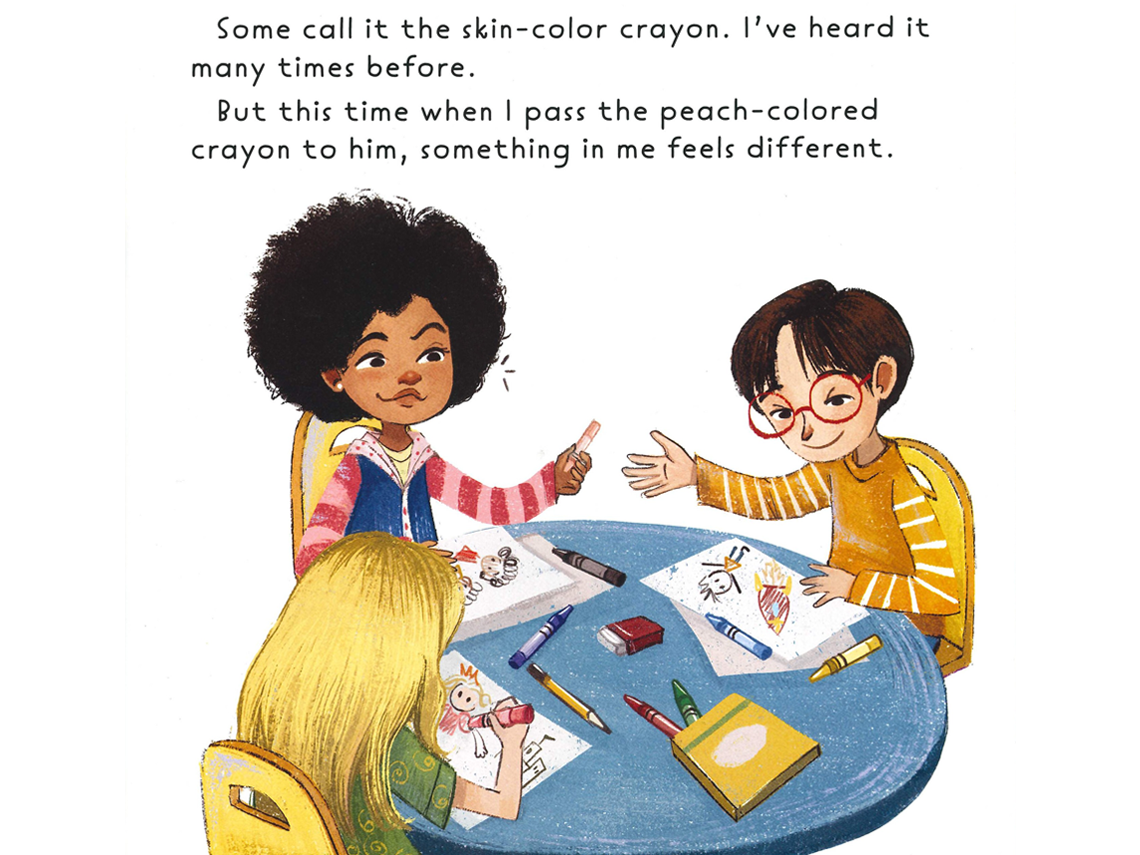
Some call it the skin-color crayon. I’ve heard it many times before.
But this time when I pass the peach-colored crayon to him, something in me feels different.
This young author became a “crayon activist” when she was in Grade 3! This book tells the story of the problem she observed and what she did to try and find a solution. As you read, try and identify the problem that young Bellen identified.

Student Success
Post reading
In a notebook or using another method of your choice, check your understanding of what you read by answering the following question.
What does the character mean when they think, "But this time when I pass the peach-colored crayon to him, something in me feels different"?
When you are ready, press the Sample Answer button to check your understanding.
The class only had one shade of skin-colour crayon, but skin comes in many shades! The students referred to the peach shade as “skin-colour” which implies there is only one shade of skin. This excludes and undervalues people whose skin colour is not peach. Language that only affirms one identity causes harm.
Next, read the second excerpt from the book More Than Peach by Bellen Woodard. As you read, try and identify the solution that Bellen came up with.
More than PeachMore than Peach
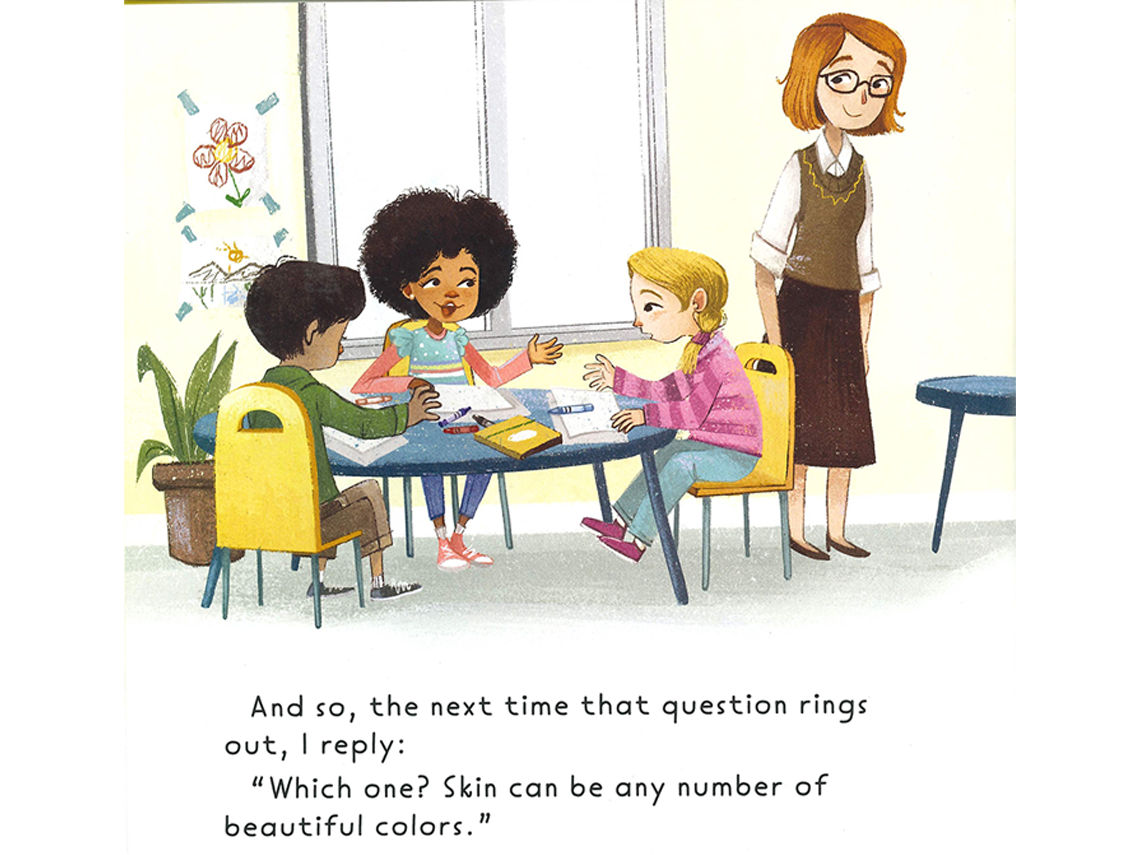
And so, the next time that question rings out, I reply:
“Which one? Skin can be any number of beautiful colors.”
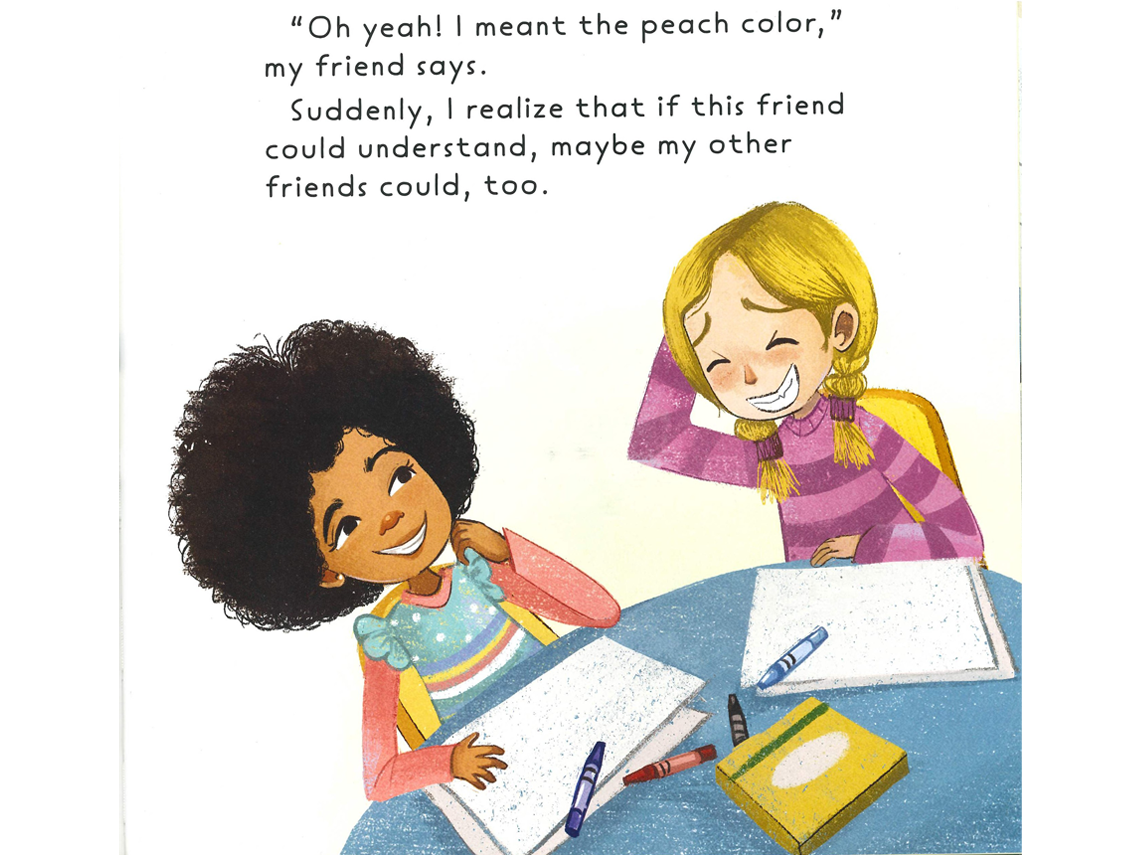
“Oh yeah! I meant the peach color,” my friend says.
Suddenly, I realize that if this friend could understand, maybe my other friends could, too.
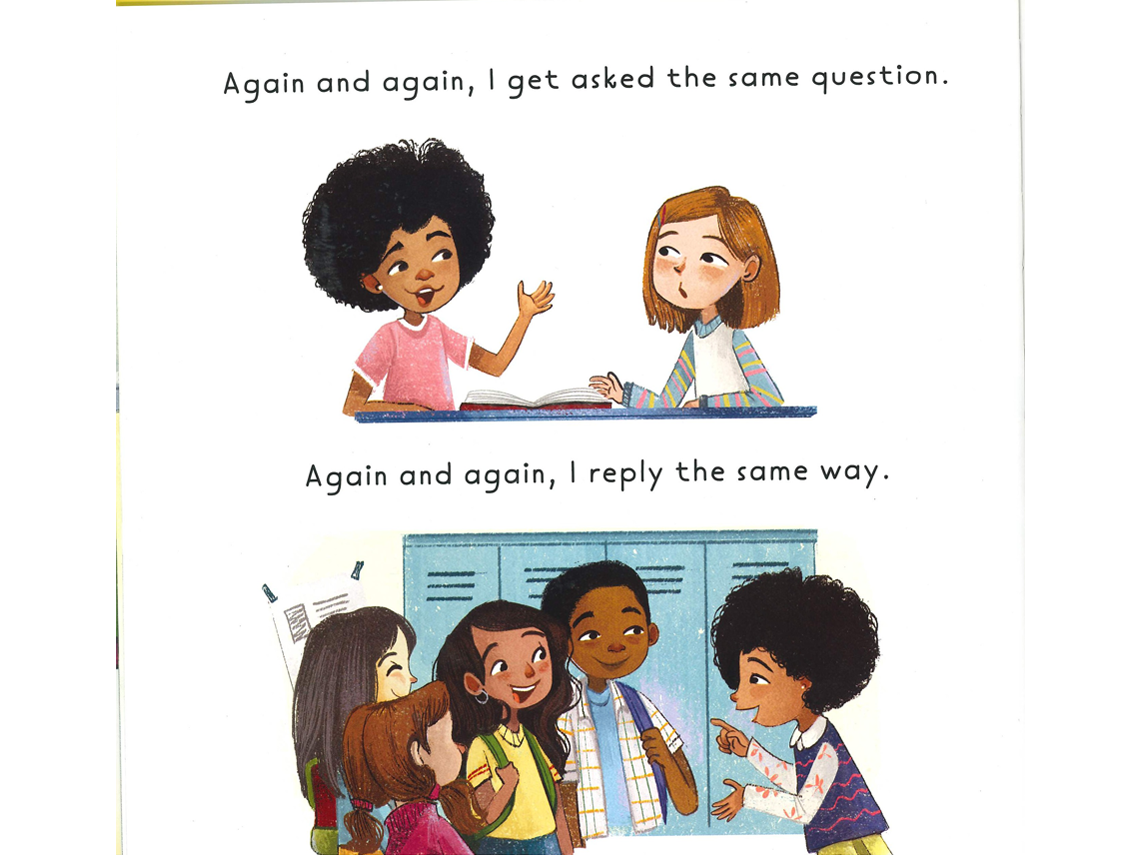
Again and again, I get asked the same question.
Again and again, I reply the same way.
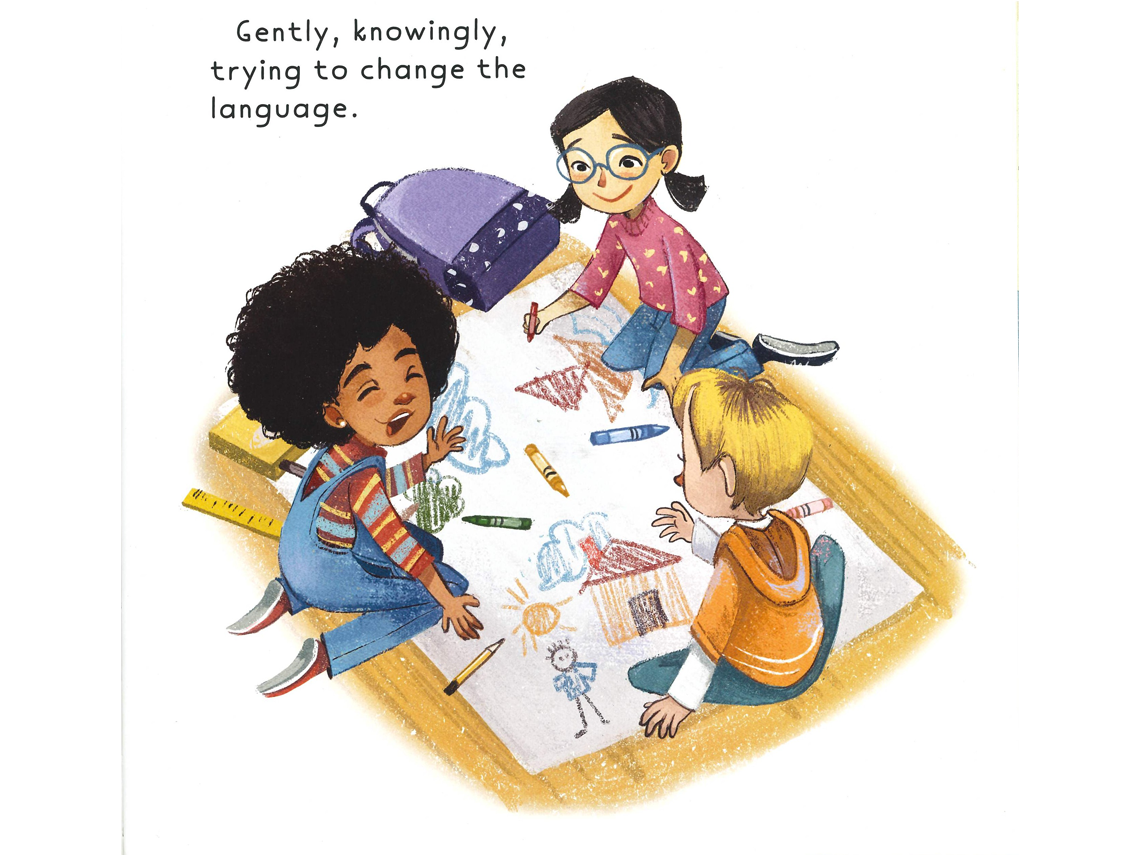
Gently, knowingly, trying to change the language.
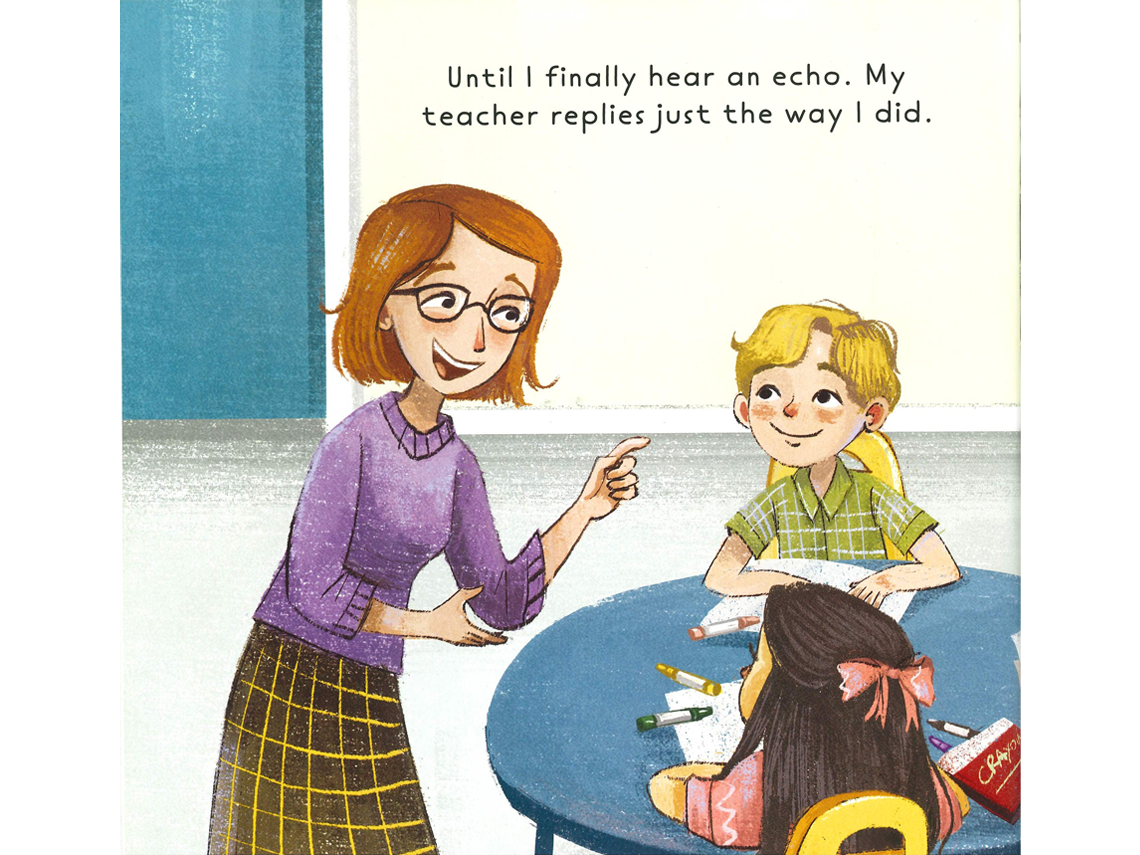
Until I finally hear an echo. My teacher replies just the way I did.
Student Success
Post reading
In a notebook or using another method of your choice, check your understanding of what you read by answering the following questions.
- In your own words, explain what the problem was with peach crayons.
- What did Bellen focus on as her first step in fixing the problem?
- Why is changing language important?
When you are ready, press the Sample Answers button to check your understanding.
- Answers will vary, but should include the idea that most of the children referred to the peach crayon as “skin-coloured” which reinforces the idea that there is one colour of skin instead of many.
- She focused on changing the language. She did this by modeling language that was inclusive of the diversity of individuals.
- Language is powerful. It has the power to affirm identities or devalue identities.
Connecting to the text
Have you ever noticed something in your world that excludes people by presuming that there is only one standard or right way of being?
Have you ever thought about something you felt was unfair that you wanted to change?
Record your thinking in a notebook or using another method of your choice. If possible, share your thoughts with a partner.
Analyzing another text form
Check out the following short video to learn the next steps Bellen took to become a “crayon activist”.
Learning check!
Check your understanding of what you read by answering the following questions.
For each question select the corresponding answer.

Connections
Connections

How does Bellen’s innovation improve the world?
Record your ideas using a method of your choice.
When you are done, press the “Sample Answer" button to check your understanding.
Bellen’s crayons change the way people feel about themselves and see each other and create a more inclusive world.
Innovating for the environment
Sometimes the problems that people identify are things that affect humans as well as our planet and its sustainability.
Young Ashton Cofer and friends identified an environmental problem that they wanted to try and fix. They realized that Styrofoam, which was at the time very commonly used for disposable cups and as packaging for many items, ended up in landfills and as a large source of pollution in many parts of the world.
Explore the following clip to learn about the creative and innovative solution to an environmental problem that Ashton Cofer and his peers set out to fix.
Student Success
Confirming understanding
In a notebook or using another method of your choice, check your understanding of what you’ve learned about Ashton and his friends’ innovative solution to an environmental problem.
- What problem did Ashton and his friends choose to address for their science project? What made them choose it?
- What did Ashton and his team hope to do?
When you are done, press the Sample Answers button to check your understanding with some possible answers.
- Ashton and his friends chose the problem of Styrofoam recycling because they recognized that lots of Styrofoam was used for disposable coffee cups and packaging, and it ended up sitting in landfills or polluting many parts of the world.
- They hoped to use the Styrofoam to create activated carbon, which can be used to filter, or purify, water.
Finding your problem
Both Bellen and Ashton invented solutions to solve a problem. The best inventions solve a problem or fill an unmet need. Identifying a problem is the first step to creating a solution.
What problems can you think of that cause frustration, or you wish there were solutions for? They could be large problems like something that hurts our environment or a social injustice. Or they could be small problems like when your ice cream cone drips down your hand.
Check out the following video clip from That TVOkids Show’s episode titled “Inventions Day” to get some inspiration as you hear from several young inventors about their creative ideas to solve some global problems!
Now it’s your turn to invent!
Explore the following brainstorming process to give creative problem solving a try!
Press the following tabs to find out more.
Don’t think about solutions — yet just brainstorm ideas.
- Write down every frustration that you can think of. Don’t stop to think about how you will solve the problem that you come up with, just write ideas down.
- Nothing is too small. Make a list of everything you would like to change.
After you have a list of problems, choose one to solve.
Start to brainstorm all the possible solutions for this problem.
Sometimes, it can be helpful to think about what already exists in this area, and work to invent something better.
Consider:
- What existing solutions or products exist that could be improved upon?
- Could I combine two existing products to create a new one with more features?
- Is there a way to take away a feature/part from an existing product to create a new one?
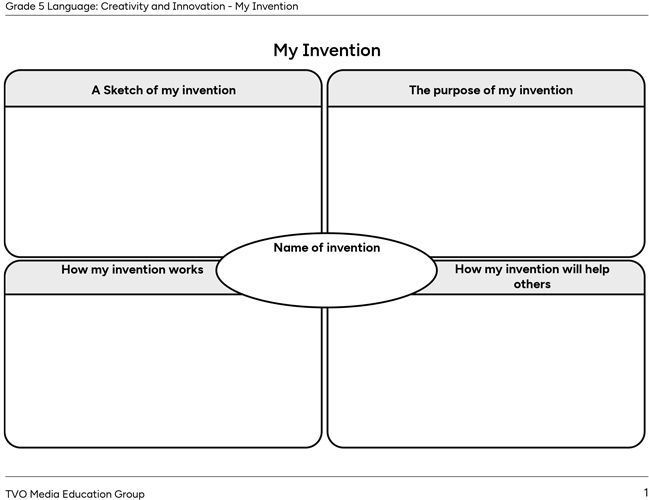
Once you have identified a problem and have an idea for a solution, plan your invention in more detail using a graphic organizer or another method of your choice.
The following is a sample you can use.
Building reading fluency: Finding the main idea
Being a problem solver and an inventor requires determination. This can be described as having a growth mindset, grit, or perseverance. No matter which term you use, it means not giving up when things get hard and seeing challenges as opportunities.
Read out loud the following poem about perseverance called “Keep Going” by Edgar A. Guest. As you read, take note of your pace and adjust your expression and tone to match the feelings the words and punctuation are trying to communicate.
“Keep Going” by Edgar A. Guest
When things go wrong, as they sometimes will,
And the road you’re trudging seems all up hill,
When the funds are low and the debts are high
And you want to smile, but you have to sigh;
When care is pressing you down a bit,
Rest if you must, but don’t you quit.
Life is queer with its twists and turns,
As every one of us sometimes learns.
And many a failure turns about
When he might have won had he stuck it out.
Don’t give up though the pace seems slow,
You may succeed with another blow.
Often the goal is nearer than
It seems to a faint and faltering man.
Often the struggler has given up
When he might have captured the victor’s cup,
And he learned too late when the night slipped down
How close he was to the golden crown.
Success is failure turned inside out,
The silver tint of the clouds of doubt.
And you never can tell how close you are.
It may be near when it seems afar.
So stick to the fight when you’re hardest hit
It’s when things seem worst that you mustn’t quit.
Source:
Breakfast Table Chat by Edgar A. Guest "Keep Going" (also known as Don't Quit) - Detroit Free Press Archive (newspapers.com)
What main idea can you take from the poem?
Let’s take a moment to find out what the main idea in a text is.
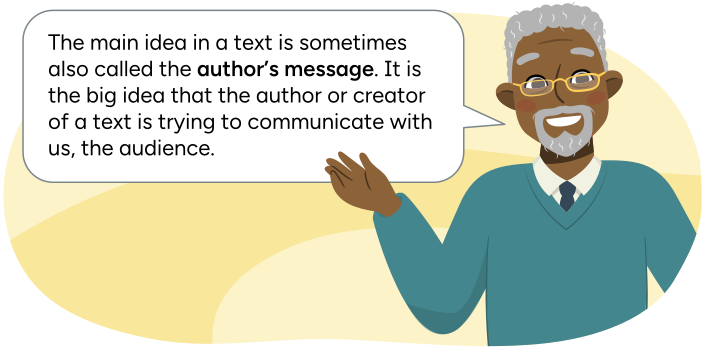
One way to identify the main idea in a text is to ask yourself “what does the author want me to know, feel or do?” Sometimes writing a summary of a text can help you identify the main message.
To communicate your thoughts on the main idea, it can be helpful to use the following sentence starters:
In “(insert title of text)”, the author is saying that (Blank) . They want the audience to know that (Blank) ”.
Brainstorm
Brainstorm
In a notebook, or using another method of your choice, record your thoughts on what you think is the main idea of the poem “Keep Going” by Edgar A. Guest.
Try using the modeled sentence starters to guide your answer. When you are finished, press the Possible Answer button for an example of a modelled answer to check your work.
In the poem “Keep Going” by Edgar A. Guest, the author is saying that no matter what challenges life may throw at us, we should persevere or keep going. They want the audience to know that they should not give up when things get tough because success could be right around the corner.

Subordinating conjunctions
Conjunctions are connecting words.
Subordinating conjunctions are words that connect a dependent clause to an independent clause. While independent clauses are complete sentences, dependent clauses are not and often need a subordinating conjunction to connect them to an independent clause so that they make sense. Dependent clauses have information about or add to the sentence’s main idea, such as showing a cause-and-effect relationship or telling when or where.
Check out the following two examples:

There are many subordinating conjunctions in the English language. The silly acronym “I SAW A WUBUB” is one example of a memory tool that can help you remember some of the most common subordinating conjunctions.
Check it out:
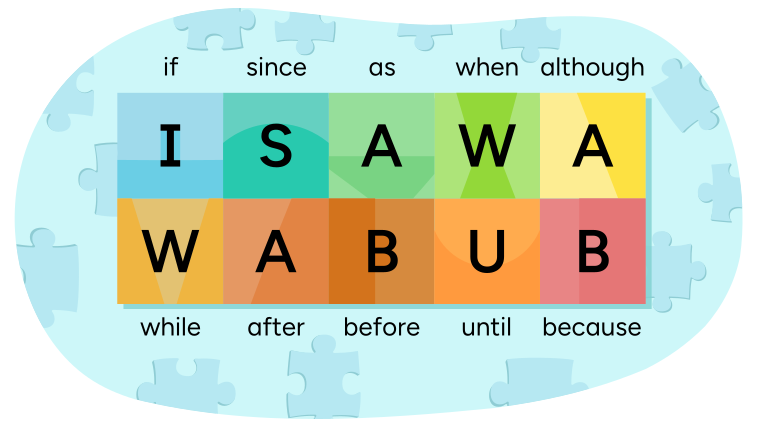
The acronym, 'I-S-A-W-A-W-A-B-U-B.' It stands for the following common subordinating conjunctions: 'if, since, as, when, although, while, after, before, until, because.'
Learning check!
Complete the following sentences using one the subordinating conjunctions from the acronym “I SAW A WUBUB”.
For each sentence, select the missing word from the drop-down menu. Press Check Answer to see how you did.
Select the correct answer, then press Check Answer to see how you did.
Let’s review
Let’s review the three types of conjunctions you should be familiar with by the end of grade five:
|
Coordinating Conjunctions ‘FANBOYS’ |
Subordinating Conjunctions ‘I SAW A WUBUB’ |
Correlative Conjunctions |
|---|---|---|
|
Connect words, phrases or clauses that have equal value in the sentence. “I like milkshakes, but I do not like slushies.” |
Connect a dependent clause. (Cannot stand on its own) to an independent clause. “I zipped up my coat because it was cold.” |
Always travel in pairs and join sentence parts that are grammatically equals. “On Friday I can either go to my aunt’s party or I can go to the movies with my friends.” |

Pause and Reflect
Let’s reflect!
To persevere, or perseverance, means to keep going and not give up even when faced with difficulties, failure, or opposition.
In a notebook or using another method of your choice, describe how both Bellen Woodward and Ashton Cofer and his friends demonstrated perseverance.
If possible, share your thoughts with a partner.

Putting it all together

We need perseverance to solve problems or to reach goals. Perseverance is the ability to continue trying despite failure, obstacles, and opposition.
To consolidate your learning, you will reflect on what perseverance looks like for you.
What does perseverance mean to you? How does it connect to your life, the goals that you have for yourself, or obstacles you have experienced?
Use the following journal prompts to help you create a reflection journal entry about yourself, your goals, and what will be needed to meet them.
Use as many of the journal prompts as you feel are helpful or relevant.
- What does perseverance mean to you? Try to create your own definition.
- Tell about a time when you failed at something but kept trying anyway.
- Are there any social justice or environmental sustainability issues that are important to you? What actions would be needed to help those issues or problems?
- Write about a fictional character or a real person who demonstrates perseverance.
- Who or what motivates you when you feel like giving up?
Press Journal Prompts button for more options.
Journal Prompts
- Share the details of a goal you have for yourself. What steps can you take towards achieving it, even when things get tough?
- What is something you would do if you knew there was no chance of failing?
- How are perseverance and self-esteem related?
- What are some examples of positive self-talk that a person can use when persevering?
Source: Calderon, A. (2024a, January 8). Classroom discussion questions for teaching perseverance. Medium. https://medium.com/classroom-champions/classroom-discussion-questions-for-teaching-perseverance-9bdc5a37e039
Use the following success criteria checklist to self-assess your journal entries.
Success criteria for reflection journals
Reflection
As you read through these descriptions, which sentence best describes how you are feeling about your understanding of this learning activity? Press the button that is beside this sentence.

I feel...
Now, record your ideas using a voice recorder, speech-to-text, or writing tool.