Once upon a time there was a girl named Goldilocks. She went for a walk in the forest.
Learning goals
We are learning to…
- understand patterns, features and elements of style of different text forms and genres
- identify the narrator’s point of view and describe associated advantages and disadvantages
- apply the writing process to narrative fiction and reflect on tools and strategies used in creation
Success criteria
I am able to…
- identify the five parts of plot and different story elements in stories that I read
- analyse the perspective/point of view used in narrative texts
- use the parts of plot and story elements to plan, draft, revise and publish an original story
- explain the tools and strategies I used that helped me improve as a writer
Thinking about story parts
Literature usually refers to a written form of text where people use words to tell stories, share ideas, and express feelings. Novels, poems, plays, and essays are all forms of literature, or literary texts.
Literature helps us understand different experiences and cultures, and it can make us think deeply or feel strongly. Simply put, literature is written works that can entertain, inform, and inspire us.
Many classic texts, such as fairy tales, are considered works of literature.
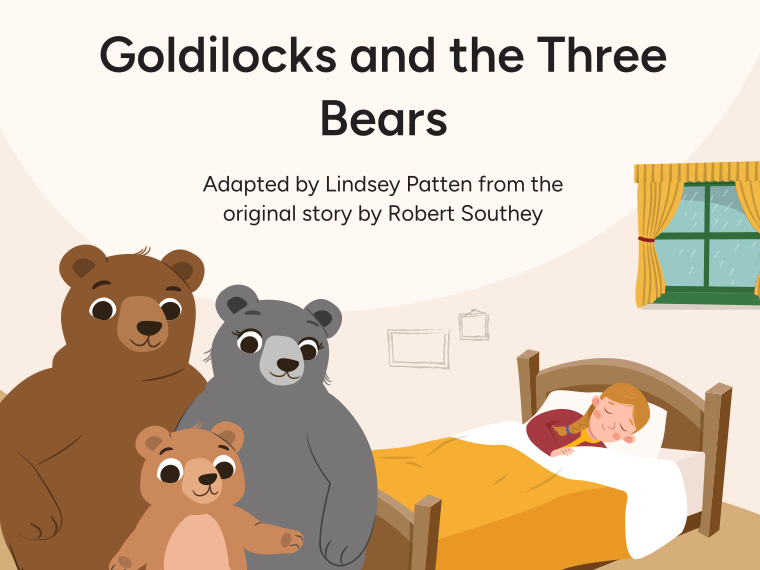
Do you know the fairy tale of Goldilocks and the Three Bears?
Explore the following adaptation of the classic tale.
Goldilocks and the Three Bears Goldilocks and the Three Bears
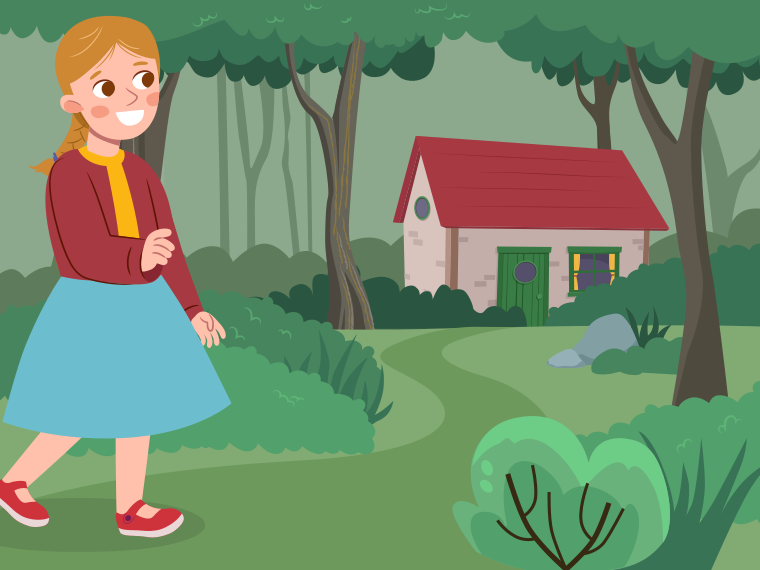
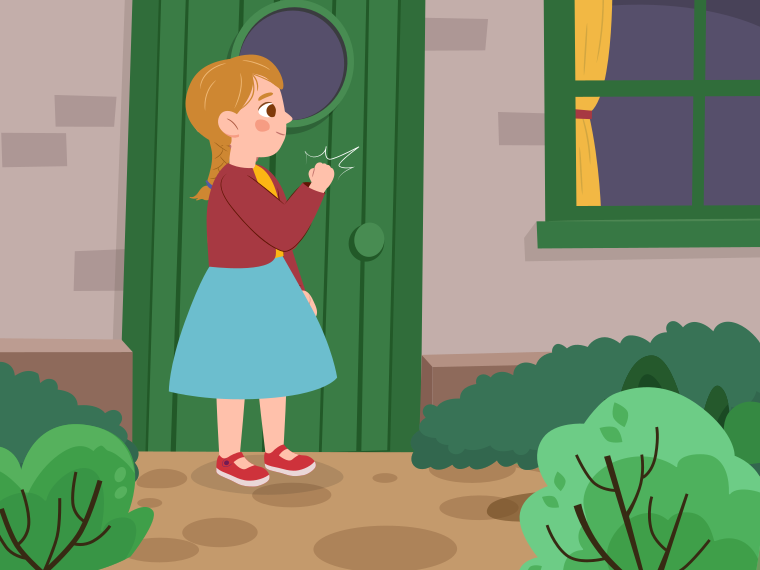
She saw a small house in a middle of the forest. She knocked on the door, but no one answered.
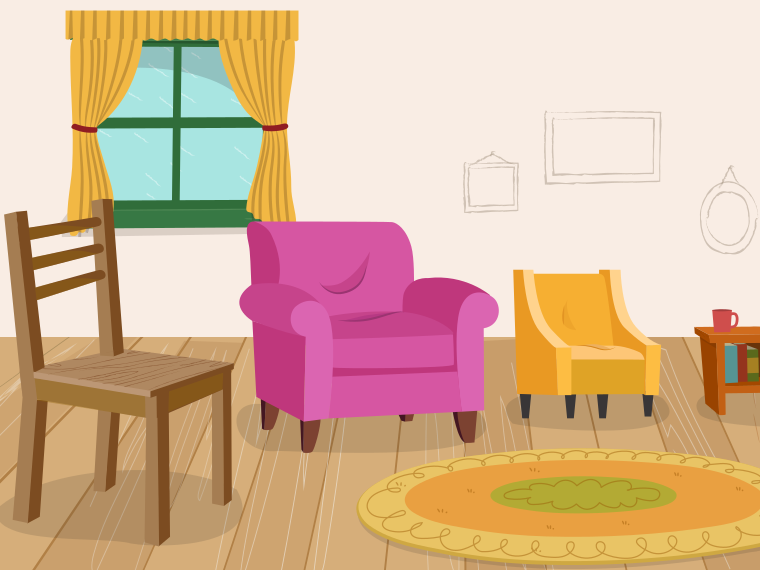
It was starting to rain so she went inside the house. She saw three comfy chairs. The first chair was too hard. The second chair was too soft. The third chair was just right.
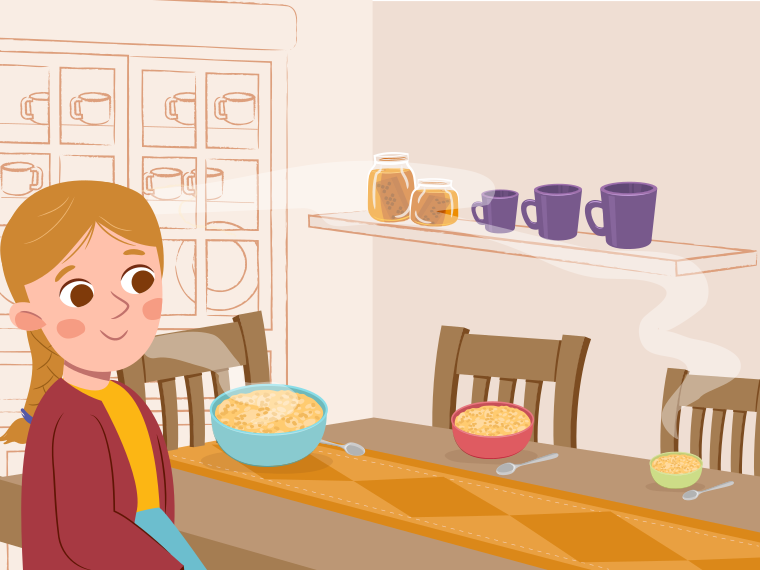
Goldilocks saw the kitchen table had three bowls of porridge. One was large, one was medium, and one was small.
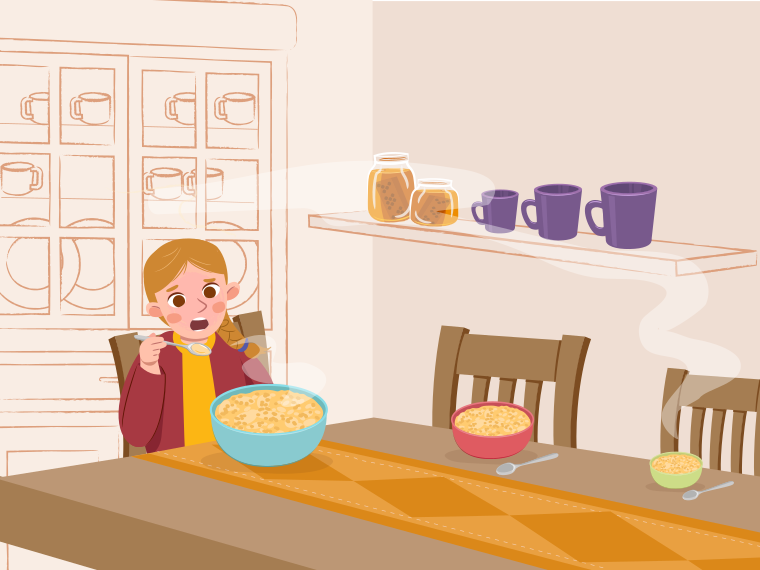
Goldilocks was so hungry. She went over to the table and grabbed a spoon. First, she tried the largest bowl. It was too hot!
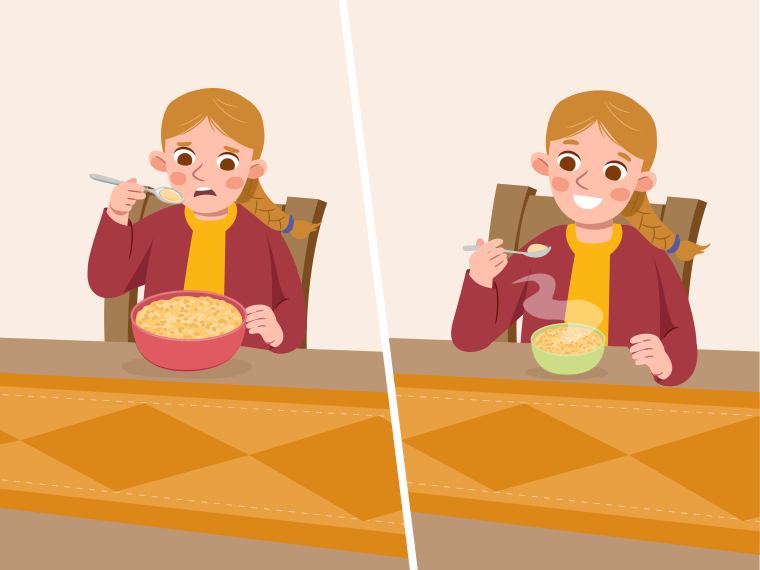
Then she tried the medium bowl. It was too cold! Then she tried the smallest bowl. It was just right. Goldilocks ate it all up.
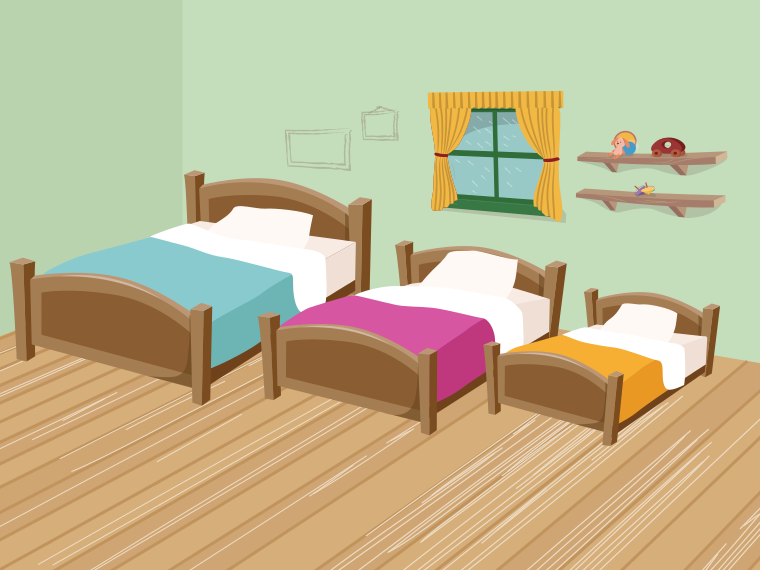
Goldilocks was tired. She went into the next room where there were three beds. One was large, one was medium, and one was small.
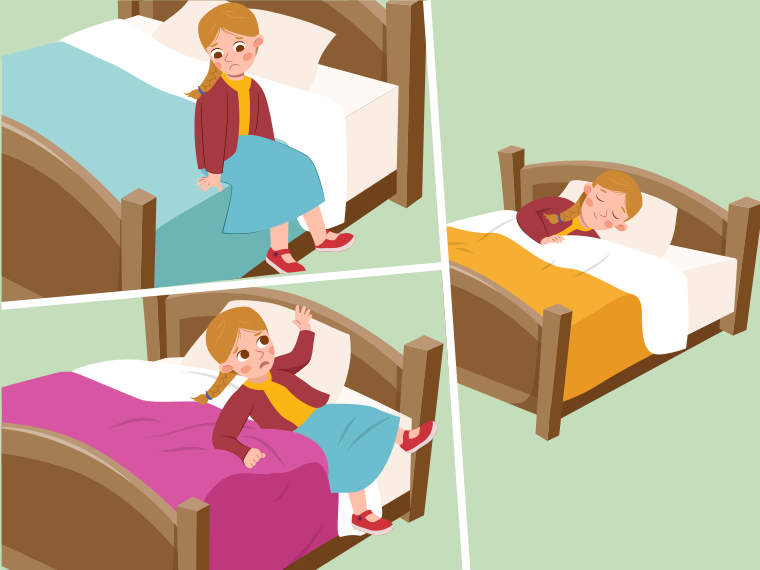
She got into the large bed but it was too hard. Then she got into the medium bed but it was too soft. The small bed was just right. She fell asleep.
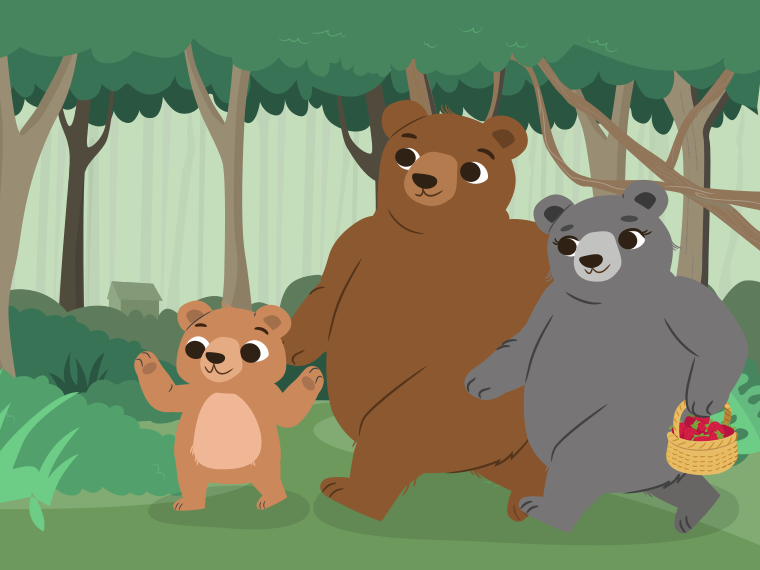
The house belonged to three bears: Mama Bear, Papa Bear, and Baby Bear. They had just come home from berry-picking.
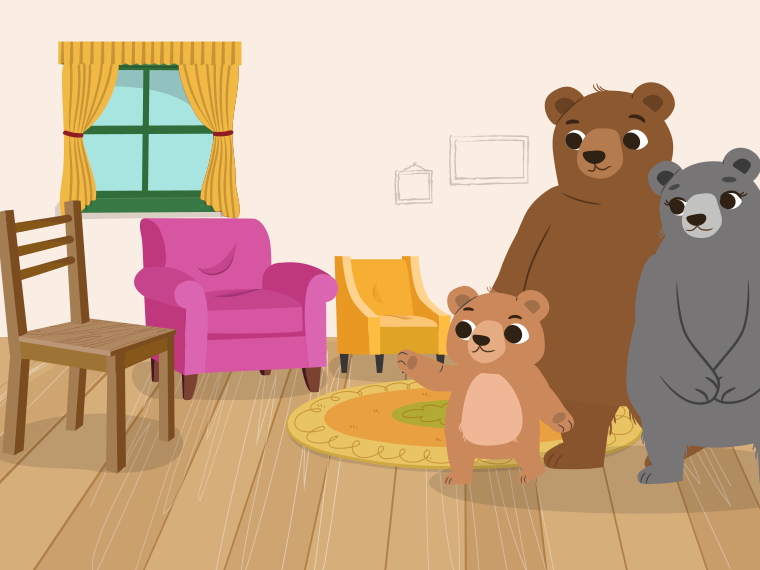
“Who’s been sitting in my chair?” said Papa Bear. “Someone sat in my chair too,” said Mama Bear. “Someone sat in my chair too,” said Baby Bear.
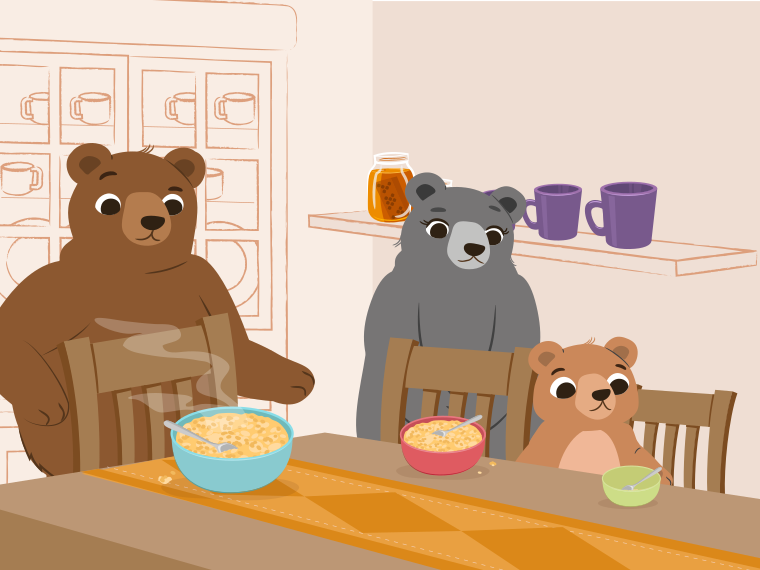
“Who’s been eating my porridge?” said Papa Bear. “Someone ate my porridge too,” said Mama Bear. “Someone ate ALL my porridge,” said Baby Bear sadly.
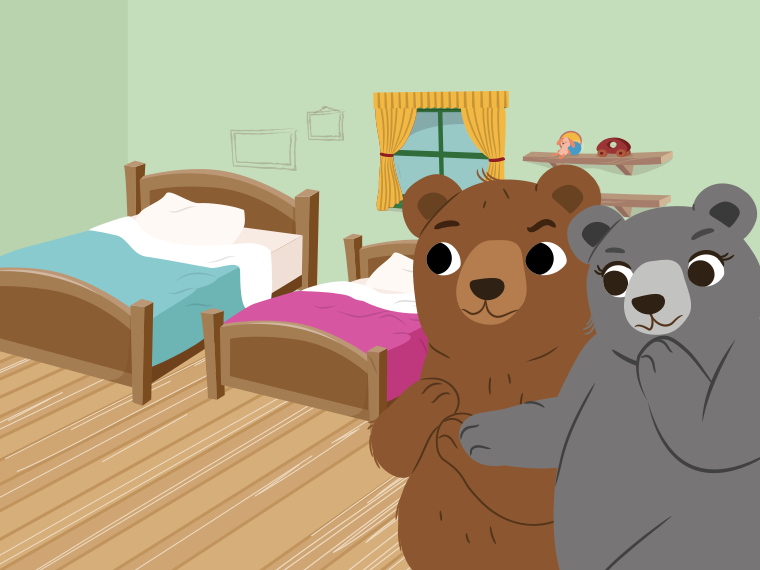
The Bears went into their bedroom. “Who’s been sleeping in my bed?” said Papa Bear. “Someone slept in my bed too,” said Mama Bear.
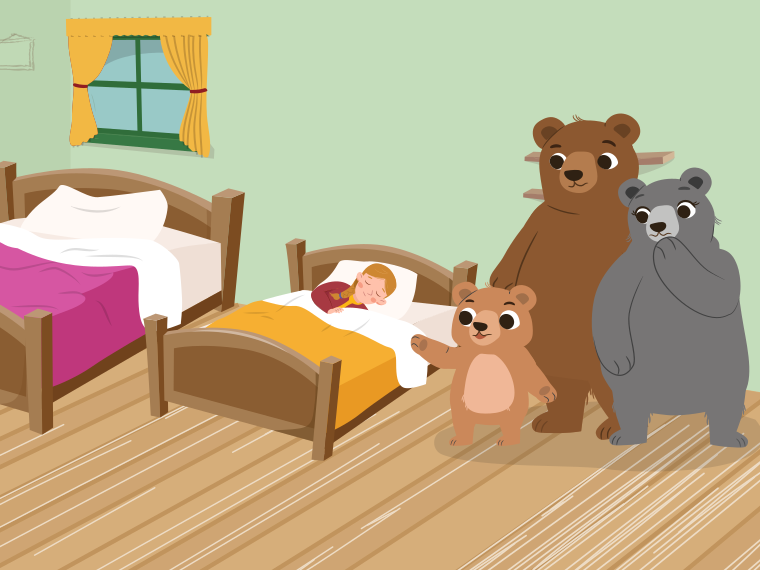
“Someone slept in my bed too!” said Baby Bear. “And there she is!”
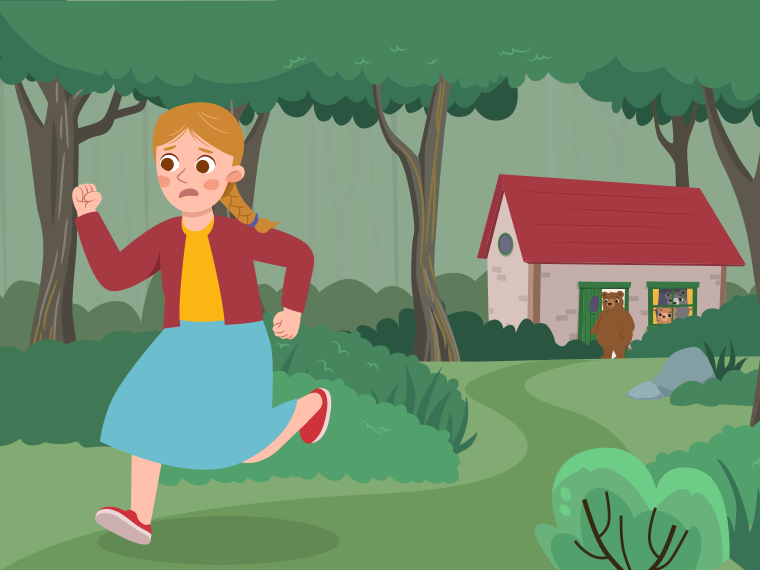
All of the noise woke up Goldilocks and she was scared. She immediately ran out of the house and ran home. Goldilocks never entered anyone’s house without permission ever again. The End.

Brainstorm
Brainstorm
In a notebook, or using another method of your choice, answer the following questions about the story. If possible, share your thoughts with a partner.
- Where does the story take place? (In other words, what's the setting?)
- Who are the characters in the story?
- What’s the main problem or conflict in the story?
- Which part of the story is the point of most interest or excitement?
The series of events that make up a story are called the plot. The plot is one of several story elements, or details, needed to tell a story.
In this learning activity, you will learn about the different parts of a plot as well as other story elements needed to tell a story. You will practice identifying them in reading, and then you will use your knowledge of those story elements to get creative and plan and write a story of your own!
Exploring plot structure
When first learning about the parts of a story they may have been described as ‘the beginning, the middle, and the end’. Now, we are building on that understanding and beginning to think about the parts of a story in more complex, or detailed, ways to improve our writing and really engage our audience!
The plot of a story is its plan or blueprint. The plot is a series of events that happen in a story from the beginning all the way to the end. Just like how someone might follow a map to find treasure, a plot tells us what happens to the characters in a story, such as the adventures they go on and the problems they solve. The plot of a story is the exciting path that the story takes us on!
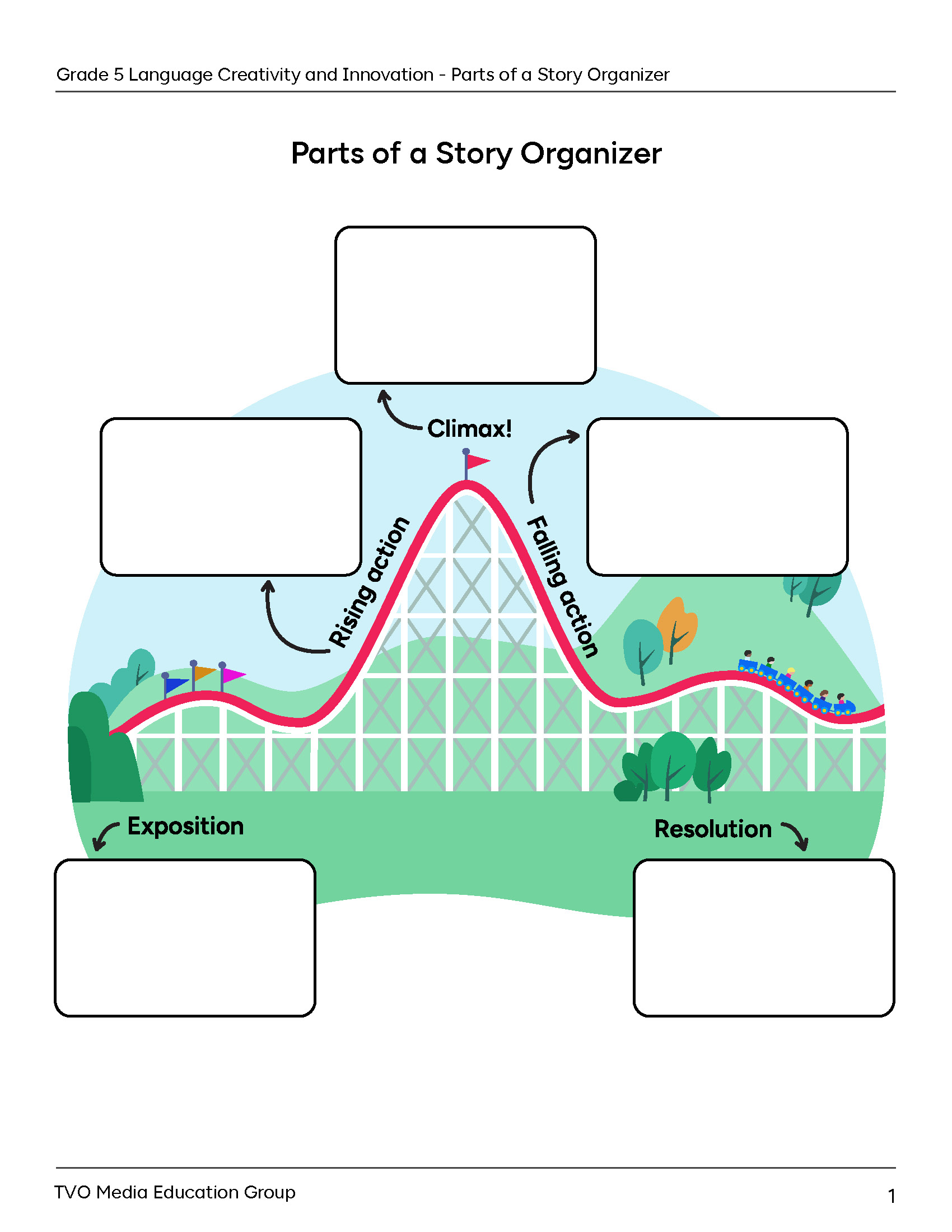
The different parts of a plot are often visualized like a hill or a rollercoaster because there are different sections that lead readers through ups and downs of different emotions.
There are five parts to a plot:
- exposition
- rising Action
- climax
- falling Action
- resolution
Explore the following interactive diagram to learn about the different parts of a plot.
Notice how the shape of the diagram shows a large peak where the word climax is. Why do you think this is?

Reading recap!
Let’s reexamine the story of Goldilocks and the Three Bears.
Goldilocks and the Three Bears Goldilocks and the Three Bears Ereader
Once upon a time there was a girl named Goldilocks. She went for a walk in the forest.
She saw a small house in a middle of the forest. She knocked on the door, but no one answered.
It was starting to rain so she went inside the house. She saw three comfy chairs. The first chair was too hard. The second chair was too soft. The third chair was just right.
Goldilocks saw the kitchen table had three bowls of porridge. One was large, one was medium, and one was small.
Goldilocks was so hungry. She went over to the table and grabbed a spoon. First, she tried the largest bowl. It was too hot!
Then she tried the medium bowl. It was too cold! Then she tried the smallest bowl. It was just right. Goldilocks ate it all up.
Goldilocks was tired. She went into the next room where there were three beds. One was large, one was medium, and one was small.
She got into the large bed but it was too hard. Then she got into the medium bed but it was too soft. The small bed was just right. She fell asleep.
The house belonged to three bears: Mama Bear, Papa Bear, and Baby Bear. They had just come home from berry-picking.
“Who’s been sitting in my chair?” said Papa Bear. “Someone sat in my chair too,” said Mama Bear. “Someone sat in my chair too,” said Baby Bear.
“Who’s been eating my porridge?” said Papa Bear. “Someone ate my porridge too,” said Mama Bear. “Someone ate ALL my porridge,” said Baby Bear sadly.
The Bears went into their bedroom. “Who’s been sleeping in my bed?” said Papa Bear. “Someone slept in my bed too,” said Mama Bear.
“Someone slept in my bed too!” said Baby Bear. “And there she is!”
All of the noise woke up Goldilocks and she was scared. She immediately ran out of the house and ran home. Goldilocks never entered anyone’s house without permission ever again. The End.
Learning check!
Match the parts of the story of Goldilocks and the Three Bears to the parts of the plot that they represent.
Thinking about perspective
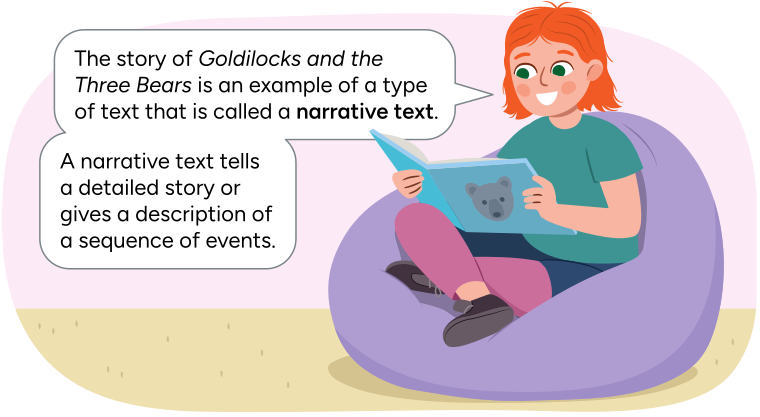
Student Hanah is talking. She says, "The story of
Goldilocks and the Three Bears is an example of a type of text that is called a
narrative text. A narrative text tells a detailed story or gives a description of a
sequence of events."
Narrative texts are often told from one of three perspectives:
- first person perspective
- second person perspective
- third person perspective
In the same way that we can use context clues to figure out a word’s meaning, we can use context clues to determine the perspective in a text. Examine the following image to learn more about the three different perspectives used in narrative texts.
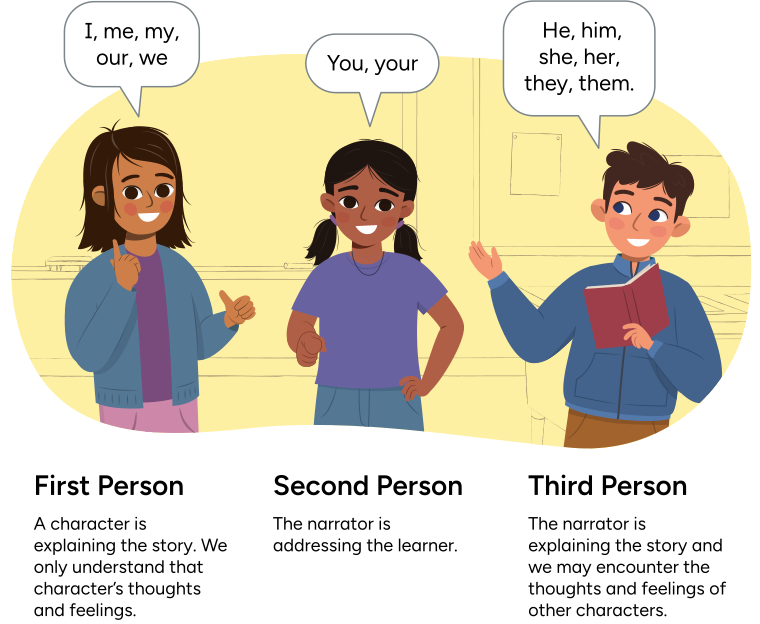
3 learners each share pronouns related to different perspectives.
Neebin says, 'I, me, my, our, we.' These are first person pronouns. The first person means a character is explaining the story. We understand only that character's thoughts and feelings.
Mehar says, 'You, your.' These are second person pronouns. The second person means the narrator is addressing the learner.
Oliver says, 'He, him, she, her, they, them.' These are third person pronouns. The third person means the narrator is explaining the story and we may encounter the thoughts and feelings of other characters.
Consider the story Goldilocks and the Three Bears. Using the information you just reviewed, determine the perspective the story is told in. Was it written in first, second, or third person perspective?
How do you know?
When you are ready press the Answer button to check your understanding.
This version of Goldilocks and the Three Bears is written in the third person perspective. We know this because it's as if someone on the outside is looking in on what’s happening and retelling it to the reader. Third person pronouns, like she and they, are used in the story to describe what the characters are doing.
Story elements
The plot is a very important part of a story, but there are many finer details, or elements, needed to tell a story and make the plot come to life!
- Where is the story set?
- Who are the characters in the story?
- What’s the problem that makes the story exciting?
- What’s the story about in general?
These are examples of details, or story elements, that help the plot take shape.
Let’s explore some of these story elements in more detail.
These are the basic story elements. If you want to learn about advanced story elements, you can pursue additional learning about point of view, tone, or style.
Reading time
Let’s examine another story.
Read the following short story called “The Lion and the Mouse” adapted from Aesop’s Fables.
The Lion and the Mouse
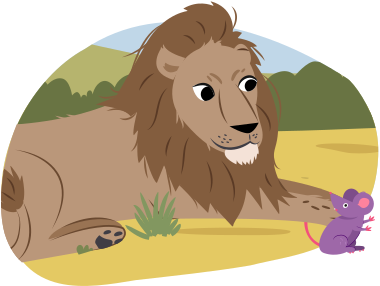
A Lion lay asleep in the forest, his great head resting on his paws. A timid little Mouse came upon him unexpectedly, and in her fright and haste to get away, ran across the Lion's nose. Roused from his nap, the Lion laid his huge paw angrily on the tiny creature.
"Spare me!" begged the poor Mouse. "Please let me go and some day I will surely repay you."
The Lion was much amused to think that a Mouse could ever help him. But he was generous and finally let the Mouse go.
Some days later, while stalking his prey in the forest, the Lion was caught in the toils of a leftover fishing net. Unable to free himself, he filled the forest with his angry roaring. The Mouse knew the voice and quickly found the Lion struggling in the net. Running to one of the great ropes that bound him, she gnawed it until it parted, and soon the Lion was free.
"You laughed when I said I would repay you," said the Mouse. "Now you see that even a Mouse can help a Lion."

Student Success
Reading review
In a notebook, or using another method of your choice, answer the following questions based on the story “The Lion and the Mouse”.
- What is the setting of the story?
- Who are the characters in the story?
- What type of conflict is in this story?
- What perspective is the story written in (first, second, or third person perspective)?
- What are some advantages and disadvantages of writing the story from this perspective?
When you are done, press the Check Answers button to check your understanding.
- The story “The Lion and the Mouse” is set in a forest.
- The characters in the story are the Mouse and the Lion.
- The conflict between the Lion and the Mouse would be classified as person vs. person because even though they are animals and not humans, they are portrayed with human-like qualities, such as the ability to speak (this is called personification).
- The story is written in the third person perspective because a narrator is explaining the story.
- An advantage of third person perspective is we get to experience the story from both characters’ sides. A disadvantage of third person perspective is that we don’t get to know all the inner thoughts and feelings of the characters.
Planning story elements
Now it is time to brainstorm ideas for your own story!
Remember, the goal of brainstorming is to come up with, or generate, as many ideas as possible.
Explore the following questions to help you brainstorm ideas for your story.
- Who will your story mainly be about?
- What sort of person are they?
- Who else will be in the story?
- Are there any non-human characters such as animals, machines, supernatural forces or others?
What problem, goal, or obstacle will your main character face?
- What events will happen in the story?
- What will happen at the climax?
- How will the conflict be solved?
- What is the big idea of your story?
- What lesson will the characters or readers learn?
- Will the story take place in the past, present, or future?
- Where on Earth will it happen?
- What season or time of day will it take place during?
- Are there any specific locations where the plot events will happen?
Mapping out your story
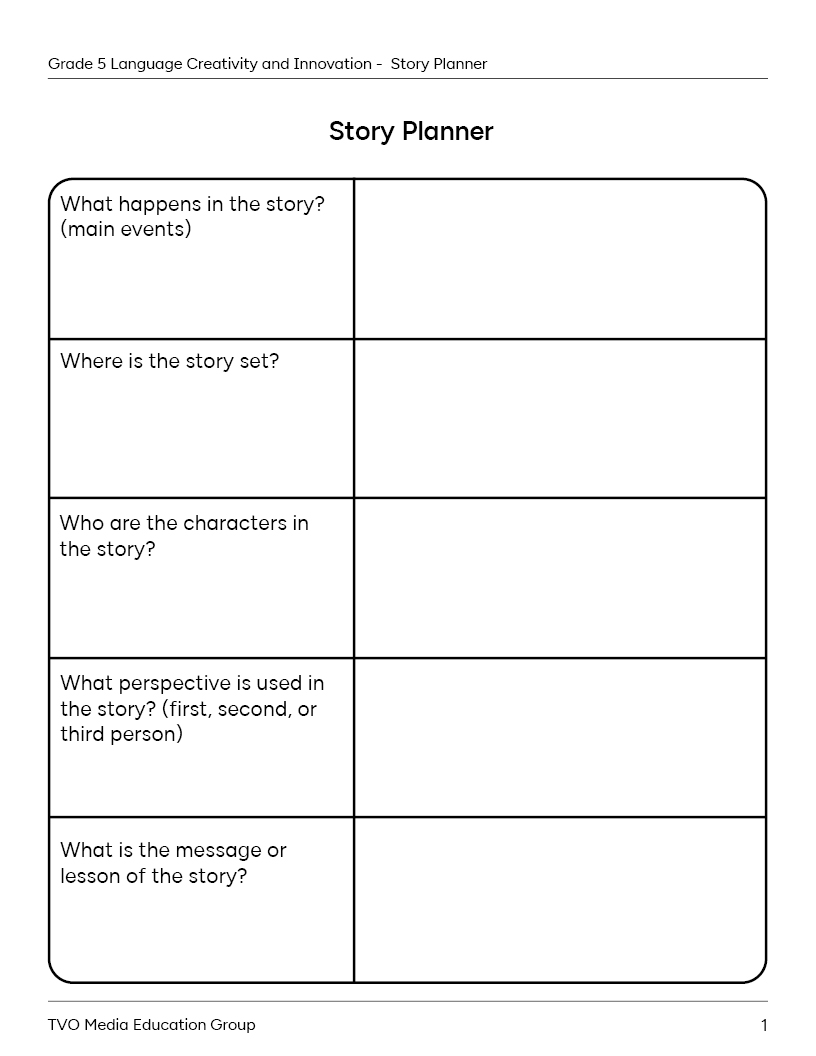
You can record your ideas for your story using a mind map, a graphic organizer, a list, or any other method that works for you.
Here are two examples of graphic organizers that you might choose to use to plan some of your story elements in greater detail.

Pause and Reflect
Reflect
- How did you choose to record your ideas for your story?
- What tools or strategies did you use? How did the method you chose help you to improve your writing skills?
Record your thinking in a notebook or using another method of your choice. If possible, share you thoughts with a partner.

Grammar routine!
When writing a story, the time and place, or setting, is very important. To communicate when the story takes place, authors have to first choose what verb tense they will write their story in. There are several options for verb tense when writing fiction.
Press the following tabs to check out some options, along with considerations for each.
| Past Tenses | Examples | Advantages, Disadvantages, and Considerations |
|---|---|---|
|
|
The simple past tense is the most common verb tense for story writing and telling. Even though it is written in the past tense, it will still feel like the story is happening now to the reader. |
| Past Tenses | Examples | Advantages, Disadvantages, and Considerations |
|---|---|---|
|
|
Some writers use the present tense. It keeps the reader close to the action of the story. It can be confusing if the story is told from several characters’ perspectives or jumps between periods–a writer will need to make sure it is clear when “now” is in the novel. |
| Past Tenses | Examples | Advantages, Disadvantages, and Considerations |
|---|---|---|
|
|
The future tense is rarely used to write a story. It is considered an advanced writing skill that needs to be chosen and used expertly. It is often used in story dialogue, for example when characters discuss an event in the future: Example: “I will be collecting your reports tomorrow,” said the teacher. |
Learning check!
Select the correct answer, then press Check Answer to see how you did.
Putting it all together
Now that you are familiar with the parts of a story, explored different story elements, and have brainstormed ideas for your story, you will consolidate your learning by drafting, revising, editing, and then publishing your story!
To get started, use the story plan that you created in the Action section and review each of the following sections.
Press the following tabs to find out more.
Draft your paragraph in cursive writing or by typing using a word processing tool. Be sure to use formal speech and write in full sentences.
Revise your paragraph. Revising is different from editing. Revising is where we change or make improvements to our writing, not correct it. The acronym “ARMS” can help us remember the steps involved in revising.
A – Add words or sentences to improve clarity and meaning.
R – Remove unnecessary words and sentences, as well as repetition.
M – Move content to different locations to improve flow and clarity.
S – Substitute words or sentences with more advanced language or more specific examples.
For this task, look specifically at where you can add transitional words.
Here are some common ones you may find useful.
|
First, Firstly, To start, To begin with, |
Second, Secondly, Next, Furthermore, |
Third, Thirdly, Lastly, Finally, |
Reminder: Transitional words and phrases at the beginning of a sentence require a comma.
Edit your paragraph.
Editing means finding and correcting errors in your writing. When editing, the acronym “CUPS” can help us remember editing strategies.
|
Capitals: Does each sentence begin with a capital letter Have I capitalized all proper nouns |
|
Usage: Have I used a mixture of simple and complex sentences Have I used transitional words and phrases to highlight my introduction, main ideas, and conclusion? |
|
Punctuation: Do each of my sentences have ending punctuation? Have I used commas after transitional words and phrases? |
|
Spelling: Have I spelled all words correctly? |
When you are finished, use the following checklist to help you self–assess your story.
My story has…
Reflection
As you read through these descriptions, which sentence best describes how you are feeling about your understanding of this learning activity? Press the button that is beside this sentence.
I feel...
Now, record your ideas using a voice recorder, speech-to-text, or writing tool.