Learning goals
We are learning to…
- apply language and literacy skills to cross-curricular learning
- make personal connections to texts
- describe literary devices and their function
- create a variety of texts
Success criteria
I am able to…
- explain how social-emotional skills support my learning and well-being across subjects and my life
- interpret meaning and make connections to poetry
- identify examples of similes and metaphors and explain how the imagery contributes to the tone of a poem
- create a poem and use it to express my unique voice and feelings
Being mindful
Feelings are complex. Feelings can change quickly. Our feelings play a large part in how our day goes.
Explore the following video clip from the show How Do You Feel? Mindfulness Map to learn what Akin has to say about feelings.
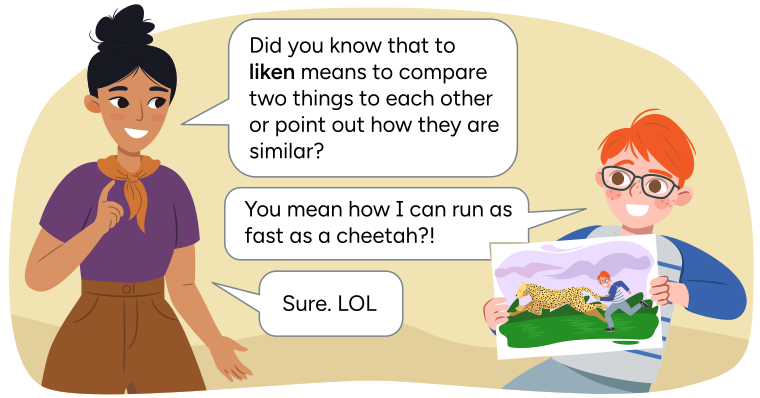
Teacher Chelsea and student Conor are having a conversation.
Teacher Chelsea is saying:
Did you know that to liken means to compare two things to each other or point out how they are similar?
Conor replies saying:
You mean how I can run as fast as a cheetah?!
Teacher Chelsea is says:
Sure. LOL
In the video, what did Akin liken feelings to?
When you are ready, press the Answer button to compare your ideas to the answer.
In the video, Akin likened feelings to the weather when he compared how easily feelings can change, to just like how easily the weather can change.
He said: “The weather can be a real bummer sometimes. It’s always changing and can be hard to predict. Feelings are kind of like that too. They come and go, changing everyday.”

Feelings impact how good we feel and how productive we can be. When we are stuck in our feelings and emotions, it can be hard to focus and even harder to feel creative.
Learning to notice our feelings, our sources of frustration and stress, and developing self-awareness are important parts of social-emotional learning, also known as SEL.
Being mindful is also an important part of social-emotional learning.

Brainstorm
Brainstorm
What does 'being mindful' mean?
Record your thinking in a notebook or using another method of your choice. If possible, share your answers with a partner.
When you are ready, press the Answer button to compare your ideas to a sample answer.
'Being mindful' means paying attention and noticing what we’re thinking and feeling. It also means recognizing that the feelings that we have are valid and it’s ok to feel them.
Social-emotional learning benefits all parts of our academic life and, most importantly, our overall mental health and well-being.
In this learning activity, we will explore ways that the literacy skills of reading, listening, viewing, and creating can be used to support mindfulness, our social-emotional learning, and our overall well-being.
Strategies for mindfulness
Our mind and body are connected, and it is important to take care of ourselves by listening inwards to name the emotions we are feeling.
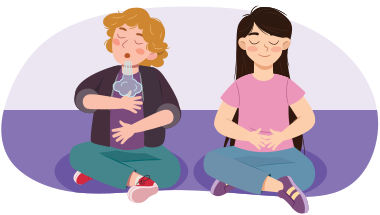
One way to do this is to pause and focus on our breathing. This can help us to identify how we are feeling.
Check out the following audio clip to learn more about taking deep breaths. If possible, try and follow along with the audio and focus on your breathing.
Safety reminder
Be sure to check that there is enough space around you before you begin.
Use the following checklist to identify the statements that you connect with after completing the breathing activity.
I connect with

Write it!
In a notebook, or using another method of your choice, use the following sentence stems to record your feelings and emotions right now and liken each one to something that it is similar in nature or the world around you.
Sentence Stems
I feel (Blank) like a (Blank).
I feel (Blank) as a (Blank).
Try to write at least three different statements. Use the example statements from the checklist as a model.

Likening, or comparing one thing to another thing using the words “like” or “as”, is a literary device called a simile. A metaphor is another literary device that is used to compare two or more things, but without using the words “like” or “as.”
By comparing one thing to another, an author uses imagery to draw out a mood or memory, help the reader make connections, establish a theme, and add interest to their writing.
Examine the following chart for some examples of similes and metaphors.
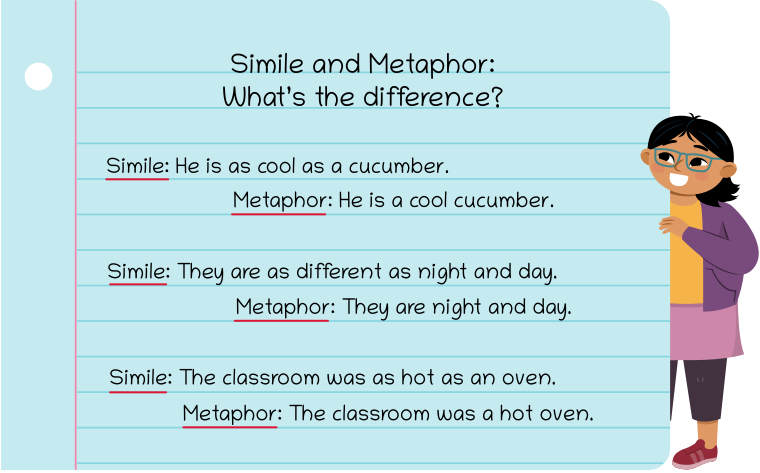
Simile and metaphor: What's the difference?
Simile: He is as cool as a cucumber.
Metaphor: He is a cool cucumber.
Simile: They are as different as night and day.
Metaphor: They are night and day.
Simile: The classroom was as hot as an oven.
Metaphor: The classroom was a hot oven.
Your turn!
Sort the following examples as either similes or metaphors.
Expression and social emotional learning
Imagery is a literary device very often used in poetry, including in the use of similes and metaphors, because this form of literature relies heavily on communication and inspiring feelings and emotions in its audience.
Reading and writing poetry is a wonderful way of calming ourselves, developing the ability to be still, and thinking critically and creatively. Exploring poetry can open pathways to connecting with emotions and understanding ourselves and the world around us. Poetry can be a great tool to help us develop our social-emotional learning.
Explore the following poem called “When I Am Happy”.
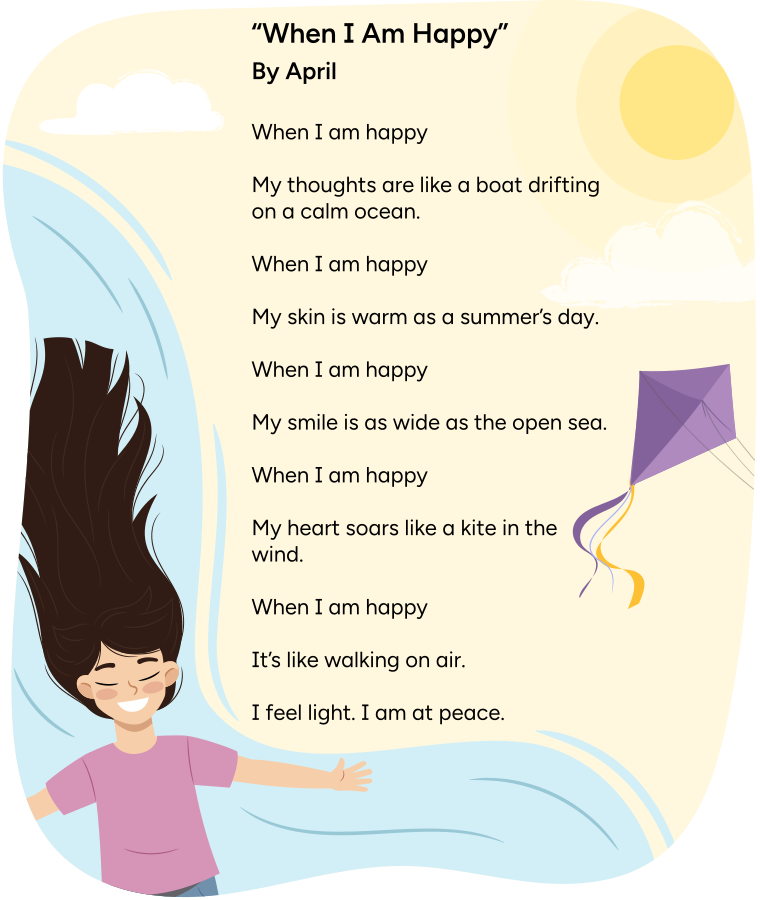
"When I Am Happy"
By April
When I am happy
My thoughts are like a boat drifting on a calm ocean.
When I am happy
My skin is warm as a summer's day.
When I am happy
My smile is as wide as the open sea.
When I am happy
My heart soars like a kite in the wind.
When I am happy
It's like walking on air.
I feel light. I am at peace.

Student Success
Post-reading
Can you identify the similes in the poem?
How does the imagery contribute to the tone of the poem? Record your thoughts in a notebook or using another method of your choice.
When you are done, press the Possible Answers button to check out some examples.
Similes compare one thing to another thing using the words “like” or “as”.
The similes in the poem are:
- My thoughts are like a boat drifting on a calm ocean.
- My skin is warm as a summer’s day.
- My smile is as wide as the open sea.
- My heart soars like a kite in the wind.
- When I am happy it’s like walking on air.
The imagery helps communicate the writer’s feelings of happiness and paints a picture for the reader of joy and comfort.

Grammar routine!
The poem “When I Am Happy” contained 2 apostrophes.
Did you notice them?
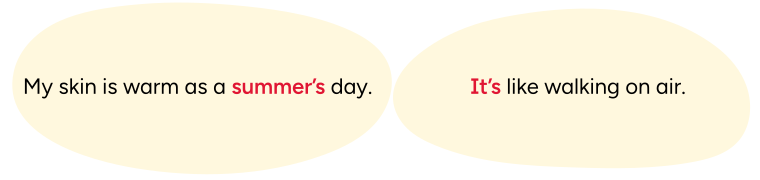
Apostrophes have two functions in the English language: possession and contraction.
Let’s review the two functions of apostrophes. Press the following tabs to find out more.
Apostrophes can show us that something belongs to something or someone.
Example: The name of April’s poem is “When I Am Happy”. (The poem belongs to April; she is the author.)
Apostrophes show us where letters were removed to form a contraction, or a shorter word.
Example: This isn’t the first poem she has written. (The word “isn’t” a contraction, or shortened version of the words “is not”)
Learning check!
Identify which line from the poem is a contraction and which shows possession in the following matching activity.
Let’s explore another poem expressing feelings. This time, you will practice reading the poem out loud.
Before you begin, consider:
- Where might you speed up or slow down?
- Where might you pause or emphasize certain words?
- Where might you increase, or decrease your volume?
- How could you use your expressions to communicate the meaning of the poem?
Practice presenting the poem and adjust your pace, volume, and expressions to communicate the meaning, and feelings and emotion of the poem.
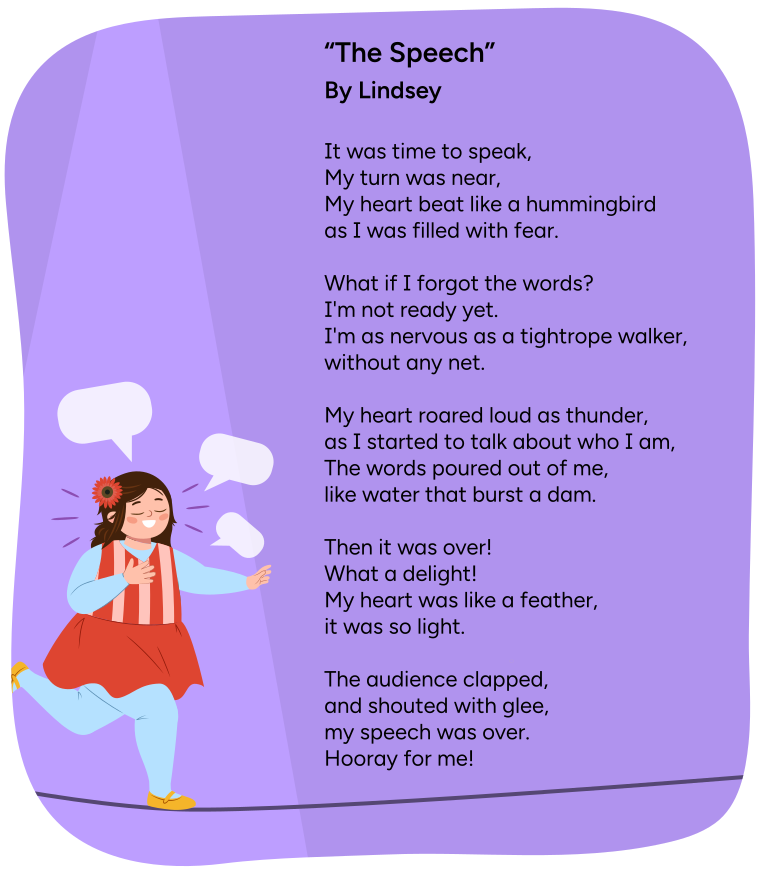
"The Speech"
By Lindsey
It was time to speak,
My turn was near,
My heart beat like a hummingbird
as I was filled with fear.
What if I forgot the words?
I'm not ready yet.
I'm as nervous as a tightrope walker,
without any net.
My heart roared loud as thunder,
as I started to talk about who I am,
The words poured out of me,
like water that burst a dam.
Then it was over!
What a delight!
My heart was like a feather,
it was so light.
The audience clapped,
and shouted with glee,
my speech was over.
Hooray for me!
Use the following checklist to reflect on your performance of the poem and to make improvements:
Reading with fluency
Putting it all together

What contractions are formed from these words using an apostrophe?
- can not
- they have
- you would
- there is
- I will
- you are
- let us
When you are ready press Answers to check your understanding.
| can not | can’t |
| they have | they’ve |
| you would | you’d |
| there is | there’s |
| I will | I’ll |
| you are | you’re |
| let us | let’s |
In this learning activity, you were introduced to different ways of being mindful and looking inward at your feelings and emotions to develop your social-emotional skills. You also explored poetry as a way of working through emotions and feelings and improving overall mental health.
Reading, listening to, viewing, and performing texts are powerful modes of social-emotional learning. Creating your own texts can be too!
Now it’s time to create your own poem to explore and express your feelings and emotions.
To get you started, consider using the sentences you created in the Action section that likened your feelings to something in nature or the world around you.
Your poem should meet the following criteria:
Most of all, have fun creating your personal poem!
Write the final version of your poem in cursive or practice your typing skills and type it out!
Cursive practice
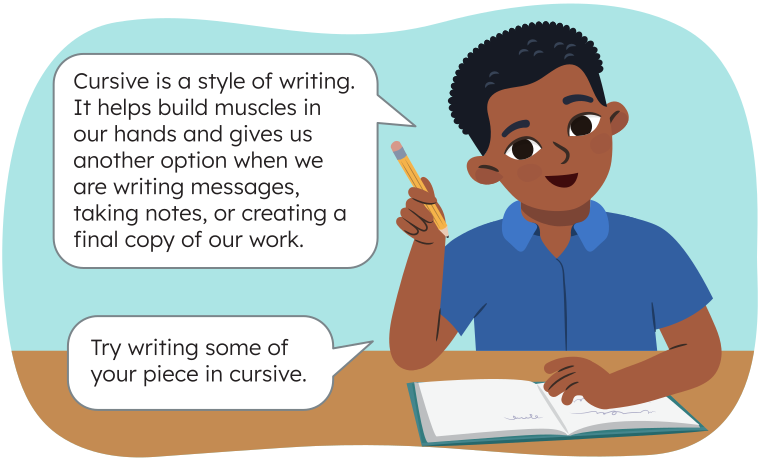
Arthur says, 'Cursive is a style of writing. It helps build muscles in our hands and gives us another option when we are writing messages, taking notes, or creating a final copy of our work.Let's practice writing a few words in cursive.'
Let’s review cursive writing!
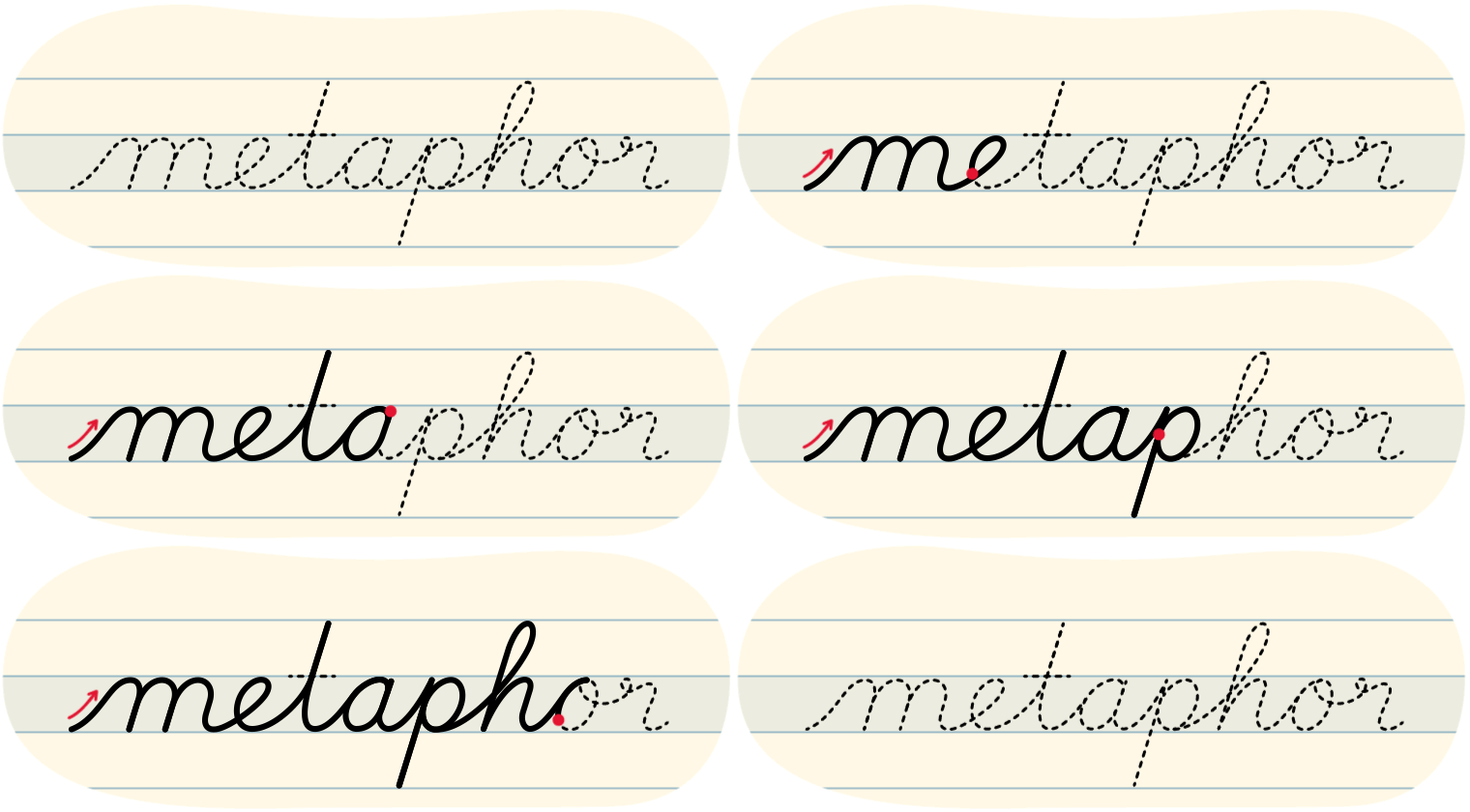
Check out the following animation of how the word “metaphor” is written in cursive, then review the tips for cursive writing provided.
Tips for cursive letters
- When we write in lowercase, we always begin at the bottom
- When we write in uppercase we can start from the top or the bottom
- Try to keep the pencil on the page until you are done the word
- Try to press gently as you write so that your hand can move easily across the page
- Take your time to make sure that you are writing clearly and evenly
Left-handed tips for cursive writing
|
Explore the video on Left-Handed Tips to learn more. |
 |

Typing practice
Typing is a great skill to develop! When we need to use a computer or tablet keyboard, knowing how to type helps us:
- take notes
- respond to messages
- create final drafts of our work.
Explore the following image to see what fingers are used to type each letter or number.
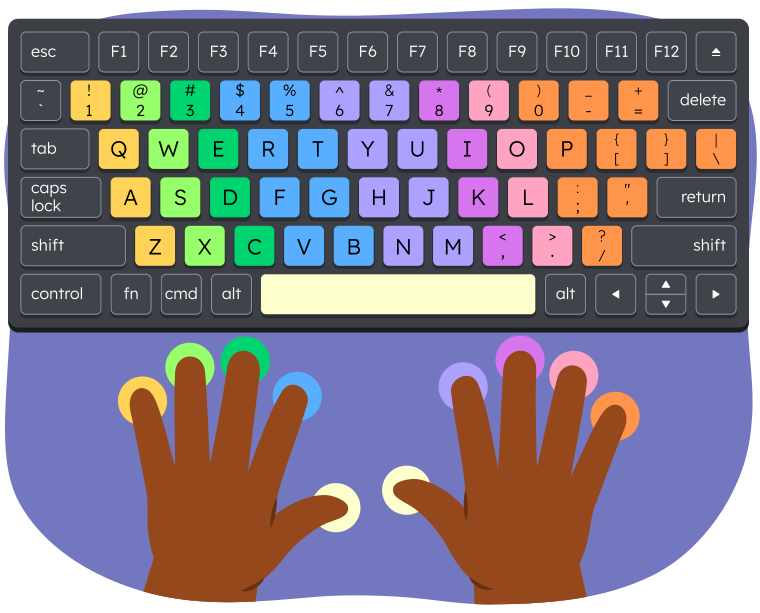
A keyboard and hands showing which fingers are used to press each key when typing.
The left pinky finger presses the keys 1, Q, A, and Z.
The left ring finger presses the keys 2, W, S, and X.
The left middle finger presses the keys 3, E, D, and C.
The left index finger presses the keys 4, 5, R, T, F, G, V, and B.
The left or right thumb presses the space bar.
The right index finger presses the keys 6, 7, Y, U, H, J, N, and M.
The right middle finger presses the keys 8, I, K, and comma.
The right ring finger presses the keys 9, O, L, and period.
The right pinky finger presses the keys 0, minus, equal, P, open bracket, closed bracket, backslash, semicolon, apostrophe, and forward slash.
We use specific muscles in our hands to type! It’s important to practice so that it becomes easier to type correctly without putting too much pressure on our hands and our wrist.
For additional typing practice, check out the game, “Keyboard Climber 2”!

Let’s reflect!
When you are done, reflect on the following in a notebook or using another method of your choice. If possible, share your thoughts with a partner.
- What did you learn about yourself in this learning activity?
- Did you find writing poetry to be a helpful strategy to support your social-emotional well-being?
- What strategies work best for you to help you process your feelings and emotions and practice being mindful?
Reflection
As you read through these descriptions, which sentence best describes how you are feeling about your understanding of this learning activity? Press the button that is beside this sentence.
I feel...
Now, record your ideas using a voice recorder, speech-to-text, or writing tool.