Learning goals
We are learning to…
- make meaning of a variety of text forms, considering their impact on the audience
- demonstrate an understanding of diverse voices, perspectives, and experiences
- analyze and apply listening, speaking, and non-verbal communication skills
- express our personal voice in various text forms
Success criteria
I am able to…
- identify elements and features of spoken word poetry
- make connections to themes and topics explored in spoken word poems created by diverse artists
- list ways to show I am attentively listening and supporting a speaker during a presentation
- create a spoken word poem that expresses my opinion and emotions on a personally relevant topic
Exploring forms of poetry
Poetry is a type of literature, or writing, that attempts to play with a reader's imagination or emotions.
When most people think of poetry they think of it as a form of written text.
Did you know that there are oral or spoken forms of poetry too?
Spoken word refers to poetry that is written for live performance. People write poems to express their thoughts and feelings about a topic and then perform the poems in front of an audience.
Spotlight on a spoken word poet
Wali Shah is a Canadian spoken word poet and the Poet Laureate of Mississauga, Ontario where he was raised after his parents immigrated from Pakistan. He uses poetry and songs as a way of challenging global issues including bullying, racism, and creating a space for equal opportunity. A voice for marginalized people and those struggling to find their place in society, he uses his spoken word poetry to encourage others to use their talents to help make the world a more just and inclusive place for all.
Explore the following clip of part of Wali’s performance of his spoken word poem, “We Will Rise”, from an event in Vancouver, British Columbia.

Pause and Reflect
Pause and Reflect
In a notebook, or using another method of your choice, reflect on the following questions. If possible, share your thoughts with a partner.
- What do you think Wali Shah was trying to communicate in the portion of his poem, “We Will Rise”, that you explored?
- Have you experienced poetry being performed in person or in media (TV, movies, music videos, award shows, podcasts, special performances, concerts, or others)?
- Why do you think an author would create poetry to be performed orally?
- How might poetry for performance be different than poetry that is created to be read? How might it be similar?
In this learning activity, we will explore some examples of spoken word poetry and analyze different elements of its form that poets use to communicate their messages and emotions on their chosen topic.
Poetry for change
For centuries, poetry has addressed issues and themes important to people. A modern form of poetry is spoken word poetry.
Spoken word is:
- a type of performance art where speakers share their thoughts on particular topics for a live audience
- a type of performance art where speakers share their thoughts on particular topics for a live audience
- poetry that features repetition, improvisation, and word play.
- rhythmic and musical in the way the words are arranged and presented
- poetry that focuses on the elements of sound and presentation
- a form of expression of strong personal feelings about an issue or an important message
Spoken word can include elements of rap, hip-hop, storytelling, jazz, rock, blues, and folk music. Features of spoken word poetry include rhyme, repetition, improvisation and word play.
People of all ages can express their thoughts and feelings on things that are important to them through spoken word poetry.
Spotlight on a spoken word poet
Spoken word artist, activist and educator Mahlikha Awe:ri is Haudenosaunee Kanien’kéhà:ka (Mohawk) and Mi’kmaw L’sitkuk of the Wolf Clan, from Kahnawá:ke and the unceded traditional homelands of the Mi’kma’ki of Kespukwitk with African American, Afro-Caribbean and Irish ancestry.
Explore the following video entitled “The Space: Mahlikah Awe:ri” to check out a performance of one of her poems.
Pause and Reflect
Pause and Reflect
In a notebook, or using another method of your choice, answer the following questions:
- What characteristics of spoken word poetry did you observe in Mahlikah’s performance?
- What were some of the key ideas shared in Mahlikah’s poem?
- What are some of the themes you think were explored in Mahlikah’s poem?
When you are done, press Sample Answers to explore some possible responses.
- Mahlikah’s performance contained the following characteristics of spoken word poetry:
- It was a live performance where thoughts were shared on a particular topic for an audience.
- It didn’t rhyme but used repetition to emphasize and draw the audience in.
- It was rhythmic and musical through use of the drum but also with how the words were presented.
- Placed focus on the element of sound through the use of the drum.
- Expressed strong personal feelings about Mahlikah’s identity and the culture of her people.
- Some of the key ideas in the performance were:
- Mahlikah repeats the phrase “I am my people’s stories”, which helps to call attention to it. Mahlikah might be suggesting a strong personal connection between her identity and her community or ancestors.
- Words she uses like, “prophesy,” “resilient,” and “indomitable force” could mean that Indigenous communities continue to thrive in the present day, and that their ways of knowing are not a thing of the past.
- Some of the themes explored in Mahlikah’s poem could be:
- journey
- love
- land
- identity
- resilience
- strength
Being an effective listener
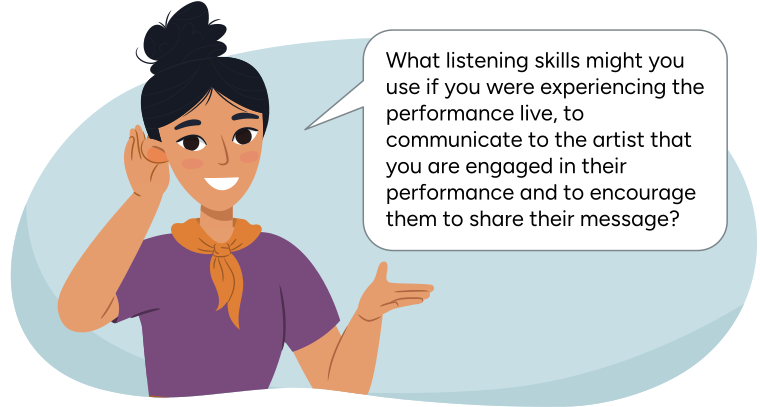
Teacher Chelsea is talking, she is says:
"What listening skills might you use if you were experiencing the performance live, to communicate to the artist that you are engaged in their performance and to encourage them to share their message?"
Record your thinking in a notebook or a method of your choice. If possible, share your thoughts with a partner.
If you need a hint to get you started, press the Listening Skills button to explore some examples.
- Attentively watch the speaker.
- Try to make eye contact with the speaker.
- Listen with an open mind and without judgement.
- Express interest in what the speaker is saying, or support and encourage them, by using non-verbal gestures, like smiling or nodding your head in agreement with something they say.
- Avoid distractions or interrupting.
- If given a chance after the performance, ask respectful questions and hold back any judgement.
Exploring form in spoken word
Let’s explore a written version of Mahlikah Awe:ri’s spoken word poem to analyze some features of this form of communication.
As you read, what do you notice about the sentence structure used?
(Speaking in Mohawk)
I’m a tracker, which means I make tracks. I make beats, I make echoes, echo, echo. I make etchings and pictographs. I make skylines and tree lines and river beds. I make journeys and dreams, dreams and journeys. I make prophesy, I make prophesy. I make my people’s histories and her stories.
(Speaking in Mohawk)
Word story.
(Speaking in Mohawk)
The earth in which we stand. I am my people’s stories. I am a tracker. I am my people’s stories. I am. I am the stone. Gentle, jagged and smooth and still. I am the birch swaying longingly, branches open signalling for change. I am the mountain arcing, arching strength, resilience, an indomitable force. I am my people’s stories. I am a tracker. I am my people’s stories. I am. (singing in Mohawk)
-Mahlikah Awe:ri
Source: https://www.tvokids.com/school-age/space/videos/mahlikah-aweri
Did you notice the use of many periods and short phrases?
These are called sentence fragments. Sentence fragments are only part of a thought and therefore they are incomplete sentences.
The opposite of a sentence fragment is a run-on sentence. A run-on sentence contains more than one complete thought, or independent clause, that is not connected by conjunctions or proper punctuation.
Check out this Grammafied video to learn more about these two types of sentences.
Check your understanding by matching the sample text with its correct label of sentence fragment or run-on sentence.
In certain forms of text and communication, it is acceptable to use sentence fragments and run-on sentences.
For example, sentence fragments and run-ons can be stylistic choices in poems and song lyrics. We consider these informal methods of communication because they are more casual and don’t follow traditional rules of grammar like formal communication does.
Pause and Reflect
Pause and Reflect
How did the fragments used in Mahlikah Awe:ri’s spoken word poem help you as the audience understand the message and emotion of her poem?
Record your thinking in a notebook or using another method of your choice. If possible, share your thoughts with a partner.
When you’re done, press Sample Answer to check your understanding.
Learning check!
Select the correct answer, then press Check Answer to see how you did.
Planning for poetry
Spoken word poetry is one way for a poet to express themself.
How do you like to express yourself? What thoughts and feelings do you want others to know about you? What issues are important to you? Why do you feel it is important for others to know about these issues?
Explore the following themes inspired by Mahlikah Awe:ri’s poem and examples of opening stanzas of spoken word poems connected to each.
Sample opening stanza:
My journey begins
I stretch, as I wake in the morning
I rise and am ready
For my day.
Each morning, I wake, I rise,
I prepare, I leave to go to school.
Each day I learn and grow and change.
Sample opening stanza:
Try to love everyone,
Support each other
Support each other
Support each other
Help each other grow, give each other strength
Feed our minds and inspire those around.
Sample opening stanza:
The land needs us all and I want to help
Stop throwing out things that can be recycled, reused
Stop polluting the water
Help the animals
Save the trees
The land needs us all and I want to help.
Create a list of ideas, emotions, issues, or themes that are important to you and that you want others to know about.
Use the following Ideas for Spoken Word Poetry Graphic Organizer to record your thoughts or use another method of your choice.
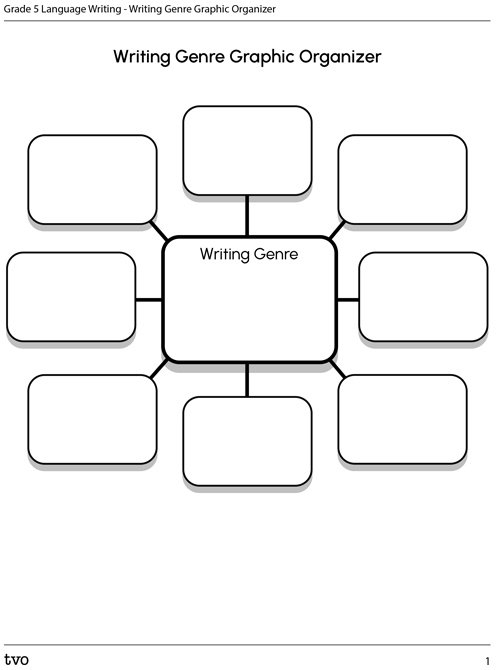
Press the Activity button to access the Ideas for Spoken Word Poetry Graphic Organizer.
Activity(Opens in a new tab)Reflect on the ideas that you brainstormed. Which of these ideas could you use to create a spoken word poem? Review the following steps to help get you organized and plan out your spoken word poem using the ideas you brainstormed.
Press the following tabs to explore each step.
You want your audience to experience the story you are telling them through your poem. Use strong vivid language, like similes and personification, comparative adjectives, strong verbs and sentences of different types. Your words need to engage their senses!
Some examples of vivid language include:
- She felt like she was soaring like a kite in the wind.
- The old wooden chair creaked and groaned like it was telling tales of the many generations it had supported.
- The storm raged outside, with lightning slicing through the sky like jagged bolts of silver, and thunder rolling like the growl of an angry beast.
Now it’s time to create a plan for your spoken word poem! Consider using a chart or graphic organizer such as the one provided to organize your thoughts and record your plan. Or use another method of your choice.
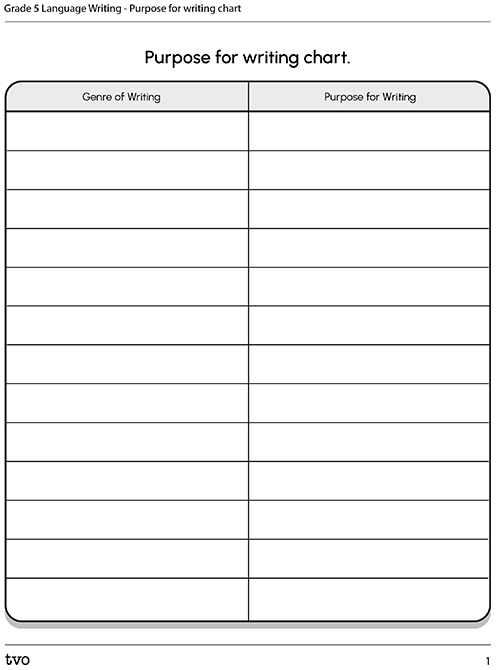
Press the Activity button to access the Planning My Spoken Word Poem Chart.
Activity(Opens in a new tab)
Remember, whenever beginning to plan writing or communication, it’s important to think about your purpose for writing as well as who your audience will be!
Before you begin, ask yourself:
- Why am I writing or what is it that I want to communicate? (Purpose)
- Who will be reading or hearing my writing, and how will they best receive my message? (Audience)
Putting it all together
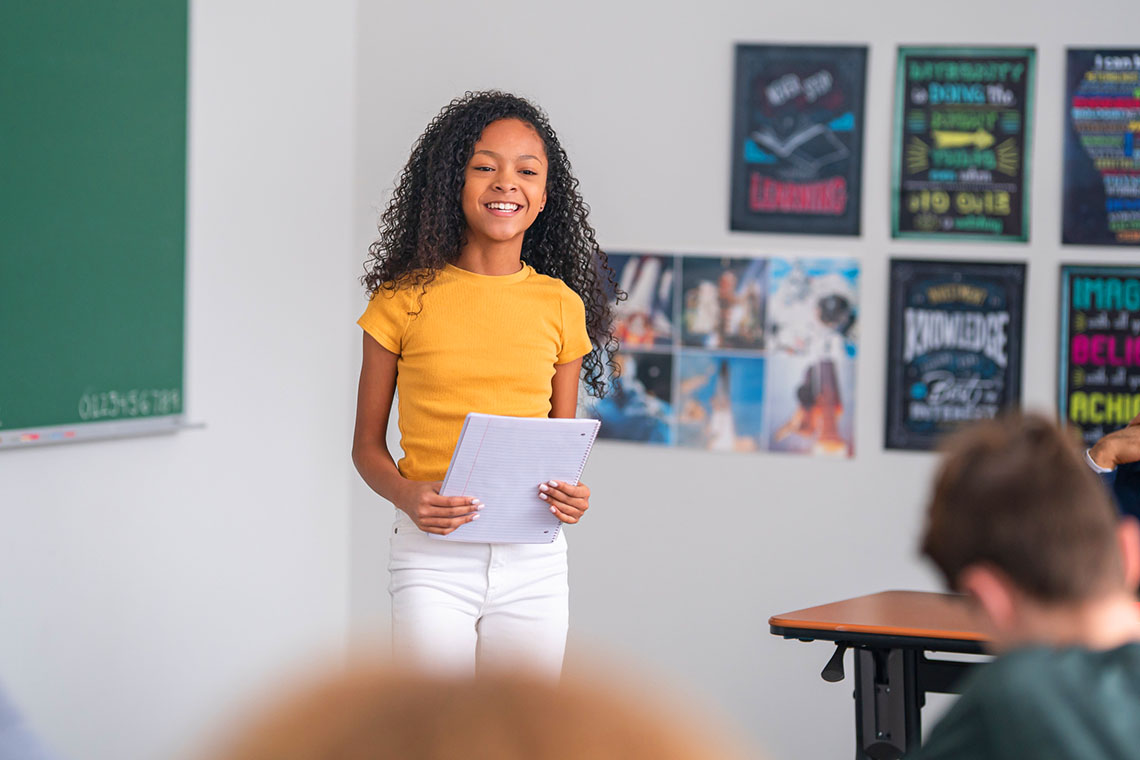
Now it’s your turn to create a spoken word poem!
Your poem should be at least ten lines long.
You can use the ideas you brainstormed in the Action section, along with the planning you did, or refer to the following “Ideas/poetry topics” section and choose a new topic for your poem. Since spoken word poetry is a type of free verse, don’t worry about rhyming. Just let your emotion and message flow!
Ideas/poetry topics:
- Save Our Planet
- We Are All Special
- Reduce, Reuse, Recycle
When you are done, practice reading your poem out loud, as if you were performing it in front of an audience. If possible, share your poem with someone. Remember to focus on communicating emotion and expression. Try sharing your poem using a tone and pitch that expresses your feelings about the subject of your poem.
This is your opportunity to express yourself!
Use the following checklist to reflect on and make improvements to your poem.
Think about your learning
How did exploring spoken word poetry, both by presenting and experiencing others' poems, help you grow as a writer? What are some things you learned that you can apply to your writing in general?
Record your thinking in a notebook or using another method of your choice. If possible, share your thoughts with a partner.
Reflection
As you read through these descriptions, which sentence best describes how you are feeling about your understanding of this learning activity? Press the button that is beside this sentence.

I feel...
Now, record your ideas using a voice recorder, speech-to-text, or writing tool.