Learning goals
We are learning to…
- understand the historical contexts, contributions, lived experiences, and perspectives of diverse communities
- make meaning of primary and secondary documents
- gather information and content relevant to a topic
Success criteria
I am able to…
- describe aspects of Toronto’s Jewish Canadian community in the early twentieth century and explain how the creation of Mount Sinai Hospital met the needs of the community
- distinguish between a primary source and a secondary source
- collect clear and detailed research notes in my own words

What makes up a community?
Examine the following images. Each image represents an aspect of a Toronto-area community in the early 1900s.
What type of place do you think each image represents? How do you know?
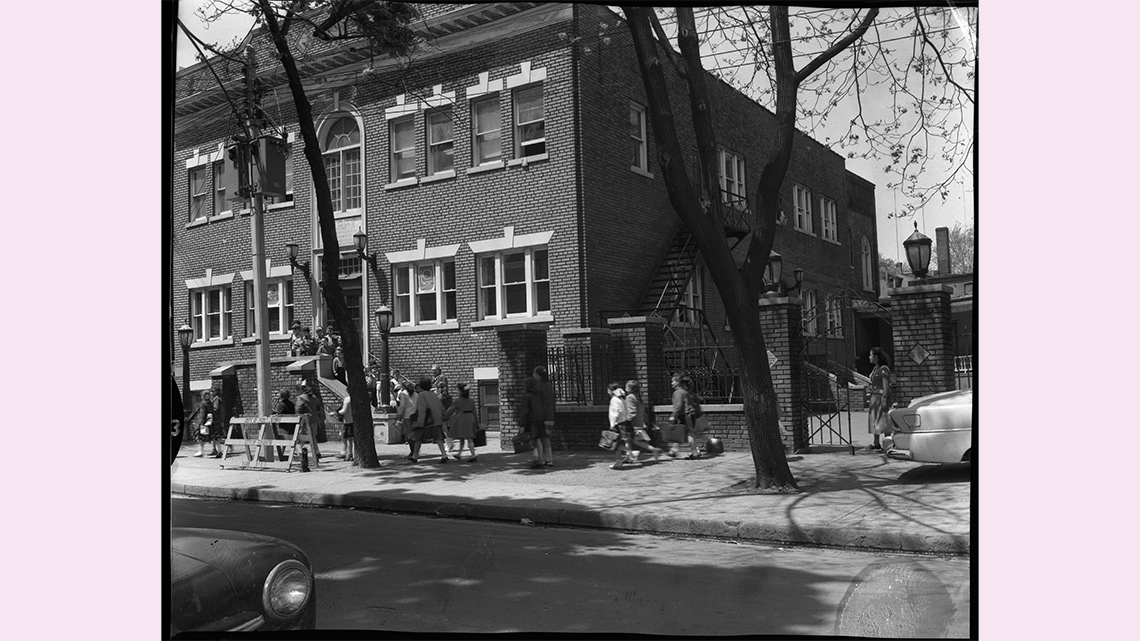
Eitz Chaim School, Toronto
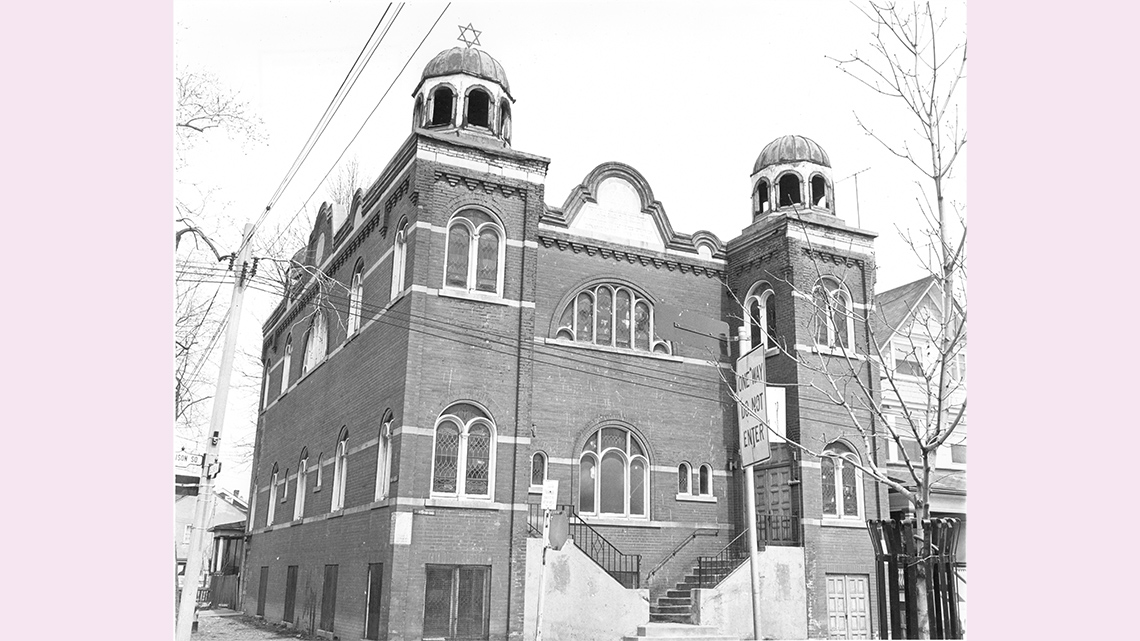
Kiever Synagogue, Toronto
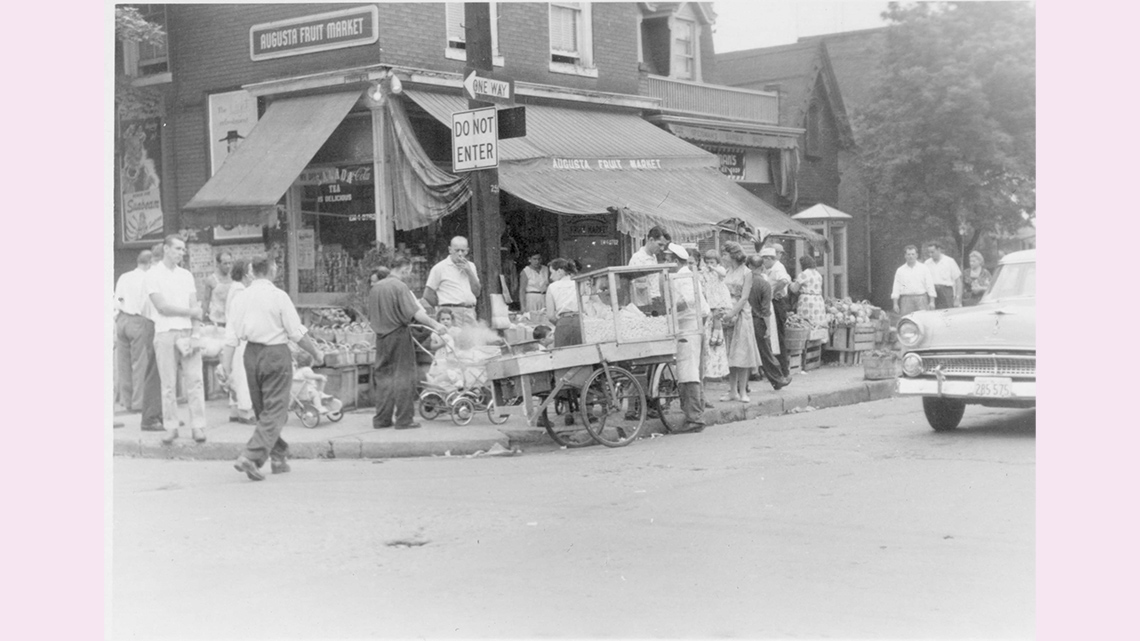
Kensington Market, Toronto
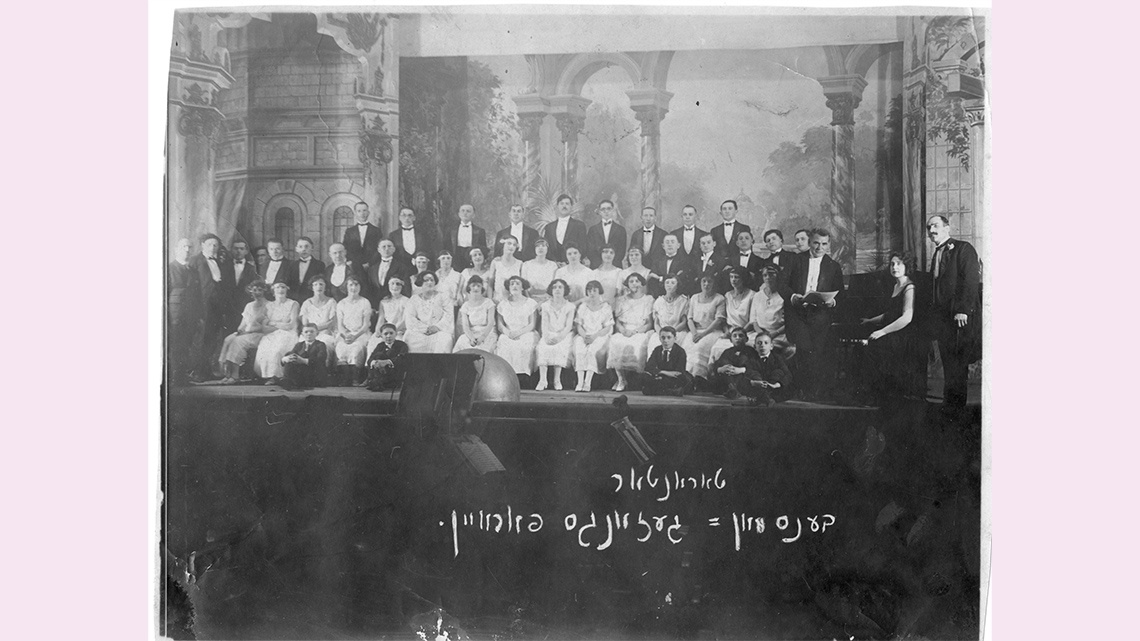
The Standard Theatre, Toronto

Connections
Connections to community
In a notebook or using another method of your choice, answer the following questions. If possible, share your thoughts with a partner.
- Why are places such as these important to a community?
- Can you think of any other places that are important to a community?
- What places are important to your community?
This learning activity is about the power of community. Among other things, you will learn about the creation of Mount Sinai Hospital in downtown Toronto, Ontario. You will discover the hospital’s importance to the Toronto Jewish community, and the small group whose vision and determination brought this hospital to life.

Jewish Canadians settling in Canada
Before we start exploring the Jewish experience in Canada, let’s look at some key terms.

Key terms
Jewish Canadians began immigrating to North America from Europe before Canada was officially a country. Jews began to settle in the colony of Lower Canada (now the province of Quebec). By 1768, Canada’s first synagogue had been built in Montreal. Jews also settled in Upper Canada (now the province of Ontario). The first Ontario synagogue was established in Toronto in 1856.
From the 1880s to the start of World War I in 1913, many Jews fled Europe to escape antisemitism.
Learning through videos
You will now explore two video clips to learn more about the Jewish experience in Canada.
Video clip 1: Settling in Canada
Watch the following video clip to learn more about early Jewish immigration to Canada.
Check your understanding
Select the correct answer, then press Check Answer to see how you did.
Video clip 2: Kensington Market
Watch the following video clip to learn about the second Jewish community that developed in Toronto, near the neighbourhood now known as Kensington Market.
Check your understanding
For each sentence, select the missing words from the drop-down menu. Press Check Answer to see how you did.
Reflecting on community

Shared values and traditions play an important role in shaping a community’s identity. Like many other communities, Jewish communities have religious and cultural practices that are unique to them and contribute to their sense of identity. As Jewish Canadian communities grew, they built organizations and institutions that met the needs of their community and their identity. The images you looked at in the Minds On section are examples: schools, synagogues, markets, and theatres.
Antisemitism in Canada

You have seen that antisemitism was one of the factors that pushed many Jews to leave Europe and start new lives in Canada. Sadly, many Jewish immigrants also experienced antisemitism in their new country.
Examples of antisemitism
What did antisemitism look like in Canada in the early 1900s?
- Many industries or businesses did not hire Jews.
- Universities and other professional schools discriminated against Jewish people (did not allow them to enroll).
- There were no Jewish judges, and most law firms would not hire Jewish lawyers.
- School boards hired very few Jewish teachers.
- In some professions – such as medicine, engineering, and architecture – Jewish people had to hide their identity.
- Many places – such as social clubs, golf courses, resorts, and beaches – were not open to Jews.
Discrimination was part of the Jewish experience in Canada. We are going to explore one particular kind of discrimination: medical discrimination in the early 1900s. But first, let’s look at an important distinction.
Primary source vs. secondary source
Press the following tabs to learn about the distinction between primary and secondary sources.
A primary source is material created by someone who had a direct connection, or a firsthand account, of events at the time that they happened.
Here are some examples of primary sources:
- artifacts like a tool or artwork
- a diary
- a photograph
- an autobiography or memoir
- an interview
A secondary source is a secondhand account, often created after the event or time period being studied. Secondary sources are usually created by people who have analyzed primary sources, and they include some sort of analysis or judgment about the topic or period.
Here are some examples of secondary sources:
- a book or article written by a historian
- textbooks
- documentaries
Check your understanding
Are the following items examples of primary or secondary sources? Select the correct answer, then press Check Answer to see how you did.
Medical discrimination
Throughout Toronto, hospitals and medical practices had a strict “no-Jews” hiring policy. Toronto’s Jewish community struggled to find healthcare where they could communicate in the same language as the doctors (most Jewish immigrants at the time only spoke Yiddish) and were not pressured into changing their religious practices.
Learning through documents
You will now examine two documents about medical discrimination against Jews in Canada.
Document 1: A photo
Examine the following photo. What predictions can you make about it? Record your thoughts in a notebook or using another method of your choice.
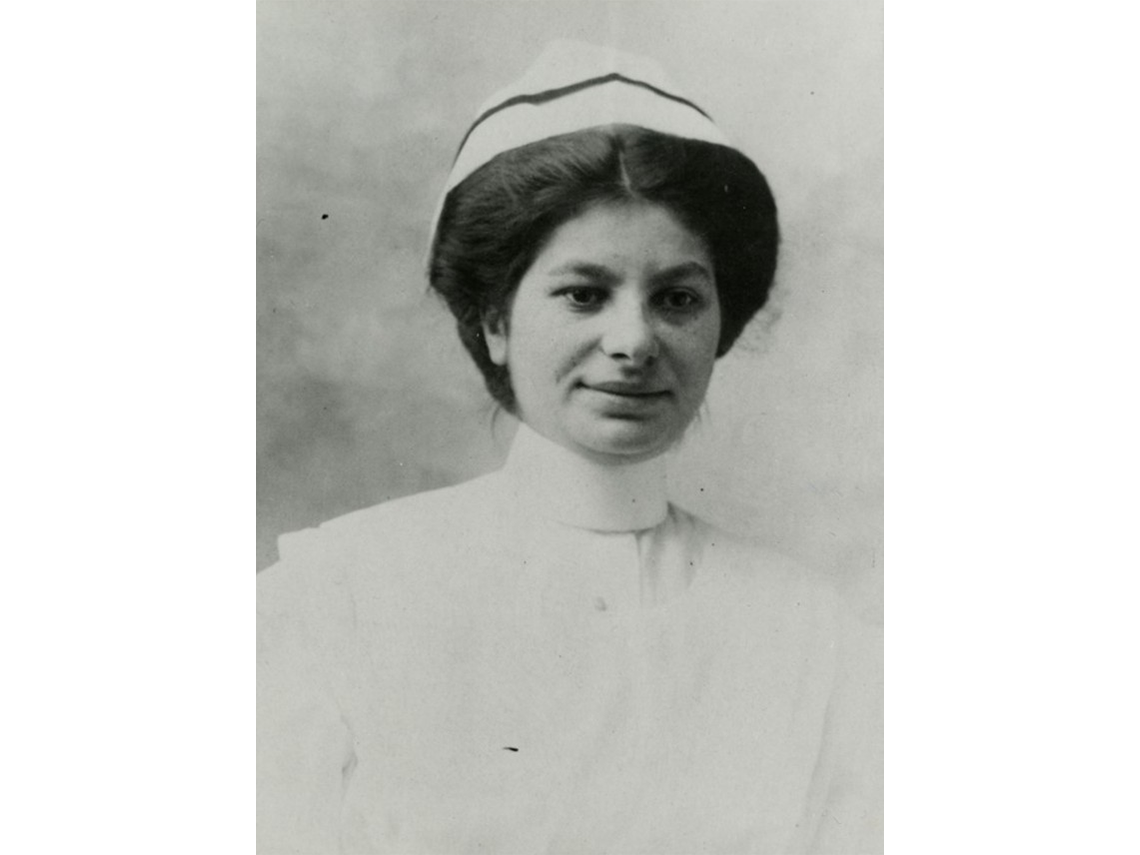
A historical black and white photograph of a woman in a nursing uniform. There is a caption at the bottom of the photograph that states, 'Ontario Jewish Archives.'

Pause and Reflect
Making predictions
After examining the photo, answer the following questions in your notebook, or using the method of your choice.
- Is this photo a primary source or a secondary source? Explain.
- What information does the photo give us about this person’s life?
Press Possible Answers to see what student Marcel wrote.
- This photo is a primary source. It is a photo of this person taken during their lifetime.
- The uniform tells us that this person was a nurse or medical practitioner of some kind. The fact that it’s an old-looking black-and-white photo tell us she lived a long time ago.
Mystery revealed!
Who is the individual in the photo? To find out, press Photo.
This is a photo of Dorothy Dworkin (née Goldstick), a Jewish Canadian nurse, businesswoman, and philanthropist who lived from 1889 to 1976.
Document 2: A firsthand account
Next, let’s read about Dworkin’s nursing experiences in Toronto. In this primary document, Dworkin looks back on her own life. It was published in The Jewish Standard newspaper on August 15, 1960.
This is the story of my life from 1907 until 1911, as it was involved with the small Jewish community of Toronto at that time.
In 1907, faced with the problem of deciding on a career, I chose one which was considered outstanding for young ladies – I decided to become a Maternity Nurse. I was most fortunate, because a peculiar set of circumstances influenced my decision. Dr. S. J. Kaufman, a young Jewish doctor from Cleveland, married to a Canadian girl, came to Toronto to set up practice.
Not having tried the Ontario Medical Board Examination, he was not permitted to do so. He therefore hit upon the idea of opening a private dispensary for Jewish patients where, in collaboration with a few local physicians, he would be in charge. This dispensary was a great boon to the hordes of Jewish immigrants arriving from all parts of Europe. They could not speak English and could not make themselves understood at the outpatient clinics of the local hospitals; they could not afford the $1 fee of the private physicians and Dr. Kaufman charged only fifty cents in his clinic.
As a maternity nurse, Dworkin was very aware of the female experience: “In those days women were terrified of hospitals, especially if they could not speak English.” She tells the story of one terrified pregnant woman, living in poverty, who had been in labour at home for two days:
Finally, with the help of two devoted members of the Maternity Aid Society – Mrs. Pasternak and Mrs. Bockneck – I persuaded her to go to hospital. The ambulance was called, the patient was on the stretcher – but at the last minute she panicked. She would not leave her home. Her baby came quickly and with the assistance of these dedicated ladies I delivered the child.
Connections
Identifying barriers
According to Dworkin, what were some of the barriers that prevented Toronto’s Jewish population from accessing medical care?
Write your answer in your notebook, or record your thoughts using another method. Then press Barriers to see some possible answers.
Barriers:
- unable to afford medical care
- afraid of hospitals
- unable to communicate with medical professionals in own language
A solution to exclusion and discrimination
Creating a Jewish hospital was one solution to the problem of medical discrimination.
Enter a group of Jewish women known as the Ezras Noshem Society. These women were philanthropists who wanted to improve the lives of the members of their community. They started to collect small donations to realize their dream of a hospital for the Jewish community.

Listening: Authentic voices
To learn more, you will listen to an audio clip from a podcast called Frontiers of Care: Mount Sinai Hospital – A Story of Firsts. In this clip, you will hear the voices of Lillian Gollom and Dr. Minnie Cohen, which are used with permission from the Ontario Jewish Archives.
Podcast Mount Sinai
After listening…
One of the voices you heard was that of Lillian Gollom, a member of a charitable group called the Sinais. In the following statement, she describes The Hebrew Maternity and Convalescent Hospital, which the women succeeded in funding:
It was only a two-storey building, very poorly equipped. It was an old house. They had nothing really in there. There was no operating room. They didn't have an elevator. And when a patient had to be operated on, they put him on the stretcher and carried and walked him up the stairs to the operating room.
In a notebook or using another method of your choice, reflect on the following questions:
- Are Lillian Gollum’s words a primary or a secondary source? Explain.
- What impact did it have on you to hear the words of two women who were alive at the time and witnessed the events?
Press Possible Answers to see what student Marcel wrote.
- These words are a primary source. Lillian Gollum was alive during the time period and lived through these events.
- For me, hearing the actual voices of people who witnessed this was very moving. These women’s accounts are very authentic and credible, as they were actually there.
A success story
The efforts of the Ezras Noshem Society bore fruit. These women raised funds in their community and eventually opened a hospital to serve the growing Jewish community. This hospital eventually became Toronto’s well-known Mount Sinai Hospital.
The story of the creation of Mount Sinai Hospital in Toronto is a great example of a community working together to better their lives. The people are what make a community and hold the power to provide safety, trust, and support. Though it takes time, change can be achieved; small actions add up in the long run if the will is there.

Did You Know?
Mount Sinai today
Today, Toronto’s Mount Sinai Hospital is a respected and renowned hospital. It serves a very diverse community, and aims to be as inclusive as possible. The hospital has many different interpreters on staff so that patients of all languages and backgrounds can communicate freely with medical personnel.
Helping communities: Modern examples
The story of Mount Sinai hospital is a remarkable example of people working together to help their community. To see modern examples of people taking action to better their community, press the following tabs.
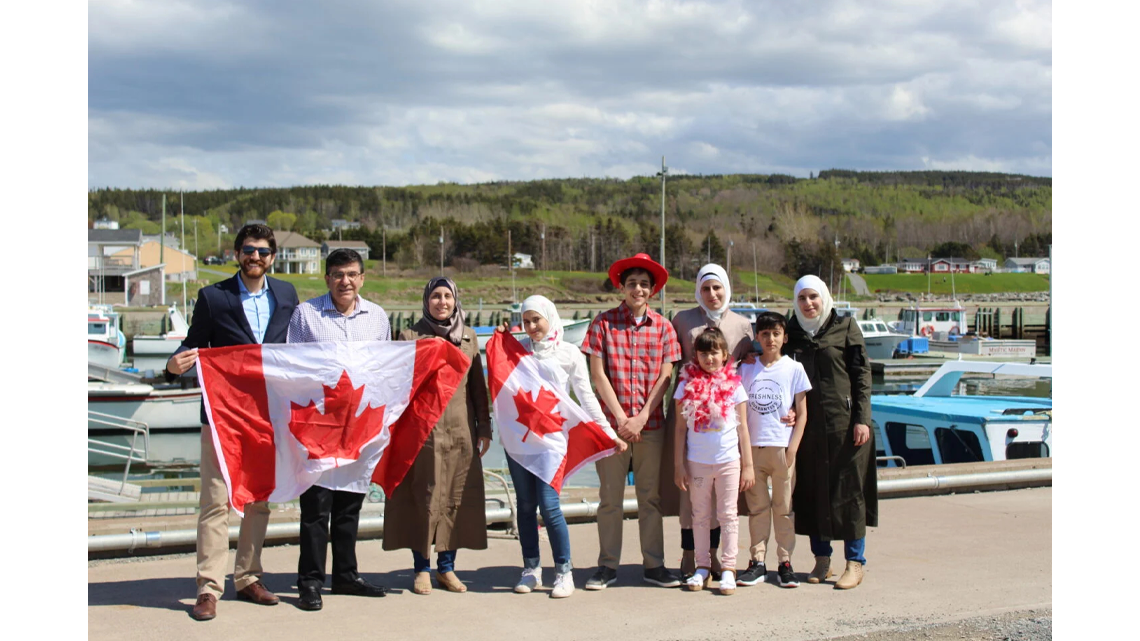
The Nova Scotia town of Antigonish came together to support the Hadhads, a Syrian refugee family establishing a new life in Canada. The town helped the Hadhad family build a small store where they could sell their signature chocolates, and even helped them sell out their inventory at a local festival. With the town’s support, the Hadhads have built a successful international chocolate business. They now support other refugees by employing them at their factory or donating proceeds of sales to charitable causes.
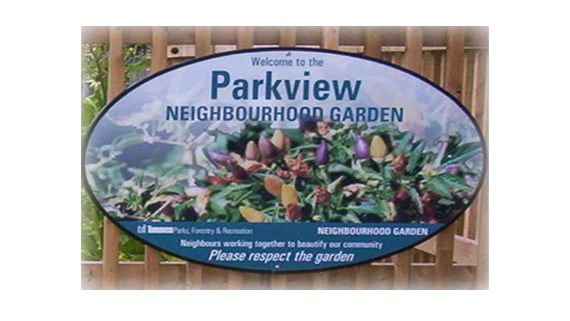
Officially started in 2009, the Parkview Neighbourhood Garden takes its name from the Toronto community of Parkview. This volunteer-run community garden and market teaches members of the community about sustainable growing. The organization also donates some of their produce to local food banks and community kitchens and sells some of their produce to share the profits with local charities.

It was 2020, at the start of the COVID-19 pandemic, in the Greater Toronto Area. An eight-year-old girl and her dad decided to help the seniors on their street by buying their groceries and delivering them to their door. They then took to social media to offer assistance to more seniors and those with health restrictions and disabilities in their community. These acts of kindness inspired others in their networks to do the same in their own communities. From this beginning, The Good Neighbour Project has grown into a charitable organization that serves many communities across Ontario.
Summarizing the main points
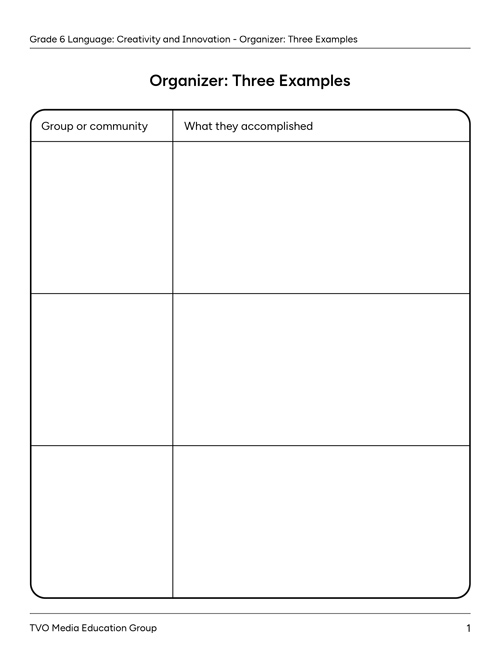
To summarize the main points of these three examples, complete the fillable and printable Organizer: Three Examples in your notebook or using the following document. If you would like, you can use speech-to-text or audio recording tools to record your thoughts.
You have just done a lot of work on communities. Now is a great time to take a break before we turn to grammar!

Student Wellness
Take a break!
Time for a body break! If possible, stretch your body and move around your space.
Grammar time!

Prepositional phrases
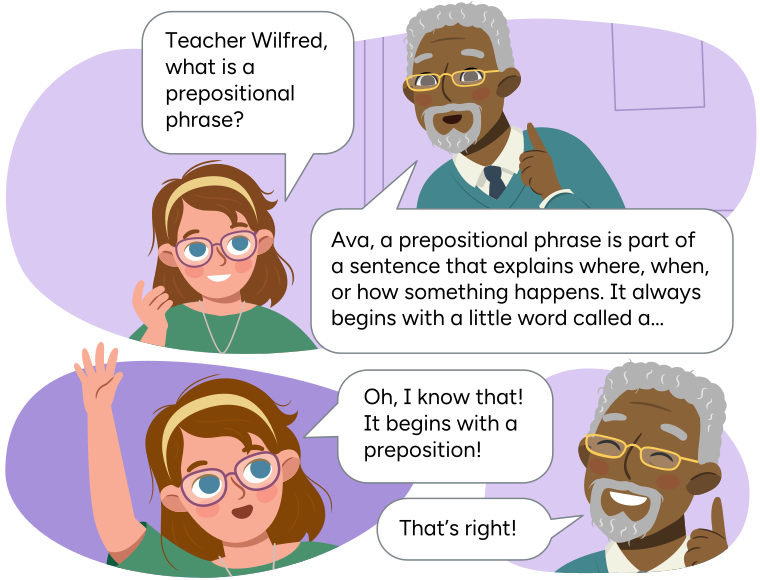
Dialogue between teacher and student.
Student: Teacher Wilfred, what is a prepositional phrase?
Teacher: Ava, a prepositional phrase is part of a sentence that explains where, when, or how something happens. It always begins with a little word called a…
Student: Oh, I know that! It begins with a preposition!
Teacher: That’s right!
A preposition is a small word that introduces a phrase. We can divide prepositions into different types. Here are two common types:
- Location/place: on, behind, in, under, beside, above
- Time: before, after, during, at, on, till, since
To form a phrase, place a noun or pronoun after the preposition. This noun or pronoun functions as the object of the preposition.
Analyzing a sample sentence
Let’s break down the following sentence:

Can you identify the prepositional phrase in this sentence? Let’s take a closer look:
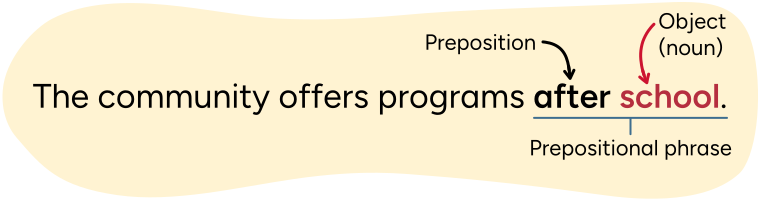
Press the following tabs to see more examples of two types of prepositions, along with sample phrases.
| Preposition | Sample phrase (in bold) |
|---|---|
| on | The book is on the table. |
| behind | The dog is behind the curtain. |
| in | The ball is in the box. |
| Preposition | Sample phrase (in bold) |
|---|---|
| before | I’m always grumpy before breakfast. |
| after | I’ll see you after soccer practice. |
| during | Tomas always talks during class. |
Check your understanding
For each sentence, select the missing preposition from the drop-down menu. Press Check Answer to see how you did.
Now read the following sentence:
Sameen bakes cookies before class.
Using the drop-down menu, identify the different parts of this sentence.
For further practice with prepositions, try the following multiple-choice question. Select the correct answer, then press Check Answer to see how you did.

Putting it all together
Let’s review the important terms that you have learned in this learning activity.
Match game!
For each term, select the corresponding definition.
Now let’s review two other terms that you learned in this learning activity:
- primary source
- secondary source
Sort it out!
Are the following items examples of primary or secondary sources? Place each card into the right category. Use the arrow buttons to navigate between cards.
Research: your turn!

In both the past and present, Canadian citizens and organizations have worked together to meet the unique needs of people and communities. Your final task will be to research an example of your choice.
Before you begin your research, read the following section to learn about how to do internet research safely and effectively.
Research safety
When doing research on the internet, it is important to stay safe and stay focused. You can use the acronym TRUST to help guide you as you do your research.
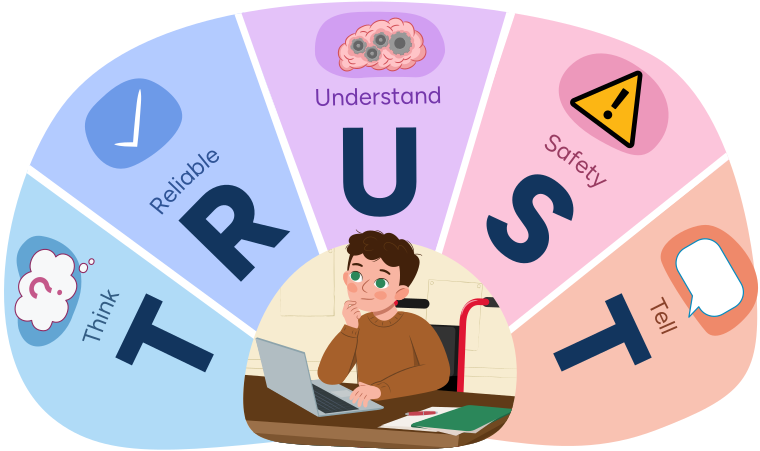
Press the following tabs to learn more.
Think about your topic and develop specific questions to get better research results.
For example, if you’re working on the topic of recycling, you might start with a general question and make it more specific before beginning your research.
- General question: Why is recycling good for the environment?
- Specific question: How does recycling help protect marine wildlife?
Be patient while doing your research. Go through each website carefully and take notes using a graphic organizer or notebook. Record the websites used for specific information – it’s important to give credit to the creator of the content.
Consult more than one resource to help you determine if the information you gather is accurate and true.
Remember, research can take time. It helps to be focused and calm! Taking a break can refresh our thinking and help us process new information.
It’s important to use reliable sources so that you can put together accurate and up-to-date information about your topic.
Websites ending with .com, .org, and .net can be purchased and used by anyone.
The ending .org is usually used by non-profit organizations, which may be trying to persuade rather than educate.
Websites ending in .edu are reserved for colleges and universities. Canadian websites have a .ca ending.
Consider the following questions when you are doing your reliability check. You might also ask a trusted adult or a peer for help if you are uncertain about a website.
- When was the resource published? (This might help you determine if the information is current.)
- Who created the resource/website? What is their educational background or work experience?
- Who is the intended audience?
- Who benefits from this information being shared?
- Whose perspectives are represented? Whose perspectives are missing?
Do you understand all the words on the site? Can you decode their meaning?
Does what you’re reading make sense?
If not, it’s okay. Consider trying a different source. It’s important for you to understand the information that you read so that you can put it in your own words.
It’s important to stay safe while doing online research. If a website asks you for any personal information, close it and try a different website.
Personal information could include asking for your full name, email address, phone number, home address, photos, or school name. Do not provide any personal information and close the website.
Does the site have pop-up windows? These windows usually ask the user to click to “win a prize” or “check out information.” Do not click on the pop-ups and close the website.
Throughout the research process, feel free to check in with a peer or trusted adult.
If there is anything specific that makes you feel uncomfortable or worried while you are doing your research…
- pause and take a break
- speak to a trusted adult
Your research task
You are going to research an example of a person or organization whose mission is to help and support others.
Here are a few suggestions to consider:
- A person in your community who exemplifies community service. For example, a long-standing volunteer for a school, community centre, charity, or sports organization.
- An organization in your local community that serves the needs of community members. For example, a food bank, a community garden, or an organization that gives opportunities to persons with disabilities.
- An international organization that supports people and communities needing assistance. For example, Doctors Without Borders, Ryan’s Well, Plan International Canada, and Oxfam Canada.
Organizing your research
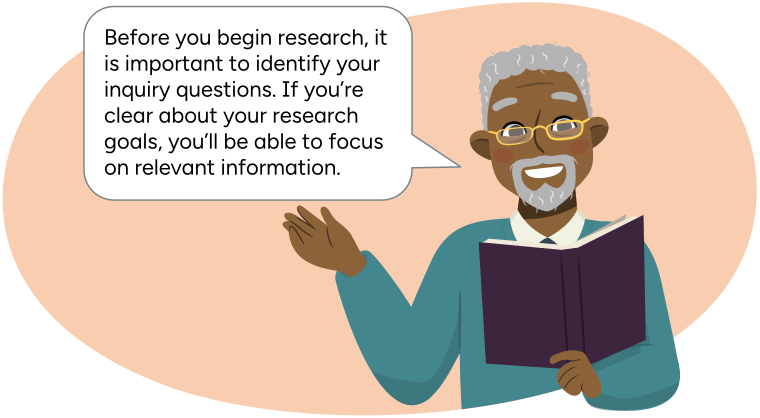
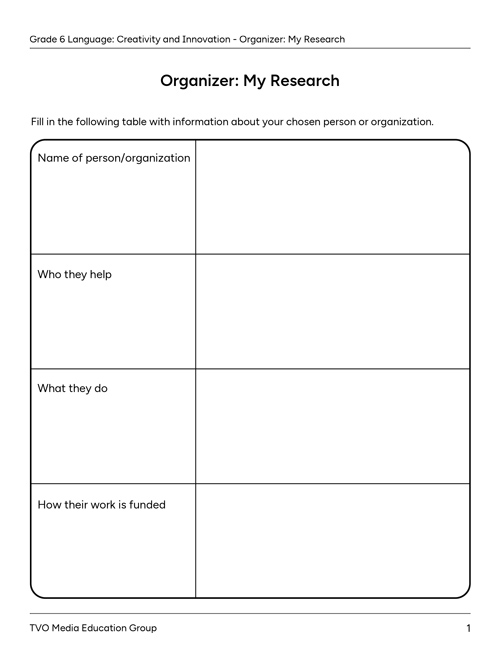
For this research task, we will supply a graphic organizer to help you structure your inquiries and record your findings.
Complete the fillable and printable Organizer: My Research in your notebook or using the following document. If you would like, you can use speech-to-text or audio recording tools to record your thoughts.
Once you have finished, use the following checklist to evaluate your work.
Evaluating my work

Pause and Reflect
Thinking about research methods
In a notebook or using another method of your choice, reflect on the following questions:
- How did using the graphic organizer support your research and learning?
- Would you use this method again for your next inquiry task, or would you select another method?
Reflection
As you read through these descriptions, which sentence best describes how you are feeling about your understanding of this learning activity? Press the button that is beside this sentence.

I feel...
Now, record your ideas using a voice recorder, speech-to-text, or writing tool.