Learning goals
We are learning to…
- analyze informational texts
- express our voice and opinion
- apply the writing process to expository texts
Success criteria
I am able to…
- gather reasons for and against an issue from informational texts
- identify and express my opinion on a topic supported by evidence
- draft, revise, edit, and publish a structured persuasive paragraph

What would you do?
Quick, answer the following question!
If you were offered the chance to go to space, would you say yes?
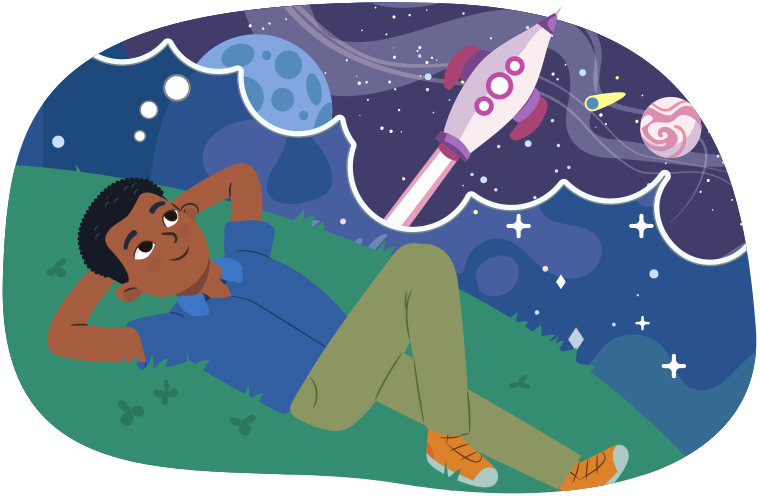

Space tourism
Have you ever heard the term space tourism?
Think about what the term might mean. Jot down your thoughts, then press Definition to check your answer.
Space tourism is a new industry that attempts to make space exploration available to people who are not astronauts.
Watch the following video to learn more about space tourism.

Pause and Reflect
Post-viewing: Reflections
The video identified three big issues regarding space tourism. Record your thoughts on these three questions:
1. Expense: Will space tourism always be so expensive and limited to people with wealth?
2. Environment: What impacts would space tourism have on the environment?
3. Science: Would space tourism advance scientific discovery, or just provide entertainment?
Can you think of any other questions about space tourism that people should consider? If possible, share your thoughts with a partner.
Space exploration: Pros and cons
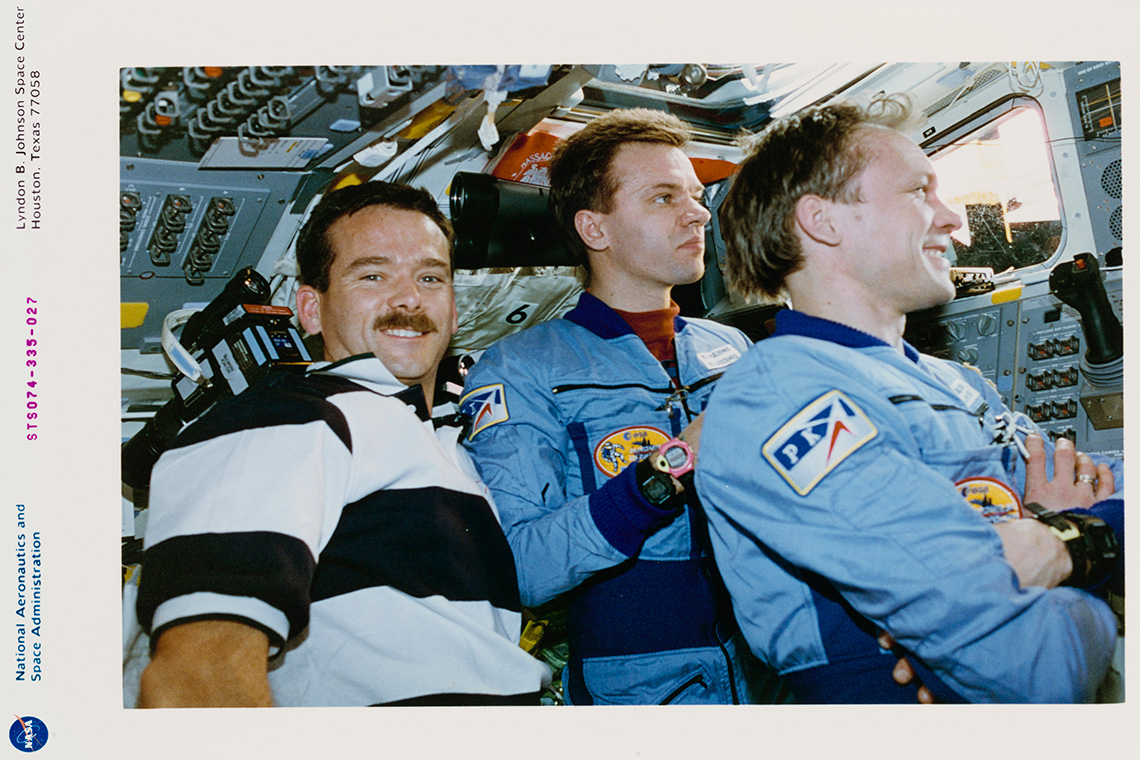
Some of the questions and concerns about space tourism also apply to official government space programs, like the CSA (Canada Space Agency) and NASA (National Aeronautics and Space Administration). Even when carried out by trained astronauts, space exploration has pros and cons.
In this learning activity, you will explore arguments for and against space tourism. You will also develop your ability to express an opinion on a topic in a structured paragraph that is supported by evidence.
Pause and Reflect
Your opinion
When it comes to space tourism, people have a variety of opinions. Where do you stand? Check off the box that best represents your personal view.
Space tourism: What’s your position?
Why did you choose the answer you did? Using the method of your choice, record your thinking. We’ll return to this question later in the learning activity!

Space tourism
Space tourism is a form of space exploration. This industry is being developed by private companies, mostly independently of international space agencies like the CSA or NASA.
For example, on July 20, 2021, Amazon founder Jeff Bezos was one of four private citizens who took a trip to space.
Many commercial space tourism flights allow people to experience extraordinary views between outer space and Earth. Passengers also experience a few minutes of microgravity: they float and bounce around the spacecraft weightlessly because of the weakened force of gravity.
At this time, two types of commercial spaceflights are available. Both are very expensive, and both go only to suborbital space (they do not orbit the Earth):
- Virgin Galactic flight: passengers go approximately 53 miles above sea level
- Blue Origin flight: passengers go approximately 62 miles above sea level
Flights are between about 10 to 90 minutes long. Passengers do get to experience “the overview effect” since they travel just past the boundary between space and Earth.
Press Overview Effect to more about this experience.

The overview effect is a mind-blowing experience triggered by seeing planet Earth from space. People report feeling intense emotion and awe at the planet’s beauty. They also feel deeply connected to the Earth and its inhabitants.

Did You Know?
Inspiration4: A spaceflight for charity
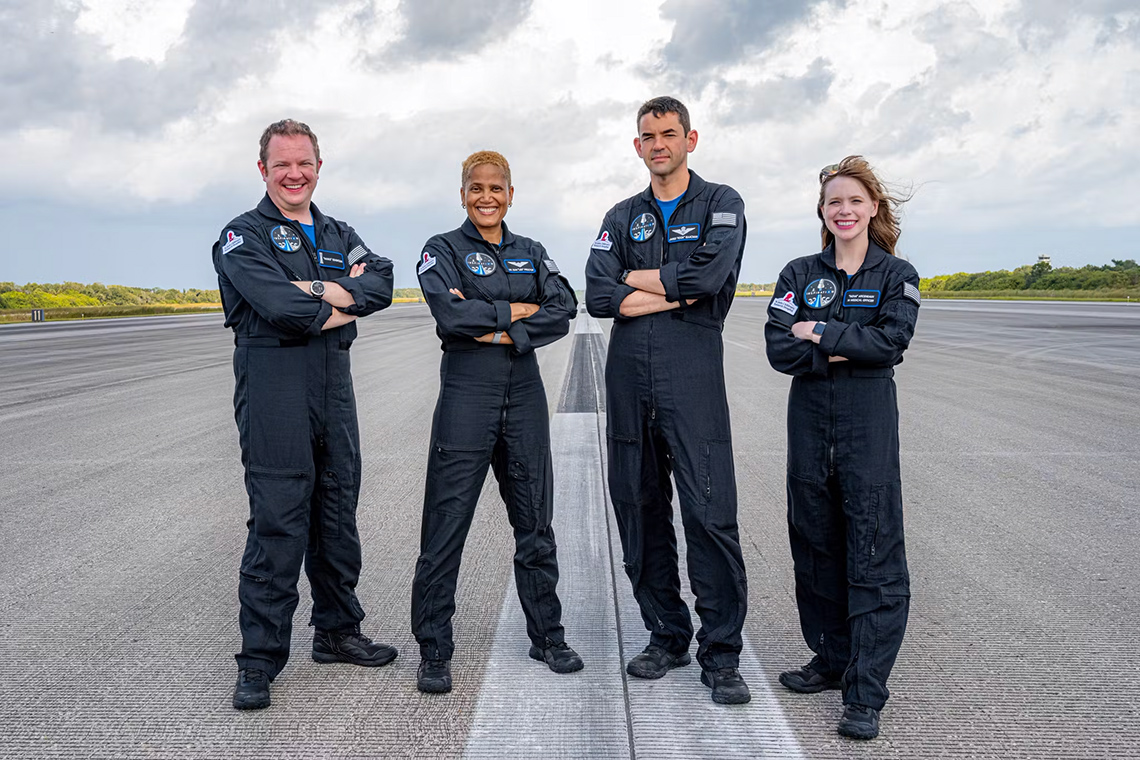
The all-civilian crew of Inspiration4. Jared Isaacman is second from right.
In 2021, Inspiration4 became the first human spaceflight to orbit Earth with only private citizens on board. The mission used a SpaceX rocket and was funded by a wealthy private citizen, Jared Isaacman, CEO of a company called Shift4 Payments. Isaacman also served as mission commander.
Inspiration4 raised more than $250 million for St. Jude Children's Research Hospital in Memphis, Tennessee.
Jared Isaacman is planning to fund future missions that are even more ambitious.
Thinking about the issue

When you are making a decision or forming an opinion, it is important to weigh the pros (advantages) and the cons (disadvantages).
Using a graphic organizer to take notes
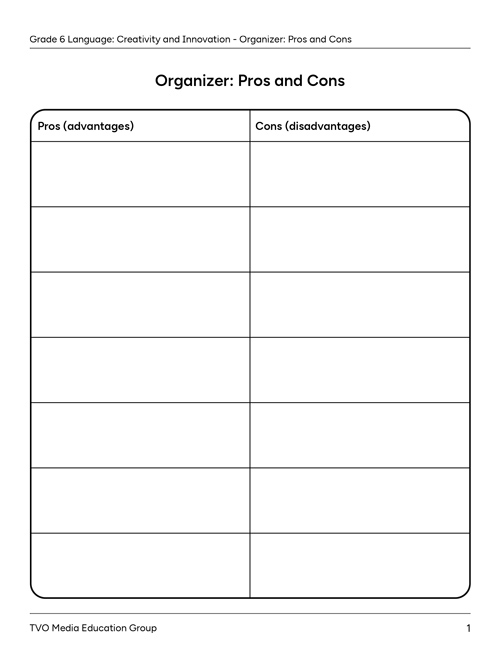
You are about to read information about the advantages and disadvantages of space tourism. As you read, take notes in your own words. You can use the graphic organizer provided or another method of your choice.
Complete the fillable and printable Organizer: Pros and Cons in your notebook or using the following document. If you would like, you can use speech-to-text or audio recording tools to record your thoughts.
In favour of space exploration
Press the following tabs to learn about the arguments for space tourism.
Space exploration can increase our knowledge of the Earth and the universe. Humans have a natural desire to understand the world around them and to answer big questions like “How did we get here?”
Exploring space has unlocked some of Earth’s mysteries. Specifically, space programs have helped humans learn about the following:
- long-term changes in the surface of the Earth
- changes in temperature in the atmosphere
- how flames spread and move
- the forces, properties, and interactions of different fluids
With space tourism, more flights to space means more opportunities to conduct research and to make that science more accessible. Research carried out in space is incredibly expensive. If private individuals and organizations pay to conduct research in space, that would mean countries with space programs don’t have to spend as many public dollars.
The “Inspiration 4” mission also benefitted research indirectly by raising a huge sum of money for St. Jude Children's Research Hospital in Memphis, Tennessee.
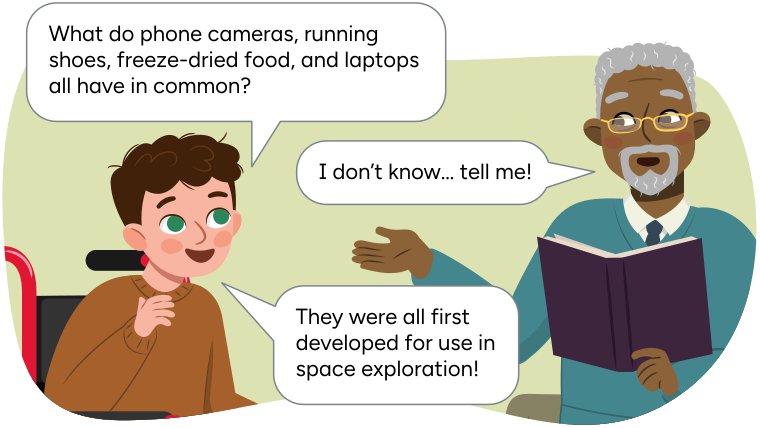
Student: What do phone cameras, running shoes, freeze-dried food, and laptops all have in common?
Teacher: I don’t know… tell me!
Student: They were all first developed for use in space exploration!
Space exploration is important because it advances technology. The technologies created in order to explore space have been used to improve life on Earth as well.
Just imagine… What other inventions and technology could be developed as a result of continued space exploration?
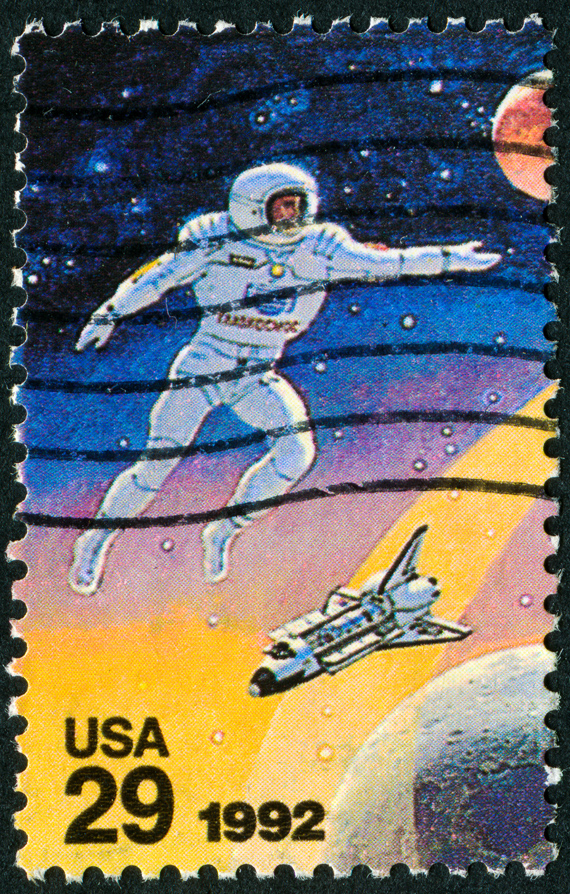
Space exploration is the next big adventure for the human race. Simply put, it is thrilling and inspiring. It is human nature to push the boundaries of what we can see and do, and where we can go. In the past, space exploration has only been available to a select few who meet the educational and physical requirements for becoming an astronaut. Space tourism opens up the incredible experience of space travel to a wider range of people.
Against space exploration
Press the following tabs to learn about the arguments against space tourism.
Space tourism is incredibly expensive. Some 90-minute suborbital flights have been reported to start at $450,000. Theoretically, space tourism makes outer space accessible to the general public. However, the truth is that only very wealthy individuals can afford it. This makes “accessibility” a weak argument. Is space accessible if only an elite group of people get to experience it?
The carbon footprint of launching vessels into space is large. A spaceflight causes very high emissions, approximately 100 times more than an airplane flight. Those emissions damage our ozone layer. If space tourism becomes more popular, the level of emissions would increase significantly.
It is difficult to pin down the exact amount of pollution commercial spaceflight may cause. This depends on various factors such as the type of fuel used, the energy required to manufacture that fuel, and the soot that is released.
In a 2010 study, The Aerospace Corp. in El Segundo, California estimated that the soot produced by releasing approximately one thousand space tourism flights could cause Antarctica to warm by almost one degree Celsius.
Space junk
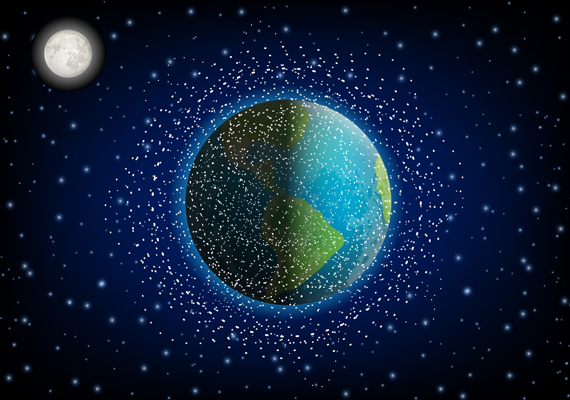
Illustration of Earth surrounded by space debris
A second environmental hazard is space junk. There are millions of pieces of human-made debris in space, ranging from large items (like parts of old rockets or satellites) to microscopic flecks of paint. Reaching speeds of up to 18,000 km per hour, space junk is a hazard to people, spacecrafts, and machinery such as satellite technology.
Space travel and exploration are risky because many things can go wrong, endangering the lives of the people on board the spacecraft. Experts expect that with untrained people going to space for the sake of entertainment, this risk will increase.
In addition to accidents that can happen in space, space is simply not a natural place for humans to live. There are harmful radiation levels at times, no gravity, no air, and often extreme high and low temperatures. Astronauts must have excellent health and physical fitness to qualify for space programs. They also require time and support as their bodies adjust to life back on Earth. Canadian astronaut Bob Thirsk explains: “In the same way that every organ system needs to adapt to weightlessness, every organ system needs to re-adapt after a long period of time back to an Earth environment…The rule of thumb is for every month in space, it takes two months for the bones to recover.”
Now that you have considered the pros and cons of space tourism, has your opinion changed or remained the same? You will now revisit the question asked in the Minds On section.
Pause and Reflect
Circling back
Where do you stand on space tourism? Check off the box that best represents your personal view.
Space tourism: What’s your position?
Has your answer changed? Has it remained the same? Using a method of your choice, record any new thinking or any information to further support your initial decision.
Expressing an opinion
Now that you have decided whether you are for or against space tourism, you will plan and write a persuasive paragraph that expresses your personal opinion.
Video: Writing a paragraph
Before you begin, let’s explore a video that reviews how to organize our thoughts into a paragraph. In this video, Teacher Wynne compares writing a paragraph to… a hamburger!
Watch the following video to learn more.
Check your understanding
Review the main ideas from the video by completing the following matching activity.
The activity is about your paragraph on space tourism. For each paragraph section, select the corresponding description.
Steps: Creating your paragraph
To plan your paragraph, complete the fillable and printable Organizer: Persuasive Paragraph in your notebook or using the following document. If you would like, you can use speech-to-text or audio recording tools to record your thoughts.
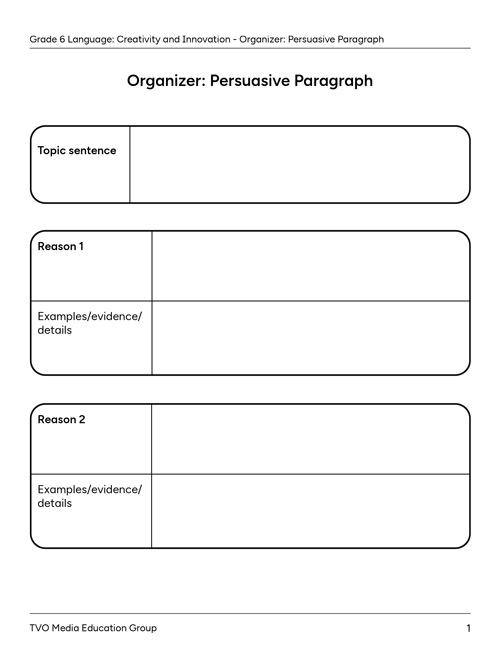
Press the Activity button to access the Organizer: Persuasive Paragraph.
Activity(Opens in a new tab)Press the following tabs to learn more about the steps for planning your paragraph. These steps will take you through filling out the graphic organizer.
Begin planning your paragraph with your topic sentence. This is also called the introduction. As Teacher Wynne mentioned, a topic sentence can be one sentence or two. For example, you might begin with a statement or a question about your topic, followed by your opinion on the topic.
Here is a sample topic sentence: “Have you ever dreamed of going to space? Space tourism can help you make your dream a reality, and there are several reasons for you to consider it!”
The next step in planning your paragraph is selecting three strong main ideas to support your opinion. Each of your ideas must be explained and supported by details.
In the following video, teachers Shahana and Erika model how to use supporting details:
Comparing paragraphs
In Version 1 of the paragraph, the main ideas are in bold, and the supporting details are highlighted. In Version 2, the supporting details have been stripped out. Compare the two paragraphs:
| Exercise is an important part of being healthy. First, exercise is a fun way to stay active. For example, jogging, swimming and hula dancing are all enjoyable activities that help us stay fit. Next, exercise helps to prevent heart disease. In a March 2012 online article, it states “it only takes 30 minutes a day to minimize your chances of heart disease.” Finally, exercise helps you feel energized. If exercise was not an important part of your life, you would most likely feel lazy, unproductive and you would have little energy to complete your daily tasks. Therefore for many different reasons, exercise is beneficial both physically and mentally. So stay energized! | Exercise is an important part of being healthy. First, exercise is a fun way to stay active. Next, exercise helps to prevent heart disease. Finally, exercise helps you feel energized. Therefore for many different reasons, exercise is beneficial both physically and mentally. So stay energized! |
Which paragraph do you think is more effective? Why?
When you have finished, press Sample Answer.
Version 1 is more effective because it supports the main ideas. This makes it more impactful and credible.
Next, plan your concluding sentence. This is also called your summary or conclusion. Did you notice that the paragraph sample in the video had a two-sentence conclusion? Just as with the introduction, a conclusion may be one or more sentences.
To strengthen your writing, use one of these transitional words or phrases to begin your concluding sentence(s) or use one of your own.
- Clearly,
- In summary,
- In conclusion,
- To conclude,
- Without a doubt,
- For these reasons,
- To sum up,
- All things considered,
You have done a lot of work on space tourism and writing paragraphs. Now is a great time to take a break before we turn to grammar!

Student Wellness
Take a break!
Time for a body break! If possible, stretch your body and move around your space.
Grammar time!

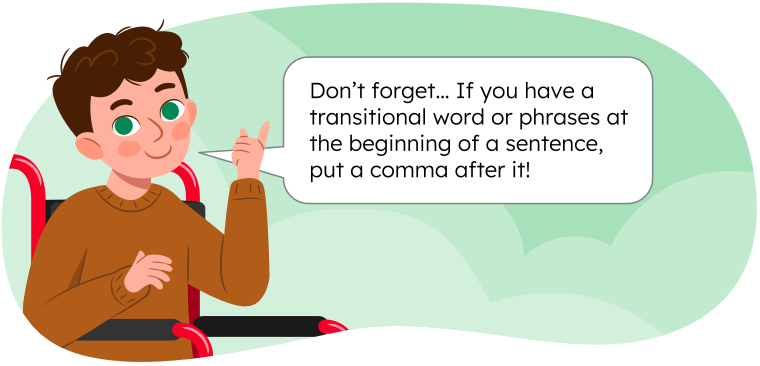
Transitional words and phrases
Throughout this learning activity, we have seen many transitional words and phrases.
Here are some common examples that you would find at the beginning of a sentence, followed by a comma:
- First,
- Next,
- Lastly,
- Furthermore,
- In addition,
- Finally,
What is the role of transitions?
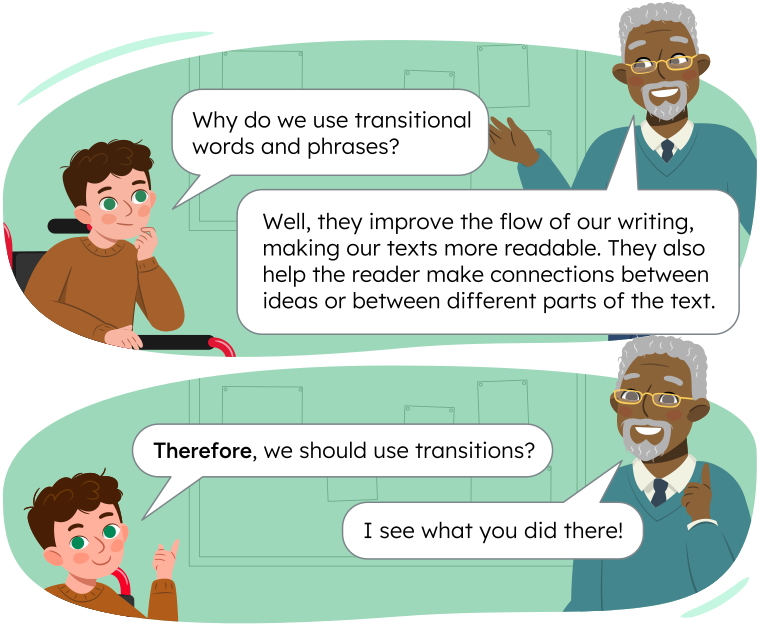
Student: Why do we use transitional words and phrases?
Teacher: Well, they improve the flow of our writing, making our texts more readable. They also help the reader make connections between ideas or between different parts of the text.
Student: Therefore, we should use transitions?
Teacher (laughing): I see what you did there!
Transitions can play many roles. They can help prove, compare, sequence, emphasize, conclude, and more!
What part of speech are transitions?
Transitional words and phrases can be formed from different grammatical structures.
Press the following tabs to learn more.
An adverb at the beginning of a sentence can serve as a transitional word. An adverb is a word that modifies a verb, adjective, another adverb, or – as in this case – a word group. Adverbs often end in “ly.”
Examples of adverbs used as transitional words:
- Therefore, space tourism is too great a risk to our atmosphere.
- Clearly, space tourism is an exciting opportunity.
- Finally, we arrive at the real issue.
A dependent clause is a group of words that contains a subject and a verb, but can’t stand alone as a complete sentence. Its job is to provide information about the main part of the sentence (the independent clause).
In these sentences, the dependent clause is in bold:
- Although there are risks, space travel is still worth it.
- Until we can ensure everyone’s safety, everyday citizens should not be flying in space.
Let’s check!
Cookies, anyone?

Hunter wants to make cookies. Help him out by putting the following steps in order.
For each sentence, select the missing transitional word from the drop-down menu. Press Check Answer to see how you did.
Add the commas!
You are going to read a series of sentences. Each one contains a transitional word or phrase, but needs a comma.
In a notebook or using another method of your choice, rewrite the following sentences, inserting a comma after the transitional word or phrase.
1. Firstly space tourism is very expensive.
2. All things considered I think space tourism is a good thing.
3. Next space tourism has many environmental considerations.
4. Finally space tourism can increase the amount of research that is conducted in space.
5. For these reasons I believe we should oppose space tourism.
When you have finished, press Check Answers.
1. Firstly, space tourism is very expensive.
2. All things considered, I think space tourism is a good thing.
3. Next, space tourism has many environmental considerations.
4. Finally, space tourism can increase the amount of research that is conducted in space.
5. For these reasons, I believe we should oppose space tourism.

Putting it all together
In the Action section of this learning activity, you planned a persuasive paragraph with a beginning, middle, and end. To consolidate your learning, you will now complete your paragraph. To do this, you will follow four steps: draft, revise, edit, and then publish.
Step 1: Draft
Draft your paragraph in cursive writing or by typing using a word-processing tool. Be sure to use formal speech and write in full sentences.

Cursive practice
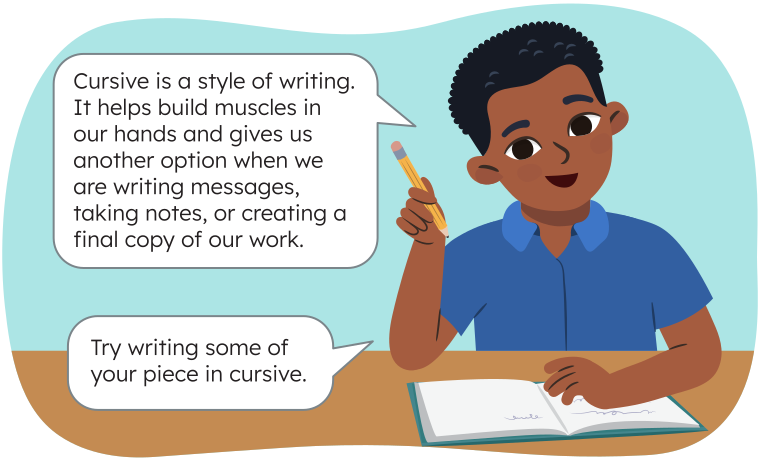
Arthur says, 'Cursive is a style of writing. It helps build muscles in our hands and gives us another option when we are writing messages, taking notes, or creating a final copy of our work.Try writing some of your piece in cursive.'
Let’s review cursive writing!
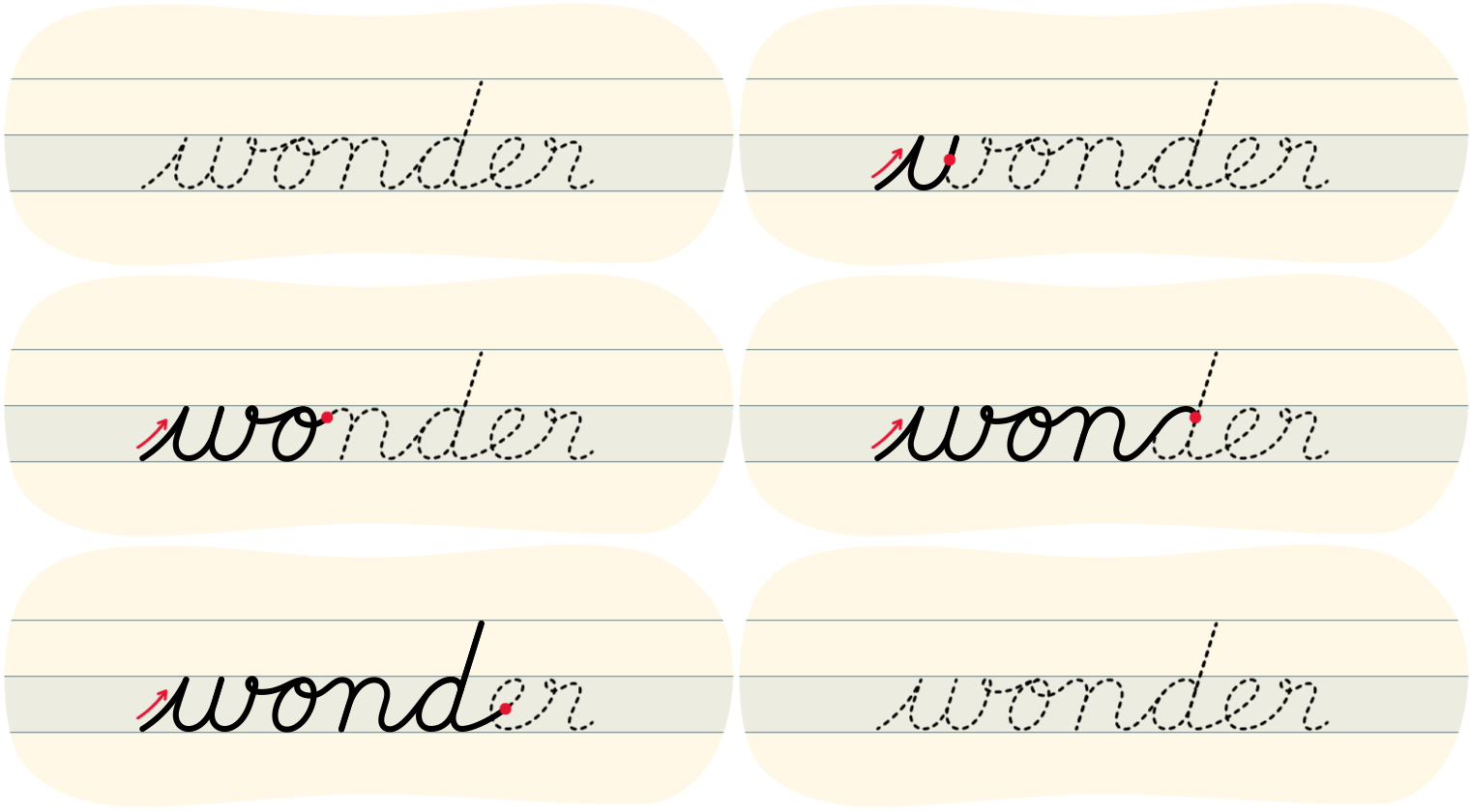
Check out the following animation of how the word “wonder” is written in cursive, then review the tips for cursive writing provided.
Tips for cursive letters
- When we write in lowercase, we always begin at the bottom.
- When we write in uppercase, we can start from the top or the bottom.
- Try to keep the pencil on the page until you are done the word.
- Try to press gently as you write so that your hand can move easily across the page.
- Take your time to make sure that you are writing clearly and evenly.
Left-handed tips for cursive writing

Explore the video on Left-Handed Tips to learn more.

Typing practice
Typing is a great skill to develop! When we need to use a computer or tablet keyboard, knowing how to type helps us…
- take notes
- respond to messages
- create final drafts of our work
Explore the following image to see what fingers are used to type each letter or number.
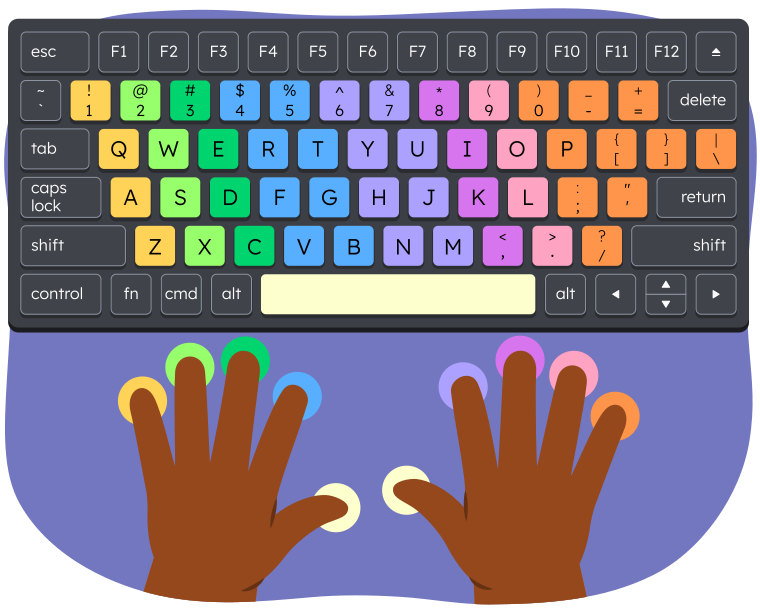
A keyboard and hands showing which fingers are used to press each key when typing.
The left pinky finger presses the keys 1, Q, A, and Z.
The left ring finger presses the keys 2, W, S, and X.
The left middle finger presses the keys 3, E, D, and C.
The left index finger presses the keys 4, 5, R, T, F, G, V, and B.
The left or right thumb presses the space bar.
The right index finger presses the keys 6, 7, Y, U, H, J, N, and M.
The right middle finger presses the keys 8, I, K, and comma.
The right ring finger presses the keys 9, O, L, and period.
The right pinky finger presses the keys 0, minus, equal, P, open bracket, closed bracket, backslash, semicolon, apostrophe, and forward slash.
We use specific muscles in our hands to type! It’s important to practise so that it becomes easier to type correctly without putting too much pressure on our hands and our wrist.
For additional typing practice, check out the game “Keyboard Climber 2”!
Step 2: Revise
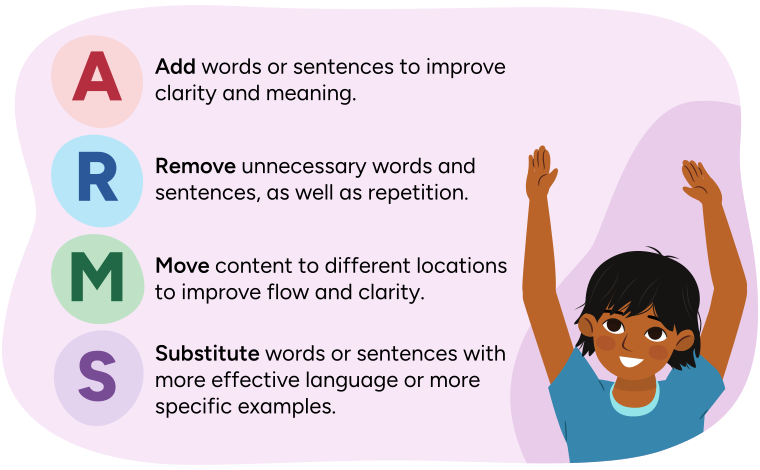
Revise your paragraph. Revising is different from editing. When revising, we change or make improvements to our writing; when editing, we correct it. The acronym ARMS reminds us of the steps involved in revising.
Transitional words
For this task, look specifically at where you can add transitional words. Here are some common ones you may find useful:
|
First, Firstly, To start, To begin with, |
Second, Secondly, Next, Furthermore, |
Third, Thirdly, Lastly, Finally, |
Step 3: Edit
Edit your paragraph. Editing means finding and correcting errors in your writing. The acronym CUPS reminds us of the steps involved in editing.
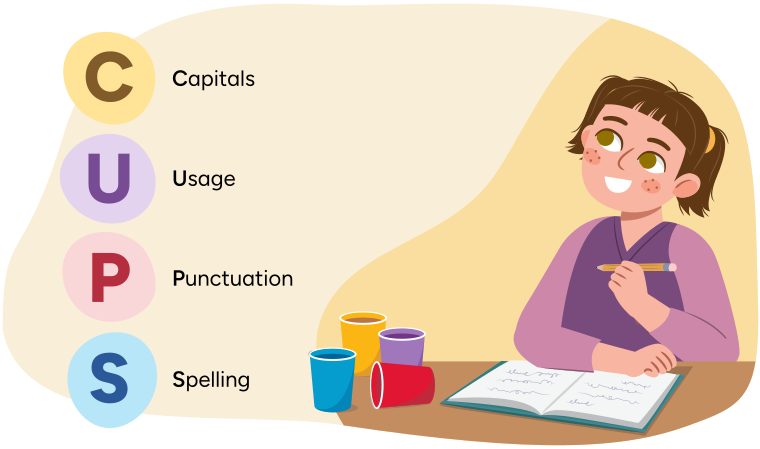
Use the following checklist for your CUPS check.
Checklist: CUPS
Capitals
Usage
Punctuation
Spelling
Step 4: Publish
Publish your persuasive paragraph using the digital tool of your choice. If possible, present it to an audience. You can also present it in front of a mirror or make a recording of yourself. This will help you find the tone, pacing, and emotion needed to convince your audience of your point of view.
Reflection
As you read through these descriptions, which sentence best describes how you are feeling about your understanding of this learning activity? Press the button that is beside this sentence.

I feel...
Now, record your ideas using a voice recorder, speech-to-text, or writing tool.