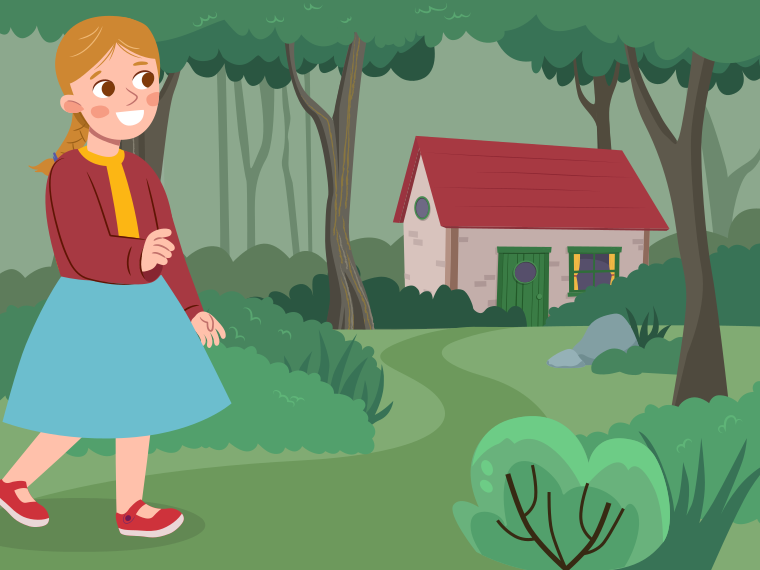
Once upon a time there was a girl named Goldilocks. She went for a walk in the forest.
Learning goals
We are learning to…
- understand patterns, features, and elements of style of different text forms and genres
- identify the narrator’s point of view and explore how point of view and perspective alter texts
- develop ideas, organize content, and draft texts of specific genres
- write a revised fictional text by manipulating the perspective, format, setting, and/or audience
Success criteria
I am able to…
- identify the elements of fairy tales and explain how “fractured” fairy tales differ from traditional versions
- explain how changing story elements such as point of view and perspective alters a text
- use the RAFT method to plan and draft a fractured fairy tale by changing the elements of perspective, format, setting, and/or audience
Exploring fairy tales
Do you know the story Goldilocks and the Three Bears?
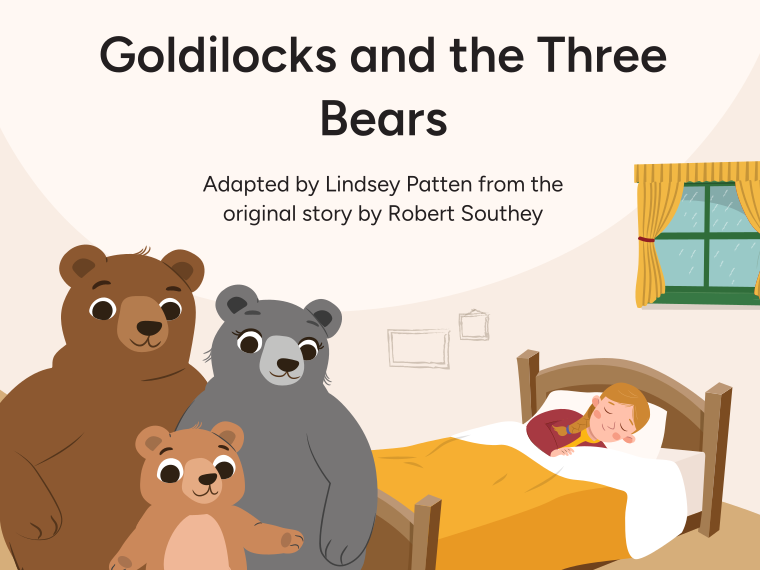
Check out the following e-book to explore an adaptation of this classic story. Watch out for the twist at the very end!
Goldilocks and the Three Bears Ereader Goldilocks and the Three Bears Ereader
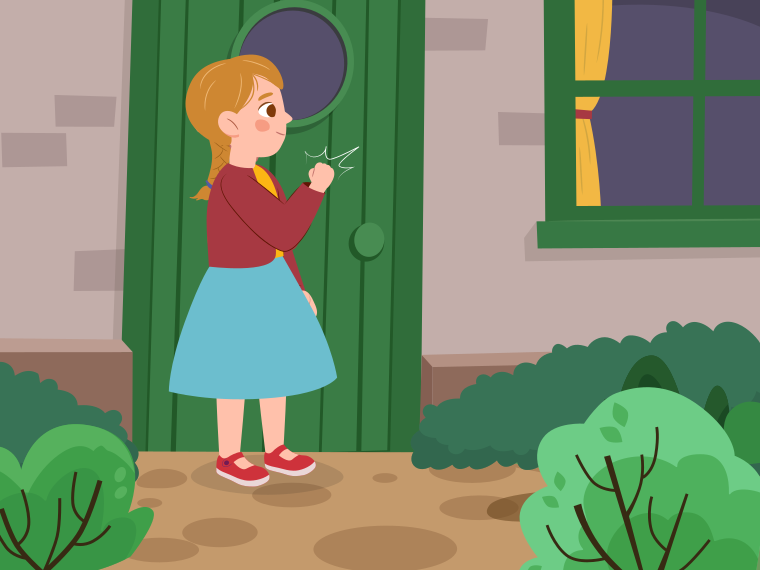
She saw a small house in a middle of the forest. She knocked on the door, but no one answered.
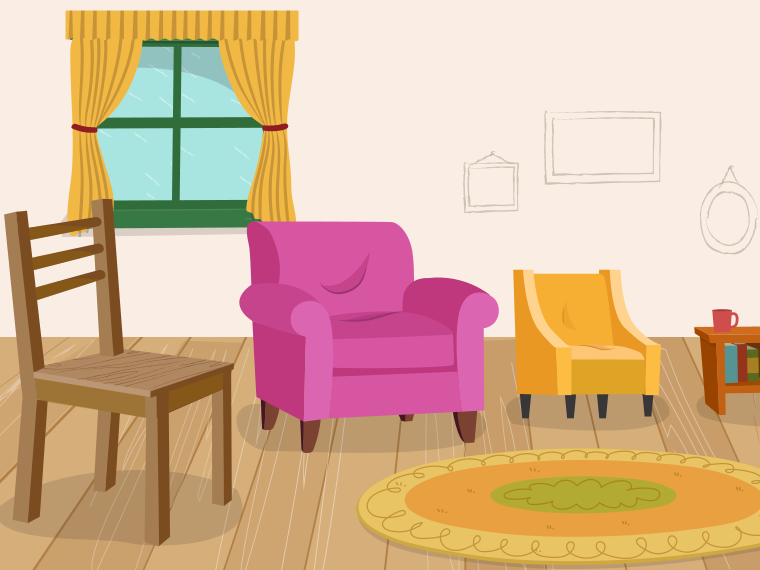
It was starting to rain so she went inside the house. She saw three comfy chairs. The first chair was too hard. The second chair was too soft. The third chair was just right.
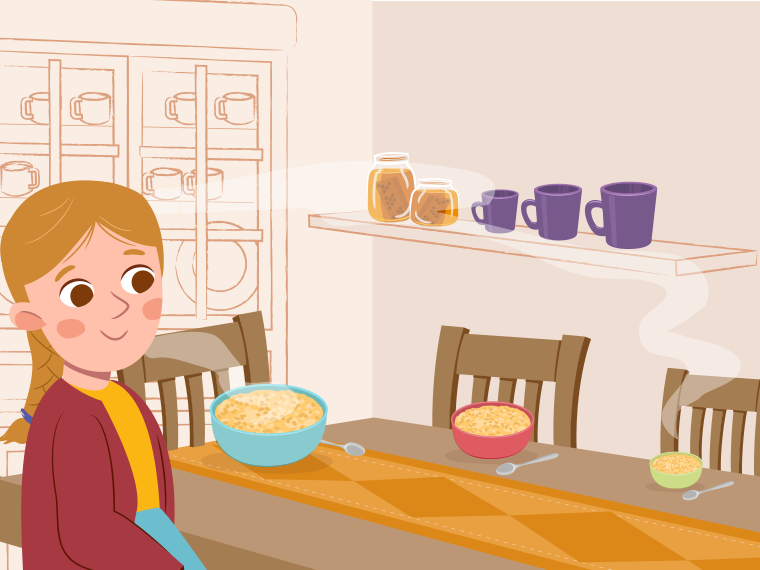
Goldilocks saw the kitchen table had three bowls of porridge. One was large, one was medium, and one was small.
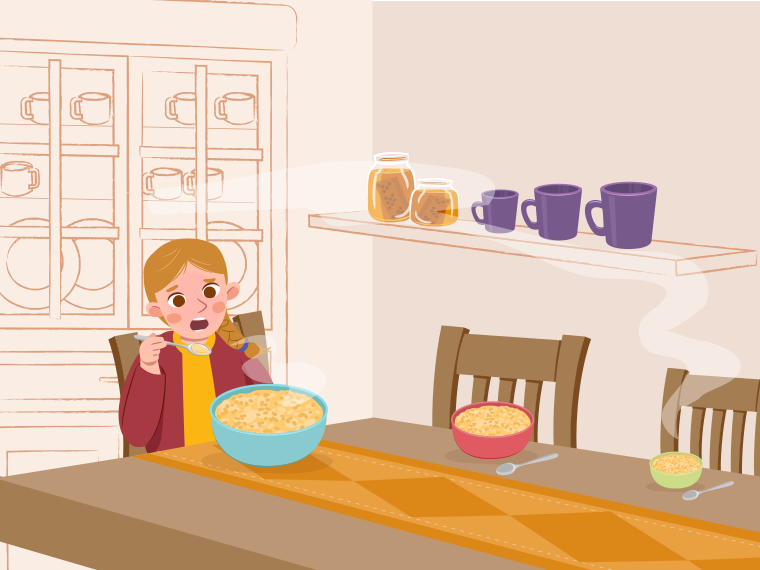
Goldilocks was so hungry. She went over to the table and grabbed a spoon. First, she tried the largest bowl. It was too hot!
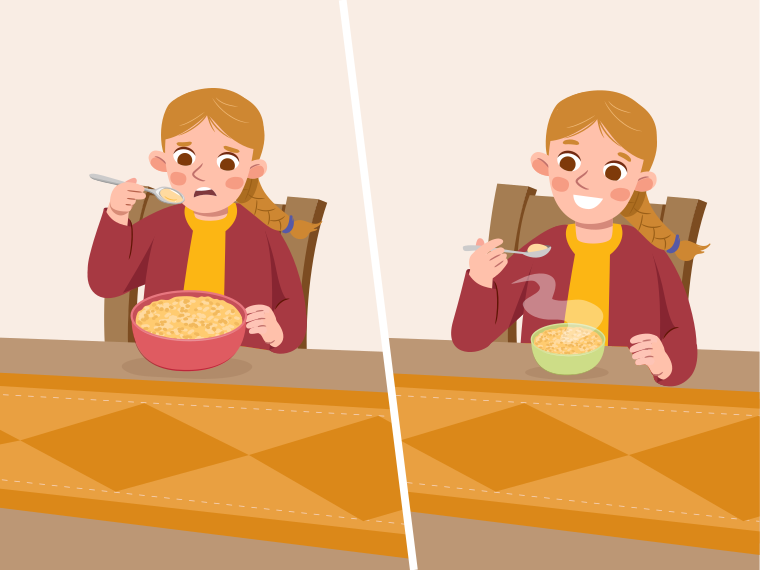
Then she tried the medium bowl. It was too cold! Then she tried the smallest bowl. It was just right. Goldilocks ate it all up.
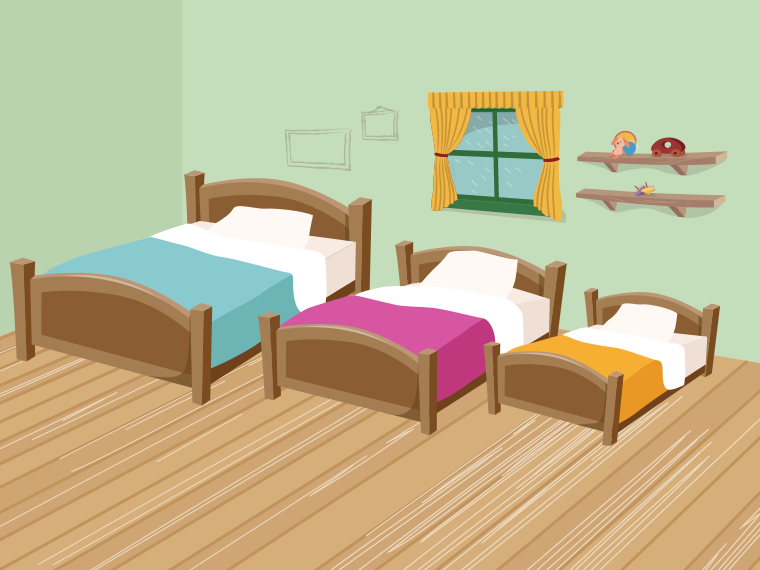
Goldilocks was tired. She went into the next room where there were three beds. One was large, one was medium, and one was small.
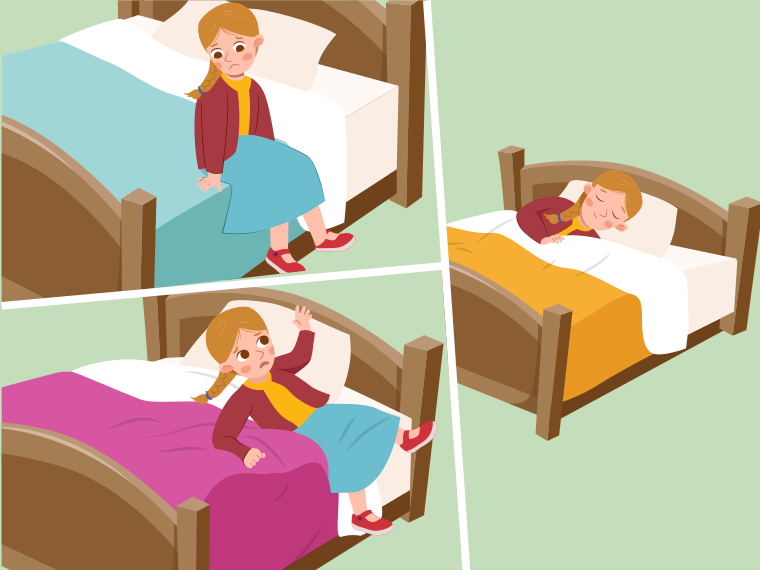
She got into the large bed but it was too hard. Then she got into the medium bed but it was too soft. The small bed was just right. She fell asleep.
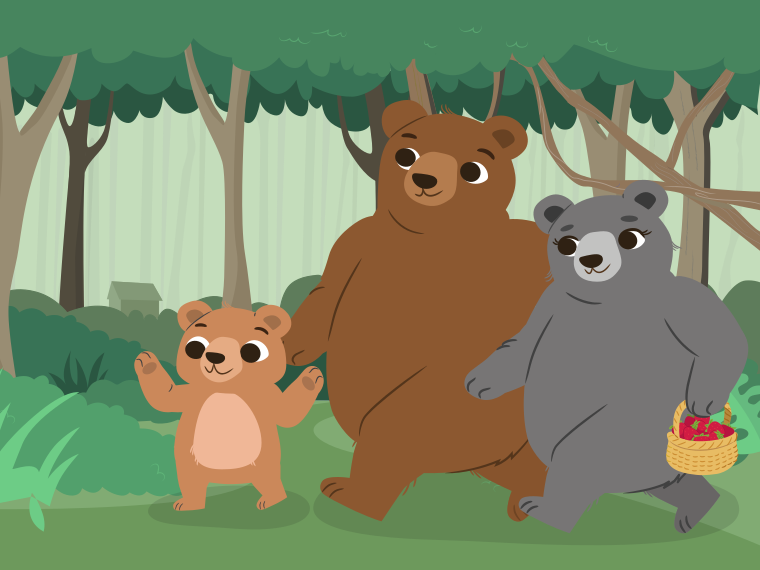
The house belonged to three bears: Mama Bear, Papa Bear, and Baby Bear. They had just come home from berry-picking.
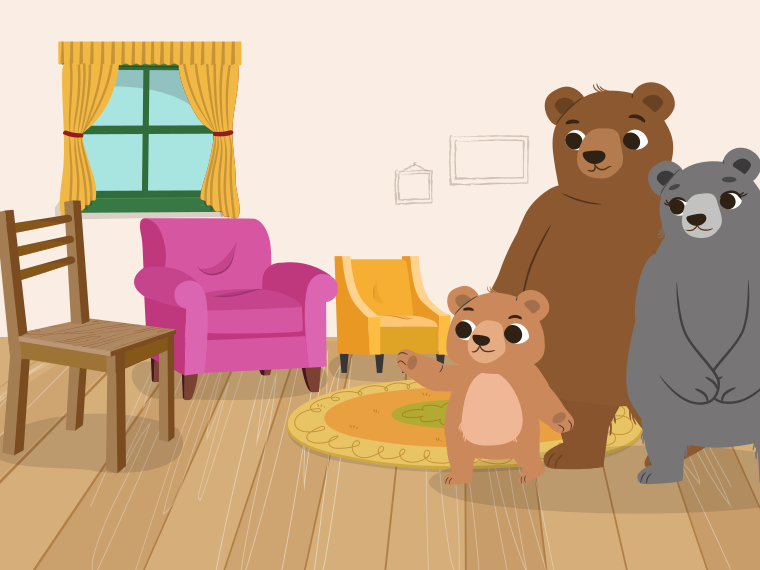
“Who’s been sitting in my chair?” said Papa Bear. “Someone sat in my chair too,” said Mama Bear. “Someone sat in my chair too,” said Baby Bear.
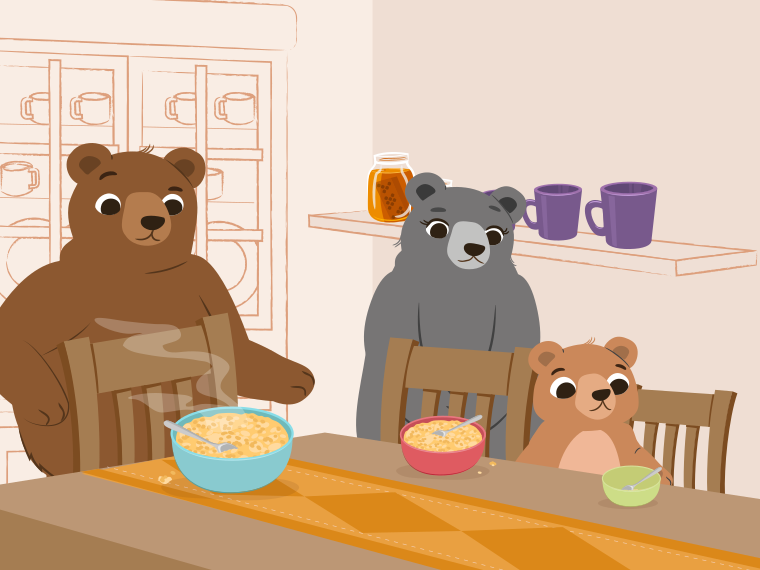
“Who’s been eating my porridge?” said Papa Bear. “Someone ate my porridge too,” said Mama Bear. “Someone ate ALL my porridge,” said Baby Bear sadly.
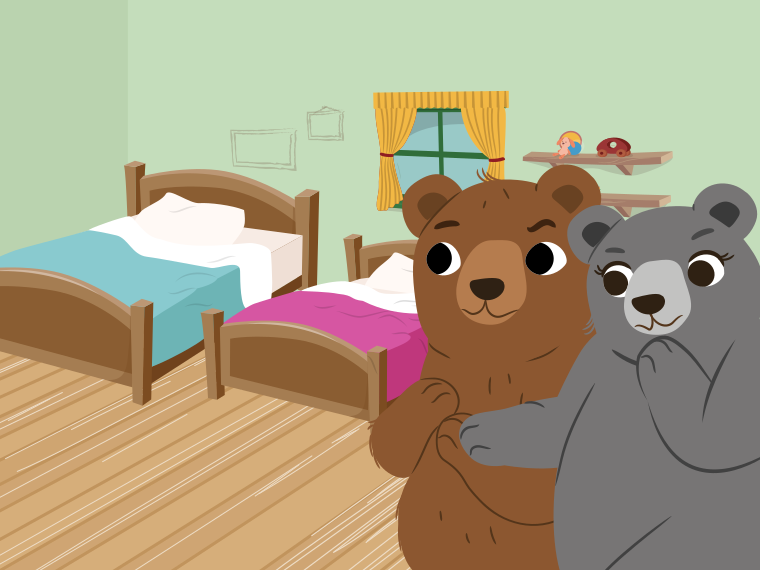
The Bears went into their bedroom. “Who’s been sleeping in my bed?” said Papa Bear. “Someone slept in my bed too,” said Mama Bear.
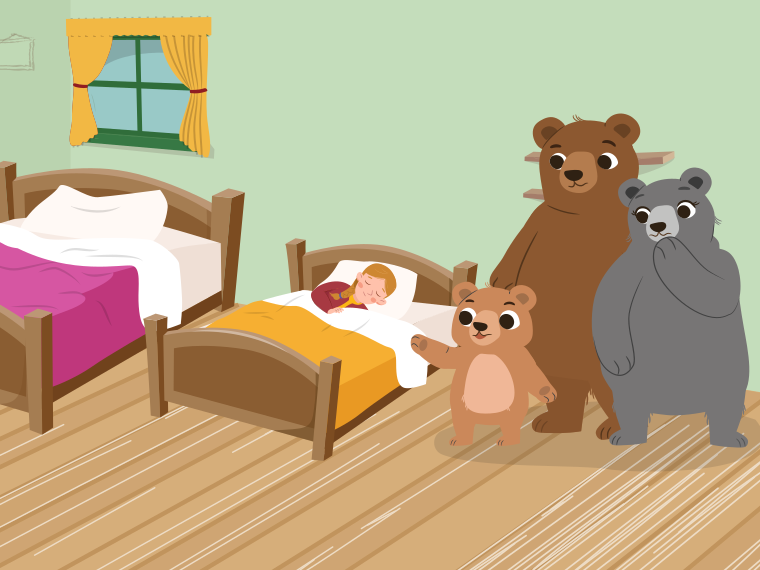
“Someone slept in my bed too!” said Baby Bear. “And there she is!”
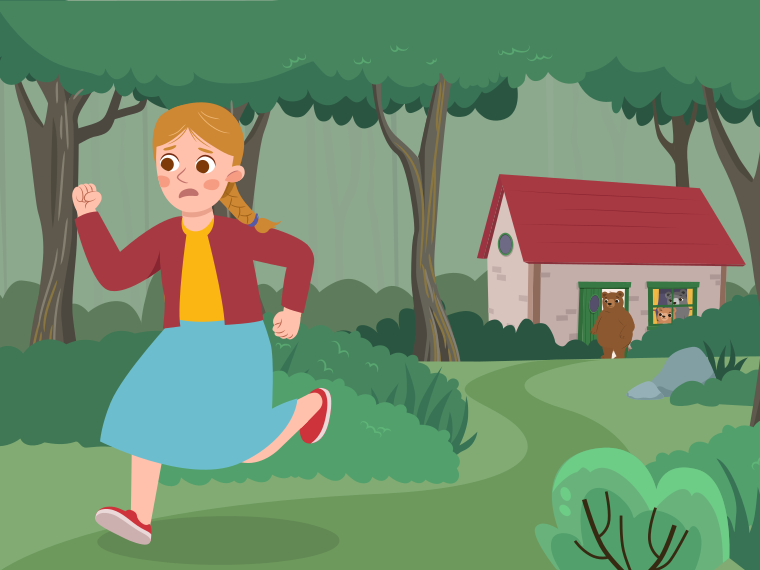
All of the noise woke up Goldilocks and she was scared. She immediately ran out of the house and ran home. Goldilocks never entered anyone’s house without permission ever again. The End.

Pause and Reflect
Reflecting on the story
In a notebook, or using another method of your choice, answer the following questions about the story. If possible, share your thoughts with a partner.
- Where is the story set?
- Who are the characters in the story?
- What’s the main problem or conflict in the story?
- Which part of the story creates the most interest or excitement?
Genre: The fairy tale
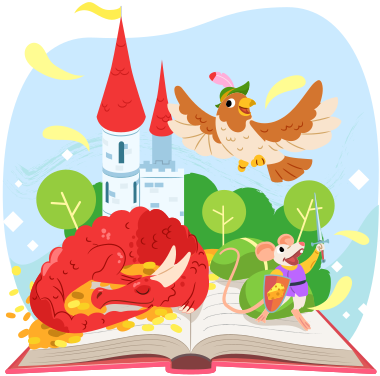
Goldilocks and the Three Bears is an example of a literary genre called the fairy tale. Simply put, fairy tales are short stories that usually have magical beings, talking animals, and lots of imaginary features.
How many can you think of?
Brainstorm the titles of other fairy tales you may be familiar with. If possible, share your thoughts with a partner.
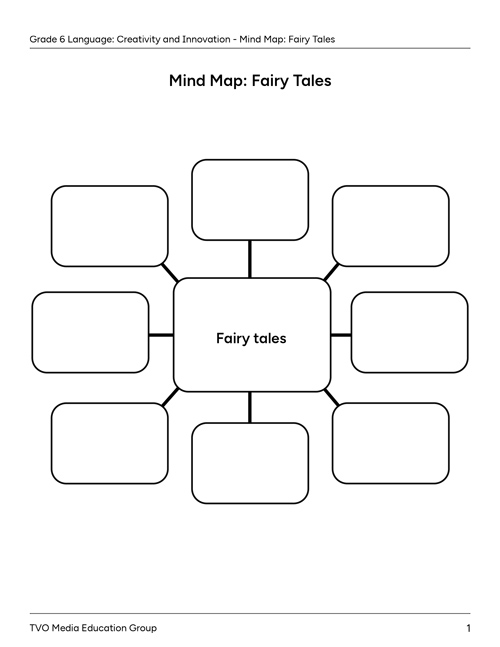
If you wish, you can brainstorm by completing the fillable and printable Mind Map: Fairy Tales in your notebook or using the following document. You can also use speech-to-text or audio recording tools to record your thoughts.
Fun with flashcards
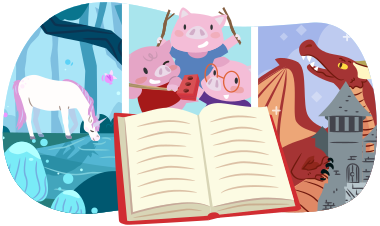
Need help thinking of fairy tales? Examine the following flashcards.
Your journey
Like a character in a fairy tale, you are on a journey! In this learning activity, you will learn more about the fairy tale genre. You will also discover how we can reimagine classic stories by changing literary elements like setting, characters, audience, or perspective.

What are fairy tales?
As discussed in the Minds On section, fairy tales are short stories that usually have magical beings, talking animals, and lots of imaginary features.
Many fairy tales have origins in folk stories that oral storytellers have shared for thousands of years. Researchers believe that some of these stories have been passed down through different cultures for as long as 5,000 years!
Dark origins
Early versions of fairy tales were often dark stories designed to warn children about dangerous people and situations. They were more scary than entertaining. For example, in early versions of Little Red Riding Hood, the story ends with Little Red Riding Hood and her grandmother being eaten by the wolf… there is no rescue!
Like many literary genres, fairy tales have evolved over time. They continue to change along with societies and worldviews.
The European tradition
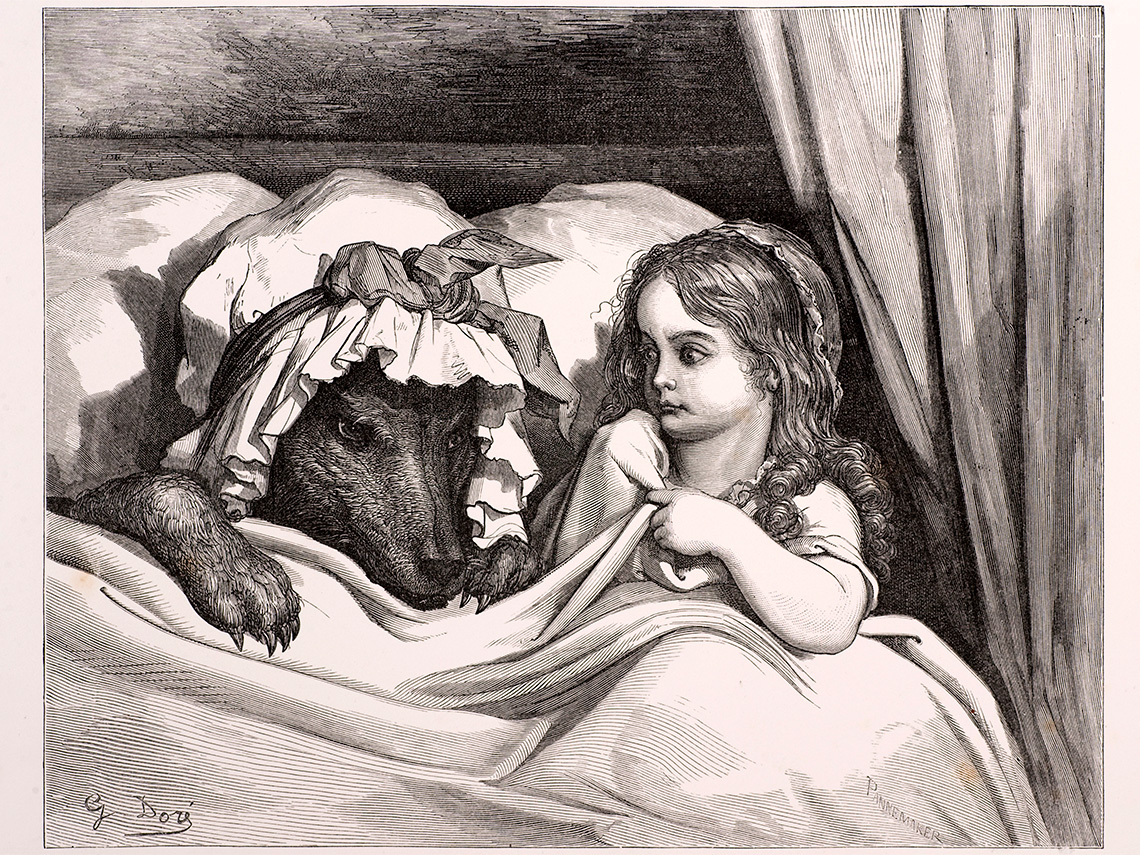
A scene from Little Red Riding Hood. Engraving by Gustave Doré, 1870.
The fairy tales we will look at in this learning activity were originally written hundreds of years ago, and they reflect traditional European ideas of gender, plot, and storytelling. We will explore the themes represented. We will also see how these stories can be updated in ways that disrupt stereotypes and question perspectives.
Fairy tales: Common elements
Most fairy tales have a few basic elements in common. You’re probably already familiar with some of them…
Pause and Reflect
Special phrases
What phrase do you usually find at the beginning of a fairy tale? How about at the end of a fairy tale?
Write your answer in your notebook or record it using another method. Then press Special Phrases to see the answer.
A fairy tale usually…
- begins with “Once upon a time...”
- ends with “...and they lived happily ever after.”
What other common elements do fairy tales have? Check out the following images and captions.
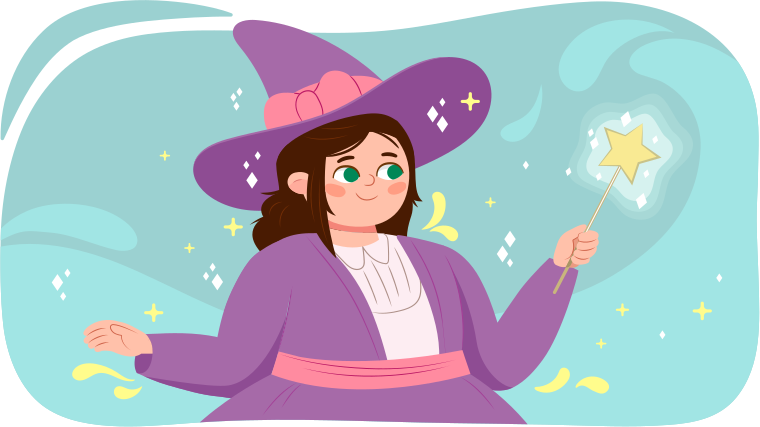
Fairy tales often include elements of magic.
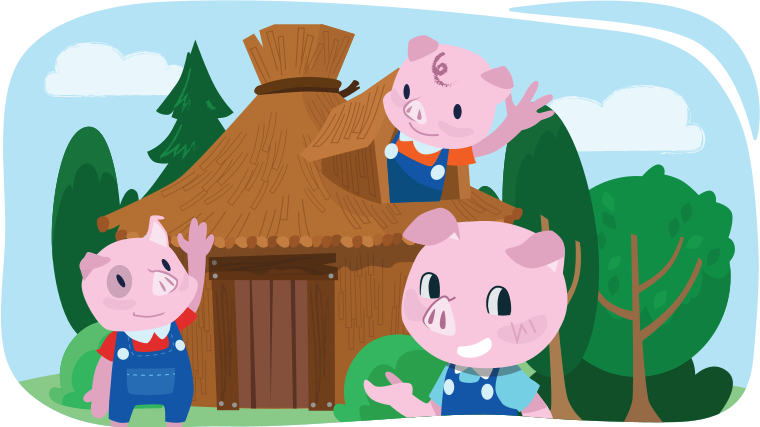
Fairy tales often feature talking animals.
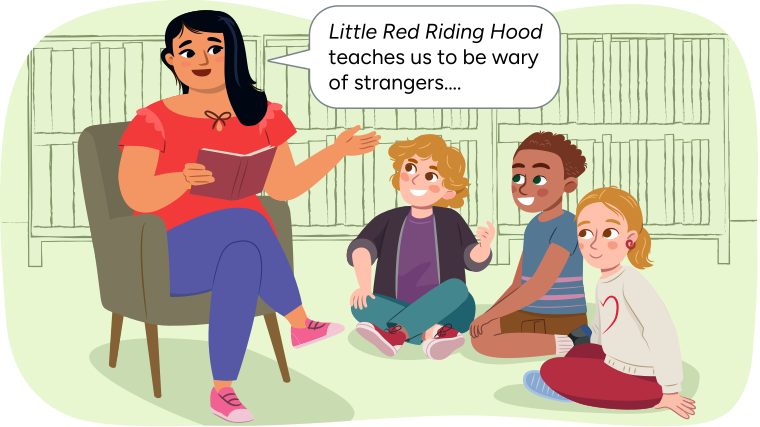
Fairy tales include a problem and its solution, often in the form of a life lesson.
What if…?
What if some of the classic fairy tales that have been told and retold for many, many years…
- ended in very different ways?
- took place in a different setting?
- had character roles reversed?
- were told from someone else’s point of view?
If we change part of the plot, we of course change the course or outcome of the story. But the story can also be changed by manipulatingother elements, such as setting, characters, conflict, motivation, and perspective.
Revisiting Goldilocks
Let’s revisit the story of Goldilocks and the Three Bears that you explored in the Minds On section.
Goldilocks and the Three Bears Ereader Goldilocks and the Three Bears Ereader
Once upon a time there was a girl named Goldilocks. She went for a walk in the forest.
She saw a small house in a middle of the forest. She knocked on the door, but no one answered.
It was starting to rain so she went inside the house. She saw three comfy chairs. The first chair was too hard. The second chair was too soft. The third chair was just right.
Goldilocks saw the kitchen table had three bowls of porridge. One was large, one was medium, and one was small.
Goldilocks was so hungry. She went over to the table and grabbed a spoon. First, she tried the largest bowl. It was too hot!
Then she tried the medium bowl. It was too cold! Then she tried the smallest bowl. It was just right. Goldilocks ate it all up.
Goldilocks was tired. She went into the next room where there were three beds. One was large, one was medium, and one was small.
She got into the large bed but it was too hard. Then she got into the medium bed but it was too soft. The small bed was just right. She fell asleep.
The house belonged to three bears: Mama Bear, Papa Bear, and Baby Bear. They had just come home from berry-picking.
“Who’s been sitting in my chair?” said Papa Bear. “Someone sat in my chair too,” said Mama Bear. “Someone sat in my chair too,” said Baby Bear.
“Who’s been eating my porridge?” said Papa Bear. “Someone ate my porridge too,” said Mama Bear. “Someone ate ALL my porridge,” said Baby Bear sadly.
The Bears went into their bedroom. “Who’s been sleeping in my bed?” said Papa Bear. “Someone slept in my bed too,” said Mama Bear.
“Someone slept in my bed too!” said Baby Bear. “And there she is!”
All of the noise woke up Goldilocks and she was scared. She immediately ran out of the house and ran home. Goldilocks never entered anyone’s house without permission ever again. The End.
Test your understanding!
For each story element, select the corresponding example from Goldilocks and the Three Bears.
Good job! Next you’ll explore a different kind of story element: perspective.
Thinking about perspective
Texts can be told from three different narrator perspectives. Examine the following image to learn more:
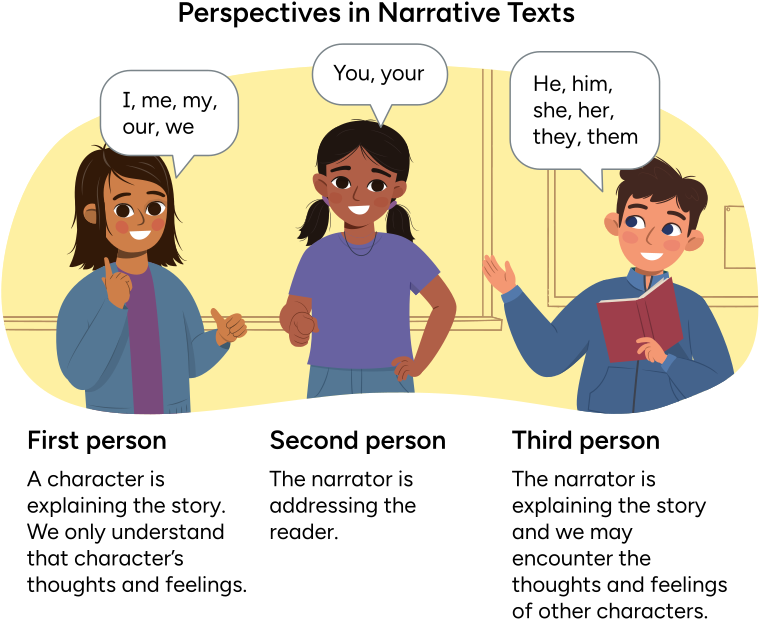
First person: A character is explaining the story. We
only understand that character's thoughts and feelings. Words such as "I, me, my,
our, we" are used.Second person: The narrator is addressing the reader. Words such
as "you" and "your" are used.Third person: The narrator is explaining the story and
we may encounter the thoughts and feelings of other characters. Words such as "he,
him, she, her, they, them" are used.
A writer must carefully choose which perspective to use, as the perspective impacts the story’s message and tone.
Your turn!
Answer the following question, which is based on the version of Goldilocks and the Three Bears that you read earlier in this learning activity.
Select the correct answer, then press Check Answer to see how you did.
Changing the perspective
How would the experience of Goldilocks and the Three Bears be different if the story were told from a different perspective?
Let’s examine two different versions of this story. Both use the first-person perspective.
A new point of view: Goldilocks
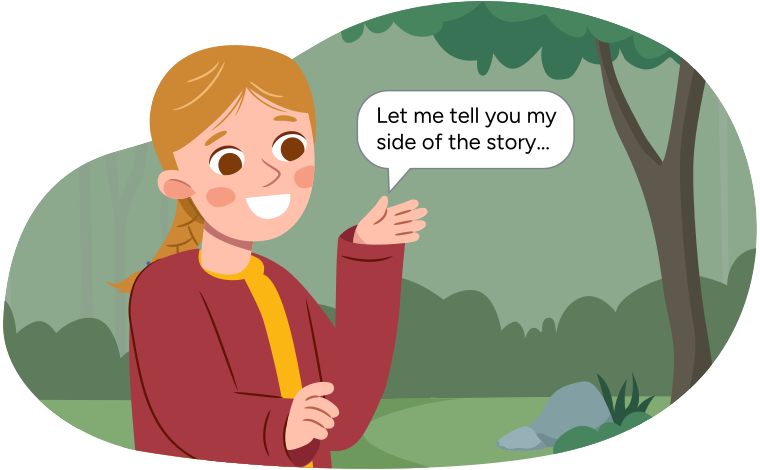
Play the following audio clip to hear Goldilocks’s side of the story. You can read the transcript (written version) as well if you like.
Goldilocks Perspective
A new point of view: Baby Bear
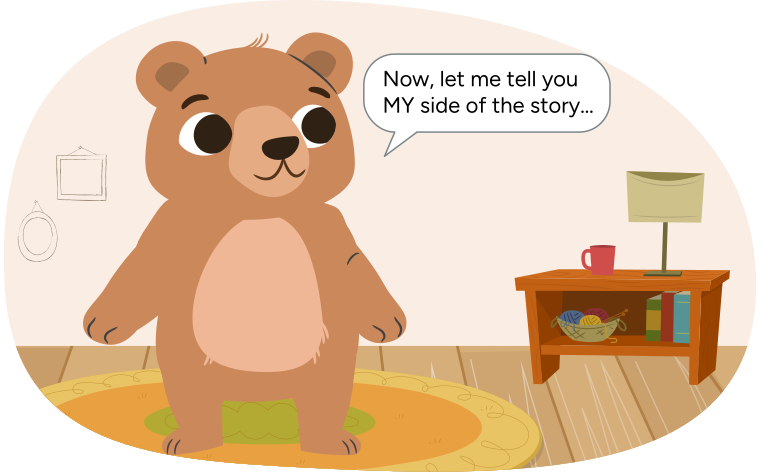
Play the following audio clip to hear Baby Bear’s side of the story. You can read the transcript (written version) as well if you like.
Baby Bear’s Perspective
Pause and Reflect
Reflecting on point of view
In a notebook or using another method of your choice, answer the following questions:
- After you discovered Goldilocks’s point of view, how did the story change for you?
- After you discovered Baby Bear’s point of view, how did the story change for you?
- What words indicate to us that these versions of the story are told from a first-person perspective?
The fractured fairy tale
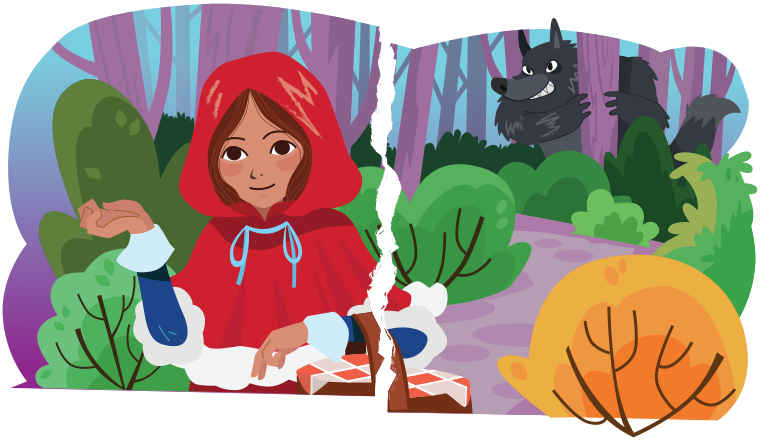
In a fractured fairy tale, traditional elements have been altered so that the fairy tale teaches a modern, updated lesson.
By changing certain elements of a fairy tale, we encourage readers to rethink their understanding of the story. For example, they might question gender stereotypes that they previously took for granted.
Let’s compare two versions – one traditional, one fractured – of the fairy tale Little Red Riding Hood.

Version 1: Traditional fairy tale
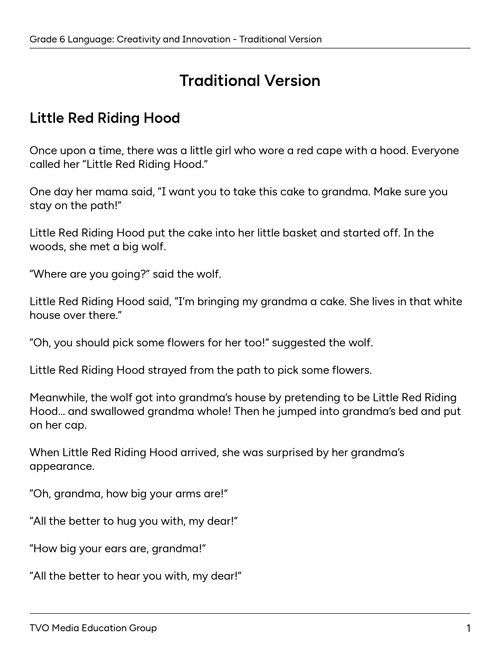
There are many variants of the fairy tale Little Red Riding Hood. Read the following Traditional Version.
After reading
In a notebook or using another method of your choice, answer the following questions.
- What were your impressions of this version of the story?
- Is this story told from the first-, second-, or third-person perspective? How do you know?
- How are gender stereotypes reinforced in this version of the story?
- What lesson is this story trying to teach?
When you have finished, press Sample Answers to see student Marcel’s answers.
1. I was a bit surprised at how violent the story was: the wolf eats two people and is killed and cut open. I guess it was important to make it scary so that children (maybe especially girls) would learn to be afraid of strangers.
2. The story uses the third-person perspective. We know because of the use of words such as she, he, and her, and because the narrator is explaining the story as an outsider looking on.
3. The main character is a naïve young girl who is easily tricked. In fact, both Little Red Riding Hood and her grandmother are portrayed as vulnerable females unable to defend themselves. The male wolf outsmarts and overpowers the females, who need to be rescued by another male (the hunter).
4. The story is trying to teach children (and maybe especially girls) to listen to their mothers and be wary of strangers.
Version: Fractured fairy tale
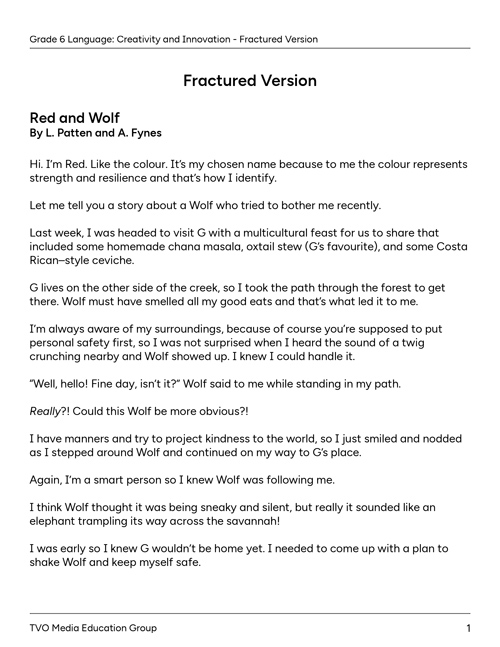
Read the following Fractured Version of Little Red Riding Hood.
After reading
In a notebook or using another method of your choice, answer the following questions.
- Is this story told from the first-, second-, or third-person perspective? How do you know?
- How does the different narrator perspective change the story for you?
- How are gender roles or stereotypes challenged in this version of the story?
- Has the lesson changed in this version of the story?
When you have finished, press Sample Answers to see student Marcel’s answers.
- This story is told from the first-person perspective. We know because the main character, Red, is telling their own story, using words such as “I,” “me,” and “my.”
- There are no obvious genders in this version of the story. No gendered pronouns are used (such as “he” and “she”). Gender stereotypes are challenged because the authors do not assign gender-stereotyped activities to any one character. For example, G fishes, hunts for their own food, and knows how to set traps (traditionally male activities). However, G has also won first prize in a knitting tournament (a traditionally female activity).
- The lesson in this version of the story is still not to trust strangers… but also to be aware of your surroundings, to learn how to put your personal safety first, and to use your critical-thinking and problem-solving skills.
You have done a lot of thinking about fairy tales, both traditional and fractured. Now is a great time to take a break before we turn to grammar!

Student Wellness
Take a break!

Time for a body break! If possible, stretch your body and move around your space.
Grammar time!

Active and passive voice
Soon you will start thinking about writing your own fractured fairy tale. But first, check your understanding of active and passive voice so you can make the best choices for your writing.
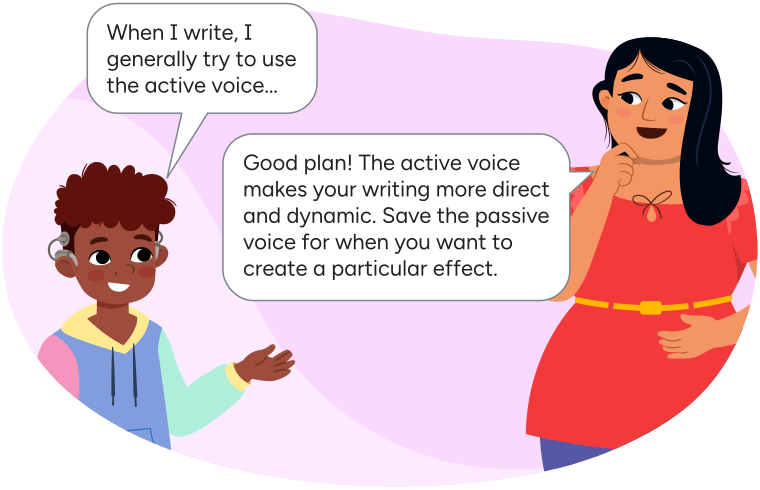
Student: When I write, I generally try to use the active voice…
Teacher: Good plan! The active voice makes your writing more direct and dynamic. Save the passive voice for when you want to create a particular effect.
Press the following tabs to learn more about the active and the passive voice.
With the active voice, the subject of the verb is also the person or thing that performs the action. The emphasis is on the “do-er” of the action.
Here’s an example of a sentence in the active voice:
- The cat chased the mouse.
The cat is performing the action of chasing. It is also the subject of the verb “chased.”
With the passive voice, the subject of the verb is receiving the action. The emphasis is on the receiver of the action.
Let’s put our sample sentence in the passive voice:
| Active voice | Passive voice |
|---|---|
| The cat chased the mouse. | The mouse was chased by the cat. |
In the passive sentence, the mouse is the subject of the verb (was chased). The receiver of the action is the grammatical subject.
Note: To form the passive voice, we use a form of the verb “to be” (is, are, was, were), plus a past participle:
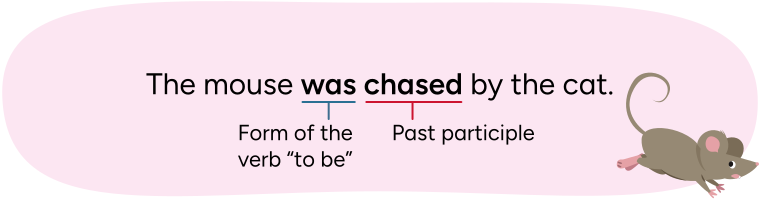
Analysis of the passive verb in sample
sentence “The mouse was chased by the cat.” “Was” is a form of the
verb “to be,” and “chased” is a past participle.
Compare the examples in the following table:
| Active voice | Passive voice |
|---|---|
| Little Red Riding Hood delivered a cake to grandma. | A cake was delivered to grandma by Little Red Riding Hood. |
| Many people have told this story. | This story has been told by many people. |
| The wolf followed Little Red Riding Hood. | Little Red Riding Hood was followed by the wolf. |
When is the passive voice a good idea?
Sometimes, authors choose to use the passive voice in a particular sentence to create suspense or emphasize the receiver of the action.
You decide!
Let’s say your goal is to create a bit of suspense and to emphasize the heroine of the story. Which of these two sentences might you use?
Press Possible Answer once you have made your choice.
In this case, you might choose the second sentence. The passive voice emphasizes Little Red Riding Hood by putting her at the beginning of the sentence and making her the subject. It also creates a bit of suspense about who is following her (we don’t find out till the end of the sentence).
Sort it out!
Are the following sentences written in the active voice or the passive voice?
Place each card in the correct category. Use the arrow buttons to navigate between cards.

Putting it all together
In this learning activity, you have explored the fairy tale genre, both traditional and fractured. You also learned about different narrator perspectives.
As a quick review, try the following multiple-choice questions. Select the correct answer, then press Check Answer to see how you did.
Your turn!
You are now going to create your own original fractured fairy tale!
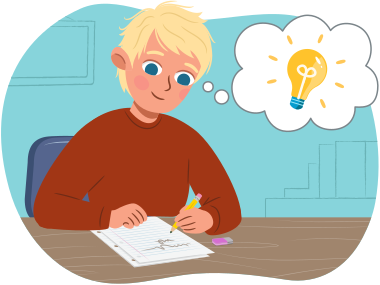
With this task, use your imagination and have fun! Consider ways that you can change aspects of the character’s identity to create a story that reflects your lived experiences. Avoid the stereotypes found in traditional fairy tales. Also consider how different audiences might read and interpret these new roles and perspectives in your writing.
You may choose to base your story on…
- Goldilocks and the Three Bears
- Little Red Riding Hood
- another fairy tale of your choice (review the Minds On section for other options)
The RAFT method
To plan your story, you will use the RAFT method:
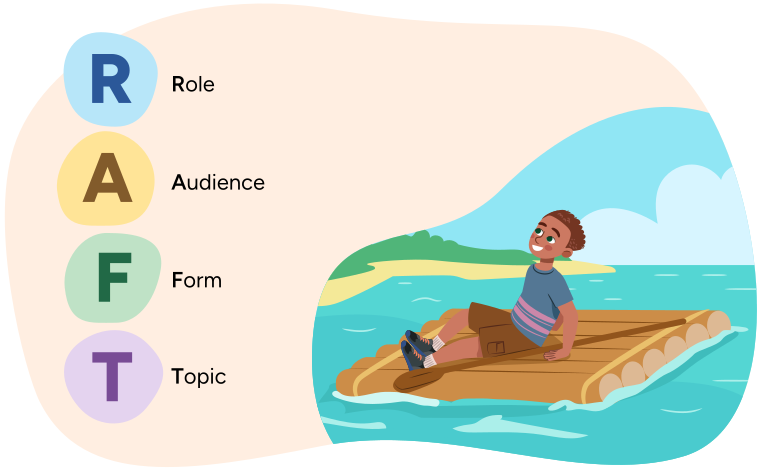
The RAFT method supports the creative writing process by helping you think about topics from different perspectives and practise writing in different ways, for different audiences.
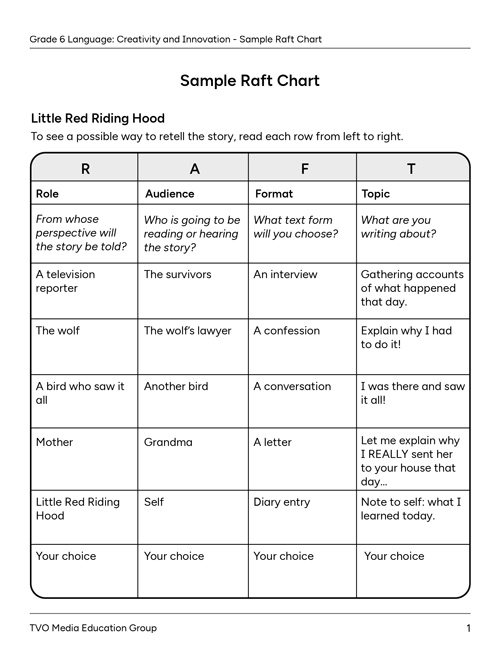
Sample RAFT chart
To familiarize yourself with the RAFT method, explore the following Sample Raft Chart, which is based on the story of Little Red Riding Hood.
Create your fractured fairy tale
To create your fairy tale, you will follow five steps: plan, draft, edit, assess, and publish/present.
Step 1: Plan
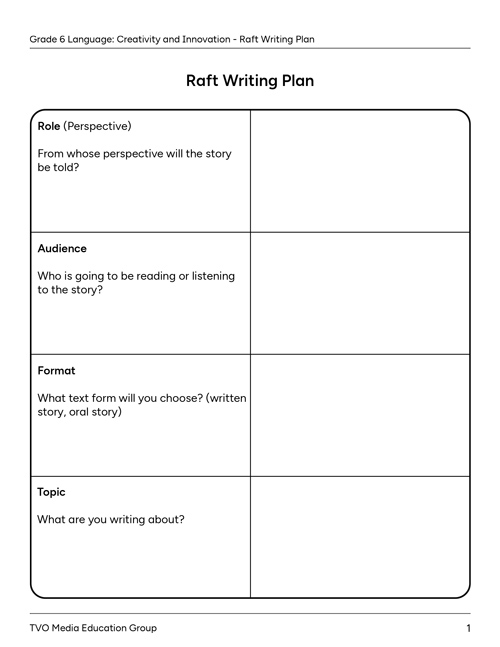
To plan your fairy tale, first decide which fairy tale you will be “fracturing.” Then complete the fillable and printable RAFT Writing Plan in your notebook or using the following document. If you would like, you can use speech-to-text or audio recording tools to record your thoughts.
Step 2: Draft
Write your draft in cursive writing, or type it using the word-processing tool of your choice.

Cursive practice
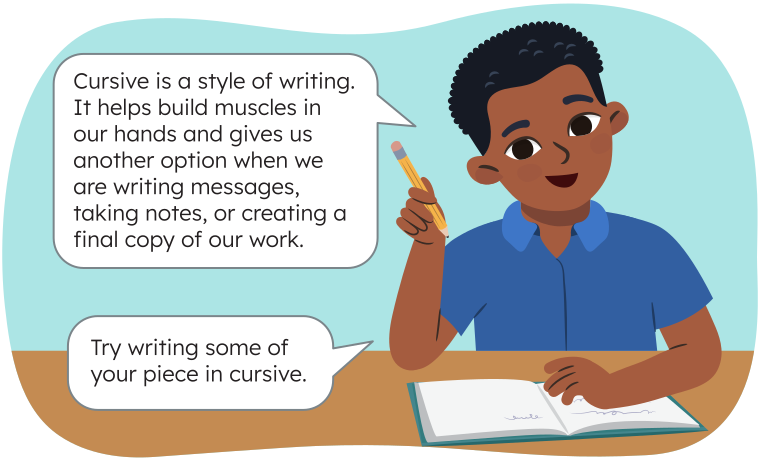
Arthur says, 'Cursive is a style of writing. It helps build muscles in our hands and gives us another option when we are writing messages, taking notes, or creating a final copy of our work.Try writing some of your piece in cursive.'
Let’s review cursive writing!
Check out the following animation of how the word “wonder” is written in cursive, then review the tips for cursive writing provided.
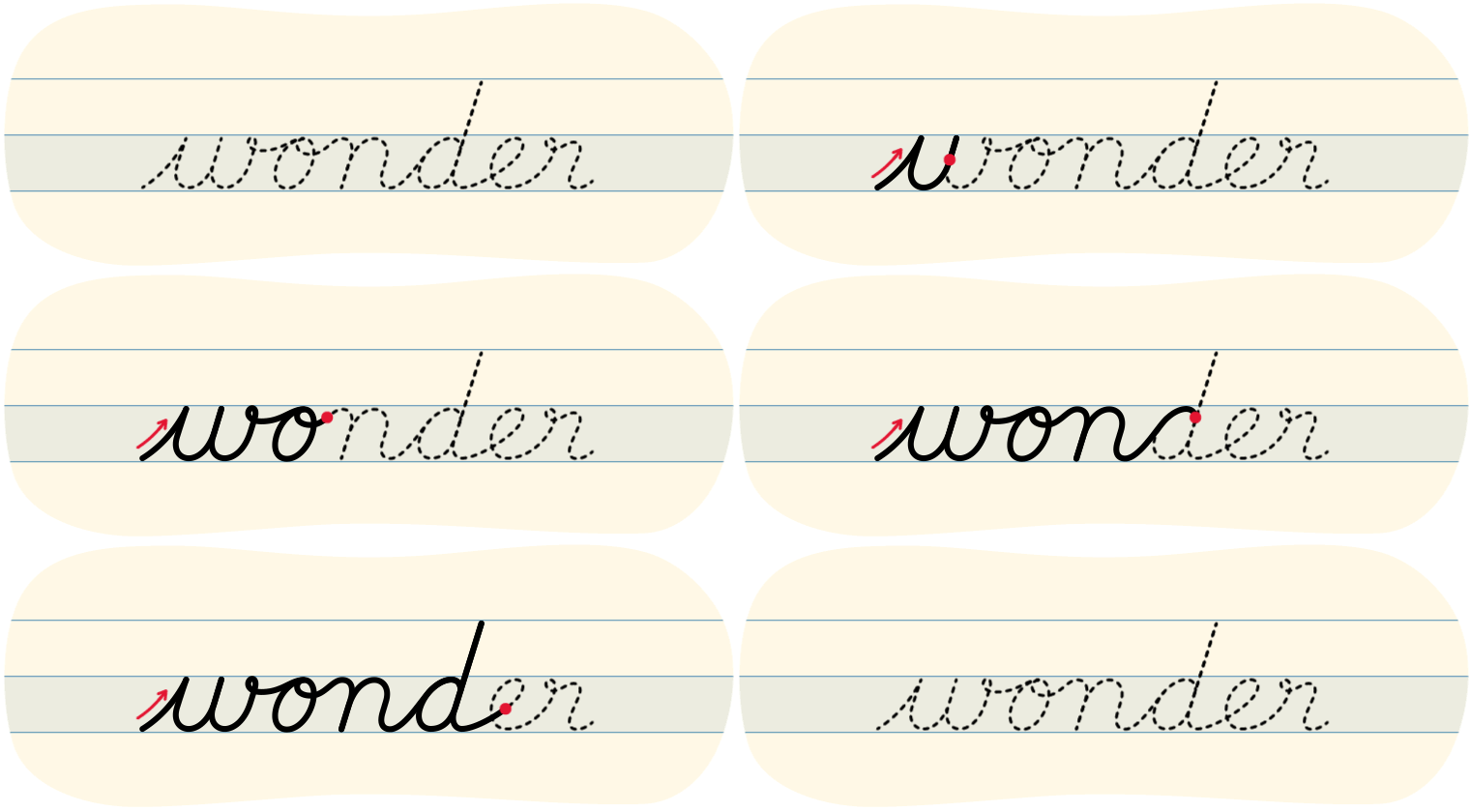
Tips for cursive letters
- When we write in lowercase, we always begin at the bottom.
- When we write in uppercase, we can start from the top or the bottom.
- Try to keep the pencil on the page until you are done the word.
- Try to press gently as you write so that your hand can move easily across the page.
- Take your time to make sure that you are writing clearly and evenly.
Left-handed tips for cursive writing

Explore the video on Left-Handed Tips to learn more.

Typing practice
Typing is a great skill to develop! When we need to use a computer or tablet keyboard, knowing how to type helps us…
- take notes
- respond to messages
- create final drafts of our work
Explore the following image to see what fingers are used to type each letter or number.
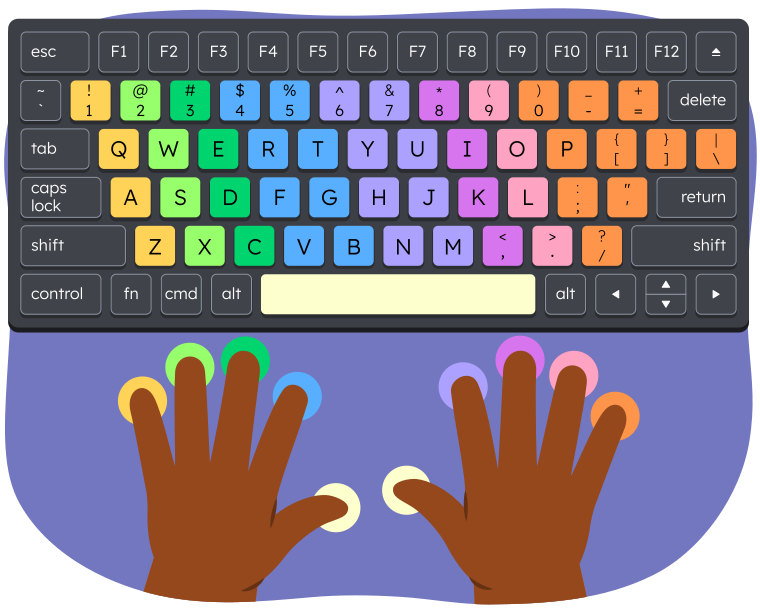
A keyboard and hands showing which fingers are used to press each key when typing.
The left pinky finger presses the keys 1, Q, A, and Z.
The left ring finger presses the keys 2, W, S, and X.
The left middle finger presses the keys 3, E, D, and C.
The left index finger presses the keys 4, 5, R, T, F, G, V, and B.
The left or right thumb presses the space bar.
The right index finger presses the keys 6, 7, Y, U, H, J, N, and M.
The right middle finger presses the keys 8, I, K, and comma.
The right ring finger presses the keys 9, O, L, and period.
The right pinky finger presses the keys 0, minus, equal, P, open bracket, closed bracket, backslash, semicolon, apostrophe, and forward slash.
We use specific muscles in our hands to type! It’s important to practise so that it becomes easier to type correctly without putting too much pressure on our hands and our wrist.
For additional typing practice, check out the game “Keyboard Climber 2”!
Step 3: Edit
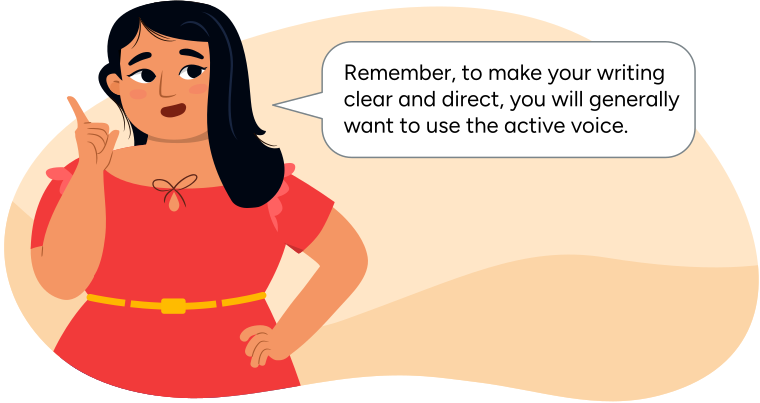
Edit your draft to fix errors in spelling, grammar, punctuation, and capitalization. Check whether you are using the active voice or the passive voice.
Step 4: Assess
Use the following checklist to assess your fairy tale.
Checklist: Assessing my writing
Step 5: Publish/present
Publish your fairy tale using the digital tool of your choice. If possible, share your text with someone and ask for their feedback.
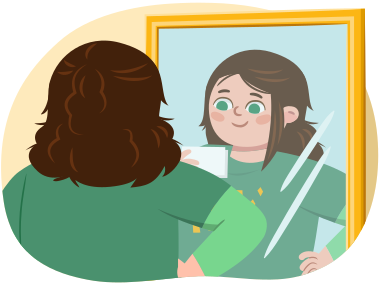
If you have chosen an oral form for your fairy tale, read it out loud to someone if possible. Alternatively, you can present it in front of a mirror or make a recording of yourself. This will help you find the tone, pacing, and emotion needed to give your fairy tale maximum impact.
Reflection
As you read through these descriptions, which sentence best describes how you are feeling about your understanding of this learning activity? Press the button that is beside this sentence.

I feel...
Now, record your ideas using a voice recorder, speech-to-text, or writing tool.