Learning goals
We are learning to…
- analyze and explain how transferable skills can be used to support communication in various cultural, social, linguistic, and domain-specific contexts, and apply them when reading, listening to, viewing, and creating texts of various forms
- explain explicit and implicit perspectives communicated in various texts, including narrative texts, provide any evidence that could suggest bias in these perspectives, and suggest ways to avoid any such bias
- draft complex texts of various forms and genres, including narrative, expository, and informational texts, using a variety of media, tools, and strategies, and establish a personal voice in our text
Success criteria
I am able to…
- learn about and understand the difference in creative process between AI-generated and human-generated art pieces
- respond to comprehension questions that evaluate the implicit and explicit perspectives, as well as bias, presented in texts about human- and AI-generated art
- write an opinion piece about AI-generated art the creative process
- respond to a series of reflection questions to evaluate my knowledge and understanding, critical thinking, personal connections, and transferrable skills related to content I’ve learned
What is creativity?
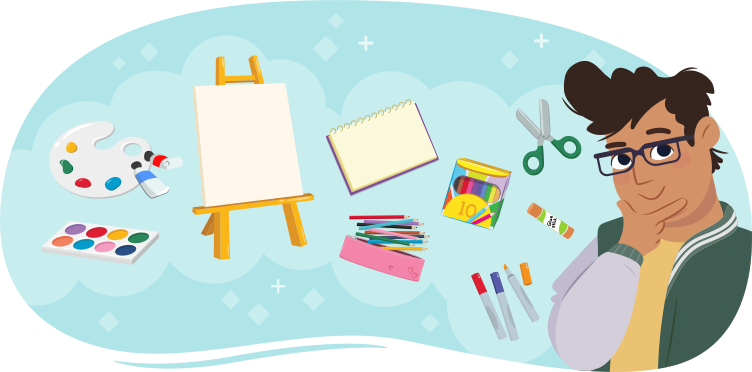
What does the word creativity mean? There are many different definitions, but in general, it refers to someone’s ability to produce a new method, object, or device, or bring into existence a new solution to a problem or a new artistic form.
By definition, creativity means “the ability to make or otherwise bring into existence something new, whether a new solution to a problem, a new method or device, or a new artistic object or form.”

Pause and Reflect
Pause and reflect
What does creativity mean to you? Brainstorm your ideas in a method of your choice.
Creativity is often talked about in terms of various art forms. In this learning activity, you will be exploring many pieces of artwork. Let’s begin by exploring a few pieces. As you explore, record what you notice and what you wonder.
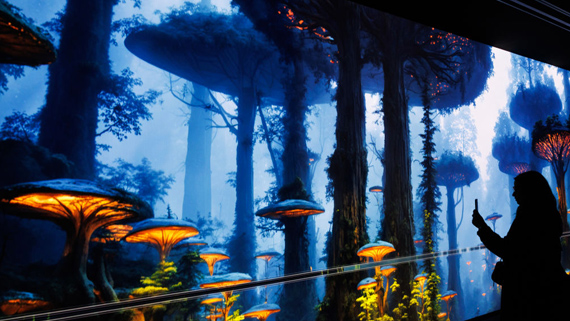
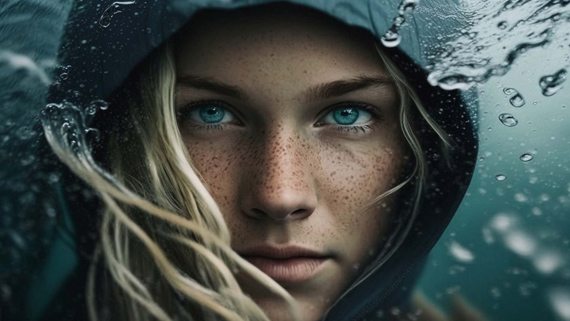
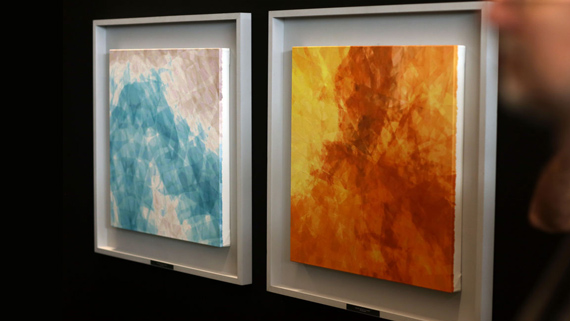
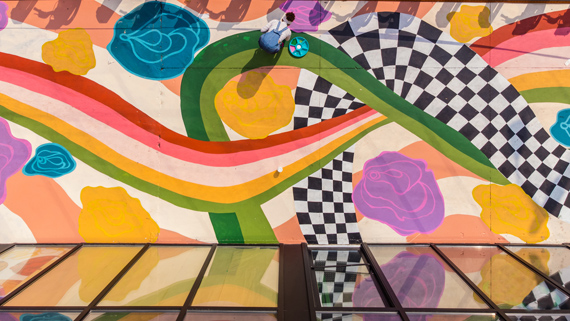
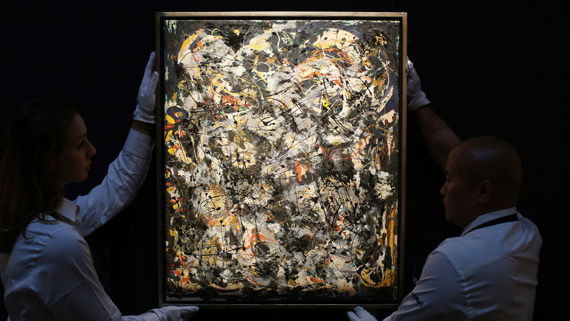
Did you know that some of the art pieces you just explored are generated by artificial intelligence rather than a human? Artificial intelligence is the ability of a computer or computer-controlled robot to perform tasks that are normally performed by humans.
- From the images you just recently explored which ones do you believe were created by humans, and which ones were created by artificial intelligence?
- Why do you think this?
Record your ideas using a method of your choice. If possible, discuss your ideas with someone else.
Press the Answer button to learn more.
Images 1, 2, and 3 were all created by artificial intelligence.
What is AI-generated art?
What is artificial intelligence (AI) generated art? Let’s begin by exploring this short video clip.
Because the purpose of any AI model is to produce an accurate response to any simple human question or command, these models need to already have all the relevant information! This means that AI models, just like humans, need to be “taught” or “trained” in specific subject areas in order to become knowledgeable.
This subject-specific information, known as “training data,” gets fed into the algorithmsof the AI’s sophisticated software so that the technology will later be able to use that information to produce an accurate response or result.
For AI models that are being used to generate visual art, the process is the same. First, the AI model must be fed training data about creative and visual arts, and then begin to form its knowledge base. Then, the AI model can use this data to create and generate artistic images based on what is being requested. The user enters a question or prompt, and the AI is designed to handle the rest.

Did You Know?
Did you know?
AI-generated art can now be found in museums, such as the Museum of Modern Art in New York, and has also been featured in art exhibits.
Let’s explore a clip from the video “AI Art: How artists are using and confronting machine learning – How to See Like a Machine” created by The Museum of Modern Art in New York. As you explore the clip, consider the art and how it is being created. How much human influence is involved?
Implicit and explicit perspectives
A perspective is a particular attitude towards or way of regarding something. There are two types of perspectives to consider – implicit and explicit.
Implicit Perspective is a point of view that is expressed indirectly. It may be a deeply held opinion or attitude of the author or creator. An “implicit perspective” can often be the ideas “between the lines,” or it can be in the language, tone, choice of facts, or how the text is presented.
Explicit Perspective is a point of view that is expressed directly, clearly, and with only one possible interpretation. It is overt, or obvious, and usually leaves the reader aware of what is trying to be expressed. It can be a straightforward opinion, fact, or intention.
Bias is a personal opinion or preference. It limits others’ ability to make fair or accurate judgments. Bias isn't necessarily a bad thing, but undetected, it can often mislead, manipulate, and divide us.
Based on what you’ve learned so far, respond to the following questions about implicit and explicit perspectives, as well as bias. Record your answers in a notebook or using another method of your choice.
- What implicit and explicit perspectives have been shared about AI-generated art so far? (Hint: Were there any overt or factual statements about AI, such as whether it benefits society? Did you notice anything about the tone, or specific choice of facts, that might suggest an opinion?) Do your best to provide direct evidence from the text.
- Do you think there is any bias in any of the information? Be sure to provide direct text evidence.
Press Possible Answers button to learn more.
- The text overtly states that there have been major advancements in the tech used to produce AI-generated art and that it this is an innovative field. This is an example of an explicit perspective that is supported with facts (for example, about how AI can be used to make art and can now be found in museums). On the other hand, the “implicit” perspective that is being suggested might be that AI-generated art is a good thing. The text suggests a positive side of this new art form by choosing to use positive facts, using positive adjectives, and emphasizing that after human’s provide their prompt, AI can “handle the rest”.
- The Museum of Modern Art’s video is clipped to present a bias towards promoting the benefits of AI in art. The chosen clip does not mention any potential challenges or criticisms (such as the loss of human touch involved in art).
The difference with AI-generated art
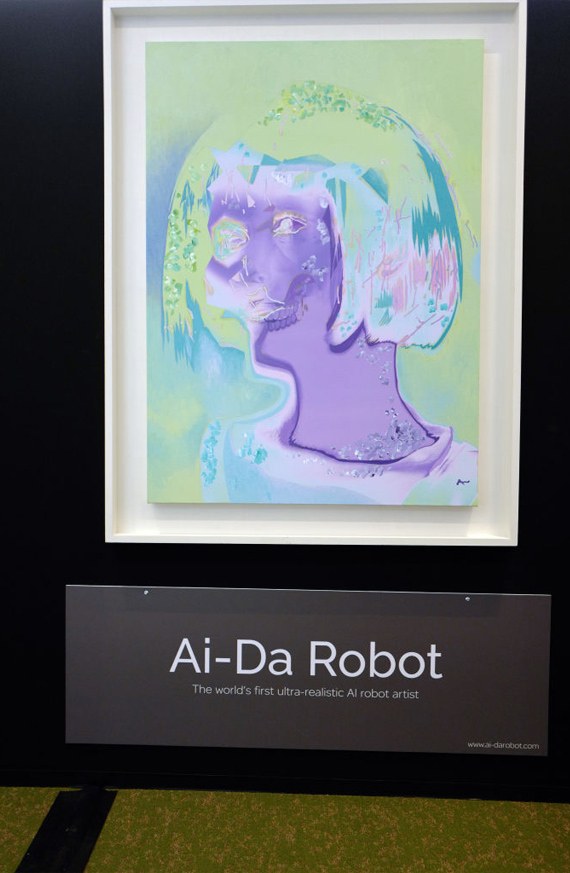
So, how is AI-generated art different from the human-created art we are most familiar with? This is a question that is still debated in the creative arts world! Artists that use AI models to create visual artworks support the use of AI in artistic creation, while other artists that use more traditional methods oppose it.
The creative process
The main question debated is whether a “creator” of AI-generated art actually participates in the creative process. Before deciding what you think, let’s review what the creative process is in the following interactive image.
Let’s review some differences between human-generated art and AI-generated art.
- Human art stems from personal experiences, emotions, and inspiration.
- AI-generated art uses algorithms and "training data” to produce its works.
- Human artists can create art with unique styles, cultural influences, and signs of emotional depth that represent authentic, lived experiences.
- AI art generators can only mimic, or copy, patterns from existing artworks that were fed to the model as training data.
- AI combines existing techniques to generate a new piece based on a human’s prompt, which can result in pieces that lack a sense of the personal touch that can be felt and interpreted in human-created art.
- More traditional forms of human-created art are created by hand, so they usually need significant time and effort.
- AI uses highly sophisticated computer systems to generate pieces, so they can be created quickly and in large quantities.
This leads us to the big question: does AI-generated art count as engaging in the creative process?
Did You Know?
Did you know?
Using AI technology brings up questions about copyright. Plagiarism in art occurs when someone copies another artist's work and claims it as their own without giving credit to the original artist. Copyright is a legal concept that protects an artist's original works from being used without permission.
So, what about AI-generated art? When AI creates art that looks like famous characters, it can be hard to tell where the new art ends and the original begins. This makes it tricky to protect the original creators' rights. AI might help solve this by mixing elements from well-known brands and adding random changes, making the new art different enough to avoid copyright problems.
AI-generated art vs. human-created art
Let’s explore a few images of AI-generated art with similar human-created pieces of art. As you’re exploring, do a comparison of the art in a method of your choice that responds to the following questions.
- What do you notice about each piece of art?
- What is similar or different between the two pieces?
- Which one do you find more creative? Why?
Explore the following interactive to learn more.
Once you have explored the images, answer the following questions in a method of your choice.
- Which pieces of art do you believe are AI-generated versus human? How do you know?
- What similarities and differences do you notice between the images?
- How do you think the creative process differs between human-created art and AI-generated art?
Press the Hint button to learn more.
The first image in each interactive is the human-created artwork - the blue mountain landscape painting by Nihonga (Hiroaki Takahashi) and the expressionist painting with sunflowers by Claude Monet.
AI and human collaborations
What about collaborative creativity? Human and AI-generated art are beginning to blur together through collaborative efforts.
This might include:
- using AI as a powerful tool to inspire artists and as a starting point
- enhancing an artist’s creative process by integrating AI-generated elements into their work of art
- manipulating AI-generated images to infuse them with an artist’s own vision and emotional context to create a hybrid form of art
- using AI as an “assistant” to help facilitate the creative process and help artists achieve their vision more effectively
Given all this information, there continues to be a debate over whether or not AI-generated art counts as engaging in the creative process. There are ongoing conversations about establishing clear guidelines and frameworks that define the rights and responsibilities of artists who are using or collaborating with AI technologies. There continues to be a divide between people who believe AI can be beneficial to the art industry and others who feel there are ethical and creative challenges that arise from using it.
Pause and Reflect
Pause and reflect
Do you think collaborating with AI can make an artwork more creative? Record your ideas in a method of your choice.

Social Emotional Learning
Social emotional
Great work! Take a break before continuing on to the next part.

Colons
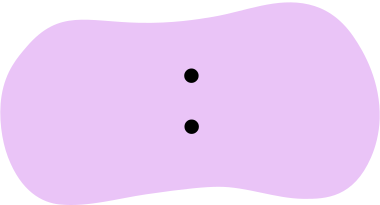
A colon is a punctuation mark that can be used in various ways. For example, it can be used to indicate a new speaker in a script, just like in the fluency activity. It can also be used to introduce a quotation after a complete sentence.
A colon should only be used before a quotation when the introduction is an independent clause or the quotation itself is a complete sentence.
You can use a colon before a quotation…
When the introduction is an independent clause
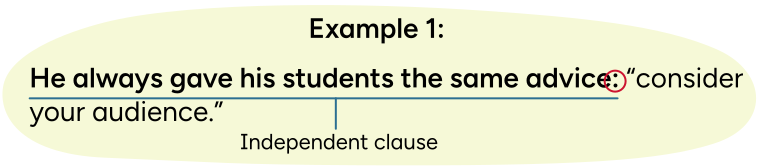
The sentence "He always gave his students the same advice: 'consider you audience,'" with the independent clause and colon indicated. The independent clause "He always gave his students the same advice" is followed by a colon before the quotation.
When the quotation is a sentence
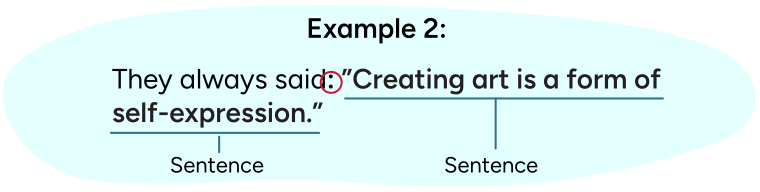
The sentence "They always said: 'Creating art is a form of self-expression,'" with the colon and sentence indicated. The colon comes before the quoted sentence "Creating art is a form of self-expression."
Explore the following examples and identify them as correct or incorrect based on their usage of colons before quotations.
Select the correct answer, then press Check Answer to see how you did.
Opinion writing
So, what do you think? Do you think creating art using AI is the same as using the creative process to make art in a more traditional way? Why or why not?
Your task is to write an opinion piece of writing based on the question that was raised. Try to include a quotation from the text, and be sure to use a colon to introduce your quotation.
An opinion piece of writing is one in which the author can express their own personal views on a particular topic or issue. The goal is to convince your reader to agree with your opinion. Your opinion should be supported by research, logic, and evidence.
You can use information from this learning activity, your background knowledge, and new information if you choose to research further.
It should follow this outline.
Press the following tabs to find out more.
- Grab the reader's attention by stating an interesting fact or questions about the topic
- Give background information (i.e., explain what AI-generated art and the creative process are)
- Clearly state your opinion about the topic
- Briefly list the key points you will be discussing in your opinion piece
- Explain your reasons, backed with supporting evidence, that support your opinion (i.e., explain why you feel AI art is or is not the same as engaging in the creative process, and provide specific examples)
- HINT: consider how human artists draw on personal experiences and emotions compared to AI-generated art
- HINT: think about the role of the artist’s personal touch versus the technical capabilities of AI
- HINT: think about copyright and plagiarism
- Consider counterarguments (opposing opinions) for your point of view and address them (i.e., plagiarism / copyright, collaborative creativity)
- Summarize your main points and state your opinion again
- End with a thought-provoking statement or question to leave the reader thinking critically about the topic
Press the Sample Introduction button to learn more.
Imagine a world where robots create stunning paintings and write beautiful songs. With the rise of artificial intelligence (AI), this idea is no longer just science fiction. AI-generated art is becoming more common, but can we truly say that making AI art is the same as engaging in the creative process? I believe that while AI-generated art can be impressive, it is not the same as human creativity. However, AI can still be a valuable tool for artists and can contribute to the art world in unique ways.
Use the following success criteria checklist to complete your opinion piece.
Success criteria
You may wish to write your opinion piece in cursive or type it out.
Cursive practice
Try it in cursive!
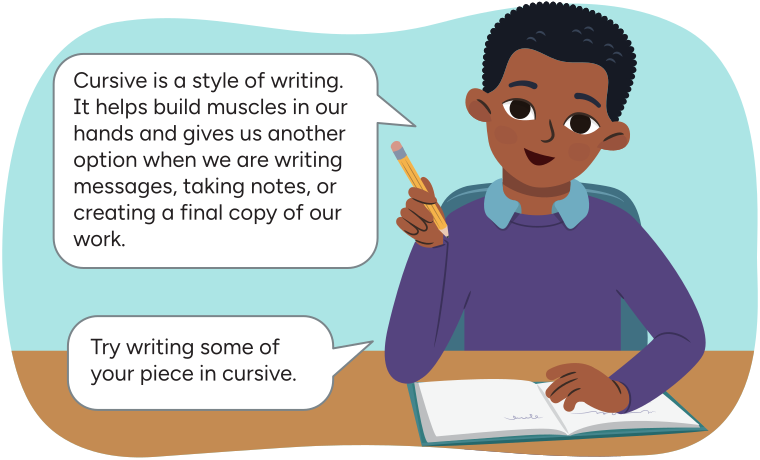
Arthur saying: Cursive is a style of writing. It helps build muscles in our hands and gives us another option when we are writing messages, taking notes, or creating a final copy of our work. Try writing some of your piece in cursive.
Let’s review cursive writing!
Check out the following animation of how the word “creativity” is written in cursive, then review the tips for cursive writing provided.
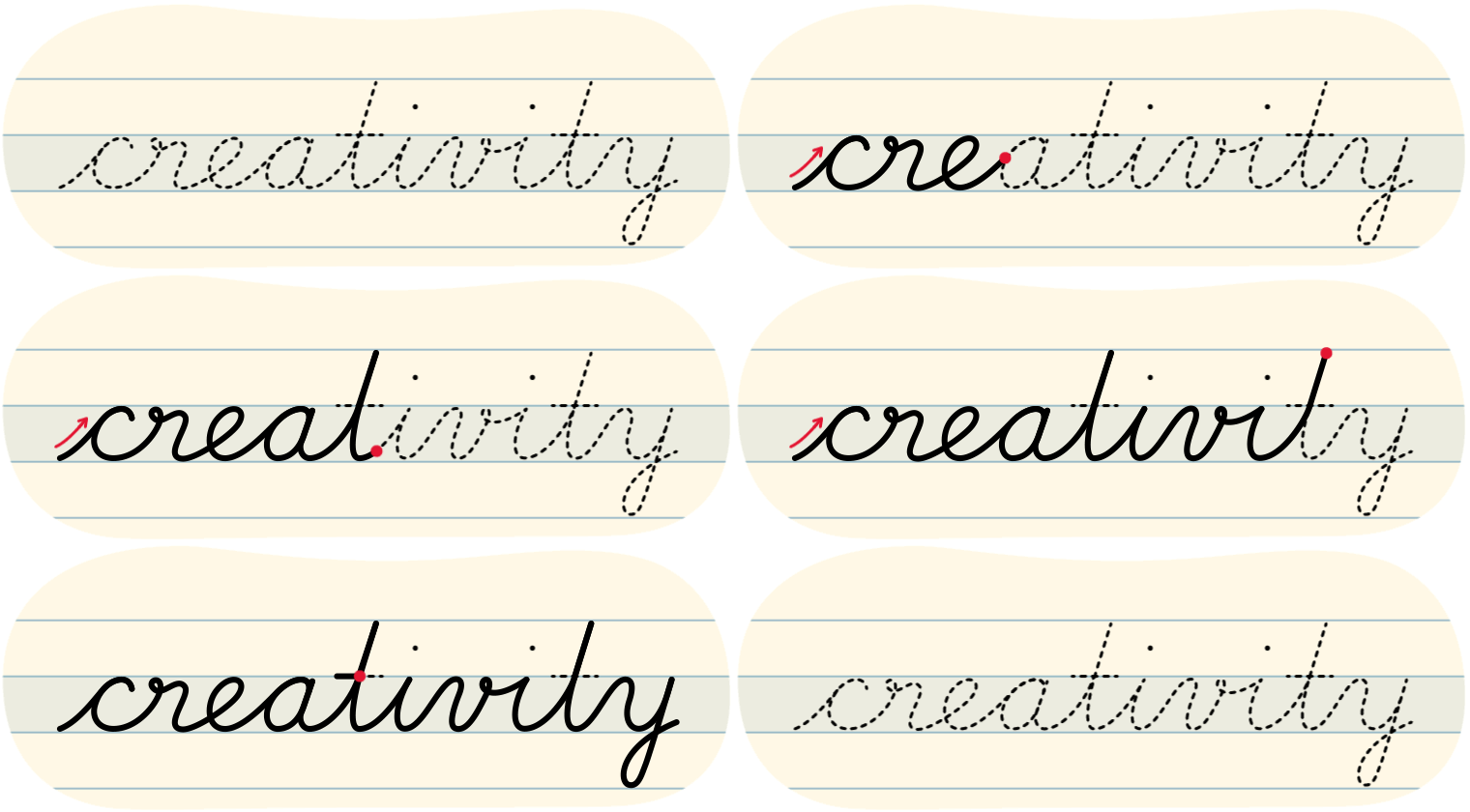
Tips for cursive letters
- When we write in lowercase, we always begin at the bottom
- When we write in uppercase, we can start from the top or the bottom
- Try to keep the pencil on the page until you are done the word
- Try to press gently as you write so that your hand can move easily across the page
- Take your time to make sure that you are writing clearly and evenly
Left-handed tips for cursive writing

Explore the video on Left-Handed Tips to learn more.
Typing practice
Typing is a great skill to develop! When we need to use a computer or tablet keyboard, knowing how to type helps us:
- take notes
- respond to messages
- create final drafts of our work.
Explore the following image to see what fingers are used to type each letter or number.
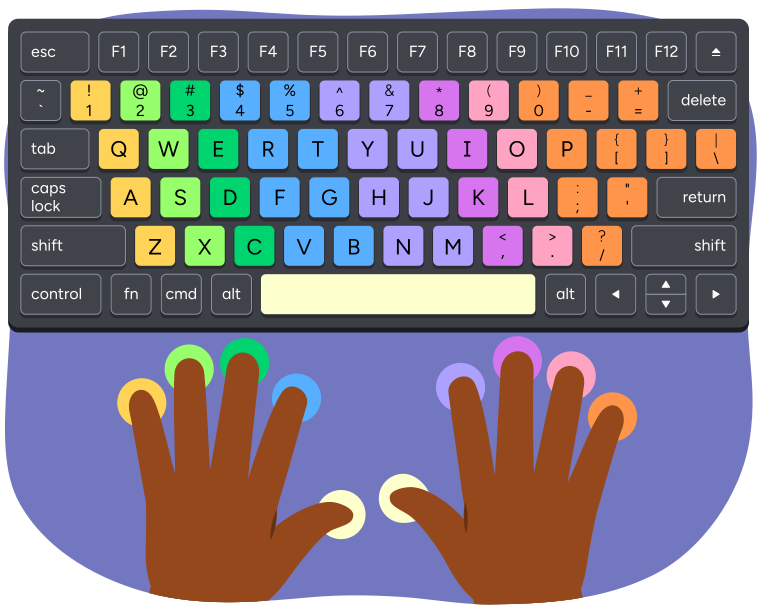
A keyboard and hands showing which fingers are used to press each key when typing.
The left pinky finger presses the keys 1, Q, A, and Z.
The left ring finger presses the keys 2, W, S, and X.
The left middle finger presses the keys 3, E, D, and C.
The left index finger presses the keys 4, 5, R, T, F, G, V, and B.
The left or right thumb presses the space bar.
The right index finger presses the keys 6, 7, Y, U, H, J, N, and M.
The right middle finger presses the keys 8, I, K, and comma.
The right ring finger presses the keys 9, O, L, and period.
The right pinky finger presses the keys 0, minus, equal, P, open bracket, closed bracket, backslash, semicolon, apostrophe, and forward slash.
We use specific muscles in our hands to type! It’s important to practice so that it becomes easier to type correctly without putting too much pressure on our hands and our wrist.

Fluency
You have been asked to share your perspective at the local school that is considering integrating AI software into their arts program. When speaking in front of a group, it is important to speak and read fluently! Practise your opinion piece using the following checklist so you feel prepared.
Fluency is the ability to identify words correctly and read a text at an appropriate rate with ease, pace, automaticity, and expression. With proper phrasing and a focus on punctuation, the reader will gain more meaning from the text.
Use the following checklist to self-assess your fluency.
Fluency checklist
If possible, practice in front of someone else and seek feedback on the above criteria. Based on these criteria, what is something you feel you did well and what is something you will focus on in the future?
Let’s check!
Check your understanding of concepts learned in this learning activity through the following multiple-choice activity.
Select the correct answer, then press Check Answer to see how you did.
Putting it all together
Choose one question from each of the following categories to respond to in a method of your choice. You will be responding to four questions in total.
| Category | Choice 1 | Choice 2 | Choice 3 |
|---|---|---|---|
| 1. Knowledge and Understanding | What are the main steps involved in the human creative process for making art? | How does the AI-generated art process differ from the human creative process? | How can AI-generated images be infused with human ideas to create a collaborative art piece? |
| 2. Personal Connections | Have you ever created a piece of art? How did you feel during the creative process? | If you could use an AI tool to create art, what kind of art would you make and why? | Do you think using AI to help create art makes it less personal? Why or why not? |
| 3. Critical Thinking | What are some advantages and disadvantages of AI-generated art? | Do you think AI can truly understand and express human emotions through art? Why or why not? | How might the use of AI in art change the future of the art world? |
| 4. Transferable Skills | What did you learn about copyright and plagiarism in art, and how can that knowledge be applied to other subject areas? | What skills did you develop in explaining the differences between AI- and human-generated art that can help you in presenting information in other subjects? | When you evaluate AI-generated art, what critical thinking skills are you using that could be applied to problem-solving in other areas? |
Reflection
As you read the following descriptions, select the one that best describes your current understanding of the learning in this activity. Press the corresponding button once you have made your choice.

I feel...
Now, expand on your ideas by recording your thoughts using a voice recorder, speech-to-text, or writing tool.
When you review your notes on this learning activity later, reflect on whether you would select a different description based on your further review of the material in this learning activity.
Discover MoreCreate two pieces of art – one should be created using traditional methods (i.e., drawing, painting, sculpting) and the other should be created using an artificial intelligence platform online. Reflect on both pieces of art that you created and respond to the following questions.
- What was your inspiration for each art piece? Was it the same or different?
- Describe the steps you followed when creating each piece of art. How were they the same and different?
- Which process did you find more enjoyable? Challenging? Why?
- Do you think AI-generated art can be considered a form of creative expression? Why or why not?