





Garrett Morgan was born on March 4th, 1877 in Paris, Kentucky. He was the seventh of eleven children. Garrett’s mother was of African descent and his father was an African American who was formerly enslaved and freed in 1863. Garrett finished his elementary school education, but never went to high school. When Garrett was 14, he moved to Cincinnati and found work as a handyman to a wealthy landowner. He also hired a tutor so that he could continue his education.
Learning goals
We are learning to…
- analyze and explain how the knowledge and skills developed in this grade support learning in various subject areas and in everyday life, and describe how they enhance understanding and communication
- read and comprehend various complex texts, using knowledge of words, grammar, cohesive ties, sentence structures, and background knowledge
- draft complex texts of various forms and genres, including narrative, expository, and informational texts, using a variety of media, tools, and strategies
- make revisions to the content, elements of style, patterns, and features of draft texts, and add, delete, and re-sequence sentences to improve clarity, focus, and coherence, and edit draft texts to improve accuracy and style, checking for errors in spelling, punctuation, grammar, and format
Success criteria
I am able to…
- explore texts and videos about diverse inventors, respond to comprehension questions, and record jot notes about their lives, inventions, and how they impacted the world
- make connections between creativity, technology, innovation, and inventions and how they impact society
- analyze, through a series of questions, how my learning supports learning in various subject areas and everyday life
- write a series of journal entries about one of the inventors I learned about
- edit and revise my journal entries and practice them for fluency
The most important invention
An invention is something that is intentionally created. Let’s check out the word “invention” by breaking it down into morphemes.
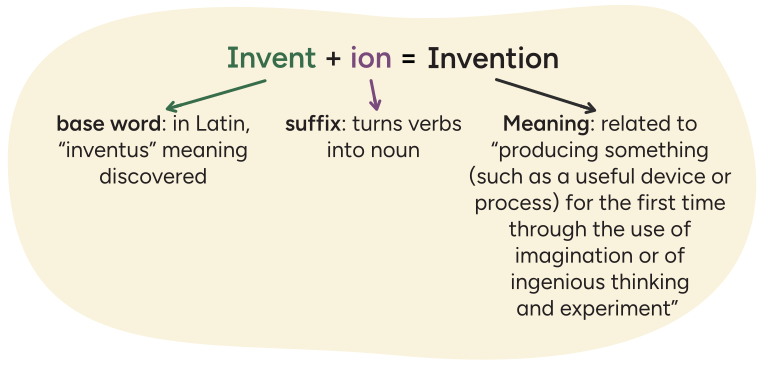
The word "invention" broken down into morphemes. The base word "invent" (from the Latin word "inventus," meaning discovered) is combined with the suffix "ion" (which turns verbs into nouns) to make the word "invention," which means "related to 'producing something (such as a useful device or process) for the first time through the use of imagination or of ingenious thinking and experiment.'"
Can you think of any famous inventions or inventors? Brainstorm a list of ideas in a method of your choice. Explore the following images to help guide your thinking.

Pause and Reflect
Pause and reflect
Using the list you created, do you feel there is one invention that is considered the most important? Why do you think it is the most important? Explain your thinking in a method of your choice.
In this lesson, you will be learning about creative and innovative inventions from diverse backgrounds, making connections about how creativity and innovation can come from various experiences to solve real-world problems.
Exploring vocabulary
Pause and Reflect
Pause and reflect
Based on these definitions, answer the following questions.
- What do you think these words have in common?
- How is technology closely linked to creativity, which can result in innovations or inventions?
Brainstorm your ideas in a method of your choice.
Innovation cannot happen without creativity and invention! These three ideas are very much linked together:
- Creativity inspires new approaches, which are put into action through the art of innovation.
- Innovation transforms creative ideas into practical solutions that solve real-world problems and improve exisiting processes and products
- Invention is the final, real, and often touchable result of this process .
Now, let’s learn about a few of these creative inventors!
Creative and innovative inventions
In this section of the learning activity, you are going to explore diverse and creative inventors who used innovation to solve real word problems. As you are exploring, take jot notes about the inventor and invention.

Student Tips
Student tips
A jot note is a brief, informal sketch or note that is made quickly when reading. Jot notes should be brief and concise and highlight key information.
As you record jot notes, you should consider the following guiding questions.
- What was the inventor’s background and upbringing?
- What problem did they seek to solve with their invention?
- How did their invention impact society or their field?
- What challenges did they face along the way?
- How was their invention innovative and creative?
You can use the graphic organizer provided or another method of your choice to record your jot notes.
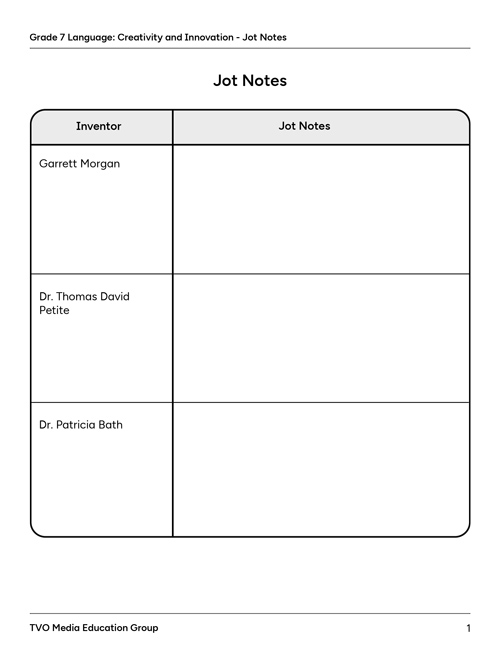
Complete the fillable and printable Jot Notes in your notebook or using the following document. If you would like, you can use speech-to-text or audio recording tools to record your thoughts.
Garrett Morgan
Begin by reading about the inventor Garrett Morgan in the following e-book.
Garrett Morgan
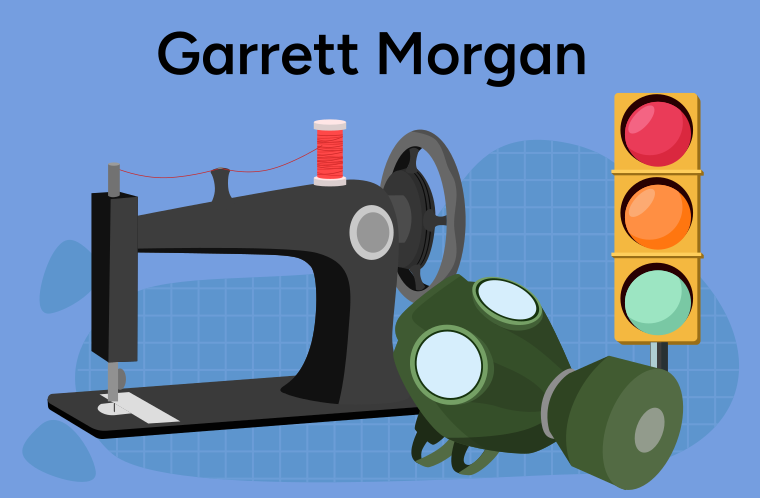
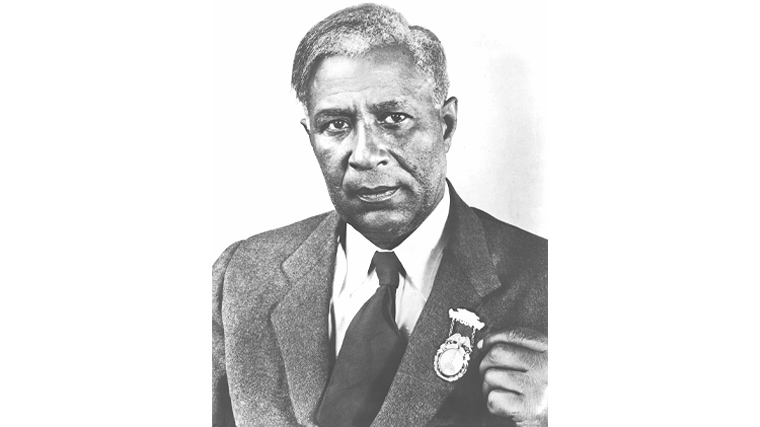
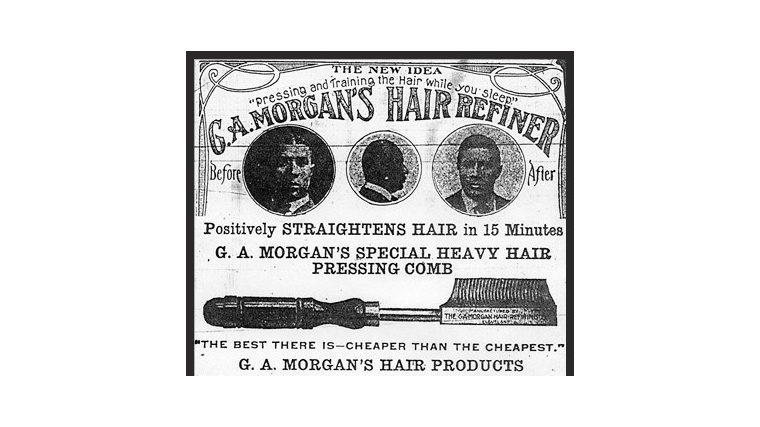
In 1895, Garrett moved to Cleveland where he began repairing sewing machines for a living, eventually opening his own repair shop. As he worked, he learned more about the sewing machine and obtained a patent for an improved sewing machine. This was one of his first inventions. After this, Garrett invented a hair refining company that offered hair care, including hair straightening cream and a comb that he developed. This company gave Garrett the finances that he needed to continue to innovate products.
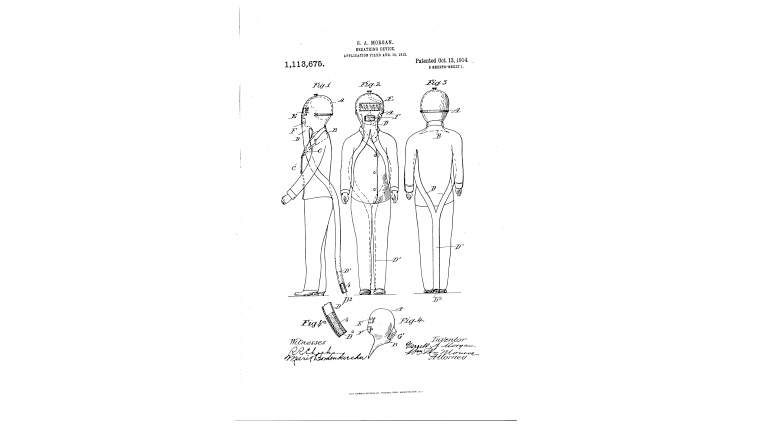
When Garrett heard about deadly factory fire in which 146 women perished, he knew he wanted to create a device that could help. In 1914, Garrett patented a breathing device, also called a “safety hood,” that would provide users with safer breathing in the event of smoke, gas, or other pollutants. This eventually was used to design gas masks that were used in World War One.
Garrett received some backlash and hesitation from buyers, particularly in the South. Even though advancements had been made for equal rights during the civil rights movement, there were still tensions and, therefore, some people would not buy Garrett’s inventions because of his skin colour. To sell his products, he hired a white actor to pose as “the inventor” so that he could make more sales and be more successful.
In 1923, Garrett Morgan witnessed a carriage accident at an intersection in Cleveland that was known for having issues. After he witnessed this, he knew he had to create something that would alert drivers when it was time to stop. Therefore, he invented a three-way traffic light.
Eventually, Garrett sold the rights of his traffic light invention to General Electric. Outside of his inventing career, Garrett also supported the Black community throughout his lifetime by actively advocating for equal rights. In 1943, Garrett Morgan developed glaucoma, a medical condition impacting sight, and lost most of his vision as a result. Due to other health problems and illness, he died in 1963, leaving behind three children. In 2005, he was inducted into the National Inventors Hall of Fame in Ohio, and his prototype of the traffic signal is on display at the African American Museum in Cleveland. Lastly, he has a school named after him; the Garrett Morgan School of Engineering and Innovation in Cleveland.
Check out the following video to learn more about Garrett Morgan’s traffic light invention and how this creation helped to reduce the number of car accidents and improve pedestrian safety.
Check your understanding in the following multiple choice questions. Select the correct answer, then press Check Answer to see how you did.
Now, complete the questions using jot notes in your graphic organizer or in another method of your choice.
Dr. Thomas David Petite
Next, read about the inventor Dr. Thomas David Petite in the following e-book.
Dr. Thomas David Petite Dr. Thomas David Petite e-reader

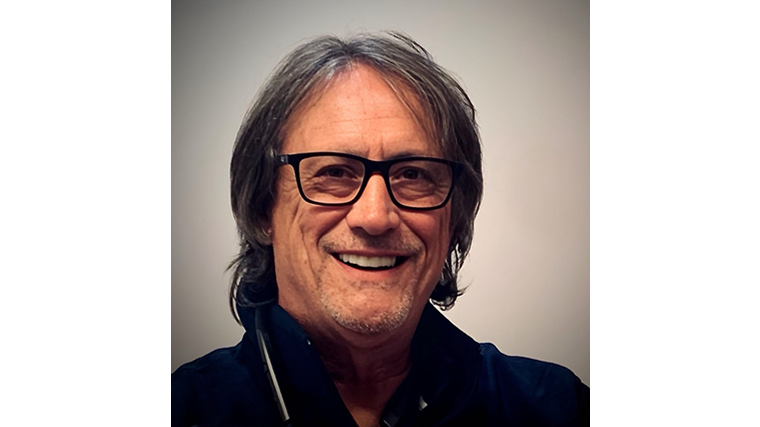
Dr. Thomas David Petite, who went by “David,” was born on May 30th 1956, in Atlanta, Georgia. He is a member of the Fond du Lac Band of Lake Superior Chippewa tribe in Wisconsin, and his dad was a former Chief of the community. David was heavily influenced by the time he spent with his family, especially his father, as they taught him about his cultural heritage through their stories. Many of these stories shared were of Indigenous ancestors and their innovations to improve farming methods. Throughout his childhood, David would sit with his dad and tinker with radios, which led him to become fascinated with radio waves and wireless technology.
From this time on, David worked a lot with wireless technology. He created ways for devices to communicate with each other without using wires. His earliest invention, in 1984, was a personalized security system that was carried or worn by a person and could be activated with the push of a button. The device would send a signal to others so they could determine where to find the person who needs assistance.
In 1993, David founded StatSignal Systems, the first company to introduce wireless mesh technology to healthcare industries. By the late 1990s and early 2000s, David made significant contributions to the technology used in “Smart Meters” and the “Smart Grid” - such as the option for remote monitoring or controlling multiple devices at once. These systems helped manage electricity used in buildings and created more efficient ways to manage energy and other resources in general.
In 1994, David developed the Audio Internet Microlink (AIM), a communication system for the hearing impaired. This innovation helped convert spoken words into text, allowing for real-time communication and increasing accessibility for individuals who are deaf or hard of hearing.
In 2009, David started the “Native American Intellectual Property Enterprise Council” (NAIPEC), an organization that helps young Indigenous inventors protect their inventions. David works with individuals to teach them about intellectual property, which is a creative invention or piece of work that a person or company can own the rights to. Along with this, he encourages creativity and sets up inventor competitions in schools because he believes anyone can invent and create with the right information and motivation.
Check your understanding in the following multiple-choice questions. Select the correct answer, then press Check Answer to see how you did.
Now, complete the questions using jot notes in your graphic organizer or in another method of your choice.
Dr. Patricia Bath
Next, read about the inventor Dr. Patricia Bath in the following e-book.
Dr. Patricia Bath Dr. Patricia Bath e-reader
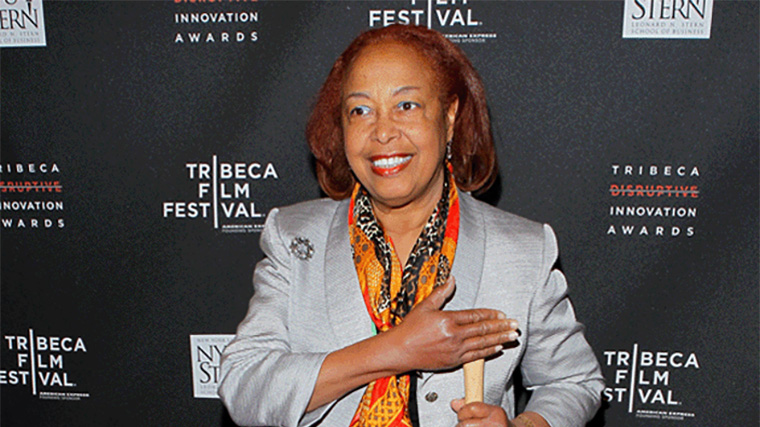
Dr. Patricia Era Bath was born on November 4th, 1942 in New York City. Her father, Rupert, was the first Black motorman for the subway system, and her mother, Gladys, was a housewife. Patricia was always interested in science, particularly biology. In 1959, at a high school summer program, Patricia attended a cancer research workshop sponsored by the National Science Foundation. It was at this foundation that she came up with a way to mathematically predict cancer cell growth. She was awarded a Merit award and went on to continue her studies in science.
When she graduated high school, Patricia went to Hunter College where she earned a bachelor’s degree in 1964. After this, she obtained her medical degree from Howard University and accepted an internship at Harlem Hospital. During her internship, she noticed that Black patients suffered more often from preventable blindness and visual impairments, and were eight times more likely to develop glaucoma simply because they did not have the same access to eye care. This inspired her to develop a new field, community ophthalmology (a branch of medicine focused on the diagnosis and treatment of eye disorders), and co-found the American Institute for the Prevention of Blindness, which established that “eyesight is a basic human right.” She wanted to ensure that everyone had equal access to affordable eye treatment.
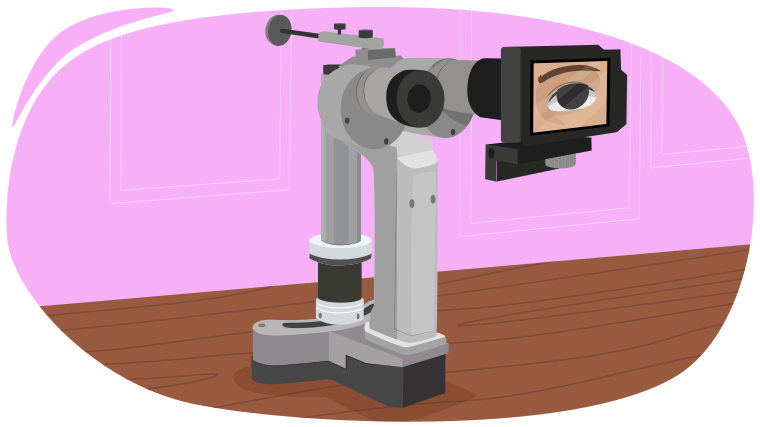
In 1975, she became the first woman to join the staff at the Department of Ophthalmology at UCLA’s Jules Stein Eye Institute. She began to work with patients diagnosed with cataracts, which are cloudy or opaque areas of the lens in the eye, that, if left untreated, lead to blindness. This inspired her new surgical technique, and in 1981, she began to work on her most well-known invention, the Laserphaco Probe. This probe used laser technology to treat cataracts more precisely and less painfully.
With her Laserphaco Probe, she was able to restore the sight of individuals who had been blind for more than 30 years. The device was used worldwide to improve the vision of millions of people.
On May 30th, 2019, Patricia passed away from complications due to cancer. In 2021, she was welcomed into the International Women in Medicine Hall of Fame and, in 2022, she was inducted into the National Inventors Hall of Fame. Additionally, in March of 2024, she joined the National Women’s Hall of Fame. Dr. Patricia Bath’s work and advocacy have not only advanced medical technology but also brought attention to the importance of accessible and equitable healthcare.
Check out the following video to learn more about Dr. Patricia Bath’s invention, the Laserphaco Probe, and how she revolutionized cataract surgery by introducing the use of a laser beam.
Check your understanding in the following multiple-choice questions. Select the correct answer, then press Check Answer to see how you did.
Now, complete the questions using jot notes in your graphic organizer or in another method of your choice.

Social Emotional Learning
Social emotional

Great work! Take a break before continuing on to the next part.
Inventor’s journal

Now that you have learned about three individuals who harnessed creativity and innovation to invent solutions that would solve real-world problems, you are now going to write an “Inventor’s Journal” with at least three journal entries in a method of your choice that include:
- a brief biography to introduce the inventor you selected
- a description of one of their inventions, including the purpose and how it works
- a reflection on the challenges they faced and how they overcame them
- the impact their invention has had on the world

Try It
Try it
You may wish to illustrate your journal entries with drawings or diagrams of their inventions
Once you have finished writing your journal entries, you will edit and revise them using the following checklists. Editing and Revising is one part of the writing process. Let’s review in the following video.
Use the following checklists to edit and revise your writing.
Editing and revising checklist
Editing:
Revising:

Fluency
Now that you’ve created your journal entries, practice reading them with a focus on fluency.
Fluency is the ability to identify words correctly and read a text at an appropriate rate with ease, pace, automaticity, and expression. With proper phrasing and a focus on punctuation, the reader will gain more meaning from the text.
Choose one of your journal entries and practice reading it with fluency, focusing on the criteria outlined.
Use the checklist provided to self-assess your own fluency. If possible, share
your journal entry with someone else and ask them to provide feedback on your fluency.
Fluency checklist
Based on the checklist, choose one area of fluency to focus on and set a goal for yourself. What strategies could you use to help you achieve this goal?

Let’s check!

Check your understanding by sorting the following information into each of the inventors that you learned about today. Place the cards into categories that best match. Use the arrow buttons to navigate between cards.
Putting it all together
Choose two of the following questions to respond to in a method of your choice.
- How does learning about diverse inventors help you understand the barriers that still exist for Black, Indigenous, and racialized individuals to have equal opportunities in their chosen careers?
- Can you give an example of how the problem-solving skills used by inventors can be applied to another subject you are studying in school?
- Discuss how teamwork and collaboration, often used in the development of inventions, are important in both school projects and everyday life.
- Describe how the ability to analyze and explain an invention can help you become a better critical thinker.
- How can learning about the diverse backgrounds of inventors inspire you to pursue your own interests and goals?
Reflection
As you read the following descriptions, select the one that best describes your current understanding of the learning in this activity. Press the corresponding button once you have made your choice.

I feel...
Now, expand on your ideas by recording your thoughts using a voice recorder, speech-to-text, or writing tool.
When you review your notes on this learning activity later, reflect on whether you would select a different description based on your further review of the material in this learning activity.
Press ‘Discover More’ to extend your skills.
Discover MoreThink about your own life and current society. What is one real-world problem that you feel needs to be solved? In a method of your choice, create your own innovative idea to solve this problem. It could be based on a solution that already exists, or it could be an entirely new idea.
Record your ideas in a method of your choice.