Learning goals
We are learning to…
- select and use appropriate digital and media tools to support the design process and address authentic, relevant, real-world problems by developing and proposing innovative solutions
- connect, compare, and contrast the ideas expressed in texts and their knowledges and lived experiences, the ideas in other texts, and the world around them
- make local and global inferences, using explicit and implicit evidence, to explain and support their interpretations about various complex texts
- evaluate the strategies and tools used to develop ideas and organize content for texts of the chosen forms, genres, and media, explain which were most helpful, and suggest steps for future improvement as a text creator
Success criteria
I am able to…
- explore a non-fiction and fiction text that feature innovative and creative solutions to climate change, making inferences and connections
- identify causes, effects, and solutions to climate change
- propose my own solution to climate change using media designs and tools
- share my knowledge about climate change (causes, effects, solutions) with others though a social media post

What do you know about climate change?
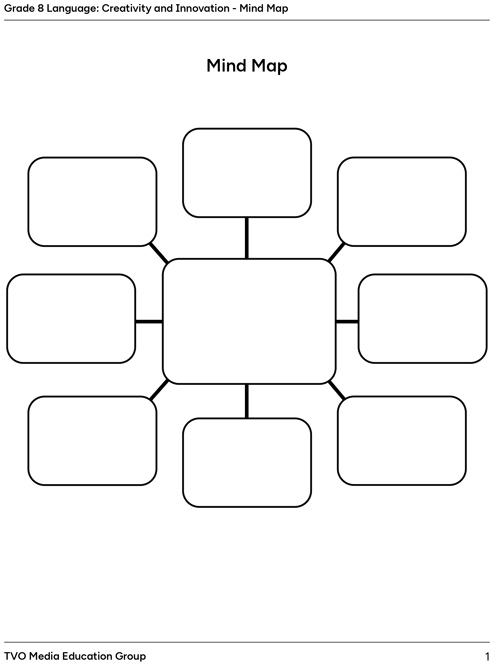
In a method of your choice, or using the mind map provided, brainstorm what you already know about climate change. Specifically brainstorm the causes and effects of climate change, as well as any solutions or ways of mitigating climate change you may already know about.
Complete the Mind map in your notebook or using the following printable document. If you would like you can use speech-to -text or audio recording tools to record your thoughts.
Press the Activity button to explore Mind map.
Explore the following images to help with your brainstorming.
Description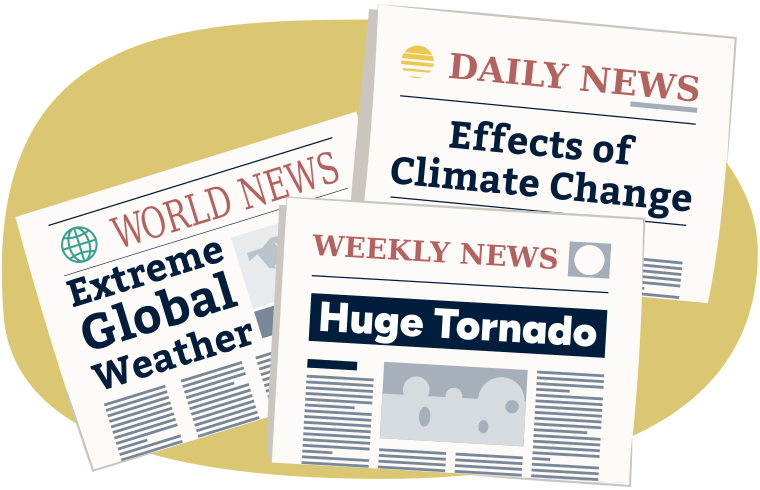
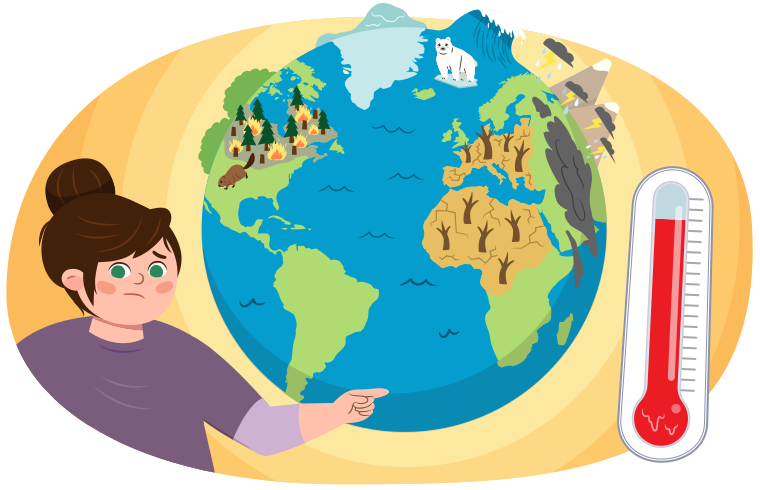
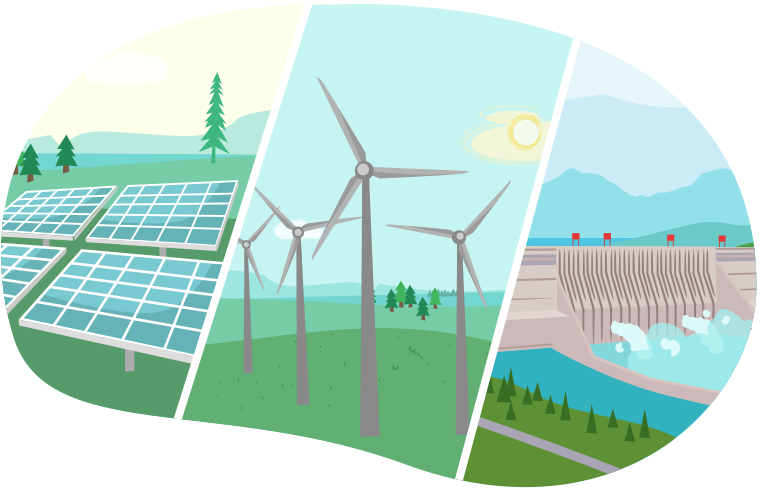
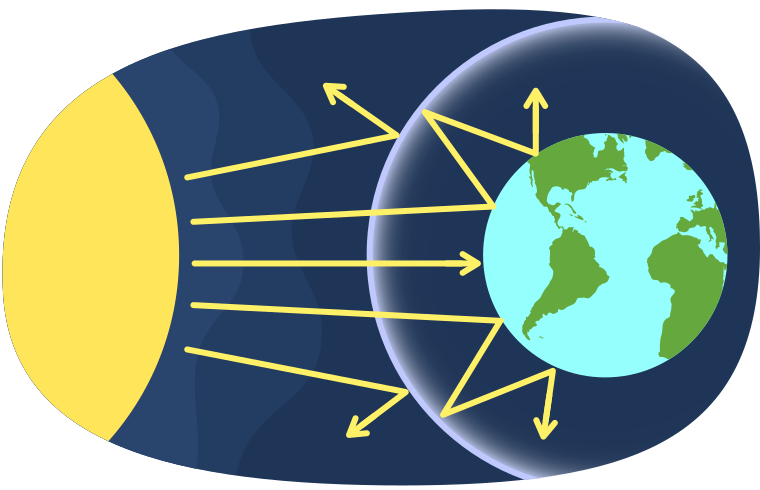
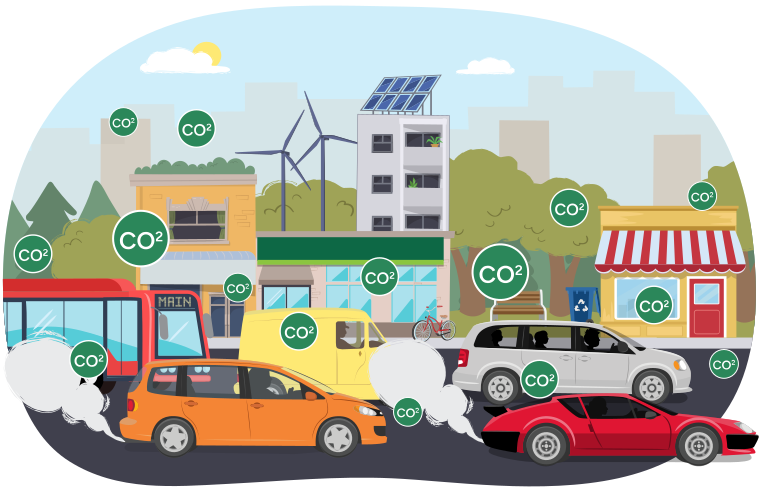
Image 1: Several newspaper headlines about extreme weather. The headlines are the following: effects of climate change, huge tornado, severe floods sweep cars, extreme global weather, brutal heatwave in the U.S., drought hits.
Image 2: A person pointing at a thermometer with a sun in the background. In the foreground there is a globe that looks dry and some dead trees on the surface.
Image 3: Three images of renewable energy: one of solar panels, one of wind turbines, and one of a hydro-electric dam.
Image 4: A sun shining rays onto the earth. The sun rays are being trapped in the ozone layer.
Image 5: An image showing cars giving off carbon dioxide, floating in the air, and on land there are several green methods depicted to demonstrate carbon offsetting, like solar panels, recycling bins, wind turbines, bicycles, and trees.
Once you have finished, connect the ideas on your mind map. Draw lines to connect which causes are having which effects, and which solutions you feel are working to solve them.

How climate change is impacting the world
Climate change is a significant, long-term change in the world climate, which can be brought about by either human or natural factors. While there has always been variation in the Earth’s climate, there is agreement in the scientific community that human activity has increased the amount of greenhouse gases being released into the atmosphere. Because of this, it is leading to a significant increase in the Earth’s temperature — hence the expression “global warming.”
What is causing climate change? Well, there are many different causes, but the burning of fossil fuels is high on the list.
Explore the following BBC video entitled When The World Gets 1℃ Hotter to learn more about the concerns over fossil fuels.
Carbon dioxide absorbs heat from the Earth's surface and traps in the atmosphere, which causes the planet to warm. There are other causes of climate change beyond burning fossil fuels. These include deforestation, agriculture practices, industrial processes, waste management, transportation, energy production, and urbanization.
So, how is climate change impacting the world? Explore the carousel of images below, with descriptions, that highlight the effects of climate change.
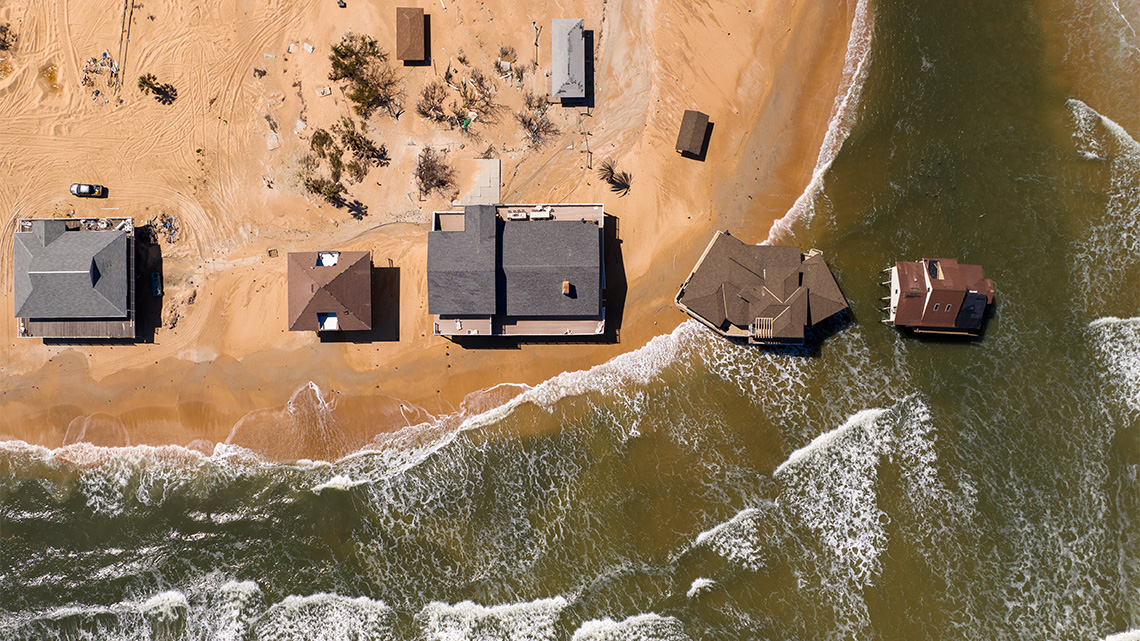
As oceans warm and sea ice and glaciers melt, there is a rise in sea levels. This will lead to flooding and coastal erosion.
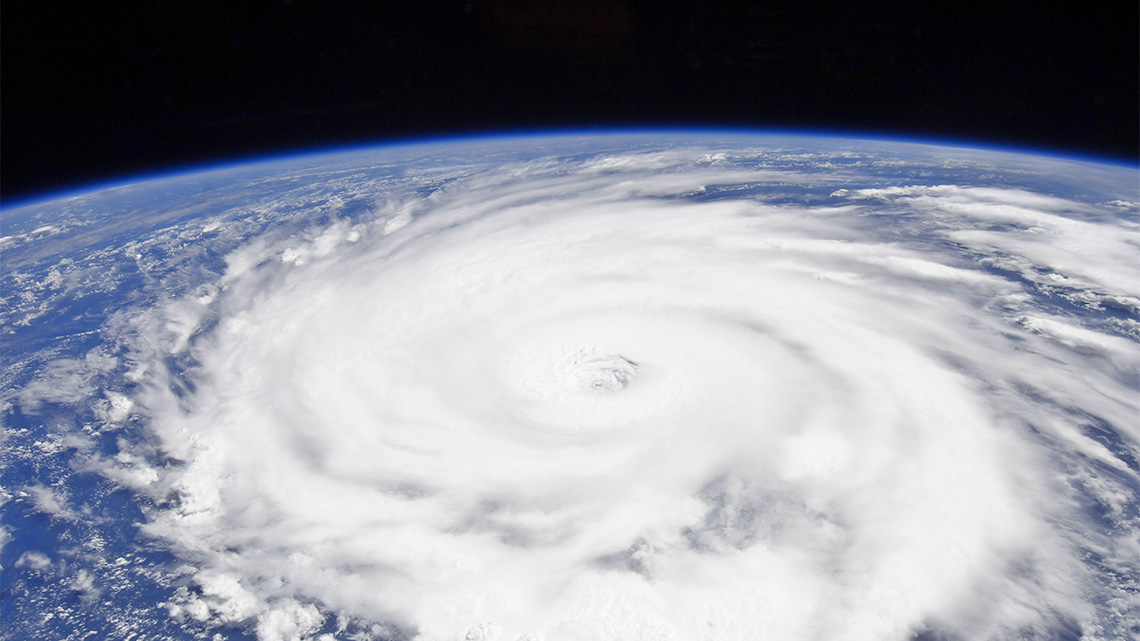
Warming temperatures cause intensified weather, so we are more likely to experience wildfires, hurricanes, tornados, heat waves, drought, etc.
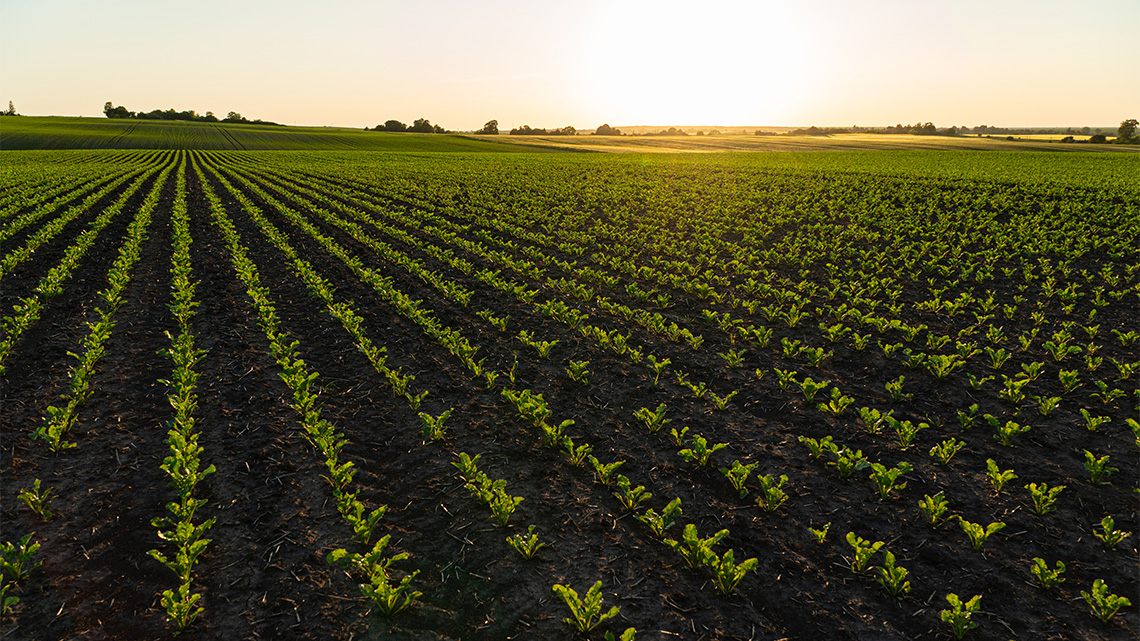
Changes to agricultural growing seasons as they lengthen with the weather will impact farmers and ecosystems. This could lead to food insecurity.
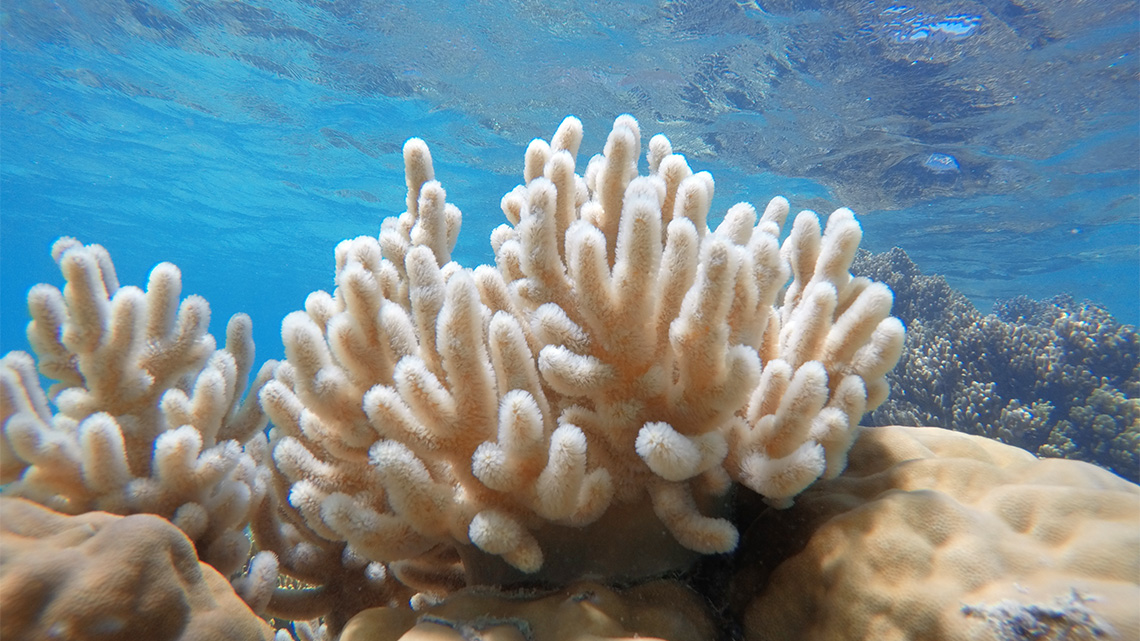
Impacts on biodiversity may cause habitat loss and species extinction. One example of this is coral bleaching.
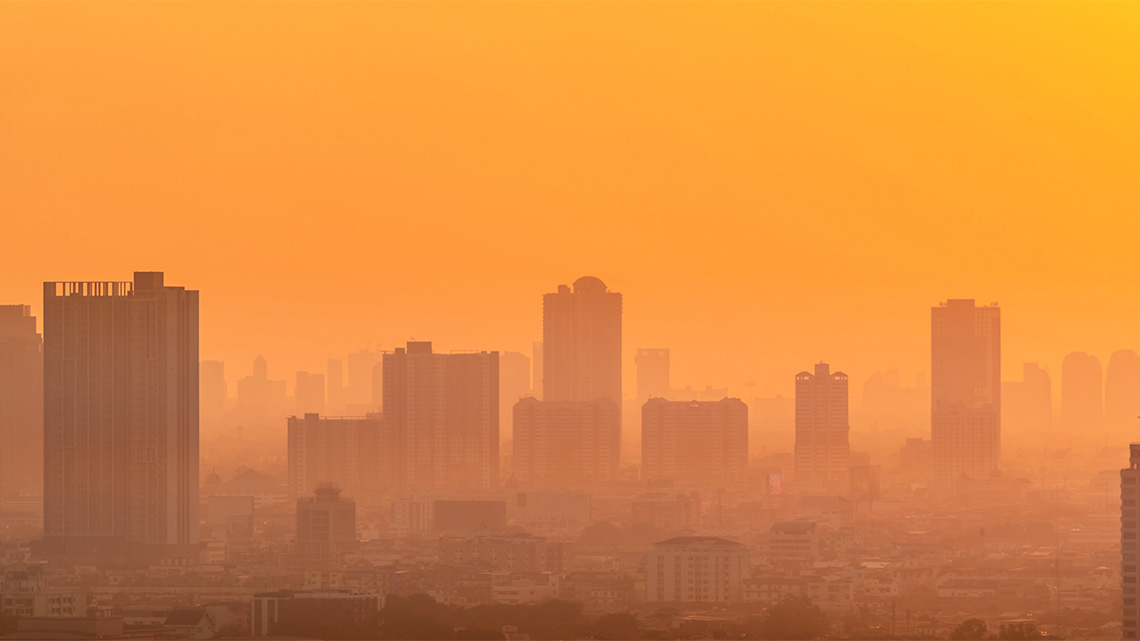
Human health is impacted as air quality worsens and the range of diseases increases.
Reading about innovative and creative solutions
Now that you have a general understanding of the causes and effects of climate change, it is time to explore some creative and innovative solutions. Scientists and other professionals, along with citizens around the world, are working using creativity and innovation to provide new solutions to help address the causes and effects of climate change.
In this section of the learning activity, you will explore a fiction and non-fiction text about innovative and creative solutions.

Vocab goals
A fiction text is imaginative storytelling that involves the creation of characters, setting, events, etc. that generally do not exist in the real world.
A non-fiction text is one that relies on factual (real and accurate) information about real people, places, and events.
As you work through the following content, you will be asked to answer comprehension questions that require inferencing. So, what is inferencing?
Press the What is Inferencing? button to learn more.
When you make an inference, you are using your background knowledge and clues from the text, video, or image, to draw a conclusion about what is happening when it is not directly stated. Inferences are an educated guess, or “reading between the lines”, to reach a logical conclusion.
When you respond to questions that require inferences, it is important to cite text evidence or details that support your conclusion. Here are a few sentence starters that you can use when citing text evidence:
- According to the text …
- According to the author …
- The author states …
- One example from the text is …
- On page ___, I noticed …
- The reason I think this is because …
“Ecotopia” by Ernest Callenbach (fiction)
Ecotopia is a novel written by Ernest Callenbach that offers an alternative nation in the United States that envisions an environmentally sustainable society. William Weston, a journalist and the novels main character, sets out to visit and report on Ecotopia. Ecotopia has built a society based on ecological principles, emphasizing sustainability, renewable energy, and a positive relationship with nature.
In this part of the activity, you will be making inferences.
Vocab goals
An inference is when you use clues or information you have to figure out something that isn’t directly stated.
As you explore three chapters from the novel, make note of any creative and innovative sustainable practices you notice that would combat climate change.
Vocabulary routine
Throughout this text you are going to encounter new vocabulary words. Listen to new vocabulary words in the audio clips below and use your knowledge of words and morphemes to spell these words with accuracy. Then, you will read them appropriately throughout the text.
Civilized
Driverless
Bucolic
Marauding
Picturephone
Unnervingly
Skepticism
Intermixture
Unorthodox

Did You Know?
Did you know?
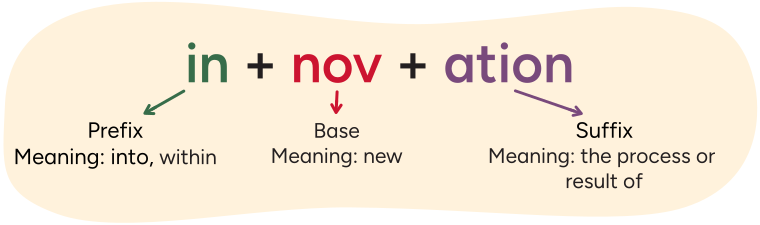
Remember -- a morpheme “is the smallest unit of meaning within words. It can either be a prefix, suffix, or a base word.” All words have at least one morpheme, but more complex words have more than one.
Source:
Government of Ontario. (n.d.-c). Grade 8 Language
Glossary. Curriculum and resources.
https://www.dcp.edu.gov.on.ca/en/curriculum/elementary-language/grades/grade-8/glossary#m
- A base word is a structural element that forms the foundation of a written word; any unit of a word to which a prefix or suffix can be added.
- A prefix is a morpheme that precedes a base to form a different word (e.g., trans- before form or act).
A suffix is a morpheme that is added to the end of a base to create a different word.
Press Let’s Check! to explore an example.

The streets of Ecotopia’s capital
Read the following excerpt from the novel Ecotopia’s section titled “The streets of Ecotopia’s capital”. When you are finished reading, answer the reflection questions that follow the text.
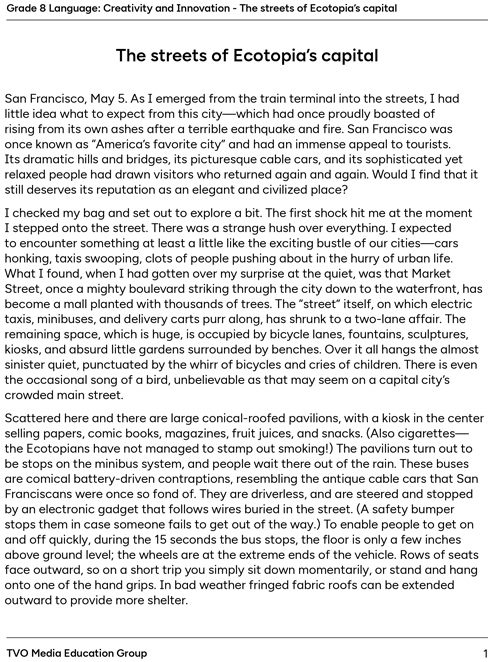
Press the Activity button to access the The streets of Ecotopia’s capital.
Activity(Opens in a new tab)
Pause and Reflect
Pause and reflect
Respond to the following comprehension questions in a method of your choice. If possible, discuss your answers with someone else who has read the novel.
- Describe the layout and design of the streets in Ecotopia’s capital. How do these innovative features contribute to environmental sustainability?
- What forms of transportation are predominantly used in Ecotopia's capital, and how do they compare to typical transportation methods in modern cities? Which methods do you think work to combat climate change?
- Based on the description of the capital's streets, what can be inferred about the Ecotopian approach to urban planning and its potential impact on climate change? (Consider: transportation, green spaces, air pollution, gas emissions, etc.)

Reading Time
Food, sewage, and “stable states”
Now read the second excerpt from the novel Ecotopia, from the section titled “Food, sewage, and “stable states””. When you are finished reading, answer the reflection questions that follow the text.
Access the following Food, sewage, and “stable states” to download a copy for reference.
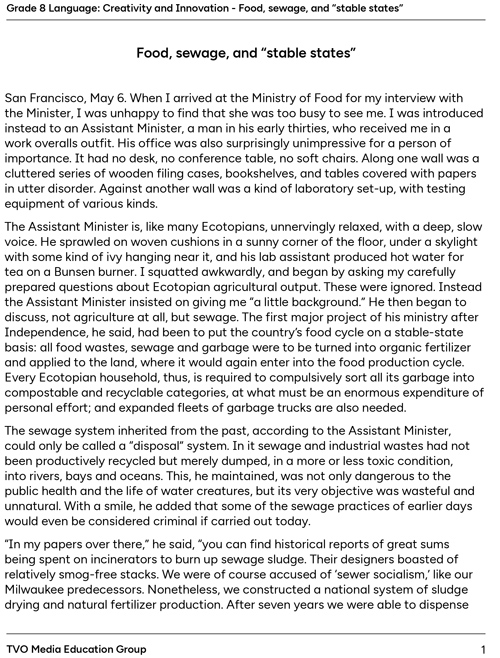
Press the Activity button to access the Food, sewage, and “stable states”.
Activity(Opens in a new tab)
Pause and Reflect
Pause and reflect
Respond to the following comprehension questions in a method of your choice. If possible, discuss your answers with someone else who has read the novel.
- Explain how food production and distribution are managed in Ecotopia. What creative and sustainable practices are highlighted in this chapter?
- How does the focus on local food production in Ecotopia help reduce carbon footprints a compared to food production on a global scale?
- Infer how modern cities could use Ecotopia’s methods for sewage and waste management as an innovative way to tackle climate change issues.
While Ecotopia is a fictional place created by the author, it offers very realistic solutions to climate change. Some of these solutions are reality and have been created by innovative and creative individuals who are working hard to address climate change.
Let’s explore some of these solutions in the accordions below.
Press the following tabs to find out more.
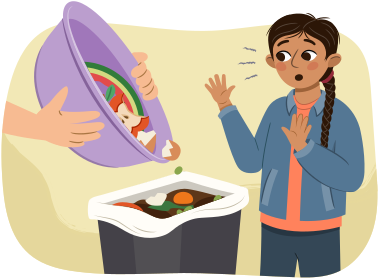
Did you know that almost one third of food produced is wasted? If we produced less food, it would mean using fewer resources like land, water, and livestock, which would benefit the environment and reduce emissions. Along with this, as food waste decomposes in landfills it produces greenhouse gases which contributes to global warming.
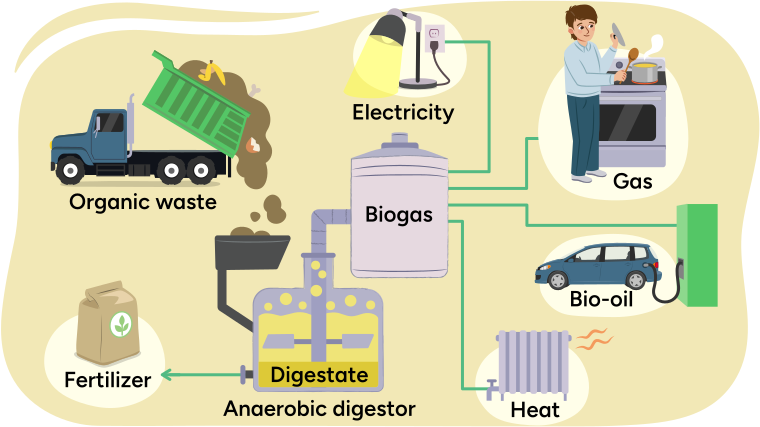
One creative innovator discovered that food waste could be turned into energy through a process called anaerobic digestion, and now companies around the world are attempting to implement this. In this process, organic food waste, along with manure and sewage, is broken down by microorganisms which produces biogas, composed of methane and carbon dioxide.
The biogas is then captured and used as a renewable energy source to generate electricity, heating, or even for fuel for vehicles. Additionally, any remaining byproduct, known as digestate, can be used as a nutrient-rich fertilizer for agriculture.
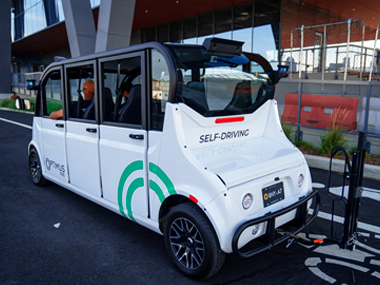
Transportation (cars, planes, trains, etc.) all contribute to climate change because they all rely on fossil fuels to operate. However, creative and innovative communities are using alternative options that are more sustainable for their city. Copenhagen, Denmark is one example of a city that is only using electric and autonomous buses as part of its public transportation.
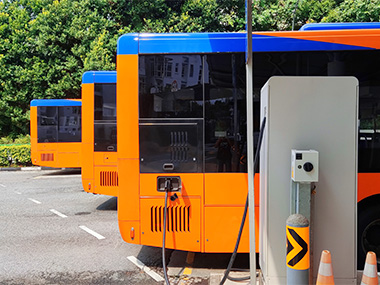
Electric buses are battery operated and be charged via charging stations, eliminating the need for fossil fuels and producing zero emissions. When charging, the stations use renewable energy sources such as wind or solar power. Autonomous buses are equipped with sensors and advanced algorithms that help them navigate the city.
Together, these changes reduce carbon emissions and serve as a model for sustainable urban mobility.
Green spaces include spaces like rooftop gardens, community gardens, parks, and green corridors. All provide opportunities for residents to grow their own food locally and improve wildlife habitats to enhance biodiversity.
Have you heard of a “sponge city”? A sponge city is an innovative, sustainable design that lessens the impacts of flooding in a city and improves the management of water. In a sponge city, infrastructure is built that allows the water to absorbed, stored, and reused effectively. This could include pavement that can absorb water, green roofs, rain gardens, and much more.
A vertical farm is a way of growing crops in stacked layers on vertical walls or towers. Vertical farms sometimes use artificial lighting, control systems, and advanced technology that makes the best growing conditions and therefore produces optimal crops. Vertical farms are often run indoors and near cities, so they can provide food year-round and reduce the need for transportation.
A rooftop farm is a farm, that involves growing foods, plants, and other crops on the rooftops of buildings. This is crucial in city spaces where they may not be a large area of ground-level farming available.
This innovative approach to agriculture promotes local food production, reduces the amount of travel required by food, absorbs heat in the city, promotes biodiversity, encourages community involvement, and contributes to sustainable development.
Explore the following images to see examples of these green spaces.
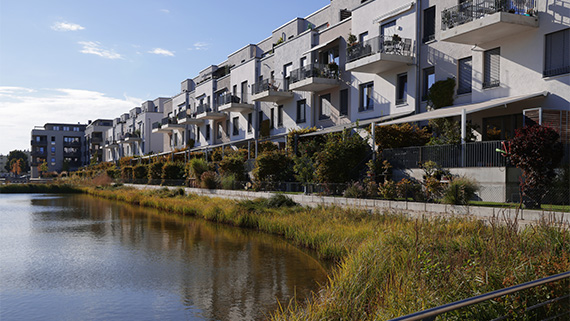
In Berlin, Germany plants grow out of retained rainwater as part of the “sponge city” design.
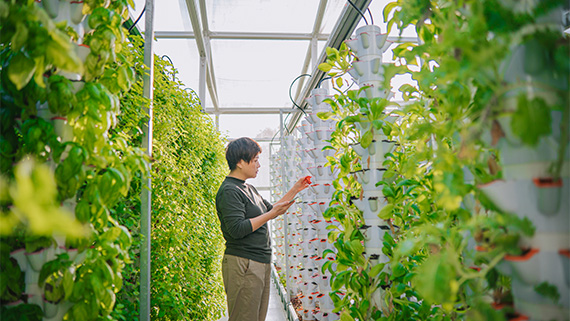
A vertical strawberry farm in Québec, Canada.
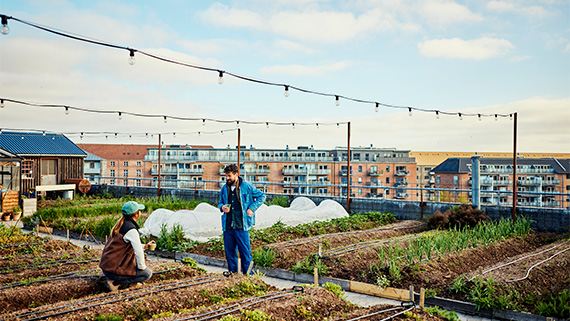
A rooftop farm.
Renewable energy is one key way to address climate change. Renewable energy includes solar, biomass, hydroelectric, wind, and geothermal energy production. All of these forms of renewable energy use natural resources, such as wind and sunlight, that can be replenished and reduces the need to use non-renewable resources such as fossil fuels.
Explore these types of renewable energy in the carousel below.
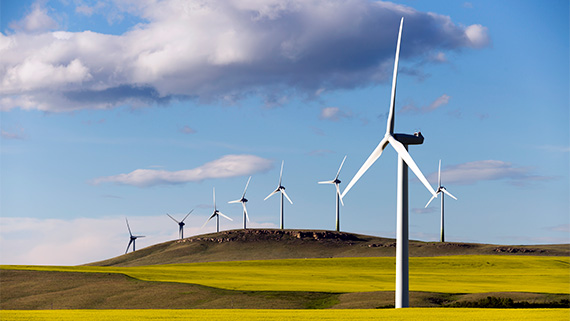
Wind energy uses wind power to turn turbines and convert this energy into electricity.
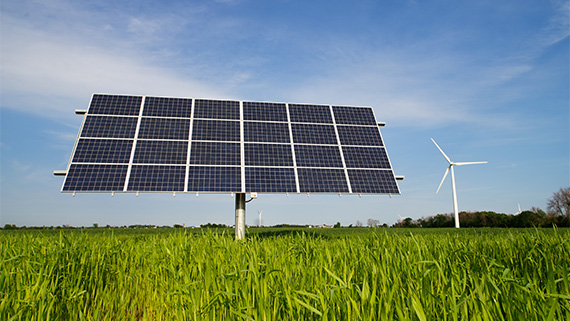
Solar energy absorbs sunlight and turns it into heat, electricity, or hot water through solar cell systems.
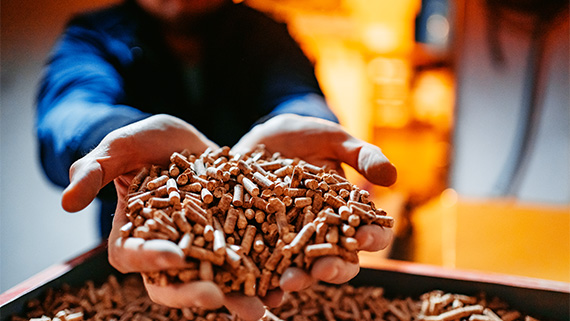
Biomass is an organic matter found in plants and organisms that is harvested, turned into pellets, and burned to produce energy.
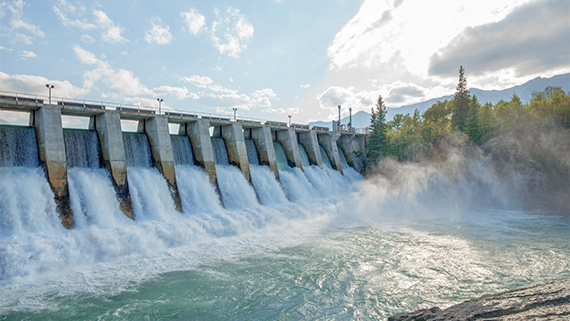
Hydroelectric power uses water which flows through a dam to produce electricity.
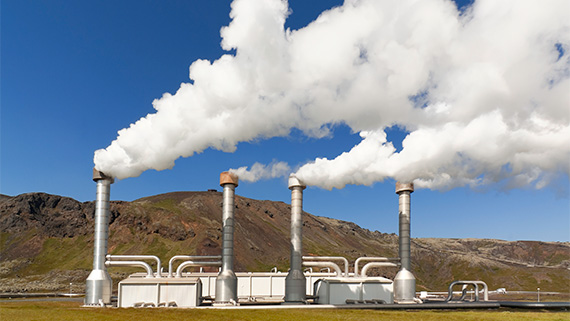
Geothermal heat is below the Earth’s surface and can be derived and converted to steam to produce geothermal energy.
Image 1
Several large wind turbines for power generation standing tall against a clear sky.
Image 2
A solar power setup featuring solar panels installed in the grass.
Image 3
Close-up of hands holding a handful of wood pellets.
Image 4
The Kananaskis Dam on the Bow River in Alberta, Canada.
Image 5
Steam rising from the Hellisheidi Power Station in Iceland. The image shows the geothermal power plant with large pipes and structures amidst a rugged, volcanic landscape.
Making connections
One effective reading strategy is making connections. When exploring a text, you can make connections to other texts, your personal experiences, and the world around you. Making connections can enhance your understanding of a text.
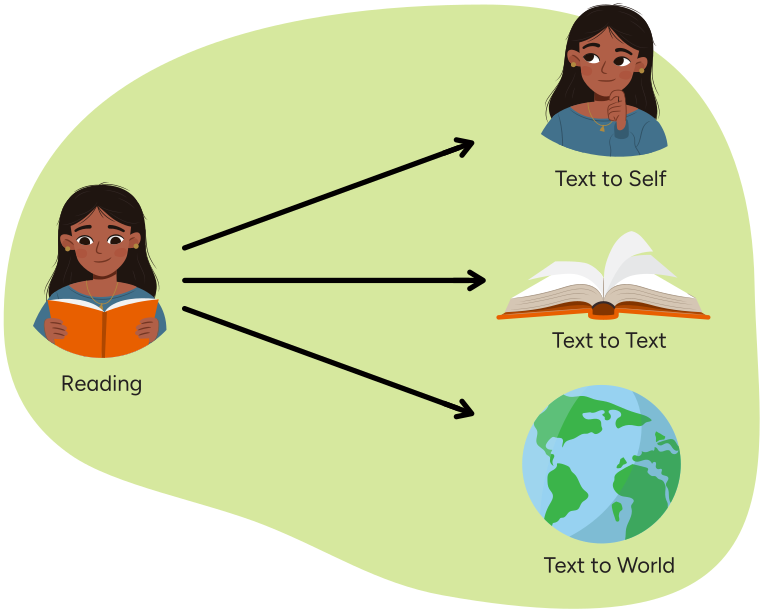
Can you make connections between the two texts that you explored?
Can you make connections with what you have learned and your personal experiences?
Can you make connections with the world around you?
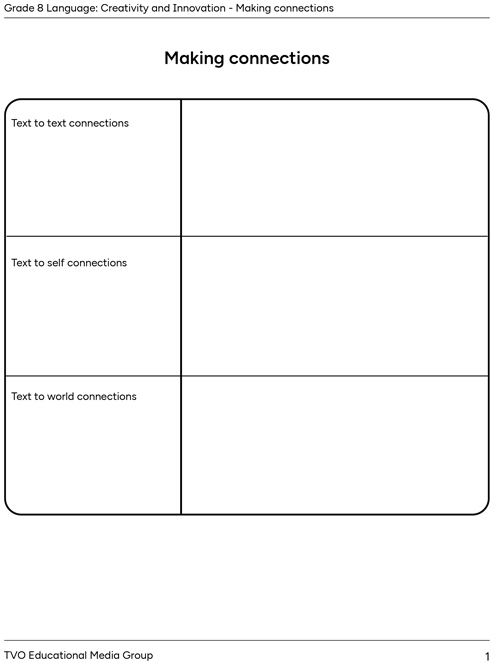
Record your connections in the graphic organizer provided, or in another method of your choice.
Complete the fillable and printable Making connections in your notebook or using the following document. If you would like, you can use speech-to-text or audio recording tools to record your thoughts.
Grammar routine
A verb is a word that expresses an action, occurrence, or state of being. Perfect tense is a category of verb tense used to describe completed actions. It covers all three tenses – past, present, and future – in the perfect tense.
Let’s explore some examples of perfect tenses in the flashcards below.
Explore the following sentences and identify which type of perfect tense they are.
Select the correct answer, then press Check Answer to see how you did.
Let’s check!
Based on what you’ve learned about climate change, sort the following ideas into “causes”, “effects”, and “solutions” of climate change.
Place the cards into categories that best match.

Creating your own solution
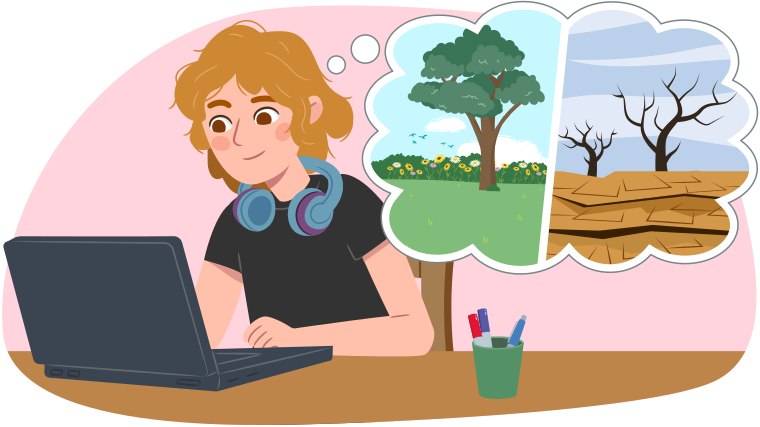
Earlier in this learning activity, you explored the real-world problem of climate change, including it’s causes and effects. You have also explored some creative and innovative solutions. For this component of the learning activity, you are going to be proposing your own innovative and creative solution to climate change using digital and media tools!
Your innovation could be entirely new, or it could be based on one that you learned about in this learning activity. What could you propose to mitigate the impacts of climate change? Once you have brainstormed your solution, you are going to design a digital media piece, as well as use a digital tool, to share your idea.
Forms of media you may wish to use include, but are not limited to:
- graphic design tools
- infographic creation tools and programs
- a virtual presentation maker
- a digital story platform
When choosing the media tool that you’d like to use, consider the following:
Once your digital media piece is created, you are going to reflect on and evaluate the strategies and tools that you used to develop your ideas and organize your content for your media text.
Respond to the following reflection questions in a method of your choice.
- What strategies did you use to generate ideas for your media design? How effective were these brainstorming strategies in helping you come up with an innovative solution?
- What organizational tools (i.e., planning page, mind map, outline) did you find most effective in organizing your information? What might you consider using next time?
- How did you decide on what visual and multimedia elements to use in your media design? Which tools were most effective? What might you try next time?
- Based on your experience, what steps can you take in the future to improve your skills as a media designer? What new tools or strategies might you try?
Putting it all together
The power of education! One of the most useful solutions to climate change is to educate others. Your task is to educate other via social media on climate change and innovative solutions.
Your social media post should be short, informative, accurate, and share the innovative and creative design you brainstormed as a solution.
Your post should include:
Reflection
As you read the following descriptions, select the one that best describes your current understanding of the learning in this activity. Press the corresponding button once you have made your choice.

I feel...
Now, expand on your ideas by recording your thoughts using a voice recorder, speech-to-text, or writing tool.
When you review your notes on this learning activity later, reflect on whether you would select a different description based on your further review of the material in this learning activity.