Learning goals
We are learning to…
- conduct research, considering accuracy, credibility, and perspectives, with a focus on misinformation, disinformation, and curated information, to construct knowledge, create texts, and demonstrate learning, while respecting legal and ethical considerations
- identify a variety of purposes for engaging with texts, select texts from diverse creators that are suitable for the purposes, and explain why the selections are appropriate
- read and comprehend various complex texts, using knowledge of words, grammar, cohesive ties, sentence structures, and background knowledge
- gather and synthesize information and content relevant to a topic, using a variety of textual sources and appropriate strategies; evaluate the currency, quality, bias, and accuracy of information; verify the reliability of sources; and cite the sources of all content created by others
Success criteria
I am able to…
- identify the reasons that we engage with various texts
- read about the telephone and the automobile inventions and innovations over time, answering simple comprehension questions through multiple-choice activities
- conduct research about an invention of my choice and how its has evolved over time
- reflect on how inventions and innovations impact and meet societal changes
- create a presentation in a method of my choice about an invention I learned about

Invention versus innovation
What is the difference between an invention and an innovation?
The term “invention” contains the base word “invent”, which is a verb that means to “produce something (such as a useful device or process) for the first time through the use of imagination or of ingenious thinking and experiment.”
In your own words, what do you think the difference is between an invention and an innovation? Could you think of any examples that support your thinking? Brainstorm your ideas in a method of your choice.
Press Possible Answer button to learn more.
An invention is typically something that has never existed before or represents a significant leap in technology or understanding, where as an innovation focuses on adding value or solving problems. Someone can innovate existing products, services, or processes in order to improve them.
Overall, invention is about creating something new, and innovation is about applying new or existing ideas in a particularly useful way.
Common examples
One example is the telephone. The original invention of the telephone was in 1876. Since then, people have innovated newer versions to improve it and now we have smartphones. Explore the images below, on the left is the invention of the telephone (an early model) and on the right is a newer smartphone that has been adapted from the original invention.
Explore the following interactive to learn more.

Pause and Reflect
Pause and reflect
Can you think of any other famous inventions that have been innovated over time?
Brainstorm a list of ideas in a method of your choice.
Using the list you created, do you feel there is one invention that is considered the most important? Why do you think it is the most important?
Explain your thinking in a method of your choice.

Why engage with texts?

Brainstorm
Brainstorm
What are some of the reasons that people read or interact with different texts? Brainstorm ideas in a method of your choice.

Different texts are often chosen for different reasons. Explore some of those reasons below:
- Entertainment: You may choose a specific text that you know will capture your interest and provide enjoyment.
- Education: You may choose a specific text to acquire knowledge or information and expand your understanding of something.
- Critical thinking: You may choose a specific text to learn about other people’s perspectives or analyze information to make informed decisions.
- Personal growth: You may choose to read a specific text to inspire personal growth or self reflection.
- Cultural or historical awareness: You may choose a specific text to provide insight into different cultures, historical periods, social issues, and learn from the diversity of human cultures.
Explore the following types of texts and match them with the purpose for engaging in the following matching activity.
For each term, select the corresponding description.
Pause and Reflect
Pause and reflect
In a method of your choice, record the texts that you’ve engaged with recently and the reason you engaged with them.
Inventions through history

In this section of the learning activity, you will be exploring various inventions throughout history and how innovators have creatively adapted them over time. As you explore, consider how these inventions and innovations have changed society.
Brainstorm
Brainstorm
Before you begin, consider why you might engage with this text? What would be the purpose for reading about inventions and innovations through history?
Press Why Engage? button to learn more.
The primary purpose would be to educate yourself. It might also be for your own entertainment and to provide critical thinking opportunities.
Explore the following accordion tabs below to learn more about famous inventions throughout history, and how they were innovated through time.
Press the following tab to find out more.
The telephone is an instrument designed for transmission and reception of the human voice, offering immediate and personal communication. It is one of the most widely used telecommunication devices around the world with billions of users. So where did the telephone begin? The word “telephone”, taken from the Greek root word “tele” which means “far” and “phone” which means “sound”, was in use in the late 17th century.
Press the following tabs to learn more about the evolution of the telephone.
Prior to the 1870s, there had been several inventors that had been working on inventions similar to the telephone, however, those versions never got patented. In 1871, Alexander Graham Bell began to work on the harmonic telegraph, which was a device that allowed messages to be transmitted over a wire and was the first to obtain a patent for his idea.
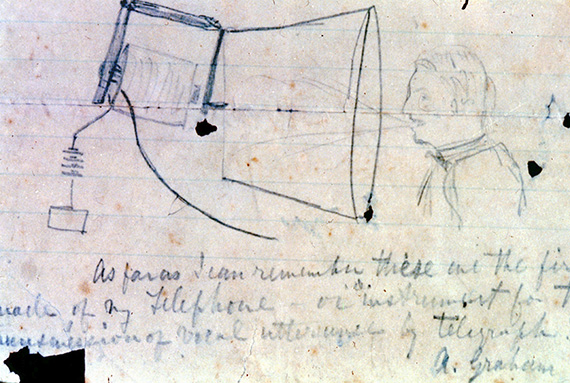
By 1875, Bell and his partner Thomas Watson came up with a simple receiver that could turn electricity into sound and one year later the pair made their first phone call to each other. While this technology was limited because it required an operator to manually connect calls, it was a fundamental invention of converting sound into electrical signals that laid the groundwork for future innovations.

By 1877, the Bell Telephone Company, which is known as AT&T today, was created and continued to help Bell and Watson with the development of the phone. By 1915, the first transcontinental phone call was made from New York City to San Francisco. By 1927, an E1A handset was developed in which much of the electronics were in a separate box that the transmitter-receiver handle was cradled on when it wasn’t in use.

Innovations of the telephone continued from here. In 1949, improvements to the audio quality, mechanics, and physical construction were made, and by 1963, push button versions of phones became available. As electronics and circuits were innovated, the first cordless phone was developed in 1970. This version of the cordless phone had limited mobility (up to 330 feet) because it needed to connect with a homebase that was plugged into a telephone jack.
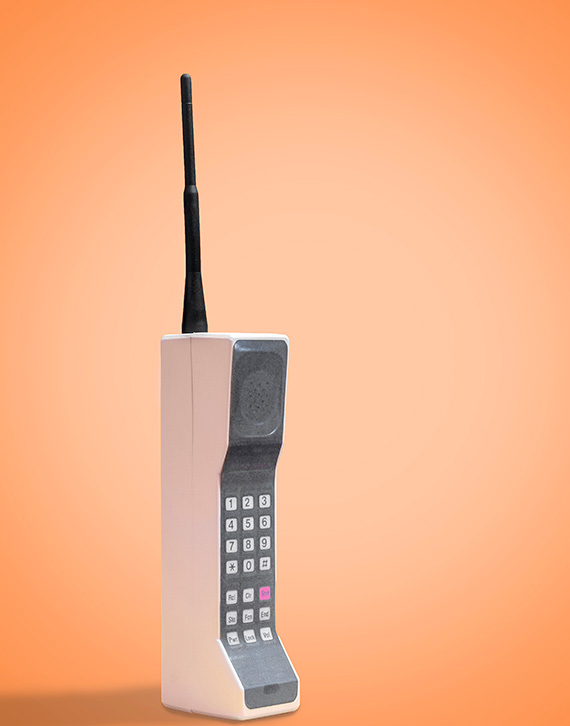
The 1980s brought about revolution in telephone communications, which is when the mobile phone was introduced, freeing users from the constraints of landlines. Early mobile phones were bulky and expensive, and often had interruptions in communication. As the 1990s unfolded, the introduction of cellular networks greatly improved call quality and network capacity. This period also saw the emergence of text messaging as a new model of communication.
The introduction of smartphones in the 2000s revolutionized the concept of telephones. Smartphones, the most recent innovation of the telephone, integrate a multitude of functionalities, including internet access, email, cameras, and a vast array of applications far beyond the scope of the traditional purpose of the device: voice communication.
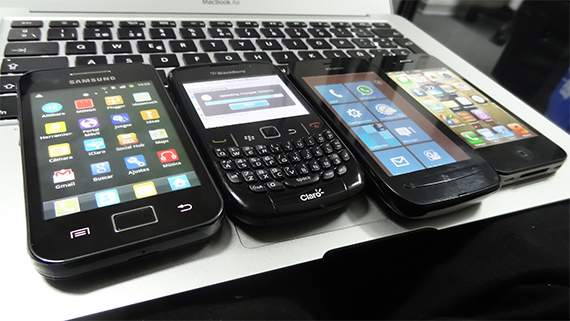
Innovations such as touchscreens, advanced operating system, and high-speed data networks (4G and 5G) have transformed phones into powerful handheld computers. Additionally, the integration of artificial intelligence and virtual assistants has further enhanced user interaction and accessibility. The continuous innovation in telecommunications not only changed how people communicate, but also how they access information, conduct business, and engage with the world around them.
Pause and Reflect
Pause and reflect
Using the following true or false questions, check your understanding of the invention of the telephone.
Select the correct answer, then press Check Answer to see how you did.
Press the following tab to learn more about the automobile.
The invention of the automobile was a transformative moment in history, marking the beginning of an era that would reshape human mobility and societal infrastructure. Unlike many other inventions, the original idea of the automobile cannot be attributed to a single individual. Many different individuals developed various engine types and car models that were adapted and improved over time. The timeline stretches back to the late 1600s when the first internal combustion engine was developed, but it wasn’t until almost 100 years later that a road vehicle was powered by the engine.
Press the following tabs to learn more about the evolution of the automobile.
In 1876, Nicolaus August Otto invented an effective gas motor engine that he built from a motorcycle design. This engine was adopted for all liquid-fueled automobiles moving forward. At the start of the 19th century, inventors began to branch out and various engines and electric motors were invented. In 1885, German engineer Karl Benz designed and built the world’s first practical automobile that was powered by a combustion engine and received a patent for his design. It was a three-wheel car, and his first four-wheel car was built in 1893. It has a one-cylinder (less than one horsepower) engine and could travel up to 10 miles per hour. This invention represented a significant leap from horse-drawn carriages, offering a glimpse into a future where mechanized vehicles could provide personal and efficient transportation.
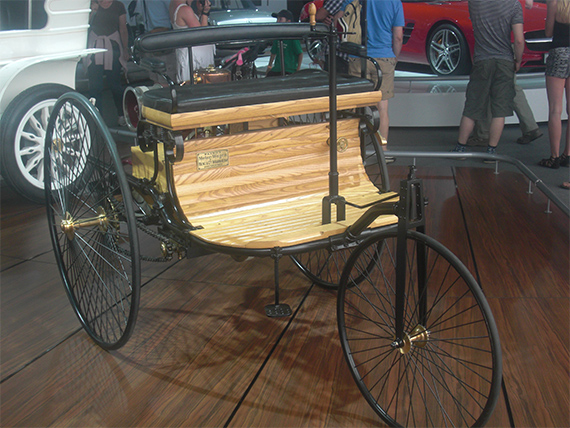
A three-wheeled Benz motor car from 1886.
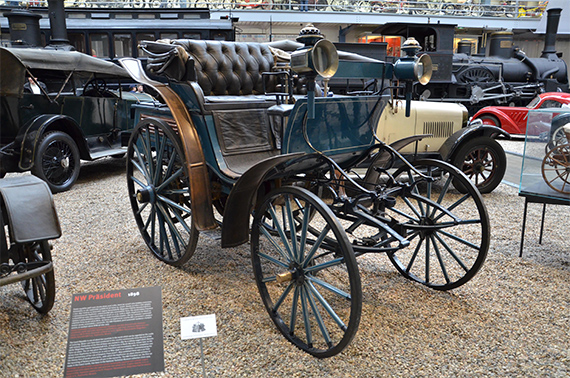
The first four wheeled car, the Benz Victoria, built in 1893.
Eventually, Karl Benz, Daimler Motoren Gesellschaft, and Gottlieb Daimler, inventor of the high-speed liquid petroleum fueled engine, joined together to form Benz & Cie. They eventually became best known for the Mercedes-Benz automobile brand.
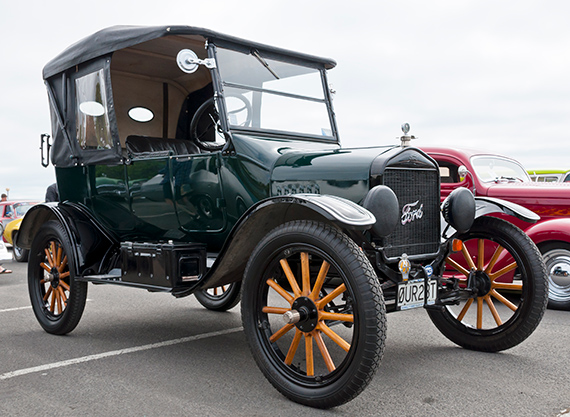
A Model T Ford from 1925.
By the early 1900s, gasoline cars were outselling other types of motor vehicles and there began to be a public demand to produce more. This is where Henry Ford’s assembly line for the Model T revolutionized manufacturing in 1908, making automobiles more affordable and accessible for the public. This era also saw advancements in automobile technology, such as the development of electric starters, stronger tires, improved braking systems, and enhanced safety features.
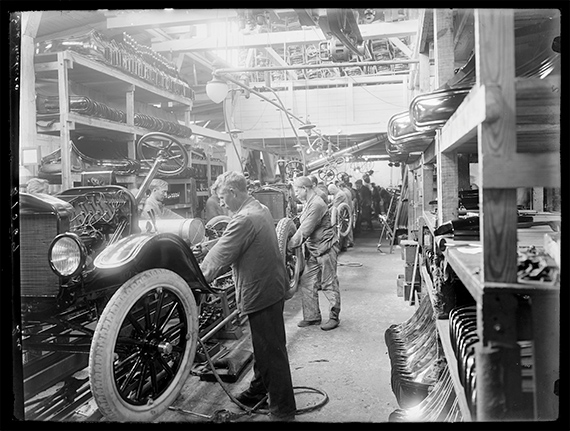
A Ford factory in Copenhagen in 1923.
Henry’s assembly line process trimmed production time from 12.5 hours to 93 minutes. The assembly line began with a single man pulling the car down a line, as other men attached parts and pieces. Over time, an automated belt was used to move the car, and this continued to evolve.
After this, other companies and designers started to form. In 1915, C.R. Patterson & Sons of Greenfield, Ohio became history’s first African American-owned car company building cars from 1915 to 1918 until they began making buses and commercial vehicles until the Great Depression. In 1934, Chrysler Airflow models were developed but production was quickly canceled. Other automakers quickly adopted much of the innovations from the airflow model, including all-steel bodies. In 1938 the Volkswagen Beetle was launched in Germany and in 1940 the first Jeep was created.

A Volkswagen Beetle.
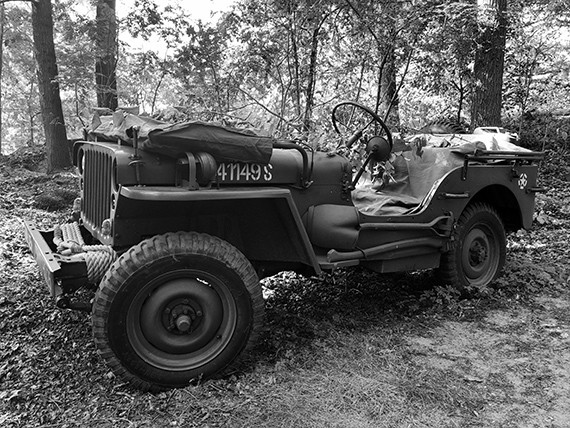
A 1940s Jeep.
As the century progressed, automobiles continued to be innovated to reflect changes in technology, culture, and environmental awareness. This brought about sleek designs, increased comfort, enhanced performance and innovations such as automatic transmissions, power steering, air conditioning, etc. The introduction of safety features, including seat belts, airbags, anti-lock braking, etc., improved passenger and driver safety and reduced traffic injuries and fatalities.
As the 21st century began there were increased concerns over the environmental impact of gasoline cars as concerns about pollution and fossil fuel depletion increased. There was a shift toward environmental sustainability and technological innovation which led to the development of hybrid and electric vehicles. In 1997, the Toyota Prius was the first mass-produced hybrid car combining a gasoline engine and electric motor to reduce emissions and improve fuel efficiency. This paved the way for other manufacturers to explore alternative energy sources, leading the rise of fully electric vehicles such as the Tesla.
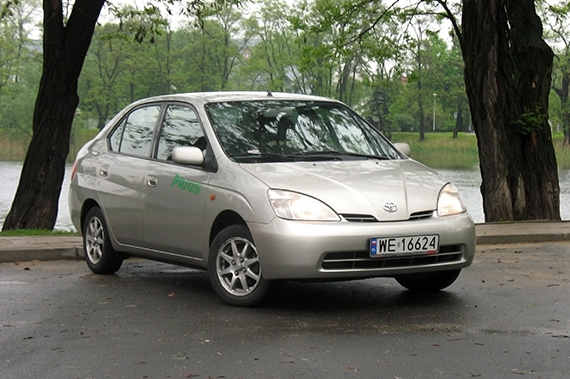
The first mass-produced hybrid car, the Toyota Prius, in 1997.

A Tesla Model X in 2023.
So, what’s next? With an increase in digital transformations such as driver-assistance systems and automatic emergency braking, innovations will revolutionize transportation by reducing human error and improve traffic efficiency. Consider technologies currently being worked on, such as self-driving cars that will use artificial intelligence, sensors, and real-time data to navigate complex road environments.
Pause and Reflect
Pause and reflect
Using the following true or false questions, check your understanding of the invention of the automobile.
Select the correct answer, then press Check Answer to see how you did.
Researching an invention and innovation

In this section of the learning activity, you are going to be conducting research about an invention or innovation over history and assess how it has impacted individuals and society.
Research follows a specific process. Explore this process in the visual below.
Let’s explore steps 2-4 more thoroughly before you begin researching for your biography.
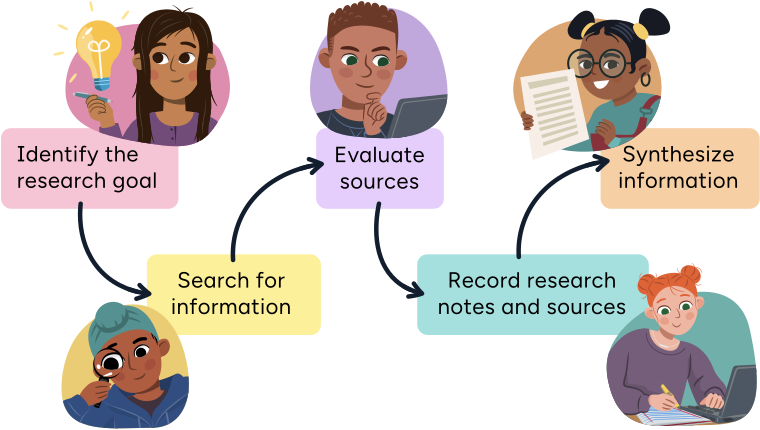
Steps in the research process: identify the research goal, search for information, evaluate sources, record research notes and sources, and synthesize information.
Press the following tabs to find out more.
Begin by brainstorming key words that you might want to use when searching. As you search, be sure to use Boolean operator words (and, or, not) to help with your search. Be sure to consider what you are looking for and explore multiple sources.
It is important that you collect information that is reliable and accurate, considering possible bias. Credible sources are typically published by reputable publishers, academic institutions, or experts in the field. Consider the following questions when evaluating a source:
It is important when recording information that you use “point form” notes and convert ideas into your own words. This will avoid plagiarism.

Did You Know?
Did you know?
Plagiarism is when someone uses another person’s words, ideas, or work without giving them proper credit. Plagiarism can occur in many forms, such as copying text directly, paraphrasing without sourcing the information, or using someone else's ideas without acknowledgement. As you take notes, you should summarize key points, record relevant quotes, and cite sources properly.
Begin by choosing an invention / innovation you are interested in learning more about.
Some suggested topics are:
- the camera
- film/movies
- the lightbulb
- computers
- the Internet
- the printing press
- another idea of your choice
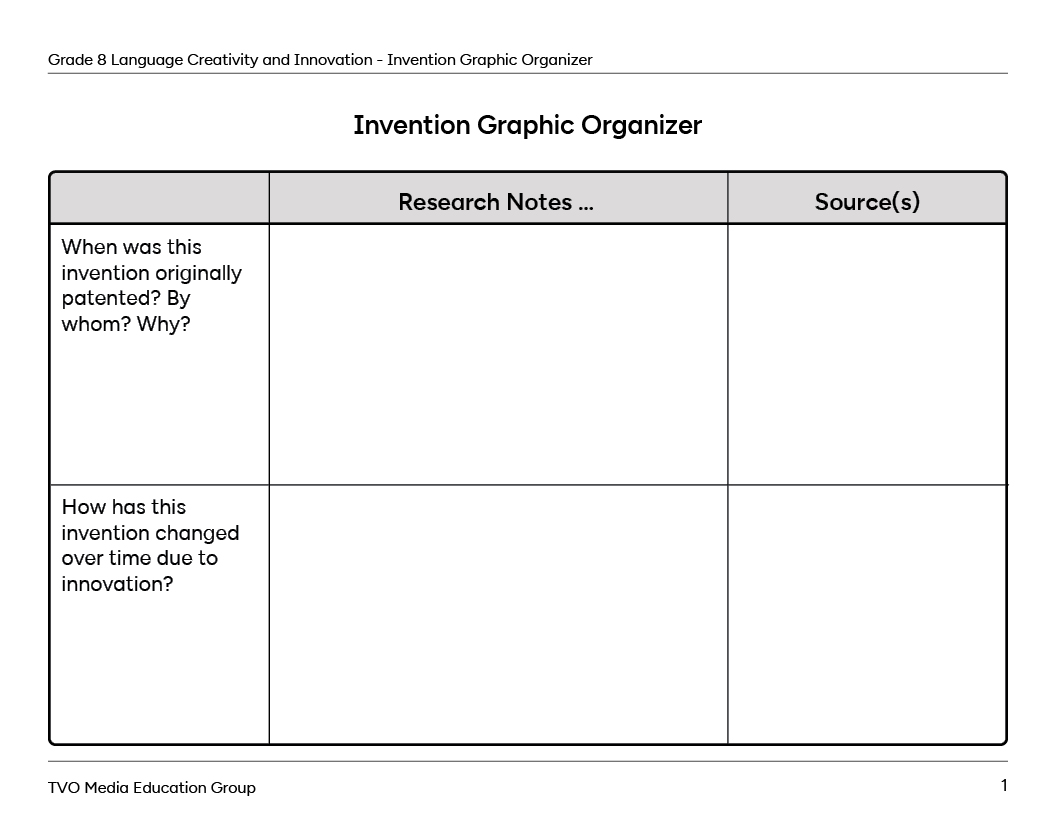
As you collect research, you can use the graphic organizer provided, or another method of your choice, to find the following information.
Complete the fillable and printable Graphic Organizer in your notebook or using the following document. If you would like, you can use speech-to-text or audio recording tools to record your thoughts.
Reading fluency routine

Fluency is the ability to identify words correctly and read a text at an appropriate rate with ease, pace, automaticity, and expression. With proper phrasing and a focus on punctuation the reader will gain more meaning from the text.
In this learning activity, you have learned about inventions and innovations through history, and how they’ve changed individual lives and society. Your task is write a short paragraph that describes the role that creativity plays in innovating existing inventions. Then, focus on reading it with fluency. Alternatively, you can use the paragraph provided below.
Creativity plays an important role in the continuous innovation of existing inventions to create more advanced and efficient products. Creativity takes an invention and reimagines it, thinking beyond its original purpose and finding ways to enhance its functionality and appeal. For example, the telephone evolved over time, due to creative innovation from a simple voice communication device to a smartphone that merged technology with computing, internet access and multimedia capabilities. Similarly, the automobile has seen numerous innovations, such as the introduction of electric engines, autonomous driving technologies, and smart connectivity features. This ongoing process of creative innovation not only improves the performance of the invention but address emerging needs and challenges in society.
Use the checklist provided to self-assess your own fluency. If possible, share your poem with someone else and ask them to provide feedback on your fluency.
Pause and Reflect
Pause and reflect
Based on the checklist, choose one area of fluency to focus on and set a goal for yourself. What strategies could you use to help you achieve this goal?
Grammar routine
A proper noun is a name used for an individual or specific person, place, or thing.
For example:
- Person: Alexander Graham Bell, Henry Ford
- Place: Toronto, Australia
- Thing: Bell Telephone Company, Model T
A proper adjective is formed from a proper noun and is capitalized.
For example, Canada is the proper noun, Canadian is the proper adjective.
Explore the following sentences and identify the proper adjective in a method of your choice.
- The groundbreaking invention of the automobile by German engineer Karl Benz revolutionized transportation in the late 19th century.
- Henry Ford's innovative assembly line techniques made American automobiles affordable and accessible to the public.
- The early British telephones, with their intricate designs, set the standard for communication devices worldwide.
Press Answers button to learn more.
- German
- American
- British

Let’s check!

Respond to the following reflection questions in a method of your choice.
- How did the invention of the automobile change the daily lives of people in society?
- What are some of the environmental considerations that may arise with the development and implementation of new technologies? How can innovations play a role in reducing the environmental impact? (HINT: consider the challenges with automobiles and fossil fuels.)
- In what ways have inventions, such as the telephone and eventually the smartphone, changed social interactions and cultural norms? Are these changes positive or negative?
Putting it all together
Your final task is to create a showcase presentation about one of the inventions that you explored in this learning activity. You can use what you learned about the telephone or automobile or use information from your research to create your presentation.
Your presentation can be completed in a method of your choice (i.e., slideshow, speech, poster, brochure, etc.) and should include the following:
Final reflection question:
How do you think new inventions can help society? Alternatively, what kind of problems might they cause?
Reflection
As you read the following descriptions, select the one that best describes your current understanding of the learning in this activity. Press the corresponding button once you have made your choice.

I feel...
Now, expand on your ideas by recording your thoughts using a voice recorder, speech-to-text, or writing tool.
When you review your notes on this learning activity later, reflect on whether you would select a different description based on your further review of the material in this learning activity.