Learning goals
We are learning to…
- analyze and explain how transferable skills can be used to support communication in various cultural, social, linguistic, and domain-specific contexts, and apply them when reading, listening to, viewing, and creating texts of various forms
- select suitable strategies, such as rereading, using the glossary, asking questions, and consulting references and other resources, to monitor and confirm their understanding of complex texts and solve comprehension problems
- analyze explicit and implicit perspectives communicated in various texts, evaluate any evidence that could suggest bias in these perspectives, and suggest ways to avoid any such bias
- draft complex texts of various forms and genres, including narrative, persuasive, expository, and informational texts, citing sources, and use a variety of appropriate media, tools, and strategies to transform information and communicate ideas
Success criteria
I am able to…
- explore content related to NFTs in the creative arts world and identify potential benefits and drawbacks
- identify implicit and explicit perspectives shared, and which perspectives are missing
- write an opinion piece on the use of NFTs in the creative arts world
- ask questions before, during, and after reading to increase comprehension
What are NFTs?

Have you ever heard of an NFT? The term has become popular in recent years in discussions about art and ownership, but the specific, technical meaning is often misunderstood. The term NTF stands for “non-fungible token” – but what exactly does that mean?
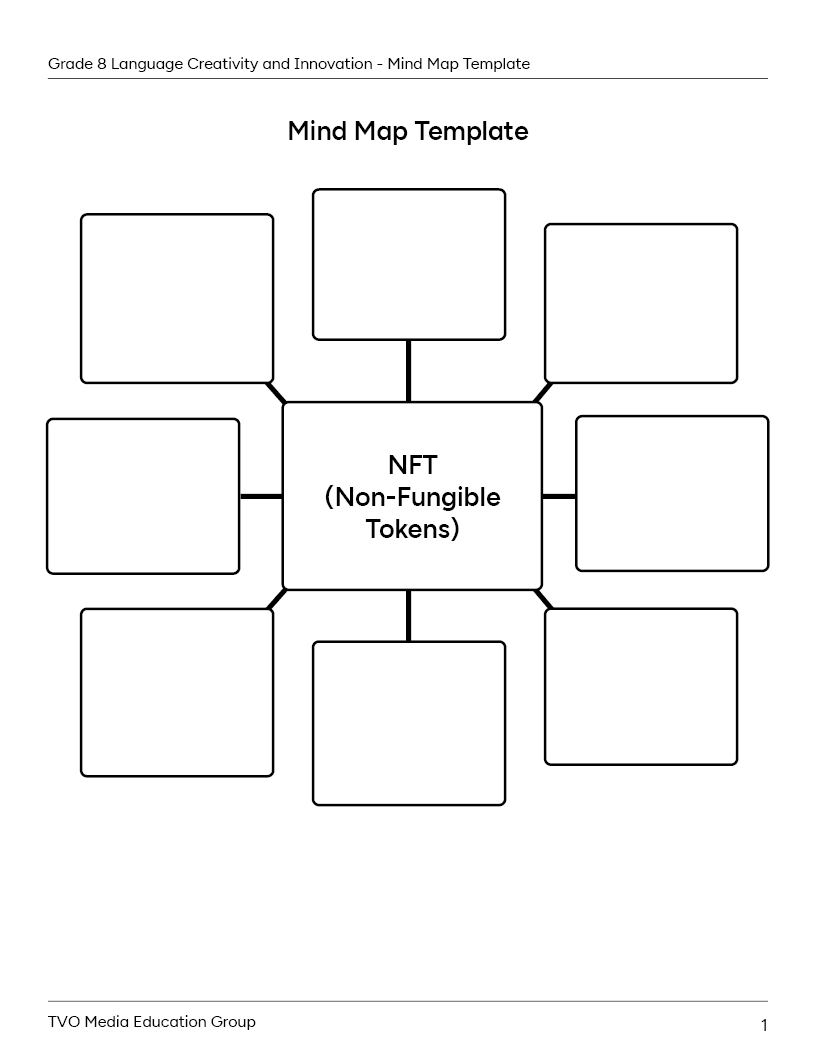
Brainstorm what you believe the term “non-fungible token” means, adding any other details you may already know about NFTs using the following mind map. Consider how the term might break down into morphemes – is there anything you notice (i.e. a familiar prefix)?
Complete the fillable and printable Mind Map Template in your notebook, using the following document, or record your ideas in another method of your choice. If you would like, you can use speech-to-text or audio recording tools to record your thoughts.
How do NFTs work?
NFTs are digital assets that can come in the form of music, art, in-game items, videos, and much more. They are bought and sold online, generally with cryptocurrency, and are usually encoded with some underlying software.
Check out the following video to learn more about NFTs.

Student Tips
Student tips
Is there anything you can add to your brainstorming mind map that you learned from the video?

Learning about NFTs
Before you begin learning about what NFTs are, you will be exploring the reading comprehension strategy of asking questions.

Asking questions

One reading comprehension strategy you can use to enhance your understanding is to ask questions while you’re exploring information. Asking questions can help you to clarify your understanding of the text and monitor your comprehension of information as you go.
As you explore the following information about NFTs in the creative arts, ask questions before, during, and after reading to help you better understand the information. You can use the prompts in the chart below to help guide your thinking.
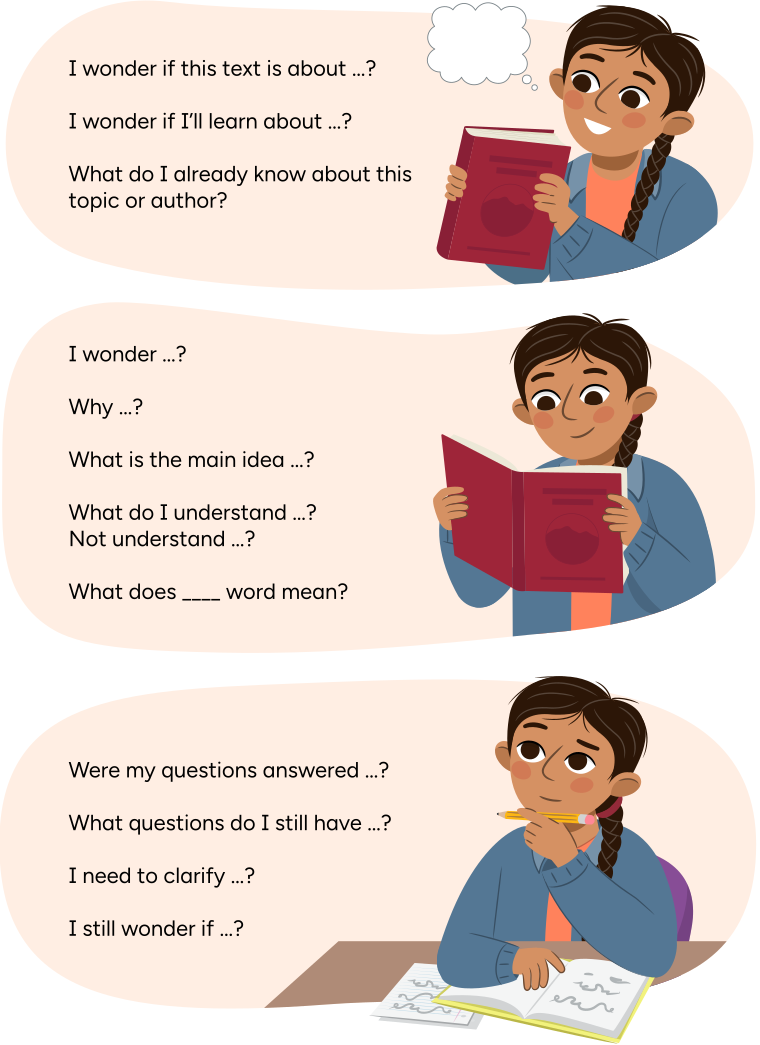
Before reading:
I wonder if this text is about …?
I wonder if I'll learn about …?
What do I already know about this topic or author?
During reading:
I wonder …?
Why …?
What is the main idea …?
What do I understand …? Not understand …?
What does [blank] word mean?
After reading:
Were my questions answered …?
What questions do I still have …?
I need to clarify …?
I still wonder if …?
Access the following Asking Questions Graphic Organizer to record your information, or use another method of your choice.
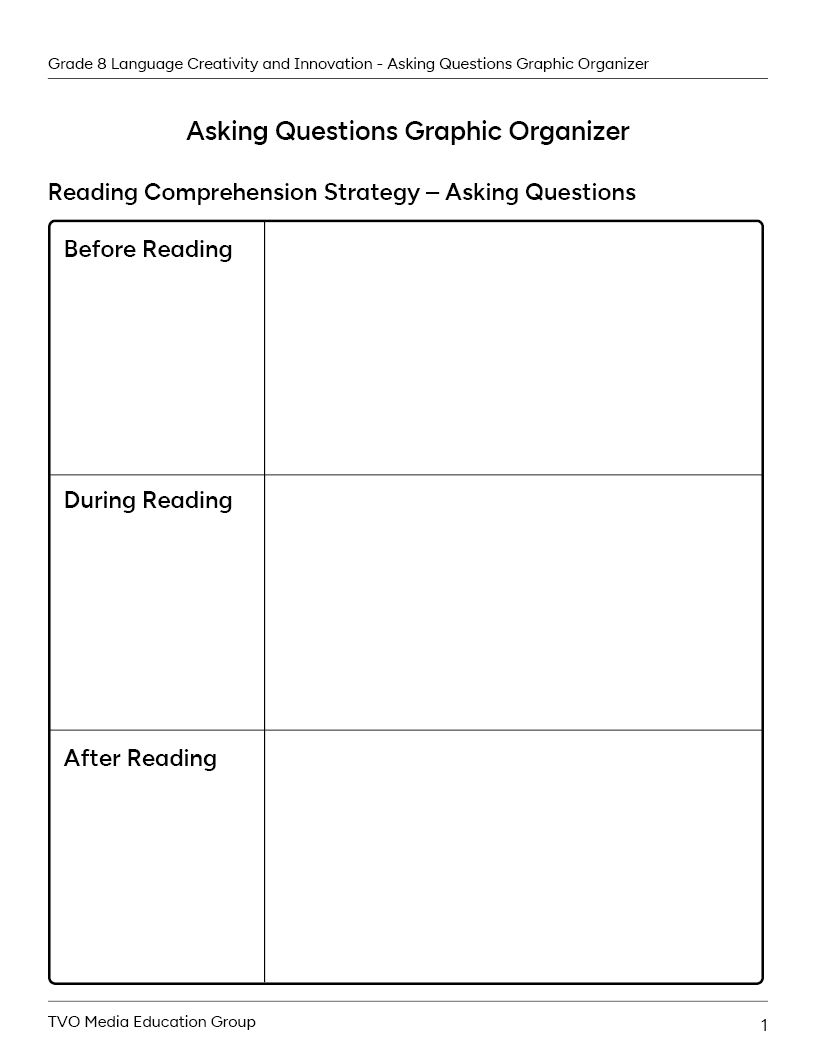
Press the Activity button to access the Asking Questions Graphic Organizer.
Activity(Opens in a new tab)Breaking NFT into morphemes
Let’s begin by breaking down the term “Non-Fungible Token”. Check out the following interactive entitled Breaking Down Non-Fungible Token to learn more about using a word’s morphemes to understand the meaning.
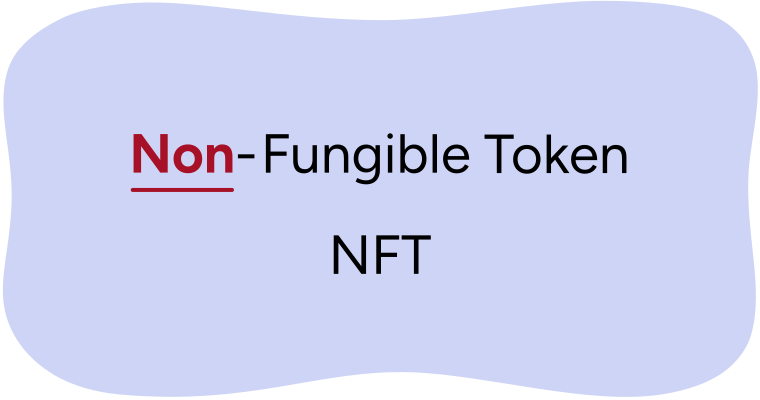
The prefix “non” gets attached to the front of certain words to mean “not” or “without”
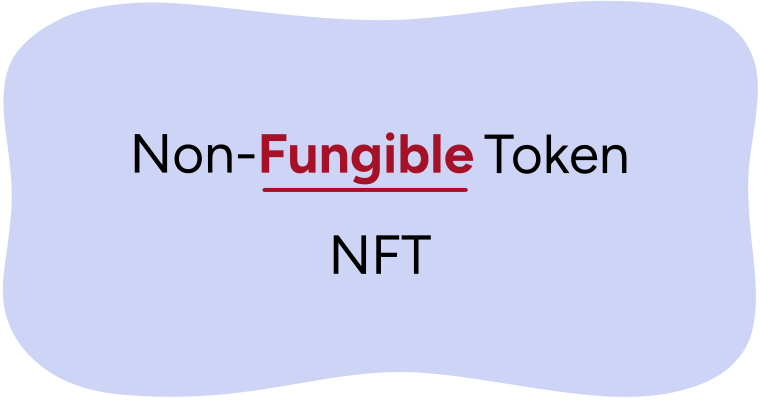
Fungible is an adjective. The base word comes from the Latin term fungi vice – which means to “serve in place of”. It is usually used in financial contexts to describe how interchangeable something is with another good or service.
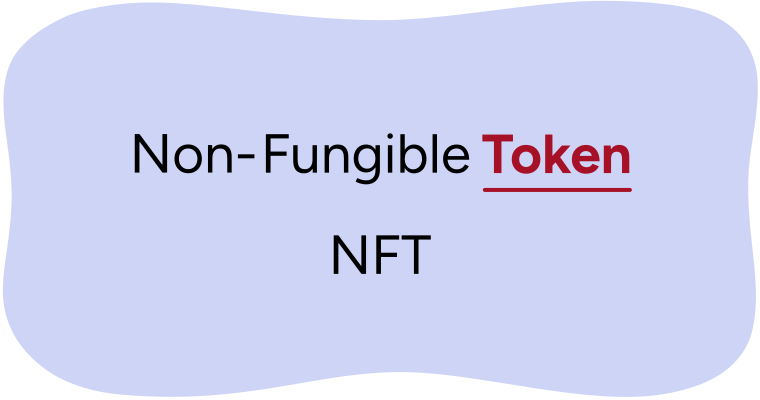
A digital item that represents ownership of something, such as an artwork, song, or even a social media post. It is stored in a digital ledger or bookkeeping system called a “blockchain”, which is like a secure, public record that everyone can see but no one can change.
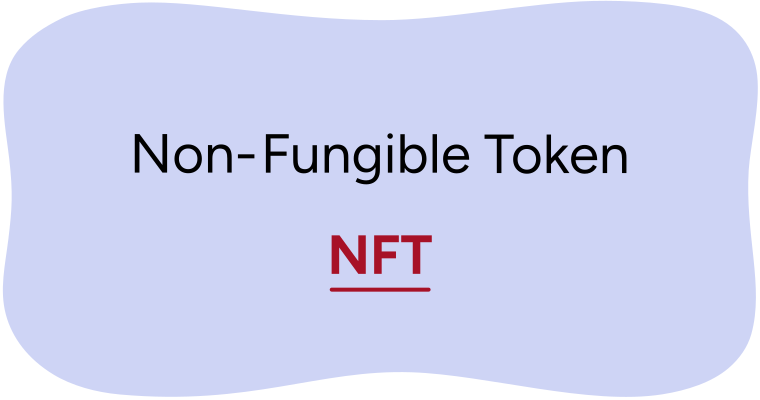
The adjective non-fungible describes something that is unique and is not replaceable or interchangeable for other goods and services. For example, a one-of-a-kind trading card is non-fungible; if you trade it with another card, you would have something entirely different.
So, what does an NFT mean when we put everything together? The adjective ‘non-fungible’ describes the type of token, or digital item. So, an NFT is digital item that is unique and not interchangeable for other goods and services.
Exploring NFTs
So, how exactly do NFTs work? That depends on what kind of art or item is being created! Artists and creators make digital items like images, videos, music, or virtual items for video games, and these can be turned into NFTs by uploading them into a blockchain.
One famous example is Beeple’s “Everydays: The First 5000 Days”. This NFT is considered an important milestone for artists since it was the first purely NFT digital artwork that sold for 69 million dollars.
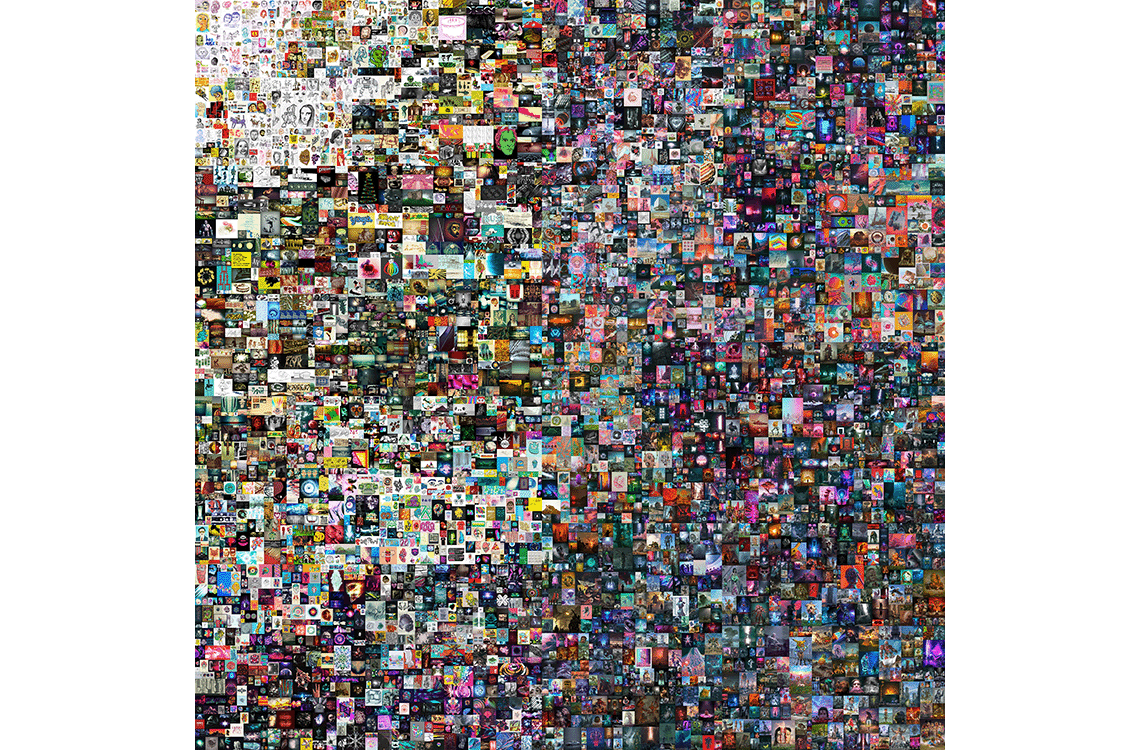
When an item becomes an NFT, it gets a unique digital signature that proves who owns it. Even if people make copies of the digital item, the original NFT is still unique and special because of this ownership. People can buy and sell NFTs in online marketplaces. When someone buys an NFT, the ownership is recorded on the blockchain which updates to show the new owner. The artists often get a percentage of the sale each time an NFT is sold.
Explore the following infographic that explains how a blockchain works.
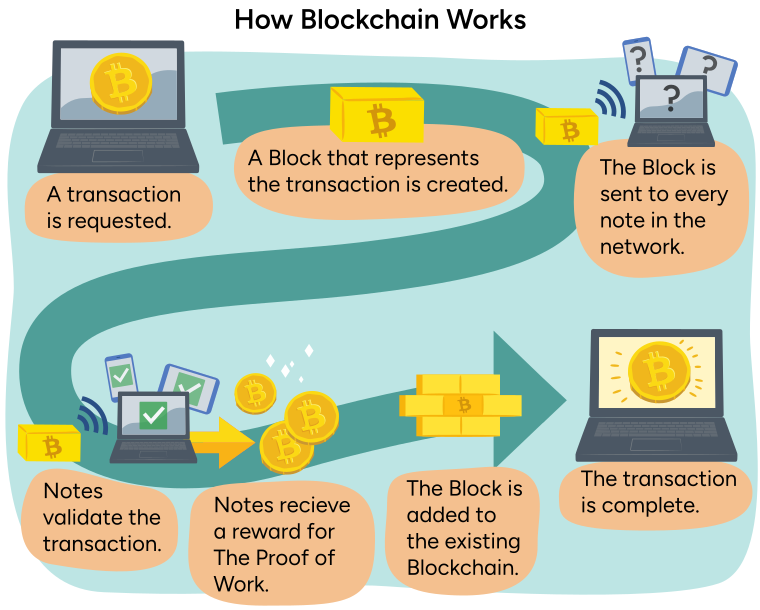
So, where would you find an NFT, and what are they used for?
Owners of NFTs can:
- Display them in online museums or art exhibits that can be accessed by anyone from anywhere in the world. This not only provides a new way to enjoy art, but also gives artists a broader audience in one place.
- Use them in virtual worlds, which are immersive online environments where users can interact with each other and digital items they have purchased. In these worlds, NFTs could represent virtual real estate, in-game items, or avatars and accessories that can all be used to enhance and customize digital experiences.
- Keep them as physical collectibles (i.e., trading cards, coins). These items might have value because they are rare, have historical significance or are created by famous artists. Owners of these NFTs can hold on to them for value or trade or sell them.
Some NFTs might also give access to special content or experiences. For example, owners of certain NFTs might get access to special content, such as bonus tracks from a musician, behind the scenes videos, or limited-edition digital art. They can also act as tickets to exclusive online events such as virtual concerts, meet-and-greets with artists, or special online games. Lastly, they can provide membership benefits to exclusive communities where they can interact with like-minded individuals or access special offers or products.
Let’s check!
Check your understanding of NFTs in the following multiple choice questions. Select the correct answer, then press Check Answer to see how you did.
Student Tips
Student tips
Review the Asking Questions Graphic Organizer and add any questions you had as you were reading.
NFTs in the creative arts
In this section of the learning activity, you are going to explore how NFTs are being used in the creative arts, focusing on the benefits and disadvantages. As you read the information, use the graphic organizer provided, or another method of your choice, to record the benefits and disadvantages of NFTs in the creative arts world – this will help you with the writing task.
Complete the fillable and printable NFTs in the Creative Arts Graphic Organizer in your notebook or using the following document. If you would like, you can use speech-to-text or audio recording tools to record your thoughts.
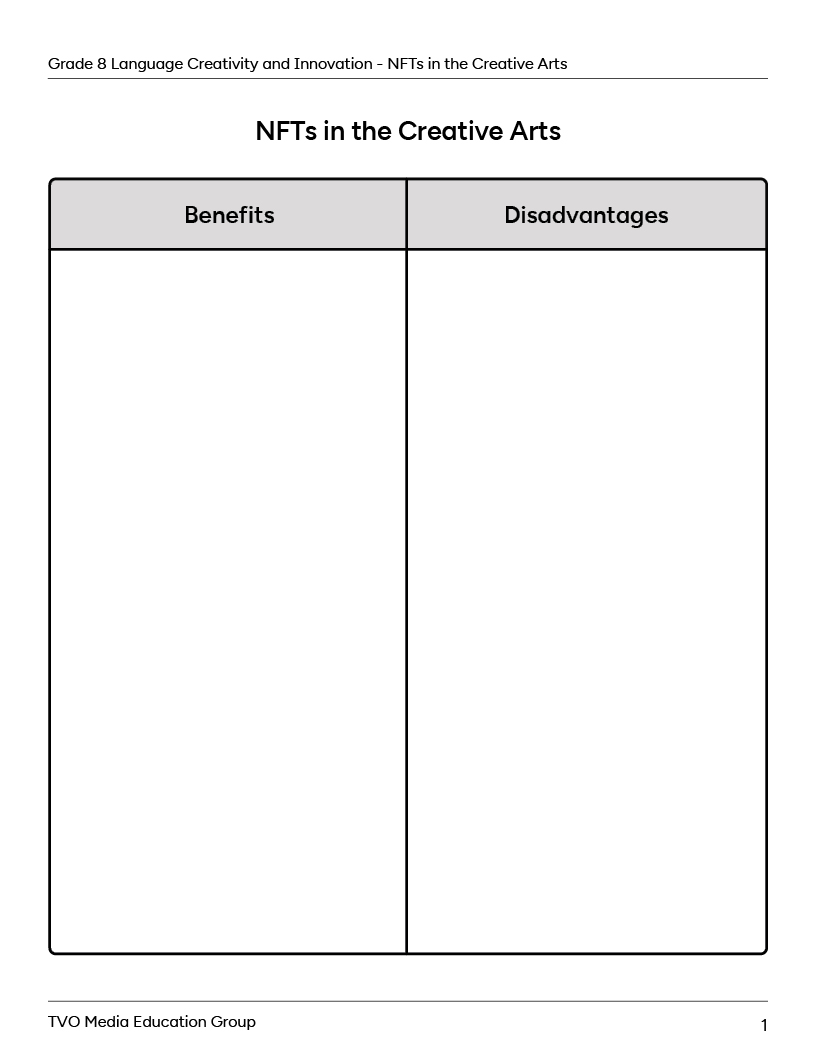
Press the Activity button to access the NFTs in the Creative Arts Graphic Organizer.
Activity(Opens in a new tab)Benefits of NFTs
There are many benefits to NFTs. These include:
- Artists can reach a wider audience without any need for traditional galleries or agents. By presenting their work as NFTs and selling them in online marketplaces, artists can directly connect with buyers from around the world (and still have a say in how their work will be used).
- NFTs allow artists to build community around their work. As they interact with people from around the world, they can create a more intimate and engaged audience.
- Artists can experiment with new formats (including virtual reality spaces and animation), knowing that they can make money if the art is sold as an NFT.
- NFTs provide opportunities for diverse artists and voices to enter the art world.
- NFTs offer a new level of security and authenticity in the art world. Each NFT is stored on a blockchain, creating a record of ownership, which reduces the risk of art forgery or theft, as a unique digital signature is associated with each NFT to guarantee authenticity. Collectors can confidently purchase digital art, knowing they are buying a genuine piece.
- NFTs can be programmed with smart contracts which allow artists to set terms for resale and royalties, ensuring they benefit from the future sale and appreciation of their work.
In the carousel below, explore examples of artists who have entered the NFT market, experimenting with new mediums and techniques.
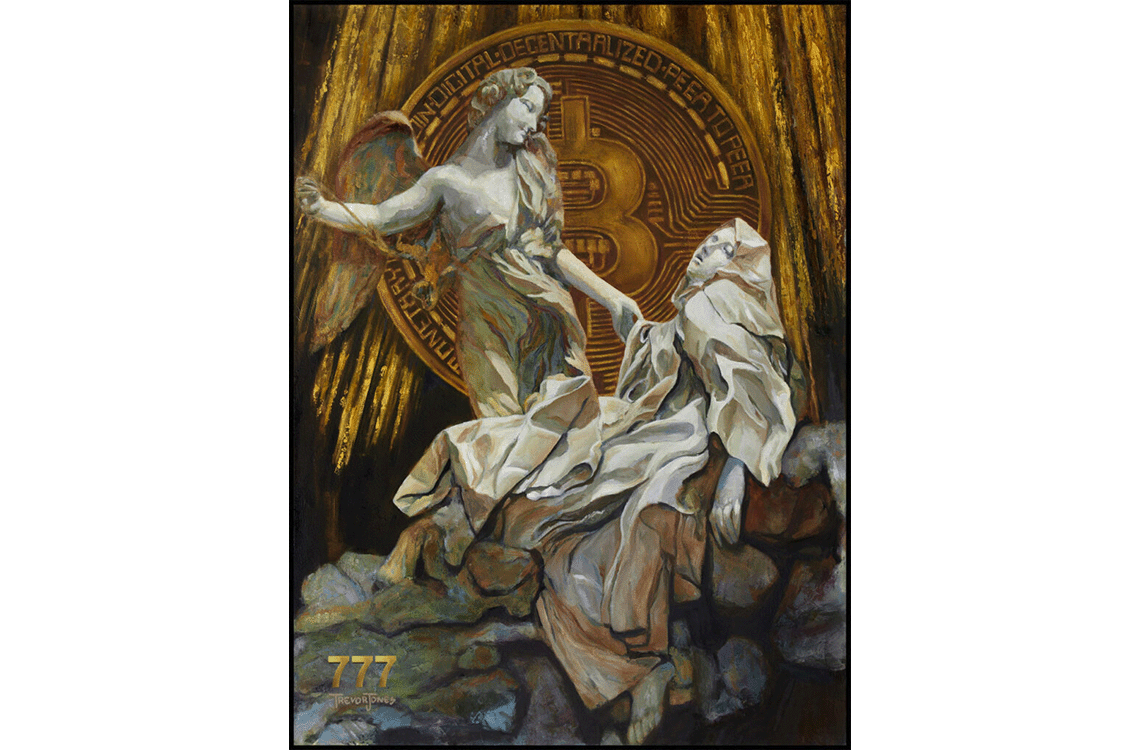
Canadian artist Trevor Jones has created a number of NFTs, including his popular "Bitcoin Angel" series, which features an angelic figure holding a Bitcoin symbol.
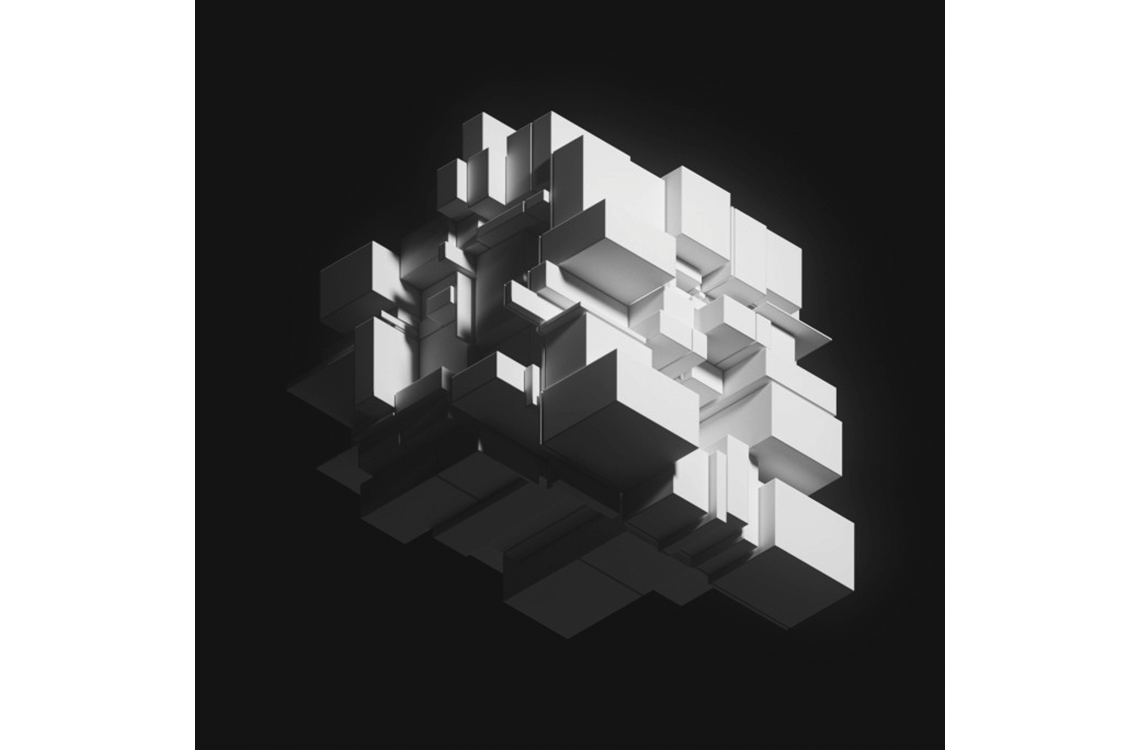
Pak has been active in the world of digital art for over two decades, leveraging evolving technology to create innovative art pieces, generally focusing on identity, culture, and technology.
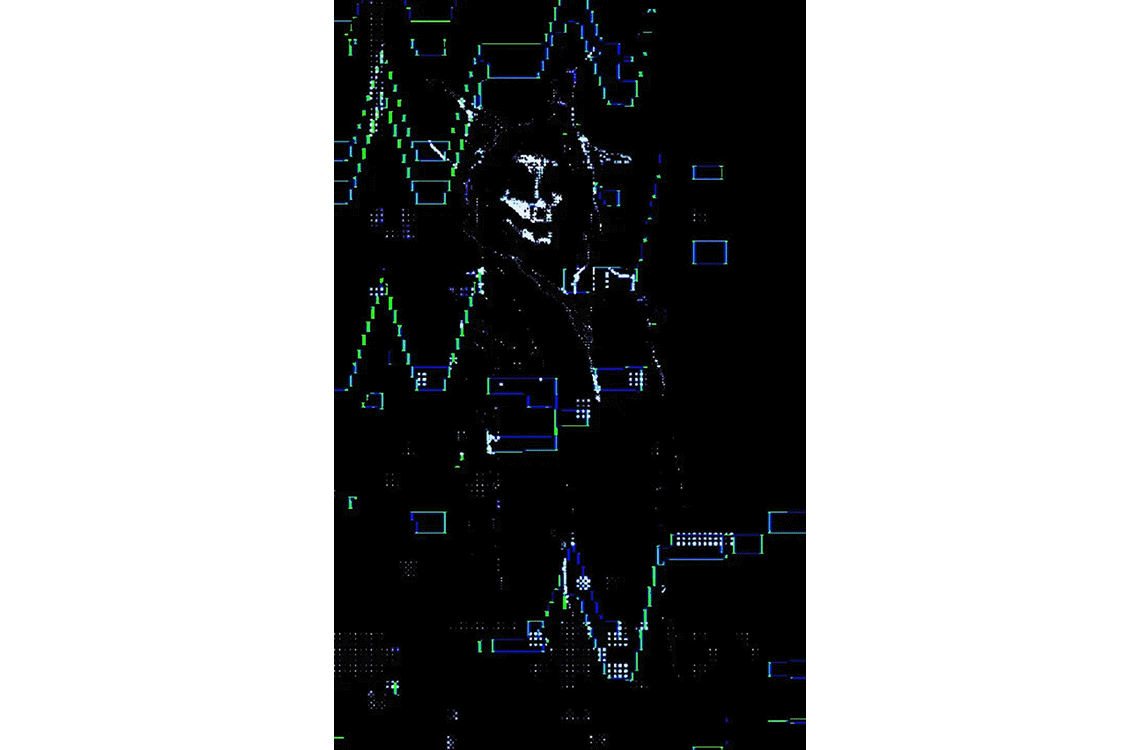
British artist XCOPY creates digital art that explores the impact of technology on society.
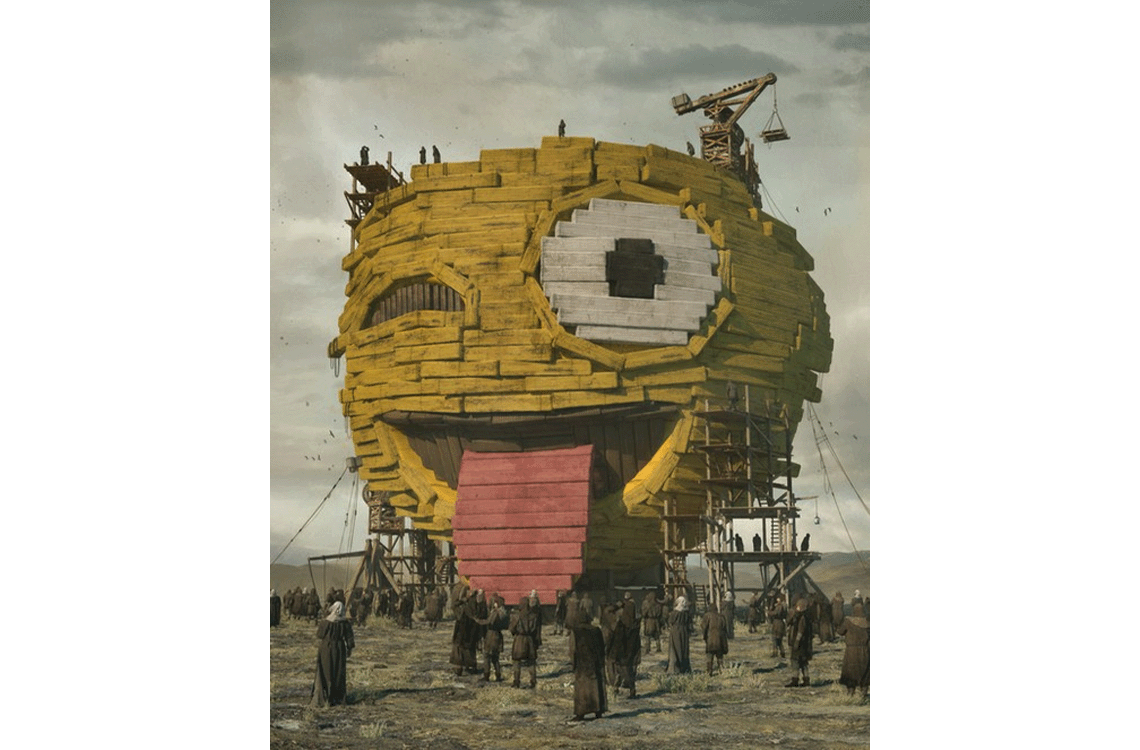
Mike Winkelmann (also known as Beeple) puts together pop culture, technology, and postapocalyptic terror into blistering commentaries on the way we live.
Disadvantages of NFTs
The hype surrounding NFTs has led to higher prices and public demand, which can also generate scams and frauds that affect the artistic value and quality of work. Some NFT art pieces are collected for their collectability alone, rather than the artistic brilliance. This can, at times, overshadow the true purpose of art and lead to a focus on profit rather than creativity and expression.
Along with this, another major concern is the environmental impact of blockchain technology. The process of creating NFTs and maintaining the blockchain requires significant computer power, which uses a lot of energy. Critics claim that this is unsustainable and contributes to climate change, which has led to prompted calls for more eco-friendly blockchain solutions.
In conclusion, NFTs present a revolutionary shift in the creative arts, offering numerous benefits to artists and the public. However, these benefits are accompanied by disadvantages that disrupt the traditional art market. As the technology and market evolve, it is crucial to address these challenges to ensure that NFTs can sustainability support and enhance the creative arts.
Student Tips
Student tips
Review the Asking Questions organizer and add any questions you had as you were reading.
Implicit and explicit perspectives
When you are exploring a text or media content it is important that you always consider the perspective from which the information is being told and what other perspectives might exist. A perspective is a particular attitude towards or way of regarding something. There are two types of perspectives to consider – implicit and explicit. Press the following tabs to find out more.
Implicit Perspective is a point of view that is expressed indirectly. It may be a deeply held opinion or attitude of the author or creator. An “implicit perspective” can often be the ideas “between the lines”, or it can be in the language, tone, choice of facts, or in how the text is presented.
Explicit Perspective is a point of view that is expressed directly, clearly, and with only one possible interpretation. It is overt, or obvious, and usually leaves the reader aware of what is trying to be expressed. It can be a straightforward opinion, fact, or intention.

Student Success
Think!
- What implicit and explicit perspectives do you think were shared in this learning activity regarding NFTs in the creative arts world?
- What perspective is still missing?
Record your ideas in a method of your choice.

NFT vocabulary
Throughout this learning activity you’ve explored new vocabulary related to NFTs in the creative arts industry. Check your understanding of learned vocabulary in the following matching activity.
For each term select the corresponding definition.
Record definitions in your vocabulary notebook or in another method of your choice. Where possible, use learned vocabulary in the upcoming opinion writing task.
Opinion writing

Your task is to write an opinion piece discussing either the benefits or disadvantages of using NFTs in the creative arts in a method of your choice. Consider using information from the text, as well as your own research if you’d like, to support your opinion.
Use the outline in the following checklist to complete your opinion piece.
Opinion piece outline

Social Emotional Learning
Social emotional

Great work so far! Take a break before continuing onto the next part.

Participles
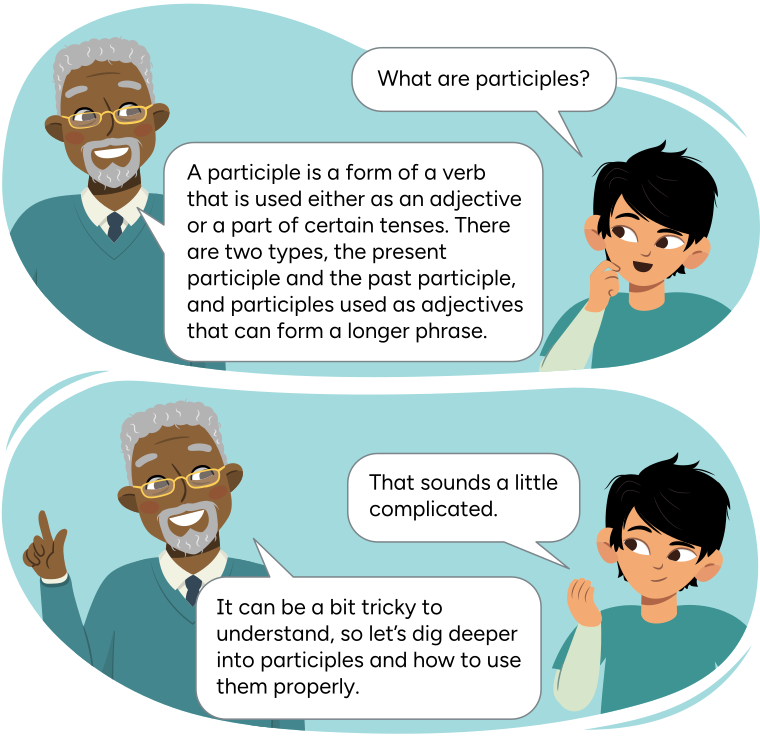
A conversation between Tyler and Teacher Wilfred.
Tyler says, "What are participles?"
Teacher Wilfred says, "A participle is a form of a verb that is used either as an adjective or a part of certain tenses. There are two types, the present participle and the past participle, and participles used as adjectives that can form a longer phrase."
Tyler: "That sounds a little complicated."
Teacher Wilfred: "It can be a bit tricky to understand, so let's dig deeper into participles and how to use them properly."
Participles have two functions:
- Turn a verb into an adjective to modify a noun.
- Connect with auxiliary verbs to create different tenses.
Press the following tabs to explore the functions of participles in more detail.
In this example, a participle (form of a verb) functions as an adjective that modifies the noun.
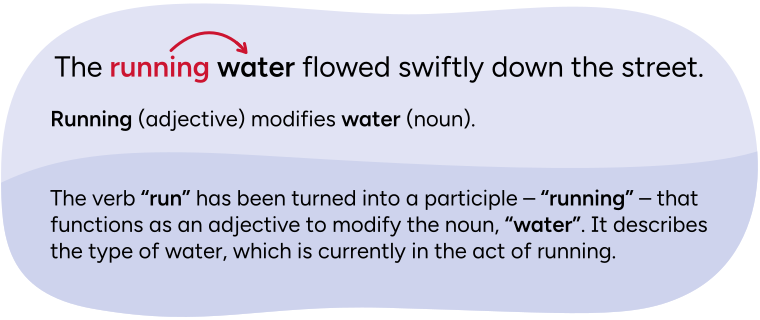
The running water flowed swiftly down the street. "Running" (adjective) modifies "water" (noun).
The verb "run" has been turned into a participle - "running" - that functions as an adjective to modify the noun, "water". It describes the type of water, which is currently in the act of running.
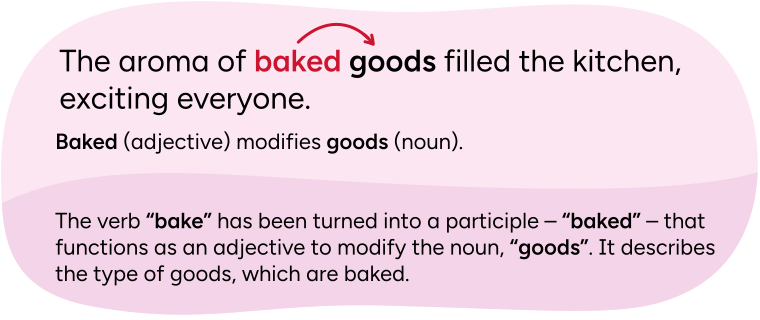
The aroma of baked goods filled the kitchen, exciting everyone. "Baked" (adjective) modifies "goods" (noun).
The verb "bake" has ben turned into a participle - "baked" - that functions as an adjective to modify the noun, "goods". It describes the type of goods, which are baked.
Note: It’s important that you do not confuse participles with infinitives, which is another form of a verb that can modify nouns. Infinitives usually have the word “to” at the beginning.
- a refreshing drink (participle)
- a drink to refresh (infinitive)
In this example, the participle is used to create different verb tenses. Let’s begin by exploring the present participle.
A present participle is used as an adjective describing an action that is currently taking place. Let’s check out some examples!
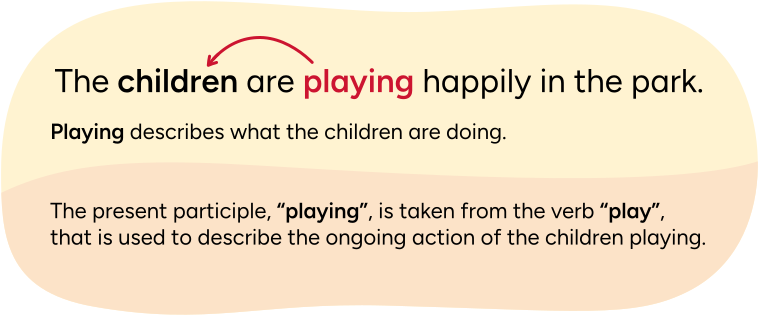
The children are playing happily in the park. "Playing" describes what the children are doing.
The present participle, "playing", is taken from the verb "play", that is used to describe the ongoing action of the children playing.
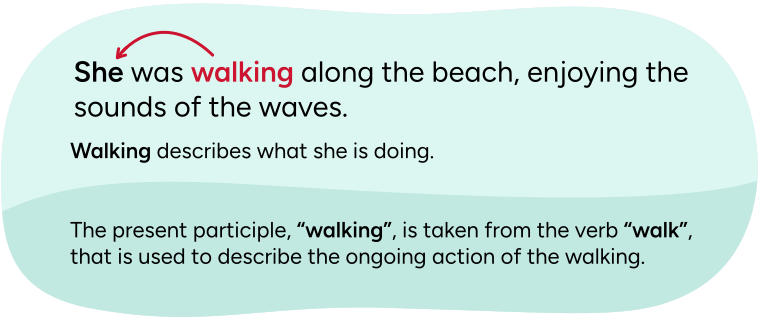
She was walking along the beach, enjoying the sounds of the waves. "Walking" describes what she is doing.
The present participle, "walking", is taken from the verb "walk", that is used to describe the ongoing action of the walking.
Note: For most verbs, you form the present participle by adding -ing to the end of the verb.
Next, let’s explore how the participle is used to create different past tenses.
The past participle is used as an adjective to describe an action that has already been completed. Let’s check out some examples!
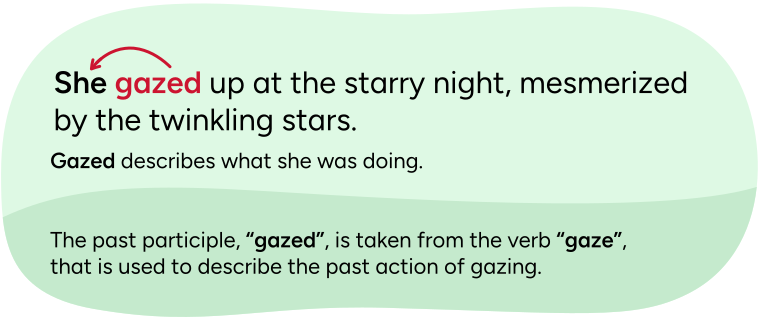
She gazed up at the starry night, mesmerized by the twinkling stars. "Gazed" describes what she was doing.
The past participle, "gazed", is taken from the verb "gaze", that is used to describe the past action of gazing.
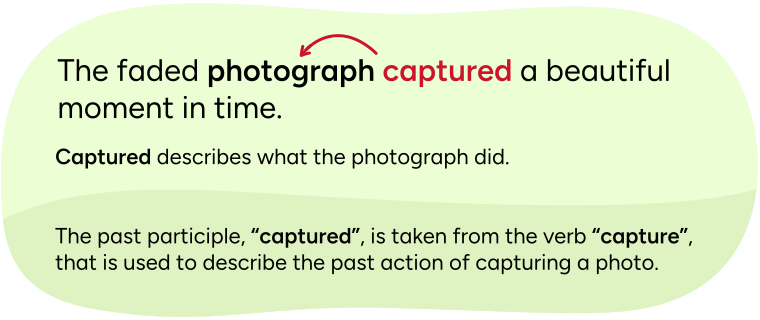
The faded photograph captured a beautiful moment in time. "Captured" describes what the photograph did.
The past participle, "captured", is taken from the verb "capture", that is used to describe the past action of capturing a photo.
Note: For most verbs, you form the past participle by adding -ed to the end of the verb.

Try It
Try it
Explore the following sentences and identify the participles as well as the function of the participles (i.e., turn a verb into an adjective to modify a noun or connect with auxiliary verbs to create different tenses).
- The painting hanging in the gallery was admired by everyone.
- She had finished her homework before going to the party.
- Excited by the news, the students cheered loudly.
- The broken vase lay on the floor, a reminder of the accident.
- They will be travelling to Europe next summer.
Press Answer button to learn more.
- Participle: hanging (turns a verb into an adjective to modify the noun “painting”).
- Participle: finished (connect with auxiliary verb to create a new tense – past perfect).
- Participle: excited (turns a verb into an adjective to modify the noun “students”).
- Participle: broken (turns a verb into an adjective to modify the noun “vase”).
- Participle: travelling (connect with auxiliary verb to create a new tense – future).
Putting it all together

Choose one question from each category to respond to in a method of your choice.
| Knowledge and Understanding | Critical Thinking | Application | Transferable Skills |
|---|---|---|---|
| What is an NFT and how does it work? How is it used in the creative arts field? | Do you think the benefits of NFTs outweigh the drawbacks in the creative arts? Why or why not? | How could NFTs be integrated into a school or community art project to enhance creativity and engagement? | How can the concept of NFTs be applied to other industries outside of the creative arts? |
| What are the key benefits of using NFTs in the creative arts? | In what ways do you think the hype surrounding NFTs could affect the quality and value of digital art? | What strategies could be employed to make NFTs more accessible to emerging artists with limited resources? | In what ways can the knowledge of NFTs and digital ownership enhance your understanding of digital literacy and online security? |
| What are the main drawbacks associated with the use of NFTs in the creative arts? | How might the environmental impact of blockchain technology influence the future use of NFTs? | If you were an artist, how would you use NFTs to market and sell your work? | What skills are necessary for artists to successfully navigate the NFT market, and how can these skills be developed? |
Reflection
As you read the following descriptions, select the one that best describes your current understanding of the learning in this activity. Press the corresponding button once you have made your choice.

I feel...
Now, expand on your ideas by recording your thoughts using a voice recorder, speech-to-text, or writing tool.
When you review your notes on this learning activity later, reflect on whether you would select a different description based on your further review of the material in this learning activity.
Discover More