

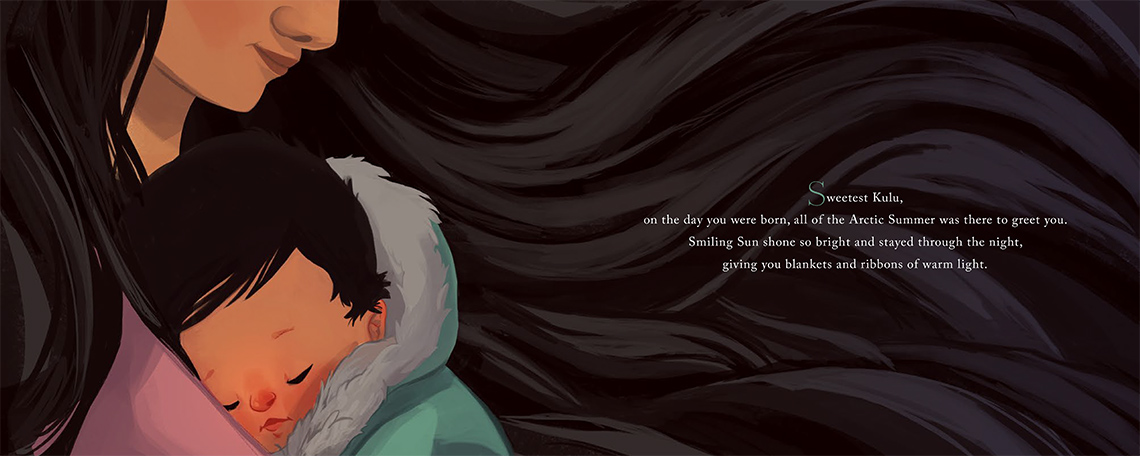
Sweetest Kulu, on the day you were born, all of the Arctic Summer was there to greet you. Smiling Sun shone so bright and stayed through the night, giving you blankets and ribbons of warm light.
Learning goals
We are learning to…
- read, listen to, and view texts by First Nations, Métis, and Inuit creators to show understanding of FNMI histories, cultures and communities
- gather information from a single source and use this information to understand
- identify text patterns and explain how they help readers, listeners, and viewers understand meaning
- create simple texts using different tools and strategies
Success criteria
I am able to…
- read, listen to, and view the book Sweetest Kulu by Celina Kalluk to learn more about Inuit culture
- explore information (facts, diagrams, and images) about Arctic animals and use this information to create an Arctic animal fact sheet
Changing seasons
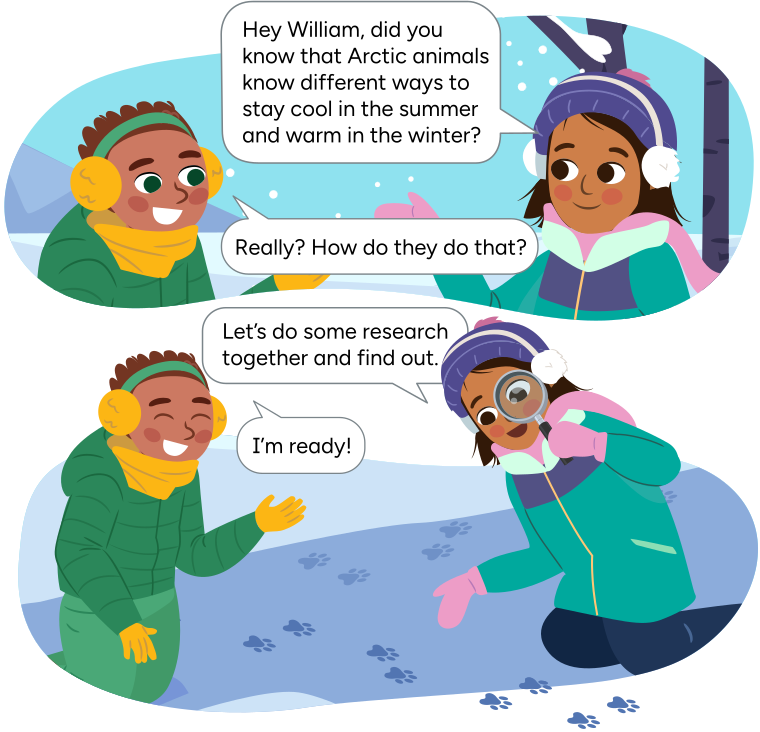
William and learner Neebin chatting outside in the snow. They are kneeling in the snow and looking at animal tracks.
Neebin says: 'Hey William, did you know that Arctic animals know different ways to stay cool in the summer and warm in the winter?'
William says: 'Really? How do they do that?'
Neebin says: 'Let's do some research together and find out.'
William says: 'I'm ready!'

Brainstorm
Brainstorm
What do you think an animal could do to stay cool in the summer and warm in the winter?
Do you know of any animals that change their form or behaviour at times when the weather is changing?
Share your thoughts with a partner, if possible.
Arctic animals

To begin our research, let’s read the story Sweetest Kulu by Celina Kalluk.
About the author
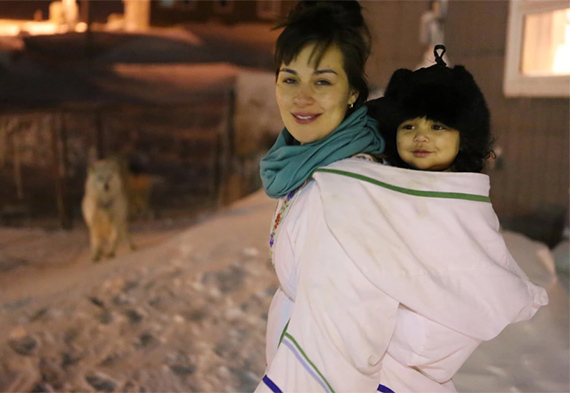
Sweetest Kulu was written by an Inuk author named Celina Kalluk. She was born and raised in Resolute Bay, Nunavut. Celina is also a visual artist and a famous throat singer.
You can listen to the story audio in English and Inuktitut.
While you listen to the story, pay special attention to all the Arctic animals that are introduced.

Pause and Reflect
Pause and reflect
William says: 'Remember to record your answers as you listen to the story. You will re-visit these answers at the end of the lesson!'
As you listen to the story, think about the following questions and record your answers using a method of your choice.
- What do you notice about each of the Arctic animals?
- What do they look like?
- What are they doing with Kulu?
Sweetest Kulu Sweetest Kulu e-reader
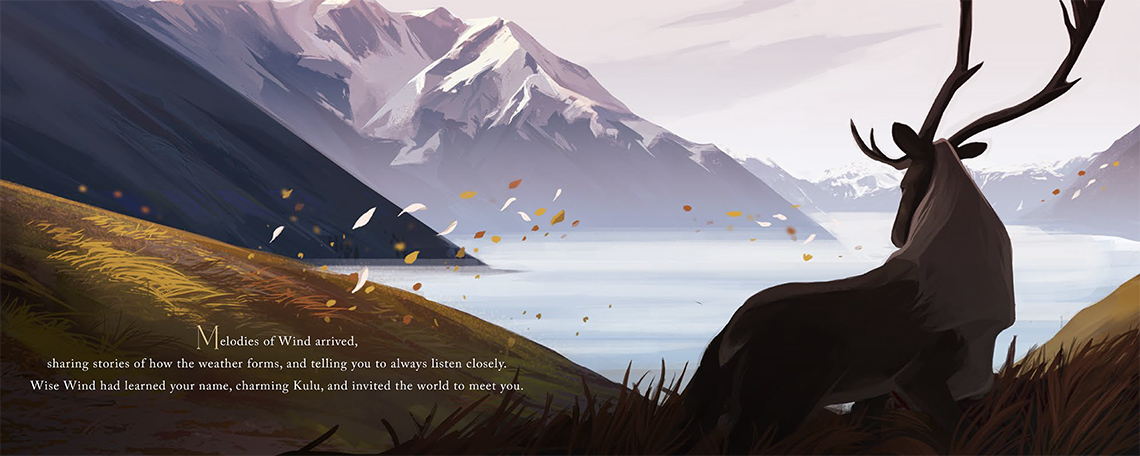
Melodies of Wind arrived, sharing stories of how the weather forms, and telling you to always listen closely. Wise Wind had learned your name, charming Kulu, and invited the world to meet you.
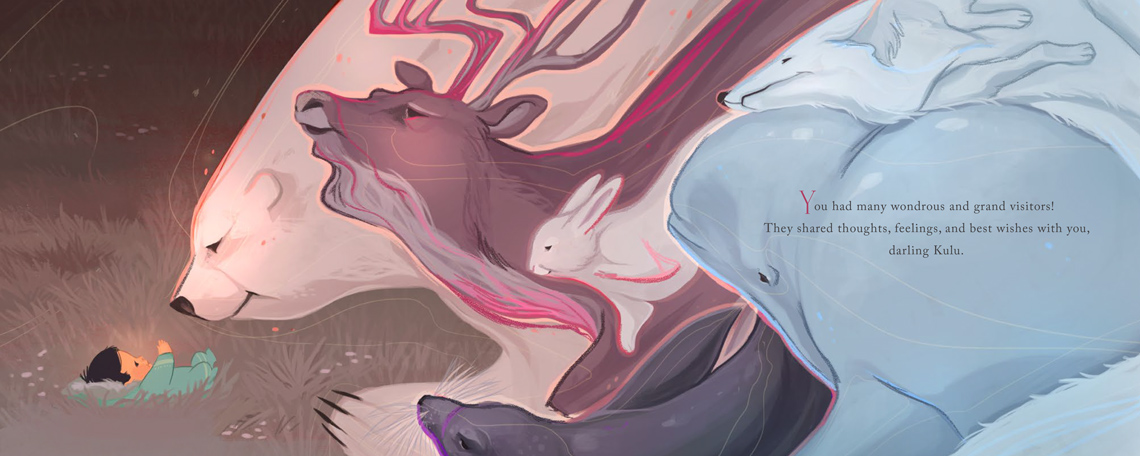
You had many wondrous and grand visitors! They shared thoughts, feelings, and best wishes with you, darling Kulu.
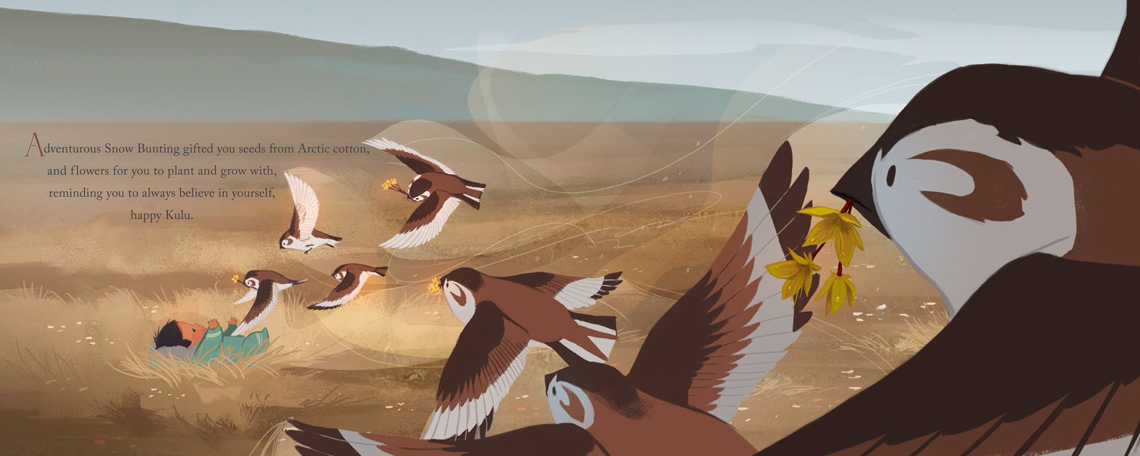
Adventurous Snow Bunting gifted you seeds from Arctic cotton, and flowers for you to plant and grow with, reminding you to always believe in yourself, happy Kulu.
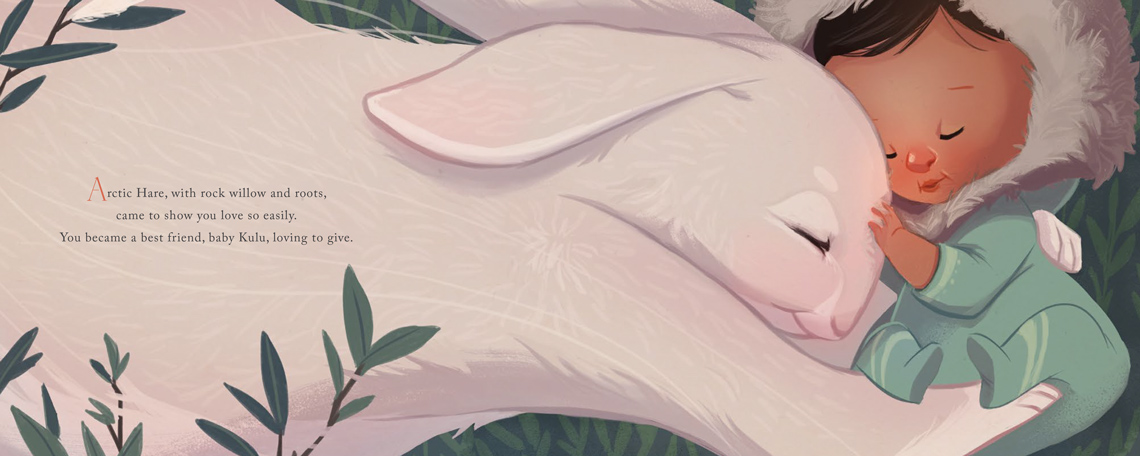
Arctic Hare, with rock willow and roots, came to show you love so easily. You became a best friend, baby Kulu, loving to give.
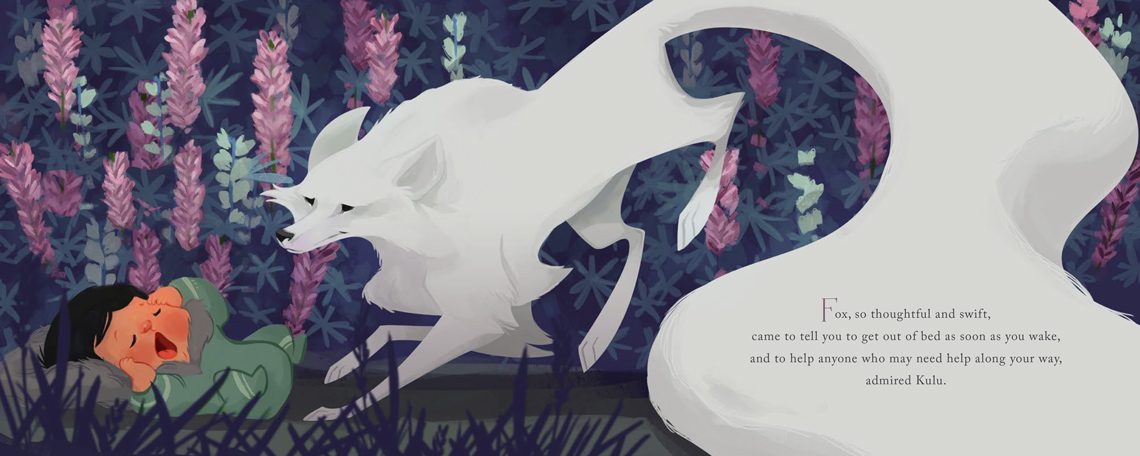
Fox, so thoughtful and swift, came to tell you to get out of bed as soon as you wake, and to help anyone who may need help along your way, admired Kulu.
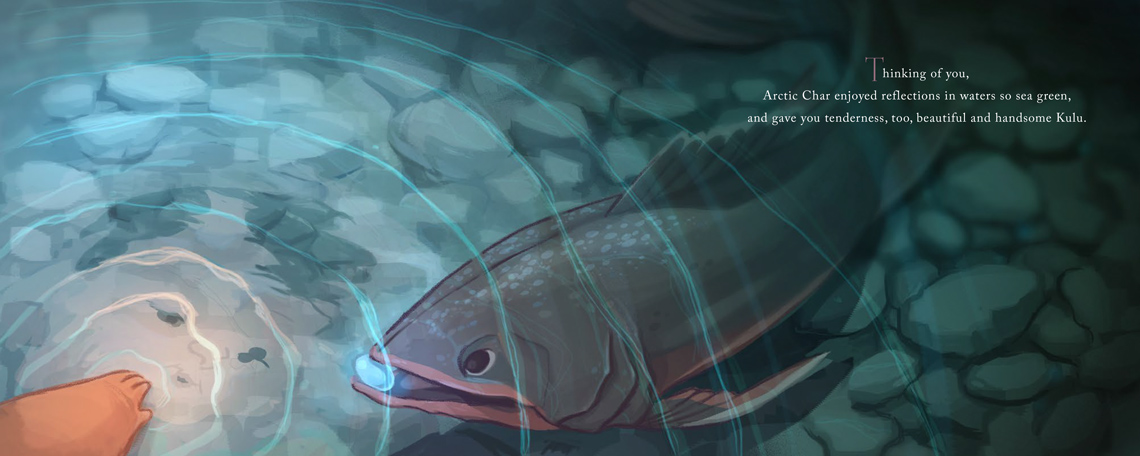
Thinking of you, Arctic Char enjoyed reflections in waters so sea green, and gave you tenderness, too, beautiful and handsome Kulu.
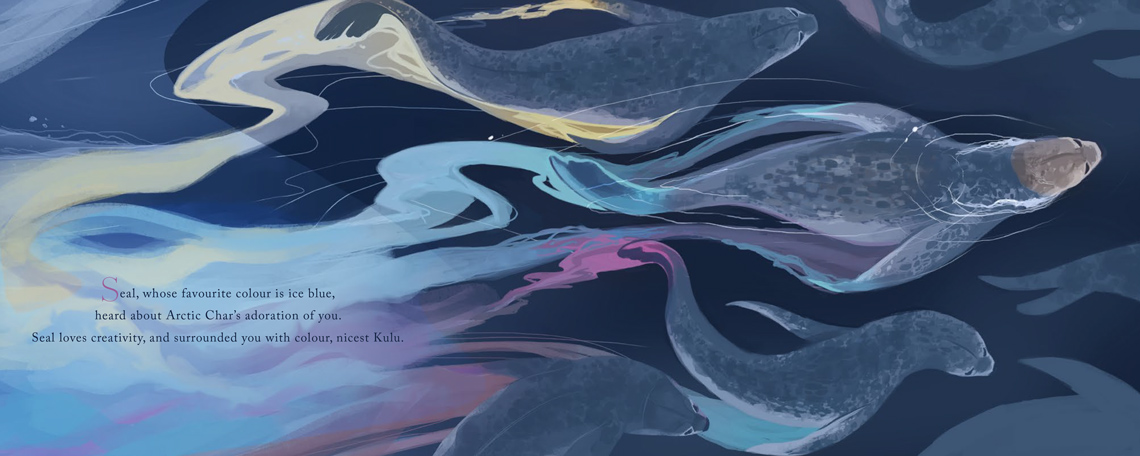
Seal, whose favourite colour is ice blue, heard about Arctic Char’s adoration of you. Seal loves creativity, and surrounded you with colour, nicest Kulu.
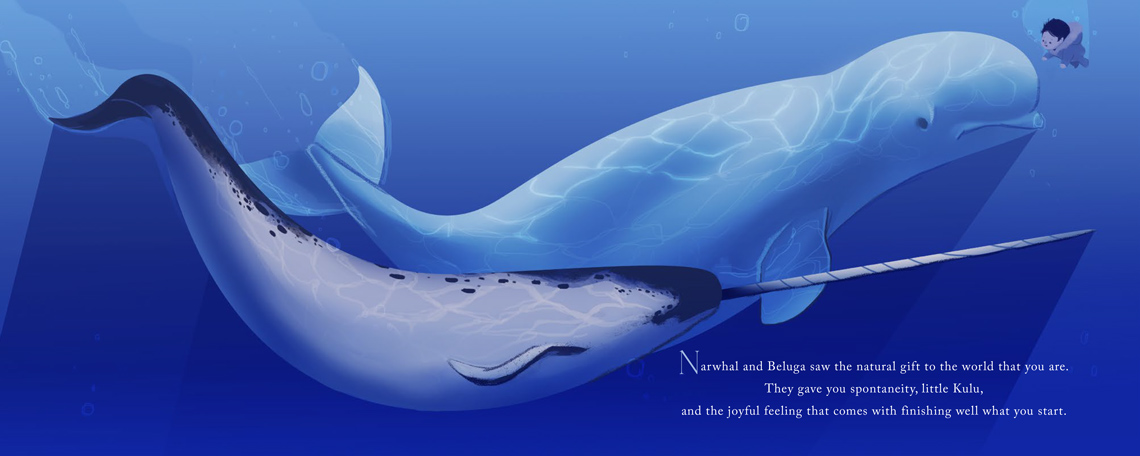
Narwhal and Beluga saw the natural gift to the world that you are. They gave you spontaneity, little Kulu, and the joyful feeling that comes with finishing well what you start.
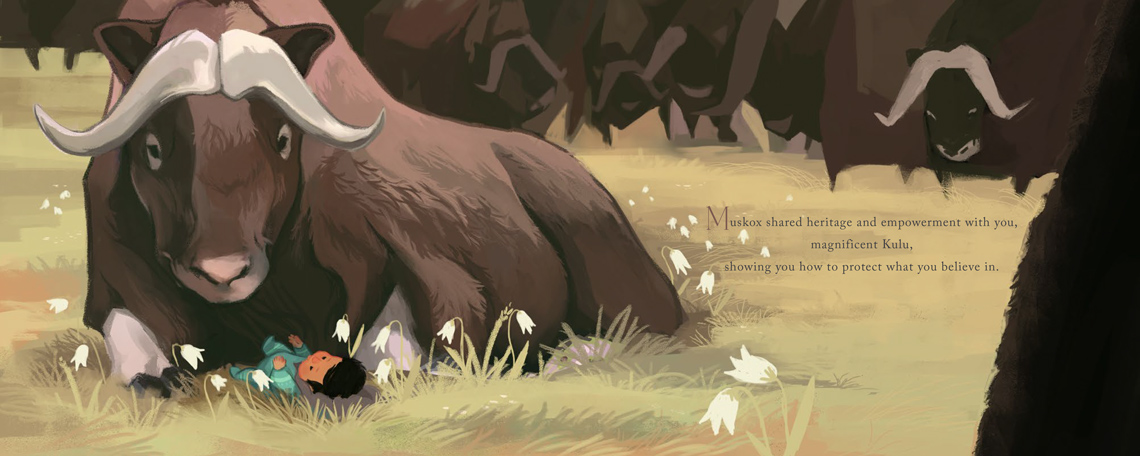
Muskox shared heritage and empowerment with you, magnificent Kulu, showing you how to protect what you believe in.
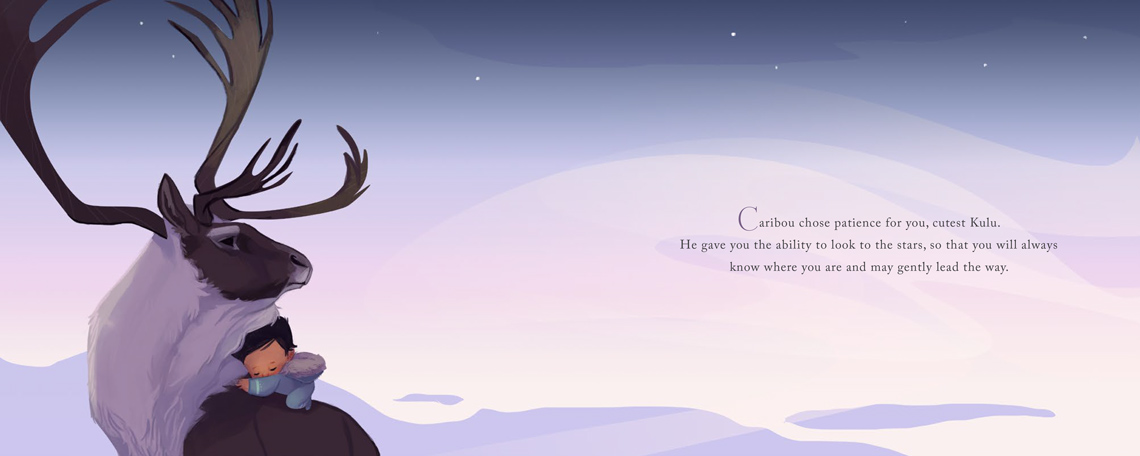
Caribou chose patience for you, cutest Kulu. He gave you the ability to look to the stars, so that you will always know where you are and may gently lead the way.
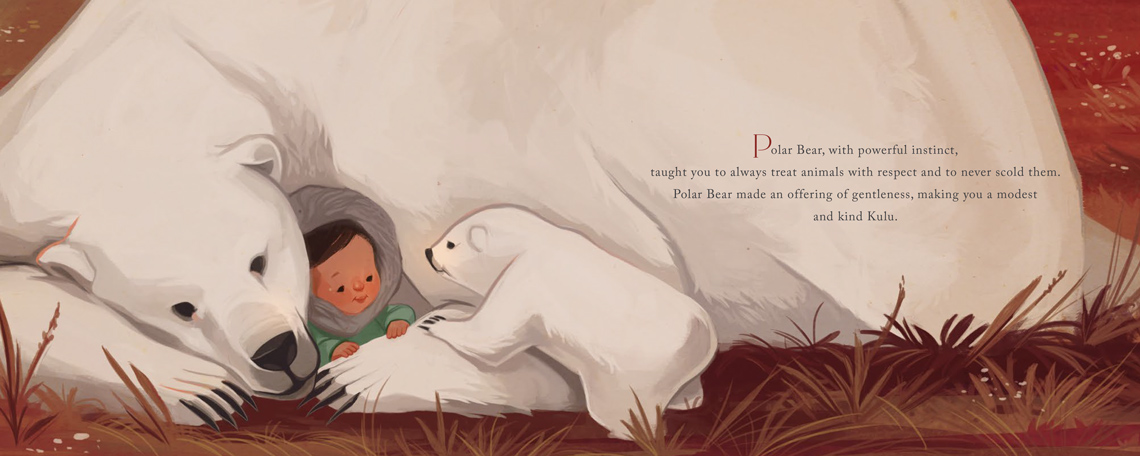
Polar Bear, with powerful instinct, taught you to always treat animals with respect and to never scold them. Polar Bear made an offering of gentleness, making you a modest and kind Kulu.
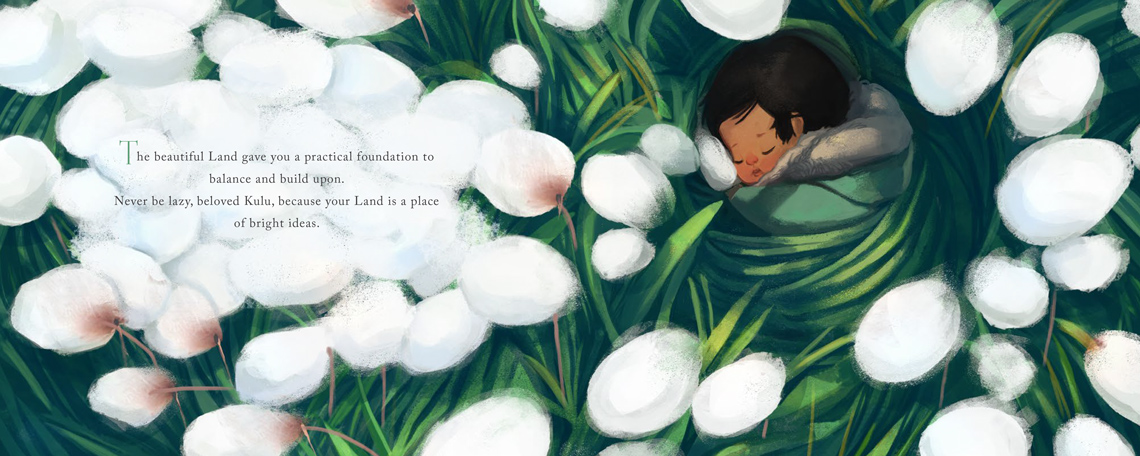
The beautiful Land gave you a practical foundation to balance and build upon. Never be lazy, beloved Kulu, because your Land is a place of bright ideas.
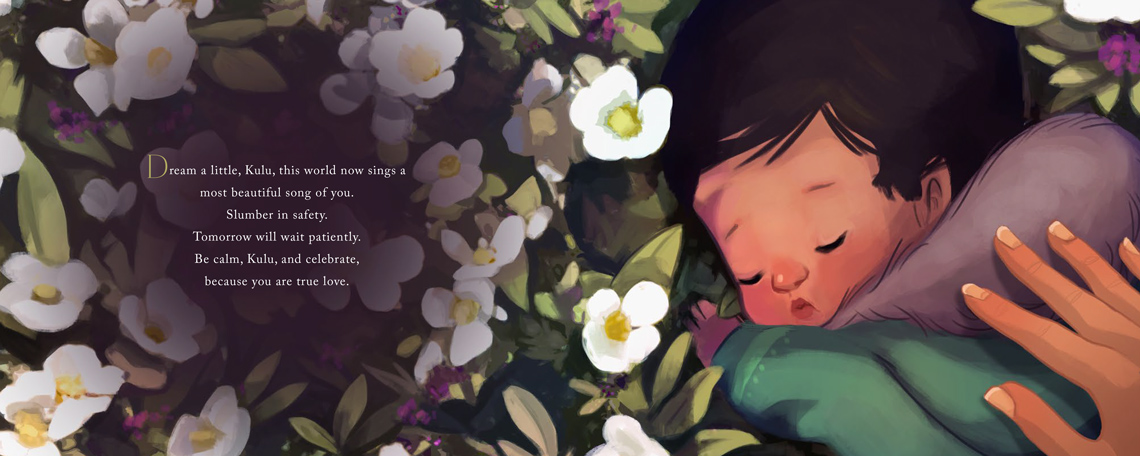
Dream a little, Kulu, this world now sings a most beautiful song of you. Slumber in safety. Tomorrow will wait patiently. Be calm, Kulu, and celebrate, because you are true love.
Listen to the story in Inuktitut!
Explore the following audio clip to hear the story in Inuktitut.
Sweetest Kulu in Inuktitut
Let’s explore Arctic animals!
Let’s explore some of the Arctic animals from the story.
How do they adapt or change from the summer to the winter months? Let’s find out!
Umingmak: Muskox
One of the animals that Kulu meets is Muskox. What did you notice about Muskox?
Explore the following information on how the Muskox changes with the seasons.
Use your notebook or another method of your choice to record your thoughts.
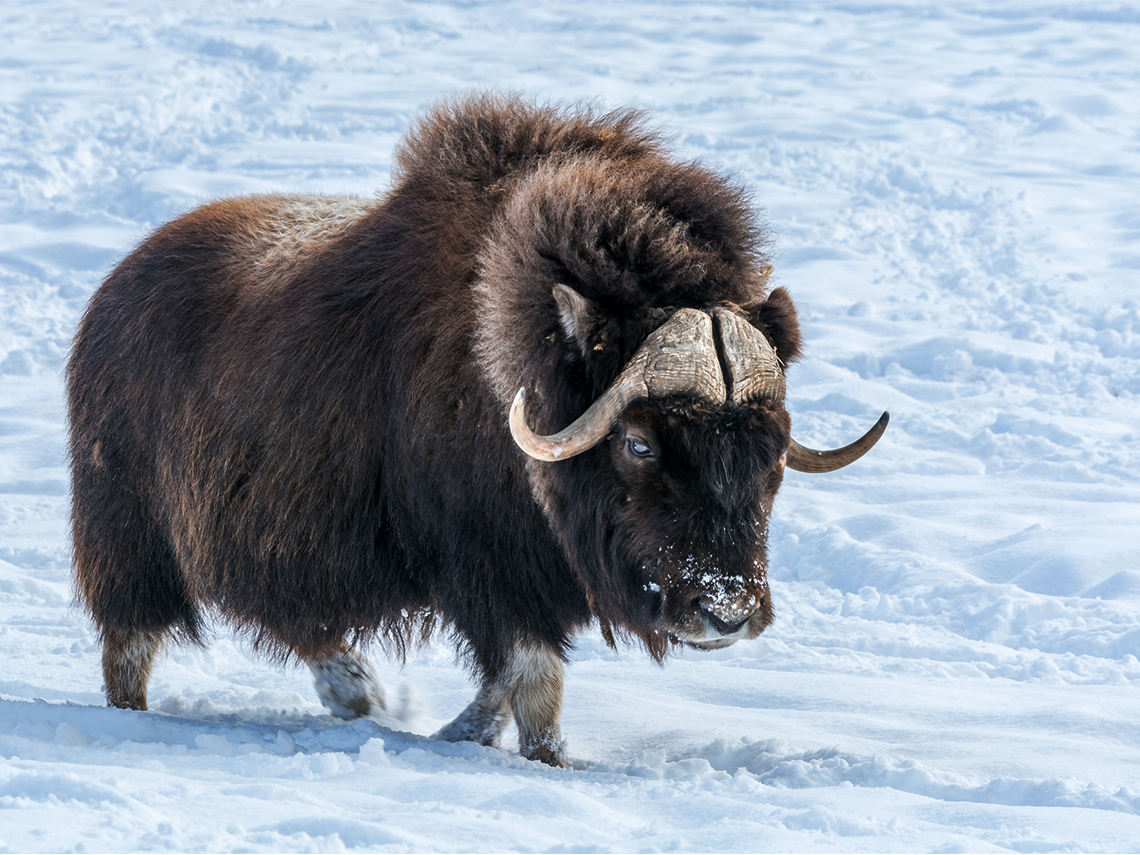
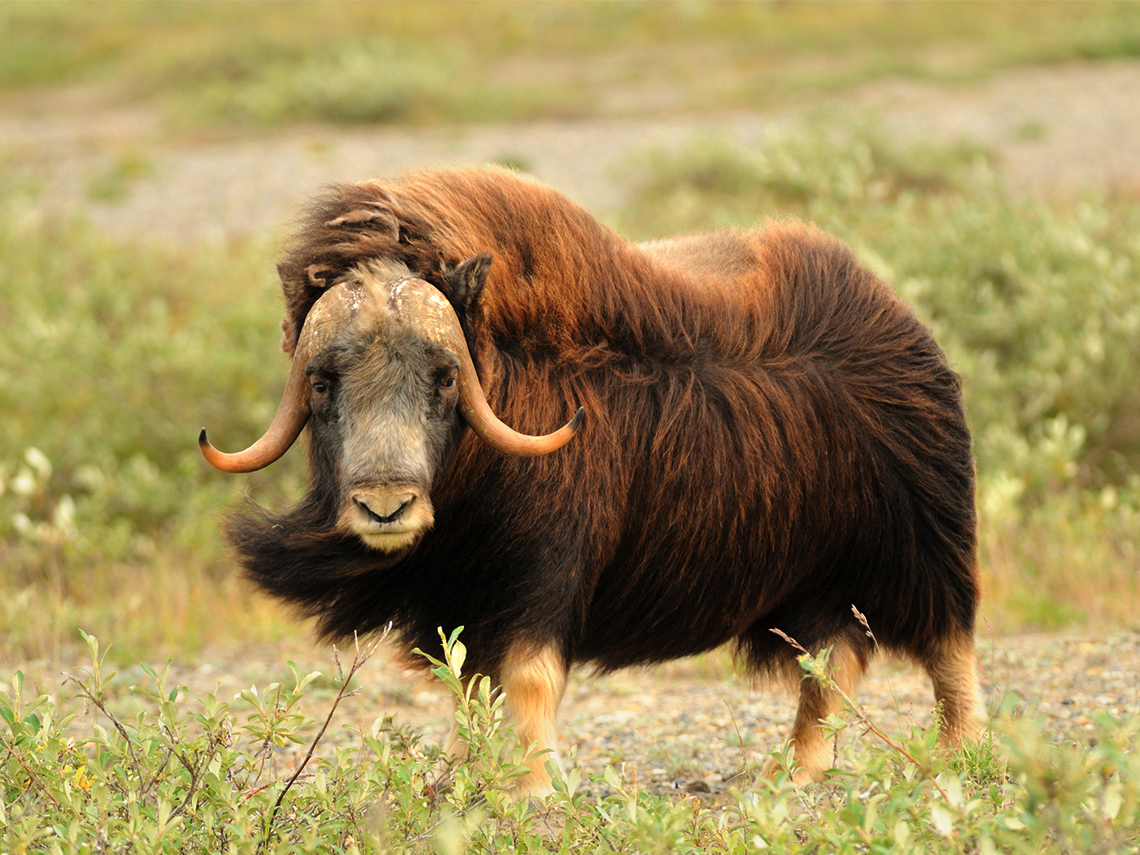
Listen to the following recording called Muskox to hear the text read aloud!
Muskox
Muskoxen have lived in the Arctic for thousands of years.
Their hooves spread out at the bottom to help them walk through snow. They also have sharp edges on their hooves to help them dig in the snow and dirt.
Muskoxen have two layers of hair that helps keep them warm.
The outside hairs are called “guard hairs.” The inside hair is the “undercoat.”
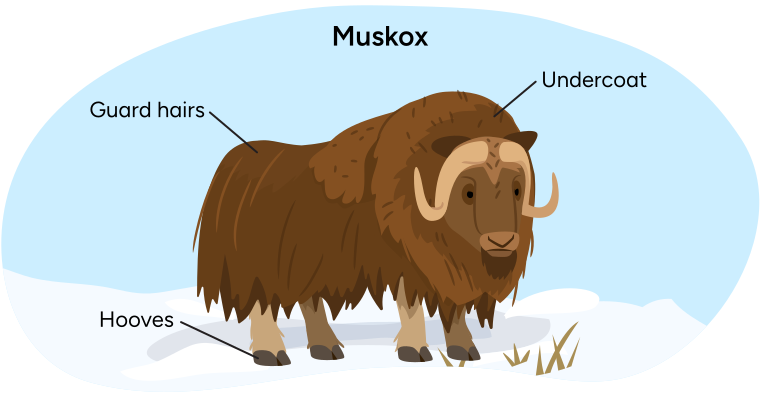
A diagram of a very furry brown muskox, titled 'Muskox.' It labels it's two layers of hair on it's body, the 'Undercoat' and 'Guard hairs' and the 'Hooves' on its feet.
When the weather changes and gets warm their undercoat falls out so that the muskoxen don’t get too hot.
In the winter, muskoxen eat roots, mosses, and lichen.
In the summer, they add Arctic flowers and grass.
Muskoxen travel together in groups called herds.

Try It
Try it!
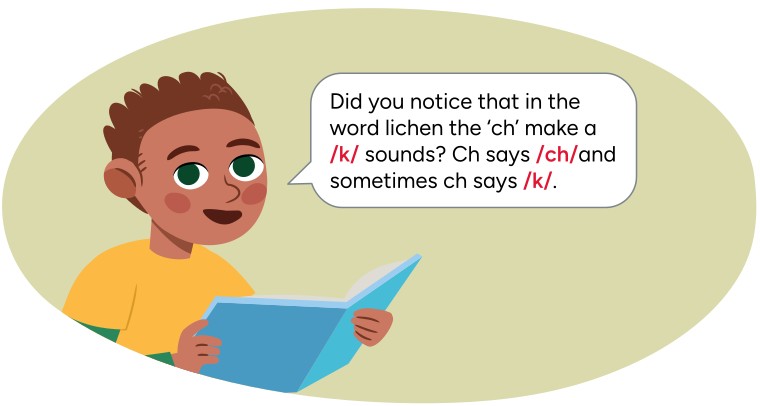
Check out the following audio called Lichen to hear the word aloud.
Listen to the audio as many times as you like, then try to say the word aloud!
Lichen
Ukaliq: Arctic Hare
Another animal that Kulu meets is Arctic Hare. What did you notice about Arctic Hare?
Explore the following information on how the Arctic Hare changes with the seasons.
Use your notebook or another method of your choice to record your thoughts.
Listen to the following recording called Arctic Hare to hear the text read aloud!
Arctic Hare
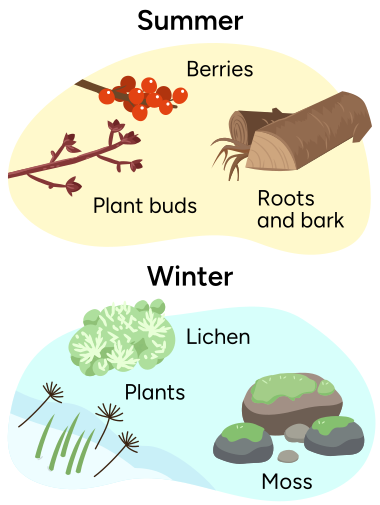
A diagram with two sections showing what an Arctic Hare eats in different seasons labeled 'Summer' and 'Winter'.
In the 'Summer' section, there are images of berries, plant buds, and roots and bark.
In the 'Winter' section there are images of lichen, plants, and moss.
The Arctic Hare is bigger than a rabbit. It has longer back legs and longer ears.
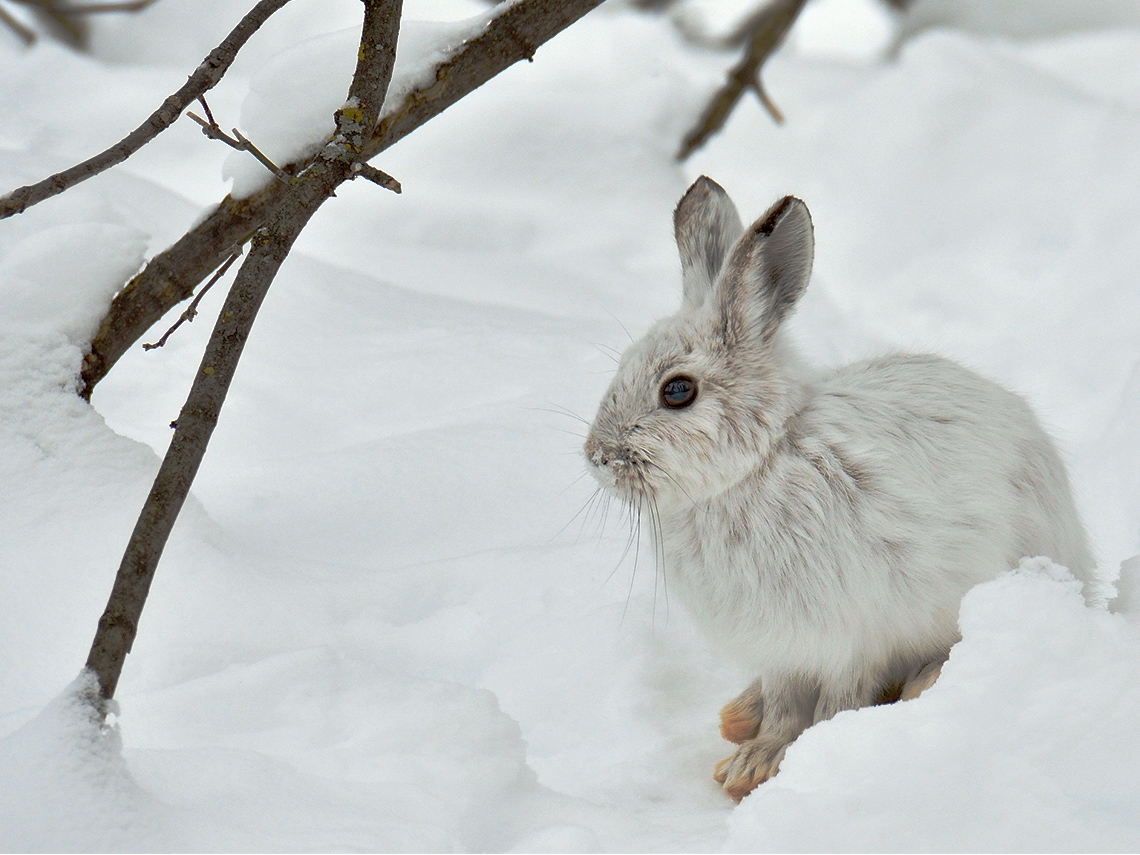
In the winter, they have a white undercoat and white guard hairs to keep them warm and help them to hide in the snow.
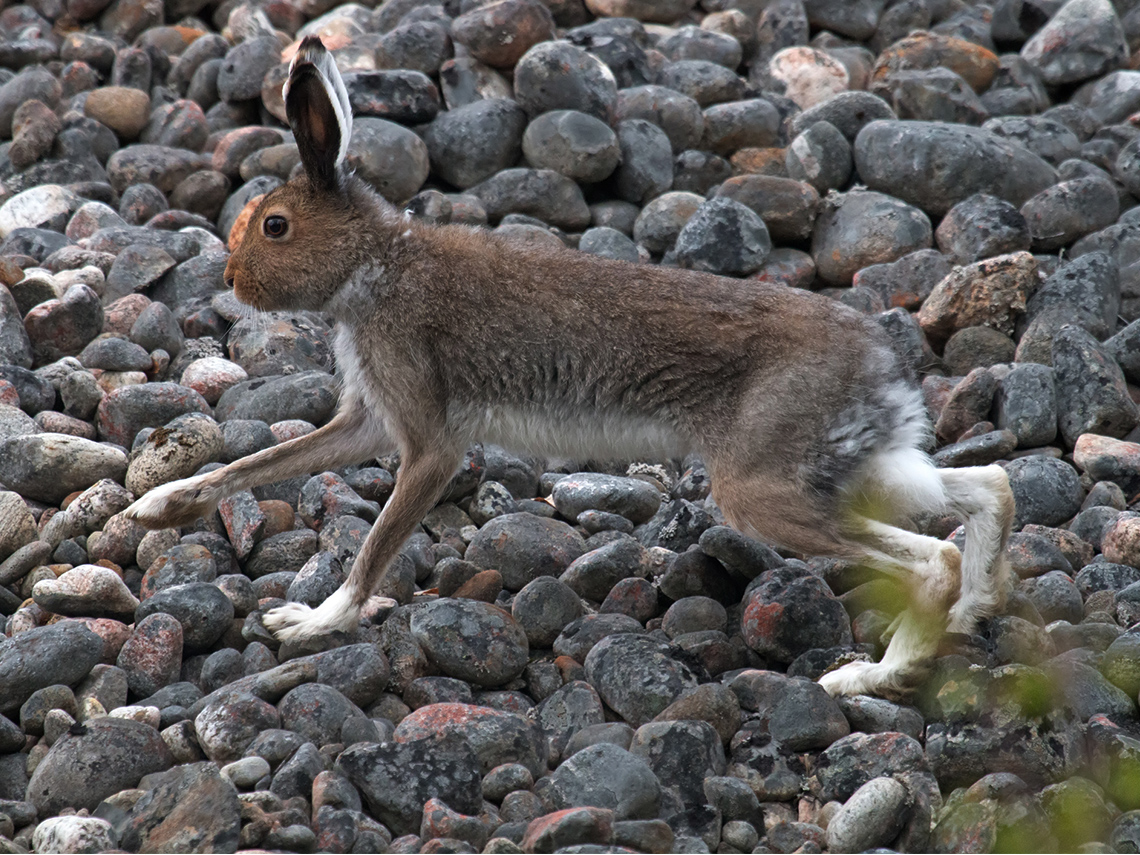
In the spring, their guard hairs fall out and they grow a blue-gray coat to hide against rocks and plants.
They eat plants, moss, and lichen in the winter.
They eat plant buds, berries, leaves, roots, and bark in the summer.
Sometimes Arctic Hares travel together, but they usually move alone.
Tuktu: Caribou
Another animal that Kulu meets is Caribou. What did you notice about Caribou?
Explore the following information on how the caribou changes with the seasons.
Use your notebook or another method of your choice to record your thoughts.
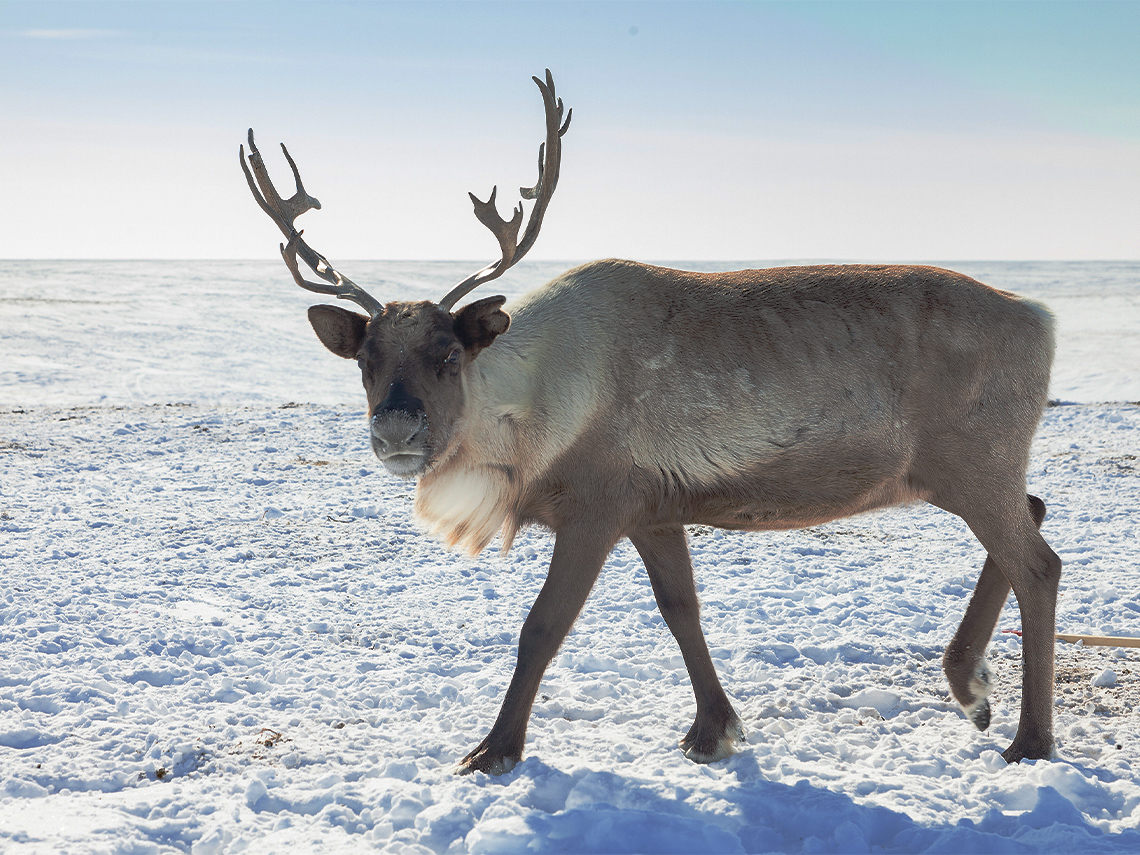
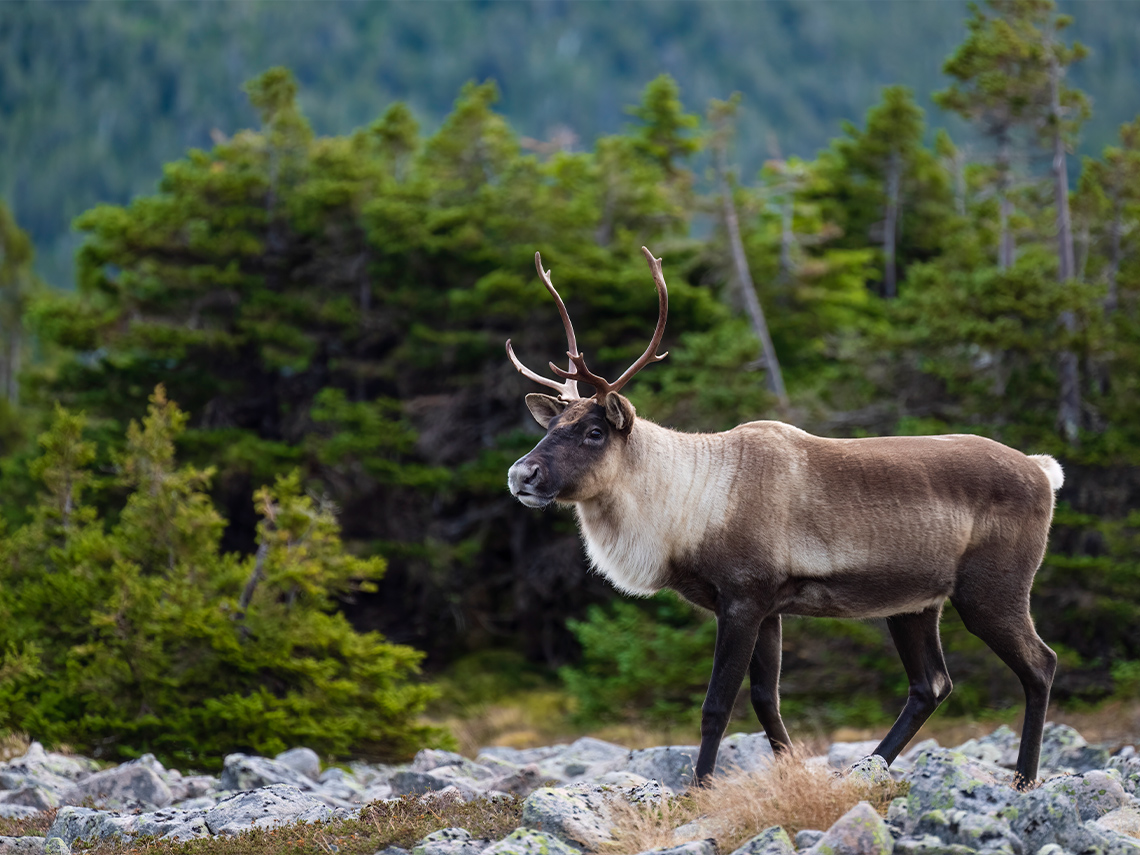
Listen to the following recording called Caribou to hear the text read aloud!
Caribou
Just like muskoxen and Arctic hares, caribou have hair that changes between winter and summer.
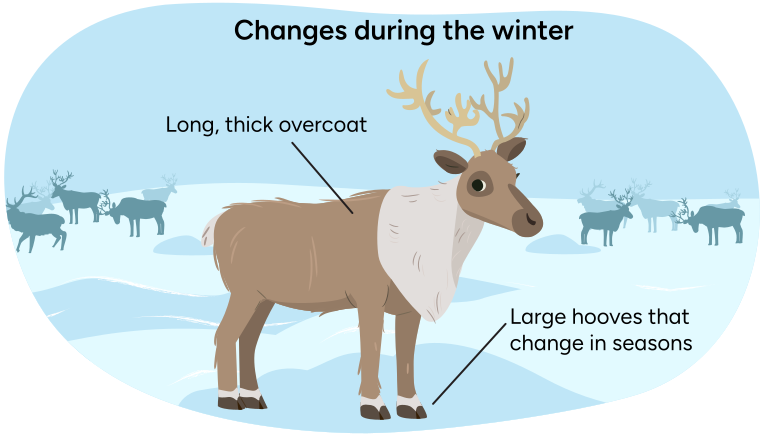
A diagram of a caribou titled 'Changed during the winter.' It labels the caribou's fur as 'Long, thick overcoat,' and the caribous hooves as 'Large hooves that change in seasons.'
They have an undercoat in the summer and an overcoat in the winter.
The colour of their hair is light brown in the winter and dark brown and white in the summer.
Their hooves have a big scoop on the bottom, which helps them dig for food.
Their hooves are hard and furry in the winter to protect them from the snow and ice. Then, in the summer they change to wide and spongy to help them walk through grass and mud.
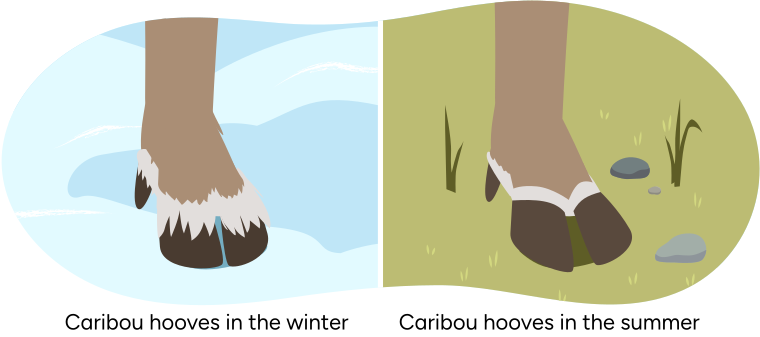
A split image comparing caribou hooves in different seasons, labeled 'Caribou hooves in the winter' and 'Caribou hooves in the summer.'
On the left side (winter), the hooves are shown walking on snow. They are very furry.
On the right side (summer), the hooves are shown walking on grass. The hooves are wider and have less fur.
Caribou eat grass and plants in the summer.
They eat lichen and mushrooms in the winter.
Caribou travel together in groups called herds.
They travel north in the summer and then south in the winter.
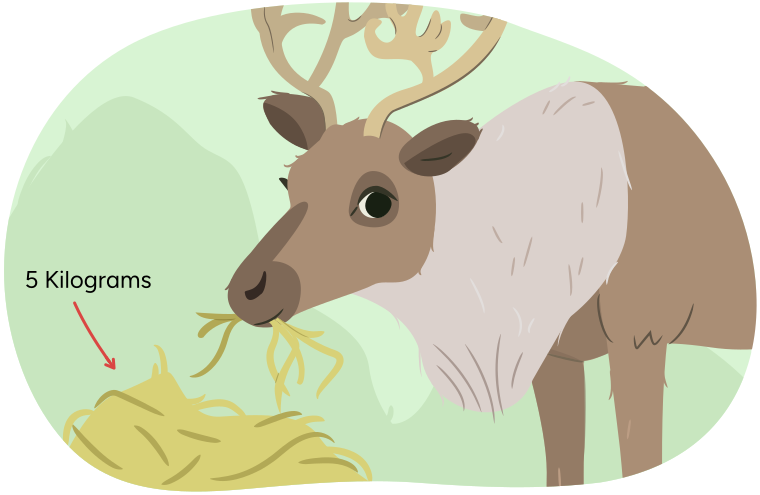
Adult caribou can eat about five kilograms of food every day!

Did You Know?
Did you know?
Many Arctic animals are a source of food, vitamins, and minerals for the Inuit.
In Inuit culture, it is customary to show love and care for the animals, each living on the land together.
It's also customary for Inuit hunters to use every part of the animal. This is a way of showing the animal respect.
The animals provide food, clothing, tools and instruments.
Explore the following illustrations to learn how Inuit communities use parts of the caribou.
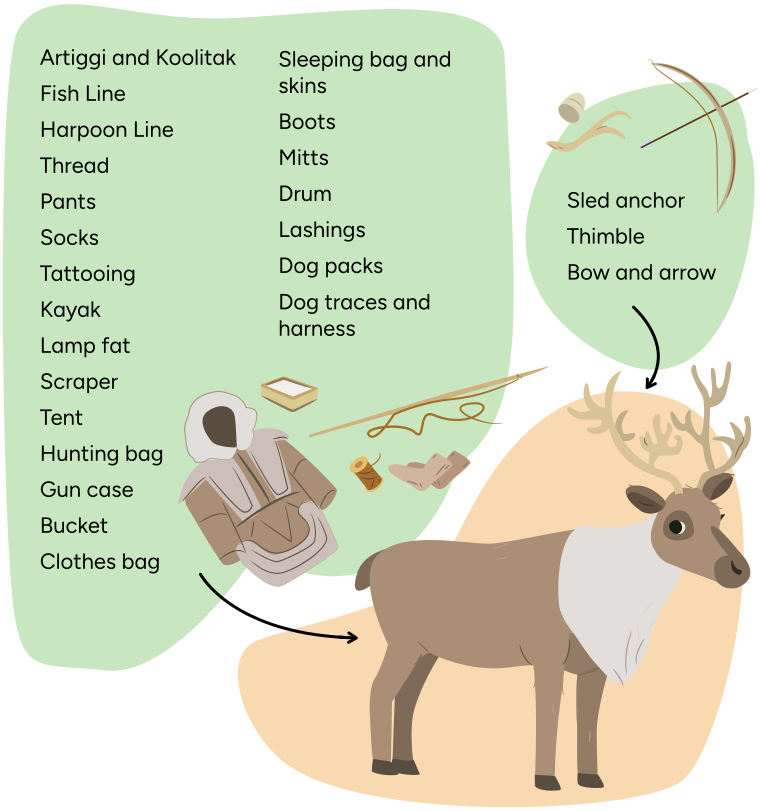
A caribou with arrows pointing to parts of the body that can be turned into many different things. The antlers can be used as a sled anchor, thimble, and bow and arrow. The body can be used for artiggi and koolitak, fish lines, harpoon lines, thread, pants, socks, tattooing materials, kayak, lamp fat, scrapers, tent, hunting bags, gun cases, buckets, clothes bag, sleeping bag and skins, boots, mitts, drums, lashings, dog packs, and dog traces and harnesses.
Count the different ways that the Inuit communities use all parts of the caribou.

Printing practice
Check out the following video to warm up your hands for printing!
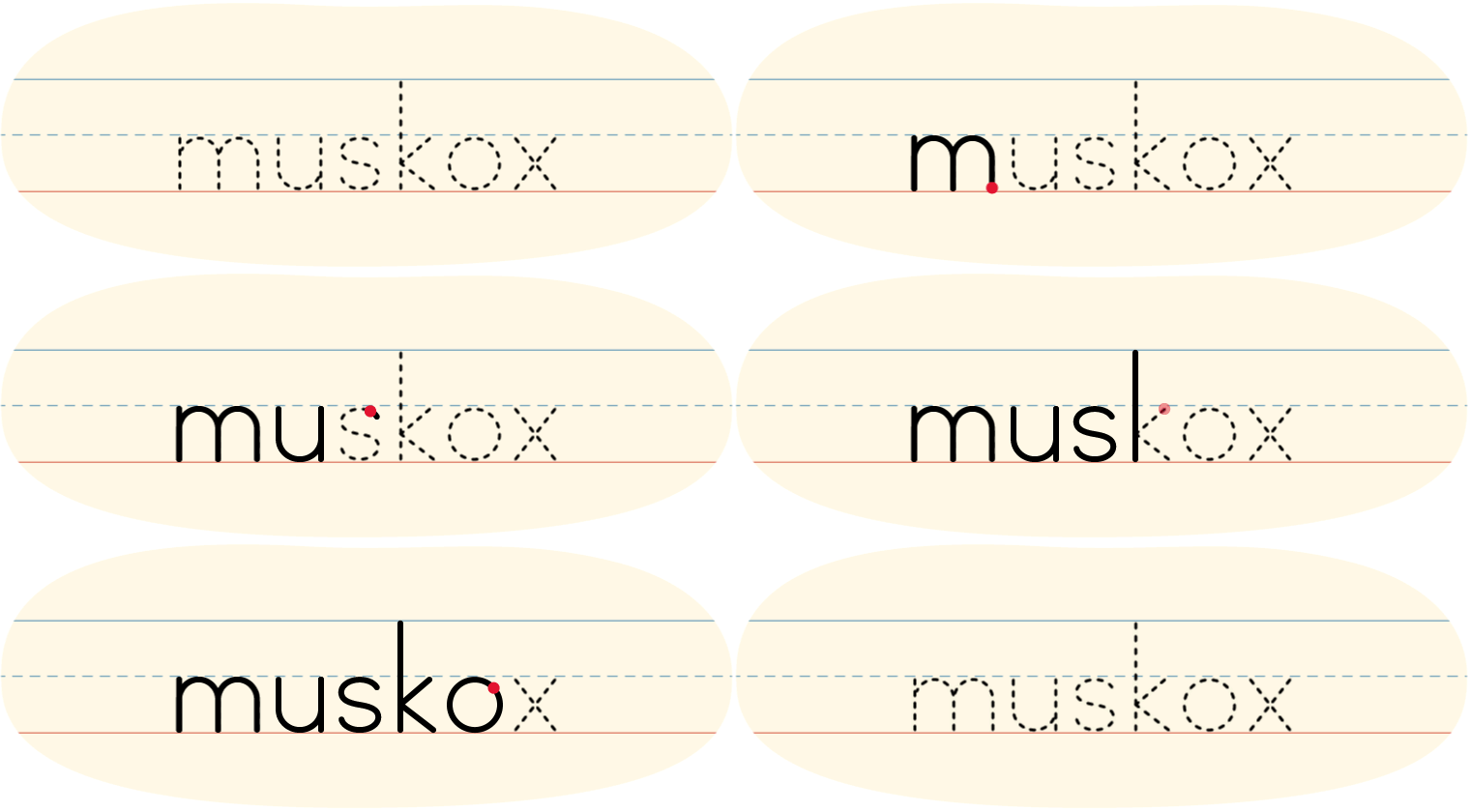
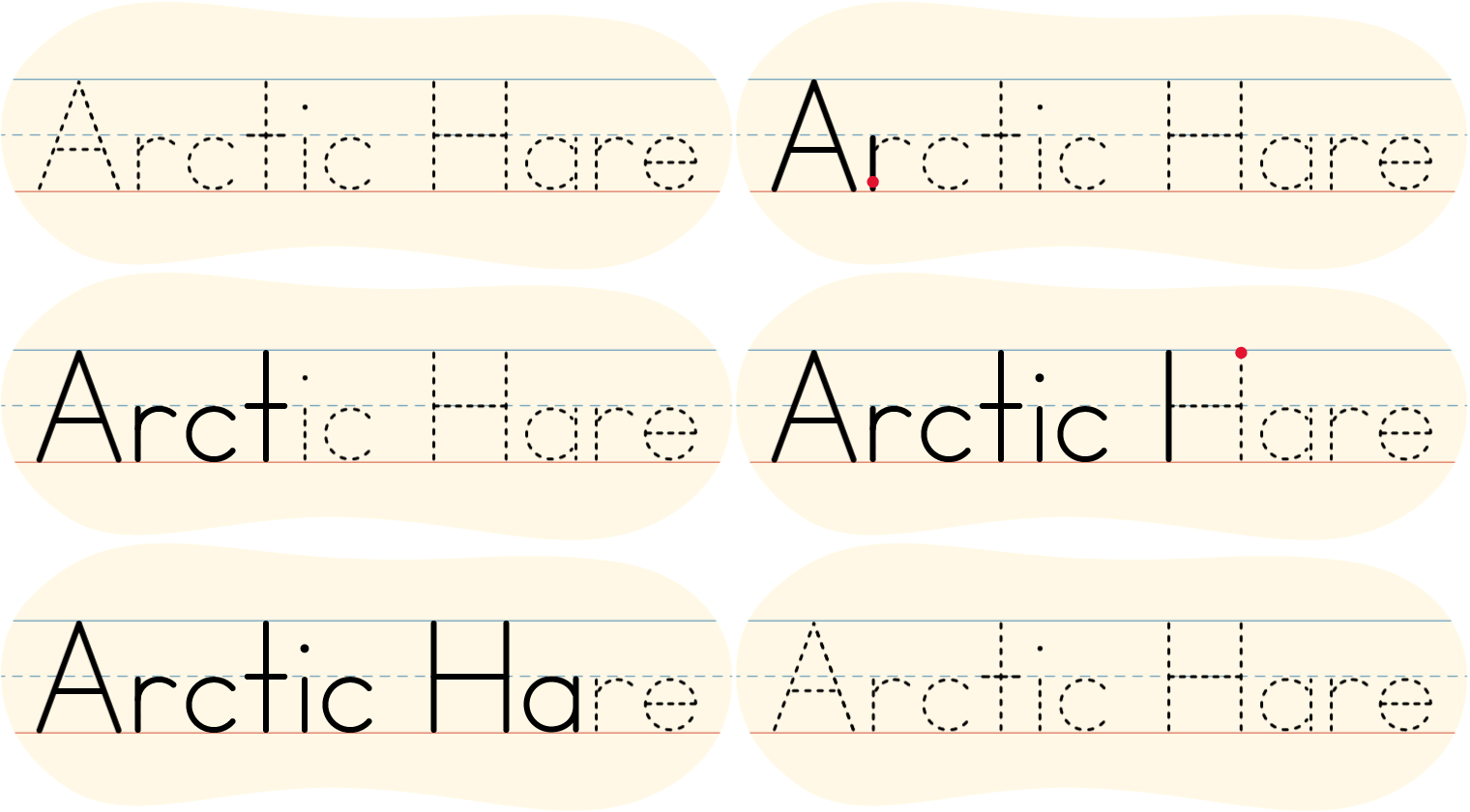
Let’s practice printing out a few words.


Test Your Skills
Test your skills

Practice printing out each word using a method of your choice.
- muskox
- Arctic hare
- caribou
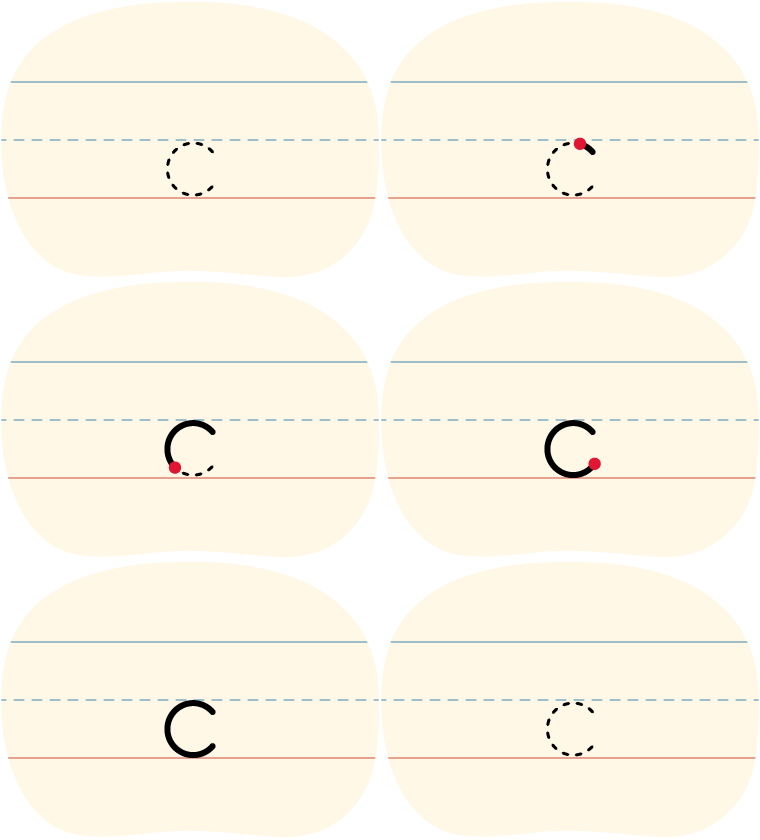
Which word begins with a capital or big letter and which words begin with small letters?
Press Reveal to find out!
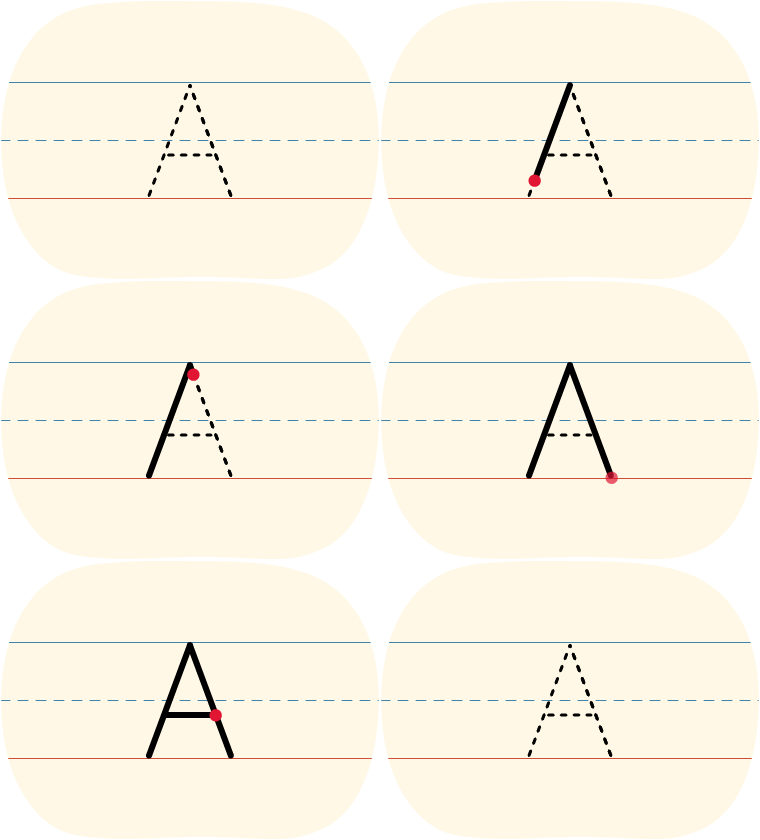
The word Arctic starts with a capital “A”
The words muskox and caribou start with small letters “m” and “c”


Putting it all together

Let’s make a fact sheet about an Arctic animal!
Select one of the Arctic animals you learned about and use the following Arctic Animal Fact Sheet to add a drawing of your animal and some special facts.
If you would like, you can use speech-to-text or audio recording tools to record your thoughts.
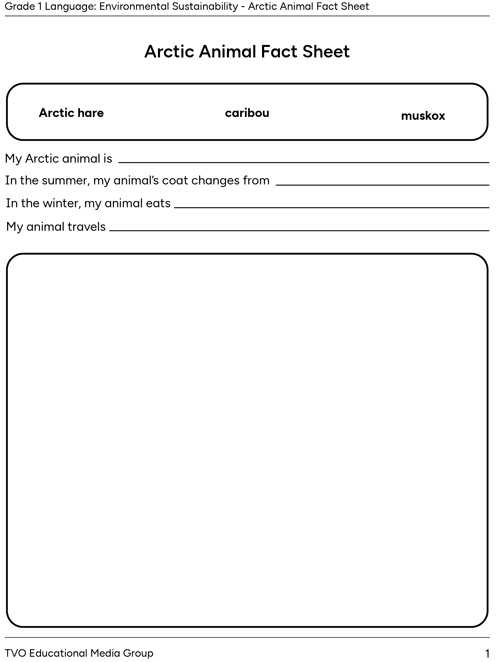
If possible, share your animal fact sheet with a partner once you are done. Did you include similar or different facts?
What other animals would you like to learn about next time?
Let’s check!
Let’s review what we learned about Arctic animals. Select the correct answer, then press Check Answer to see how you did.
Reflection
How do you feel about what you have learned in this activity? Which of the next four sentences best matches how you are feeling about your learning? Press the button that is beside this sentence.

I feel...
Now, record your ideas about your feelings using a voice recorder, speech-to-text, or writing tool.