Learning goals
We are learning to…
- use our global citizenship and sustainability skills in everyday life
- show how our global citizenship and sustainability skills can help us to express our thoughts and learning
- make predictions using background knowledge, text features, and evidence from the text
- create specific types of texts using different tools and strategies
Success criteria
I am able to…
- explore information about honeybees, think about why bees are important, and reflect on different ways I can help protect honeybees in my everyday life
- create a poster sharing my specific tips about how to protect bees and their homes using pictures and words
Bees
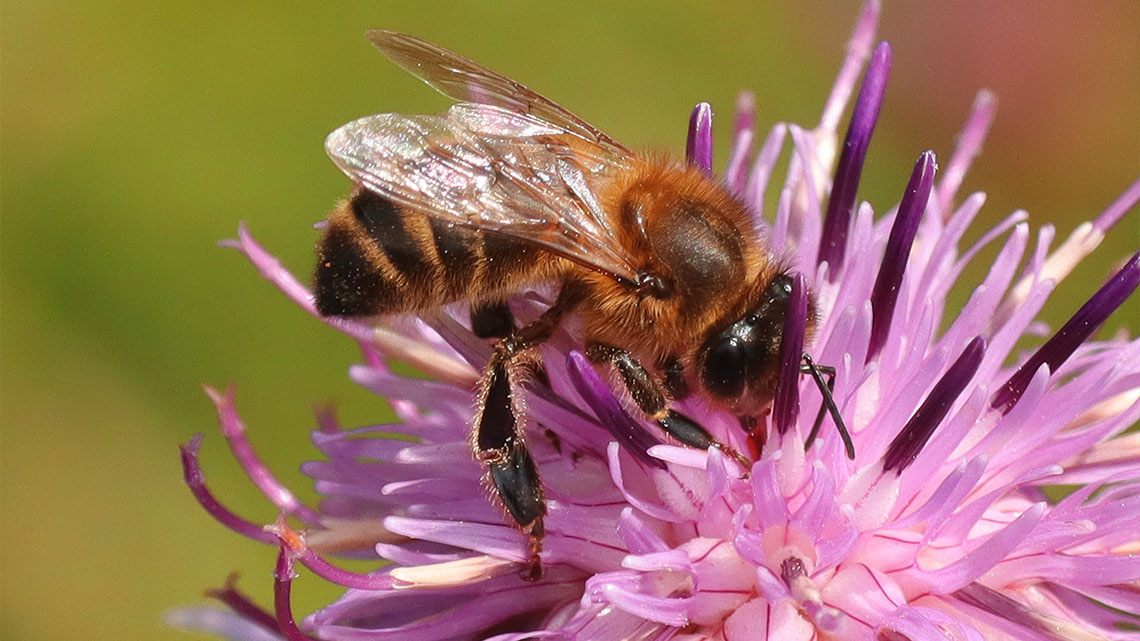
A honeybee collecting pollen from a flower.
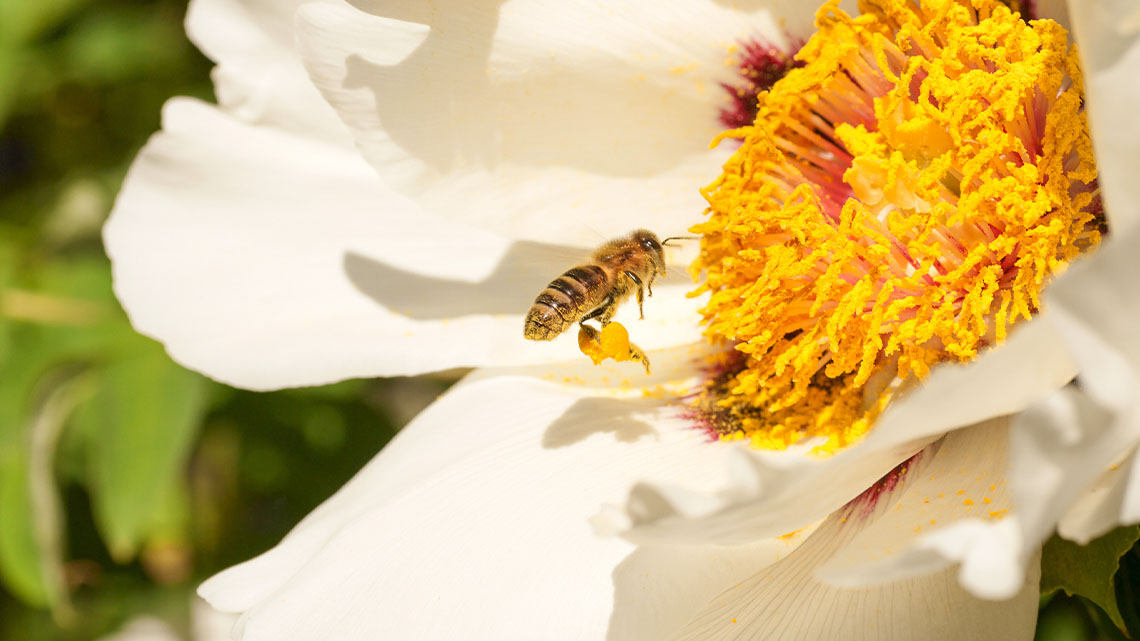
A honeybee collecting pollen.
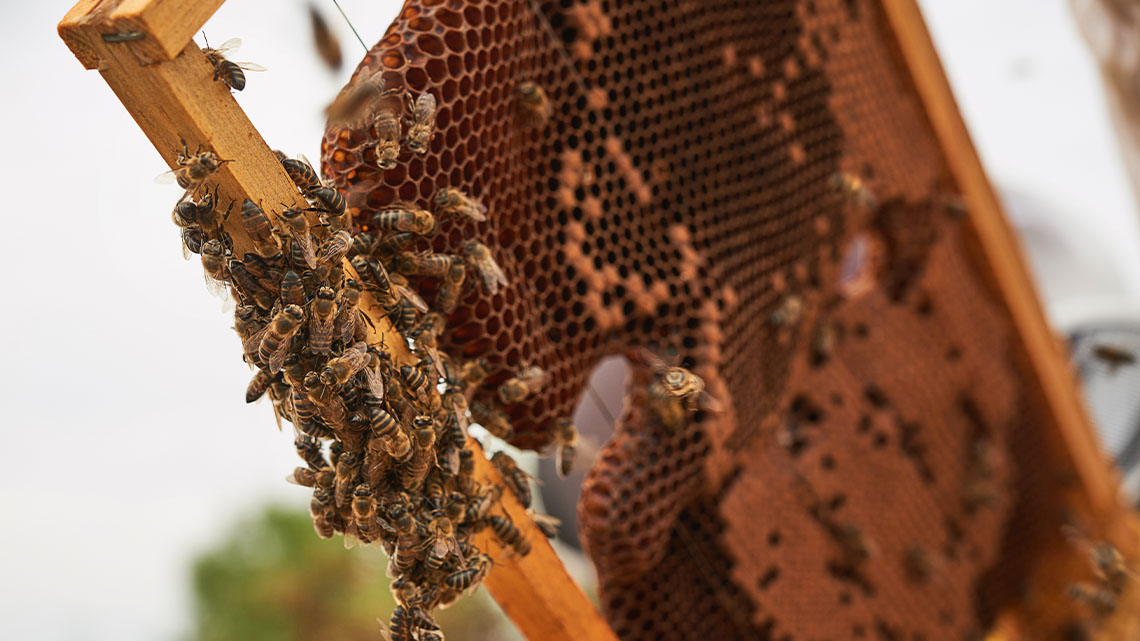
Bees on a honeycomb.

Brainstorm
Brainstorm
What do you know about bees? How are bees and flowers connected?
What happens after a bee leaves a flower?
Where does a bee live?
Share your thoughts with a partner, if possible.
Buzzing bees
When we think of bees we might think of fuzzy, black-and-yellow bumblebees. But bees can come in many different colours, shapes, and sizes!
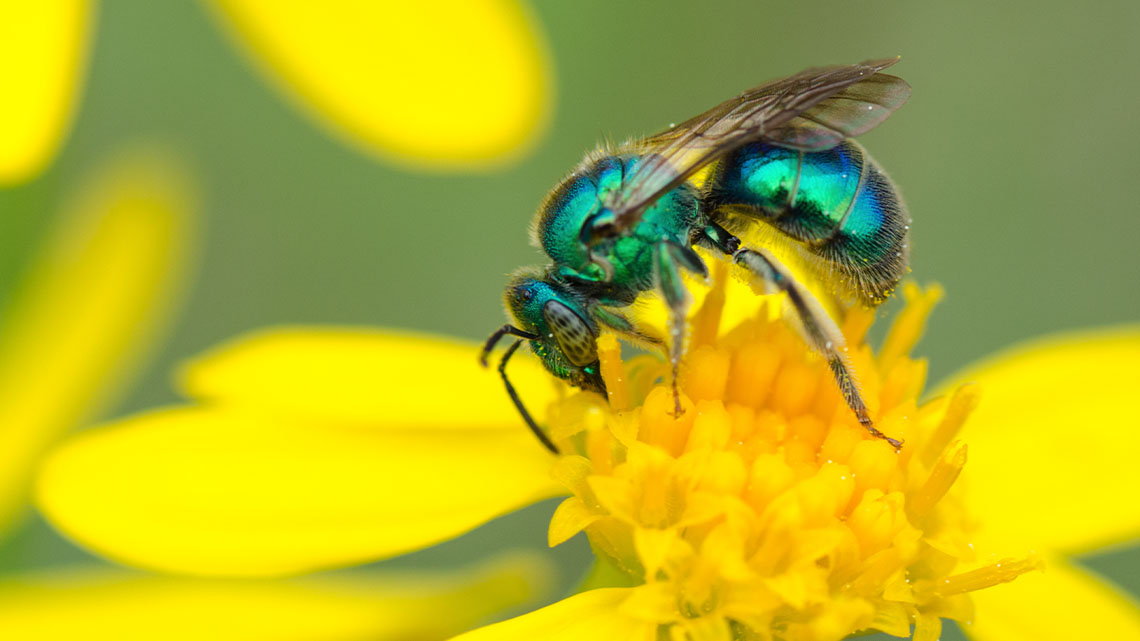
Different types of bees have different colour patterns. Some are even silver, blue, or green like the sweat bee.
Let’s learn some facts about one type of bee, the honeybee!

Student Tips
Student tips
A fact is something that has been proven to be true.
The facts that we will learn about bees are proven through observations made by scientists.
In the wild, honeybees create a nest where they live.
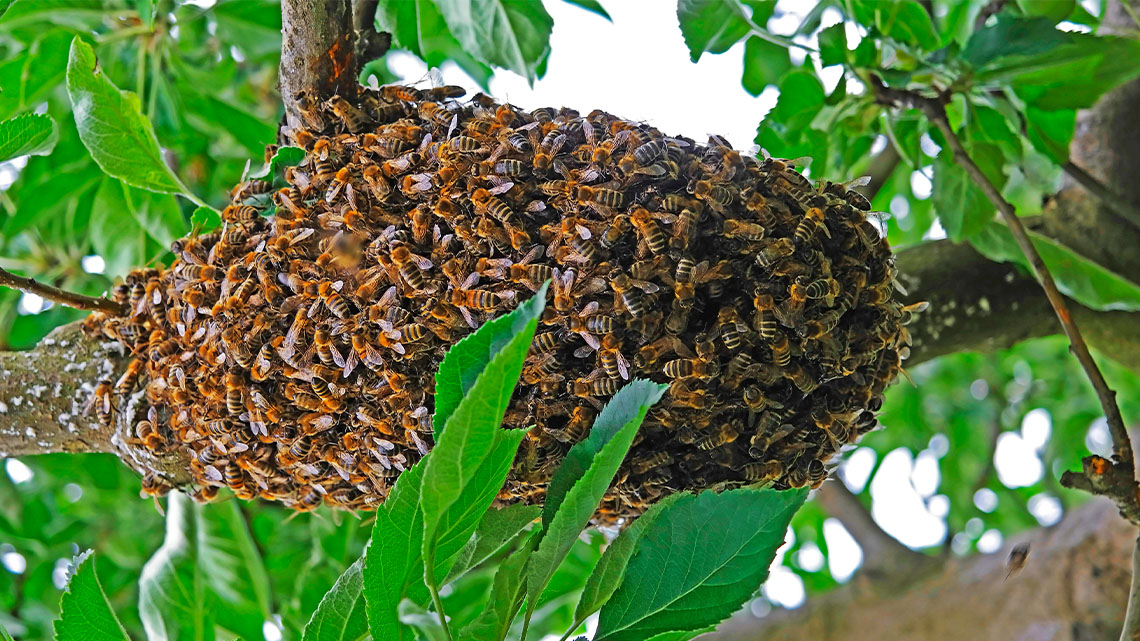
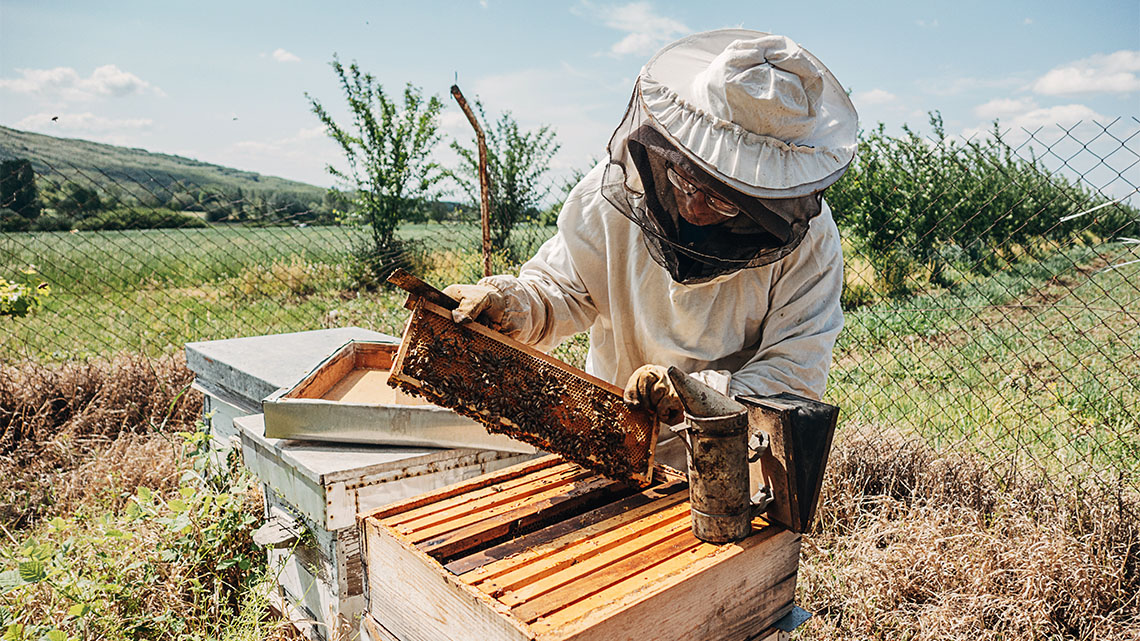
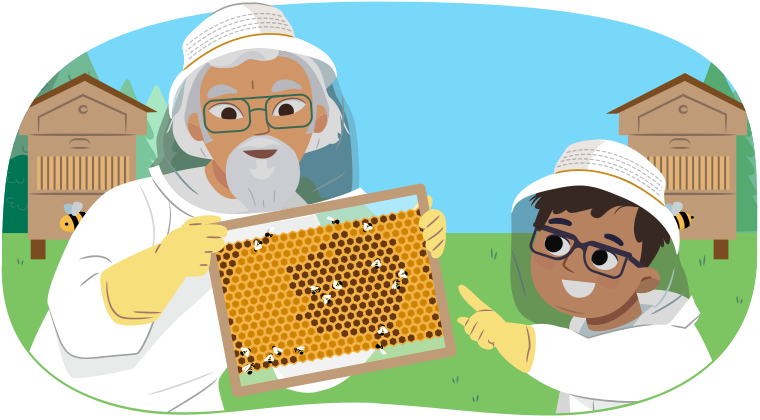
On a farm, honeybees live in a hive. Hives are created by beekeepers.

Did You Know?
Did you know?
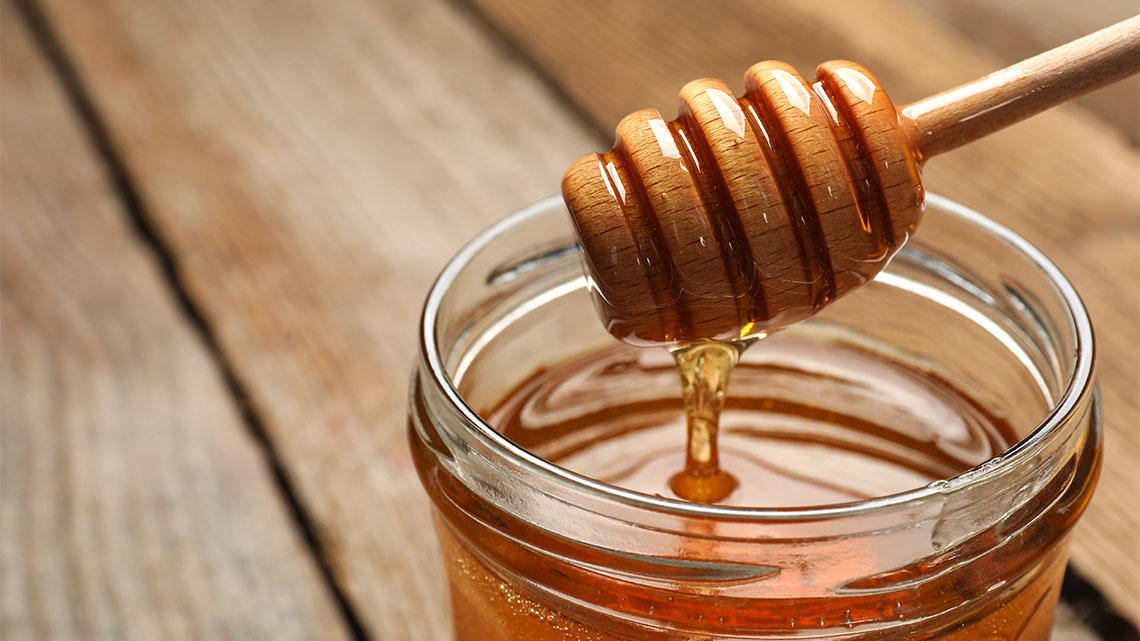
Did you know that beekeepers build hives for many colonies of bees? Beekeepers will fix the hives, replace the combs inside, and collect honey that the bees make.
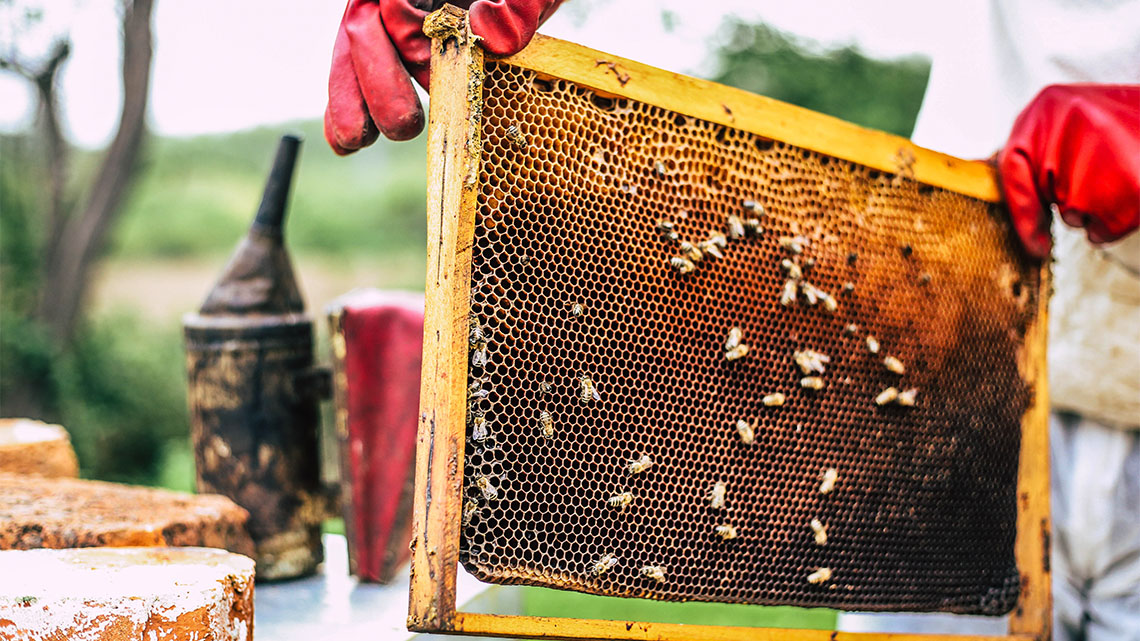
Honeybees live in groups called a colony.
A colony has a queen bee, drones, and worker bees.
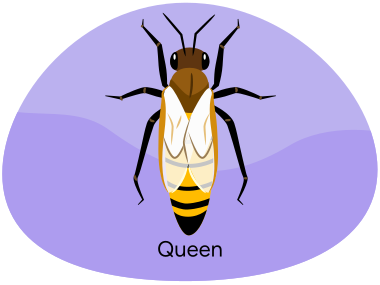
The queen bee helps guide all the bees in the hive. A honeybee colony must have a queen bee.
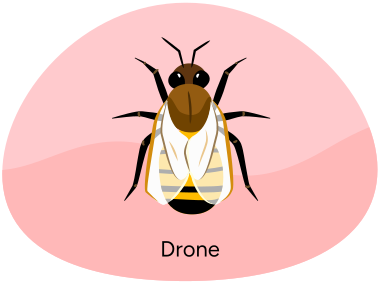
Drones stay in the hive and support the queen. They do not have stingers. They only stay in the hive during spring and summer
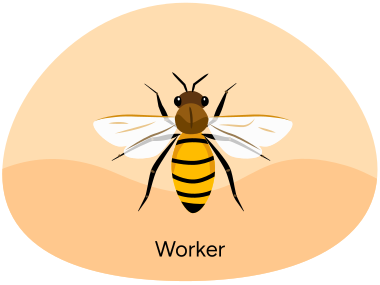
Worker bees look for food, build the honeycombs for the larva (baby bees), and protect the hive.
Let’s explore sounds!
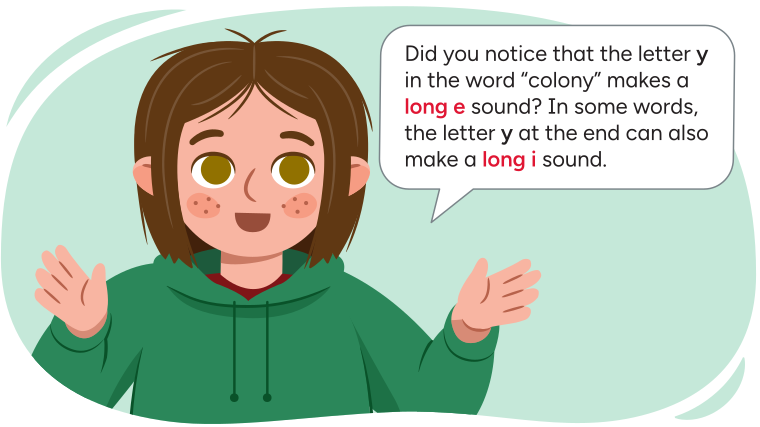
Clara says: 'Did you notice that the letter y in the word "colony" makes a long e sound? In some words, the letter y at the end can also make a long i sound.'
| Long "e" sound | Long "i" sound |
|---|---|
|
colony
|
cry
|
|
happy
|
dry
|
|
silly
|
try
|
Can you think of any other words that end with a "y" that make a:
- long "e" sound
- long "i" sound
If possible, share these words with a partner or record them in your notebook.
Where do the worker bees go?
The worker bees leave the hive or nest to find nectar and pollen, which is food they find in flowers and plants.
Bees are attracted to bright colours. Once they find a nice, bright flower they drink the nectar (sweet water) from the flower. Next, they wiggle their body all over the flower.
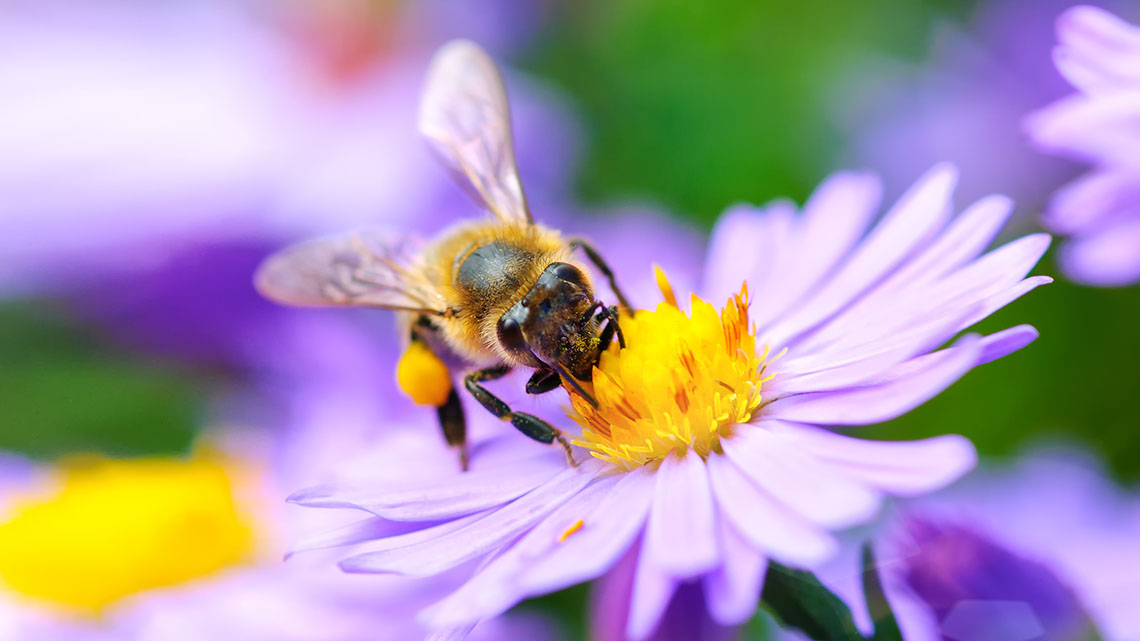
They have hairy back legs, and the pollen sticks to them. They take some of this pollen back to the hive as food for the larva (baby bees).
As they move from flower to flower some of the pollen flakes off. This pollen falls on different plants and the plant uses it to help it grow new plants or even fruits and vegetables.
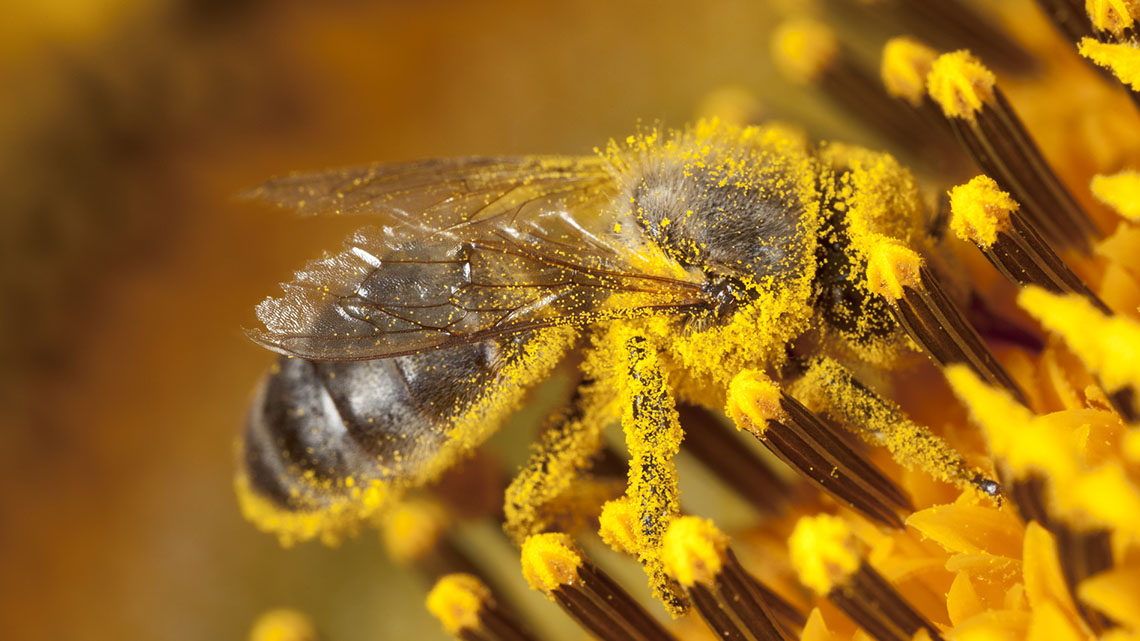
Bees help each other to eat and stay healthy. They help plants grow, and they help plants produce fruits and vegetables for animals and humans to eat!
Dancing bees
Did you know that when the worker bees return to the hive, they dance?
If the worker bees found a nice area full of flowers, they use the “waggle dance” to share this information with other worker bees.
Worker bees use the waggle dance to share:
- how far the flowers are from the hive or nest
- which direction to go in to get to the flowers
The dancing bee sways back and forth and moves forward in a straight line.
Then, they circle back and repeat the dance.
The length of the waggle tells other worker bees how far they are from the flower patch!
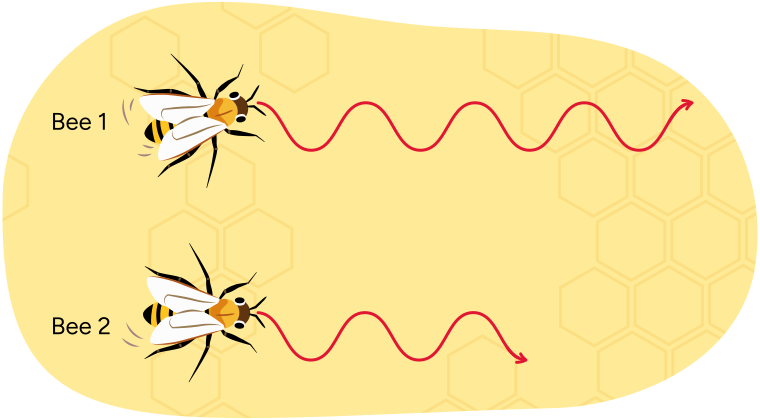
Two bees labeled 'Bee 1' and 'Bee 2' that both have a red line in front of them that waggles back and forth as it moves forward in a straight line.
Bee 1's dance had the following waggles: right, left, right, left, right, left, right, left.
Bee 2's dance had the following waggles: right, left, right, left, right.
Which bee flew farther to find their flower patch?
Press Reveal to check your answer.
If we count the waggles, we can see that Bee 1 flew farther to find their flower patch!
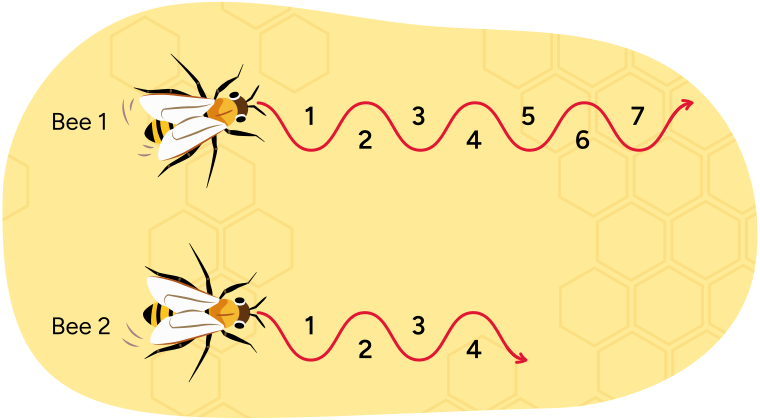
Two bees labeled 'Bee 1' and 'Bee 2' that both have a red line in front of them that waggles back and forth as it moves forward in a straight line. Bee 1's waggles are numbered 1 to 7. Bee 2's waggles are labeled 1 to 4.

Student Success
How does it sound?
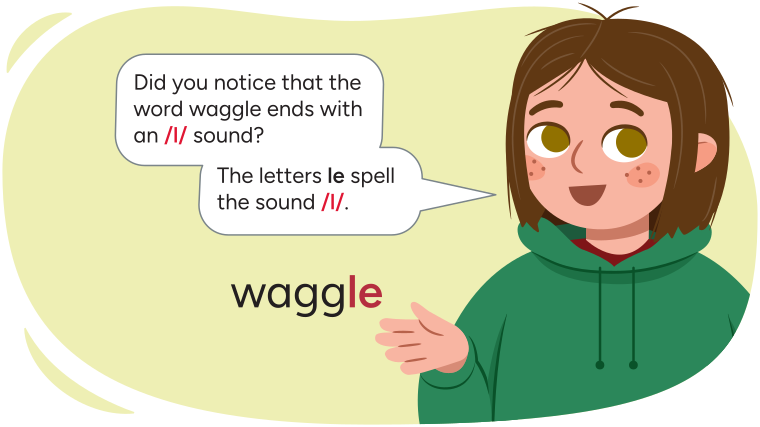
/l/ Sound
Printing practice
Explore the following words being printed.
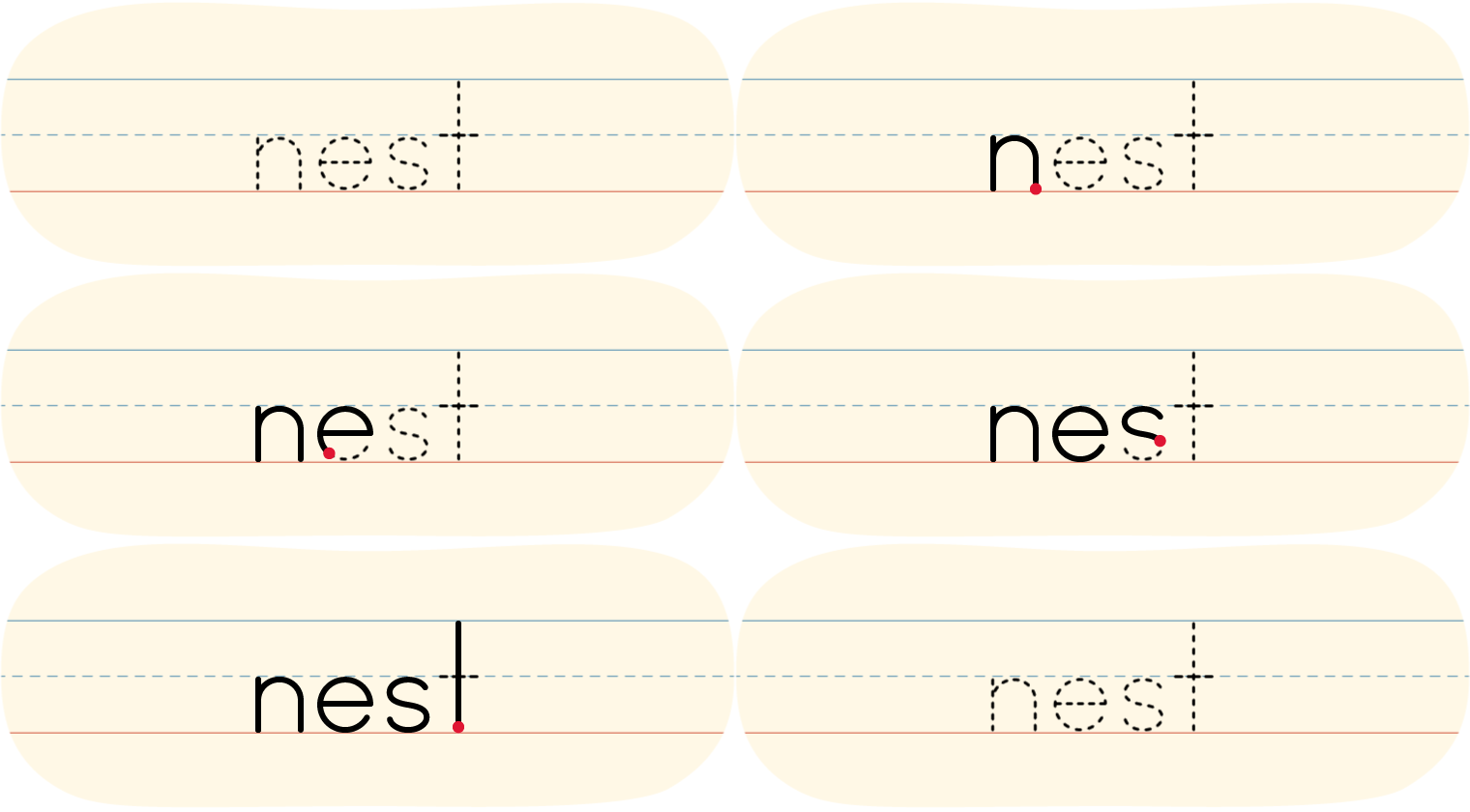
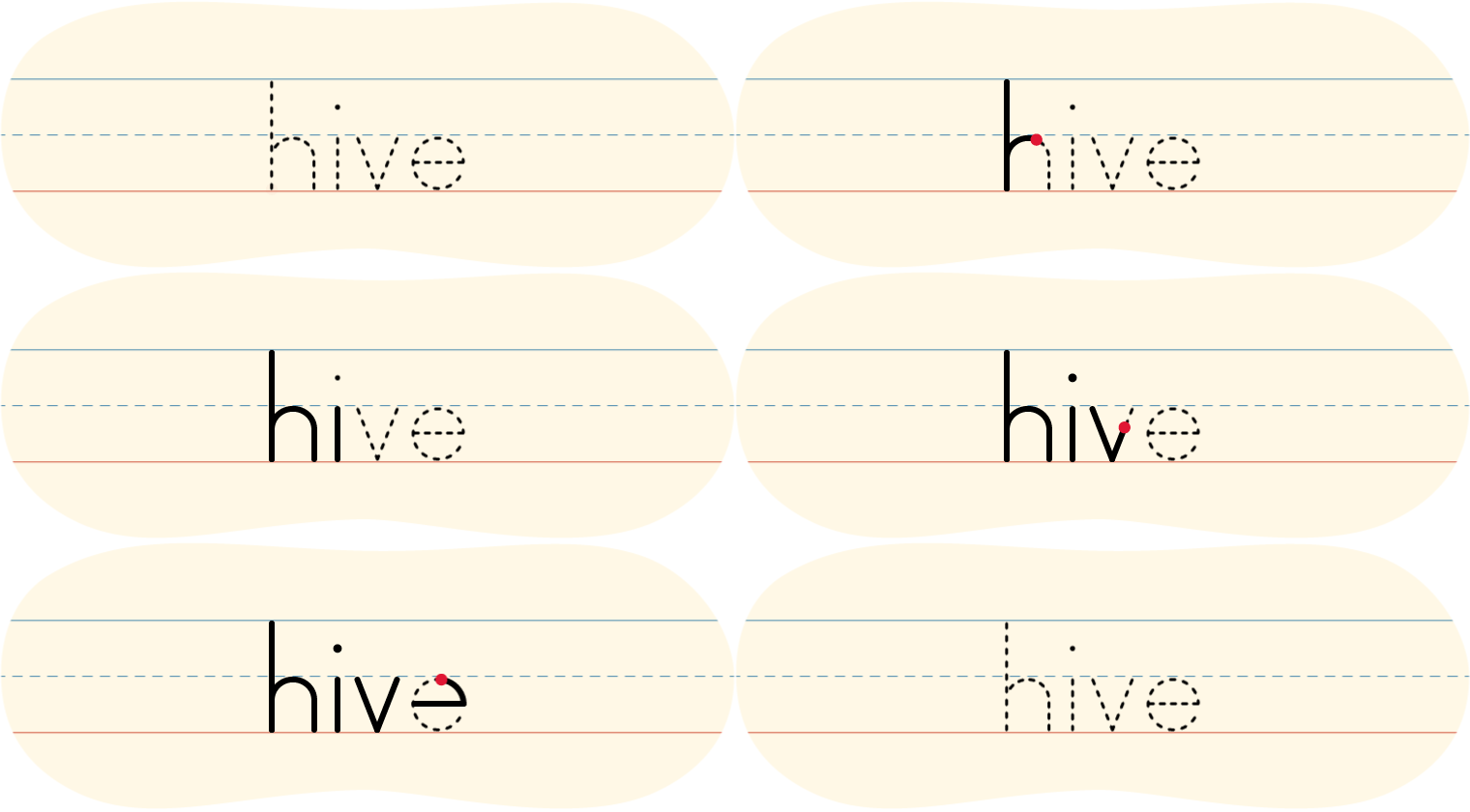
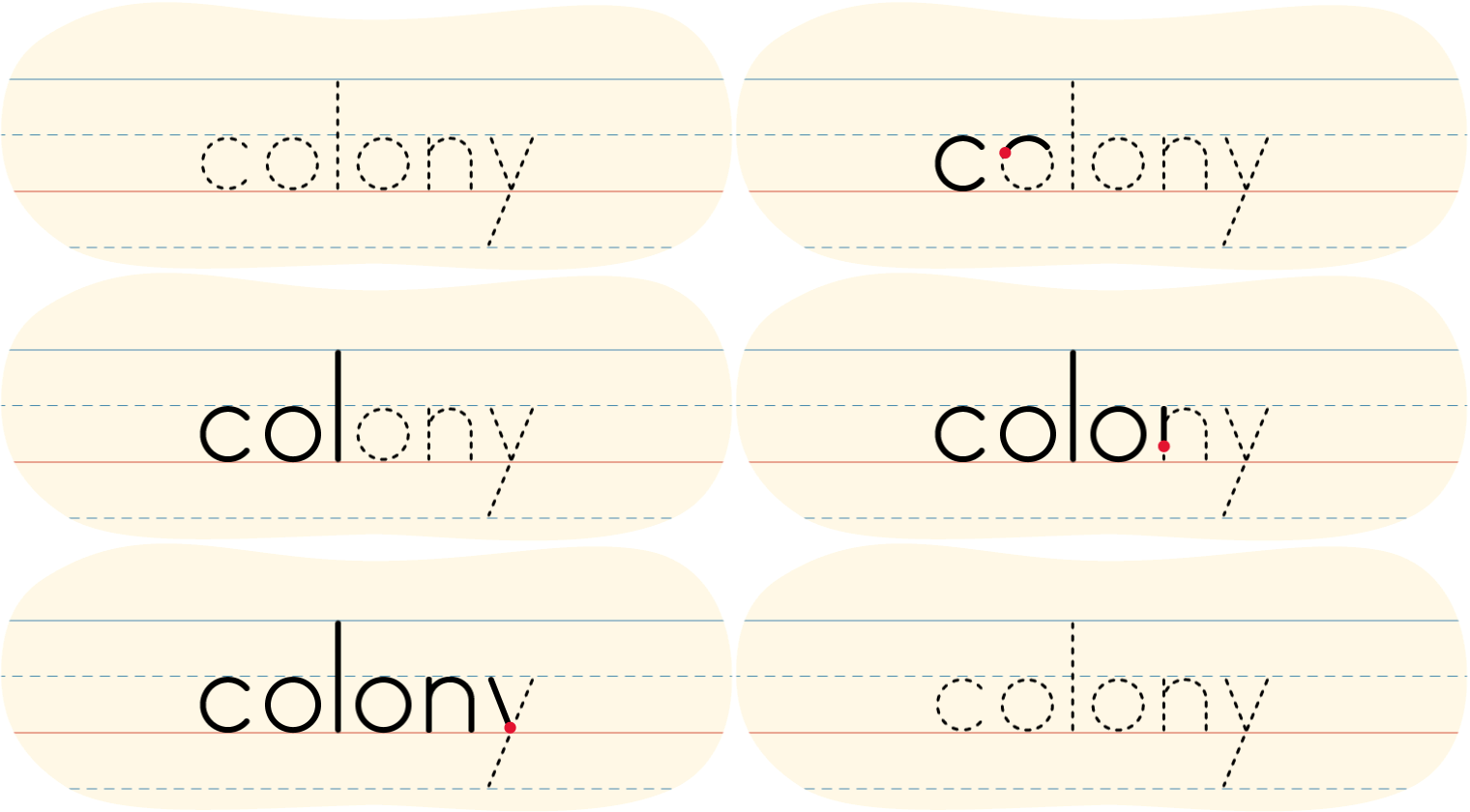
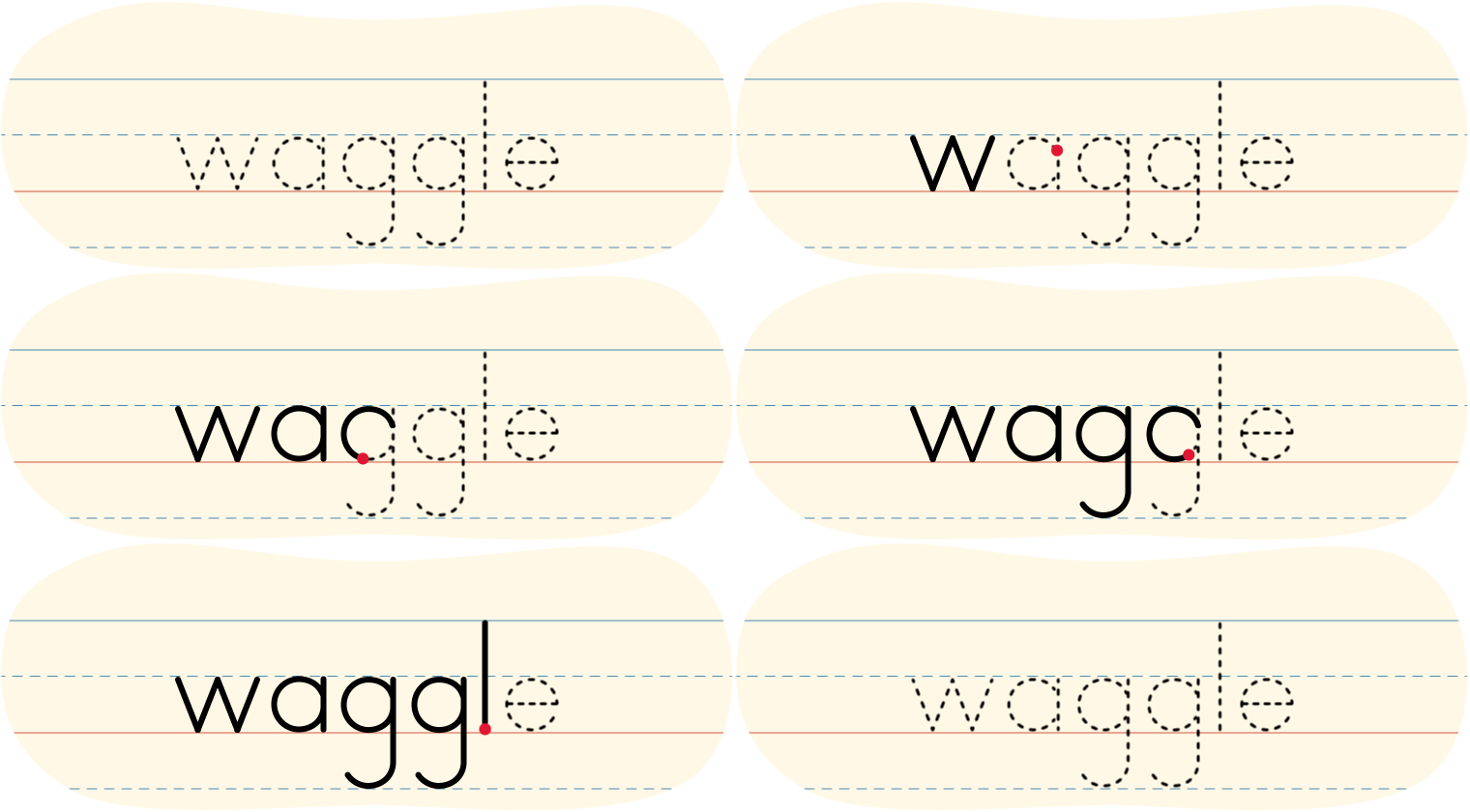
Which of these words start with a tall letter and which words start with small letters?
Press Reveal to check your answer.
- nest, colony, and waggle start with small letters
- hive starts with a tall letter
Helping the bees
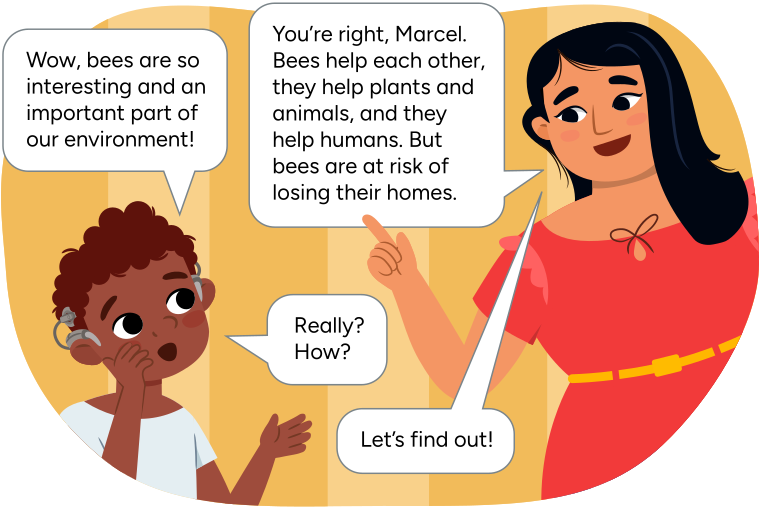
Marcel and Teacher Chiara talking about bees.
Marcel says: 'Wow, bees are so interesting and an important part of our environment!'
Teacher Chiara says: 'You're right, Marcel. Bees help each other, they help plants and animals, and they help humans. But bees are at risk of losing their homes.'
Marcel asks: 'Really? How?'
Teacher Chiara says: 'Let's find out!'
Bees can lose their homes from:
- changing temperatures and weather
- chemicals on the plants and the ground
- people removing plants and flowers that the bees eat
What would happen if we didn’t have bees?
Share your thoughts with a partner, if possible.
How can we help?
Press the following tabs to explore different ways we can help bees.
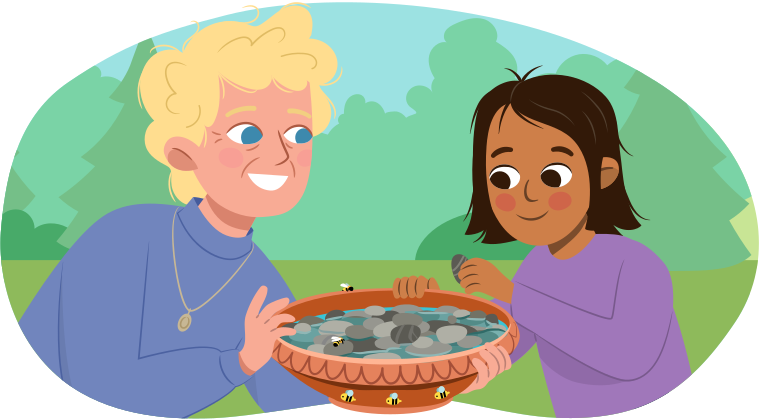
Create a bee bath with a trusted adult. Fill a bowl with clean water and arrange pebbles and stones inside so that they are just covered up by water. Bees will land on stones and pebbles to take a drink!
Share with others that we should avoid using chemicals on grass and flowers.
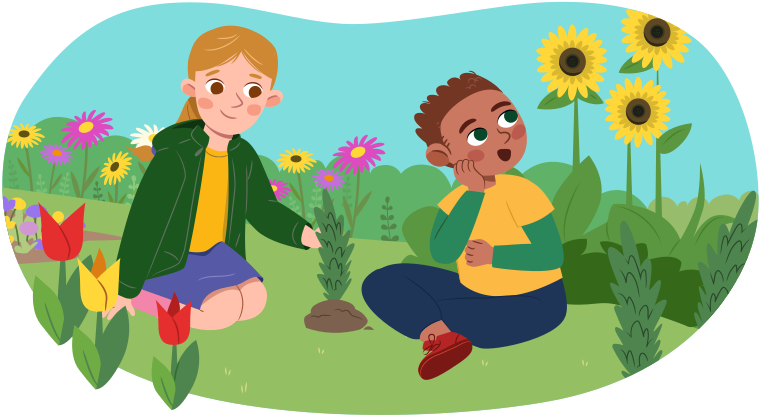
Learn more about the types of bees in your area.
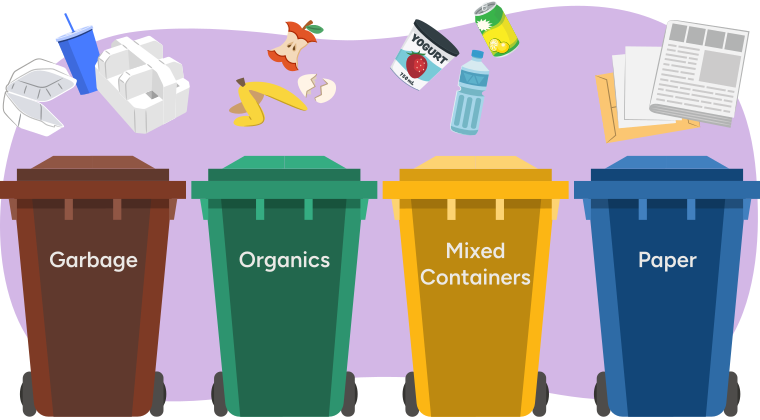
Sort all garbage and recycling in proper bins. We don’t want to leave litter out as it can hurt the plants that the bees need for food.
Avoid picking flowers. Instead, you could plant wildflowers with a trusted adult in your neighborhood.
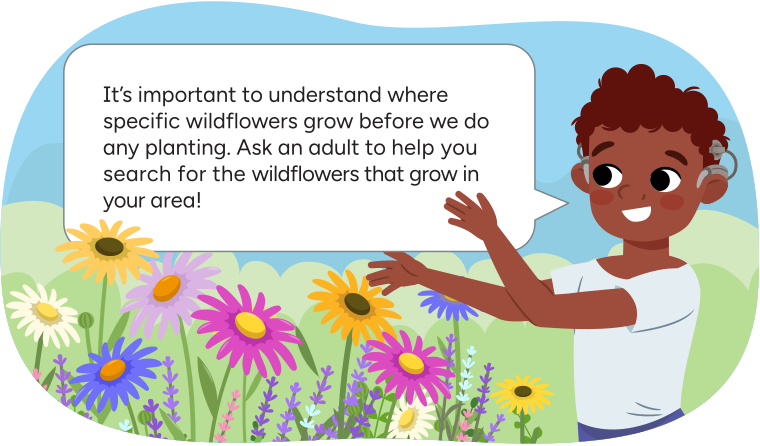
Marcel is standing beside wildflowers and says: 'It's important to understand where specific wildflowers grow before we do any planting. Ask an adult to help you search for the wildflowers that grow in your area!'
Why are these tips important?
Is there anything you would like to try?
Share your thoughts with a partner, if possible.
Save the Bees
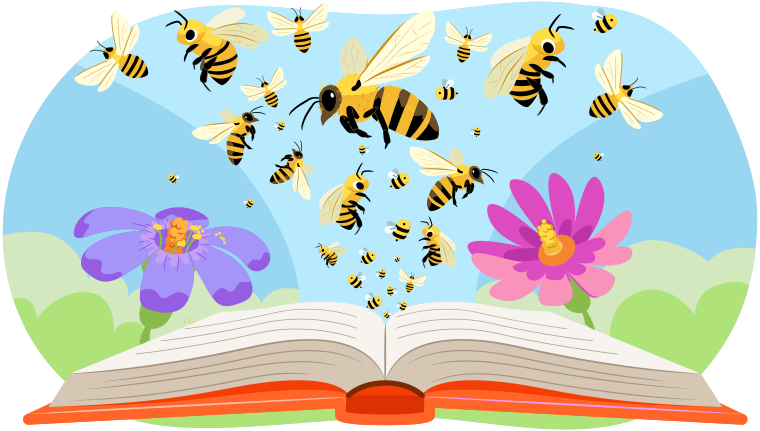
Let’s create a poster sharing 1 or 2 tips on how to help protect the bees.
- Choose one or two tips on how you can help protect bees and write them out (think about including the words you practiced printing in the Action section).
- Create a drawing to illustrate each tip.
In your notebook or using a method of your choice, create a poster that includes:
- words or sentences
- a clear message
- drawings
Press Hint to reveal an example of a poster before you begin.
Notice how this poster has:
- a short, clear message
- eye-catching drawings
- bold colours
- big words
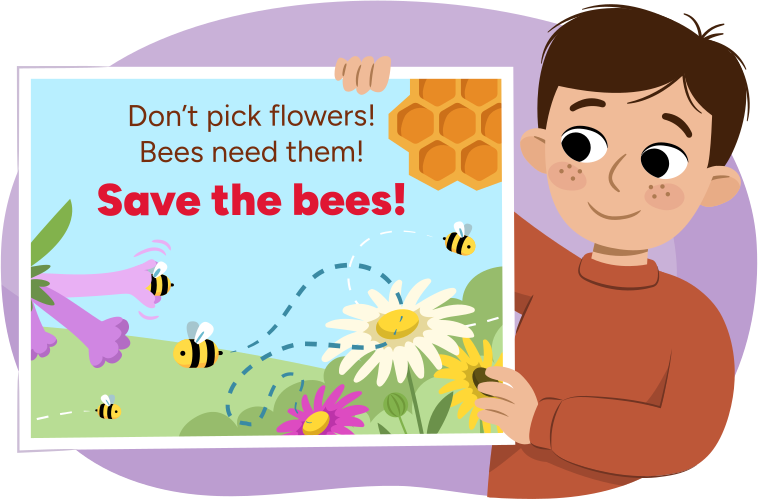
Warren holding a poster titled 'Save the bees!' It has images of bees, wildflowers, and a honeycomb, along with text that says: 'Don't pick flowers! Bees need them!'
Look at your poster. Check all that apply:
Let’s review!
Let’s review what we learned about honeybees. Select the correct answer, then press Check Answer to see how you did.
Reflection
How do you feel about what you have learned in this activity? Which of the next four sentences best matches how you are feeling about your learning? Press the button that is beside this sentence.

I feel...
Now, record your ideas about your feelings using a voice recorder, speech-to-text, or writing tool.