Learning goals
We are learning to…
- use our knowledge about global citizenship and sustainability to support our communication in different contexts
- apply concepts of global citizenship and sustainability when we read, listen, and view different kinds of texts
- use effective listening skills by expressing interest, asking a variety of questions, and restating what we heard
- share our experiences that connect with ideas and topics in new texts
- sort and sequence ideas and information, taking into account the text form and genre we're using
Success criteria
I am able to…
- identify how learning about habitats helps me learn and share new ideas from my own experience
- use effective listening skills while watching a Secrets of the Forest episode on the forest habitat, and ask a variety of questions and restate what I have learned from the episode
- sort and sequence ideas and information to create a habitat planner

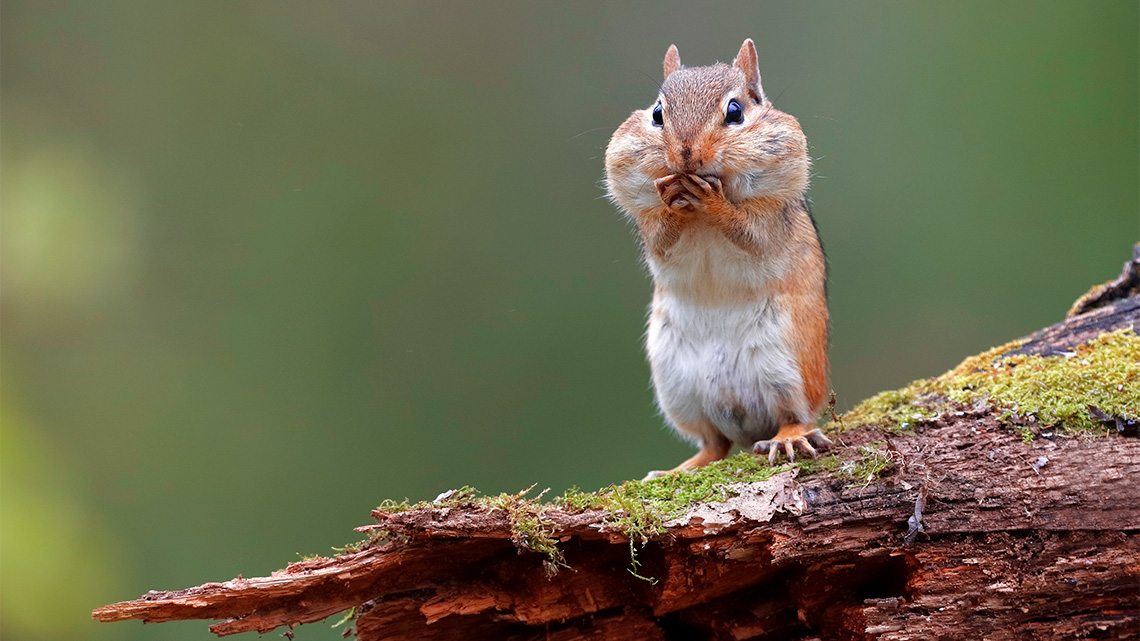

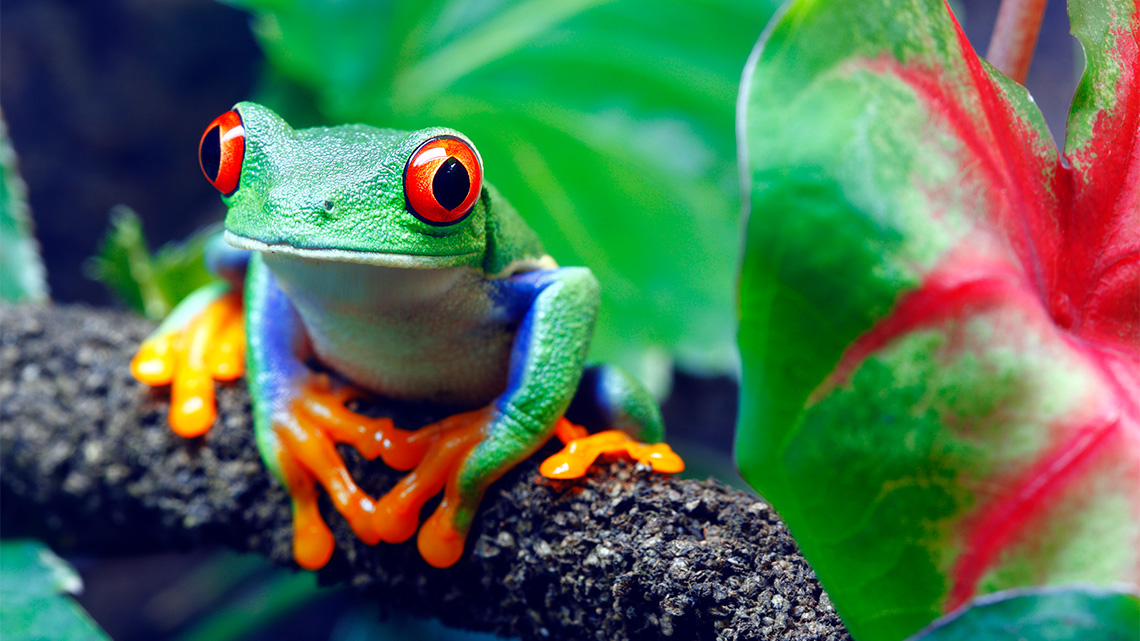
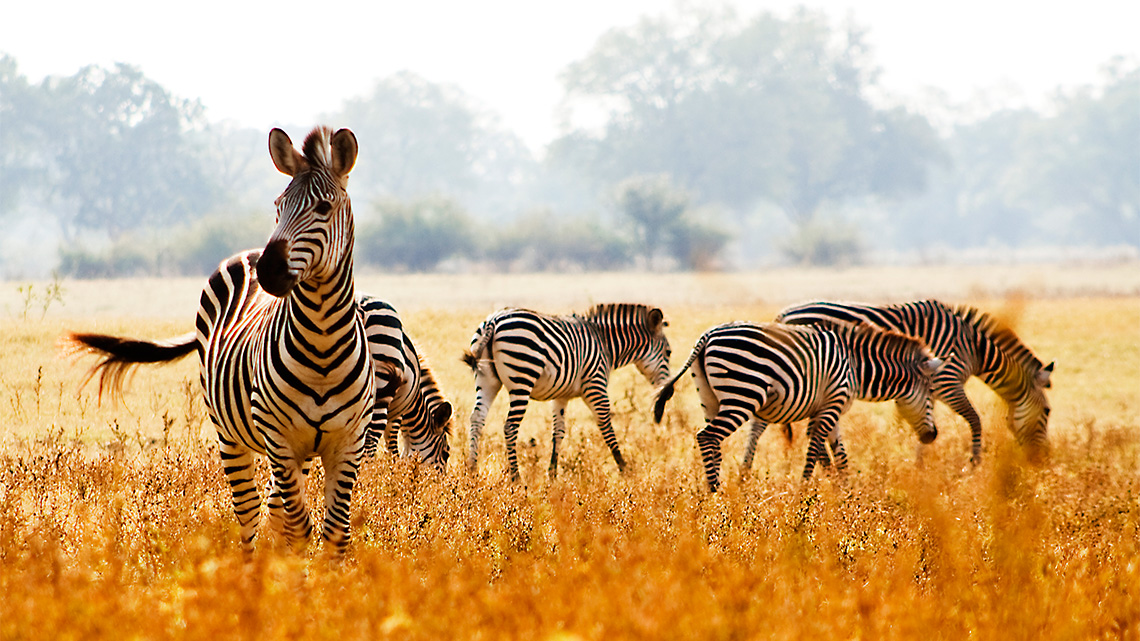
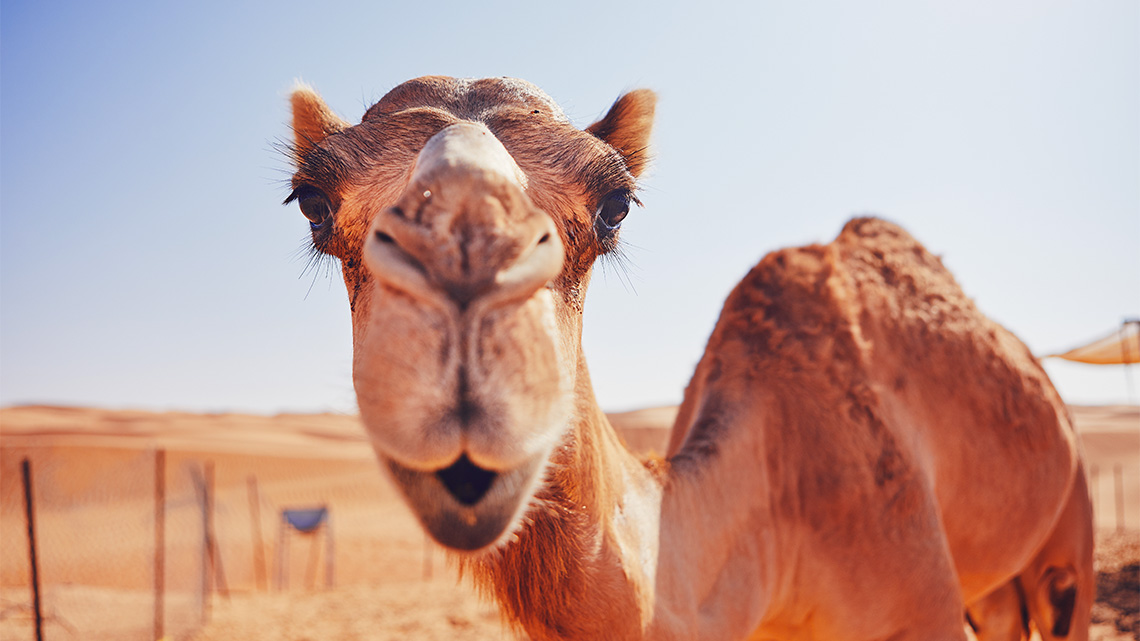
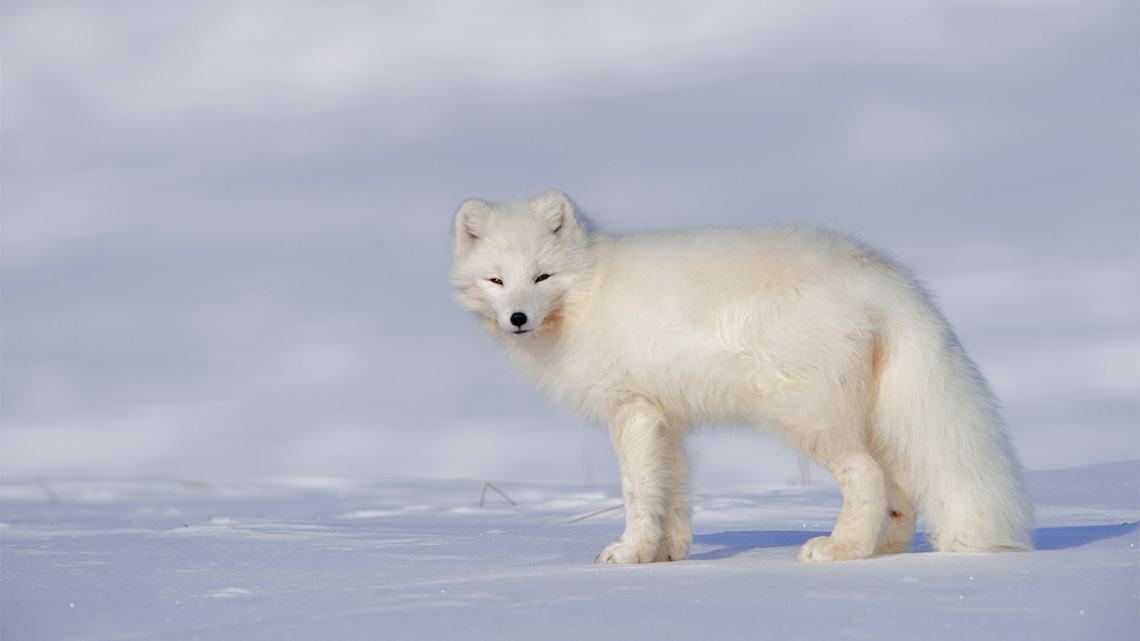


Animal homes
A habitat is the home of an animal or plant.
An animal’s habitat provides it with all it needs to survive. This may include soil, water, food, and light.
Many animals adapt or change at different times of the year to match their habitat.
Forest
Let’s explore the forest habitat a bit more. What do you know about the forest habitat?
What kind of animals might live in the forest habitat?
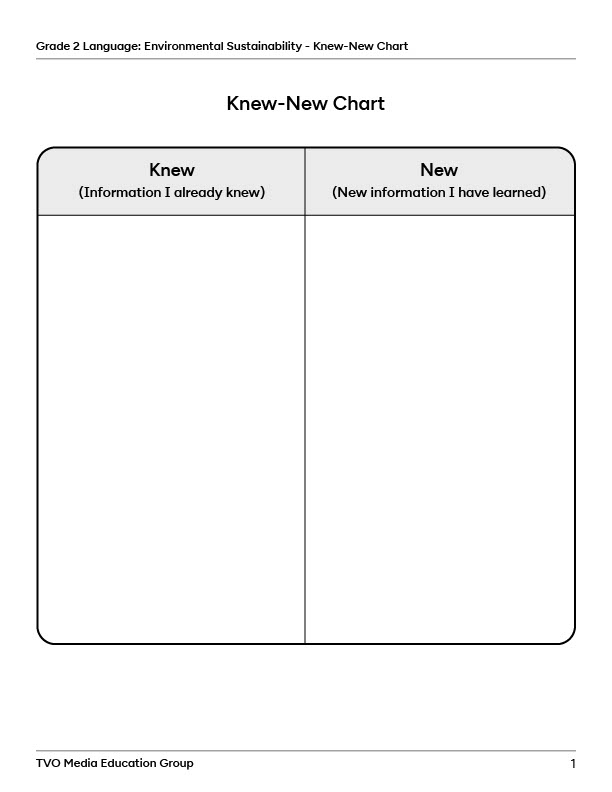
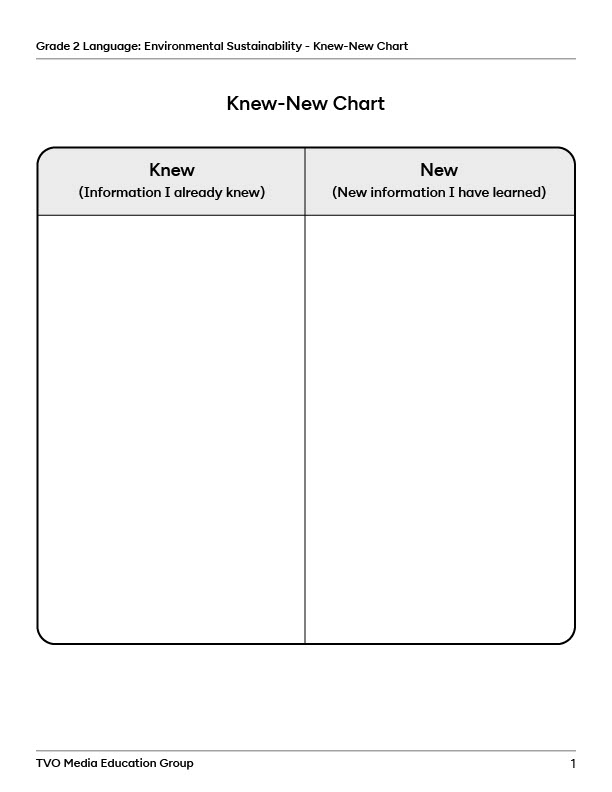
Before we learn more, fill in the “Knew” section of the following chart with any information you know about
- forests
- forest animals

Student Tips
Student tips
You will be exploring the following chart again.
Make sure to keep a record of your work!

Complete the fillable and printable Knew-New Chart in your notebook or using the following document. If you would like, you can use speech-to-text or audio recording tools to record your thoughts.
Neebin says:
'In the following video, we are going to watch Taviss learn about forest habitats, and who lives in them! In this series, Taviss always travels with trusted adults who can help guide and keep her safe.'
What animal do you think lives in this area? Why?
Share your thoughts with a partner, if possible.
Let’s continue to find out!
Where does this episode of Secrets of the Forest take place?
Press Reveal to check your answer.
On the traditional homelands of the Ucluelet First Nation on Vancouver Island, British Columbia.
Taviss is at the Pacific Rim National Park Reserve located in the traditional territories of the Nuu-chah-nulth First Nations.
She meets Diana and Francis from Parks Canada and learns that the forest is home to black bears!

Did You Know?
Did you know?
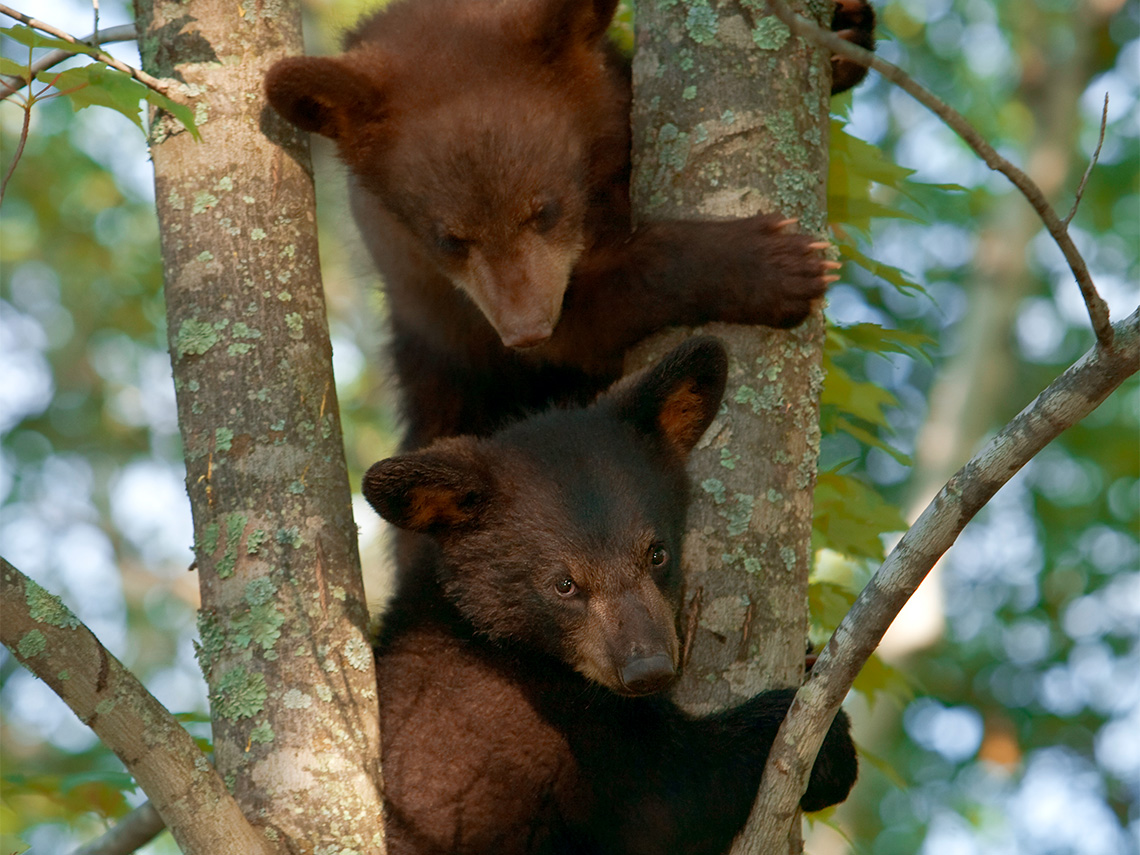
Black bears are great tree climbers!
They often climb trees to escape danger or to find food like fruits and nuts. This makes them very skilled at moving around in forests.
Check out the following clip where Taviss learns Nuu-chah-nulth words from Jeneva!
Jeneva Touchie is a language specialist from Ucluelet First Nation.
Jeneva shares Nuu-chah-nulth words with Taviss, Diana, and Francis. What did you notice about the sounds, letters, and symbols of Nuu-chah-nulth words?
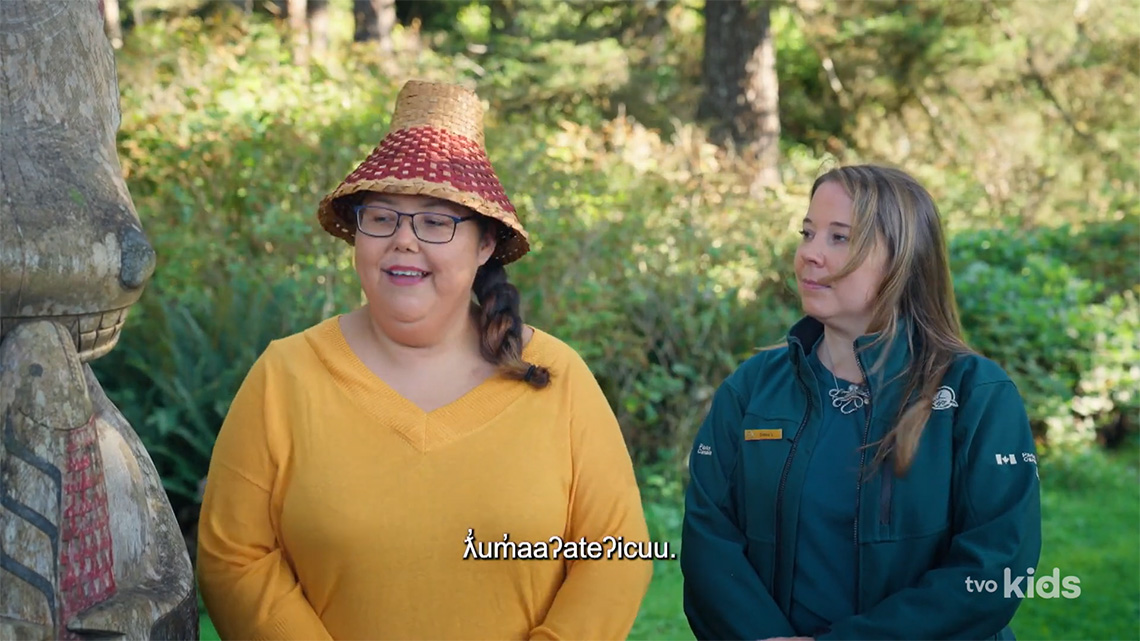
Jeneva welcomes everyone in Nuu-chah-nulth.
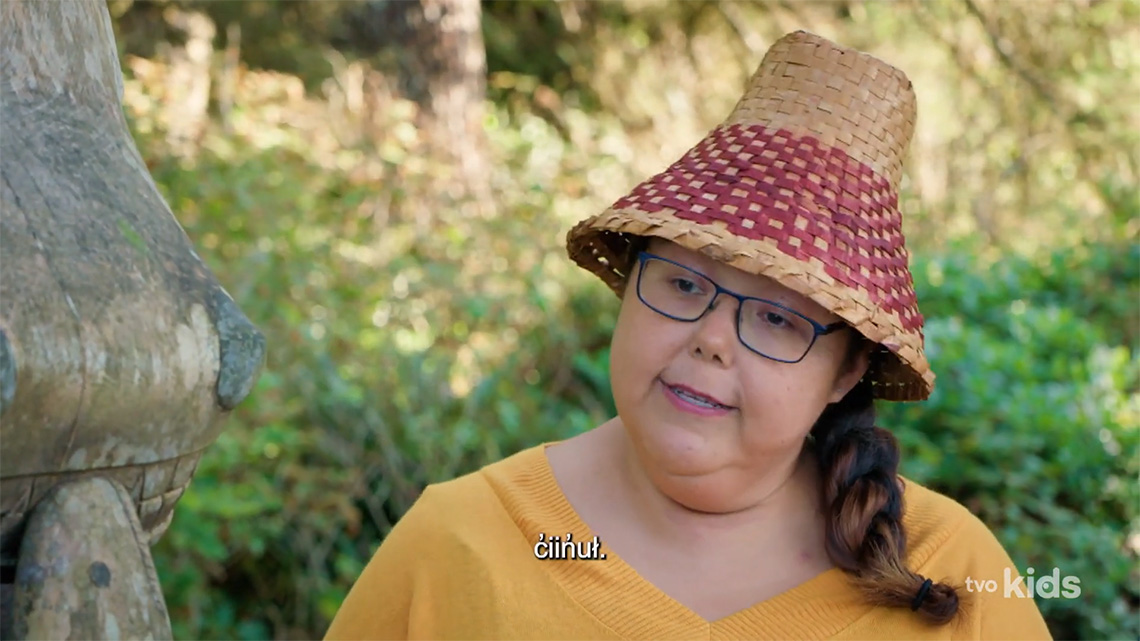
Jeneva shares the word for "totem" in Nuu-chah-nulth.
Jeneva explains that there are four animals in the totem.
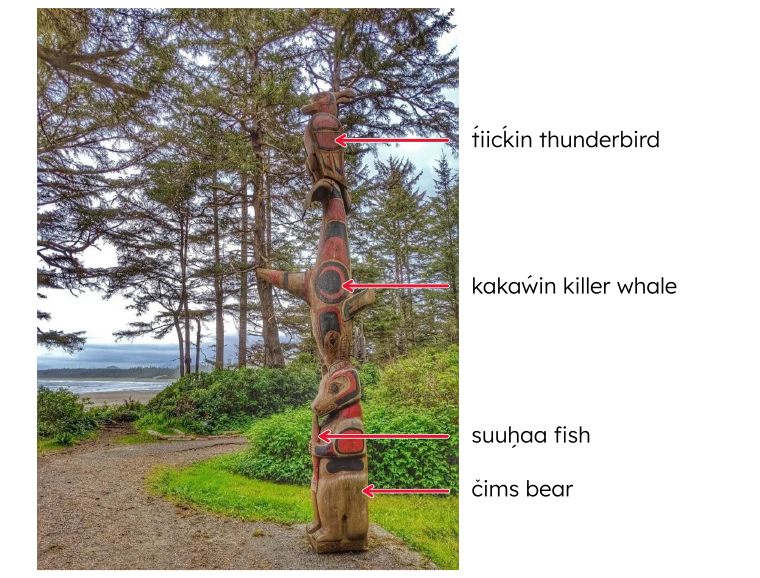
A totem pole with the animals carved out of wood. It is labeled in English and Nuu-chah-nulth. At the bottom of the totem pole is a standing bear holding a fish. On top of the bear is killer whale with its head facing downwards. A thunder bird is at the top of them totem pole on the tail of the killer whale.
Did You Know?
Did you know?
Geneva says that according to their Elder, the čims (bears)
- represent friendship
- are great communicators with the land, ocean, and humans
- live in this territory or area, and we need to respect it
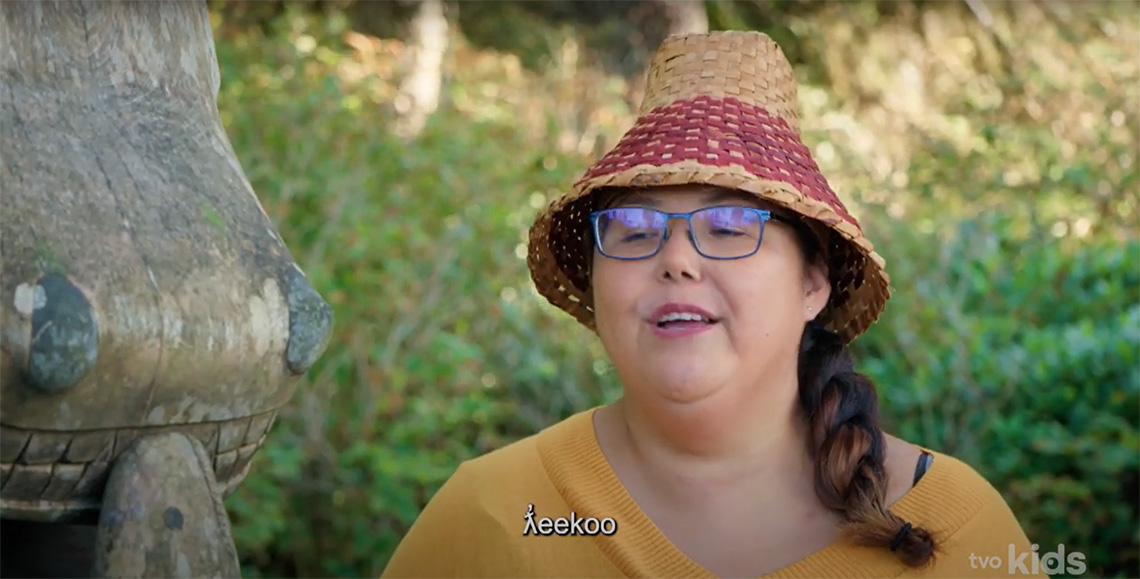
Taviss asks how to say thank you in Nuu-chah-nulth.
Geneva responds:

Pause and Reflect
Pause and reflect
Why is it important to thank people for giving us their time and sharing about their culture and traditions? Share your thoughts with a partner, if possible.
Check out the following clip where Taviss learns some safety tips!
What are some safety tips when walking in a forest?
Press Reveal to check your answer.
- stay close to an adult
- make noise
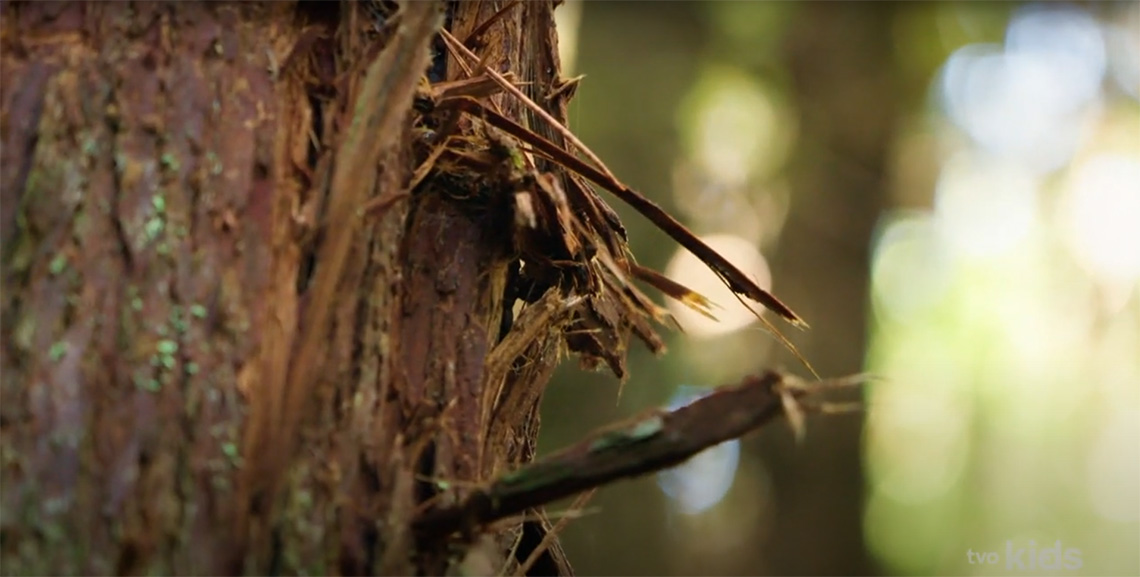
What sign do they find that bears might be around?
Press Reveal to check your answer.
A bear may have sharpen their claws, teeth, or used the tree to scratch an itch!
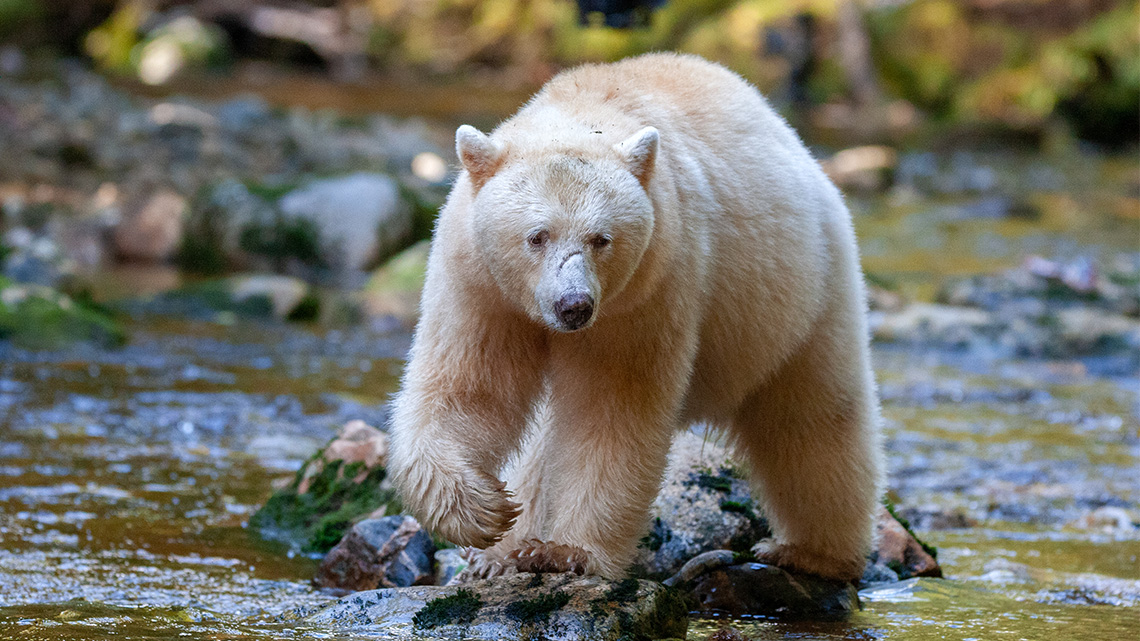
What did we learn about the colour of black bears?
Press Reveal to check your answer.
Black bears grow fur in many different colours!
What is the rarest type of black bear?
Press Reveal to find out.
Cream-coloured bears are the rarest type of black bear. They are commonly referred to as spirit bears because they are special.
There are less than 400 of these bears across the world, which makes them extremely rare and special.
Check out the following clip where Taviss learns more about bears from Francis and Diane!
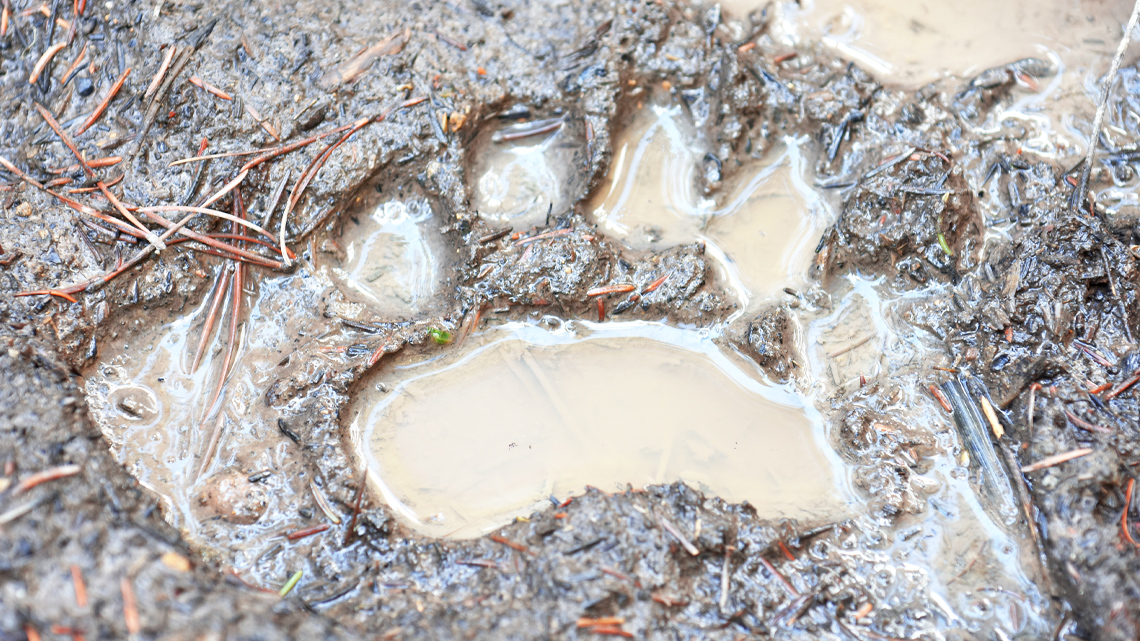
How can Francis and Diane tell that the tracks they find belong to a bear?
Press Reveal to check your answer.
Bears are the only big animals in the forest that have five toes!
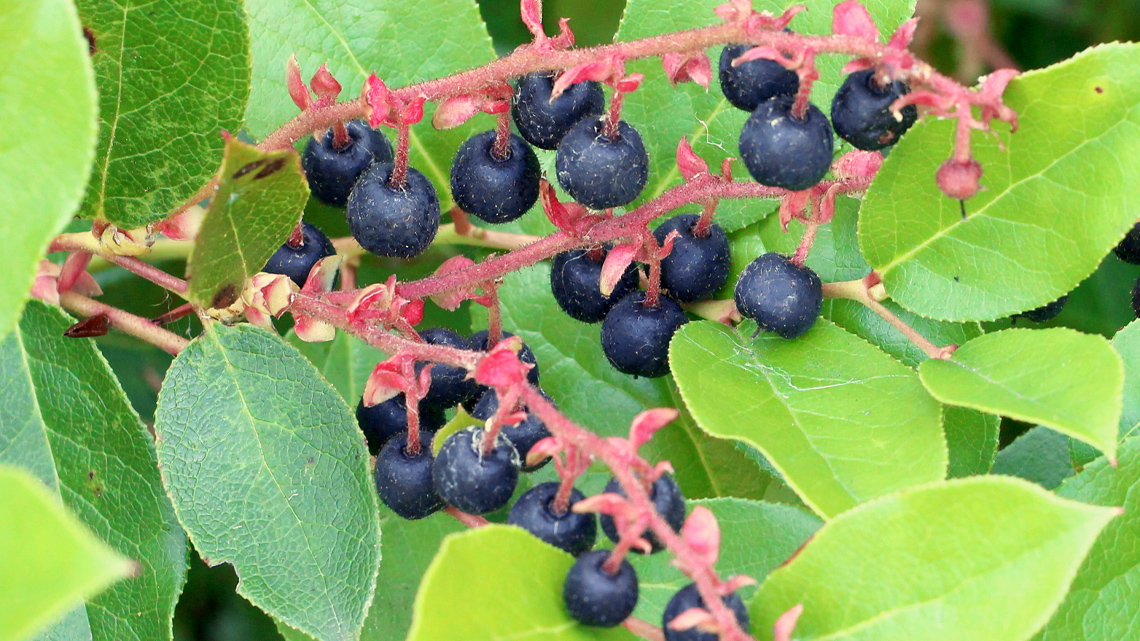
What kind of berries do they find in this area?
Press Reveal to check your answer.
Salal berries are one of the bear’s favourite foods. It’s an important part of their diet during the summer.

What can someone learn from bear tracks?
- how big the bear is
- how many bears there are
- where the bears came from
- where the bears are going
Check out the following clip to find out what bears eat!
Did You Know?
Did you know?
Black bears hibernate or sleep throughout the winter, so they need to make sure they are getting enough food in the summer and fall months.
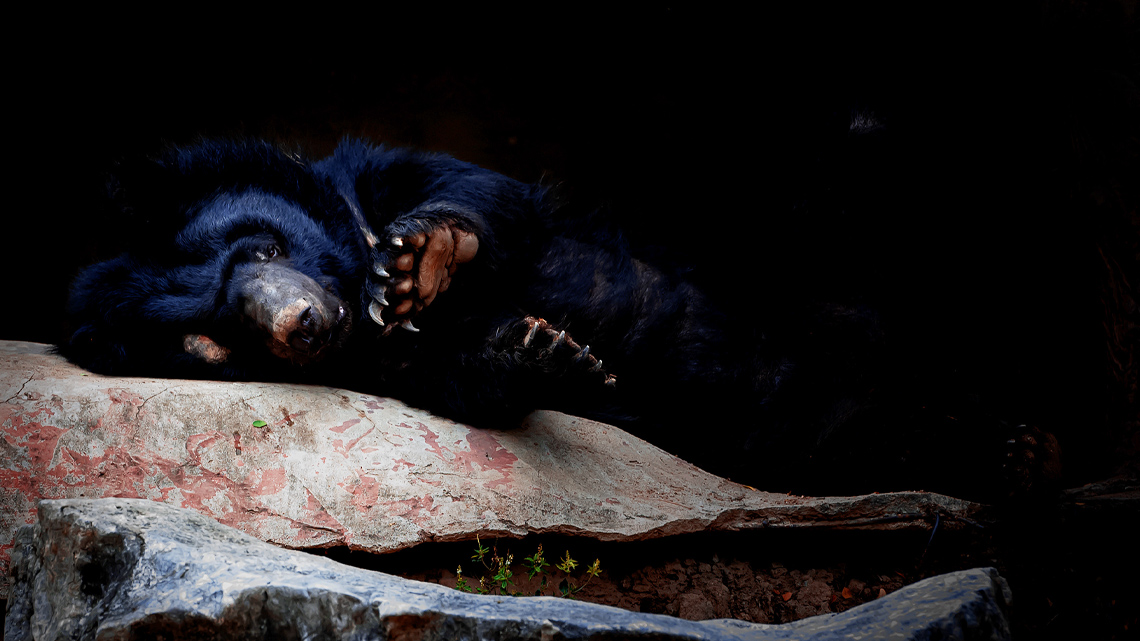
Salmon is an important part of a bear’s diet in the summer.
How do bears help other animals after they catch and eat salmon?
Press Reveal to check your answer.
The bears will eat their favourite parts and leave the rest for other animals.
What kind of information do you think they will find from the bear scat?
Share your thoughts with a partner, if possible.
Check out the following clip where Taviss learns how bears help the forest!
How do bears help spread salal berry seeds?
Press Reveal to check your answer.
Bears will eat the berries, move around the forest, and leave their scat in different areas of the forest. This helps spread the berry seeds to grow new berry bushes.
Check out the following clip where Taviss learns how we can do our part to keep bears safe!
What is special about the trash and recycling bins at the park?
Press Reveal to check your answer.
Bear-proof bins stop bears from eating garbage or recycling.
What can we do to help keep the bears safe?
Press Reveal to check your answer.
We can be respectful of their home, keep our distance, and travel with an adult. We can also keep our trash and recycling out of the forest.
Let’s return to our Knew-New Chart and fill in the “New” section with new information you have learned. Complete the activity in your notebook or using the following document. If you would like, you can use speech-to-text or audio recording tools to record your thoughts.
Collective nouns
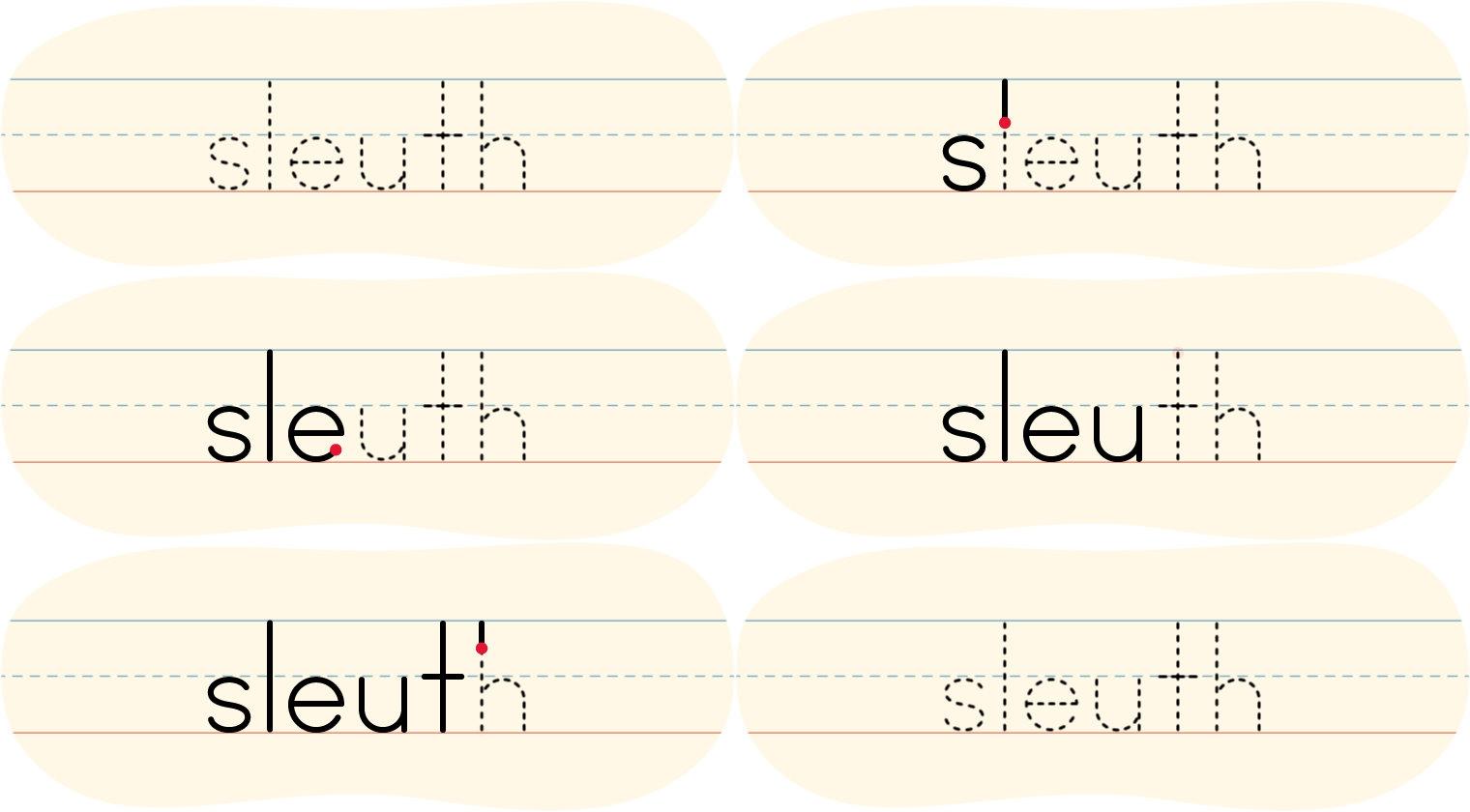
Did you know that a group of bears is called a sleuth?
This is an example of a collective noun. Collective nouns are words that are used to describe a group of people, animals, or things.
Let’s watch this video from Wacky Word Songs called "Team Up" to learn more about collective nouns.
Let’s explore some collective nouns for groups of animals.

Printing practice
Check out the following video to warm up your hands for printing!
Let’s practice printing collective nouns!
Use a method of your choice to practice printing out each word.
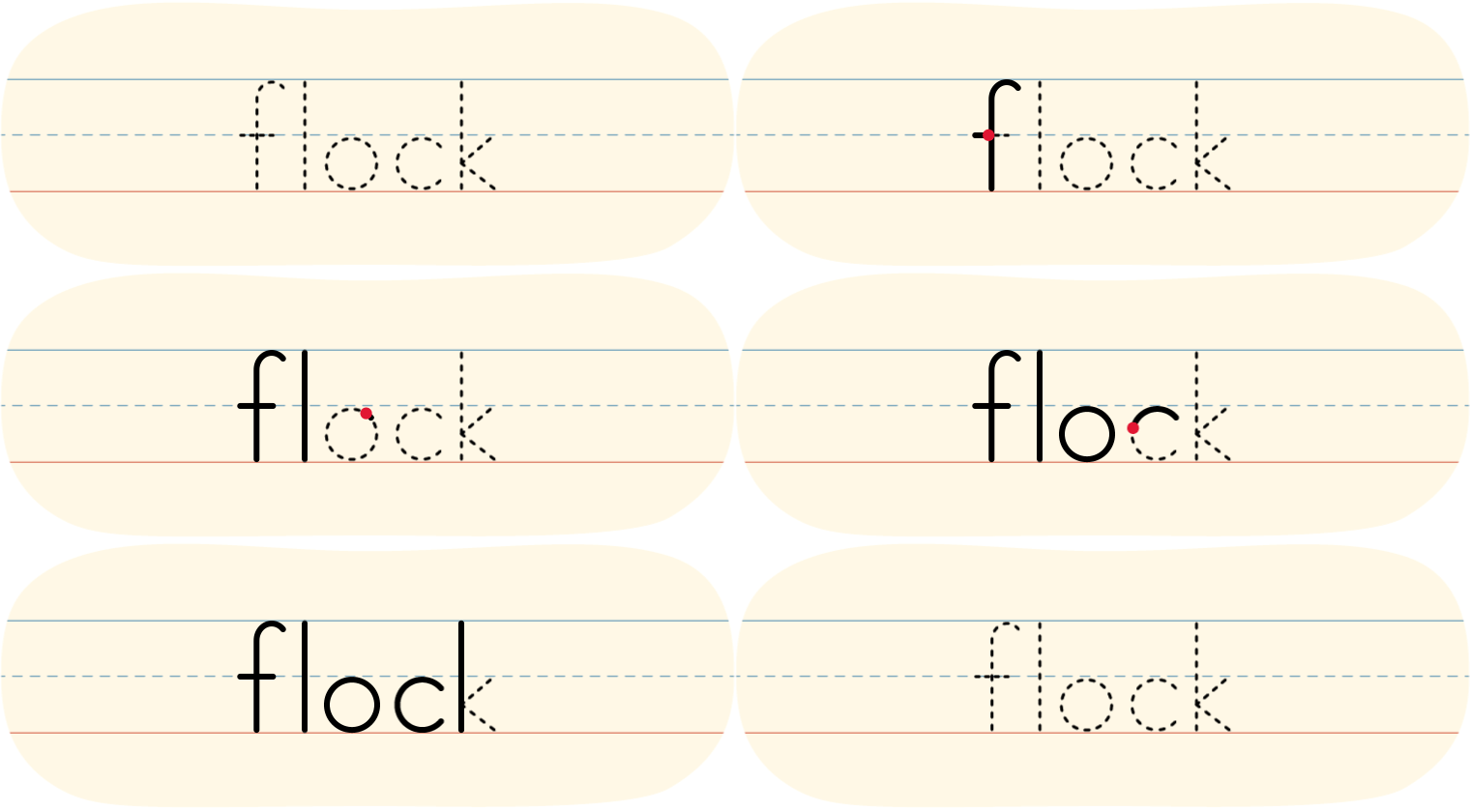
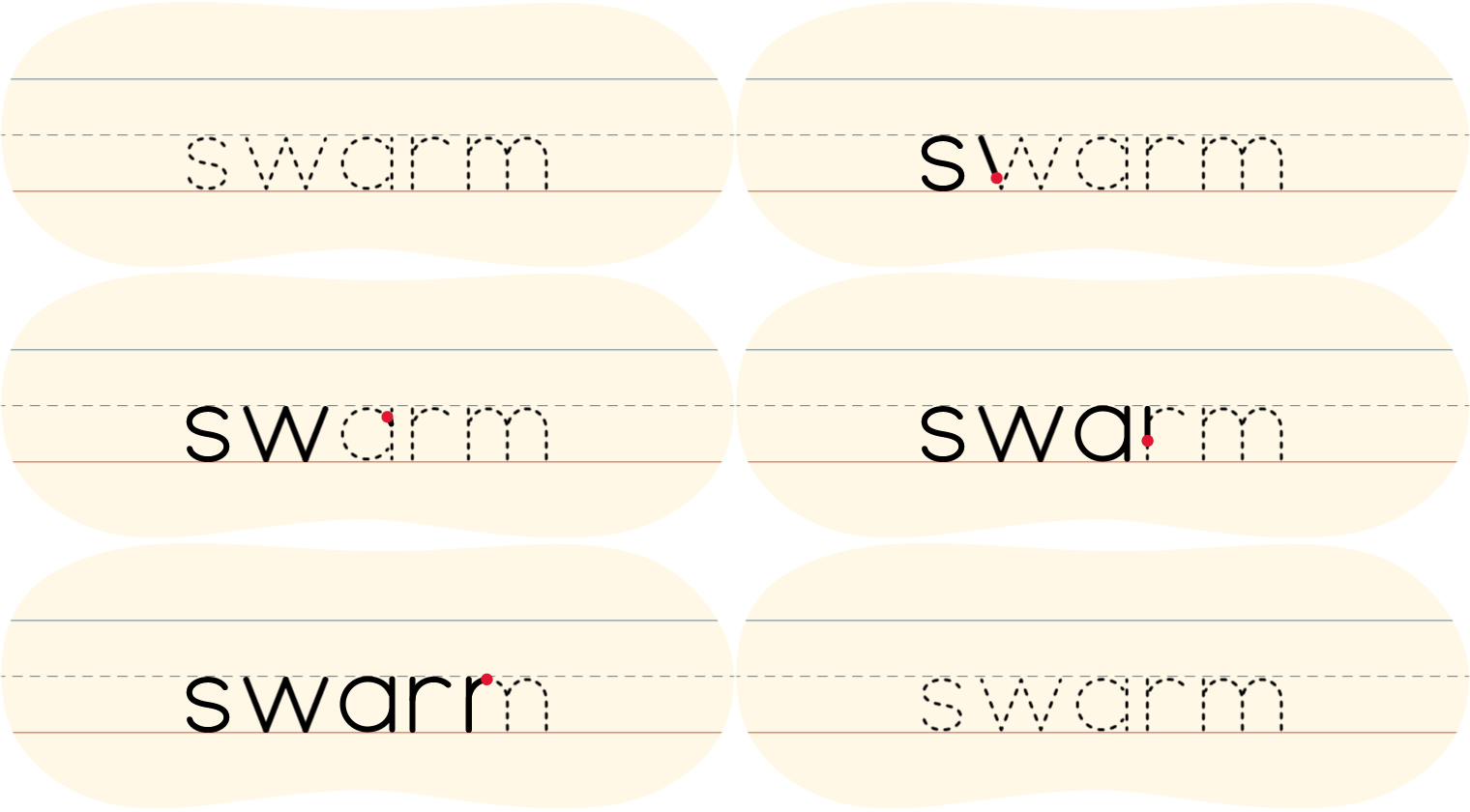
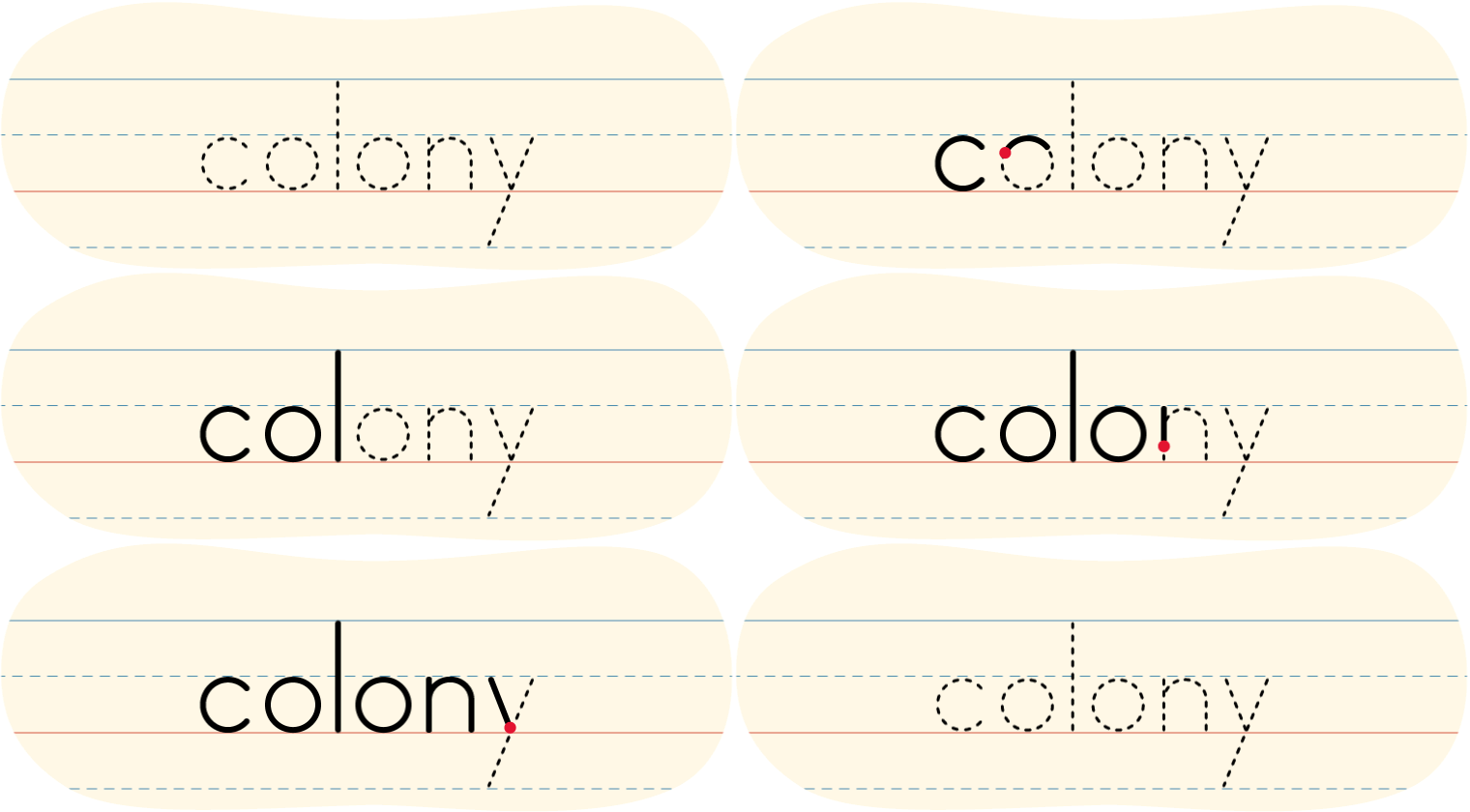
Which word has a hanging letter?
Press Reveal to find out!
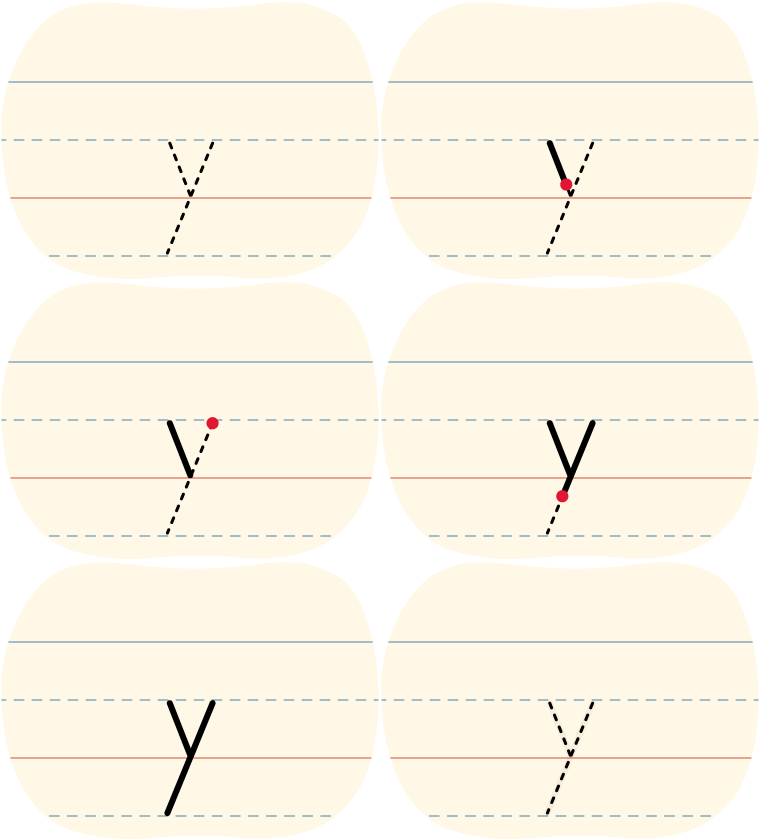
colony has the hanging letter "y"
Let’s check!
Let’s review what you learned in this learning activity. Answer each question, then press Check Answer to see how you did.

Putting it all together
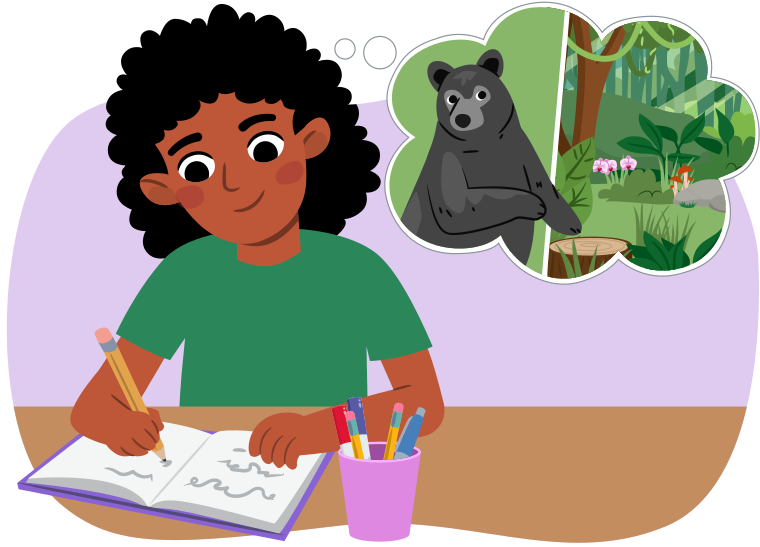
You learned new facts about black bears in their forest habitat and what can harm them.
Now, you are going to organize the information you learned in a graphic organizer.
A graphic organizer is a way we can write down information in an organized way.
Think back to what you learned about the forest habitat.
- How would you describe the habitat?
- What animals live there?
- What is harming the habitat?
Next, complete the fillable and printable All About Forest Habitats Organizer in your notebook or using the following document. If you would like, you can use speech-to-text or audio recording tools to record your thoughts.
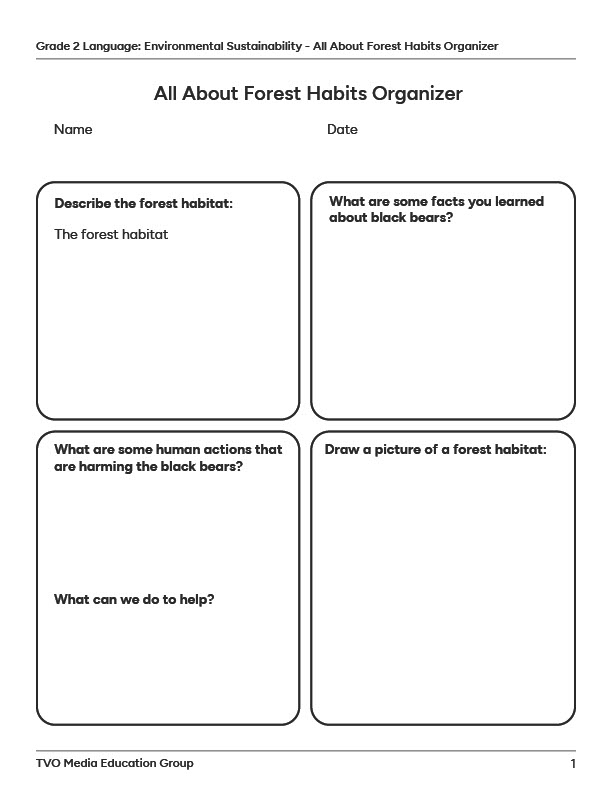
Press the Activity button to access the All About Forest Habitats Organizer.
Activity(Opens in a new tab)Why is it important to help protect the bears and forest habitats?
Share your thoughts with a partner, if possible.
Collective noun review
Let’s review collective nouns. For each image, select the correct collective noun!
Reflection
How do you feel about what you have learned in this activity? Which of the next four sentences best matches how you are feeling about your learning? Press the button that is beside this sentence.

I feel...
Now, record your ideas about your feelings using a voice recorder, speech-to-text, or writing tool.