Learning goals
We are learning to…
- apply our global citizenship and sustainability skills in everyday life
- use effective listening skills by expressing interest, asking a variety of questions, and restating what we heard
- identify various purposes for engaging with texts, including enjoyment or finding information
- use sources to gather information about a topic
- sort and sequence ideas and information using a specific text form
Success Criteria
I am able to…
- explore information about the Three R’s and think about how I can use this information in my everyday life
- use effective listening skills while watching two video clips on the Three R’s and asking questions, answering questions, and restating what I have learned
- sorting and ordering information that I have learned about the Three R’s
Let’s get started!

Pause and Reflect
Pause and reflect
Where do you think your garbage goes once it is picked up?
Record your ideas using a method of your choice and share your thoughts with a partner, if possible.
At the landfill
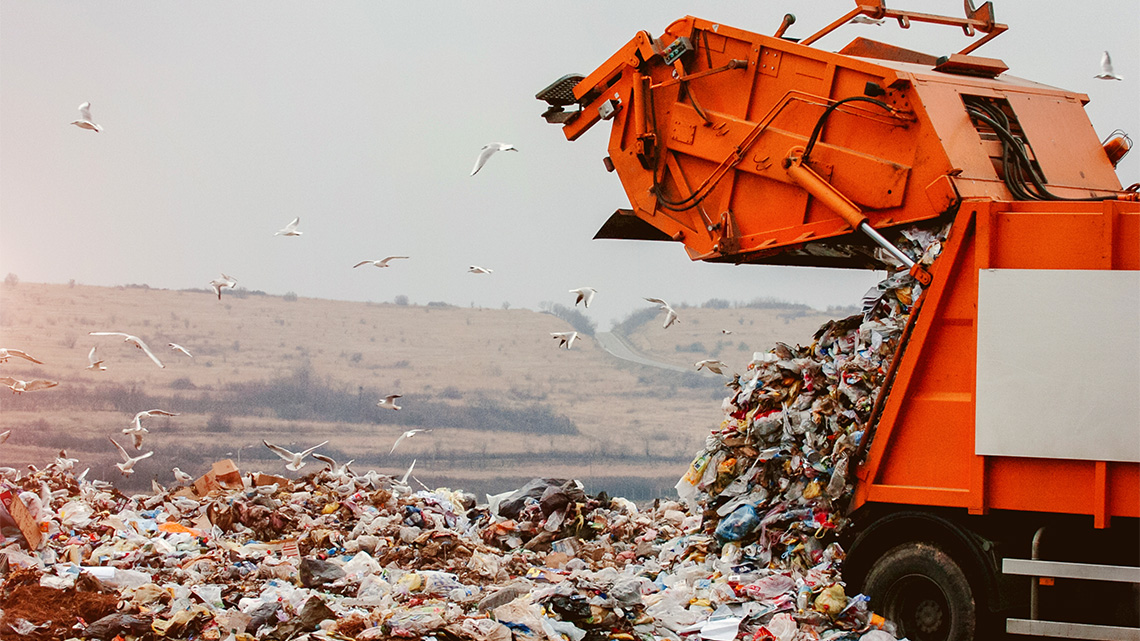
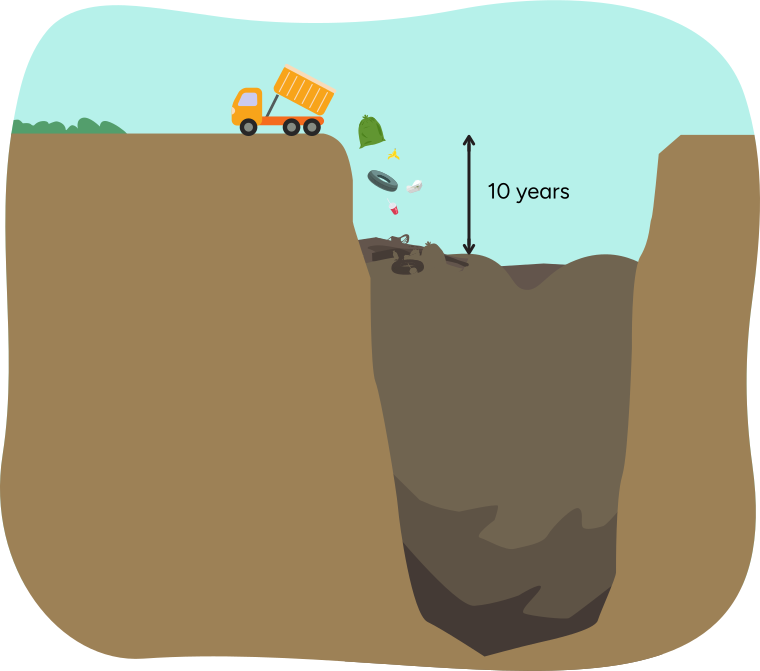
Garbage is picked up in garbage trucks and then it is taken to landfills.
Landfills are places where items that cannot be recycled are collected.
The waste at landfills takes a long time to break down and can affect the environment in different ways.
- Landfills pollute the air.
- Chemicals from the landfills can leak into our water.
- As landfills keeping growing, they can hurt animals and their homes.
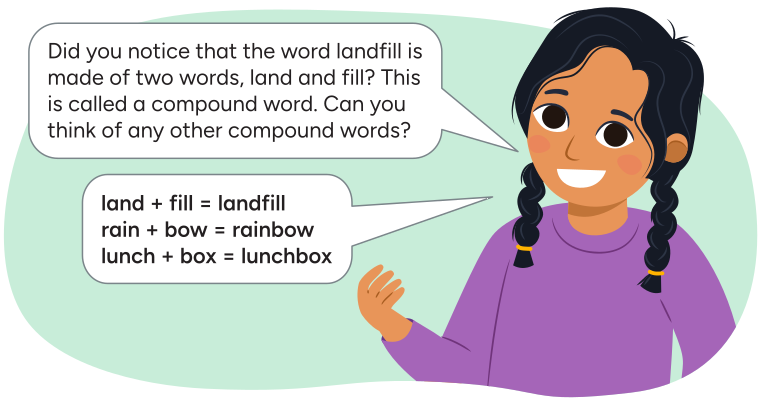
Sora says: 'Did you notice that the word landfill is made of two words, land and fill? This is called a compound word. Can you think of any other compound words?'
land + fill = landfillrain + bow = rainbowlunch + box = lunchbox

Did You Know?
Did you know?
Did you know it is estimated that in 10 years, Ontario will run out of landfill space to put its garbage?
How can we create less waste?
Share your thoughts with a partner, if possible.
The Three R’s
There are three main ways we can cut down on waste:
- Reduce
- Reuse
- Recycle
These three words are known together as the Three R’s.
Have you heard of these three words before? What do you think they mean?

Student Tips
Small action – big impact!
We can really make a difference when we practice and share the Three R’s!
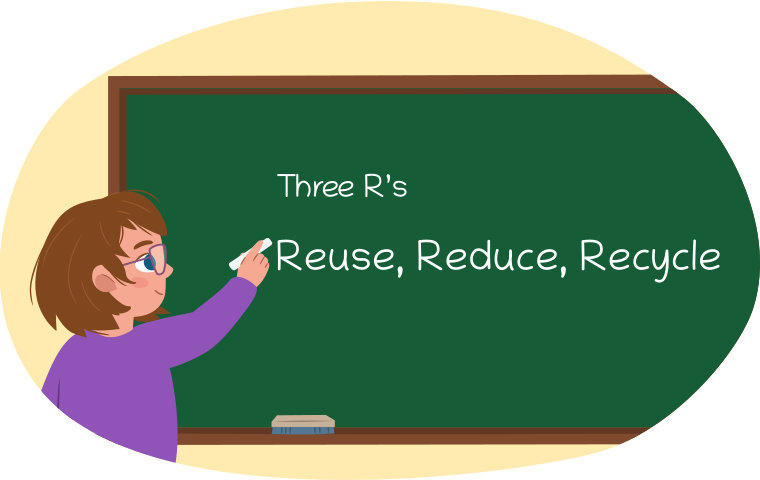
Reduce means to create less waste.
Reuse means to use things more than once. It also can mean that we find another purpose for something instead of throwing it away.
Recycle means to transform waste into new items.
Verbs
The words reduce, reuse, and recycle are verbs.
A verb is a word that describes an action.
Check out the following video from Wacky Word Songs called "The Active Snail" to explore more about verbs!
Zoey shared many different examples of verbs in the present tense.
We can use verbs to describe:
- an action in the past (yesterday, last week, a few months ago) - past tense
- an action right now - present tense
- an action right now that is ongoing - present tense - ongoing
- an action that will happen later (tomorrow, next week, a few months from now) - future tense
Let’s explore a few examples of the verbs in the past, present, and future tense that Zoey shared at the beginning of the video.
What do you notice?
| Past | ran | danced | spun | jumped |
|---|---|---|---|---|
| Present | run | dance | spin | jump |
| Future | will run | will dance | will spin | will jump |
When we use a verb in the past tense, many verbs use the ending “ed.” However, there are examples of verbs that change their spelling completely, like ran and spun.
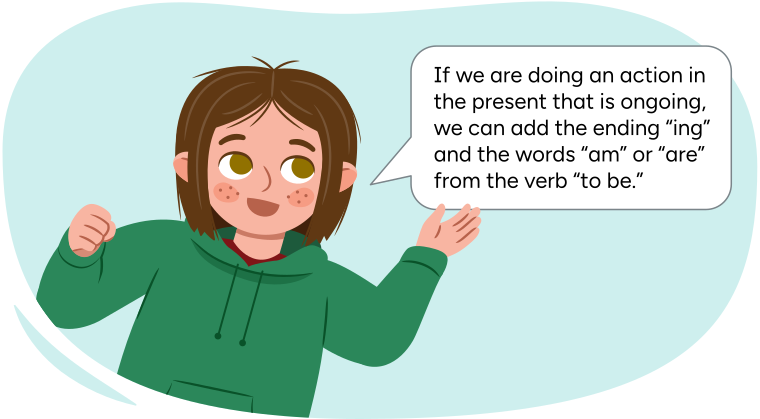
Clara says: 'If we are doing an action in the present that is ongoing, we can add the ending "ing" and the words "am' or "are" from the verb "to be."
Let’s look at the verb "to run."
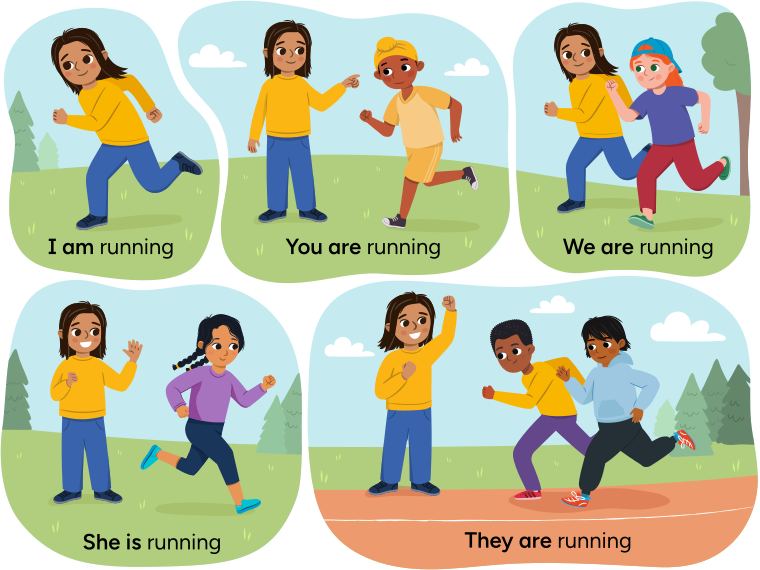
Let’s explore using the three R’s in the past, present, present ongoing, and future tenses!
| Past | reduced | reused | recycled |
|---|---|---|---|
| Present | reduce | reuse | recycle |
| Present ongoing | I am reducing | I am reusing | I am recycling |
| Future | will reduce | will reuse | will recycle |
Learning check!
For each sentence, select the missing word from the drop-down menu. Press Check Answer to see how you did.

Let’s read!
We can read for different reasons. Sometimes, we read for entertainment, to explore stories, or to use our imagination. Other times, we might read to learn new information.
You are about to read and listen to information about the Three R’s.
What do you think the reason or purpose for reading is with this text?
Press Reveal to check your answer.
Let’s take a closer look at the Three R’s by reading information about each!
Reduce
To reduce means to create less waste by using less of something, or not using something at all.
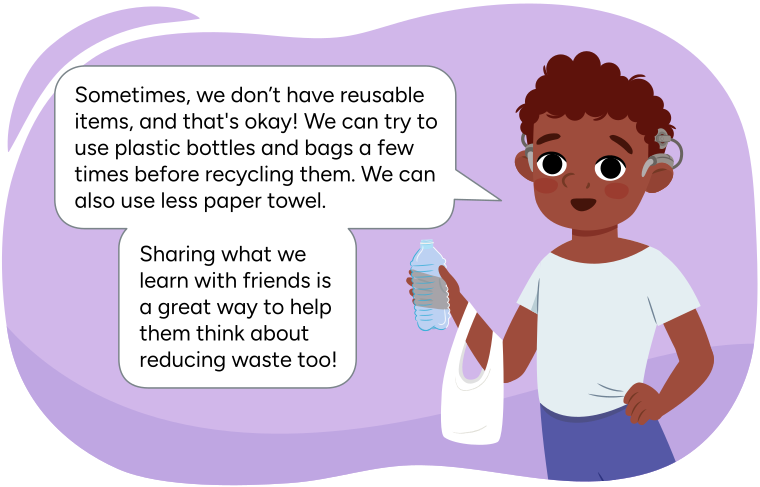
Marcel says:
'Sometimes, we don't have reusable items, and that's okay! We can try to use plastic bottles and bags a few times before recycling them. We can also use less paper towel.'
'Sharing what we learn with friends is a great way to help them think about reducing waste too!'
Student Tips
Small action – big impact!
When we think about reducing, we can also reduce the amount of energy and water we use. These small actions make a big difference in protecting our planet. The following are some ideas to get started:
- Turn off a light when you leave a room.
- Make sure to close the tap tightly when you're done using water.
- In summer and winter, shut doors and close curtains to keep heat in or out and save energy.
Every small action helps us take care of our Earth!
Reuse
Explore the following carousel of images.
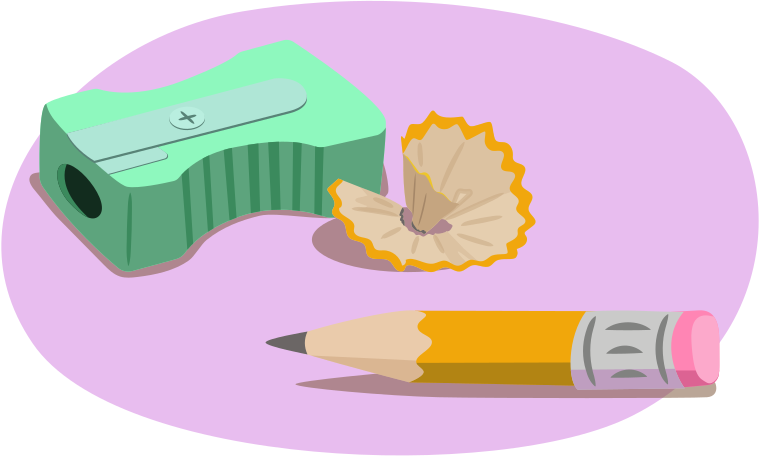
Sometimes objects wear out.
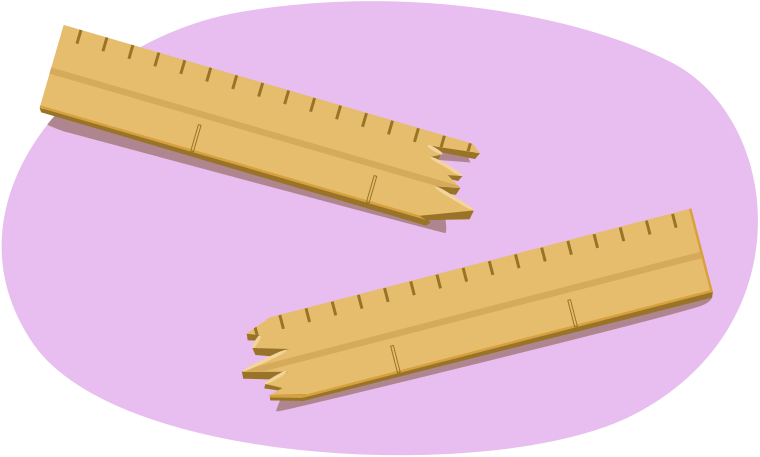
Sometimes objects break.
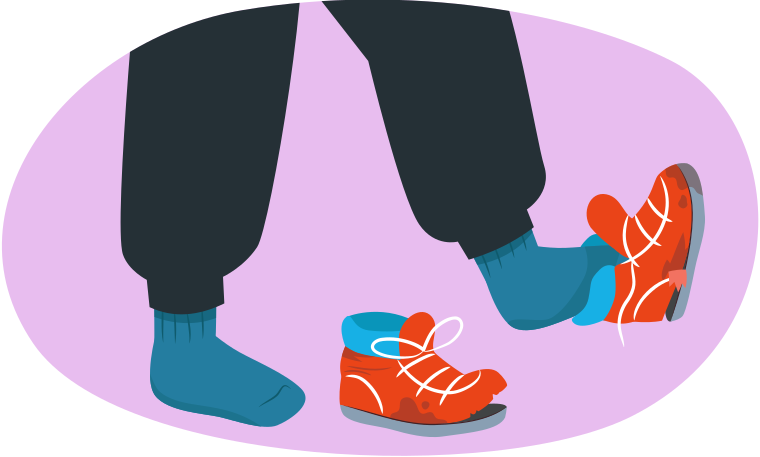
Sometimes we outgrow objects, and they are too worn down to share with someone else.
To reuse means to use something more than once, or to find another purpose for something instead of throwing it away. We can also call this to upcycle.
Check out the following clip from 16 Hudson called "Earth to Amala" to learn more about how we can reuse or upcycle.
What are some ways that Amala reused items?
Press Reveal to check your answer.
Amala turned an old suitcase into a toy box, old jeans into a foot stool, and a tissue box into a bag holder.
Student Tips
Small action – big impact!
The following are some other ideas of ways we can reuse or upcycle items.
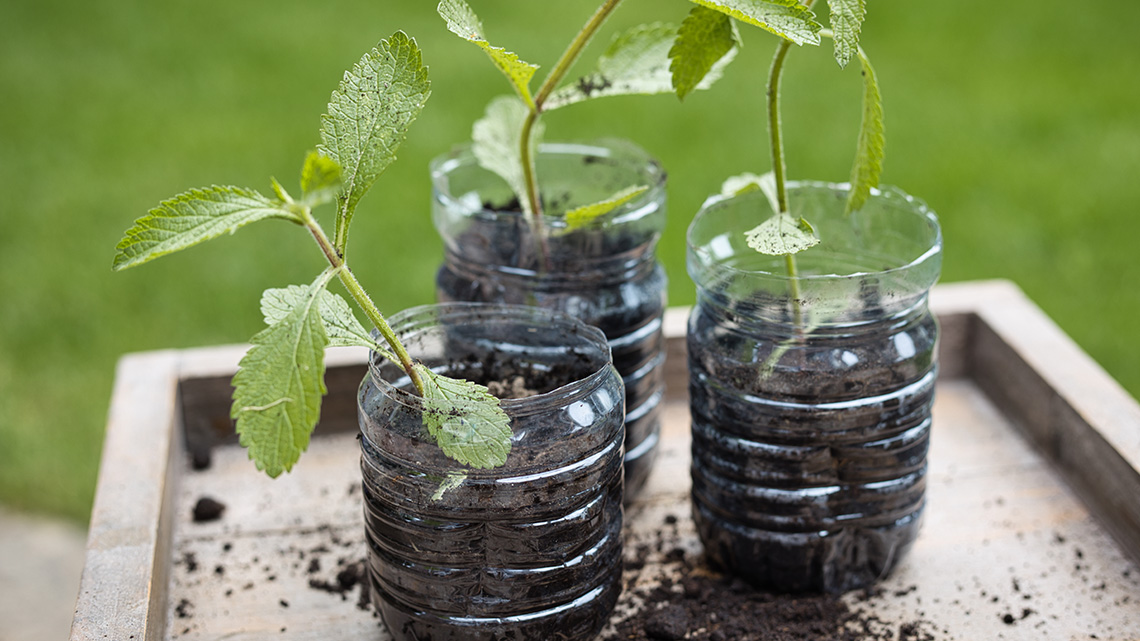
When these water bottles were empty, they were cut and used as a planter.
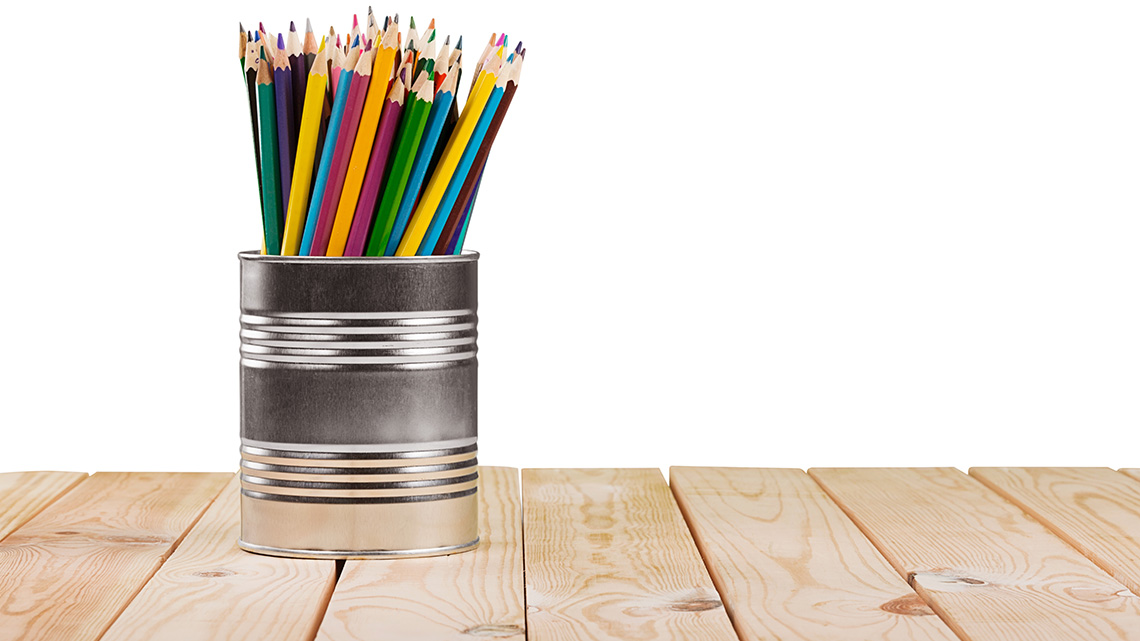
When the food in this can was eaten and the can was empty, it was washed out and used as a pencil crayon holder.
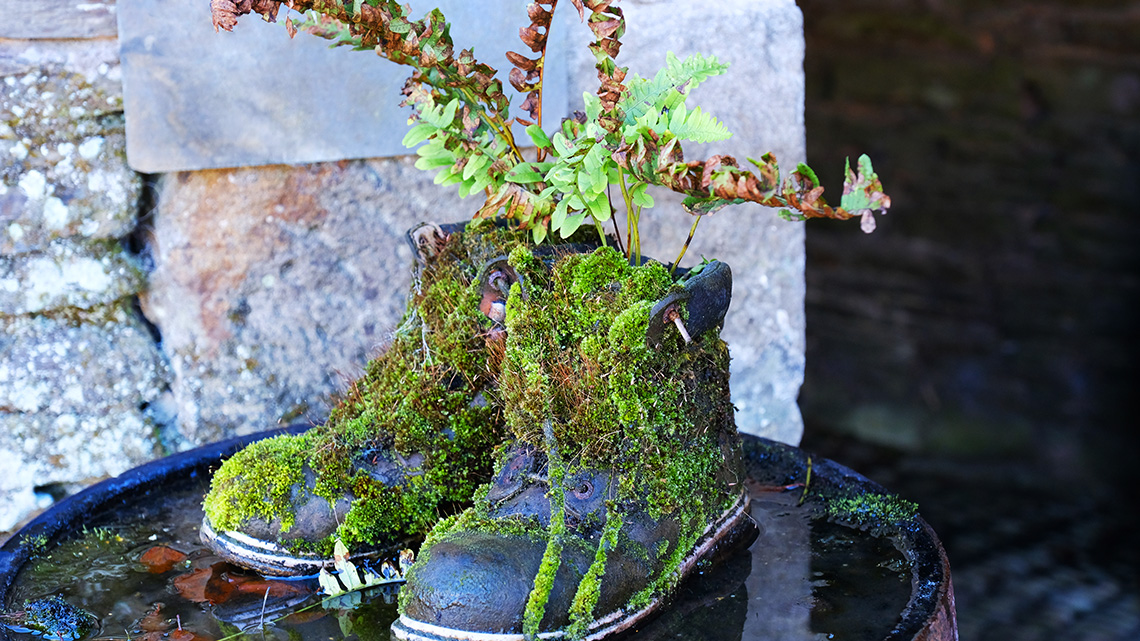
When these shoes were outgrown and worn out, they were used as planters.
Have you tried any of these ideas before?
Which idea would you like to try?
Recycle
Recycling means to turn waste into something new again.
Check out the following clip from Now You Know called "Recycling" to learn about what happens to the items we put in the recycling bins.
What happens to all the items that get taken to a recycling facility?
Press Reveal to check your answer.
- People separate paper, plastic, metal, and glass.
- The items are stacked together and sent out to create new things.
What were some examples of items that can be recycled and turned into new items?
Press Reveal
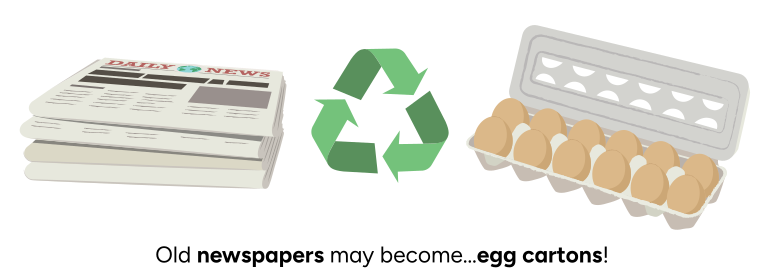
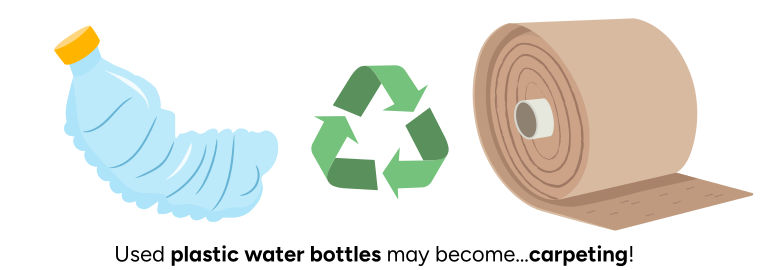
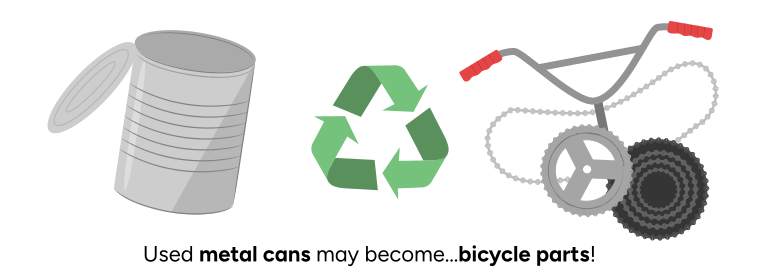
Why is recycling important?
How does recycling keep waste away from our landfills?
Record your answers using a method of your choice, and share your thoughts with a partner, if possible.
Word work
Let’s review the words that we learned. Match each picture to the correct word.
Putting it all together
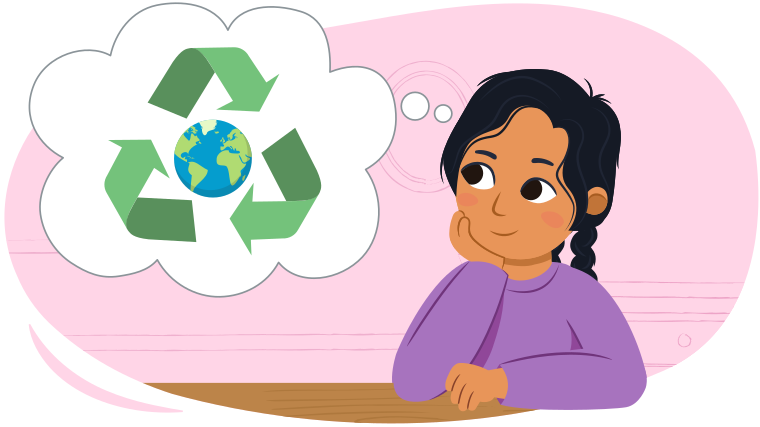
Think about all the things you learned about reducing, reusing, and recycling!
Record your ideas in your notebook or use the following fillable and printable Graphic Organizer. Use pictures and/or words to record your ideas. Try to include two or three ideas in each section.
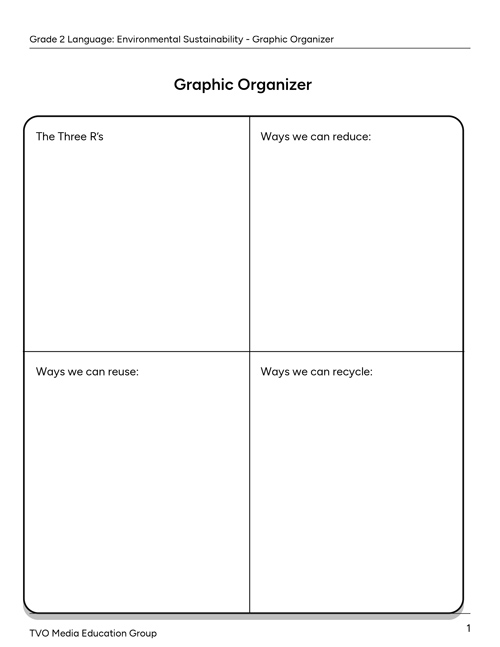
Once you have completed your organizer, share with a partner, if possible.
How might you apply what you have learned about the Three R’s in your own life?
Verb tenses review
For each sentence select the correct verb tense!
Press Hint to reveal examples of verb tenses.
| Past | reduced | reused | recycled |
|---|---|---|---|
| Present | reduce | reuse | recycle |
| Present ongoing | I am reducing | I am reusing | I am recycling |
| Future | will reduce | will reuse | will recycle |
Reflection
How do you feel about what you have learned in this activity? Which of the next four sentences best matches how you are feeling about your learning? Press the button that is beside this sentence.

I feel...
Now, record your ideas about your feelings using a voice recorder, speech-to-text, or writing tool.