Learning goals
We are learning to…
- identify the purpose of green spaces and how they can help take care of the environment
- identify and describe the characteristics of a persuasive letter or email
- identify and use persuasive writing strategies in a persuasive letter or email
- use communication skills to express our voice in persuasive writing
- identify past, present, and future verb tenses in our writing
Success criteria
I am able to…
- identify the purpose of green spaces and make connections to my everyday life
- identify and describe the characteristics of a persuasive letter or email
- identify and use persuasive writing strategies
- use communication skills to express my voice in my writing
- identify past, present, and future tense in example sentences

What is a green space?

A green space is a place with grass, trees, and other plants that is in or near a city. Plants like trees give us shade and help cool down the city. Trees also give homes to birds and animals, and their roots keep the soil from washing away.
Green spaces give us places to play, relax, and exercise. Green spaces can also include community gardens where people can grow plants together. By making more green spaces, we can help protect nature and make our cities greener and cleaner.
Explore the following audio clip to find out more.
Green Spaces
Explore the following carousel of human-made green spaces in Ontario. As you explore, think about why green spaces might be important.
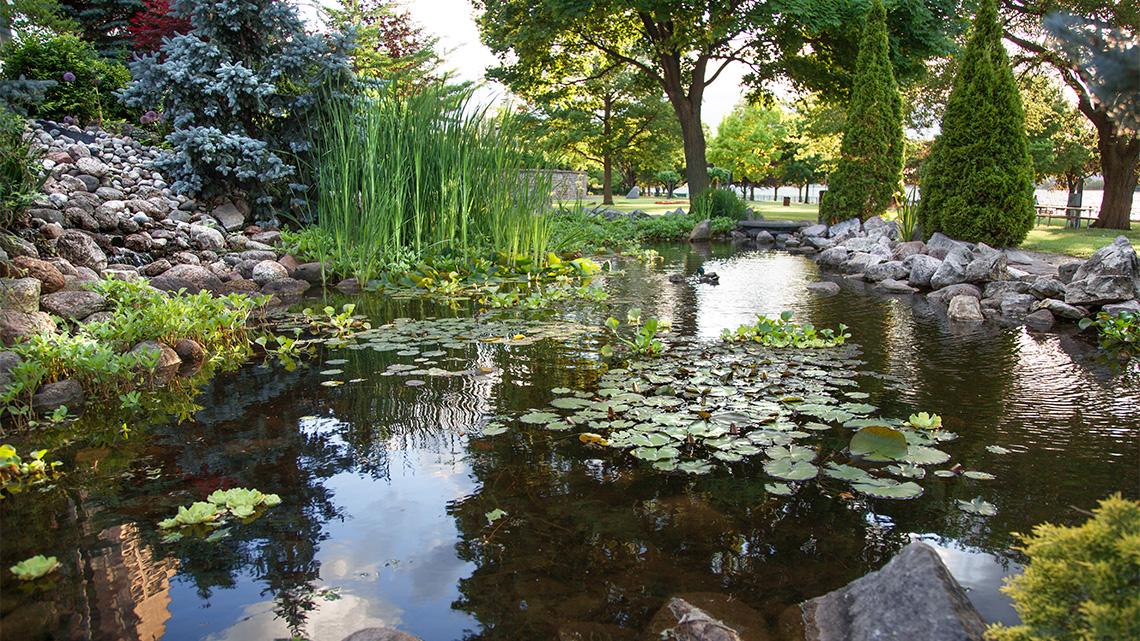
Riverside Park in Windsor, Ontario

Urban Garden Car at Kensington Market in Toronto, Ontario
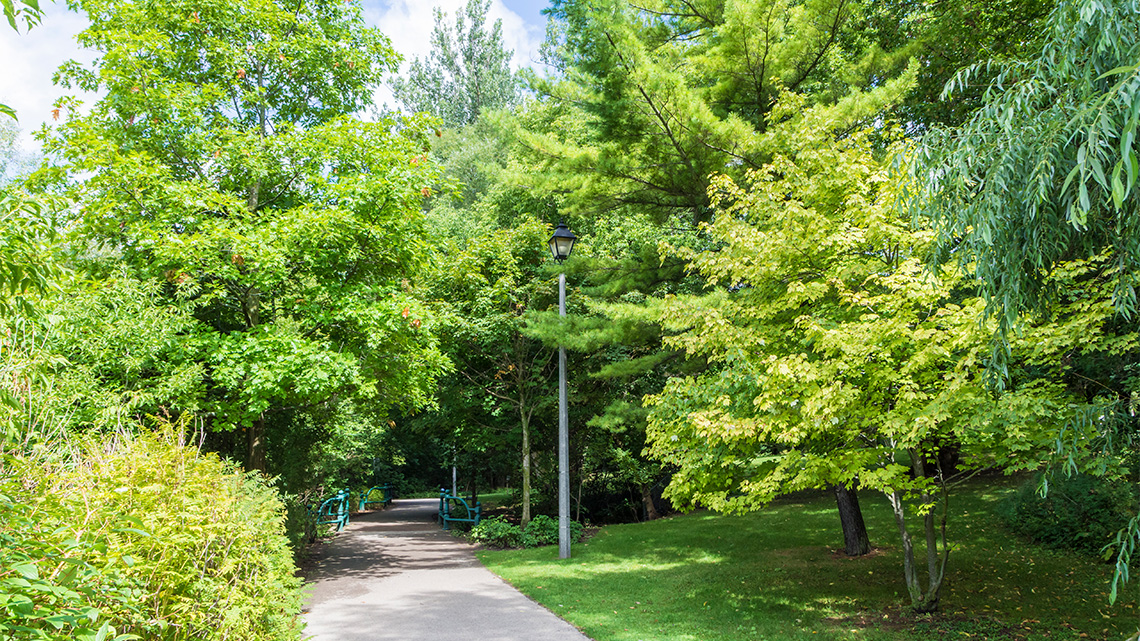
Jubilee Gardens in Richmond Hill, Ontario

Urban Vine Garden along Dixie Transitway in Mississauga, Ontario
Why are green spaces important for cities?
Press Show Answer to learn more.
Green spaces are important for cities because…
- they have plants that help clean the air
- they give homes to birds and other animals
- they can grow vegetables for communities to eat


Today’s vocabulary!
Let's explore the following sustainability vocabulary.
Let’s review
You explored green spaces including community gardens. Community gardens are special places where people in a neighborhood come together to grow plants and vegetables. They can be built in different places depending on where there is space and where people want them.
Press Examples to learn more.
Green spaces can be built in or around:
- parks
- schools
- apartment buildings
Green spaces in the community
In the following video, you will meet Malik who lives in a busy city and wants to create his own garden with some help from the Green Squad!
As you enjoy the video, think about how growing a garden can be helpful for the environment.
Learning check
Select the correct answer, then press Check Answer to see how you did.
What grows in green spaces?
In the following video Malik learns how they can help their community garden and get something in return.
Learning check
Select the correct answer, then press Check Answer to see how you did.
In the following activity, identify the correct order for how to plant.

Student Wellness
Take a break!
Let’s take a few minutes to relax, clear our minds, and refocus our attention.

Verb tenses!
Building our grammar skills can help build our communication skills. This helps us understand each other better. We can use something called verb tenses to be clear about timelines and when things happen.
Let’s explore three kinds of verb tenses: past, present, and future tense.
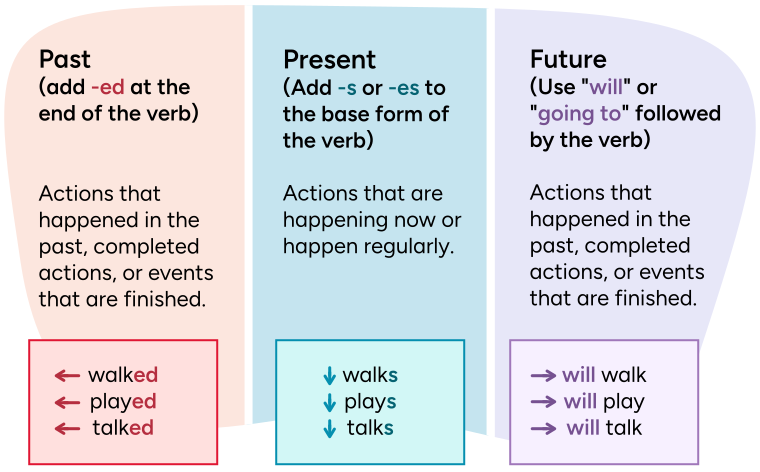
Past Tense
(add -ed at the end of the verb)
Actions that happened in the past, completed actions, or events that are finished.
Examples:
walked
played
talked
Present Tense
(Add -s or -es to the base form of the verb)
Actions that are happening now or happen regularly.
Examples:
walks
plays
talks
Future Tense
(Use "will" or "going to" followed by the verb)
Actions or plans that will happen in the future
Examples:
will walk
will play
will talk
Explore out the following video to learn more about verb tenses.
Irregular verbs
Irregular verbs are action words that are unique and do not follow the same pattern or rules.
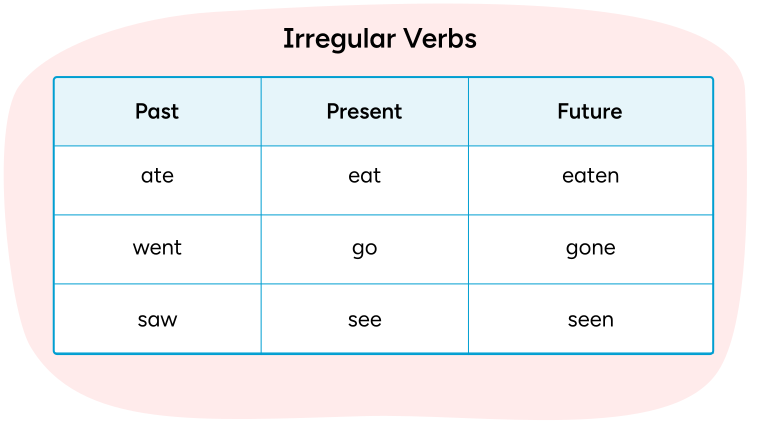
Let’s practice!
Place the cards into categories that best match. Use the arrow buttons to navigate between cards.
Persuasive writing
We have been learning about how community gardens can be helpful and a great way to create a green space.
Now, imagine your community is trying to figure out what to do with an empty space in the neighbourhood. How might you persuade your community to use the space to start a community garden?
Press Example to learn more.
For example: I persuaded my friend to play soccer with me by telling him how much fun we would have.
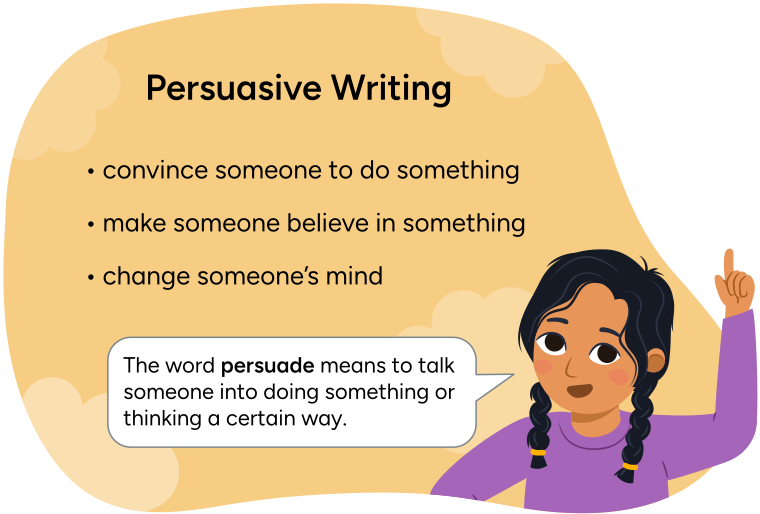
Persuasive Writing
- convince someone to do something
- make someone believe in something
- change someone's mind
Sora says: 'The word persuade means to talk someone into doing something or thinking a certain way.'

Student Tips
Student tips
When we want to persuade more than one person, we can write a persuasive letter or email. An email is a letter that is written and sent out online. You can use a persuasive letter to:
- Share opinions: Sometimes, we have strong feelings about something and want others to see it our way.
- Make a change: We might want to change a rule or make something better.
- Help others: We might want to persuade people to do something good, like recycle or be kind to animals.
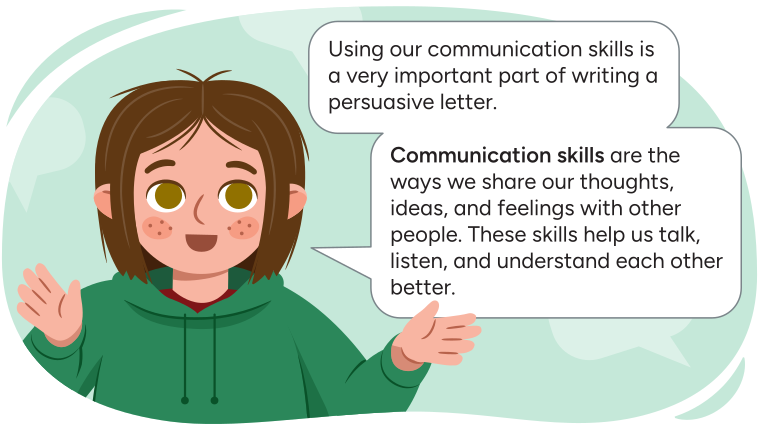
Clara says: 'Using our communication skills is a very important part of writing a persuasive letter. Communication skills are the ways we share our thoughts, ideas, and feelings with other people. These skills help us talk, listen, and understand each other better.'
Persuasive writing strategies
Explore the following persuasive writing strategies that can help us communicate and persuade our audience.
How to write a persuasive letter
- Start with a greeting: Address the person you are writing to.
- Share your opinion: Clearly express what you want or believe.
- Give reasons and examples: Provide strong reasons and supporting evidence.
- Ask nicely: Politely ask the reader to take action or agree with you.
- Sign off: End with a closing and your name.
Explore the following persuasive letter.
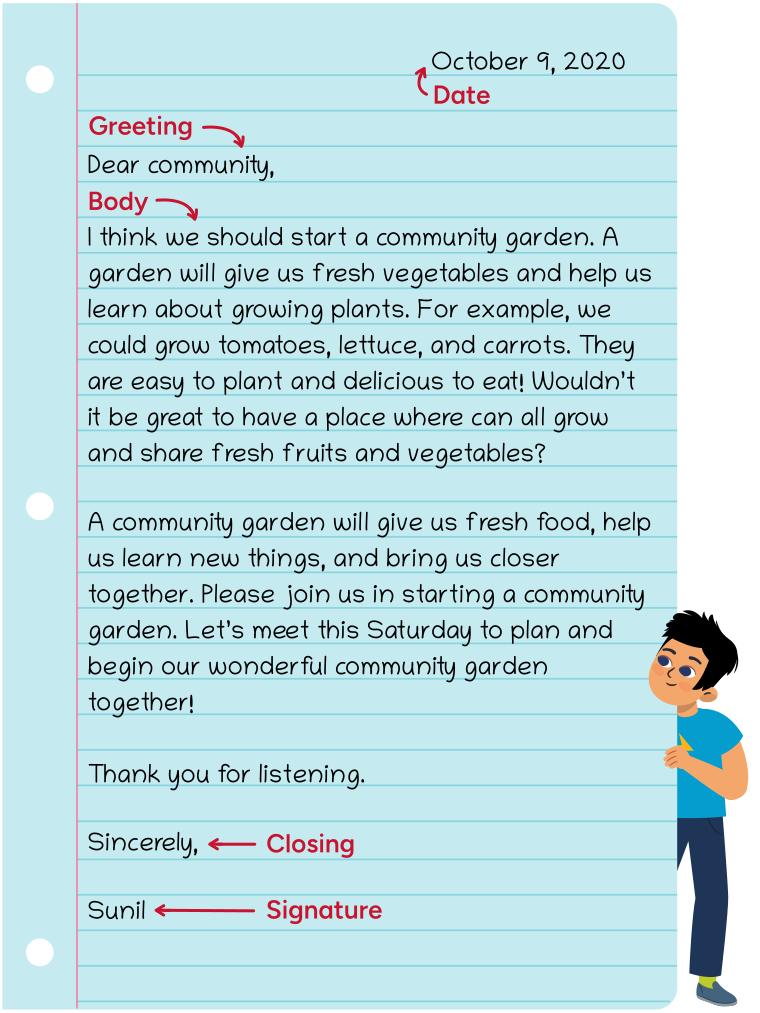
A letter with labels for each section:
Date: October 9, 2020
Greeting: Dear community,
Body: I think we should start a community garden. A garden will give us fresh vegetables and help us learn about growing plants. For example, we could grow tomatoes, lettuce, and carrots. They are easy to plant and delicious to eat! Wouldn't it be great to have a place where can all grow and share fresh fruits and vegetables?
A community garden will give us fresh food, help us learn new things, and bring us closer together. Please join us in starting a community garden. Let's meet this Saturday to plan and begin our wonderful community garden together!
Thank you for listening.
Closing: Sincerely,
Signature: Sunil

Brainstorm
Brainstorm
Think about all the reasons that support your opinion for starting a community garden.
Complete the community garden Mind Map in your notebook or use the following fillable and printable document. If you would like, you can use speech-to-text or audio recording tools to record your thoughts.
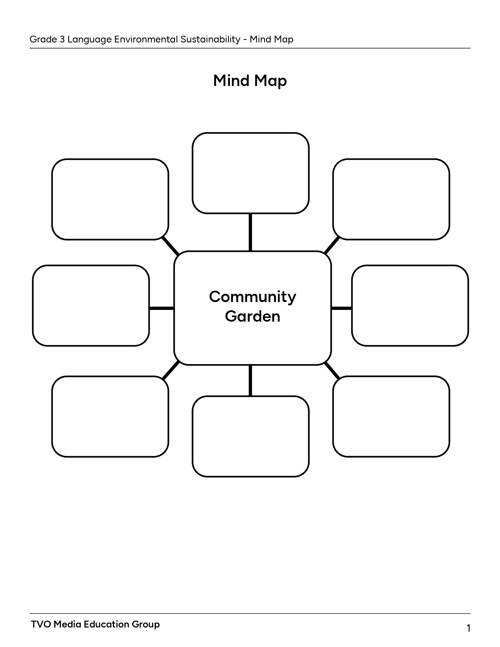
Press Possible Answers to learn more.
- provides fresh fruits and vegetables
- teaches children and adults about gardening and nature
- encourages exercise
- brings the community together
- helps the environment
Getting organized
Now that you have come up with reasons and examples that support creating a community garden, it’s time to organize your thoughts! Plan your persuasive letter in your notebook, using an audio clip or any other method of your choice.
Student Tips
Student tips
Use the example of a persuasive letter from earlier in this section to help you with your planning.
Here are some sentence starters to help you get started!
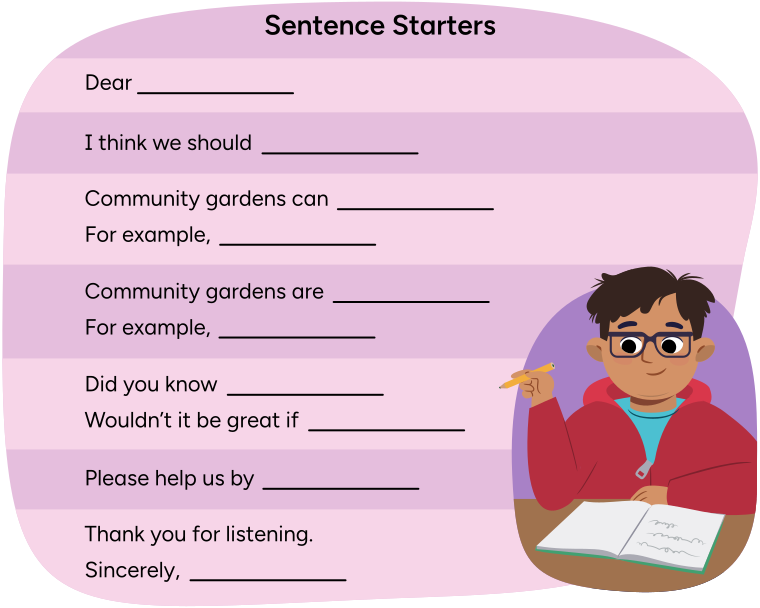
Sentence Starters
Dear …
I think we should …
Community gardens can …
For example, …
Community gardens are …
For example, …
Did you know …
Wouldn't it be great if …
Please help us by …
Thank you for listening. Sincerely, …

Cursive practice
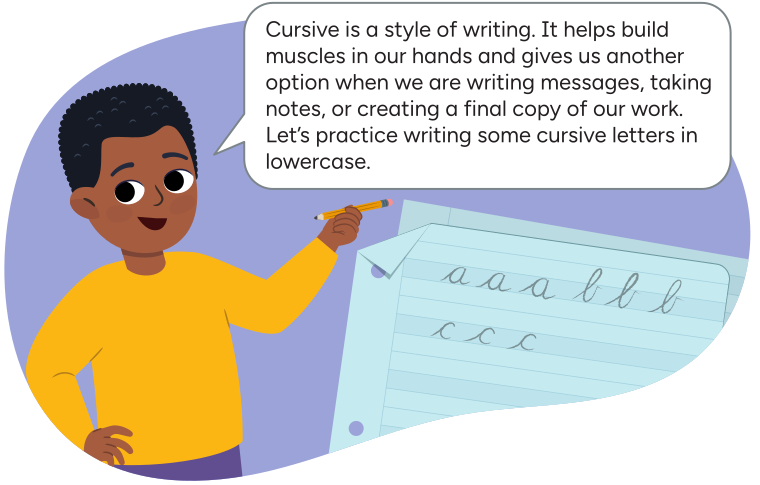
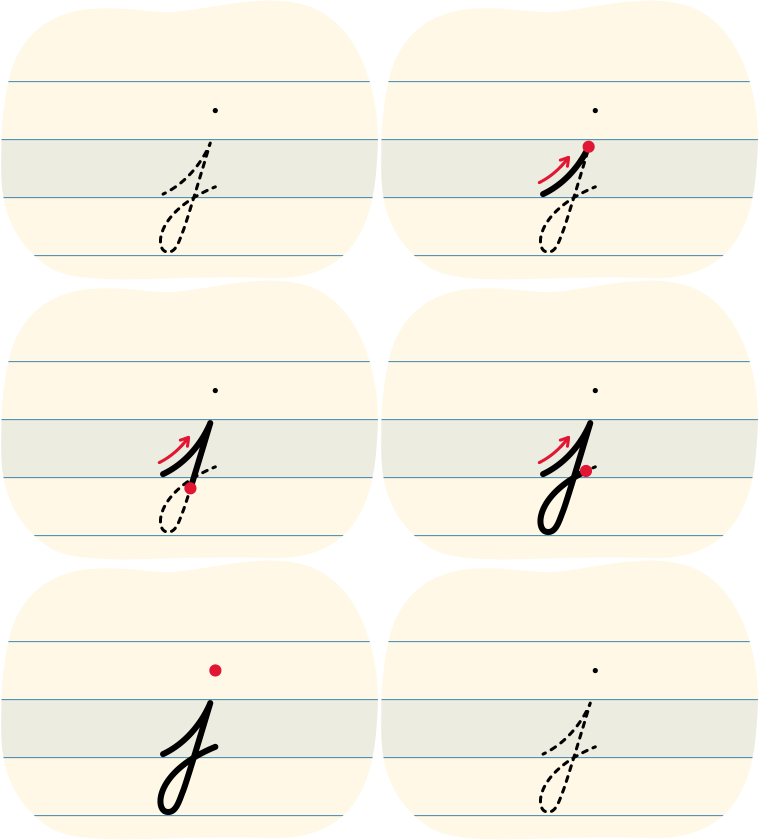
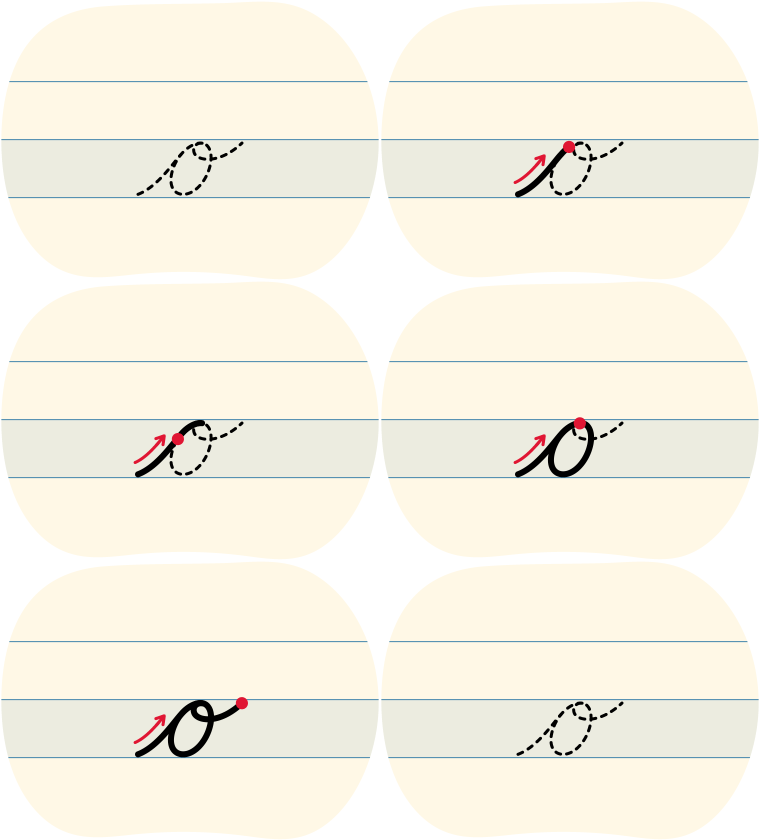
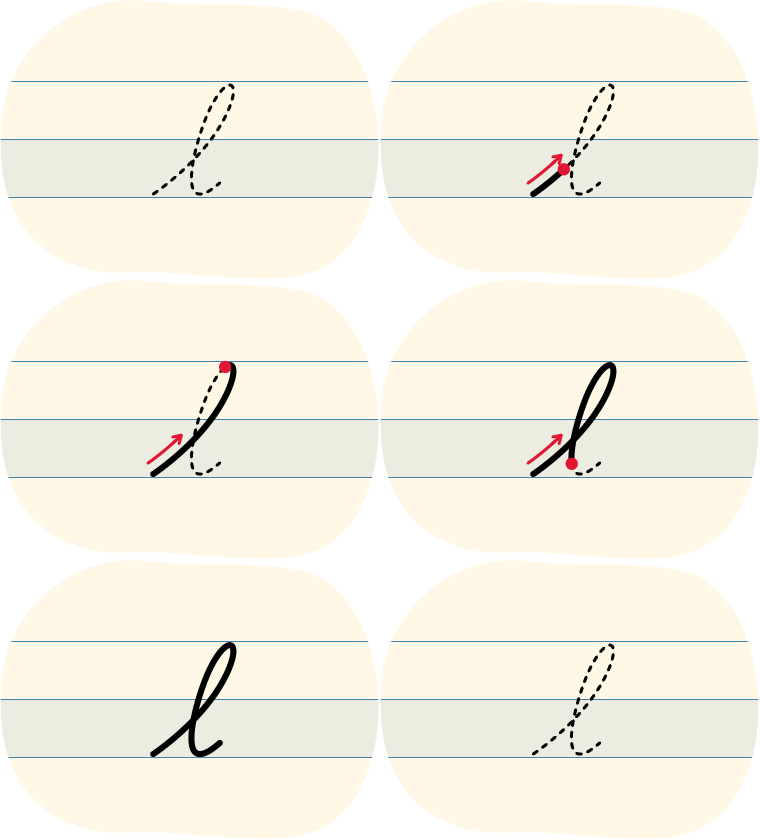
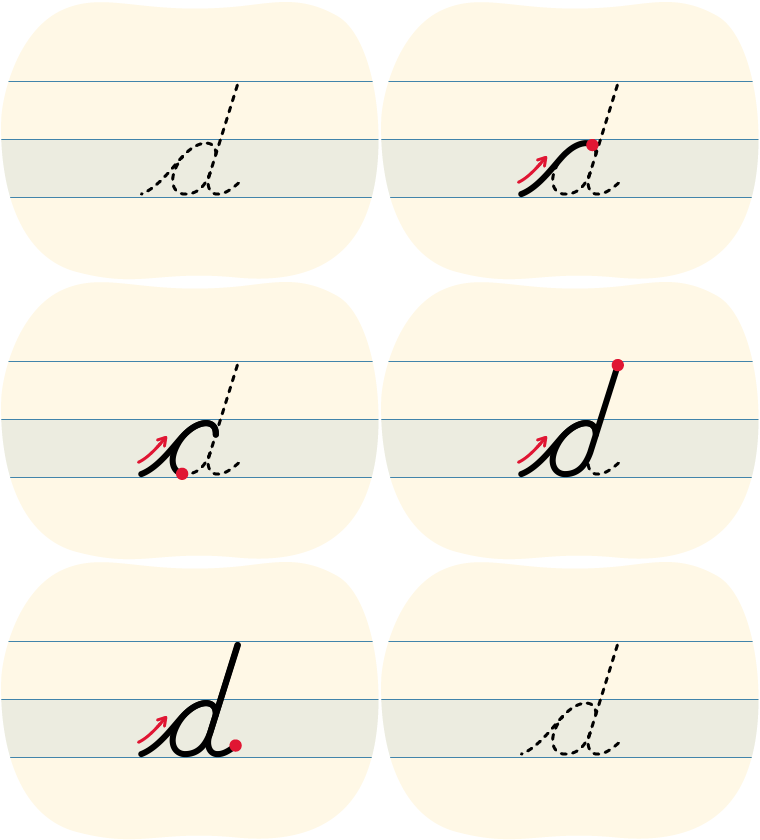
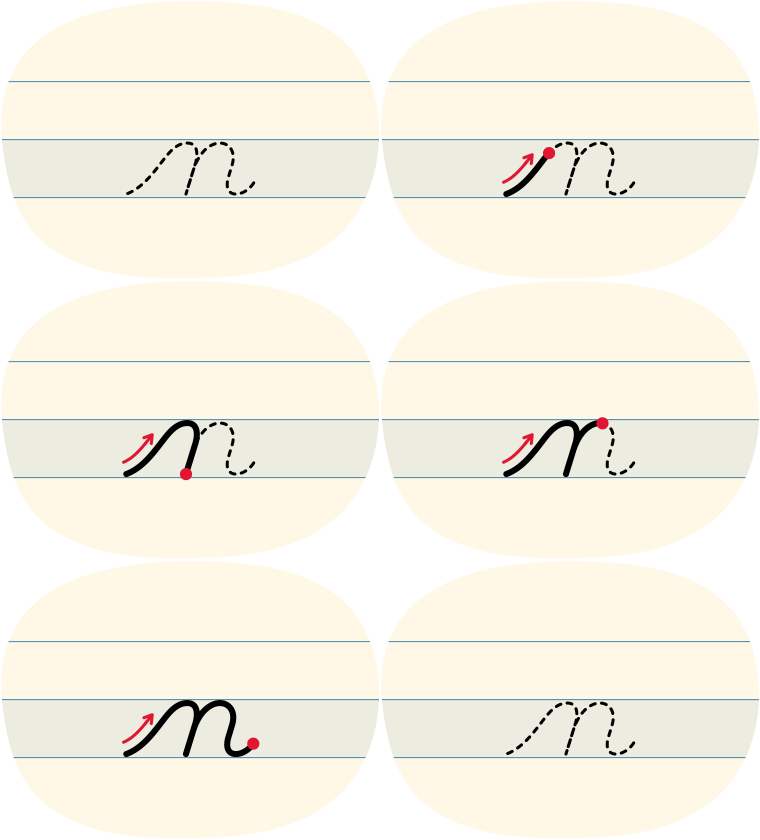
Arthur says: 'Cursive is a style of writing. It helps build muscles in our hands and gives us another option when we are writing messages, taking notes, or creating a final copy of our work. Let's practice writing some cursive letters in lowercase.
| Cursive | |
|---|---|
| c |
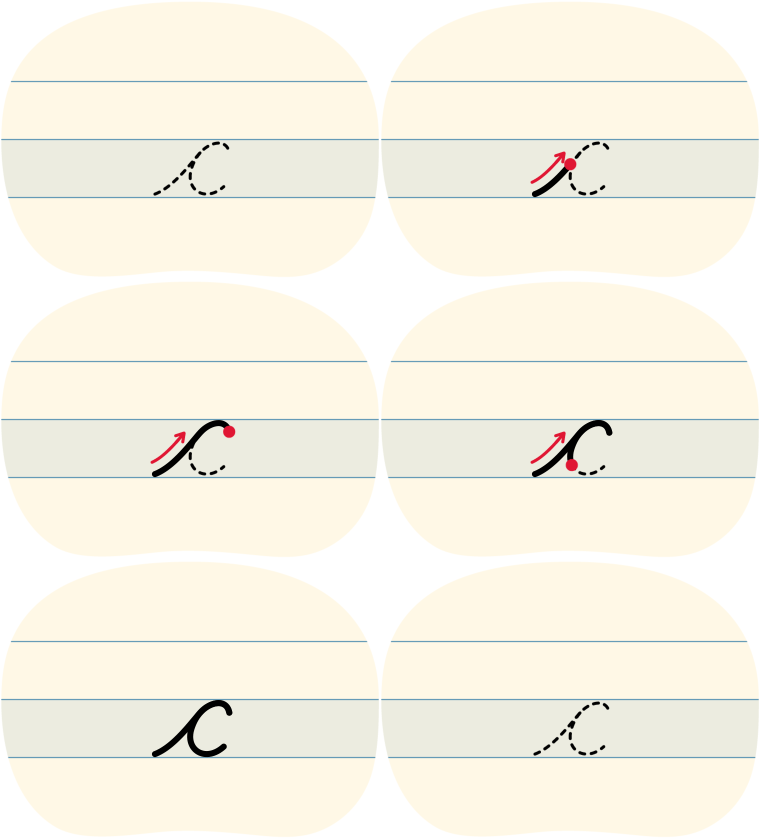
|
| j |
|
| o |
|
| l |
|
| d |
|
| n |
|
Before you begin, what do you notice about the shape of each cursive letter?
Press Possible Answer to learn more.
All of the cursive letters start from the bottom. Some of the letters have loops and they each create a different shape.
Tips for cursive letters
- Start from the bottom of the letter.
- Try to keep the pencil on the page until you are done the letter.
- Create a finger space before you continue to the next letter.
- Try to press gently as you write so that your hand can move easily across the page.

Cursive writing can be hard at first. But don’t worry, you can do it. All it takes is some practice!
Press Left-Handed Tips button to access tips for left-handers.
Write a persuasive letter!
Sora says: 'Coming up with ideas is an important first step in writing. What strategies did you use to develop ideas for writing this persuasive letter?'
Press Possible Answers to learn more.
- brainstorm
- mind map
- example letters
Drafting
Now that you have organized your ideas and thoughts, you are ready to begin drafting your persuasive letter. As you write, you may come up with other ideas to make your letter even more persuasive. The drafting stage is a great time to add those new ideas.
Editing
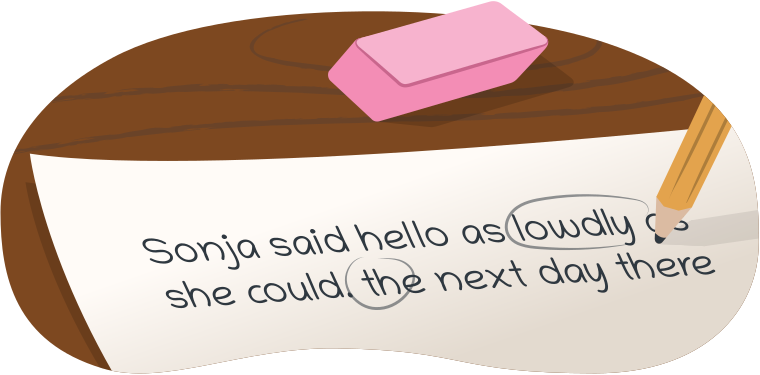
Writers read their writing over and over to make it even stronger. Have you completed your draft? If so, take the time to find places in your work where you can make your writing even more persuasive.
Use the following checklist to guide you.
Editing Checklist
Final draft
What a great amount of work you have done! Now you are ready to create a final draft of your persuasive letter. You can write, type, or create your letter in a method of your choice.

Student Success
Think
Where might you use persuasive writing in other parts of school or your everyday life?
Record your thoughts in a method of our choice.
Reflection
How do you feel about what you have learned in this activity? Which of the next four sentences best matches how you are feeling about your learning? Press the button that is beside this sentence.

I feel...
Now, record your ideas about your feelings using a voice recorder, speech-to-text, or writing tool.