Learning goals
We are learning to…
- identify positive and negative impacts of plastic on people and the environment
- identify the characteristics of a newspaper article and apply them in our writing
- analyze a news article to answer the questions of where, what, who, why, when, and how
- plan a news article with a given topic and graphic organizer
Success criteria
I am able to…
- identify positive and negative impacts that plastic has on people and the environment
- identify the characteristics of a news article and apply it in my writing
- analyze a news article and answer the questions who, what, where, when, why, and how
- plan a news article with a given topic using a graphic organizer
What about plastic?
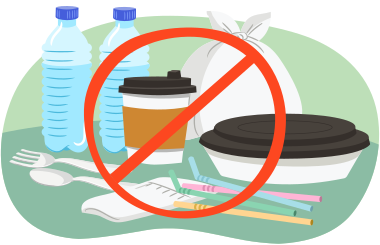
Explore the following images. What do you think the images all have in common?
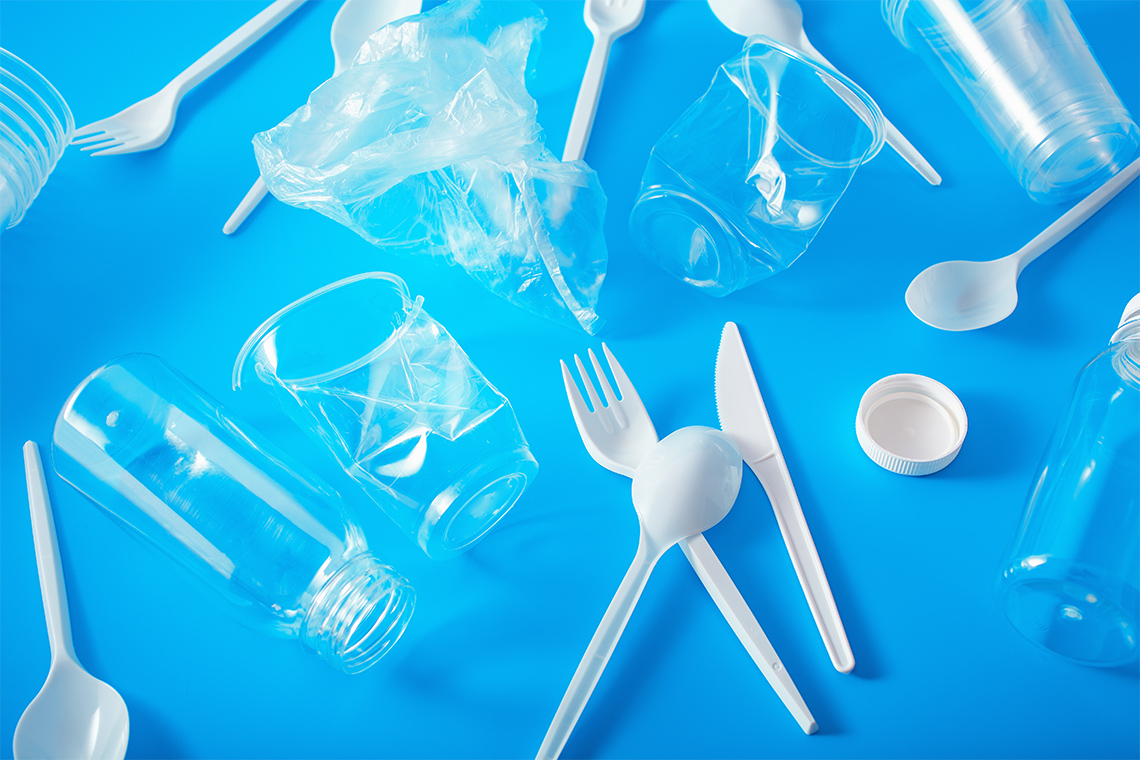
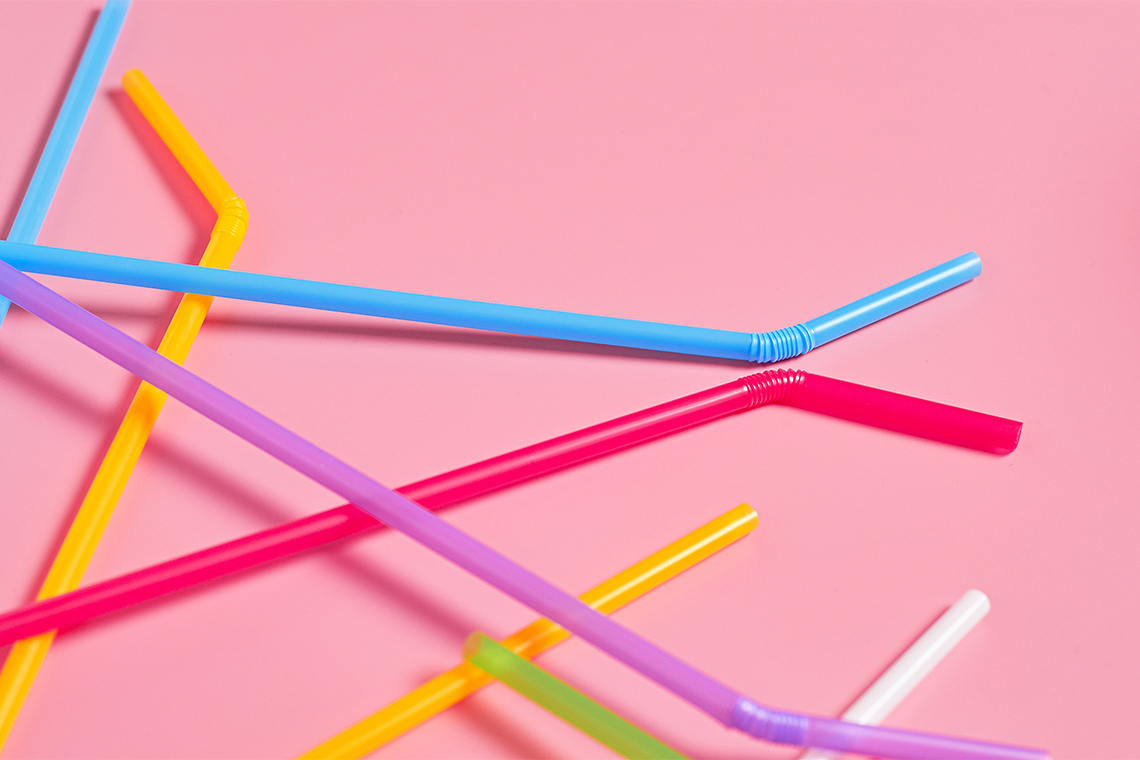
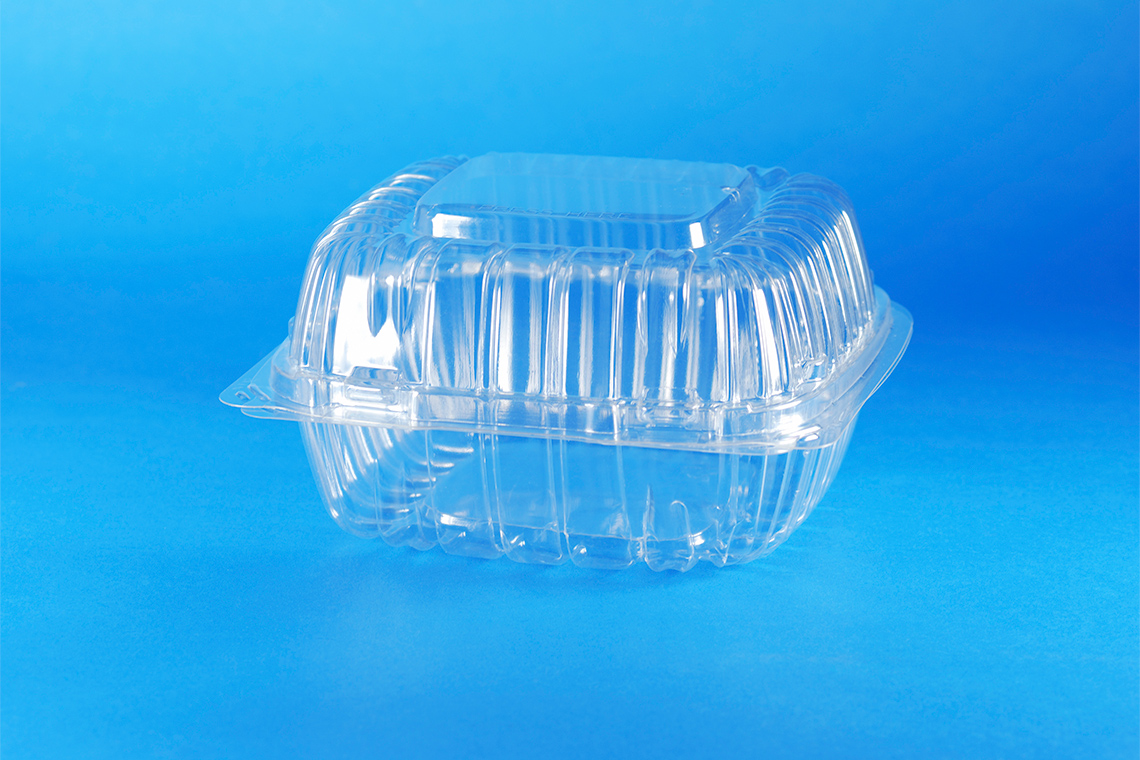
These images all show items made of plastic. Plastic is a type of material that can be made into different things like bottles, cups, and bags.
The images also all show something called single-use plastics.
Single-use plastics include:
- plastic forks, spoons, and wrappers
- plastic containers
- plastic straws
- plastic lids
Think about these items and the two words single and use. Can you guess what single-use plastic is?
Record your ideas in a method of your choice.
Press Definition to access the definition of single-use plastic below and compare it with your own ideas.
Single-use plastic is plastic that is used only once, or for a very short time, before it is thrown away or recycled.
Explore the following audio clip to hear this definition.
Single-use plastic
Today’s vocabulary!
Impacts of plastic
Let’s consider some of the ways that plastic impacts our everyday life.
The following two video clips will examine how plastic can be seen as both positive (good) and negative (bad). We’ll start by learning about some of the negative issues.
As you explore the video clips, think about the different ways that plastic affects your life and the environment around you.
Check out the following video to learn more.
Although there are many negative issues with plastic, we have to remember that there are some important positive ways that we use plastic in our lives as well.
Check out the following video to learn more.
Learning check
This video explored how plastic can be both good (positive) and bad (negative) for people and the environment.
Place the cards into categories that best match. Use the arrow buttons to navigate between cards.

Pause and Reflect
Pause and reflect
Do you think plastic impacts your everyday life in a positive or negative way?
Explain your thinking in a method of your choice.
News articles
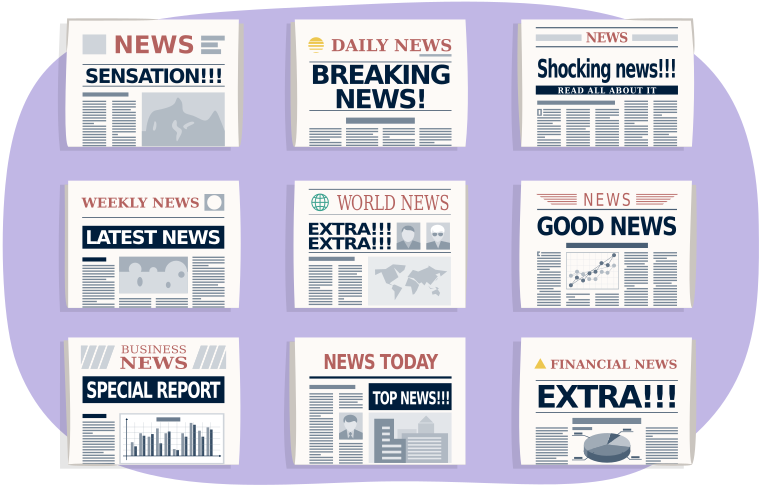
In this part of the activity, you are going to be exploring a news article. A news article is a story written about events, people, or ideas that are happening in our community, country, or even around the world. Articles can be about things like sports games, or interesting discoveries. They help us learn about what is going on in the world and keep us up to date about different topics.
Characteristics of a newspaper article
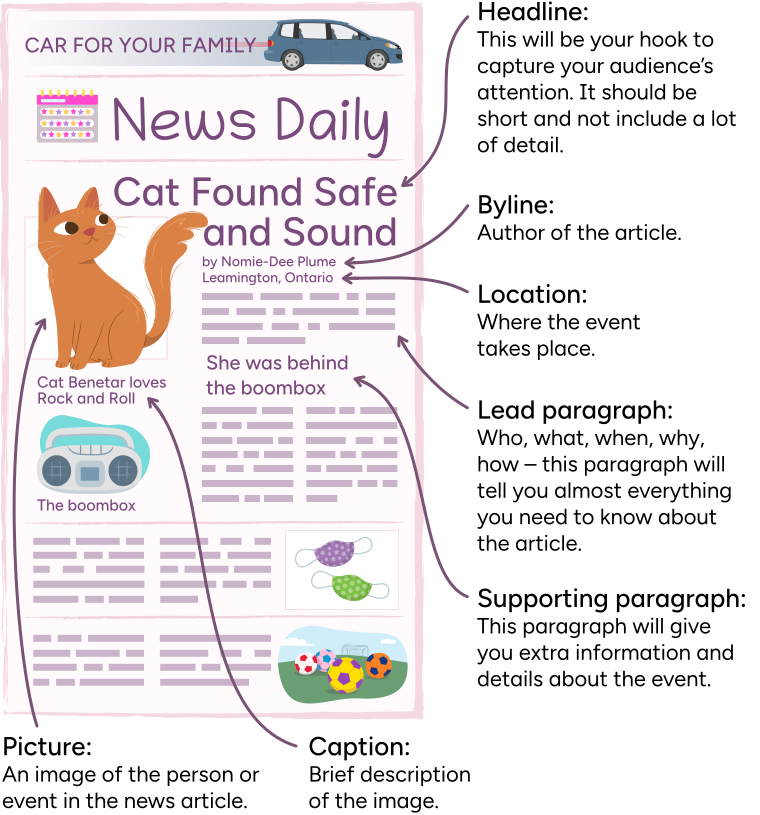
Labeled characteristics of a news article about a cat:
Headline
This will be your hook to capture your audience's attention. It should be short and not include a lot of detail.
Example: 'Cat Found Safe and Sound'
Byline
Author of the article.
Example: 'by Nomie-Dee Plume'
Location
Where the event takes place.
Example: 'Leamington, Ontario'
Lead paragraph
Who, what, when, why, how - this paragraph will tell you almost everything you need to know about the article.Supporting paragraphThis paragraph will give you extra information and details about the event.
Example: 'She was behind the boombox'
Picture
An image of the person or event in the news article.Example: An image of the cat this article was written about.
Caption
Brief description of the image.
Example: 'Cat Benetar loves Rock and Roll'
Explore the following recording to find out more.
Characteristics of a news article.
Syllables
We are going to look at some strategies that will help you read words that you might not know. Some of these involve syllables, so let’s first take a minute to review what syllables are! Check out the following video.
Note that every syllable has at least one vowel. Vowels are the letters A, E, I, O, U, and sometimes Y.
Now let’s look at some helpful strategies for decoding words!
Decoding strategies
If you come across a word that you don’t know, try these strategies:
- Find the syllables: Find the vowels in the word and break the word into syllables.
- Find parts of the word you already know: Check to see if there any parts of the word you might already know.
- Put it all together: Put the syllables and word parts together and try to pronounce the word.

Student Wellness
Take a break!
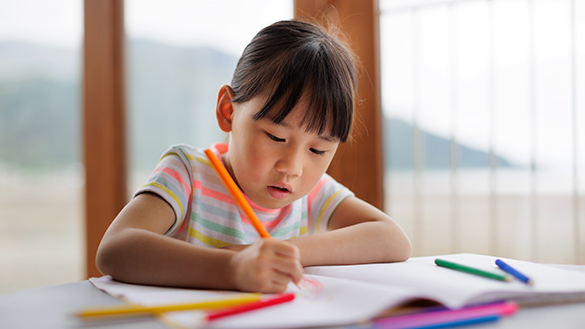
Let’s get creative! Take a few minutes to freestyle draw, write, or colour.
Check out the following news article below where you will learn about Nguyet Linh who spoke up about a plastic pollution problem she noticed in her school.
As you explore the article, think about the Characteristics of News Article you learned about earlier in this section.

Reading a news article
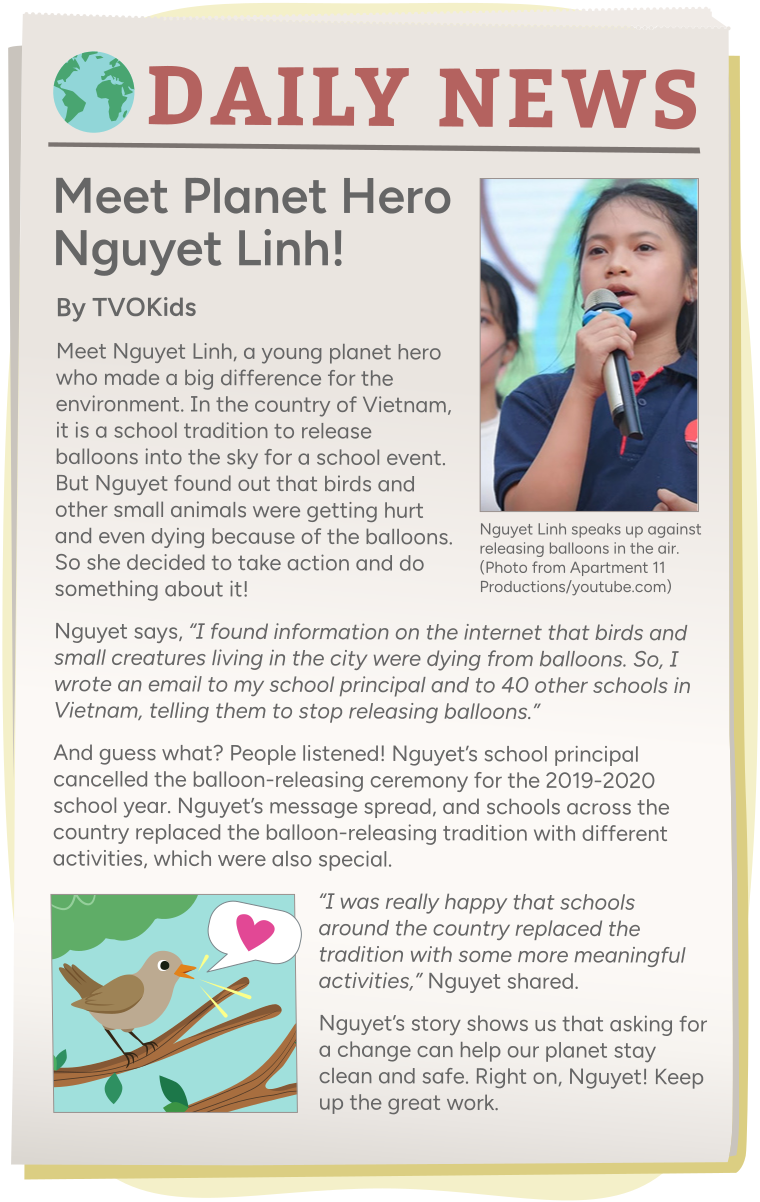
A news article with an image of Nguyet Linh with the caption: 'Nguyet Linh speaks up against releasing balloons in the air.'
The rest of the article reads:
'Meet Planet Hero Nguyet Linh!
By TVOKids
Meet Nguyet Linh a young planet hero who made a big difference for the environment. In the country of Vietnam, it is a school tradition to release balloons into the sky for a school event. But Nguyet found out that birds and other small animals were getting hurt and even dying because of the balloons. So she decided to take action and do something about it!
Nguyet says, "I found information on the internet that birds and small creatures living in the city were dying from balloons. So, I wrote an email to my school principal and to 40 other schools in Vietnam, telling them to stop releasing balloons,"And guess what? People listened! Nguyet's school principal cancelled the balloon releasing ceremony for the 2019-2020 school. Nguyet's message spread, and schools across the country replaced the balloon release tradition with different activities, which were also special.
"I was really happy that schools around the country replaced the tradition with some more meaningful activities," Nguyet shared.
Nguyet's story shows us that asking for a change, can help our planet stay clean and safe. Right on, Nguyet! Keep up the great work.'
Learning check
Select the correct answer, then press Check Answer to see how you did.
The 5 Ws and H
News articles give the most important information first by answering the questions:
- When?
- Who?
- What?
- Where?
- Why?
- How?
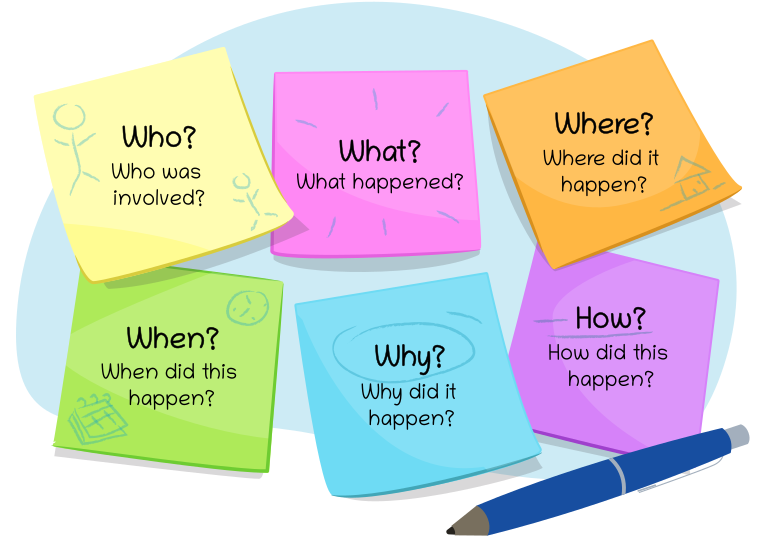
The 5 Ws and H
Who? Who was involved?
What? What happened?
Where? Where did it happen?
When? When did this happen?
Why? Why did it happen?
How? How did this happen?
News articles share information in a clear and interesting way.
How is a news article structured? Press the Structure button to learn more. .
- It starts with the most important information.
- Then, it gives supporting information about the topic.
- Finally, it ends with some more details that may not be as important but are still interesting to know!
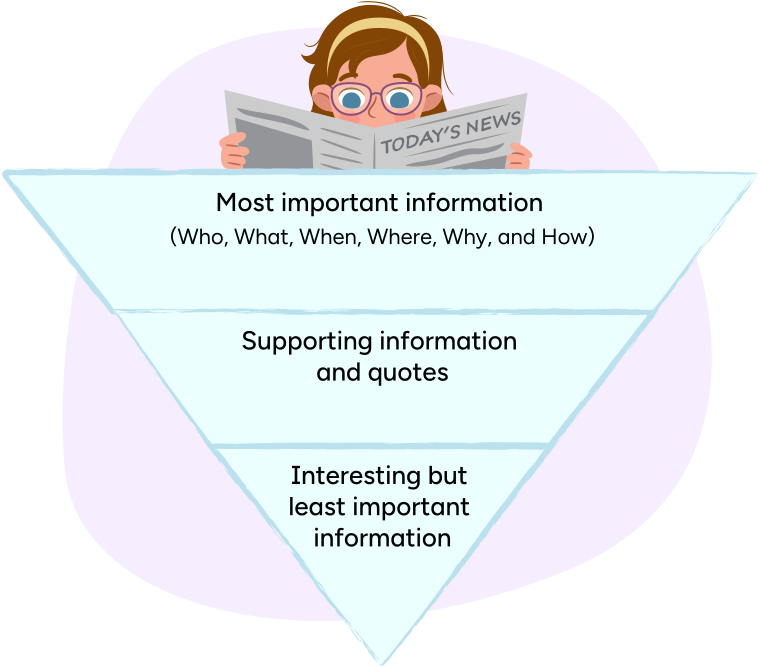
An upside-down triangle representing the structure of an article. It is divided into three sections:
the top and largest section is labeled 'Most important information (Who, What, When, Where, Why, and How)'
the middle section is labeled 'Supporting information and quotes'
the bottom and smallest section is labeled 'Interesting but least important information'

Test Your Skills!
Test your skills
Revisit the news article “Meet Planet Hero Nguyet Linh!” This time you are going to be answering the questions “who, what, where, when, why, and how,” using the information in the article.
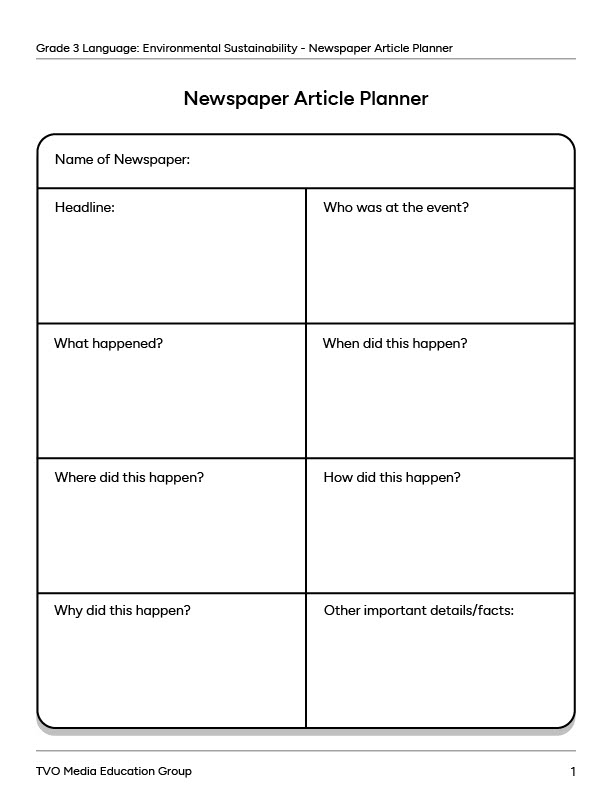
Complete the fillable and printable Newspaper Article Planner in your notebook or using the following document. If you would like, you can use speech-to-text or audio recording tools to record your thoughts.
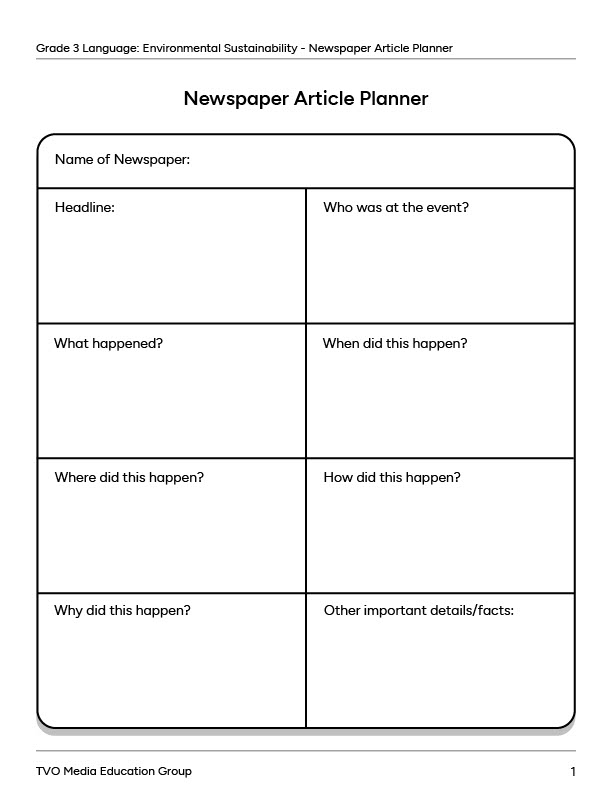
Press Possible Answer button to learn more.
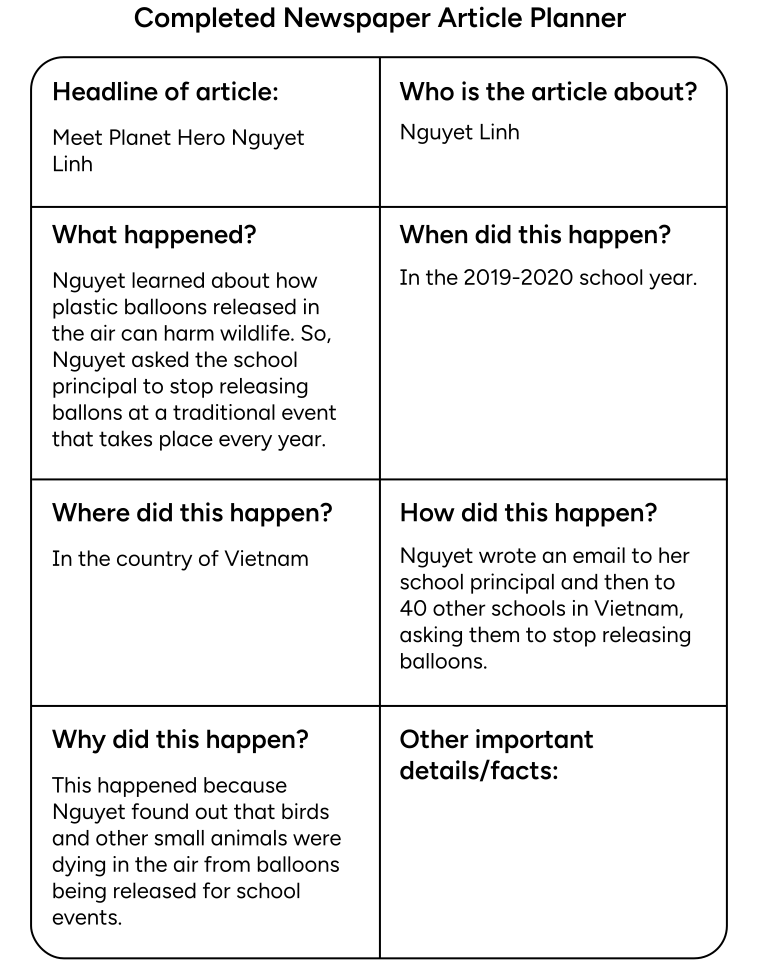
Planning a news article
Next, you are going to plan your own newspaper article. Imagine your neighbourhood has just organized a community clean-up day.
On this day, everyone will work together to clean up the neighbourhood by picking up garbage and disposing of waste in a safe way.
You are going to plan a news article about this event so that you can share the positive things your neighbourhood is doing to help take care of the environment. Since this is an imagined event, you get to create the details! Think about what details you want to include when you ask the questions who, what, where, when, why, and how.
Start with a catchy headline that will catch the attention of your reader. Think about images that you can draw or create to include in the article. The images should connect with your headline and make people want to read your article.

Student Tips
Student tips
Here are some ideas for headlines that can help you with your article.
- “Fresh Start: Cleaning Our Community!”
- “Working Iogether for a Tidy Town!”
- “Picking Up the Trash!”
Complete the fillable and printable Newspaper Article Planner in your notebook or using the following document. If you would like, you can use speech-to-text or audio recording tools to record your thoughts.
Cursive practice
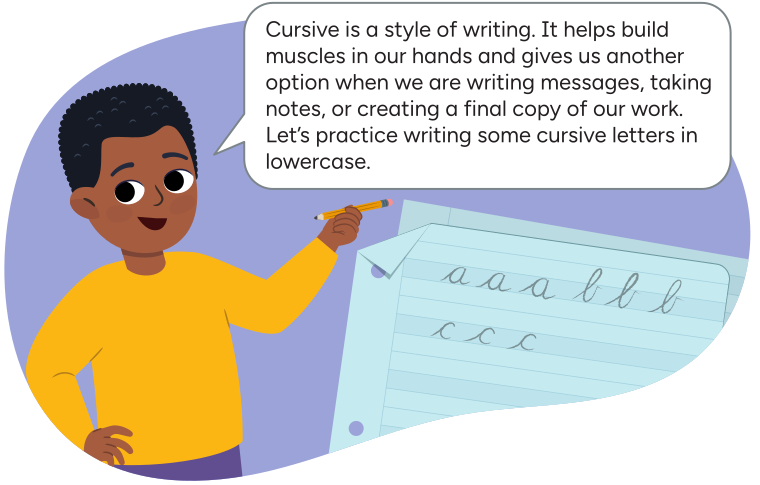
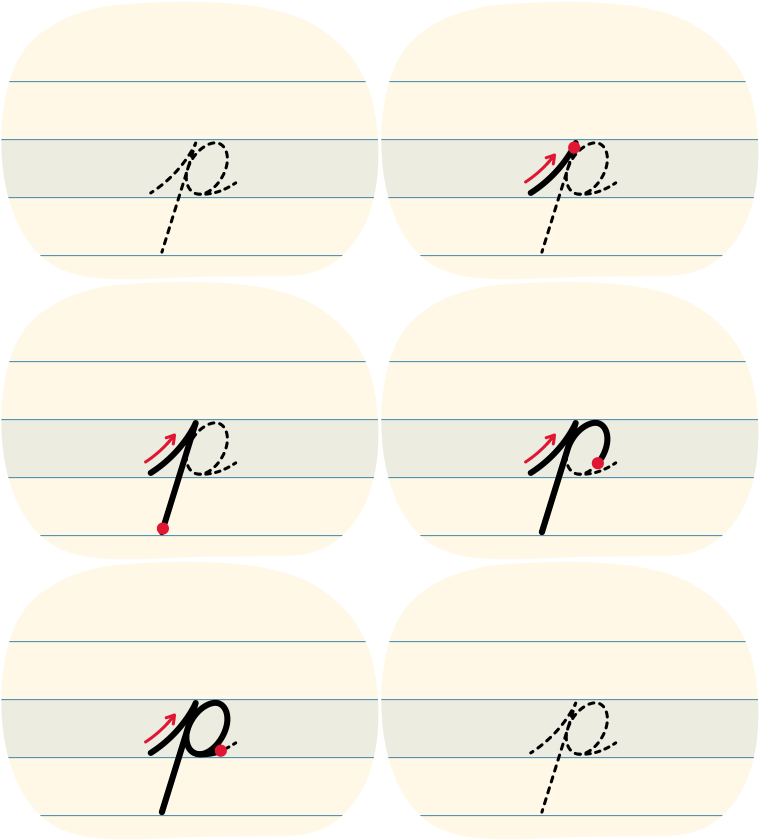
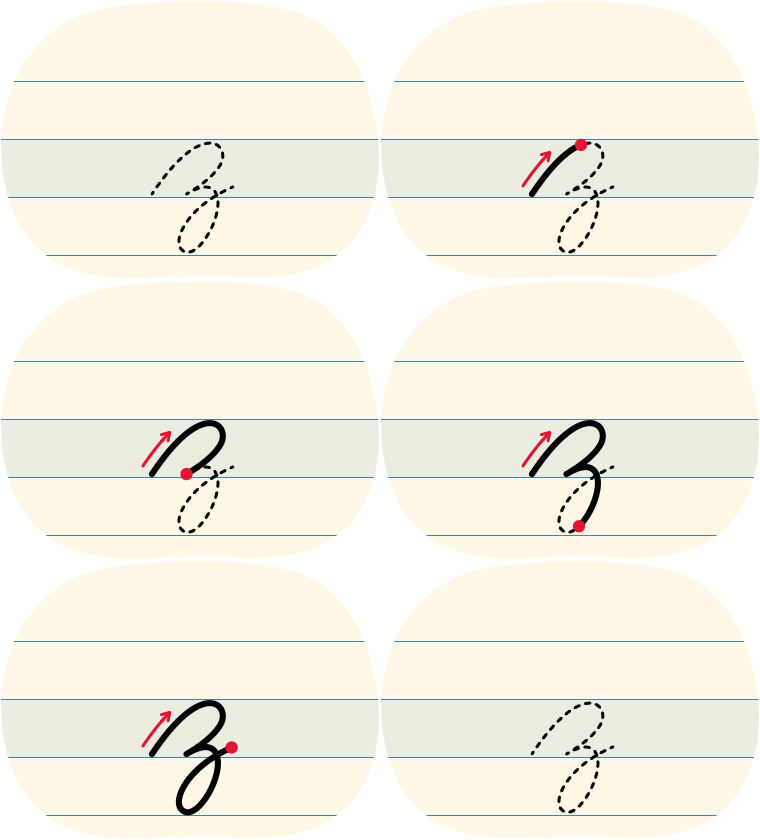
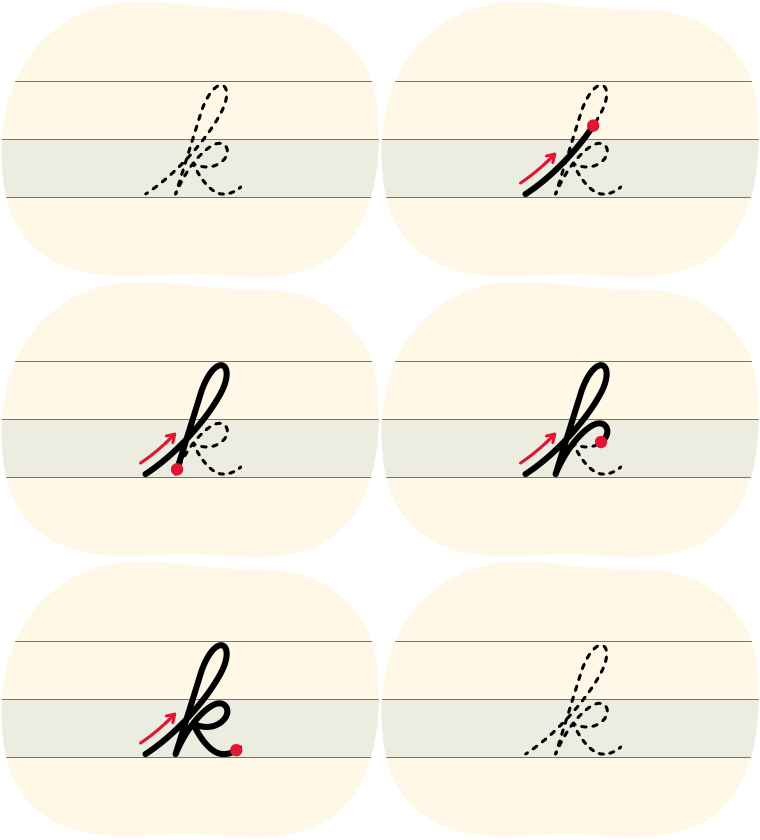
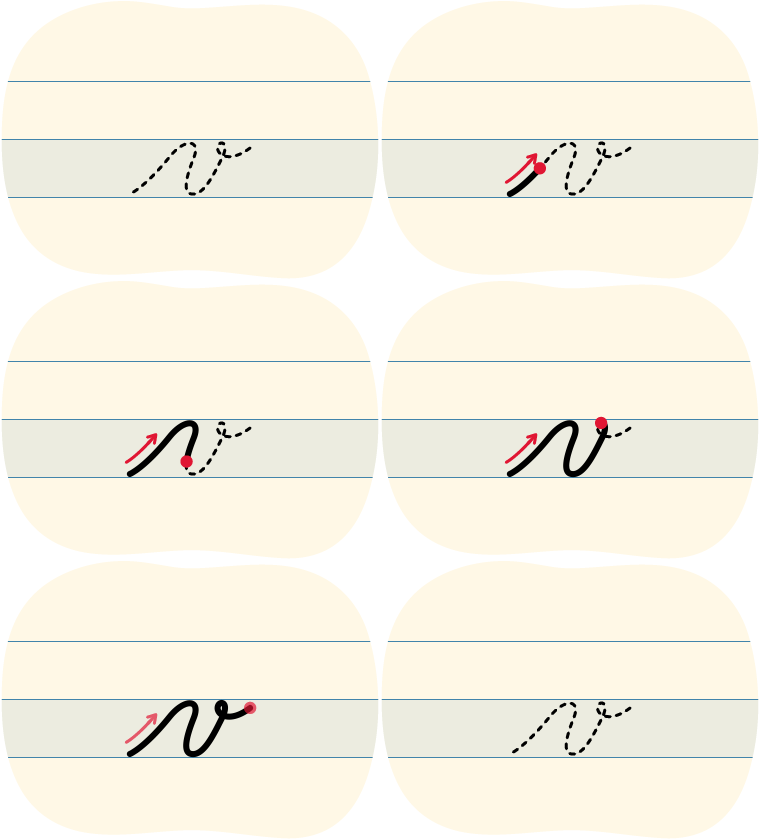
Arthur says: 'Cursive is a style of writing. It helps build muscles in our hands and gives us another option when we are writing messages, taking notes, or creating a final copy of our work. Let's practice writing some cursive letters in lowercase.
| Cursive | |
|---|---|
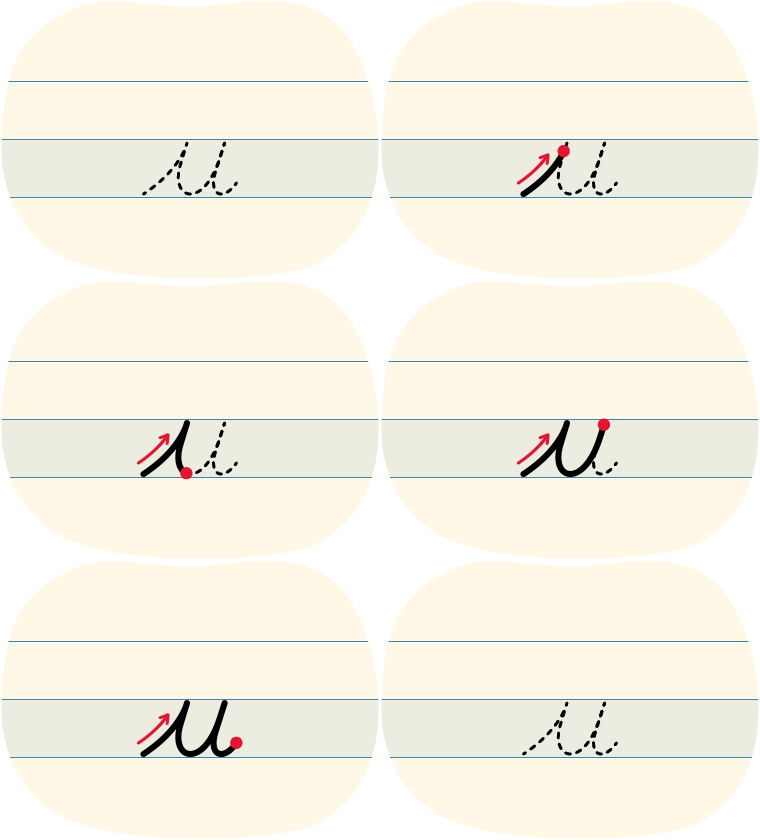
| u |
|
| p |
|
| z |
|
| k |
|
| v |
|
Before you begin, what do you notice about the shape of each cursive letter?
All of the cursive letters start from the bottom. Some of the letters have loops and they each create a different shape.
Tips for cursive letters
- Start from the bottom of the letter
- Try to keep the pencil on the page until you are done the letter
- Create a finger space before you continue to the next letter
- Try to press gently as you write so that your hand can move easily across the page
Cursive writing can be hard at first. But don’t worry, you can do it. All it takes is some practice!
Press Left-Handed Tips button to access tips for left-handers.
Let’s review
Read each sentence and place the cards into categories that best match. Use the arrow buttons to navigate between cards.
Extension activity
Now that you have planned a newspaper article, you can try using your plan to draft your own article.
Complete the fillable and printable News Article Template in your notebook or using the following document. If you would like, you can use speech-to-text or audio recording tools to record your thoughts.
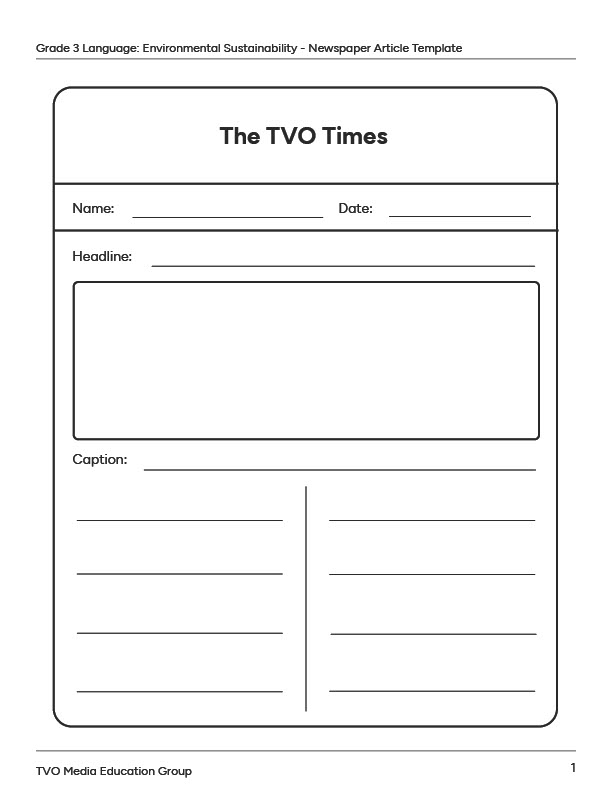
Now you are ready to spread the news!
Pause and Reflect
Pause and reflect
- Did learning about news article characteristics help you better understand a news article?
- How did asking the questions who, what, when, where, why, and how help you to plan your own news article?
Record your thoughts in a method of your choice.
Reflection
How do you feel about what you have learned in this activity? Which of the next four sentences best matches how you are feeling about your learning? Press the button that is beside this sentence.

I feel...
Now, record your ideas about your feelings using a voice recorder, speech-to-text, or writing tool.