Learning goals
We are learning to…
- identify themes of Indigenous ways of knowing, being, and doing in connection with taking care of the land
- activate prior knowledge by using Mind Maps about the topic of a text
- use vocabulary words to learn and understand new texts
- summarize information by identifying the main and important points
- reflect on strategies used to comprehend text and organize information
- identify and use contractions within sentences
Success criteria
I am able to…
- share my learning of Haudenosaunee traditional farming
- use a Mind Map to activate my prior knowledge about a topic
- summarize an oral text by identifying the main and important points
- reflect on how the strategies I used help to support my learning
- identify and use contractions in sentences
Taking care of the land
Explore the following carousel of ways that you can take care of the land.
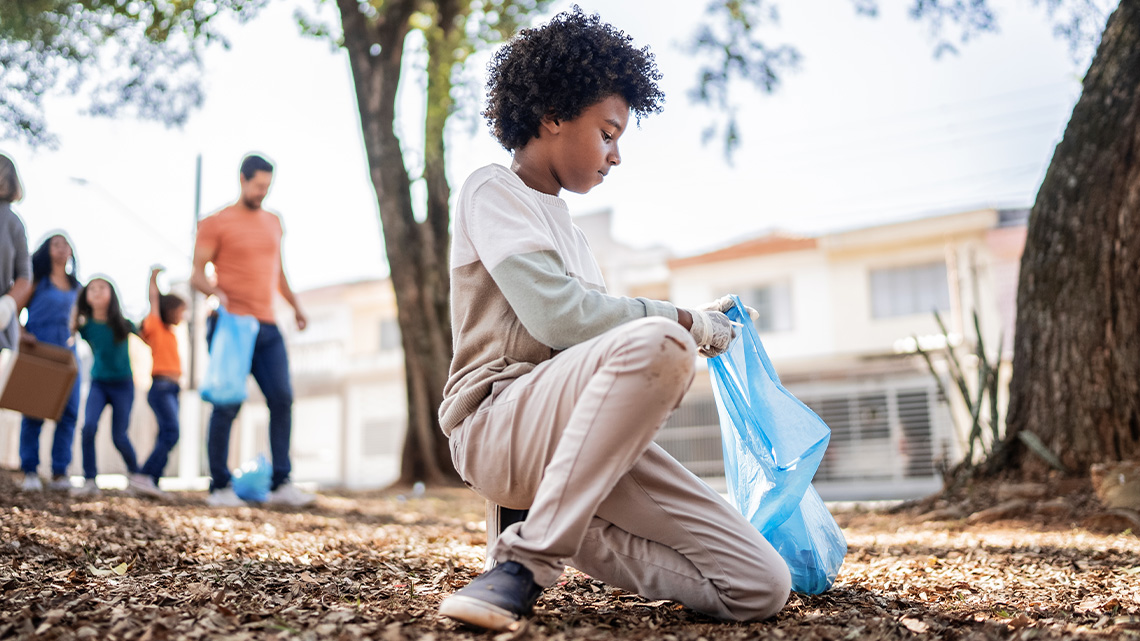
Picking up litter and sorting recycling.
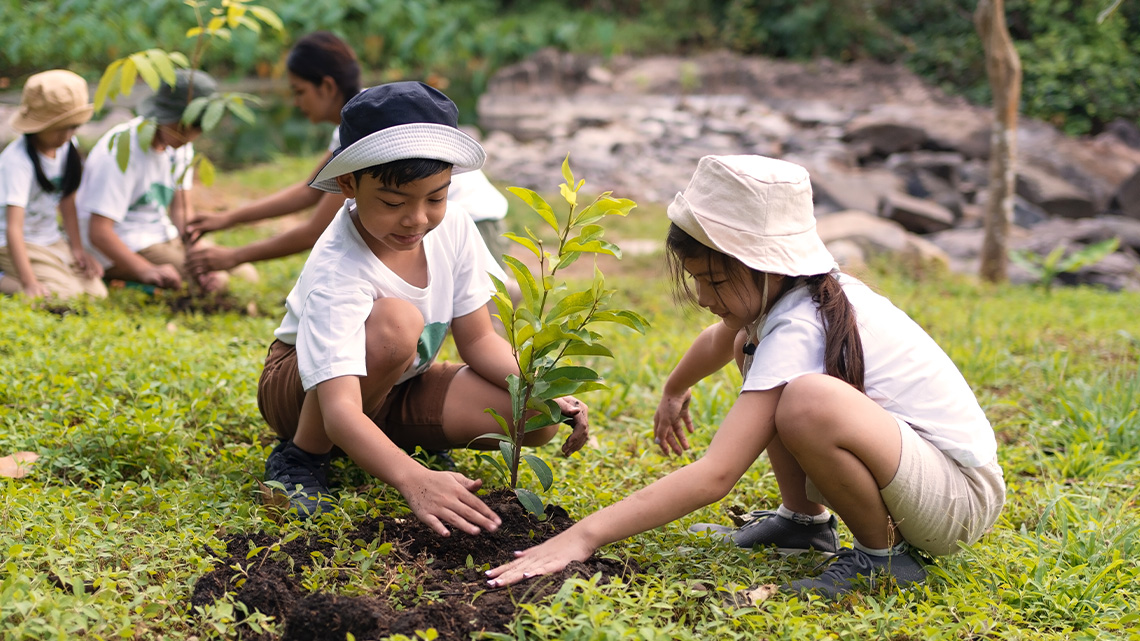
Working together to plant a tree.
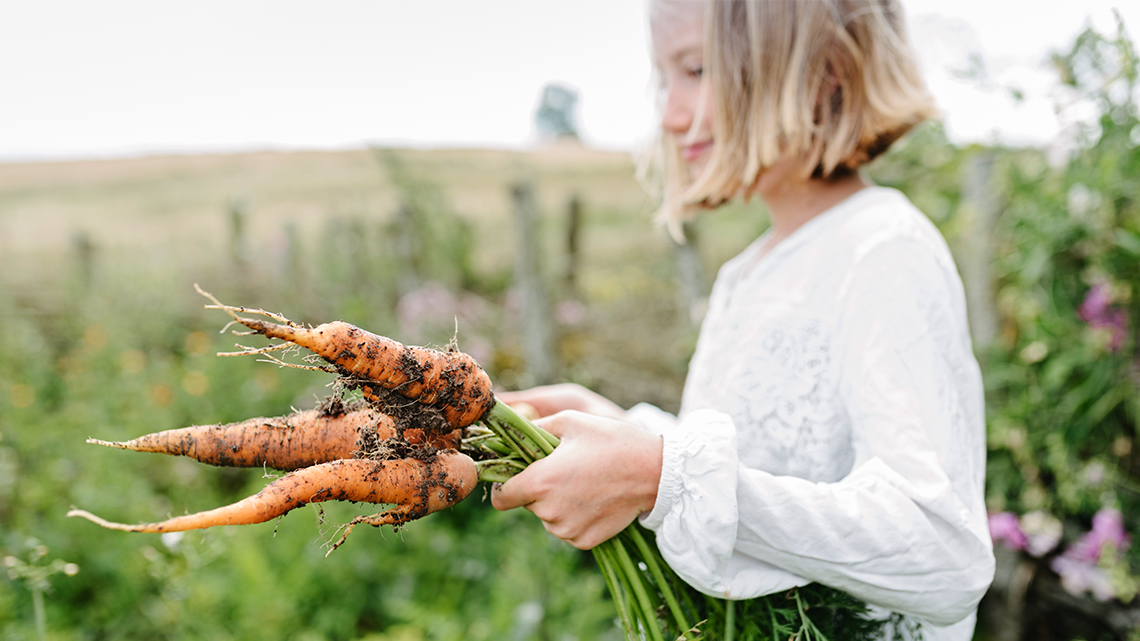
Growing vegetables in a vegetable garden.
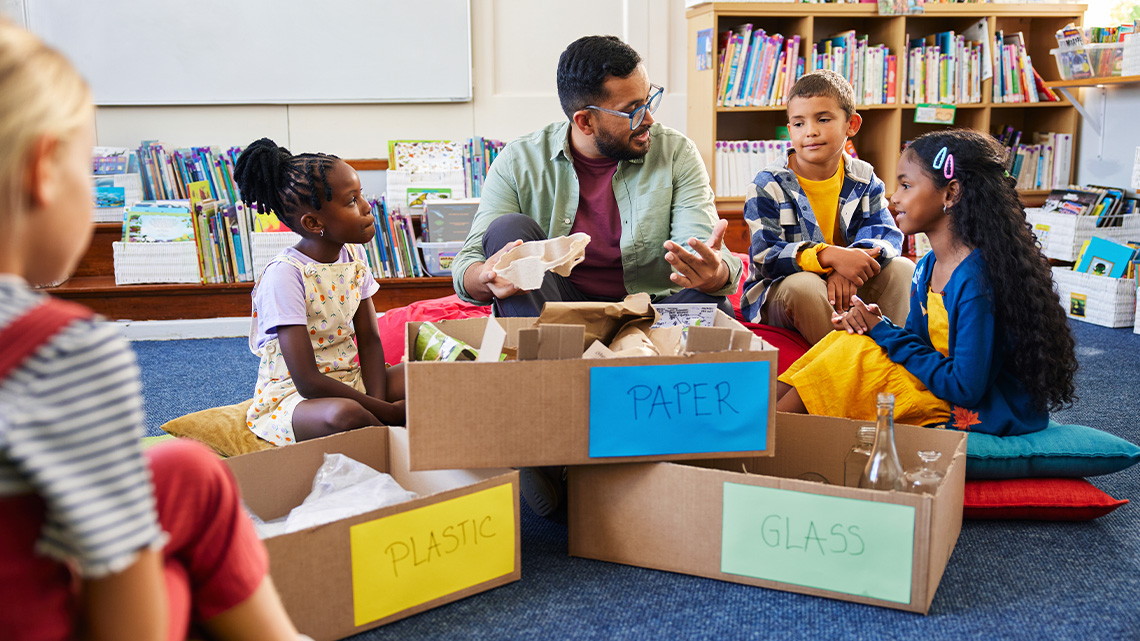
Sorting items into recycling or garbage bins.

Student Success
Think
- What do you think it means to take care of the land around you?
- Why do you think it is important to take care of the land?
Indigenous Knowledge
There are many unique cultures, languages, and histories among First Nations, Inuit, and Métis Peoples. What many of these communities share is the understanding that we all depend on the land and water to live safely and well.
Check out the following click for an audio explanation.
Indigenous Knowledge
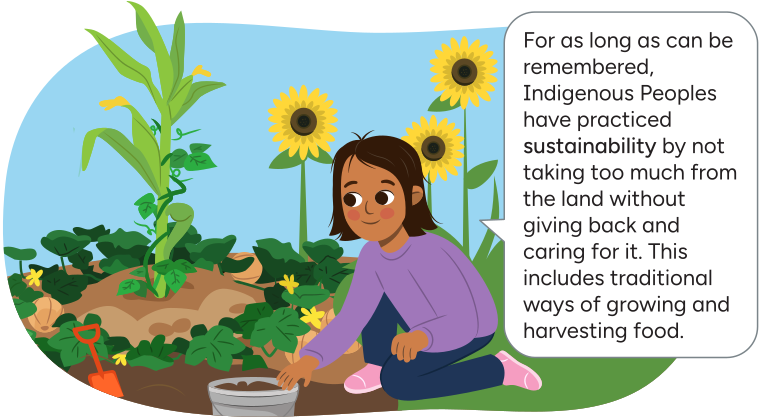
Neebin says: 'For as long as can be remembered, Indigenous Peoples have practices sustainability by not taking too much from the land without giving back and caring for it. This includes traditional ways of growing and harvesting food.'
Press Definition button to learn more about sustainability.
Sustainability: Using resources like water, plants, and animals in a way that can be used for a long time without running out. It’s about taking care of the Earth so that people and animals can live well now and in the future.
Explore the following clip for an audio explanation.
Sustainability Definition
Activating prior knowledge
Activating (thinking about) your prior knowledge on a topic will help you to better understand, make connections, and learn new information. What we already know about a topic is what we call prior knowledge.
Think about what you might already know about farming and how it can help you better understand and learn new information.
Mind Map
Creating a Mind Map is one way to activate your prior knowledge. In a Mind Map you can use pictures, words, or both to share what you already know about the topic.
Explore the following example of Mind Map about chocolate.
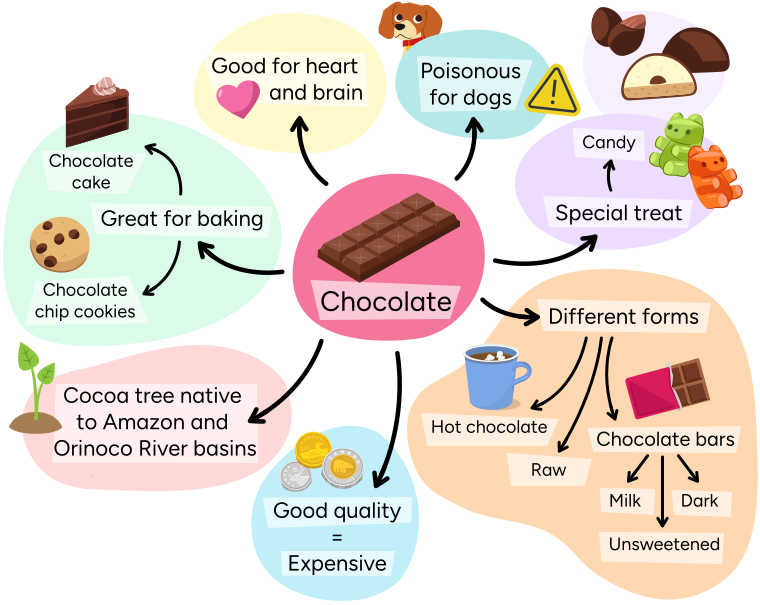
A mind map about chocolate. There is an image of a chocolate bar, labeled 'Chocolate,' in the center. It has arrows pointing to seven other categories with images and labels for examples:
Good for heart and brain
Poisonous for dogs
Special treat: Candy
Different forms: Hot chocolate, raw, and chocolate bars (milk, dark, and unsweetened)
Good quality = expensive
Cocoa tree native to Amazon Orinoco River basins
Great for baking: Chocolate cake and chocolate chip cookies
What are some other things you notice about this mind map?
Press Possible Answers button to learn more.
- It includes colours and picture that connect to the words.
- It includes arrows that show how everything is connected to each other.
- The main topic, chocolate, is in the centre of the Mind Map. The connected ideas and details are all around it.
Now let’s try creating a Mind Map about the topic of farming.
Complete the fillable and printable Mind Map Activity in your notebook or using the following document. If you would like, you can use speech-to-text or audio recording tools to record your thoughts.
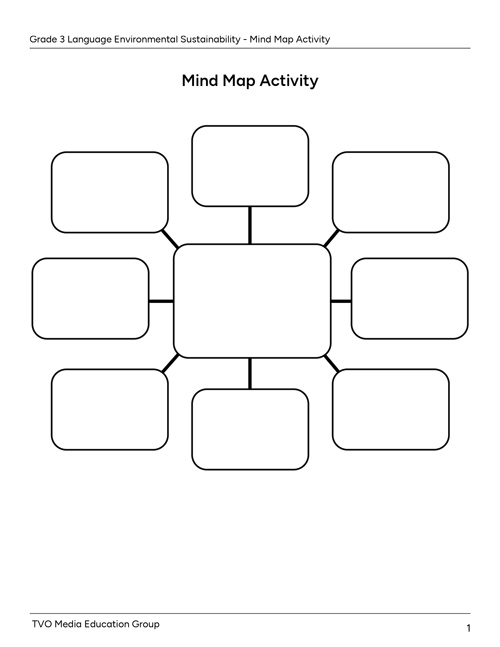
Keep in mind, your Mind Map can look however you want it to. The goal is to organize your ideas in a way that makes sense to you!

Student Wellness
Take a break!
Let’s take a few minutes to relax, clear our minds, and refocus our attention.

Helpful vocabulary
Sora says: 'A way to help us get ready to learn a new text is by learning vocabulary words. Knowing the meaning of words helps you understand what the text is talking about. This way, you can get the main idea and enjoy the story or learn new facts.'
Check out the following vocabulary words.
Traditional farming
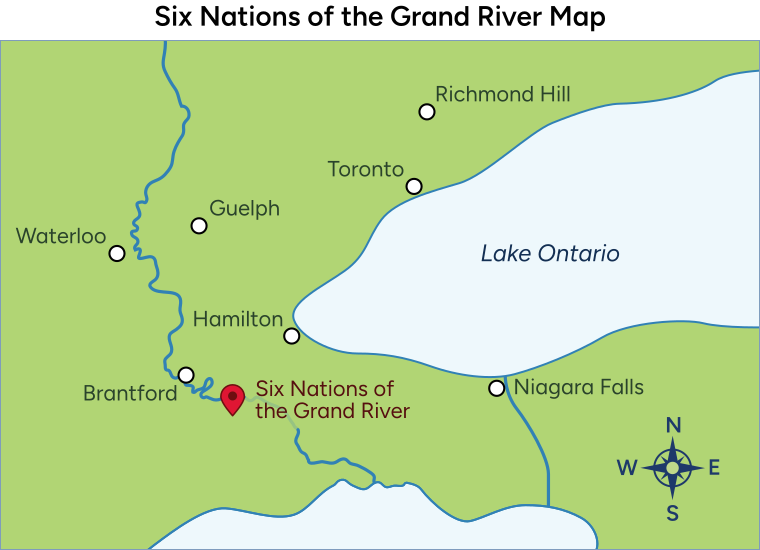
Now that you’ve reviewed important vocabulary words, let’s explore an excerpt from “Haudenosaunee Farm”, from a TVOkids video series called Gabby’s Farm. In this video, Gabby visits Terry Lynn Brant of the Mohawk Turtle Clan, in the Mohawk Seedkeeper Gardens on Six Nations of the Grand River, to learn about seed keeping.
While you are exploring this video, can you pick out the main ideas?
What did you think were the most important parts of this video clip about being a seed keeper?
When we summarize (or make a summary), we tell the most important parts of a story or information in a shorter way.
Which of the following statements would NOT help to summarize this video?
Select the correct answer, then press the Check Answer button to see how you did.
Create a summary
Now it’s your turn to create a summary of the following video.
Try the following strategies to help you find the main ideas:
- Listen for words that are repeated.
- Ask yourself questions about the video (for example: What is the video trying to tell me?).
Write your summary in a journal of your choice.
Check out the following videos to learn more.

Test Your Skills
Self-check
How would you summarize this video clip?
Press Suggested Answer to learn more.
- Foraging is gathering food that you can find naturally.
- You should never eat anything you’re not familiar with.
- The wind is very important for collecting walnuts because it knocks them off the tree before the squirrels eat them.

Contractions!
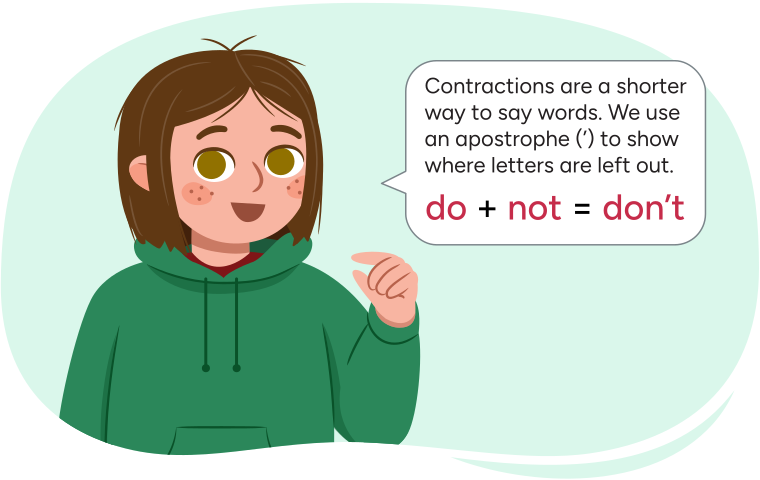
Clara says: 'Contractions are a shorter way to say words. We use an apostrophe (') to show where letters are left out.'
Example: do + not = don't
Check out the following video to learn more about contractions.
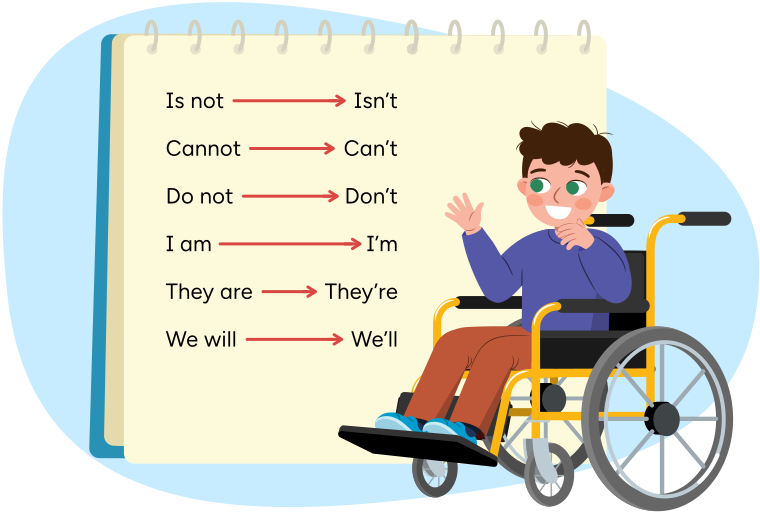
Learner hunter by a notepad that shows a list of words and their contractions:
'Is not' becomes 'Isn't'
'Cannot' becomes 'Can't'
'Do not' becomes 'Don't'
'I am' becomes 'I'm'
'They are' becomes 'They're'
'We will' becomes 'We'll'
Practice making contractions!
For each sentence, select the missing contraction from the drop-down menu. Press Check Answer to see how you did.
Summarizing in your own words
Summarizing can help you record what you’ve learned in a clear and quick way.
Now you are going to summarize a video on your own!
We’ll revisit Terry Lynn Brant in the Mohawk Seedkeeper Gardens, where she’ll explain how native plants can help the mason bee. The mason bee is a pollinator, and it helps plants grow by moving pollen from plant to plant.
Explore the following TVOKids Leo’s Pollinators video called, “Mason Bees”, to learn more about how to help protect these amazing insects.
Before viewing
To find the main ideas, think about the following questions as you explore the video:
- What do Indigenous pollinators look for when they make their nests?
- What type of plant makes a good nest for the mason bee?
- How can we make a nest for the mason bee?
- Why is it important to put the nest near a pond?
Write your summary in a journal of your choice.
As you explore, notice how the characters are taking care of the environment.
Remy says:
'You have been learning about the importance of taking care of the land around you. To better understand your learning, you used three different strategies.
Summarizing the main points of a text.
Activating your prior knowledge about the text.
Learning new vocabulary words.
Which of these three strategies did you find most helpful in better understanding the videos you explored? Explain your thinking.'

Pause and Reflect
Pause and reflect
What are some ways that you can take care of environment and the land around your community?
Record your answers in your notebook, drawing a picture, using an audio clip or any other method of your choice.
Reflection
How do you feel about what you have learned in this activity? Which of the next four sentences best matches how you are feeling about your learning? Press the button that is beside this sentence.

I feel...
Now, record your ideas about your feelings using a voice recorder, speech-to-text, or writing tool.