Learning goals
We are learning to …
- use critical thinking skills to make inferences around texts and images
- support our inferences by using proof from the clues in text and images
- support our inferences by using our background knowledge and lived experiences
- make an inference that explains how images, graphics, and visual design communicate a message
- identify dependent and independent clauses and create complex sentences
Success criteria
I am able to …
- make an inference that explains the message that is being communicated in an environmental poster
- support my inference with background knowledge and clues from the images/text
- reflect on the impacts of pollution on the environment and actions that can reduce these impacts
- identify dependent and independent clauses to create complex sentences
Reduce, reuse, recycle!
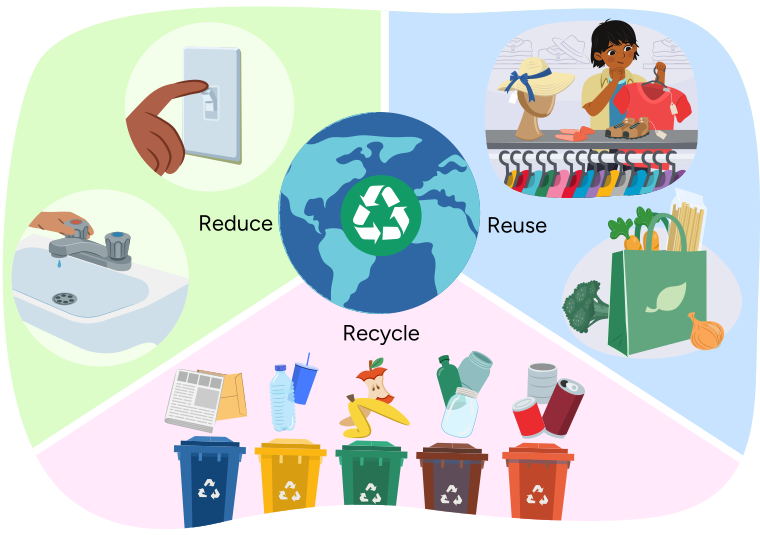
A planet Earth with the recycling symbol and the words, 'Reduce, reuse, recycle.' It shows ways to reduce, reuse, and recycle. You can reduce by turning off your tap to save water, or turning off lights you aren't using. You can reuse by buying secondhand items, and by using reusable bags. You can recycle by putting organic waste and recyclable waste in the correct bins.
Do you know what it means to reduce, reuse, and recycle? Do you ever think about where garbage goes after we throw it out?
An important part of taking care of the environment can be thinking about the impacts of the garbage we produce.
Check out the video to learn more about reducing, reusing, and recycling with the Grimwade family as they take a trip to the beach.
What are two ways the Grimwade family help to take care of the environment?
Press Possible Answers button to learn more.
The Grimwade family takes care of the environment by:
- Reducing litter by taking garbage home with them.
- Picking up the litter from the beach.

Pause and Reflect
Pause and reflect
How do you protect the environment by reducing, reusing, and recycling?
Think of 3 examples and record them using a method of your choice.
Making inferences
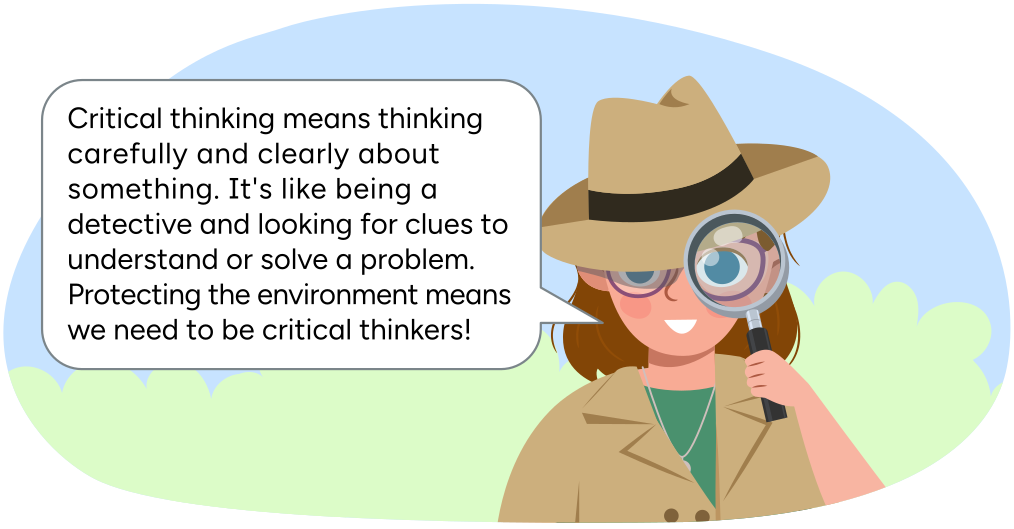
Ava is dressed like a detective, and says, 'Critical thinking means thinking carefully and clearly about something. It's like being a detective and looking for clues to understand or solve a problem. Protecting the environment means we need to be critical thinkers!'
Have you ever played a game and had to figure out a way to win? That's using critical thinking! When you solve puzzles, decide what to play, or even choose what to eat for lunch, you are using critical thinking.
We also use critical thinking when we make inferences. When we make inferences, we use clues from images and text as well as our background knowledge to make an educated guess. This helps us to better understand the text and the message that is being communicated.
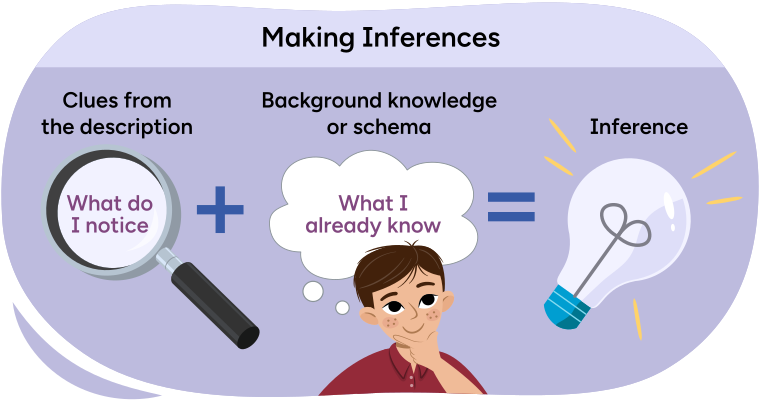
Examples of sentence starters when making inferences can include:
- This could mean…
- I infer that…
- When the text says (Blank) , it makes me think of…
Let’s practice our skills!
Read each scenario and make an inference about what is happening.
Select the correct answer, then press Check Answer to see how you did.
Select the correct answer, then press Check Answer to see how you did.
Select the correct answer, then press Check Answer to see how you did.
Select the correct answer, then press Check Answer to see how you did.
Select the correct answer, then press Check Answer to see how you did.
Select the correct answer, then press Check Answer to see how you did.
What is the message?
Now that you have practiced using your inferencing skills, you will apply it to explore two images and think about the message they might be communicating.

Student Tips
Student tips
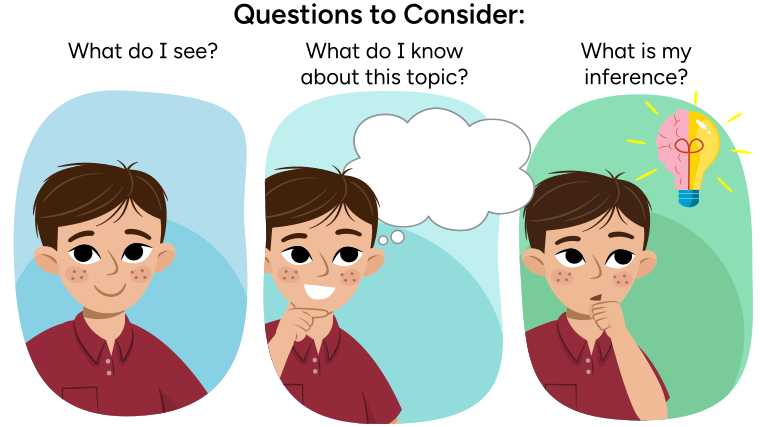
Option 1
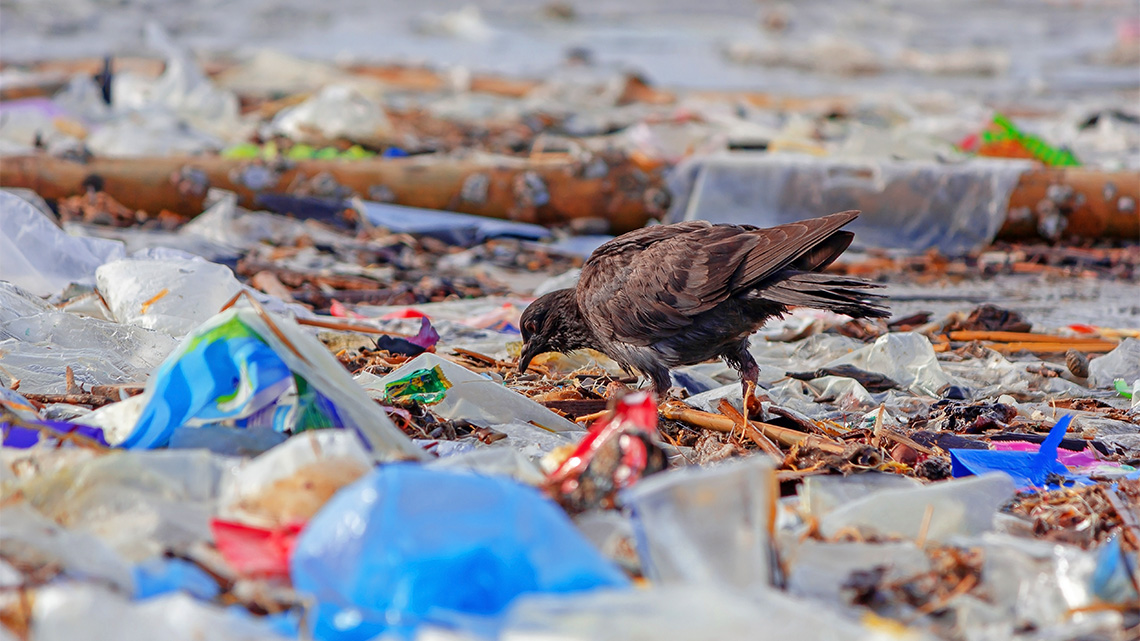
An outdoor area that is covered in plastic garbage. There are so many plastic bags and wrappers that it is difficult to tell what kind of environment the photo is from. A bird is walking through the litter and carefully pecking at the ground, as if it is trying to find something.
Pause and Reflect
Pause and reflect
Consider the questions:
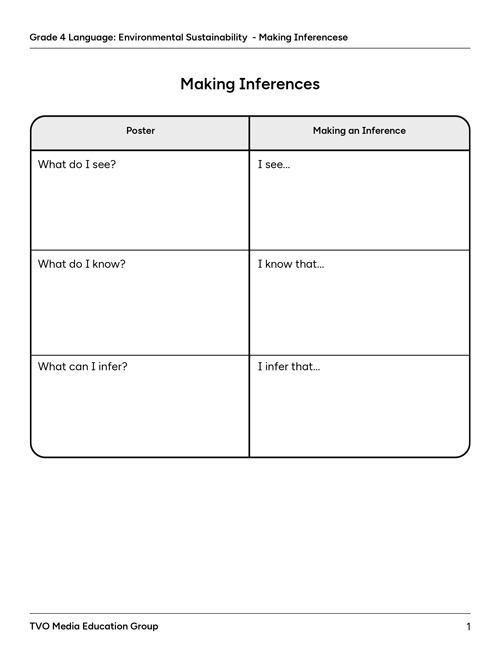
- What do I see?
- What do I know about this topic?
- What can I infer?
Press Sample Answer button to learn more.
| Option 1 Poster: Dove on the beach | Possible answers |
|---|---|
What do I see? |
|
What do I know? |
|
What can I infer? |
|
Explore the following audio clip to find out more.
Inferencing
Option 2
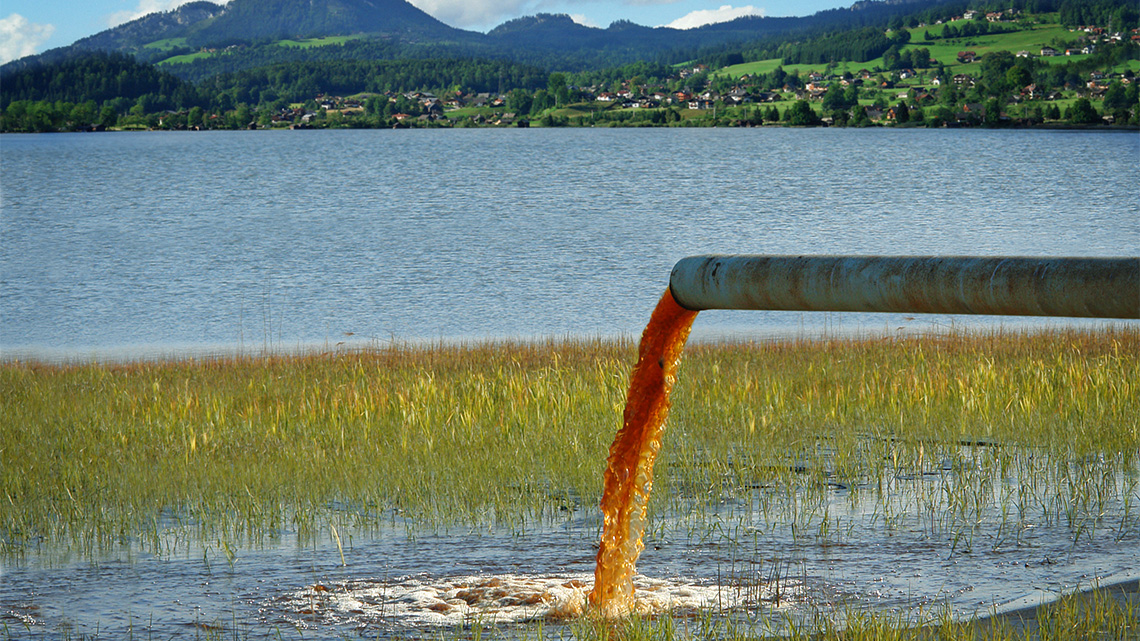
There is a blue lake with green mountains in the background. The lake has green reeds growing along its bank. There is a large metal pipe that is placed over the lake. Orange-brown water is running out of the pipe and pouring directly into the blue lake water. There is enough brown water coming from the pipe to make ripples of foamy brown water spread out into the lake.
Now you try it!
Complete the fillable and printable Making Inferences document in your notebook or using the following document. If you would like, you can use speech-to-text or audio recording tools to record your thoughts.

Student Wellness
Take a break!
Let’s get creative! Take a few minutes to freestyle draw, write, or colour.

Independent and dependent clauses
Clauses are groups of words that have a subject and a verb (predicate). Sentences are made up of clauses to create complete sentences.
An independent clause is a complete thought and can stand alone.
A dependent clause is also known as a sentence fragment. It is not a complete thought, and cannot stand alone.
| Independent clause | Dependent clause |
|---|---|
| Daniel loves cars. | Because they are fast. |
| Arianna ate quickly. | As she was very hungry. |
| Dad took a nap after work. | For he was tired. |
A complete sentence always has two parts, a subject and a predicate, and ends with punctuation.
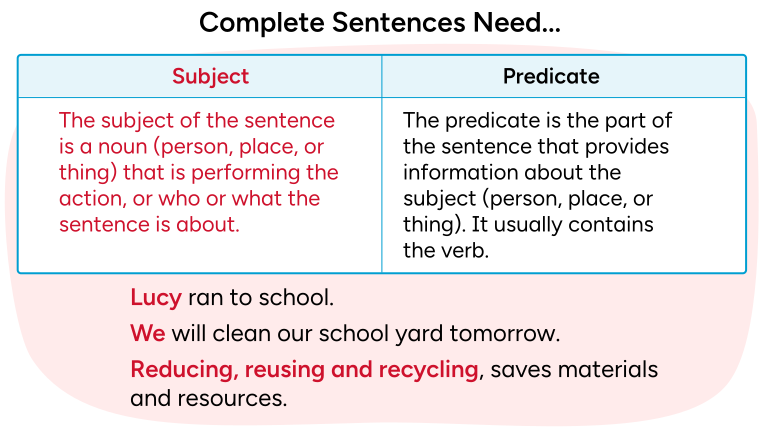
A diagram with two columns, followed by example sentences.
Title: Complete Sentences Need…
Column 1: Subject - The subject of the sentence is a noun (person, place, or thing) that is performing the action, or who or what the sentence is about.
Column 2: Predicate- The predicate is the part of the sentence that provides information about the subject (person, place, or thing). It usually contains the verb.
Example sentences:
Lucy ran to school.
We will clean our school yard tomorrow.
Reducing, reusing and recycling saves materials and resources.
Today we are learning about simple and complex sentences.
Press the following tabs to find out more.
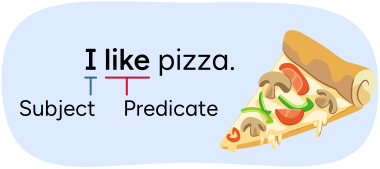
A simple sentence shares one complete thought. It has one subject and one predicate.
A complex sentence shares more than one thought using a conjunction to connect ideas.
Conjunctions
| because | and | or |
| but | yet | although |
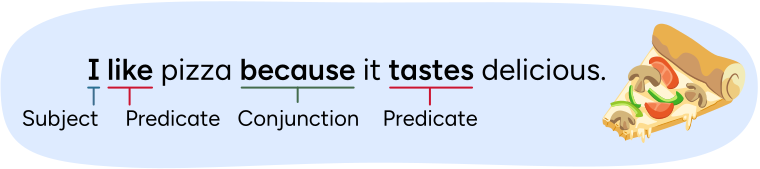
The complex sentence states, 'I like pizza because it tastes delicious.' The word 'I' is labelled with 'subject.' The word 'like' is labelled with 'predicate.' The word 'because' is labelled with 'conjunction.' The word 'tastes' is labelled with 'predicate.'
Let’s practice!
To create complex sentences, match the dependent clause to the independent clause in the activity.
Let’s review!
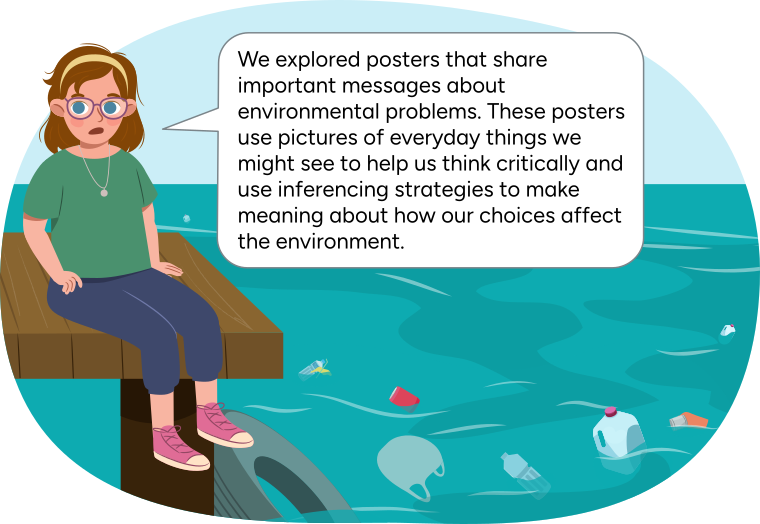
Ava shares, 'We explored posters that share important messages about environmental problems. These posters, use pictures of everyday things we might see to help us think critically and use inferencing strategies to make meaning about how our choices affect the environment.'

Student Success
Think
Think about the following questions:
- How might the information in the posters inspire people to make choices that have a positive effect on the environment?
- How might my inferring skills help me in my daily life outside of school?
If you want to learn more about environmental issues, especially ones happening near where you live, there are many things you can do to help.
You can start by watching cool videos on TVOKids’ Our Planet playlist. These videos will teach you more about the environment and what you can do to make a difference.
Reflection
How do you feel about what you have learned in this activity? Which of the next four sentences best matches how you are feeling about your learning? Press the button that is beside this sentence.

I feel...
Now, record your ideas about your feelings using a voice recorder, speech-to-text, or writing tool.