Learning goals
We are learning to …
- understand the interconnectedness of ecosystems in Ontario’s freshwater systems
- identify invasive species and how they impact Ontario’s ecosystems
- identify the characteristics and purpose of an infographic
- create an infographic by gathering and organizing information and reflect on the tools and strategies used to communicate knowledge in an infographic
Success criteria
I am able to …
- communicate my knowledge of the alewife species found in Ontario
- make connections and understand the interconnected relationships between different species in our water ecosystems
- identify the characteristics and purpose of an infographic
- gather information and organize it within an infographic to communicate new knowledge

Notice and wonder
Examine the following interactive entitled A Changing Pond.
Compare and contrast the changes that have happened to the following pond. What similarities do you notice? What differences do you notice?
Why do you think the pond has changed?


Today’s vocabulary!
Invasive species
Invasive species are like surprise guests in an environment. They are plants, animals, or other organisms that are not usually found in an area, but somehow found their way in. They can be either predators, prey, or both. Once they arrive, they can spread quickly and harm the environment and the organisms that belong there. This is because they do not have natural predators to stop them from spreading.
Zebra mussels
Did you know zebra mussels are an invasive species in Ontario? They attach themselves to cargo ships coming to Canada from Eastern Europe and Western Asia.
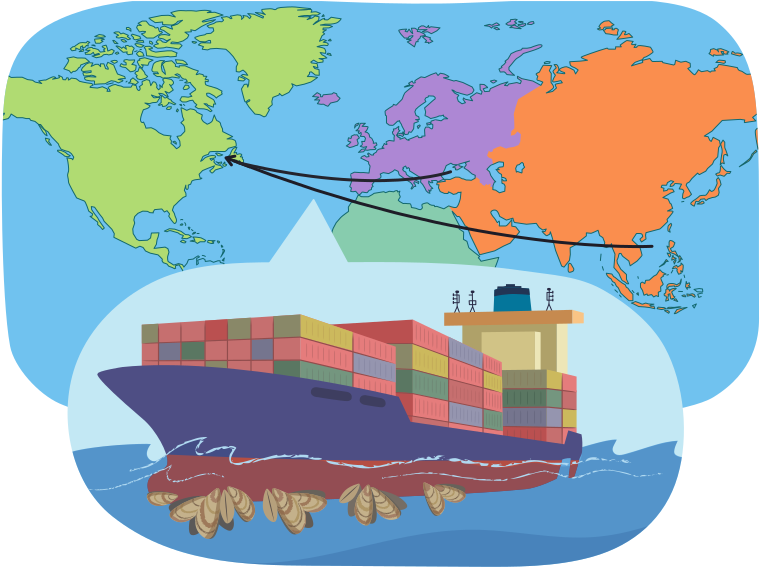
There is a world map. The map has two arrows showing routes of cargo ships. One arrow starts in Eastern Europe and ends in Eastern Canada. The second arrow starts in Western Asia and ends in Eastern Canada. An example of a large cargo ship is shown with zebra mussels covering the bottom of the ship’s hull.
The alewife fish
In this section, you will explore two excerpts of the TVOkids video entitled, Leo’s Fishheads: Friend or Foe. The alewife is a small fish that arrived in Ontario over a hundred years ago, but it has been here so long that it has now become part of the local ecosystem.
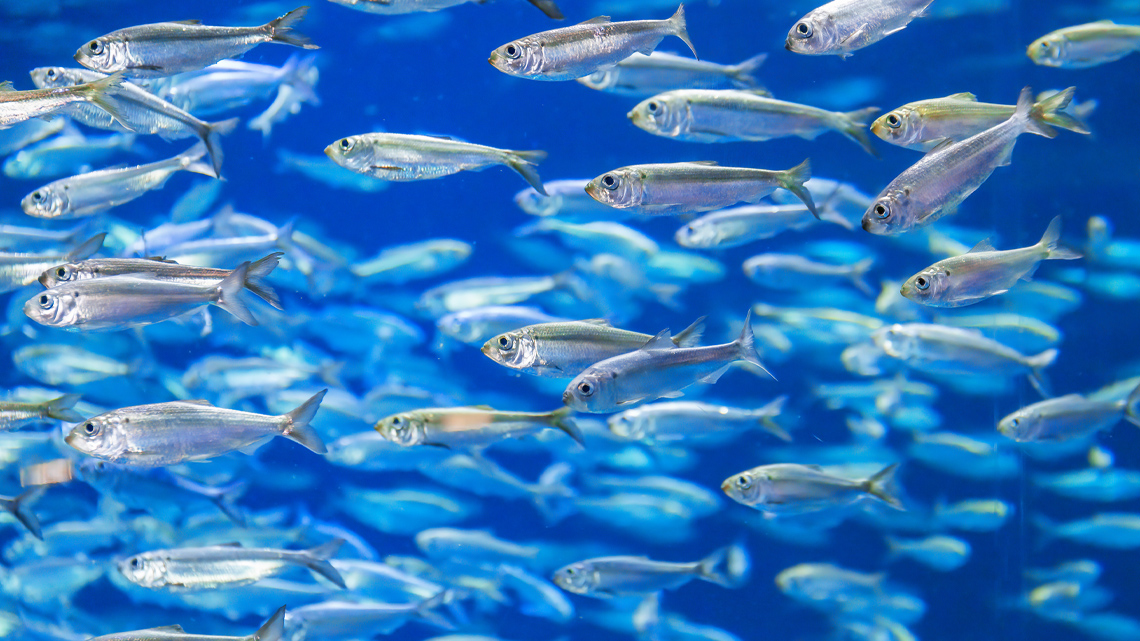
A school of alewife fish

Student Tips
Before viewing
Asking yourself questions before watching a video helps you focus on the information.
Reflect on the following questions while you learn about the alewife:
- What do they eat?
- How do they help the Great Lakes?
- Which animals are predators of the alewife?
- What is a food web?
- What is an interesting fact about the alewife?
Check out the following video clip to learn more.
Take a moment to organize the new information you have learned about the alewife into a graphic organizer.
Complete the fillable and printable Invasive Species Research Organizer in your notebook or using the following document. If you would like, you can use speech-to-text or audio recording tools to record your thoughts.
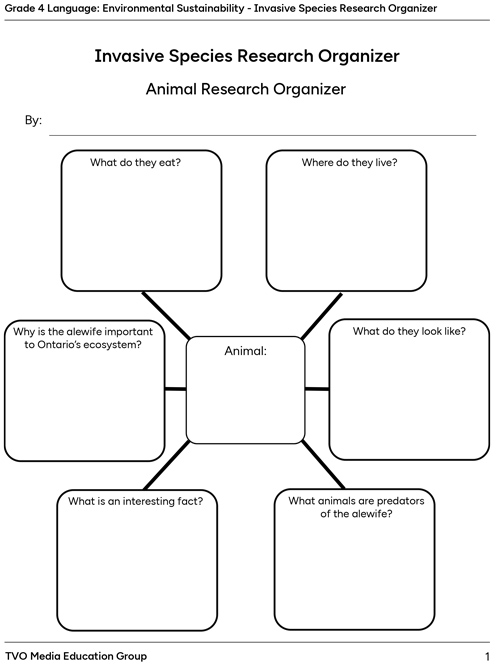
Press the Activity button to access the Invasive Species Research Organizer.
Activity(Opens in a new tab)Now explore the following video clip to learn an interesting fact about the alewife. Add any new information to your Invasive Species Research Organizer.
After watching the two video clips, review your Invasive Species Research Organizer and add any more information you may have missed. You can always re-watch the videos to make sure you have all of the details you need.
When you are ready, you can compare your answers to the following sample answers.
Press the Sample Answers button to learn more.
Invasive Species Research Organizer
|
What do they look like? An alewife is a type of herring. An alewife has a small flat body with silver and grey scales. |
What do they eat? They mostly eat zooplankton, including an invasive species of zooplankton called the spiney waterflea. |
|
Where do they live? They live in some of the Great Lakes, including Lake Ontario. |
What animals are predators for the alewife? The alewife’s predators are: salmon, rainbow and lake trout, and some birds like cormorants. |
|
Interesting fact: An alewife can communicate by passing gas. An alewife makes high-pitched sounds that only other herring type fish can hear. |
Why is the alewife important to Ontario’s ecosystem? The alewife provides food for bigger fish like rainbow trout. The alewife keeps the zooplankton population under control. |
Interconnected ecosystems
Lake Ontario is an important water ecosystem. To help protect life in the water, it is important to understand how this ecosystem is interconnected.
Press Definition button to learn more.
Interconnected means that different things can be connected to each other in some way.
For example, plants, animals, and insects found within the same ecosystem are often interconnected because they depend on each other to survive.
Organisms and species found in the ecosystem of Lake Ontario, from tiny phytoplankton all the way up to rainbow trout, depend on each other for survival in their shared environment.
Alewife in the food chain
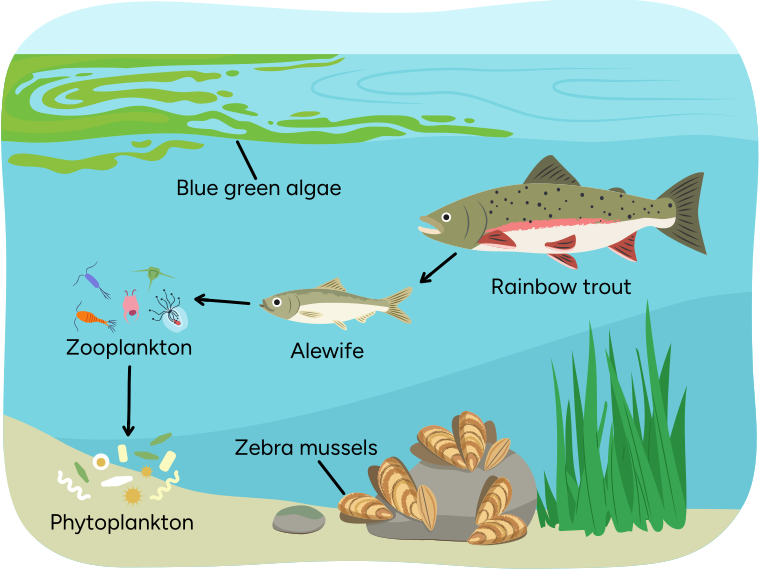
A diagram showing how species in a lake are interconnected or are not part of a system. A rainbow trout eats the alewife fish. The alewife fish eats zooplankton. Zooplankton eats phytoplankton. They are all interconnected.
There are also zebra mussels. Zebra mussels do not have a natural predator in Lake Ontario and are not eaten by rainbow trout.
The surface of the water has blue-green algae on it. No fish eat blue-green algae.
Why do you think it is important to make sure all the species in our water systems are healthy? Explain your thinking in a method of your choice.
Let’s review some key vocabulary related to predators, prey, and ecosystems.
For each vocabulary word, select the corresponding definition.

Social Emotional Learning
Take a break!

Take a break before continuing onto the next part!
Infographics
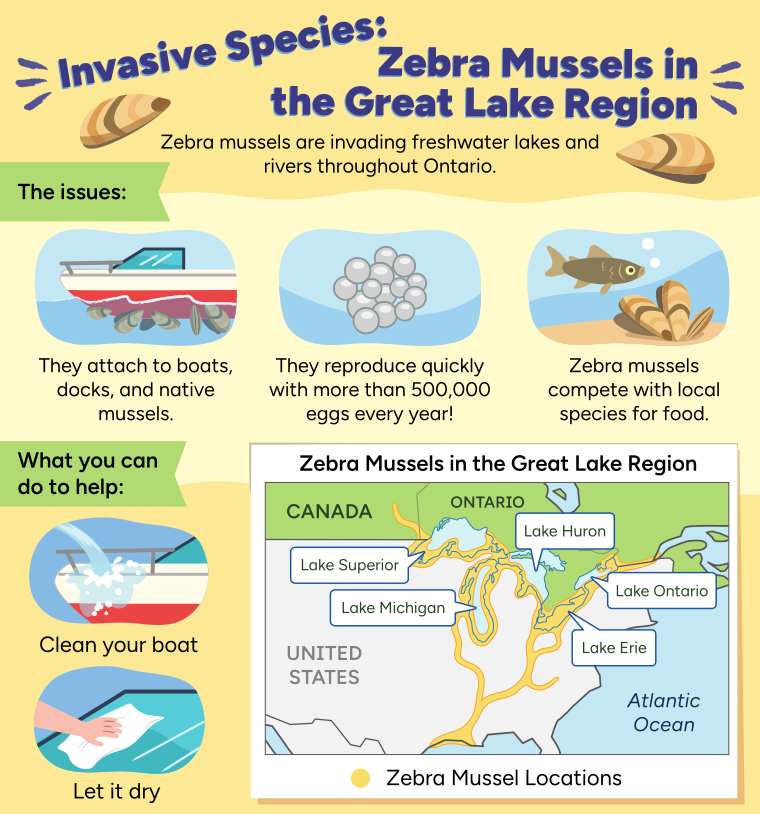
Infographics are special pictures with text features that help us understand information more easily. They’re made up of pictures, drawings, numbers, and words all put together in an interesting way.
Explore the following example to learn about the important elements of an infographic:
Infographic about zebra mussels
Explore the following infographic about zebra mussels. Can you identify the following features:
- the title
- a map
- images
- captions
- text
- subheadings or subtitles

Root words, prefixes, and suffixes
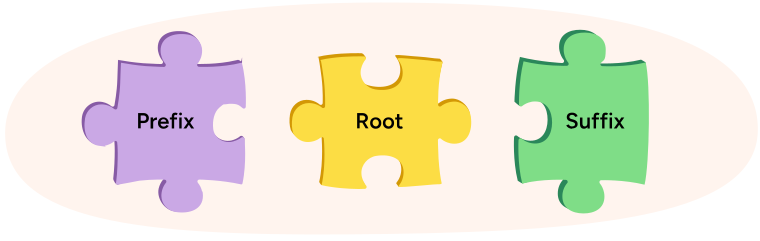
To understand how root words, prefixes, and suffixes are connected, let’s break down each term.
Press the following tabs to find out more.
Root words are the main parts of a word. They can stand alone or be combined with a prefix and suffix to create new words.
For example:
Connect is a root word.
It means to bring two things together.
Prefixes are added at the beginning of root words to change their meaning.
For example:
Inter- is a prefix.
It means between or among.
Suffixes are added at the end of root words to change their meaning. Adding a suffix can also change the grammatical tense or plurality of a word.
-ed is a suffix.
It is added at the end of regular verbs in the past tense. It changes the grammatical structure and tense, indicating that an event has already happened.
Let’s review: Word work
The word interconnected has a prefix and a suffix.
The definition of interconnected is two or more things that are brought together and intertwined.
Let’s review!
Consider some of the vocabulary words you explored in this learning activity. Can you identify which part of the words could be the prefix, the root word, and the suffix?
- research
- interconnected
- ecosystem
- infographic
Place the word parts into categories that best match. Use the arrow buttons to navigate between cards.

Create your own infographic!
Review your Invasive Species Research Organizer from the Action section. Now that you have your information organized, you can go ahead and create your own infographic about alewife.
Cite your information!
An infographic that shares facts should also include where the facts came from. This is called citing your information and it is usually recorded in a reference list. A reference list should include any books, articles, websites, or videos that were used.

For your alewife infographic, include that your information came from the TVOKids video Leo’s Fisheads: Friend or Foe.
Use the following checklist to help you create your infographic.
Infographic checklist!
Reflection
How do you feel about what you have learned in this activity? Which of the next four sentences best matches how you are feeling about your learning? Press the button that is beside this sentence.

I feel...
Now, record your ideas about your feelings using a voice recorder, speech-to-text, or writing tool.