Learning goals
We are learning to…
- make meaning from visual and multimedia texts created by First Nations, Metis, and Inuit creators
- read texts fluently, accurately, and with appropriate pacing, expression, and intonation
- follow a structured response model when responding to texts
Success criteria
I am able to…
- identify themes, contexts, and messages from visual and multimedia texts created by First Nations, Métis, and Inuit creators
- read a text aloud and improve fluency by adjusting the pacing, intonation, and expression
- follow a three-step model to describe, analyze, and interpret a visual media text in writing

Exploring art
Why do artists create art?
Many artists enjoy the process of expressing themselves through art. Some artists also use their art to communicate messages.
Examine the following artwork. What do you notice? What do you wonder? What messages might its creator be trying to communicate?
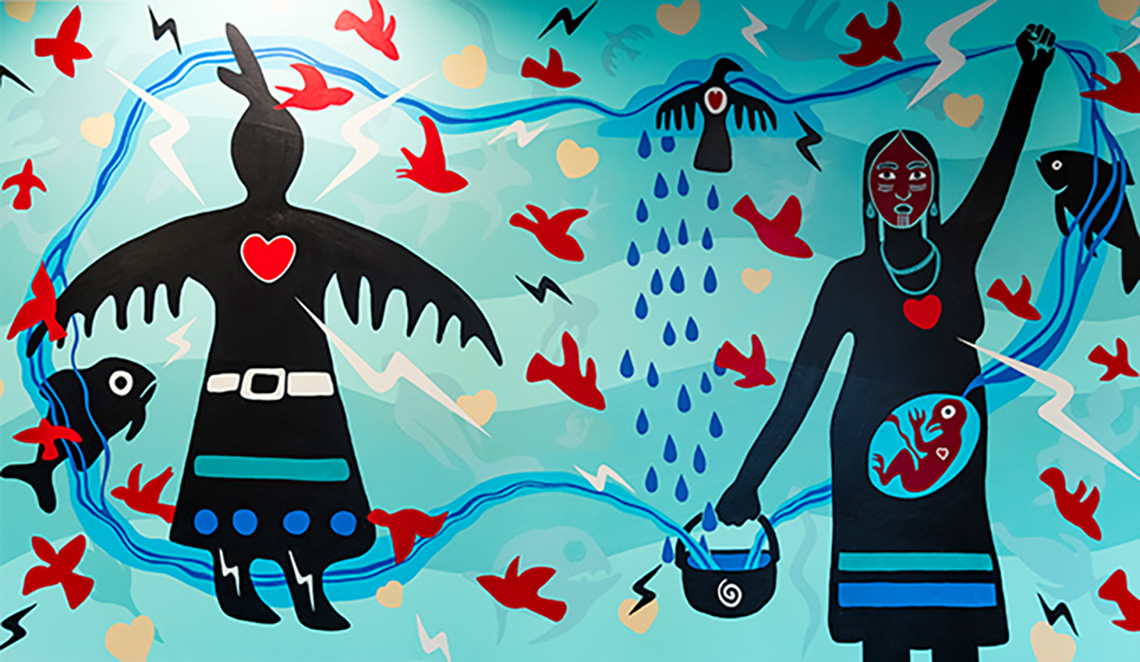
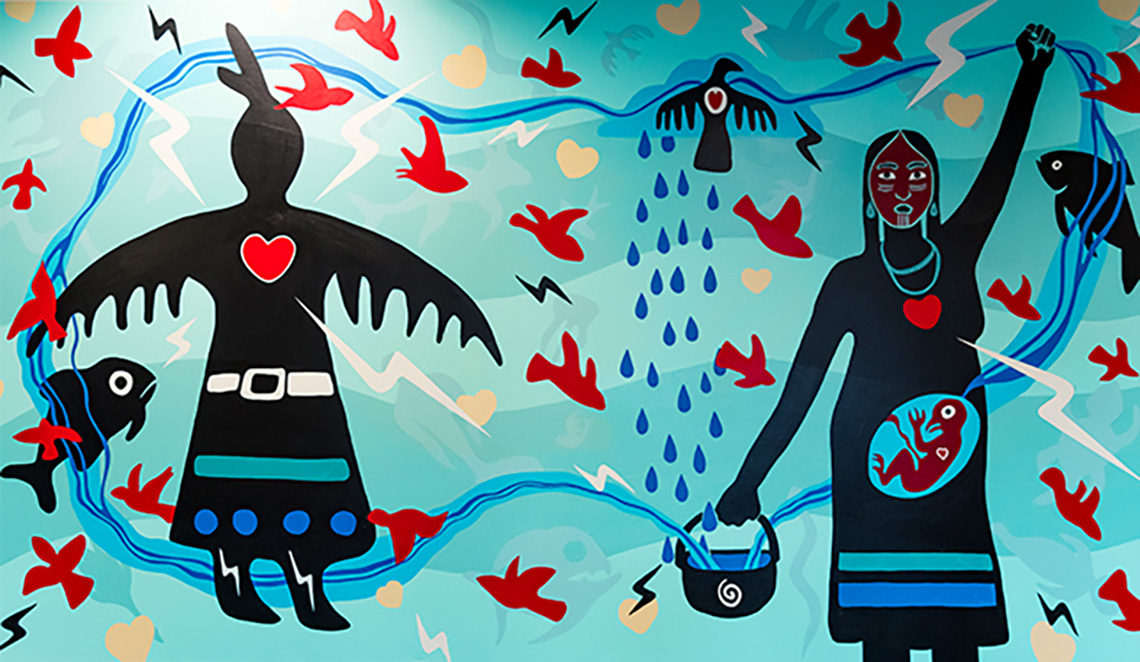
This mural was created by artists and environmental advocates Christi Belcourt and Isaac Murdoch for the kihêw waciston Indigenous Centre at MacEwan University in Edmonton, Alberta. Christi Belcourt (apihtâwikosisâniskwêw/mânitow sâkahikanihk) is a Métis visual artist from Manitou Sakhigan (Lac Ste. Anne) in Alberta, Canada. Isaac Murdoch is an Anishinaabe (Ojibwe) artist from Serpent River First Nation located between Sudbury and Sault Ste. Marie, Ontario. Their work is an example of environmental art. The term environmental art describes artwork that communicates messages about environmental issues.
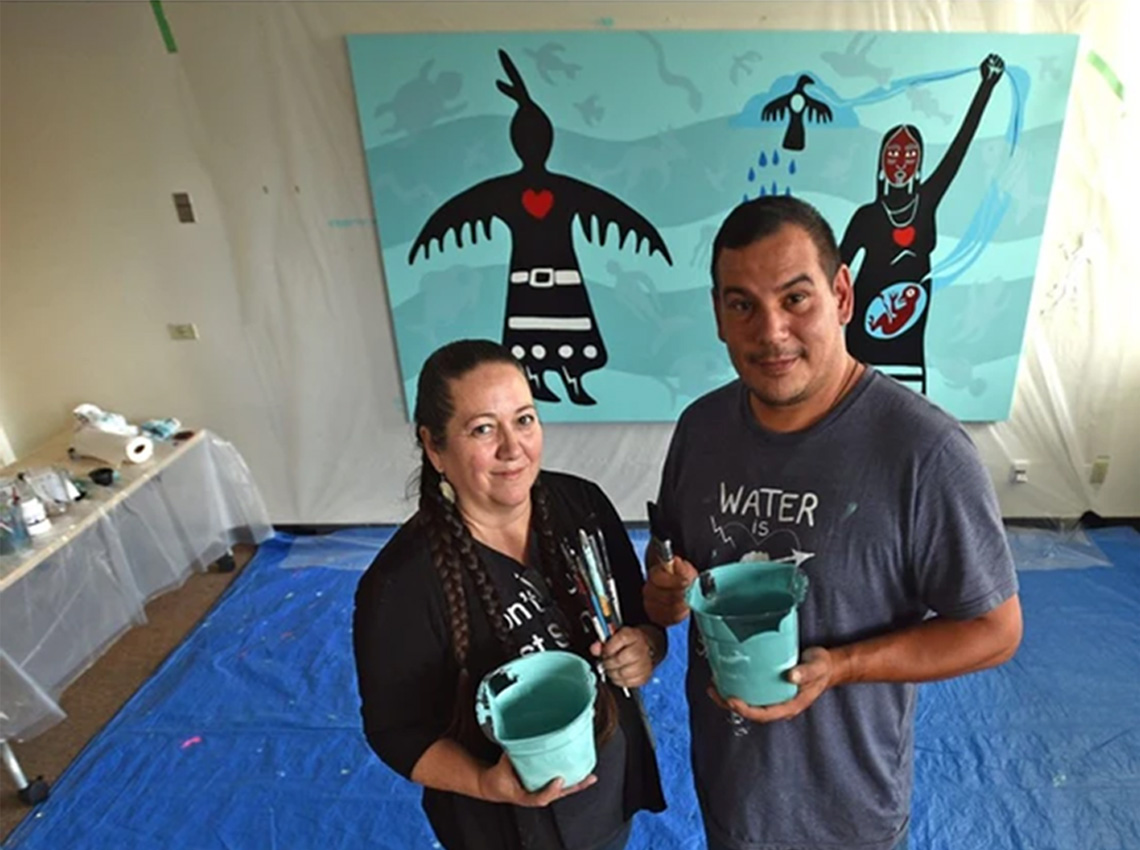
Artists Chrisi Belcourt and Issaac Murdoch holding paint brushes and standing in front of a mural. The background of the mural is turtles and fish swimming on teal waves. The figure on the left is a Thunderbird. She is a woman with wings and a red heart painted on her chest. The figure on the right is a Water protector. She has her fist raised in the air. She has a red heart painted on her chest and a child is visible growing in her womb. There is a bird flying to the left of the Water Protector. The figures are connected by a stream of water.
Take a moment to re-examine this mural. Now that you know that this is an example of environmental art, what might this artwork be communicating about environmental issues?
Write your observations and thoughts in a notebook of your choice or share with a peer if possible.

Environmental art
Environmental art communicates messages about the environment and issues that are related to the environment. Environmental art can come in many different forms.
Explore the following images of some different forms of environmental art. As you explore, consider what message each piece of art might be trying to communicate.
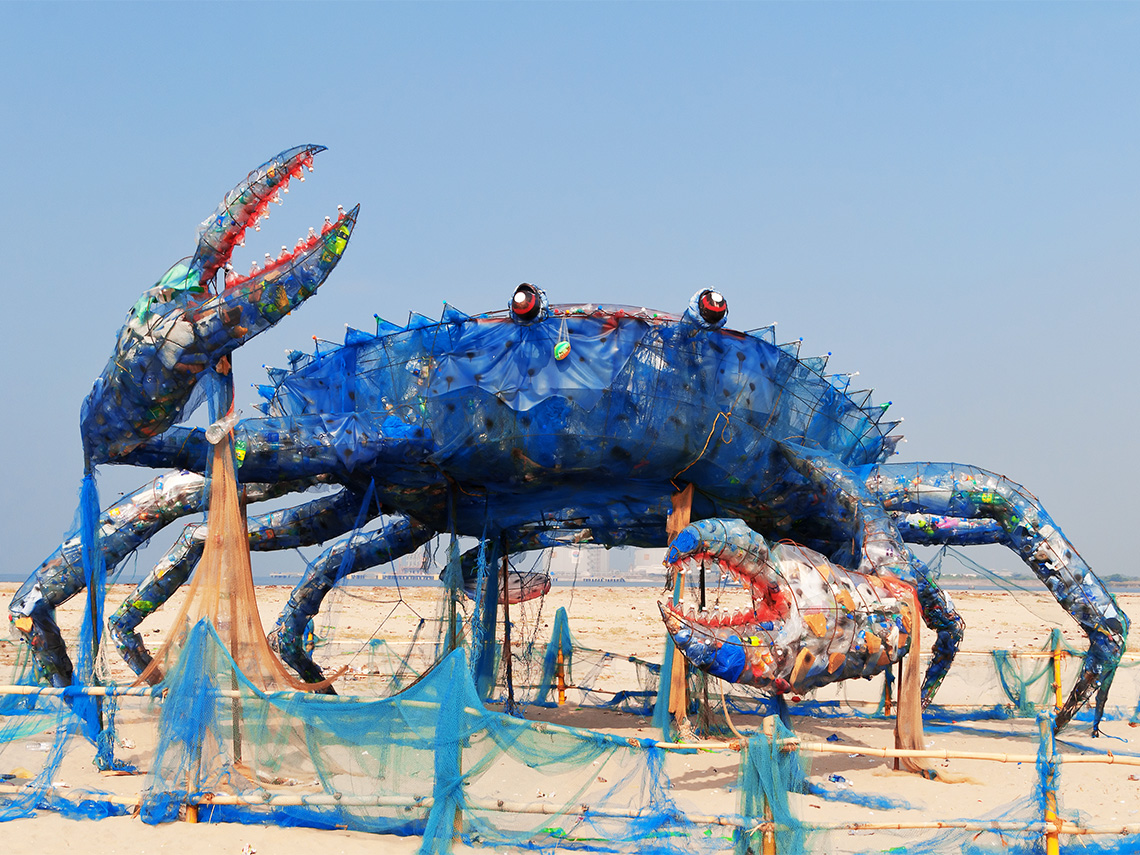
The Mad Crab on the Beach, from January 2015 art installation in Fort Kochi, India. It is made from waste and plastic pollution collected from the ocean.
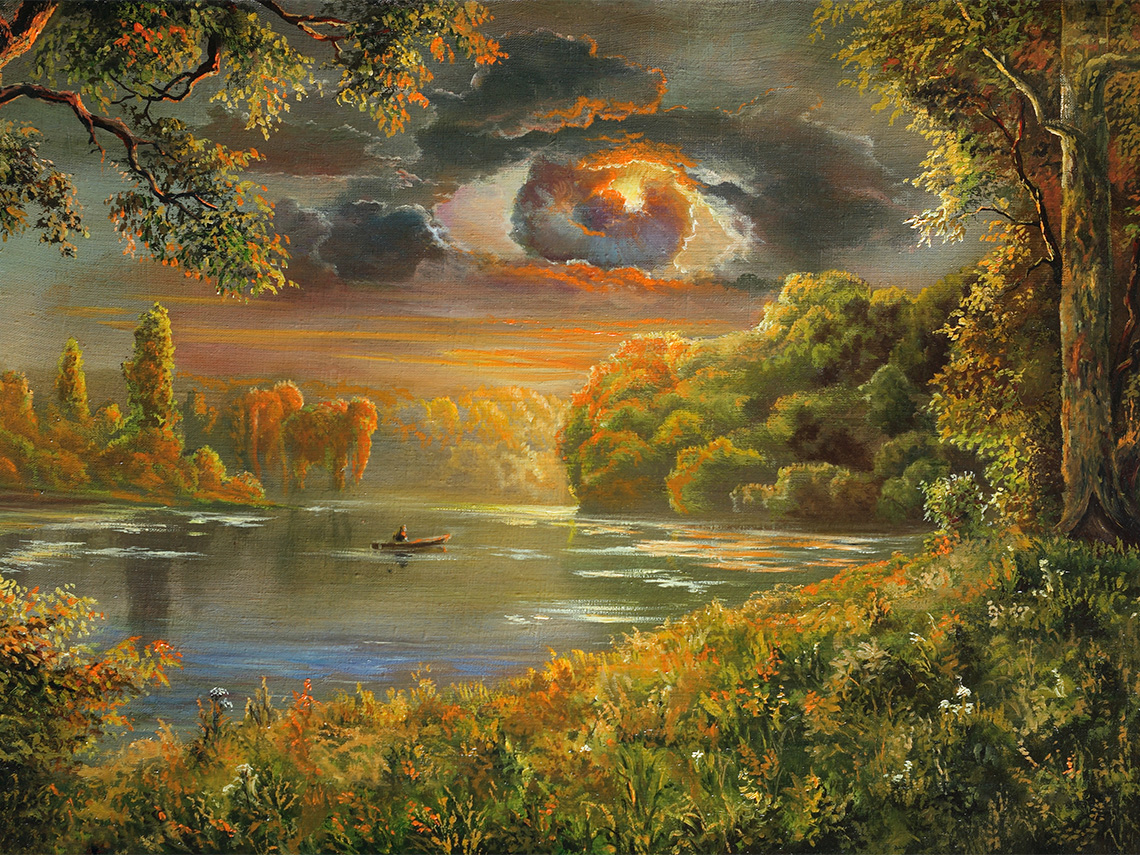
Sight from Height oil painting on canvas by unnamed artist.

A person lies on an earth-green background with different single-use plastic waste surrounding them.
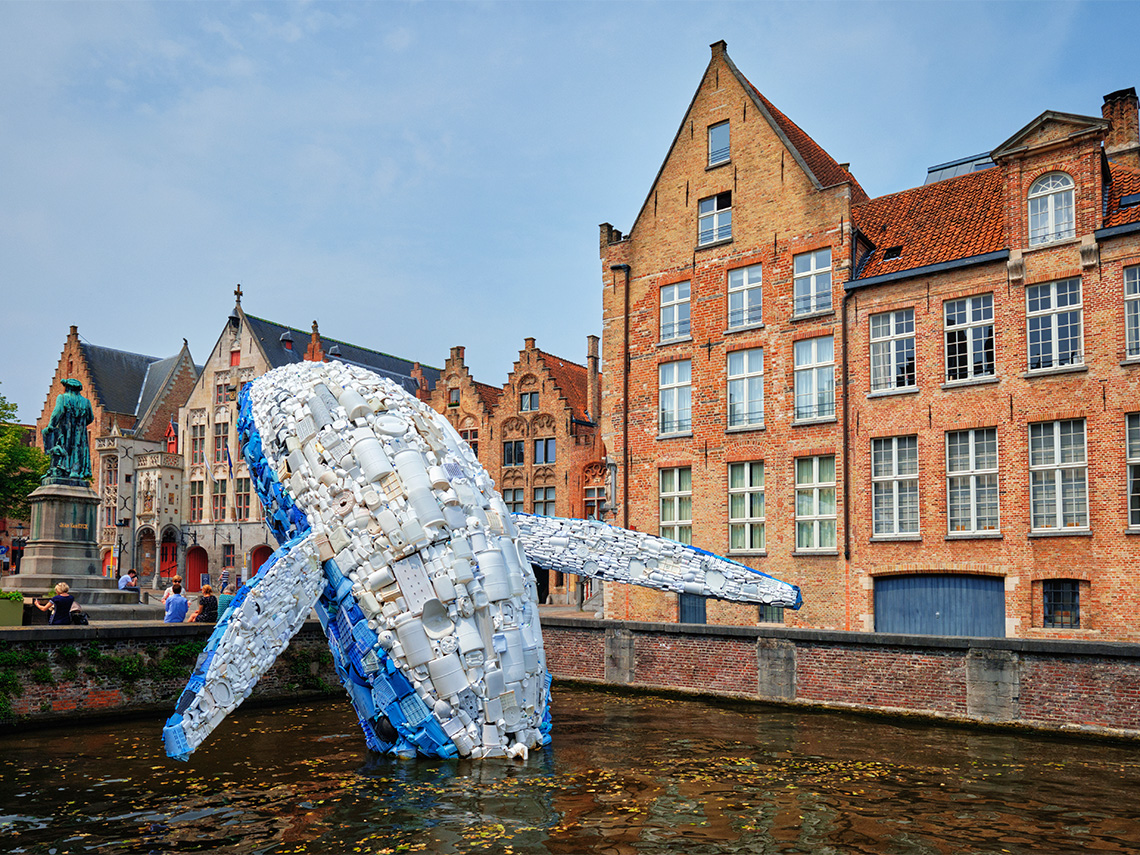
Skyscraper or The Bruges Whale, from a May 2018 art installation in Bruges, Belgium. Made of over 5 tons of plastic that was collected from oceans.
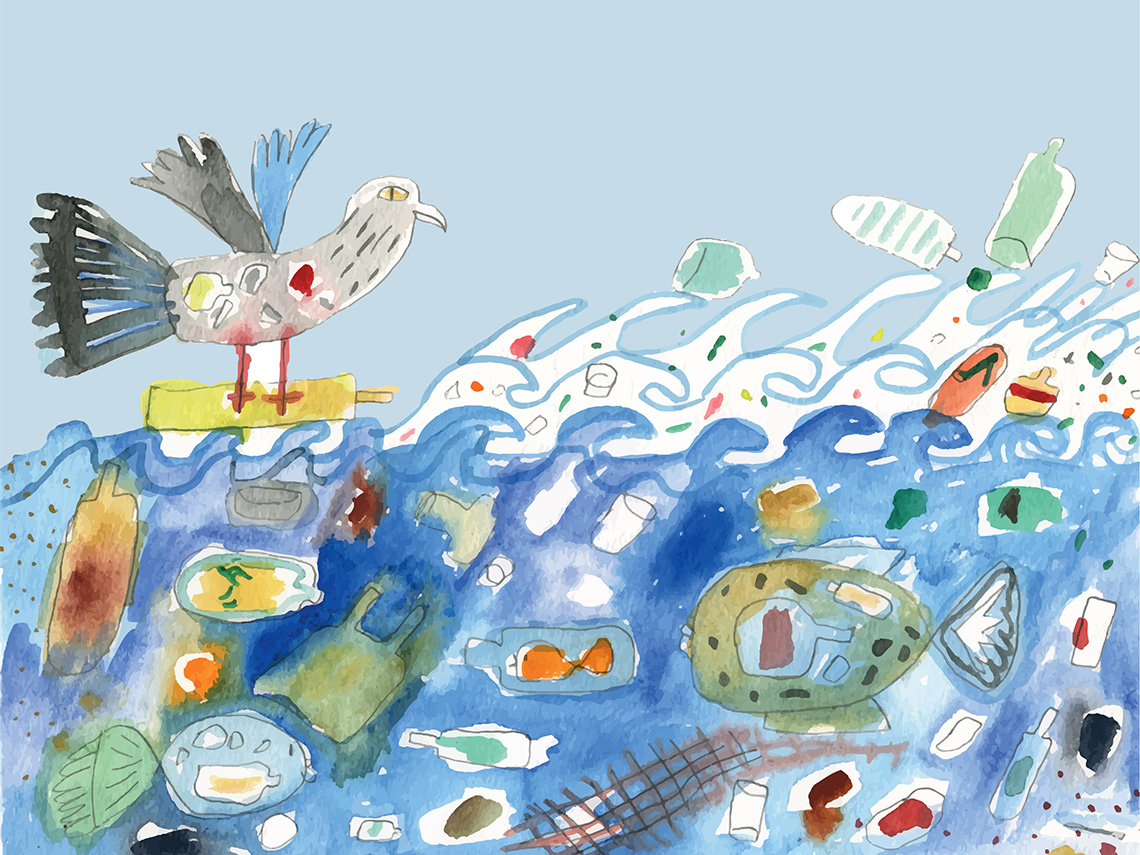
Watercolour painting by an unnamed artist of a bird floating on a piece of waste on the surface of the ocean..
Environmental art can communicate a wide range of messages.
Some examples include:
- the relationship between humans and the Earth
- the danger or seriousness of an environmental issue
- the beauty of the Earth and its resources
- the need for humans to help protect nature

Pause and Reflect
Pause and reflect
In your opinion, which of these messages are each of the images trying to communicate about the environment? (Hint: they could be trying to communicate more than one!)
How do the images and their messages make you feel?
Record your thinking in a notebook or using another method of your choice. If possible, share your thoughts with a partner.
Making meaning from art
Art has the power to express complex ideas in ways that audiences can relate to or understand without a lot of explanation.
Although we may sometimes form a quick opinion about the meaning of an artwork, taking the time to think critically about it will help us to understand the artist’s message more deeply.
When we think critically, we reflect on our thought processes. We question, analyze, and evaluate to see if our conclusions are reasonable and to wonder about other possible answers and perspectives.
Considering perspectives

Indigenous art reflects the unique perspective of First Nations, Métis, and Inuit cultures and their distinct understandings of their local environment.
As the original caretakers of the land, air, and water, Indigenous Peoples’ ways of knowing, being, and doing are important and necessary to understand as Canadians respond to environmental crises around the world.
Let’s practice our critical thinking skills by describing, analyzing, and interpreting the mural by Christi Belcourt and Isaac Murdoch that we explored in the Minds On section.
Let’s start by re-examining the mural.
When you are ready, complete the Critical Thinking Skills Organizer in your notebook or using the following fillable and printable document. You can also use another method of your choice.
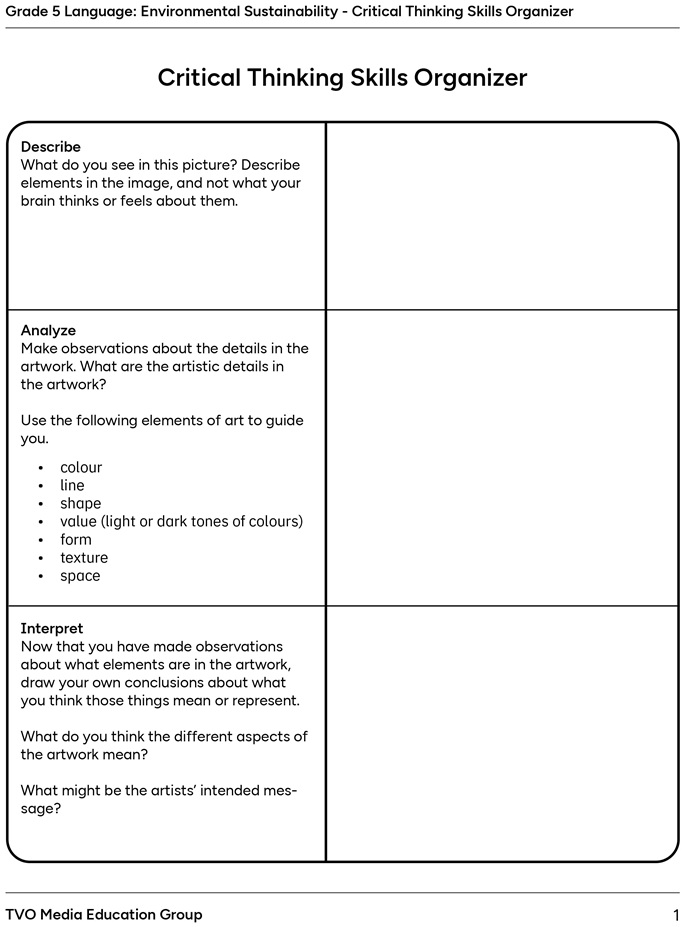
Press the Critical Thinking Skills Organizer button to access the Critical Thinking Skills Organizer.
Activity(Opens in a new tab)When you are ready, press the Sample Answers button to check your understanding.
| Describe |
Sample answers:
|
|---|---|
| Analyze |
Sample answers:
|
| Interpret |
Sample answers: I think that the wavy turquoise in the background represents water, and the birds, lightning bolts, and clouds represent the air. I think the ocean and the air and the people are layered on top of each other to show how connected they all are. |
In an interview talking about the mural she created with Isaac Murdoch, Christi Belcourt shared:
“Thunderbird woman [on the left] is Isaac’s image. She’s an iconic image that has been seen at Standing Rock and all around the world. People have embraced that image as a symbol of strength and resiliency. The other image of the woman [on the right] is my drawing and that’s a symbol beyond motherhood. It’s a symbol of protection of babies and the next ones to come.”
Source: Christi Belcourt and Isaac Murdoch create mural for MacEwan University — University Affairs. (2019, February 5). University Affairs. https://universityaffairs.ca/news/news-article/christi-belcourt-and-isaac-murdoch-create-mural-for-macewans-kihew-waciston-indigenous-centre/
Did the additional information shared by the artist change or add anything to your analysis? Take a moment to update your Critical Thinking Skills Organizer and add any additional information.
Get to know the artists
To dive deeper into our analysis and interpretation, let’s learn a little bit more about the artists Christi Belcourt and Isaac Murdoch and their work overall.
Explore the following information and quotes from each of the artists.
Christi Belcourt
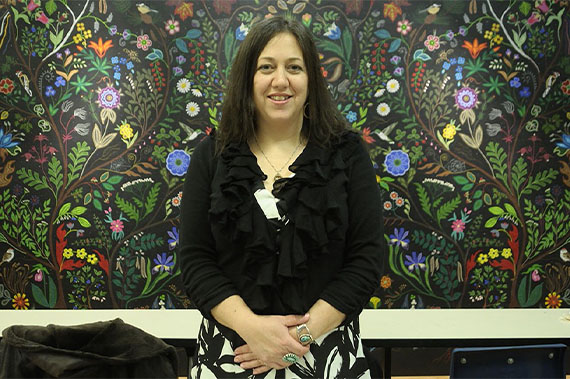
Christi Belcourt (apihtâwikosisâniskwêw / mânitow sâkahikanihk) is a Métis visual artist from Manitou Sakhigan (Lac Ste. Anne) in Alberta, Canada.
“I try to raise awareness about endangered species, about the importance of water, the sacredness of water, and the interconnectedness of every living thing that sustains life on Earth. I'm able to use my art as a way to launch into discussions around the environment around biodiversity, around the importance of sustainable practices and Indigenous law, which is in alignment with natural law.”
Source: Seaweed, A. T. (2023, February 7). The Essential Nature of Christi Belcourt's Art. Rewilding Magazine. https://www.rewildingmag.com/christi-belcourt-essential-nature-art/
Isaac Murdoch
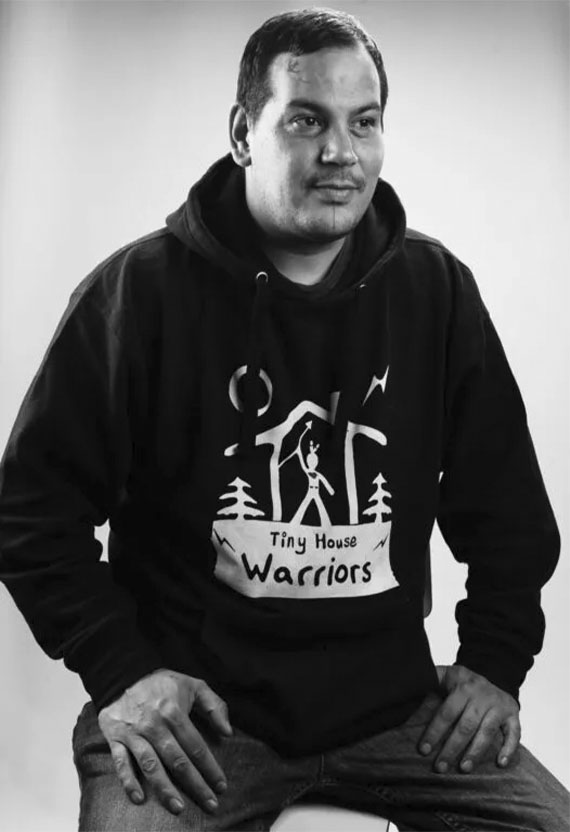
Isaac Murdoch is an Indigenous artist, activist, and storyteller from Nimkii Aazhibikong First Nation. He is of the Fish Clan and is Ojibwe.
“I think art is something that has been used by our people for thousands and thousands of years to showcase the spirit of who we are. And so when you look at the old pictographs that the Anishinabek made, you’ll notice that those pictures that were painted on those rocks are still alive today. They still tell stories today. They still invoke the spirit of who we are today. And I don’t think there’s much difference between art and ceremony.”
Source: Ward, D. (2023, April 18). Ojibwe storyteller Isaac Murdoch says language is the foundation of nationhood. APTN News. https://www.aptnnews.ca/national-news/ojibwe-storyteller-isaac-murdoch-says-language-is-the-foundation-of-nationhood/

Test Your Skills
It’s your turn!
Choose one of the artist quotes to read out loud.
As you read, think about what important words you might emphasize to highlight different parts of the text and communicate the speaker’s message. Try to make your reading as accurate (correct) and fluent (smooth) as possible.
Press the following tabs to explore some guiding questions to help you:
- Where might you speed up or slow down?
- What are your clues?
- Where might you pause or emphasize certain words?
- Where might you increase, or decrease your volume?
Once you have practiced reading aloud, record yourself or read it to a partner, if possible.
Which strategies helped you with reading out loud fluently and confidently? What would you do differently next time?
Let’s review!
Take a moment to return to your Critical Thinking Skills Organizer.
Is there new information to add or anything you’d like to change after learning more about the artists and their overall work?
Which of the following statements best summarizes the Christi Belcourt and Isaac Murdoch’s intended message in the artwork you examined in this learning activity? In a notebook, or using another method of your choice, explain which statement you chose and why.
- People are connected with the Earth.
- Animals and babies should be protected.
- Water is the source of all life and must be protected for this generation and all future generations.

Personal pronouns
In this learning activity, you recorded your personal observations, thoughts, and feelings. When writing from our own perspective, we communicate using first-person pronouns such as “I”, and “me”. Which one we use depends on what we are trying to communicate.
Personal pronouns can either be the subject or the object of a sentence.
- subject pronouns: do the action of the sentence
- object pronouns: receive the action of the sentence
Let’s explore a sample sentence with the following interactive image.
Check out the following table to explore some common subject and object pronouns.
| Subject Pronouns | Object Pronouns |
|---|---|
| I | me |
| you | you |
| he | him |
| she | her |
| it | it |
| we | us |
| they | them |

The pronouns "you" and "it" can be both subject and object pronouns depending on how they are used in a sentence. How do you know which is which? Well, subject pronouns almost always appear before the verb in a sentence (except when the sentence is a question!).
Press the following tabs to explore some sample sentences that use subject and object pronouns.
| Subject Pronouns | Sample sentence |
|---|---|
| I | I like the movie. |
| you | You read the book. |
| he | He picks flowers. |
| she | She watches cartoons. |
| it | It helps the students. |
| we | We like ice cream. |
| they | They helped the preschoolers. |
| Object Pronouns | Sample sentence |
|---|---|
| me | The teacher chose me. |
| you | Talianne helps you with your work. |
| him | Diane tells him what happened. |
| her | The students listen to her. |
| it | Tomas read it yesterday. |
| us | The adults will supervise us. |
| them | The teacher gave them homework. |
Learning check!
In each of the following sentences, the pronoun is in bold. Sort each pronoun into the correct group: is it the subject or object of the verb?
Place the cards into categories that best match. Use the arrow buttons to navigate between cards.

Putting it all together

It’s your turn to analyze artwork with an environmental theme. Choose one of the following options.
Option 1: artworks by an Indigenous artists
Option 2: choose a First Nations, Métis, or Inuit artist from the list provided
Consider the following
- Observe your chosen artwork and take notes in the three-step chart (Describe, Analyze, Interpret).
- Using your notes and observations, create a short response paragraph that explains what you observe, think, and feel about your chosen artwork. Does it match the artist’s intended message, if it’s available?
- Include your reflections about the importance of analyzing art and how the process can help you in other subjects, or in other areas of your life.
- Share or present your paragraph to a learning partner or teacher, if possible.
Use the following the fillable and printable Critical Thinking Skills Organizer or you can also use another method of your choice.
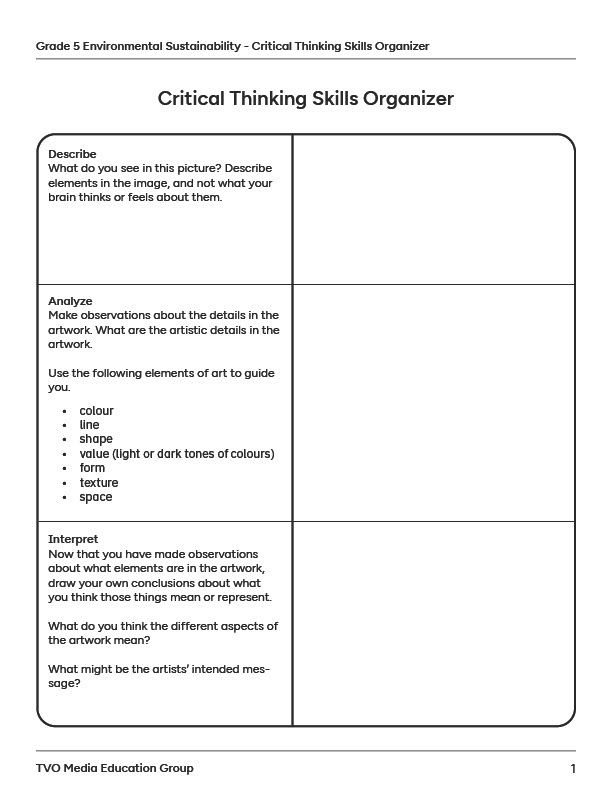
Press the Activity button to access the Critical Thinking Skills Organizer.
Activity(Opens in a new tab)Option 1
The following are images of artworks by Indigenous artists.
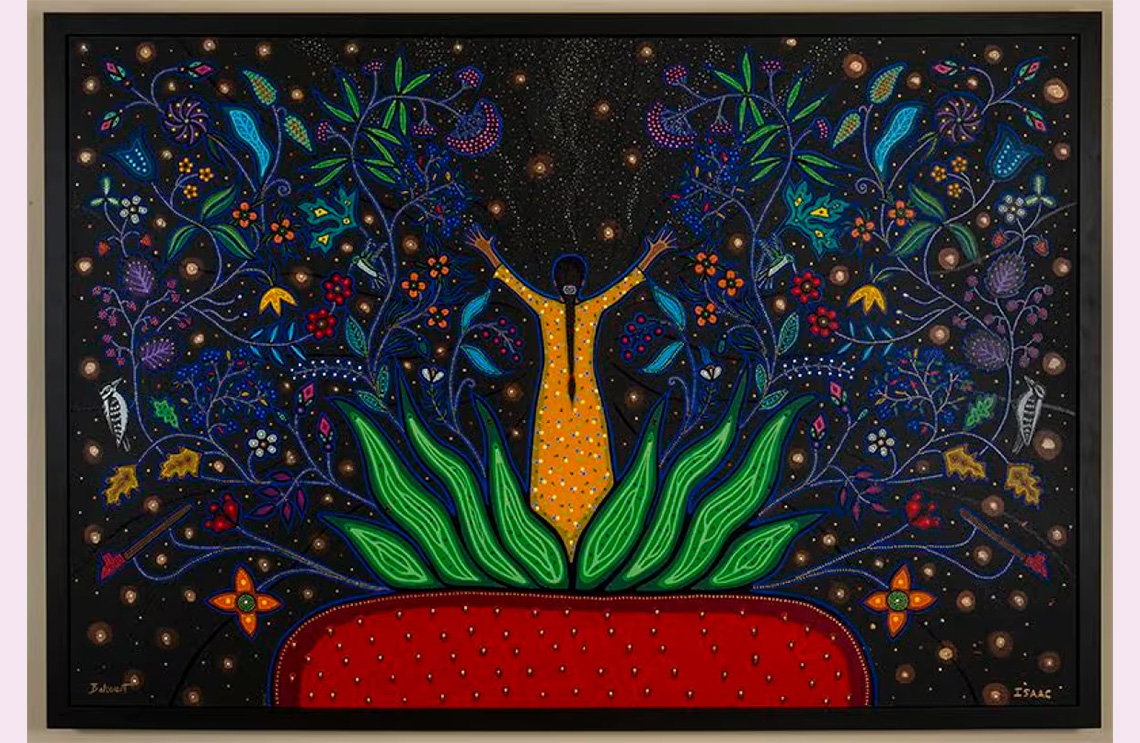
‘New Beginnings’ painting by Christi Belcourt and Isaac Murdoch, 2014
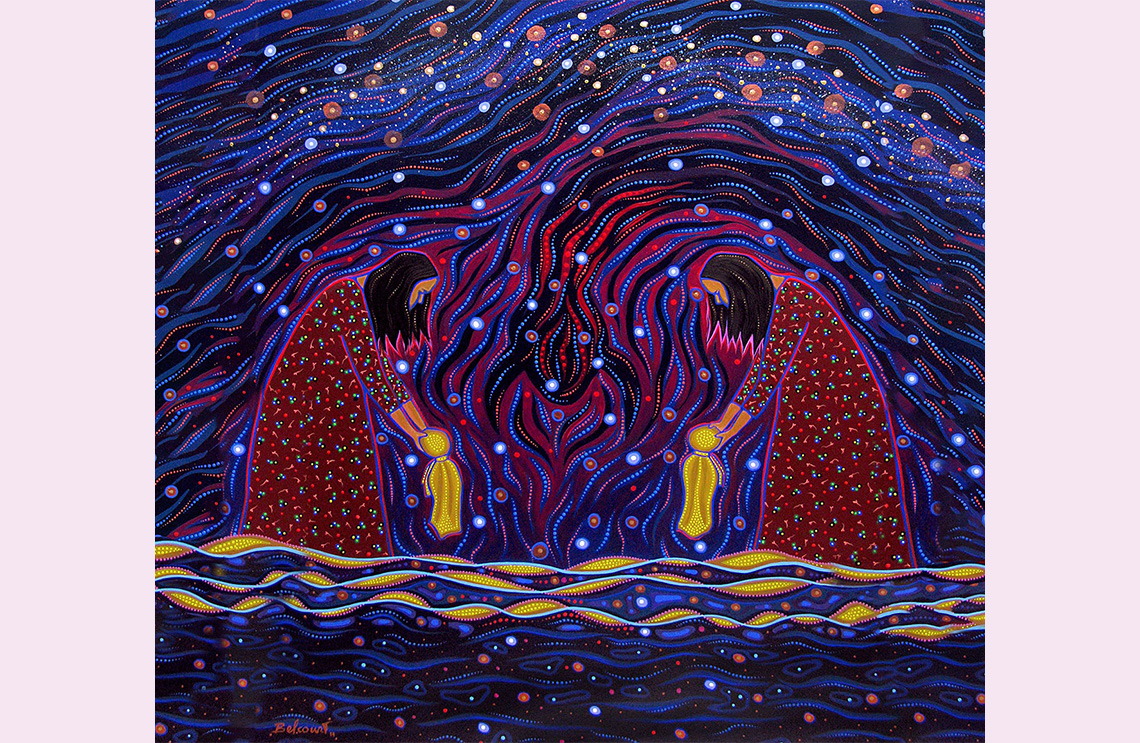
‘Prayers and Offerings for Genebek Ziibiing (Serpent River)’ painting by Christi Belcourt, 2014
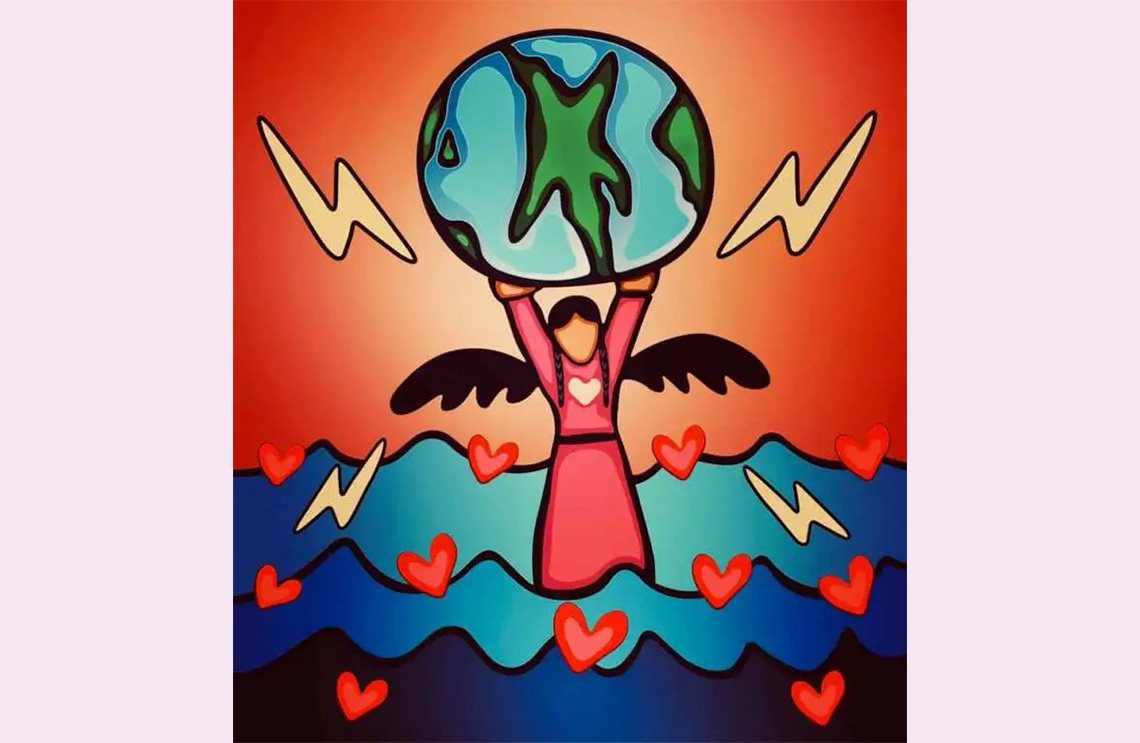
‘For the Love of Water’ digital art by Isaac Murdoch
Option 2
The following is a suggested list of First Nations, Métis, and Inuit artists:
- Kenojuak Ashevak
- John Laford
- Shirley Cheechoo
- Christi Belcourt
- Isaac Murdoch
Reflection
As you read through these descriptions, which sentence best describes how you are feeling about your understanding of this learning activity? Press the button that is beside this sentence.

I feel...
Now, record your ideas using a voice recorder, speech-to-text, or writing tool.