Learning goals
We are learning to…
- analyze and explain how the knowledge and skills developed in this grade support learning in various subject areas and in everyday life
- analyze text features and explain how they help readers, listeners, and viewers understand meaning
- make local and global inferences, using explicit and implicit evidence, to develop interpretations about various texts and to extend understanding
- generate and develop ideas and details about various topics using a variety of strategies, and drawing on various resources, including lived experiences
Success criteria
I am able to…
- explore various text forms (article, podcast, infographic) about climate change, drawing conclusions, making inferences, and analyzing text features as I go
- explore sustainable solutions to climate change and respond to comprehension questions
- generate, develop, and organize ideas to use when brainstorming for a children’s book about climate change and sustainability

What is climate change?
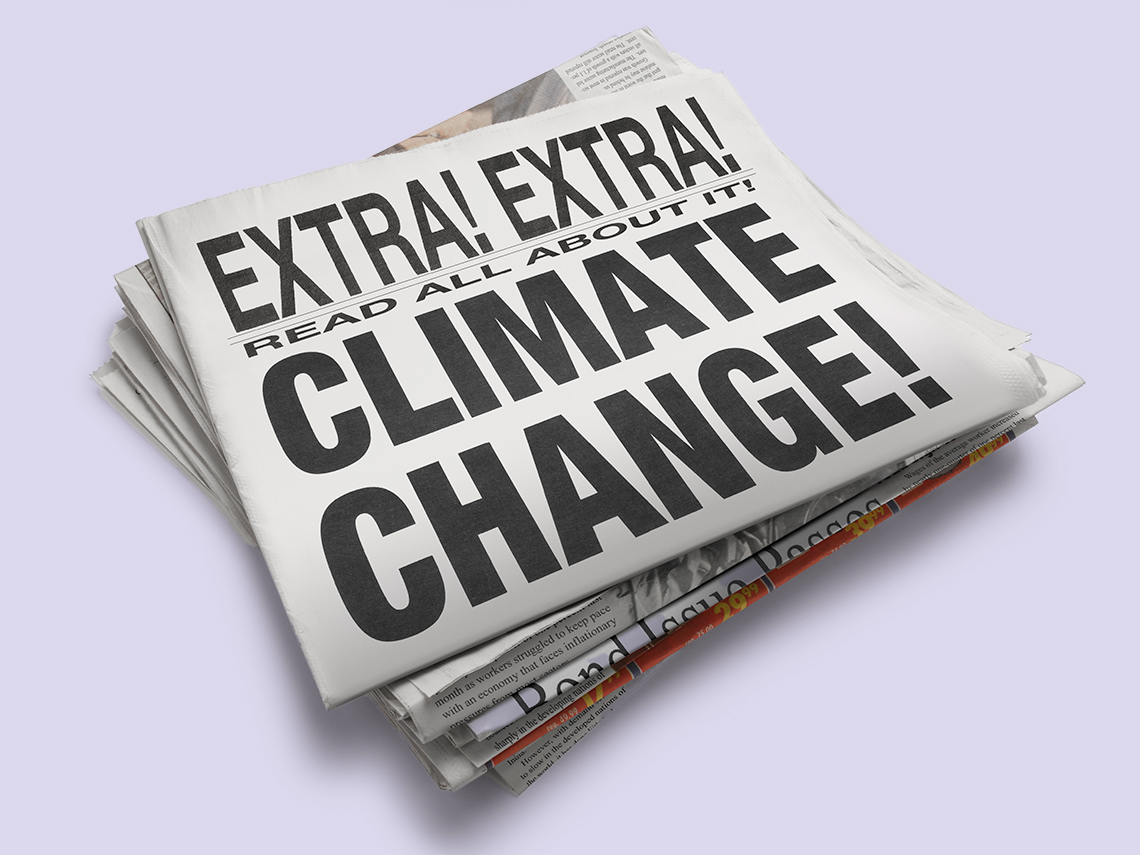
Climate change. You’ve likely heard and seen this phrase many times before, but what does it really mean? How is it affecting our world?
Test your knowledge
You’ll begin this learning activity by completing a true-or-false questionnaire to test your knowledge of climate change. At the end of the learning activity, you will revisit this questionnaire to see if your knowledge has changed.
Select the correct answer, then press Check Answer to see how you did.
Don’t worry if you weren’t sure about all of the answers. Again, you’ll try this same questionnaire at the end of the learning activity!
Video: Climate change
So what exactly is climate change? Watch the following short video clip to learn more.
Now that you have watched this video, record what you know about climate change, and what you wonder about climate change. Record your thoughts in this fillable and printable Organizer: Climate Change, or use another method of your choice.

Text features
Various texts – including books, articles, videos, and infographics – contain features that help organize content, draw attention to important information, and enhance the reader’s comprehension. These text features guide the reader through the material in a structured and meaningful way.
Let’s explore!
Explore the following interactive infographic to learn more about text features.
As you read texts about climate change, be on the lookout for these features!
Exploring climate change
In this section of the learning activity, you are going to explore different types of text and media about climate change. As you are exploring, you may wish to record important information using a method of your choice. You will be asked to reflection questions to help you draw conclusions.
Article: The history of climate change
The history of climate change
All around the world, climate change is happening. Climate change is the long-term alteration in the Earth’s climate and weather patterns. Scientists and researchers have been studying climate change for decades and discovering its impacts on our Earth. Let’s learn more about the history of climate change.
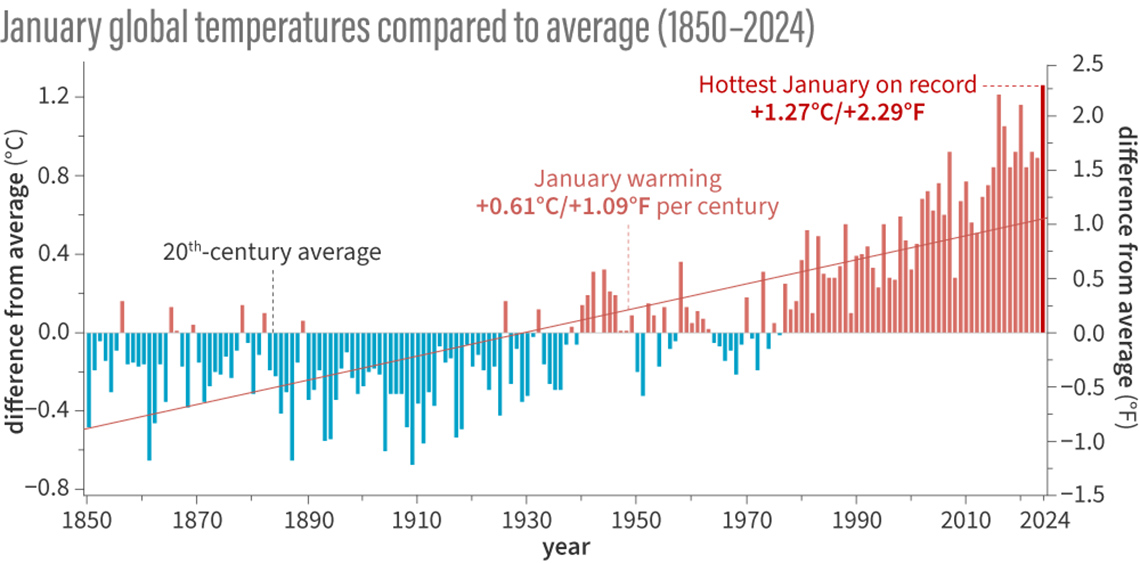
This graph shows global temperatures from 1850-2024. (www.climate.gov/news-features/understanding-climate/global-climate-summary-january-2024)
DescriptionA bar graph showing January global temperatures compared to average from 1850 to 2024. There is an alarming trend of increasing temperatures.
The 1800s: Research begins
In the 1800s, scientists conducted experiments that suggested carbon dioxide and other gases would “insulate” the Earth, but at this time they were not concerned. In fact, this discovery was almost welcomed. Scientists believed that a slight warming of the Earth would create more habitable regions and better climates. In the 1820s, it was proposed that some energy was held within the atmosphere, keeping the Earth warm, and scientists began to explore what kinds of gasses absorbed the most heat. They pinpointed carbon dioxide and methane.
The 1900s: Concern increases
By the 1930s, at least one scientist was claiming that carbon emissions were already warming the planet, and in the 1950s this was confirmed. By the early 1980s, there was a sharp increase in global temperatures; many experts marked 1988 as the critical turning point. The media and public started to pay closer attention.
As the years passed, report after report was issued by researchers and scientists highlighting the long-term effects of climate change and the need to take action. Concerns began to increase as the warmer planet led to weather events such as the following:
- droughts
- floods
- wildfires
- tropical storms
In 1977, government leaders began to discuss the dire situation of climate change, and the need to reduce greenhouse gases. The “Kyoto Protocol” was put in place, calling for a reduction in greenhouse gas emissions. Another milestone came in 2015 when the “Paris Climate Agreement” set targets for greenhouse gas cuts, attempting to limit the Earth’s temperature increase.
The 2000s: Protests and activists

Greta Thunberg
In 2018, Swedish teenager Greta Thunberg began protesting in front of parliament to raise awareness of global warming. This caught the attention of the entire world. Thunberg’s actions sparked a series of protests by activists who sought to mitigate the effects of climate change, and save the Earth for current and future generations.
Sources:
Global climate summary for January 2024. (2024, February 16). NOAA Climate.gov. https://www.climate.gov/news-features/understanding-climate/global-climate-summary-january-2024
Jkim. (2019b, October 10). Climate change throughout history | Saving Earth | Encyclopedia Britannica. https://www.britannica.com/explore/savingearth/climate-change-throughout-history
Onion, A. (2023, June 9). Climate change history. HISTORY. https://www.history.com/topics/natural-disasters-and-environment/history-of-climate-change
Check your understanding!
Do you know the sequence of events that make up the history of climate change? Try the following flowchart activity.
The following cards contain items that fit together in a specific order, from the earliest event to most recent. Put the items in each answer box in the correct order.
Sustainable solutions
There isn’t one single solution that will end climate change. However, we can all take action to mitigate its effects. Don’t forget the little things you can do, like switch off your lights and electronics when they are not being used!
Let’s explore a few of the sustainable solutions that are currently happening around the world.
Press the following tabs to find out more.
The fashion industry contributes 10% of human-caused greenhouse gas emissions and 20% of global wastewater. This industry uses a lot of energy in both the production and shipping of clothes. So can fashion become more sustainable? The answer is yes!
Some companies are turning to more sustainable materials such as plant-based recycled cotton, organic linen or linen, ethical wool, and much more. Recycling, repairing, or donating clothing are other ways people and organizations are trying to be more sustainable.
Watch the following video to learn about a company that is focusing on sustainable fashion.
After watching
Answer the following question in your notebook, or using another method of your choice.
- Specifically, what is this company doing to contribute to sustainable fashion, and reduce its impact on climate change?
Once you have recorded your thoughts, press Possible Answer.
This company is working on making sustainable fashion more affordable with handmade clothing. To reduce waste, they make items only once they have been ordered. They also encourage you to donate one item for every item you buy, and to donate material scraps to other fashion brands.
Non-renewable energy sources such as fossil fuels (coal, petroleum, natural gas) are contributing to climate change with the amount of greenhouse gases they emit during production and consumption. However, these resources will eventually run out and they are having negative impacts on the environment. So, what’s the solution? Renewable energy!
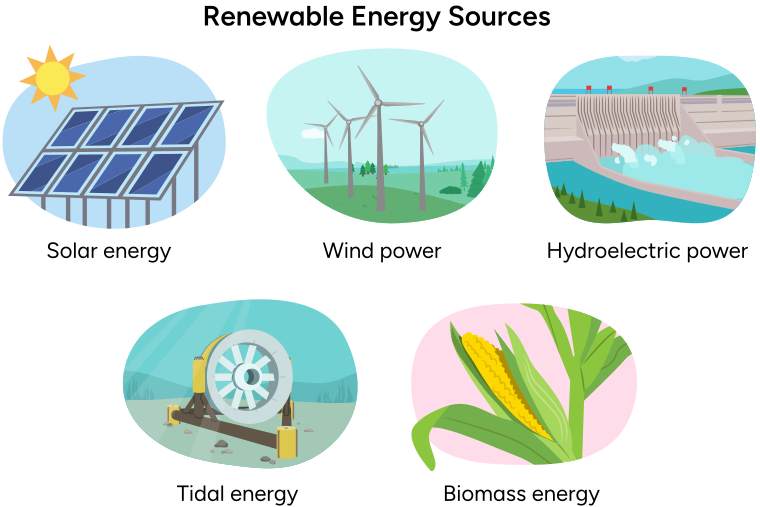
Renewable energy is considered to be sustainable because it comes from sources that are replenished through a natural process. Common examples of renewable energy are solar, wind, hydropower, biomass, and geothermal energy. By using these energy sources, we reduce the emission of greenhouse gases and create jobs.
Greenhouse gases are emitted through food production, the farming process, and food waste. Eating more plant-based diets and using sustainable farming methods will be pivotal to reducing greenhouse gas emissions.
What does sustainable farming look like?
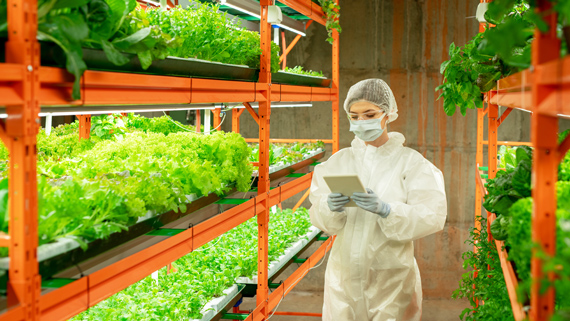
- Regenerative farming aims to keep soil healthy and able sustain crops. It uses techniques like crop rotation, compost, and animal manures.
- Organic farming only uses natural pesticides and fertilizers to grow crops. Chemicals are avoided.
- Vertical farming build gardens upward to conserve space. It also uses water-saving technology.
The future of farming
What could the future of farming look like? To learn more, watch the following video clip:

Pause and Reflect
Reflection questions
Answer the following reflection questions in your notebook, or using another method of your choice.
1. Based on what you’ve explored, what are the benefits of sustainable farming? How is it mitigating the effects of climate change?
2. What inferences can you make about the relationship between sustainable farming and the health and well-being of people and the environment?
Good job! You have learned a lot about climate change and ways to address it. It’s time to “transition” to a new topic!
Transition words and phrases
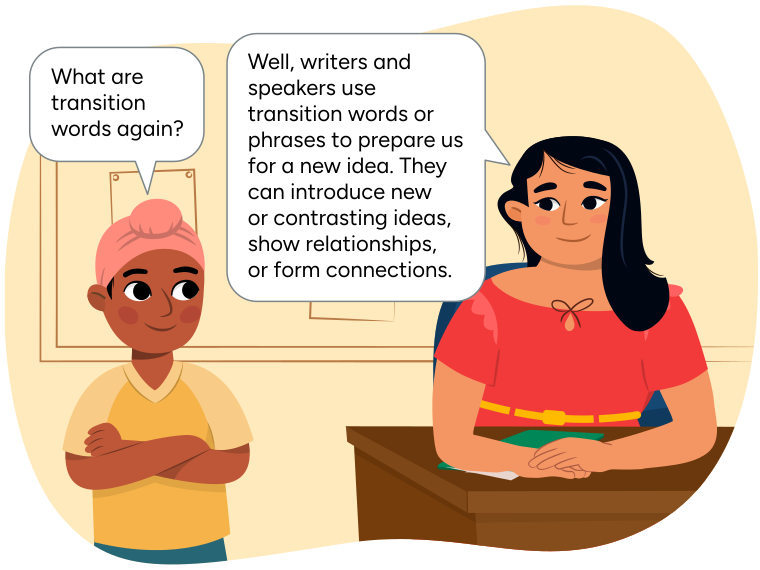
Learn more with flashcards!
The following flashcards show types of transition words. Flip the cards over to see examples.

Commas after transition words
When you use a transition word or phrase, make sure to place a comma after it.
Check out these examples:
- In conclusion, these are all the different types of transition words.
- Logging uses a lot of machinery; therefore, it creates pollution.
- Lastly, be sure to use transitional words or phrases in your writing.
You have just done a lot of work on climate change and transition words. Now is a great time to take a break before we look at two important skills: typing and cursive writing!

Student Wellness
Take a break!

Time for a body break! If possible, stretch your body and move around your space.

Typing practice
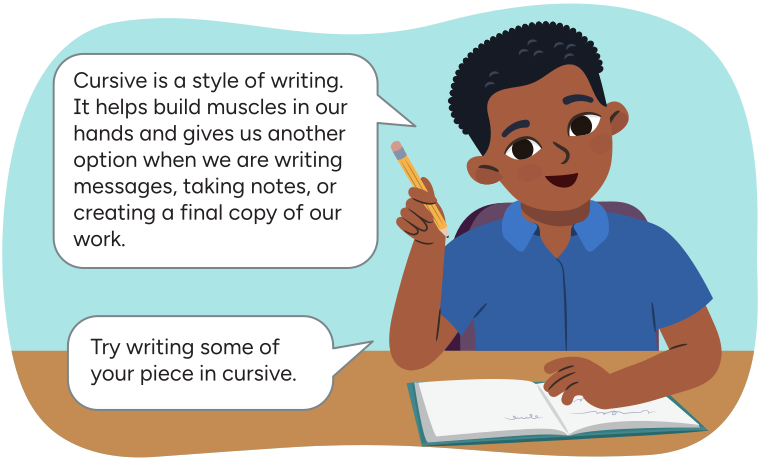
Author with two speech bubbles. Speech bubble 1 says, "Cursive is a style of writing. It helps build muscles in our hands and gives us another option when we are writing messages, taking notes, or creating a final copy of our work". Speech bubble 2 says, "Try writing some of your piece in cursive."
Let’s review cursive writing!
Check out the following animation of how the word “transition” is written in cursive, then review the tips for cursive writing provided.
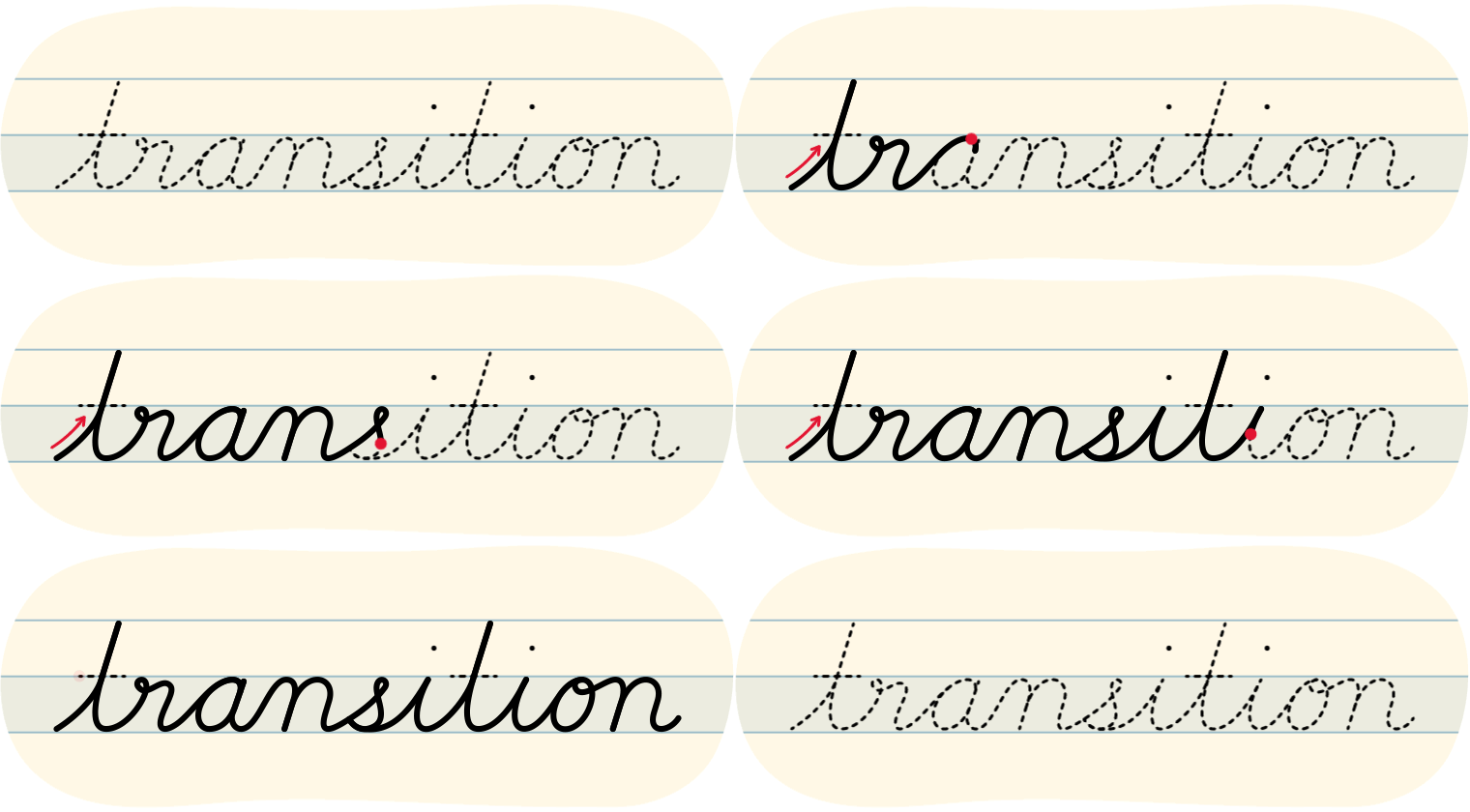
Tips for cursive letters
- When we write in lowercase, we always begin at the bottom
- When we write in uppercase we can start from the top or the bottom
- Try to keep the pencil on the page until you are done the word
- Try to press gently as you write so that your hand can move easily across the page
- Take your time to make sure that you are writing clearly and evenly
Left-handed tips for cursive writing

Explore the following video called Left-Handed Tips to learn more.
Type it!
Typing is a great skill to develop! When we need to use a computer or tablet keyboard, knowing how to type helps us:
- take notes
- respond to messages
- create final drafts of our work
Explore the following image to see what fingers are used to type each letter or number.
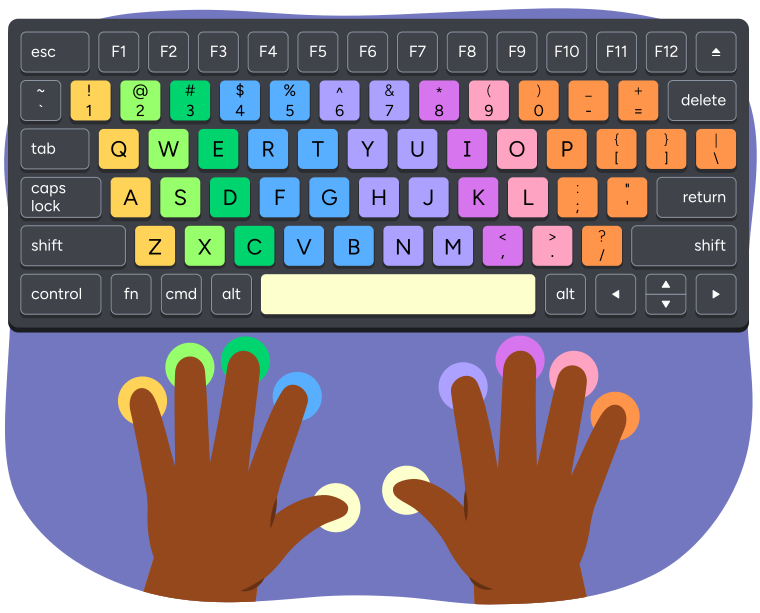
A keyboard and hands showing which fingers are used to press each key when typing.
The left pinky finger presses the keys 1, Q, A, and Z.
The left ring finger presses the keys 2, W, S, and X.
The left middle finger presses the keys 3, E, D, and C.
The left index finger presses the keys 4, 5, R, T, F, G, V, and B.
The left or right thumb presses the space bar.
The right index finger presses the keys 6, 7, Y, U, H, J, N, and M.
The right middle finger presses the keys 8, I, K, and comma.
The right ring finger presses the keys 9, O, L, and period.
The right pinky finger presses the keys 0, minus, equal, P, open bracket, closed bracket, backslash, semicolon, apostrophe, and forward slash.
We use specific muscles in our hands to type! It’s important to practise so that it becomes easier to type correctly without putting too much pressure on our hands and our wrist.
For additional typing practice, check out the game Keyboard Climber 2.

Putting it all together
At the very beginning of this learning activity, you tried a true-or-false questionnaire. Let’s revisit the same questions now and see how you do!
Educating others

How can we fight climate change? One key step is to make others aware of climate change, its impacts on Earth, and how we can contribute to a solution.
You be the teacher!
You have been asked to speak at a community event. You need to highlight a few of the effects of climate change as well as actions the community could take. Using the method of your choice, prepare a short presentation.
Make sure your presentation answers the following questions.
Checklist: Presentation
Reflection
As you read through these descriptions, which sentence best describes how you are feeling about your understanding of this learning activity? Press the button that is beside this sentence.

I feel...
Now, record your ideas using a voice recorder, speech-to-text, or writing tool.