Learning goals
We are learning to…
- select and use a variety of listening strategies before, during, and after listening to comprehend information
- use precise and descriptive word choice as appropriate during formal and informal communication, to support audience comprehension
- explain explicit and implicit perspectives communicated in various texts
- generate and develop ideas and details about various topics
Success criteria
I am able to…
- read and comprehend informational texts about environmental issues, analyzing various perspectives on the issue
- prepare for a debate on an environmental issue of choice, including considering word choice and listening strategies for comprehension
- share my learning about environmental issues with others
Comparing perspectives
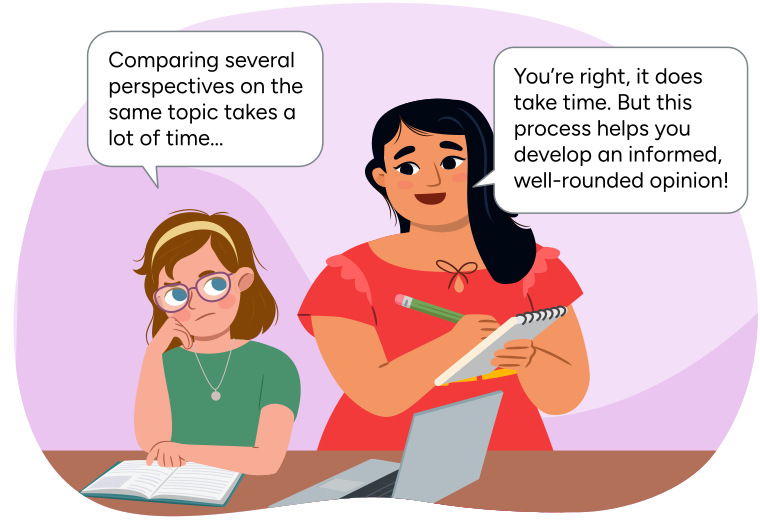
Ava frustratedly says, "comparing several perspectives on the same topic takes a lot of time…"
Teacher Chiara encouragingly responds, "You're right, it does take time. But this process helps you develop an informed, well-rounded opinion!"
In this section of the learning activity, you are going to explore three environmental issues and sustainable solutions from different perspectives. You will look at the pros and cons of these three issues:
- single-use plastics
- renewable energy
- deforestation
Single-use plastics
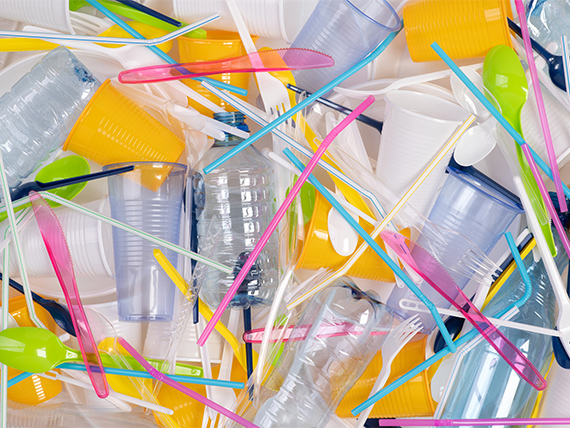
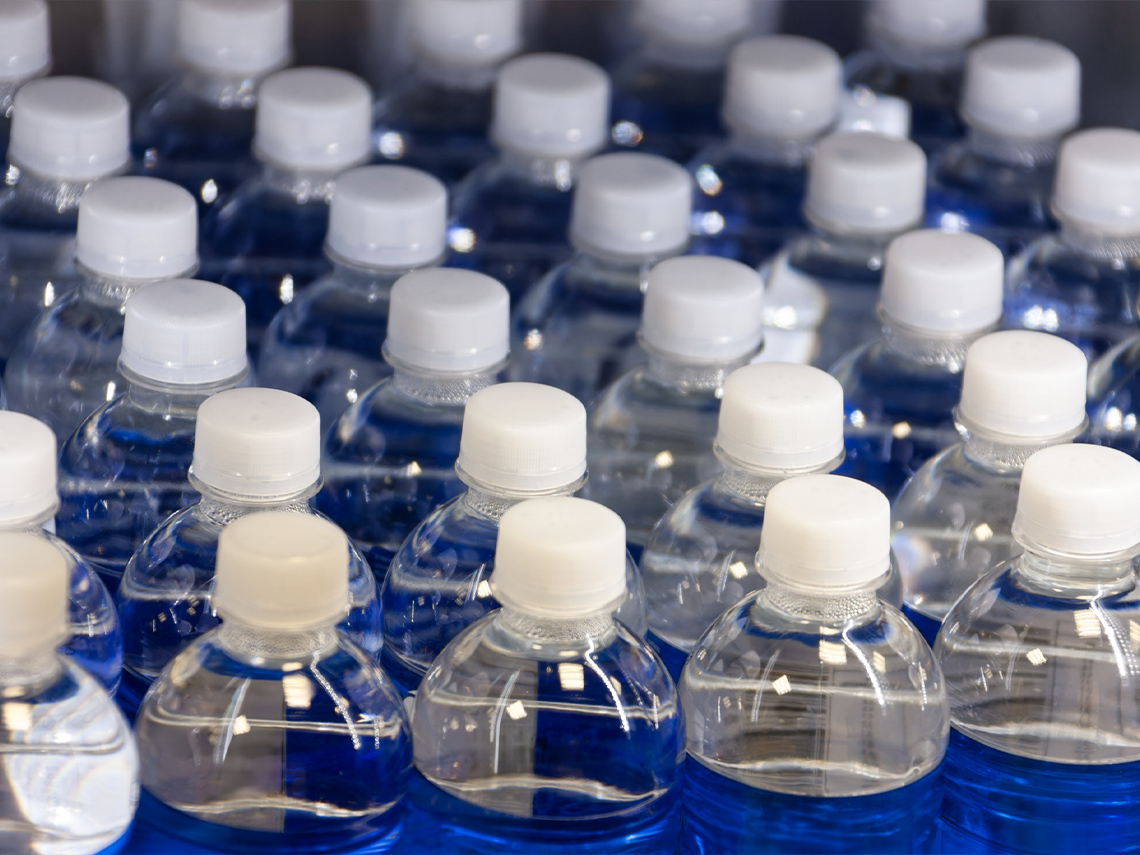
Single-use plastics are items like plastic bags, straws, soda and water bottles, and most food packaging. These items are designed to be used once and then thrown away or recycled. While single-use plastics are convenient and easy to make, they come a high price to the environment.
Let’s consider two perspectives on this issue. Press the following tabs to learn more.
I am in favour of single-use plastics because they are both convenient and hygienic . Single-use plastics are convenient to produce and transport, and they’re also convenient for businesses to use. They are very important in the medical field and fast-food services, which require products that are hygienic and have not been used before. Along with this, single-use plastics support economies by creating jobs in the manufacturing sectors that produce these products. Alternatives might be more expensive to produce and purchase. While single-use plastics do contribute to plastic pollution, I believe that instead of banning them entirely, we should focus on improving recycling technologies and systems.
I care about the environment, so I’m against single-use plastics. These items are a major source of pollution, affecting oceans, wildlife, and ecosystems. Plastics are not biodegradable : they take hundreds of years to break down and can build up in environments. They enter the food chain if species eat even the tiniest piece. There are sustainable alternatives to single-use plastic, such as biodegradable materials or reusable products. I believe we need stricter rules around plastic production. We also need education on the environmental impacts of plastic waste, and on the importance of reducing, reusing, and recycling.
Check your understanding!
Before you move on, try the following true-or-false activity.
Select the correct answer, then press Check Answer to see how you did.
Renewable vs. non-renewable energy
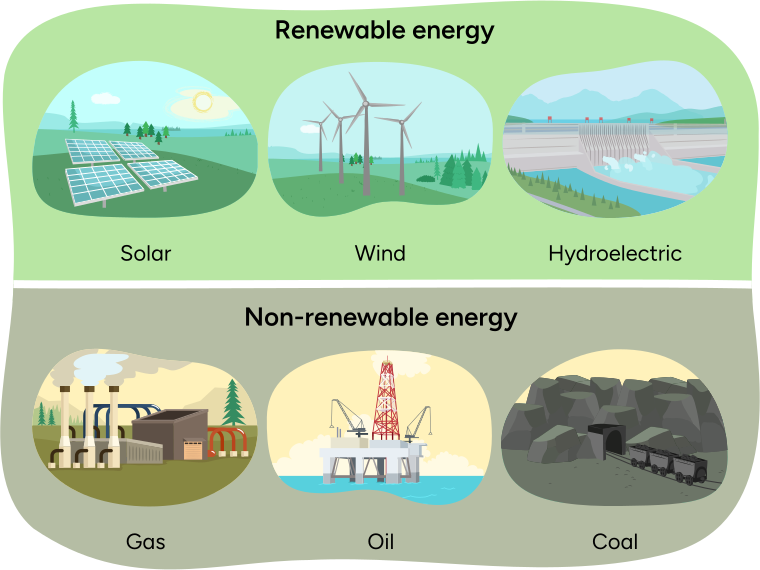
Renewable energy sources include solar, wind, and hydroelectric power. These sources are harvested from resources that can be replenished naturally by the Earth. Renewable energy sources are environmentally friendly because they produce little or no greenhouse gases.
Non-renewable energy sources include fossil fuels such as coal, natural gas, and oil. These sources are not naturally replenished. In other words, they will eventually run out. These sources are used for electricity generation, transportation, heating and cooling, manufacturing and much more.
Let’s consider two perspectives on this issue. Press the following tabs to learn more.
I support the continued use of non-renewable energy for various reasons. Fossil fuels provide affordable and reliable energy to various areas, and the equipment needed to extract fossil fuels is already in place. And unlike technologies like solar panels and wind turbines, fossil fuels do not depend on environmental conditions. To transition to renewable energy, we would need significant technological and economic shifts. Instead, we should focus on reducing the environmental impact of fossil fuels through strategies like capturing carbon pollution and removing it from the air.
I am in favour of renewable energy sources because they cause little or no greenhouse gas emissions. They therefore mitigate the effects of climate change and reduce air and water pollution. Renewable sources provide a sustainable way to meet energy needs without depleting natural resources and negatively impacting ecosystems. Also, the renewable energy sector is growing as people are needed to design, build, install, and fix technology such as solar panels, windmills, and hydroelectric dams. This provides jobs for individuals and communities, in addition to protecting the environment for current and future generations.
Check your understanding!
Before you move on, try the following true-or-false activity.
Select the correct answer, then press Check Answer to see how you did.
Deforestation vs. reforestation
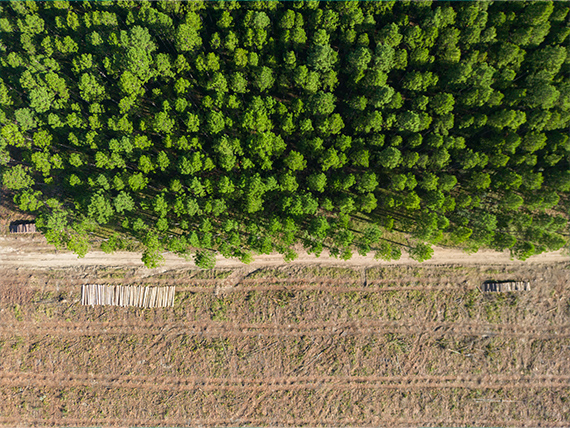
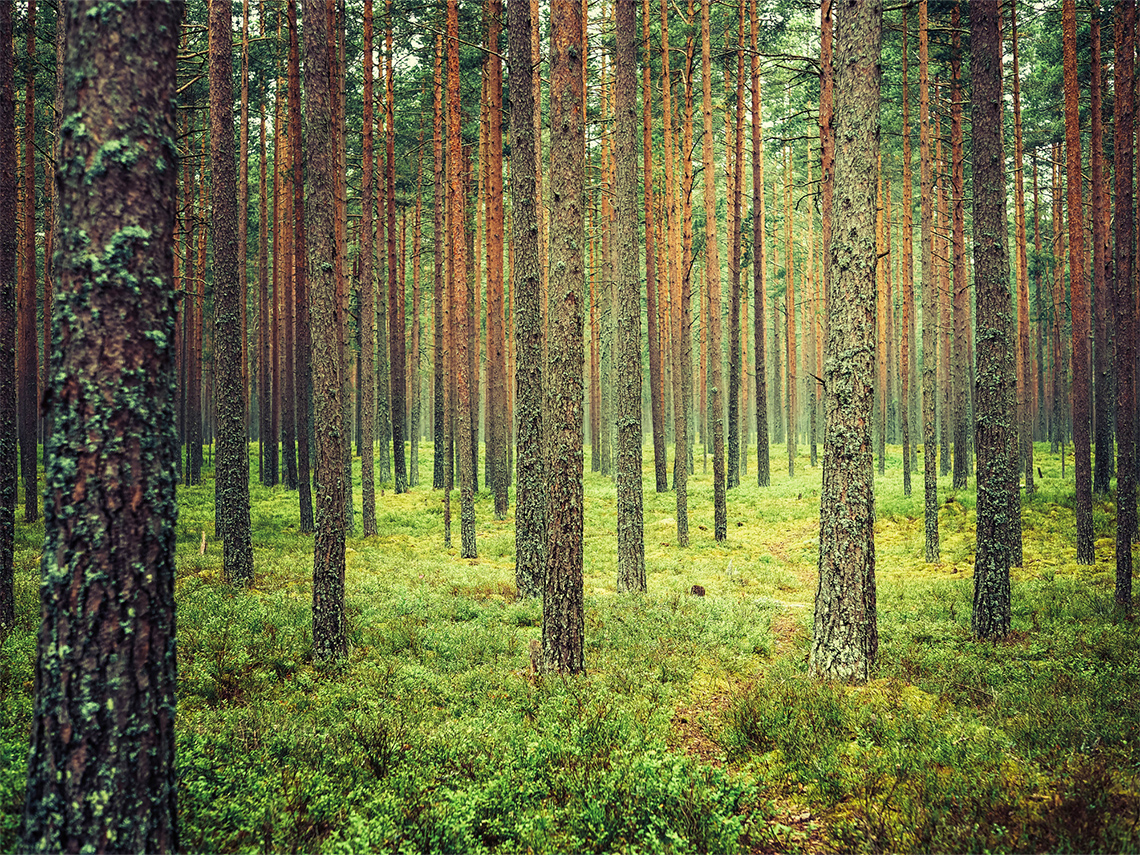
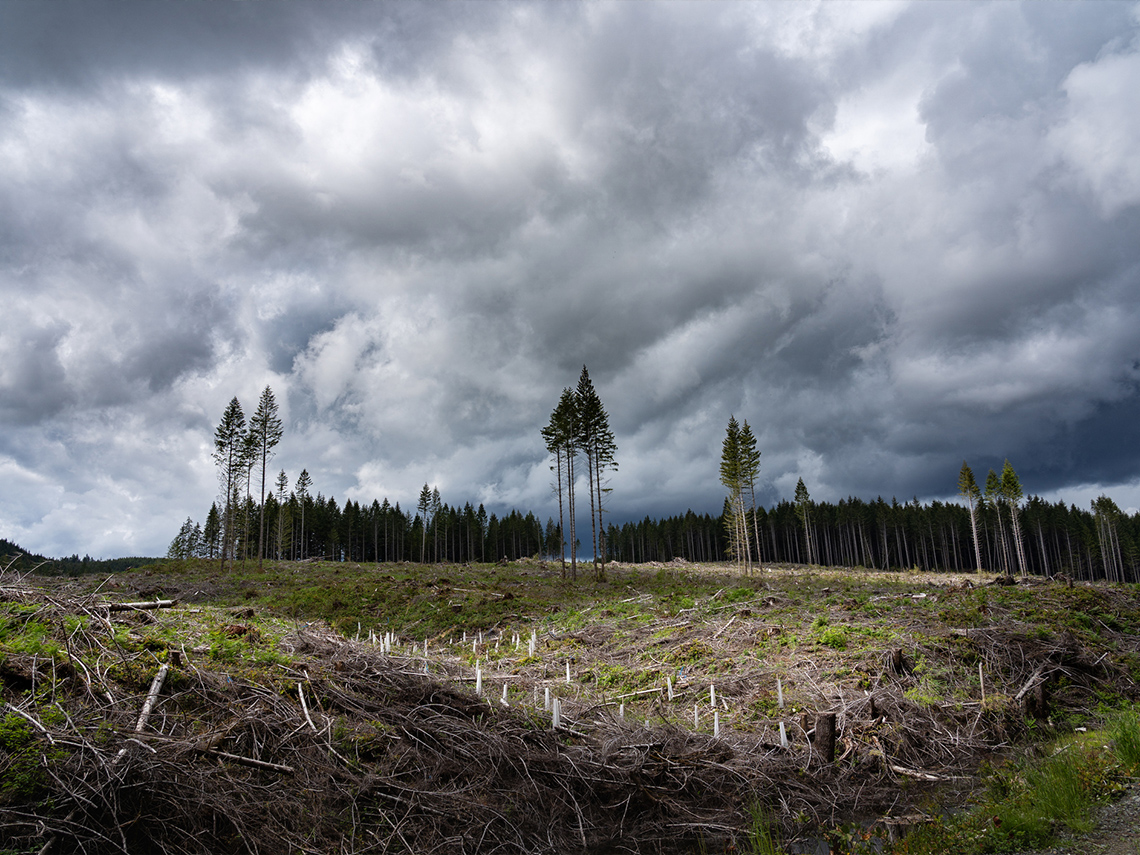
Deforestation involves the clearing or thinning of forests by humans to make the land available for other uses, and to obtain timber for manufacturing and construction. Reforestation involves planting trees in deforested areas to restore ecosystems, mitigate the effects of climate change, and preserve biodiversity.
Let’s consider two perspectives on deforestation. Press the following tabs to learn more.
Deforestation is needed for economic growth and development. Land that is cleared from forests can used for agriculture (farming), timber production, and urban development. All of these things provide jobs. Additionally, deforestation is required to develop roads, housing, and facilities needed to provide communities with necessary services.
Forest conservation and reforestation are both ways to protect our forests. Forests act as carbon sinks, which means they absorb carbon from the atmosphere, reducing the impacts of climate change. Forests are also home to a vast array of species! By conserving forests, we support biodiversity and preserve essential habitats for many plants and animals. Lastly, forests protect soil, control water regulation, and support pollination, which are all crucial for environmental health and well-being.
Check your understanding!
Before you move on, try the following true-or-false activity.
Select the correct answer, then press Check Answer to see how you did.
Good job! Now that you have learned about several environmental issues, you will use your knowledge to prepare for a debate!
What is a debate?
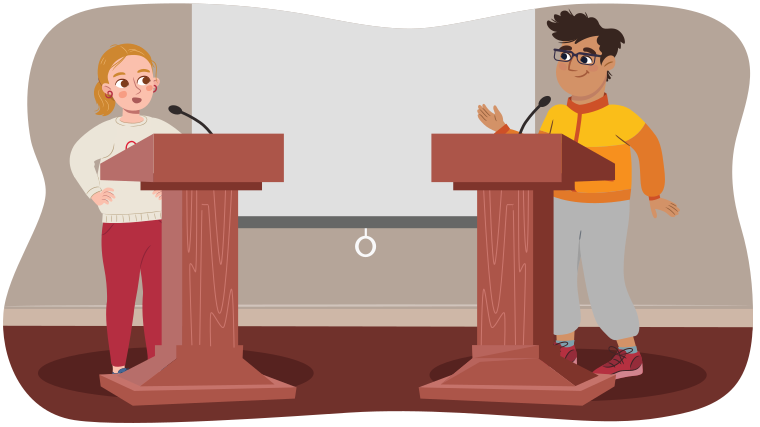
A debate is a formal discussion on a particular topic. One person takes one point of view, and the other person takes the opposing point of view.

Student Tips
Student tip
The ability to present a strong argument within a debate is an important skill, both in school and in everyday life!
Check out the following video clip from students who are in the New York City Urban Debate League.
As you learned in the video, debate is all about building strong arguments with supporting points, as well as self-confidence and determination. Preparation is a key factor in building a strong argument!
Preparing for your debate
In this learning activity, you have explored several environmental issues. You will now prepare for a debate on an environmental issue.
Step 1: Choose your topic
Select one of the environmental issues and your position (for or against).
Here are some possibilities:
- for or against single-use plastics
- for or against non-renewable energy
- for or against renewable energy
- for or against deforestation
Note: If you would like, you can make topic your more specific. For example:
- for or against banning single-use plastics in elementary schools
Step 2: Prepare your arguments
Use what you have learned in this learning activity to prepare your arguments. You can conduct additional research if necessary.
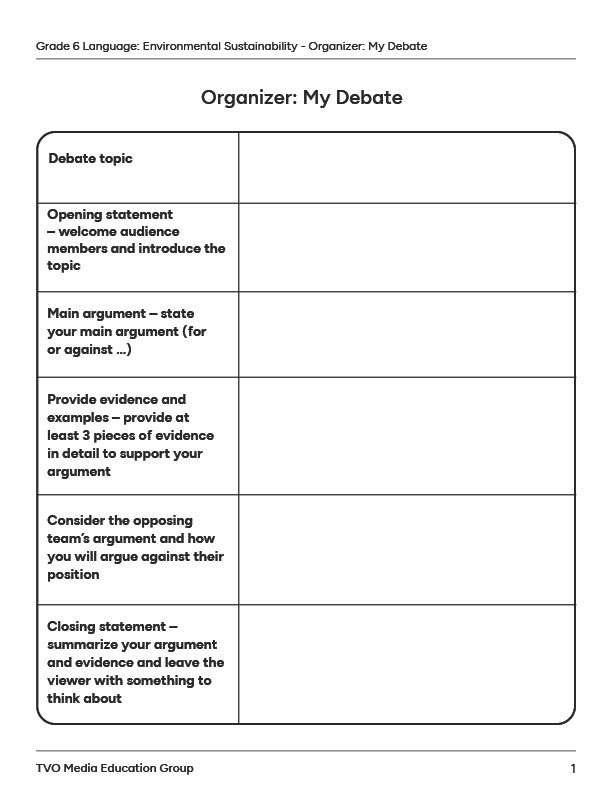
A graphic organizer is great planning tool. Check out this sample:
| Debate topic | Single-use plastics should not be banned in elementary schools |
|---|---|
| Opening statement – welcome audience members and introduce the topic | Good morning, everyone. Today we will be discussing the question of whether single-use plastics like water bottles should be banned in elementary schools. |
| Main argument – state your main argument (for or against …) | I believe single-use plastics, such as water bottles, should not be banned in elementary schools. |
| Provide evidence and examples – provide at least three pieces of evidence in detail to support your argument |
A ban could prevent some students from getting hydrated, which could impact their health. A ban would remove a more affordable option for families, since single-use plastics are cheaper than reusables. A ban would force younger students to carry heavier items to store their water. |
| Consider the opposing team’s argument and how you will argue against their position | Even though single-use plastic like water bottles do contribute to climate change, the number of children using them in schools does not amount to a huge population, so a complete ban would not make the most impact anyway. |
| Closing statement – summarize your argument and evidence and leave the viewer with something to think about |
Recap main points. End with a strong statement, such as… Elementary school children are our future. Let’s make sure they stay hydrated and healthy! |
Now that you have looked at an example, complete the fillable and printable Organizer: My Debate in your notebook or using the following document. If you would like, you can use speech-to-text or audio recording tools to record your thoughts.
Step 3: Work on your oral-communication skills
Press the following tabs to learn more.
In a debate, effective word choice improves the impact of your arguments. Here are some tips for helping you to choose your words wisely:
- Use clear, simple, and direct language. Don’t overcomplicate things or you’ll confuse the audience.
- Use strong action verbs and that are persuasive and positive. Examples are “demonstrate,” “prove,” and “illustrate.”
- Use specific, concrete details. Find specific facts and numbers that support your argument.
- Make sure your language is accessible to all audience members, including those who may not be familiar with the topic. If you’re using complex words, be sure to explain them.
- Repeat key terms or phrases to emphasize important points.
Take a moment to reflect on your arguments. Is there anywhere that you can adjust your word choice to make your argument more effective? Which of the strategies listed can you use?
Debates aren’t just about talking… it’s just as important to listen! Effective listening strategies will help you understand your opponents’ arguments, identify areas to address in your rebuttal , and demonstrate respect for the debate process.
Here are some listening strategies you can use when the opposing side is speaking:
- Pay full attention and be engaged.
- Take notes when possible, to help you address points in your rebuttal.
- Use non-verbal cues such as eye contact, smiling, nodding, and positioning your body towards the speaker.
Now let’s turn to another important oral-communication skill.

Fluency

To prepare for the debate, you need to practise saying your arguments out loud so that you speak fluently and confidently.
Fluency is the ability to identify words correctly and read a text at an appropriate rate with ease, pace, automaticity, and expression. With proper phrasing and a focus on punctuation, the reader will gain more meaning from the text.
When practising for your debate, use the following checklist to self-assess your own fluency. If possible, share the checklist with someone else and ask them to provide feedback on your fluency.
Fluency checklist
Based on the checklist, choose one area of fluency to focus on and set a goal for yourself. What strategies could you use to help you achieve this goal?
You have just done a lot of work on debate skills. Now is a great time to take a break before we turn to grammar!

Student Wellness
Take a break!
Time for a body break! If possible, stretch your body and move around your space.

Grammar: Direct objects
Let’s start by reviewing some key definitions.
A verb is an action word.
A noun is a word that refers to a person, place, or thing. A noun can play different roles in a sentence. For example, it can be…
- the subject of a verb (it performs the action)
- the object of a verb (it receives the action)
A pronoun is a word that replaces a noun. In the following sentence, the pronoun “he” replaces the noun “John”: “John loves movies, so he watches two or three a week.”
Now let’s hear from Teacher Wilfred…
A direct object is a noun or pronoun that is acted upon by a verb. It “receives” the verb’s action. You can identify the direct object by finding the verb in the sentence and asking “What?” or “Whom?”
Let’s look at a couple of sample sentences.
Can you identify the subject, verb, and object in the following sentence?
Kim bakes cookies.
To see the answers, explore the following interactive image:
Let’s look at another sample sentence.
Can you identify the subject, verb, and object in the following sentence?
The scientist studies rocks.
To see the answers, explore the following interactive image:
Check your understanding
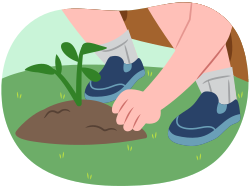
In the following fill-in-the-blank activity, you will identify the subject, verb, and object of this sentence: Fatima planted trees.
Select the missing word from the drop-down menu. Press Check Answer to see how you did.
Putting it all together
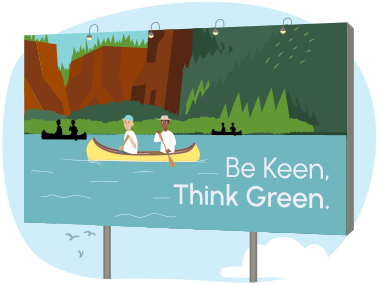
Take a moment to pause and reflect.
Consider your own life and how you contribute to a sustainable future. What is your personal opinion about single-use plastics, deforestation, and renewable energy? Is there anything you can change in your personal life to reduce your environmental impact? Record your ideas using the method of your choice.
You be the teacher!
Your task is to educate others on one of the environmental issues that you have explored in this learning activity: deforestation, renewable energy, or single-use plastics. You will have a lot of choice about how you present your information!
A graphic organizer can be a great tool for planning. Complete the fillable and printable Organizer: Planning My Project in your notebook or using the following document. If you would like, you can use speech-to-text or audio recording tools to record your thoughts.
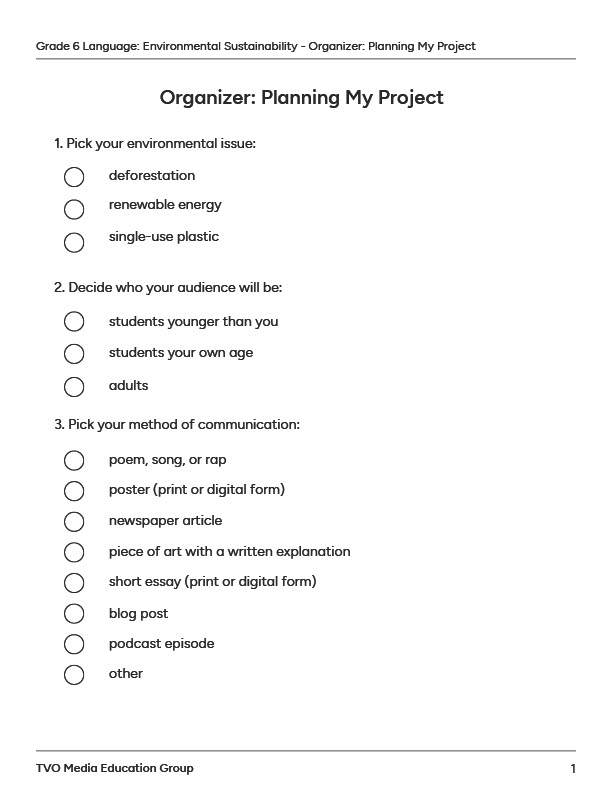
Using the information in the organizer, complete your project.
To assess how you’ve done, use the following checklist.
Checklist: My project
If possible, share this checklist with a partner so you can get their feedback!
Reflection
As you read through these descriptions, which sentence best describes how you are feeling about your understanding of this learning activity? Press the button that is beside this sentence.

I feel...
Now, record your ideas using a voice recorder, speech-to-text, or writing tool.