Learning goals
We are learning to…
- analyze and explain how the knowledge and skills developed in this grade support learning in various subject areas and in everyday life, and describe how they enhance understanding and communication
- analyze and compare the characteristics of various text forms and genres and provide evidence to explain how they help communicate meaning
- draft complex texts of various forms and genres, including narrative, persuasive, expository, and informational texts, citing sources, and use a variety of appropriate media, tools, and strategies to transform information and communicate ideas
Success criteria
I am able to…
- understand the difference between text form and genre and identify a text form and genre, providing evidence, and explain how that text form helps communicate meaning
- read and comprehend two different text forms about climate change and oceans
- write a letter to a local government representative about how climate change is impacting oceans and what can be done to stop it
- learn about sustainable solutions to help protect oceans and set one personal goal for how I can help
- identify how this learning relates to learning in other subjects or everyday life and create a piece to educate others about what I have learned
Word association
Begin by brainstorming a list of words connected to the following two topics:
- oceans
- climate change
Record these ideas in your notebook, or another method of your choice.
Press the Examples button to see some ideas that other students came up with.
Oceans: water, coral reefs, fish, sharks, whales, octopus, seashells, marine
Climate change: warming temperatures, pollution, fossil fuels, Earth, global warming, crisis
Now, think about these words as you respond to the following reflection questions.

Pause and Reflect
Reflection questions
Answer the following reflection questions in your notebook, or using another method of your choice.
- What do you already know about the effects of climate change on oceans and marine life?
- How do you think rising sea levels are impacting coastal communities?
Exploring images
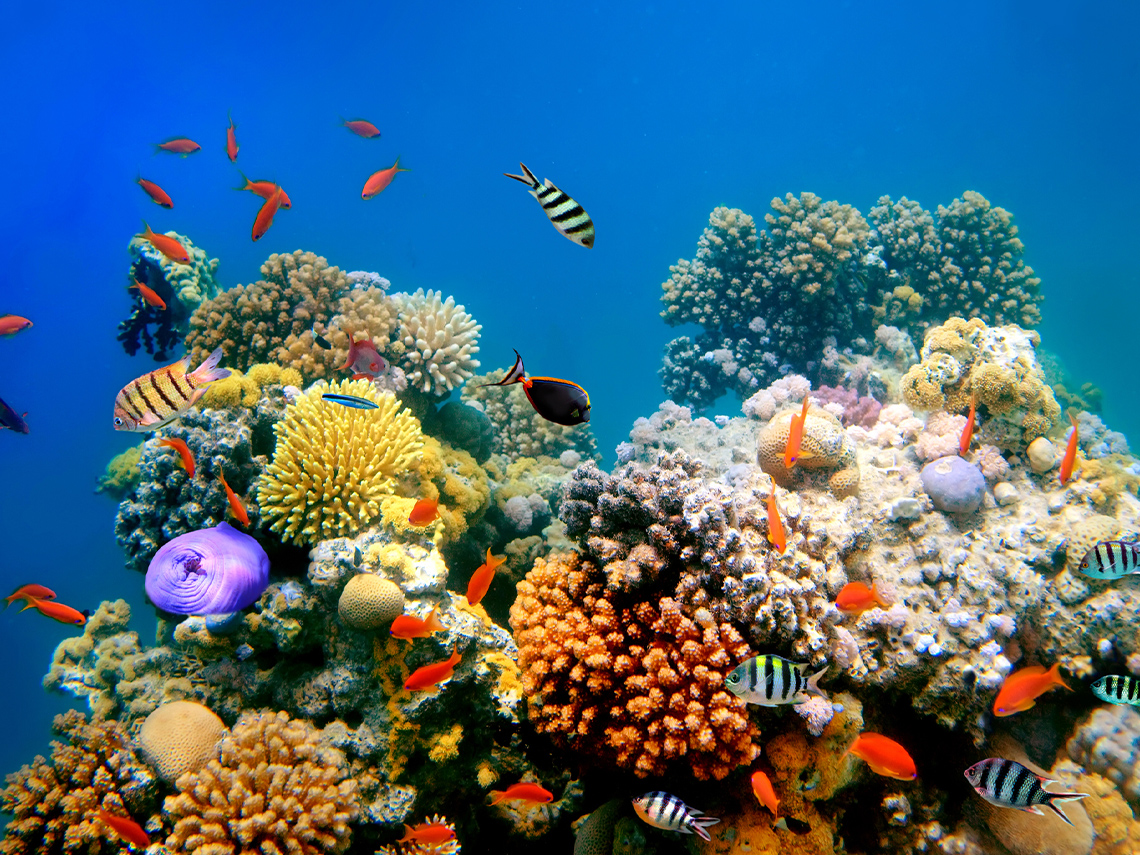
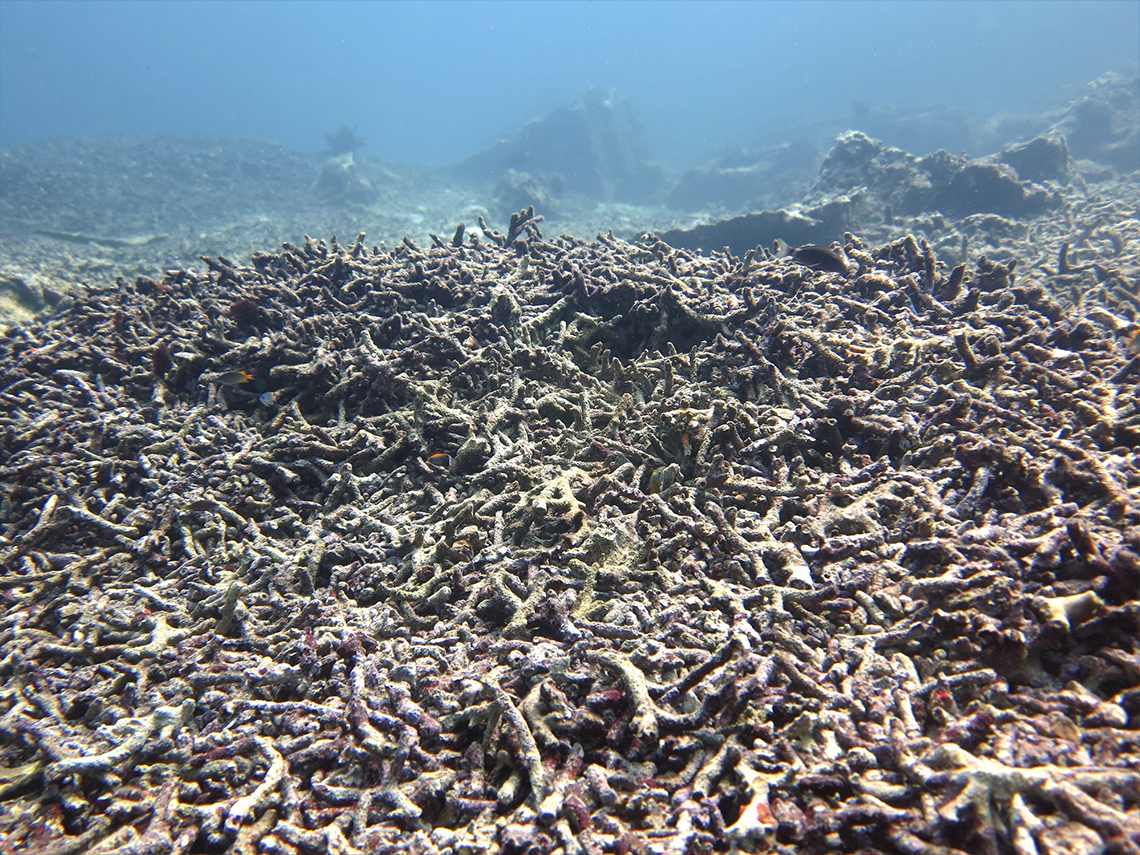
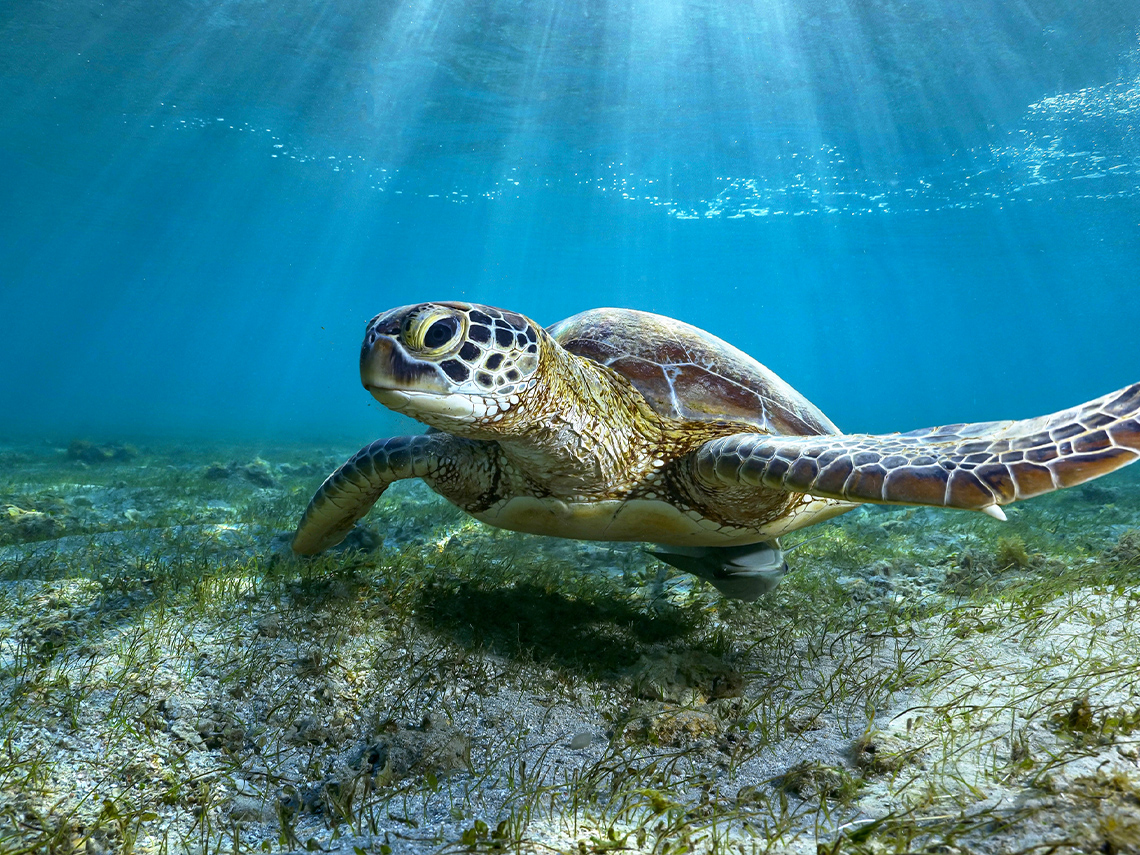
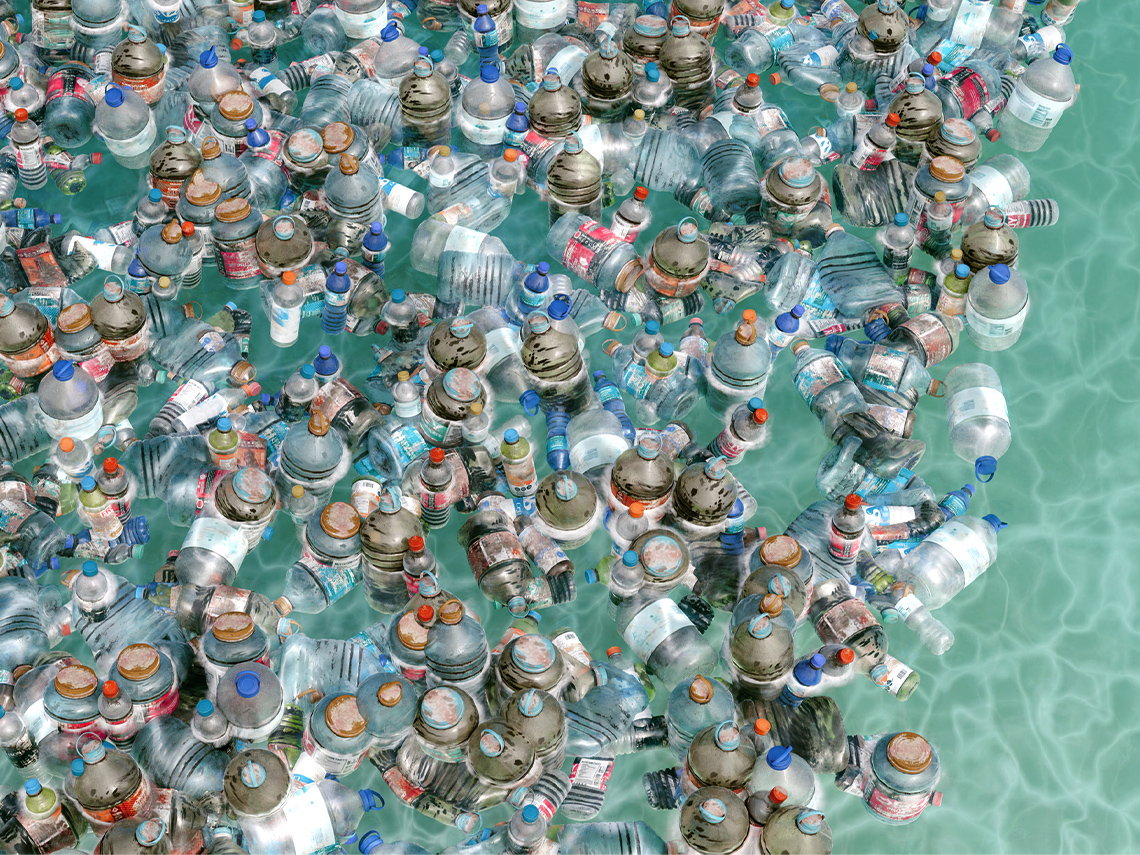
Lastly, explore the following images. Record both what you notice about the images, and what you wonder about them.
Text forms
In this learning activity, we will examine the difference between text forms and text genres.
Let’s start with text forms. Teacher Chiara explains…
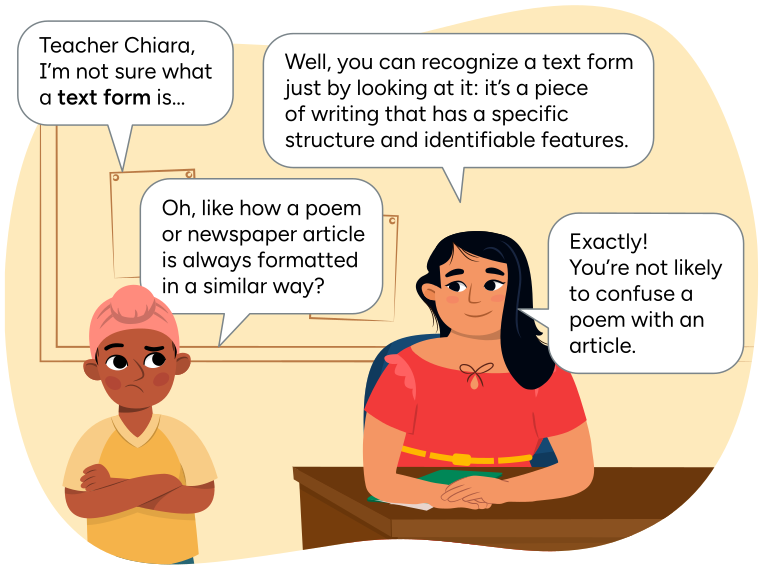
Teacher and student talking.
Student: Teacher Chiara, I’m not sure what a text form is…
Teacher: Well, you can recognize a text form just by looking at it: it’s a piece of writing that has a specific structure and identifiable features.
Student: Oh, like how a poem or newspaper article is always formatted in a similar way?
Teacher: Exactly! You’re not likely to confuse a poem with an article.
A text form’s features help it fulfill its purpose, such as educating, informing, or entertaining.
Text forms: Two examples
Let’s take a closer look at two text forms that you are going to encounter in this learning activity.
Infographic
An infographic is a great example way of communicating a lot of information in an accessible, fun way. It keeps text brief. As the name suggests, it uses a range of graphic elements (maps, pictures, graphs, colours, fonts) to convey information. Explore the following interactive infographic to learn more:
Informational article
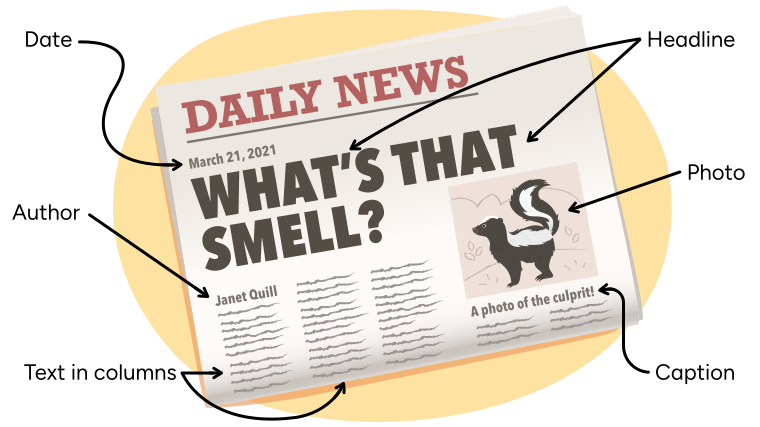
An informational article (such as a magazine or newspaper article) is another example of a text form. It might appear in print or digital form. Explore the following interactive image of a print newspaper article:
Pause and Reflect
Reflection question
Answer the following reflection question in your notebook, or using another method of your choice.
- How do the features of an informational article (for example, a newspaper article) help it communicate effectively?
Once you have recorded your thoughts, press Possible Answer.
The features of an informational article make it very easy to get the key information quickly. The headline indicates the topic in a few words. The photo and caption give you a visual understanding of the topic. The columns of text are easy to read if you want more in-depth information.
Text genres
Text genres (usually called just “genres”) are another way of classifying texts. Unlike text forms, you can’t identify a genre just by looking at it (in other words, by its shape and structure). You need to read the content to identify the genre.
Teacher Chiara explains:
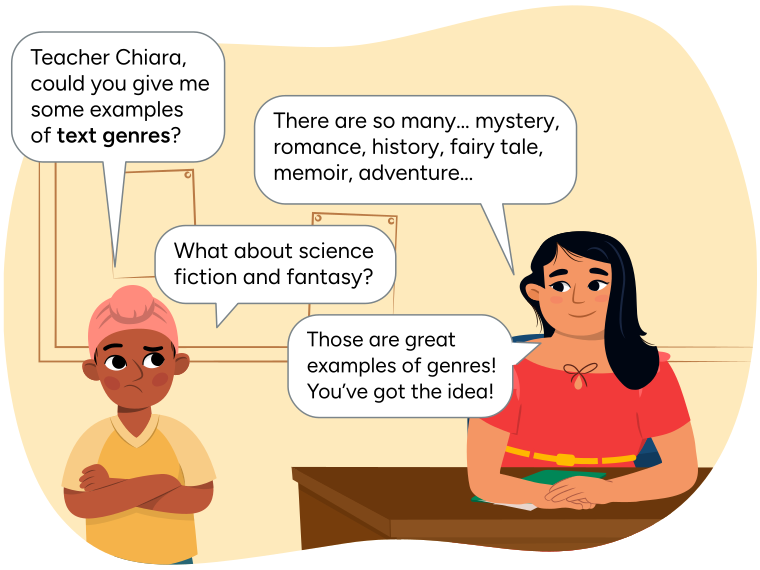
Teacher and student talking.
Student: Teacher Chiara, could you give me some examples of text genres?
Teacher: There are so many… mystery, romance, history, fairy tale, memoir, adventure…
Student: What about science fiction and fantasy?
Teacher: Those are great examples of genres! You’ve got the idea!
A given text can have both a text form and a genre. For example, think of a sci-fi graphic novel. The text form is “graphic novel,” and the genre is “science fiction”!
Pause and Reflect
Reflection question
Answer the following reflection questions in your notebook, or using another method of your choice.
- What are your favourite genres? Why do you enjoy these?
Check your understanding
Sort the following items into genre or text form (keep in mind that a text form has distinctive shape/structure).
Place the cards into categories that best match. Use the arrow buttons to navigate between cards.
Fiction versus nonfiction
There’s another important way of categorizing texts: fiction versus nonfiction. Can you tell one from the other?
Look at the following two statements. Decide whether each one is fiction or nonfiction.
Select the correct answer, then press Check Answer to see how you did.
To learn more about fiction and nonfiction, press the following tabs.
Fiction is not true or factual. It is invented by the author, usually in order to entertain us.
Picture books, novels, and short stories are examples of fiction.
Nonfiction deals with facts and information. The author of nonfiction often does research, and writes in order to inform and educate us.
Science blogs, essays, textbooks, and informational articles are examples of nonfiction.
Pause and Reflect
Reflection questions
Answer the following reflection questions in your notebook, or using another method of your choice.
- Do you prefer fiction or nonfiction? Explain.
- What are your reasons for reading fiction? What are your reasons for reading nonfiction?
- Why is it important to be able to tell the difference between fiction and nonfiction?
You have just done a lot of work on different ways of categorizing texts. Now is a great time to take a break before we look at climate change and oceans!

Student Wellness
Take a break!
Time for a body break! If possible, stretch your body and move around your space.
How is climate change impacting oceans?
In this section of the learning activity, you will explore a text about how climate change is impacting oceans. You will be asked to identify the text form and provide evidence about how it communicates meaning.
Read A Changing Ocean. If you wish, you can download a copy for reference.
Press the Article button to access the A Changing Ocean.
Article(Opens in a new tab)
Pause and Reflect
Reflection questions
Answer the following reflection questions in your notebook, or using another method of your choice.
- Is this text an example of fiction or nonfiction? What type of text form is it? Do you think it is credible (trustworthy)? Why or why not?
- What are some of the features of this text form? How do they help communicate meaning?
Once you have recorded your thoughts, press Possible Answer.
- This is a nonfiction informational article. I think it is credible. It contains a lot of factual information about the topic, and includes references to scientific news articles and websites.
- The text has features of an informational article, such as a title, subheadings, images, statistics, and facts. It is broken down into sections, so it is easy to get a sense of the material covered. These sections and subheading also make it easy to navigate the article and gather key information. The graphic elements add variety and reinforce our learning.
Check your understanding
How well did you understand the content of the article? Try the following true-or-false questions.
Select the correct answer, then press Check Answer to see how you did.
Sustainable solutions
Around the world, people are designing innovative sustainable solutions to help and protect the ocean and the habitats that exist within it. Explore the innovations shown in the following images:
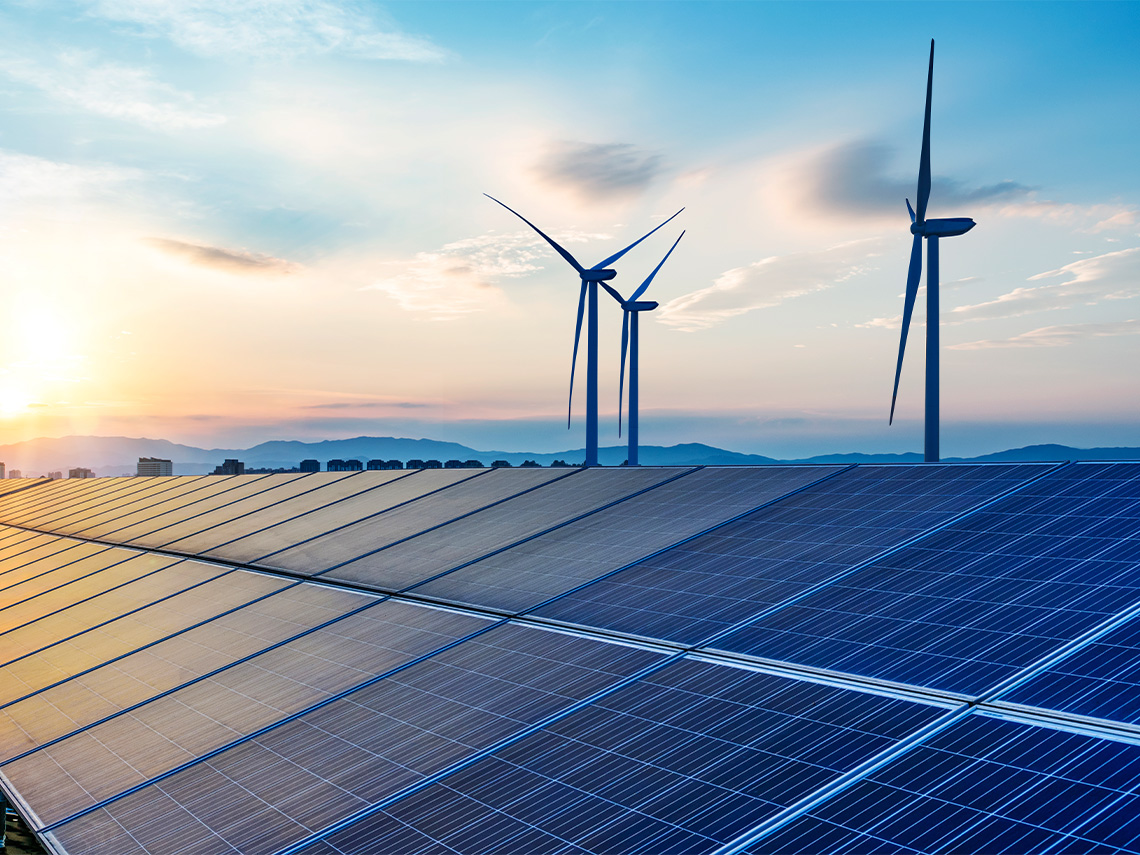
Renewable energy sources (such as wind, solar, and tidal energy) reduce greenhouse gas emissions that are warming the ocean.
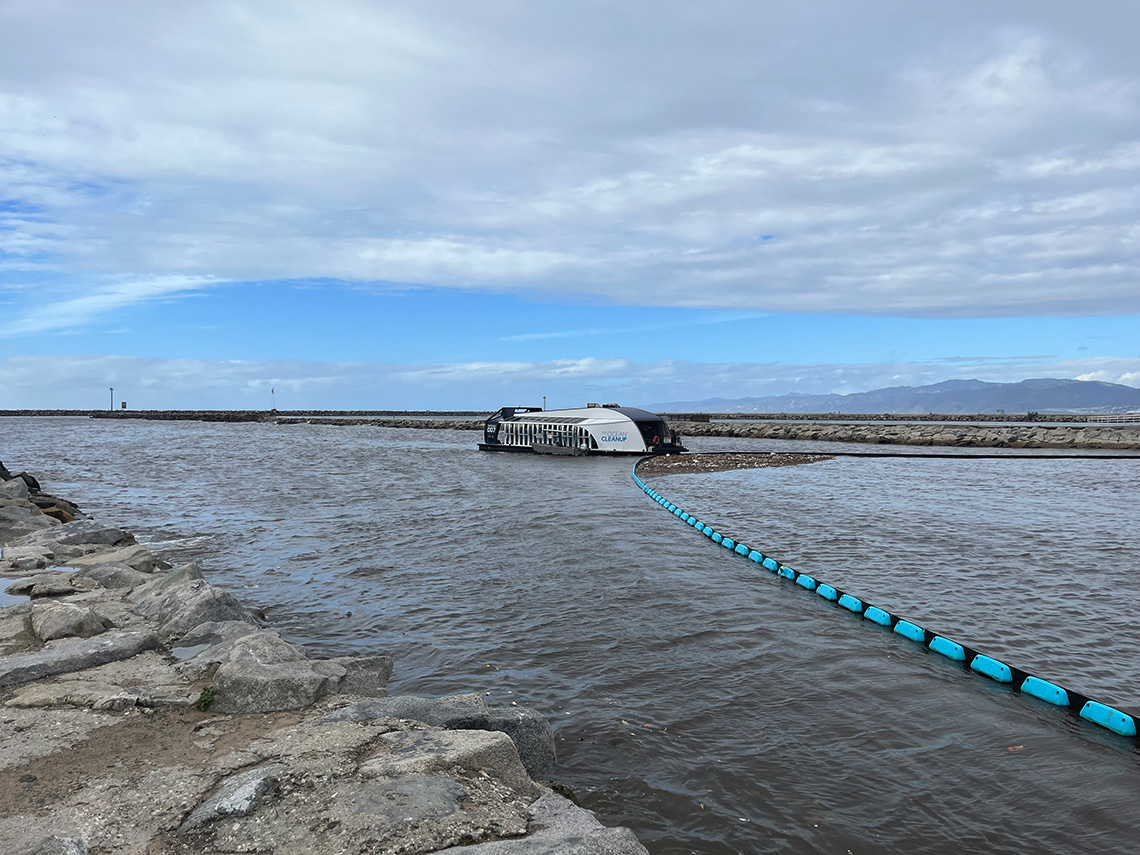
Technologies are being designed to remove pollution from oceans or prevent it from reaching oceans. This “trash interceptor” in Los Angeles, California, was designed by The Ocean Cleanup, a non-profit organization.
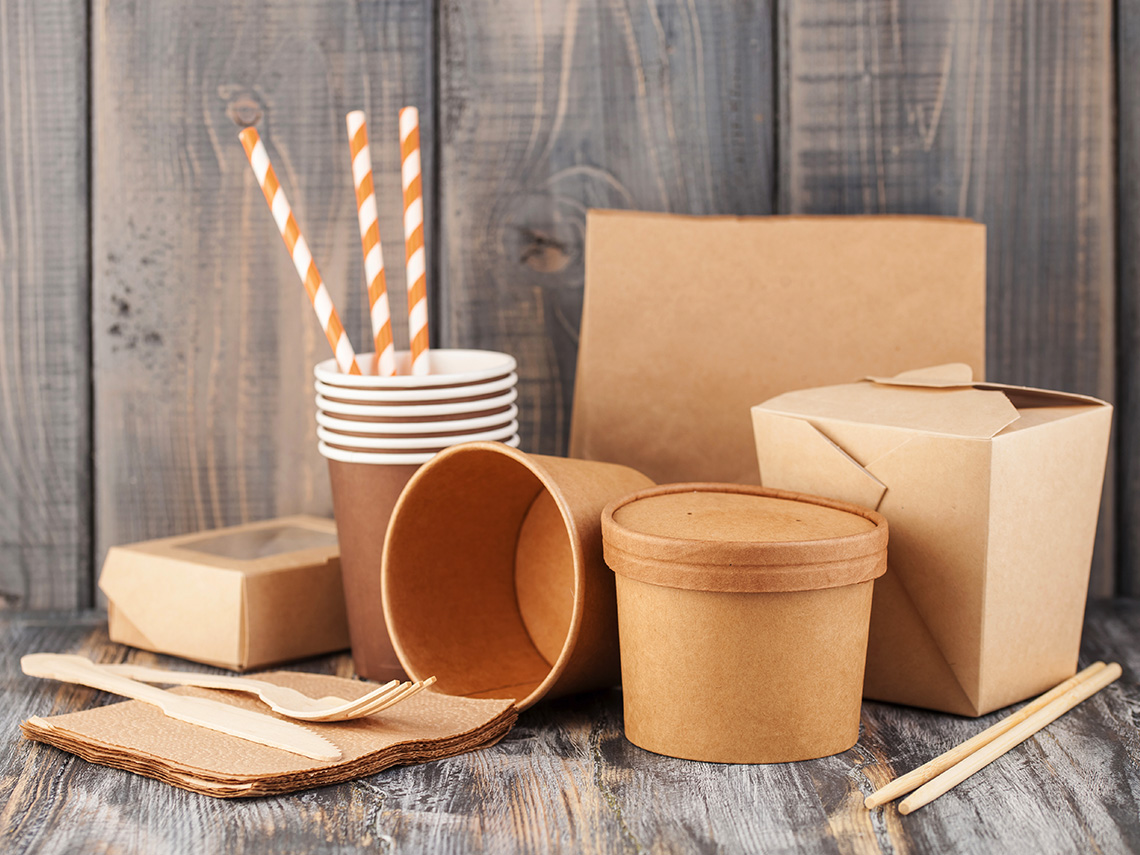
Recyclable, non-plastic products are being developed to prevent single-use plastics finding their way into oceans, creating microplastics.
What can we do?
In this section of the learning activity, you will explore a text that highlights various ways we can help the ocean. You will be asked to identify the text form and provide evidence about how it communicates meaning.
Access 10 Ways to Help our Ocean. You can download a copy for reference if you wish.
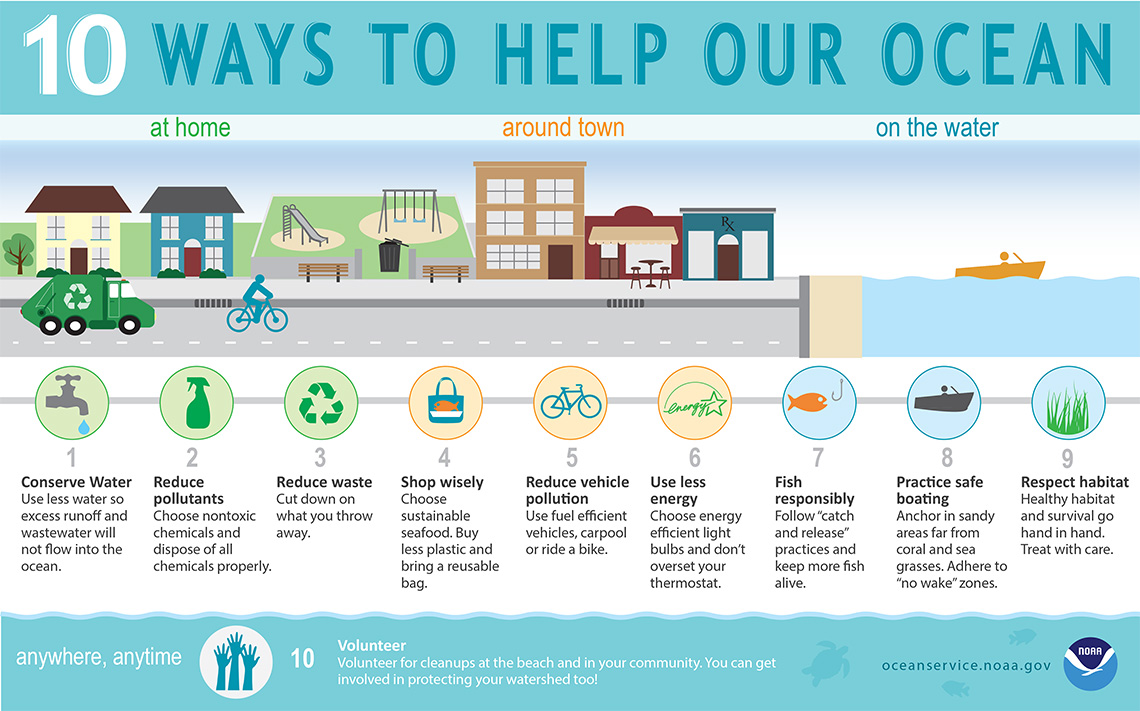
Infographic displaying ten ways to help our ocean from home, around town, and on the water.
Example 1: Conserve water
Example 2: Reduce pollutants
Example 3: Reduce waste
Example 4: Shop wisely
Example 5: Reduce vehicle pollution
Example 6: Use less energy
Example 7: Fish responsibly
Example 8: Practice safe boating
Example 9: Respect habitat
Example 10: Volunteer anywhere, anytime
Complete in your notebook or using the following fillable and printable document.
Press the Activity button to access the Ocean Infographic.
Pause and Reflect
Reflection questions
Answer the following reflection questions in your notebook, or using another method of your choice.
- Is this an example of fiction or nonfiction? What type of text form is it?
- How do the features of this text form help communicate meaning?
Once you have recorded your thoughts, press Possible Answer.
- This is a nonfiction infographic.
- The features of this infographic make it very easy to absorb complex information quickly. The infographic has clear headings and uses colourful graphics and visual elements to highlight key information and ideas. The text is kept very short and clear. Globally, it is very eye-catching and appealing to the reader, a bit like a poster.
Setting a goal
Set a goal for one thing that you will commit to doing personally to help or protect the ocean. Why did you choose this? What steps will you take to action this goal?
Record your ideas in your notebook, or using another method of your choice.
Composing a letter
Your task is to write a draft of a letter to a local government representative. You will explain the impact of climate change on the oceans and suggest actions that community could take to improve the situation. Be sure to emphasize the importance of individual and collective efforts in combatting climate change and protecting marine ecosystems.
You may want to begin by reviewing the content you have learned. Pull out key information about how climate change is impacting the oceans, and sustainable ideas that communities can use to help.

Salutation: To Whom It May Concern
Did you know that letters can be addressed to “To Whom It May Concern”? This is a general greeting that is used when a letter is addressed to no one in particular and/or the writer is unsure who will read the letter.
When you use this phrase, be sure to capitalize every single word, and to place a colon after it, like this:
To Whom It May Concern:
To create the draft of your letter, complete the fillable and printable Letter Template in your notebook or using the following document. If you would like, you can use speech-to-text or audio recording tools to record your thoughts. (Note: The template provides some of the information in the right-hand column. You just have to fill in the blank cells.)
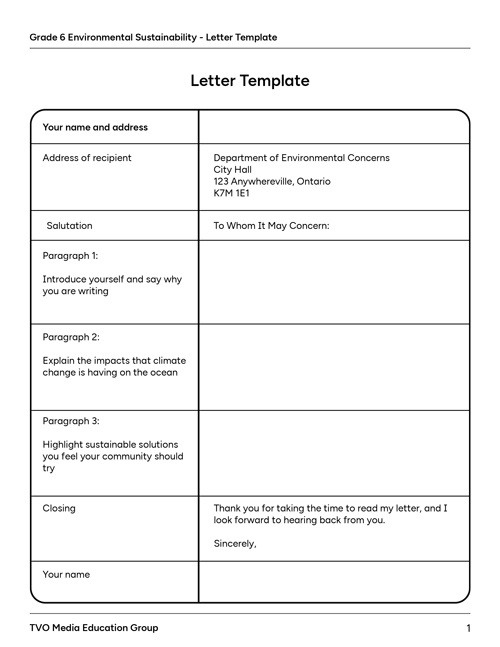
Congratulations! You have created a draft of your letter. You have finished the task (no need to create a final copy).
Let’s check!
Check your understanding of this learning activity by completing the following multiple-choice questions.
Select the correct answer, then press Check Answer to see how you did.
Putting it all together
Let’s begin by doing some “big picture” thinking about what you have learned.
Pause and Reflect
Reflection questions
Answer the following reflection questions in your notebook, or using another method of your choice.
- In this learning activity, you explored two different text forms on the topic of ocean health: an informational article and an infographic. Which text form did you find was easier to learn from? Which text form did you enjoy more? Why?
- Why do you think it is important to learn about how climate change is impacting the ocean? Can you connect this learning with any other subjects, such as Science or Geography? Can you connect this learning with anything in your everyday life?
When we learn about things that are impacting the world around us, and discover what we can do to help, it is important to educate others. By spreading the word, you can make a positive difference in the world around you.
You be the teacher!
Your task is to create an educational piece of media or text to share with others about how climate change is impacting the oceans, and why we, as humans, should care. You may also wish to include a “call to action,” which is something that viewers or readers can do to help.
You will have a lot of choice about how you share your message! It could be an essay, but it could also be a song or a poster or a blog post. More on this later!
Graphic organizer
A graphic organizer can be a great tool for planning. Complete the fillable and printable Organizer: My Educational Project in your notebook or using the following document. If you would like, you can use speech-to-text or audio recording tools to record your thoughts.
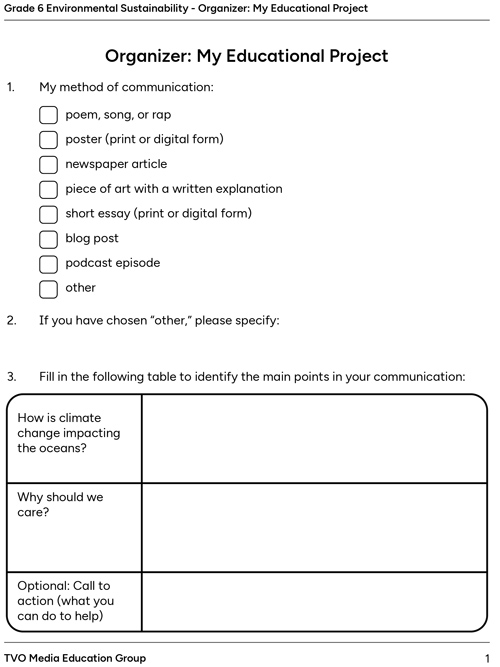
Press the Activity button to access the Organizer: My Educational Project.
Activity(Opens in a new tab)Using the information in the organizer, complete your project.
To assess your work, use the following checklist.
Checklist: My educational project
If possible, share this checklist with a partner so you can get their feedback!
Reflection
As you read through these descriptions, which sentence best describes how you are feeling about your understanding of this learning activity? Press the button that is beside this sentence.

I feel...
Now, record your ideas using a voice recorder, speech-to-text, or writing tool.