Learning goals
We are learning to…
- analyze and explain how the knowledge and skills developed in this grade support learning in various subject areas and in everyday life, and describe how they enhance understanding and communication
- analyze explicit and implicit perspectives communicated in various texts, evaluate any evidence that could suggest bias in these perspectives, and suggest ways to avoid any such bias (Opens in a new window)
- make revisions to the content, elements of style, patterns, and features of draft texts, and add, delete, revise, and reorganize sentences to improve clarity, focus, and coherence(Opens in a new window), using various strategies and seeking and selectively using feedback
Success criteria
I am able to…
- analyze various texts about land use issues for implicit versus explicit perspective and bias, and identify alternative perspectives that are left out of the text
- revise a text to include multiple perspectives about deforestation
- explain how and why various perspectives are important to understand and consider how this can be applied in the real world

Land use
Check out the following images:
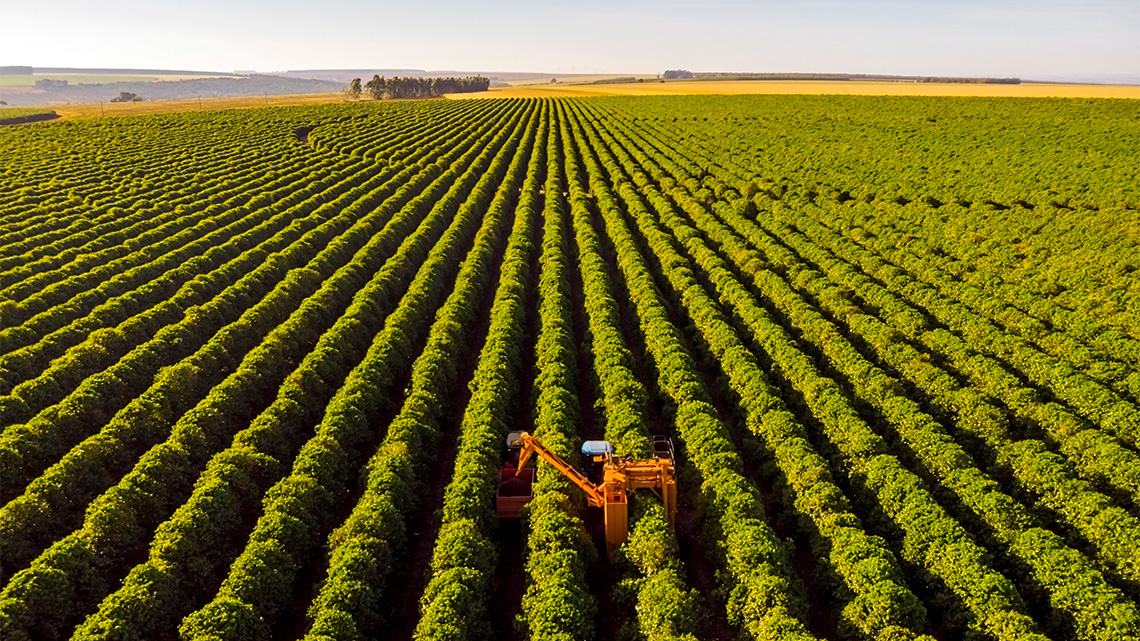
Coffee harvesting on a coffee farm

Open-pit iron mine and quarry
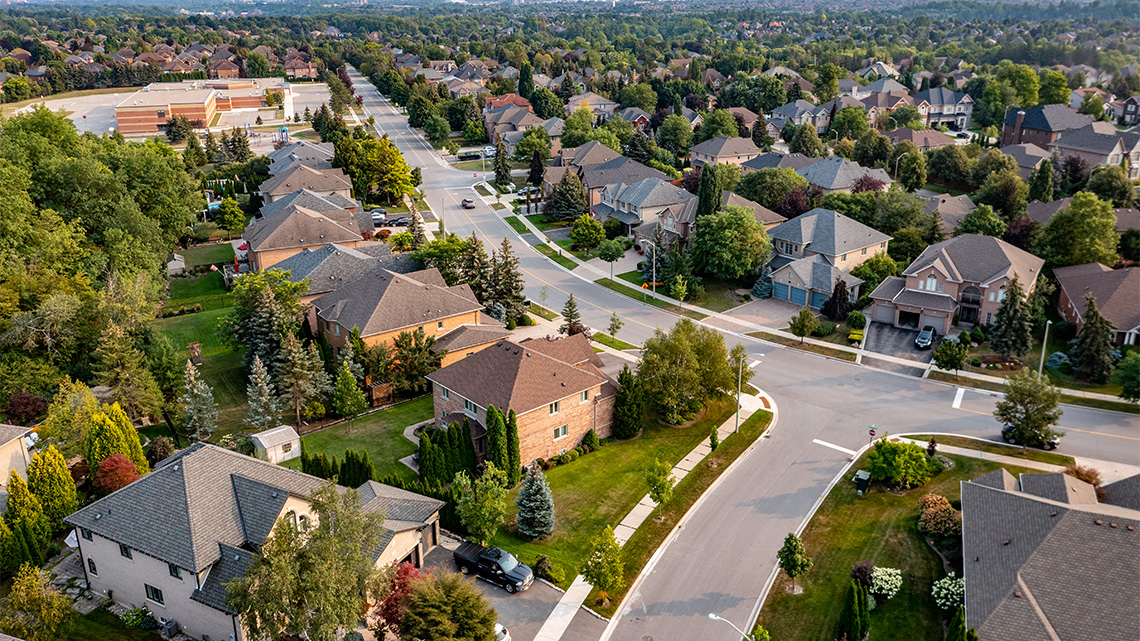
Residential street

City park

Brainstorm
Brainstorm
After exploring the previous images, brainstorm a list of things that land is used for.
Record your ideas in a notebook or another method of your choice.

Challenge yourself!
Try typing or writing your notes in cursive writing. You may check out the following tips to guide you.
Tips: Cursive writing or typing
Press the following tabs to learn more.
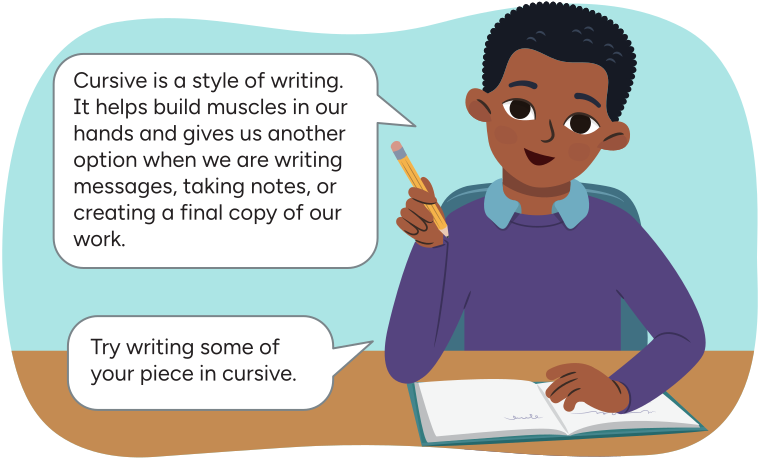
Student Arthur says: "Cursive is a style of writing. It helps build muscles in our hands and gives us another option when we are writing messages, taking notes, or creating a final copy of our work. Try writing some of your piece in cursive."
Let’s review cursive writing!
Tips for cursive letters:
- When we write in lowercase, we always begin at the bottom.
- When we write in uppercase we can start from the top or the bottom.
- Try to keep the pencil on the page until you are done the word.
- Try to press gently as you write so that your hand can move easily across the page.
- Take your time to make sure that you are writing clearly and evenly.

Explore the video on Left-Handed Tips to learn more.
Typing is a great skill to develop! When we need to use a computer or tablet keyboard, knowing how to type helps us:
- take notes
- respond to messages
- create final drafts of our work
Explore the following image to see what fingers are used to type each letter or number.

A keyboard and hands showing which fingers are used to press each key when typing.
The left pinky finger presses the keys 1, Q, A, and Z.
The left ring finger presses the keys 2, W, S, and X.
The left middle finger presses the keys 3, E, D, and C.
The left index finger presses the keys 4, 5, R, T, F, G, V, and B.
The left or right thumb presses the space bar.
The right index finger presses the keys 6, 7, Y, U, H, J, N, and M.
The right middle finger presses the keys 8, I, K, and comma.
The right ring finger presses the keys 9, O, L, and period.
The right pinky finger presses the keys 0, minus, equal, P, open bracket, closed bracket, backslash, semicolon, apostrophe, and forward slash.
We use specific muscles in our hands to type! It’s important to practice so that it becomes easier to type correctly without putting too much pressure on our hands and our wrists.
For additional typing practice, check out the game, Keyboard Climber 2!

Perspectives

When exploring a text or other forms of media content, it is important to always consider the perspective from which the story is being told, as well as other perspectives on the content that might exist.
A perspective is a particular attitude towards something.
There are two types of perspectives to consider – implicit and explicit. By understanding these two perspectives, you will gain deeper insight into the kind of underlying biases, assumptions, or cultural influences that shape texts and media.
Press the following tabs to explore the difference between explicit and implicit perspectives.
An explicit perspective is a perspective in a text that is expressed clearly, directly, and unambiguously, which means it is only open to one interpretation. It is overt and leaves little to no room for misinterpretation because of how openly communicated it is. In texts, this could be a straightforward statement of opinion, fact, or intention.
For example, consider an article about land use. An explicit perspective might be a sentence like “The government should prioritize agricultural development over industrial expansion to ensure food security.” This statement clearly expresses a specific perspective without requiring further interpretation to understand it's meaning.
An implicit perspective in a text is a perspective that is presented or implied but expressed indirectly; it may be an attitude or view held subconsciously by the creator. This perspective might be implied or suggested through the language, tone, choice of facts, or presentation. This type of perspective requires the reader or listener to infer the underlying message or stance. Implicit perspectives are more subtle and can be open to interpretation.
For example, in an article that discusses the risks and downsides of urban expansion on green spaces without explicitly stating it’s “negative”. This implicit perspective might be a critical view of urban expansion, even though its not directly stated.
Implicit or explicit?
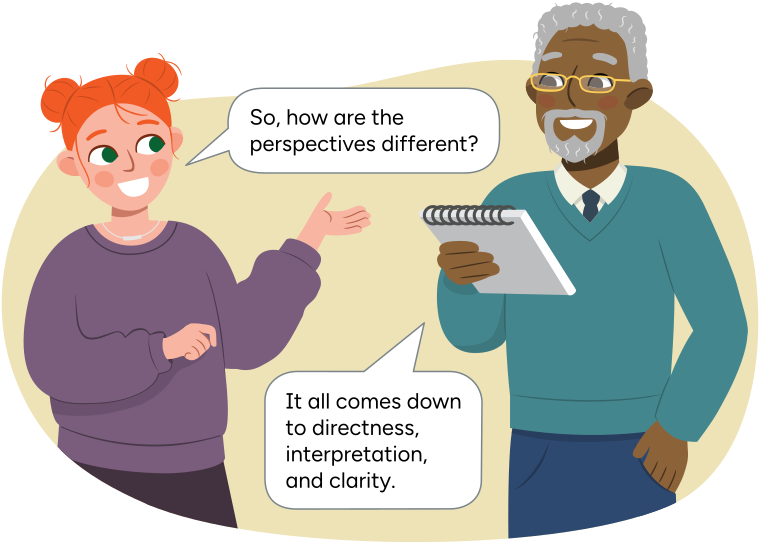
The explicit and implicit perspectives differ based on the following:
- directness
- interpretation
- clarity
Learning check!
For this activity, sort the following statements as implicit or explicit perspectives.
Bias

Bias refers to an opinion, preference, prejudice, or inclination that limits an individual’s or group's ability to make fair, objective, or accurate judgements.
Bias could occur in any text. Similar to perspective, there is implicit and explicit bias.
Check out the following descriptions for each type of bias.

Try it
Try it!
For this activity, read through the following statements, and decide whether they are examples of implicit or explicit bias.
- This company’s decision to prioritize industrial development over environmental conservation reflects a clear disregard for the preservation of natural habitats.
- While urban expansion is necessary for economic growth, it’s essential to strike a balance with environmental conservation efforts.
When you’re ready, press Let’s Check! to learn more.
Text
| Statement | Correct bias |
|---|---|
This company’s decision to prioritize industrial development over environmental conservation reflects a clear disregard for the preservation of natural habitats. |
Explicit bias This statement is explicit bias because it overtly expresses bias against the company’s decision to prioritize development over the environment. |
While urban expansion is necessary for economic growth, it’s essential to strike a balance with environmental conservation efforts. |
Implicit bias This statement contains implicit bias that favours urban expansion over environmental concerns. Although it acknowledges the importance of environmental conservation, the phrase “necessary for economic growth” subtly implies that urban expansion is the priority. |
Land use
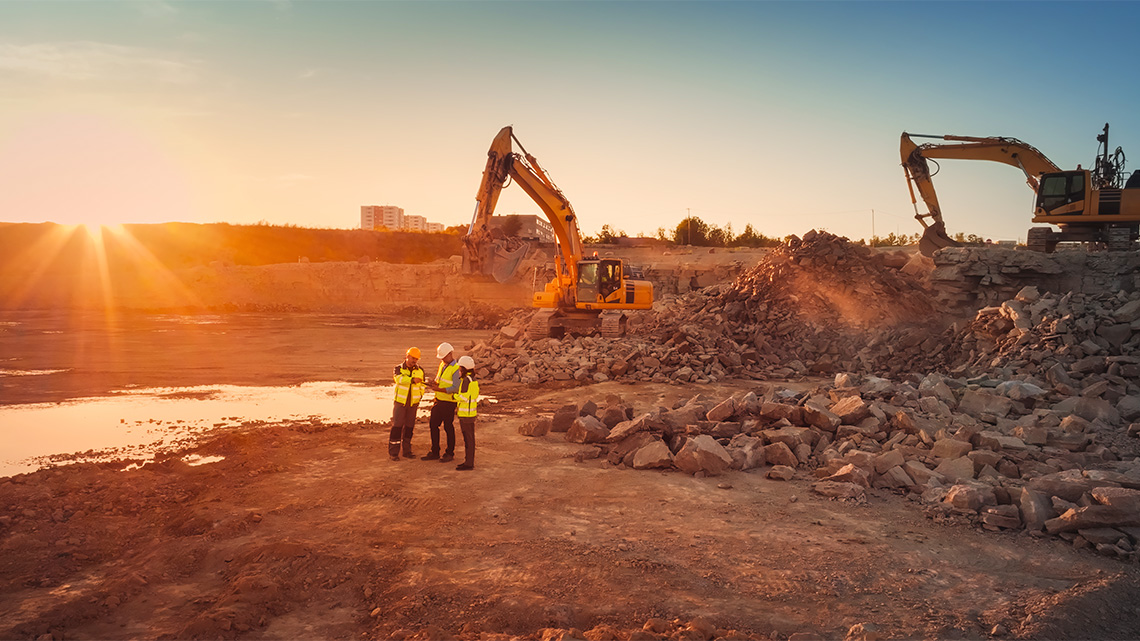
Developing land for settlement is rarely without competition or conflict. Land can be used for many different purposes, such as agriculture, industry, housing, transportation, recreation, green spaces, as well as land claims by Indigenous communities.
When land issues arise, there are usually several groups that have different perspectives regarding sustainable land use. These perspectives could include environmental groups, governments, local residents, Indigenous communities, non-government organizations, and many more.

Investigate
Investigate
In this section of the learning activity, you will be exploring three different land use concerns:
- agriculture
- Indigenous rights
- urban development
As you read through each case study, consider:
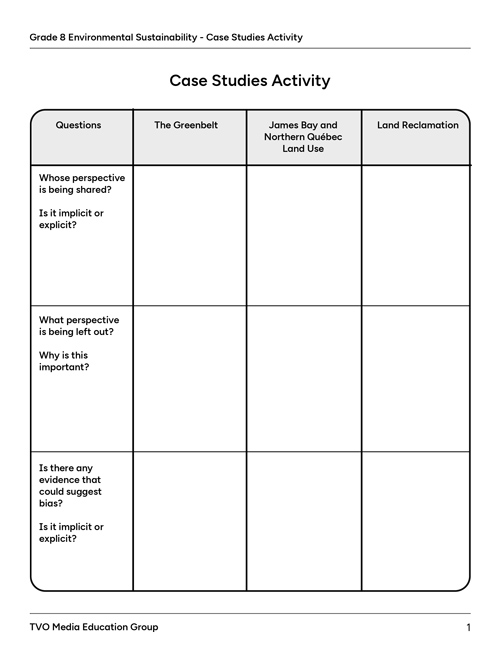
- Whose perspective is being shared? Is it implicit or explicit?
- What perspective is being left out? Why is this important?
- Is there any evidence that could suggest bias? Is it implicit or explicit?
You may use the fillable and printable Case Studies Activity in your notebook or using the following document. If you would like, you can use speech-to-text or audio recording tools to record your thoughts.
Let’s check out the following case studies about land issues, as we analyze implicit and explicit perspectives and biases.
The Greenbelt
Press the following tabs to learn more about the Greenbelt in Ontario.
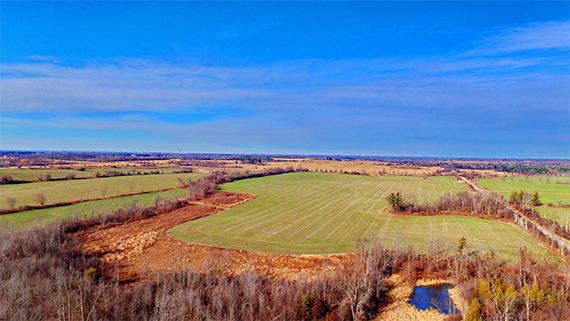
Ontario’s Greenbelt was officially given protected status in 2005 and contains 2 million acres of protected land including farmland, forests, wetlands, rivers, and lakes. The purpose of the protection of the Greenbelt is to prevent loss of farmland and to restrict uncontrollable development of housing.
The Greenbelt is one of the most biodiverse areas in all of Canada, including 21 urban river valleys and seven coastal wetlands. This area provides a home for wildlife and allows native plants to flourish. Additionally, 40% of it is farmland due to the highest quality soils that exist within the greenbelt, providing a sustainable and beneficial source of food to surrounding areas.
The Greenbelt preserves clean air and water, reduces flood risks, and provides habitats for wildlife. It also provides large areas of untouched nature for people to visit and helps mitigate the effects of climate change in Ontario.
Check out the following video to learn more.
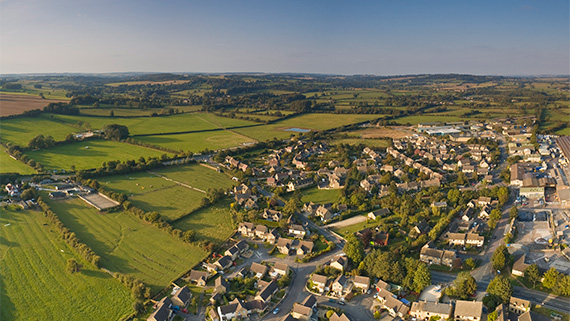
Environmentalists and other citizens raised concerns about the environmental, social, and economic impacts of developing the Greenbelt.
First, the Greenbelt serves important ecological functions, such as habitat for wildlife, preserving biodiversity, and mitigating climate change. Development could lead to habitat loss and degradation of natural landscapes.
Next, the Greenbelt is valued for its recreational opportunities that contribute to the mental and physical well-being of residents, community members, and tourists. Additionally, one of the main goals of the Greenbelt is to prevent uncontrollable “urban spawl” (the spread of housing developments beyond the limits of large cities).
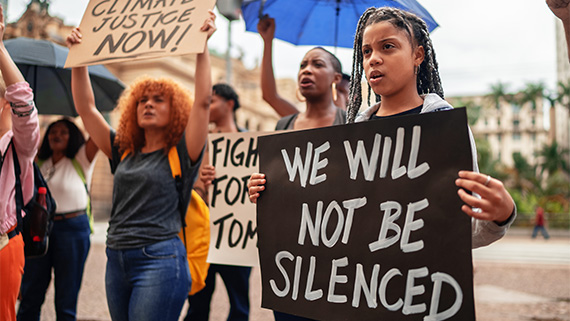
Lastly, the Greenbelt plays a critical role in climate resilience by absorbing floodwater and reducing the risk of flooding, so disrupting this land could lead to an increase in public safety hazards.
Overall, much of the public community disagrees with the idea that the Greenbelt land should be converted into housing developments. Concerns were raised about how developments would impact ecosystems and biodiversity, climate change resilience, and the well-being of humans.
The protection of the Greenbelt requires careful consideration of diverse perspectives and a commitment to sustainable land use.
James Bay and Northern Québec
Press the following tabs to explore James Bay and Northern Québec.
In the 1970s, the government of Québec set out to construct several hydroelectric dams on the James Bay region, a smaller bay off the Hudson Bay. Constructing these new facilities was envisioned as a step towards modernizing the provincial economy by using the untapped natural resources of the region. Cree and Inuit communities, who were not consulted during this process, defended their land against this development project and the Québec government.
The government flooded over 110,000 km2 of lands that belonged to the James Bay Cree and Inuit, which included hunting and harvesting areas. The flood contaminated the fish, and was a factor in the deaths of an estimated 10,000 caribou. Negotiations that led to the James Bay and Northern Québec Agreement (JBNQA) came out of a legal need, and the recognition that Indigenous communities must have their treaty rights respected. The JBNQA was ultimately upheld so that these communities could fulfill their roles in the stewardship of their traditional territories.
In 1973, the decision was sent to the Supreme Court who ruled in favour of Indigenous Peoples and demanded the government stop construction and negotiate with neighbouring communities . Eventually, the parties settled through the JBNQA. This was one of the first “modern day” treaties that recognized the rights of Indigenous Peoples to their land, with the core idea of preserving Indigenous ways of knowing, being, and doing.
Under the JBNQA, agreements were made to ensure that the Cree and Inuit communities would benefit from the development projects within their territories. Since the JBNQA has been in place, the impacts of rapid industrialization and environmental changes on traditional territories have been profound. While the hydroelectric dams have contributed to Québec’s economy, the environmental alterations and social disruptions highlight the ongoing challenges in balancing development with traditional ways of knowing, being, and doing.
Learning check!
Read each statement and decide if it’s true or false.
Select the correct answer, then press Check Answer to see how you did.
Land reclamation
Press the following tabs to learn more about land reclamation.
Land reclamation is the conversion of land from one use to another. It can be a way of addressing environmental degradation or meeting the needs of a growing population, but it can also have significant negative impacts on the environment and existing communities.
One example is the creation of artificial islands in Dubai, United Arab Emirates. Artificial islands have been created in Dubai to expand the cities land area. One of the most notable examples is Palm Jumeriah, an artificial island shaped like a palm tree.

Dubai Palm Jumeirah Island, United Arab Emirates
The project involved the dredging of sand from the sea floor, and using this sand to create a new land mass. This development has lead to a number of issues – such as the destruction of habitats and the displacement of marine life. While there was a hope that the island would boost tourism, the impact on the surrounding environment will be long-lasting. The project has led to changes in ariel wildlife, coastal erosion, and wave patterns. Sediments that were stirred up during construction has negatively impacted local marine species and reduced the amount of sunlight that filters down to vegetation.
Now that you’ve explored three different land use issues, complete your notes on perspective and bias.
When you’re ready, press Let’s Check! to learn more.
| The Greenbelt | James Bay and Northern Québec Land Use | Land Reclamation | |
|---|---|---|---|
| Whose perspective is being shared? Is it implicit or explicit? | This text gives the perspective of an environmentalist, or someone against development on the Greenbelt. It is an explicit perspective as it directly states the reasons why the Greenbelt should be protected. | This text gives both the perspective of the government and Indigenous communities. It is implicit, as it gives suggestions and information that could be interpreted by audiences differently. | This text gives the explicit perspective of someone who has environmental concerns over artificial islands. This is clear because it only highlights the negative impacts of building the islands. |
| What perspective is being left out? Why is this important? | This leaves out the perspective of housing developers. It could be important to understand why housing development is needed. | This leaves out the perspective of the environment, and how it would be impacted by these changes. | This leaves out the perspective of the government, building developers, marine life, and citizens. |
| Is there any evidence that could suggest bias? Is it implicit or explicit? | It is an explicit bias because it states, “much of the public community disagrees with the idea that the Greenbelt land should be converted into housing developments” and gives many reasons why. | The text does not appear to have bias – it is mostly sharing facts about an event in history, explaining both the government and Indigenous point of view. | The article shows bias towards the artificial islands being negative by leaving out the positives that the island may bring. |
Revising perspectives

Writing and revising
One part of the writing process is revision.
Press Review to reflect on what we’ve learned throughout this learning activity so far.
Throughout this learning activity, you’ve explored different land use issues and perspectives. It is important when you are learning about issues that you are aware of all possible perspectives and understand multiple perspectives. This is why it is important to examine implicit and explicit perspectives and bias in the texts you explore.
Task: Revise a text
For this task, revise a piece of writing to ensure it includes a balance of perspectives.
Begin by exploring the perspective of the land use issue of deforestation.
Step 1: Let’s explore the following text:
Deforestation is a necessary step towards economic growth and development for a city or province. The clearing of land is simply an opportunity to make way for new infrastructure, such as residential housing, agricultural expansion, or commercial complexes, which are all essential for supporting growing populations and boosting local economies. The development of new communities and businesses can be beneficial to both new and existing populations, and the profit made from these developments could be reinvested into community services and conservation efforts, to help balance things out. Modern development projects attempt to incorporate green spaces and sustainable building technologies to offset the environmental impact of deforestation.
Step 2: Consider the following questions:
- Whose perspective on deforestation is being shared in this text?
- Which is being excluded?
When you’re ready, press Let’s Check! to learn more.
This text only gives the perspective of a developer. The perspectives left out include plants or animals in the habitats, local residents, governments, environmental organizations, and Indigenous communities.
Step 3: Revise the previously explored text to include multiple perspectives on deforestation.
This will provide a clear picture of several varying perspectives to the reader.
You may use the following checklist to guide your revision:
Did you…?
If possible, share your text with a peer and seek feedback based on the criteria.
Grammar
Once you have finished revising your text, re-read it for run on sentences or sentence fragments. An important part of revising is ensuring you have complete and proper sentences.

Grammar glimpses: Sentences
Check out the following video to learn more.
After watching the video about fragments and run-on sentences, let’s think about what we’ve learnt.
Learning check!
Read each statement, then choose whether it is a run-on sentence, proper sentence, or sentence fragment.
Select the correct answer, then press Check Answer to see how you did.
Now, re-read your revised text, with a focus on proper sentence structure, while avoiding sentence fragments and run-on sentences.

Fluency
If possible, read your revised copy of the text with a focus on fluency.
For the audience to understand your story, it is important to have good reading fluency when you share it.
Fluency is the ability to identify words correctly and read a text at an appropriate rate with ease, pace, automaticity, and expression. With proper phrasing and focus on punctuation, the reader will gain more meaning from the text.
Re-read your revised text several times, and be careful not to show any bias in the way that you read the text. The audience should not be able to tell which perspective that you agree with, but rather you are clearly sharing all possible perspectives.
You may use the checklist provided to self-assess your own fluency.
Did you practise your…?
Based on the checklist, choose one area of fluency to focus on and set a goal for yourself.
What strategies could you use to help you achieve this goal?

Wrap up
Match each term with the correct definition.

Pause and Reflect
Pause and reflect
Reflect on your learning by responding to two of the following questions:
- Write a reflection on what you’ve learned about the importance of multiple perspectives in discussing land use. Why should all perspectives be considered?
- How can different perspectives impact decision-making in real-world scenarios?
- Who should be consulted in land use planning?
- Create a list of ways that can help students determine the difference between explicit and implicit perspectives and explicit and implicit bias. What clues can they look for in a text or video?
In your response, draw on specific examples from your learning to support your answer.
Record your ideas in a notebook or another method of your choice.
Reflection
As you read the following descriptions, select the one that best describes your current understanding of the learning in this activity. Press the corresponding button once you have made your choice.

I feel...
Now, expand on your ideas by recording your thoughts using a voice recorder, speech-to-text, or writing tool.
When you review your notes on this learning activity later, reflect on whether you would select a different description based on your further review of the material in this learning activity.