Learning goals
We are learning to…
- explore the idea of identity and belonging in texts and show an understanding of the ideas, experiences, and points of view of many different people, including those in Canada
- identify and use oral and non-verbal communication strategies such as expression, gestures, and body language and explain how these strategies help share meaning
- identify specific ideas in texts and make self-to-text, text-to-text, and self-to-world connections
- brainstorm and develop ideas about different topics using simple strategies, sources, our own learning and our own experiences
Success criteria
I am able to…
- explore a Raven’s Quest video featuring Simon, who is Inuk and lives in Ottawa and learn about his hobbies, culture, and community
- find ways that Simon and his family use expression and body movements to introduce themselves
- make connections to the Raven’s Quest video episode
- brainstorm special facts about myself

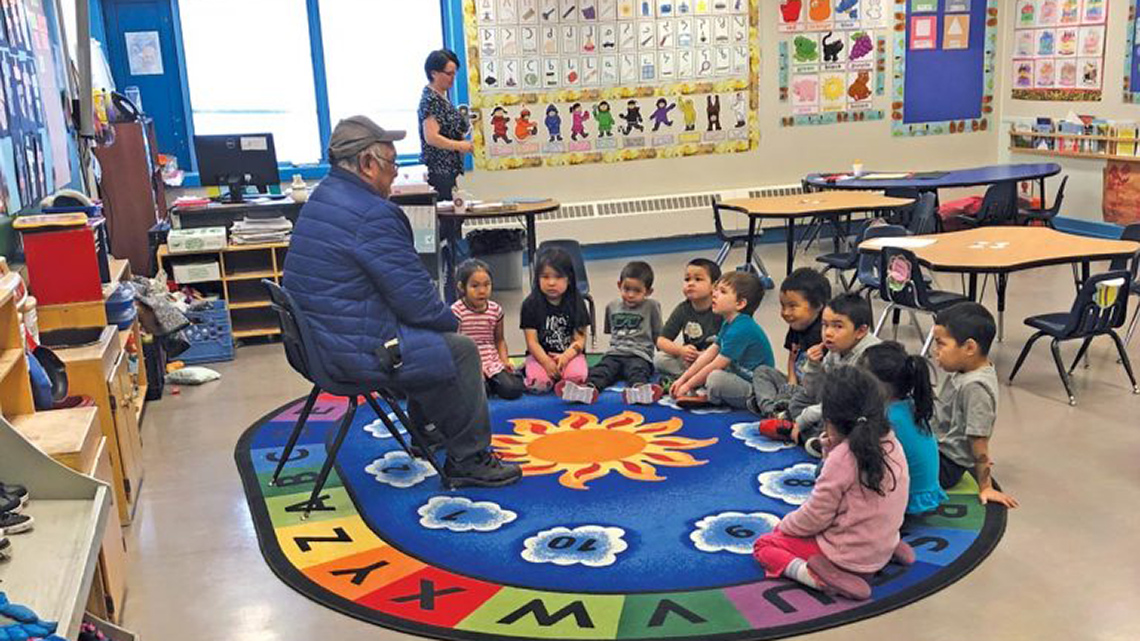
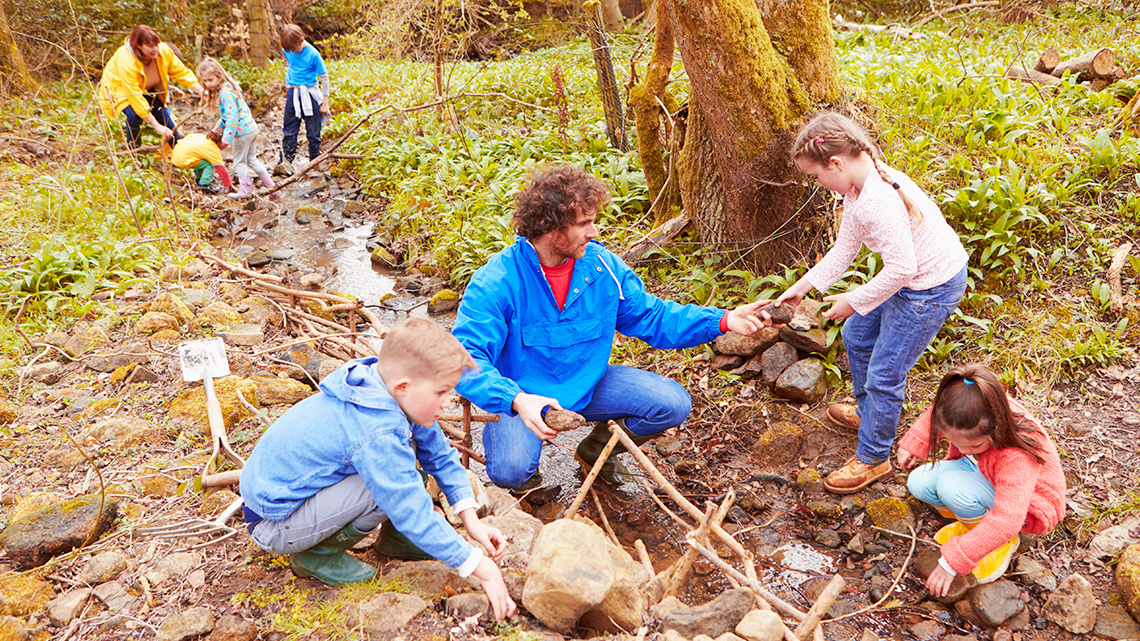




What is a community?
A community is a group of people that live, play, and work together.
A community is also the space where people live, play, and work.
When people feel safe and protected in their community, they also feel comfortable sharing with each other.
They may share:
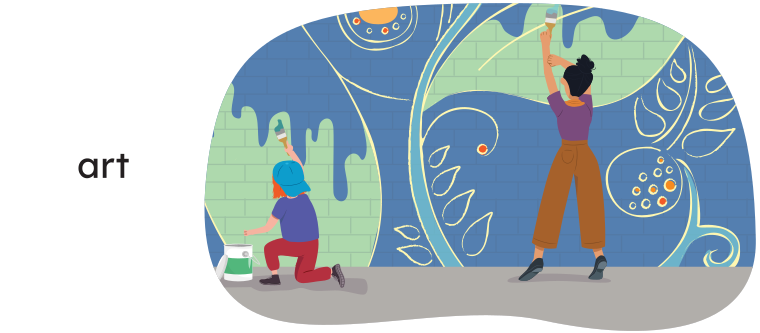

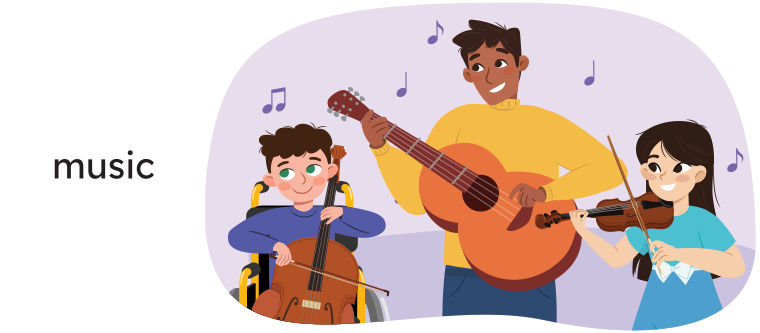
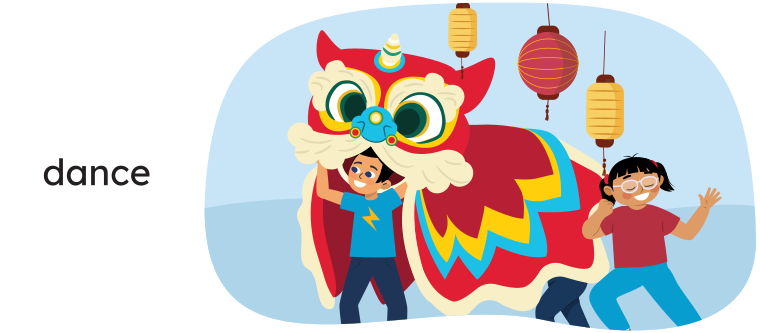
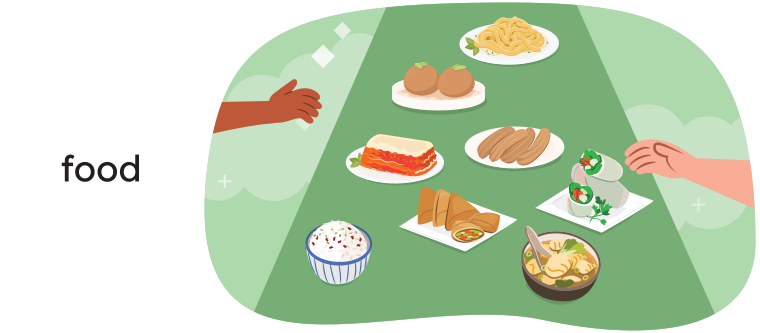
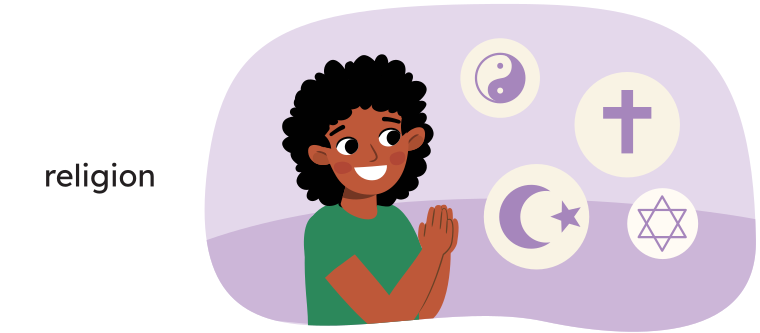
What are some of the people, places, and things in your own community?
Share your thoughts with a partner, if possible.
Let’s meet Simon
Let’s watch a video about Simon and his community!
Press Reveal to see how Simon introduces himself!
Did you notice that Simon spoke two languages when he introduced himself?
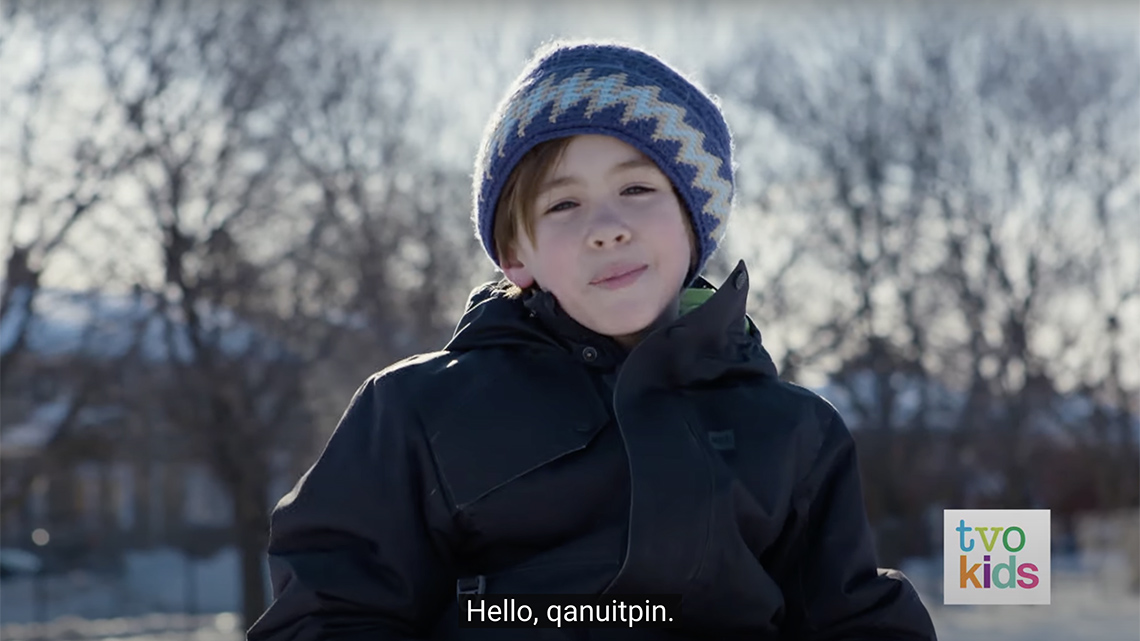
He said “Hello, qanuitpin.”
Simon is Inuit and speaks Inuktitut and English. Do you speak more than language?
How might you introduce yourself?

Did You Know?
Did you know?
The Inuit are original people from the Arctic and northern regions of Canada, Alaska, Russia, and Greenland.
Inuktitut is a language spoken by the Inuit.
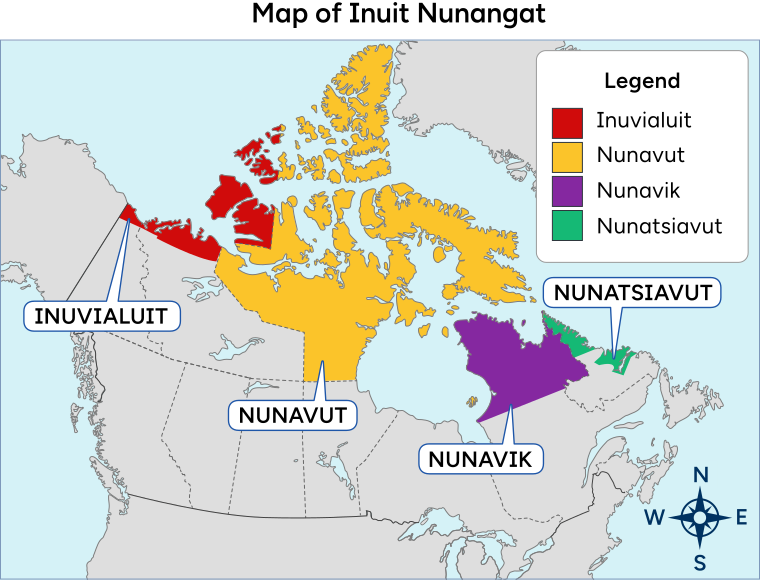
Simon’s community
In the video, Simon introduces his mother, father, and sister.
He also introduces his friend Jackson. Simon and Jackson have been friends since kindergarten and they are now in grade 4!
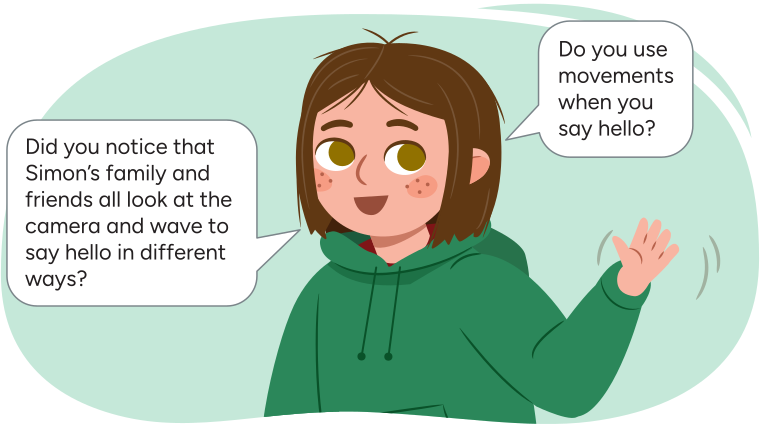
Clara asks, ‘Did you notice that Simon’s family and friends all look at the camera and wave to say hello in different ways? Do you use movements when you say hello?’
Let’s check out how Simon’s family and friends use movements to introduce themselves!

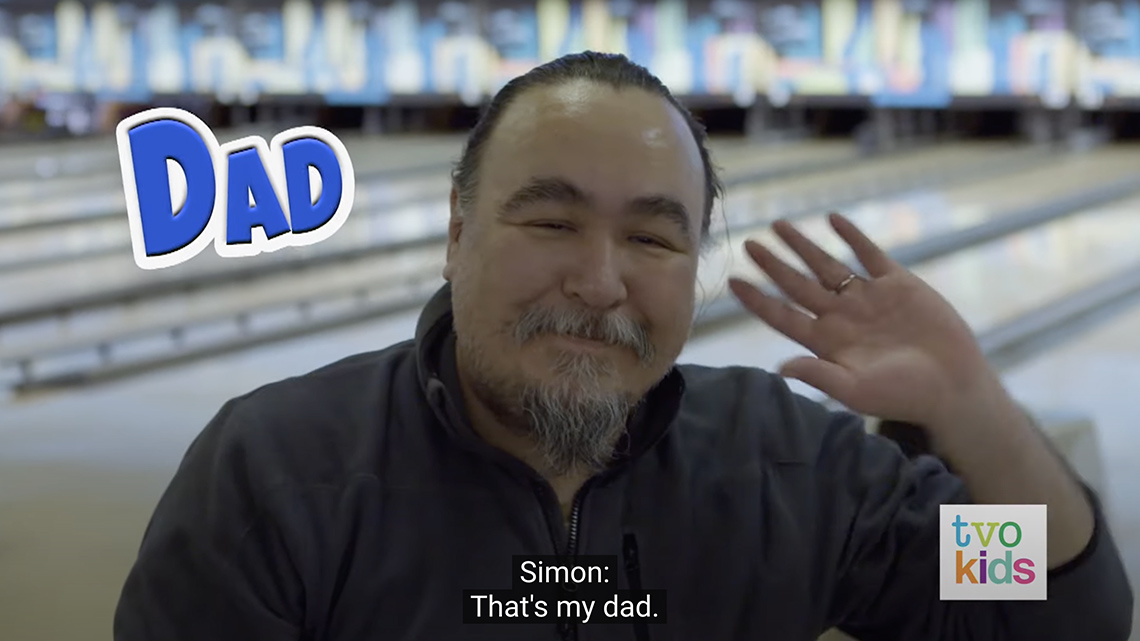
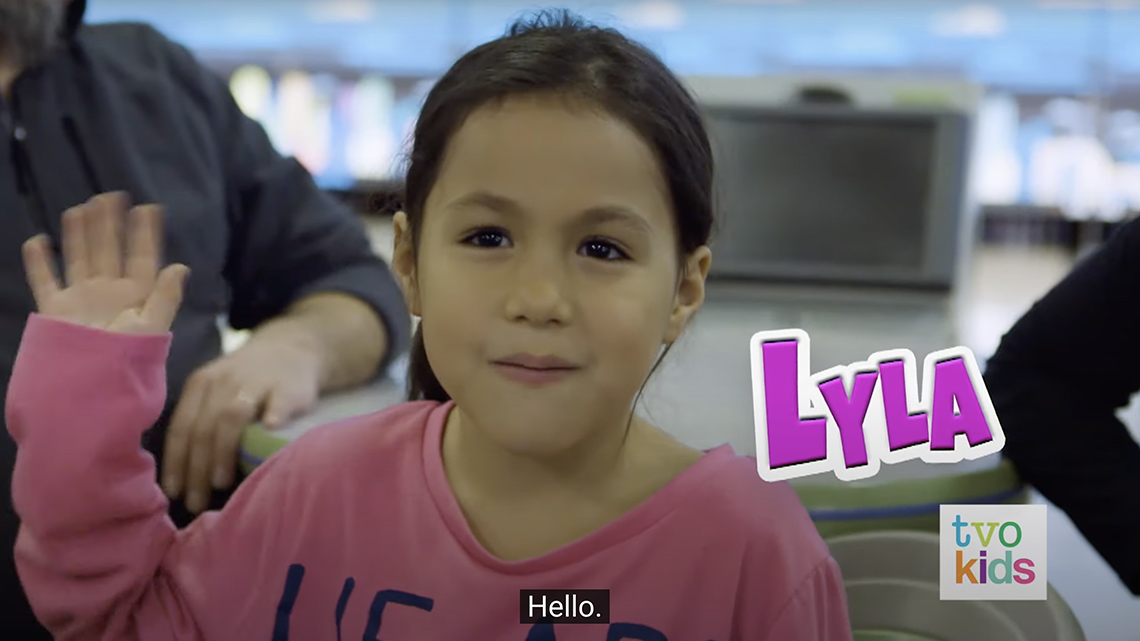
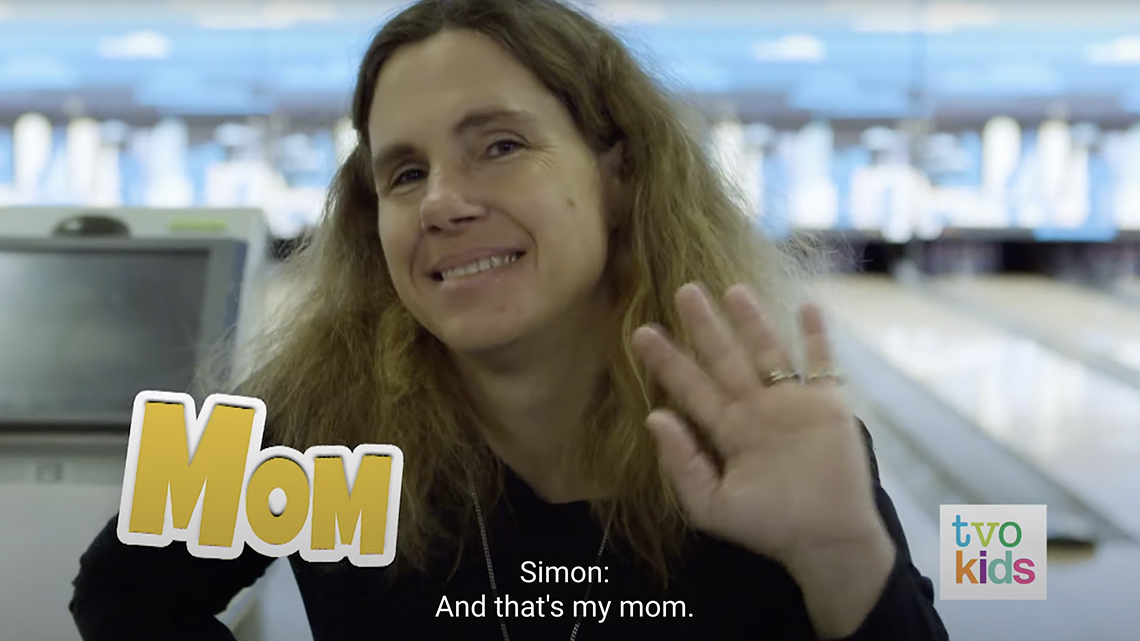
Simon loves to bowl with his family.
What are some hobbies you enjoy?
Share your thoughts with a partner, if possible.
Painting with Simon
Simon shares that he loves painting.
Check out this clip where he shares some of his artwork!
Why does Simon like painting?
Press Reveal to check your answer.
Simon says he loves art because it makes him feel happy. He says that anyone and everyone can do art.

Brainstorm
Brainstorm
What do you think Simon means when he says, “An artist can also be an inventor”?
Share your thoughts with a partner, if possible.
Simon shares with us that he is going to paint the Inuit flag.
How does Simon explain what an inukshuk is?
Press Reveal to check your answer.
RevealSimon says that the inukshuk is a statue that rocks get piled on and it looks like a man and if one “hand” is longer than the other that means that the homes are that way.
Inuit communities have used the inukshuk:
- to help herd caribou into valleys
- to lead to a hunting place or home
- as a place where people buried food for later
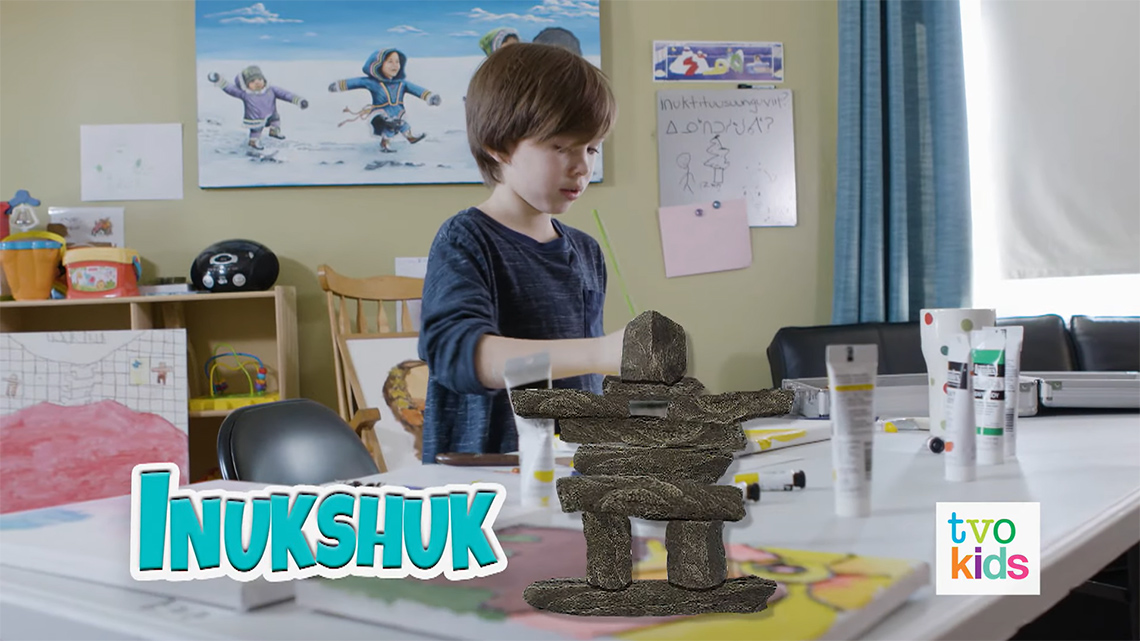
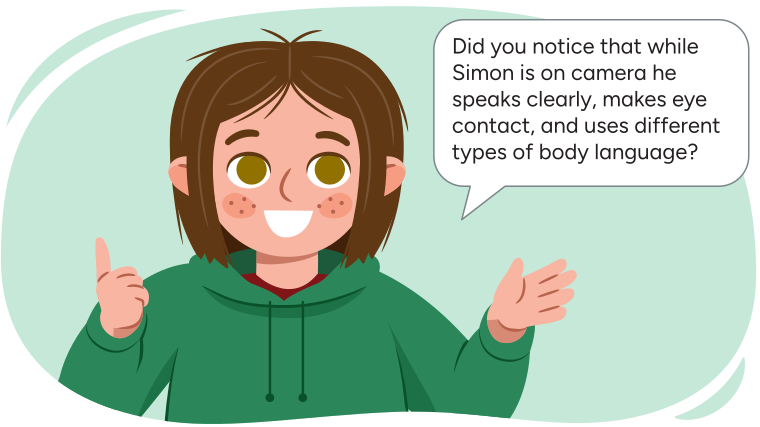
Clara asks, 'Did you notice that while Simon is on camera he speaks clearly, makes eye contact, and uses different types of body language?'
When Simon shares his finished painting of the Inuit flag, he looks at the camera and points to his painting with his hand. This helps us to focus on what he wants to show us.
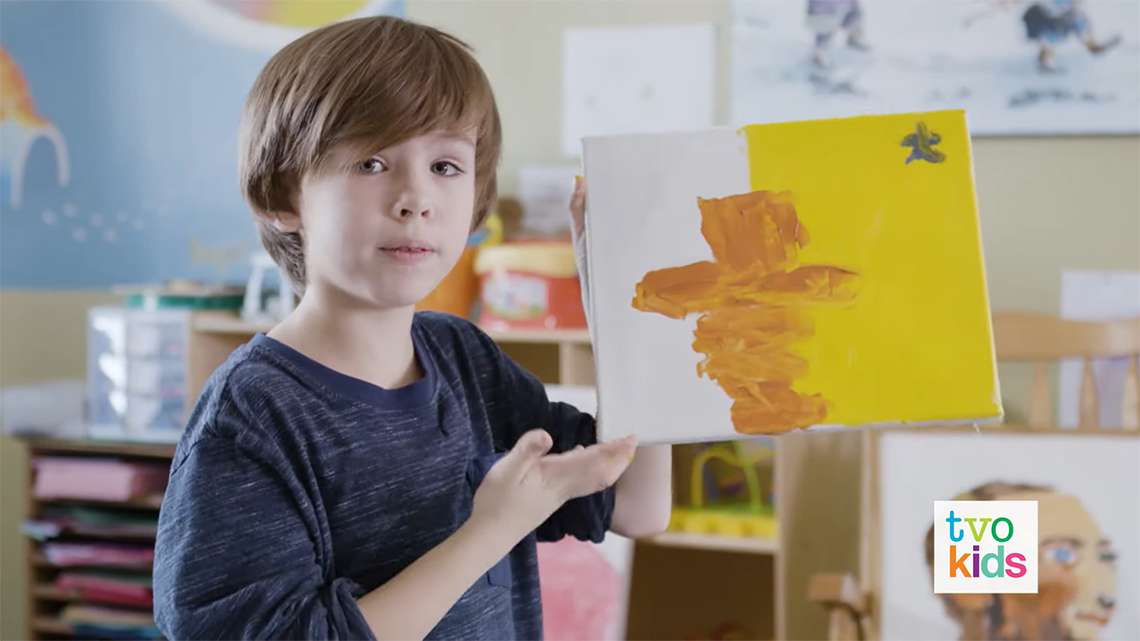
Simon calls the flag an Inuit flag, however he has created the Nunavut flag.
He painted one half of his canvas with yellow with an inukshuk in the middle and a star in the corner.
What else do you notice about the Nunavut flag?

Simon said that his painting was displayed in a gallery and when it sold, he felt excited.
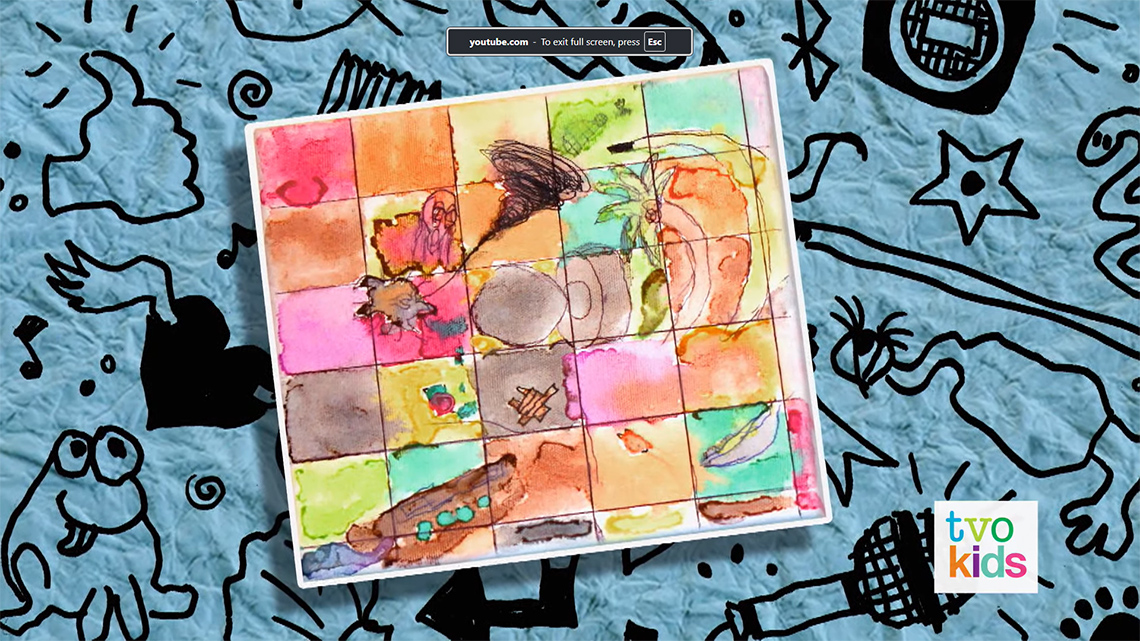
What can excited feel like?
Explore the following audio clip and text of the poem When I am Excited !
When I am Excited Poem
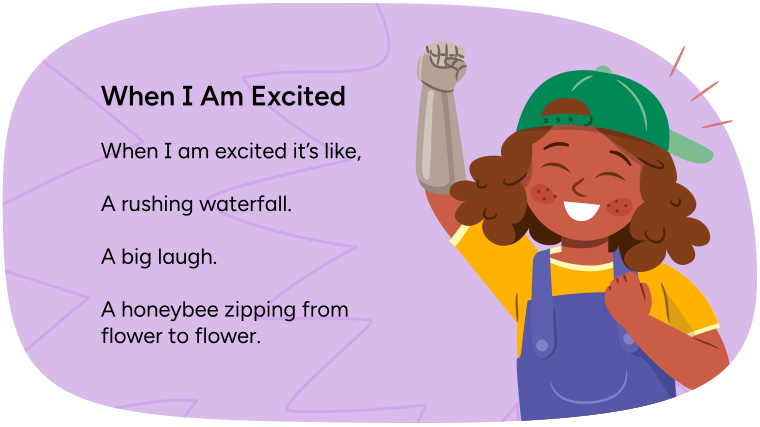
What makes you feel excited?
Taking photos with Simon
Simon shares that he also enjoys taking pictures.
Check out this clip where he shares some of his photos!
Why does Simon like taking pictures?
Press Reveal to check your answer.
He says that he spends time with his mom, and it helps to bring back memories.
How do you feel when you look at pictures?
What does Simon take pictures of?
Press Reveal to check your answer.
Simon takes pictures of nature, of his family, and of art.
On his walk, Simon takes a picture of a squirrel’s nest.
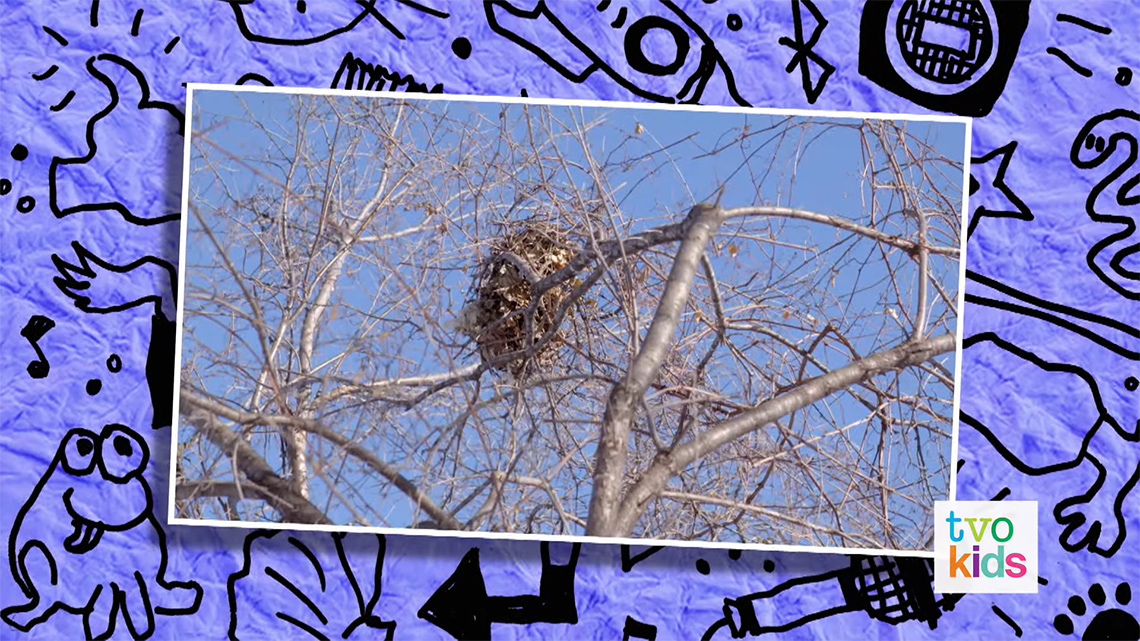
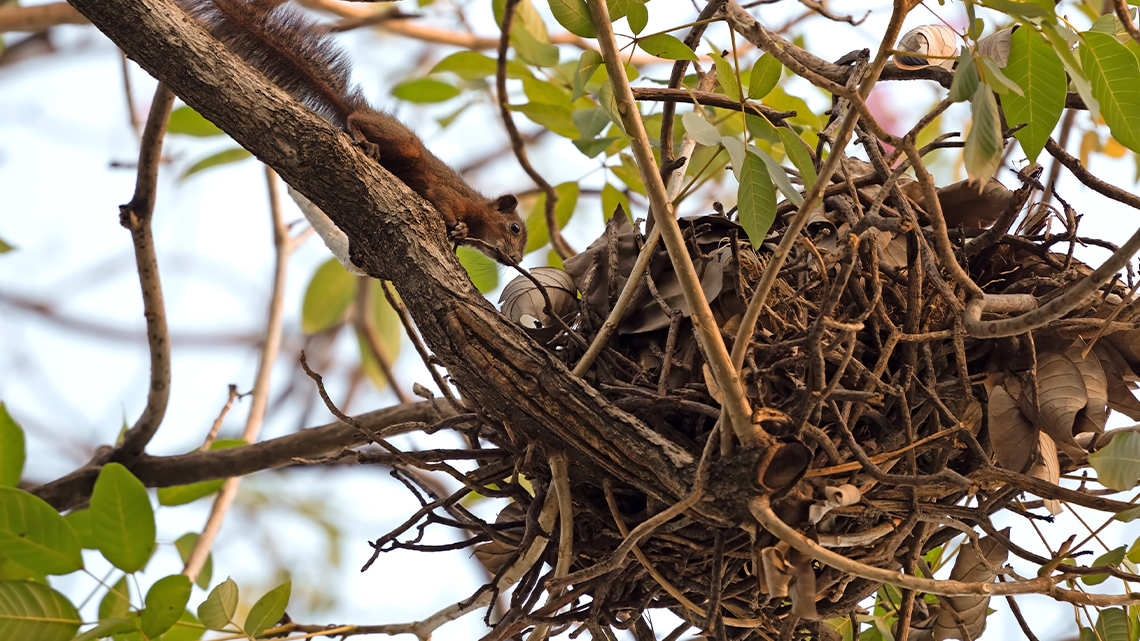
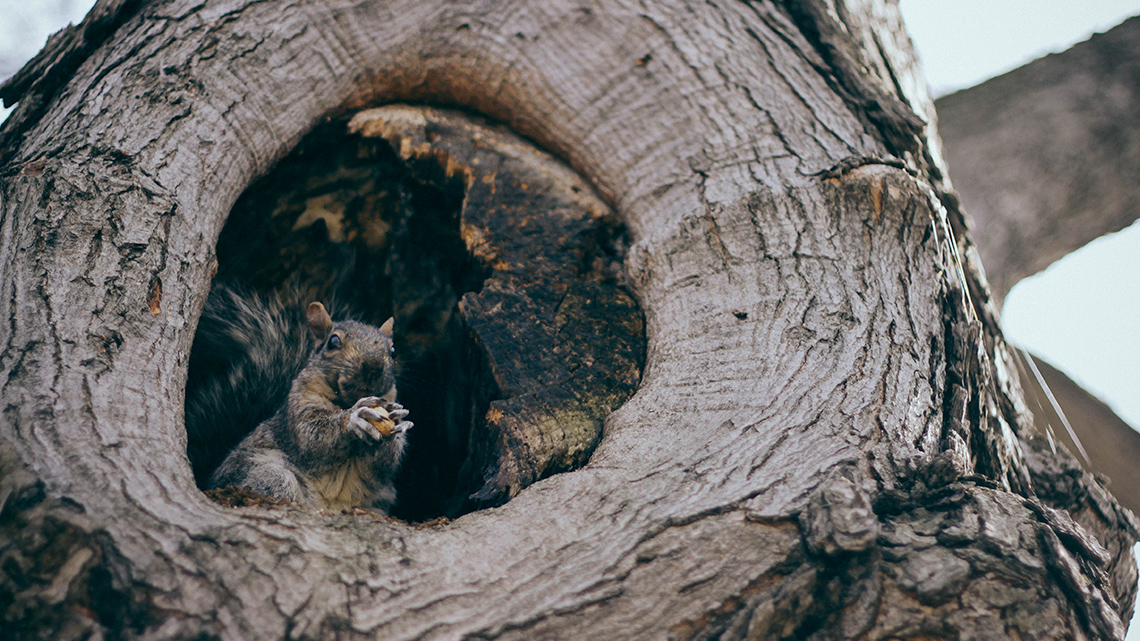
Did you know that some squirrels build nests high up in trees?
They gather leaves and twigs to build nests high in trees or use tree cavities as dens.
Learning about Inuit culture with Simon

Try It
Try it
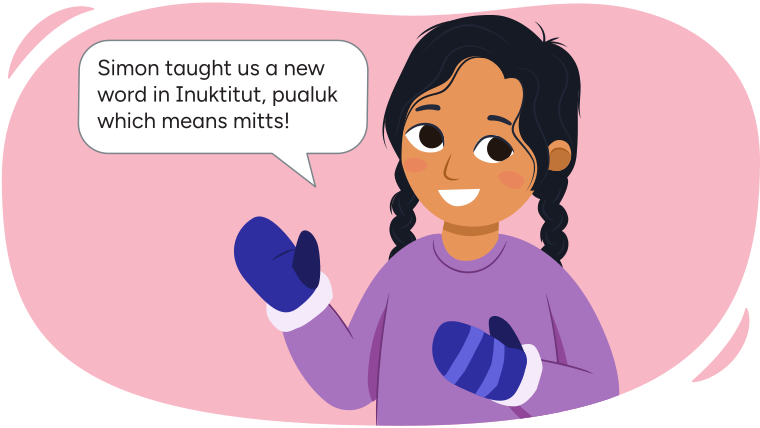
Did you notice that when Simon says Inuit, he does not pronounce the “t”?
When he says Inuit, it sounds like “Enui.”
Listen to the following audio and practice saying "Inuit".
Inuit
Simon plays a game with his friends on Inuit day. What kind of games do you like to play?
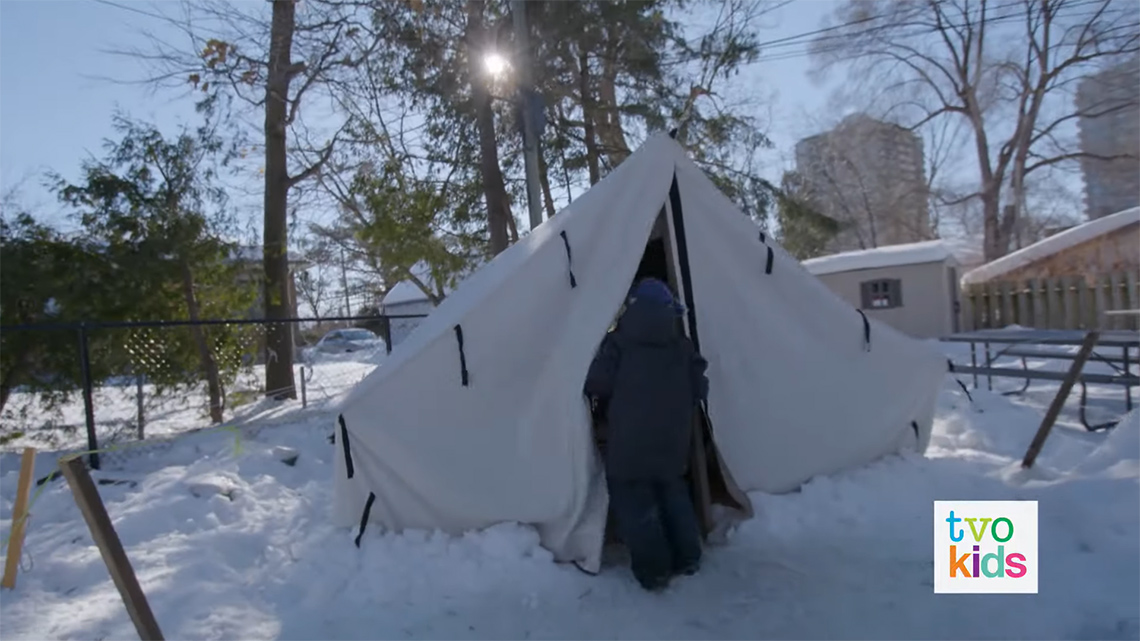
Simon invites us to come into a tent with him. What does he share with us inside the tent?
Press Reveal to check your answer.
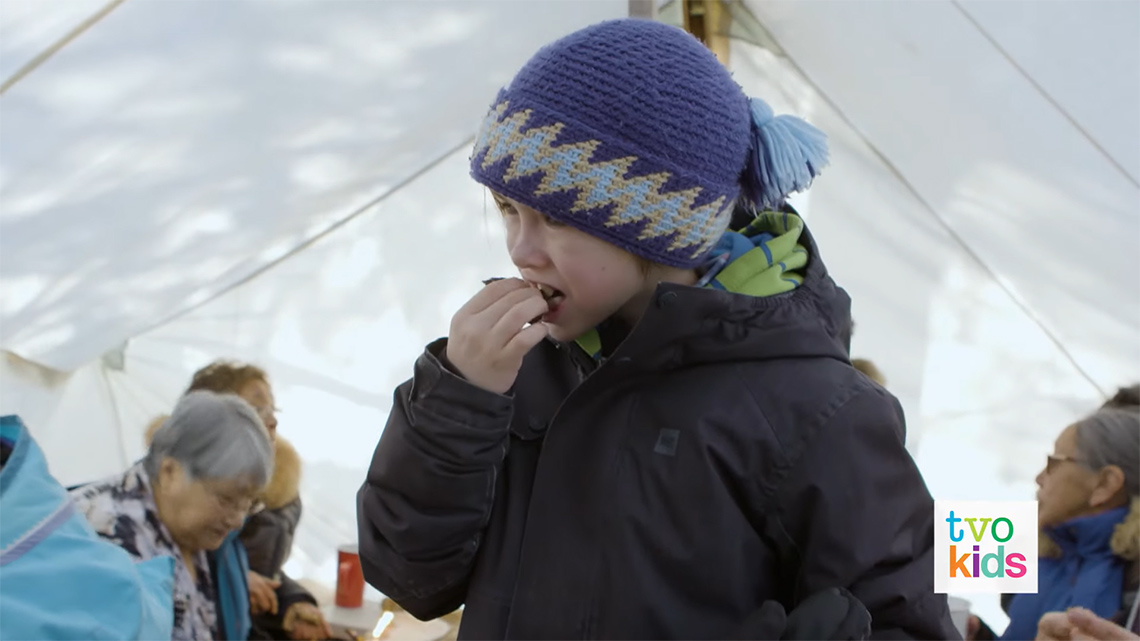
People are gathered in the tent sitting together, eating, and talking.
Simon eats seal meat in the tent and shows us a qulliq on one of the tables.
Did You Know?
Did you know?
Seal hunting is an important part of Inuit culture. Families hunt together and then celebrate with a big feast!
Seals are an important part of the Inuit way of life.
Seal meat gives people energy.
Seal skin can be used for waterproof clothing such as jackets and boots to help stay warm.
Inside the tent, Simon shows a qulliq on one of the tables.
A qulliq is an Inuit soapstone lamp. It is shaped in a half moon.
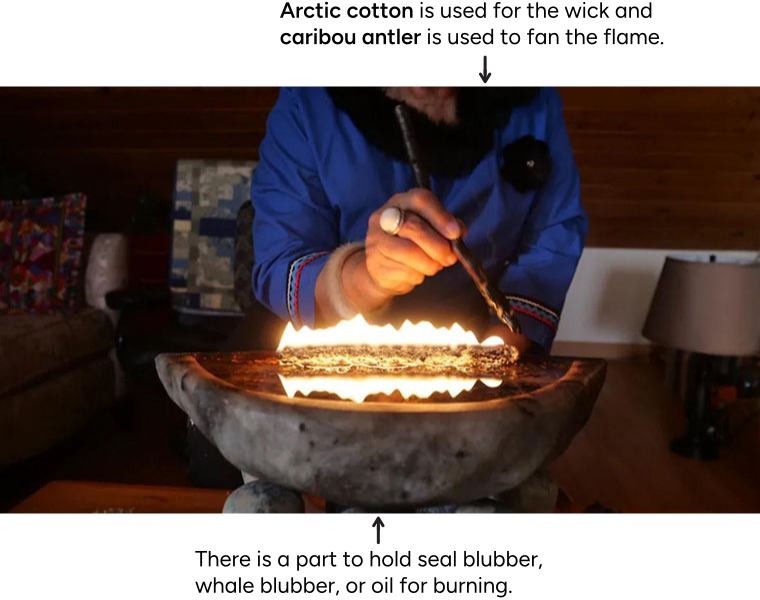
A qulliq, which is an Inuit soapstone lamp. It is lit up. Arctic cotton is used for the wick and caribou antler is used to fan the flame. There is a part to hold seal blubber, whale blubber, or oil for burning.
The qulliq is often used and cared for by women in the community.
The qulliq comes in different sizes and can be used for:
- cooking
- drying wet clothes
- melting ice
- boiling water
- creating light
- creating warmth and energy
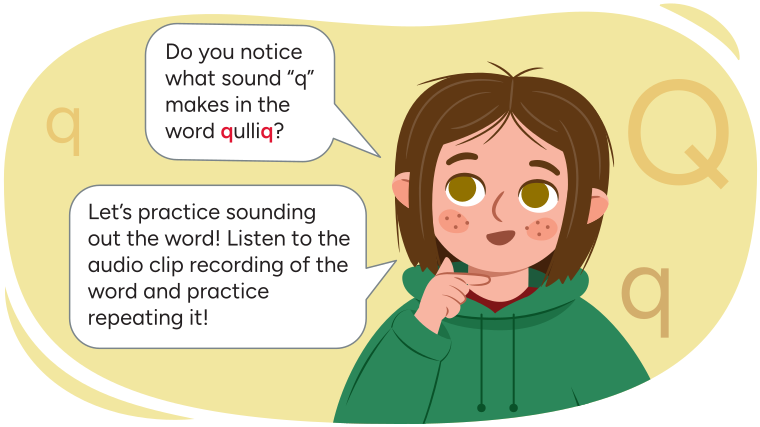
Clara asks, 'Do you notice what sound the 'q' makes in the word qulliq? Let's practice sounding out the word! Listen to the audio clip recording of the word and practice repeating it!'
When he leaves the tent, Simon shares the craft table. His favourite crafts are the clothing.
What do you notice about the clothing?
Press Reveal to check your answer.
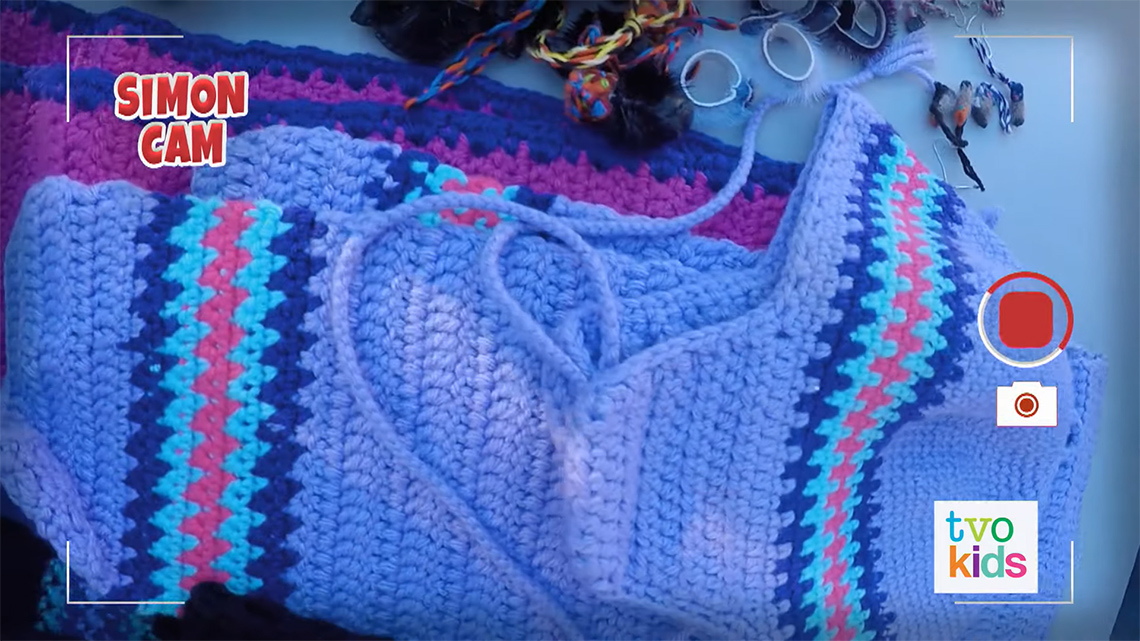
The clothing:
- uses different colours
- uses patterns
- looks warm
Asking questions using interrogative sentences!
How do you feel after getting to know Simon?
This is a question. We start a question with a capital letter and end it with a question mark.
We can ask questions to:
- help us understand
- learn new information
Some question words are:
- Who
- What
- When
- Why
- What
- Where
- How
We can use these words to ask questions such as:
Who do we meet in Simon’s community?
What are Simon’s hobbies?
If you could meet Simon, what would you ask him?
Record your thoughts using a method of your choice. Share your thoughts with a partner, if possible.

Putting it all together
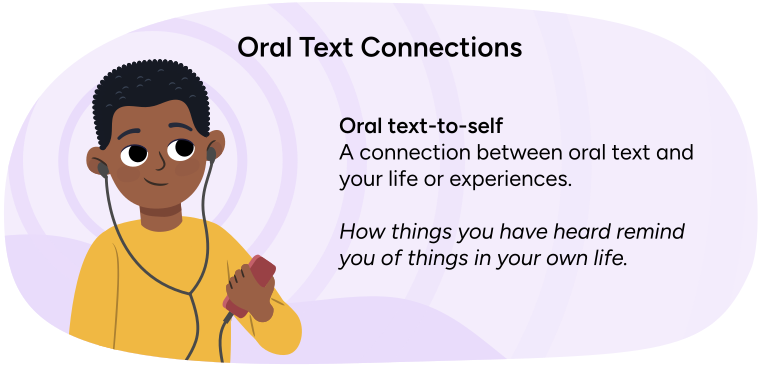
Oral text connections. Oral text-to-self: A connection between oral text and your life or experiences. How things you have heard remind you of things in your own life.
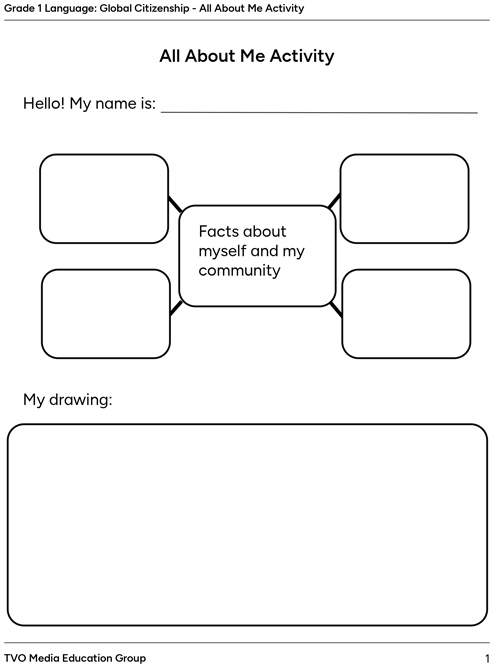
Simon shares special things about himself and his community.
It’s time to share something about you!
- What are some facts about you?
- What is something special about you that you would like to share?
Complete the All About Me Activity in your notebook or using the following fillable and printable document. If you would like, you can use speech-to-text or audio recording tools to record your thoughts.
Reflection
How do you feel about what you have learned in this activity? Which of the next four sentences best matches how you are feeling about your learning? Press the button that is beside this sentence.

I feel...
Now, record your ideas about your feelings using a voice recorder, speech-to-text, or writing tool.