Learning goals
We are learning to…
- explore the idea of identity and belonging in texts and show an understanding of the ideas, experiences, and points of view of many different people, including those in Canada
- use effective listening skills by expressing interest, asking a variety of questions, and restating what we heard
- sort and sequence ideas and information
- brainstorm and develop ideas about different topics using simple strategies, sources, our own learning, and our own experiences
Success criteria
I am able to…
- explore the Oshogatsu celebration and share information about different parts of this celebration
- answer questions about an episode of It’s my Party episode about Oshogatsu during and after the video
- sort and order ideas and information about how to create a lantern
- brainstorm 3 facts about Oshogatsu to share with a friend

What is a celebration?
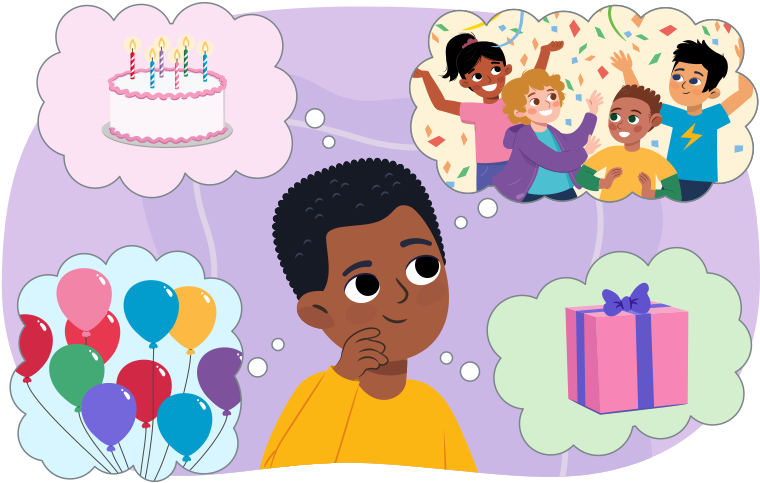
What do you think of when you hear the word celebration?
Listen to the following audio clip to hear the word celebration out loud!
Celebration
Brainstorm how you would describe celebration using words and/or pictures.
Complete the fillable and printable Brainstorm Organizer in your notebook or using the following document.
If you would like, you can use speech-to-text or audio recording tools to record your thoughts.
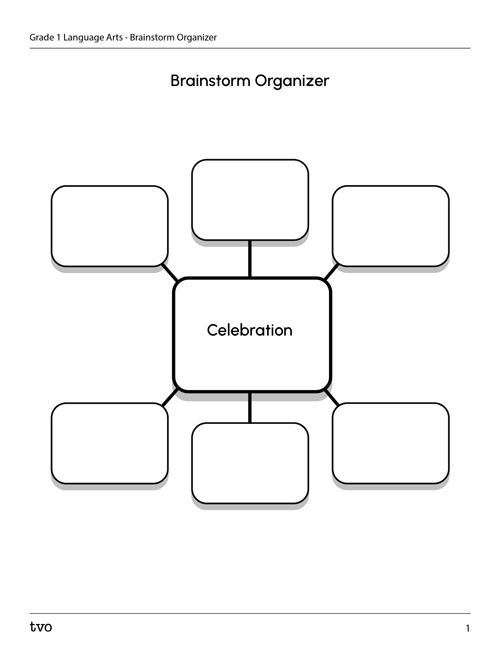
If possible, share your words with a partner. Are your words the same or different?

Celebrations
Each culture and community have their own kind of celebrations.
Celebrations can be:
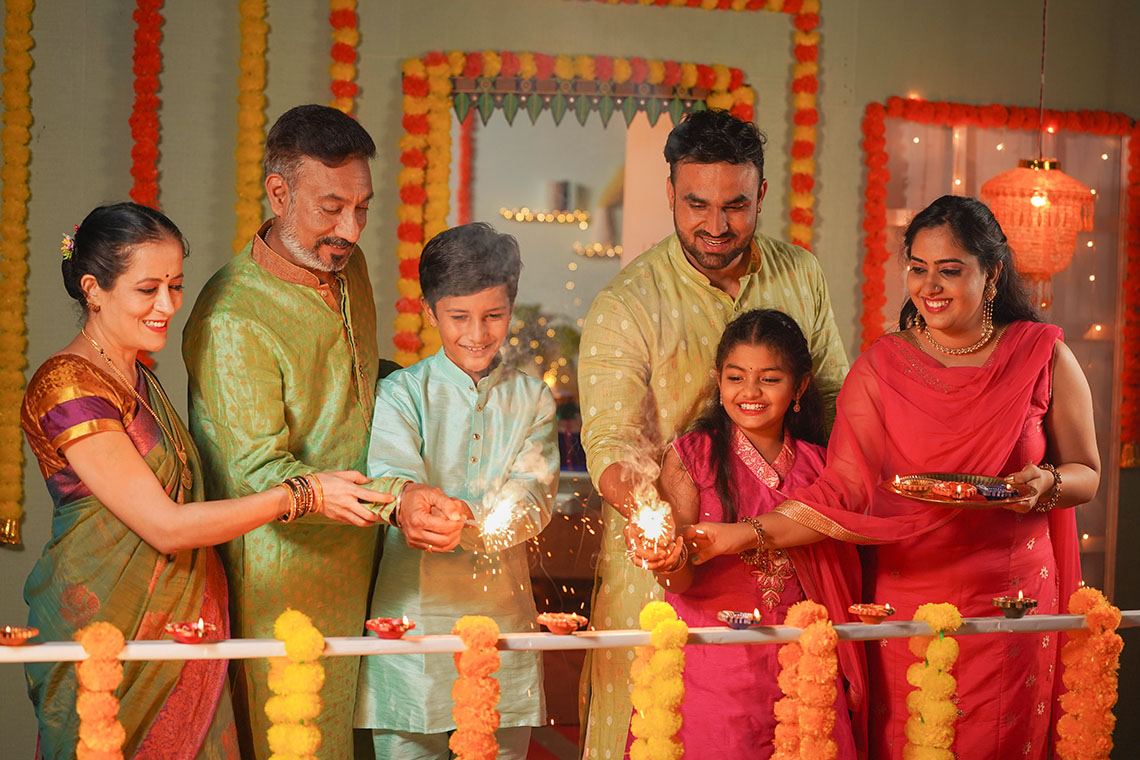
For a special date.
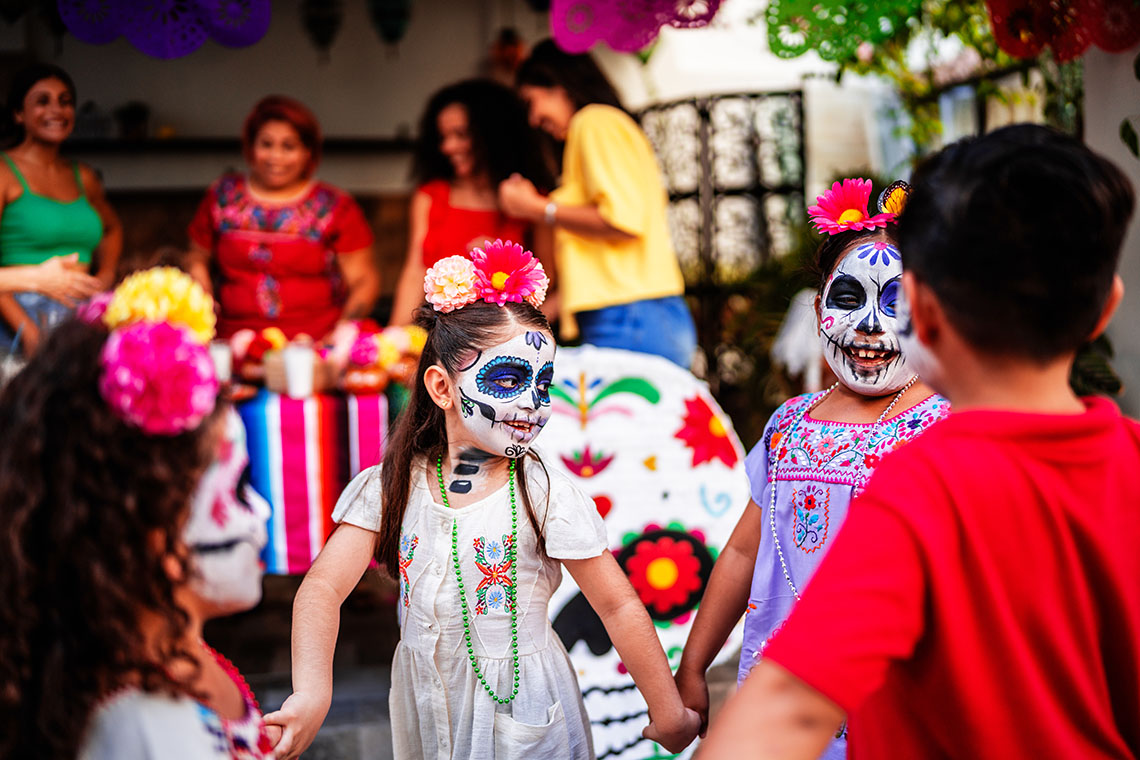
To remember people who have passed on.
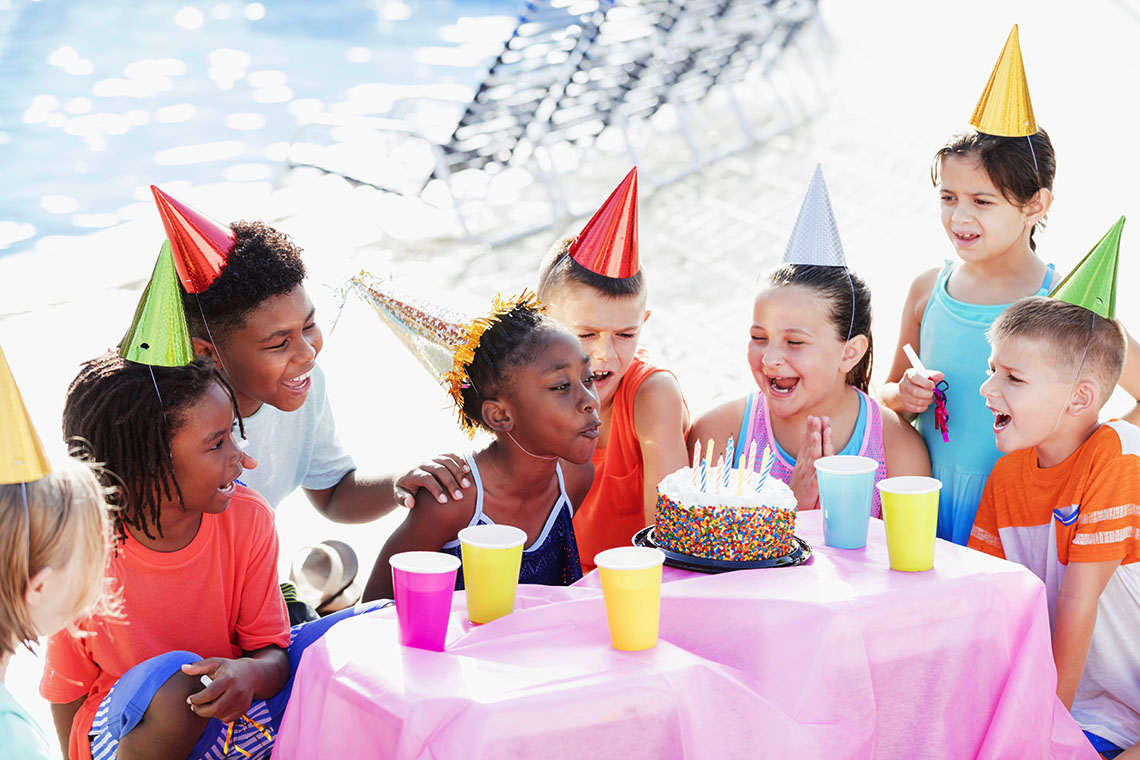
A party where people can get together.
Celebrations may include:
- food
- music
- dancing
- art and decorations
- special clothing
- religious ceremonies

Social Emotional Learning
Reminder!
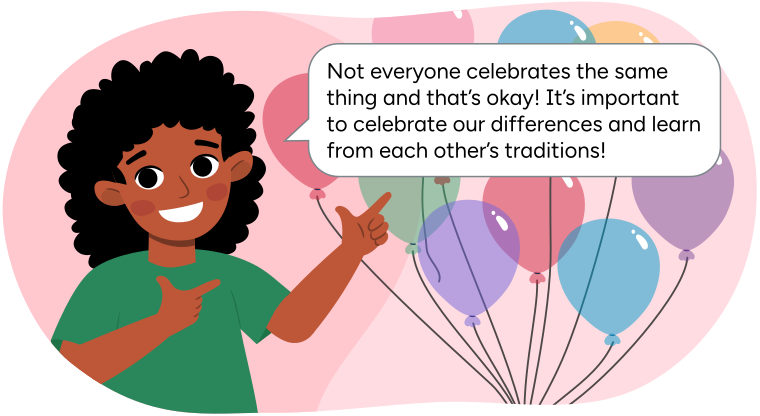
Tiara shares, ‘Not everyone celebrates the same thing and that’s okay! It’s important to celebrate our differences and learn from each other’s traditions.’
It’s my party!
Let’s explore a celebration together by watching an episode of It’s My Party!
In this episode of It’s My Party!, Alyssa has invited Avalynn to attend her Oshogatsu celebration.
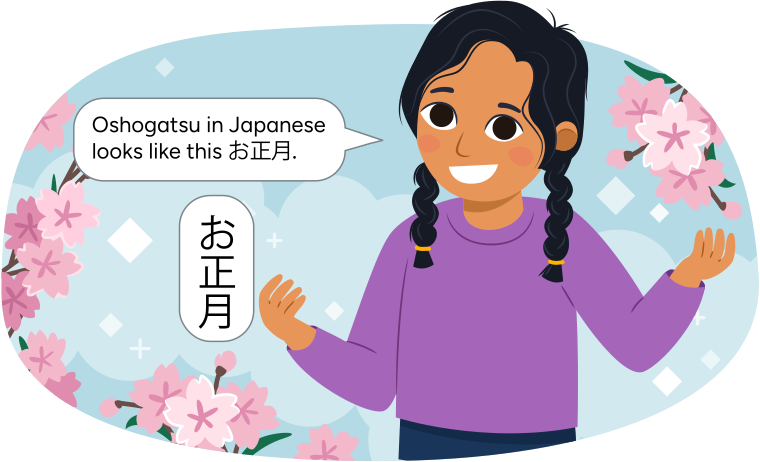
Let’s go over what we learned about Oshogatsu.
- Oshogatsu or Japanese New Year is the biggest holiday in Japan
- it is a time where friends and family get together
- people send postcards called nengajo
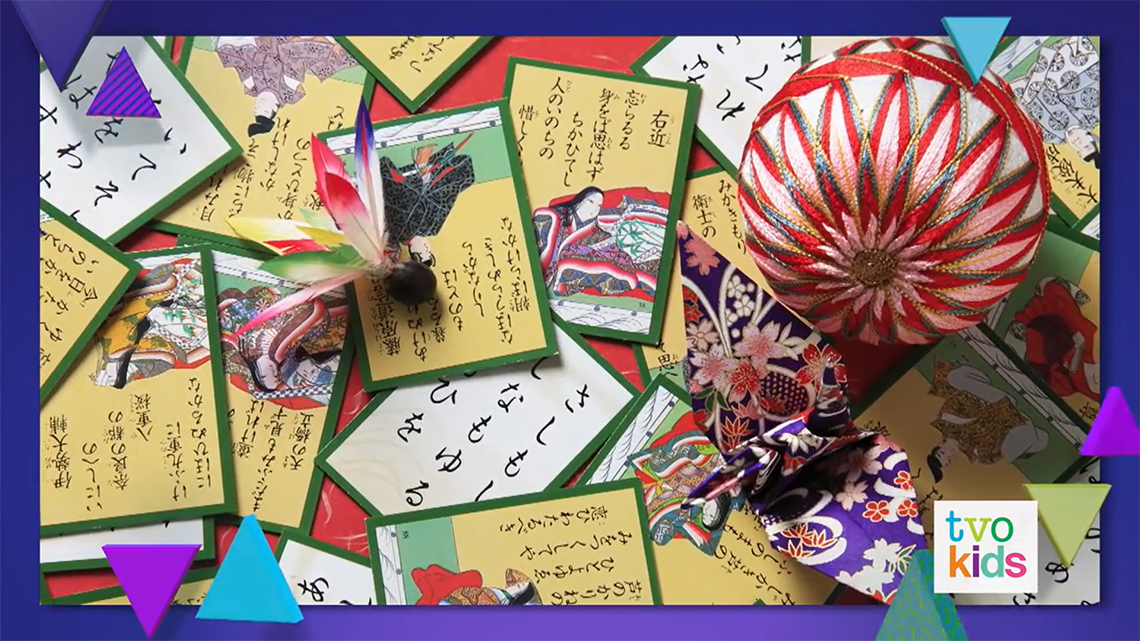
A table with many nengajo postcards filled with Japanese writing. The table is also decorated with folded paper swans and a decorated ornament.
- people enjoy eating soba noodles
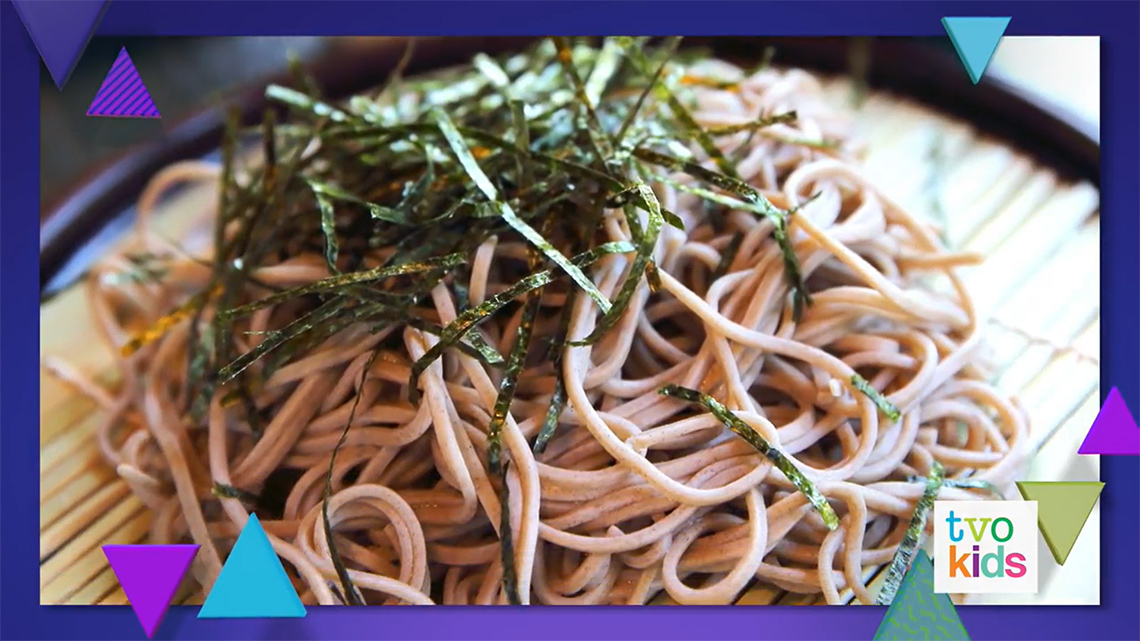
Noodles made with buckwheat flour.
- families clean their homes together
- Buddhist temples ring their bells 108 times
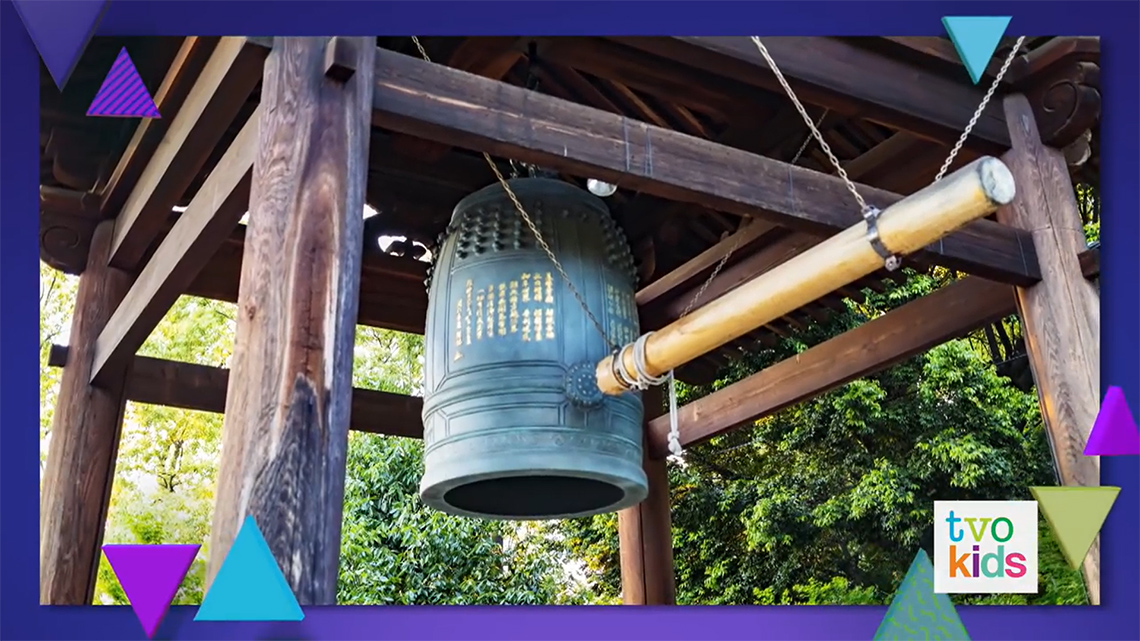
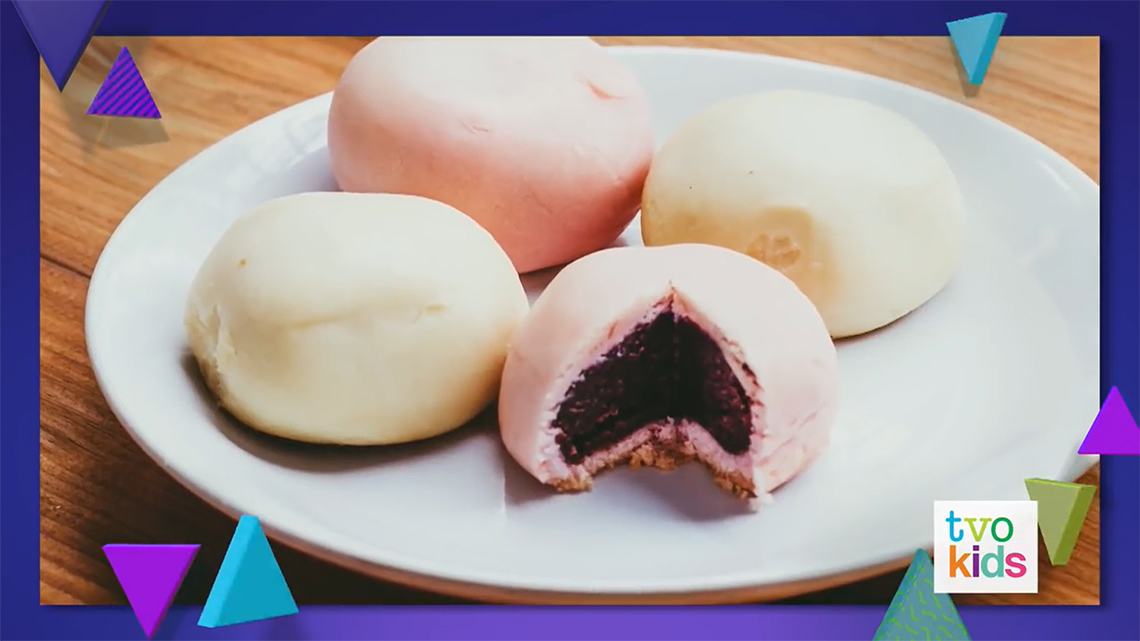
- some foods have special meaning like mochi cakes
Do you have any kinds of food that you make at home or enjoy with family and friends?
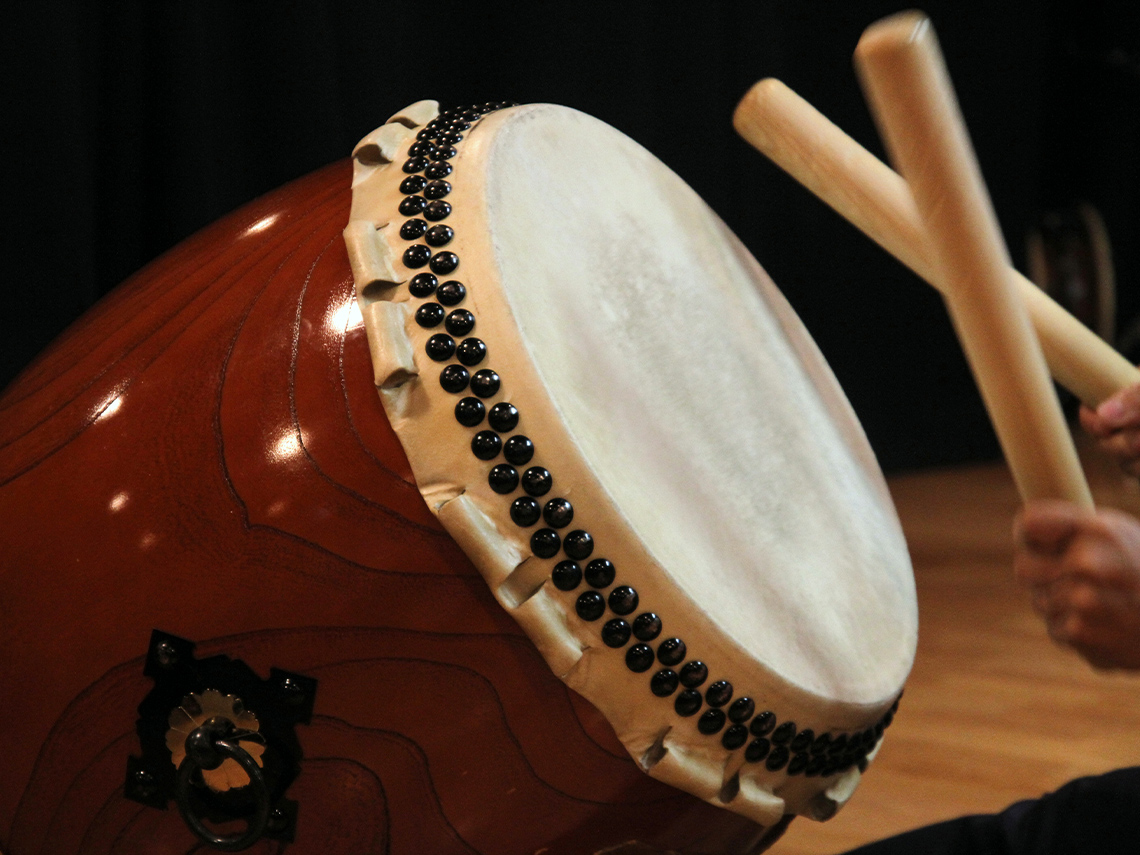
Taiko drums with Kusano Sensei
Check out this clip where Alyssa and Avalynn visit Kusano Sensei who plays the Taiko drums!
Sensei means "master" or "teacher".

Did You Know?
Did you know?
Taiko drumming has been around for 2600 years!
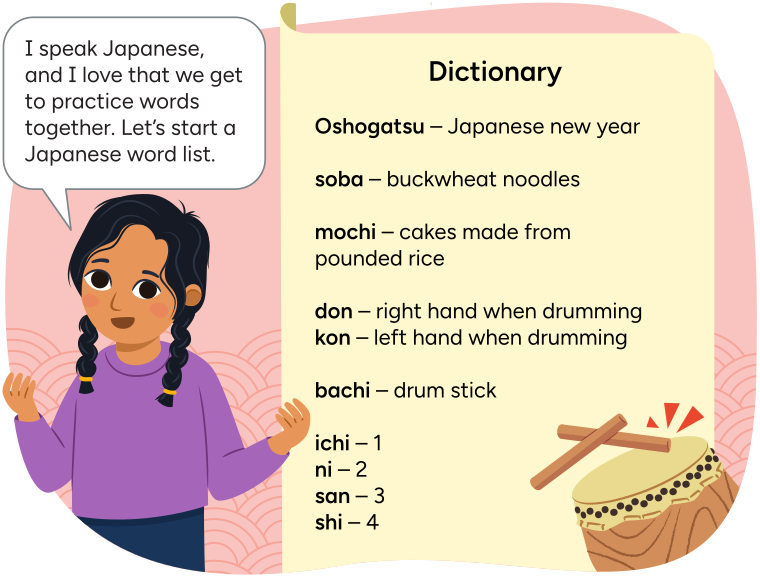
Sora next to a list of dictionary words and definitions. She shares, ‘I speak Japanese and I love that we get to practice words together. Let’s start a Japanese word list.’
The list is titled, ‘Dictionary,’ and have several words and their definition. The words are:
Oshogatsu – Japanese new year
Soba – buckwheat noodles
Mochi – cakes made from pounded rice
Don – right hand while drumming
Kon – left hand while drumming
Bachi – drum stick
Ichi – 1
Ni – 2
San – 3
Shi - 4
How does Kusano Sensei explain “sorei”?
Press Reveal to check your answer.
Kusano Sensei says that sorei is a sound.
When people play Taiko together, they use sounds to encourage each other. Anytime they feel like it they can also shout “hup!”
Taiko is meant to help people feel happy.
What can happy feel like?
Explore the following audio and text of the poem When I am Happy.
When I am Happy Poem
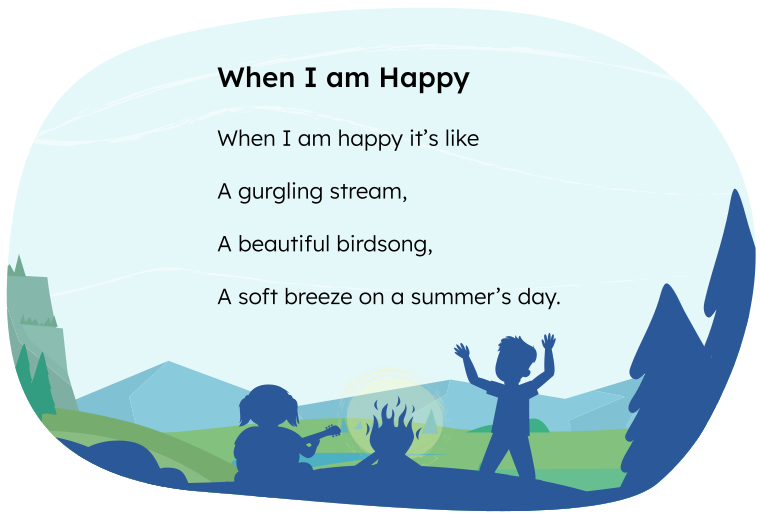
Two people are sitting and enjoying a campfire in nature. There is a stream nearby. The trees and the ground are covered in green. One person is playing a guitar. They both are smiling and talking.
There is also a poem titled, ‘When I am Happy.’ The poem shares:
When I am happy it’s like
A gurgling stream,
A beautiful birdsong,
A soft breeze on a summer’s day
What makes you feel happy?
Making a chõchin
Avalynn visits Ayaka to learn how to make a lantern for Oshogatsu. The name of this lantern is chōchin. These lanterns have been around for over 900 years!
Check out this clip where Avalynn and Ayaka work together to create a chōchin!
What are the steps to create the chōchin?
Ayaka shares that people eat Osechi Ryori on New Years Day (or the start of the new year).
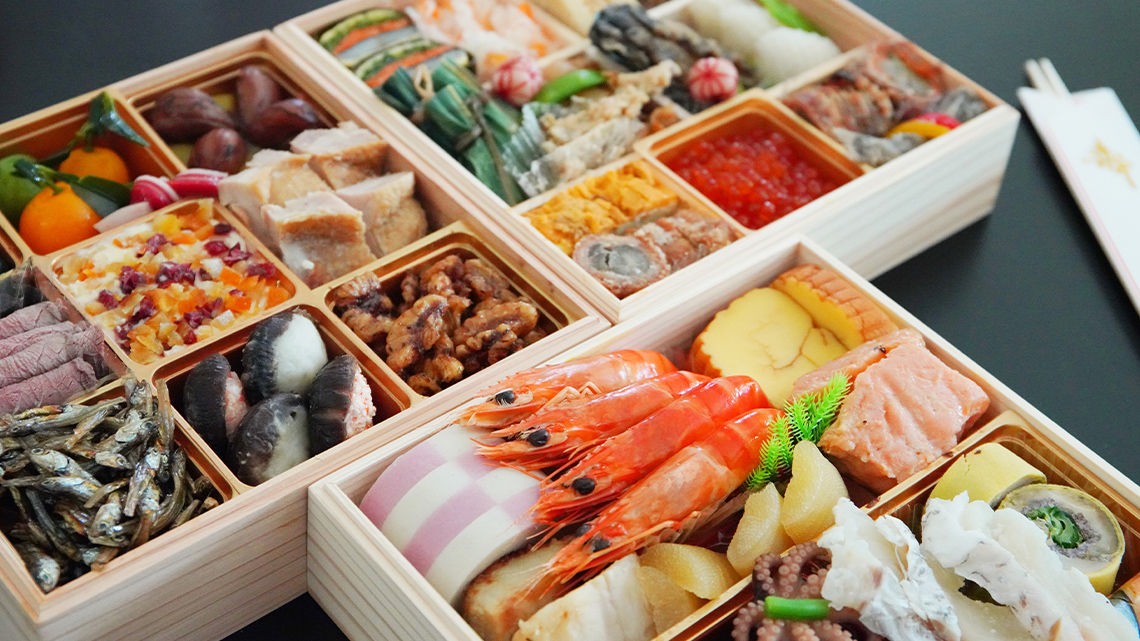
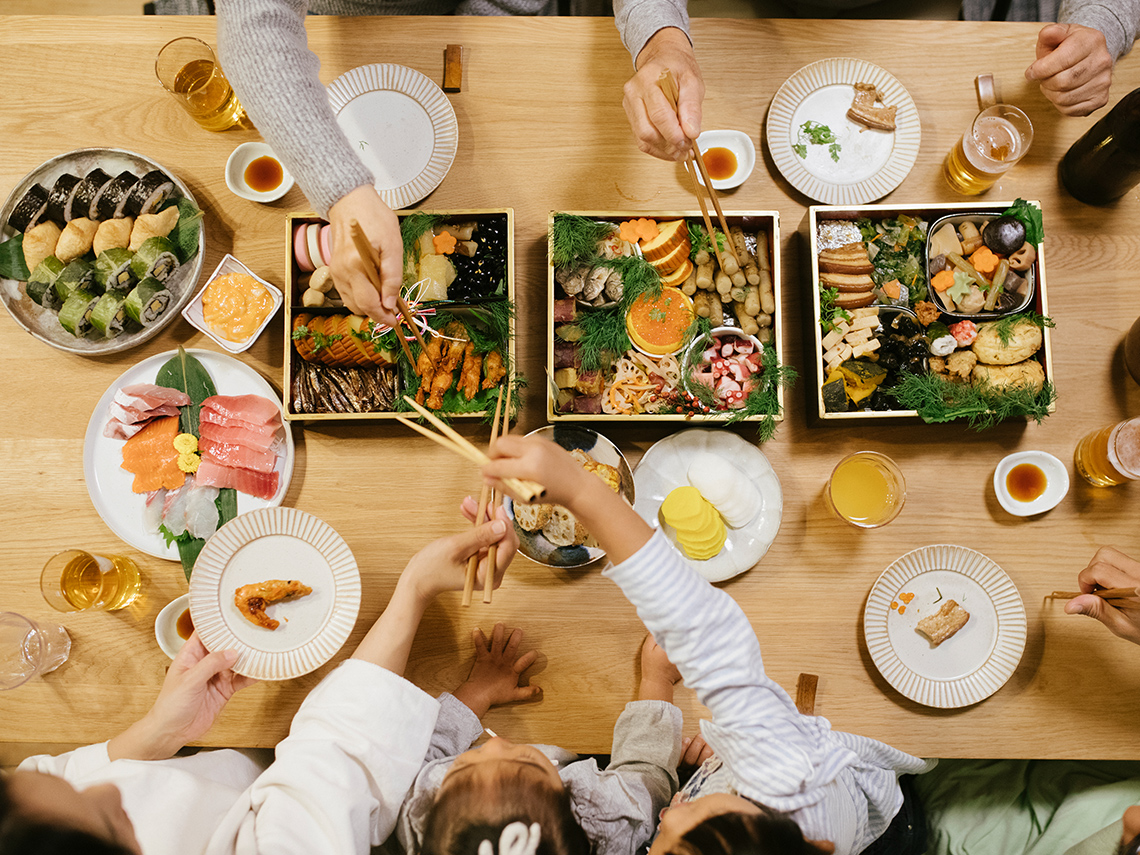
Osechi Ryori are foods that have a special meaning.
Osechi Ryori is usually packed in 2-3 boxes called ojubako.
There are many foods in each layer. Families enjoy osechi ryori together.
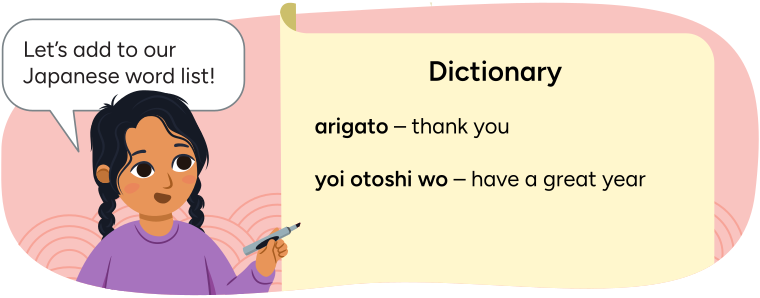
Sora next to a list of dictionary words and definitions. The learner shares, ‘Let’s add to our Japanese word list!’
The list is titled, ‘Dictionary,’ and has several words and their definition. The words are:
Arigato – thank you
Yoi otoshi wo – have a great year
Making mochi
Check out this clip where Alyssa learns to make daifuku which is mochi with a red bean!
Have you ever tried red bean?
What does Yuki add to the mochi to make it pink?
How do Yuki and Alyssa mix the mochi?
Press Reveal to find out how Yuki and Alyssa mix the mochi.
They pound it until it is the right texture.
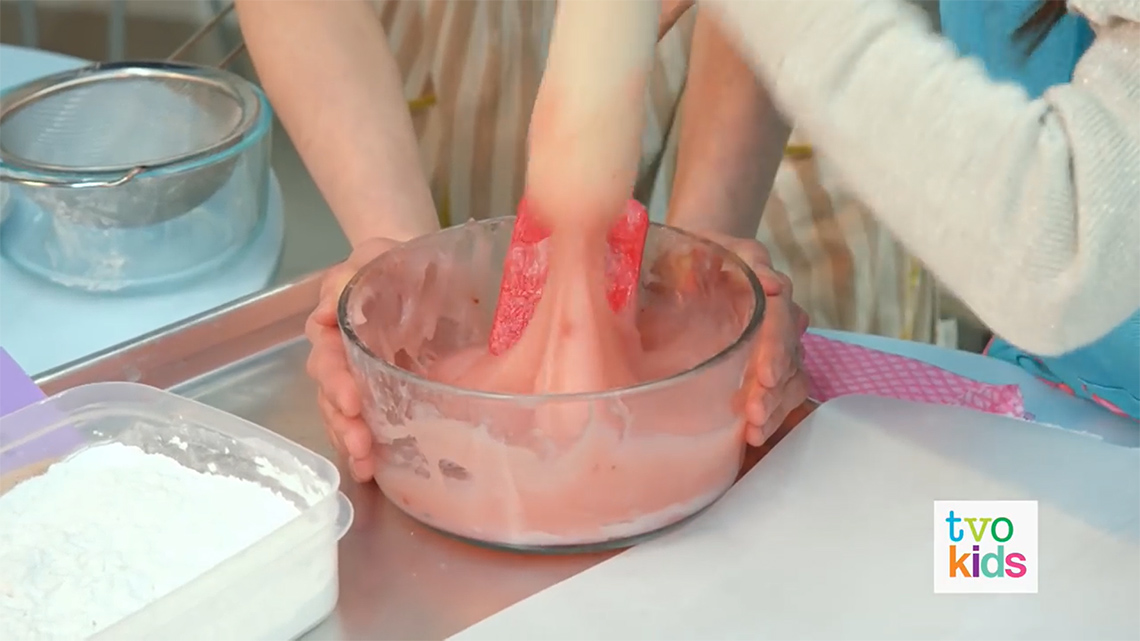
Two learners are making mochi. One is holding a bowl full of mochi rice and red bean. The second learner is pounding the rice with a large wooden stick.
Did You Know?
Did you know?
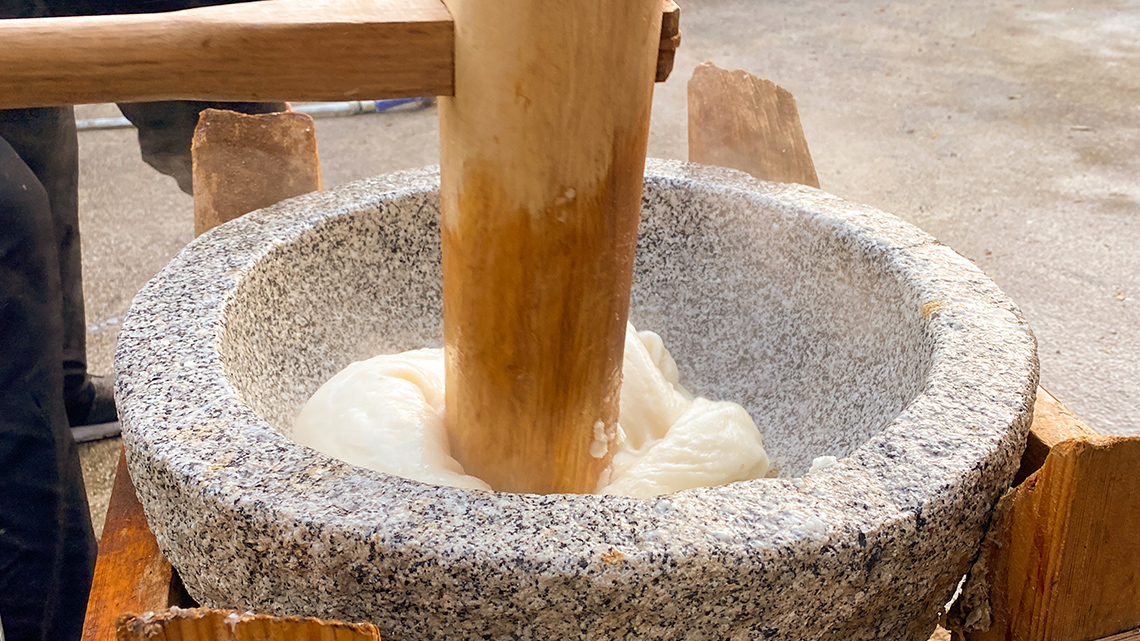
A traditional way of making mochi takes a lot of time and help.
Whole rice is used instead of rice flour. The rice is cleaned and soaked overnight in water.
The next day, it is steamed and placed in a large bowl made of stone or wood. It is pounded again and again before it is ready. Sometimes, people take turns to pound the rice.
Finally, it is shaped and ready to eat!
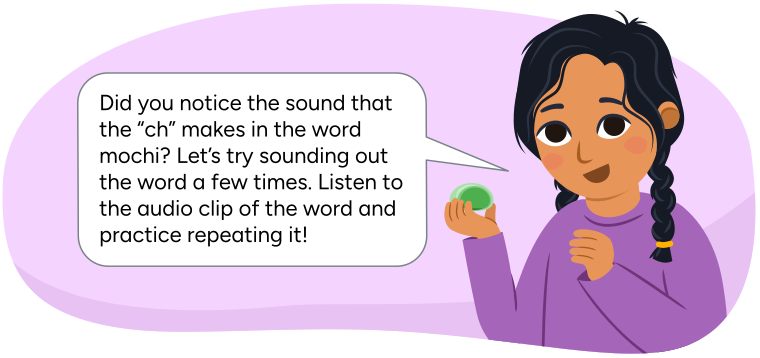
Sora asks, ‘Did you notice the sound that the ‘ch’ makes in the word mochi? Let’s try sounding out the word several times. Listen to the audio clip of the word and practice repeating it!’
Mochi
Oshogatsu
It’s party time!
Check out this clip of Alyssa’s Oshogatsu celebration.
What do you notice about the decorations for the Oshogatsu party?
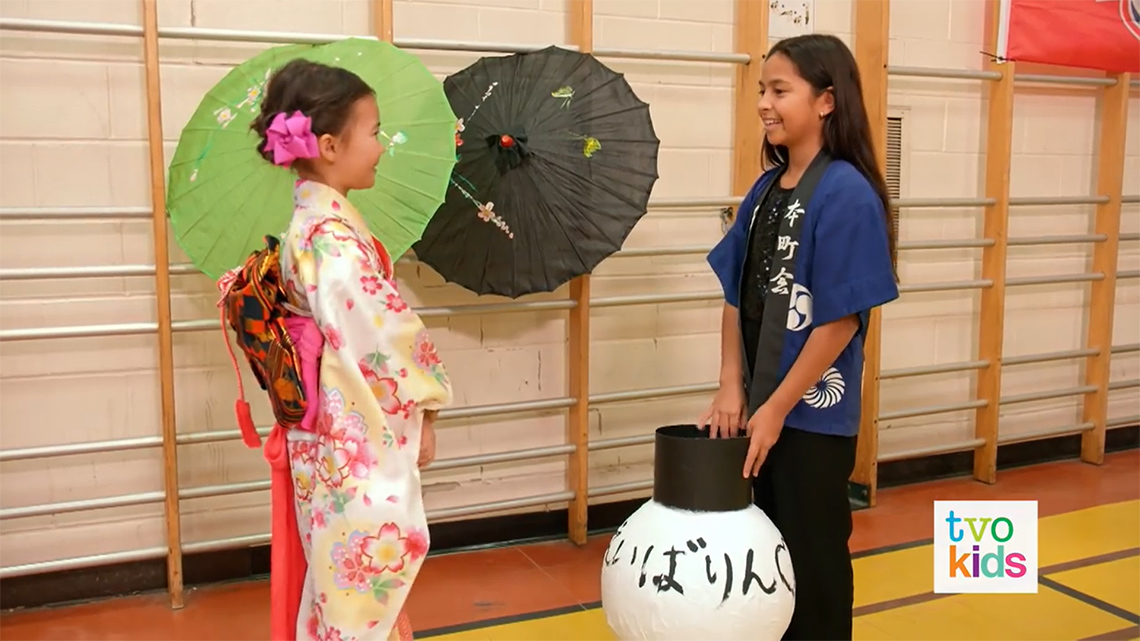
Avalynn wears a happi and Alyssa wears a kimono during the Oshogatsu celebration.
What do you notice about their outfits?
How did you feel during the Taiko drumming?
Share your thoughts with a partner, if possible.

Putting it all together
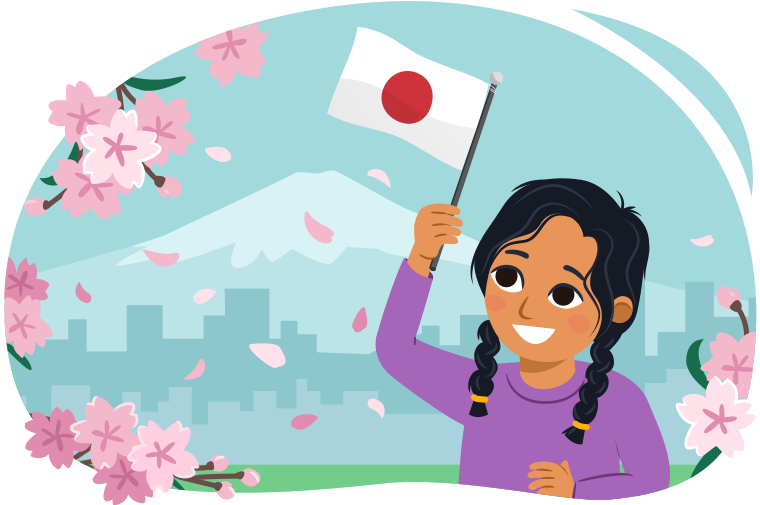
What was your favourite thing that you learned about Oshogatsu?
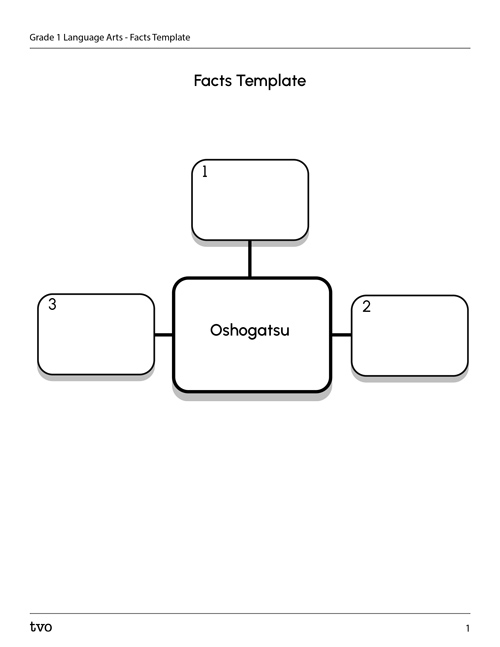
If you were to share 3 facts about Oshogatsu with a friend, what would you tell them?
Complete the fillable and printable Facts Template in your notebook or using the following document. If you would like, you can use speech-to-text or audio recording tools to record your thoughts.
Counting in Japanese
Let’s review what we learned about counting in Japanese!
For each Japanese number in words, select the matching English number.
Reflection
How do you feel about what you have learned in this activity? Which of the next four sentences best matches how you are feeling about your learning? Press the button that is beside this sentence.

I feel...
Now, record your ideas about your feelings using a voice recorder, speech-to-text, or writing tool.