

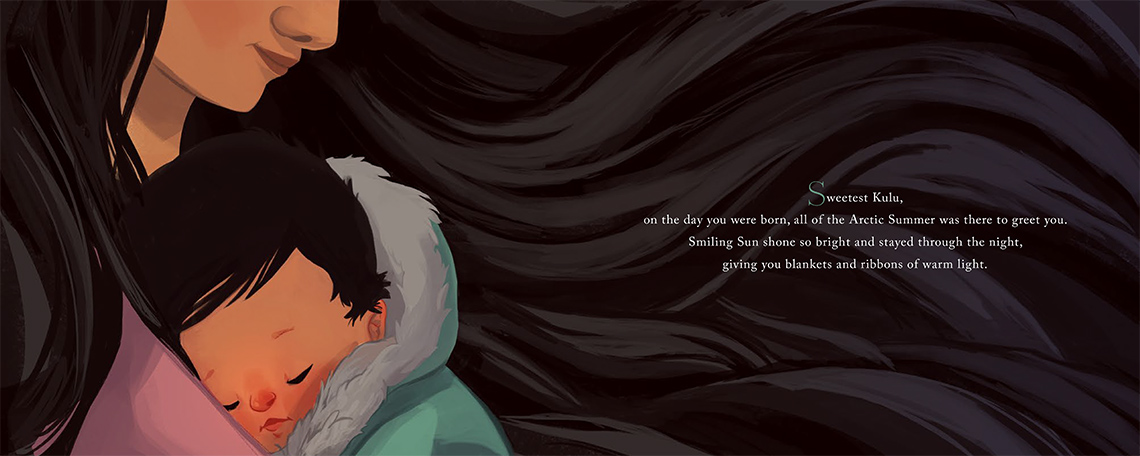
Sweetest Kulu, on the day you were born, all of the Arctic Summer was there to greet you. Smiling Sun shone so bright and stayed through the night, giving you blankets and ribbons of warm light.
Learning goals
We are learning to…
- identify and use listening strategies before, during, and after listening to understand information
- share our experiences that connect with ideas and topics in new texts
- identify themes explored in First Nations, Métis, and Inuit cultures to show an understanding of the many identities and ways of knowing, being, and doing
Success criteria
I am able to…
- answer questions during and after a read-aloud of the book Sweetest Kulu
- share my experiences that connect with the book Sweetest Kulu
- share my thoughts about the importance of relationships between people, animals, and the land
What is Inuit throat singing?
Have you ever heard Inuit throat singing? Let’s explore the following audio clip of Inuit throat singing by Inuk singer Celina Kalluk.
Inuit Throat Singing
How did you feel as you listened to the clip?
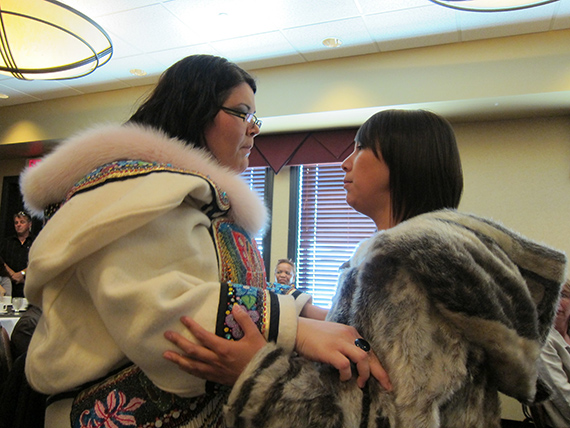
Two Inuit throat singers face each other with a microphone between them.
Inuit throat singing is a special way of singing that sounds like nature. It is a friendly competition usually between two women. The winner is the first to make the other person laugh!
In your family or community, are there any traditions that you enjoy?
Share your thoughts with a partner, if possible.
Exploring Inuit communities
Let’s learn more about Inuit communities, cultures, and traditions.
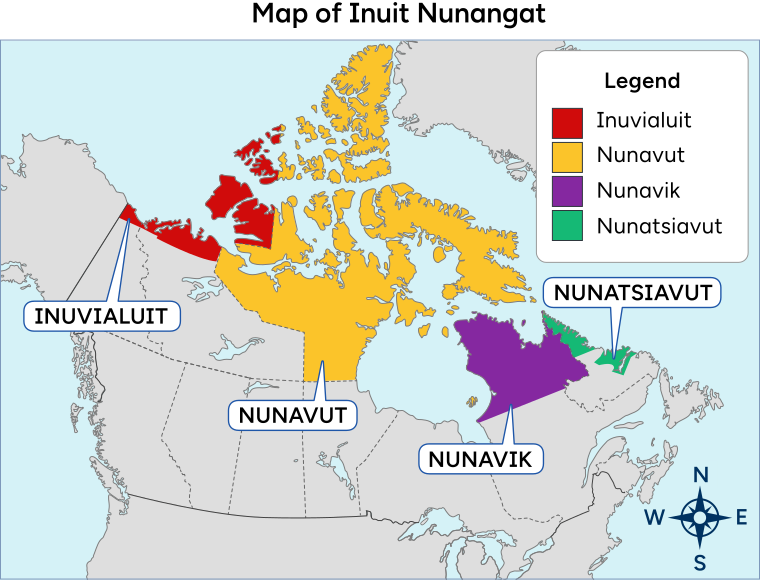
In Canada, the Inuit homeland is called Inuit Nunangat which includes:
- Nunavut
- Inuvialuit (the Northwest Territories and the Yukon)
- Nunavik (Northern Quebec)
- and Nunatsiavut (Newfoundland and Labrador).

Did You Know?
Did you know?
The Inuit are original people from the Arctic and northern regions of Canada, Alaska, Russia, and Greenland.
Inuktitut is a language spoken by the Inuit.
We will be reading Celina Kalluk’s story Sweetest Kulu, with audio in Inuktitut and English.
In this story, we are introduced to Arctic animals. Let’s explore the names of the Arctic animals, in Inuktitut and English

Before we begin the story, let’s learn a bit about the author Celina Kalluk.
About the author
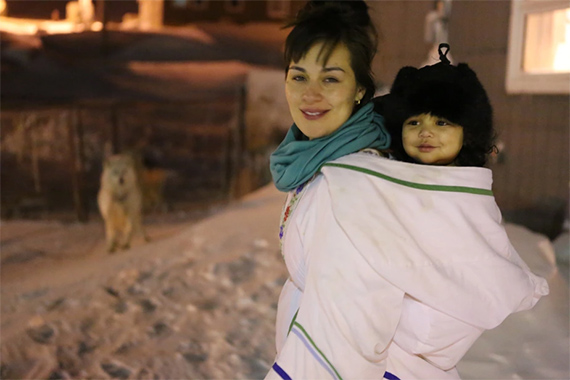
Sweetest Kulu was written by an Inuk author named Celina Kalluk. She was born and raised in Resolute Bay, Nunavut. Celina is also a visual artist and a famous throat singer.
Let’s explore the following pages from Sweetest Kulu.
Sweetest Kulu in English: Pages 1 to 3 Sweetest Kulu
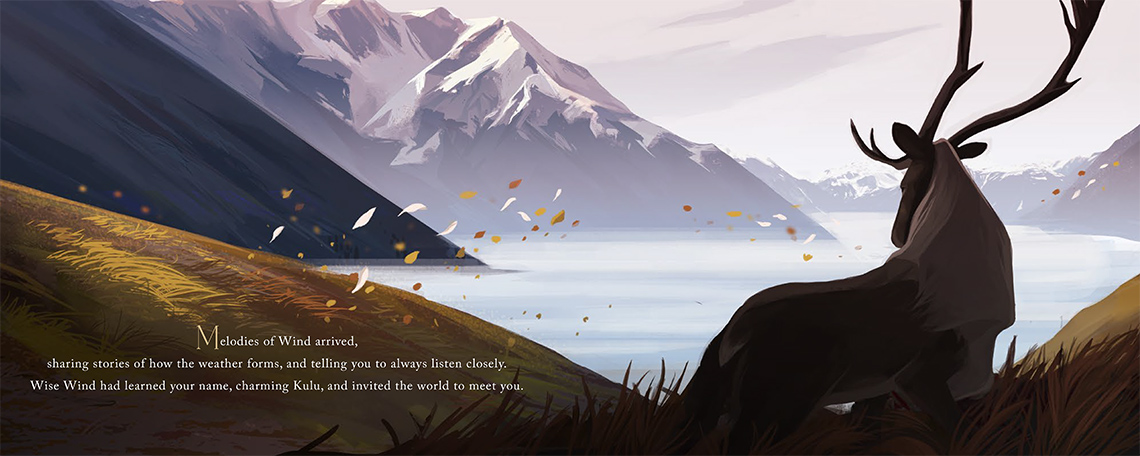
Melodies of Wind arrived, sharing stories of how the weather forms, and telling you to always listen closely. Wise Wind had learned your name, charming Kulu, and invited the world to meet you.
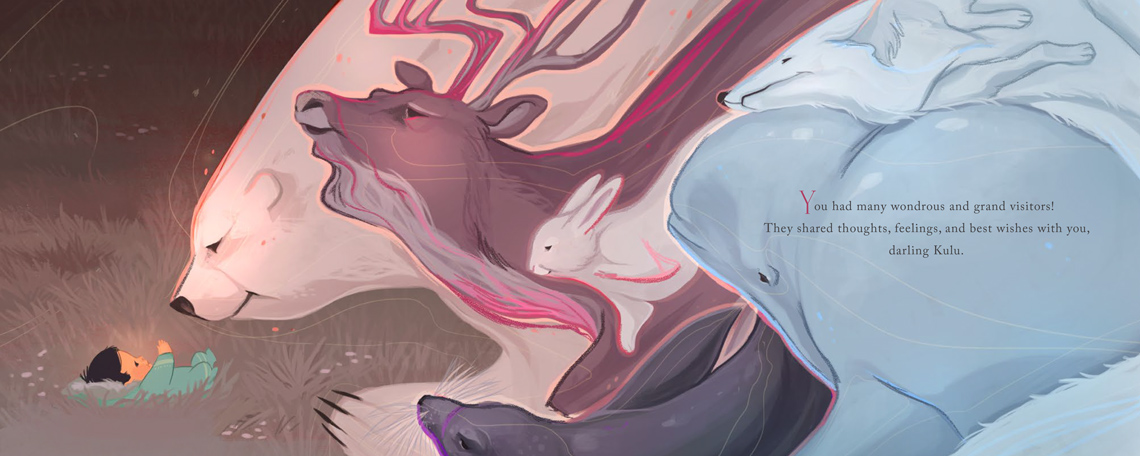
You had many wondrous and grand visitors! They shared thoughts, feelings, and best wishes with you, darling Kulu.
Explore the following audio clip to hear the story in Inuktitut.
Sweetest Kulu in Inuktitut: Pages 1 to 3
Did You Know?
Did you know?
Did you know that "Kulu" is an Inuktitut word that shows love. It is used for babies and young children. The Inuit show love and care for the animals as well.
What types of animals visit Kulu?
Press Reveal to check your answer.
A caribou, a polar bear, a seal, an arctic hare, a beluga, and an arctic fox come to visit Kulu.
What words might you use to describe the weather where Kulu and the animals live?
Press Reveal to access some possible words.
- snowy
- cold
- windy
Read more of the pages from Sweetest Kulu.
Sweetest Kulu in English: Pages 4 to 6 Sweetest Kulu
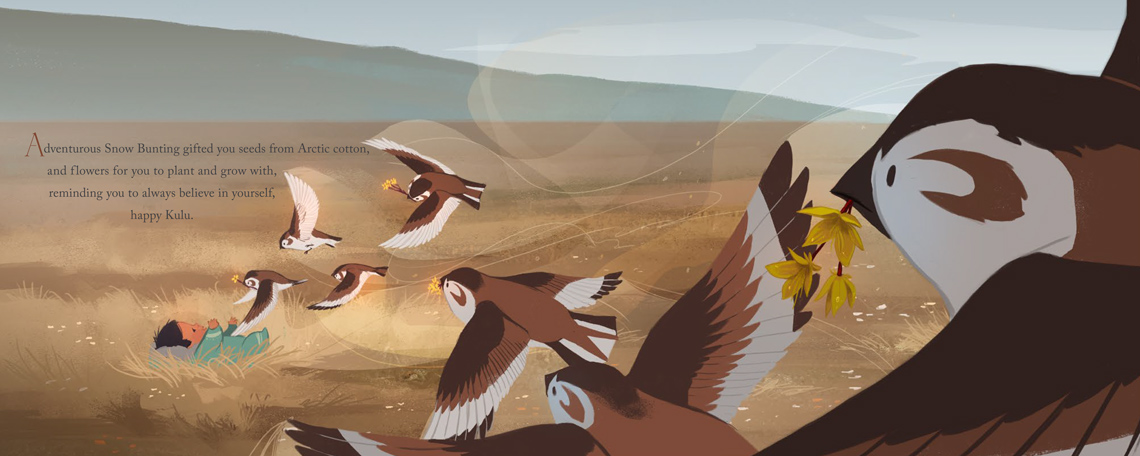
Adventurous Snow Bunting gifted you seeds from Artic cotton, and flowers for you to plant and grow with, reminding you to always believe in yourself, happy Kulu.
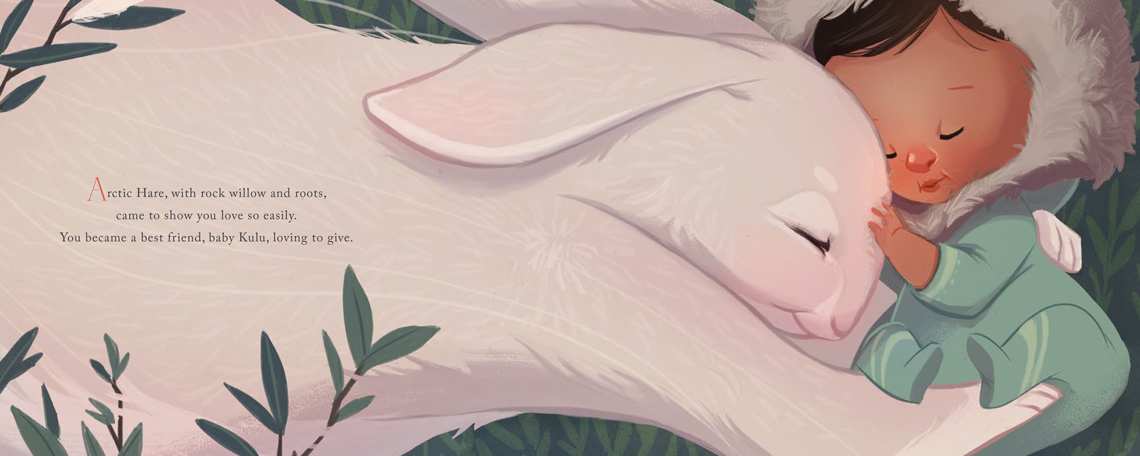
Artic Hare, with rock willow and roots, came to show you love so easily. You became a best friend, baby Kulu, loving to give.
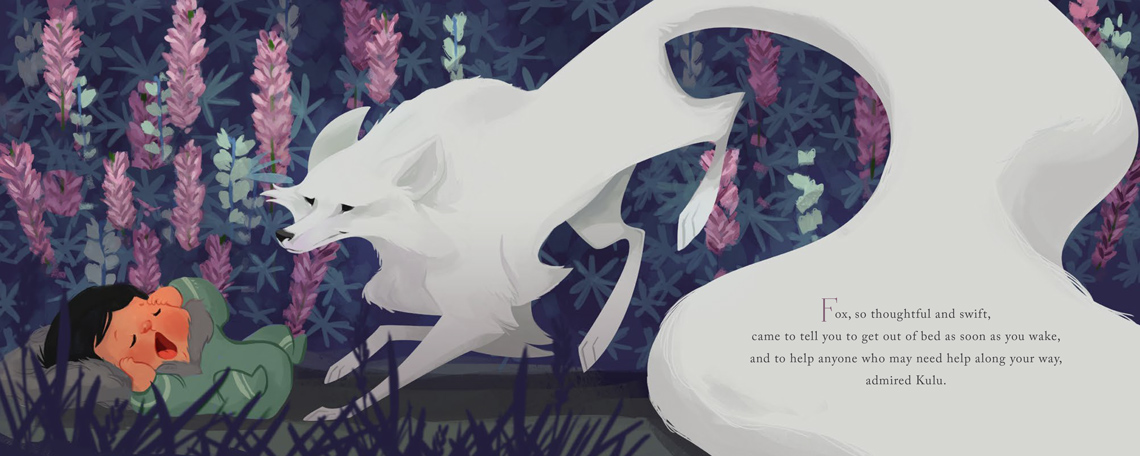
Fox, so thoughtful and swift, came to tell you to get out of bed as soon as you wake, and to help anyone who may need help along your way, admired Kulu.
Explore the following audio clip to hear the story in Inuktitut.
Sweetest Kulu in Inuktitut: Pages 4 to 6
What type of animals are snow buntings?
Press Reveal to check your answer.
Snow buntings are birds.
What are the snow buntings bringing Kulu?
Press Reveal to check your answer.
They are bringing Kulu flowers for Kulu to plant and grow.
What words would you use to describe the plants growing behind Kulu and the arctic fox?
Press Reveal to access some possible words.
- purple
- tall
- green
- fluffy
- leaves
Did You Know?
Did you know?
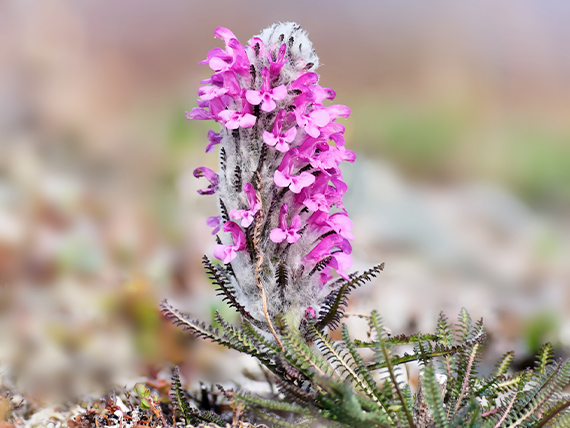
The flower plant in the background of the book is called woolly lousewort or ugjungnaq in Inuktitut. The Inuit use plants, like this one, as medicine and food. They understand different plants and their uses and protect the land for its gifts.
Read more of the pages from Sweetest Kulu.
Sweetest Kulu in English: Pages 7 to 9 Sweetest Kulu in English: Pages 7 to 9
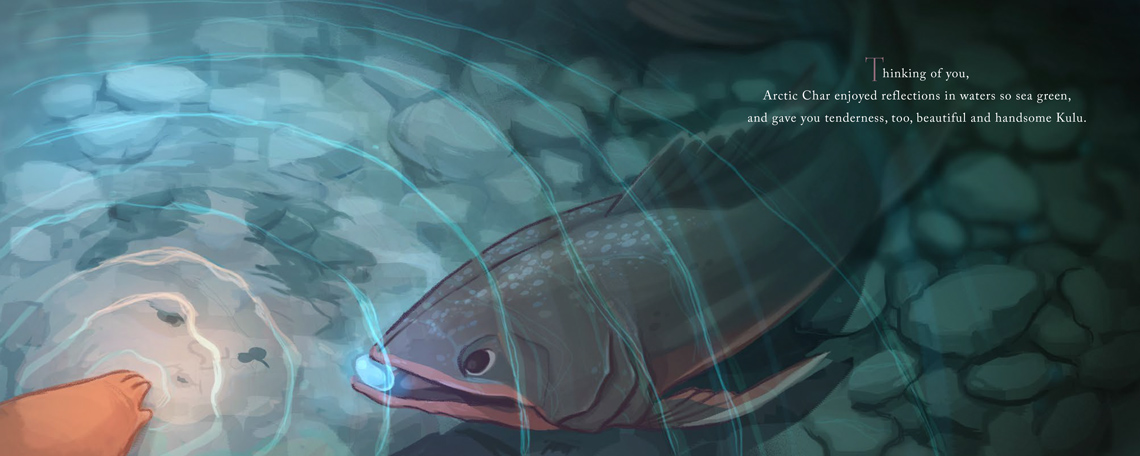
Thinking of you, Arctic Char enjoyed reflections in waters so sea green, and gave you tenderness, too, beautiful and handsome Kulu.
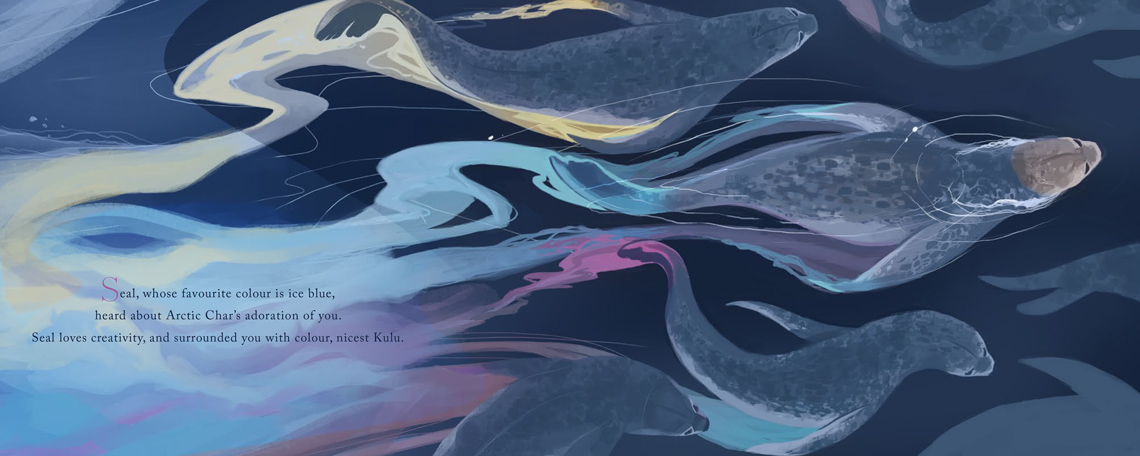
Seal, whose favourite colour is ice blue, heard about Arctic Char’s adoration of you. Seal loves creativity, and surrounded you with colour, nicest Kulu.
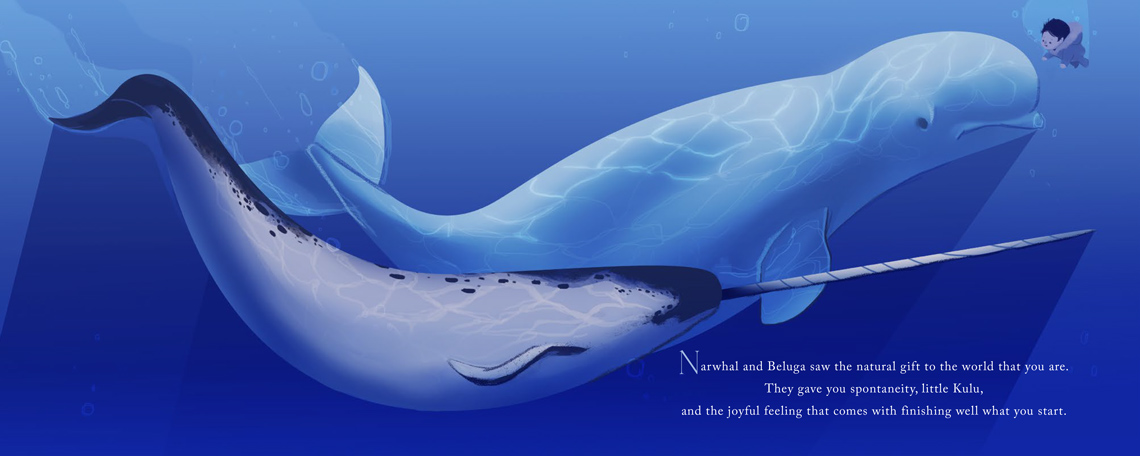
Narwhal and Beluga saw the natural gift to the world that you are. They gave you spontaneity, little Kulu, and the joyful feeling that comes with finishing well what you start.
Explore the following audio clip to hear the story in Inuktitut.
Sweetest Kulu in Inuktitut: Pages 7 to 9
What sound do you hear at the beginning of the word blue? How do we make that sound?
Listen to the following audio clip called Blue to hear what it sounds like.
Blue
What sound do you hear at the beginning of the word green? How do we make that sound?
Listen to the following audio clip called Green to hear what it sounds like.
Green
Read the following pages from Sweetest Kulu.
Sweetest Kulu in English: Pages 10 to 12 Sweetest Kulu in English: Pages 10 to 12
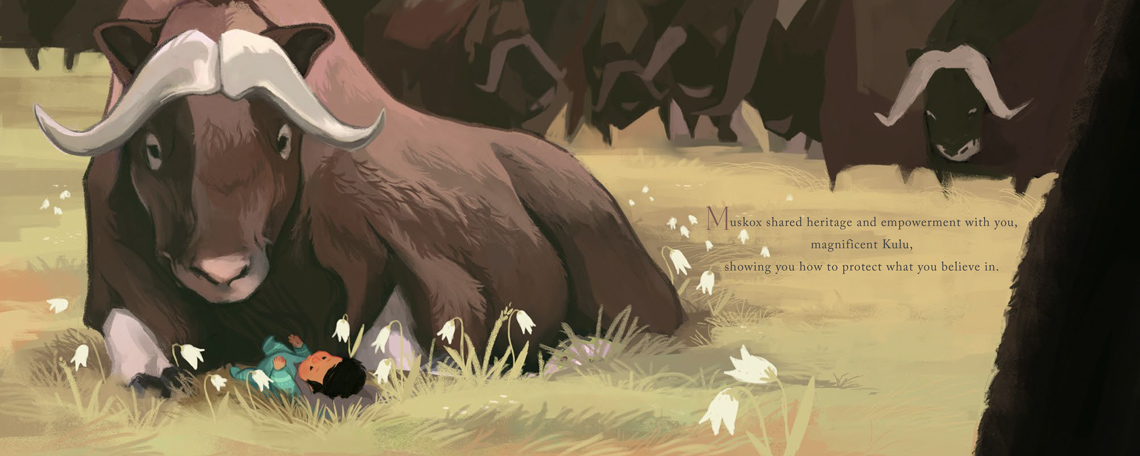
Muskox shared heritage and empowerment with you, magnificent Kulu, showing you how to protect what you believe in.
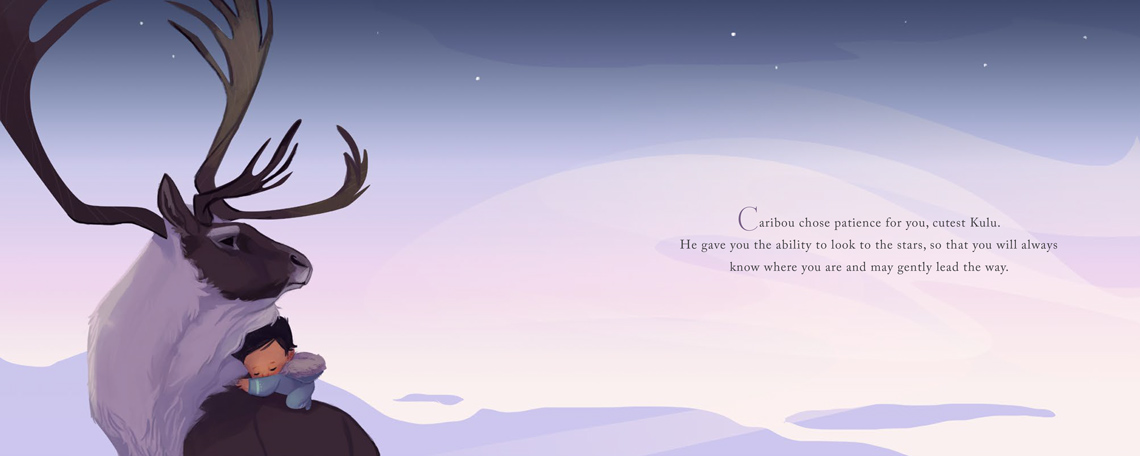
Caribou chose patience for you, cutest Kulu. He gave you the ability to look to the stars, so that you will always know where you are and may gently lead the way.
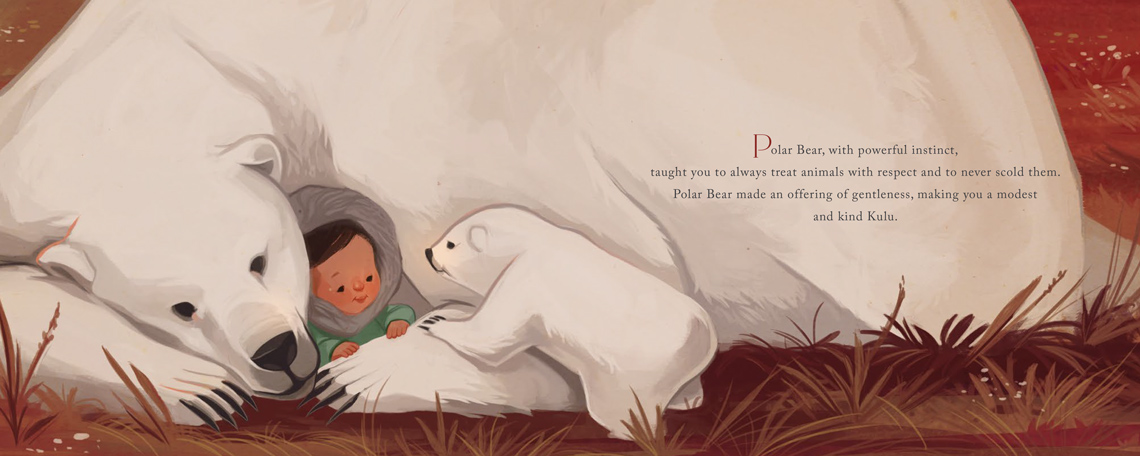
Polar Bear, with powerful instinct, taught you to always treat animals with respect and to never scold them. Polar Bear made an offering of gentleness, making you a modest and kind Kulu.
Explore the following audio clip to hear the story in Inuktitut.
Sweetest Kulu in Inuktitut: Pages 10 to 12
What words could you use to describe Muskox?
Press Reveal to access some possible words.
- big
- brown
- strong
- furry

Student Wellness
Let’s take a break
It’s time for a body break! Whether you're sitting in a
chair or standing, you can still join in the fun!
Let's start by taking a deep breath in and slowly letting it out.
Stretch your arms up high, as high as you can, and then gently bring them back down.
Now, wiggle your fingers and toes.
Remember, moving our bodies helps us feel refreshed and ready to learn even more amazing things. So, let’s take this time to breathe, relax, and shake it out!

Muskox, caribou and polar bears all have fur. Why might they need fur where they live?
Press Reveal to check your answer.
They all have fur to keep them warm in the cold weather and protect them from the sun in the warm weather.
Read the last pages from Sweetest Kulu.
Sweetest Kulu in English: Pages 13 to 14 Sweetest Kulu in English: Pages 13 to 14
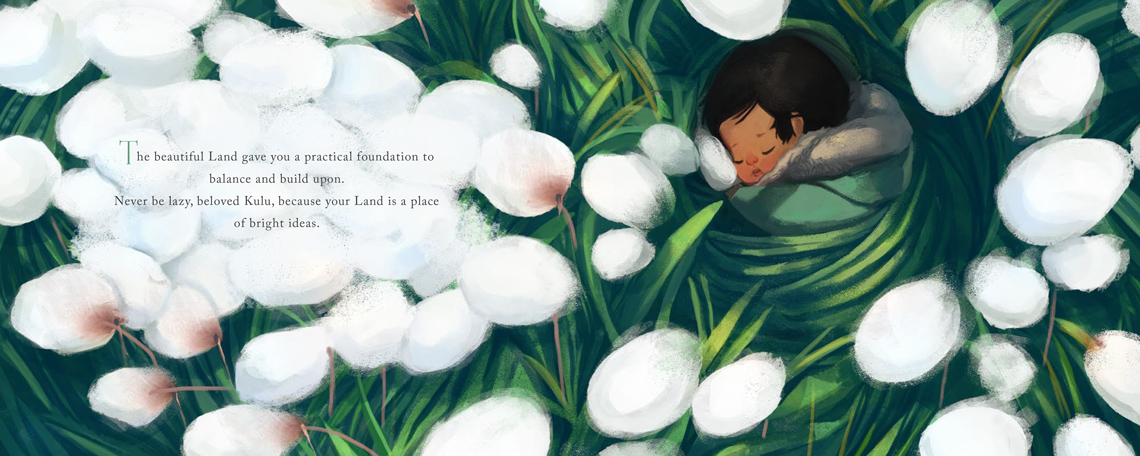
The beautiful Land gave you a practical foundation to balance and build upon. Never be lazy, beloved Kulu, because your Land is a place of bright ideas.
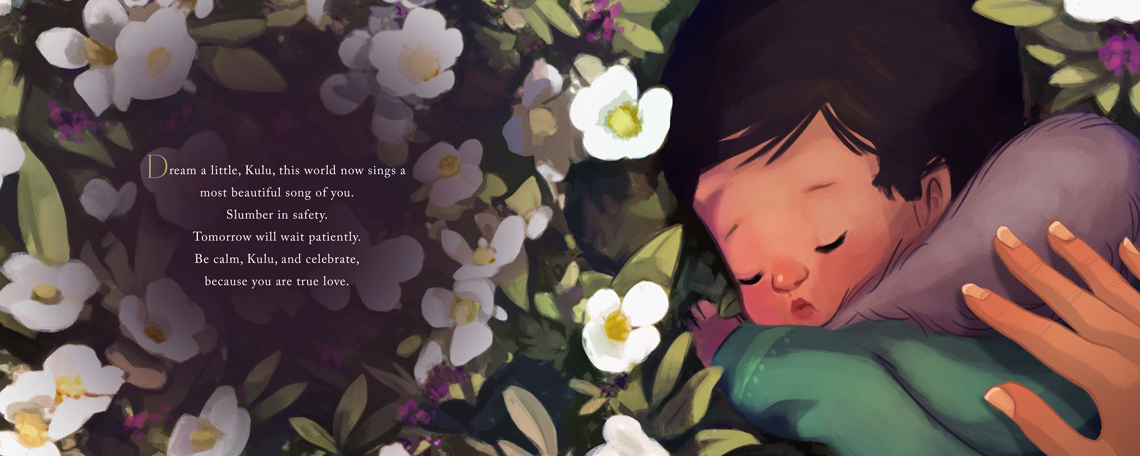
Dream a little, Kulu, this world now sings a most beautiful song of you. Slumber in safety. Tomorrow will wait patiently. Be calm, Kulu, and celebrate, because you are true love.
Explore the following audio clip to hear the story in Inuktitut.
Sweetest Kulu in Inuktitut: Pages 13 to 14
What is the relationship between Kulu and the animals?
Press Reveal to check your answer.
Kulu shows love and respect to the animals, and the animals show love and respect to Kulu.
Showing love and respect is one way to be kind. Why is it important to be kind?
What are some ways that you can show kindness to others and to our planet?
For each act of kindness select the matching image.

Putting it all together
Complete the fillable and printable Sweetest Kulu Activity in your notebook or using the following document. If you would like, you can use speech-to-text or audio recording tools to record your thoughts.
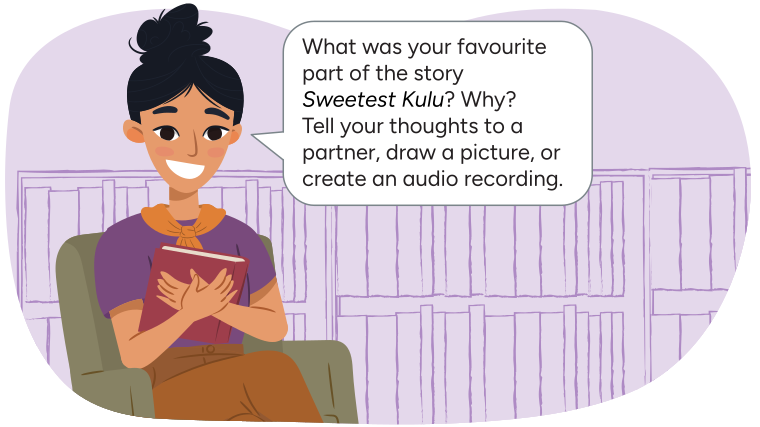
A teacher asks, ‘What was your favourite part of the story Sweetest Kulu? Why? Tell your thoughts to a partner, draw a picture, or create an audio recording.’
Are there any stories that you have shared with your friends or family?
Record your thoughts using pictures, words, or an audio recording.
Word review
Let’s practice some of the words we explored in the book Sweetest Kulu.
Match each Arctic animal with their correct image.
Reflection
How do you feel about what you have learned in this activity? Which of the next four sentences best matches how you are feeling about your learning? Press the button that is beside this sentence.

I feel...
Now, record your ideas about your feelings using a voice recorder, speech-to-text, or writing tool.