What is a community?
Explore the following images for some examples of a community. What do you notice?
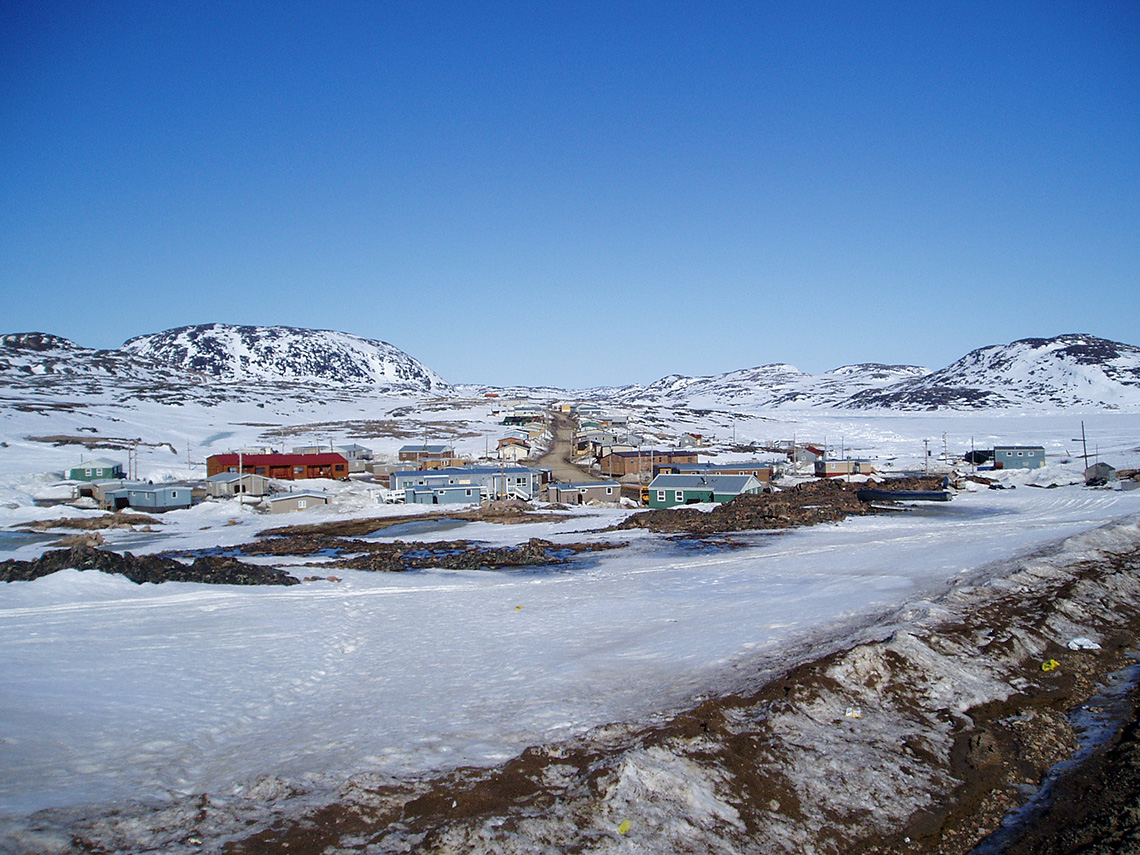
Kinngait, Nunavut
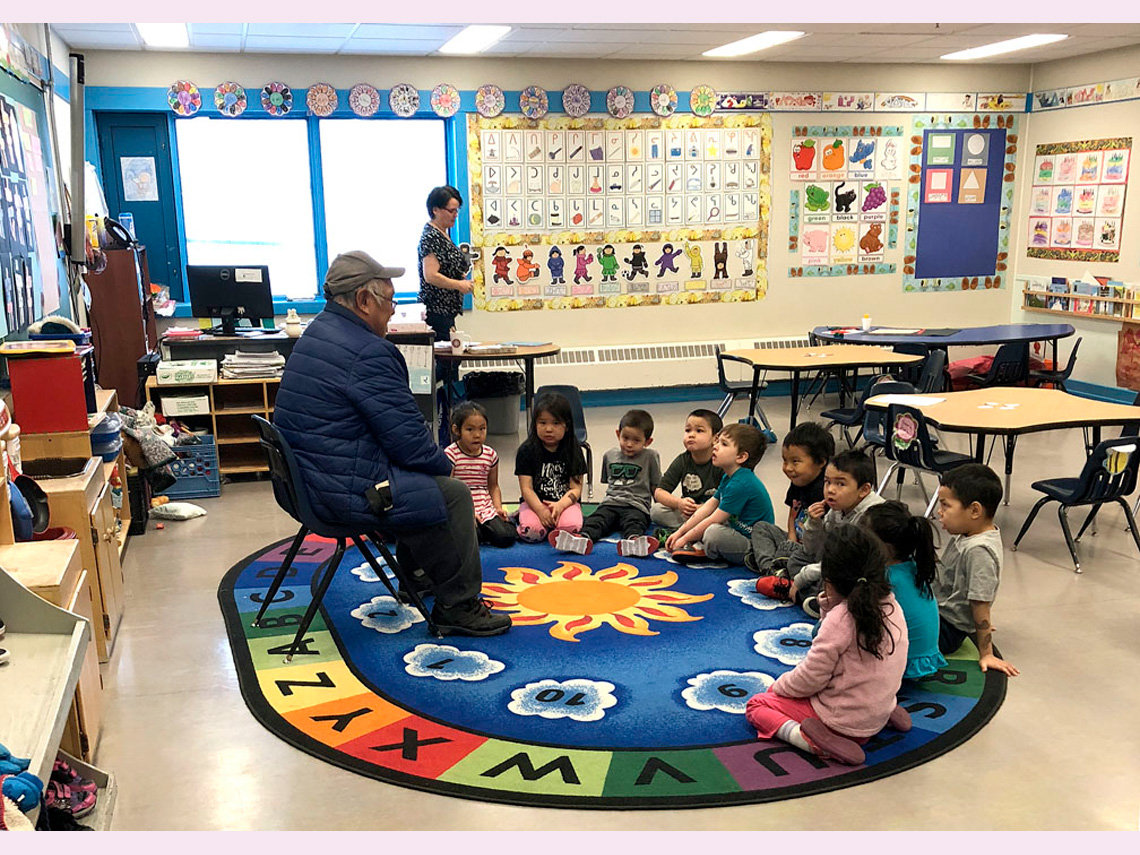
Listening to an Elder share a story in Inuktitut.
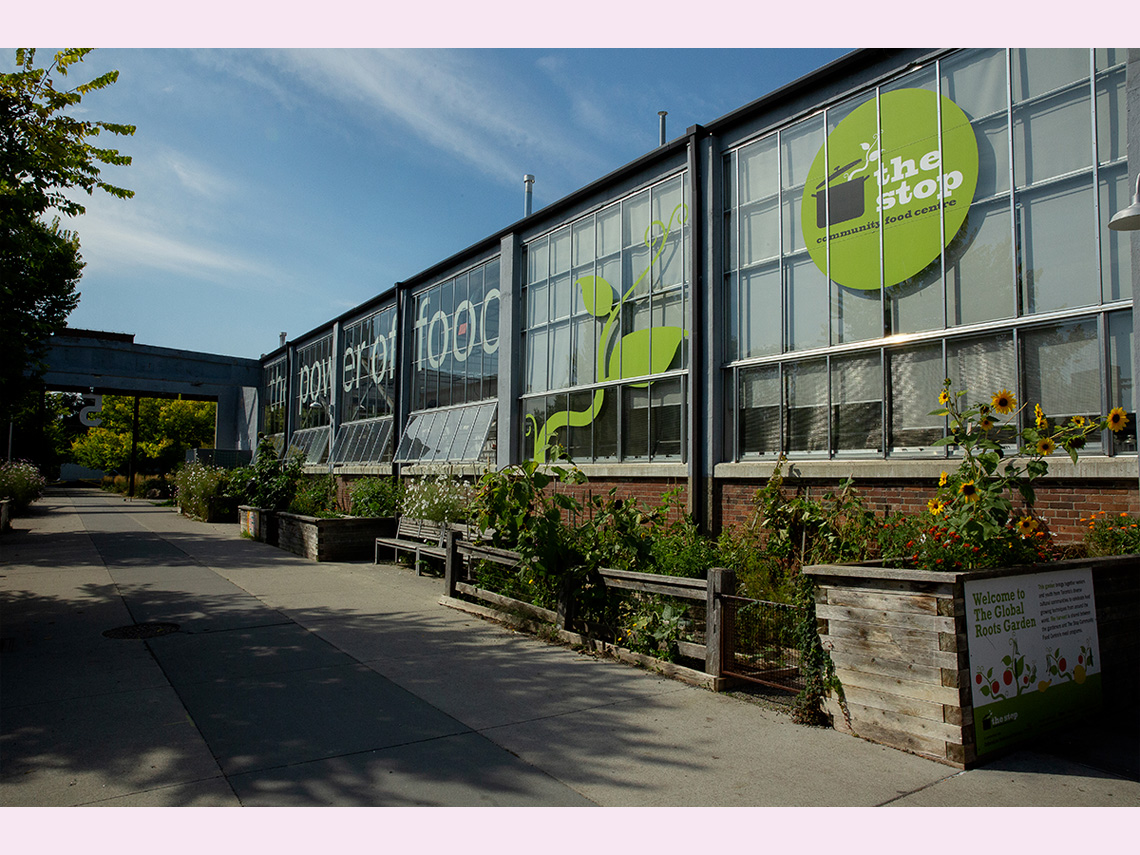
The Global Roots Garden at the Wychwood Green Barn in Toronto, Ontario.
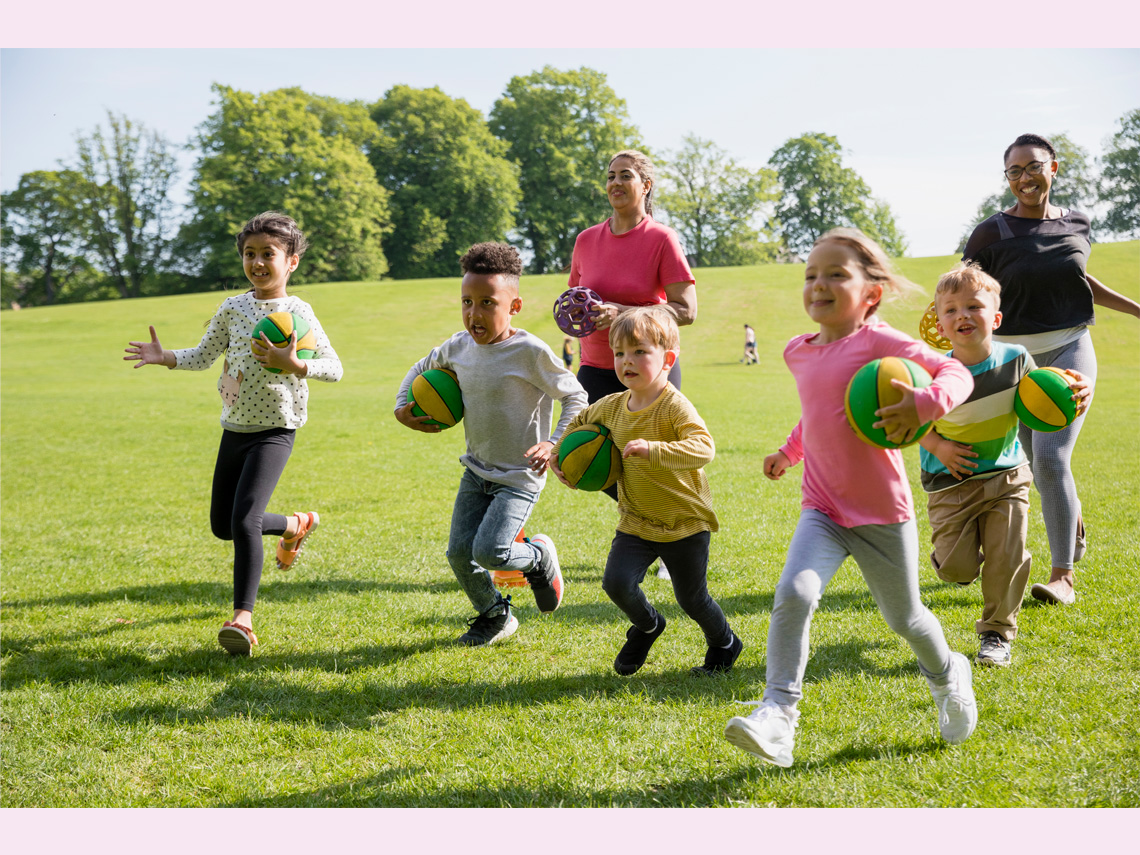
Playing with balls at the park.
What does a community look like, feel like, and sound like?
Share your thoughts with a partner, if possible.

Exploring a community
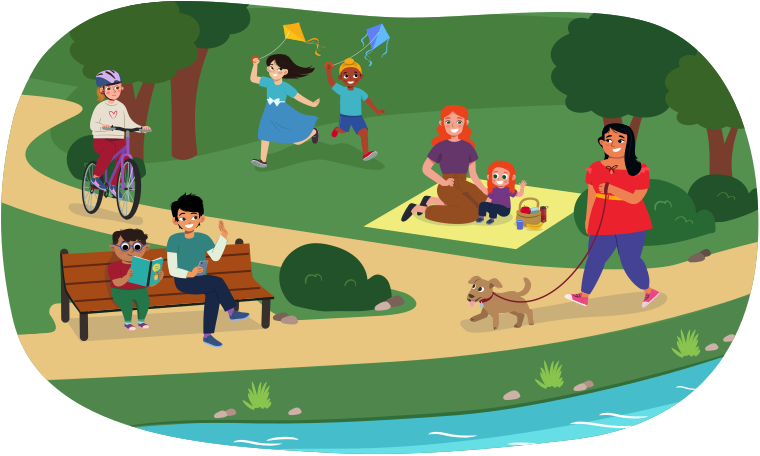
A community is a group of people that live, play, and work together.
When people feel safe and protected in their community, they also feel comfortable sharing their interests, backgrounds, cultures, and traditions with each other.
This might include:
- language
- food
- celebrations
- art
- music
- dance
- religion
What are some of the people, places and things that make up your community?
Share your thoughts with a partner, if possible.
Raven’s Quest
Check out this clip from Raven’s Quest about Emily and her community!
How does Emily introduce herself?
Press Reveal to check your answer.
Emily shares that she is 12 years old. She is Mohawk from Kahnawà:ke and currently lives in the Greater Montreal area.
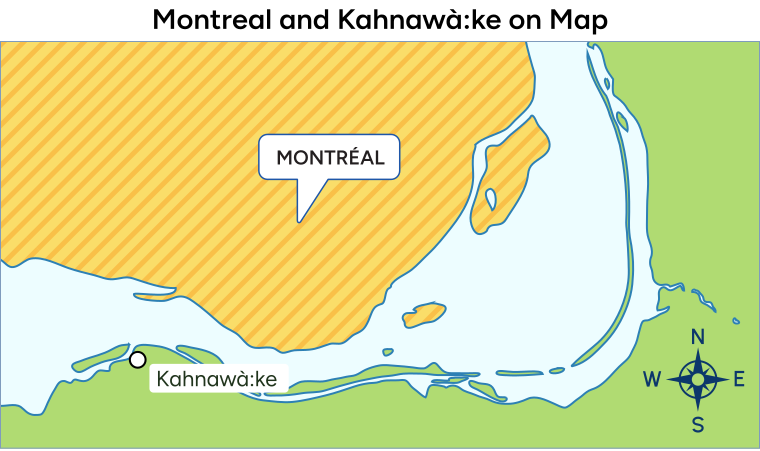
A map of Montreal and Kahnawá:ke. Montreal is an island that is north of the St. Laurent River. Kahnawá:ke is across from Montreal. It is south of the St. Laurent River.
What is Emily’s Mohawk name? What does it mean?
Press Reveal to check your answer.
Her Mohawk name is Kahente which means “the one who will lead the way.”
What is a special fact that Emily shares about herself?
Press Reveal to check your answer.
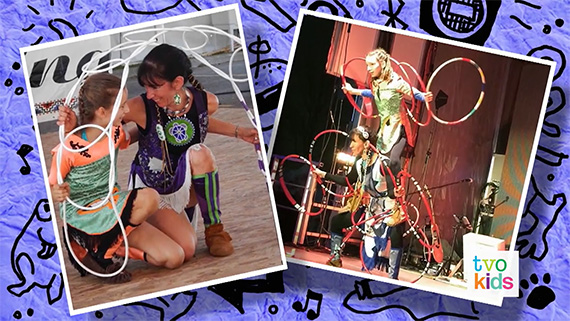
Emily is a Hoop Dancer. Hoop Dancing is important to Emily because it is creative and fun. She gets to perform with her mom.
Clara asks, 'Did you notice that while Emily is on camera and sharing facts about herself, she speaks clearly, makes eye contact, and uses different types of body language?'
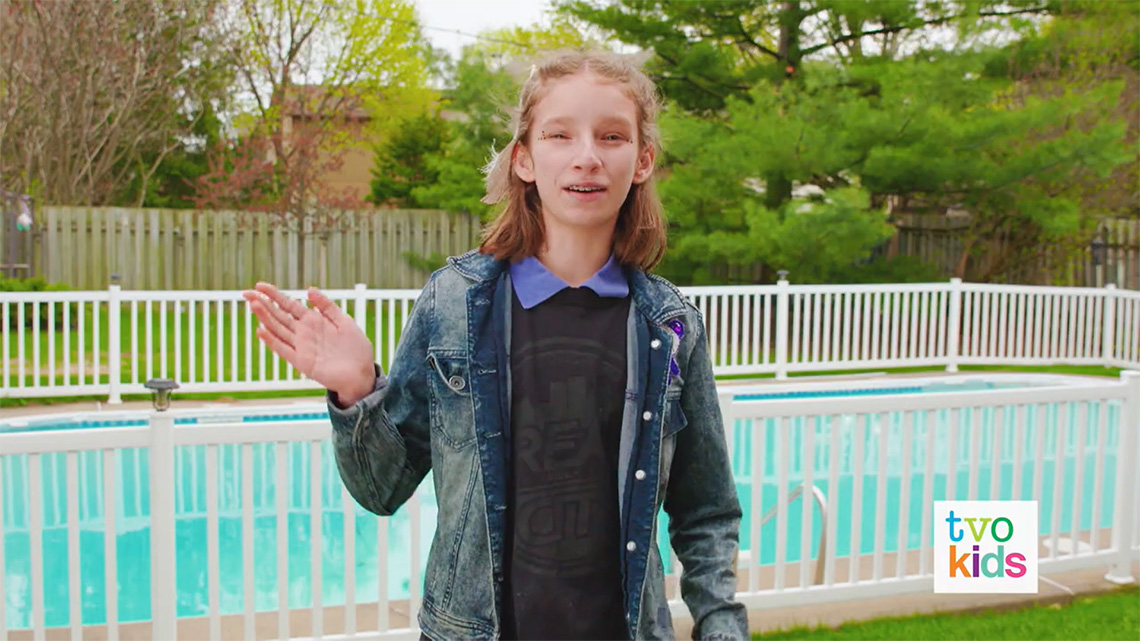
In this example, Emily waves to the camera as she says, “Shé:kon”.
Shé:kon means hello in Mohawk.
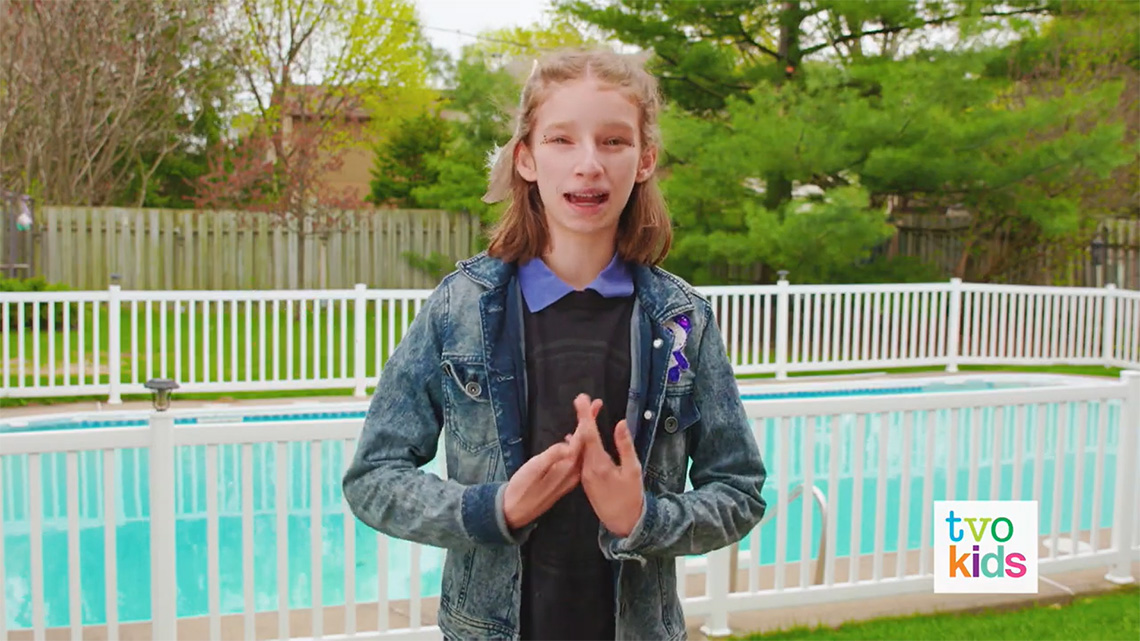
In this example, Emily uses her hands to point to herself when she tells the audience her name.
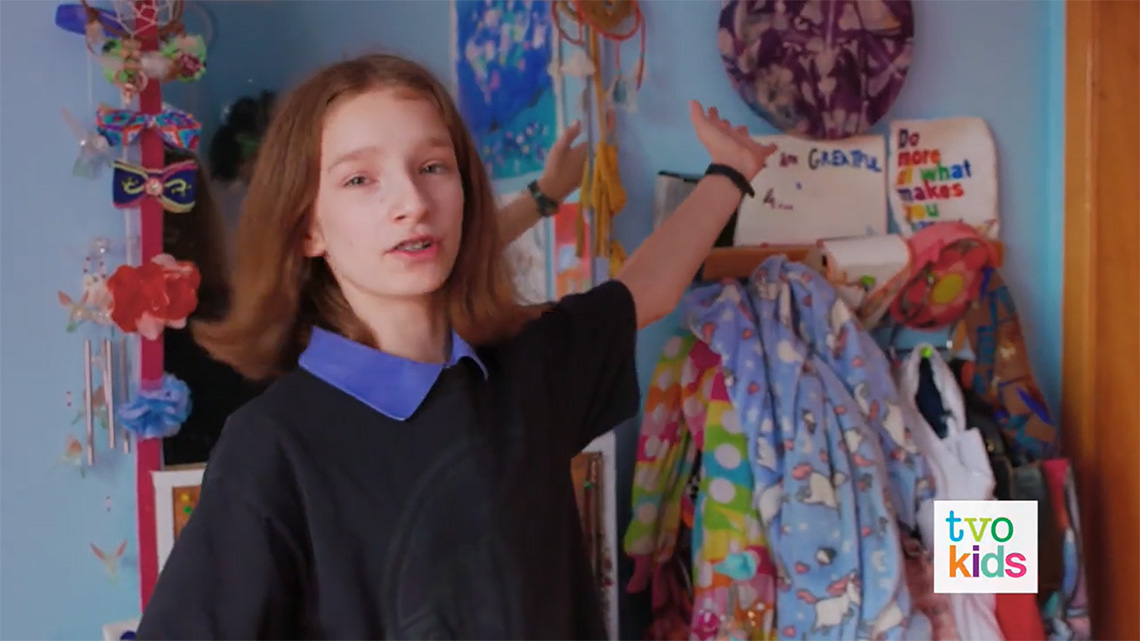
In this example, Emily gestures to her drum on the wall in her room. This is one way she can help the audience understand where she would like them to look.
These are a few of the ways that Emily helps share her information with the audience. We can use many different strategies to communicate our ideas!

Brainstorm
Perform a task on your own!
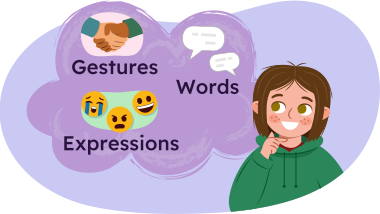
How might you introduce yourself to a new friend?
Record your ideas using a method of your choice.
Let’s learn more about Emily, her interests, and the people in her community.
Emily loves to breakdance. She works together with her teachers and her dance team The Flashback to learn new choreography and prepare for performances!
Press Choreography to learn more about this word.
Choreography is a series of steps, movements, and patterns of movements that share a feeling or idea.
Emily shares that she is excited and determined when she is preparing for a new performance.
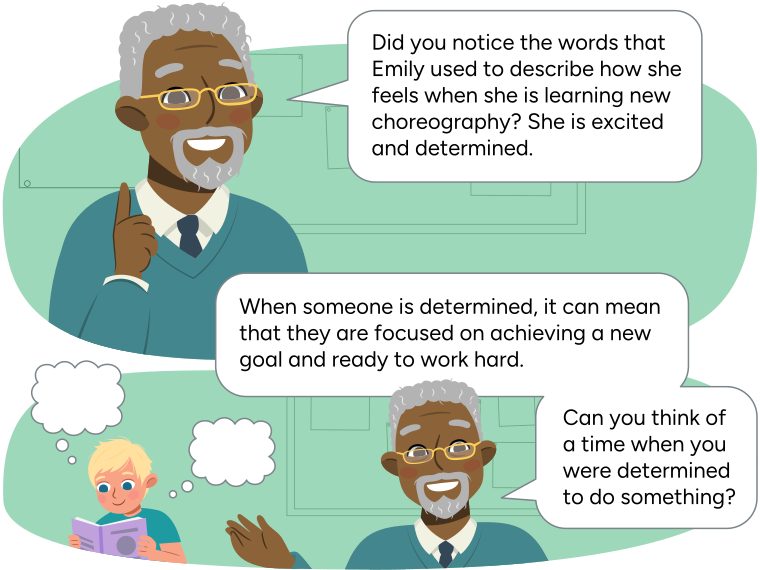
Teacher Wilfred asks, 'Did you notice the words that Emily used to describe how she feels when she is learning new choreography? She is excited and determined.
When someone is determined, it can mean that they are focused on achieving a new goal and ready to work hard.
Can you think of a time when you were determined to do something?'
Brainstorm
Perform a task on your own!
What are some of your own interests or hobbies?
What are some spaces and places in a community where someone might learn a new skill and connect with others?
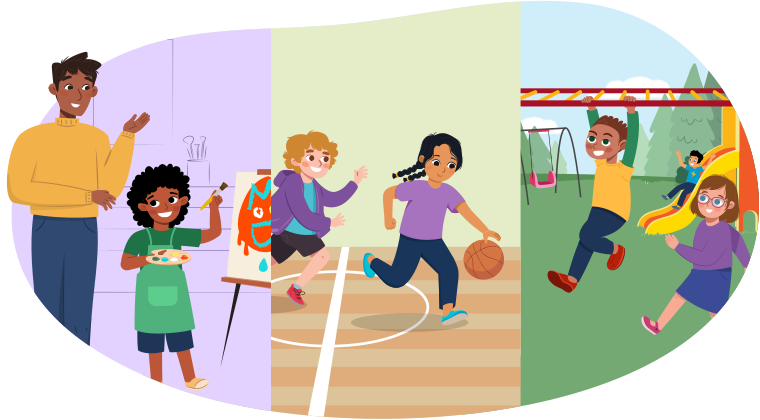
In the video, how did Emily share her love of hoop dance and breakdancing?
Press Reveal to check your answer.
Emily made a dance that had moves from two different styles. She danced to music that was a mix of traditional pow wow music and modern techno beats.
Emily likes to call herself Aboriginal because she's part of an Indigenous group. In Canada, we use the word Indigenous to talk about First Nations, Métis, and Inuit communities.
Emily shares that the word Tekanoniahkwa means dance in Mohawk language.
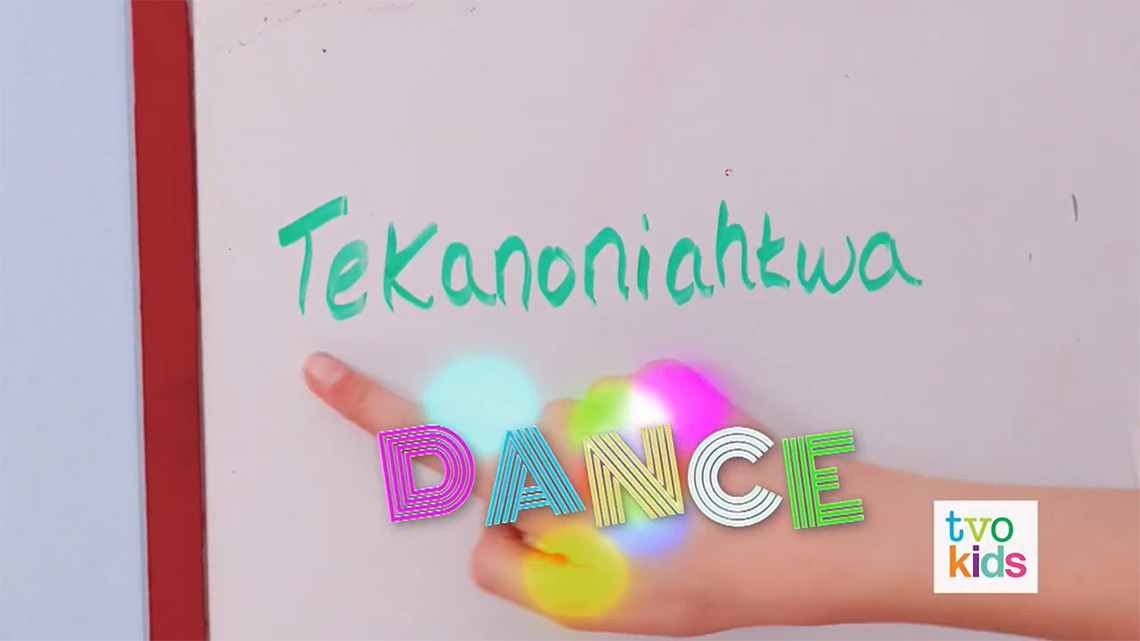
Why do you think Emily chose to share words in Mohawk with the audience?
Share your thoughts with a partner, if possible.

Discover words in other languages!
Let’s review some of the words that Emily has taught us in Mohawk language.
Shé:kon – hello
Kahente (Emily’s Mohawk name) – the one who will lead the way
Takanoniahkwa – dance

Pause and Reflect
Pause and reflect
If you could ask Emily to share another word in Mohawk, what would you ask her and why?
Do you or anyone you know speak or understand multiple languages?
Let’s learn more about hoop dancing from Emily and some of her friends.
Emily wears her regalia and teaches us that hoop dancing is a storytelling dance. She loves to perform at powwows and festivals. She can use the hoops to make different shapes from nature such as a butterfly, a flower, and an eagle.
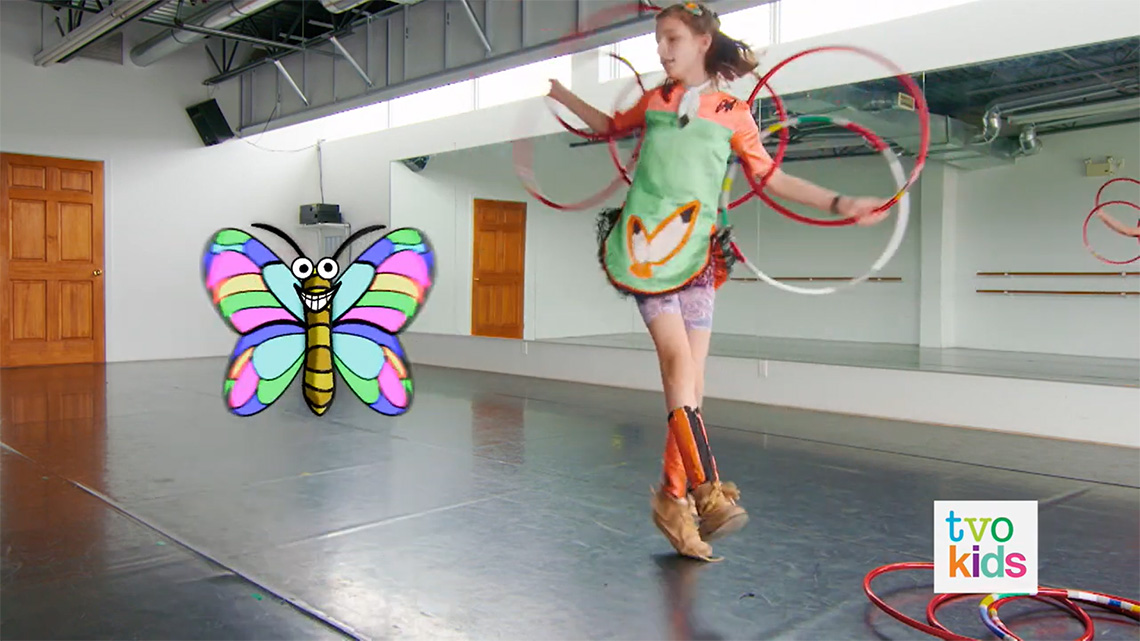
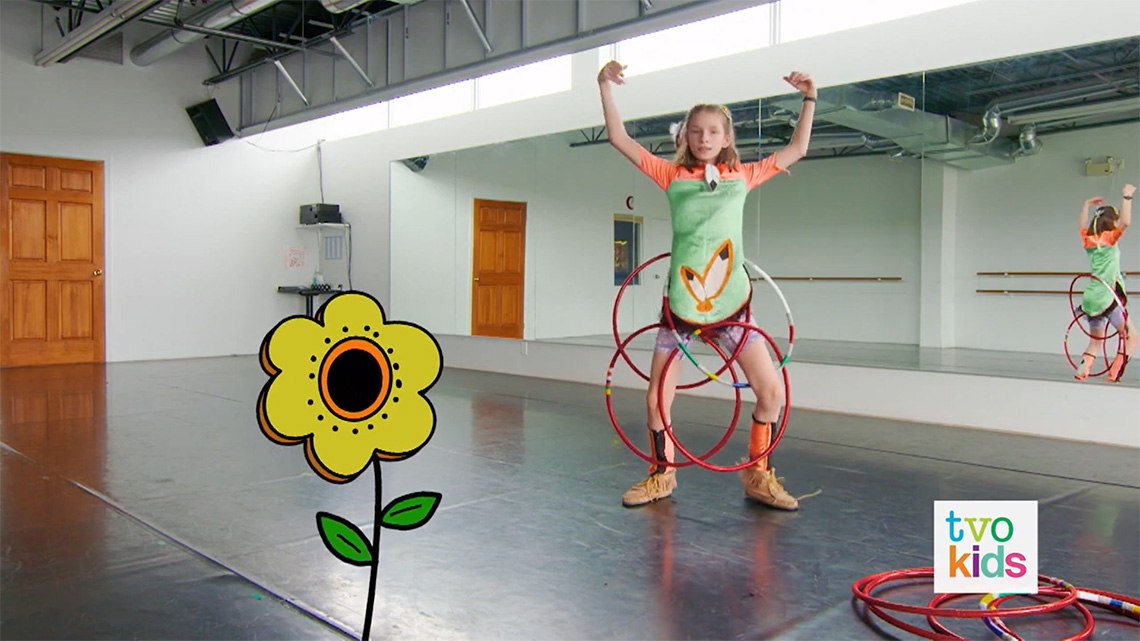
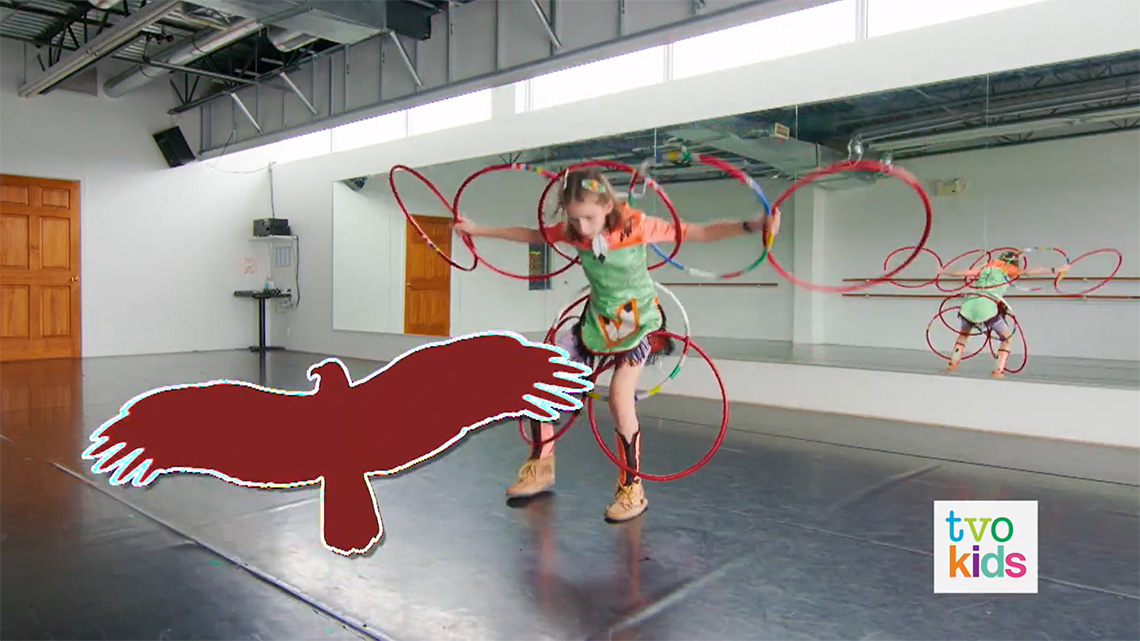
How did Emily’s friends respond to Emily’s performance?
How did you feel while you watched Emily perform the hoop dance?
Share your thoughts with a partner, if possible.
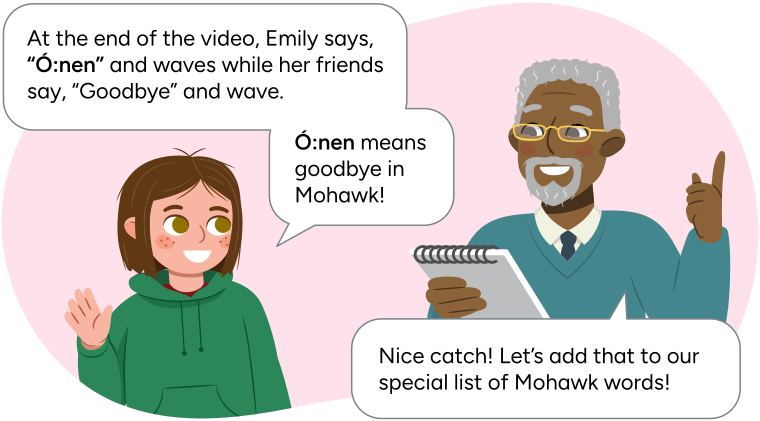
Clara and Teacher Wilfred are talking.
Clara says, 'At the end of the video, Emily says 'Ó:nen' and waves while her friends say, 'Goodbye' and wave. Ó:nen means goodbye in Mohawk!'
Teacher Wilfred says, 'Nice catch! Let's add that to our special list of Mohawk words!'

Declarative sentences
In the video, Emily tells us things about herself and her community using sentences that start with a capital letter and end with a period. These sentences are called declarative sentences because they share facts.
At the beginning of the video, Emily introduces herself using a declarative sentence.
Check out the following interactive called A Declarative Sentence to learn more about declarative sentences.
Throughout the video, Emily continues to share facts and opinions using declarative sentences. For example, when she shares her experience breakdancing, she talks about her teachers.
Check out the following interactive called Declarative Sentences to learn more about declarative sentences.
All three of these sentences share facts about how Emily feels about her breakdancing teachers.
How might you use a declarative sentence to introduce yourself?
What is one special fact about yourself that you could share?
Go!
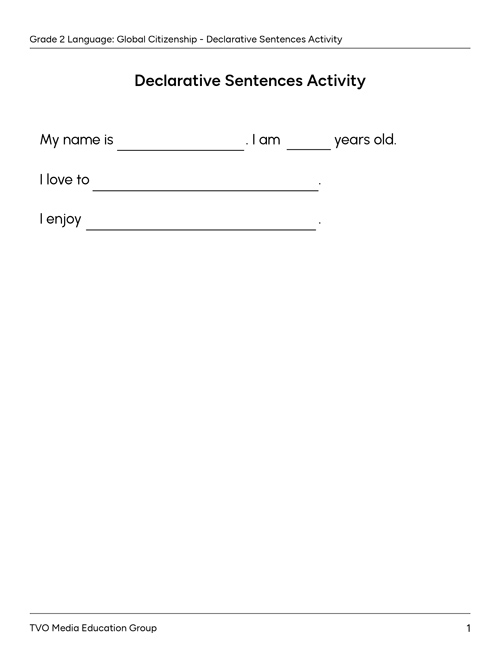
You may use the following sentence starters to help you create your own declarative sentences.
Complete the Declarative Sentences Activity in your notebook or using the following fillable and printable document. If you would like you can use speech-to -text or audio recording tools to record your thoughts.
Let’s reflect!
What were some of the main things you learned about Emily?
If you could ask Emily a question, what would you ask her?
Record your thoughts using a method of your choice. Share your thoughts with a partner, if possible.
Let’s review our learning!
Now that we have learned about Emily and her community, it’s time to share something about you:
- What are some facts about you?
- What is something special about you that you would like to share?
Think about how you might introduce yourself to a new friend. You may include the declarative sentences that you created in the Action section in your notes.
Complete the All About Me Map in your notebook or using the following fillable and printable document. If you would like, you can use speech-to-text or audio recording tools to record your thoughts.
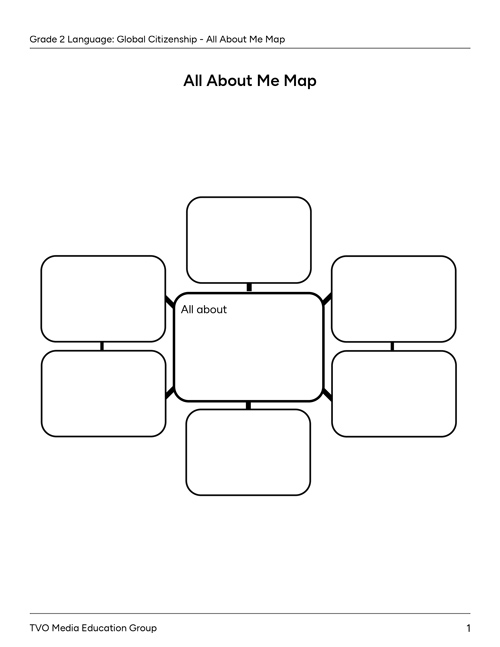
Once you have completed your All About Me Map consider how you might use facial expressions and gestures to help you introduce yourself and share your facts.
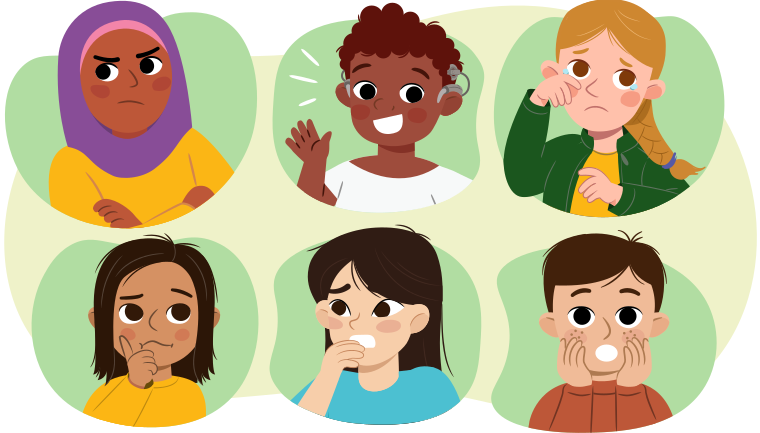
Choose an expression and gesture from the image and practice your introduction! If possible present yourself to a partner.
Mohawk language review
Let’s review the Mohawk language vocabulary that Emily taught us!
For each Mohawk word pick the correct English translation.
Reflection
How do you feel about what you have learned in this activity? Which of the next four sentences best matches how you are feeling about your learning? Press the button that is beside this sentence.

I feel...
Now, record your ideas about your feelings using a voice recorder, speech-to-text, or writing tool.