Learning goals
We are learning to…
- explore the concepts of identity, self, and sense of belonging in texts and demonstrate an understanding of the contributions, lived experiences, and perspectives of many different people, including those in Canada
- use effective listening skills by expressing interest, asking a variety of questions, and restating what we heard
- sort and sequence ideas and information using a specific text form
Success criteria
I am able to…
- explore Dia de los Muertos or the Day of the Dead celebration and understanding the different parts of this celebration
- use effective listening skills while watching an It’s my Party episode on Día de los Muertos, asking a variety of questions and restating what I have learned from the episode
- sort and sequence ideas and information in the form of a letter or email
What is a celebration?
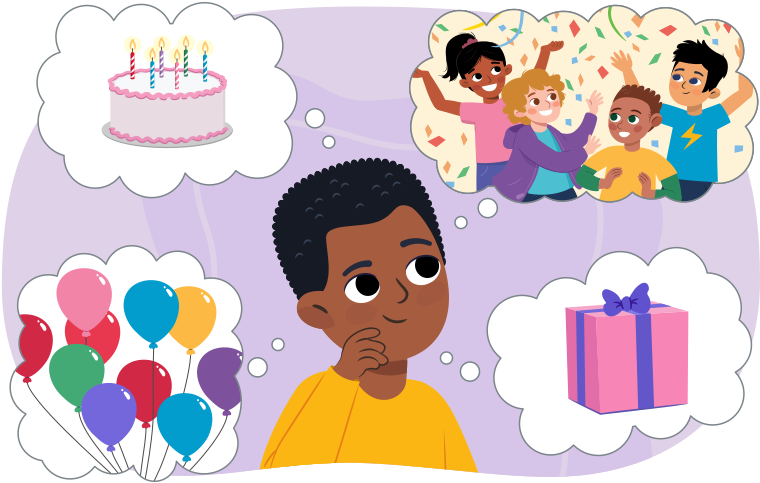
What do you think of when you hear the word celebration?
Listen to this audio clip called Celebration to hear the word spoken.
Celebration
Brainstorm what you already know and what you wonder about celebrations using words and/or pictures.
Record your ideas using the following fillable and printable Know and Wonder Chart or another method of your choice.
|
K I know… |
W I want to know… |
|---|---|
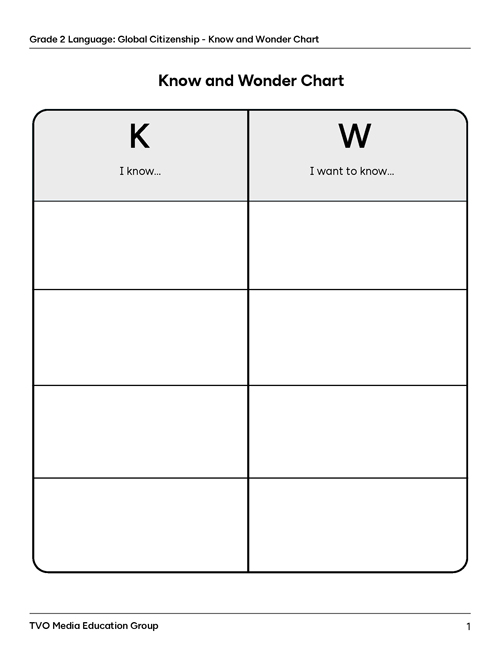
If possible, share your chart with a partner. Are your ideas the same or different?
Celebrations
Each culture and community have their own kind of celebrations. Celebrations can mark a special date, be a time to honour and remember people that have passed on, or a party where people can enjoy each others company.
Celebrations may include:
- food
- music
- art and decorations
- special clothing etc.
Press Culture to access the definition.
Press Tradition to access the definition.
Press Celebration to access the definition.
Source: Britannica. (n.d.). Culture. In Britannica Kids. Retrieved April 12, 2024, from https://kids.britannica.com/kids/article/culture/399913
It’s my party!
Let’s explore a celebration together by watching an episode of It’s My Party!
In this episode of It’s My Party Indiana has invited Sadie to attend her Day of the Dead celebration.

Social Emotional Learning
Before you begin listening
Think about:
- what I already know about celebrations
- what I can do to help myself focus on the speaker
Check out this clip from It’s My Party where Emily shares some Day of the Dead traditions!
What did you learn about the Day of the Dead celebration?
Record your thoughts using a method of your choice. If possible, share with a partner.
Press Hint to help guide your thinking.
- it is celebrated in Mexico and around the world
- it is a day where people remember friends and family members who have passed on
- it is a cheerful and colourful celebration
- there is a lot of delicious food and lively music
- butterflies and skeletons are a major part of this colourful festival
- in Mexico there is a big Day of the Dead parade every year
Check out this clip from It’s My Party where Indiana and her grandparents teach Sadie a Spanish song.
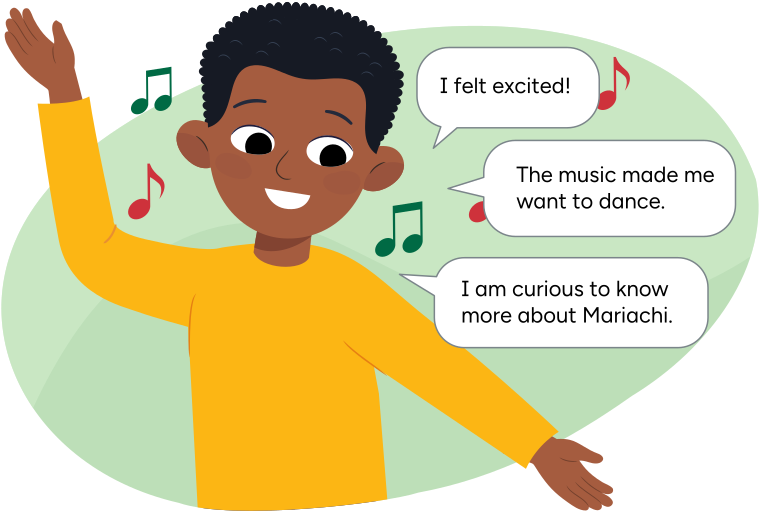
Indiana’s papá and mami (grandparents) are Mariachi musicians! How did you feel when you listened to their music?

Did You Know?
Did you know?
Mariachi music is a type of Mexican music that includes groups of musicians who play instruments and sing. This style of music began sometime in the late-1700s in west-central Mexico.
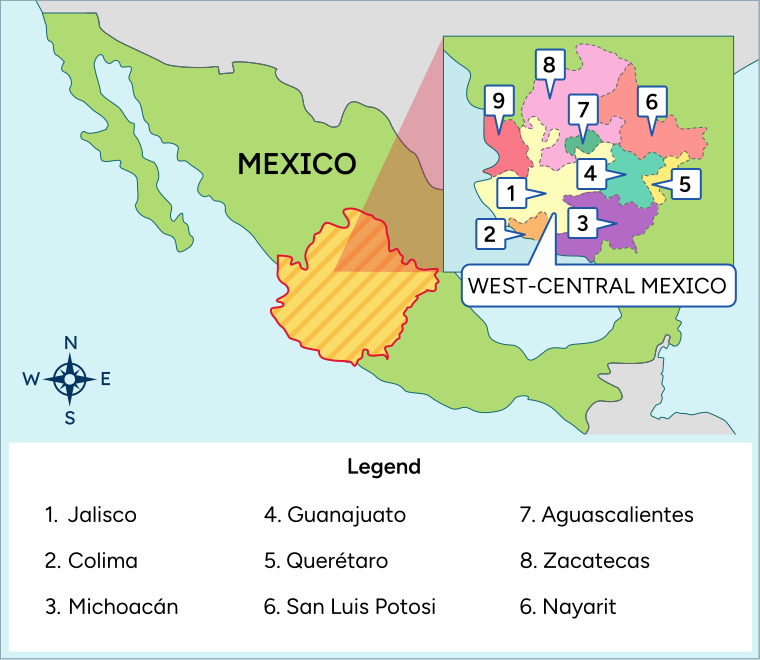
A map of Mexico. The west-central part of Mexico is highlighted. This area is where Mariachi music came from. There is a close up of west-central Mexico. It is divided into 9 areas. The 9 areas are:
- Jalisco
- Colima
- Michoacán
- Guanajuato
- Querétaro
- San Luis Potosi
- Aguascalientes
- Zacatecas
- Nayarit
Source: Britannica. (n.d.). Mariachi. In Encyclopedia Britannica. Retrieved April 12, 2024, from https://www.britannica.com/art/mariachi
Some of the instruments in Mariachi music include vihuela, guitarrón, violin, and trumpet.
Press the tabs to learn more about Mariachi instruments. Listen to the audio clips called vihuela, guitarrón, violin, and trumpet to hear more about them.
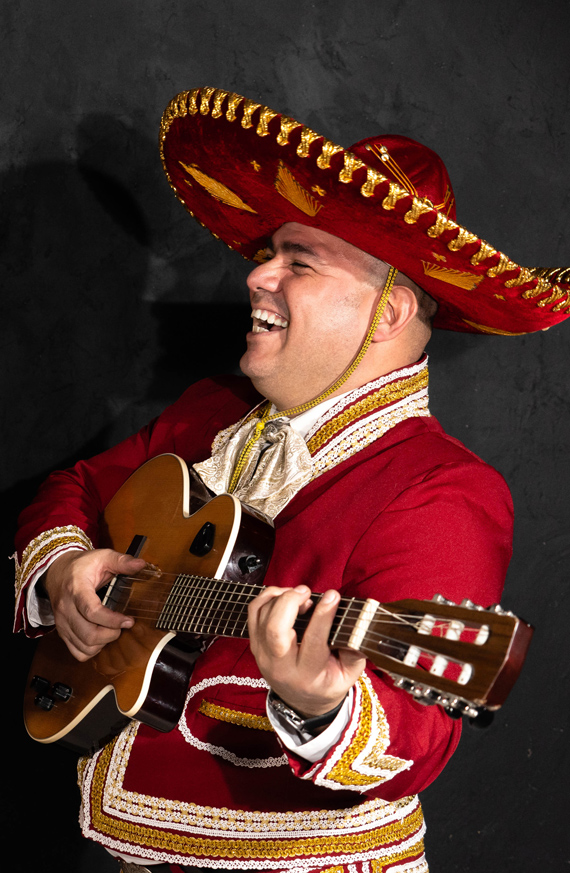
The vihuela is a five-string guitar.
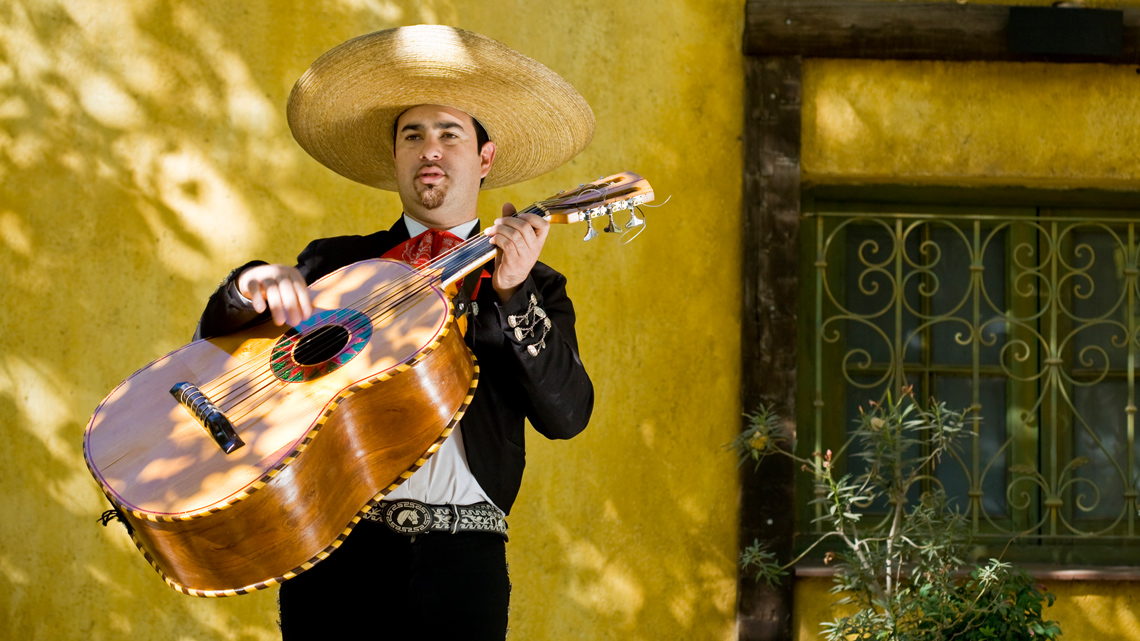
The guitarrón is a bass guitar. It is much larger than the vihuela.
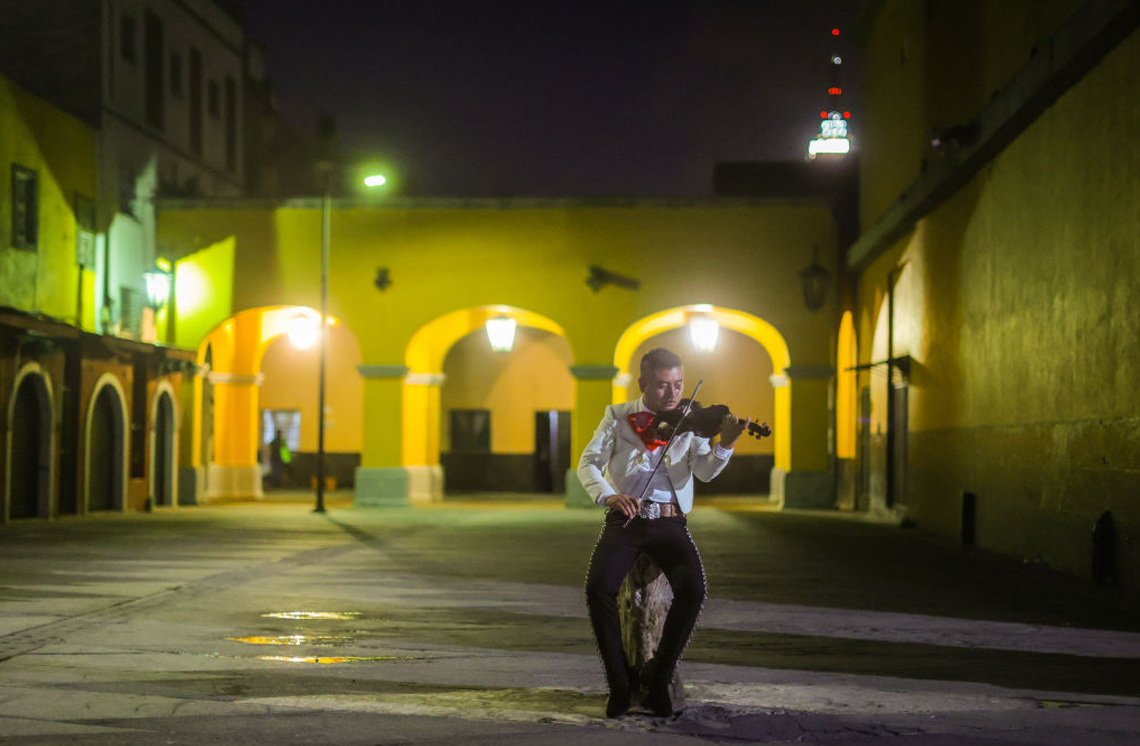
The violin is a 4-string instrument played with a bow.
Violin
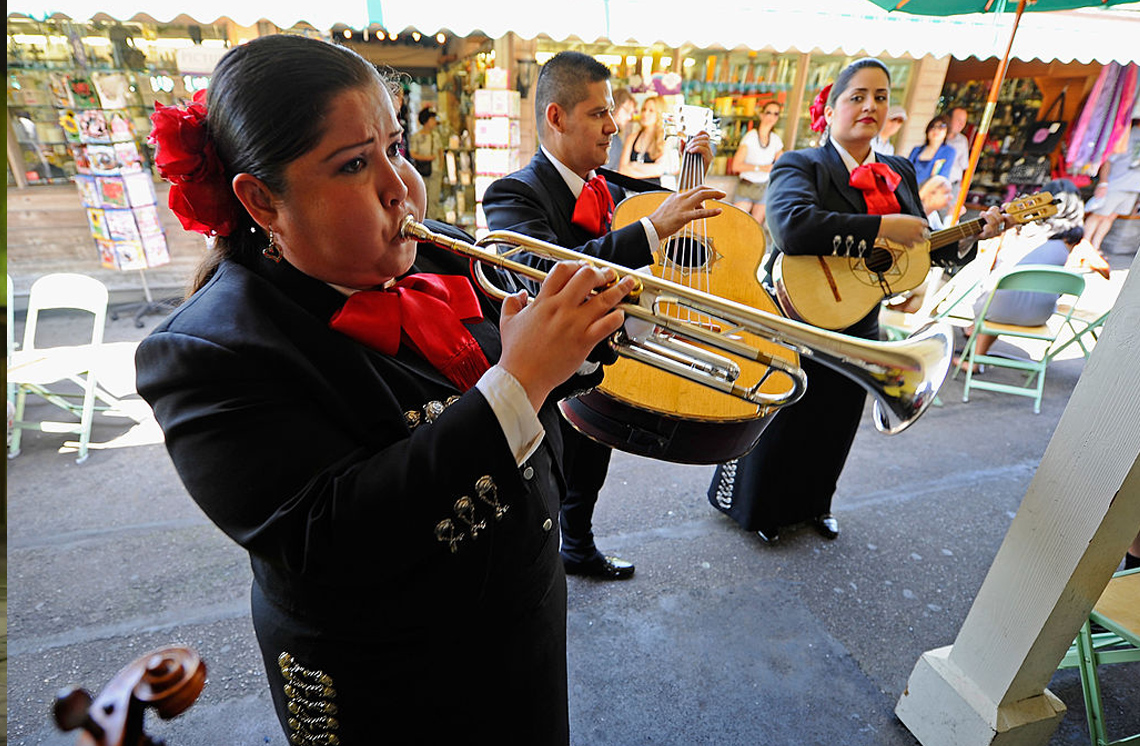
The trumpet is a brass instrument. The musician blows into the mouthpiece and uses their fingers to press the valves down to play different notes.
Trumpet
Sadie is not familiar with the Spanish language. What does Indiana do when she sees that Sadie is struggling to learn the words to the song?
Press Reveal to check your answer.
It’s always okay to ask for help.
What do you do when you are struggling to learn something new?

Discover words in other languages!
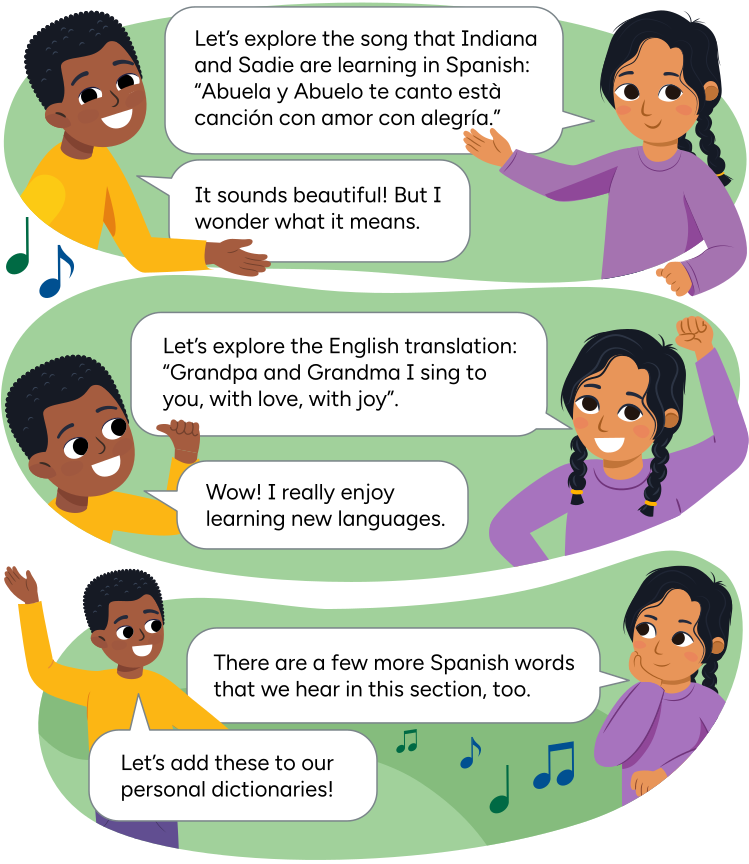
Arthur and Learning Sora are talking.
Sora says, 'Let's explore the song that Indiana and Sadie are learning in Spanish: 'Abuela y Abuelo te canto està canción con amor con alegría.
' Arthur says, 'It sounds beautiful! But I wonder what it means.
' Sora says, 'Let's explore the English translation: 'Grandpa and Grandma I sing to you, with love, with joy.
' Arthur says, 'Wow! I really enjoy learning new languages.'
Sora says, 'There are a few more Spanish words that we hear in this section, too.'
Arthur says, 'Let's add these to our personal dictionaries!'
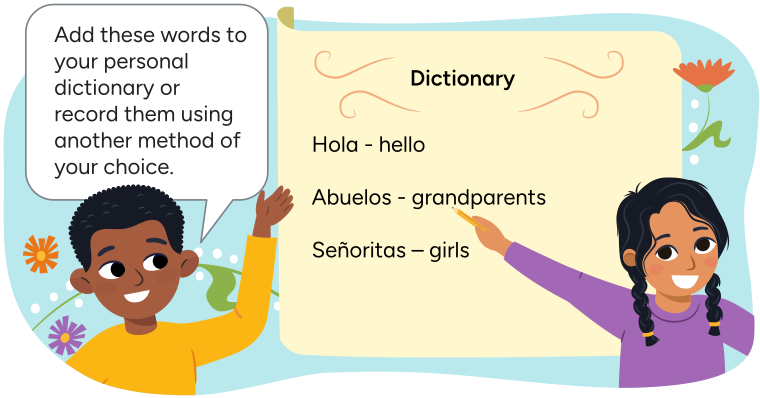
Arthur and Sora are adding words to their personal dictionaries. Arthur says, 'Add these words to your personal dictionary or record them using another method of your choice.
'The list is titled, 'Dictionary' and has the words:
- Hola - hello
- Abuelos - grandparents
- Señoritas - girls
Check out this clip from It’s My Party where Indiana makes an ofrenda or an offering for her Grandpa George!
Lupita comes over to help Indiana make an ofrenda for her grandfather. Why is an ofrenda important?
Press Reveal to check your answer.
What does Indiana put on the ofrenda for her grandpa George?
Press Reveal to check your answer.
Some of the items that Indiana places on the table are:
- candles
- flowers
- a photo of Grandpa George
- butter tarts
- a stuffed toy

Student Wellness
Let’s take care of ourselves!
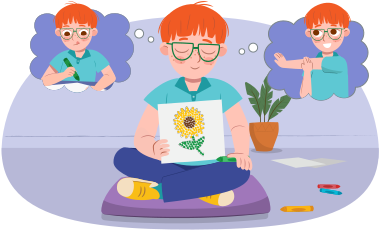
When we are feeling tired or overwhelmed, it is important to take breaks. You can try deep breaths, stretching, or drawing to help your body and mind feel better.
Check out this clip from It’s My Party where Chef Erika and Sadie make pan de muerto!
Discover words in other languages!
Let’s explore some of the words that Chef Erika shares with Sadie.
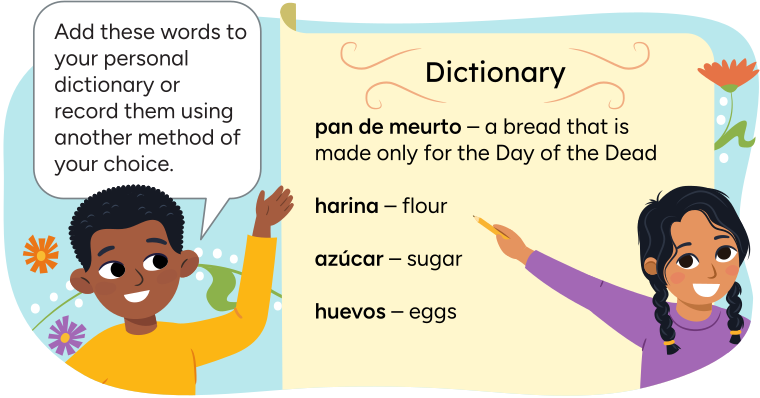
Arthur and Sora are adding words to their personal dictionaries. Arthur says, 'Add these words to your personal dictionary or record them using another method of your choice.'
The list is titled, 'Dictionary' and has the words:
- Pan de muerto - a bread that is made only for the Day of the Dead
- Harina - flour
- Azúcar - sugar
- Huevos - eggs
How does Sadie think Indiana will respond when she gives her the pan de muerto?
Press Let’s Check! to reveal a possible answer.
Sadie mentions she has never experienced the Day of the Dead before. She is Métis and her family have different traditions. However, she is open to learning more and is enjoying this experience.
Why might it be important or helpful to be open to learning about other peoples’ cultures and traditions?
Share your thoughts with a partner, if possible.
Check out this clip from It’s My Party where Indiana and Sadie enjoy the Day of the Dead celebration!

Student Success
Think!
After watching the video, reflect and respond to the following questions:
- How is art, music, or dancing involved in the celebration?
- What clothing is being worn? What do you notice about the face painting and decorations?
- What foods did you notice were prepared for the celebration?
Record your answers using a method of your choice. If possible, share with a partner.

Exclamatory sentences!
Indiana and Sadie often share their excitement about the Day of the Dead celebration in the video. Explore some of the exclamatory sentences they use!
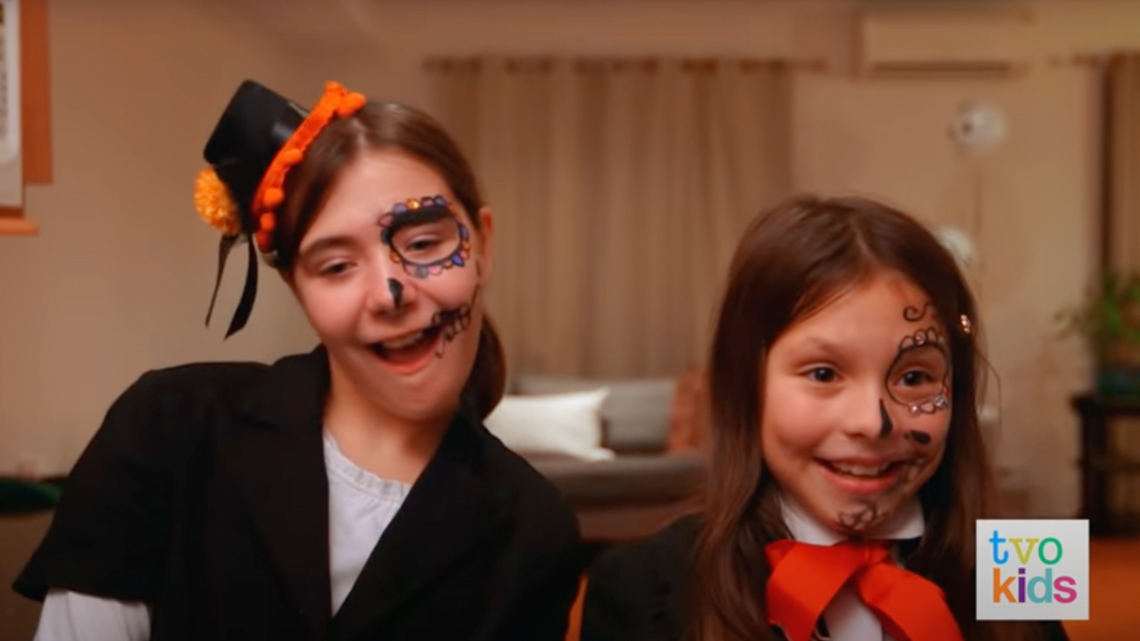
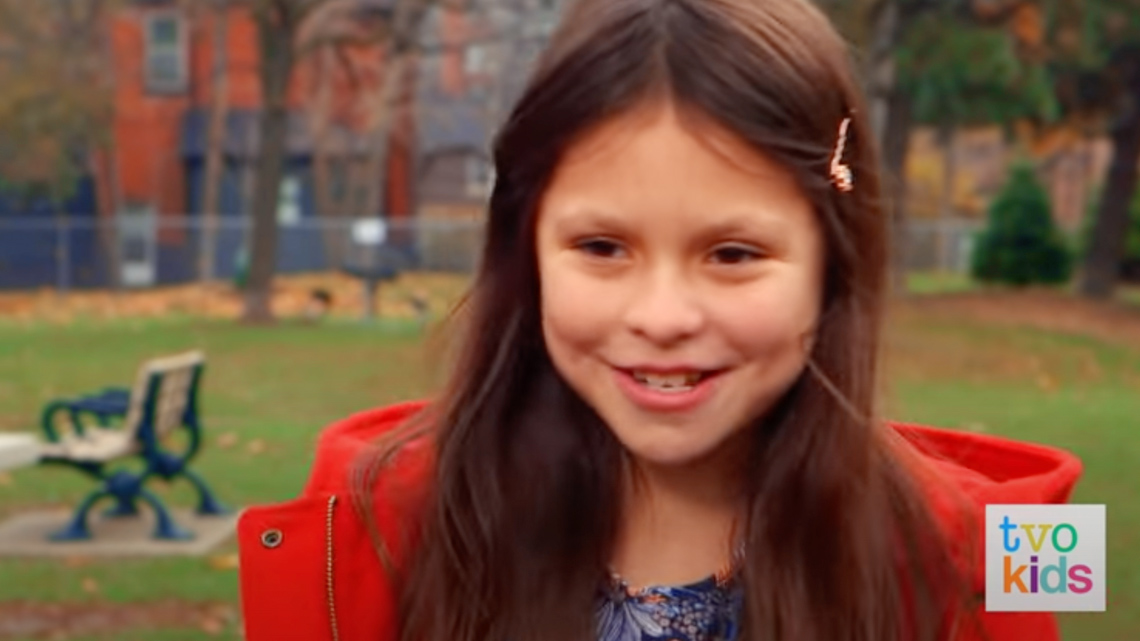
These are both examples of exclamatory sentences. Exclamatory sentences express strong feelings or emotions.
Did you notice that the sentence began with a capital or big letter?
What kind of mark was at the end?
Press Hint to reveal details about exclamatory sentences.

Exclamatory sentences start with a capital letter and end with an exclamation mark!

Brainstorm
Brainstorm
Try creating your own exclamatory sentence. Think of a strong emotion, for example it could be excitement, anger, joy, or happiness.
Next, think about how you might say it. Would you say it in a loud or soft face? What kind of expression might you use to share your strong emotion?
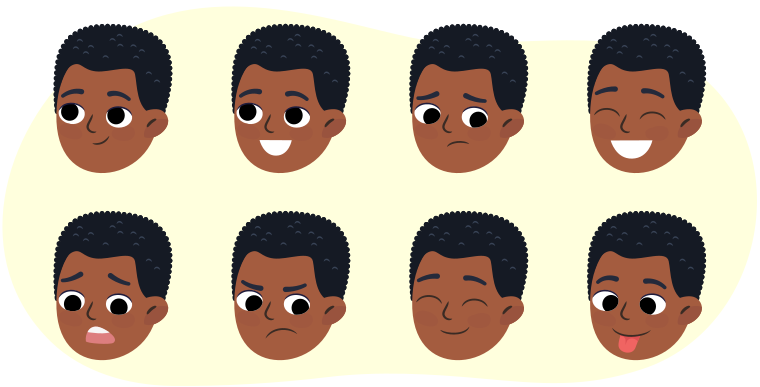
Arthur using facial expressions to show emotions, including: a small smile, a big smile that shows his teeth, a sad expression, laughing, shock, anger, a very happy expression, and a silly face with his tongue sticking out and his eyes crossed.
Sharing our thoughts
We can share our thoughts in many ways. Sometimes, we might share our thoughts through a conversation, present our thoughts to a partner or group, or write out our thoughts.
One way to write out our thoughts is through a letter. We can send a letter using paper and an envelope or we can send an email using a device.
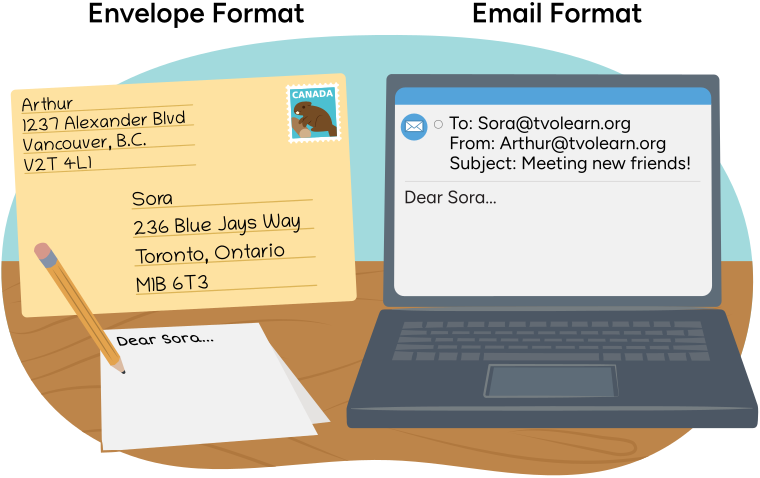
A handwritten letter and a typed email on a computer.
The letter is written on paper. It will be put into the envelope with the name and the address of the person it is for. The email is typed using a keyboard and a computer. The email is addressed to the email address of the person it is for.
Letters and emails can be personal (to friends and family) or formal (for work or school).
They can be written for many different reasons:
- to say thank you
- to connect with a relative who lives far away
- to invite someone to a special occasion
- to share a message with a friend
- to give our opinion about something that matters to us

Student Tips
Student tips for writing letters and emails
When we write letters and emails, we use the following:
- date
- greeting
- body
- closing
- signature
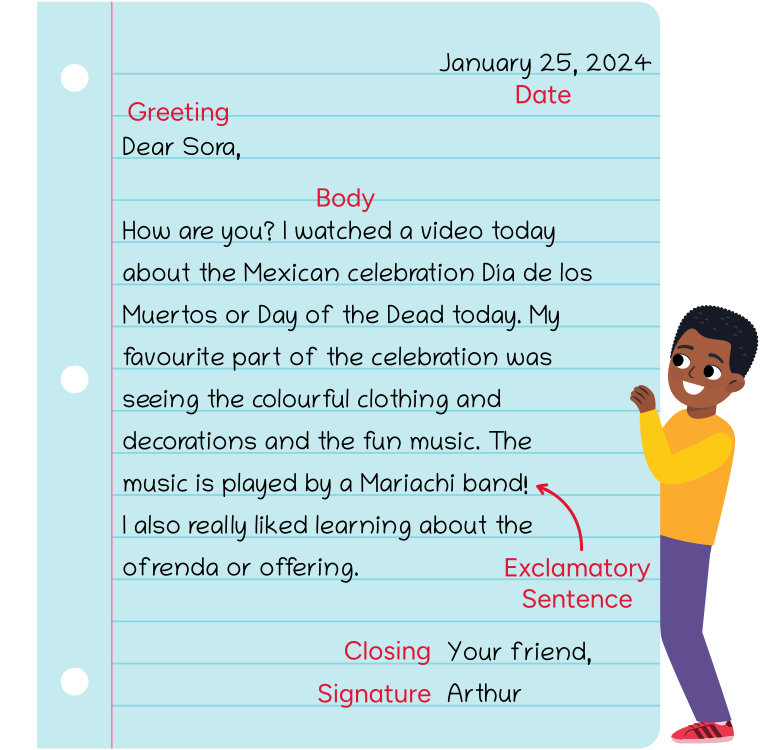
A sample of a letter, with labels for the 6 parts of the letter. The 6 labels are: date, greeting, body, exclamatory sentence, closing, and signature. Let's explore each part of the letter.
The date is January 25, 2024.The greeting is 'Dear Sora.'
The body reads, 'How are you? I watched a video today about the Mexican celebration Día de los Muertos or Day of the Dead today. My favourite part of the celebration was seeing the colourful clothing and decorations and the fun music.'
Inside of the body of the letter is the following exclamatory sentence:
'The music is played by a Mariachi band!'
The body of the letter ends with, 'I also really liked learning about the ofrenda or offering.'
The closing is, 'Your friend.'
The signature is, 'Arthur'
It’s your turn!
If you could tell a friend what you learned about Día de los Muertos in a letter, what would you tell them? Try writing an exclamatory sentence in your letter.
Remember to include:
- date
- greeting
- body
- closing
- signature
Write your letter in your notebook or use the following fillable and printable Letter Template. If you would like, you can use speech-to-text or audio recording tools to record your thoughts.

Let’s check:
Use the following checklist to review your work.
Read over your letter. Did you:

Spanish vocabulary
We learned a lot of Spanish words today! Let’s practice matching the following Spanish words with the English translation.
For each Spanish word pick the correct English translation.
Reflection
How do you feel about what you have learned in this activity? Which of the next four sentences best matches how you are feeling about your learning? Press the button that is beside this sentence.

I feel…
Now, record your ideas about your feelings using a voice recorder, speech-to-text, or writing tool.