By Lindsey Patten
What do you want to learn about?
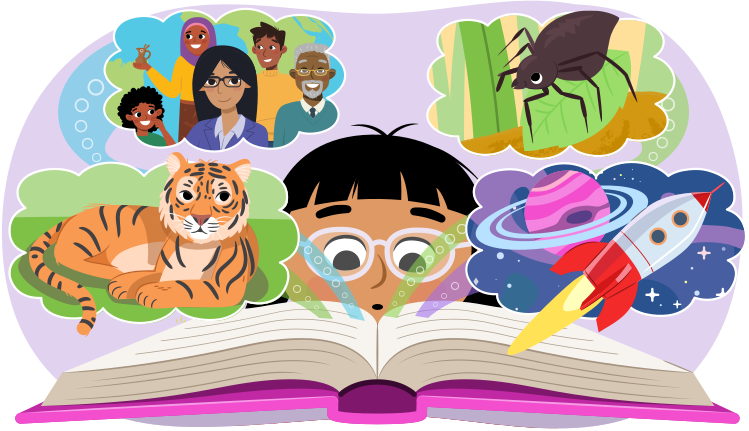
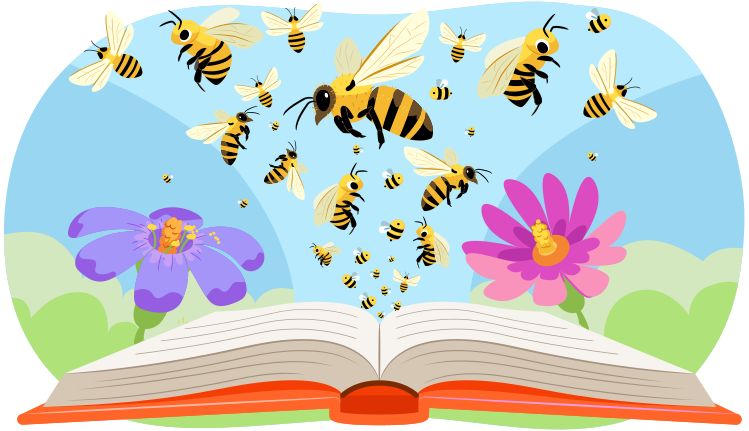
Avery is exploring a book and dreaming about people from all around the world, the life of insects, space and rocket ships, and animals like tigers.
What is something that you would like to learn more about? Why?
Perhaps you are interested in knowing more about:
- types of weather
- animals
- trees or plants
- insects
- people
- places around the world
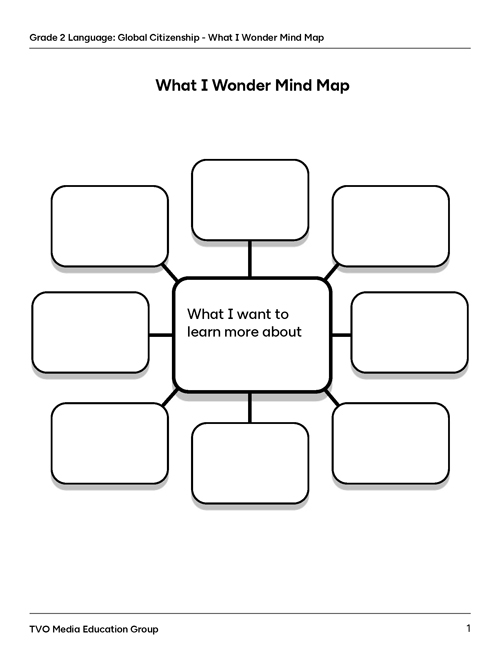
Brainstorm what you would like to learn more about and the reason why you are interested.
Use the What I Wonder Mind Map to record your thoughts in your notebook or using the following fillable and printable document. You can also use speech-to-text or audio recording tools to record your thoughts.
If possible, share your ideas with a partner.
Happy bee day
Neebin is sitting at her computer with her headphones. She says, 'In the following video, we are going to watch Kyra and the Green Squad learn more about an insect that Kyra likes and wants to learn more about!'
Check out this clip from Green Squad where we learn more about Kyra and her interests.
What did you learn about Kyra? What is she interested in?
Press Reveal to check your answer.
Kyra likes:
- biking
- playing outside with her friends
- exploring nature
- bird watching at the ravine by her house
How does Kyra feel about bees?
Press Reveal to check your answer.
Kyra is a bit scared of bees, but she likes them because they are good for the earth. She really wants to help the bees because they help give us fruits, vegetables, and flowers.
Kyra meets the Green Squad, who will help her learn more about bees and find ways to be environmentally friendly at her birthday party!
Let’s explore what happens when Kyra and the Green Squad meet Maddy, the beekeeper!
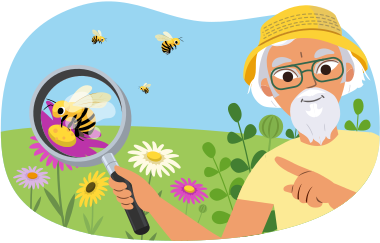
Maddy, the beekeeper, shares some great facts about bees.
A fact is something that has been proven to be true.
The facts we learned about bees are proven through observations made by scientists.
How do bees collect pollen?
Press Reveal to check your answer.
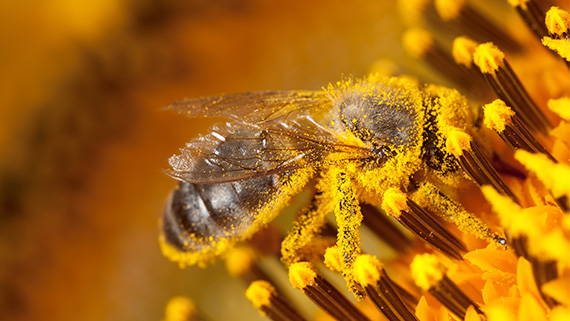
They wiggle their body all over the flower. They have hairy back legs, and the pollen sticks to them.
When they move from flower to flower some of the pollen flakes off and that is how we end up with fruits and vegetables.

Did You Know?
Did you know?
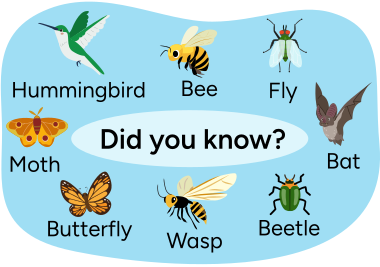
There are many types of pollinators, including:
- butterflies
- moths
- wasps
- flies
- some types of beetles
- hummingbirds
- and certain bats
Press Pollinator to access a definition of the word.
Animals or insects that move pollen from plant to plant.
How many bees are there around the world?
Press Reveal to find out!
There are about 20,000 types of bees and 1000 types of bees in Canada.
Kyra gives a few examples of types of bees wild and native to Canada. They are:
- American Bee
- Gold and Black Bee
- Tri-Coloured Bee
- Yellow Banded Bee
Kyra dips her finger into the hives honey for a taste, supported by the Green Squad and guided by the beekeeper to stay safe while trying something new!
Is there something that you would like to try, but you are unsure or need some help getting started?
Let’s discover how we can help endangered bees!
In what ways are the bees in danger?
Press Reveal to check your answer.
Bees in the wild are more likely to be affected by loss of habitat (their homes). Loss of habitat might happen because of changing temperatures, changing weather patterns, and/or the use of chemicals.
What can we do to help bees in danger?
Press Reveal to find out!
Planting wildflowers can help give bees a food source.
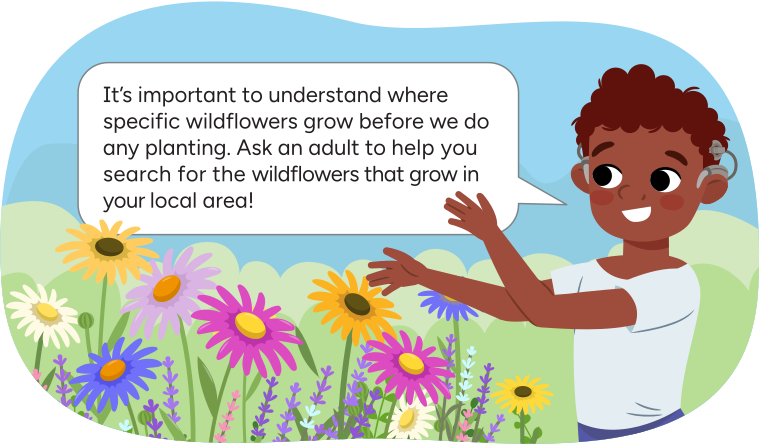
Marcel says, 'It's important to understand where specific wildflowers grow before we do any planting. Ask an adult to help you search for the wildflowers that grow in your local area!'
Explore the following flashcards to learn more facts about bees!
Check out this clip where Kyra and her friends prepare for her birthday celebration!
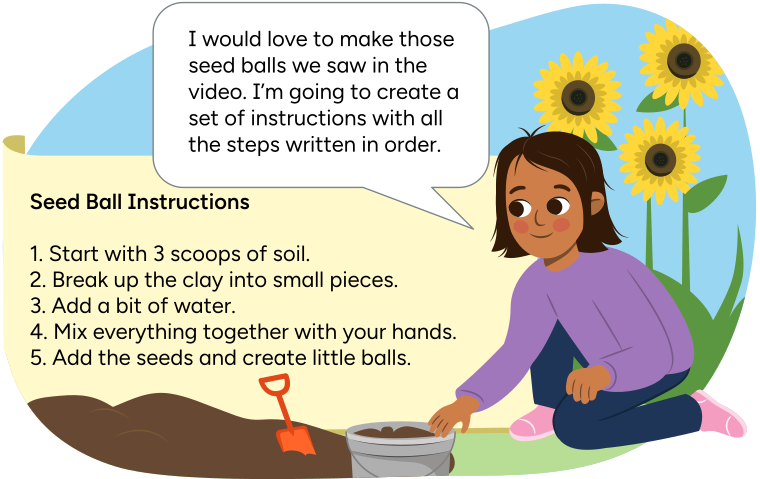
Neebin says, 'I would love to make those seed balls we saw in the video. I'm going to create a set of instructions with all the steps written in order.'
Seed Ball Instructions
- Start with 3 scoops of soil.
- Break up the clay into small pieces.
- Add a bit of water.
- Mix everything together with your hands.
- Add the seeds and create little balls.
Recycling
In the video, the Green Squad share different ways that we can all reuse materials. Some of those materials came from the recycle bin.
What do you think the difference is between reusing something and recycling something?
Press Reveal to check your answer.
Reusing is when we take something that has already been used and use it again. Kyra and the Green Squad created a pinata for her birthday party by reusing a cardboard box, and other decorations.
Recycling is when we collect and treat items to make something new.
Let’s read the book What is Recycling? to learn some more facts.
Before you get started, explore the following reading strategies to help you as you read and/or listen to the book.
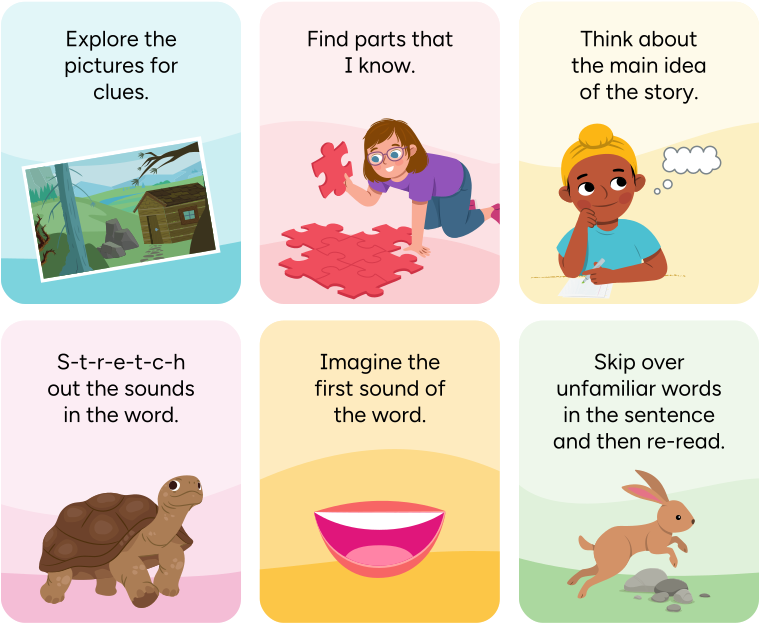
There are six reading strategies.
Examine the picture for clues.
Try to find the parts of the word that I know.
Think about the main idea of the story.
Stretch out the sounds in the word.
Imagine the first sound of the word.
Skip over the words in the sentence, and reread it.
What is recycling? What is recycling?
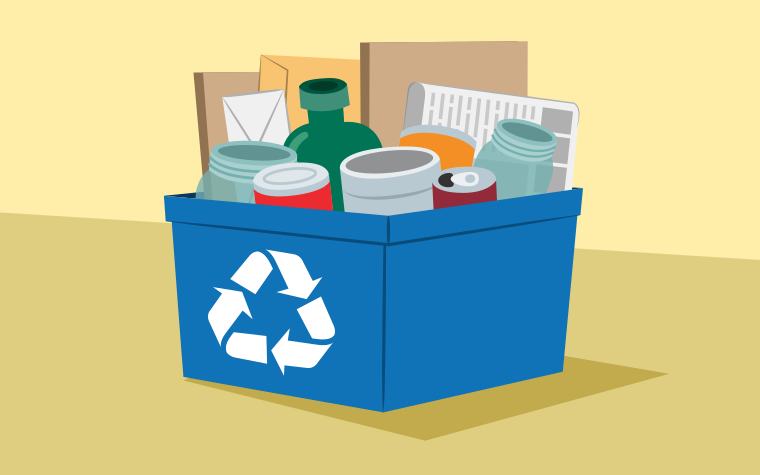
Recycling is important. It can help our planet.
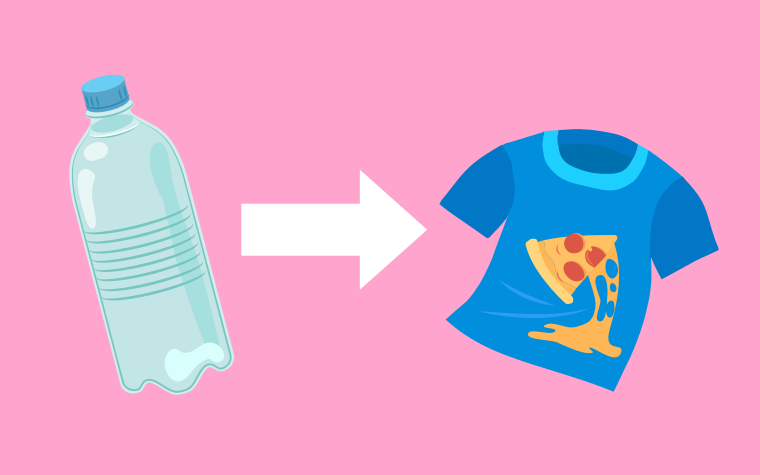
Recycling is when you take trash and turn it into something new.
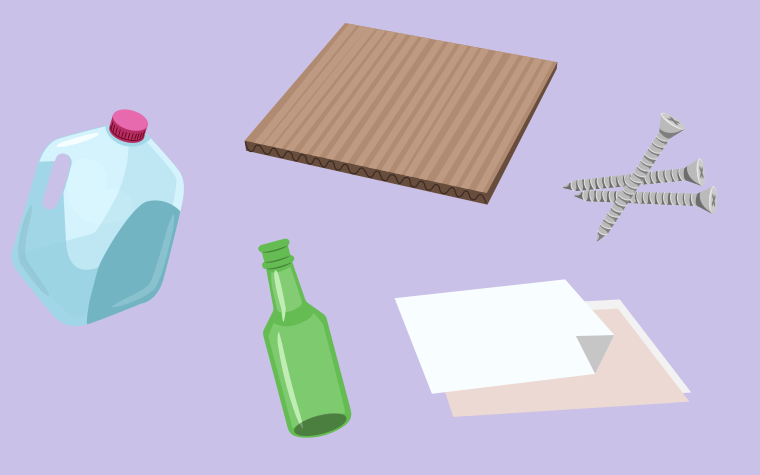
All sorts of things can be recycled like plastic, glass, cardboard, paper, metal, and more!
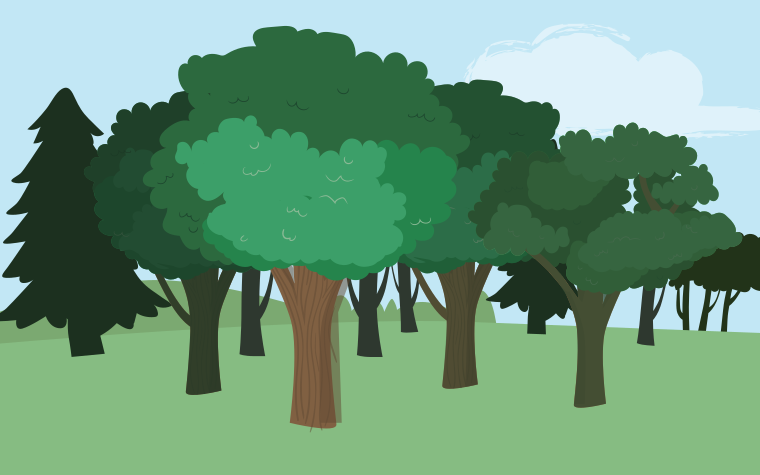
Recycling can save our natural resources. A natural resource is anything that comes from the earth. For example, a tree!
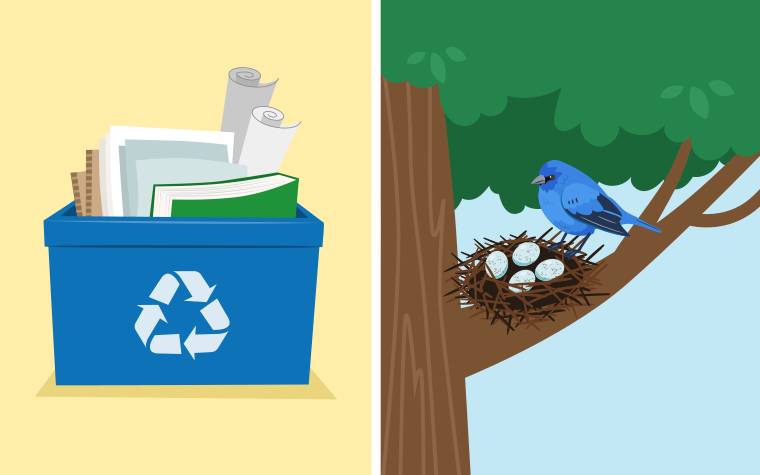
Paper comes from trees. If we recycle our paper, we won’t have to cut down so many trees! Then, animals can use the trees as their homes.
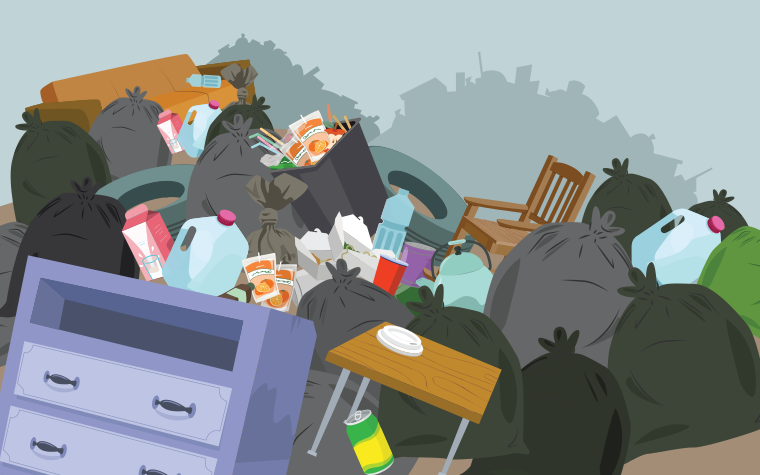
Recycling also means less garbage goes to the landfill. A landfill is a place where we put our garbage.
Recycling is important. Help protect the planet and don’t forget to recycle!

What are some items that can be recycled?
Press Let’s Check! to reveal a possible answer.
- plastic bottles
- cardboard boxes
- glass bottles
- paper
- nails
How might recycling help protect our planet?
Press Let’s Check! to reveal a possible answer.
- when we recycle, less garbage is put in a landfill
- when we recycle, we save natural resources
- when we recycle, we help protect animal homes
It’s important to organize materials into the correct bins.
Some items cannot be recycled or composted, so they go into the garbage bins.
Food waste can be composted and used as food for plants, so they go into the organics bin.
Paper products are separated from plastic and glass products, and then they all get recycled.
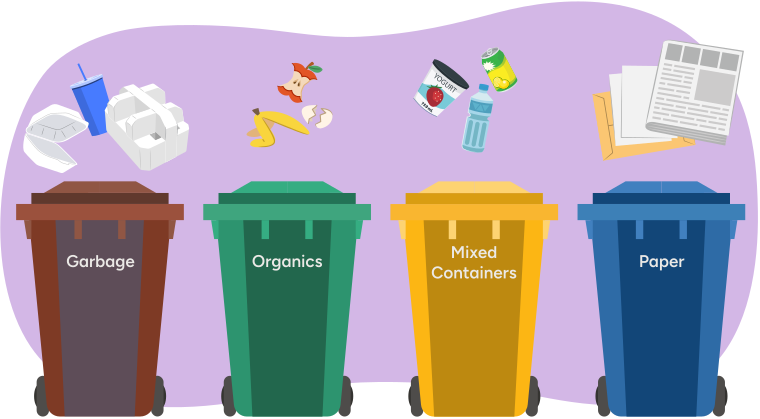
Have you seen or used bins like these to separate waste?
Share your thoughts with a partner.
What’s the prefix?
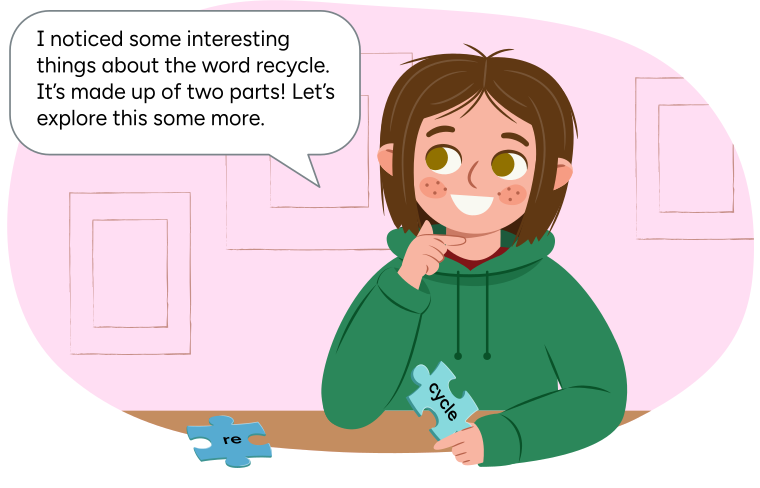
What two letters do you notice at the beginning of the word recycle?
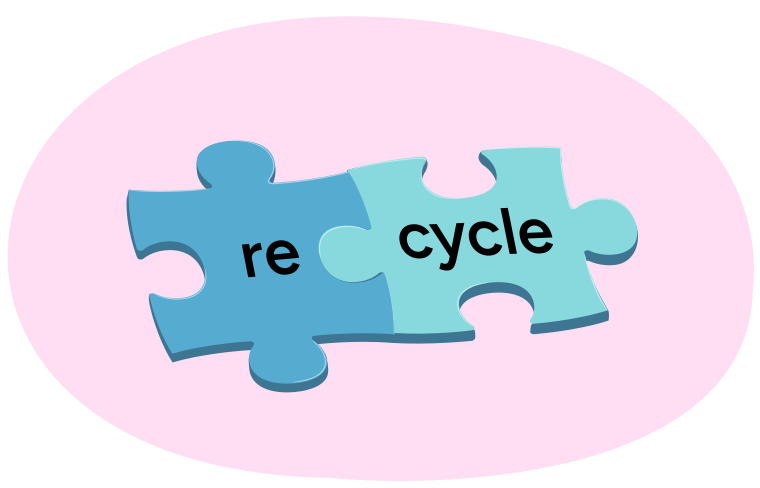
Recycle begins with the two letters or prefix with “re”.
A prefix is a group of letters at the beginning of a word that changes the word’s meaning.
Re- means again. Cycle is an amount of time.
When we recycle, it means we collect items and treat them to make something we can use again for another amount of time.
For example, after we use a water bottle, we put it in the recycling bin.
Next, the bottles are taken to a recycling plant where the plastic is melted and formed into a new water bottle.
Finally, we can start the cycle again!
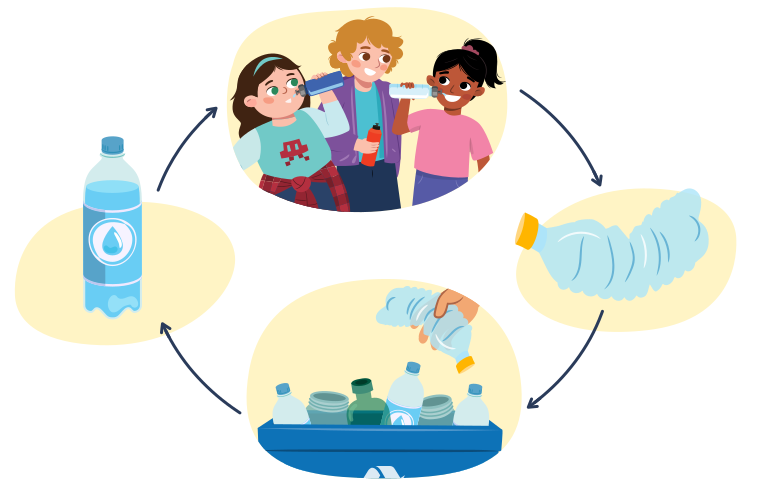
A cycle of four images connected with arrows leading from one image to the next. The top image is a group of three learners. One learner is using a plastic water bottle. The next image is an empty plastic water bottle. The next image is the empty plastic bottle being put in the recycling. The next image is a new plastic water bottle which was made from the recycled plastic. The arrow leads back to the top image.
Can you think of another word that uses the prefix “re”?
Press Reveal to check your answer.
Another word that uses the prefix re- is reuse. When we reuse something, we use the item again.
Let’s review our learning!
Select the correct answer, then press Check Answer to see how you did.
Reflection
If you could ask Maddy a question about bees, what would you ask?
If you could share one fact about recycling with a friend, what would you tell them?
What is something that you want to learn more about that the Green Squad could help you with?
Record your thoughts using a method of your choice.
Prefix review
For each sentence, select the missing words from the drop-down menu. Press Check Answer to see how you did!
Reflection
How do you feel about what you have learned in this activity? Which of the next four sentences best matches how you are feeling about your learning? Press the button that is beside this sentence.
I feel...
Now, record your ideas about your feelings using a voice recorder, speech-to-text, or writing tool.