Learning goals
We are learning…
- to understand and use skills like critical thinking and creativity to engage with different Indigenous community knowledge
- to find the main idea and key details in oral text
- the comprehension strategy of asking questions before, during, and after viewing an oral text
Success criteria
I am able to…
- use transferable skills during my learning (e.g., asking questions, using creative tools)
- identify and reflect on and make connections with Indigenous community knowledge and perspectives
- identify the main idea and key details of oral text
- ask questions to help me organize information in an oral text
Let’s build our skills!

Did You Know?
Did you know?
As butterflies undergo metamorphosis so do words!
Press the Metamorphosis button to learn more.
A process of transformation and change.
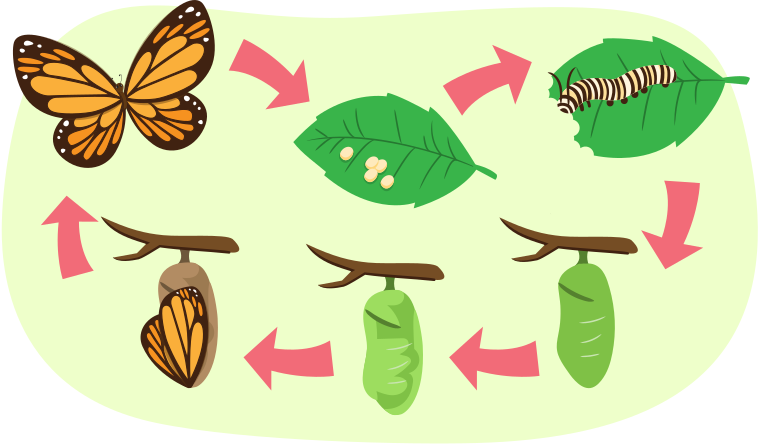
The life cycle of a butterfly: a butterfly, eggs on a leaf, a caterpillar eating the leaf, a cocoon, a cocoon getting larger, a butterfly breaking out of its cocoon, and finally a butterfly.
Morphology and morphemes
Morphemes are the building blocks of words. When we have trouble reading a word, we can break it down to its smallest parts and smaller words to read and understand what it means.
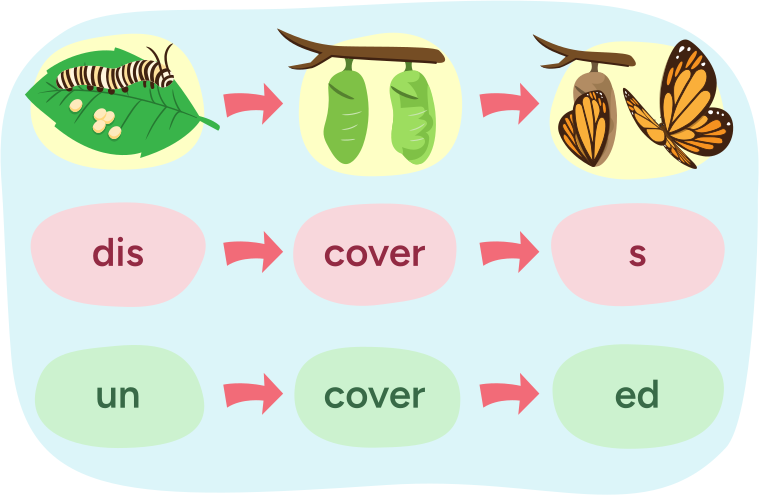
A diagram showing three related parts from the life cycle of a butterfly, followed by two words broken into three related parts.
The first image is butterfly eggs and a caterpillar on a leaf, followed by butterfly cocoons getting larger, and finally a butterfly emerging and flying.
The next image is the word 'discovers' broken into three pieces. The first piece is 'dis,' the second piece is 'cover,' and the third piece is 's.'
The final image is the word 'uncovered' broken into three pieces. The first piece is 'un,' the second piece is 'cover,' and the third piece is 'ed.'
Let’s check out the words immemorial and sacred.
Press the Immemorial button to access the definition.
As long as can be remembered.
Press the Sacred button to access the definition.
Something that is very special, spiritually, or culturally and needs to be treated with extra care and respect.

The word ‘immemorial’ is broken into two smaller pieces: the prefix and the base word.
The prefix is ‘im,’ which means ‘without.’
The base word is ‘memorial,’ which means ‘connected to a memory.’
Immemorial means something that has happened for so long, it goes beyond recorded memory.
Let’s try another one.
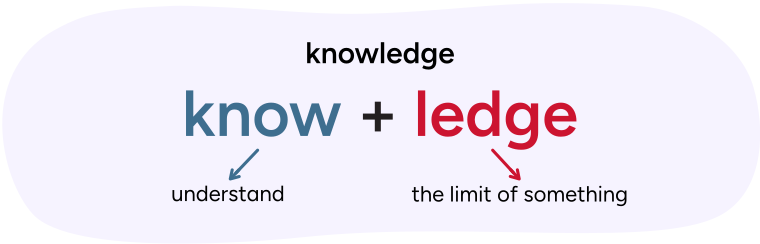
The word ‘knowledge’ is broken into two smaller pieces: the base word, and the suffix.
The base word is ‘know,' and means ‘understand.’
The suffix is ‘ledge,' which also means ‘the limit of something.'
As you’ve learned, prefixes and suffixes have meanings.
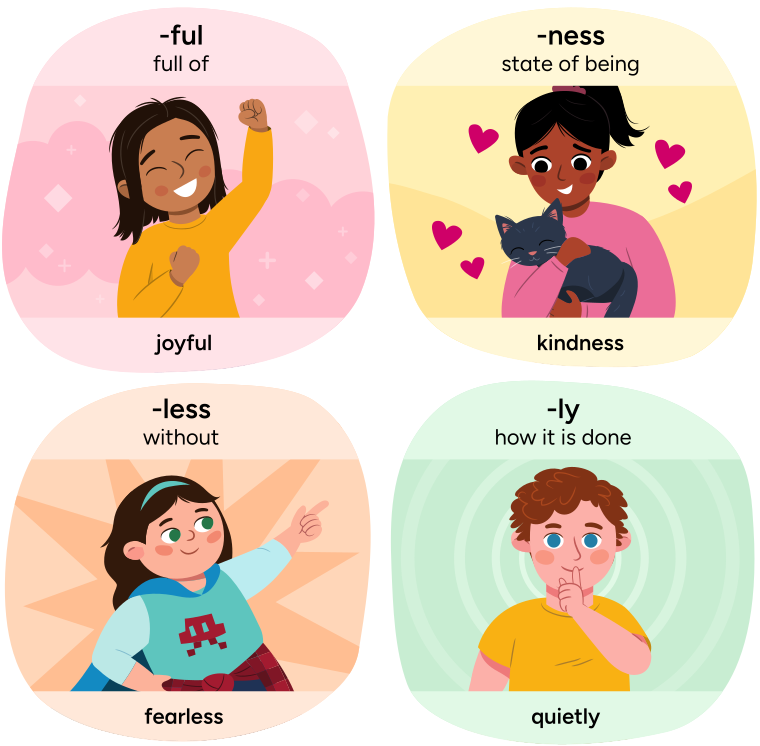
Examples of four suffixes: -ful, -ness, -less, and -ly.
The first suffix is -ful, which means 'full of.' An example word is 'joyful.'
The second suffix is -ness, which means 'state of being.' An example word is kindness.
The third suffix is -less, which means 'without.' An example word is 'fearless.'
The fourth suffix is -ly, which means 'how it is done.' An example word is 'quietly.'
Now let’s practice.
Do you notice any smaller words in these words?
Helpful
Help and -ful
Helpless
Help and -less
Careful
Care and -ful
Careless
Care and -less

Brainstorm
Brainstorm
Brainstorm words that have morphed prefixes and suffixes.
Record your response using a method of choice.
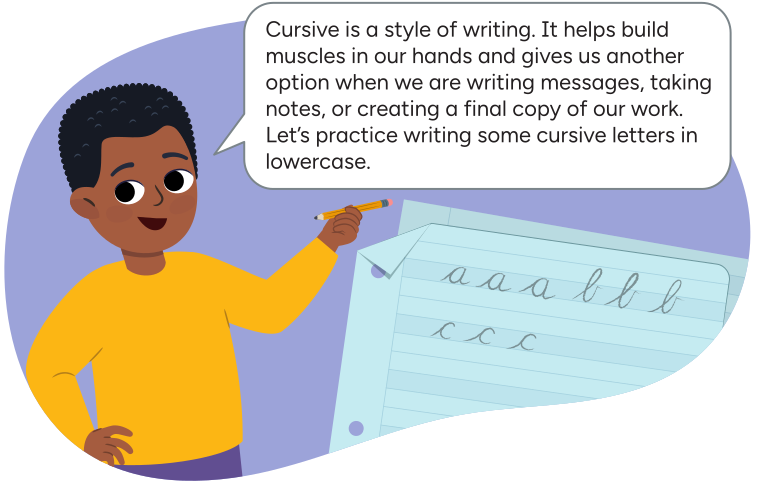
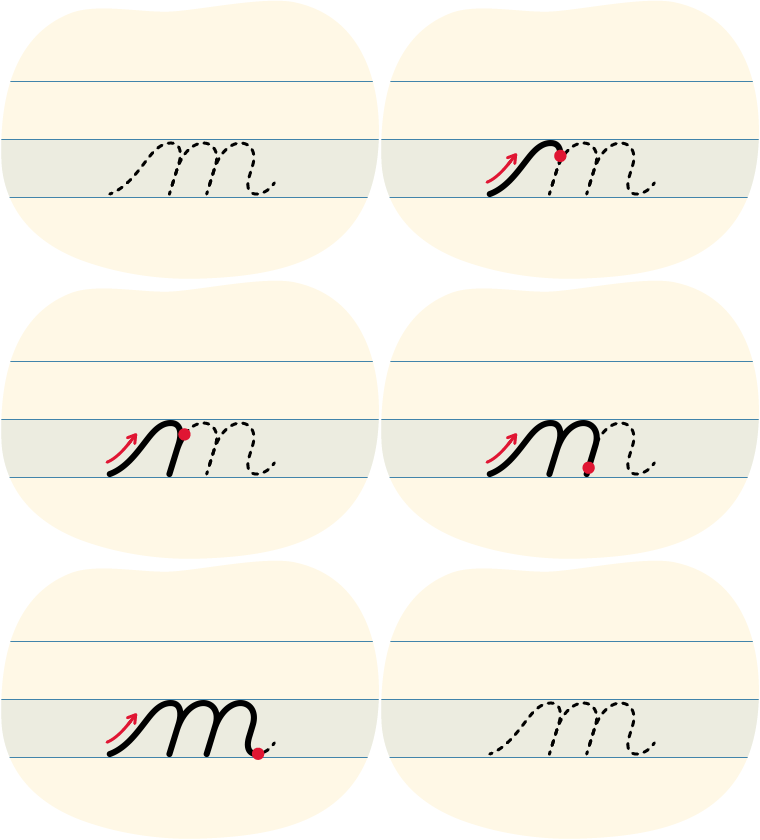
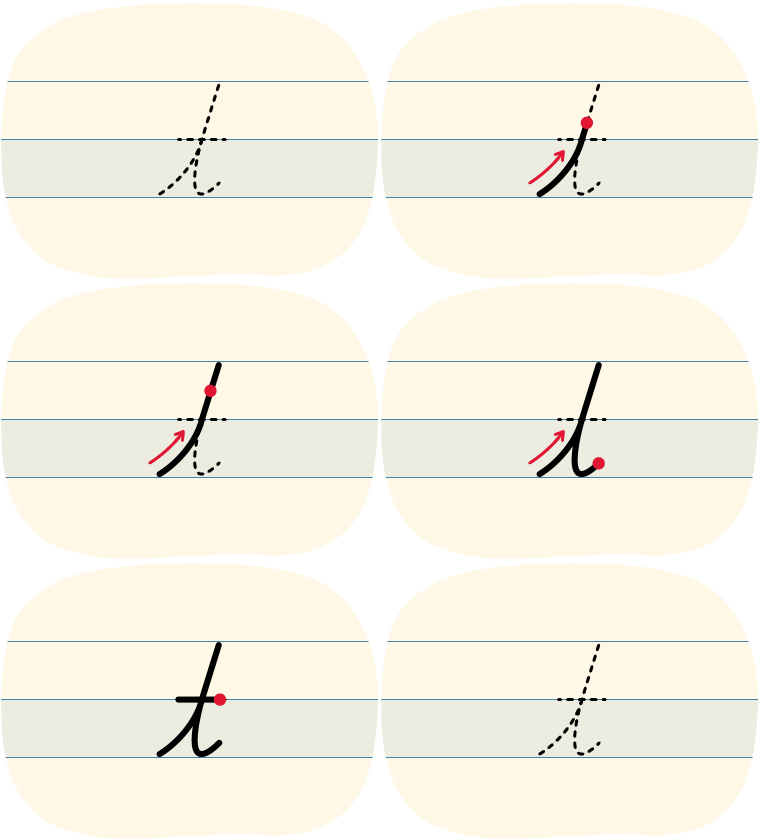
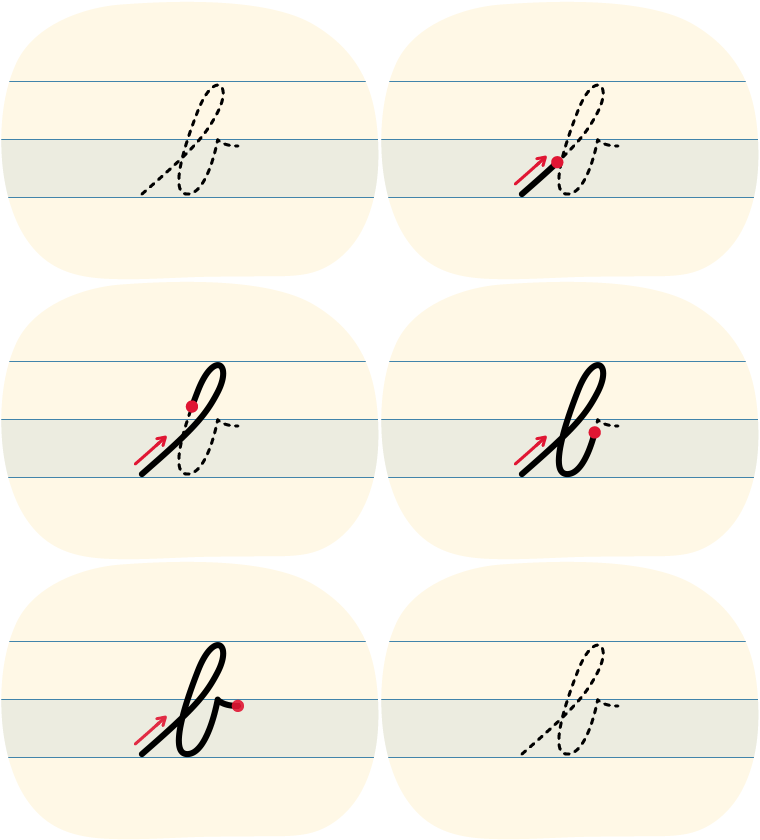
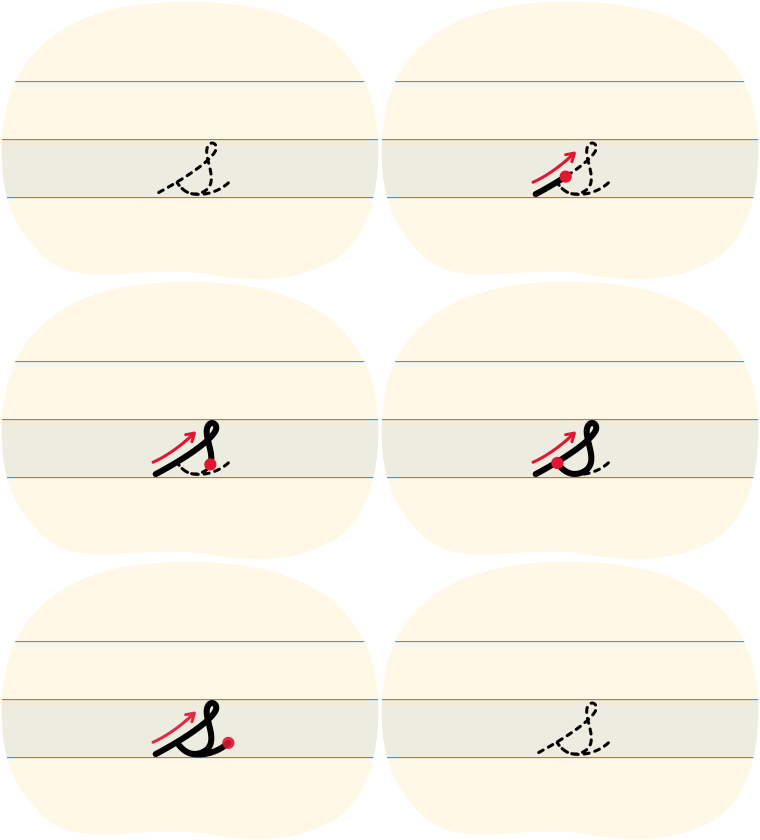
Cursive Practice
| Cursive | |
|---|---|
|
a |
|
|
m |
|
|
t |
|
|
b |
|
|
s |
|
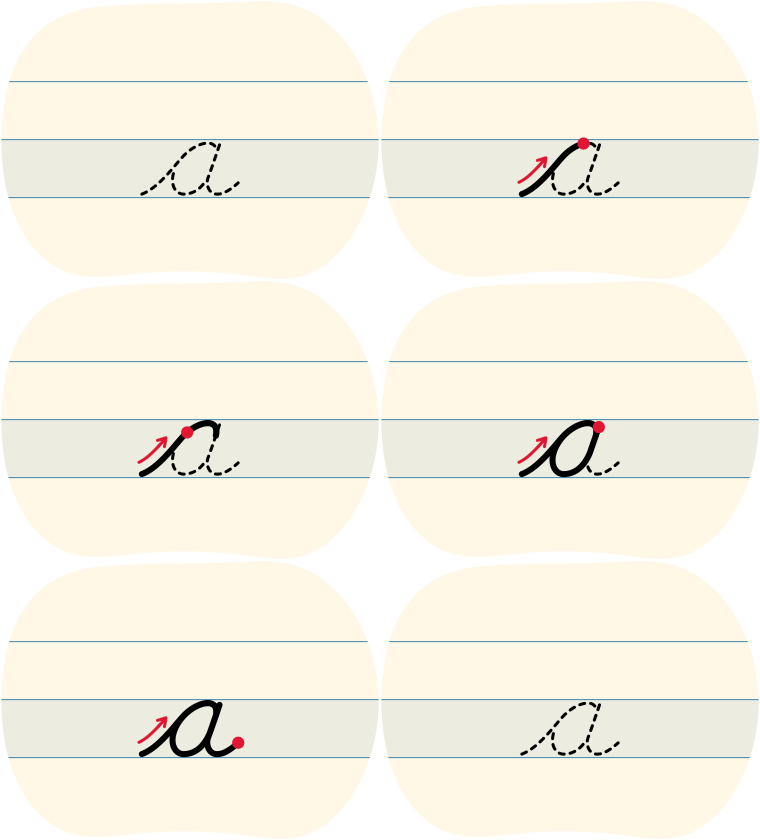
Before you begin, what do you notice about the shape of each cursive letter?
All of the cursive letters start from the bottom. Some of the letters have loops and they each create a different shape.
Tips for cursive letters
- Start from the bottom of the letter.
- Try to keep the pencil on the page until you are done the letter.
- Create a finger space before you continue to the next letter.
- Try to press gently as you write so that your hand can move easily across the page.

Cursive writing can be hard at first. But don’t worry, you can do it. All it takes is some practice!
Press Left-Handed Tips button to access tips for left-handers.
Today’s vocabulary
Press the following tabs to learn more about today’s vocabulary.
Knowledge is all the things we learn and understand. You can get knowledge from books, teachers, and asking questions about the world around you.
Indigenous peoples are the original people of the land. Indigenous Peoples in Canada are First Nations, Inuit, and Métis peoples.
Explore the following video entitled Raven’s Quest to learn more about Hope, an 11-year-old child who lives in Wiikwemkoong First Nation on Manitoulin Island, Ontario.
Explore the following audio clip to find out more.
Audio Clip

Pause and Reflect
Pause and reflect
What is something you learned from Hope in this video?
What is one question you still have?
Record your thoughts in a method of your choice.
The Three Sisters
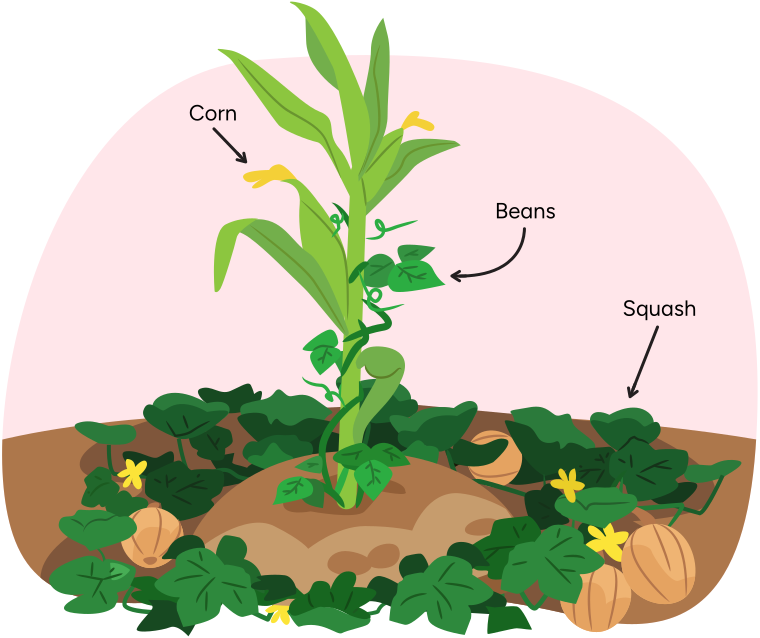
The Three Sisters are corn, beans, and squash. When the Three Sisters are planted very close to each other, they can grow strong and stable, and even depend on each other for support.
This method of harvesting does many good things for the environment and for the people living in it, and it has been used by Indigenous Peoples, including the Haudenosaunee, and later shared with the Anishinaabe community.
The Three Sisters may be new knowledge that you would have not known before meeting Hope from Wiikwemkoong, First Nation. It has been used by the Indigenous Peoples since immemorial time, or as long as can be remembered.
When we are learning something new, what can we do to help us better understand the information?
Record your answers using the method of your choice.

Student Wellness
Take a break!
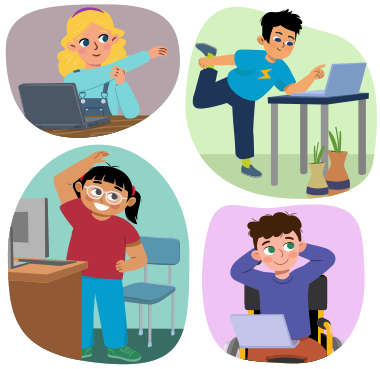
Time for a body break! If possible, stretch your body and move around your space.
Asking questions
Asking questions before, during, and after we explore new knowledge helps us to organize the information we find.
Before meeting Hope from Wiikwemkoong, First Nation, you may have had some questions like:
| Before | During | After |
|---|---|---|
|
I wonder what Hope is going to talk about. |
I wonder how the Three Sisters help each other grow. |
I wonder what would happen if one of the Three Sisters wasn’t planted. |
Task 1: Asking questions
After we ask questions, we can focus on finding possible answers in the video. Next, we can organize the information and think about which details are important.
Task 2: Main idea and key details
Another way to understand a video is by finding the main idea and important or key details. Let’s review the Minds On video. This time let’s find the main idea and key details in Hope’s video from what she shares with us.
Complete the Main Idea and Key Details Table using the following activity sheet or record the main idea and key details using a method of your choice.
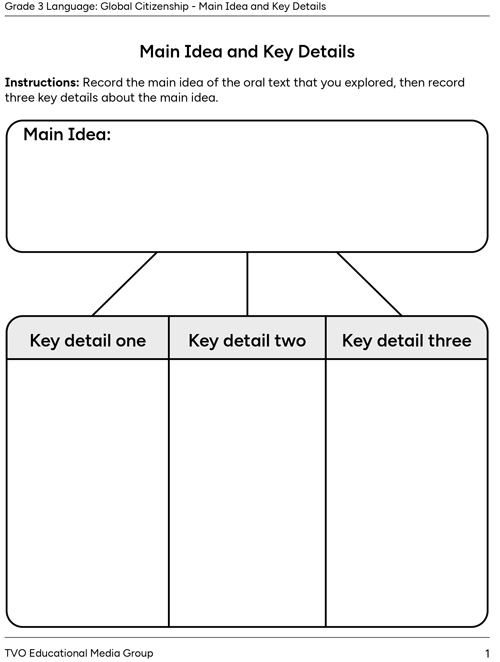
Press the Activity button to access the Main Idea and Key Details Table.
Activity(Opens in a new tab)Press Possible Answer to learn more.
Main Idea: Hope shares her knowledge about how the Three Sisters are vegetables, corn, beans, and squash, which help each other grow.
Key Details
- Beans have good bacteria to help the corn.
- The corn is like a pole that supports the beans to grow tall.
- The squash’s big leaves help stop weeds from growing in the soil.
Next, let’s explore a video where we meet Thomas, an 8-year-old boy from Curve Lake First Nation. Thomas shares his Indigenous community knowledge about making cedar tea.
As you explore the video, complete the Before During After Questions Table in the following activity sheet or record your questions using a method of your choice.
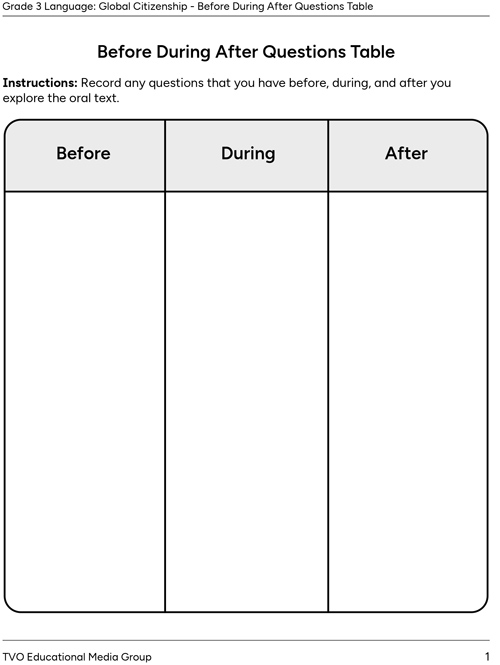
Press the Activity button to access the Before During After Questions Table.
Activity(Opens in a new tab)Think about your questions and organize the information from the video by finding the main idea and three key details.
Complete the Main Idea and Key Details Table using the following activity sheet or use a method of your choice.
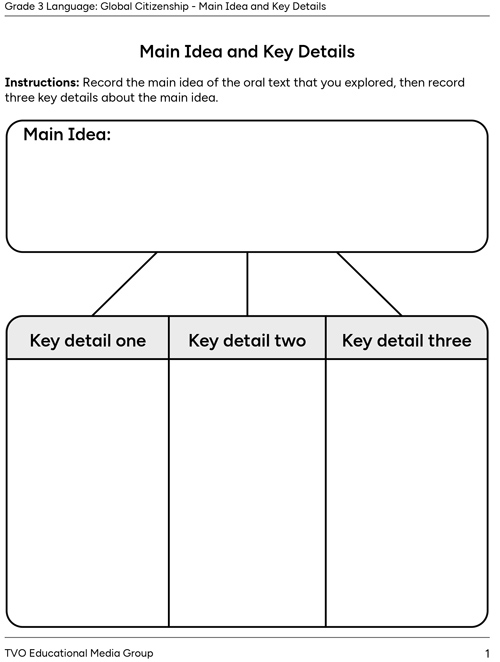
Press the Activity button to access the Main Idea and Key Details Table.
Activity(Opens in a new tab)
Pause and Reflect
Pause and reflect
What is something you have learned about how to organize important information when exploring videos?
Record your response using a method of your choice.
Connecting to communities

Student Success
Think
Think about the videos where you met Hope and Thomas. What is something important you learned from them and the knowledge that they learned from their community?
Does this remind you of any knowledge that you’ve learned from your family, community, or culture?
Share your thoughts in a method of your choice.
Reflection
How do you feel about what you have learned in this activity? Which of the next four sentences best matches how you are feeling about your learning? Press the button that is beside this sentence.
I feel...
Now, record your ideas about your feelings using a voice recorder, speech-to-text, or writing tool.