

Sweetest Kulu by Celina Kalluk illustrated by Alexandria Neonakis
Learning goals
We are learning…
- identify themes explored in First Nations, Métis, and Inuit cultures to show an understanding of the many identities and ways of knowing, being, and doing
- identify specific purposes for engaging with texts, including learning facts or information, or to gain insight or new perspectives
- gather information on a topic, using three or more sources
- use new vocabulary, grammar, and cohesive sentences when speaking and communicating ideas to support audience understanding
Success criteria
I am able to…
- identify examples in the story Sweetest Kulu by Celina Kalluk that show the love and respect Inuit communities have for the land, animals and each other
- identify how different kinds of texts teach us lessons, ideas, new perspectives or facts
- gather information about an Arctic animal using parts of the story Sweetest Kulu and an Arctic animal fact sheet
- share information about my Arctic animal using interesting sentences
Notice and wonder
Explore the following book cover of Sweetest Kulu by Celina Kalluk.
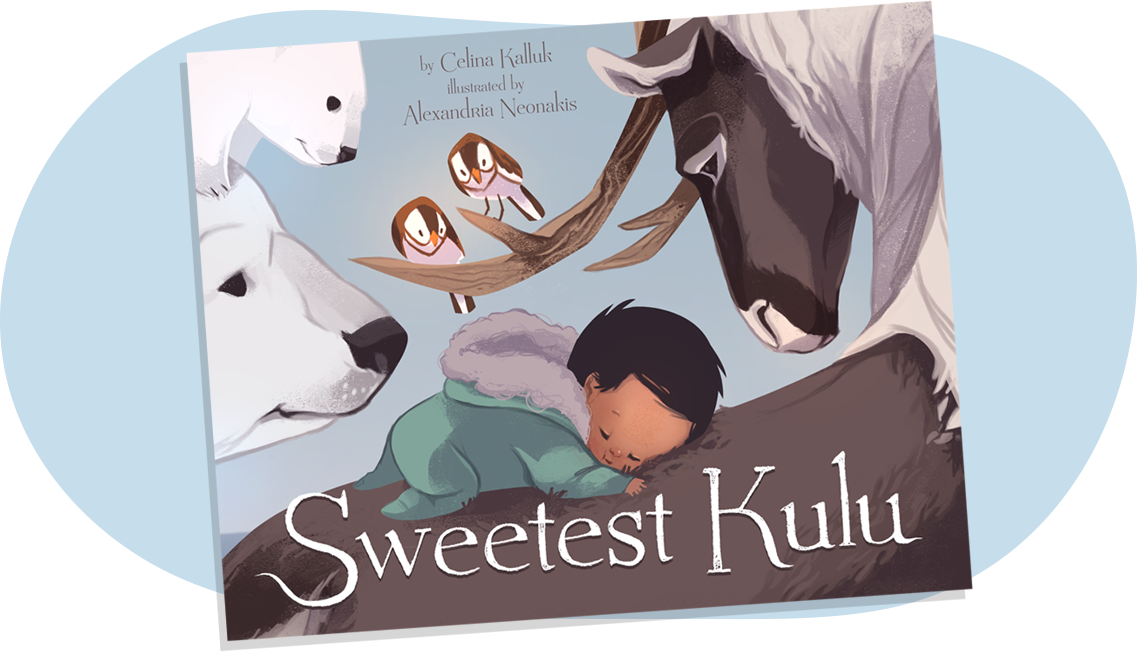
After you explore the book cover, answer the following questions.
- Do you recognize the animals on this book cover?
- What do you think this story will be about? How do you know?
- What are some questions you have about this book cover?
Record your answers in a method of your choice.
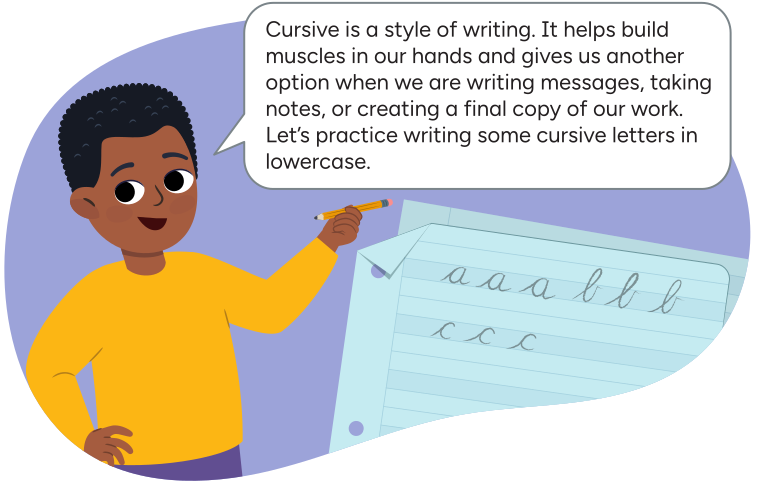
Try it in cursive
| Cursive | |
|---|---|
|
r |

|
|
f |

|
|
h |

|
|
g |

|
|
i |

|
Before you begin, what do you notice about the shape of each cursive letter?
All of the cursive letters start from the bottom. Some of the letters have loops and they each create a different shape.
Tips for cursive letters
- Start from the bottom of the letter.
- Try to keep the pencil on the page until you are done the letter.
- Create a finger space before you continue to the next letter.
- Try to press gently as you write so that your hand can move easily across the page.

Cursive writing can be hard at first. But don’t worry, you can do it. All it takes is some practice!
Press Left-Handed Tips button to access tips for left-handers.
Traditional stories
Let’s learn about stories!

Brainstorm
Brainstorm

How are stories told?
In what ways do stories help teach children?
What kinds of stories have you heard before?
Record your thoughts in a method of your choice.
A special type of story is a traditional story. They can teach us about cultural beliefs, values, lessons, and history. Stories can explain how something came to be in existence. Many cultures have traditional stories that are shared over and over again.
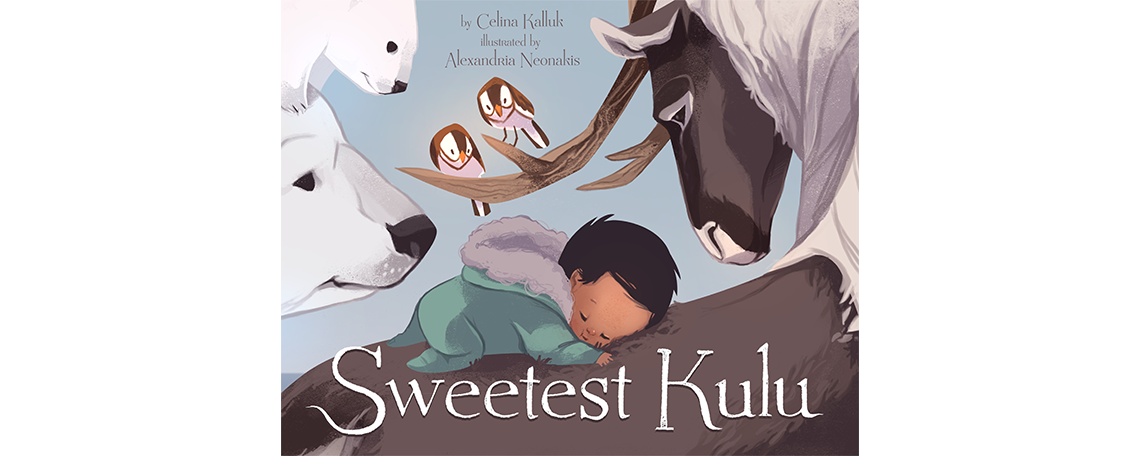
In the Minds On section, you explored the book cover for the story Sweetest Kulu by Celina Kalluk. This story describes the gifts given to a baby by the Arctic animals. It shares the love and respect the Inuit have for the land, animals and each other.
Source: https://inhabitbooks.com/products/in9781772271119
About the author
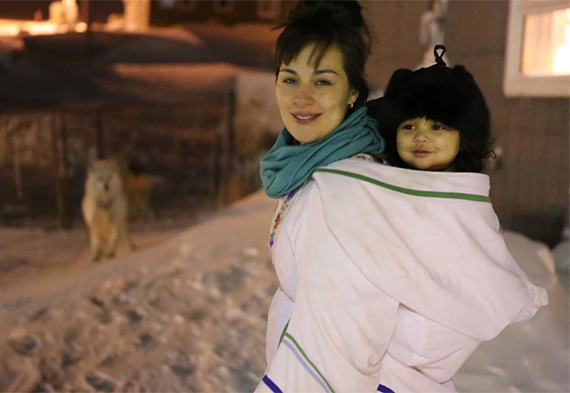
Sweetest Kulu was written by an Inuk author named Celina Kalluk. She was born and raised in Resolute Bay, Nunavut. Celina is also a visual artist and a famous throat singer.
Sweetest Kulu Sweetest Kulu e-reader
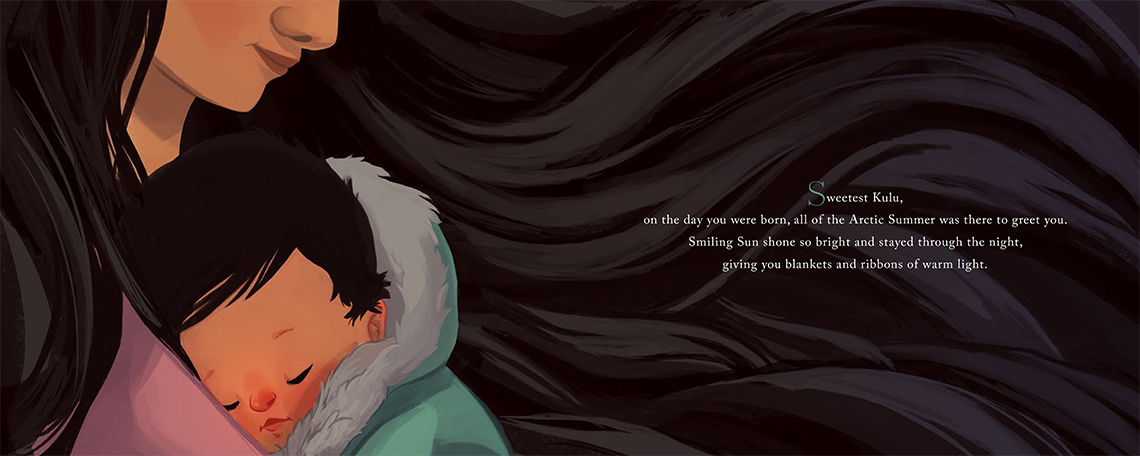
Sweetest Kulu, on the day you were born, all of the Arctic Summer was there to greet you. Smiling Sun shone so bright and stayed through the night, giving you blankets and ribbons of warm light.
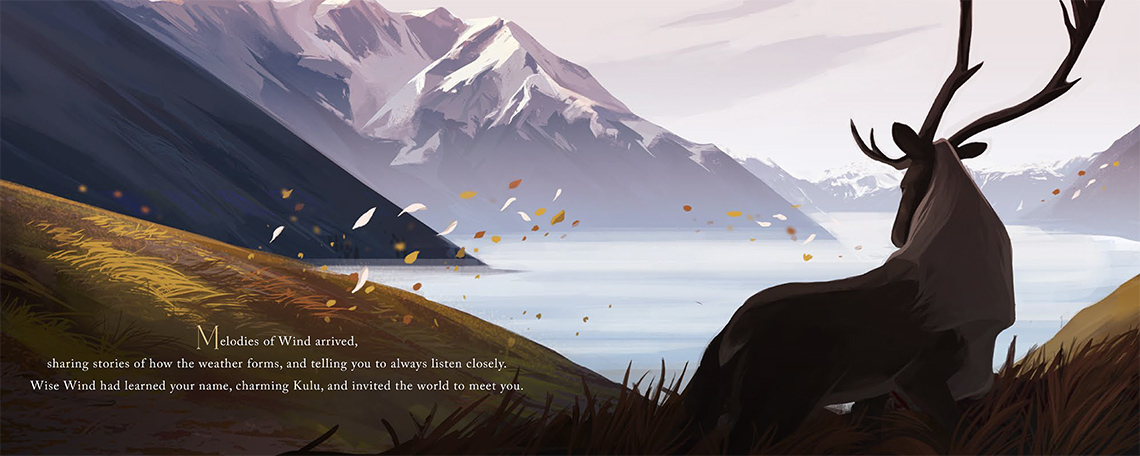
Melodies of Wind arrived, sharing stories of how the weather forms, and telling you to always listen closely. Wise Wind had learned your name, charming Kulu, and invited the world to meet you.
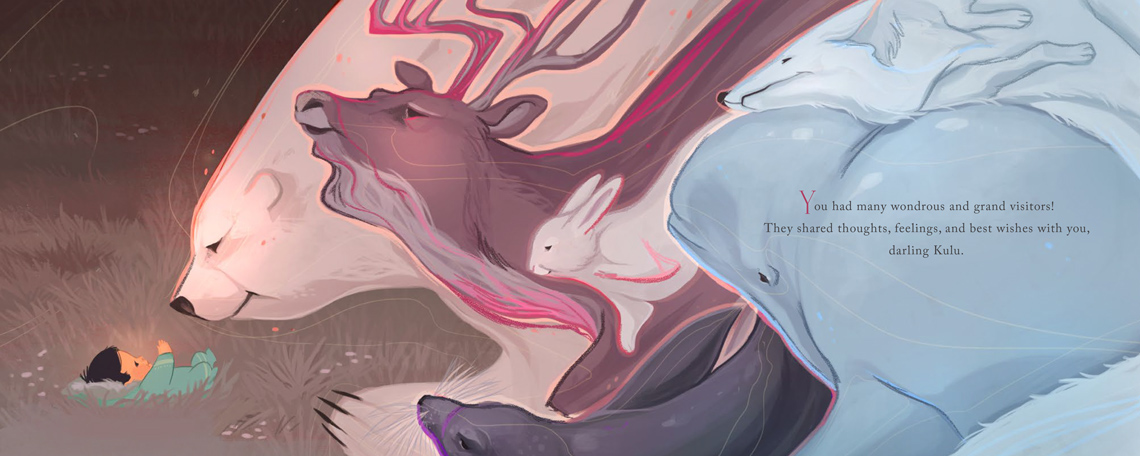
You had many wondrous and grand visitors! They shared thoughts, feelings, and best wishes with you, darling Kulu.
Explore the following audio clip to hear the story in Inuktitut.
Sweetest Kulu in Inuktitut: Pages 1 to 3
Read the following pages from Sweetest Kulu.
Sweetest Kulu Sweetest Kulu e-reader
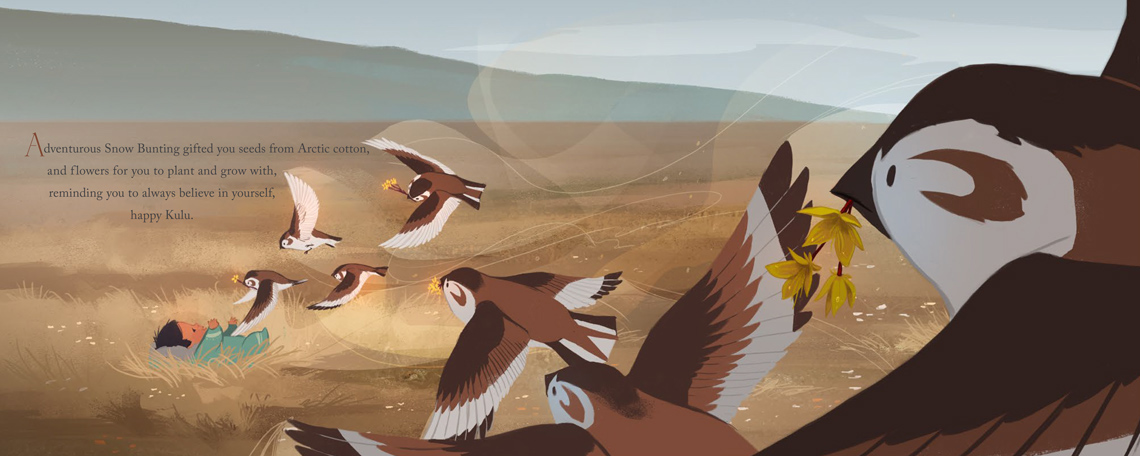
Adventurous Snow Bunting gifted you seeds from Arctic cotton, and flowers for you to plant and grow with, reminding you to always believe in yourself, happy Kulu.
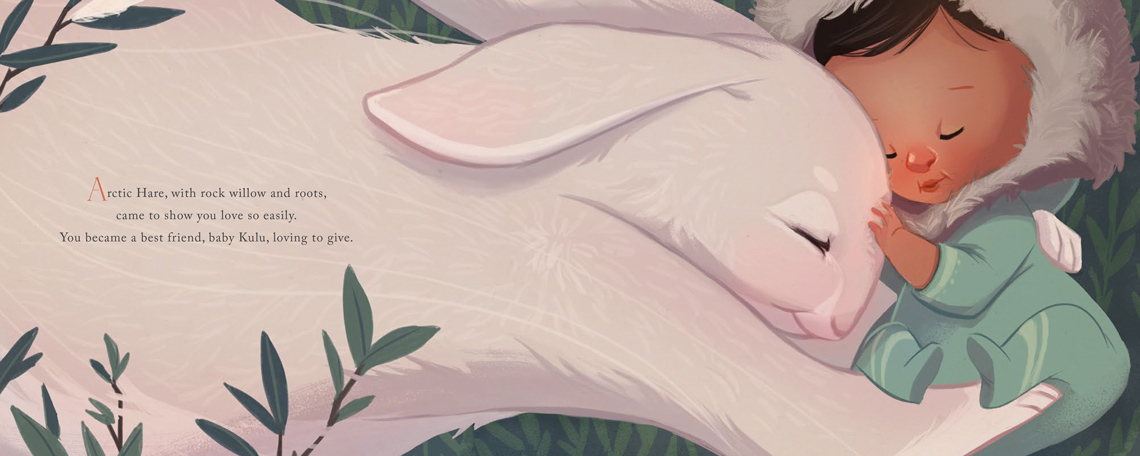
Arctic Hare, with rock willow and roots, came to show you love so easily. You became a best friend, baby Kulu, loving to give.
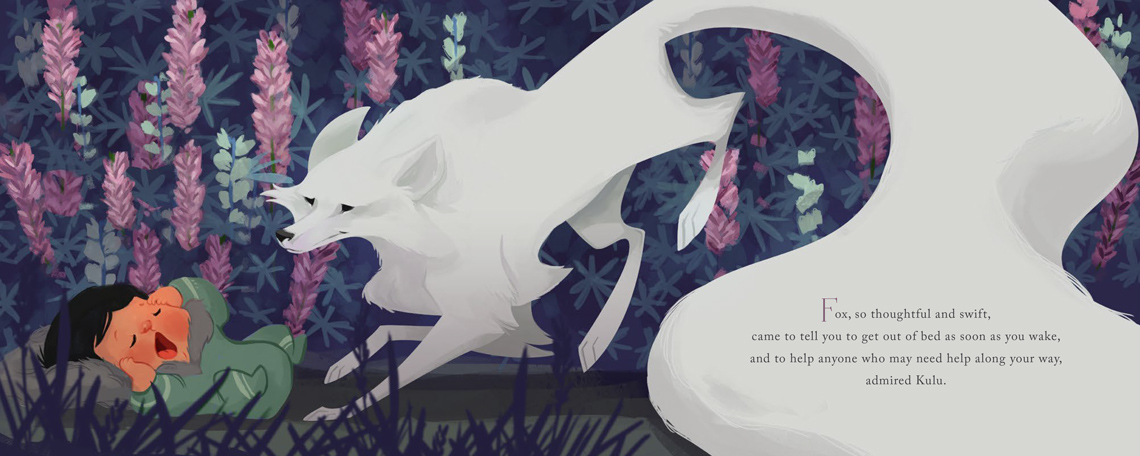
Fox, so thoughtful and swift, came to tell you to get out of bed as soon as you wake, and to help anyone who may need help along your way, admired Kulu.
Explore the following audio clip to hear the story in Inuktitut.
Sweetest Kulu in Inuktitut: Pages 4 to 6
Let’s read more of the pages from Sweetest Kulu.
Sweetest Kulu Sweetest Kulu e-reader
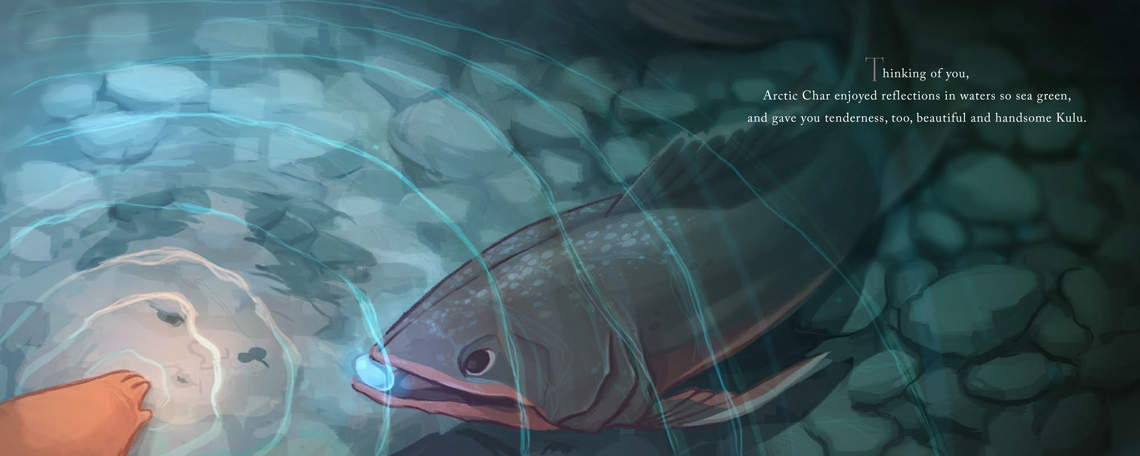
Thinking of you, Arctic Char enjoyed reflections in waters so sea green, and gave you tenderness, too, beautiful and handsome Kulu.
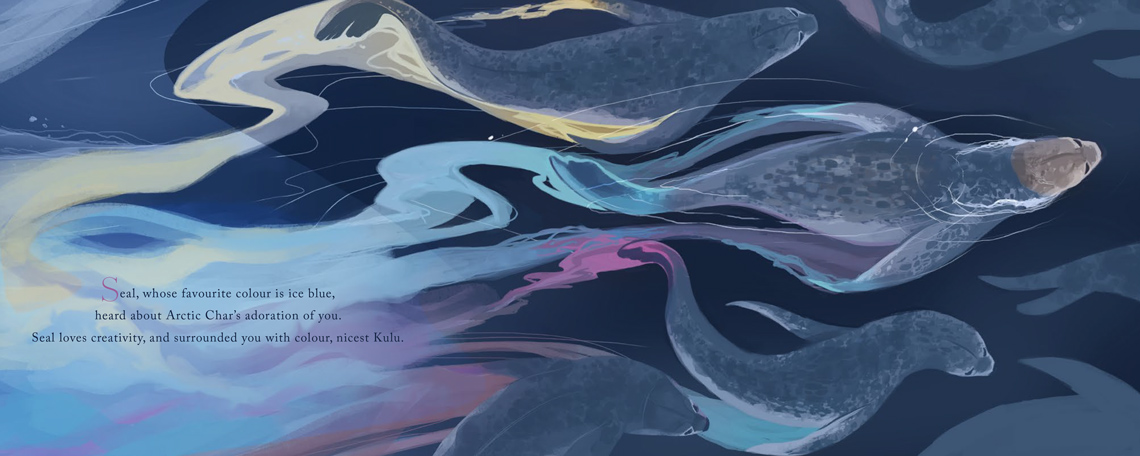
Seal, whose favourite colour is ice blue, heard about Arctic Char’s adoration of you. Seal loves creativity, and surrounded you with colour, nicest Kulu.
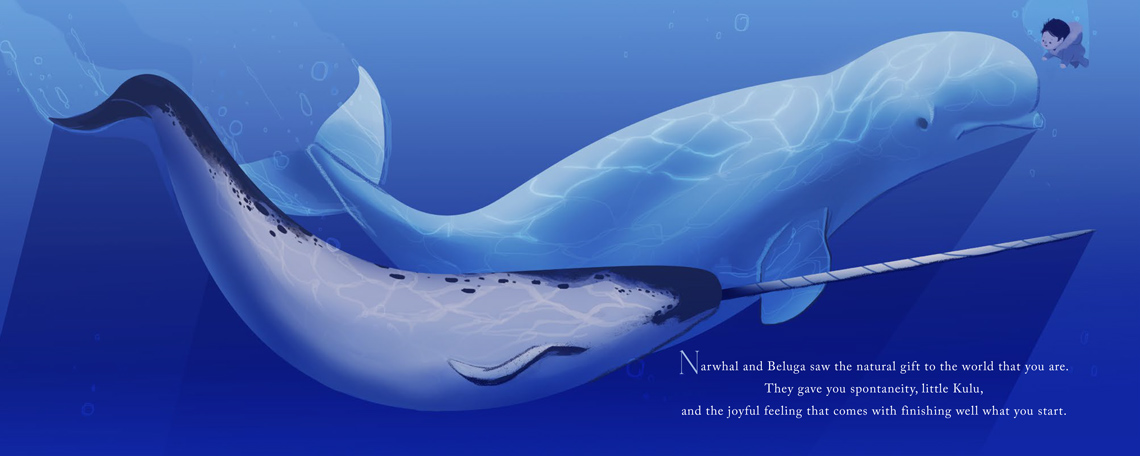
Narwhal and Beluga saw the natural gift to the world that you are. They gave you spontaneity, little Kulu, and the joyful feeling that comes with finishing well what you start.
Explore the following audio clip to hear the story in Inuktitut.
Sweetest Kulu in Inuktitut: Pages 7 to 9
Read the following pages from Sweetest Kulu.
Sweetest Kulu Sweetest Kulu e-reader
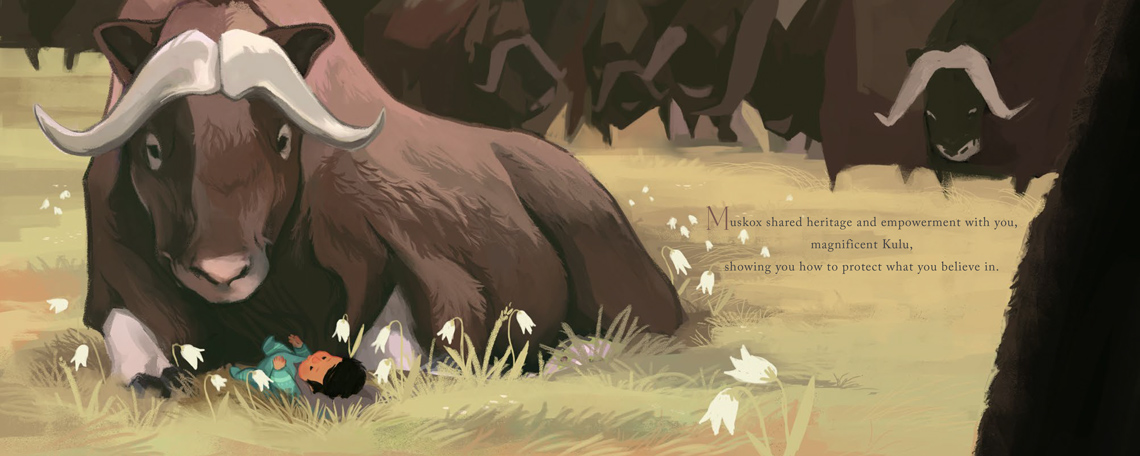
Muskox shared heritage and empowerment with you, magnificent Kulu, showing you how to protect what you believe in.
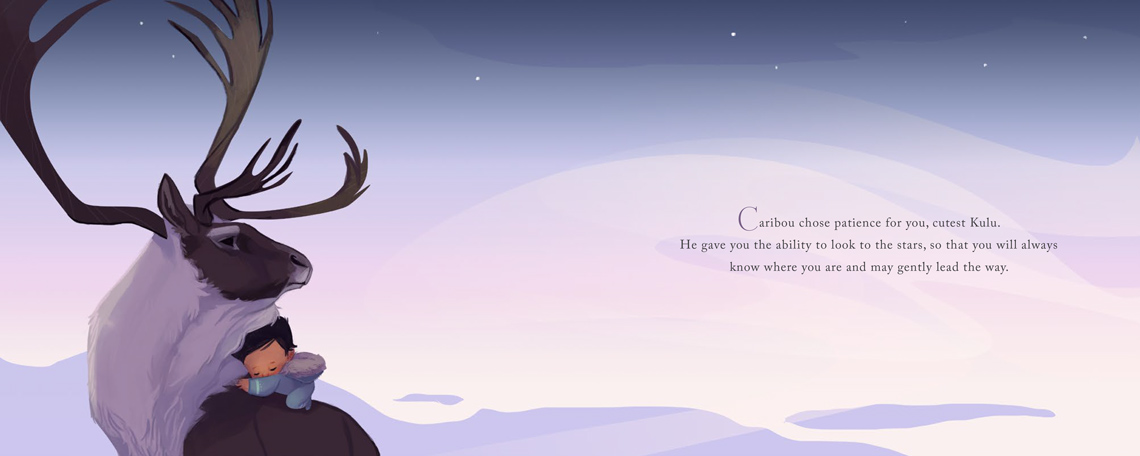
Caribou chose patience for you, cutest Kulu. He gave you the ability to look to the stars, so that you will always know where you are and may gently lead the way.
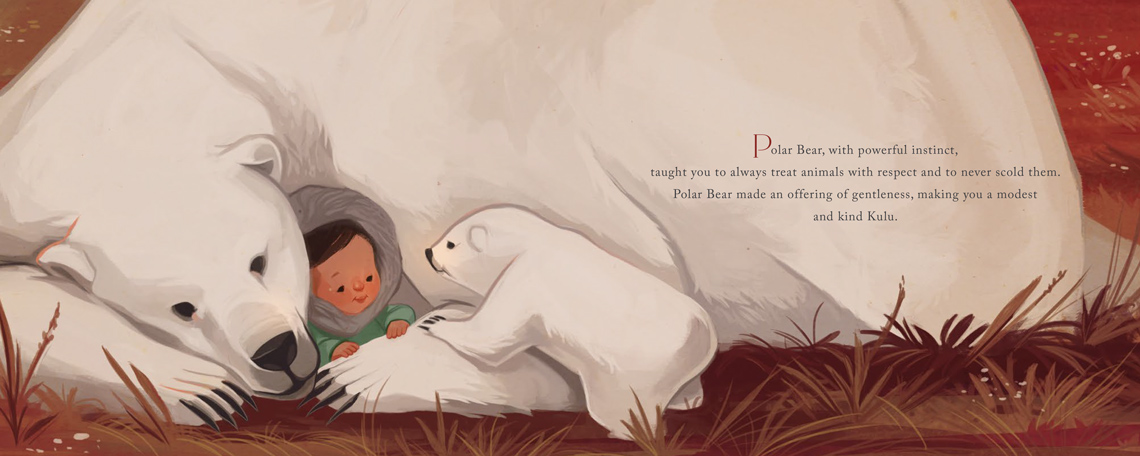
Polar Bear, with powerful instinct, taught you to always treat animals with respect and to never scold them. Polar Bear made an offering of gentleness, making you a modest and kind Kulu.
Explore the following audio clip to hear the story in Inuktitut.
Sweetest Kulu in Inuktitut: Pages 10 to 12
Read the following pages from Sweetest Kulu.
Sweetest Kulu Sweetest Kulu e-reader
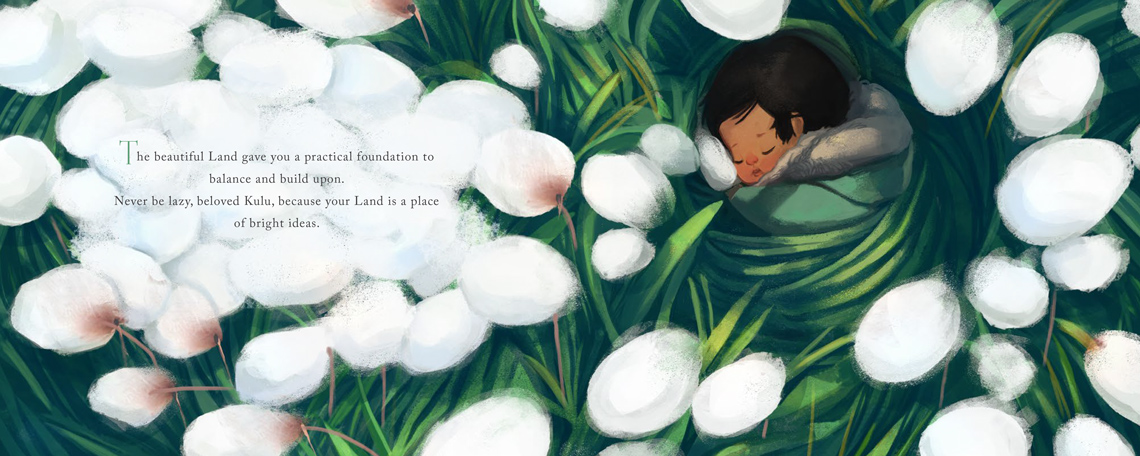
The beautiful Land gave you a practical foundation to balance and build upon. Never be lazy, beloved Kulu, because your Land is a place of bright ideas.
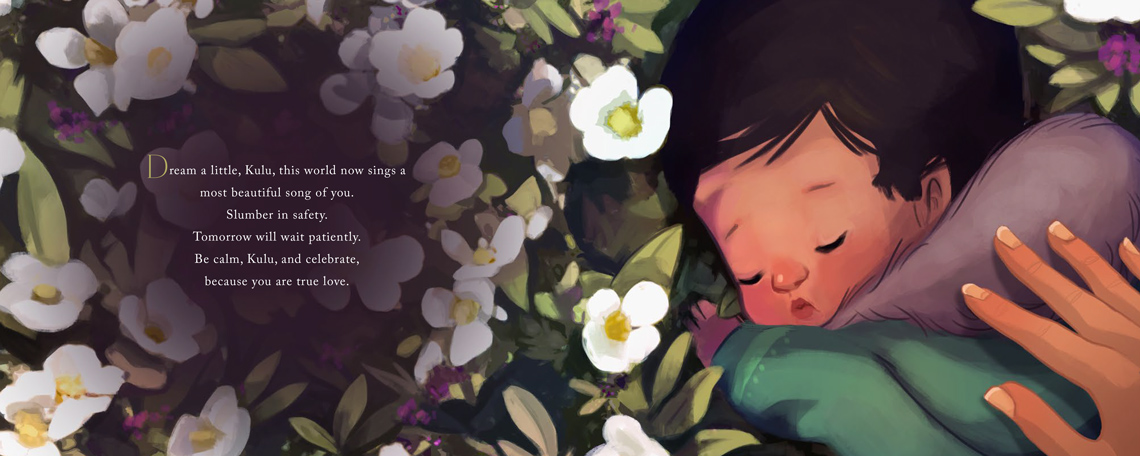
Dream a little, Kulu, this world now sings a most beautiful song of you. Slumber in safety. Tomorrow will wait patiently. Be calm, Kulu, and celebrate, because you are true love.
Explore the following audio clip to hear the story in Inuktitut.
Sweetest Kulu in Inuktitut: Pages 13 to 14
Let’s learn more about Inuit communities, cultures, and traditions.
In Canada, the Inuit homeland is called Inuit Nunangat. The Inuit homeland includes 4 areas:
- Nunavut
- Inuvialuit (in the Northwest Territories and the Yukon)
- Nunavik (in Northern Quebec)
- Nunatsiavut (in Labrador)
As we work towards Truth and Reconciliation, information about lands and territories is constantly being updated. This map was created using information available as of July 2021 from the Inuit Taripriit Kanatami.
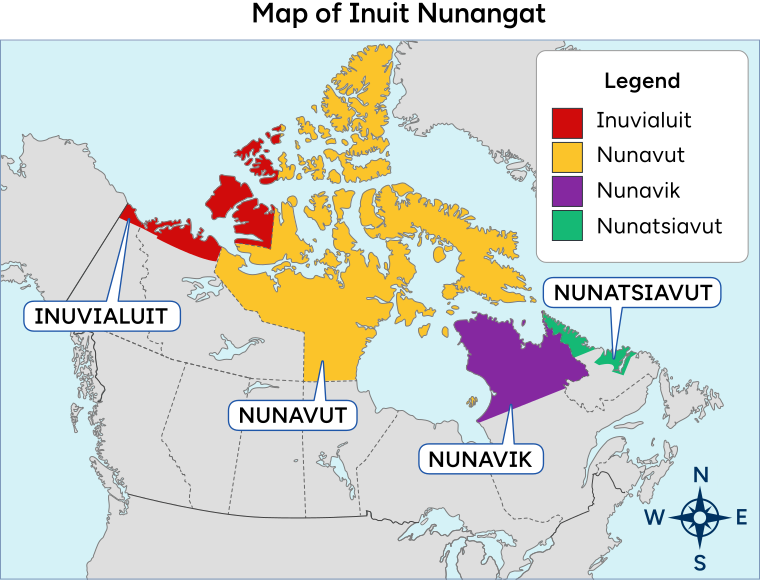
A map of the Inuit Nunangat across the provinces and territories of
Canada. The Inuvialuit territory covers a small part of northern Yukon and the islands in the
northern
half of the Northwest Territories. The Nunavut territory is in Nunavut. The Nunavik territory covers
northern Quebec. The Nunatsiavut territory is found in northern Labrador.
The Inuit are original people from the Arctic and northern regions of Canada, Alaska, Russia, and Greenland. Inuktitut is a language spoken by the Inuit.

Did You Know?
Did You Know?
Did you know that ‘Kulu’ is an Inuktitut word that shows love. It is used for babies and young children. The Inuit show love and care for the animals as well.
Let’s explore the book Sweetest Kulu again. As you read the story, pay attention to any new words and keep track of how many animals Kulu meets!
Sweetest Kulu Sweetest Kulu e-reader
Sweetest Kulu by Celina Kalluk illustrated by Alexandria Neonakis
Sweetest Kulu, on the day you were born, all of the Arctic Summer was there to greet you. Smiling Sun shone so bright and stayed through the night, giving you blankets and ribbons of warm light.
Melodies of Wind arrived, sharing stories of how the weather forms, and telling you to always listen closely. Wise Wind had learned your name, charming Kulu, and invited the world to meet you.
You had many wondrous and grand visitors! They shared thoughts, feelings, and best wishes with you, darling Kulu.
Adventurous Snow Bunting gifted you seeds from Arctic cotton, and flowers for you to plant and grow with, reminding you to always believe in yourself, happy Kulu.
Arctic Hare, with rock willow and roots, came to show you love so easily. You became a best friend, baby Kulu, loving to give.
Fox, so thoughtful and swift, came to tell you to get out of bed as soon as you wake, and to help anyone who may need help along your way, admired Kulu.
Thinking of you, Arctic Char enjoyed reflections in waters so sea green, and gave you tenderness, too, beautiful and handsome Kulu.
Seal, whose favourite colour is ice blue, heard about Arctic Char’s adoration of you. Seal loves creativity, and surrounded you with colour, nicest Kulu.
Narwhal and Beluga saw the natural gift to the world that you are. They gave you spontaneity, little Kulu, and the joyful feeling that comes with finishing well what you start.
Muskox shared heritage and empowerment with you, magnificent Kulu, showing you how to protect what you believe in.
Caribou chose patience for you, cutest Kulu. He gave you the ability to look to the stars, so that you will always know where you are and may gently lead the way.
Polar Bear, with powerful instinct, taught you to always treat animals with respect and to never scold them. Polar Bear made an offering of gentleness, making you a modest and kind Kulu.
The beautiful Land gave you a practical foundation to balance and build upon. Never be lazy, beloved Kulu, because your Land is a place of bright ideas.
Dream a little, Kulu, this world now sings a most beautiful song of you. Slumber in safety. Tomorrow will wait patiently. Be calm, Kulu, and celebrate, because you are true love.

Pause and Reflect
Pause and reflect
Now that you have explored Sweetest Kulu, answer the following questions.

- Do you know any other stories that remind you of the story Sweetest Kulu? If so, what are they and what made you think of them?
- How do you think this story came to be?
- What kinds of values and lessons does this story share with the reader?
Record your answers in a method of your choice.
How many syllables?
A syllable is a single unbroken sound.
For example, the word sweetest can be broken into two sounds.
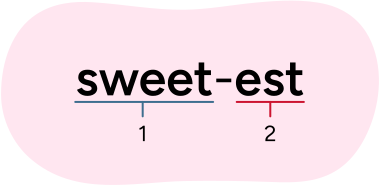
The word sweetest is two sounds, which are two syllables. As we explore new words, it can be helpful to break up the word into its syllables. Each word is broken into its syllables using the dash symbol ‘-‘. Check out the word sweetest again. Do you notice the dash symbol that separates the two syllables?
Good work! Now let’s practice counting syllables in words.
How many syllables do you notice in the following words?
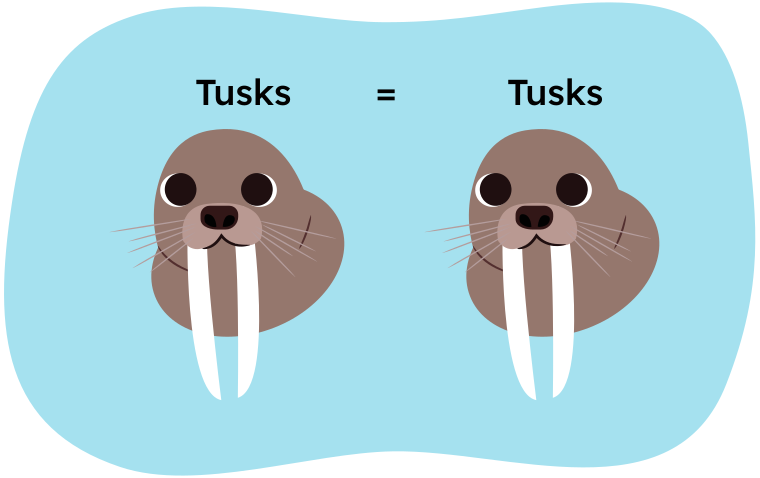
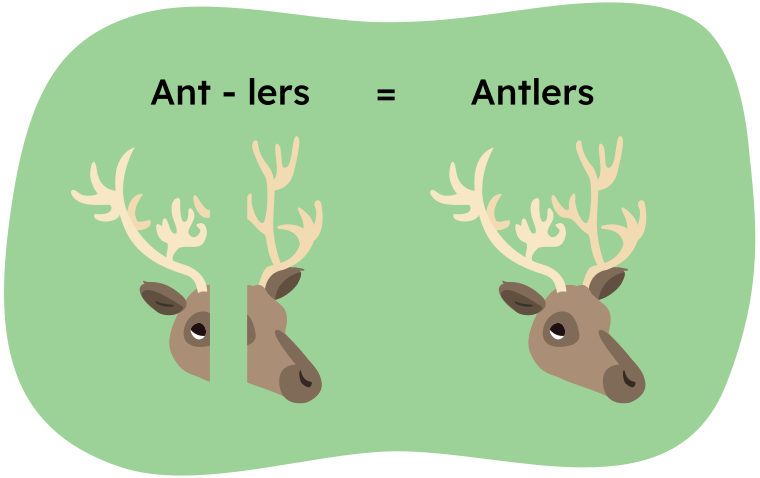
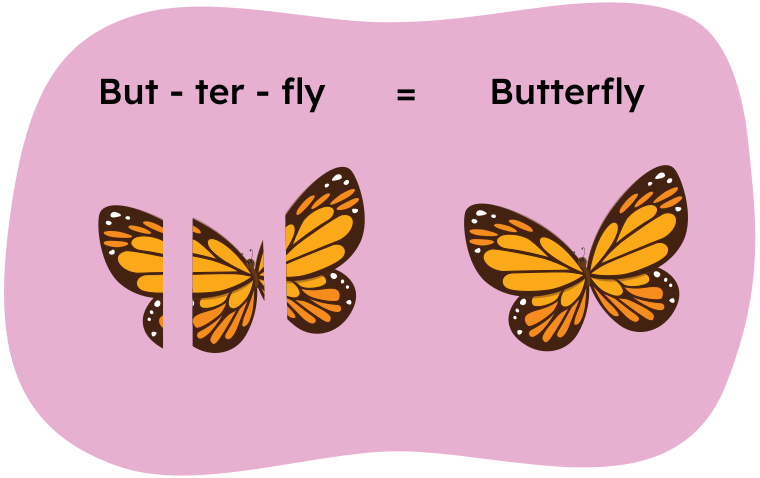
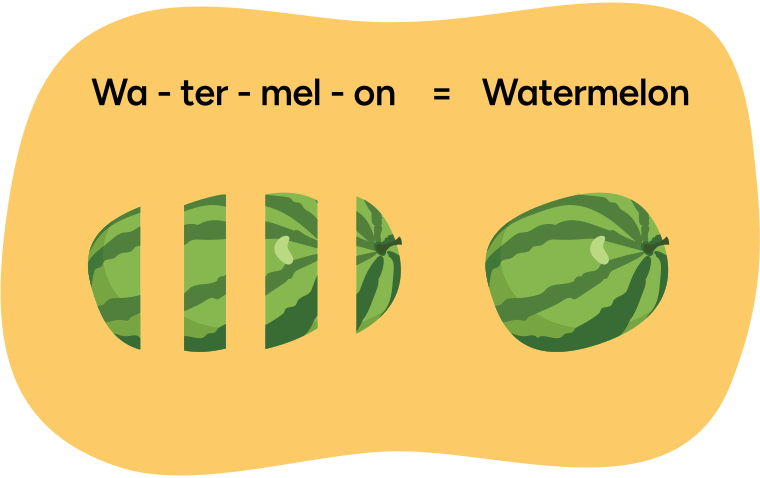
Let’s practice identifying syllables using the new words we learned in the story Sweetest Kulu.
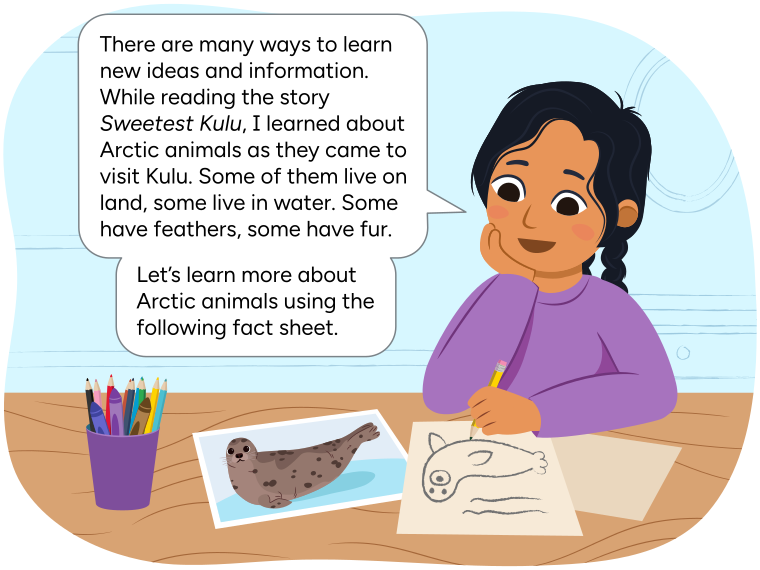
Sora shares, ‘There are many ways to learn new ideas and
information. While reading the story Sweetest Kulu, I learned about Arctic animals as they came to
visit Kulu. Some of them live on land, some live in water. Some have feathers, some have fur.
Let’s
learn more about Arctic animals using the following fact sheet.’
Let’s explore some more information about the Arctic animals from the story Sweetest Kulu. You
Choose an animal from the following list. How would you describe your animal? For example, do they have fur or feathers?
Access the following Arctic Animal Fact Sheet to record a fact about your animal in your own words.
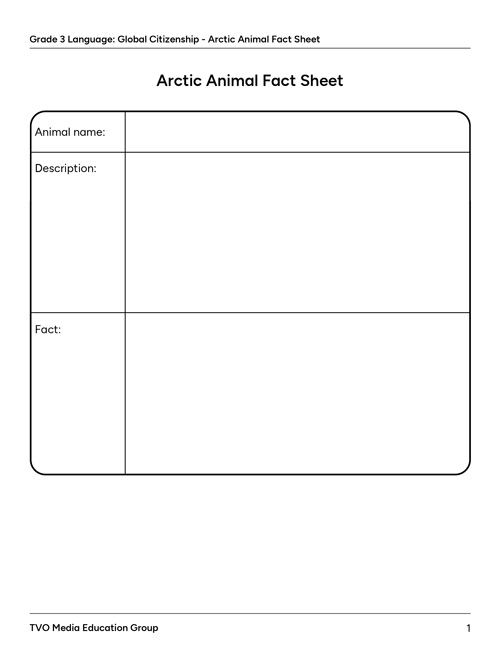
Press the following tabs to learn about Arctic animals.
Snow bunting
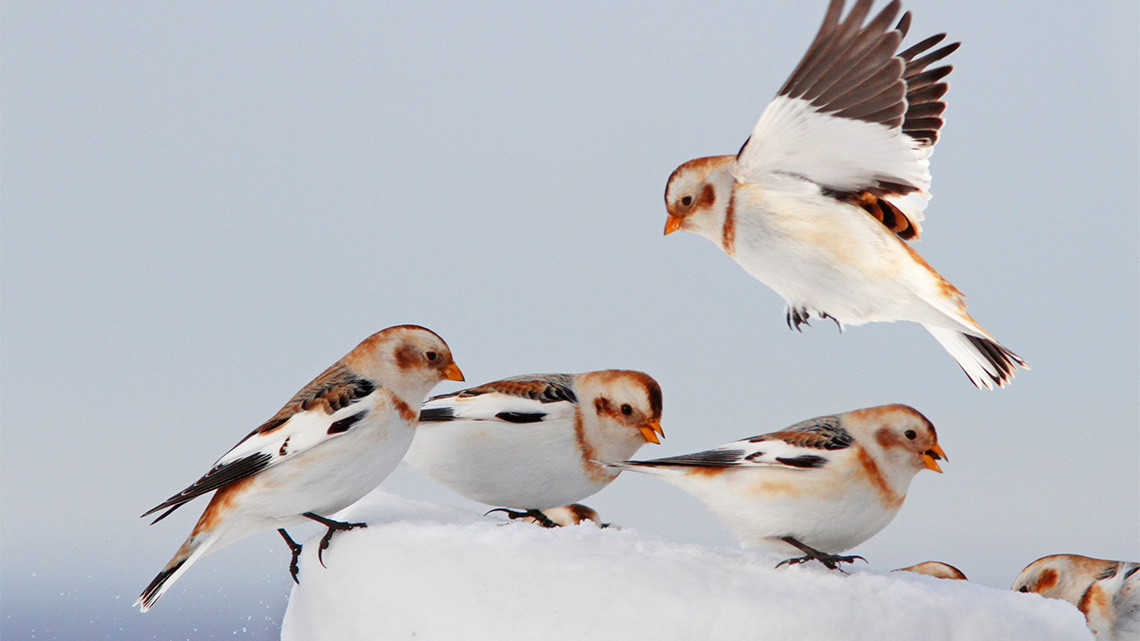
Snow buntings are a type of bird. Their feathers change in the winter to white with some grey and black on their back and tail. This helps snow buntings hide in the snow and ice.
Snow buntings eat seeds and plant buds and insects on the ground.
They build their nests in between rocks with grass and moss, fur, and feathers.
Arctic hare
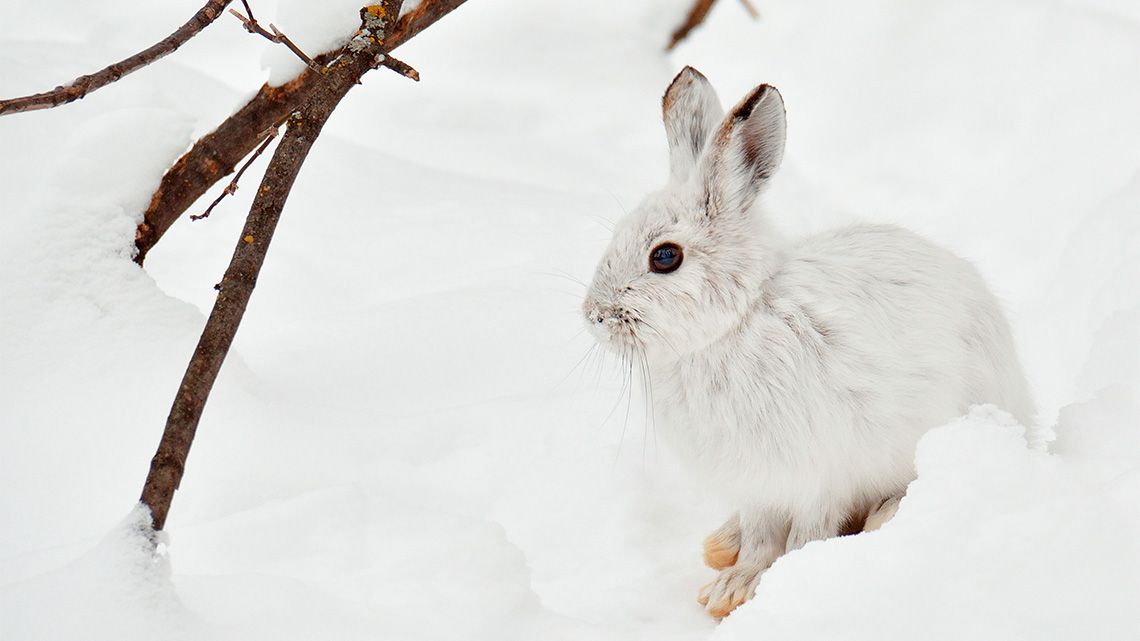
The Arctic hare is bigger than a rabbit and it has longer back legs and longer ears. They are very fast. They can run up to 40 miles an hour!
In the winter, they have thick white fur that helps them to hide and keep them warm. In the spring, their fur changes to a blue-gray to blend into rocks and plants.
They eat plants, moss, and lichen in the winter. They eat plant buds, berries, leaves, roots, and bark in the summer.
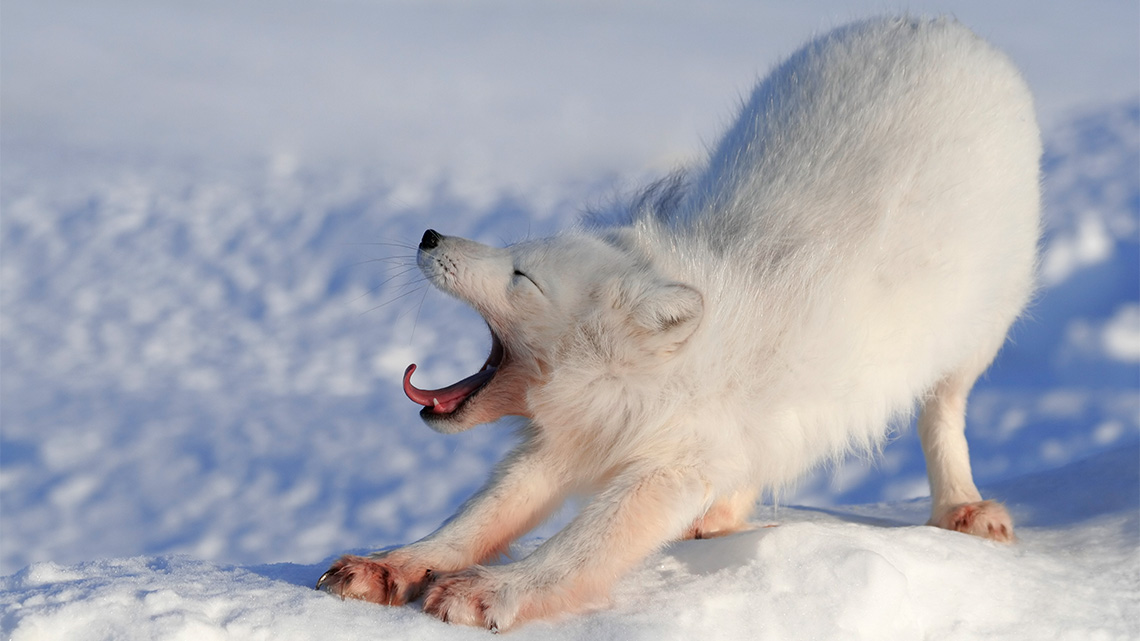
Artic fox
Arctic foxes have white coats which help them hide against the ice and snow.
When the snow melts, their fur changes into a brown or gray to help it hide against the rocks and plants.
The Arctic fox has fur on the bottom of their paws, short ears, and a short snout.
Arctic foxes dig into the snow to make their homes. Their homes are called burrows.
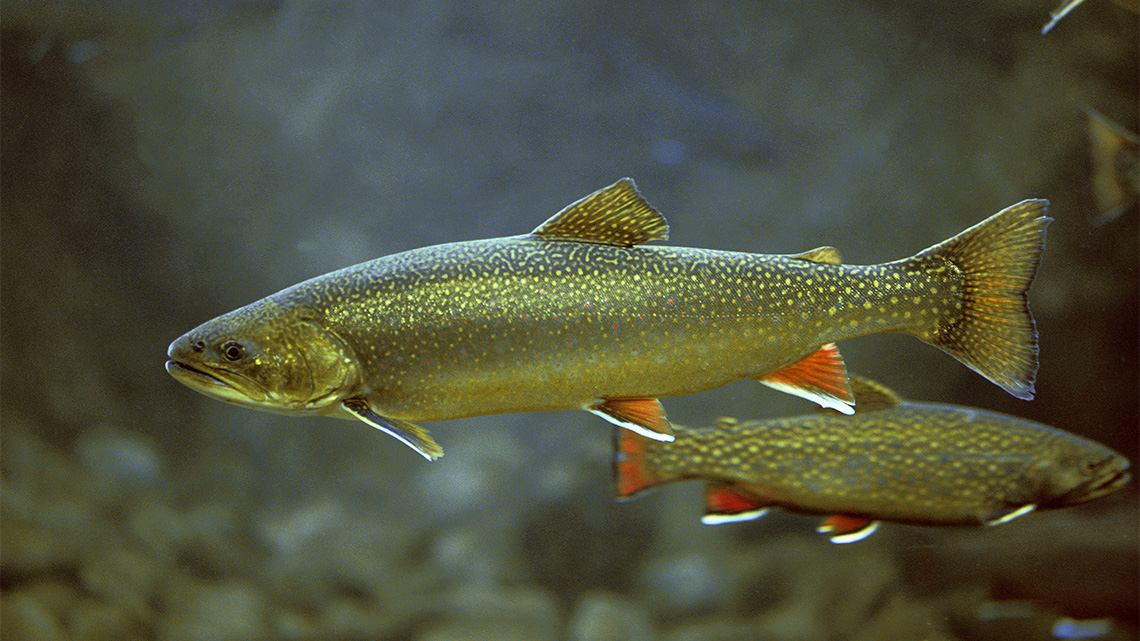
Artic char
Arctic char are usually dark brown with a silver back with some light spots. On their belly they can be white, red, pink, or orange. They can change their colour when the weather changes.
Arctic char can live for as long as 40 years.
Arctic char eat shrimp and small insects when they are young. When they are adults, they eat plankton and small fish.
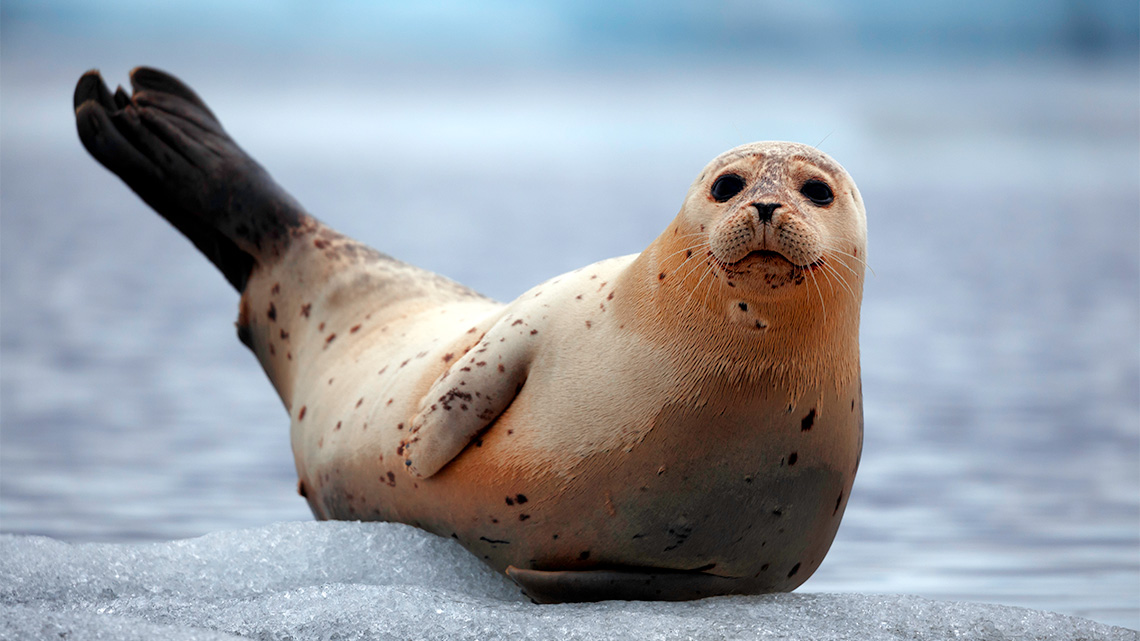
Harp seal
Seals can stay underwater for 15 minutes before they come back up for air.
They eat fish, lobsters, crabs, and shrimp.
Harp seals have sharp teeth and strong flippers to help them swim.
Young seals have fluffy white fur. When they get older, they grown a dark mark on their back and sides and their fur turns yellow and/or gray.
Harp seals can live up to 20 years.
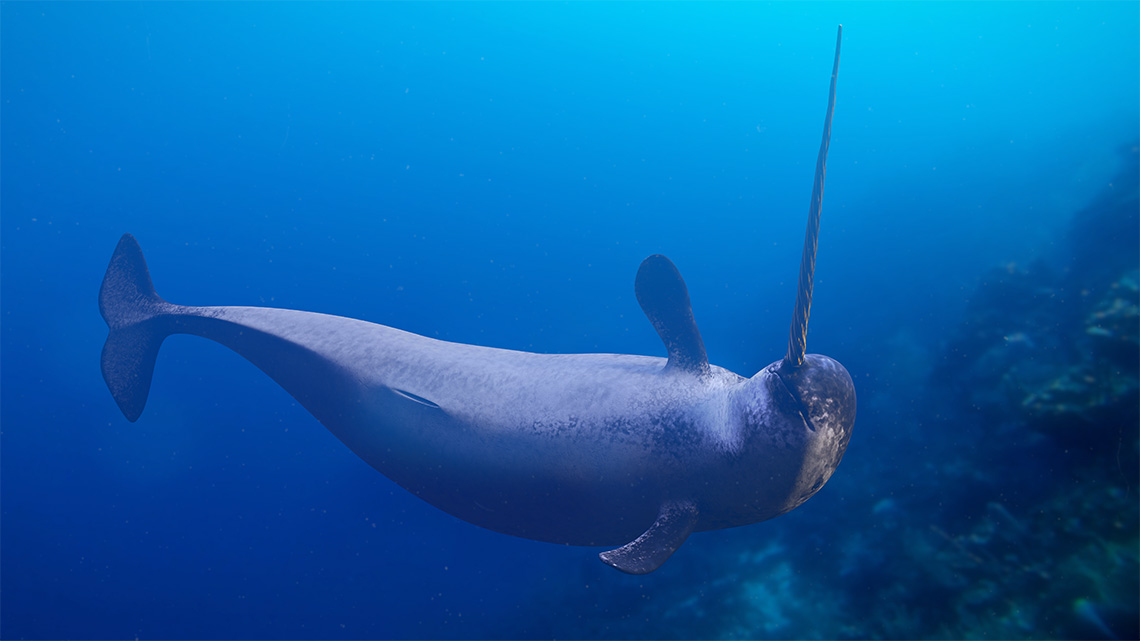
Narwhal
The narwhal has a tooth that grows out of its head. This is called a tusk. The tusk can grow to almost three metres for male narwhals!
Narwals eat other animals like fish, shrimp, and squid.
Narwhals like to travel in large groups. Groups of hundreds and even thousands have been seen swimming together!
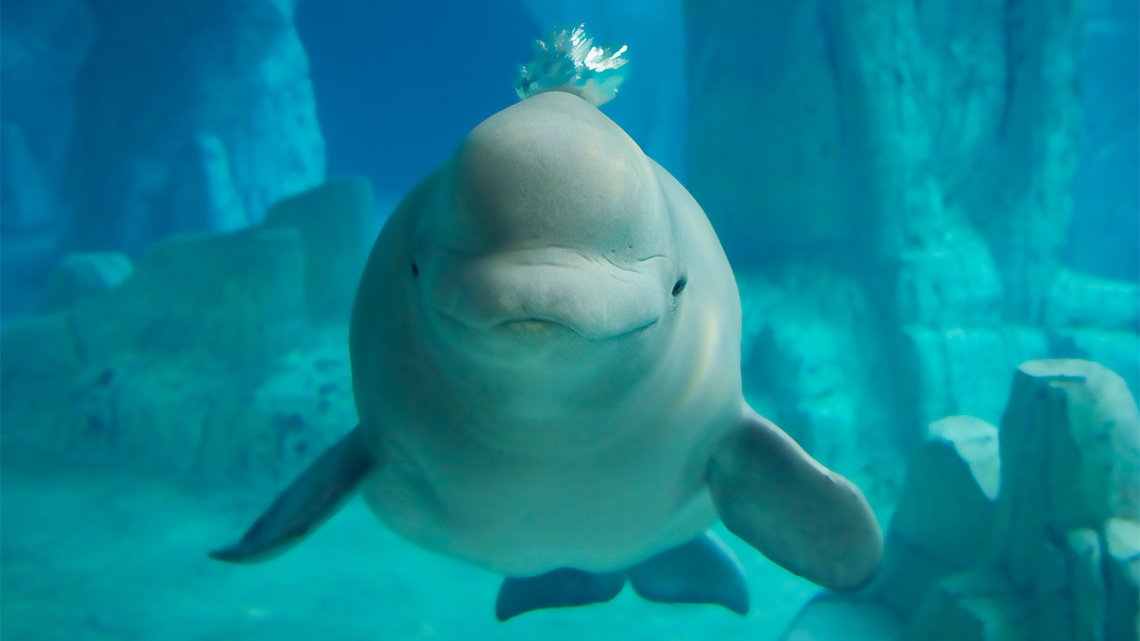
Beluga
The beluga is one of the smallest kinds of whales.
Belugas live together in small groups called “pods.”
Belugas speak to each other with clicks, whistles, and clangs. Belugas can also copy different kinds of sounds.
They eat fish, shrimp, lobsters, and crabs.
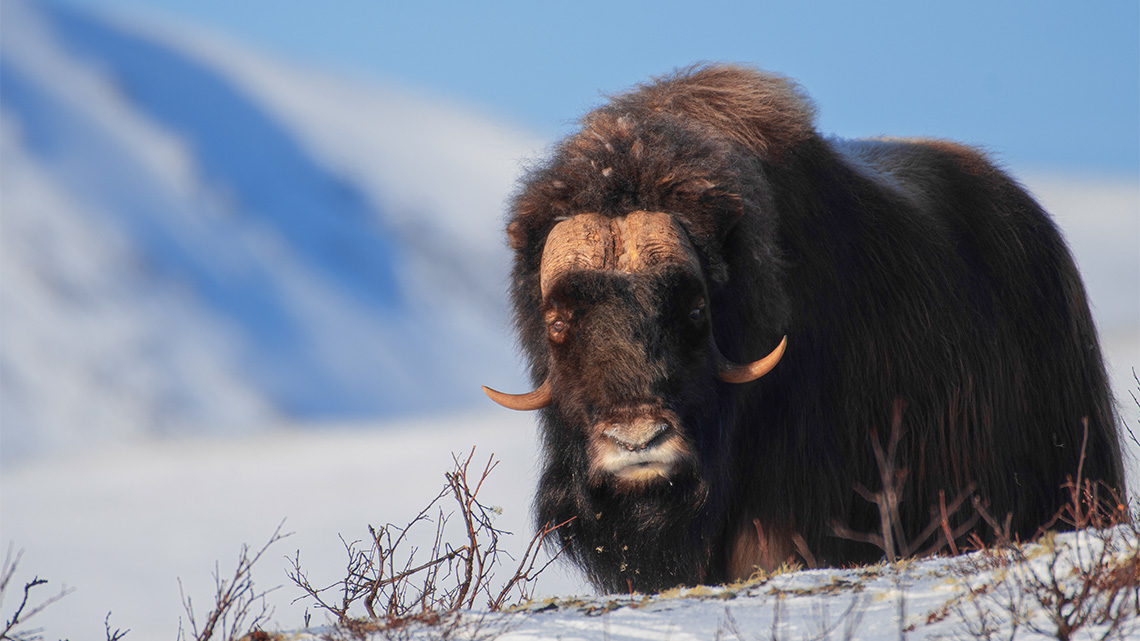
Muskox
Musk oxen have lived in the Arctic for many thousands of years. They have two layers of hair that helps keep them warm. The outside hairs are called “guard hairs.” The inside hair is the “undercoat.”
When the weather changes and gets warm, this undercoat falls out so that the Musk oxen don’t get too hot.
Musk oxen eat roots, mosses, and lichen.
Musk oxen travel in groups called herds.
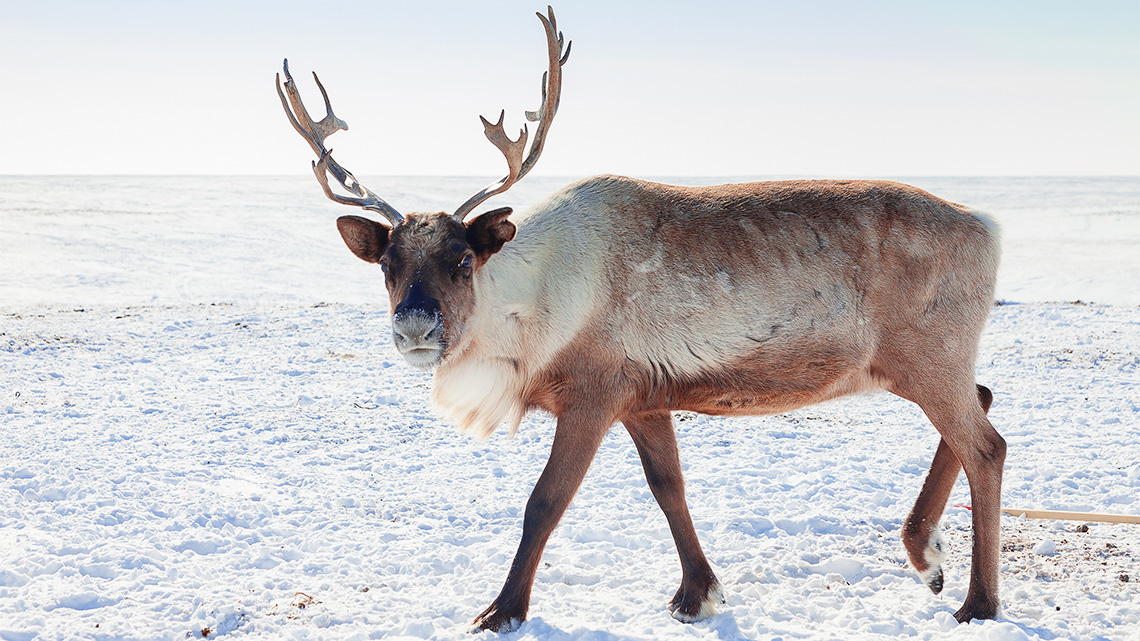
Caribou
Caribou eat grasses and plants in the summer and lichen and mushrooms in the winter. Adult caribou can eat about 5 kilograms of food every day!
Their hooves look like a big scoop on the bottom, which helps them dig for food.
Caribou travel in groups called herds. They travel north in the summer and then south in the winter.
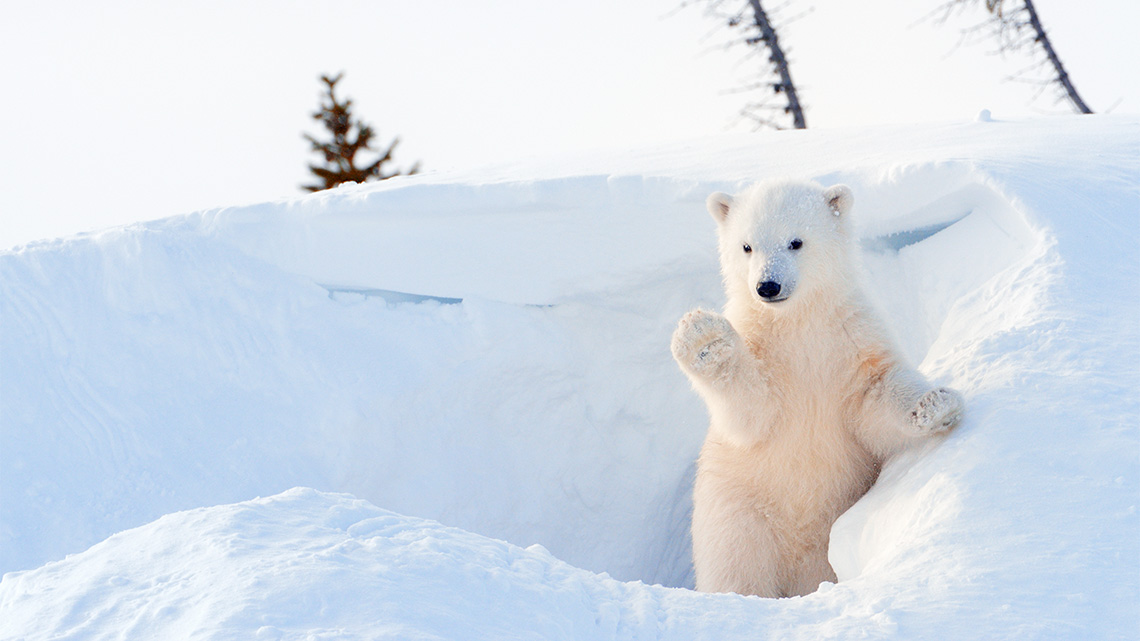
polar bear
Polar bears can swim fast using their big front paws.
They spend a lot of time in the water, but also travel using floating sheets of ice.
They eat seals and hunt by waiting for a seal to come out of the water. They also hunt by swimming underneath the ice.
Their fat or blubber keeps them warm in the icy water.

Share your learning
Time to share your learning! Review your notes from the Action section and select:
- one new thing you learned about one of the Arctic animals
- your favourite fact about one of the Arctic animals
Think about how you can share using interesting sentences and lots of detail.
Practice what you would like to share until you feel confident. You might use the following checklist to help your practice effective speaking skills.
Effective speaking skills

Finally, you can choose to share your information with a partner, if possible.
Reflection
How do you feel about what you have learned in this activity? Which of the next four sentences best matches how you are feeling about your learning? Press the button that is beside this sentence.

I feel...
Now, record your ideas about your feelings using a voice recorder, speech-to-text, or writing tool.