Let’s build our skills!

Today’s vocabulary!
Press the following tabs to learn more about today’s vocabulary.
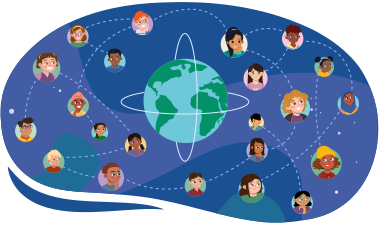
A member of the world community who explores, cares, and takes action to help people and environments all over the world.
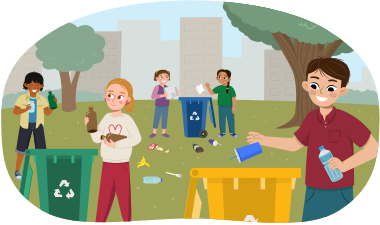
To do something about a situation or a problem instead of just talking about it or ignoring it.
For example, if you see litter on the ground, taking action might mean picking it up and putting it in the trash.
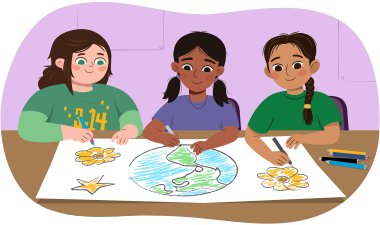
To give or help with something to make it better or more complete.
For example, if you contribute to a group project, you add your ideas or work to make the project better for everyone.
Global citizenship
Explore the following images, what do you notice about them?
- What do you think all these images have in common?
- How do you think these images connect to being a global citizen?
Record your thoughts in a method of your choice.
Being a global citizen
Global citizenship can mean
- understanding that we belong to the same world
- making decisions based on the good of everyone and not just ourselves
- doing our part to make the world a better place
You may have noticed that the art in the Minds On all showed different examples of helping each other and the planet. When everyone makes a choice to help, small actions have big impact. Let’s explore the examples again!
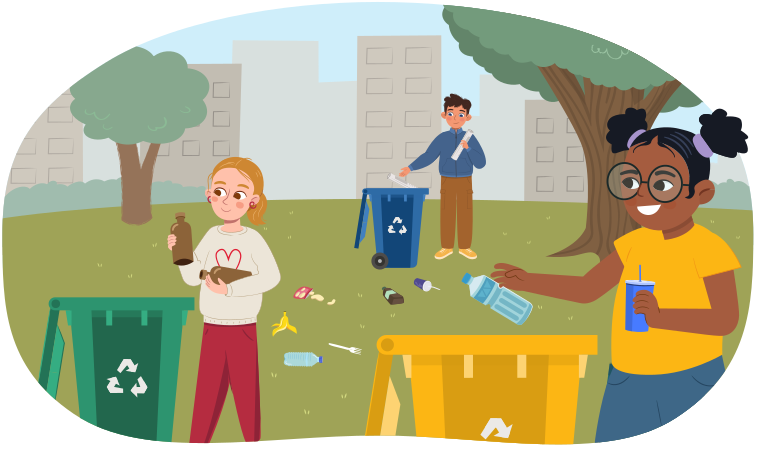
Keeping the planet clean and safe. This might mean sorting garbage, recycling correctly, or cleaning up a local park.
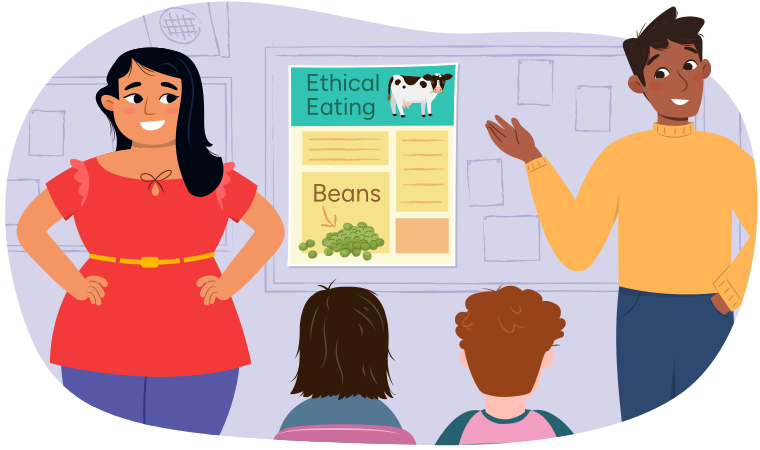
Learning about how different types of food are manufactured or made and the different steps they go through before being brought to a grocery store or restaurant.
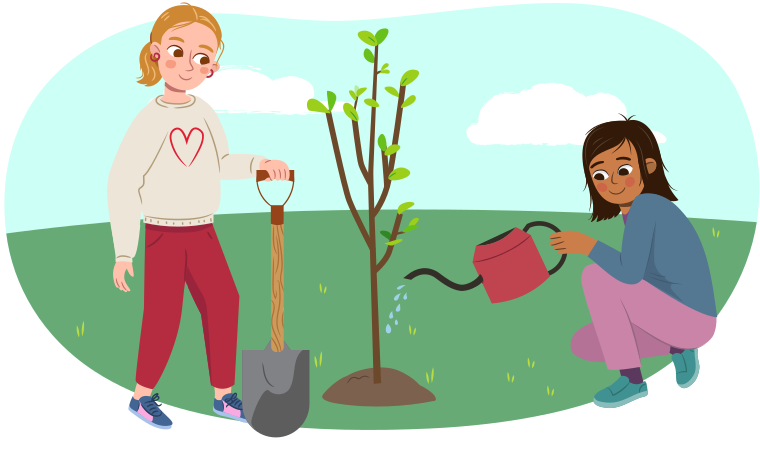
Taking care of the environment. This might mean joining a tree planting group or taking care of plants in a community garden.
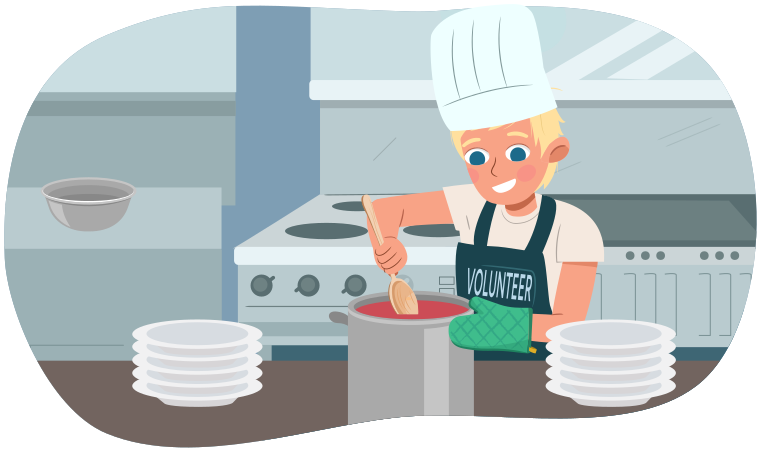
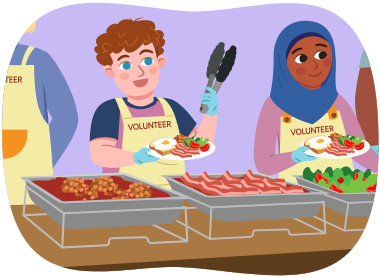
Helping your local community. This might mean volunteering at a local food bank or community center.
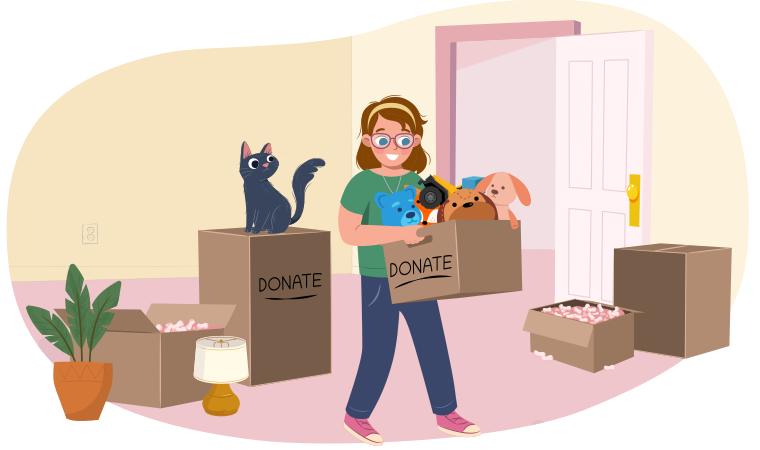
Sharing with others. This might mean donating any gently used items. It can also mean donating food and other supplies to local food banks and shelters. It also can mean sharing with your friends and family in your everyday life.
Green Squad: Planet Heroes
Let’s learn about two global citizens making a difference in their own way.
Anelisa and Finlay are passionate about helping people to take care of their community and the planet.
Before you explore the video, check out the following Comparison Table.
Watch the video to answer the following questions, record any new vocabulary you hear and pay attention to the specific details that each share. Complete the fillable and printable Comparison Table in your notebook or using the following document. If you would like, you can use speech-to-text or audio recording tools to record your thoughts.
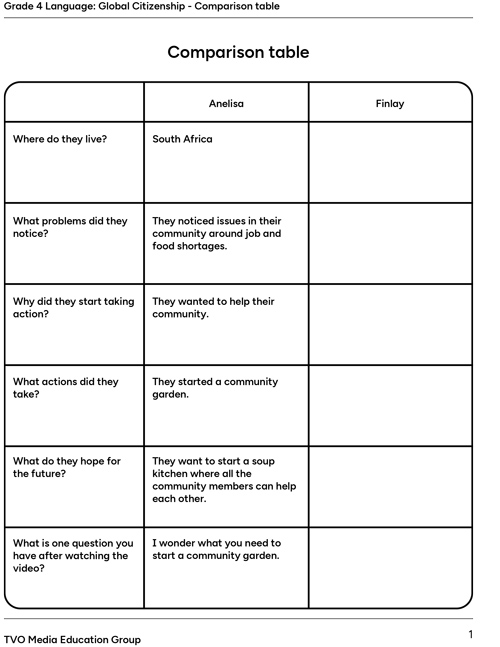
Check out the following video entitled "Green Squad: Planet Heroes" to learn more about Anelisa.
Check out the following video entitled "Green Squad: Planet Heroes" to learn more about Finlay.
Press Comparison Table: Anelisa button to compare your answers to possible answers about Anelisa.
Comparison Table: Anelisa
| Where does Anelisa live? | South Africa |
| What problems did Anelisa notice? | Anelisa noticed issues in their community around job and food shortages. |
| Why did Anelisa start taking action? | They wanted to help their community. |
| What actions did Anelisa take? | They started a community garden. |
| What does Anelisa hope for the future? | Eventually, Anelisa wants to start a soup kitchen where all the community members can help each other. |
| What is one question you have after watching the video? | I wonder what you need to start a community garden. |
| Vocabulary |
|
There are children and adults like Anelisa and Finlay all around the world who are trying to do what they can to take action. All actions, big and small, can be powerful in making positive changes.
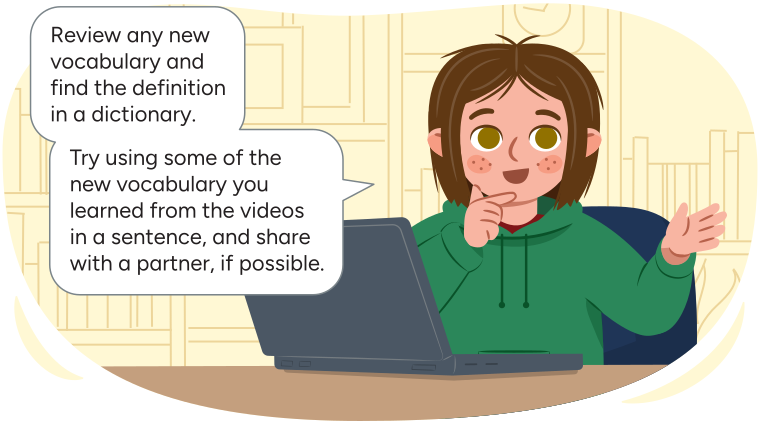
What did you learn from Anelisa and Finlay?
If you could ask them a question, what would you ask?
Share your thoughts with a partner, if possible.
Based on your learning, create your own definition of what it means to be a global citizen. Complete the following sentence prompt in your notebook.
Being a global citizen means…
Head, heart and hands
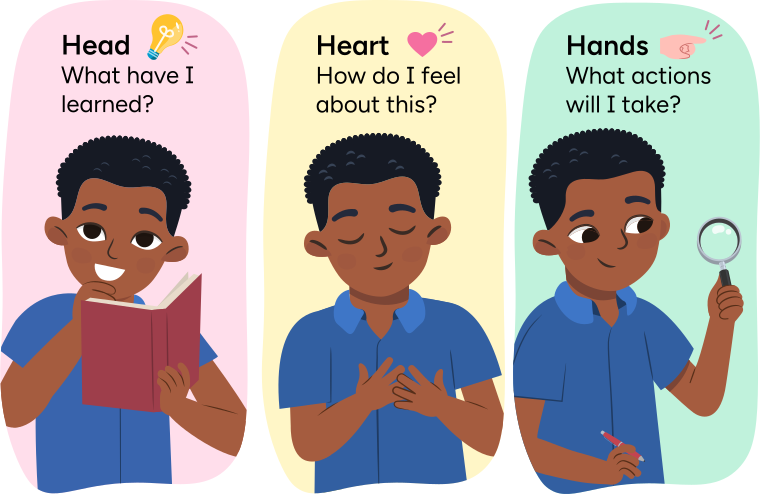
Learner Arthur thinks about three ways he learns: with his head, his heart, and his hands.
With his head, he asks, 'What have I learned?' With his heart, he asks, 'How do I feel about this?' With his hands, he asks, 'What actions will I take?'
Being a global citizen means that you use all different parts of yourself including your mind, your heart, and your hands.
- You can use your mind to learn, explore, and ask questions about the world around you.
- You can use your heart to share empathy and how you feel.
- You can use your hands to take action to help solve problems around your community and the world.
There are children and adults like Anelisa and Finlay all around the world who are trying to do their part to affect change. All actions, big and small, can be powerful in making positive changes.
Consider what you have learned throughout this learning activity and complete the following graphic organizer or record your thoughts using a method of your choice. Try and include any new vocabulary that you have learned.
Access the following fillable and printable document Myself as a Global Citizen: Head, Heart and Hands to complete the activity.
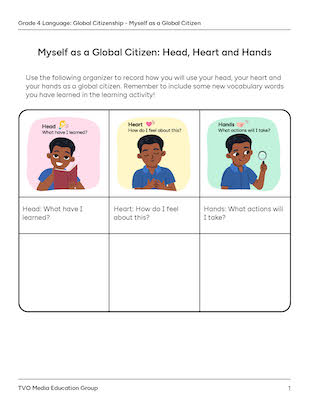
Press the Activity button to access the Myself as a Global Citizen: Head, Heart and Hands.
Activity(Opens in a new tab)
Taking action
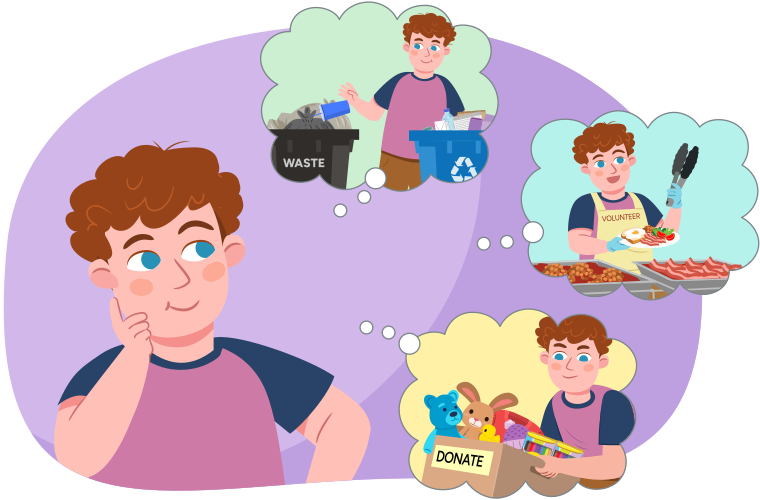
Consider if there is an action that you would like to take to contribute or support your local community. We have explored different examples such as:
- keeping the planet clean and safe
- taking care of the environment
- volunteering in your local community (this might mean volunteering at a local food bank or community center)
- sharing with others
- learning about a cause and educating others

Try It
Try it
- Why is it important to act?
- What is something you could do to get started?
Decide on an action and create a plan to follow through using a method of your choice.
You can use one of the actions you’ve learned about in this learning activity, or choose another way to help your local community!
Press the Hint button to consider some possible actions!
Some actions might include:
- Writing a letter: A letter can help communicate a problem and share an idea about how to fix it. You might write a letter to your local MPP about an issue that is important to you.
- Creating posters: Creating signs and posters is one way to raise awareness about something and share your message with others.
- Speech: A speech can clearly explain to an audience how you feel and think about an issue or a problem and how to solve it.
- Starting a club:This is a great way to bring people together who have the same ideas and goals. It can also help people learn about what’s happening in your school or neighborhood.
Reflection
As you read through these descriptions, which sentence best describes how you are feeling about your understanding of this learning activity? Press the button that is beside this sentence.
I feel...
Now, record your ideas using a voice recorder, speech-to-text, or writing tool.