Learning goals
We are learning to…
- explore the concepts of identity, self, and sense of belonging in texts and show an understanding of the contributions, lived experiences, and perspectives of many different people, including those in Canada
- identify purposes for engaging with texts
- analyze various texts by identifying main and supporting ideas, sequencing information, and comparing and contrasting parts of the text
- identify explicit and implicit perspectives shared in texts and explain how these perspectives could influence an audience
- gather information on a topic, using a variety of sources and strategies, and record the sources of information
- draft texts of various forms and genres using a variety of media, tools, and strategies
Success criteria
I am able to…
- identify the purpose of a biography and the point of view used to record a biography
- analyze short biographies of Ibtihaj Muhammad and Asma Elbadawi to identify important information about each and the impact of their advocacy work
- research either Ibtihaj Muhammad or Asma Elbadawi to gather more information and create a biography card which includes facts about them
Let’s build our skills!

Today’s vocabulary!
Press the following tabs to explore today’s vocabulary.
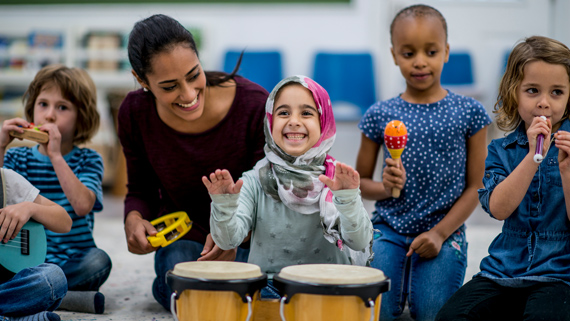
It's about including people of all backgrounds, abilities, and identities, and making sure everyone has the same opportunities to take part in something. When we show inclusion, we are being inclusive.
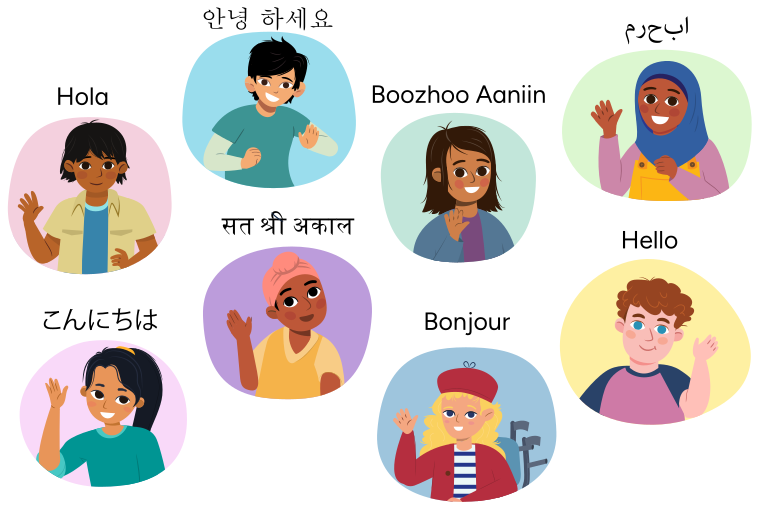
The behaviours, beliefs, traditions, and ways of living of a particular community, country, faith, or other group.
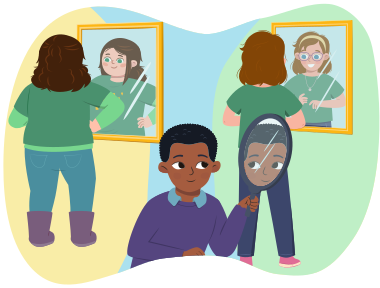
All the different parts of you that make you who you are. Including, your values, ethnicity, culture, religion, personality, hobbies and much more.
Sharing different parts of ourselves, our identity and culture is special. It’s important to share with people who listen, understand and respect us.
Respect is an important part of being inclusive. Respect means showing people you value and accept them for who they are. Even if they seem different from you.
When we respect someone, we care about how words and actions will make them feel. When we respect someone, we help them feel safe. Respect shows kindness and builds trust.

Pause and Reflect
Pause and reflect
What are some examples of respectful actions?
Think about your own experiences with people you trust and respect. How do you feel when you are included?

Reading for information
Explore the graphic below to learn more about the characteristics of a biography.
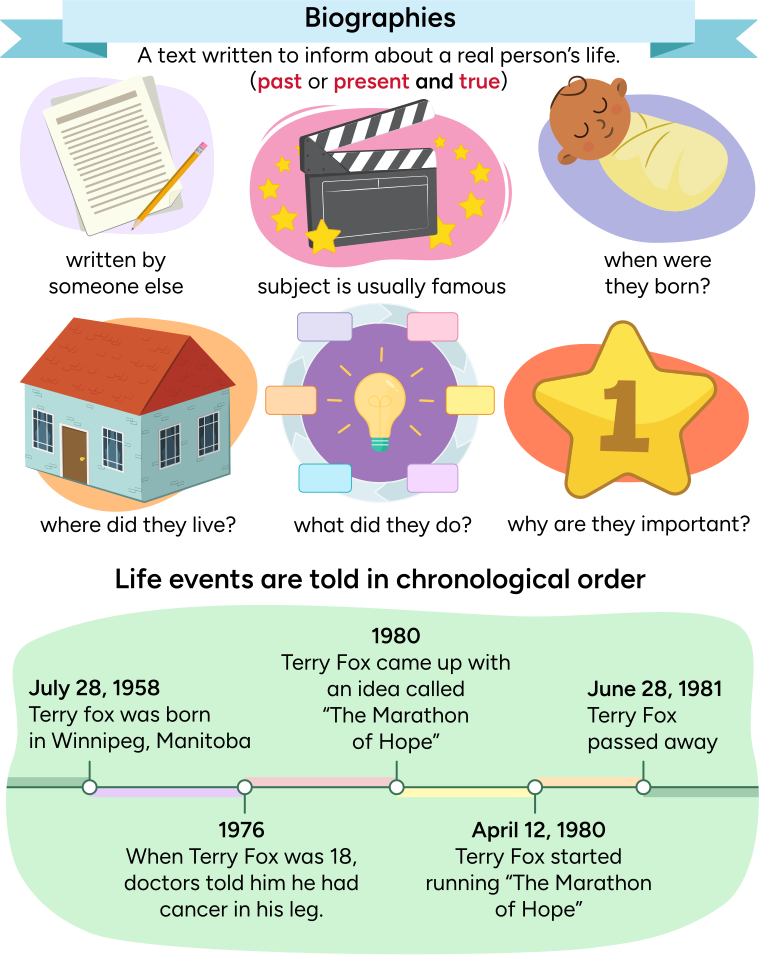
An infographic that explains the characteristics of a biography. The following information is presented in this infographic.
Title: Biographies
Definition of biography: a text written to inform about a real person's life (past or present and true).
Characteristics of a biography: they are written by someone else, the subject is usually famous, and it provides answers to the following questions: when were they born; where did they live; what did they do; why they're important?
Life events are told in chronological order.
An example timeline shows the chronological events of Terry Fox's life in the following order:
July 28, 1958: Terry Fox was born in Winnipeg, Manitoba.
1976: When Terry Fox was 18, doctors told him he had cancer in his leg.
1980: Terry Fox came up with an idea called "The Marathon of Hope"
April 12, 1980: Terry Fox started running "The Marathon of Hope"
June 28, 1981: Terry Fox passed away.
We will be exploring short biographies of Ibtihaj Muhammad and Asma Elbadawi to learn about how they have advocated or stood up and spoke out for inclusion.
A biography is an example of a nonfiction text. The purpose of a biography is to inform the reader about a real person’s life.
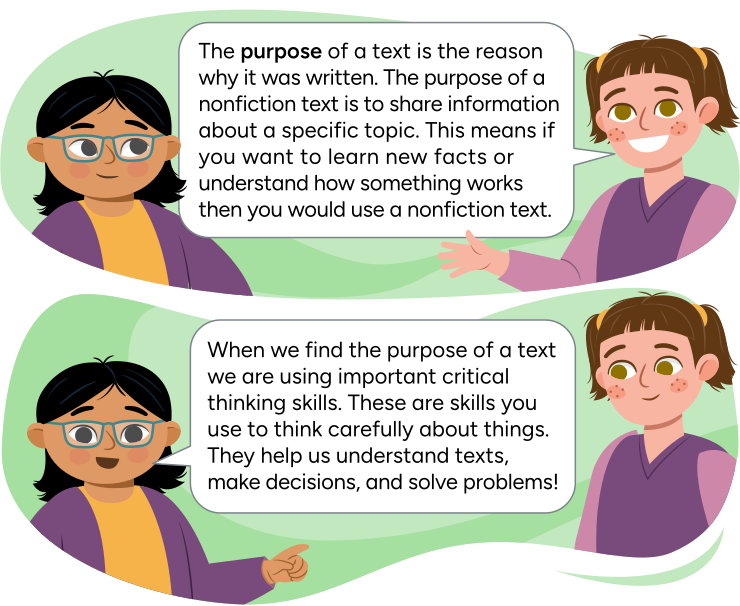
Clara and Ave are talking.
Clara says, "The purpose of a text is the reason why it was written. The purpose of a nonfiction text is to share information about a specific topic. This means if you want to learn new facts or understand how something works then you would use a nonfiction text."
Ava says, "When we find the purpose of a text we are using important critical thinking skills. These are skills you use to think carefully about things. They help us understand texts, make decisions, and solve problems!"
A biography also includes the person’s life events in chronological order. This means putting events or things in the order they happened, from the beginning to the end or to the present day. You can also think of it as a timeline.
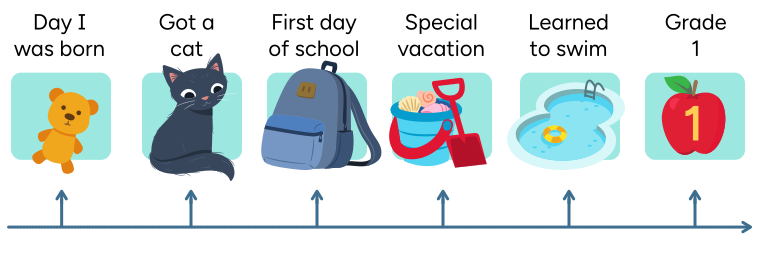
An illustration that shows an example of a person's life events arranged in chronological order. The following events are arranged in order from left to right of the timeline:
day I was born
got a cat
first day of school
special vacation
learned to swim
grade 1
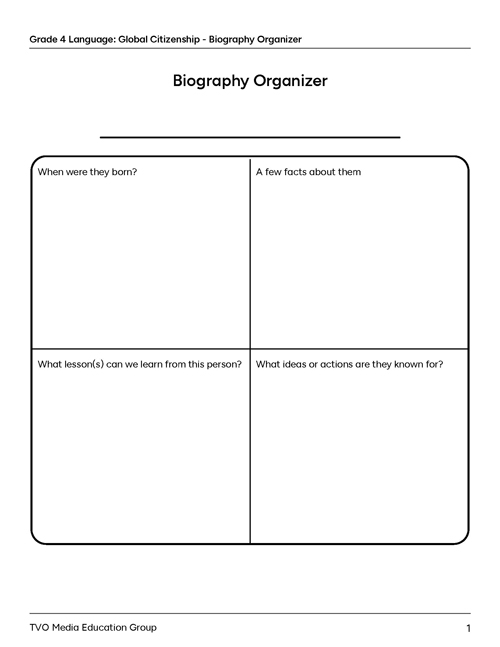
As you read, use the following questions to help you record important information about Ibtihaj Muhammad and Asma Elbadawi.
- Where were they born?
- What are a few facts about them?
- What ideas or actions are they known for?
- What lesson(s) can we learn from this person?
Complete the fillable and printable Biography Organizer in your notebook or using the following document. If you would like, you can use speech-to-text or audio recording tools to record your thoughts.
Ibtihaj Muhammed
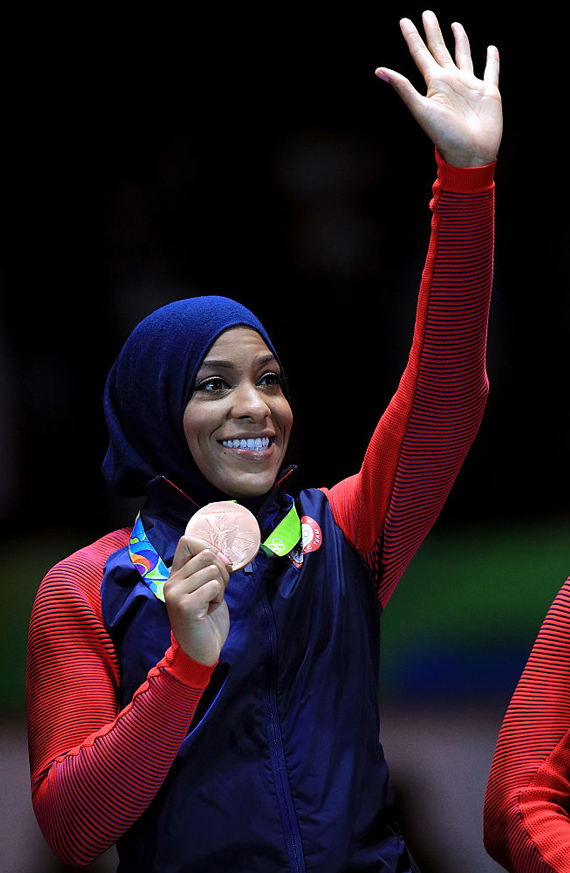
Ibtihaj Muhammed is a Black Muslim athlete, writer, businesswoman and speaker. She was born in Maplewood, New Jersey, United States and went to Duke University.
In 2016, she won an Olympic bronze medal in fencing where she also became the first Muslim American woman to wear a hijab while competing for the United States.
In 2018 she published the nonfiction book, a memoir, Proud: My Fight for an Unlikely American Dream.
In 2018 she published the nonfiction book, a memoir, Proud: My Fight for an Unlikely American Dream.
In 2019, she published a story called The Proudest Blue: A Story of Hijab and Family, in 2023 she published the sequel story The Kindest Red: A Story of Hijab and Friendship and in 2024 she published The Boldest White: A Story of Hijab and Community. The stories feature Muslim characters and teach lessons about how we can be proud of ourselves and our background, choose kindness towards ourselves and others, and overcome our fears to reach new goals.
Explore the following quote from the story The Proudest Blue. What do you think it means? How does it make you feel?
“Don't carry around the hurtful words that others say. Drop them. They are not yours to keep. They belong only to those who said them.”
– Ibtihaj Muhammad
Asma Elbadawi
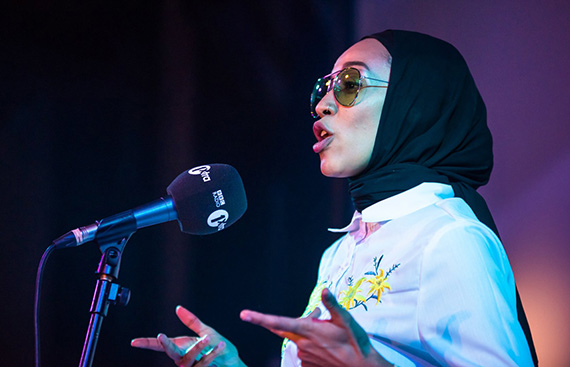
Asma Elbadawi is a Sudanese British (born in Sudan and raised in England) spoken word poet, activist and basketball player and has a Master’s degree in Visual Arts.
She is passionate about poetry and enjoys all parts of the creative process from brainstorming, learning and researching and finally creating.
In 2018, Asma and a group of women from around the world came together created a campaign called #fibaallowhijab which advocated that the International Basketball Federation (FIBA) change its rules to allow hijabs and other religious headwear to be worn in professional basketball.
Explore the following quote. What is Asma encouraging others to do? Why?
“If I have to give advice to young people, I will always say this: The only way that you can change and make a change is by being the first because someone else is going to come who is going to see you there and is going to be able to identify with you. And they will also join in, and before you know it, that’s how you create a diverse community where people are working together or playing sports together, or just doing the things that they love in a space that they enjoy being in.”
– Asma Elbadawi

Did You Know?
Did you know?

A hijab is a headscarf, worn proudly, as part of the Muslim faith. Many different people wear special clothing, like a hijab, to represent their faith. Special clothing can be one way to proudly show your identity.
Why do you think it is important to be inclusive?
How are Ibtihaj and Asma advocating for inclusion?
Share your thoughts with a partner, if possible.
Whose point of view?
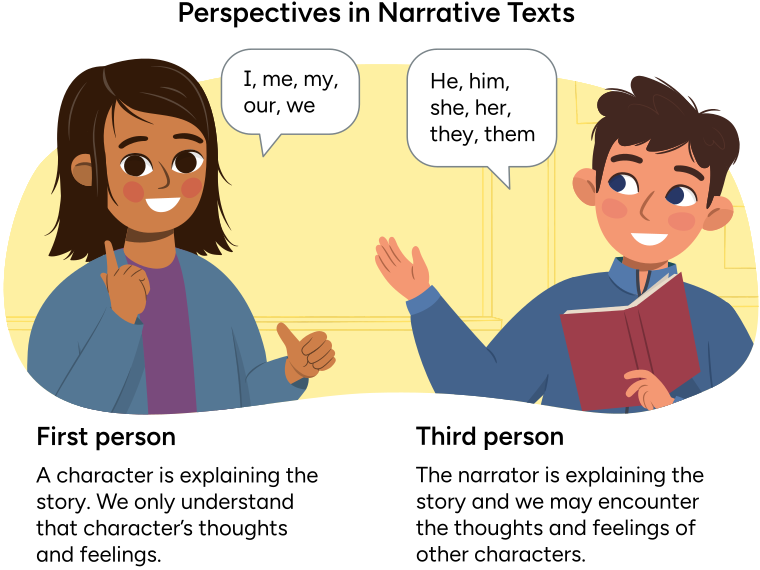
An illustration that explains the difference between first person
and third person, with the title "Perspectives in Narrative Texts."First person: A character is explaining the story. We only understand that character's thoughts and feelings. First person texts use words like I, me, my, our, we.
Third person: The narrator is explaining the story, and we may encounter the thoughts and feelings of other characters. Third person texts use words like he, him, she, her, they, them.
Did you notice that the biographies were written in third-person point of view?
The third-person point of view is used in a biography because the author is writing about someone else. Using this point of view also makes it easier to include details from different people and viewpoints.
This can help create an all-around bigger picture of the person’s life.
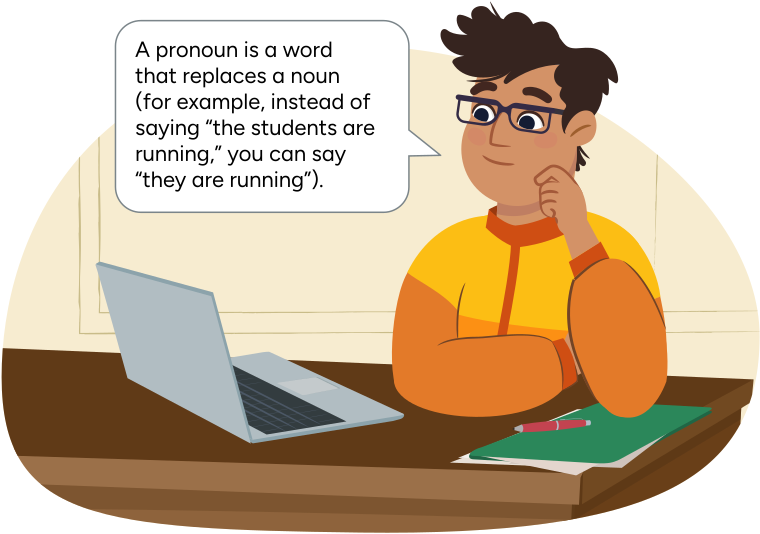
A third-person point of view uses third-person pronouns like, “she,” “her,” “herself,” “he,” “his,” “himself,” and “they,” “them,” “themselves.”
Explore the following excerpt. Can you identify the pronoun used?
Ibtihaj Muhammed is a Black Muslim athlete, writer, businesswoman and speaker. She was born in Maplewood, New Jersey, United States and went to Duke University.
Press Answer to reveal the pronoun used in the excerpt.
Ibtihaj Muhammed is a Black Muslim athlete, writer, businesswoman and speaker. She was born in Maplewood, New Jersey, United States and went to Duke University.

Your turn!
Finding the most important ideas in a text is called evaluating information. You have evaluated a short biography of Ibtihaj Muhammad and Asma Elbadawi.
Now, it’s your turn to take the information that you recorded and build on it.
Research opportunity
When doing research on the Internet, it is important to stay safe and stay focused. You can use the acronym TRUST to guide you as you do your research.
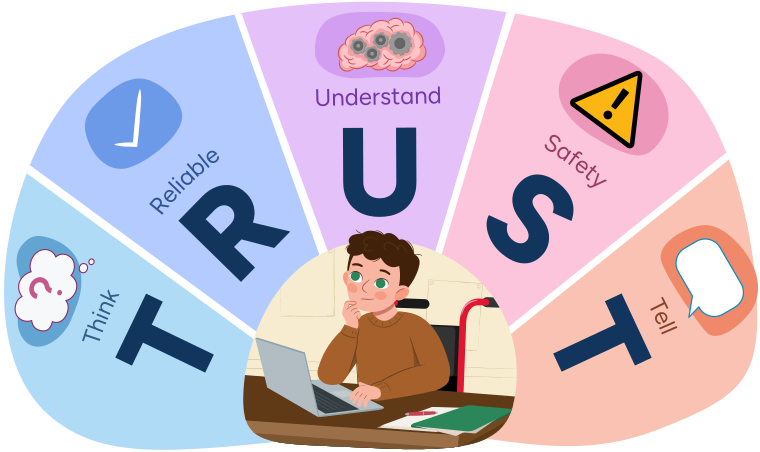
Press the following tabs to learn more about using the internet for research.
Think about your topic and develop specific questions to get better research results.
For example, if you’re working on the topic of recycling, you might start with a general question and make it more specific before beginning your research.
- General question: Why is recycling good for the environment?
- Specific question: How does recycling help protect marine wildlife?
Be patient while doing your research. Go through each website carefully and take notes using a graphic organizer or notebook. Record the websites used for specific information – it’s important to give credit to the creator of the content.
Consult more than one resource to help you determine if the information you gather is accurate and true.
Note: Research can take time. It helps to be focused and calm! Taking a break can refresh our thinking and help us process new information.
It’s important to use reliable sources so that you can put together accurate and up-to-date information about your topic.
Websites ending with .com, .org, and .net can be purchased and used by anyone.
The ending .org is usually used by non-profit organizations, which may be trying to persuade rather than educate.
Websites ending in .edu are reserved for colleges and universities. Canadian websites have a .ca ending.
Consider the following questions when you are doing your reliability check. You might also ask a trusted adult or a peer for help if you are uncertain about a website.
- When was the resource published? (This might help you determine if the information is current.)
- Who created the resource/website? What is their educational background or work experience?
- Who is the intended audience?
- Who benefits from this information being shared?
- Whose perspectives are represented? Whose perspectives are missing?
Do you understand all the words on the site? Can you decode their meaning?
Does what you’re reading make sense?
If not, it’s okay. Consider trying a different source. It’s important for you to understand the information that you read so that you can put it in your own words.
It’s important to stay safe while doing online research. If a website asks you for any personal information, close it and try a different website.
Personal information could include asking for your full name, email address, phone number, home address, photos, or school name. Do not provide any personal information and close the website.
Does the site have pop-up windows? These windows usually ask the user to click to “win a prize” or “check out information.” Do not click on the pop-ups and close the website.
Throughout the research process, feel free to check in with a peer or trusted adult.
If there is anything specific that makes you feel uncomfortable or worried while you are doing your research, consider the following tips:
- pause and take a break
- speak to a trusted adult
Create!
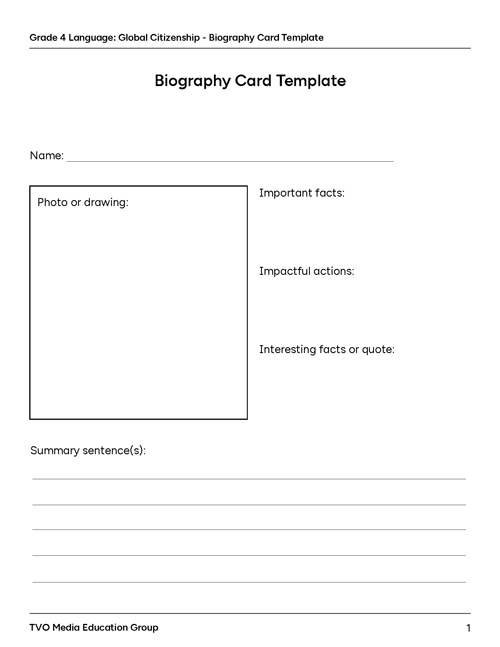
Next, summarize the information you have recorded to create a short informational text about Ibtihaj or Asma.
Be sure to include:
- a photo or drawing of them
- one to two sentences summarizing who they are
- three to four important facts about them
- one or more actions that they have taken that have made an impact
- one to two interesting facts about them or a quote by them
You may use the following biography card template or share your information using another format.
Complete the fillable and printable Biography Card Template in your notebook or using the following document. If you would like, you can use speech-to-text or audio recording tools to record your thoughts.
Reflection
How do you feel about what you have learned in this activity? Which of the next four sentences best matches how you are feeling about your learning? Press the button that is beside this sentence.
I feel...
Now, record your ideas about your feelings using a voice recorder, speech-to-text, or writing tool.