Learning Goals
We are learning to…
- explore the concepts of identity, self, and sense of belonging in texts and demonstrate an understanding of the contributions, lived experiences, and perspectives of many different people, including those in Canada
- describe connections between ideas expressed texts, and our learning, experiences, ideas in other texts and in the world around us
- analyze informational texts by identifying main and supporting ideas
- draft texts of various forms using a variety of media, tools, and strategies
- create a personal voice in our texts, using to express our thoughts, feelings, and opinions about a topic
Success criteria
I am able to…
- explore the work of advocates and describe them using positive character traits
- analyze the issues that each advocate addresses and answer questions
- record ideas on how I might become an advocate and describe myself using positive character traits
Notice and wonder
Explore the following images.
What do these images have in common?
What action word could you use to describe all three images?
Description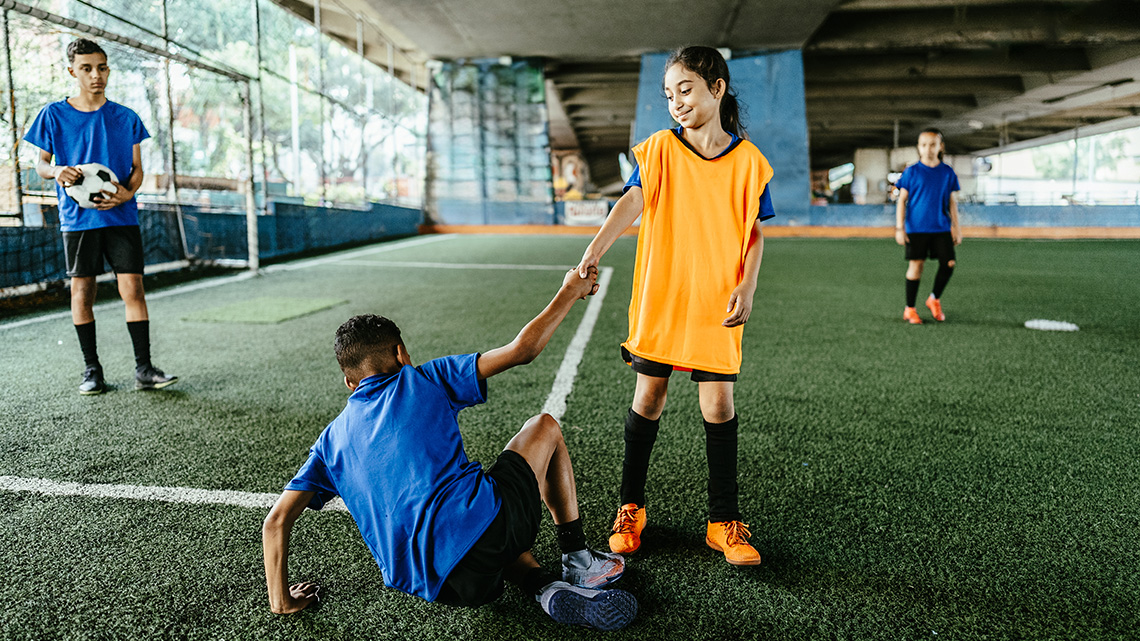
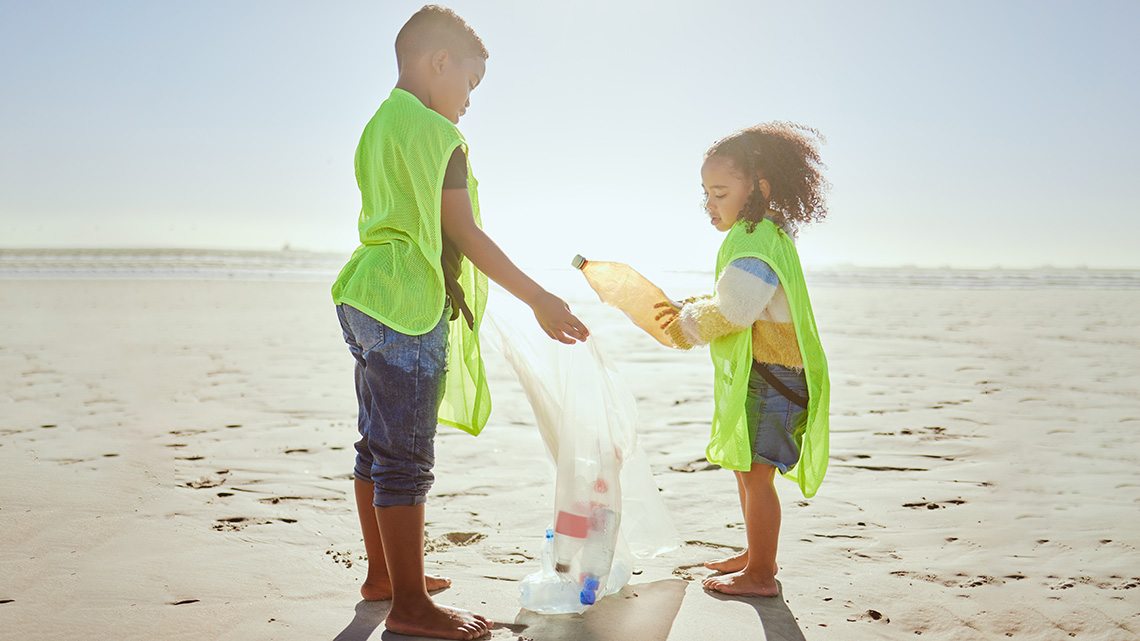
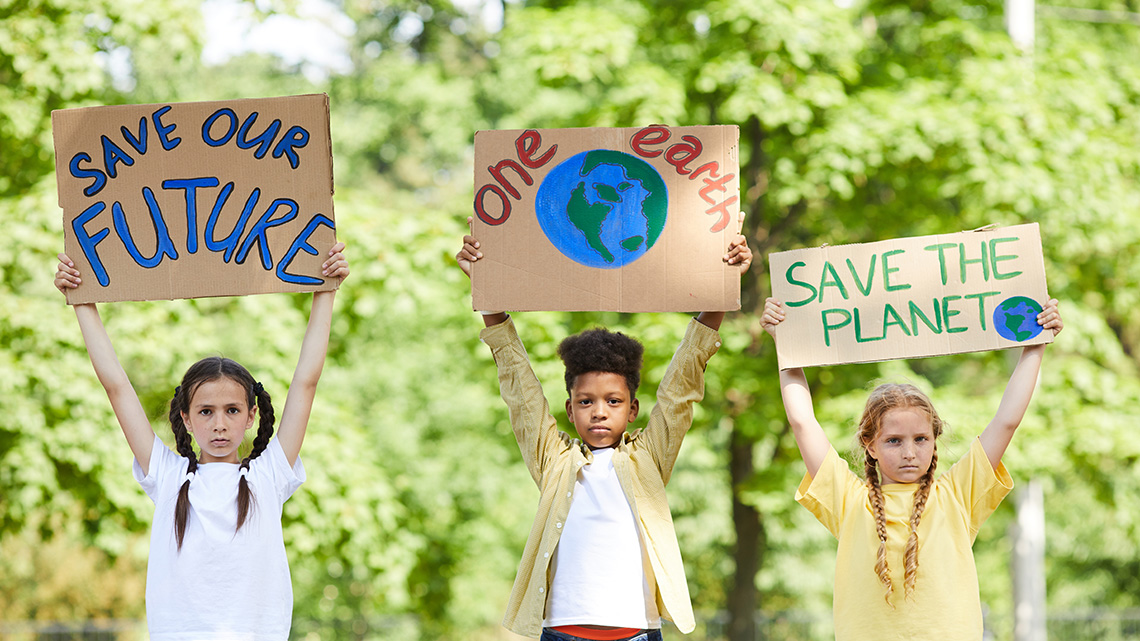
Image 1
Two young people on a field playing soccer. The two players are on opposite teams, one of the players is on the ground after a fall, the other player is helping them up.
Image 2
Two young children picking up plastic bottles on a beach.
Image 3
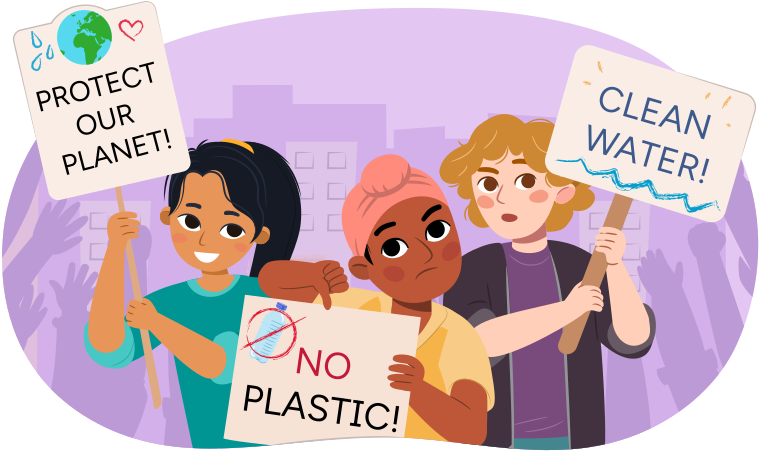
Three young people standing outside, holding signs they made to support saving the Earth.
One action word that you could use to describe all three images is helping. There are many different ways that people can help to support each other, their communities, and the planet.

Brainstorm
Brainstorm
Re-examine the images. How do you think the people in each of the images are helping?
If possible, share your ideas with partner.

What is an advocate?
Helping to support each other, the world around us and the planet is one way to be an advocate.
An advocate is someone who speaks up and supports the rights of people, places, animals, and environments. When you are an advocate, you use your voice to support and stand up for something or someone who might need help.
When we describe a person’s actions, we use verbs.
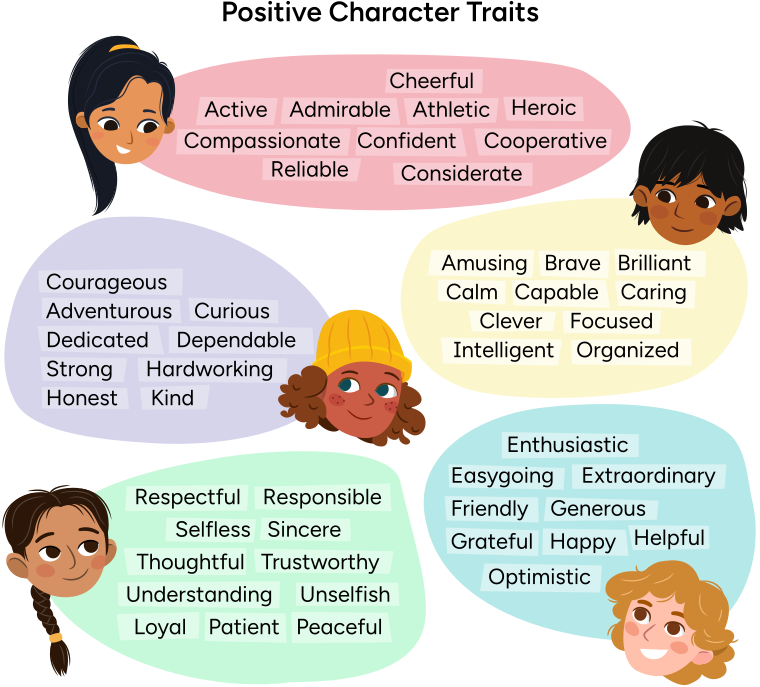
When we describe who a person is, or qualities that a person has, we use adjectives.
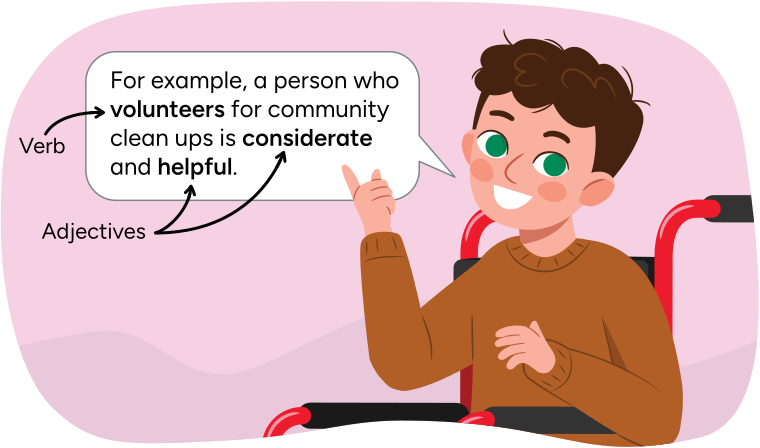
Check out the following image to explore some more character traits.
Let’s explore the non-fiction stories about a few real-life advocates and think about which character traits best describe them!
Non-fiction refers to different types of writing (i.e. biography, history etc.) that is based on facts, real-events, and real people.
Greta Thunberg
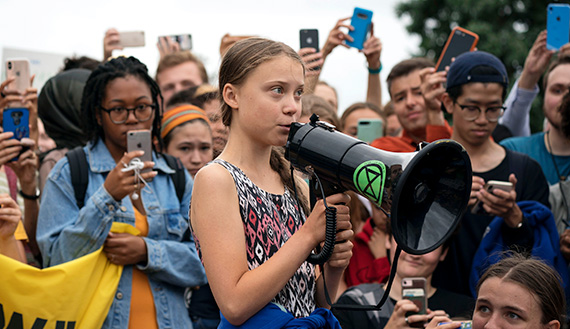
Greta Thunberg is a Swedish climate advocate. When she was 15 years old, she started a movement called Fridays for Future or School Strike for Climate.
Every Friday for the three weeks before the Swedish election, Greta did not go to school and instead sat outside of Sweden’s parliament building with a sign that said, “School Strike for Climate.”
She took this action to try and convince the government to pay attention to the issue of climate change. Her movement caught on quickly and each day more and people joined her, even after Sweden’s election was over. Her actions turned into a global movement and helped educate many people on how they could do their part to help address climate change. Over the past few years, Greta has made a commitment to limit her travel by airplane and become a vegan (not consume meat or animal products) to do her part to reduce greenhouse gases.
Greenhouse gases are gases that trap heat in the Earth’s atmosphere and raise the surface temperature of the planet. Too many greenhouse gases are leading to faster than usual changes to the Earth’s climate.
What are the issues or issue that Greta Thunberg is advocating for?
Press the Reveal for a possible answer.
Greta Thunberg advocates for education and action to address climate change.
Which adjectives might you use to describe Greta Thunberg?
Press the Reveal for a possible answer.
I would describe Greta Thunberg as courageous and responsible. She stood up for what she believed in and is doing her part to address climate change.
Wali Shah
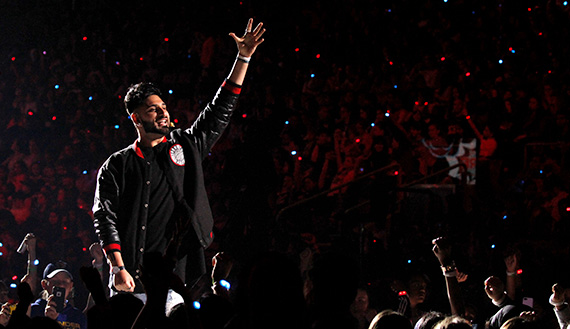
Wali Shah is a Pakistani Canadian poet and speaker. He grew up in Mississauga after his parents immigrated from Pakistan to Canada. He is the Poet Laureate of Mississauga. Wali uses poetry and songs to share thoughts and ideas about how to stop bullying and racism and how to create safe spaces for everyone.
He encourages others to use their gifts in writing, music, art etc. to support and include one another.
Poet Laureate is a poet who is officially honoured and recognized by the government.
An excerpt from the poem “We Will Rise” by Wali Shah
There’s a reason,
you are in that seat,
You were called and you came,
You know there is darkness in the world,
But it’s a world you can change.
Each of you are a candle,
And your gifts are the flame,
A spark of light,
That no dark can contain.
What do you think it means when Wali uses the phrase “Each of you are a candle, And your gifts are the flame”?
Press the Reveal for a possible answer.
I think he means that we all have the power to take positive action in our own way.
What are the issues or issue that Wali is advocating for?
Press the Reveal for a possible answer.
Wali advocates that we should support each other and stop participating in bullying and racist behaviour.
Which adjectives might you use to describe Wali Shah?
Press the Reveal for a possible answer.
I would describe Wali Shah as compassionate and clever. He creates powerful poetry that he shares to inspire and encourage people.
Nicholas Flowers
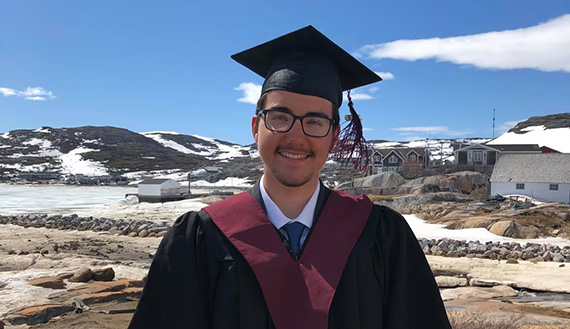
Nicholas Flowers is an Inuk environmental advocate. He developed great appreciation and respect for the land and the water from his Inuit elders while growing up in Nunatsiavut, northern Newfoundland, and Labrador. He is committed to giving back to the land and respecting it by using natural resources carefully.
He is especially interested in finding new sources of renewable energy to use in northern communities. This inspired him to build a traditional Inuit lamp called a qulliq for his Grade 12 science project. He built the qulliq out of soapstone and then powered it using seal oil. Seal oil is a renewable resource and available in Labrador.
Nicholas’ also developed an after-school science club for kids in kindergarten to grade 5 for which he won a $25,000 STEAM Horizon award to attend a Canadian university to continue studying environmental science and share his Inuit heritage.
What are the issues or issue that Nicholas was advocating for?
Press Reveal for a possible answer.
Nicholas advocates to find and use new sources of renewable energy in northern communities.
Which adjectives might you use to describe Nicholas Flowers?
Press Reveal for a possible answer.
I would describe Nicholas as respectful and dedicated. He is learning how to support his community and honouring his culture and traditions.
I am an advocate!
Now that you have explored the stories of different advocates, it’s time to think about you!
What kinds of words did you brainstorm to describe yourself and your character traits?
What would you like to advocate for?
An advocate is someone who speaks up and supports the rights of people, places, animals, and environments. When you are an advocate, you use your voice to support and stand up for something or someone who might need help.
Complete the fillable and printable Advocate Organizer in your notebook or using the following document. If you would like, you can use speech-to-text or audio recording tools to record your thoughts.
Press the Hint to reveal character traits you may use to describe an advocate.
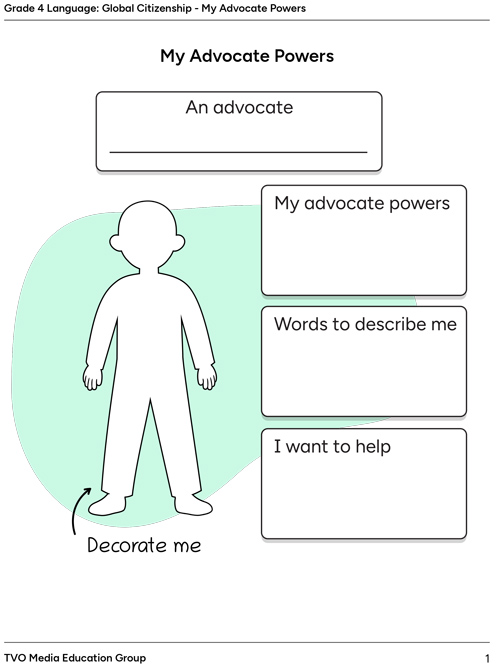
Next, use the following sentence starters to write one to two sentences for each prompt:
- An advocate is….
- I would like to help by…
- Some positive character traits that describe me are...
Record these sentences in your notebook or using a method of your choice.
If possible, share your advocate powers with a partner. Ask for feedback and provide your own feedback to your partner.
Reflection
How do you feel about what you have learned in this activity? Which of the next four sentences best matches how you are feeling about your learning? Press the button that is beside this sentence.

I feel...
Now, record your ideas about your feelings using a voice recorder, speech-to-text, or writing tool.