Learning goals
We are learning to…
- analyze messages in texts
- support our responses with evidence
- read aloud with expression
- identify features that support accessibility
Success criteria
I am able to…
- describe insights and messages about ableism and accessibility
- construct a three-part response using the A.P.E. strategy
- purposefully select words to emphasize with my expression, intonation, and volume
- design a space or event that is accessible to people with diverse needs
Thinking about play
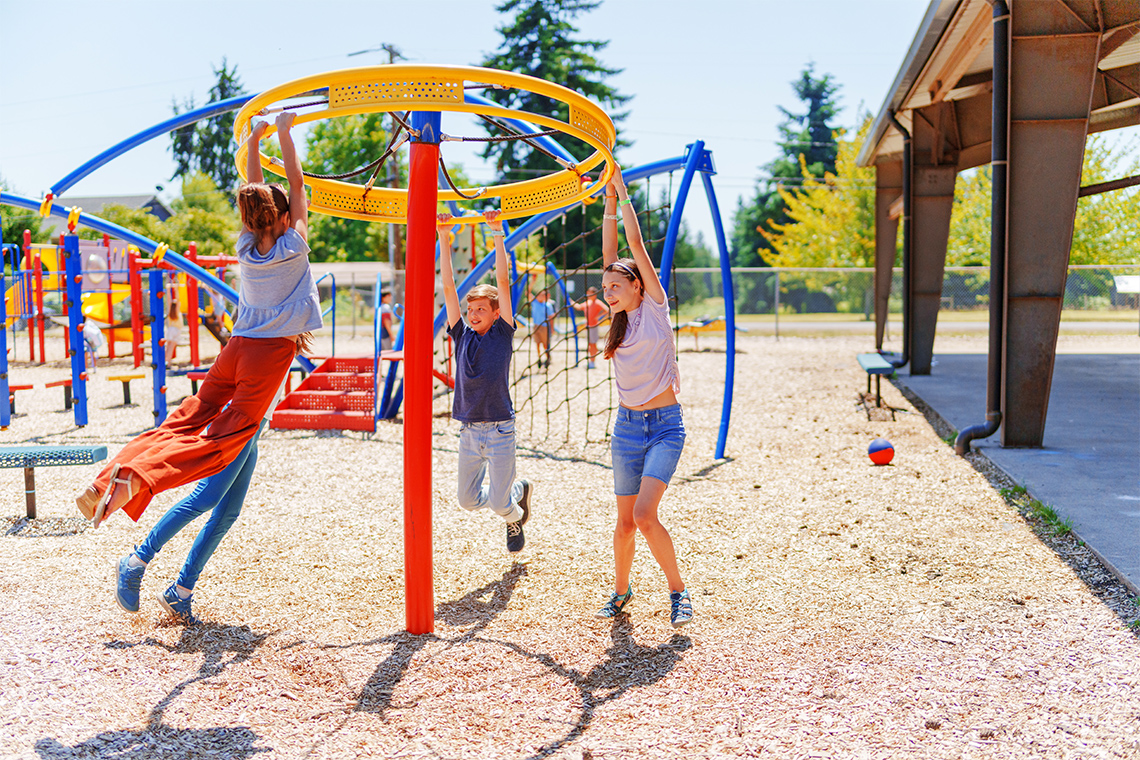
- Do you like going to parks or playgrounds?
- Do you have a favorite park or playground to visit?
- What parts of the playground are your favorite and why?
Children instinctively love to play, and play is important for children’s development. That's why it's so important that playgrounds are accessibleto all children.
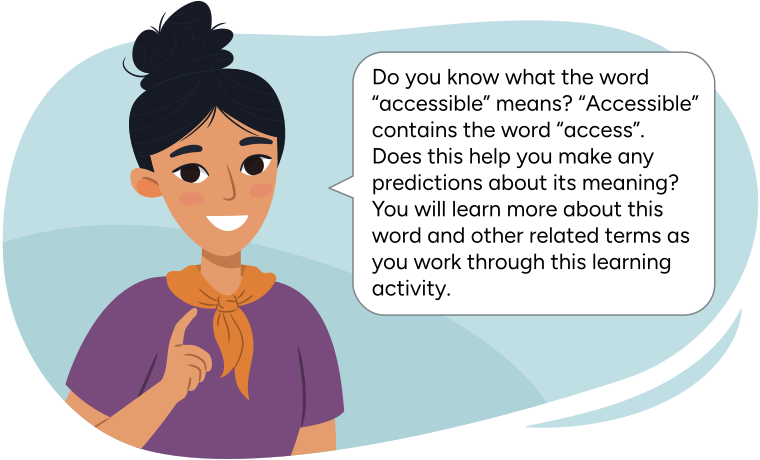
There are many organizations working to ensure all children have the right to play. One way to ensure this is by finding ways to overcome both financial and accessibilitybarriers.
Check out the following video of the Muriel and A.J. Billes Family Playground in Barrie, Ontario. What features that support accessibility can you identify?

Pause and Reflect
Pause and reflect
Did the video help you further understand what the word accessible means? What features that support accessibility did you identify in the video?
If possible, share your observations with a learning partner. You can also record them in your notebook or using another method of your choice
Press the Possible Answers button to check your answers.
Some of the features that support accessibility shown in the video:
- ramps
- spinning play structures flush with the ground and lots of internal space
- turf ground (instead of sand or woodchips) for easy movement through the park area
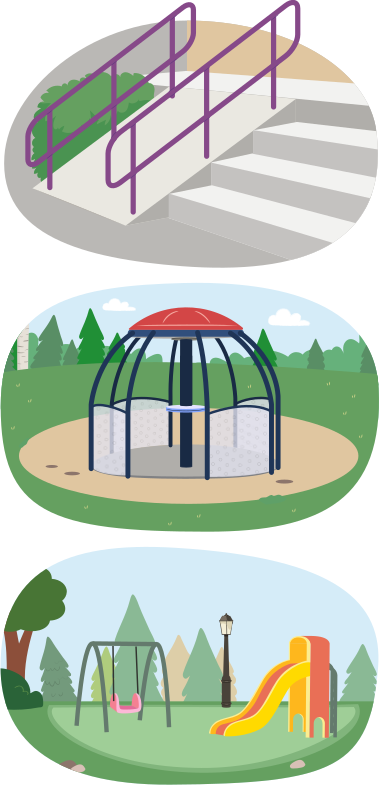
Aside from parks, can you think of other public spaces that are or should be accessible? What features that support accessibility do these spaces have or should they have?
In this learning activity, you will consider different aspects of accessibility and think critically about how spaces and communities can be made safe, fun, and accessible for all.
All kinds of bodies and minds
When you hear the word accessibilityor think of making something accessible, what do you think of?
Accessible means being easy to approach, reach, enter, speak with, or use.
Accessibility refers to the design of products, devices, services, or environments for people who experience disabilities. A way of making sure all people can access, move around in, and use the spaces and items we share.
Many people may think of physical items like ramps or elevators. Removing physical barriers is an important part of accessibility, but there are many different ways that a space, event, or community can be accessible or inaccessible.
Check out the following video and consider the perspective of aspiring architect and wheelchair racer Gabby Wright as she discusses some of the frustrations she’s experienced as someone who uses a wheelchair.
What were some of the challenges with accessibility that Gabby identified in the video?
When you are ready press the Answers button to check your response.
- rough (bumpy) ground surfaces
- accessible routes are often longer
- accessible routes can be harder to find
- accessible routes can be hard to navigate even though they are labelled accessible

Pause and Reflect
Pause and reflect
Take a moment and consider the space that you are currently in.
- How do people move through or interact with the space?
- Are there any parts of the space that might create a challenge to accessibility like Gabby mentioned in the video?
If possible, share your thinking with a partner.

Reading time!
The picture book All the Way to the Top by Annette Bay Pimental tells the real-life story of Jennifer Keelan-Chaffins, a young American girl and her story of advocating for the rights of people with disabilities, (called disability rights).
Let’s examine the beginning of the foreword from the book All the Way to the Top. A foreword is a short introduction at the beginning of a book written by someone other than the author. It tells the reader why the book is important or why they should read it. This foreword was written by the real-life subject of the book, Jennifer Keelan-Chaffins.
I was born with cerebral palsy, which means that I use a wheelchair to help me get around every day. From a young age, I learned that buses, museums, libraries, and even schools that were accessible to my able-bodied peers were not accessible to me because there were no wheelchair ramps. Imagine not being able to join in with your friends because you can’t get into the building where they’re meeting! I felt left out and did not like being separated from everyone, especially my younger sister, Kailee. As my family and I realized that people with disabilities were not treated as equally as able-bodied people, we decided to join the disability rights movement to help change things for the better.
Jennifer Keelan-Chaffins
Based on the information shared in the beginning of the forward, what predictions can you make about the book All the Way to the Top by Annette Bay Pimental?
Record your thinking in a notebook or using another method of your choice. If possible, share your thinking with a partner.
Next, read the following excerpt from the book All the Way to the Top by Annette Bay Pimental. An excerpt is a short section or a part of a longer piece of work.
Reflecting on learning
What were some new ideas about accessibility that came up for you during this reading?
If possible, share your observations with a partner. You can also record them in your notebook or using another method of your choice.
You might choose to start your observations with sentence starters like this:
“Something I had never thought of before is…”
“ (Blank) was new learning for me because…”

Vocabulary routine
There has been a lot of key vocabulary included in this learning activity so far. Let’s review some of to build our understanding.
In the following activity, match each term to its meaning. When you are done, record the pairs in your vocabulary notebook or using another method of your choice.

Social Emotional Learning
Social emotional
1-2-3 disconnect!
Let’s take a break and try an offline activity. For example, you can read a few pages of a book, doodle, solve a puzzle, move around the block, etc.
Supporting responses with text evidence
Let’s apply what we’ve learned so far to answering questions with details from the text.
Examine the following comprehension question and sample answer.
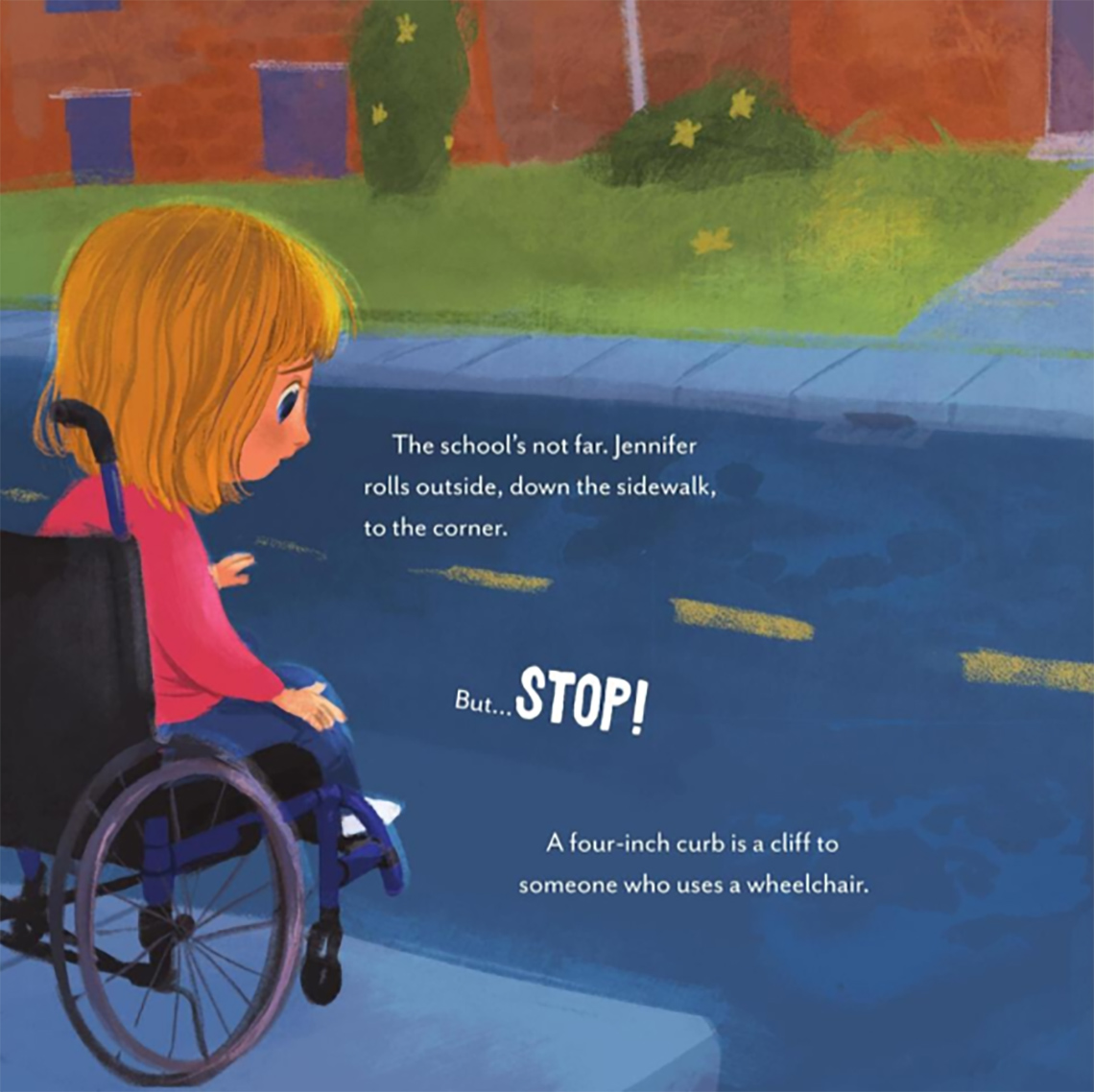
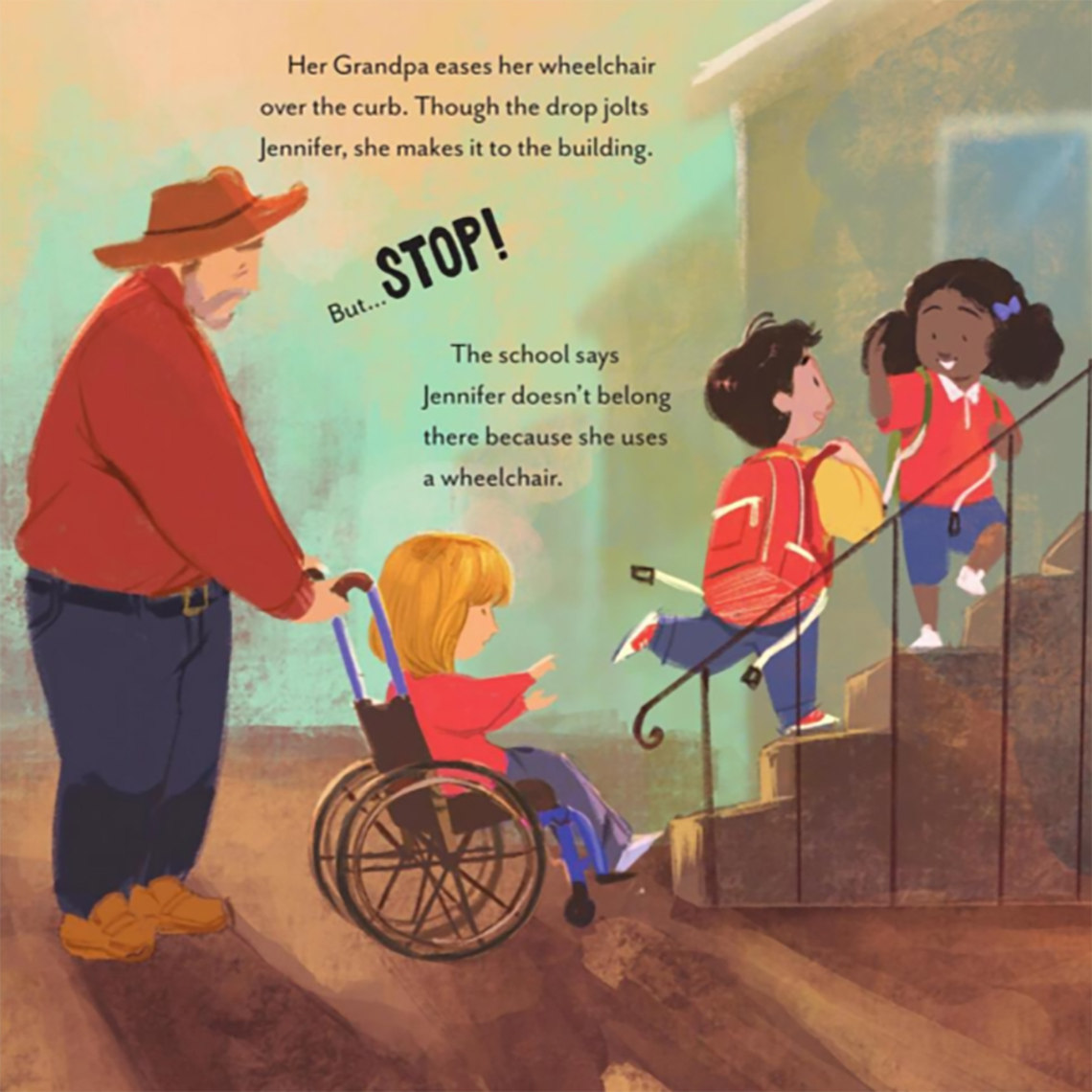
Question: In the excerpt from the book All the Way to the Top, what is going on in the scenes? What is the author trying to communicate?
Answer: Jennifer can’t get around or up the stairs in her wheelchair. The spaces are not accessible to her.
Do you think the answer has enough detail? Does the answer show that someone put a lot of thought into it? Does it show critical thinking about what was being asked?
The answer is very short, and it doesn’t include many details or specific examples from the text. Because of this, it doesn’t show deep thought or critical thinking. It doesn’t prove itself to be a complete answer to the question.
As a language student, you will often be asked to answer a question and support it with evidence or examples from the text. Let’s practice how to answer a question with a structured response, supported with evidence.
The strategy we will use is sometimes known as A.P.E.
| Answer | Prove & provide | Extend or explain |
|---|---|---|
| Answer the question directly using parts of the question in your answer. | Answer the question directly using parts of the question in your answer. | Either explain how your text evidence proves the answer OR extend your answer by offering a comment or personal connection. |
By following this structure, your responses will be more detailed, supported by evidence, and reflect your individual thinking as a learner.
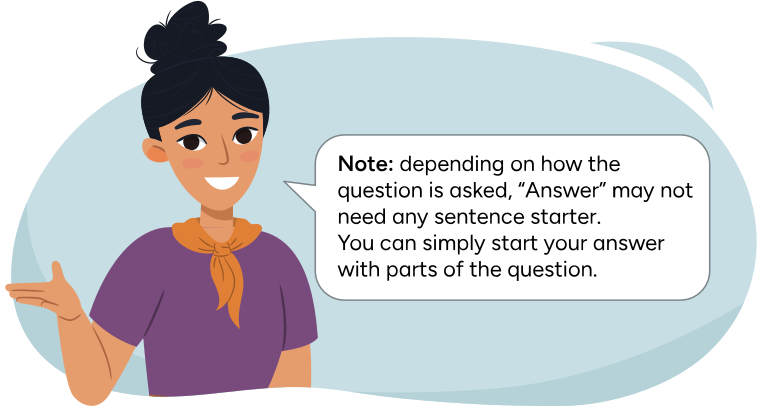
Here are some phrases that could be used to begin each part of the response.
| Answer | Prove & provide | Extend or explain |
|---|---|---|
|
|
|
Applying the strategy
Let’s check out what a model answer to the same question could be like using the A.P.E. strategy.
Question: In the excerpt from the book All the Way to the Top, what is going on in the scenes? What is the author trying to communicate?
Answer using A.P.E. strategy: In the scenes from All the Way to the Top, the author is showing us that the spaces and environments that Jennifer is in are not accessible to her. For example, the first page shows her stopped at the edge of the sidewalk and she can’t cross the road because the sidewalk is a lot higher than the road. On the second page, Jennifer can’t get into her school because there are only stairs and her wheelchair can’t get up them easily. The author is trying to tell us that many everyday spaces are not accessible to people who experience disabilities. I also think the author is trying to tell us this makes Jennifer feel like she doesn’t belong.
Try it!
Now it’s your turn!
Examine the following pages from the end of the book All the Way to the Top by Annette Bay Pimental.
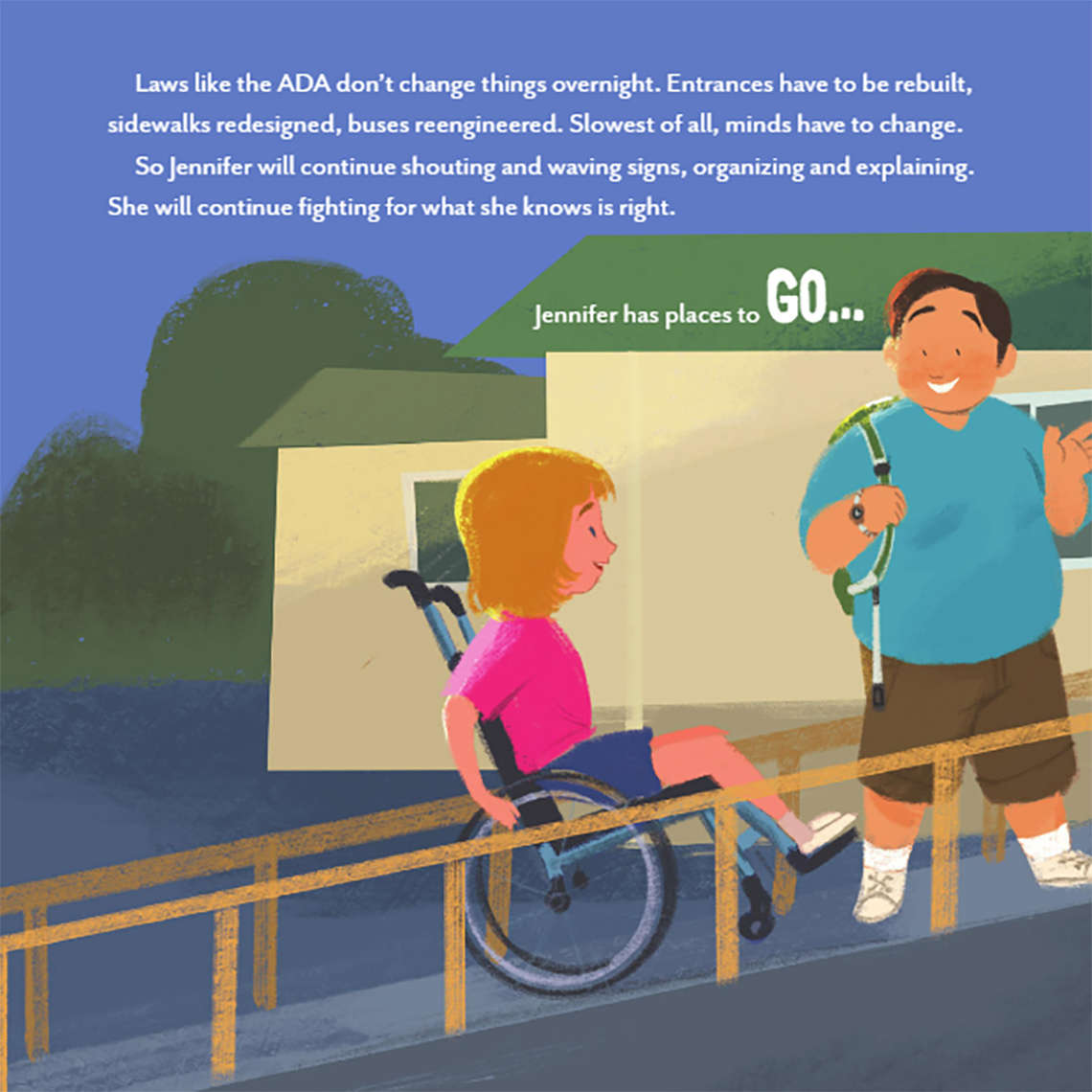
A young girl wheeling herself up on a ramp. There is and adult in front of her. The text on this page reads: Laws like the ADA don’t change things overnight. Entrances have to be rebuilt, sidewalks redesigned, buses reengineered, Slowest of all minds have to change. So Jennifer will continue shouting and waving signs, organizing and explaining. She will continue to fight for what she knows is right.
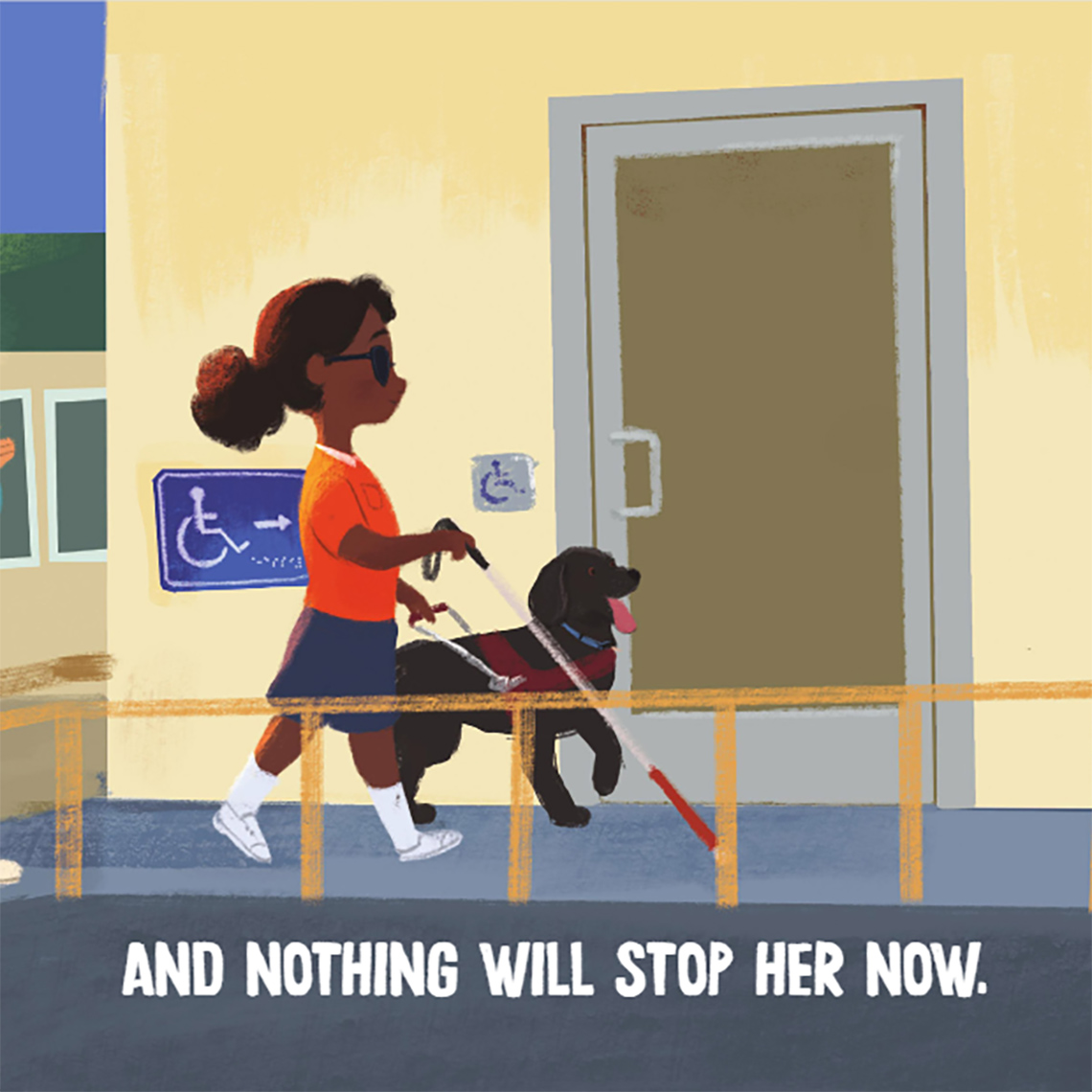
Use the A.P.E. strategy to write your own response to the following question:
- In these pages from the book All the Way to the Top, what is going on in the scene? What is the author trying to communicate?
Record your answer in your notebook or using another method of your choice.
When you are done, self-check that your response has all three required parts of the A.P.E. strategy.
Use the following self-assessment checklist to review your progress:
| Criteria | Working On It | Got It |
|---|---|---|
| I answered the question directly using parts of the question in my answer. | ||
| I can prove my answer with evidence from the text. | ||
| I can explain how my text evidence proves the answer OR extends my answer by offering a comment or personal connection. |
Reading fluency routine!
Let’s explore the foreword of the book We Move Together by Kelly Fritsch, Anne McGuire, and Eduardo Trejos. This is another example of a book about disability rights that explores accessibility and how different people move.
Read the forward out loud:
All bodies are unique and essential. All bodies are whole.
All bodies have strengths and needs that must be met.
We are powerful not despite the complexities of our bodies,
but because of them. We move together, with no body
left behind. This is disability justice.
Aurora Levins Morales and Patty Bern
Pause to notice which words you naturally emphasized with your voice. If you are not sure, read it a second time, slowly, paying attention to where your voice changes.
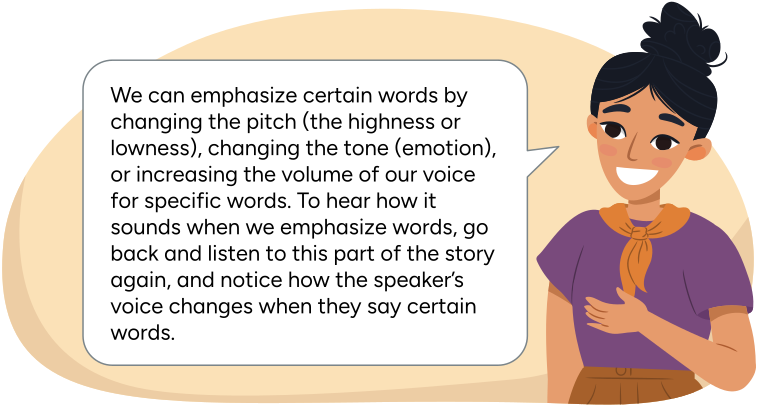
Now, read the foreword out loud again. This time choose specific words to emphasize that could give the text more meaning.
Pause and Reflect
Reflection
- How did changing your pitch, tone or volume add to the impact of the passage?
- Does the meaning of the message change depending on which words you emphasize?
Use the following checklist to self assess your progress with adjusting expression and intonation.
| I Can Modify My: | Working On It | Got It |
|---|---|---|
| Pitch | ||
| Tone | ||
| Volume |
Putting it all together
As global citizens, we can create safe and equitable communities through spaces and events that are accessible to everyone. For this consolidation task, you will apply critical thinking and creativity to reimagine and redesign a familiar space or event to make it more accessible.
Choose one of the three suggestions or create your own!
Press the following tabs to view each suggestion.
You can communicate the reimagination of your option in any way that you feel best suits your task. Some suggested formats are:
- a labeled drawing or diagram
- a written list or description
- a digital presentation with information
- a video or audio recording

Connections
Connections
How could the skills practiced in this design task be applied in your everyday life, such as within your school or local community?
Reflection
As you read through these descriptions, which sentence best describes how you are feeling about your understanding of this learning activity? Press the button that is beside this sentence.

I feel...
Now, record your ideas using a voice recorder, speech-to-text, or writing tool.