Learning goals
We are learning to…
- analyze and use critical thinking to support understanding and communication
- make connections between the knowledge and skills developed in this grade and everyday life
- explain themes explored in First Nations, Métis, and Inuit cultures to demonstrate an understanding of the varied identities, perspectives, relationships, legacies, truths, and ways of knowing, being, and doing
- generate and develop ideas connected to the topics of diversity, equity, and inclusion
Success criteria
I am able to…
- make predictions about the meaning of new vocabulary based on contextual clues and morphological knowledge
- use knowledge of words and punctuation to help identify the author’s message and show my understanding of the meaning of texts
- write a poem that shows my understanding of global citizenship
Who is a global citizen?
Explore the following images. What do they have in common? What do you wonder about the images?
Record your ideas orally, digitally, in print, or using another method of your choice.
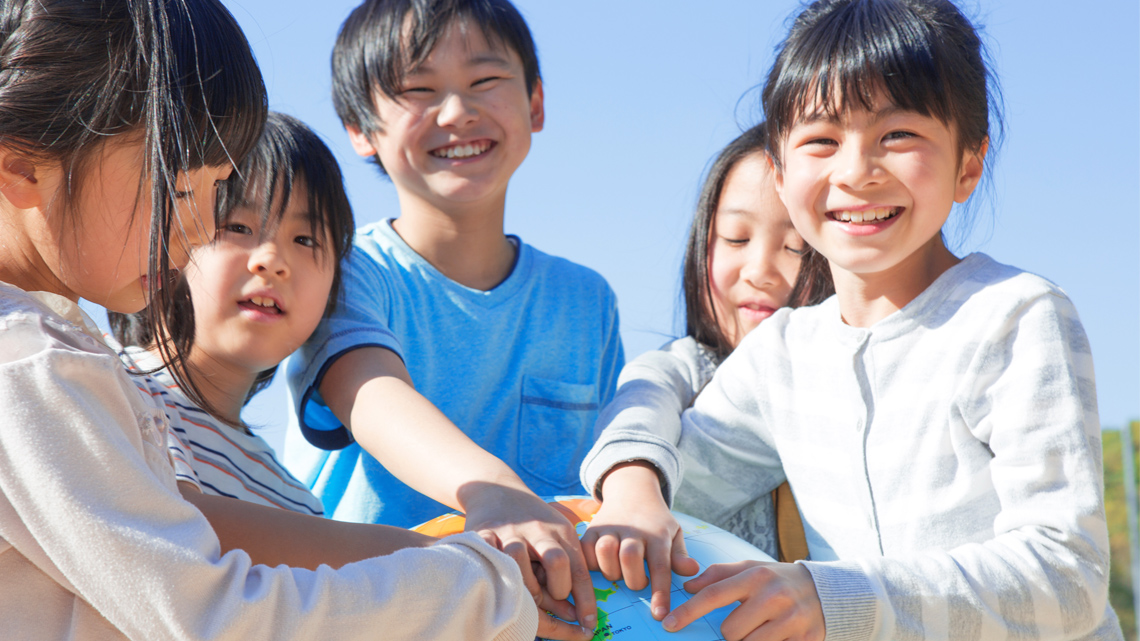
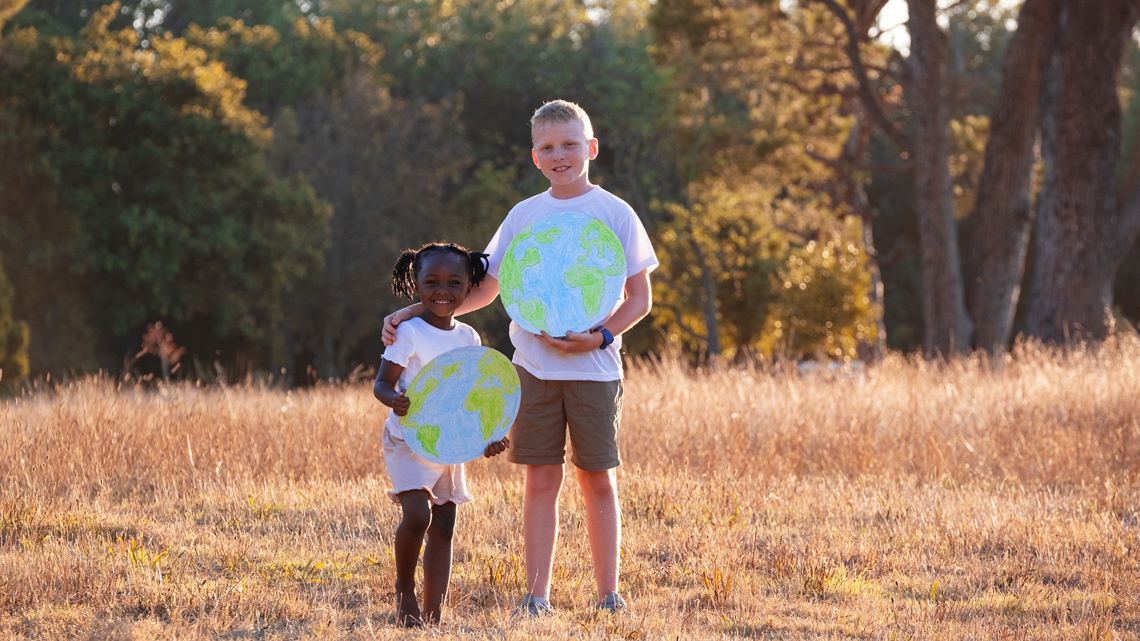
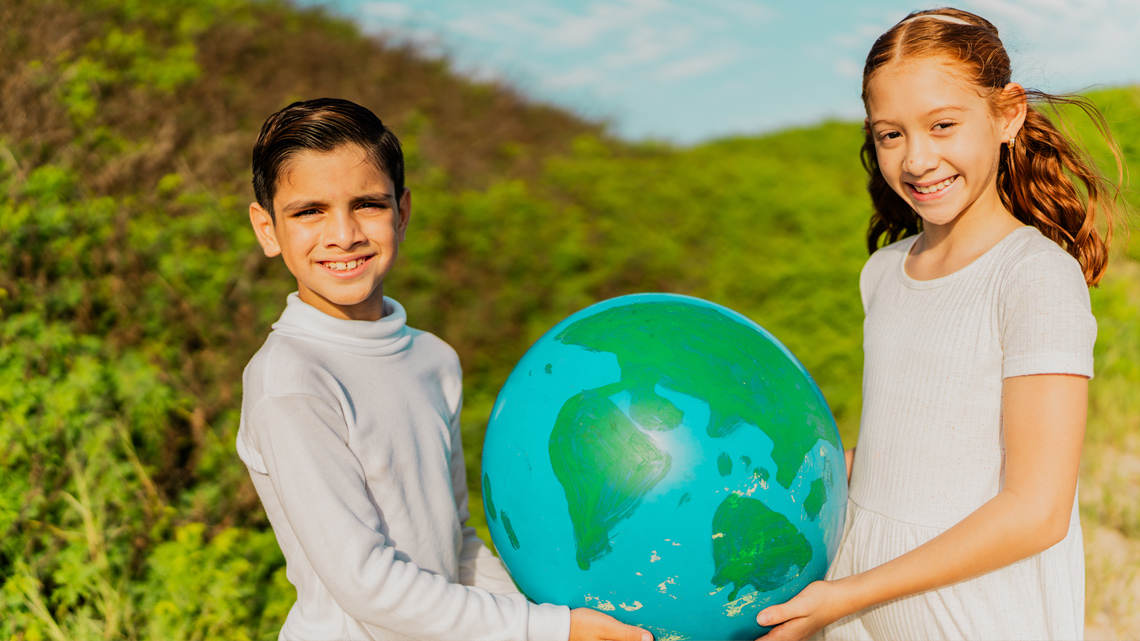
You may have noticed that the images show people from diverse global communities concerned for the well-being of the world. When people come together with the goal of making the world a more equitable , inclusive , and sustainable place for all – these people are known as global citizens.

Student Success
Let’s think!
What does the term “global citizen” mean to you? If possible, share your thinking with a partner.
If global citizens are concerned with global issues, what are some actions that they might take to help?
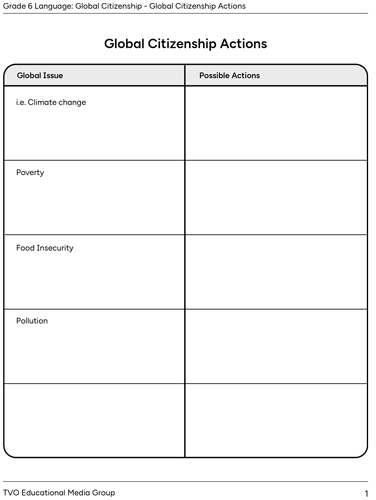
Using the following fillable and printable graphic organizer, Global Citizenship Actions, in your notebook or another method of your choice, brainstorm what actions global citizens might take. For each global issue, list some actions that global citizens could take to help with the issue. Some global issues have been included but feel free to add more of your own.
If you would like, you can use speech-to-text or audio recording tools to record your thoughts.
Global citizenship
A global citizen recognizes that they belong to a shared global community with the responsibility to contribute to the well-being of the world. They try to maintain and defend both their rights and the rights of others while addressing a variety of global issues that affect both the natural environment and human societies.
Let’s preview some vocabulary connected to global citizenship before we continue.
Exploring global issues
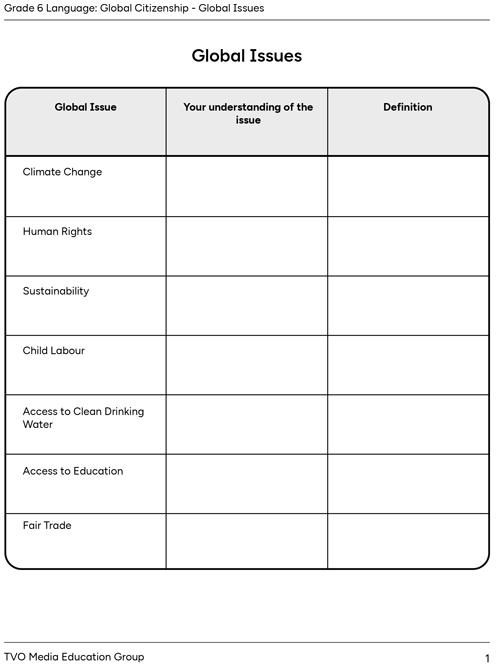
Here is a list of some global issues that continue to impact the world. Jot down any ideas that come to mind for each. If needed, you may use a dictionary.
Complete the fillable and printable Global Issues document in your notebook or using the following document. If you would like, you can use speech-to-text or audio recording tools to record your thoughts.
Our responsibilities as global citizens
In our journey towards becoming global citizens, an understanding of Indigenous perspectives about the environment can lead to more empathy and respectful behaviour towards ourselves, others, and the Earth. The Seventh Generation Principle forms the basis for making decisions for many First Nations Peoples across Turtle Island (the land we now call North America), including the Haudenosaunee, the Dene, and many other nations.
Explore the following video with Dr. Nicole Redvers, who is a member of the Deninu K’ue First Nation in the Northwest Territories and an Associate Professor at Western University.
Connecting to our responsibilities
Record your answer to the following questions in a notebook or using another method of your choice. If possible, discuss your answers with a partner.
- In your own words, what is the Seventh Generation Principle?
- Why is it important to learn about different peoples’ knowledges, experiences, and perspectives? For example, how does learning about the Seventh Generation Principle help us to be better local and global citizens?
- How might the Seventh Generation Principle help solve some of the global issues discussed previously?
If you need a hint to help you better understand the Seventh Generation Principle, press the Seventh Generation Principle button.
The Seventh Generation Principle is a way of making decisions that considers that all decisions made today should take into account the wisdom of the previous seven generations and the impact on the sustainability of the planet and people seven generations into the future.

Social Emotional Learning
Social emotional learning
You’re doing great! It’s time for a short break!
Exploring a global citizen’s mindset through texts
Let’s read the following unnamed poem by Sa’adi, a thirteenth century poet from Persia (region in the world that is part of modern-day Iran). Although written centuries ago, it continues to be read and quoted at modern events concerned with global citizenship.
As you read, think about what message the author wants you to take from this poem.
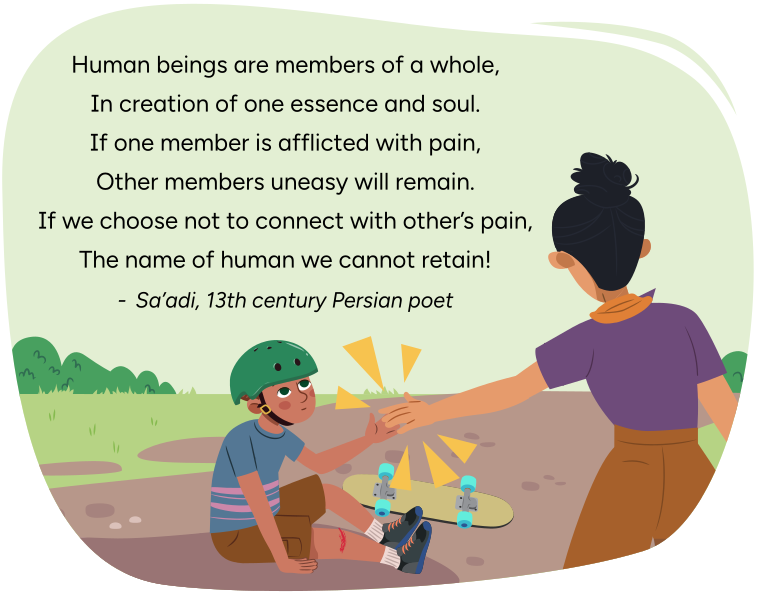
Poem by thirteenth-century Persian poet Sa'adi:
Human beings are members of a whole,
In creation of one essence and soul.
If one member is afflicted with pain,
Other members uneasy will remain.
If we choose not to connect with other's pain,
The name of human we cannot retain!
Beneath the poem is an image of Teacher Chelsea reaching down to help William get up after falling off a skateboard and cutting their knee.

Vocabulary
To help you understand the poem and the author’s message, explore the following flashcards.
In your notebook or using another method of your choice, answer the following questions:
- What is the author’s message in the poem?
- How do you think humans are connected with one another? Try and use an example from your own life to explain your answer.

Reading with fluency using punctuation
Let’s practice reading the poem aloud. Before we begin, let’s explore some of the punctuation used in the poem.
For an overview of different types of punctuation, check out the following Grammafied video.
Notice how giving attention to the punctuation can shape the sound and meaning of the poem.
Let’s take a closer look at five punctuation marks used in the poem and the effect they are intended to have when reading the poem.
Let’s read the poem aloud again, this time with the punctuation we analyzed above in mind.
How does the punctuation impact the tone of the poem?
Rhyming scheme
A feature of poems is often a rhyming scheme.
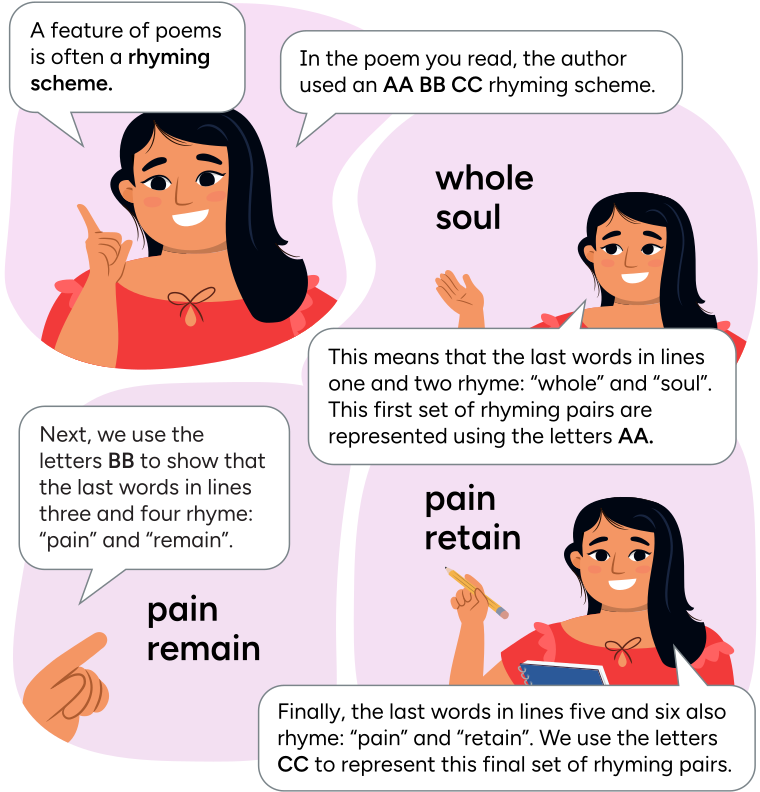
Teacher Chiara saying: A feature of poems is often a rhyming scheme. In the poem you read, the author used an A A, B B, C C rhyming scheme. This means that the last words in lines one and two rhyme: "whole" and "soul." This first set of rhyming pairs are represented using the letters A A. Next, we use the letters B B to show that the last words in lines three and four rhyme: "pain" and "remain." Finally, the last words in lines five and six also rhyme: "pain" and "retain." We use the letters C C to represent this final set of rhyming pairs.
Your turn!
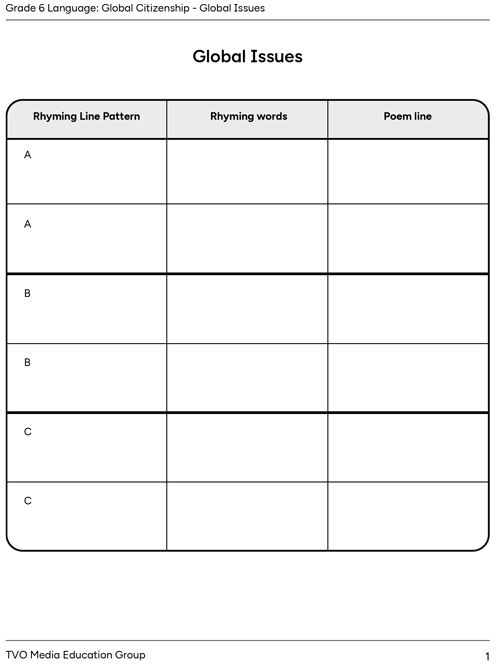
In the following writing activity, let’s use the AA BB CC rhyming scheme to write a poem about being a global citizen or about global citizenship in general.
Using a graphic organizer or another planning tool can help organize your thoughts as you work.
Check out the following example before creating your own poem.
|
Rhyming Line Pattern |
Rhyming words |
Poem line |
|
A |
you |
I see greatness in you, |
|
A |
through |
That will always shine through. |
|
B |
gives |
A global citizen gives, |
|
B |
lives |
Of themselves and truly lives. |
|
C |
fall |
Although sometimes they stumble and fall, |
|
C |
all |
They hope one day the world will be shared equally by all! |
Using the graphic organizer provided, or another method of your choice, create a poem using an AA, BB, CC rhyming scheme about being a global citizen or about global citizenship in general.
Empathy and compassion
You may have noticed that being a global citizen is rooted in compassion and empathy for others. Compassion is a concern for the hurt or misfortune of others. Empathy is the ability to understand and share the feelings of another. Global citizens recognize their interconnectedness with others and the Earth. They continue to work towards creating a more sustainable, equitable, and inclusive world for future generations.
What are some ways you can show compassion and empathy towards others in your community?
Connecting with vocabulary
Let’s review some of the vocabulary we explored in this learning activity. Match the term with the correct sentence. Press Check Answer to see how you did.
Publishing your poem
It’s time to publish the poem that you created in the Action section.
Before publishing any work, it’s important to proofread and edit! If possible, it’s always a good idea to have someone else read over your work and provide feedback/suggestions. Other people notice things that we might miss in our own work.
Use the following checklist to make sure your poem is ready for publishing.
Success Criteria
Now that your poem has been proofread and edited, choose one of the following formats to create the published copy.
Option 1: Write in cursive
Review the following content to help you practice your cursive writing. When you’re done, write your poem in cursive writing.
Cursive practice
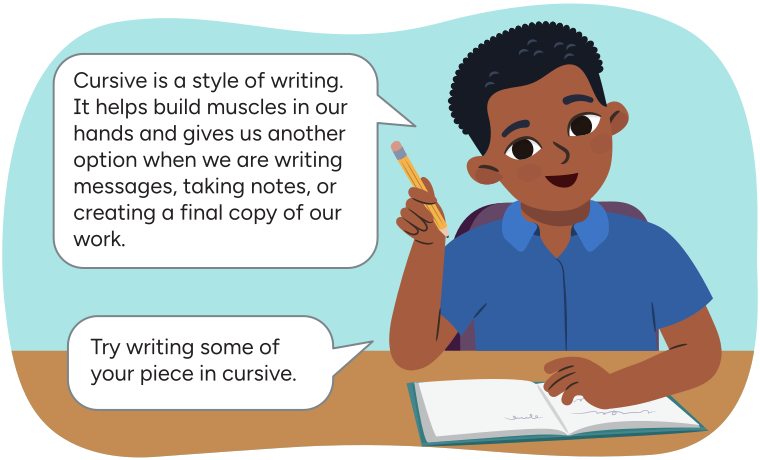
Arthur saying: Cursive is a style of writing. It helps build muscles in our hands and gives us another option when we are writing messages, taking notes, or creating a final copy of our work. Try writing some of your piece in cursive.
Let’s review cursive writing!
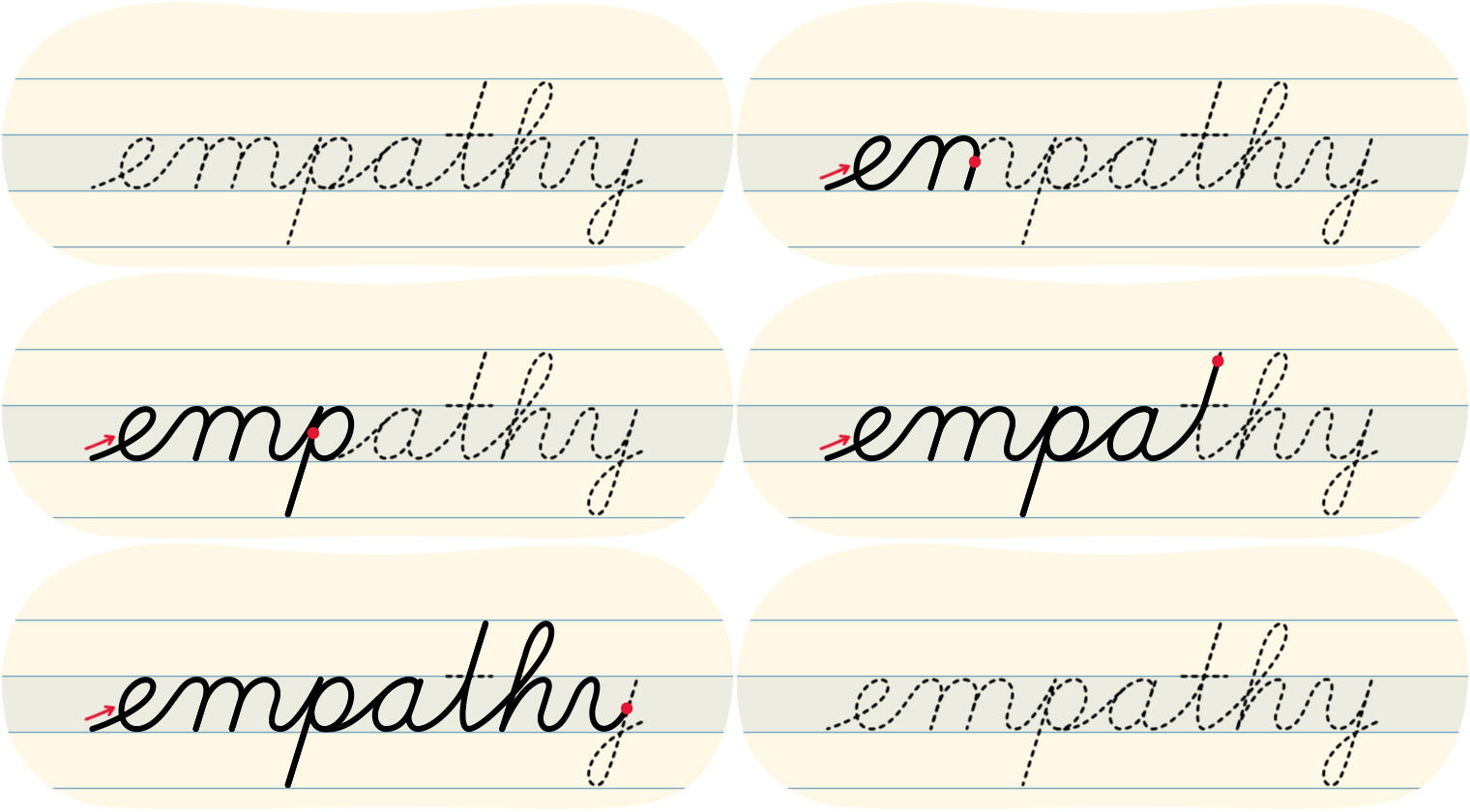
Check out the following animation of how the word “empathy” is written in cursive, then review the tips for cursive writing provided.
Tips for cursive letters
- When we write in lowercase, we always begin at the bottom.
- When we write in uppercase we can start from the top or the bottom.
- Try to keep the pencil on the page until you are done the word.
- Try to press gently as you write so that your hand can move easily across the page.
- Take your time to make sure that you are writing clearly and evenly.
Press the Left-handed tips for cursive writing button to access tips for left-handers.
Left-handed tips for cursive writing

Explore the video on Left-Handed Tips to learn more.
Option 2: Digital display
Use a digital tool of your choice to publish a digital version of your poem.
Type it!
Typing is a great skill to develop! When we need to use a computer or tablet keyboard, knowing how to type helps us:
- take notes
- respond to messages
- create final drafts of our work
Explore the following image to see what fingers are used to type each letter or number.
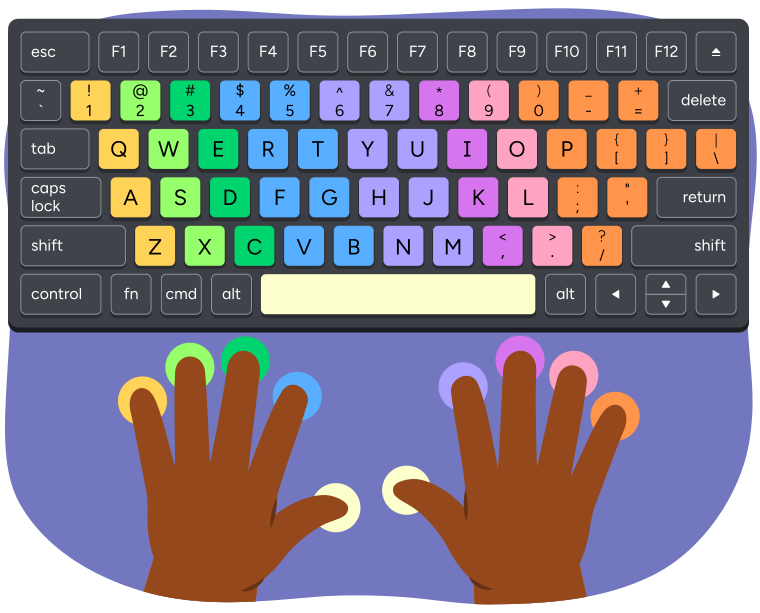
A keyboard and hands showing which fingers are used to press each key when typing.
The left pinky finger presses the keys 1, Q, A, and Z.
The left ring finger presses the keys 2, W, S, and X.
The left middle finger presses the keys 3, E, D, and C.
The left index finger presses the keys 4, 5, R, T, F, G, V, and B.
The left or right thumb presses the space bar.
The right index finger presses the keys 6, 7, Y, U, H, J, N, and M.
The right middle finger presses the keys 8, I, K, and comma.
The right ring finger presses the keys 9, O, L, and period.
The right pinky finger presses the keys 0, minus, equal, P, open bracket, closed bracket, backslash, semicolon, apostrophe, and forward slash.
We use specific muscles in our hands to type! It’s important to practice so that it becomes easier to type correctly without putting too much pressure on our hands and our wrist.
For additional typing practice, check out the game, “Keyboard Climber 2”!
Reflect on global citizenship
In a written reflection of 3-5 sentences, and using three new vocabulary words, respond to the following prompts.
- Given the activities you have completed in this learning activity, did your definition of a global citizen change? In what ways?
- What steps or actions can you take in your life to become a global citizen?
Reflection
As you read through these descriptions, which sentence best describes how you are feeling about your understanding of this learning activity? Press the button that is beside this sentence.

I feel...
Now, record your ideas using a voice recorder, speech-to-text, or writing tool.