Learning goals
We are learning to…
- demonstrate an understanding of global citizenship and how this transferable skill is used in different contexts
- explore concepts related to identity and self through culturally responsive and relevant texts
- express ideas and establish a personal voice by creating different texts
Success criteria
I am able to…
- identify characteristics of global citizens by analyzing different texts
- explain interconnections between my own lived experiences and the experience of others through texts
- write a poem that explores a global or local issue and expresses my thoughts, opinions, and point of view
Global citizens
Explore the images of some well-known global citizens.
Remember, a global citizen is someone who has an understanding of cultures, people, issues, and ways of knowing and being from around the world, and understands their place within it all. They take actions to leave the world a better place than they found it.
Do you know who any of these global citizens are? Do you know what makes them global citizens?
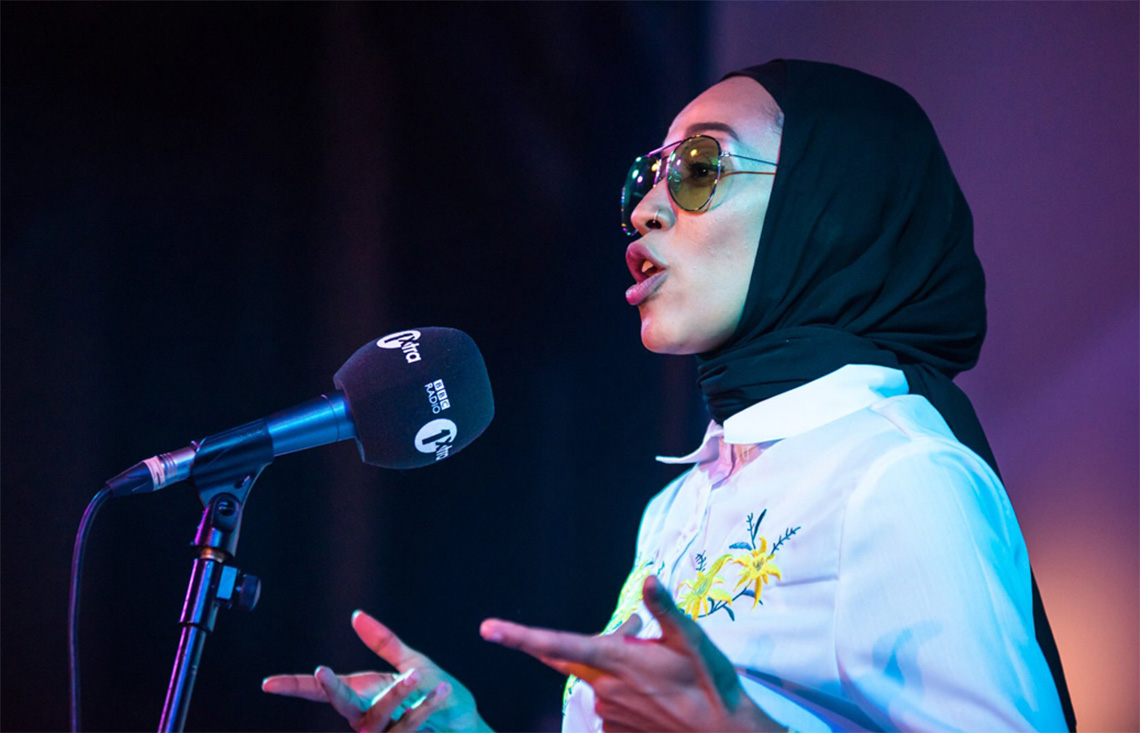
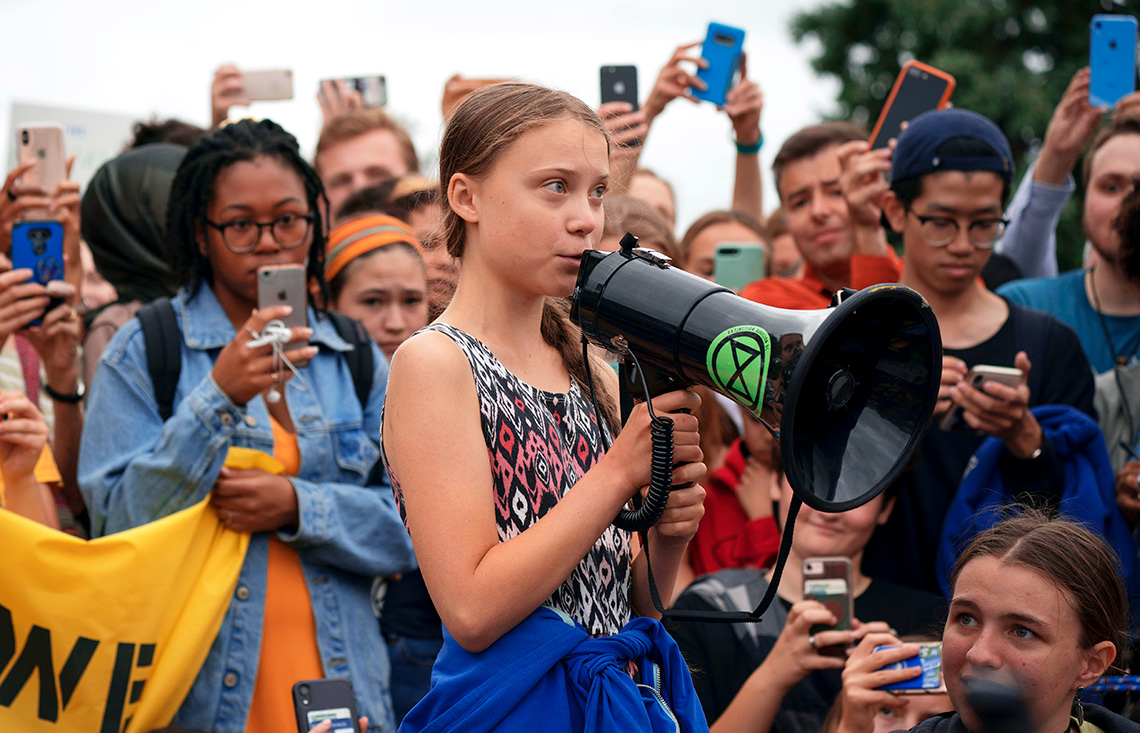
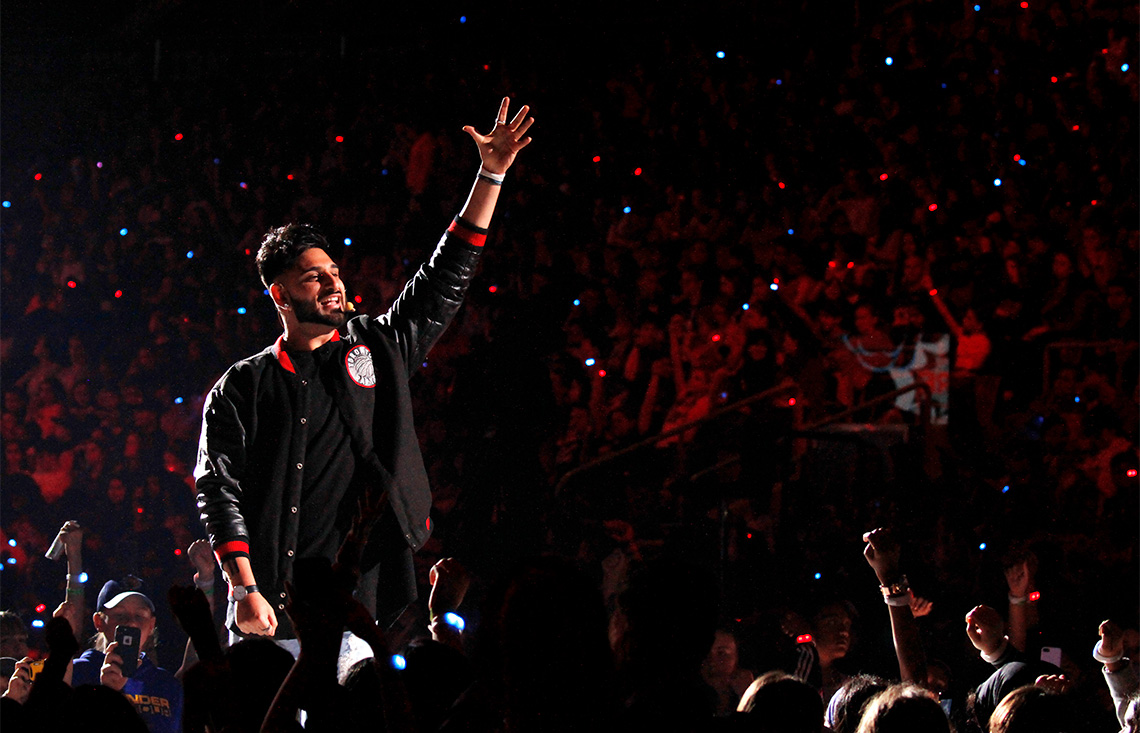
Whether you recognized any of these individuals or not, hopefully you noticed that the images show people from a variety of global communities using their platform to try and make the world a more equitable, inclusive, and sustainableplace for all – these people represent global citizens in action.
Whether we have a large or small platform or audience, there are actions that everyone can take to help our world be a better place.
 Description
If you haven’t started a vocabulary notebook yet, take a minute and do that now. You can use one of the following samples to get you started, or choose another method of your choice.
A vocabulary notebook is an important learner tool! If you are creating one for the first time, here are two possible way of recording word work.
Press the following tabs to find out more.
| Word | Definition in your own words | Used in a sentence | Synonyms (words with the same meaning) | Antonyms (words with the opposite meaning) |
|---|---|---|---|---|
| Ex. Fragile | Easily damaged or broken. | We need to be careful with the glass bowl because it’s very fragile. |
|
|
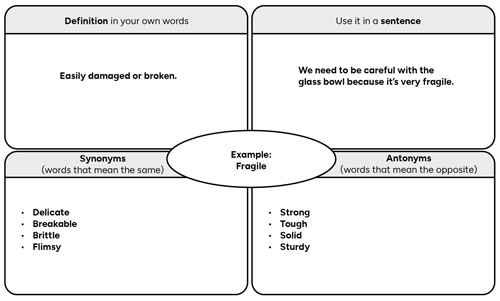
An example of a Frayer Model for recording vocabulary. A page is divided into four quarters and the vocabulary word is written in the centre.
In this example, "Fragile" is written in the centre.
The upper left quarter is titled "Definition in your own words," and contains the text "Easily damaged or broken."
The upper right quarter is titled "Use it in a sentence," and contains the text "We need to be careful with the glass bowl because it's very fragile."
The lower left quarter is titled "Synonyms (words that mean the same)," and contains the text "Delicate, Breakable, Brittle, Flimsy."
The lower right quarter is titled "Antonyms (words that mean the opposite)," and contains the text "Strong, Tough, Solid, Sturdy."

Brainstorm
Brainstorm
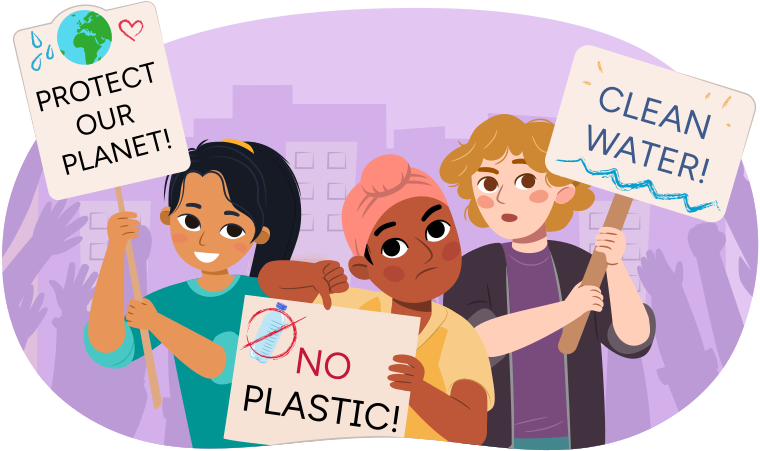
What actions could you take in your life right now towards becoming an active global citizen? Record your ideas in a notebook or using another method of your choice. If possible, share your ideas with a partner.
Global citizens in action!
Many people from around the world serve as global citizens every day. You don’t have to be famous to be a global citizen. Anyone can advocate for solutions to issues that affect the world or their local community, such as pollution or climate change.
Global citizens address issues that need to be resolved in order to create a more equitable, inclusive, and sustainable future for the world.
Let’s explore three examples of global citizens who are taking action and advocating to make the world a better place.
Asma Elbadawi: Inclusivity and diversity
Asma Elbadawi is a Sudanese-British basketball player, spoken word poet, and activist.
After many years of advocating for change, in 2018, Asma and a group of international women succeeded in getting the International Basketball Federation (also known as FIBA) to change its rules to allow hijabs and other religious headwear to be worn in professional basketball.
“Since then I continue to advocate for more Inclusivity and diversity in women's sports through talks, my personal social media and working with brands to ensure that younger girls and women who identify with women who look like me, feel represented and welcome in all aspects of sport.”
- Asma Elbadawi, Asma Elbadawi WebsiteAbout Me. Asma Elbadawi: My website. (n.d.). https://www.asmaelbadawi.com/about
Check out the following video clip from Wardah Heart to Heart with Dewi Sandra to learn about why Asma Elbadawi fought so hard and took action to change the international basketball world.

Pause and Reflect
Pause and reflect
After learning about Asma Elbadawi from the text and the video clip, answer the following questions in your notebook or using another method of your choice.
- What was Asma Elbadawi’s motivation for trying to change the International Basketball Federation’s rules? (Why did she want to do it?)
- How does Asma Elbadawi display characteristics of a global citizen? Provide specific examples for your answer.
Greta Thunberg: The right to a sustainable future
Greta Thunberg is a Swedish climate activist. In 2018, at the age of 15, in the week leading up to her country’s government election, Greta started the movement called Fridays for Future (also known as School Strike for Climate).
Every Friday for the three weeks leading up to the election, she did not go to school and instead sat outside of Sweden’s parliament building with a sign that said “School Strike for Climate.” She did this as a way of challenging the government to focus more of their attention on dealing with the issue of climate change. Her movement caught on quickly and each day more and people joined her, even after Sweden’s election was over. Her actions turned into a global movement.
Encyclopædia Britannica, inc. (2024, May 11). Greta Thunberg. Encyclopædia Britannica. https://www.britannica.com/biography/Greta-Thunberg
She continues to advocate for the environment by using her voice to raise awareness to policymakers and politicians about the impact of climate change on future generations. In recent years, Greta has made the commitment to limit her travel by airplane and become a vegan (not consume meat) to do her part to reduce the emissions of greenhouse gases.
Press the Greenhouse Gases button to learn more.
Greenhouse gases are gases that trap heat in the Earth’s atmosphere and raise the surface temperature of the planet. Too many greenhouse gases are leading to faster than usual changes to the Earth’s climate. CO2 is an example of a greenhouse gas.
CO2 is the chemical formula for the gas carbon dioxide and is often used as a short way of saying or writing carbon dioxide. Carbon dioxide is a natural gas found in the Earth's atmosphere and an example of a greenhouse gas.
Brainstorm
Brainstorm
What personal choices could individuals make to try and create a more sustainable future and limit their impact on the environment?
Let’s watch Greta Thunberg’s speech to world leaders and policymakers at the United Nations 2019 Climate Action Summit. As you watch, consider the following questions, and record your answers in a notebook or using another method of your choice. If possible, share your answers with a partner.
- What is the main message of Greta’s speech?
- What part of Greta’s speech do you feel is the most impactful?
- What techniques does she use to communicate her message?
Check out the following video to learn more.
Press the Possible Answers button to learn more.
Greta’s main message is that bigger and more immediate actions need to be taken to help the planet be a more sustainable place for future generations to come.
Throughout her speech, Greta uses repetition (“How dare you!”) and statistics (number of people affected) to strengthen her message. These are some important techniques when writing a paper or delivering a speech to convince someone of your position.
Pause and Reflect
Pause and reflect
In your notebook or using another method of your choice, record your thoughts on the following question:
In what ways can Greta Thunberg be considered a global citizen?
Wali Shah: Challenging racism and bullying through poetry
After his parents immigrated from Pakistan to Canada, Wali Shah was raised in Mississauga. He is the Poet Laureateof Mississauga. He uses poetry and songs as a way of challenging global issues including bullying, racism, and creating a space for equal opportunity. A voice for marginalizedpeople and those struggling to find their place in society, he encourages others to use their gifts in writing, music, or wherever their talents may lie by working towards a more just and inclusive society.
Marginalized adjective - definition, pictures, pronunciation and usage notes | Oxford Advanced Learner’s dictionary at Oxfordlearnersdictionaries.com. Oxford Learner’s Dictionary. (n.d.). https://www.oxfordlearnersdictionaries.com/definition/english/marginalized
Pause and Reflect
Pause and reflect
How can we use poetry or any other written or spoken forms to create a more equitable world?
Exploring a global citizen’s mindset through texts
Let’s read the beginning section of the poem We Will Rise by Wali Shah. As you read, think about what message the author wants you to take from this poem.
An excerpt from the poem “We Will Rise” by Wali Shah
There’s a reason,
you are in that seat,
You were called and you came,
You know there is darkness in the world,
But it’s a world you can change.
Each of you are a candle,
And your gifts are the flame,
A spark of light,
That no dark can contain.
Let me explain, what I see
There’s 20,000 different stories in front of me
And you gotta decide the person you want to be,
Maybe you lost a loved one,
Or you’re a refugee,
Or maybe you got problems that people will never see,
But it’s pain and empathy, that call us to destiny
Just, hear it from me…
Exploring the author’s message
What do you think the author’s message is in the poem?
You can communicate your thoughts by using the following sentence starters:
- In (“title of text”), the author (author’s name) is saying that . They want the audience to know that .
Record your answer in a notebook or using another method of your choice. When you’re done, press the Possible Answers button to learn more.
In the poem We Will Rise, the author Wali Shah is saying that he feels a strong sense of interconnectedness with all people working towards an equitable and inclusive world. He wants the audience to think about how we are all connected with each other and how each of us can take action to change the world.
Now let’s listen to the same section of the poem performed live by Wali Shah in front of a crowd at an event in Vancouver, BC.
As you listen, think about whether or not hearing the poem read out loud changed your idea of the author’s message.
How did Wali use pauses, loudness, and softness in his voice to communicate his message? Record your thinking in a notebook or using another method of your choice. If possible, share your thoughts with a partner.
Analyzing poetry
Notice that Wali Shah’s poem used some rhyming – every pair of lines can be rhymed, or every second line (but not always!).
The section of the poem we reviewed has three stanzas: a group of lines with a similar idea. Each stanza has four lines and tries to rhyme either every other line (ABAC rhyming pattern), or every pair of lines, called “rhyming couplets” (AABB rhyming pattern).
Let’s examine some examples for these rhyming patterns. Press the following tabs to find out more.
The weather’s getting hotter, no longer cold.
Species are disappearing.
We need to make a change and it needs to be bold.
So the world will start to rearrange and grow.
The weather’s getting hotter, no longer cold.
We need to take action and it needs to be bold.
If we want to have a planet where we can grow old,
We need to take action. Consider yourself told.
Making connections
Can you make any personal connections between the actions these global citizens have taken to better the world and any actions, big or small, that you take to make the world a better place? Record your thoughts in a notebook or using another method of your choice.

Social Emotional Learning
Social emotional learning
You’re doing great! It’s time for a short break!
Composition activity
Now it’s your turn to write! Expand your understanding of poetry and write a poem about a global or local issue that is important to you. You may select from one of the following topics or another topic not listed here.
Possible topics:
- climate change
- right to education
- human rights
- bullying
- sustainability
- equity
- inclusion
Prewriting
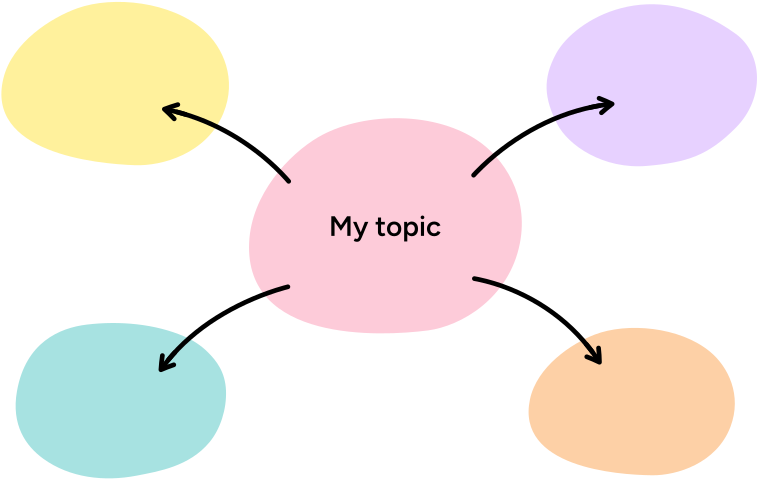
Once you have chosen your topic, it’s time to brainstorm what you will say in your poem. Consider using a graphic organizer like a Mind Map, or another tool of your choice, to help organize your ideas, thoughts, and feelings on the global or local issue that you chose as your topic.
Press Mind Map button to see an example.
Drafting
Once you’ve brainstormed your ideas for writing it’s time to create a draft of your poem.
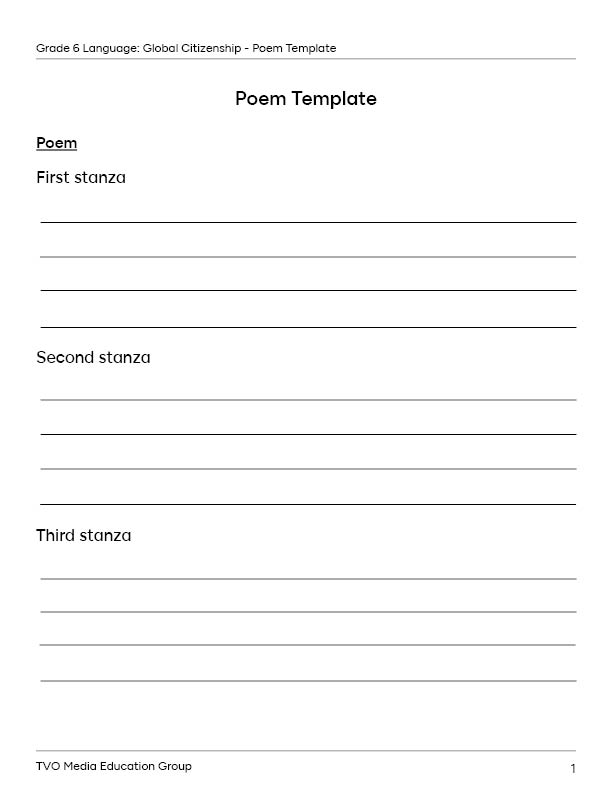
You may use the following template to help you create your poem. Alternately, you can use a different poem structure of your choice that explores your identity, emotions, and the things you feel connected to.
Complete the fillable and printable Poem Template in your notebook or using the following document. If you would like, you can use speech-to-text or audio recording tools to record your thoughts.
Pause and Reflect
Pause and reflect
How did learning about examples of global citizens in action help you to develop and express your voice and plan your own next steps to develop your capabilities and potential?
Putting it all together

You may have noticed that being a global citizen is rooted in a sense of justice and interconnectedness with the people and world around us. Global citizens like Asma Elbadawi, Greta Thunberg, and Wali Shah are taking a stand to create a better world that is equitable, inclusive, and sustainable.
Let’s check our understanding of some of the vocabulary that was featured in this learning activity.
Match the word to the definition.
Revise and edit
It’s time to revise and edit your poem.
Press the following accordion tabs to learn more about how to revise and edit your poem.
Revising means changing the content of your writing by moving text around or deleting or adding content.
To revise your poem…
- find at least three words to replace with synonyms that are longer, more creative, or more precise. You can use an online or print thesaurus of your choice to find synonyms.
Editing means finding and correcting errors in spelling, grammar, punctuation, and capitalization.
To edit your poem…
- check that there are no spelling mistakes
- check that you have used proper punctuation where necessary (such as: periods where you want a full stop, and commas where you want your reader to pause and take a breath before continuing on)
When you’re finished revising and editing your poem, it’s time to publish it! Create a final copy digitally, in print, or using another method of your choice. And don’t forget to share your message with others to do your part to make the world a better place!
Reflection
As you read through these descriptions, which sentence best describes how you are feeling about your understanding of this learning activity? Press the button that is beside this sentence.

I feel...
Now, record your ideas using a voice recorder, speech-to-text, or writing tool.